





Almond Orchard Establishment in Albania
Albania's productive almond area was 70 to 100 ha a year from 2014 to 2023 and 130 ha in 2025 (INSTAT via Eurostat). A 2020 technical note placed limited orchard production in Mallakastër, Fier, Përmet, Tepelenë, Durrës and Vlorë, on smallholders' land. AgroWeb (2024) wrote that the largest plantations are in the north, Përmet, Korçë, Berat and the southern Riviera, and that almonds are now planted with grafted nursery trees.
FAO's 1997 almond inventory lists three local cultivars in the almond collection of the Institute of Fruit Trees and Vines, Tirana, among them Melcani and Gujadëholla, both noted as highly productive; Gujadëholla flowers late, and all three are marked as not self-compatible. The collection also held Ferragnès, Ferraduel, Aï, Pizzuta, Romana, Nonpareil and Texas. No newer Albanian cultivar recommendations were found.
No Albanian record of frost damage to almond was found, but sub-zero temperatures in April 2021 hurt many crops (national climate bulletin). In Spanish frost tests, about 50% of almond flowers were damaged near -4 °C, and late-flowering cultivars are the main defense. Bitter almond seedlings have long been the rain-fed rootstock, while GF-677 suits rain-fed and irrigated orchards but not replanting or waterlogged soil (CIHEAM, 2016).

Practical Tips for Almond Orchard Establishment
Choose late-flowering cultivars for sites with spring frost risk: in Spanish frost tests about half the almond flowers were damaged near -4 °C.
Give self-incompatible cultivars, like the three local ones in FAO's 1997 list, a pollinizer that flowers at the same time.
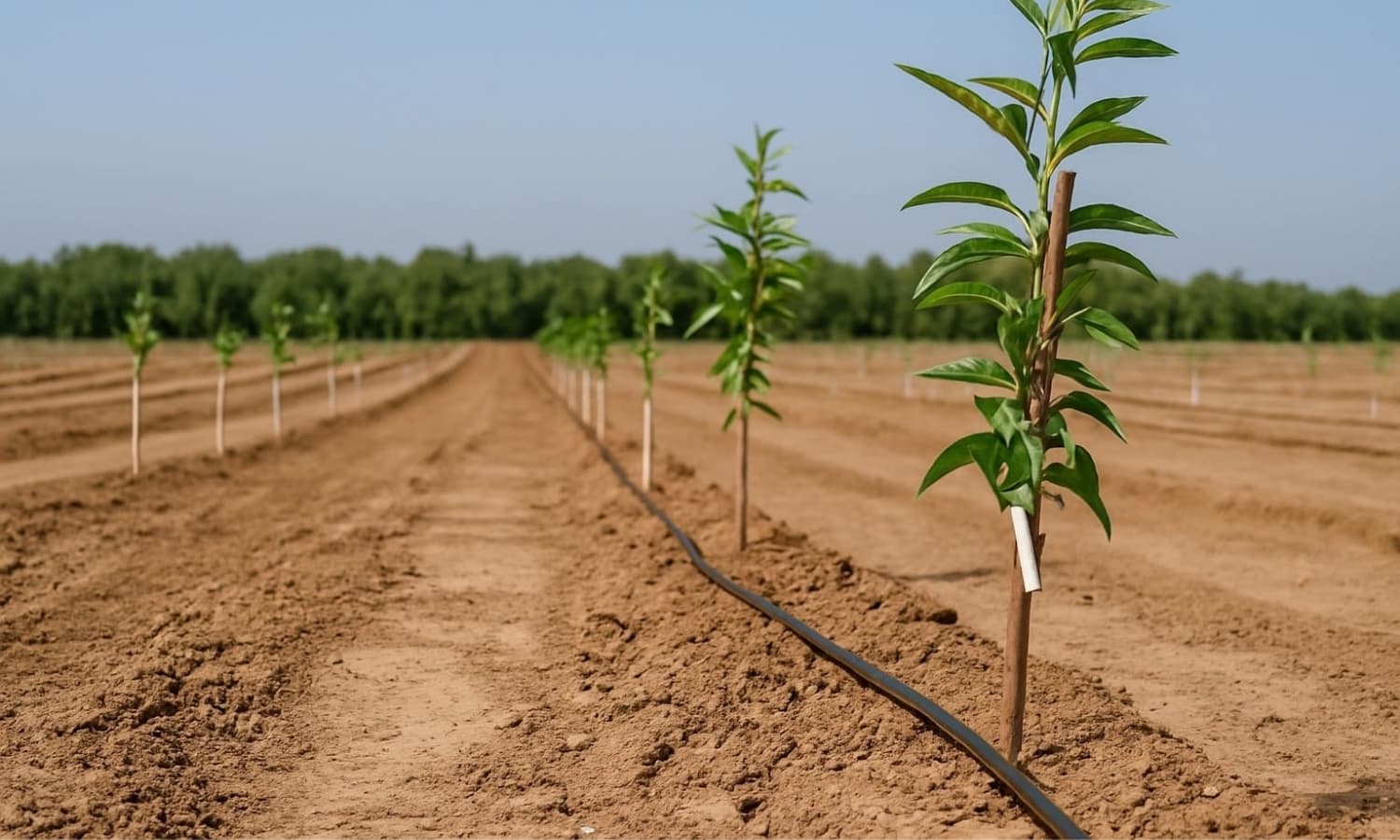
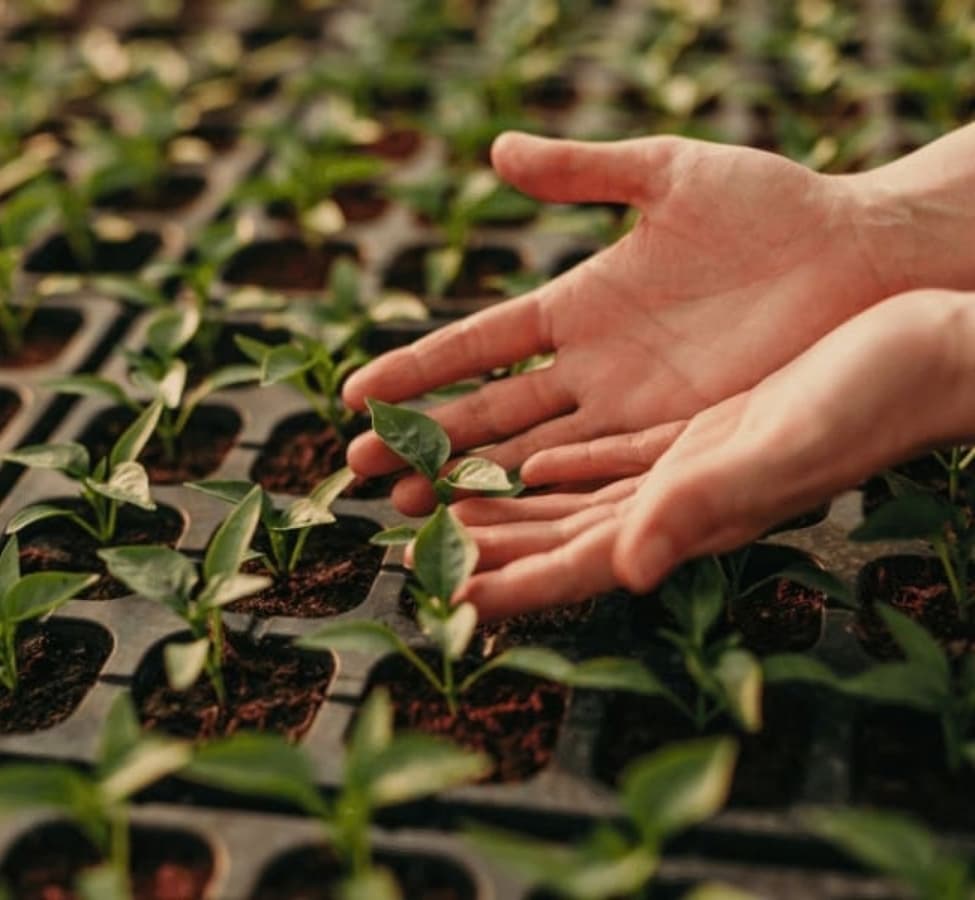
Buy healthy grafted trees, true to name, from a nursery: AgroWeb (2024) describes grafted nursery trees as today's planting material in Albania.
Match the rootstock to the site: almond seedlings have long served rain-fed ground; GF-677 suits soils free of root-knot nematodes, but not wet soils or replanting.
Plan water before planting: the World Bank (2021) expects most Albanian crops to need irrigation beyond effective rainfall.
Leave room for both harvest systems: space trees so a shaker and a catching frame can reach each trunk and sweepers can work the rows.
Recommended Establishment Stages

Almond Orchard Care & Maintenance in Albania
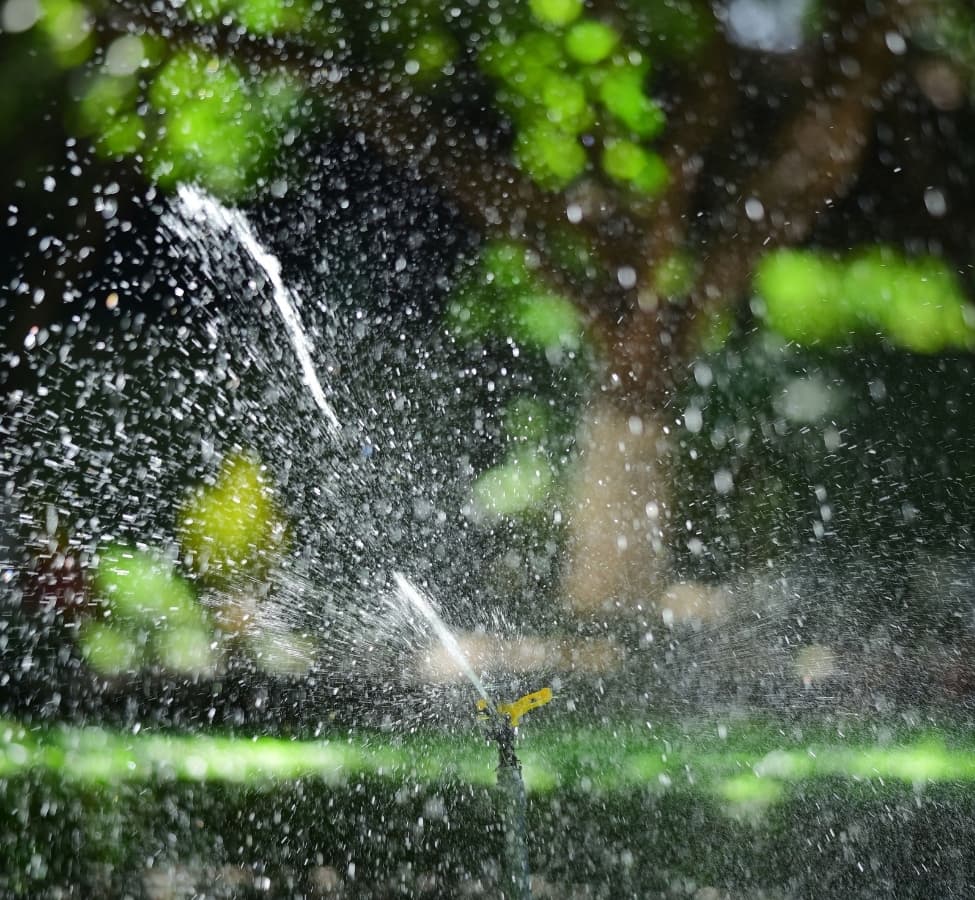
Most of Albania's rain falls from November to March, with the least in July and August, and the World Bank (2021) expects effective rainfall to fall short for most crops, which will need extra irrigation. The August 2020 climate bulletin describes August as the month of lowest soil moisture. No Albanian almond irrigation guidance was found; a 2024 position paper on Mediterranean fruit crops notes that almond tolerates drought, but its yield depends strongly on the water available.
EPPO lists Xylella fastidiosa as absent from Albania, confirmed by survey (updated October 2026), and Monilinia fructicola as absent, with no pest record. It holds no Albanian record of almond seed wasp or peach twig borer, which does not prove they are absent, and no Albanian almond thresholds were found. A Spanish study reports that 96% of the almonds harvested were edible where mummified almonds had been removed, against 18% where they had not.
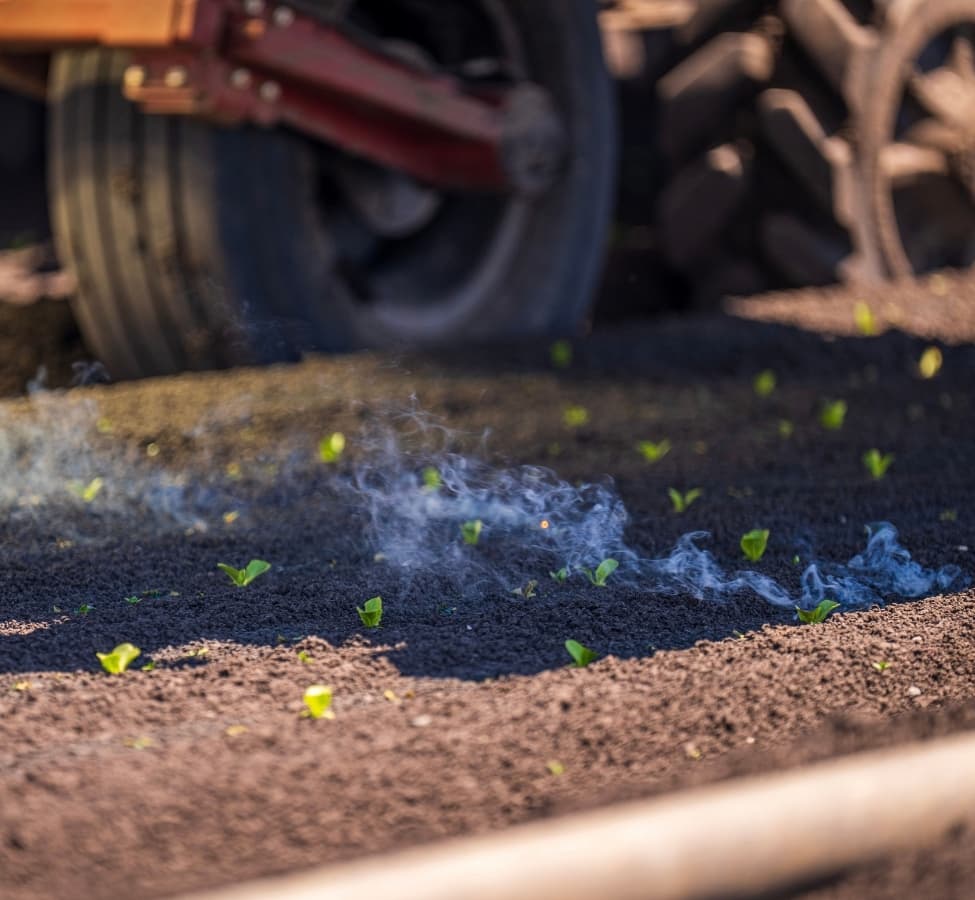
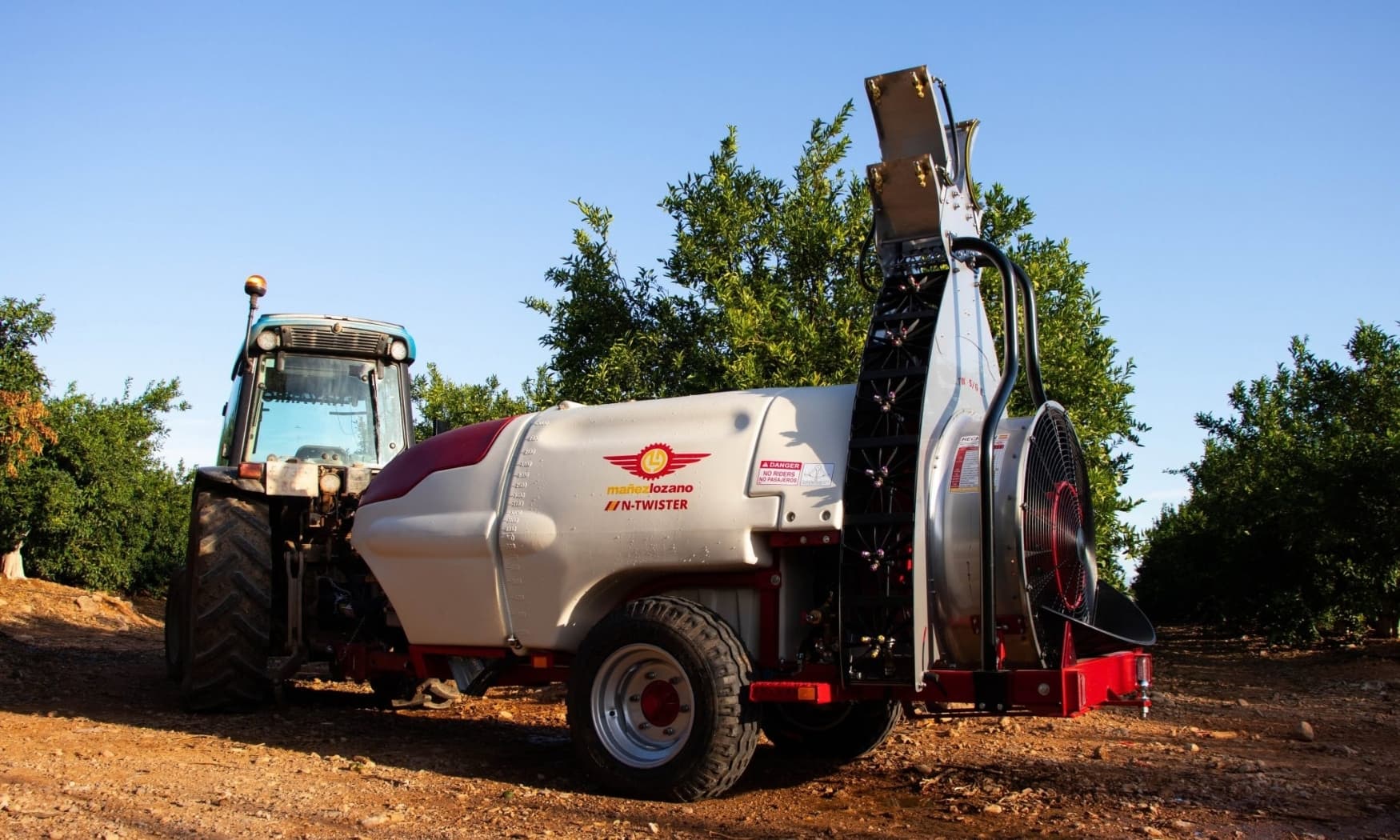
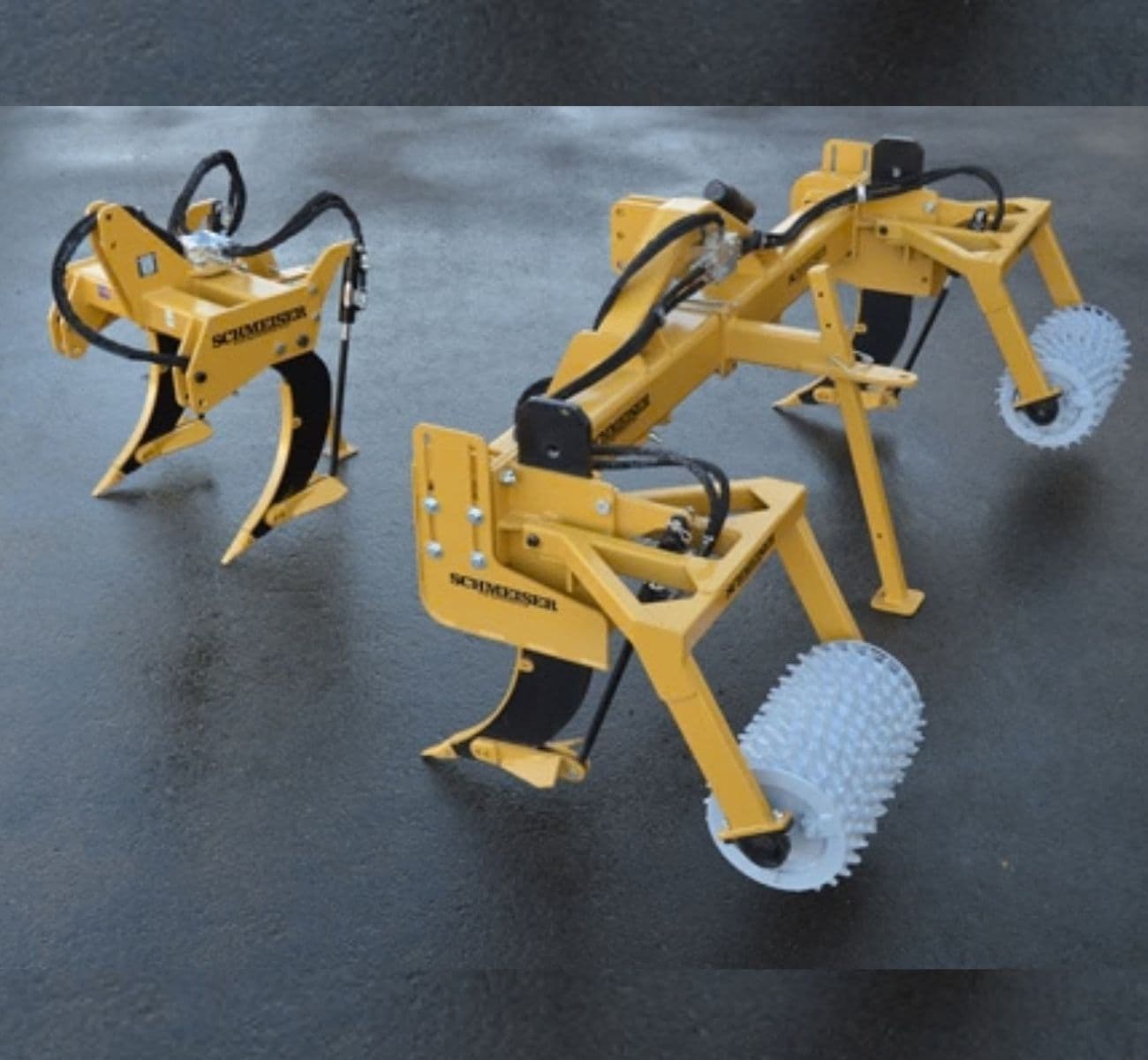
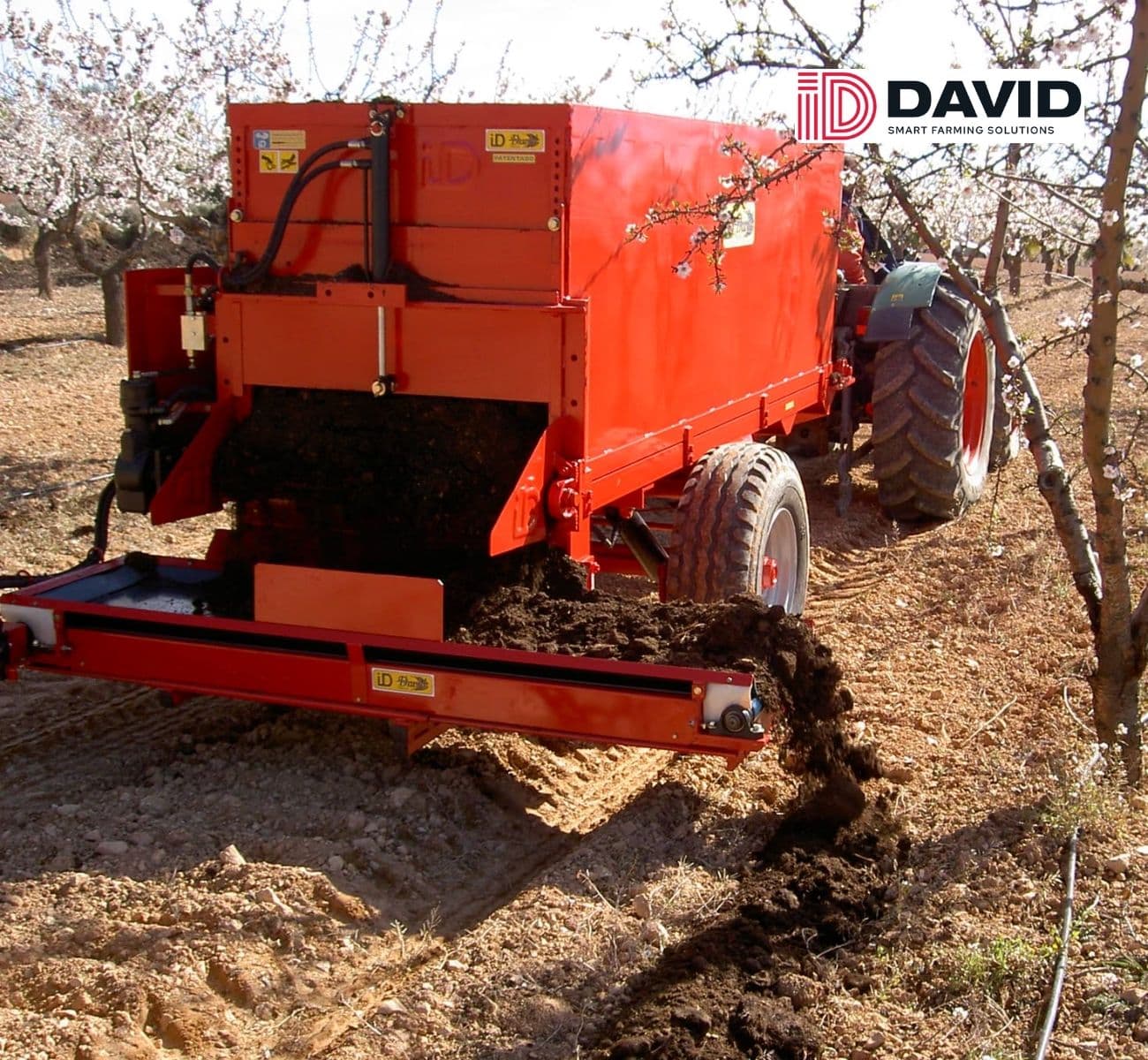
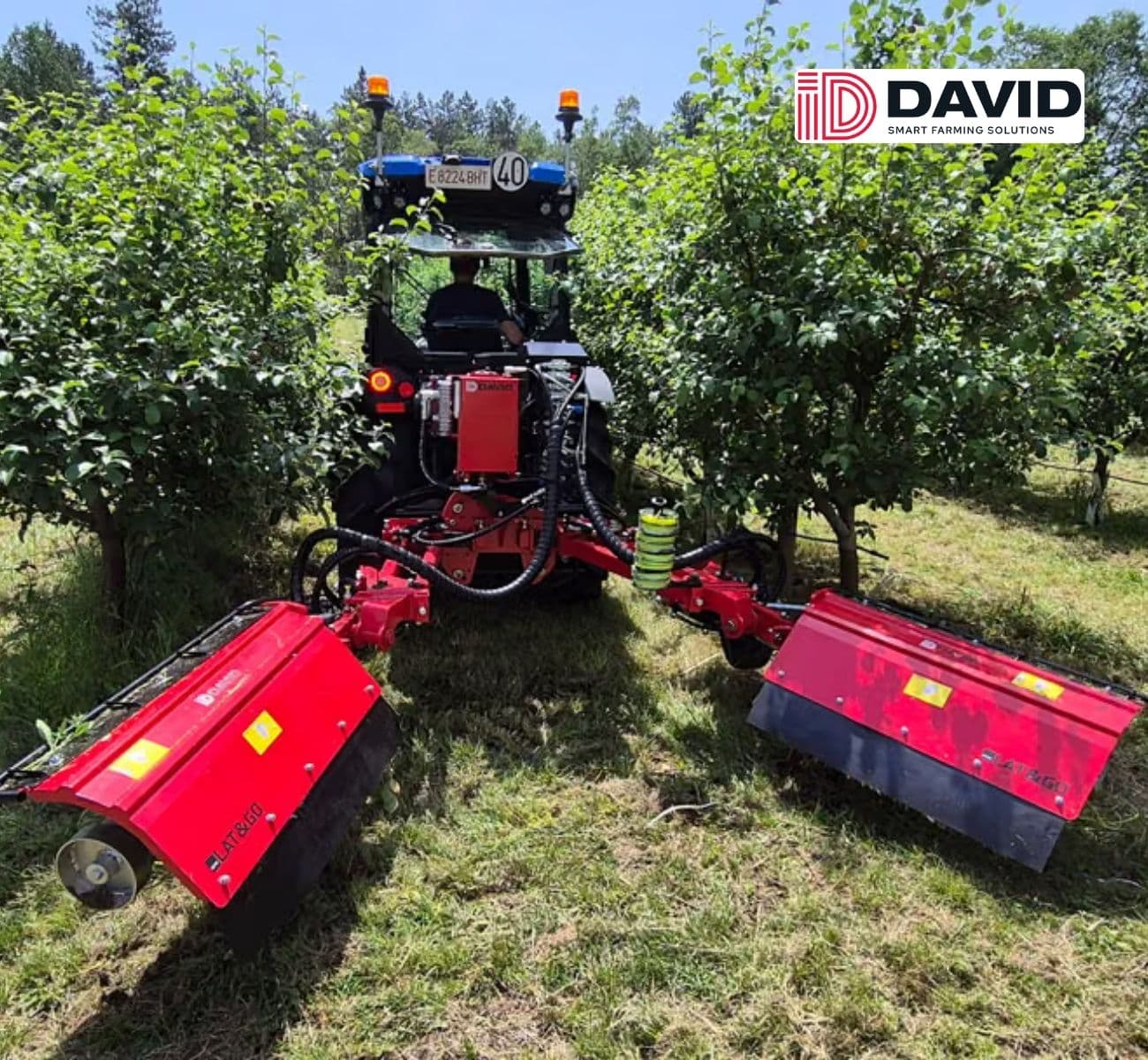
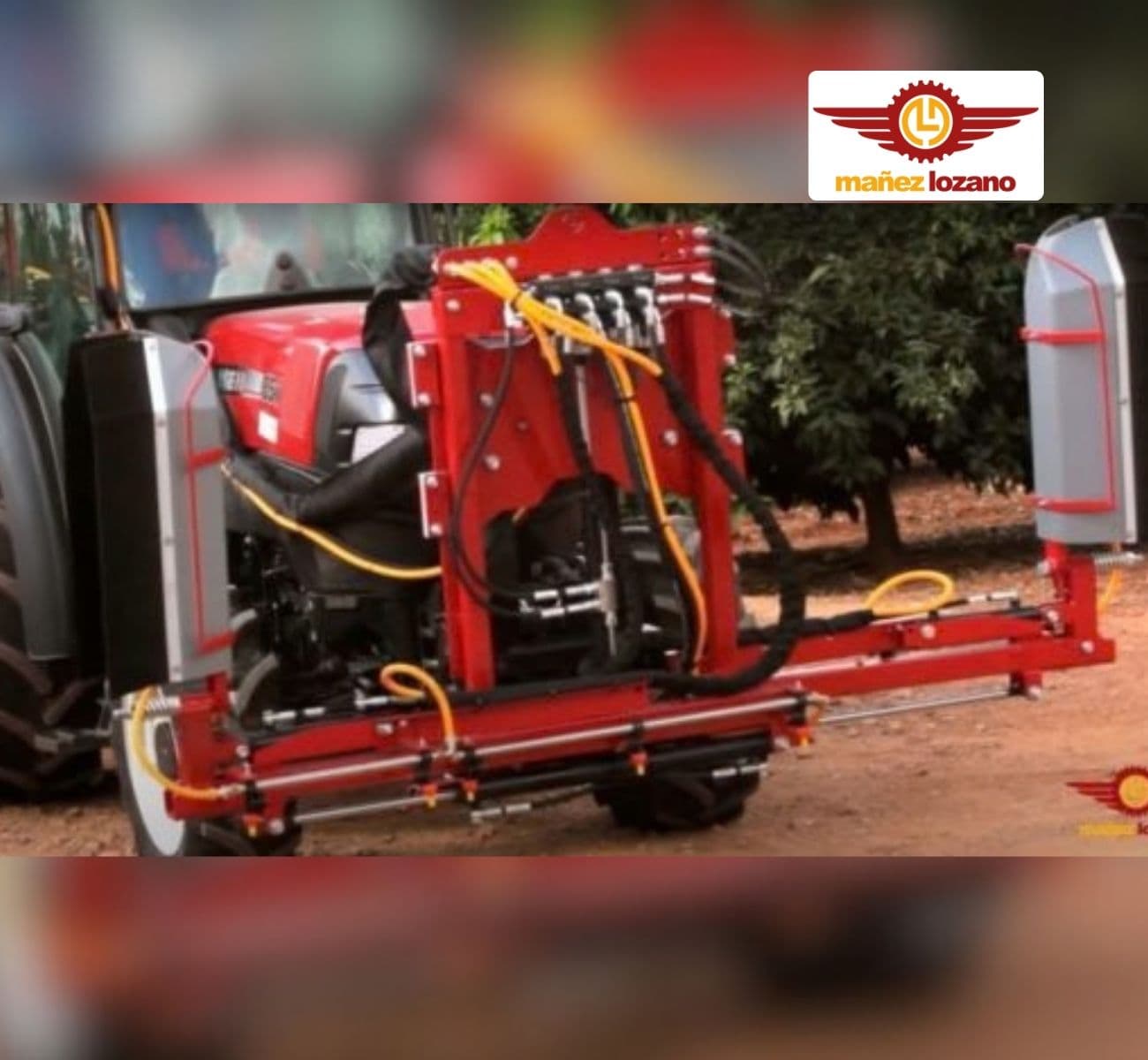
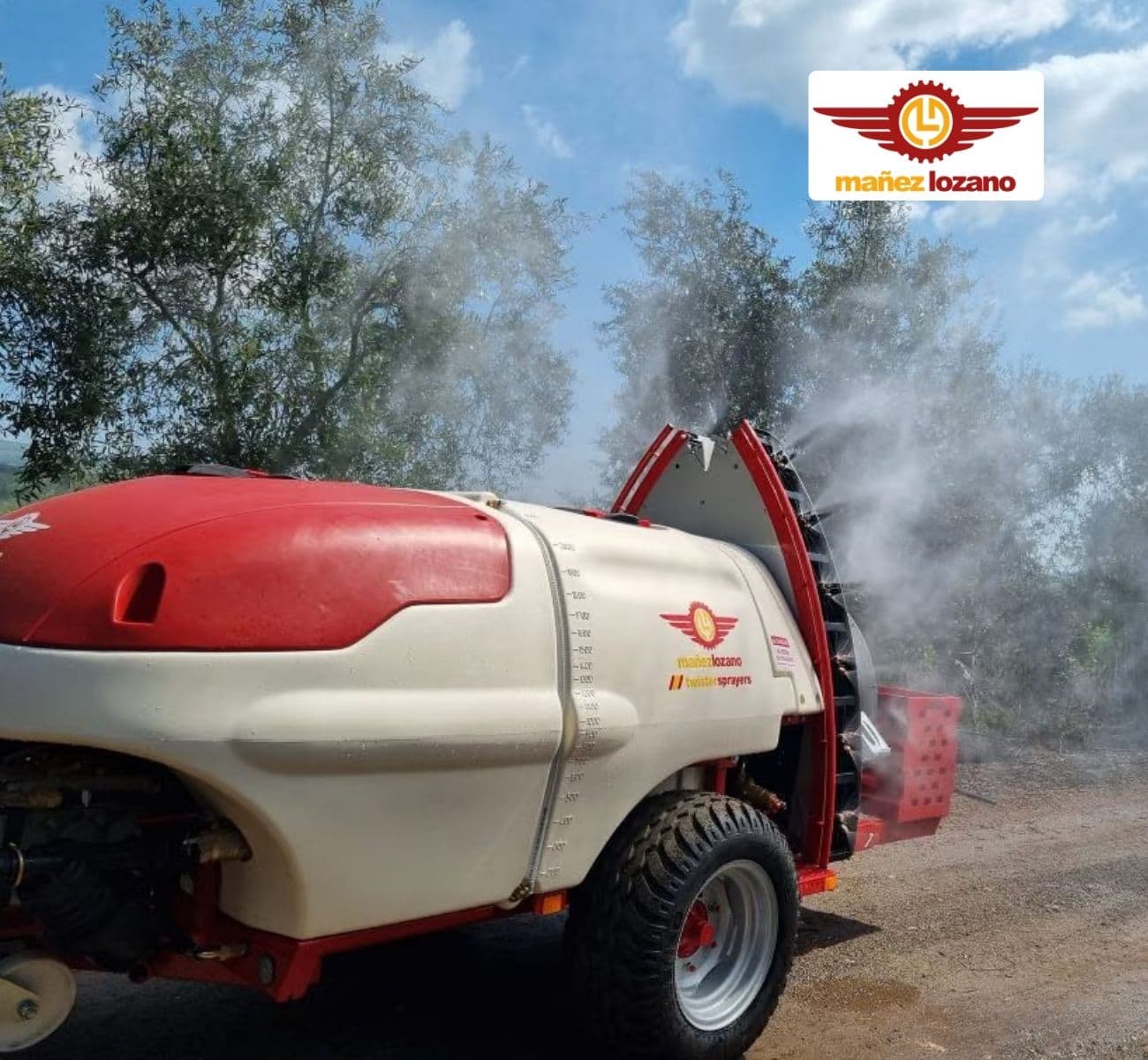
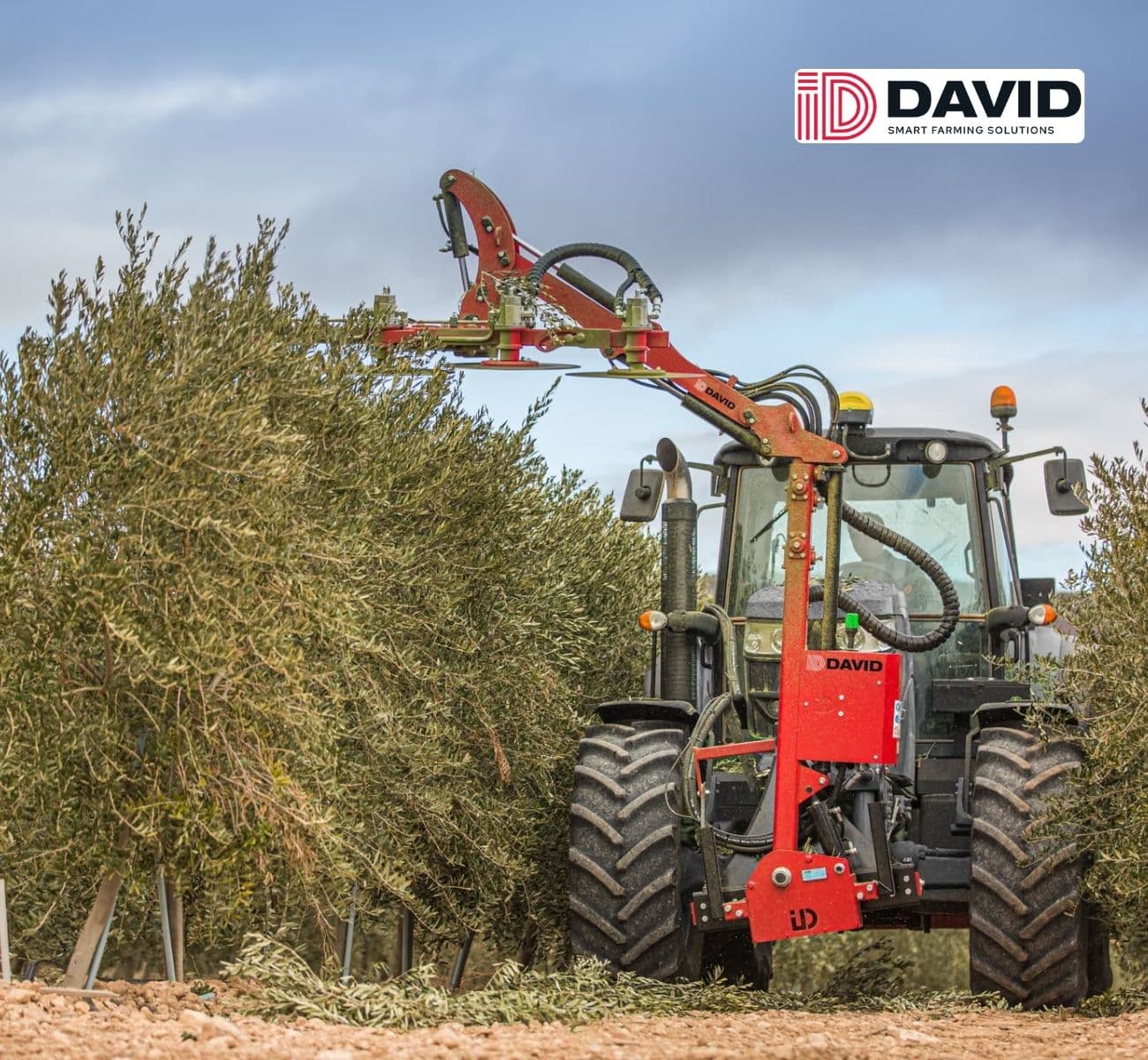
No Albanian guidance on almond pruning was found. In Italian trials of mechanized harvest (2015), the trees had their first branches 0.6 to 1.0 m above the ground. For care work, the ID DAVID ECOFEED spreads solid manure, the ID DAVID LAT&GO string mower controls weeds without herbicides, the Mañez Lozano Narrow Twister S6 sprays tall, dense canopies and the ID DAVID V1 disc pruner makes vertical and horizontal cuts.
Recommended Orchard Care & Maintenance Stages
Practical Tips for Almond Orchard Care & Maintenance
Check soil moisture through summer and water young trees before stress shows, above all in August, the month of lowest soil moisture.
Remove mummified almonds left on the trees after harvest: a Spanish study notes that seed wasp larvae inside them infest the next year's crop.
Check spring shoots for peach twig borer strikes and use pheromone traps, as University of California guidance advises.
Buy healthy nursery stock from known suppliers: EPPO lists Xylella fastidiosa as absent from Albania, confirmed by survey.
Train young trees to a single trunk with first branches clear of the shaker head; Italian trials used trunks of 0.6 to 1.0 m. Check clearance with OVE Europe.
Match care machines to the rows: the ID DAVID LAT&GO weeds without herbicides, and the Mañez Lozano Narrow Twister S6 sprays dense canopies.

Almond Harvesting in Albania
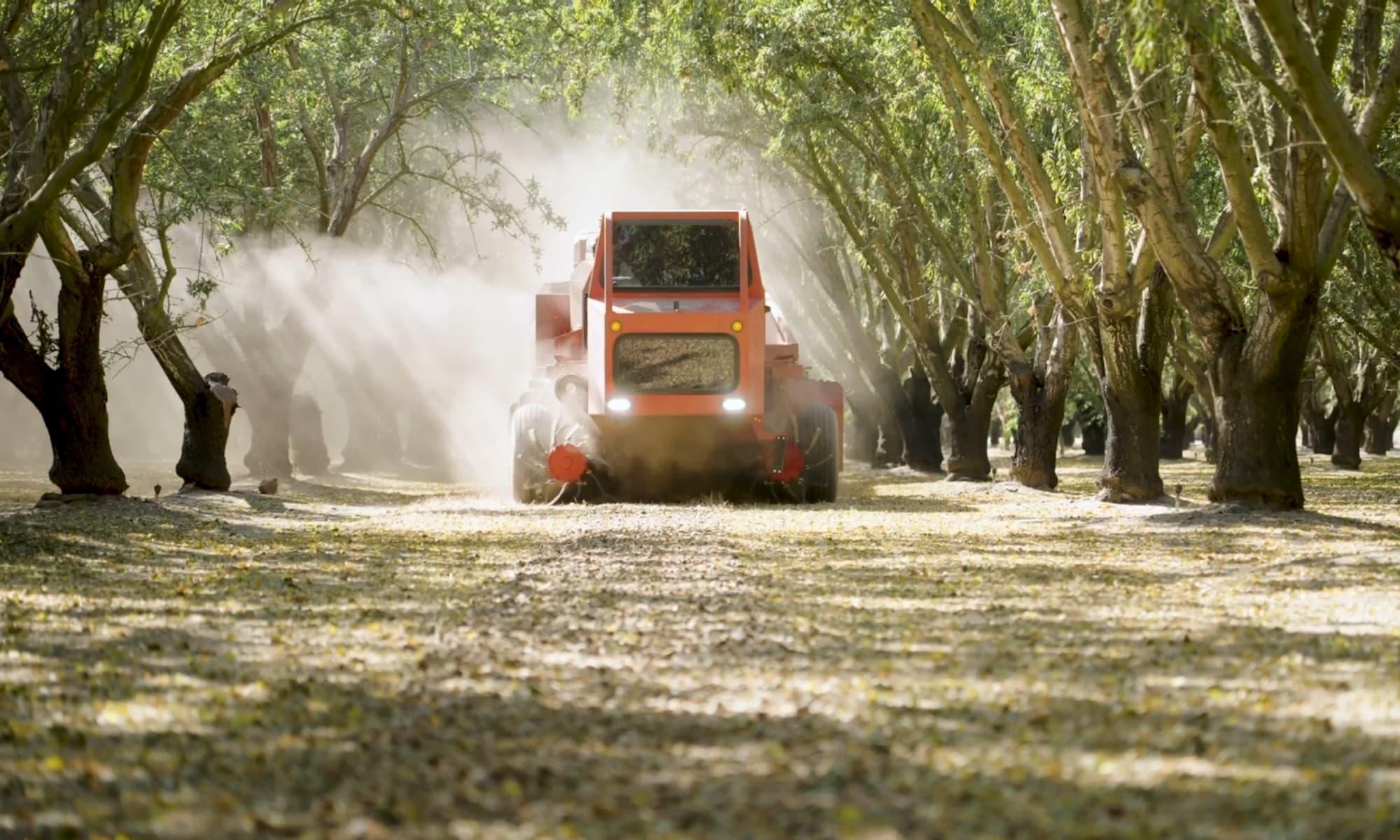
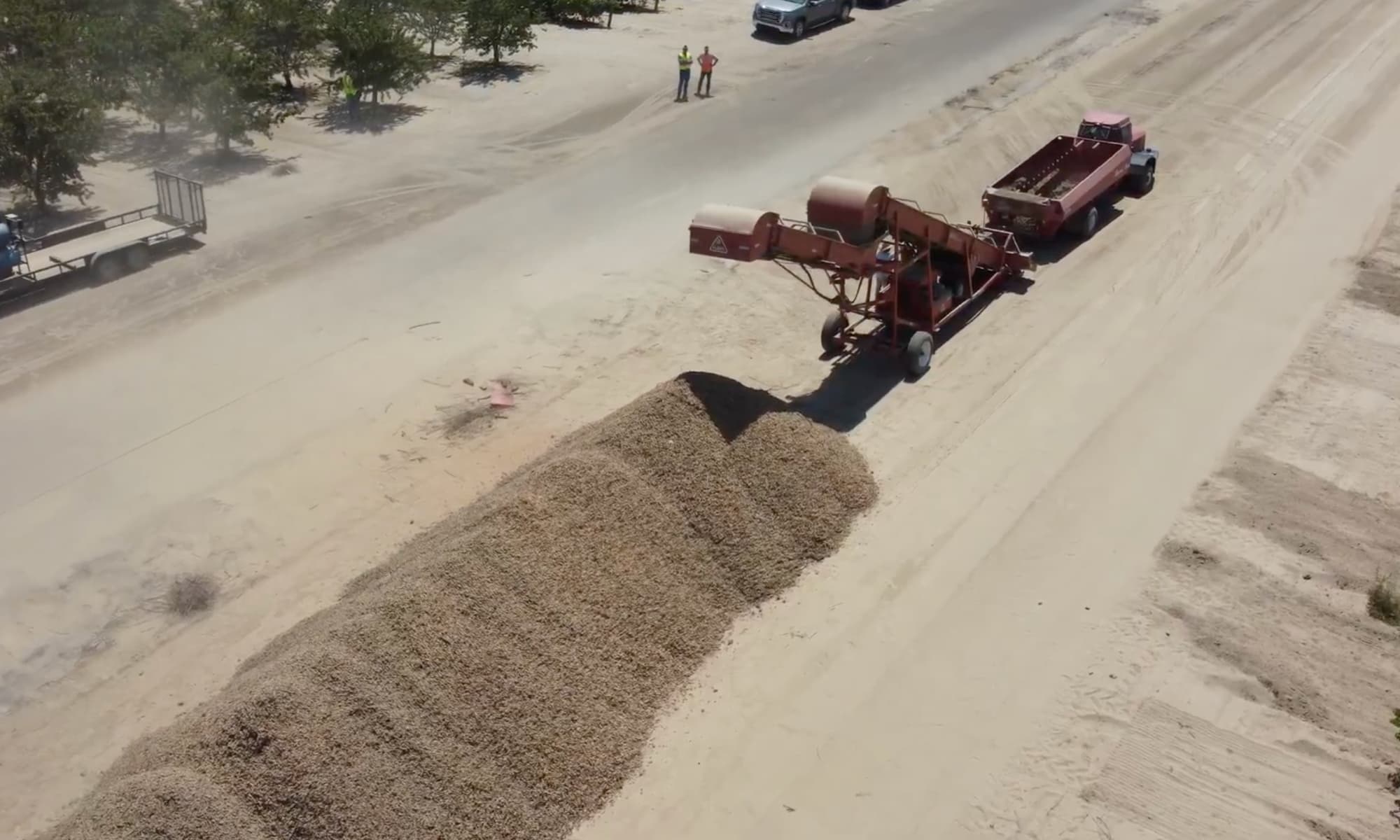
No Albanian source found describes how almonds are harvested, hulled or dried, or how much labor the harvest takes; the 2020 technical note places production on smallholders' land. An Italian study (2017) notes that almonds there are often still harvested by hand, knocked down with long poles onto nets; in its 2015 trials a trunk shaker with an inverted-umbrella catcher shook each tree in 3 to 6 seconds. In orchards planted for machines, mechanized harvesting can bring the crop in on time, with less risk of nuts deteriorating while they wait.
Late-summer weather in Albania is not reliably dry. July and August get the least rain (World Bank, 2021), yet national bulletins recorded 123.7% of normal August rain in 2020 against about 40% in 2017 and 2021, and September rain about 27% above normal in 2017, with about 8 rain days, 3 more than normal, and above normal again in 2020. This guide therefore shows prompt pickup, with drying after hulling, instead of leaving shaken almonds to dry on the orchard floor.
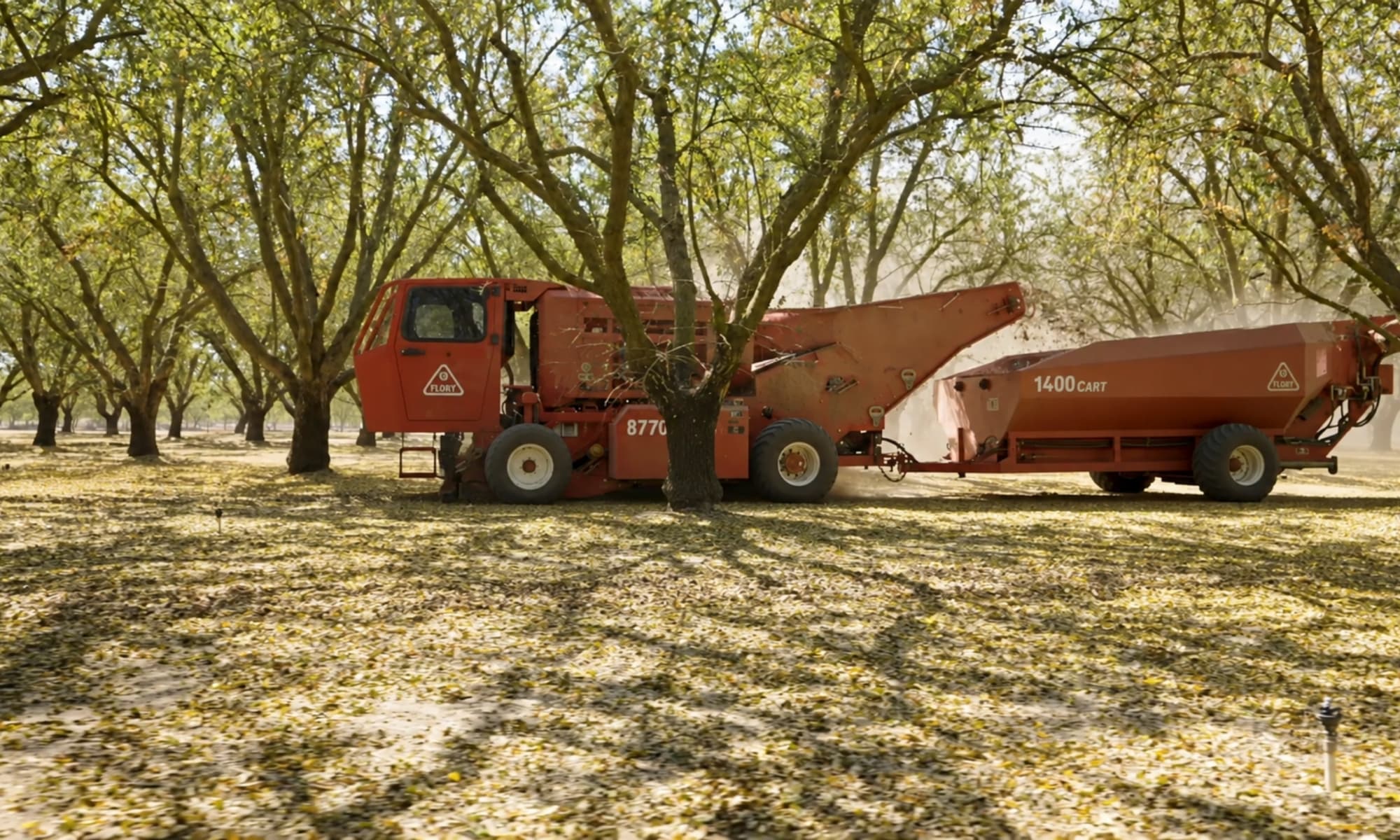
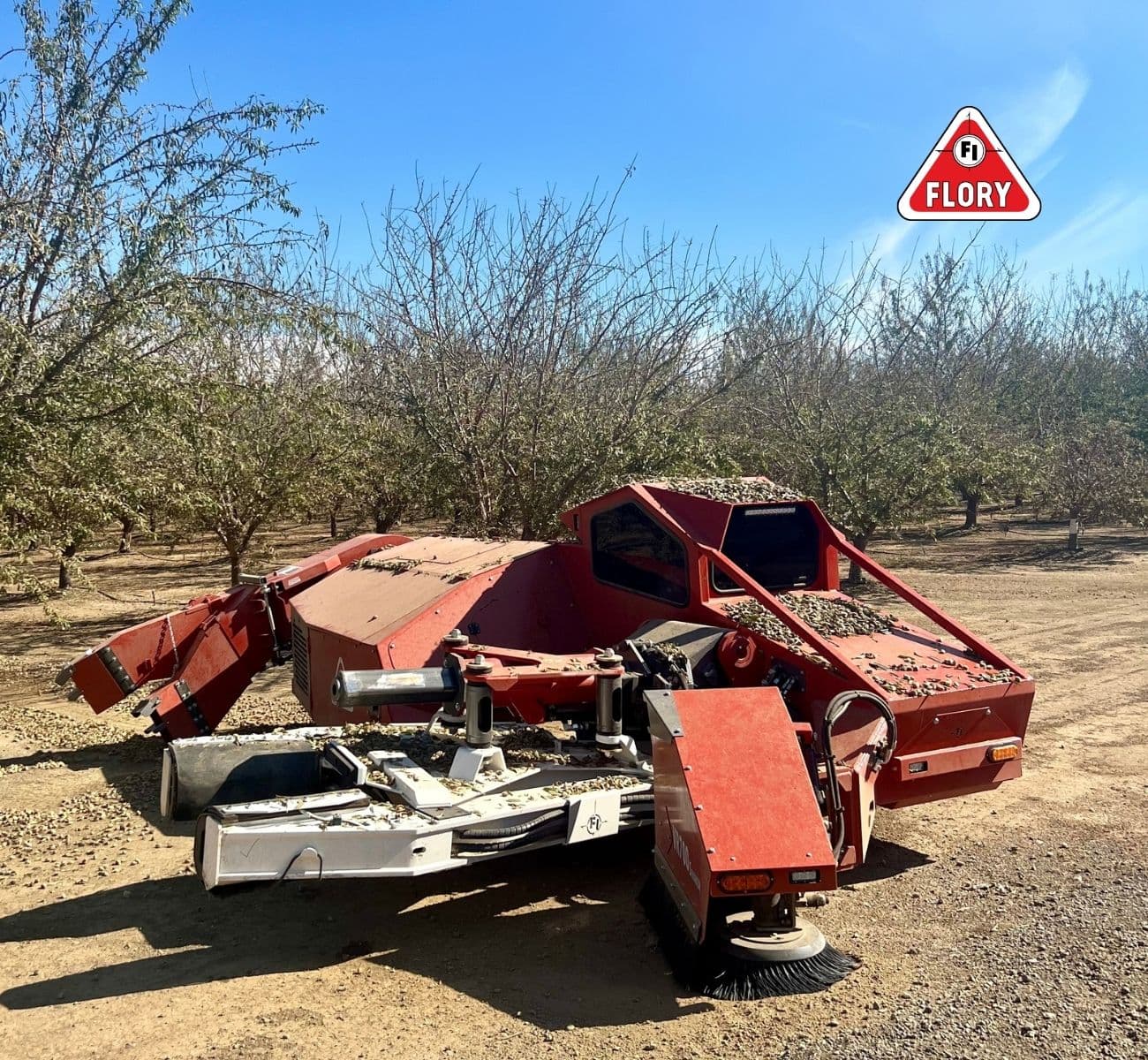
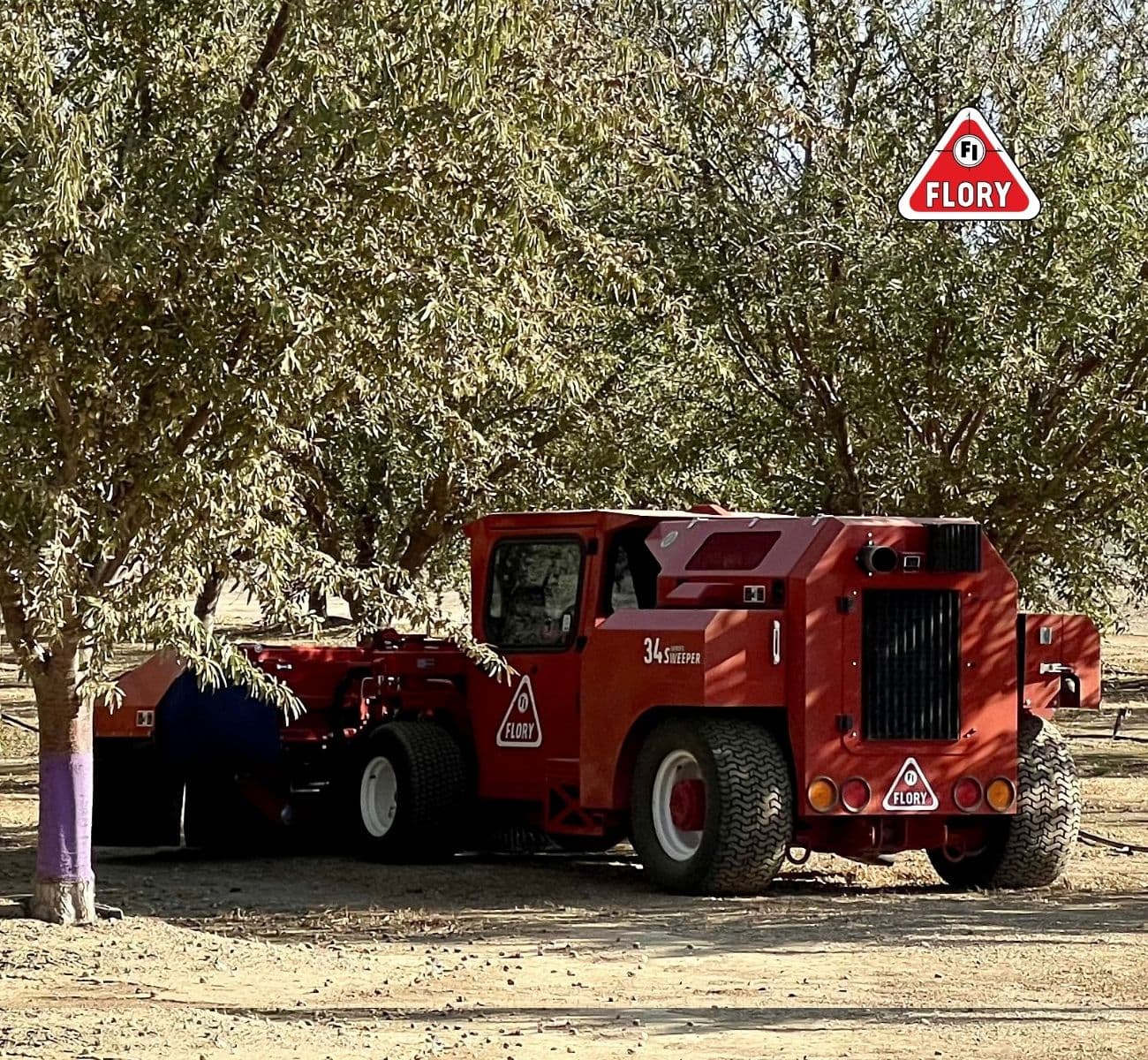
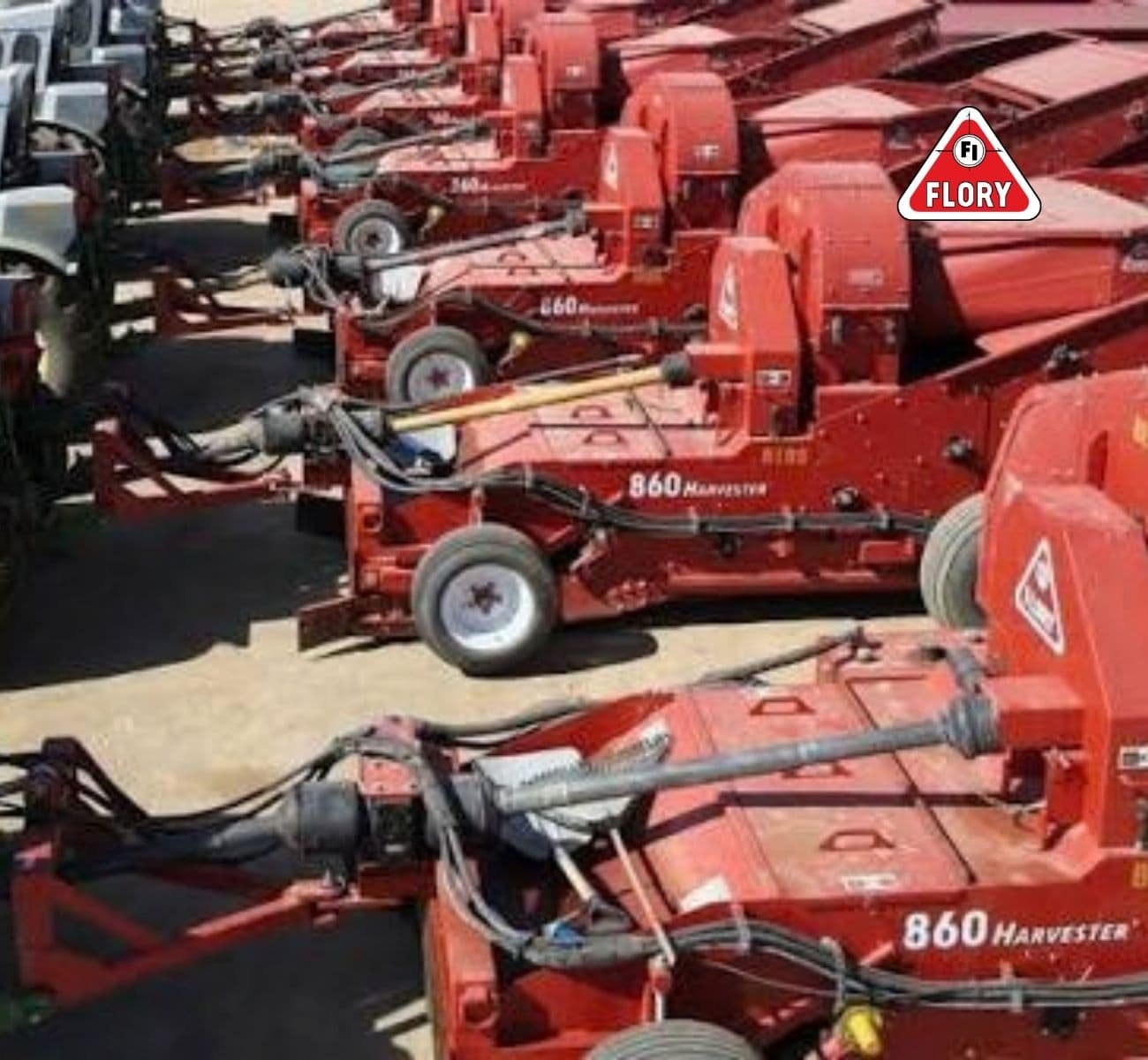
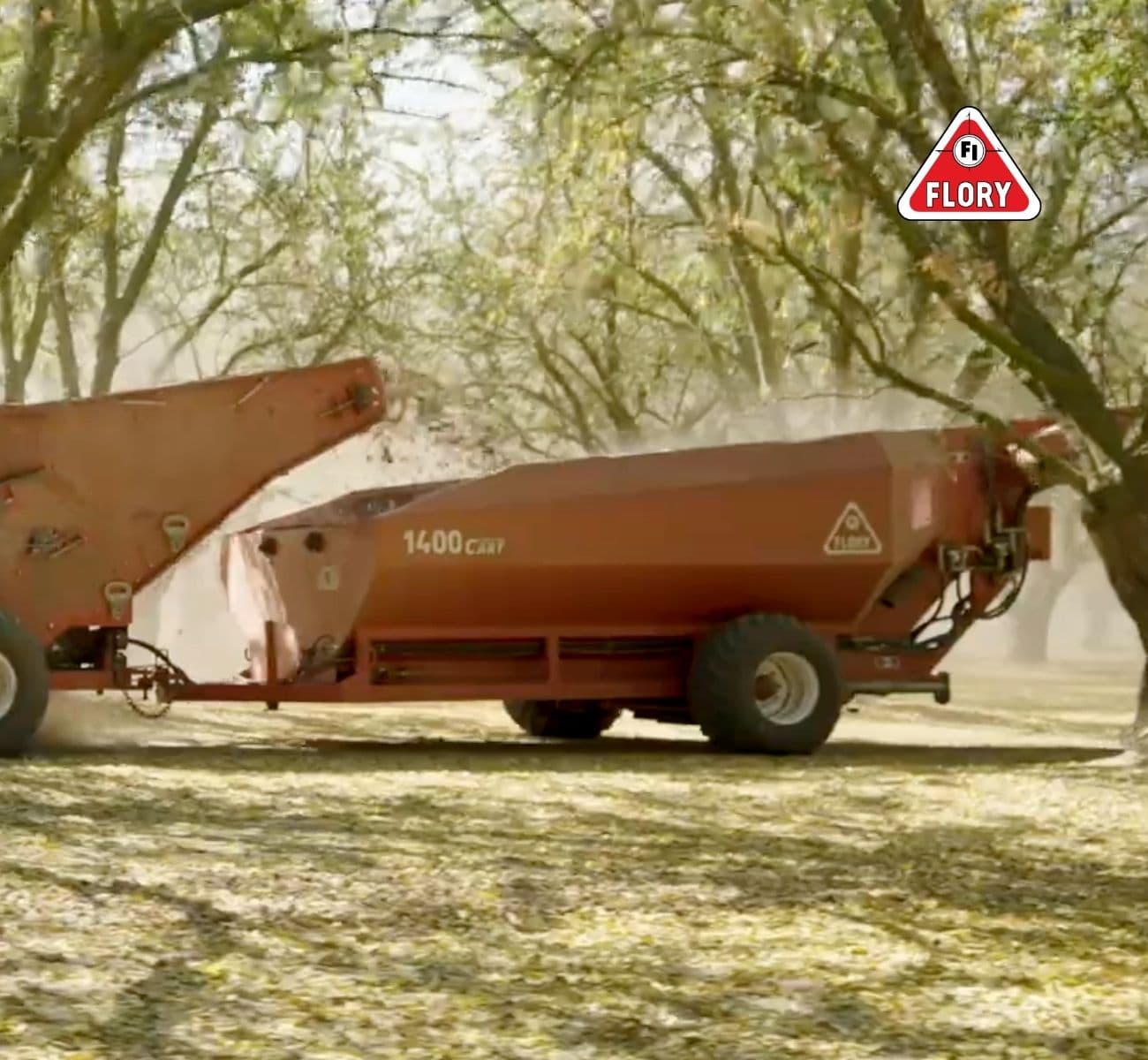
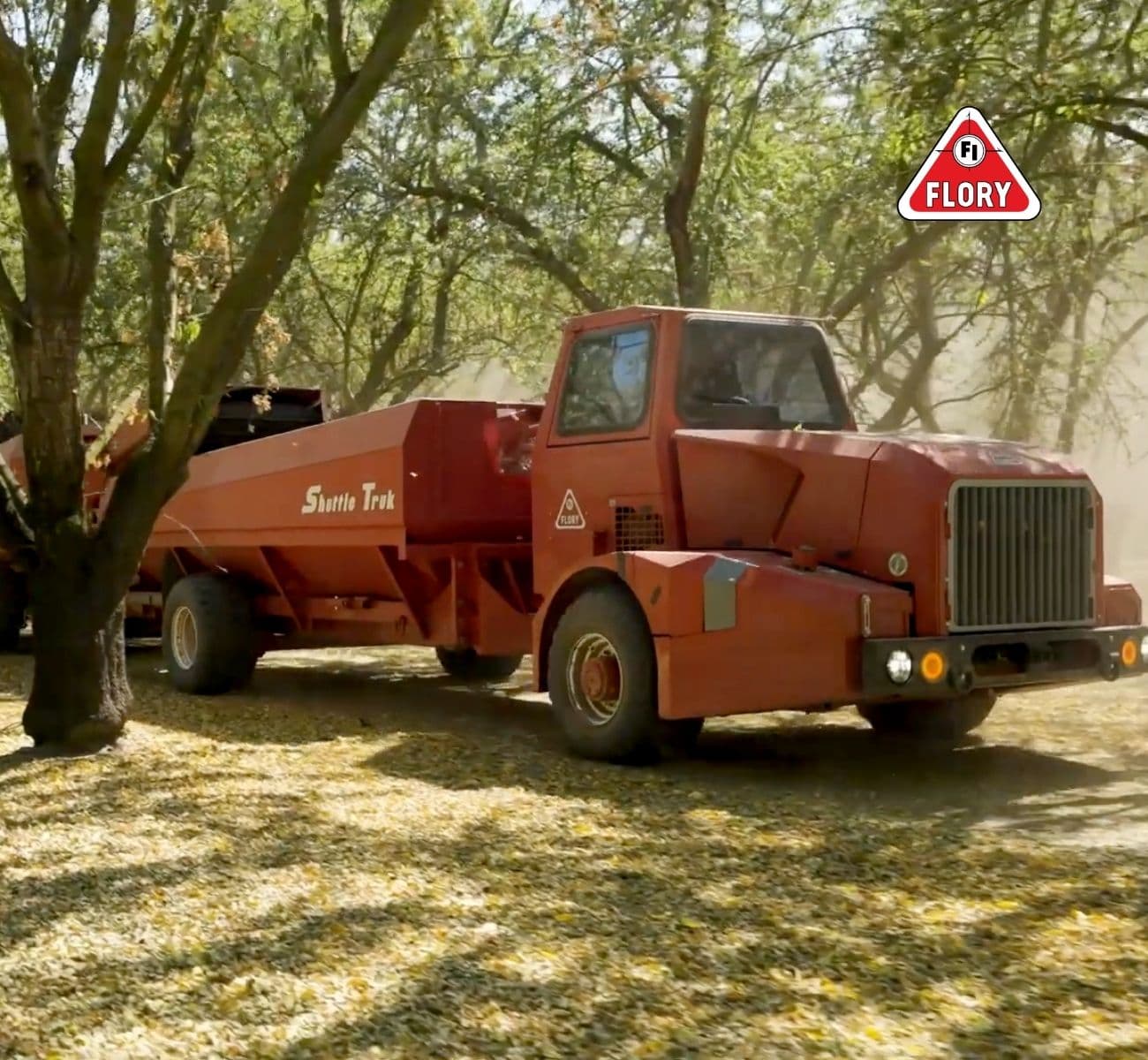
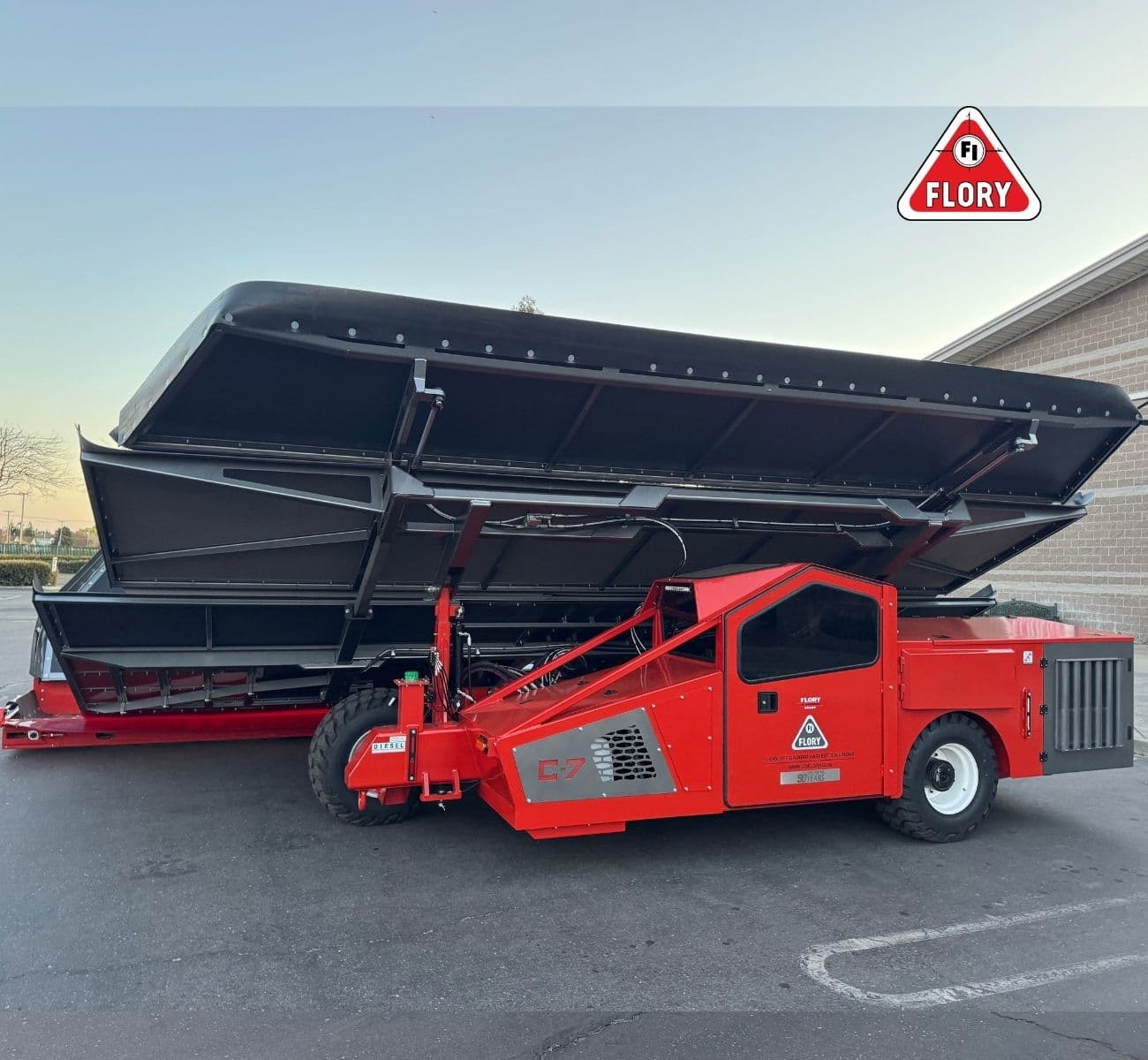
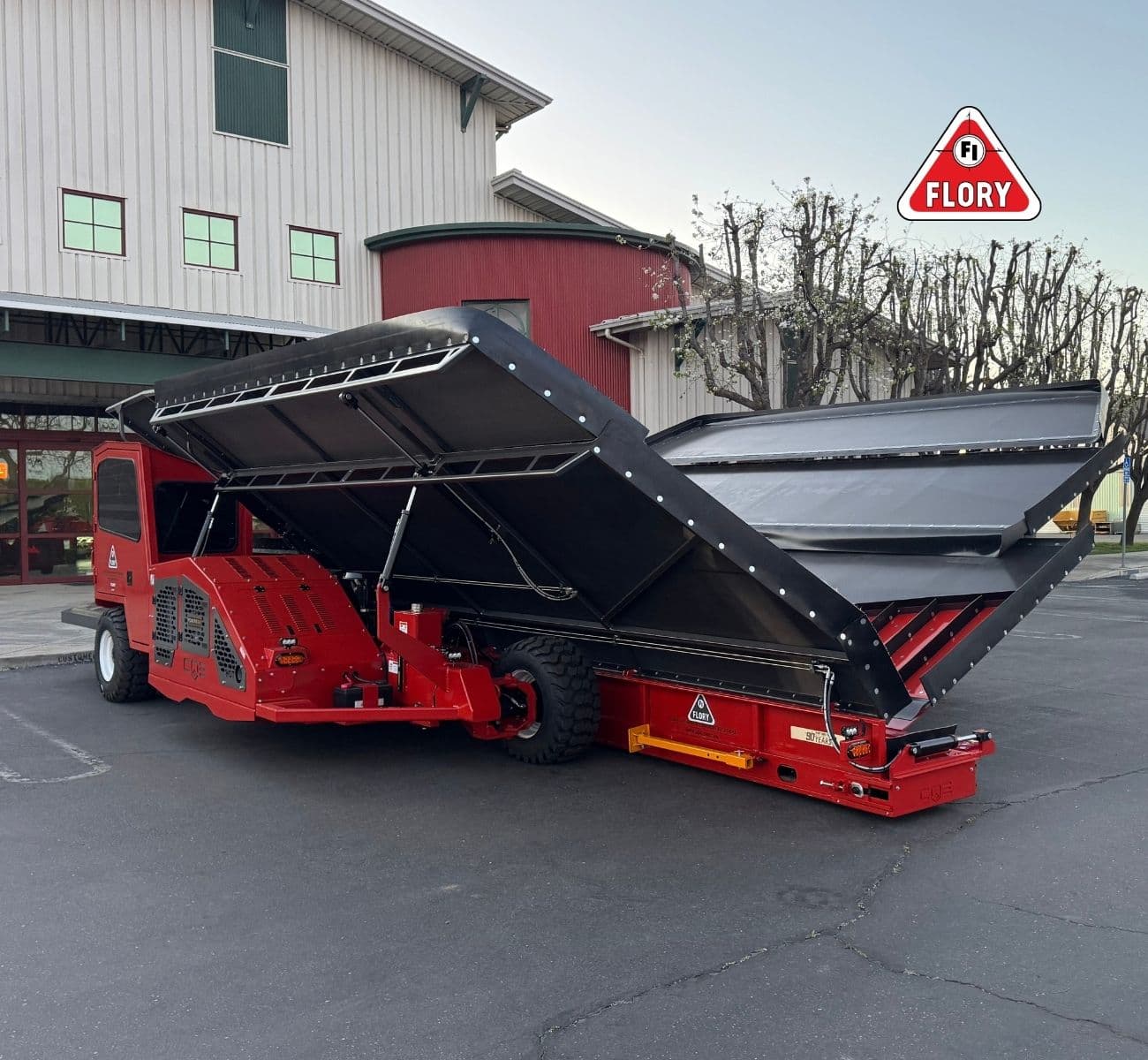
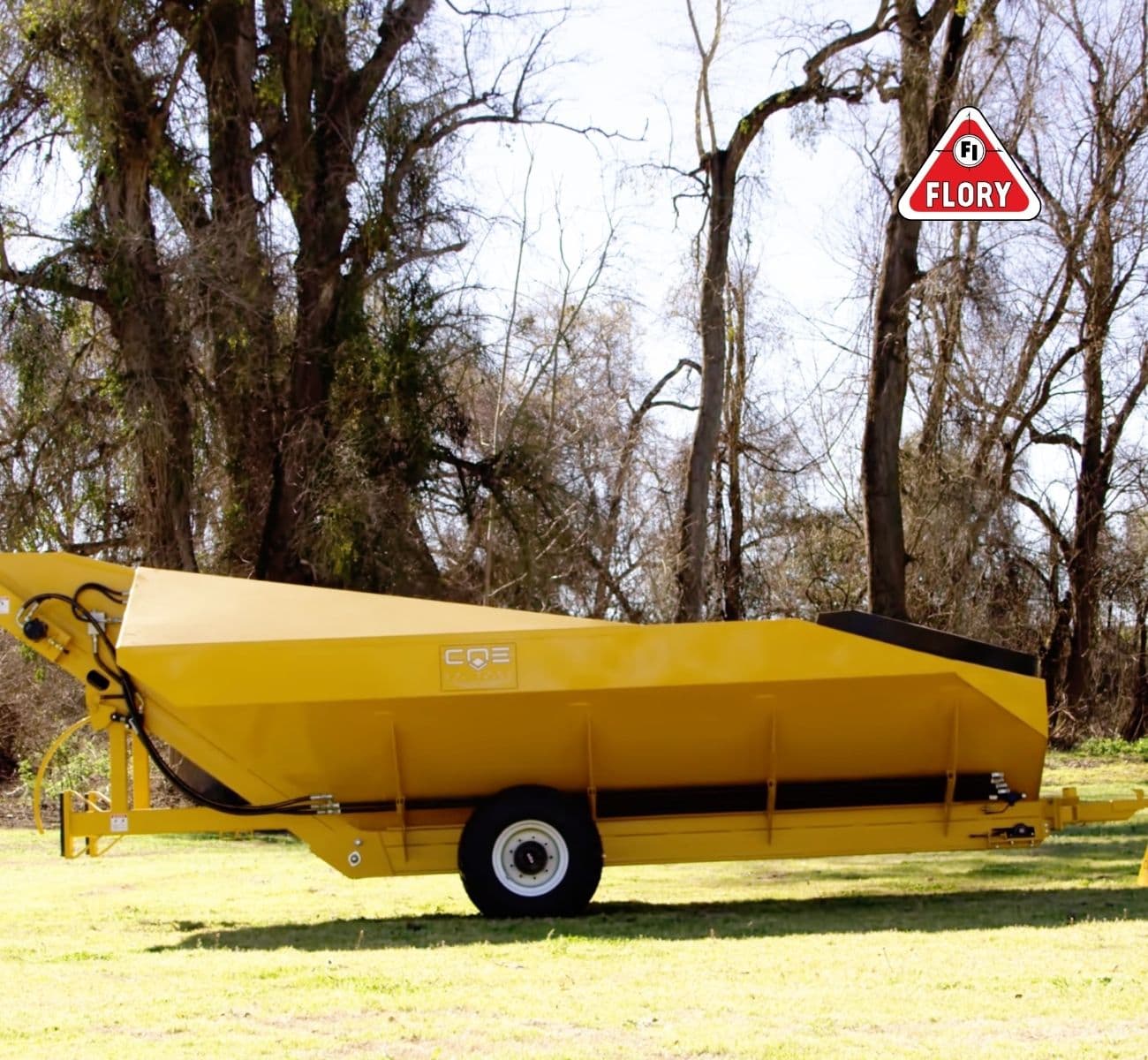
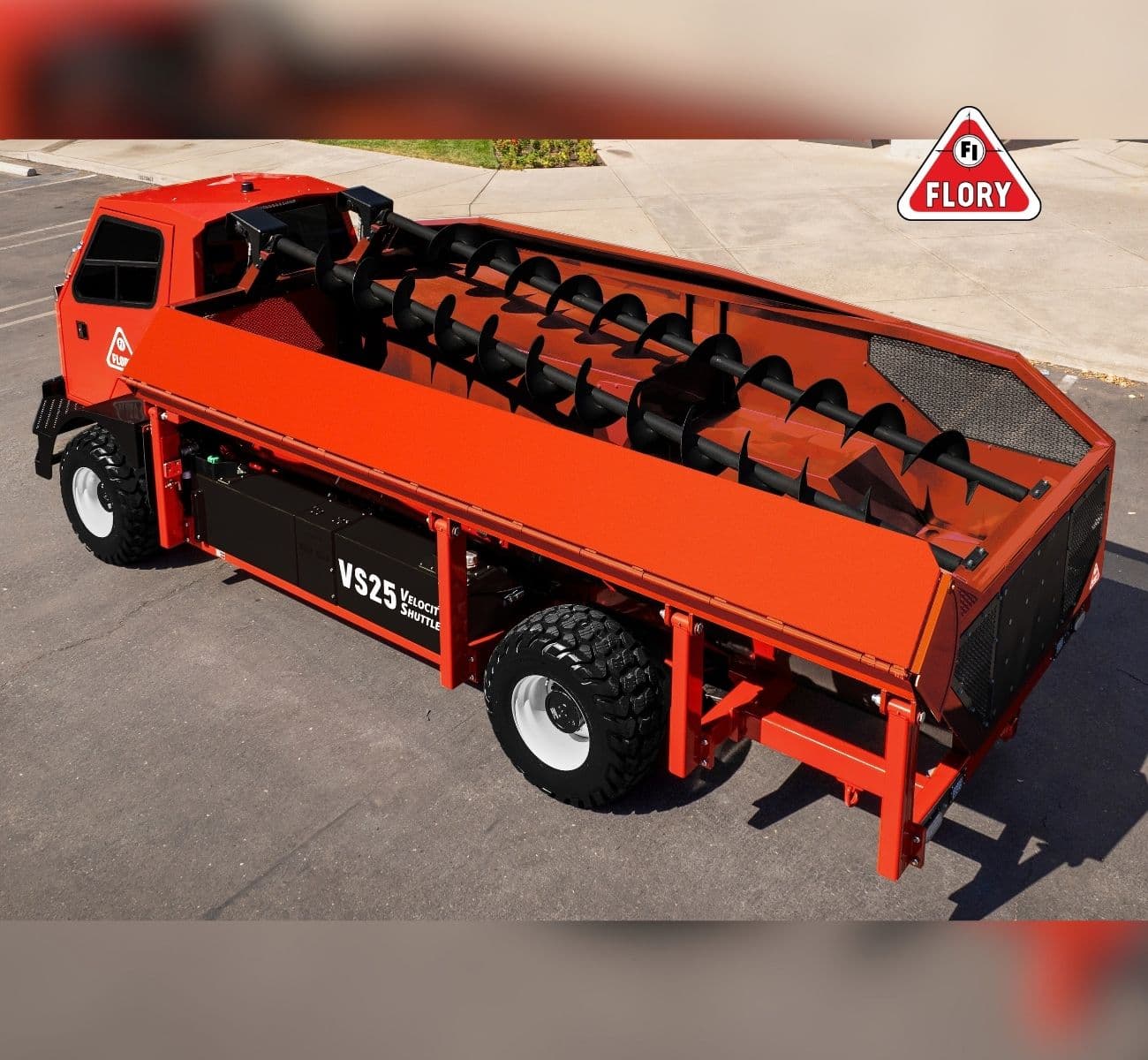
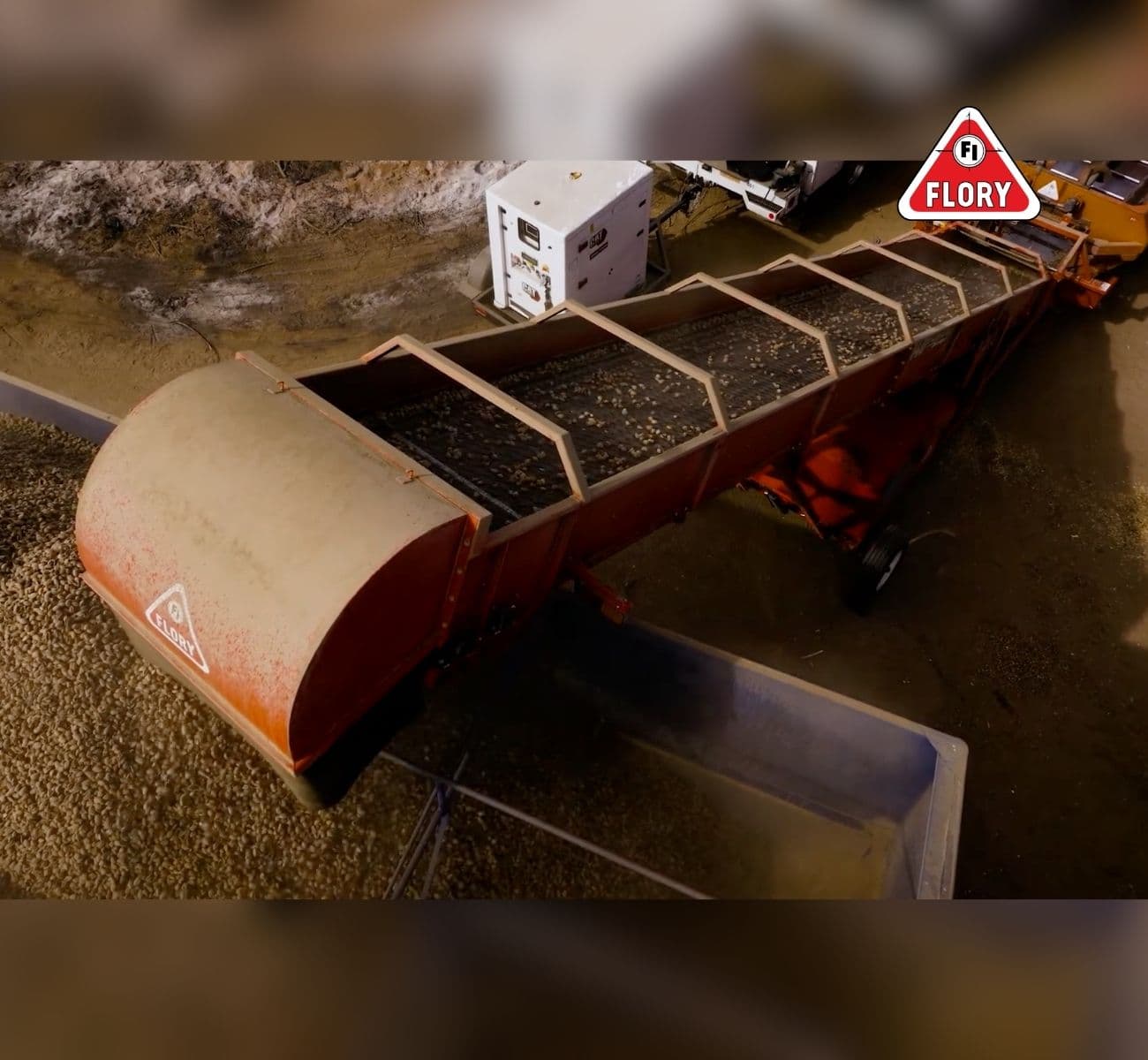
Flory harvesting machinery is available in Albania through OVE Europe for both systems. On the ground, the VR700 Shaker, 34 Series Sweeper and 860 Harvester (the 490 is a smaller option) feed the 1500 Conveyor Cart and ST14 Shuttle. Off the ground, the Flory COE C7 Shaker and L2 Receiver form a catching frame around the trunk, and the Flory COE B8 Cart and VS25 Shuttle carry the almonds; the 4840 Field Elevator loads trailers in both systems.
Almond Harvest Workflow (Recommended Equipment)
Practical Tips for Almond Harvesting
Start shaking when all nuts are at hull split stage 2C or later and test trees shake clean, as University of California guidance advises.
Check the forecast first: the Almond Board of California advises against shaking if rain is expected within five days.
Sweep and pick up soon after shaking, then hull and dry the almonds off the ground; University of California guidance adds that quick removal limits ant damage.
Where almonds must stay off wet ground, use catching frames: the Flory COE C7 Shaker and L2 Receiver catch the nuts before they land.
Use shakers and catching frames only in orchards planted for machines, never on terraces, steep slopes or scattered trees.
Shake young orchards last to reduce the risk of shaker damage, as the University of California's July 2026 almond newsletter advises.
Get your recommended harvest setup
Enter orchard size, spacing, terrain, and target throughput—we’ll suggest a practical harvest workflow and equipment lineup.

Almond Post-Harvest Handling & Processing in Albania
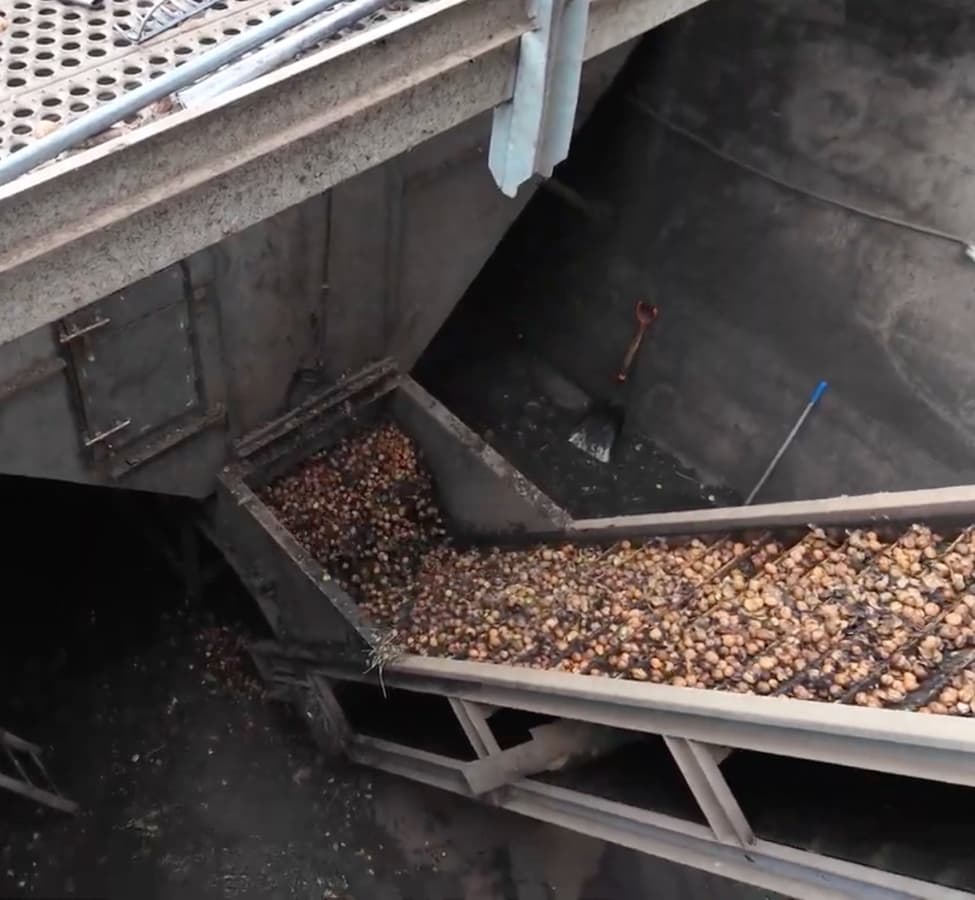
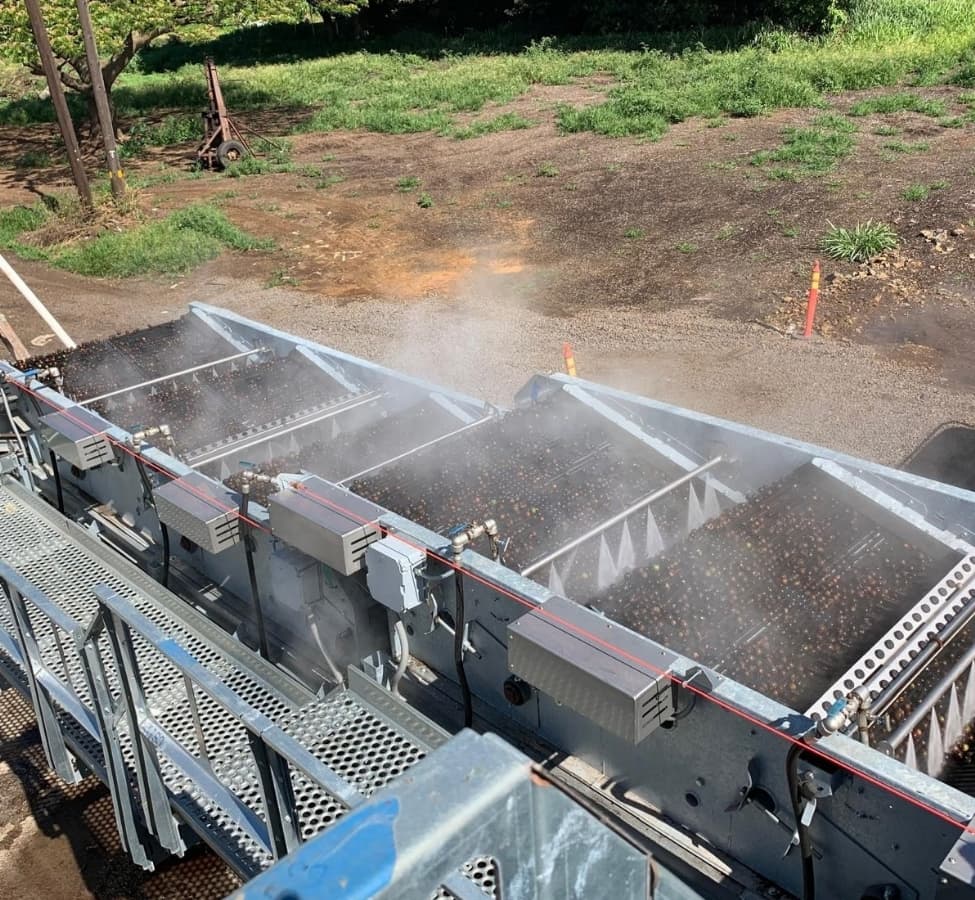
No Albanian source found describes how almonds are hulled, dried, stored, cracked or graded. Almonds picked up promptly or caught off the ground arrive with fresh hulls, so this workflow takes the hull off first and then dries the nuts in the shell; in Andalusia, growers usually deliver almonds hulled and fully dry, with up to 6.25% moisture tolerated at reception (Junta de Andalucía, 2013). Almond Board of California guidance warns that at 11% kernel moisture, molds grow rapidly and aflatoxin contamination occurs.
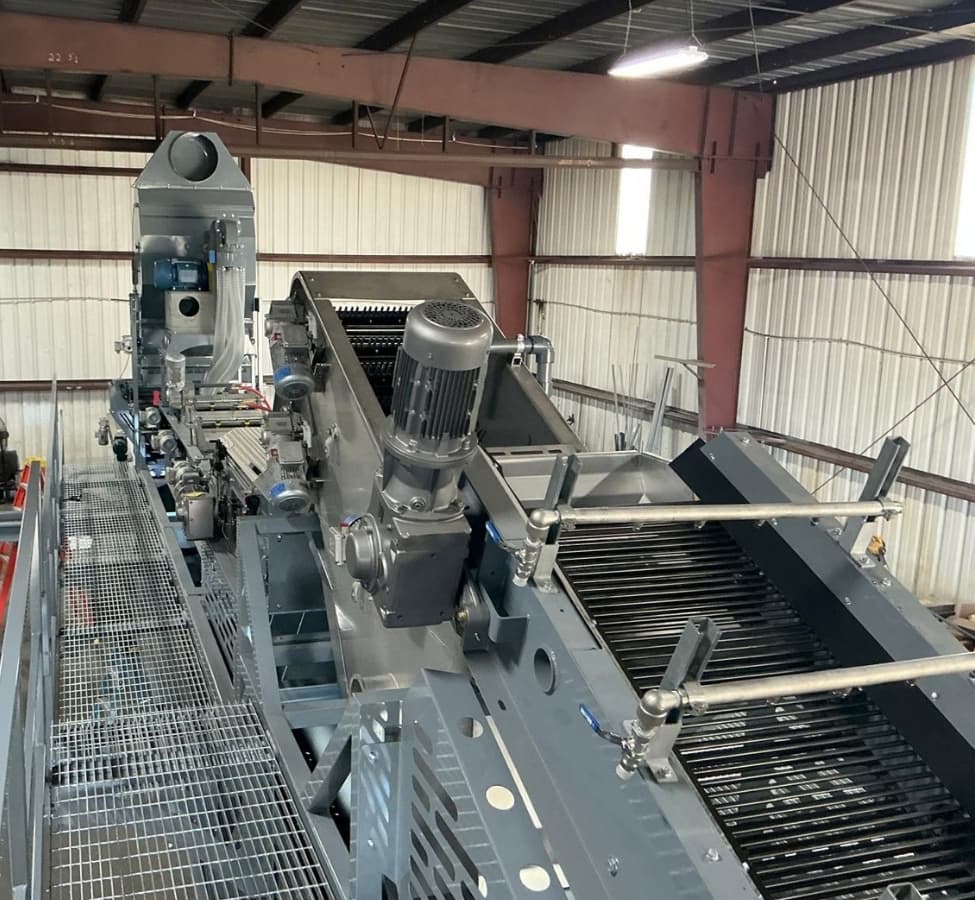
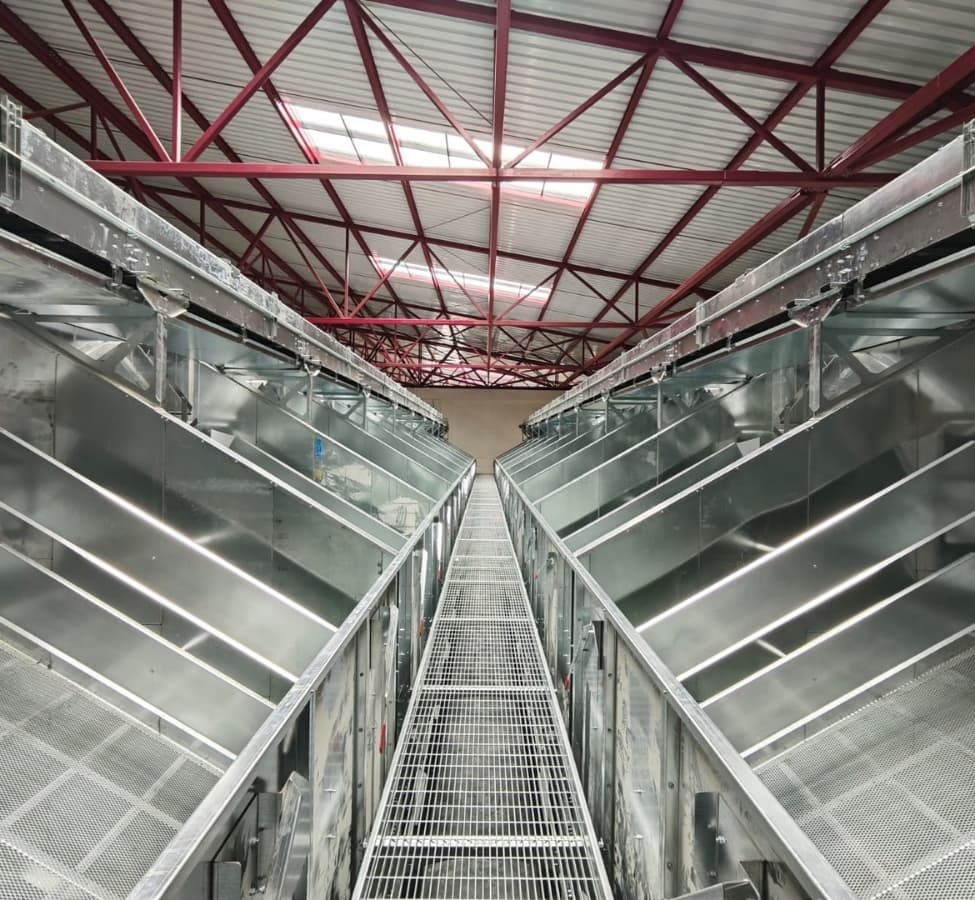
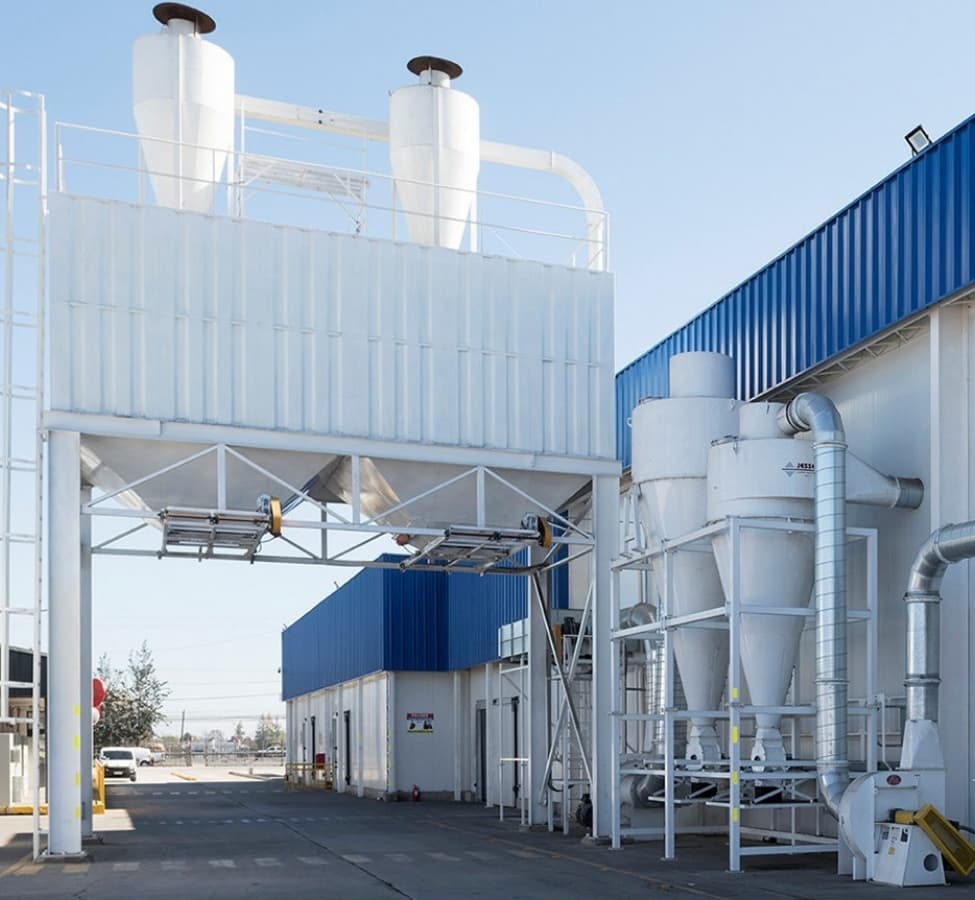
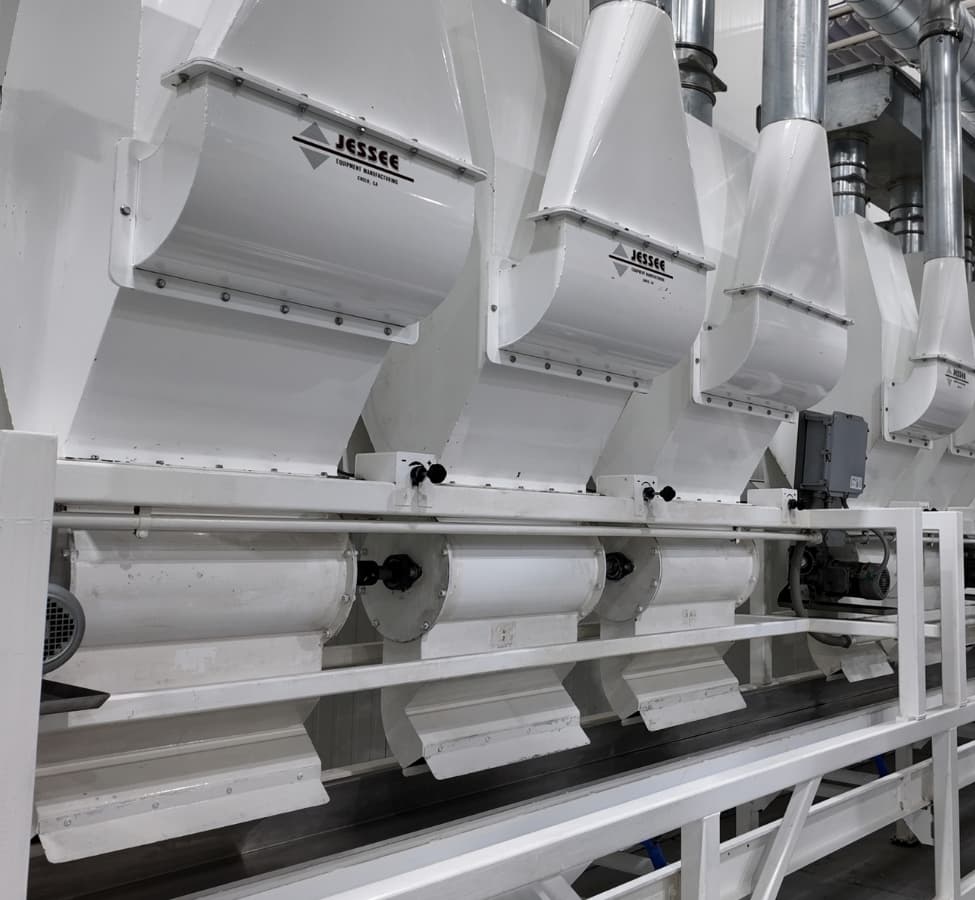
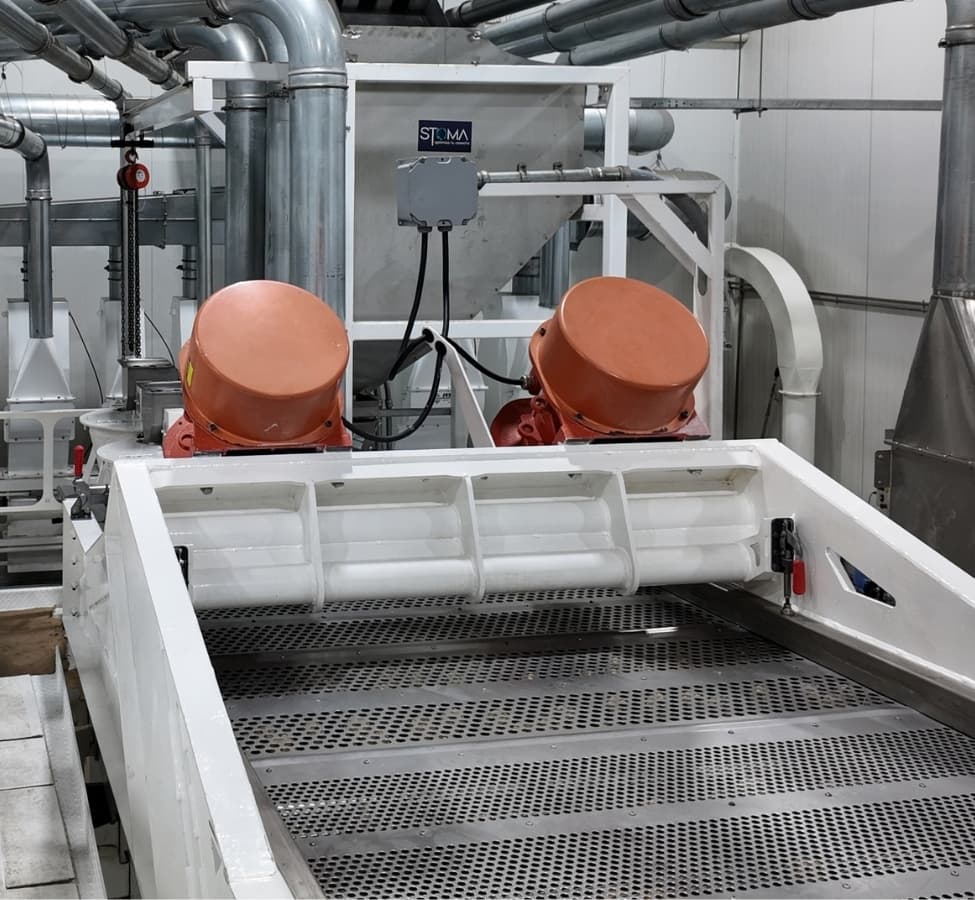
Almonds reach Albania mostly as kernels: in 2024 it imported 652 t of shelled almonds against 21.8 t in shell (UN Comtrade via WITS). AgroWeb reported in October 2024 that growers received 150 to 200 lekë per kg at wholesale collection, while agri-food markets quoted 400 to 500 lekë per kg, without saying whether in shell or shelled. Jessee, whose processing lines OVE Europe supplies, builds hulling, drying, in-shell cleaning and sizing, and shelling systems; its Airlegs nut cleaner was developed for the almond industry.
Albania's Instruction No. 4 of 9 February 2024 sets aflatoxin limits for almonds of 8.0 µg/kg for B1 and 10.0 µg/kg in total when sold to the final consumer or used as an ingredient, and 12.0 and 15.0 µg/kg for almonds to be sorted first, the same values as Regulation (EU) 2023/915. Shelled almonds sold in the EU are exempt from the marketing standard except for the country of origin (Delegated Regulation (EU) 2023/2429).
For general information only. Information may become outdated and does not replace site-specific professional advice. Consult a qualified agronomist and confirm equipment suitability with OVE before acting.
Practical Tips for Almond Post-Harvest Handling & Processing
Hull promptly picked or frame-caught almonds while the hulls are fresh, then dry the nuts in the shell before storage.
Dry to a safe level before storage: Almond Board of California guidance gives about 6% moisture for kernels and 9% for in-hull nuts.
Measure moisture in samples from each lot, and keep lots apart by cultivar and block in a dry, clean store.
Sort kernels by size and defects before sale: in 2024 Albania imported 652 t of shelled almonds, so local kernels compete with imports.
Test lots against Albania's limits for almonds (Instruction No. 4 of 2024): 8.0 µg/kg of aflatoxin B1 and 10.0 µg/kg in total for consumers.
For buyers in the EU, show the country of origin on shelled almonds, as Delegated Regulation (EU) 2023/2429 requires.
Recommended Post-Harvest Handling & Processing Stages
Plan your post-harvest line
Estimate tons/day, cleaning & drying capacity, storage needs, and cost/kg—then build your equipment plan in phases.