


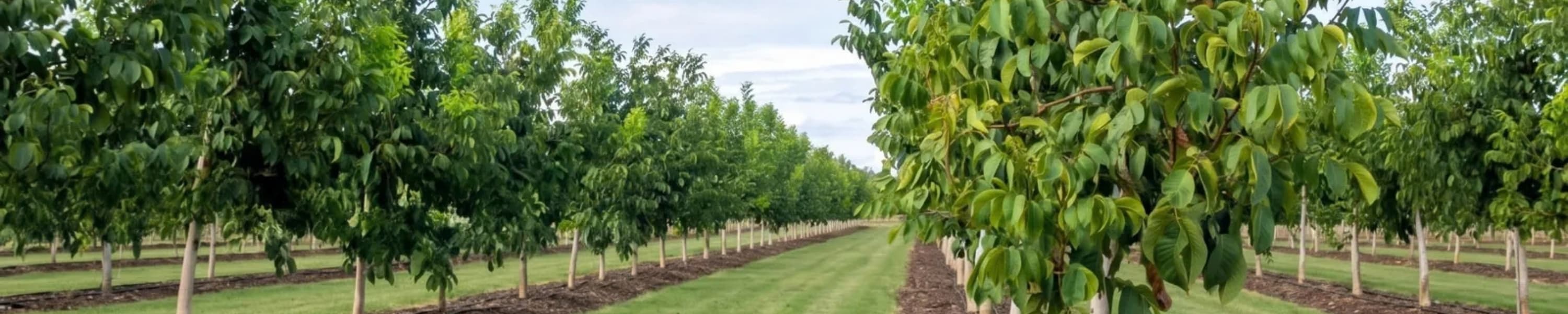




Walnut Orchard Establishment in Albania
Albania has a Mediterranean climate with some continental influence in the south-east. About 70% of the rain falls from October to March, and annual totals range from about 600 mm in the south-east to 2,800 to 3,000 mm in the Albanian Alps (First National Communication to the UNFCCC). Late spring frost is a real risk inland: in early May 2026, frost in Devoll in the south-east caused heavy losses in apple, cherry and plum orchards, so keep new walnut blocks out of hollows where cold air settles.
Choose varieties for both frost and harvest timing. Albanian extension advice lists Chandler, Lara, Hartley, Tulare, Howard and Franquette as widespread, along with three local cultivars, and notes that Chandler and Franquette flower late, which lowers the risk of late frost damage; even a brief frost of -2 °C at flowering destroys flowers and young shoots. Varieties also ripen at different times, which spreads the harvest over several weeks.
Plan spacing around each variety's bearing habit and the machines. Albanian guidance gives about 100 trees/ha (10 × 10, 8 × 10 or 10 × 12 m) for terminal-bearing cultivars and 400 to 500 trees/ha (7 × 3 to 6 × 4 m) for lateral-bearing ones, and puts the water need for optimal yields at 700 to 800 mm a year. On slopes, leave room for a shaker, sweeper and harvester to turn and to reach a loading point.
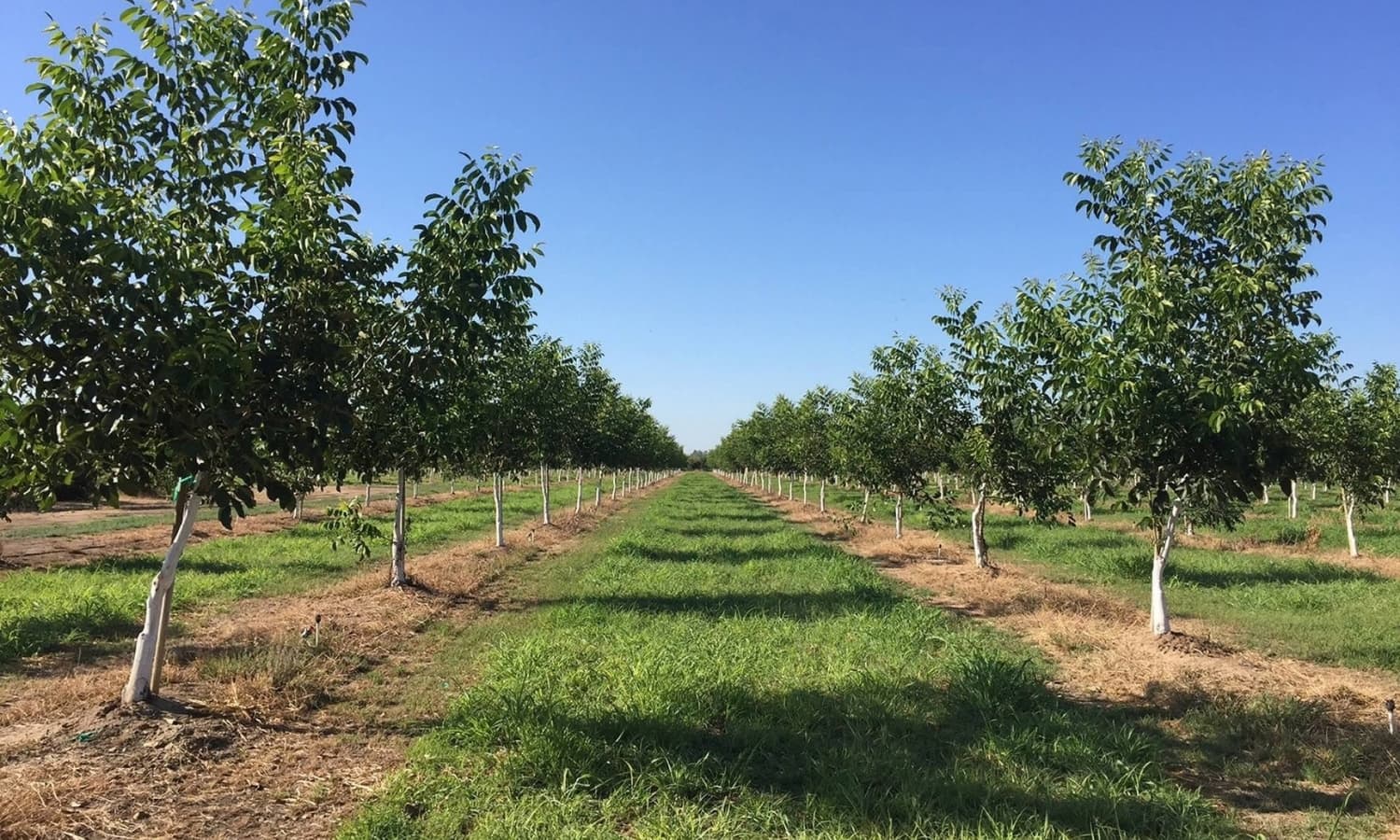

Practical Tips for Walnut Orchard Establishment
Avoid hollows and valley floors where cold air collects, and choose slopes where frost can drain away in spring.
Where spring frosts are common, favor late-flowering varieties such as Chandler or Franquette, as Albanian extension advice suggests.
Combine varieties that ripen at different times, so harvest can run block by block from mid-September into October.
Before planting, mark rows, headlands and a loading point, so a shaker, sweeper and harvester can reach every block.
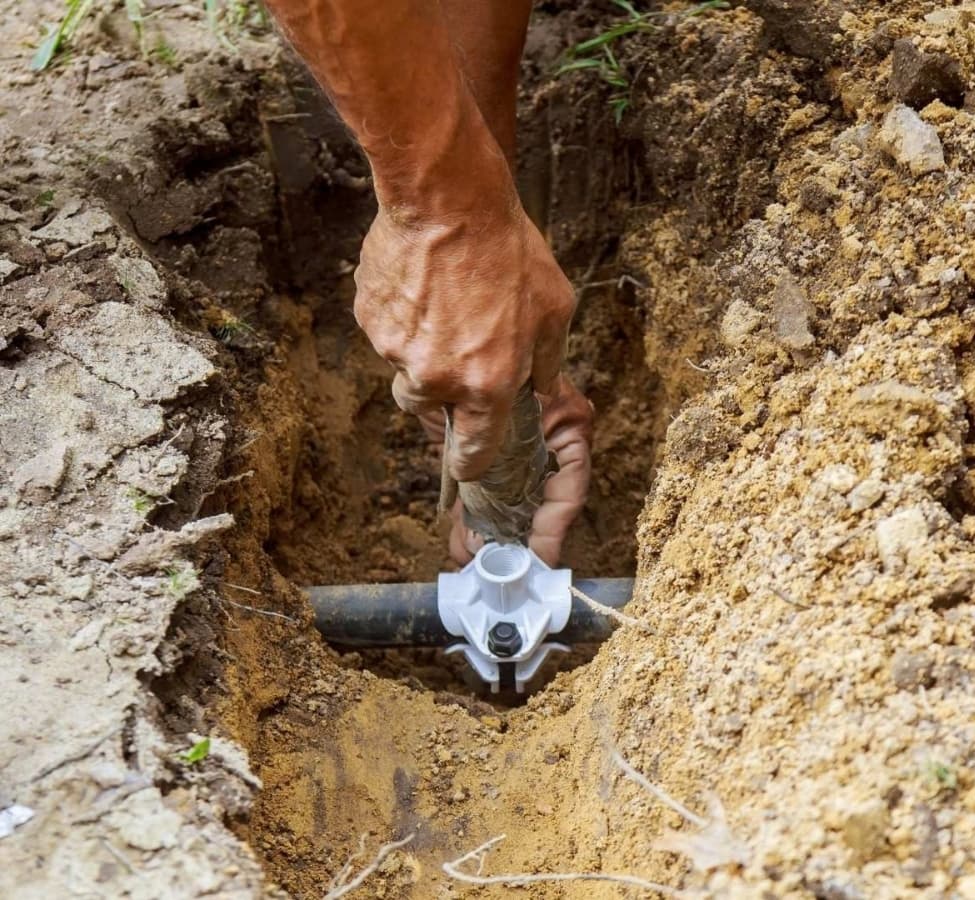
Secure water first: walnut needs about 700 to 800 mm a year for optimal yields, and Albanian summers are dry from June to September.
Plant grafted trees of named varieties and record which variety grows in each block; it guides spraying and harvest dates.
Recommended Establishment Stages





Walnut Orchard Care & Maintenance in Albania
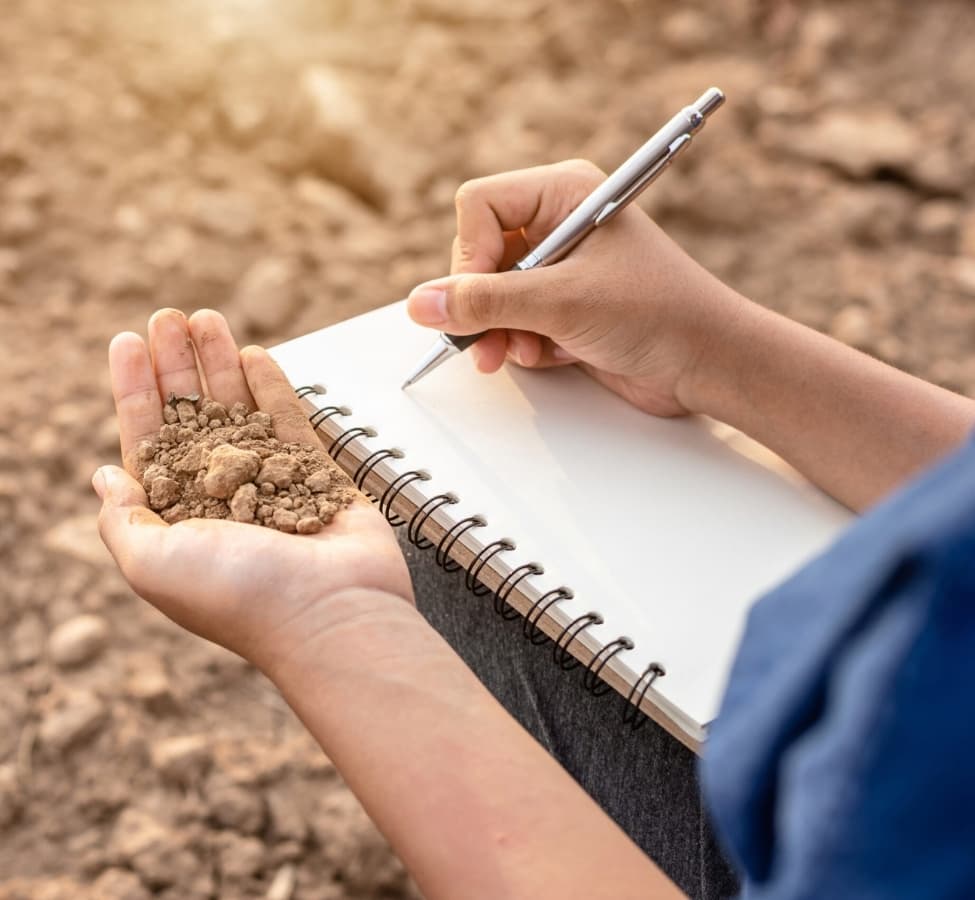
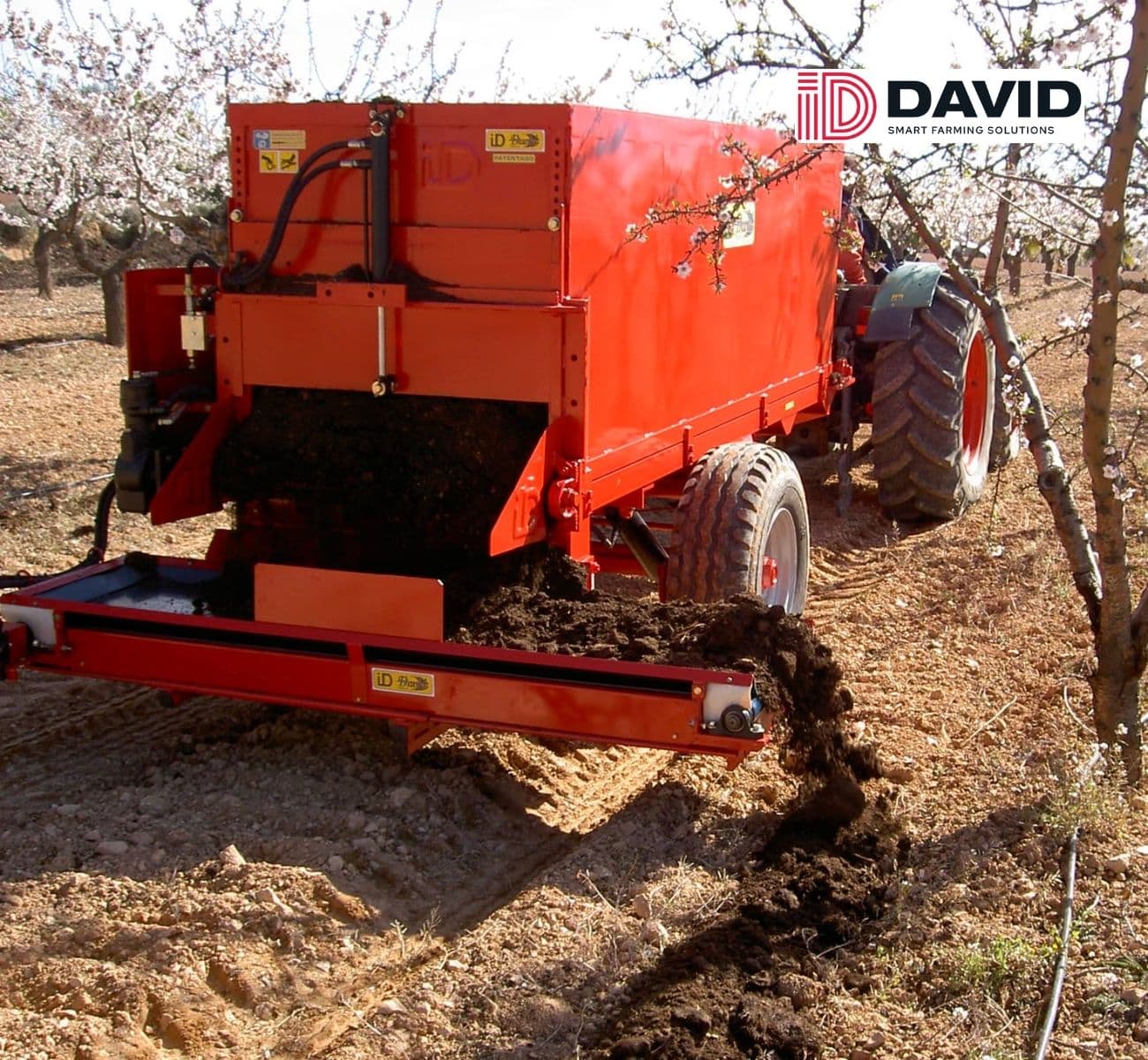
Most of Albania's rain falls from November to March, with lower amounts in the June to September growing season (World Bank). So even where the yearly total tops the 700 to 800 mm that Albanian advice gives for optimal walnut yields, check soil moisture in summer and irrigate when it runs low. Base fertilizer on soil analysis, as Albanian advice recommends, and spread manure between the rows to build up organic matter, which also helps the soil hold water.
Albanian extension advice lists walnut blight (Xanthomonas arboricola pv. juglandis) and anthracnose (Gnomonia leptostyla) among the main diseases, with the first blight treatment at bud break and copper sprays repeated in wet weather. Codling moth is present in Albania (EPPO); Albanian advice expects its adults from late May to early June and recommends pheromone traps from early spring, so sprays can follow the catches.
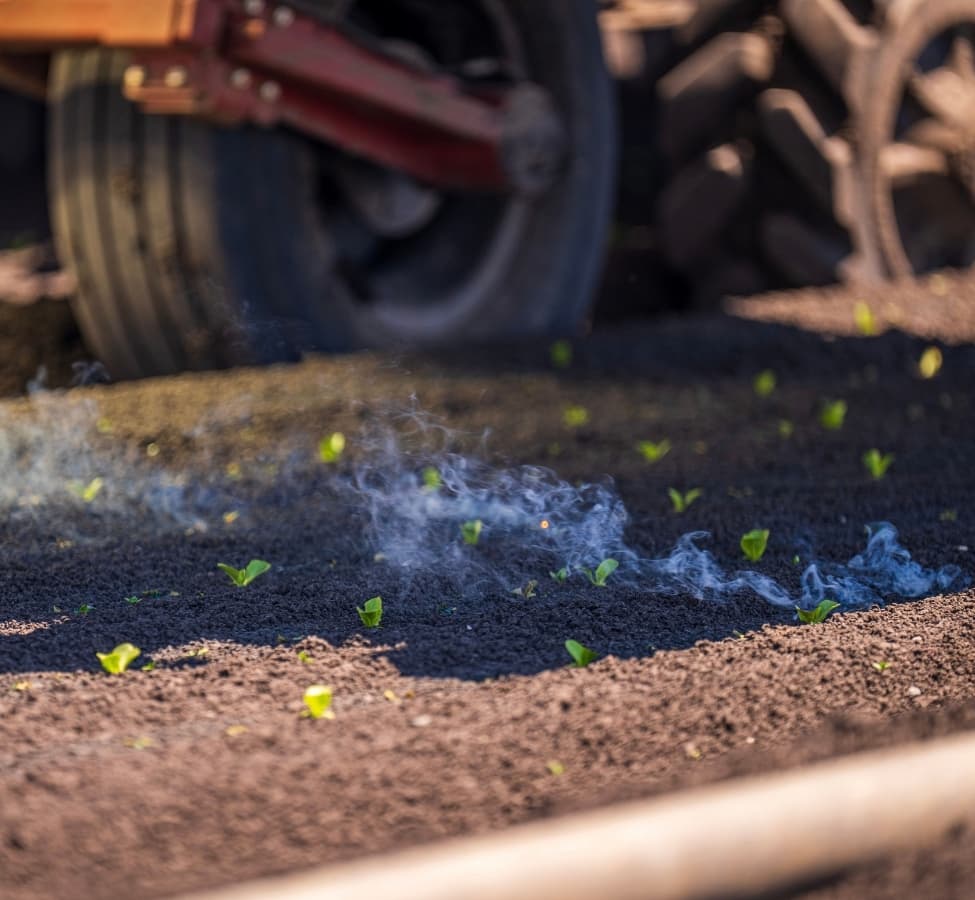
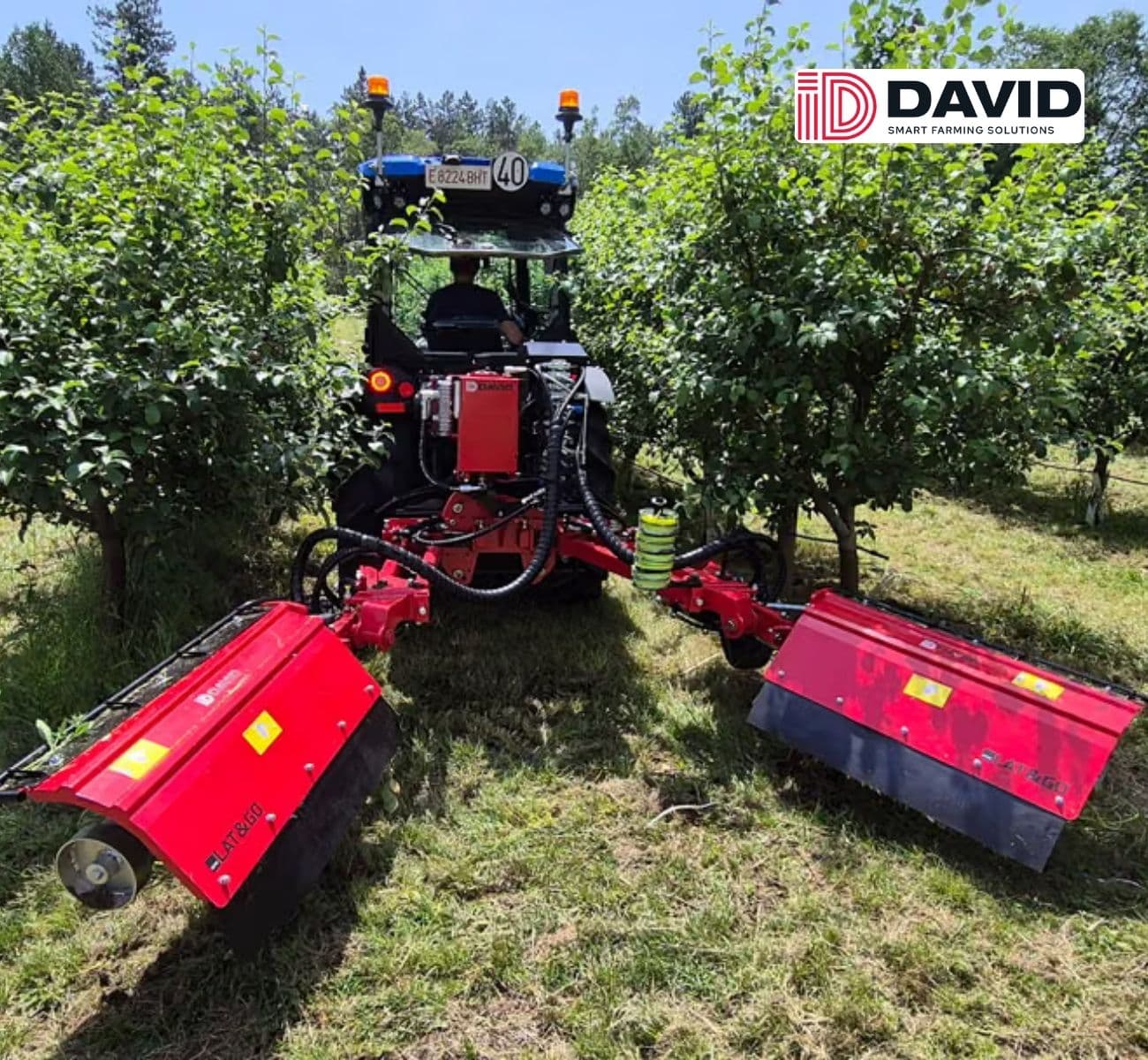
Prune for a single, clear trunk that a shaker can clamp, and open the crown for light and air. Before harvest, mow, level and clean the orchard floor: nuts picked up from a smooth, firm surface carry less soil, stones and other debris to the hulling line.
Recommended Orchard Care & Maintenance Stages



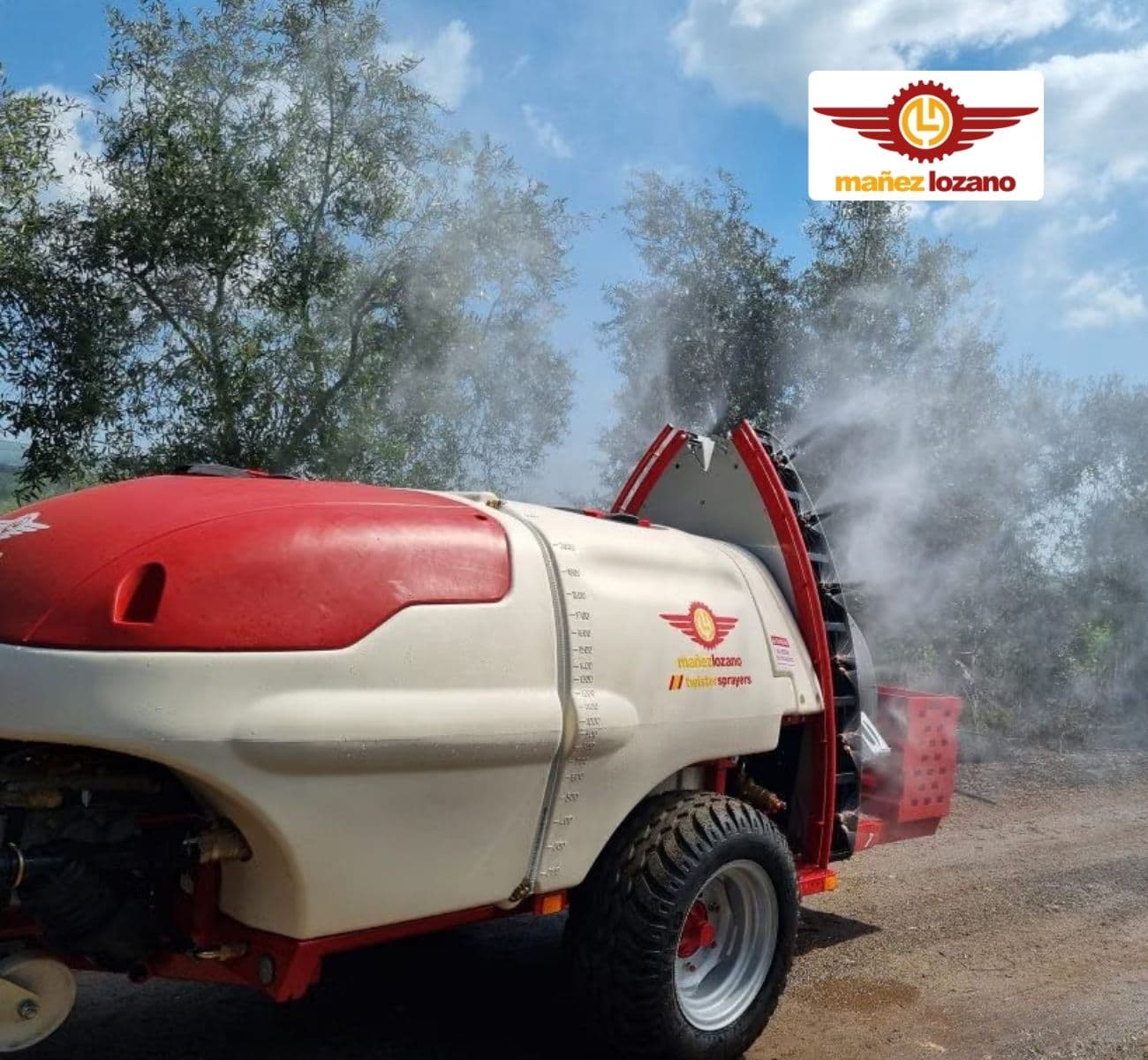
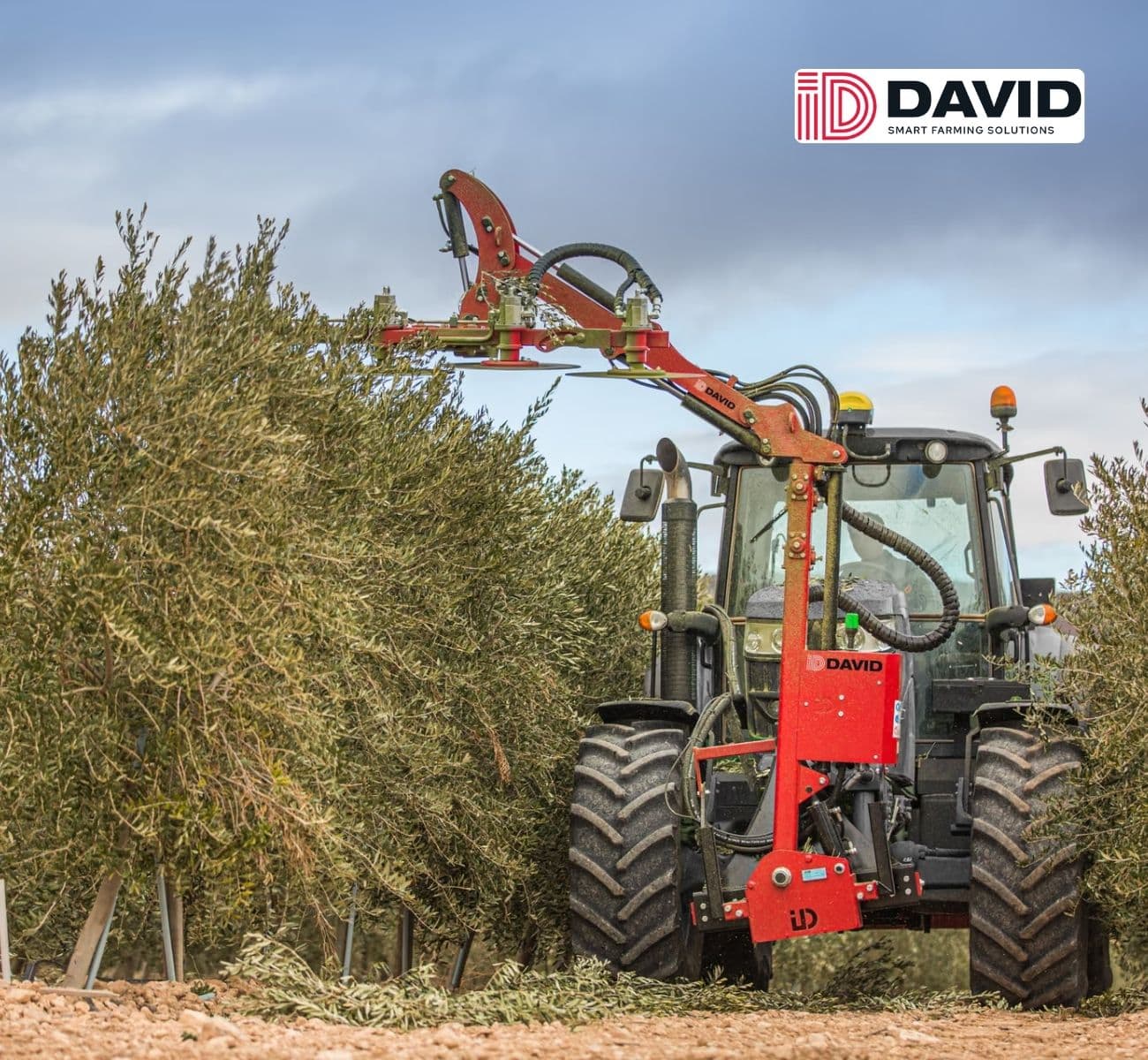
Practical Tips for Walnut Orchard Care & Maintenance
Irrigate through the dry June to September period, checking soil moisture rather than following a fixed calendar.
Make the first blight spray at bud break and repeat copper treatments during wet spells, as Albanian extension advice recommends.
Hang codling moth pheromone traps in early spring and time sprays to the catches rather than to the calendar.
Rake up and destroy fallen leaves and diseased nuts in autumn to reduce disease pressure in the following season.
Prune so that each tree keeps a clear trunk for the shaker head and lets light and air into the crown.
Mow and level the orchard floor in late summer, so sweepers and harvesters can work cleanly at harvest.

Walnut Harvesting in Albania
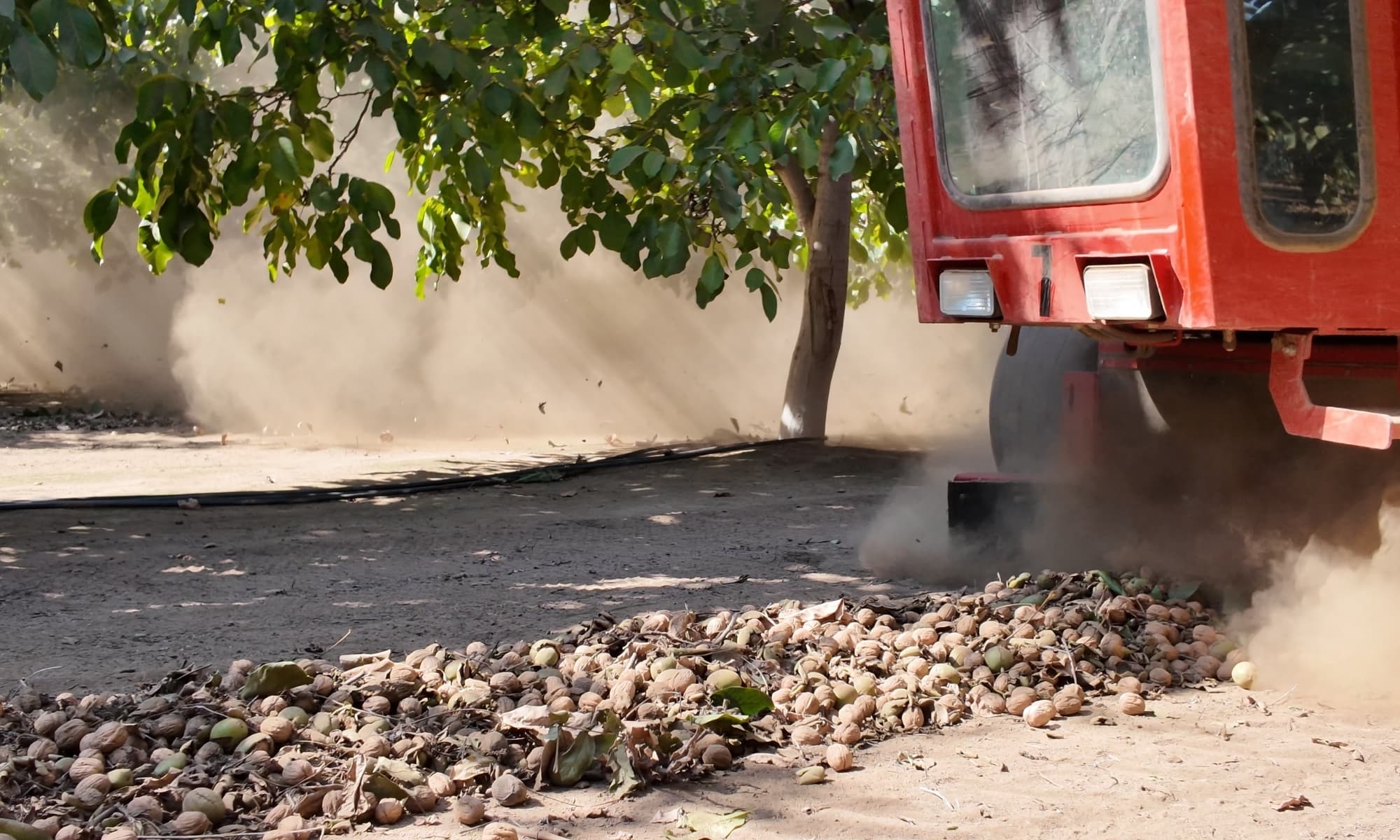
In Albania the walnut harvest has traditionally started when the first nuts drop: trees are beaten with long poles, nuts are gathered from the ground and the hulls are removed by hand. Albanian extension advice warns that pole-beating damages fruiting buds and bark. Fewer hands are available, too: the 2023 census counted 2,402,113 residents, 420,000 fewer than in 2011, a decline INSTAT links to emigration.
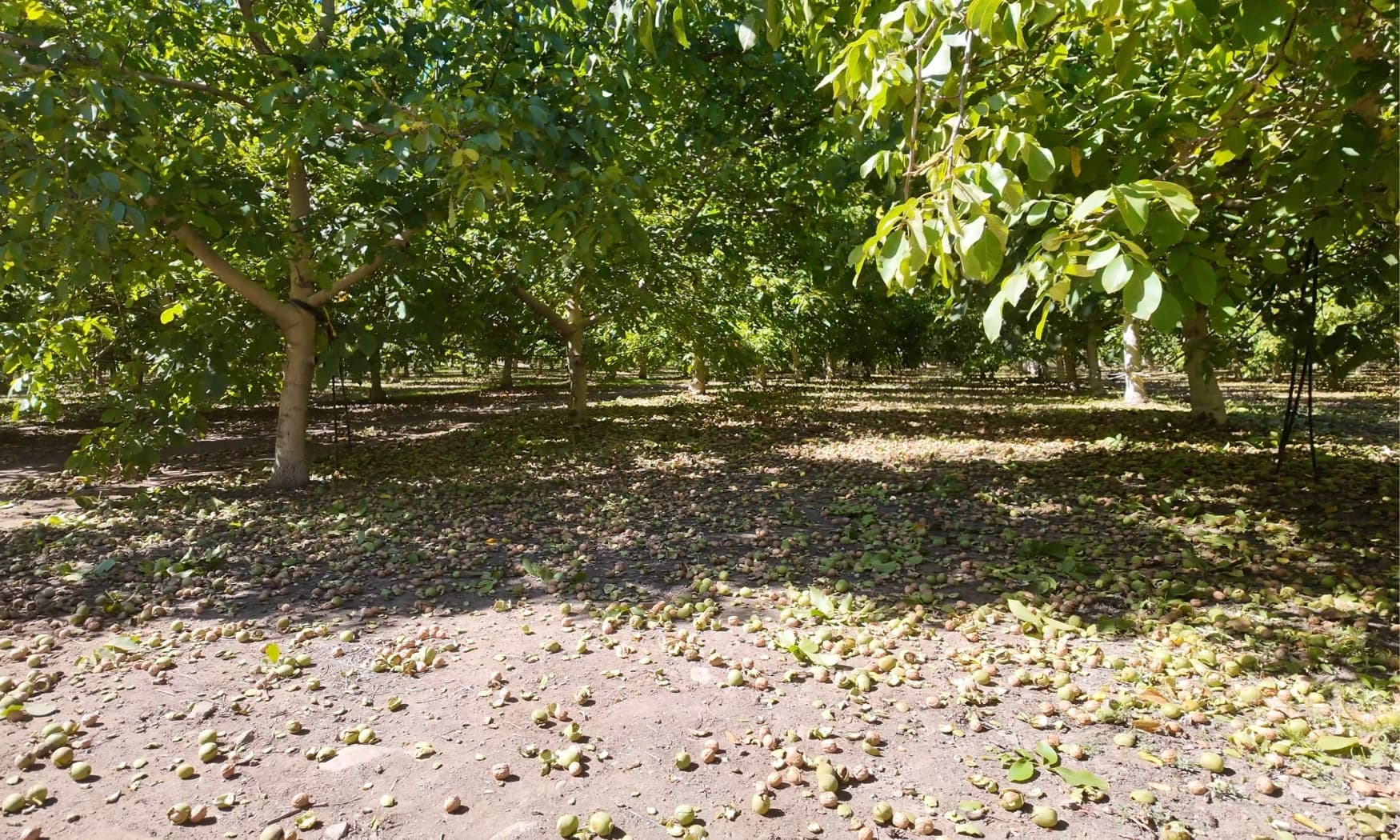
Harvest runs from September into October and follows the variety: Albanian advice puts Lara in mid-September, and Franquette and local cultivars from late September into early October. Nuts are mature when the packing tissue between the kernel halves turns brown, and ready to shake once the hulls split. University of California advice is to pick up, hull and dry them fast: most quality loss happens in the first 9 hours after harvest.
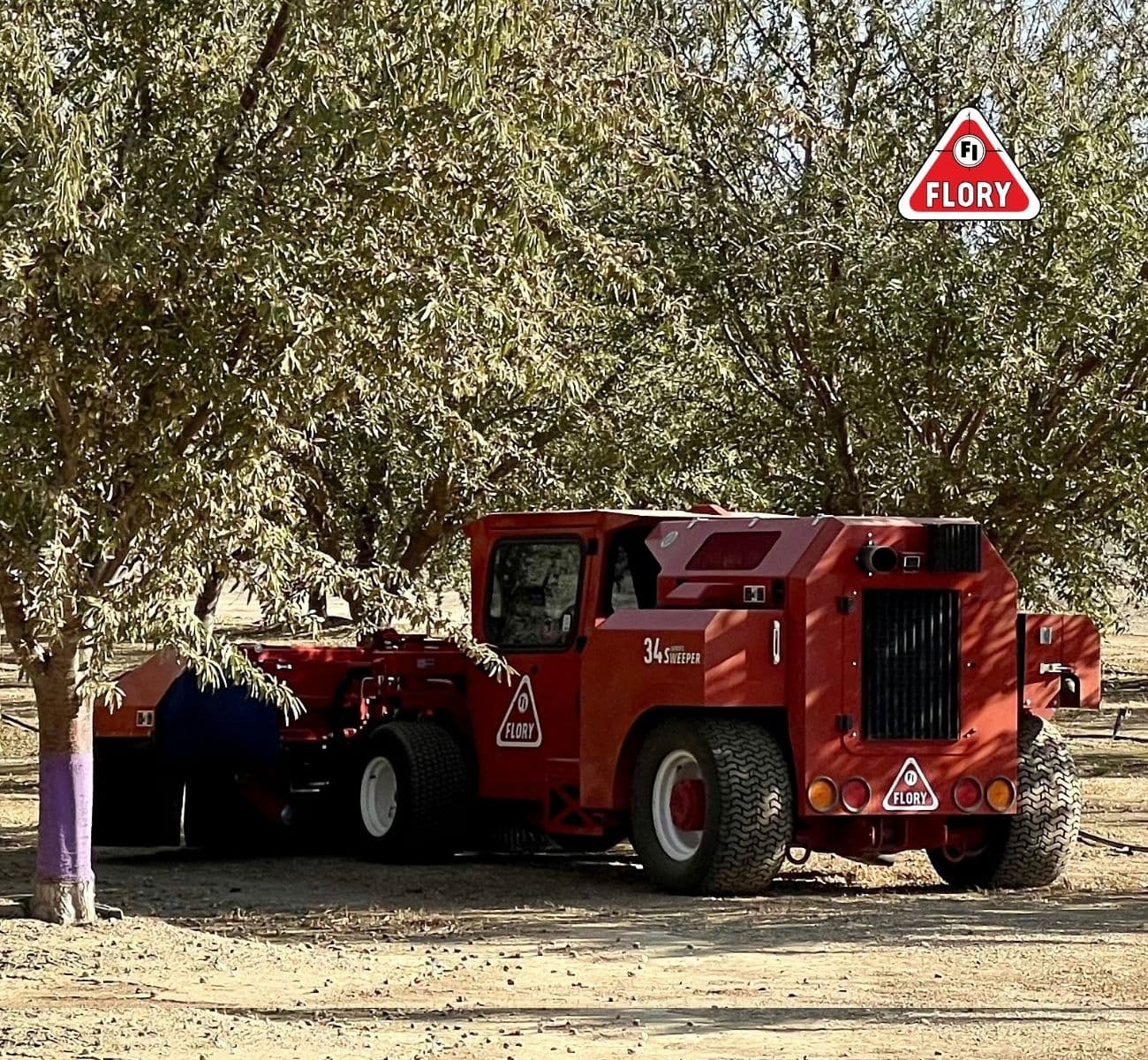
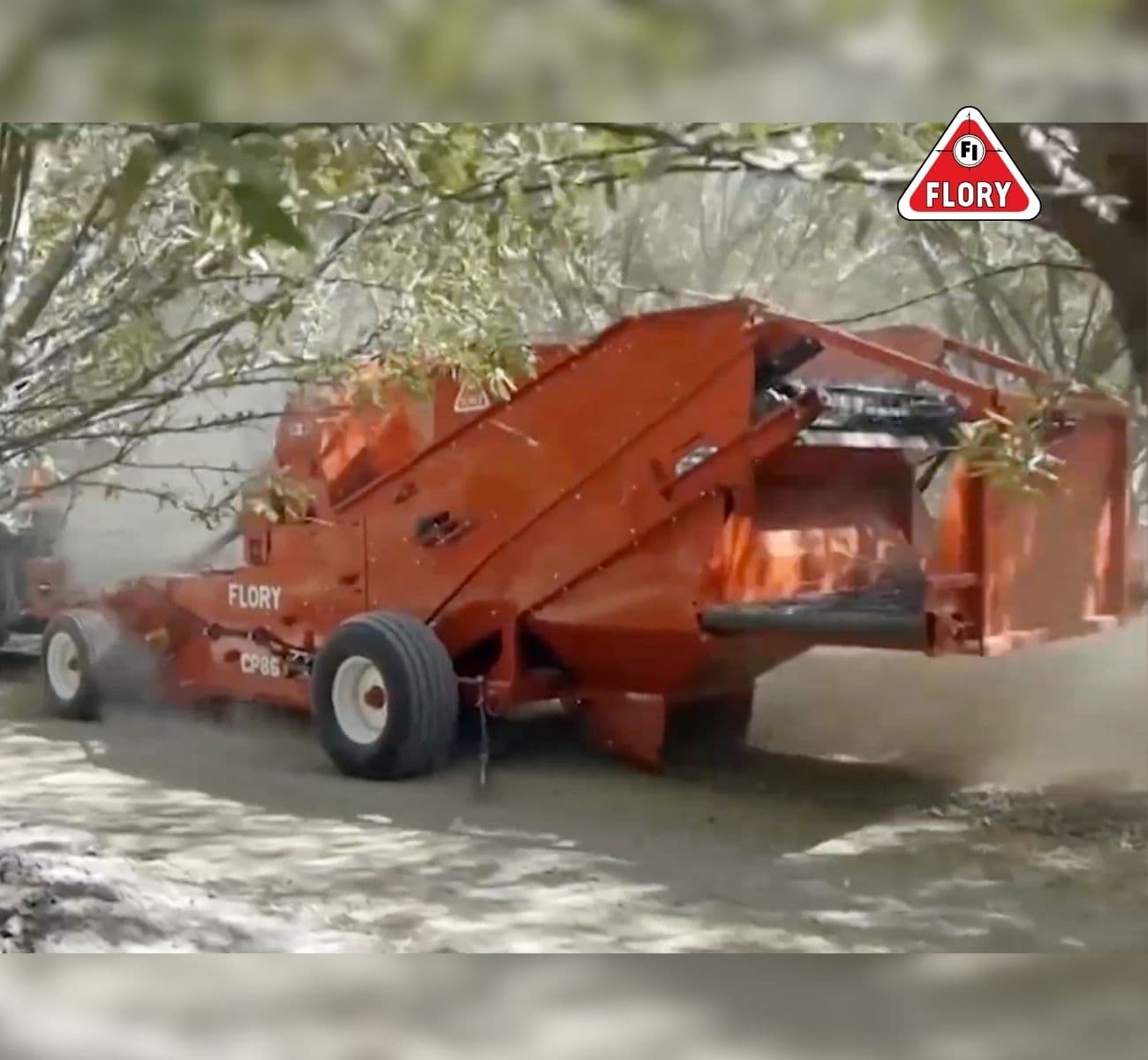
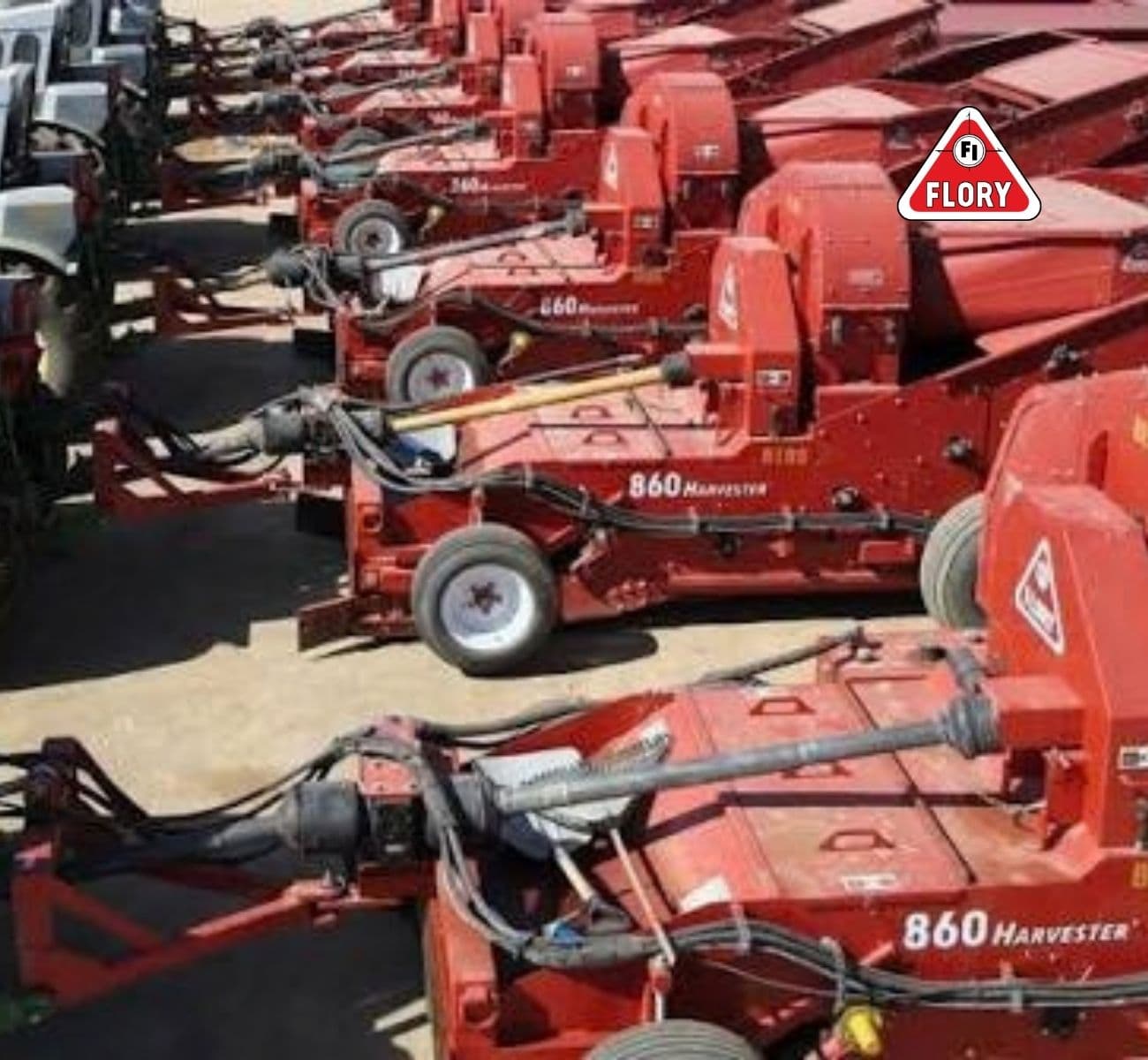
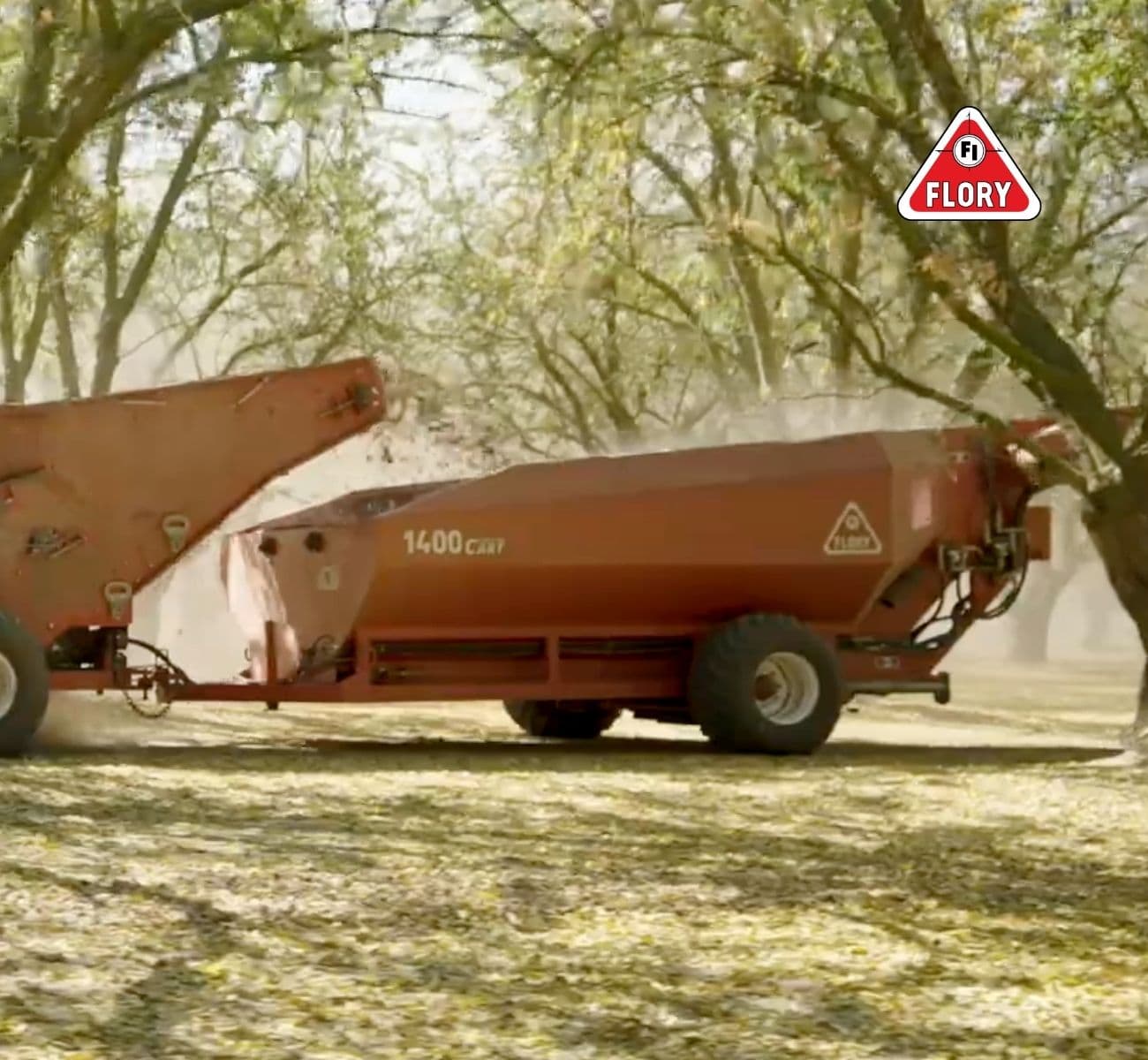
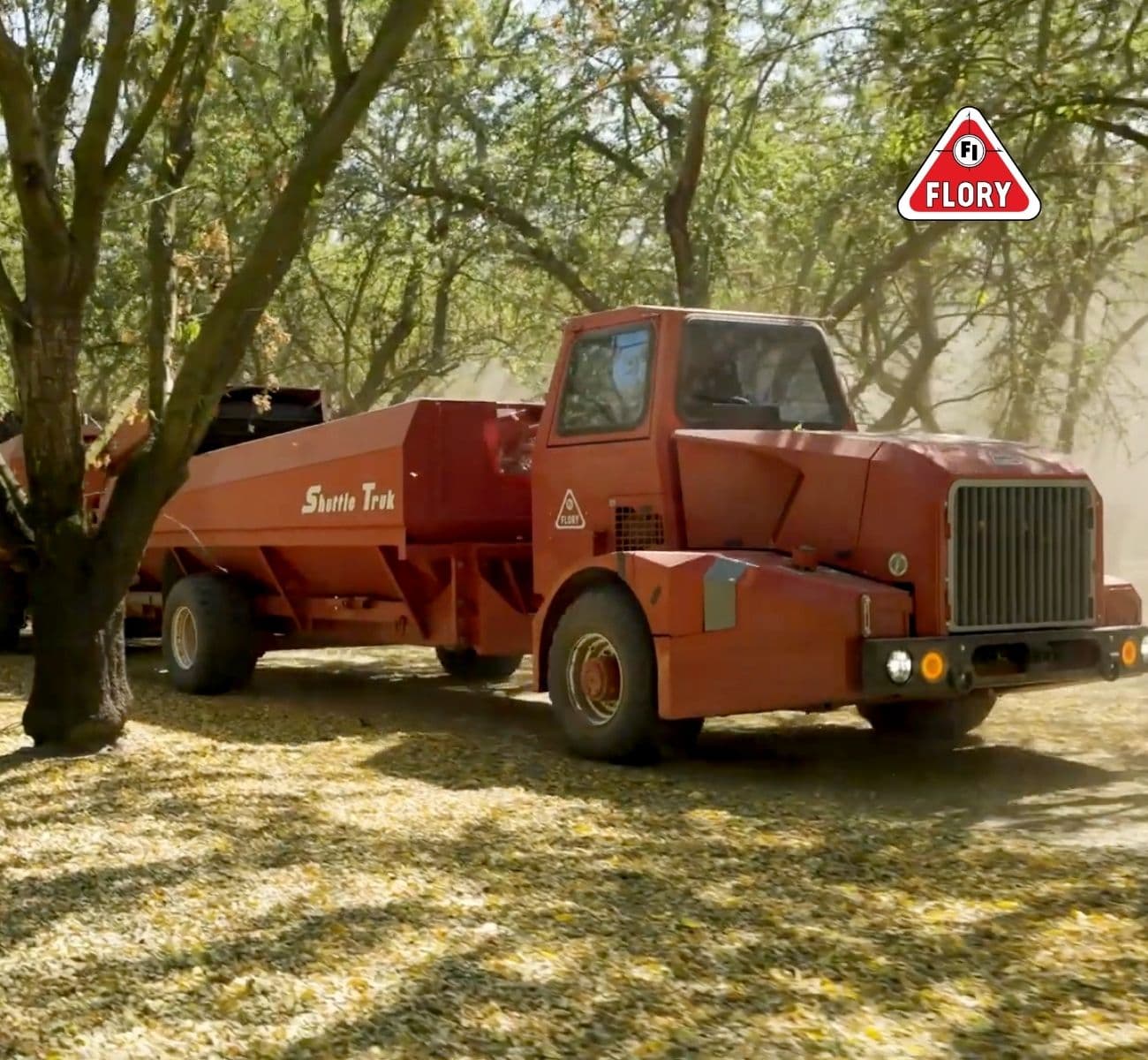
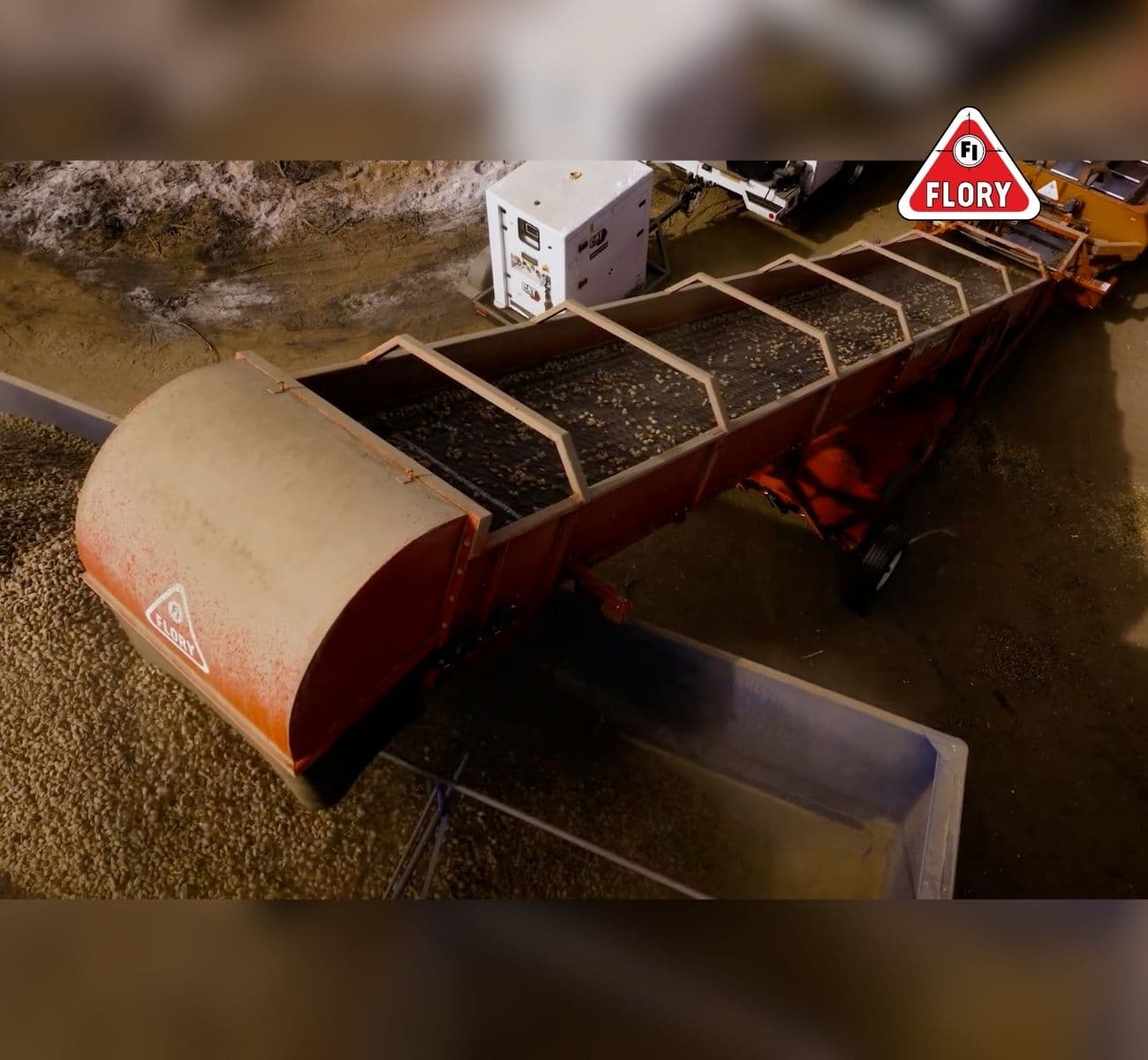
A mechanized line replaces poles and hand picking, so each block is harvested on time and nuts wait less on the ground. It runs from a trunk shaker and a sweeper that forms windrows to a harvester, conveyor cart, shuttles and field elevator; Flory harvesting machinery is available in Albania through OVE Europe. On small, scattered plots, group blocks by ripening date and share loading and drying points; FAO reports that labor exchange, for example at harvest, is the most common form of cooperation among Albanian farmers.
Walnut Harvest Workflow (Recommended Equipment)
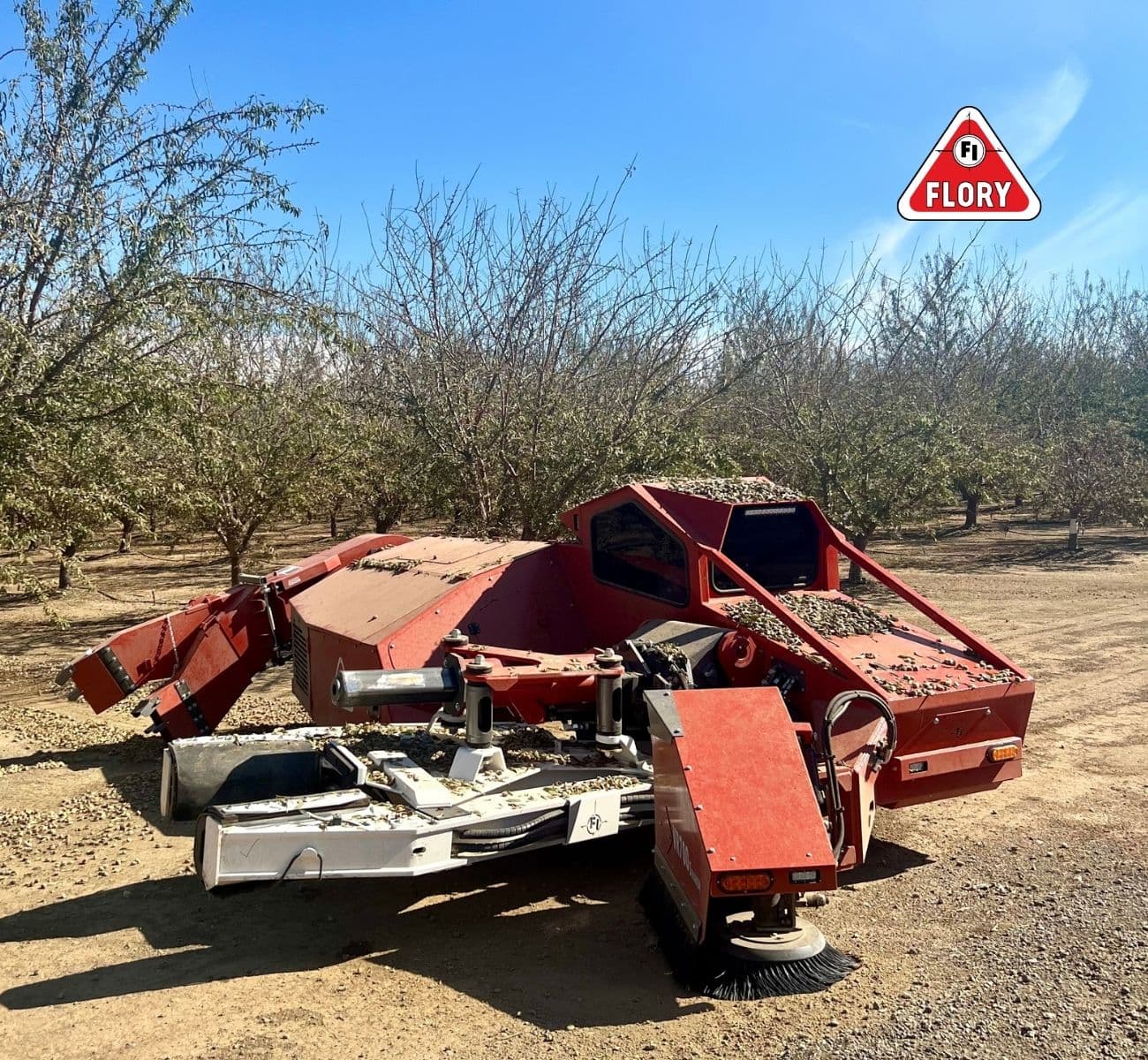
Practical Tips for Walnut Harvesting
Shake once the packing tissue is brown and the hulls split, not when the first nuts drop; after that, the earlier the harvest, the lighter the kernels.
Replace pole-beating with a trunk shaker: Albanian extension advice warns that poles damage fruiting buds and bark.
Harvest block by block in the order the varieties ripen, so one machinery set can cover several plots and growers.
Pick up shaken nuts the same day, and do not leave them overnight on damp ground.
Before harvest, clear stones and fallen branches from the rows, so the sweeper and harvester take in less debris.
Arrange transport from each plot to the hulling and drying site in advance, so full shuttles never wait in the field.
Get your recommended harvest setup
Enter orchard size, spacing, terrain, and target throughput—we’ll suggest a practical harvest workflow and equipment lineup.

Walnut Post-Harvest Handling & Processing in Albania
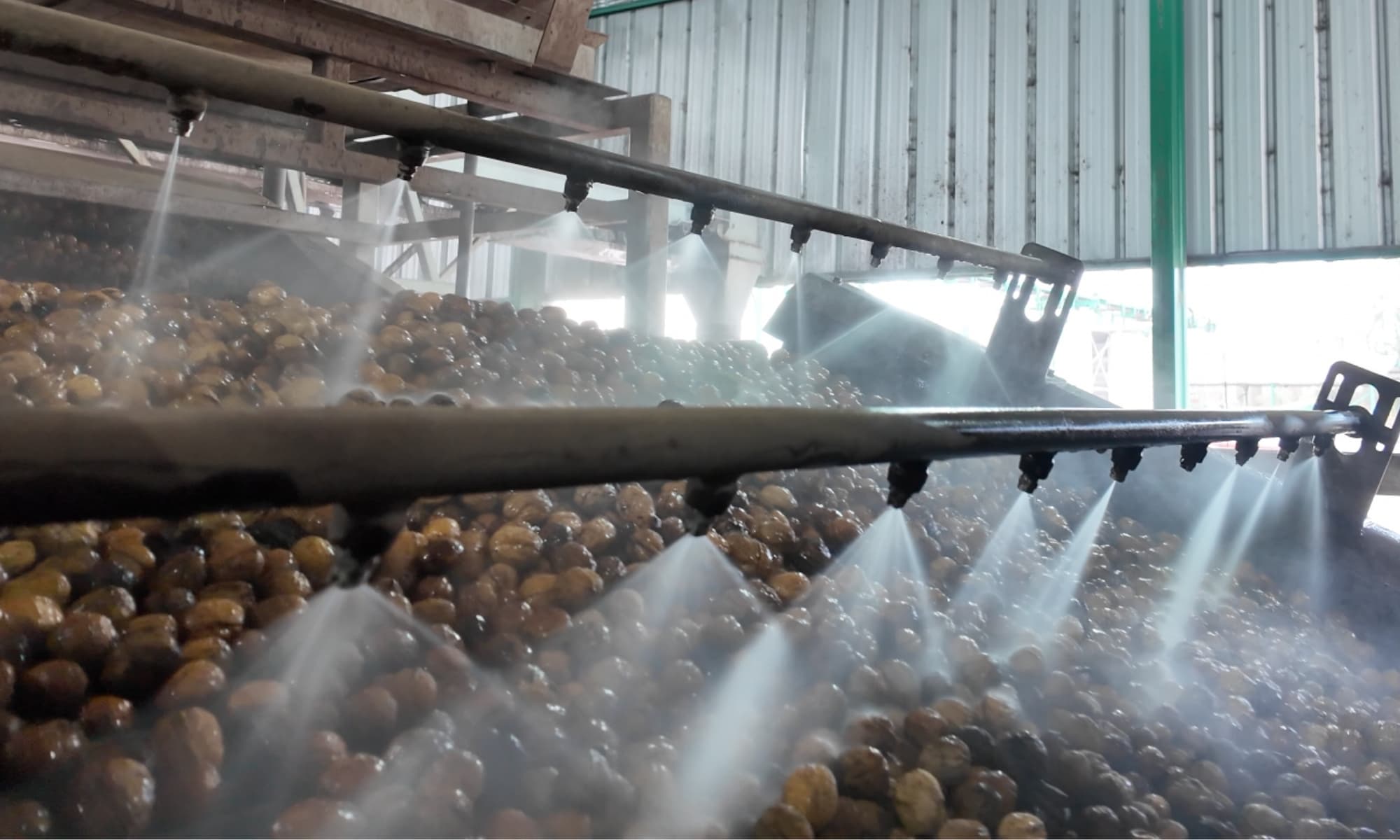
In Albania hulls are usually removed by hand, and Albanian extension advice puts the moisture of freshly hulled nuts at about 30%. Wash off the tannin, then dry the nuts in thin layers of 10 to 15 cm, stirring them regularly, or in a dryer. Aim for about 8% moisture, measured on the whole nut, with drying air no hotter than 43 °C: hotter air darkens kernels and shortens storage life (University of California).
Store dried nuts cool and dry; Albanian advice gives 10 °C or lower and 65 to 70% relative humidity. Consistent drying and clean, light kernels can help domestic nuts compete with imports. Jessee, whose processing lines OVE Europe supplies, builds hulling, drying, in-shell cleaning and sizing, and cracking equipment for walnuts, and rates its standard hulling lines at 10 to 30 tons of output per hour, a scale for shared or commercial hulling sites rather than single small farms.
For general information only. Information may become outdated and does not replace site-specific professional advice. Consult a qualified agronomist and confirm equipment suitability with OVE before acting.
Practical Tips for Walnut Post-Harvest Handling & Processing
Hull walnuts on the day of harvest; hulls left on the nuts stain the shells and slow down drying.
Wash off the tannin after hulling and spread the nuts in thin layers of 10 to 15 cm, stirring them regularly.
In a dryer, keep the air at 43 °C or below and stop at about 8% moisture, measured on whole nuts with a meter.
Store dried nuts at 10 °C or lower and 65 to 70% relative humidity, as Albanian extension advice recommends.
Keep each variety and plot as a separate lot, so buyers get even nuts and problems can be traced.
Sort out dark, moldy, empty and damaged nuts before storage or sale, not after a buyer finds them.
Recommended Post-Harvest Handling & Processing Stages









Plan your post-harvest line
Estimate tons/day, cleaning & drying capacity, storage needs, and cost/kg—then build your equipment plan in phases.