







Hazelnut Orchard Establishment in Bulgaria
In the Ministry's 2017 orchard survey, Tonda Gentile and Tonda di Giffoni, counted together, covered 28.0% of the hazelnut area, Ran Trapezundski 24.2% and Rimski 20.7%. A 2020 review from the experimental station at Kardzhali notes that, apart from Tonda Gentile delle Langhe, the main cultivars grown in Bulgaria are unknown to processors and exporters, and that the industry wants calibrated lots of a single cultivar.
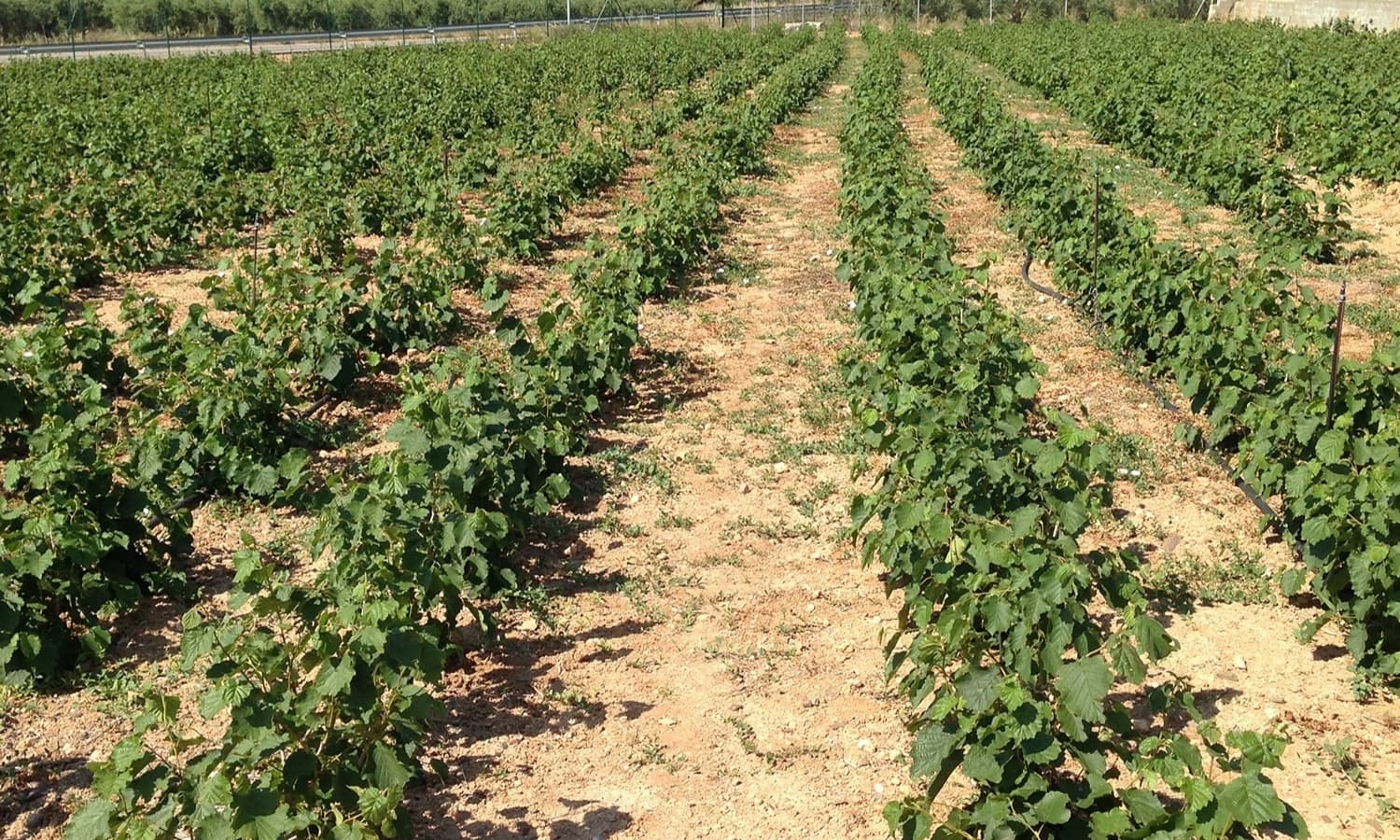
The same review reports that more and more growers are turning to single-stem trees on their own roots because they allow mechanized care of the orchard floor and easier harvest, while the use of grafted trees on Turkish hazel (Corylus colurna) remains very limited. It takes 3 × 5 m or 4 × 5 m as the optimal spacing for Bulgarian conditions, citing a 1983 book, and states that Bulgaria has no established technologies for establishing and growing hazelnut orchards so far.
The review names Ran Trapezundski as a suitable pollinizer, and Oregon State University (OSU) explains that hazelnut cannot set nuts with its own pollen. In the mechanized system this guide follows, the trees are not shaken: nuts fall to the ground and are swept and picked up, so OSU advises making the orchard floor as smooth as possible at least a year before the first commercial harvest, removing soil mounds around the trunks and leaving room to turn at row ends.

Practical Tips for Hazelnut Orchard Establishment
Choose cultivars that processors know: a 2020 review notes that, apart from Tonda Gentile delle Langhe, the main cultivars grown in Bulgaria are unknown to them.
Plan single-stem trees if you intend to mechanize: a 2020 review reports growers turning to them for mechanized floor care and easier harvest.
Keep every tree within 15 m of a pollinizer: Oregon State University notes that nut set decreases at greater distances.
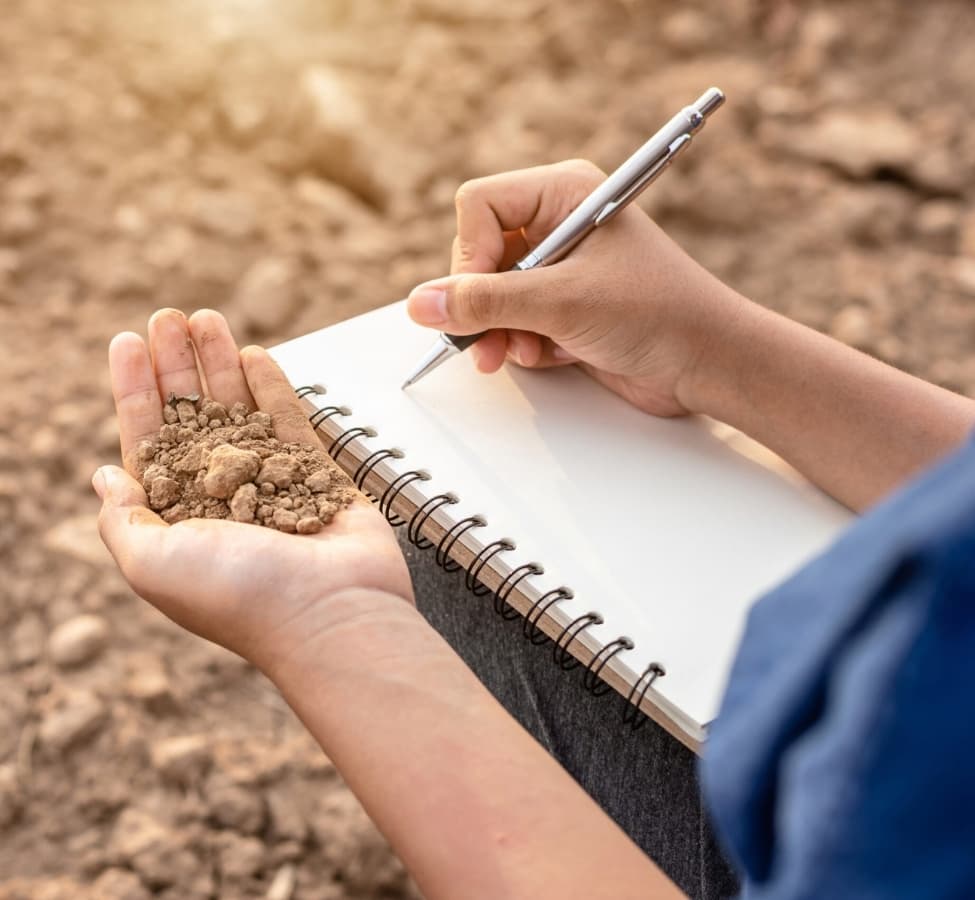
Avoid heavy, shallow or poorly drained soils: Oregon State University warns that hazelnut does not tolerate wet soils in the growing season.
Smooth and firm the orchard floor at least a year before the first commercial harvest, as Oregon State University advises, so sweepers can work up to the trunks.
Leave room to turn at row ends and a loading area near a road, as Oregon State University advises, and check machine needs with OVE Europe.
Recommended Establishment Stages




Hazelnut Orchard Care & Maintenance in Bulgaria
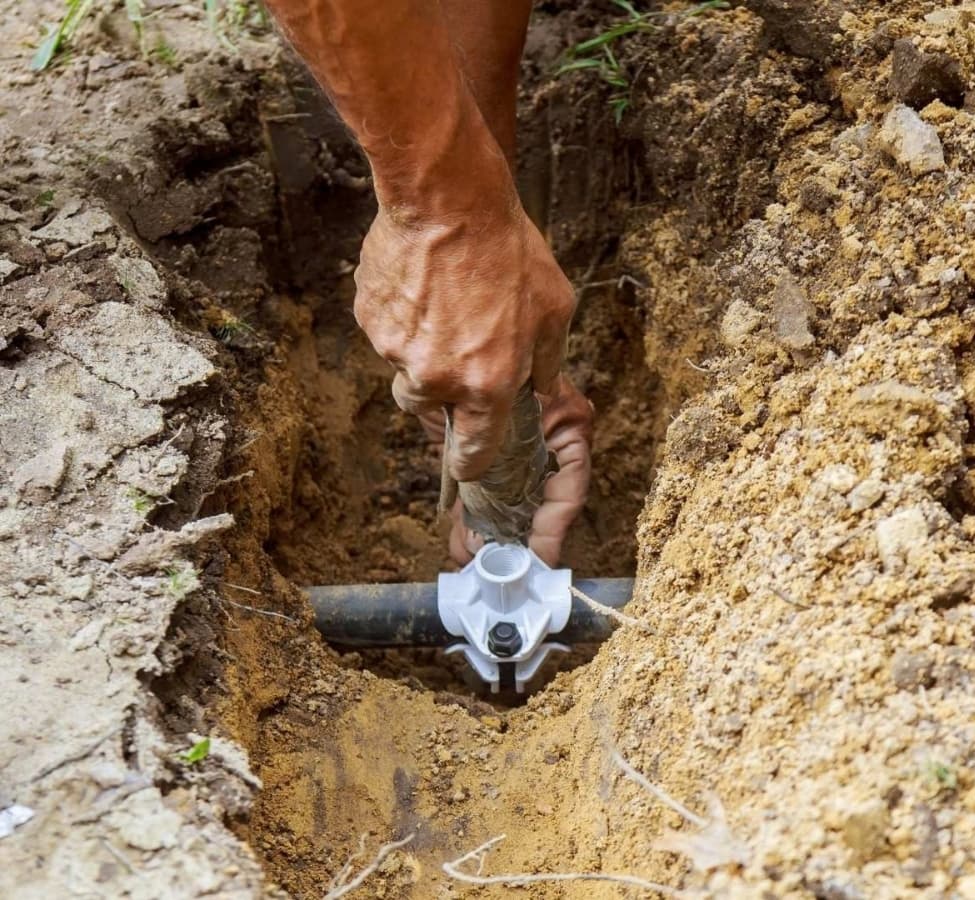
A Bulgarian advisory article calls irrigation the most important factor in growing hazelnut and advises two or three irrigations from April to August in most regions, never letting the soil dry out. The 2020 review adds that the global trend toward drought has passed from assumption to fact, a major reason to reassess which areas suit hazelnut. In recent seasons, the National Institute of Meteorology and Hydrology (NIMH) called August 2024 one of Bulgaria's driest Augusts since 2014 and September 2025 its driest September in four years.
Two hazelnut diseases were reported in Bulgaria for the first time: kernel spot (Eremothecium coryli), found in the northern Plovdiv district in 2015 and up to 80 km away in 2016, and powdery mildew (Erysiphe corylacearum), with husks 100% affected in a home garden near Kavarna in 2020 and found in an orchard near Pazardzhik in 2021. EPPO lists the brown marmorated stink bug (Halyomorpha halys) as present, first found in Sofia in 2016; no source found reports its damage to hazelnut in Bulgaria.
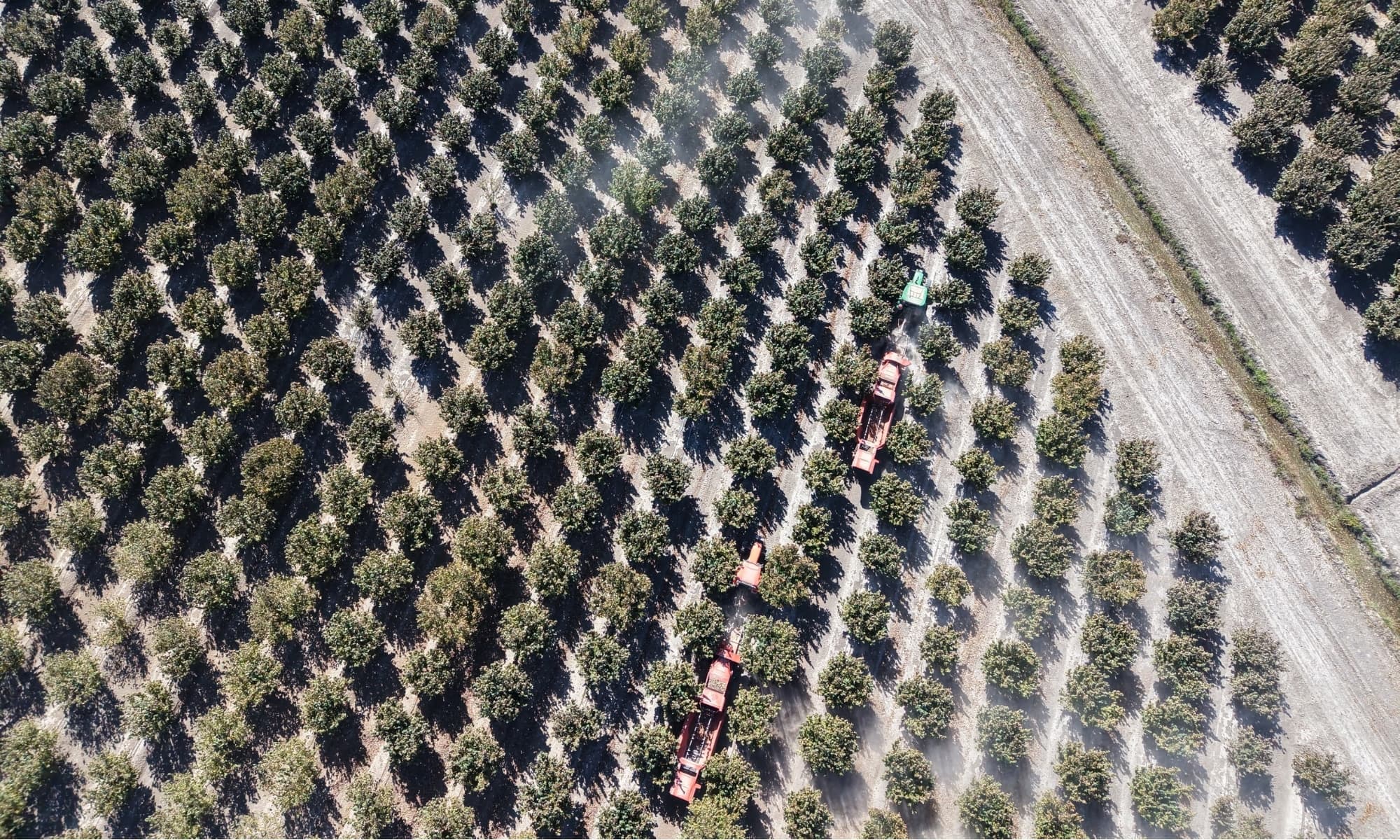
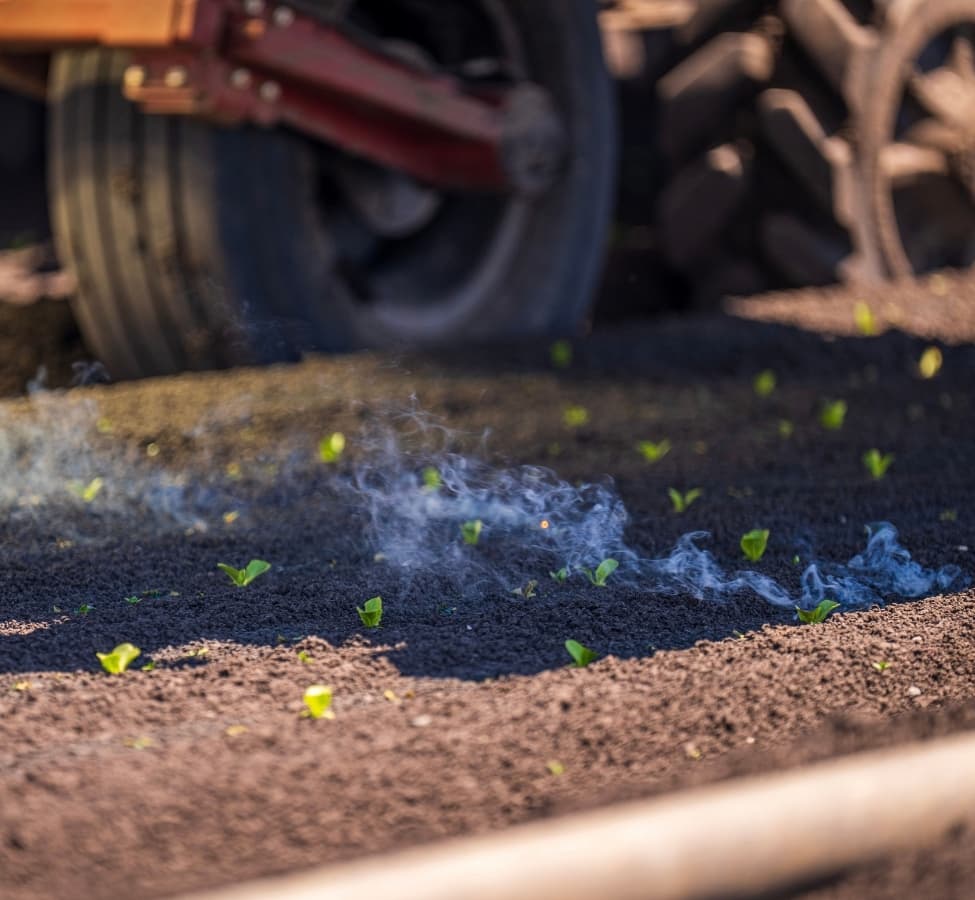
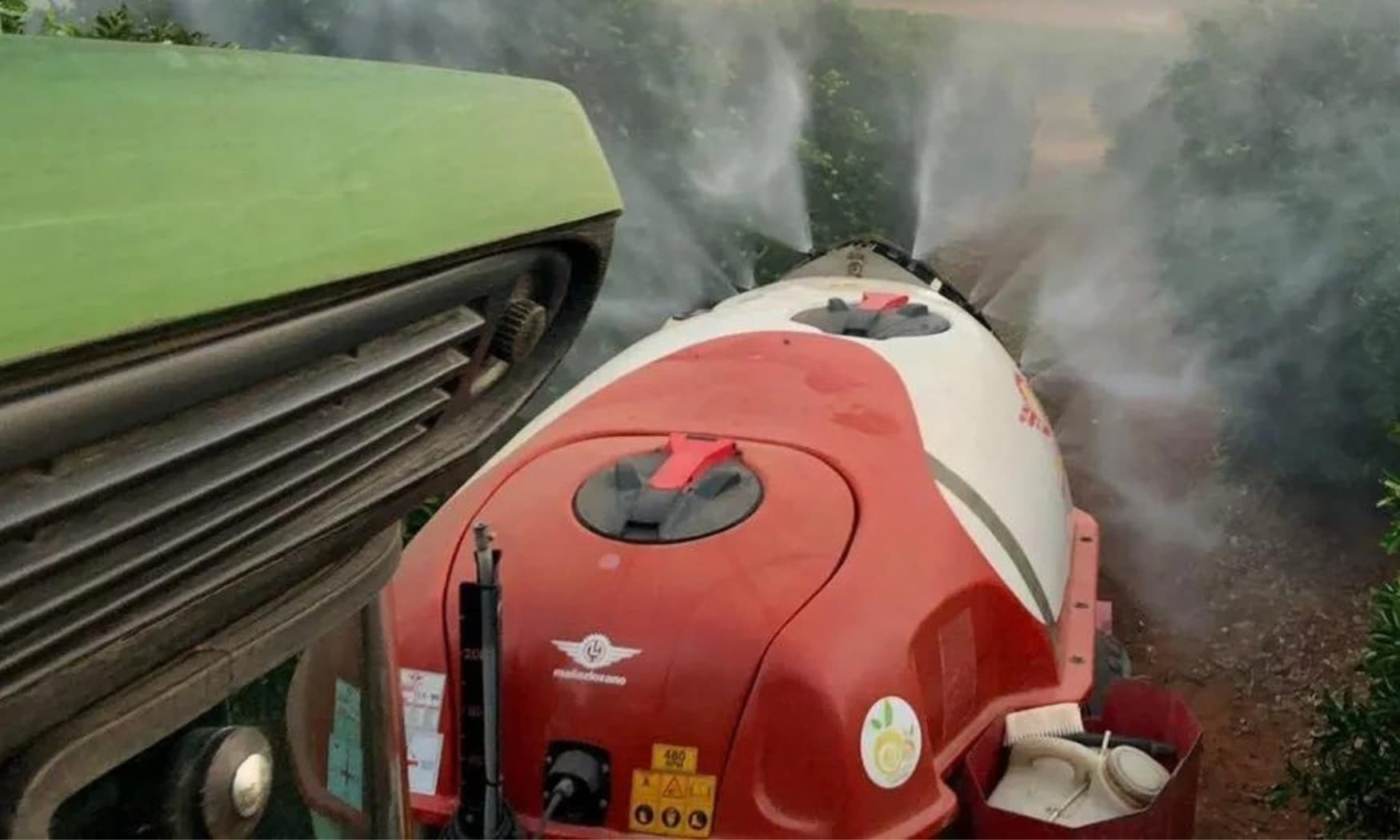
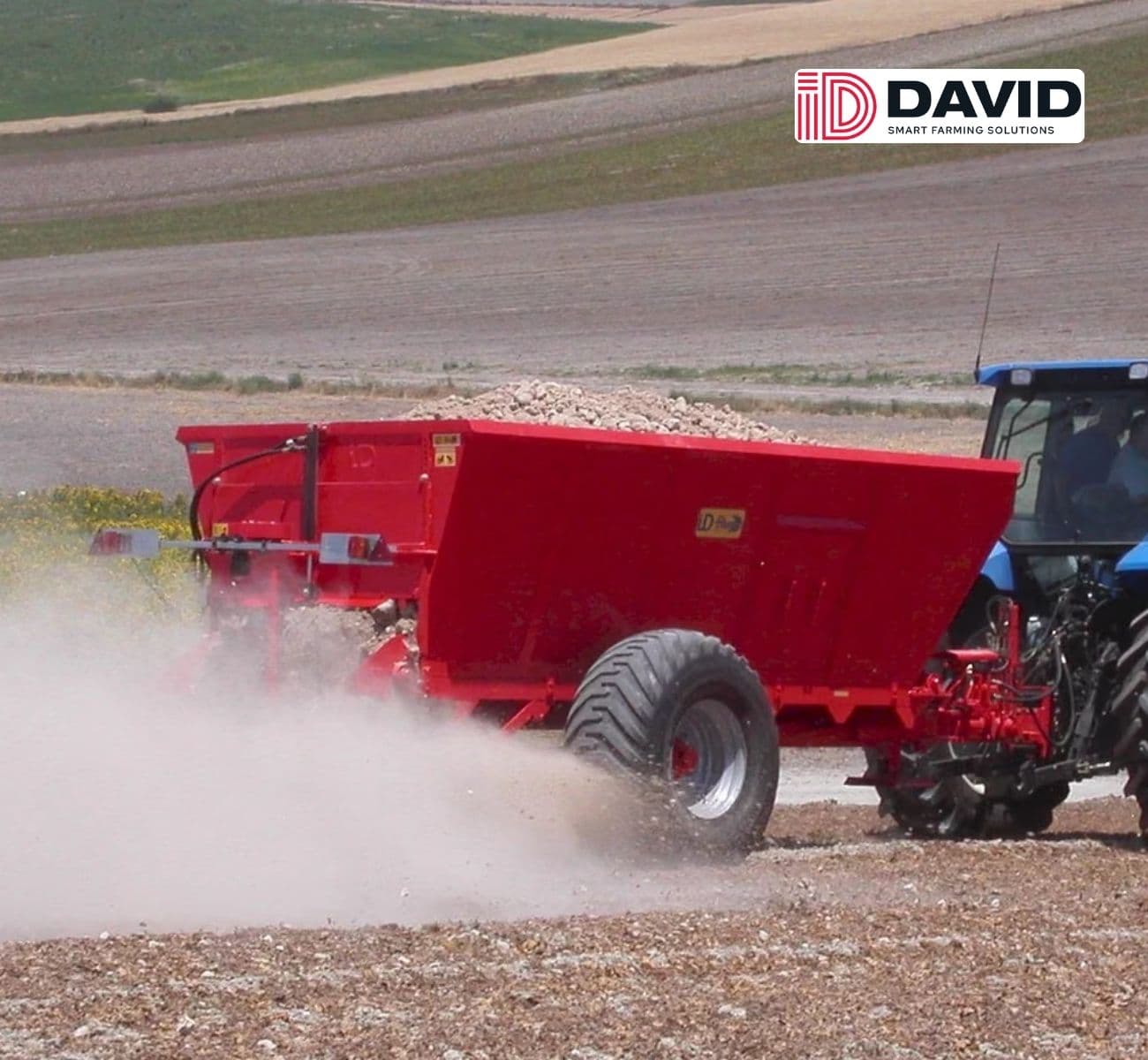
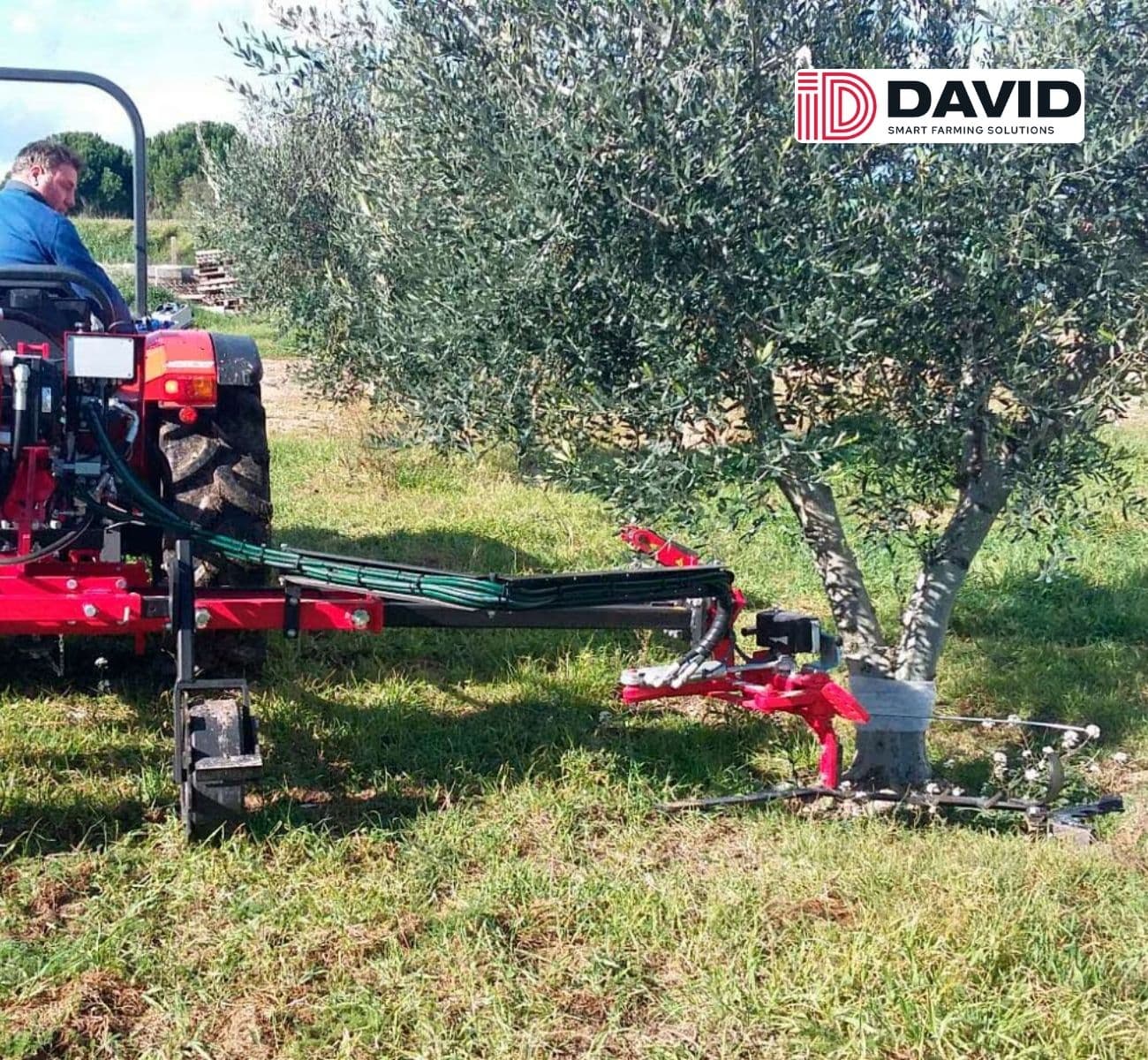
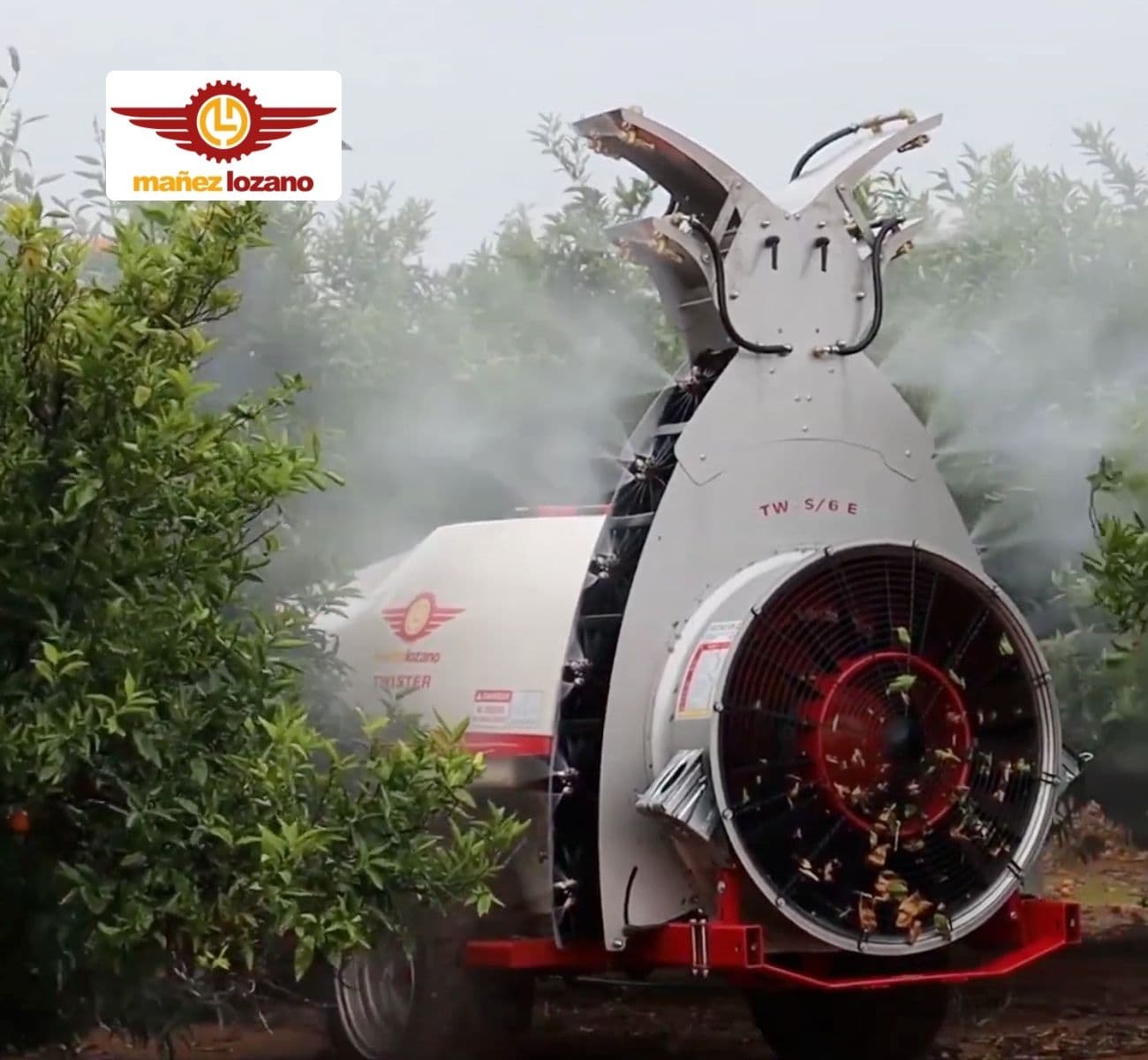
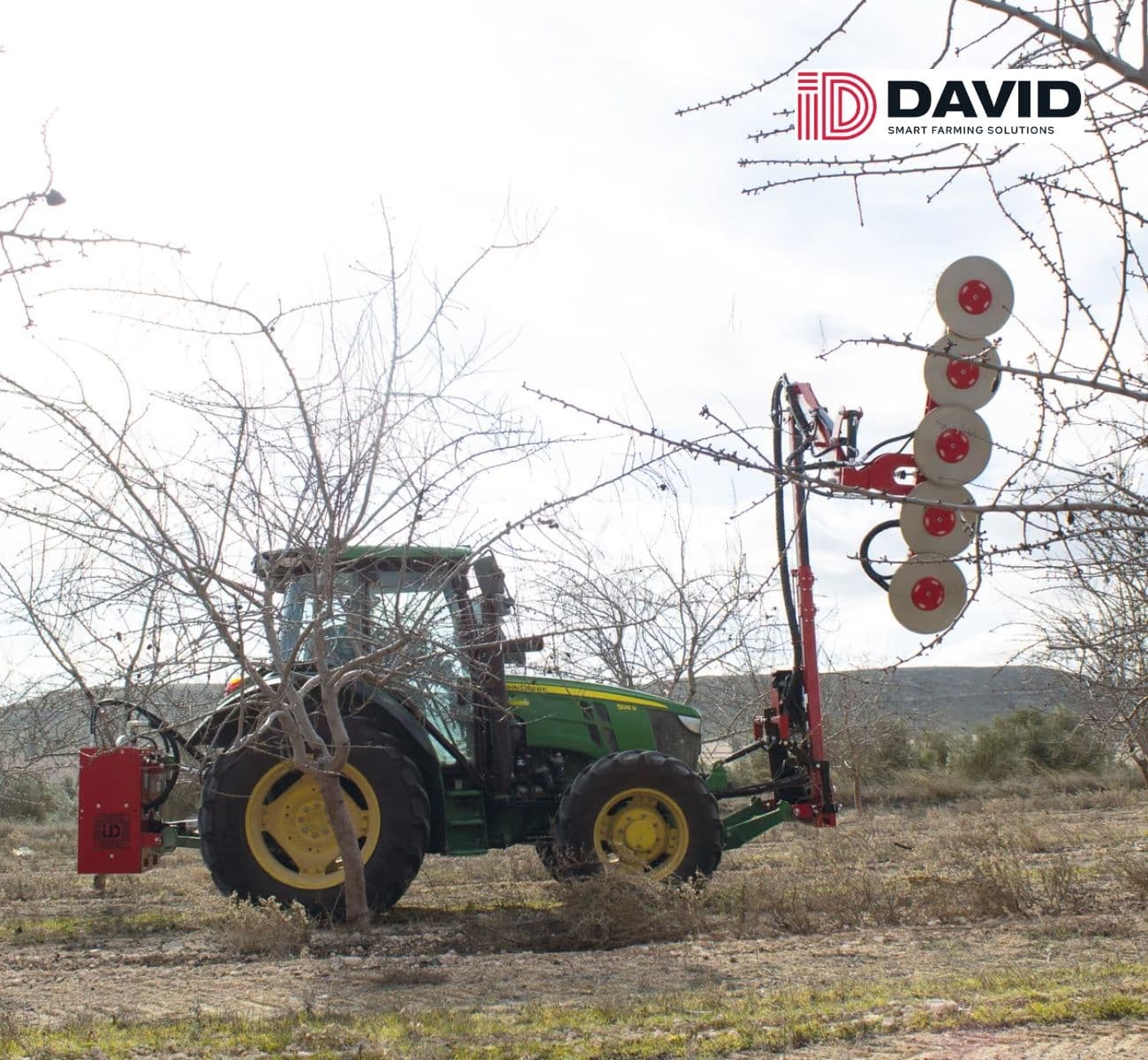
The advisory article describes a bush with five or six scaffold branches or a single trunk with a cup-shaped crown of four or five scaffolds, with suckers removed every year; it finds black fallow most suitable, with a sod-mulch floor on irrigated slopes over 8° or where rain exceeds 800 mm a year. In single-stem orchards planted for machines, the ID DAVID SURFEED spreads solid manure, the ID-XL weeds the tree row, the Mañez Lozano Mega Twister S6 sprays tall, dense canopies and the ID-REX disc pruner makes lateral and topping cuts.
Recommended Orchard Care & Maintenance Stages



Practical Tips for Hazelnut Orchard Care & Maintenance
Irrigate two or three times from April to August in most regions, as a Bulgarian advisory article advises, and never let the soil dry out.
Remove suckers at least twice a year, in autumn and in late May or early June, as Türkiye's Hazelnut Research Institute advises.
Check leaves and husks for the new powdery mildew (Erysiphe corylacearum), first found in a home garden near Kavarna in 2020 and in an orchard near Pazardzhik in 2021.
Check for hazelnut weevils, described in 2024 as found throughout Bulgaria, when over half of the main cultivars' nuts reach lentil size, as Türkiye's Institute advises.
Monitor for the brown marmorated stink bug: Oregon State University reports that its feeding can cause empty kernels early and shriveled or corked kernels later.
Weed the tree row without herbicides using an in-row weeder such as the ID DAVID ID-XL, and keep the orchard floor level for harvest.

Hazelnut Harvesting in Bulgaria
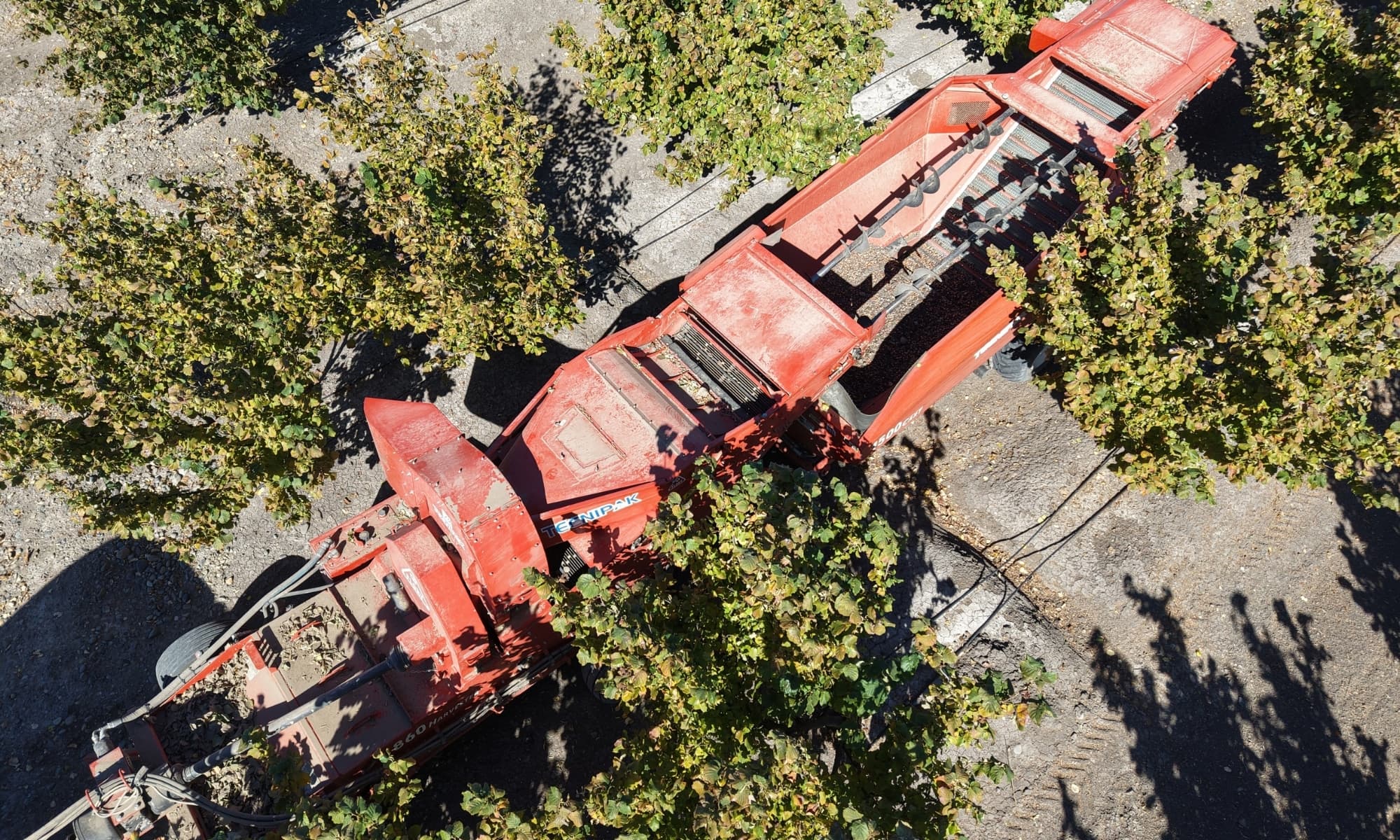
Bulgarian sources describe harvest work only on single farms; an advisory article adds that harvest begins when the nuts start to drop naturally. On one organic farm in southern Bulgaria, leaves were blown off the ground, fallen nuts picked up by hand into buckets and ripe nuts picked from the trees (2020), while a large grower-processor near Varna says it harvests with machines it calls combines. In orchards planted for machines, mechanized harvesting can bring the crop in on time, with less risk of nuts deteriorating while they wait.
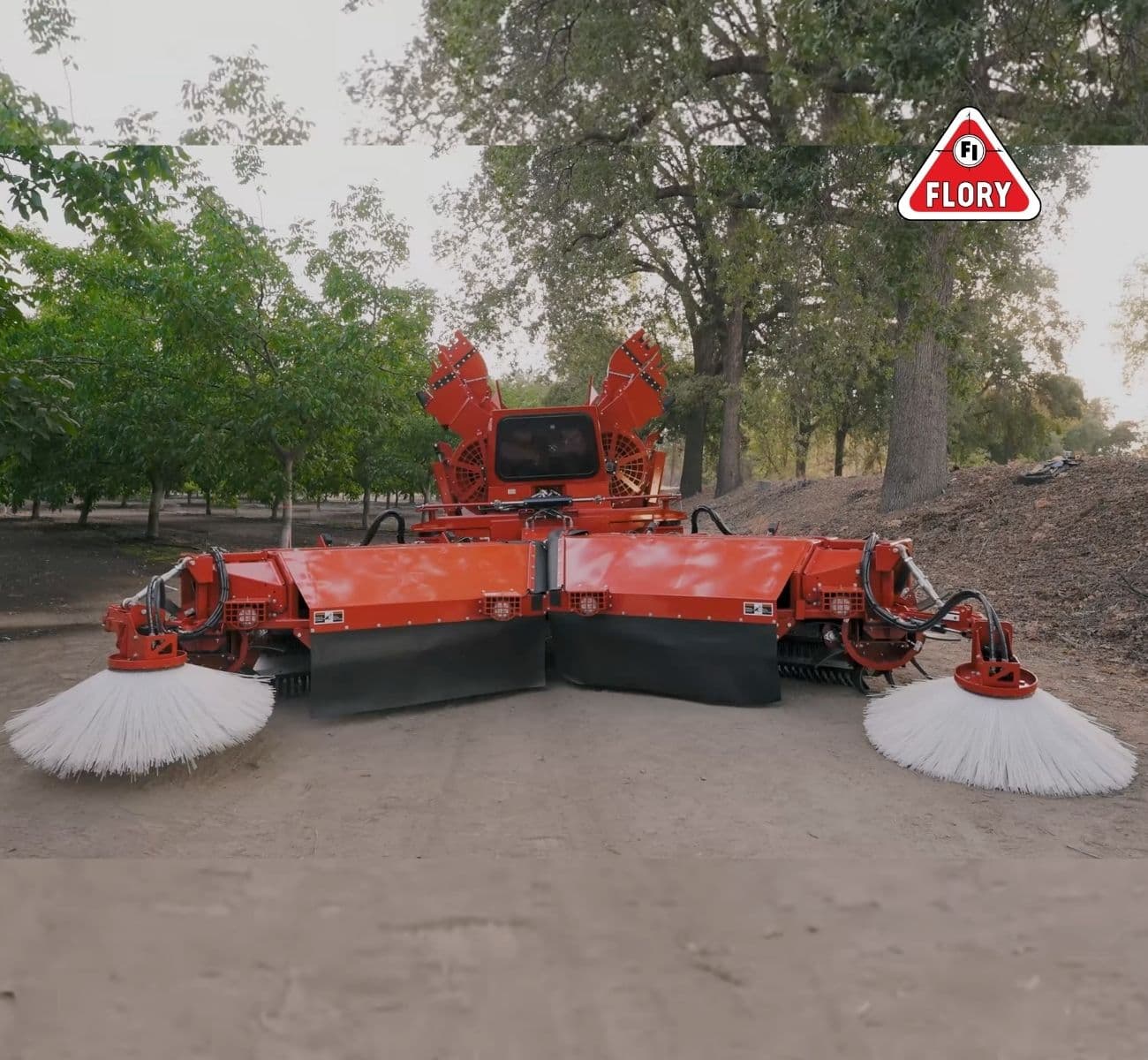
In the mechanized system this guide follows, as in Oregon, the trees are not shaken: OSU explains that the thin-barked, shallow-rooted trees would be damaged. The nuts drop onto a leveled, flail-mowed floor, then are swept and picked up in several passes. At Varna, August and September averaged 32 and 31 mm of rain on 5 and 6 days in 1961 to 1990 (WMO normals). In September 2025 Varna had 17.1 mm, 35% of its 1991 to 2020 norm, while on 11 September 2024 a thunderstorm brought flooding to nearby Beloslav (NIMH).
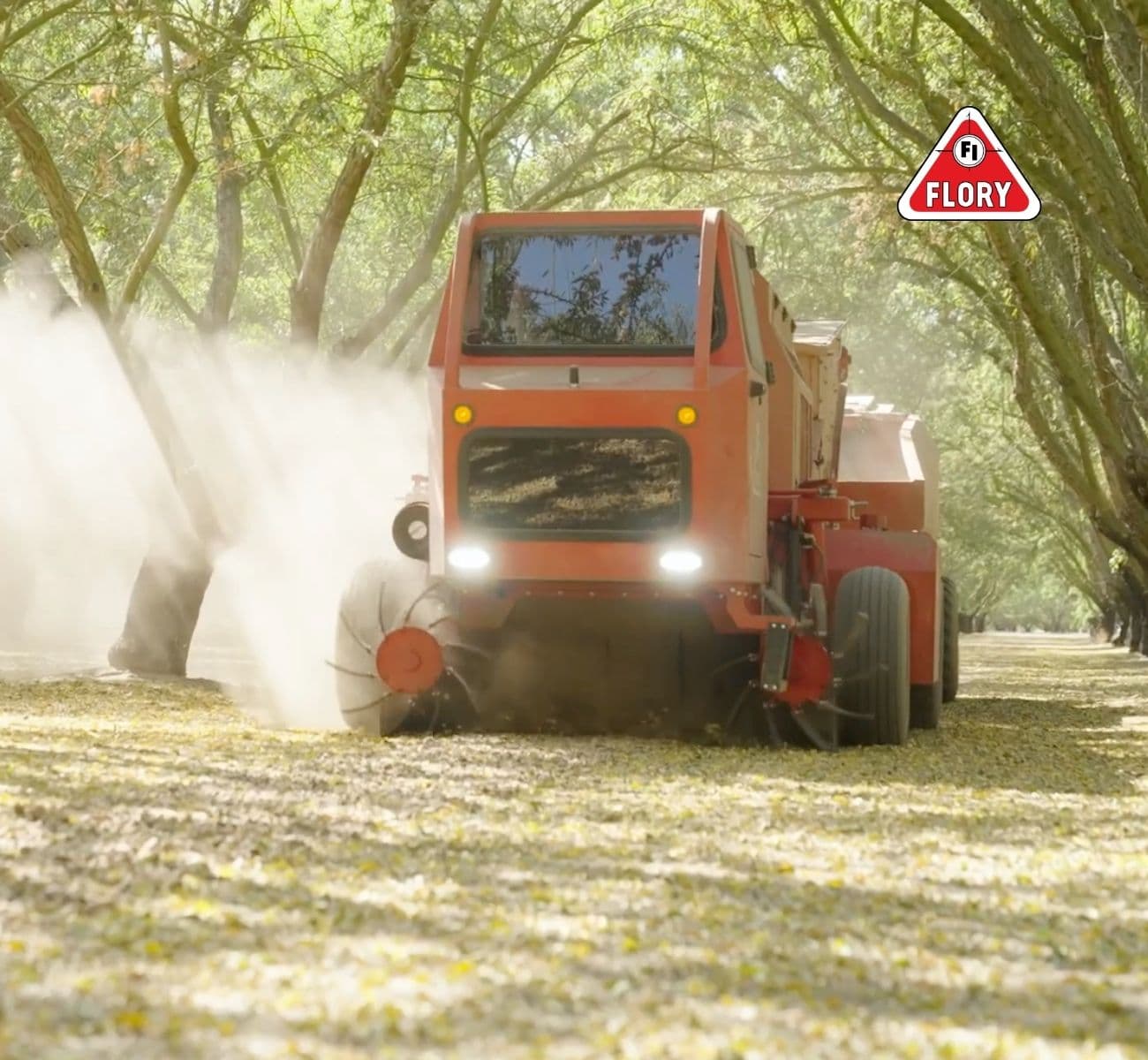
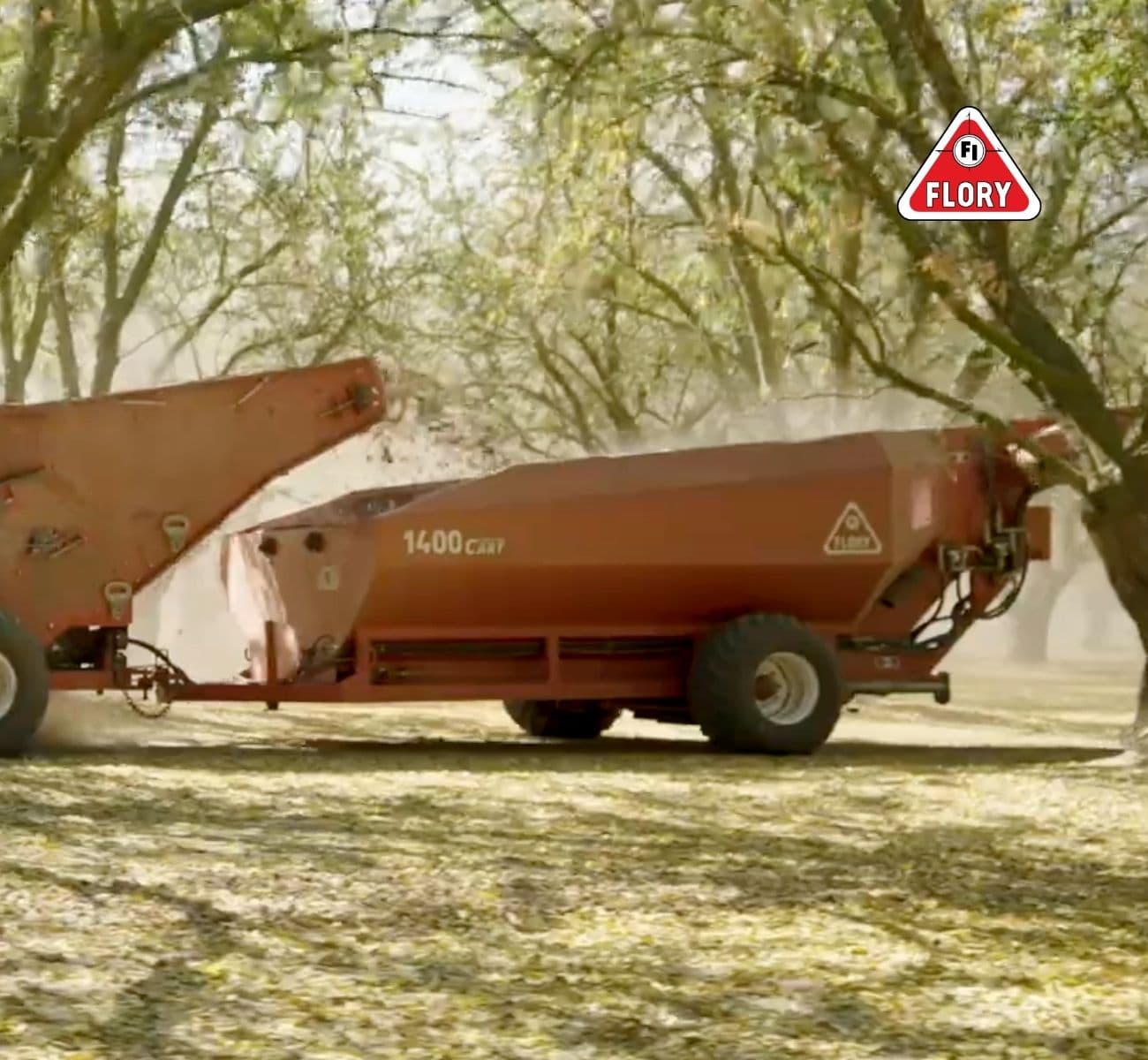
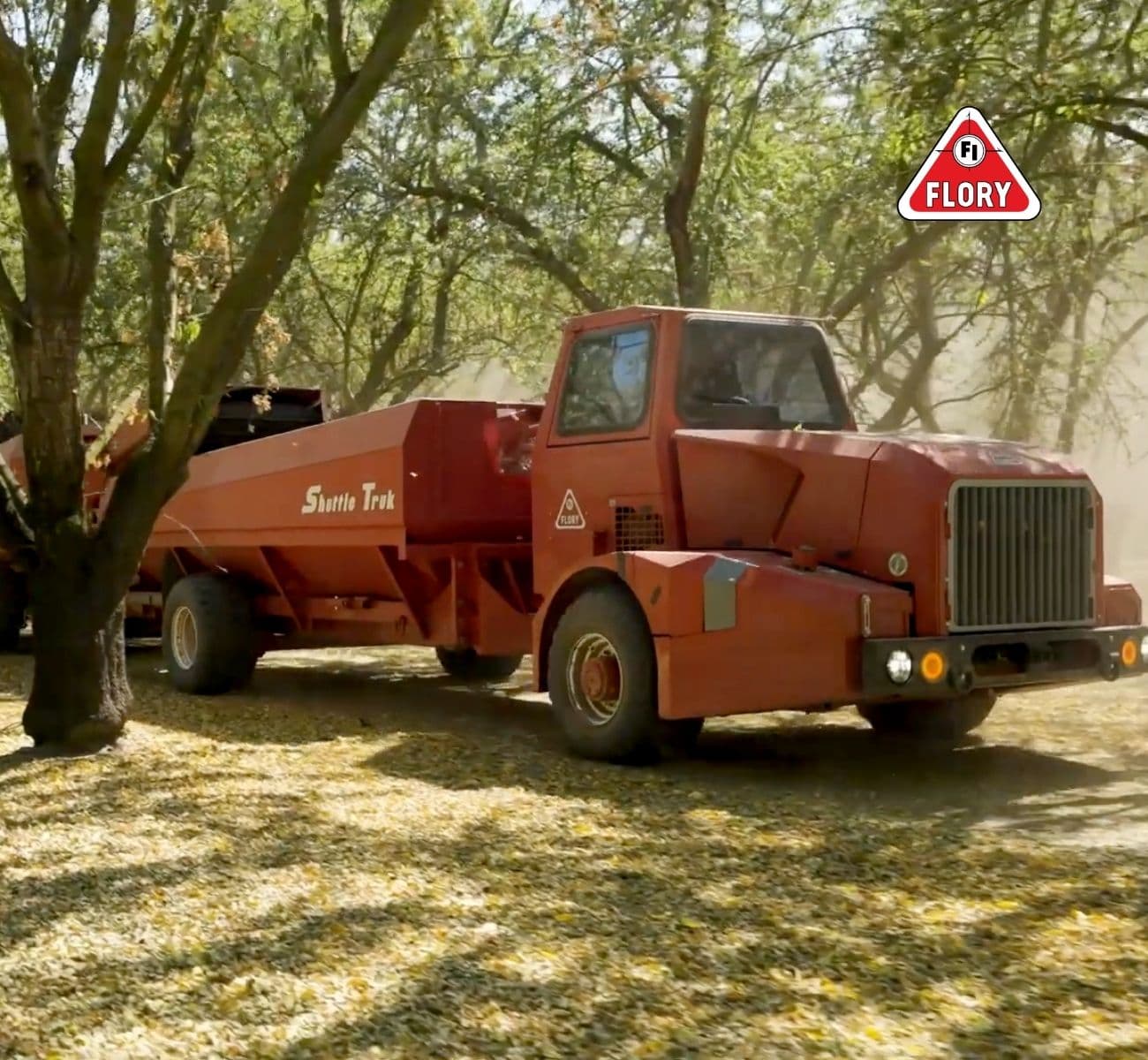
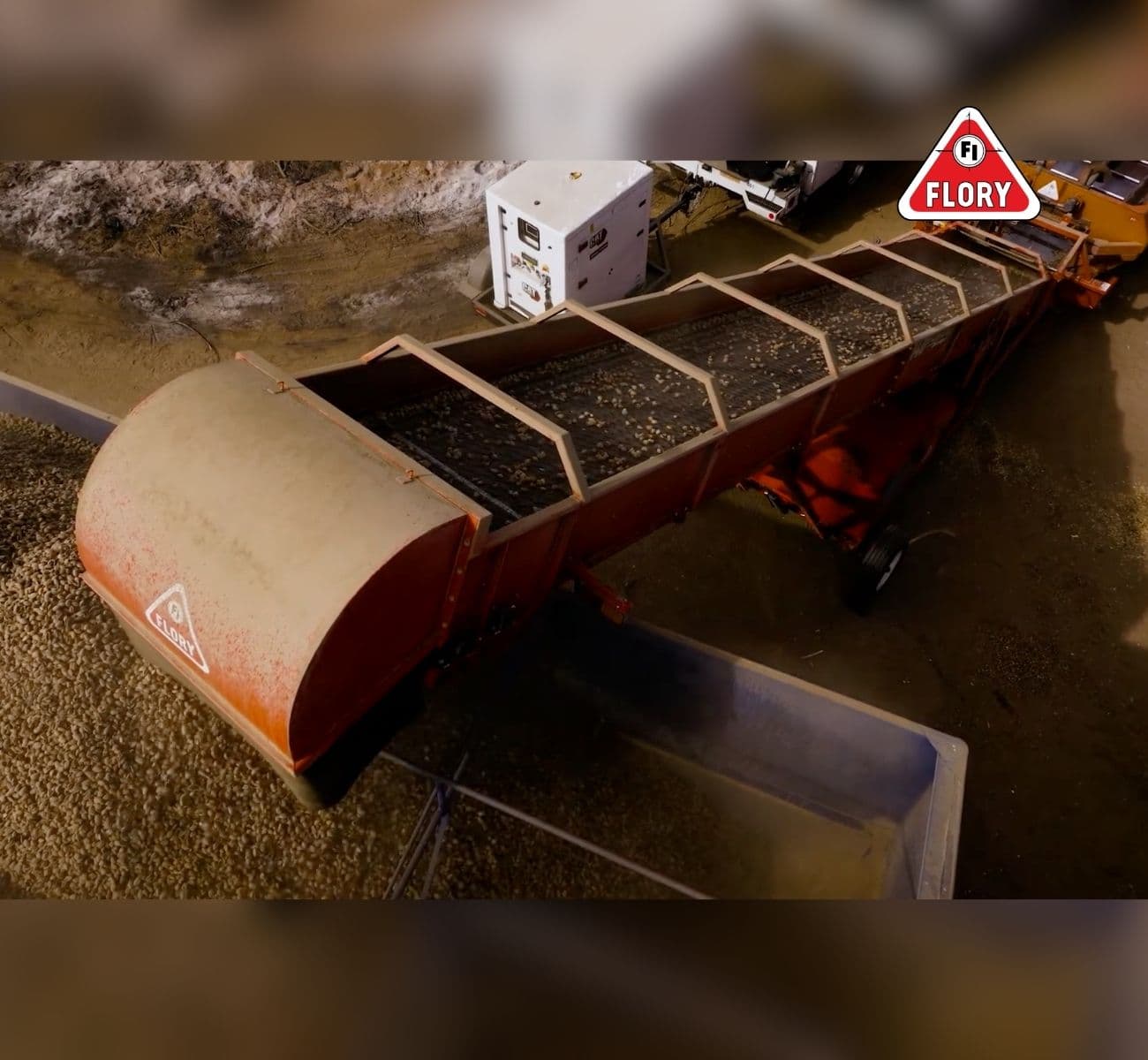
Flory harvesting machinery is available in Bulgaria through OVE Europe for orchards planted for machines. The self-propelled Flory V62 Sweeper sweeps the nuts into windrows, and the self-propelled 8772 Harvester picks them up; Flory lists a mud brush as standard for hazelnuts on the 8772. The 1500 Conveyor Cart receives the nuts, the ST14 Shuttle carries them and the 4840 Field Elevator loads trailers for the processing site.
Hazelnut Harvest Workflow (Recommended Equipment)
Practical Tips for Hazelnut Harvesting
Level, smooth and flail-mow the orchard floor before nut drop, as Oregon State University describes, so the sweeper can work right up to the trunks.
Start harvesting when natural nut drop begins, as a Bulgarian advisory article advises, and have drying ready: it puts fresh nuts at 35% moisture.
Pick up fallen nuts in several rounds: for hand collection, Türkiye's Hazelnut Research Institute advises rounds every 3 to 5 days, as nuts left lying turn moldy.
Gather fallen nuts before autumn rain where possible: British Columbia's hazelnut guide warns that a crop harvested wet causes storage problems.
Sweep only fast enough to keep ahead of the pickup machine, as British Columbia's guide advises, and clean harvesters between orchards.
Keep bins of harvested nuts out of the rain until drying: Oregon State University notes that nuts in bins left in the rain before drying can turn moldy.
Get your recommended harvest setup
Enter orchard size, spacing, terrain, and target throughput—we’ll suggest a practical harvest workflow and equipment lineup.

Hazelnut Post-Harvest Handling & Processing in Bulgaria
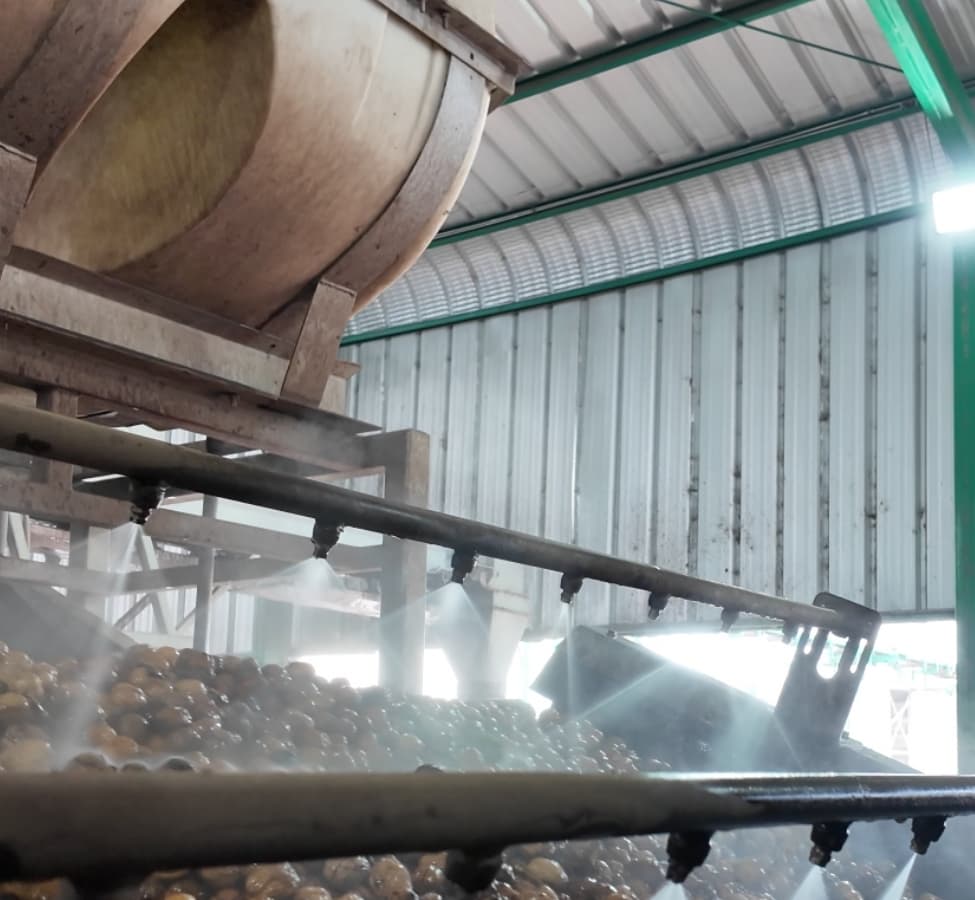
The advisory article puts the moisture of freshly harvested nuts at 35% and advises drying them in dryers or in the sun to 5%, then storing them in dry, ventilated rooms. On the organic farm, nuts were spread in hot greenhouses until they shed their husks (2020); the grower-processor near Varna says it cleans out stones and sticks, washes the nuts and dries them to 5.5% moisture, then cracks and calibrates them.
Husk removal depends on the cultivar: the 2020 review notes that Rimski and Tonda Gentile delle Langhe drop free of the husk, while in Ran Trapezundski the husk fully encloses the nut. In British Columbia's guide, nuts are husked, cleaned, washed, sanitized and dried to 5 to 8% moisture within 24 hours of harvest, and the Codex code of practice for tree nuts advises storage below 70% relative humidity and at 0 to 10 °C, both where possible.
As an EU member, Bulgaria applies Regulation (EU) 2023/915: 5.0 µg/kg of aflatoxin B1 and 10.0 µg/kg in total for hazelnuts for the final consumer or used as an ingredient, and 8.0 and 15.0 µg/kg for nuts to be sorted first. Jessee, whose processing lines OVE Europe supplies, builds drying, in-shell cleaning and sizing, and shelling systems, and it established product lines for hazelnuts in the 1980s.
For general information only. Information may become outdated and does not replace site-specific professional advice. Consult a qualified agronomist and confirm equipment suitability with OVE before acting.

Practical Tips for Hazelnut Post-Harvest Handling & Processing
Dry hazelnuts promptly after harvest: in British Columbia's guide they are dried to 5 to 8% moisture within 24 hours.
Never leave husk-on nuts in thick layers or heaps: Türkiye's Hazelnut Research Institute warns that they heat up and rot.
Where possible, dry nuts in a dryer rather than in the sun: the Codex code warns that sun-dried nuts face a greater risk of fungal contamination.
Where possible, store dried hazelnuts below 70% relative humidity and at 0 to 10 °C, as the Codex code advises, to limit fungal growth.
Keep lots separate by cultivar and calibrate them: a 2020 review notes that the industry wants calibrated lots of a single cultivar.
Test lots for aflatoxins: in the EU, hazelnuts for the final consumer or used as an ingredient must not exceed 5.0 µg/kg of B1 and 10.0 µg/kg in total.
Recommended Post-Harvest Handling & Processing Stages








Plan your post-harvest line
Estimate tons/day, cleaning & drying capacity, storage needs, and cost/kg—then build your equipment plan in phases.