


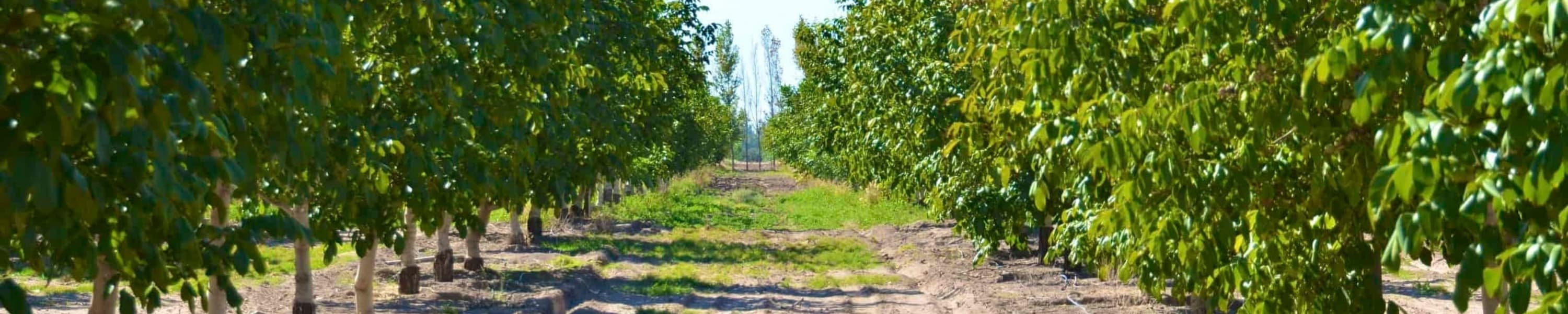




Walnut Orchard Establishment in Iran
Iranian researchers call late spring frost a primary factor limiting walnut production, and a frost in 2018 damaged orchards in northern Iran (2022 and 2023 studies). A provincial extension guide for growers (West Azerbaijan province, 2017) advises deep, uniform loam soils with good drainage, not shallow sandy or heavy clay soils. It notes that most Iranian farmland has a pH of 7.7 to 8.2, that walnut is sensitive to boron toxicity, and that north-facing slopes limit temperature swings in winter and early spring.
AREEO's research institutes released the first Iranian walnut cultivars, Jamal and the pollinizer Damavand, in 2010, and Persia, Caspian, Chaldoran and Alvand in March 2019, still being propagated in 2020. Persia and Caspian leaf out late, around Chandler's date, and suit areas with late spring and early autumn frosts, while the very low-vigor Alvand can be planted 4 to 5 m apart (HortScience, 2020). In East Azerbaijan province, the horticulture director said in 2024 that about 1,000 ha of orchards had been top-worked with improved cultivars.
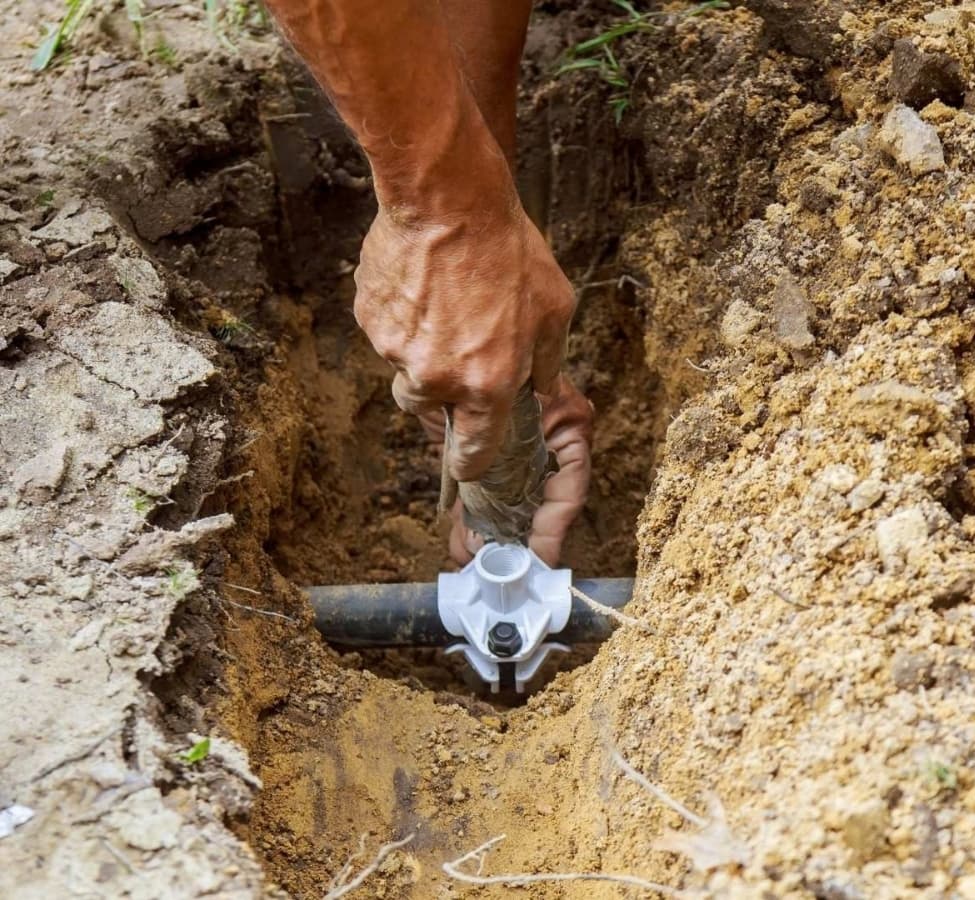
For new orchards, the extension guide advises 7 x 7 m spacing on silty loam and 6 x 6 m on sandy loam, one-meter planting pits, planting in late winter before growth starts, and drip or bubbler irrigation; Jamal needs at least 7 x 7 m (2012). Seedling rootstocks are grafted at one or two years; outdoors, the guide prefers crown or tongue grafts, such as a modified crown graft in early spring. Trees are headed at 2 m in the first spring, with the lowest scaffold at about 0.9 to 1.2 m depending on mechanization.
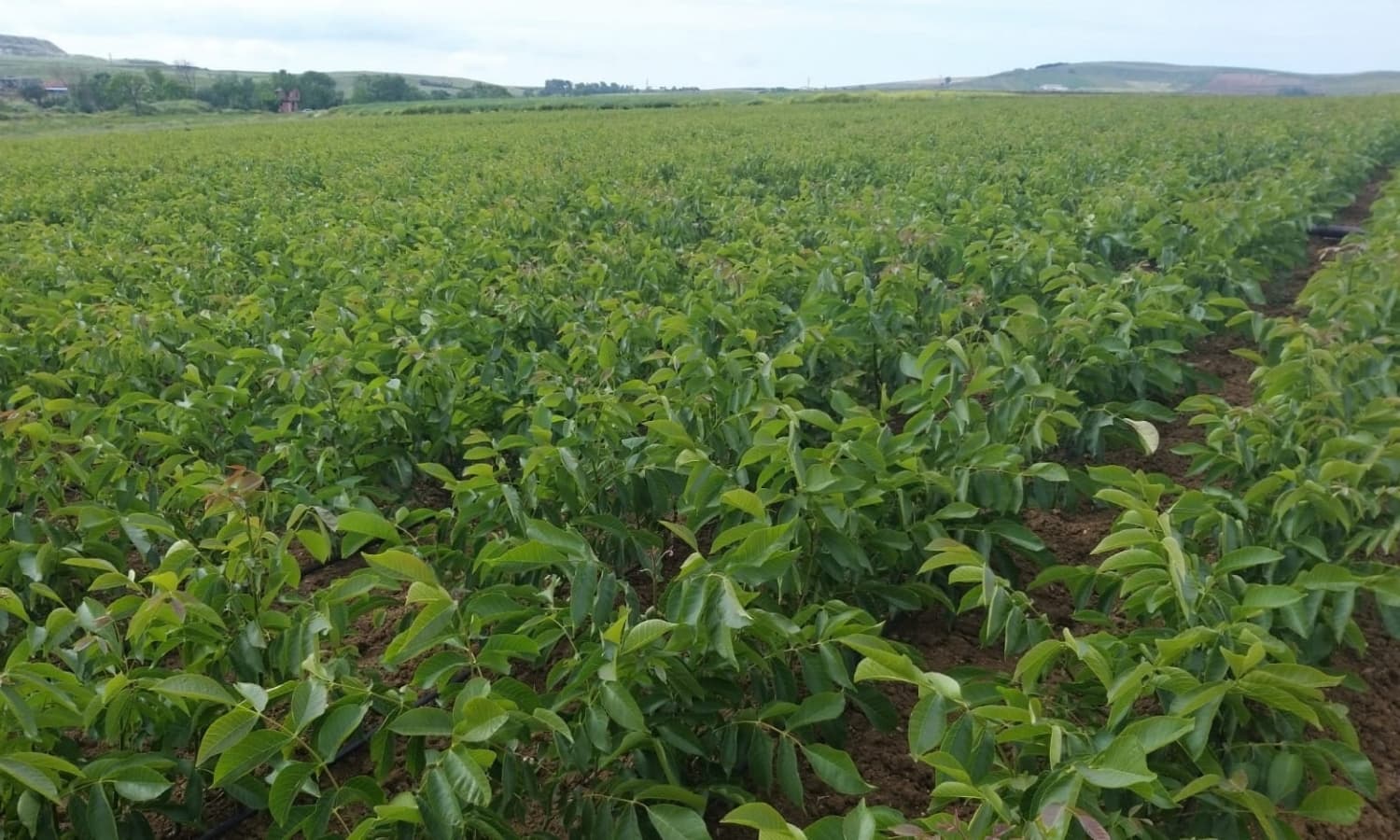

Practical Tips for Walnut Orchard Establishment
Choose late-leafing cultivars such as Persia or Caspian where late spring frost is common, as their 2020 release paper recommends.
Prefer north-facing slopes with deep soil: a provincial extension guide says they limit temperature swings in winter and early spring.
Check soil depth, drainage and boron before planting, and avoid shallow sandy or heavy clay soils, as the extension guide advises.
Jamal is protandrous and needs a pollinizer cultivar, so plan pollinizer trees in the layout before ordering plants.
Leave straight rows, headlands and access lanes so shakers, sweepers and shuttles can work each block and turn freely.
Plan for slow returns: a provincial extension guide expects first nuts in the fourth year but economic crops only from about the tenth.
Recommended Establishment Stages



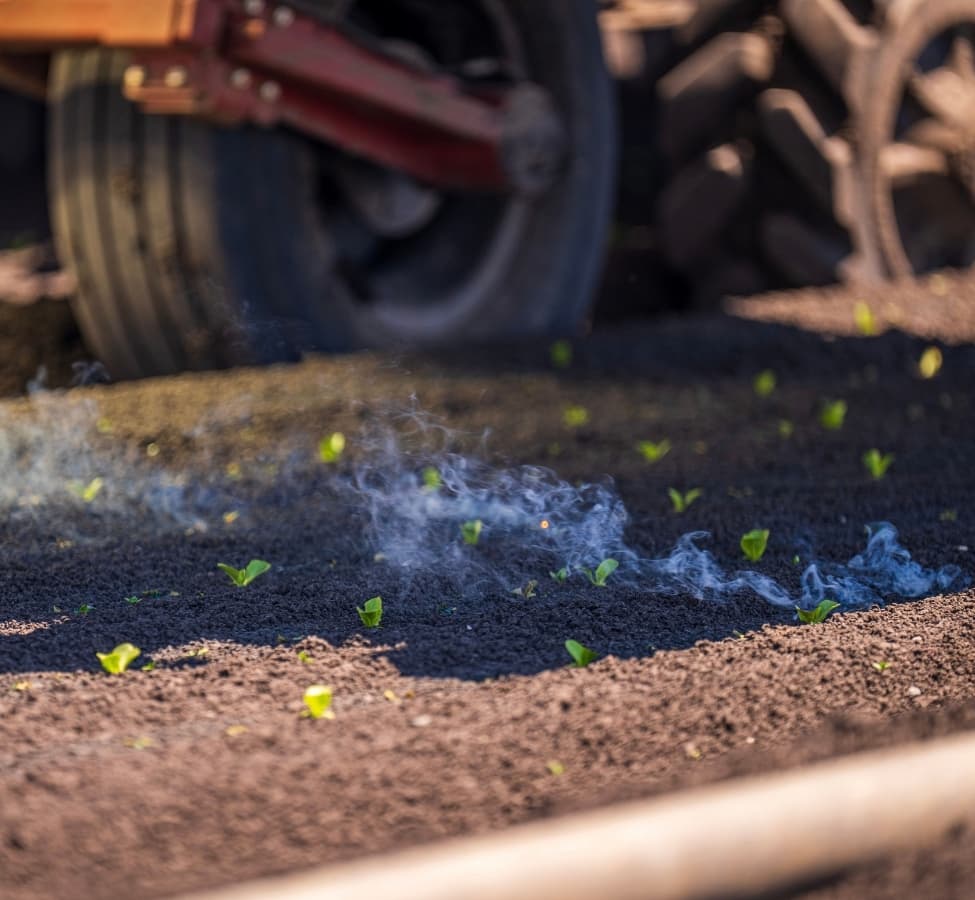


Walnut Orchard Care & Maintenance in Iran
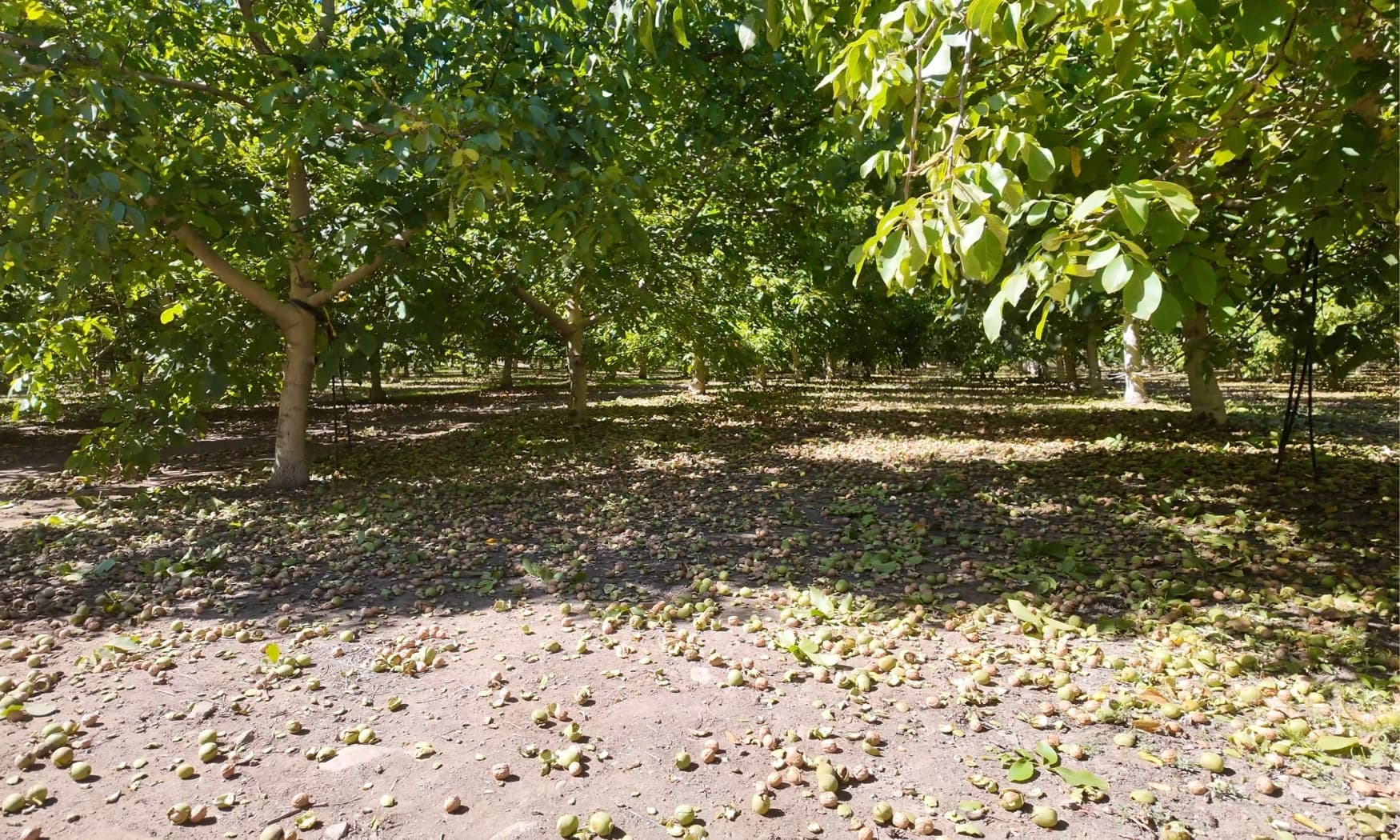
Irrigation is essential for yield and quality, the extension guide says: trees need about 7,500 m³ of water per hectare, more than surface irrigation can supply where water is short, so drip or bubbler is preferred, from May to early October, keeping water off the trunk. Shortage while kernels fill, from late June to late August, leaves kernels light, shriveled and dark. Three orchards near Baft, Kerman province, flood-irrigated every 25 days, got about half the water the trees need; the authors named drought as a clear cause of lower yields.
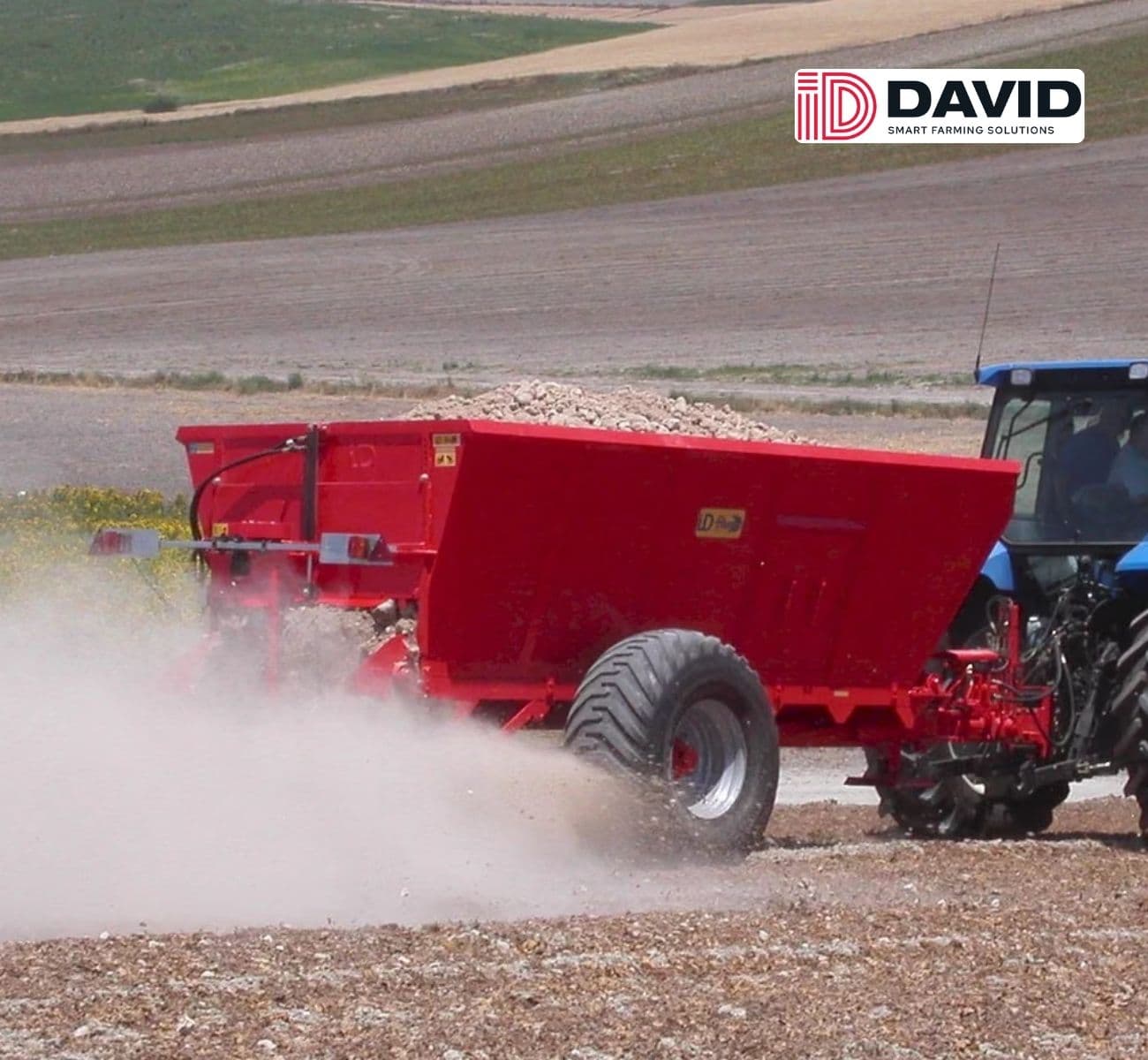
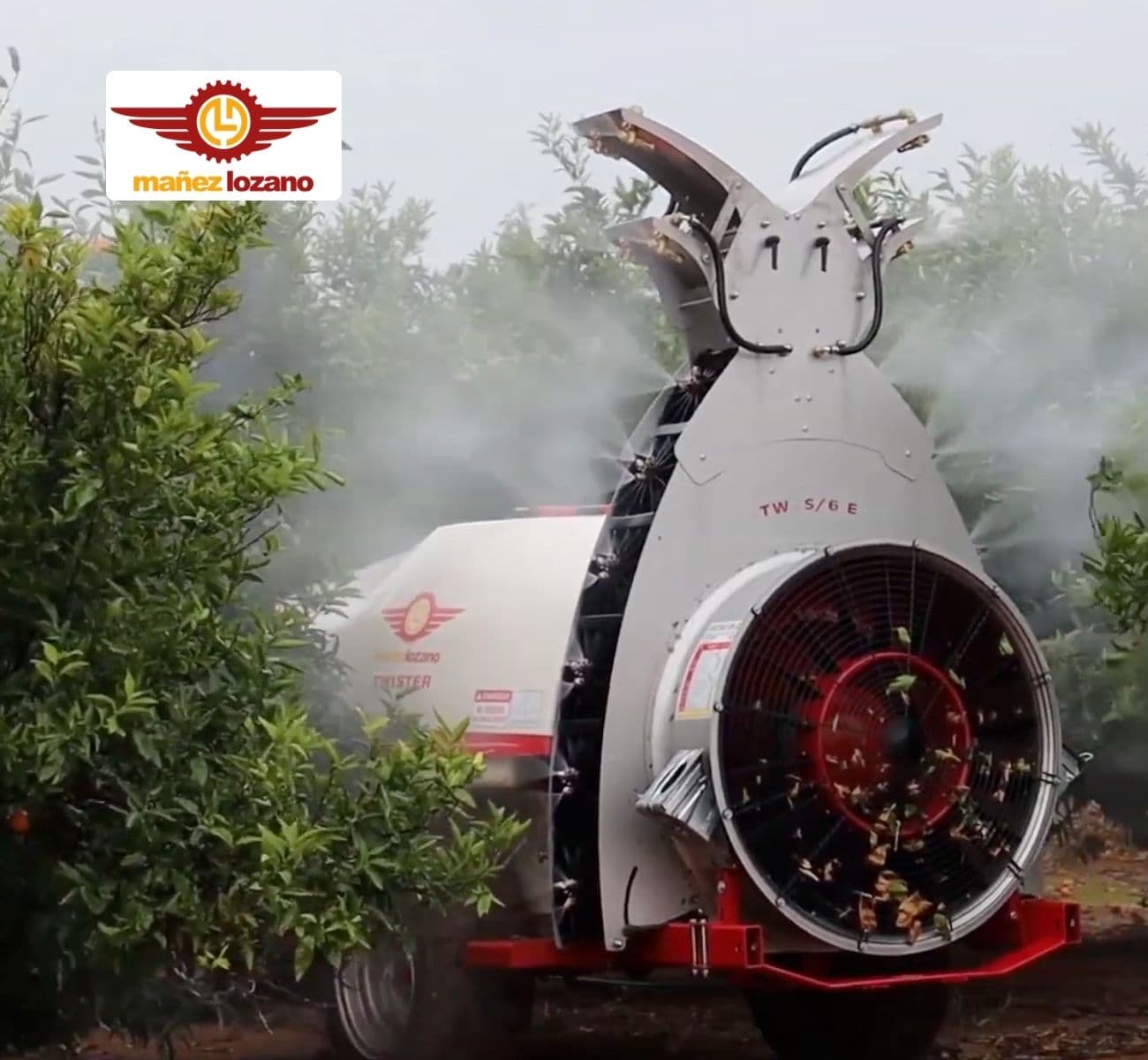
Walnut blight (Xanthomonas arboricola pv. juglandis) is widespread in Iran (EPPO) and develops in rain and high humidity in spring and early summer; late-leafing cultivars largely escape it. A 2009 paper called anthracnose (Ophiognomonia leptostyla) the most important fungal disease of walnut in most Iranian growing areas. The extension guide says it is most common in cold, humid areas and wet years, and advises thinning the canopy, collecting infected leaves and nuts, fertilizing on soil and leaf tests, and a mown cover crop.
Codling moth attacks walnut in Iran: one study found three generations a year at Tuyserkan, Semnan and Karaj and two at sites near 1,900 m, appearing later on walnut than on apple, and monitored it with pheromone traps and corrugated bands. The leopard moth (Zeuzera pyrina) bores into shoots, branches and trunks; in Chaharmahal and Bakhtiari its flight began in mid-May and peaked in early June (2022). EPPO lists no record of walnut husk fly (Rhagoletis completa) for Iran, which does not prove its absence.
Recommended Orchard Care & Maintenance Stages



Practical Tips for Walnut Orchard Care & Maintenance
Do not let trees go short of water from late June to late August, when kernels fill; shortage then leaves kernels light, shriveled and dark.
Keep irrigation water off the trunk, as a provincial extension guide recommends against crown and root rot.
Monitor codling moth with pheromone traps and corrugated trunk bands, and time treatments with local plant-protection forecasters.
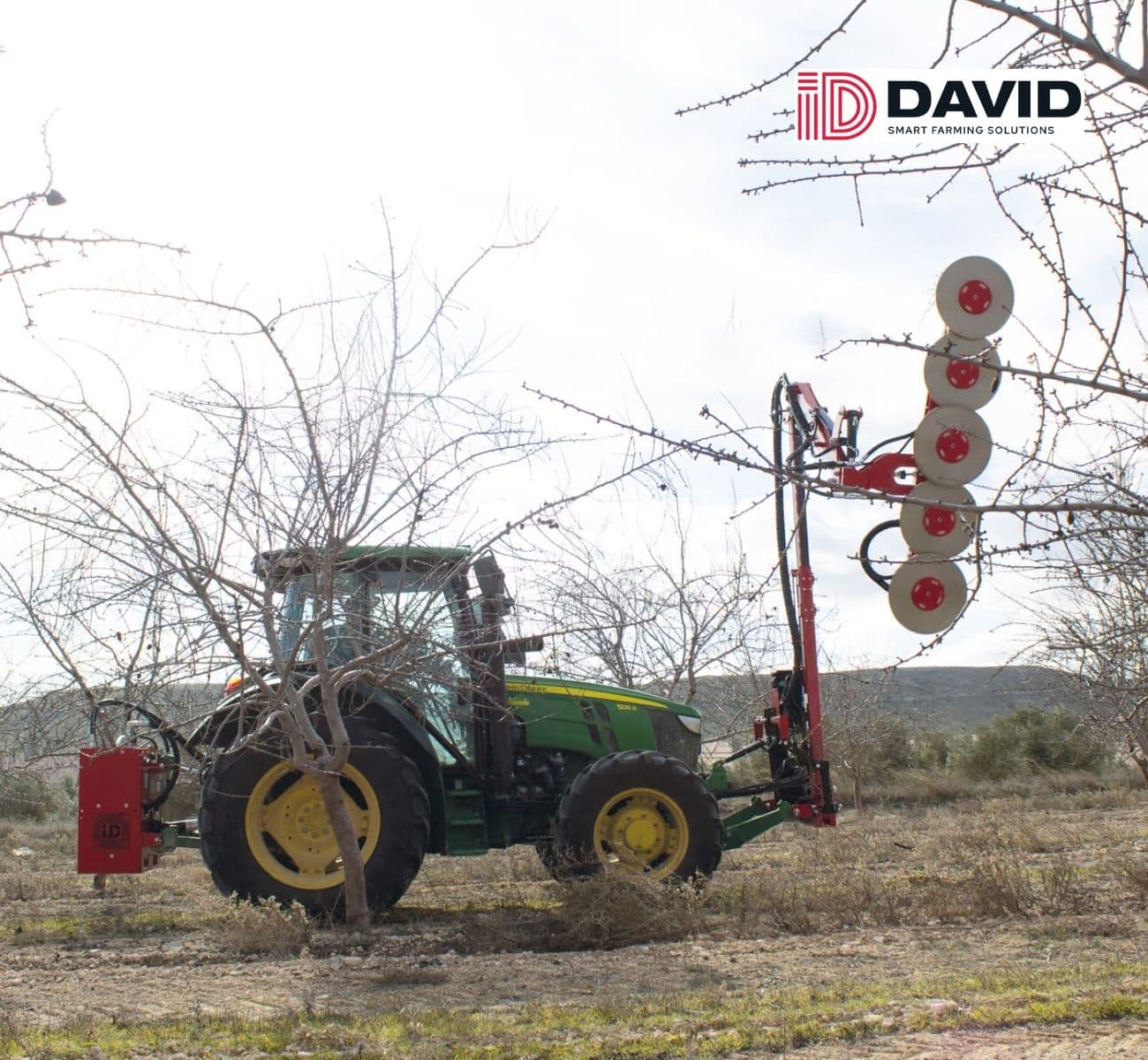
Cut out branches bored by leopard moth and keep trees well watered and fed, as Iranian studies advise.
Collect fallen infected leaves and nuts, and prune to let air through the canopy, to reduce blight and anthracnose.
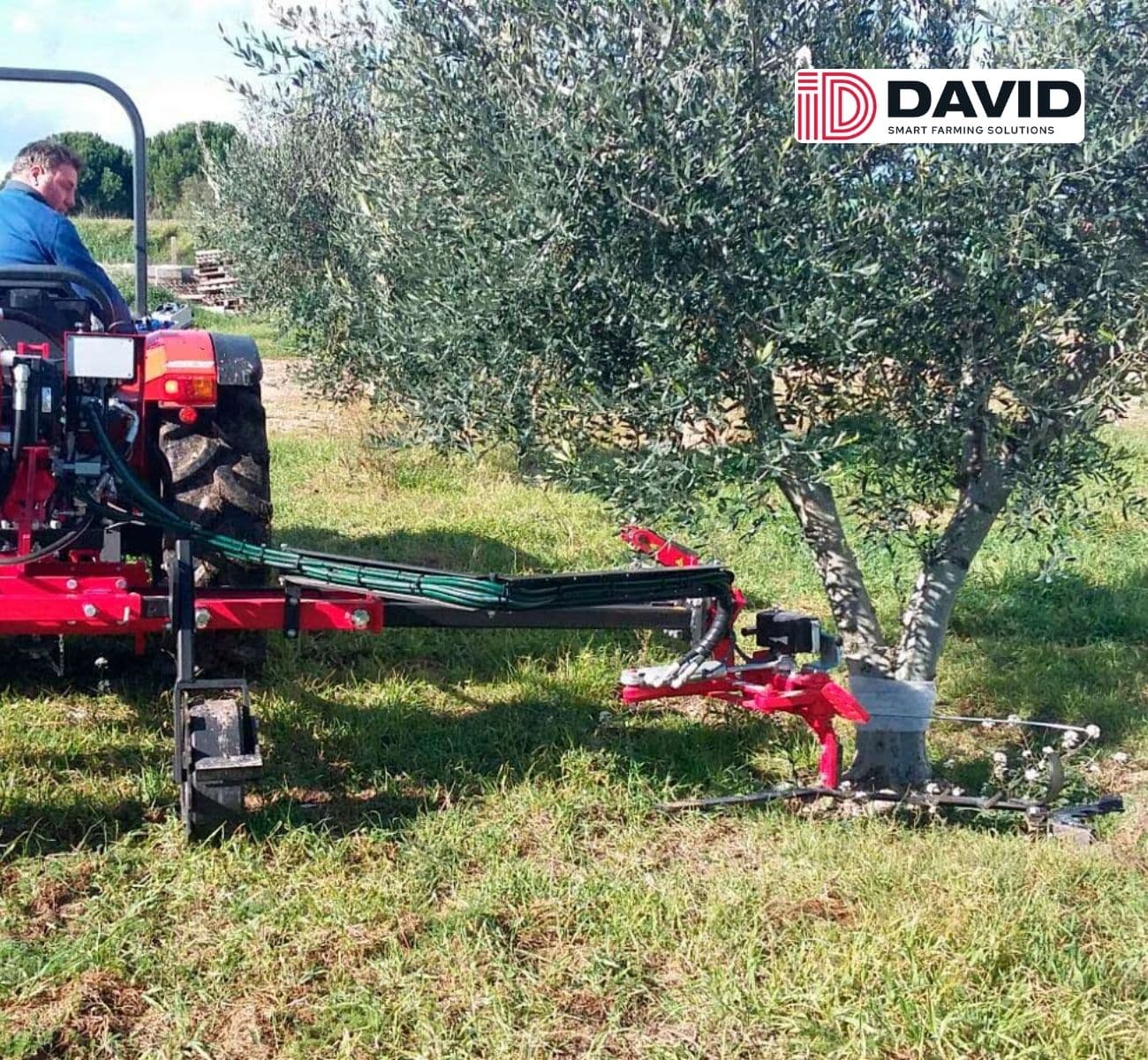
Keep a cover crop on the orchard floor and mow it regularly, so it can be cut short before harvest.

Walnut Harvesting in Iran

Iranian walnuts are still harvested mostly by hand. Workers climb trees that one study puts at 15 to 30 m, pick nuts by hand and knock others down with sticks while standing on the branches (Bojnurd, North Khorasan, 2018); a 2025 machinery paper says over 90% of Iran's walnuts are harvested manually. Falls are frequent: in Bojnurd, 127 people were treated after falls from walnut trees in 2013 to 2014, and 5 died on the day of admission.
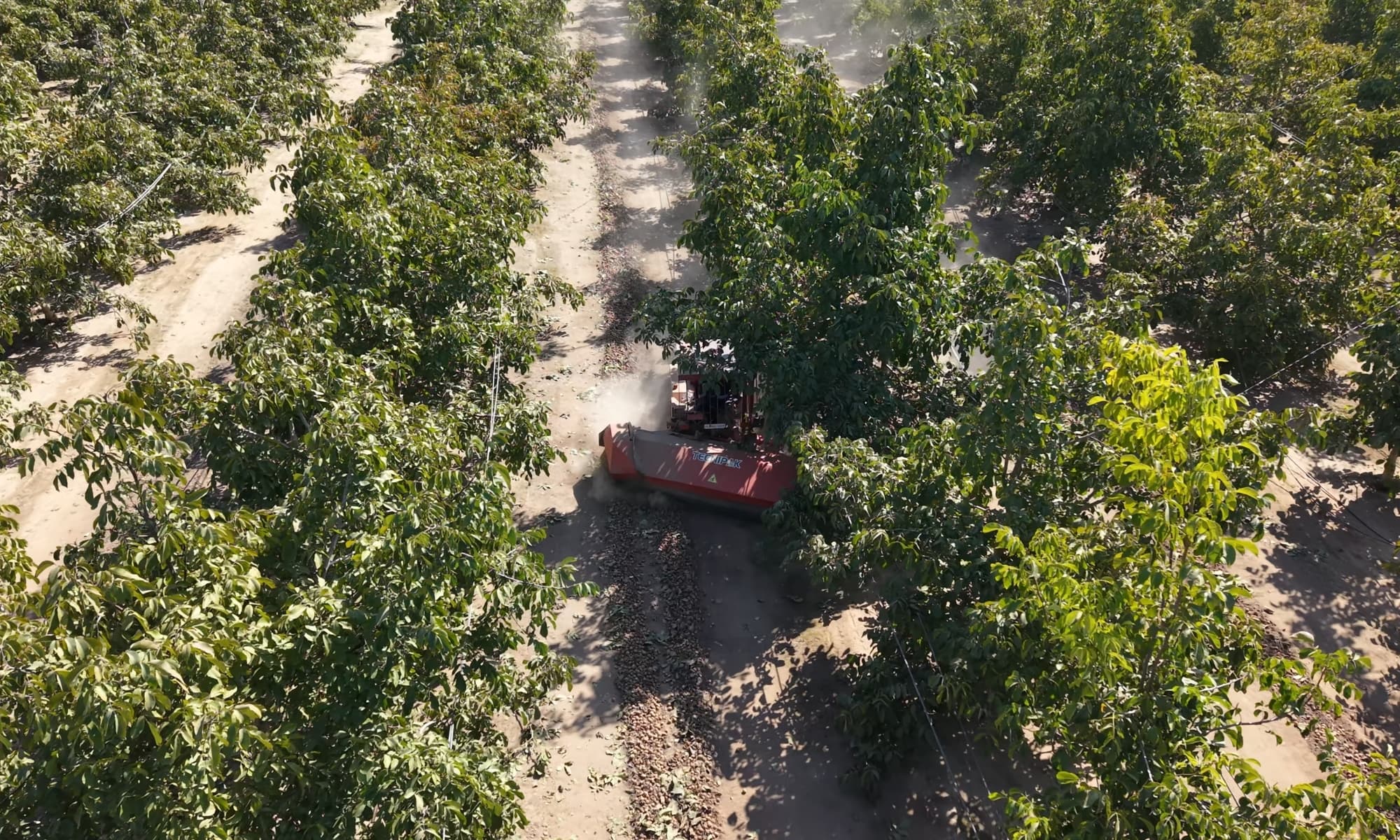
The extension guide places the harvest from mid-September to early November, by cultivar and climate, and advises starting when the hulls of more than half the nuts have split; nuts left on the ground lose quality fast. The Bojnurd authors call for training, safety equipment and pruning of high branches, and cite studies finding fewer farm injuries in mechanized settings. In orchards laid out for machines, a trunk shaker and pickup machines can replace climbing and hand gathering, so nuts spend less time on the ground.
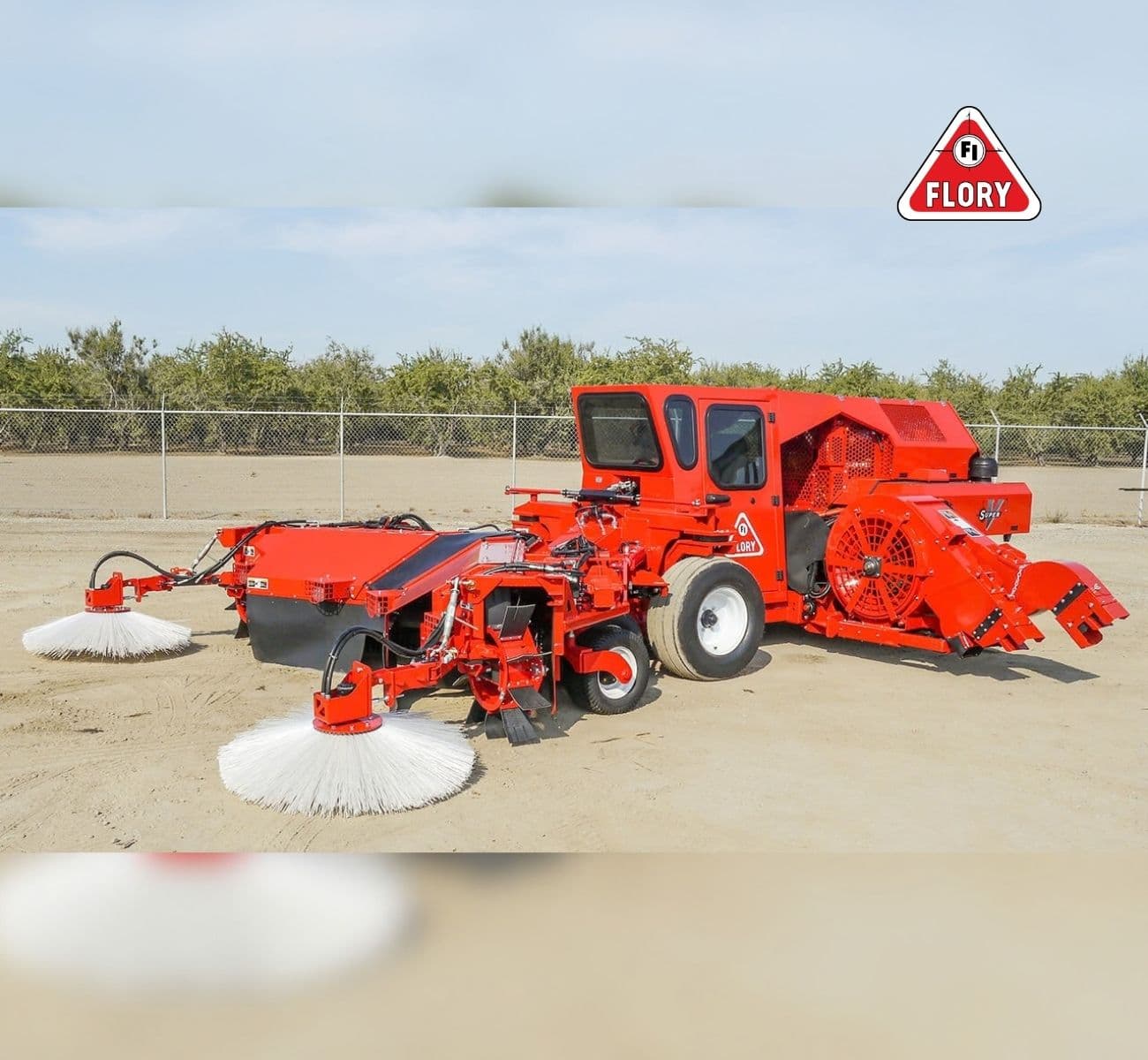
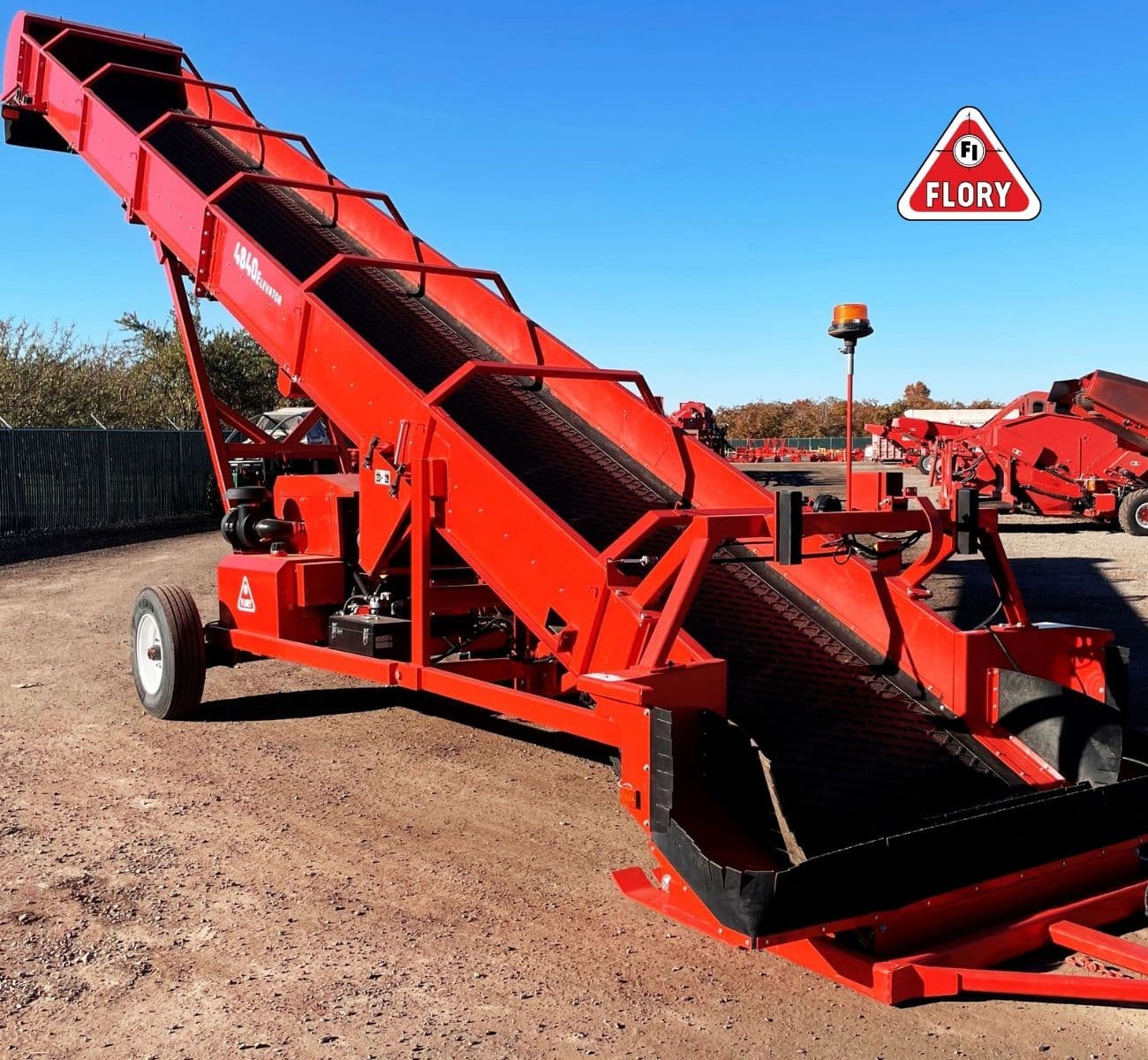
Iranian researchers have built prototype harvesting machines, such as one for steep land, while most of the crop is still harvested by hand. OVE Europe's guides use Flory's line as the reference: the VR700 Shaker shakes the trunk, the V62 Sweeper and 8772 Harvester sweep up and pick up the nuts, and the 1500 Conveyor Cart, ST14 Shuttle and 4840 Field Elevator carry them to the trucks.
Walnut Harvest Workflow (Recommended Equipment)





Practical Tips for Walnut Harvesting
Start harvest when the hulls of more than half the nuts have split, as a provincial extension guide recommends.
Gather fallen nuts every day: the extension guide warns that walnuts left on the ground lose quality quickly.
Never send workers up tall trees without training and safety gear: Iranian injury studies name breaking branches as the main cause of falls.
Plant new orchards with grafted trees and clear trunks, so a trunk shaker can replace climbing.
Mow and level the orchard floor and clear branches and stones before harvest, so nuts can be swept cleanly.
Prepare hulling and drying capacity before harvest, so nuts can be hulled and dried the day they are gathered.
Get your recommended harvest setup
Enter orchard size, spacing, terrain, and target throughput—we’ll suggest a practical harvest workflow and equipment lineup.

Walnut Post-Harvest Handling & Processing in Iran
After harvest, speed matters. The extension guide warns that nuts on the ground lose quality fast, most of it in the first hours, and can darken above 35 °C even in shade, so hulling and drying should follow at once. In a 2008 to 2009 trial at Karaj, nuts dried in the sun, then the growers' usual method, had darker kernels than nuts dried at 20 or 30 °C. An Iranian review advises drying to 8% moisture (wet basis) soon after harvest.
An Iranian review of walnut crackers, citing 2017 data, says walnuts were still cracked by knife or hammer, and another paper says green hulls are often burned or discarded. Iranian engineers have built prototype hullers; one hulled 93% of nuts at 120 to 240 kg an hour. In East Azerbaijan province, the horticulture director said in 2024 that about 80% of walnuts are eaten directly and 20% processed. Jessee, a US maker of nut processing lines, builds hulling, drying, in-shell cleaning and sizing, and shelling systems.
For general information only. Information may become outdated and does not replace site-specific professional advice. Consult a qualified agronomist and confirm equipment suitability with OVE before acting.
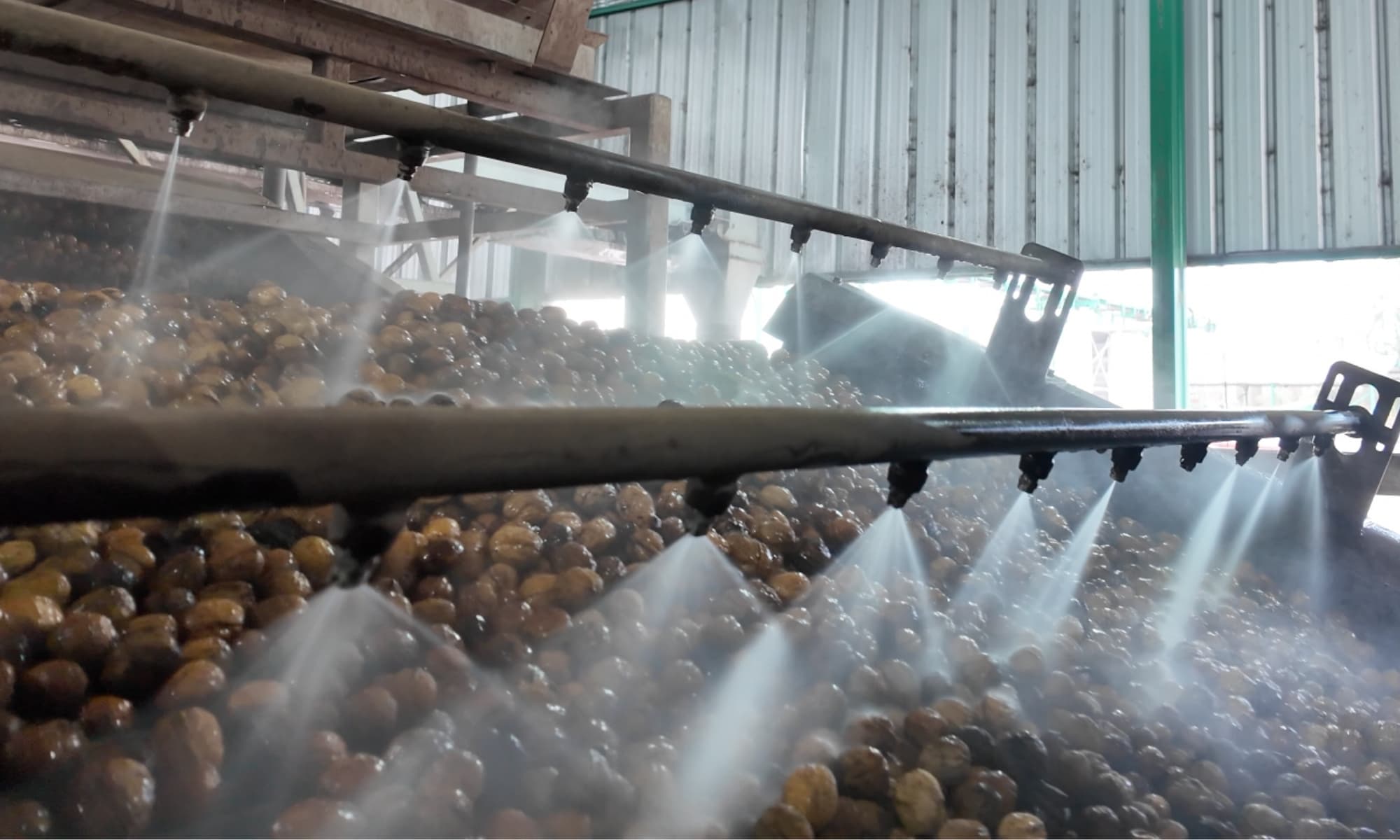
Practical Tips for Walnut Post-Harvest Handling & Processing
Hull nuts on the day they are gathered, before tannins in the green hull darken the shells and kernels.
Keep gathered nuts cool until hulling and drying: a provincial extension guide says they can darken above 35 °C even in shade.
Dry hulled nuts to about 8% moisture (wet basis), as an Iranian review advises, and check samples from each lot.
Use a dryer rather than full sun where kernel color matters: sun-dried kernels were darker in an Iranian trial.
Sort nuts by size and kernel color before sale: a 2024 AREEO article links non-uniform nuts to weaker competitiveness.
Test kernels for aflatoxin and check the current INSO 5925 limits: a 2011 review gives B1 5 and total 15 µg/kg for nuts, which may since have changed.
Recommended Post-Harvest Handling & Processing Stages









Plan your post-harvest line
Estimate tons/day, cleaning & drying capacity, storage needs, and cost/kg—then build your equipment plan in phases.