





Almond Orchard Establishment in Kyrgyzstan
The 2016 recommendations place sweet almond plantations on the rain-fed foothills of southern Kyrgyzstan, which are otherwise used only as low-productivity spring pasture. They give 1,100 to 1,200 m as the altitude for sweet almond: at 1,400 to 1,600 m trees grow well, but yields are low for lack of heat. Suitable tracts have slopes of no more than 20°, cover about 50 ha or more and receive 350 to 500 mm of precipitation a year.
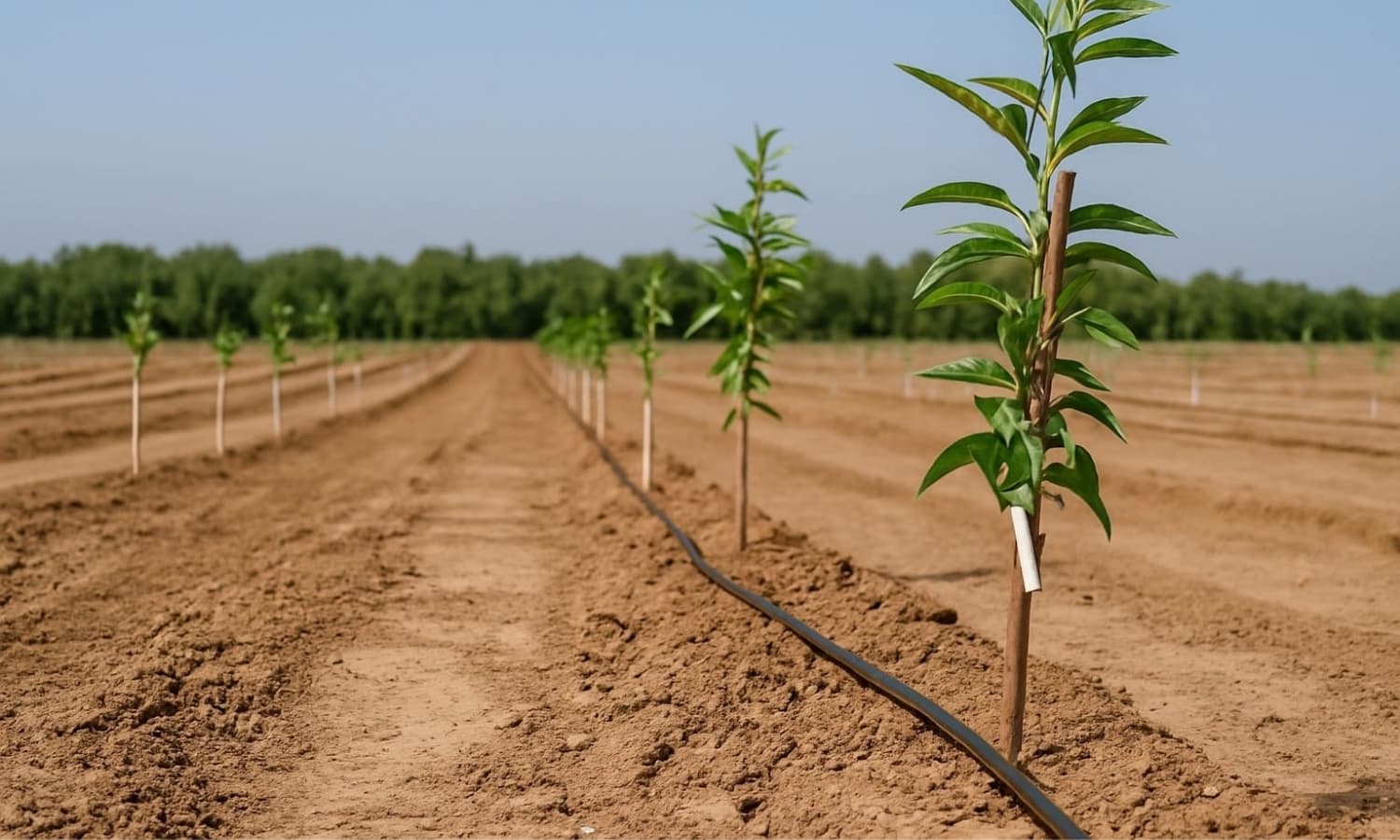
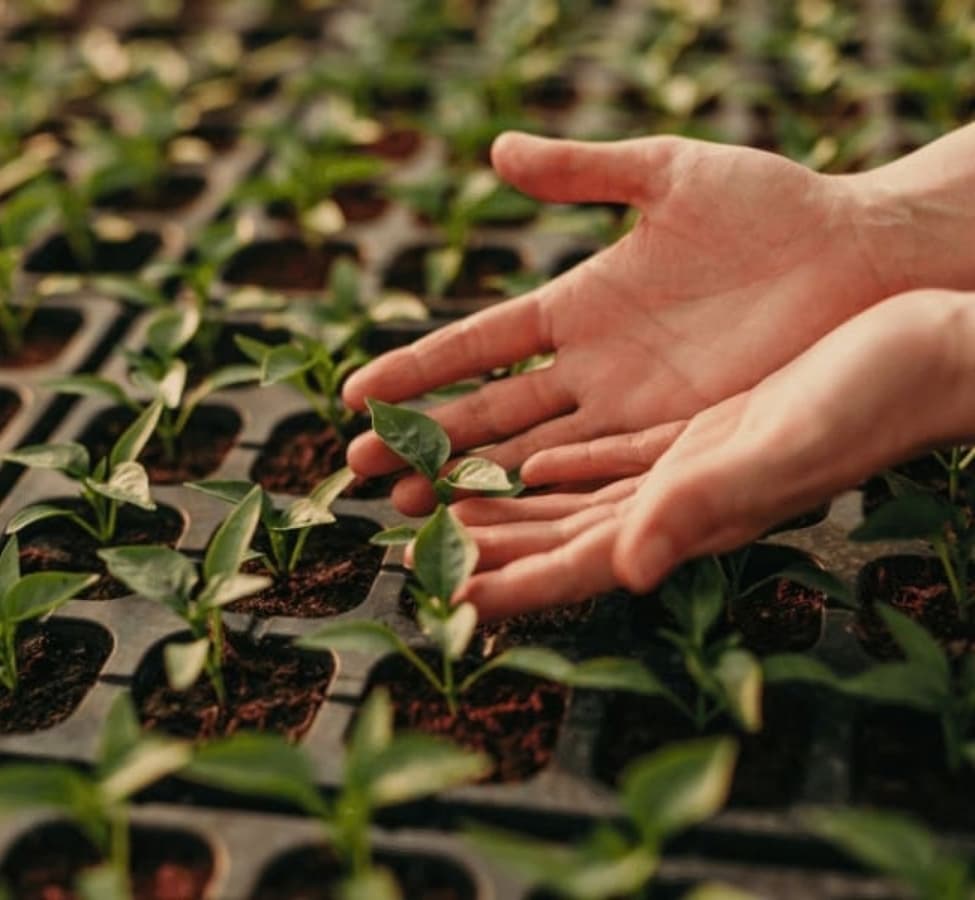
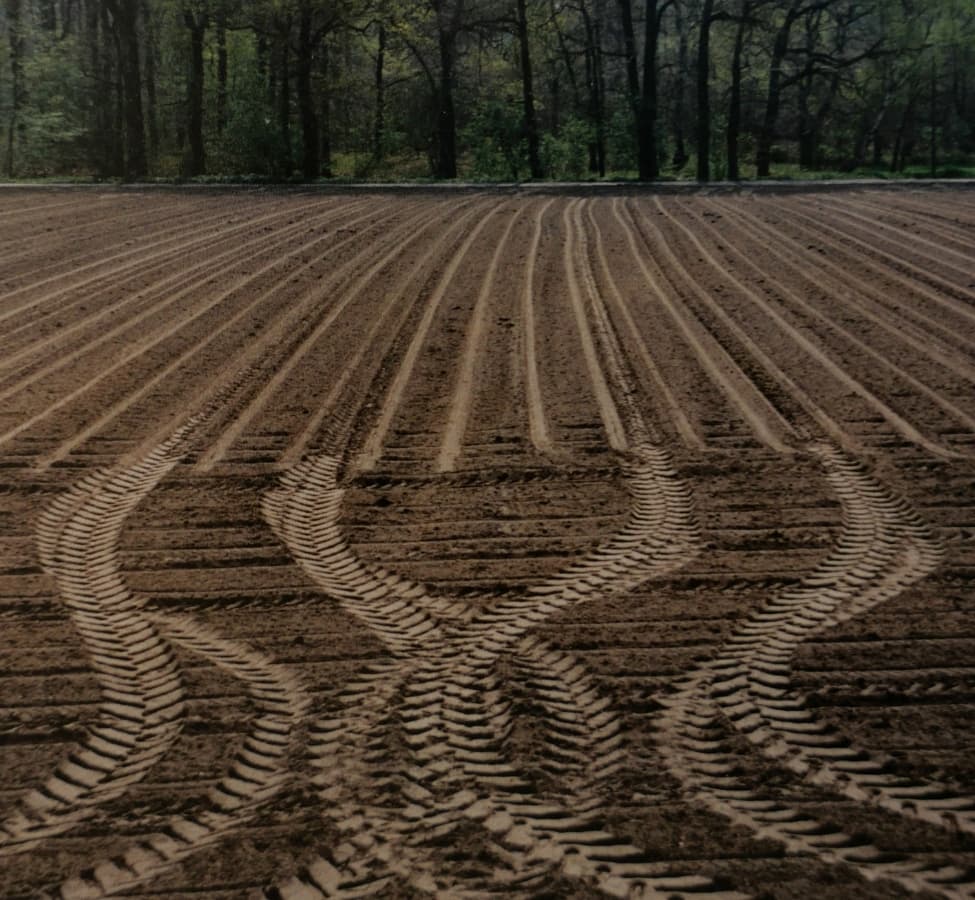
Almond grows well on sierozems, deep loess-like loams and stony, limy sites, the recommendations note, but deep gorges, basins and closed hollows, where cold air collects, are especially unfavorable. Terraces are cut on steeper slopes that tractors can still work, with trees at 5 x 6 m; half-moon terraces at 4 x 4 m, 625 per ha, and planting pits at 3 x 4 m are other options. On rain-fed land, autumn is the best planting time.
Only late-blooming cultivars suit the climate of the south, the recommendations state; mid-blooming ones may be promising only lower down, at 700 to 1,000 m. They name Kosmicheskiy, Desertnyi, Bumazhnoskorlupyi and the mid-late blooming Nonpareil as promising, without saying whether these were tested in Kyrgyzstan. Almond is self-incompatible, so a pollinizer row follows every 2 to 3 rows of the main cultivar, and the rootstock is wild bitter almond grown from seed.

Practical Tips for Almond Orchard Establishment
Plant late-blooming cultivars: the 2016 recommendations judge the climate of the south favorable only for them, with mid-blooming ones promising only at 700 to 1,000 m.
Keep plantations out of deep gorges, basins and closed hollows, where cold, heavy air collects, as the recommendations warn.
Plant a pollinizer row after every 2 to 3 rows of the main cultivar: almond is self-incompatible, as the recommendations stress.
Choose tracts with slopes of no more than 20° and about 50 ha or more, the conditions the recommendations set for plantations.
On rain-fed land, plant in autumn, or in spring as soon as soil conditions allow, as the recommendations advise.
Plan rows, headlands and tree form for the shaker, sweeper and harvester before planting, and check trunk clearance with OVE Europe.
Recommended Establishment Stages

Almond Orchard Care & Maintenance in Kyrgyzstan
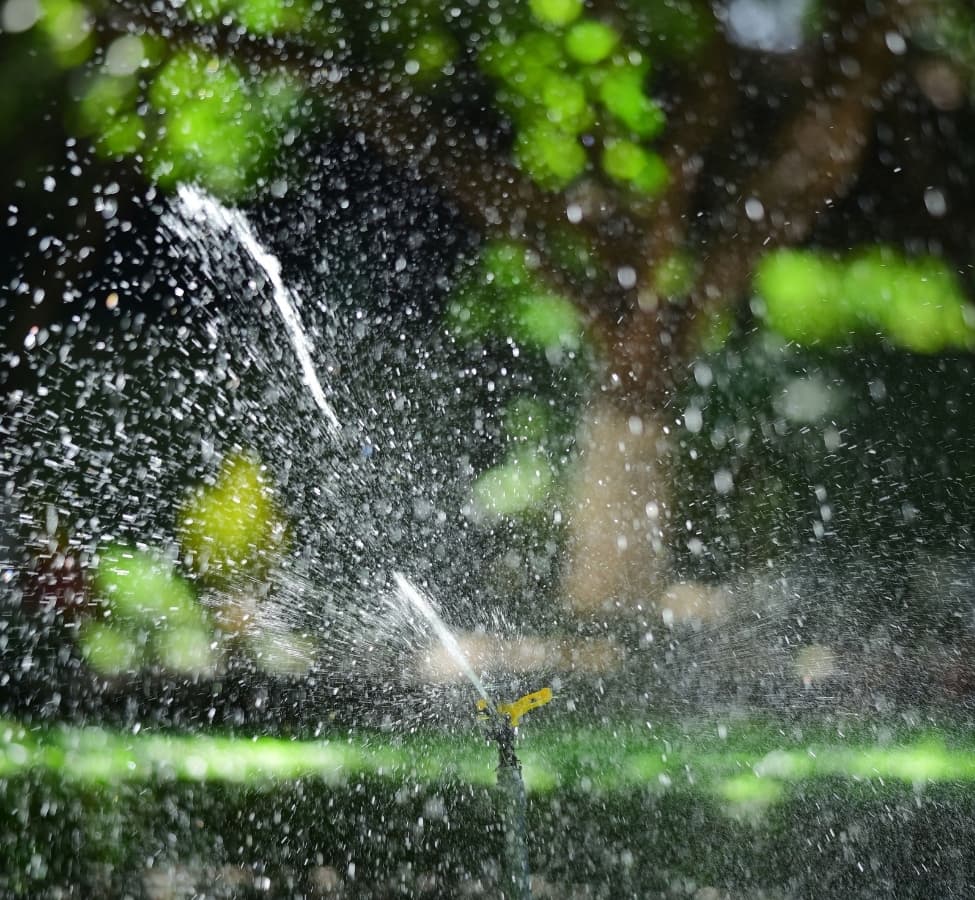
Summers are dry at Osh: Kyrgyzhydromet's 1981 to 2010 normals, published by WMO, give 22 mm of rain in June, 10 mm in July and 8 mm in August. The 2016 recommendations treat almond as a drought-tolerant, rain-fed foothill crop that does not tolerate excess moisture; where irrigation is available, they advise 6 to 8 waterings a season in young plantings and 4 to 5 in bearing orchards.
The recommendations call for pruning between leaf fall and bud break to a central leader with four evenly spaced scaffold limbs, and for loose, weed-free soil all season, with 2 to 3 cultivations 10 to 15 cm deep and tree circles mulched with fresh-cut grass. No Kyrgyz guidance on almond pests was found: EPPO lists the peach twig borer (Anarsia lineatella) as present in Kyrgyzstan, while the almond seed wasp is not listed, which does not prove it is absent.
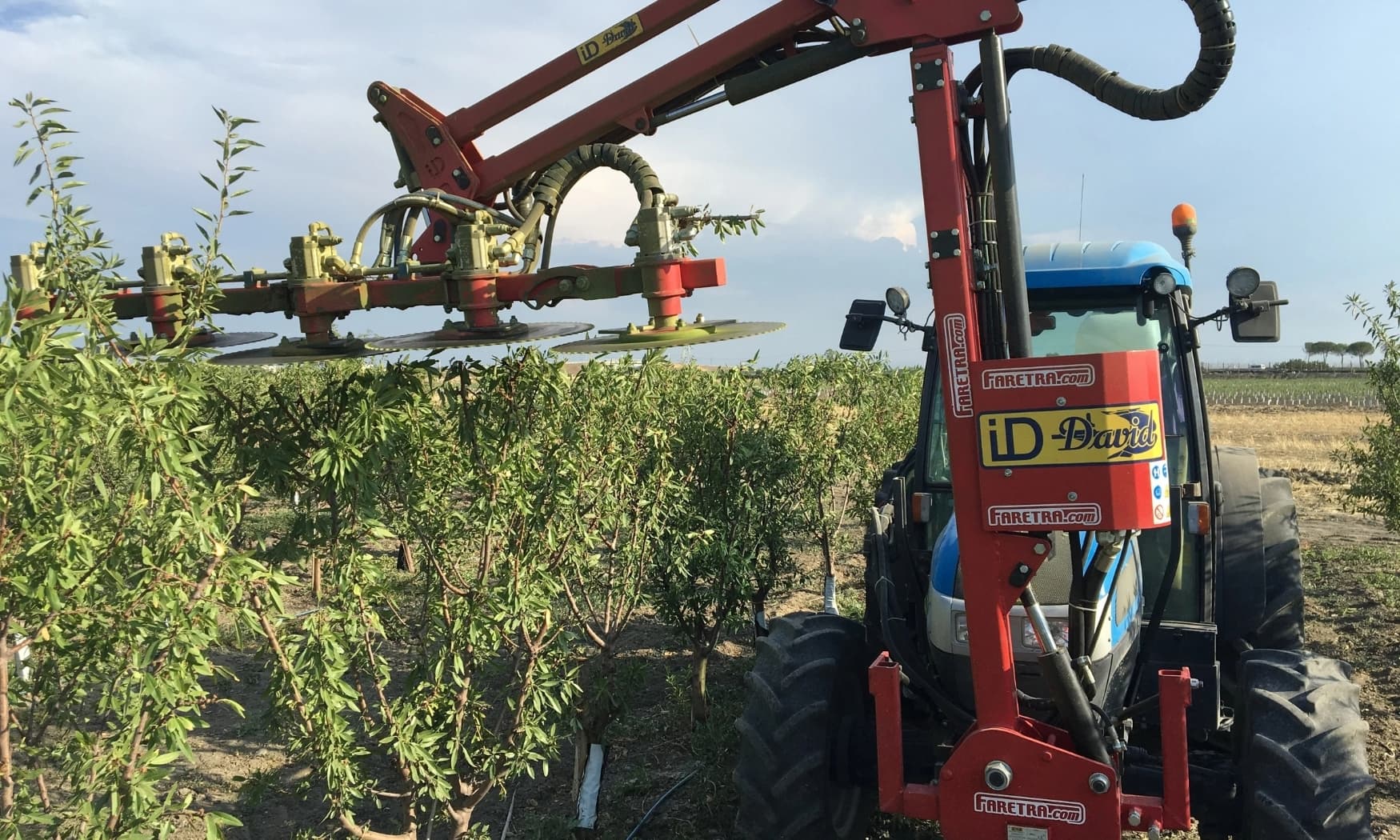
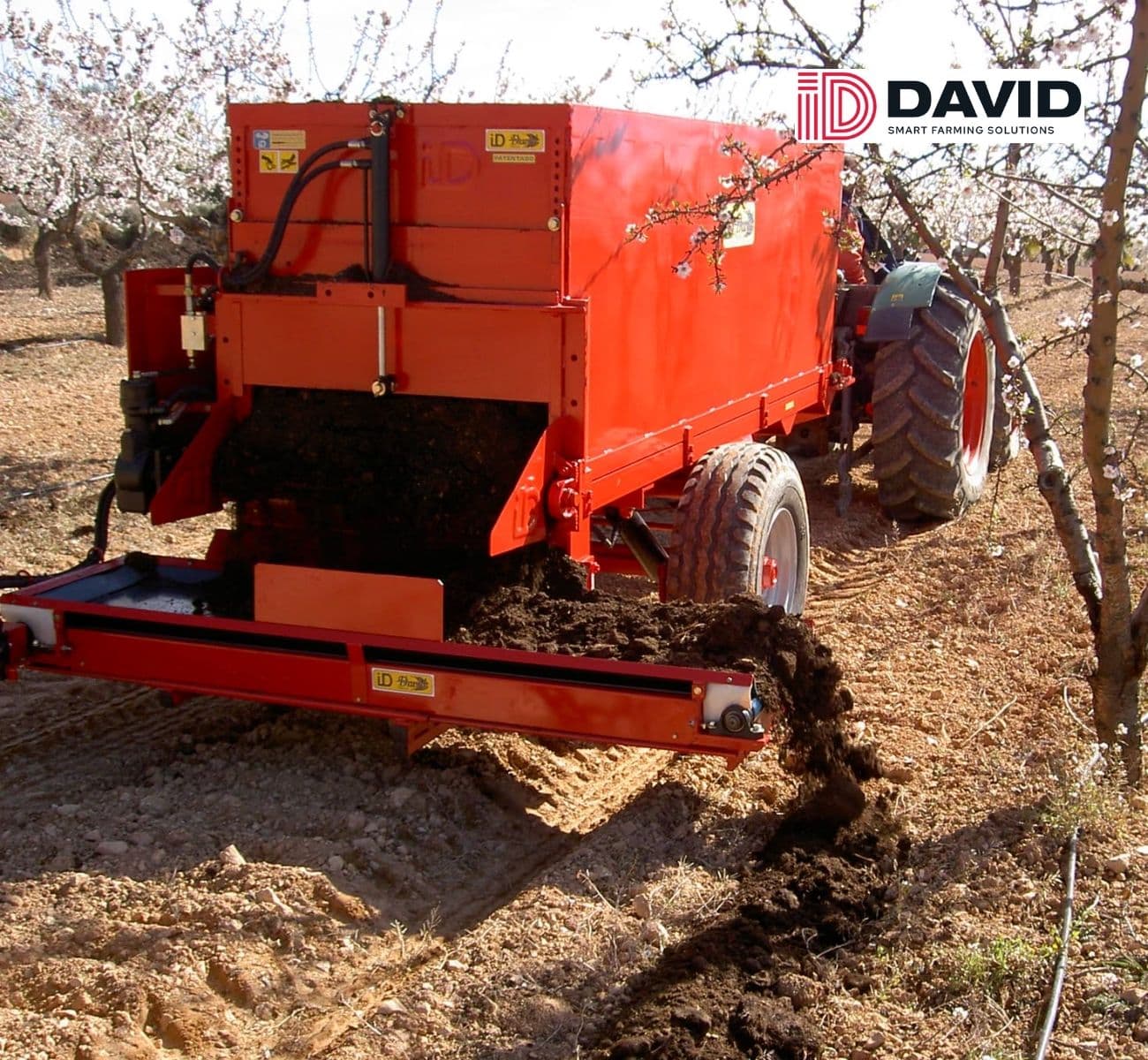
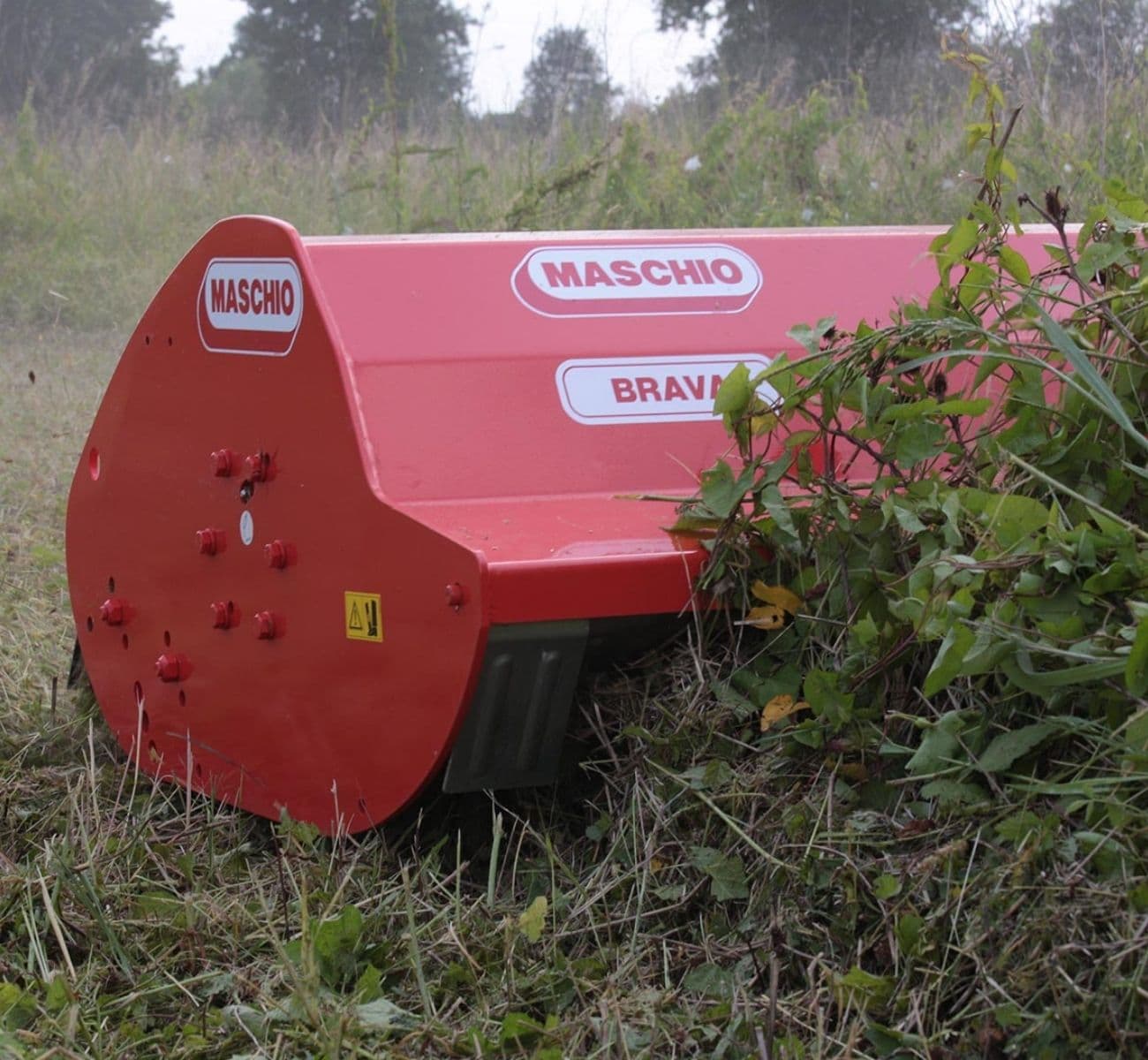
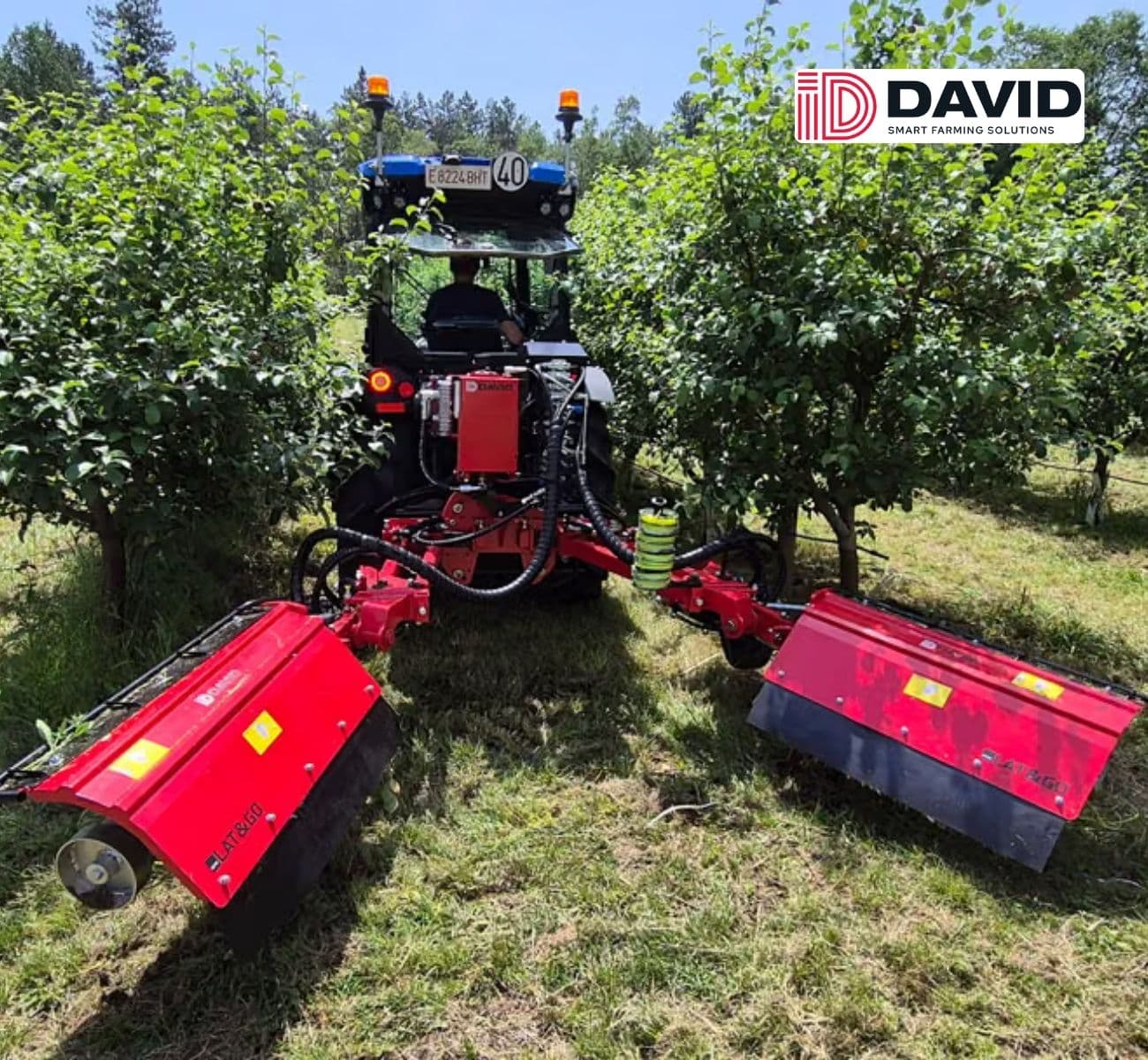
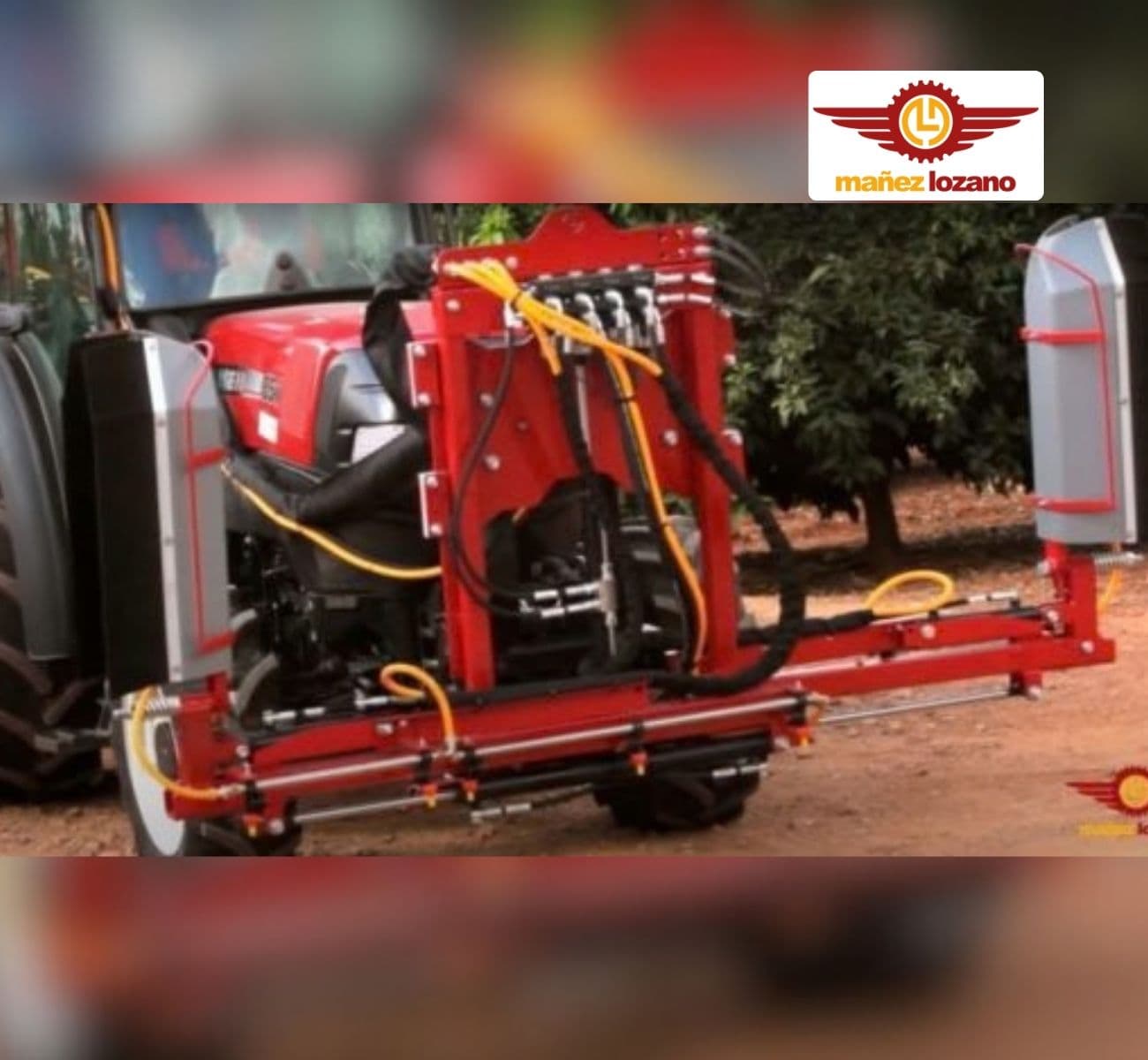
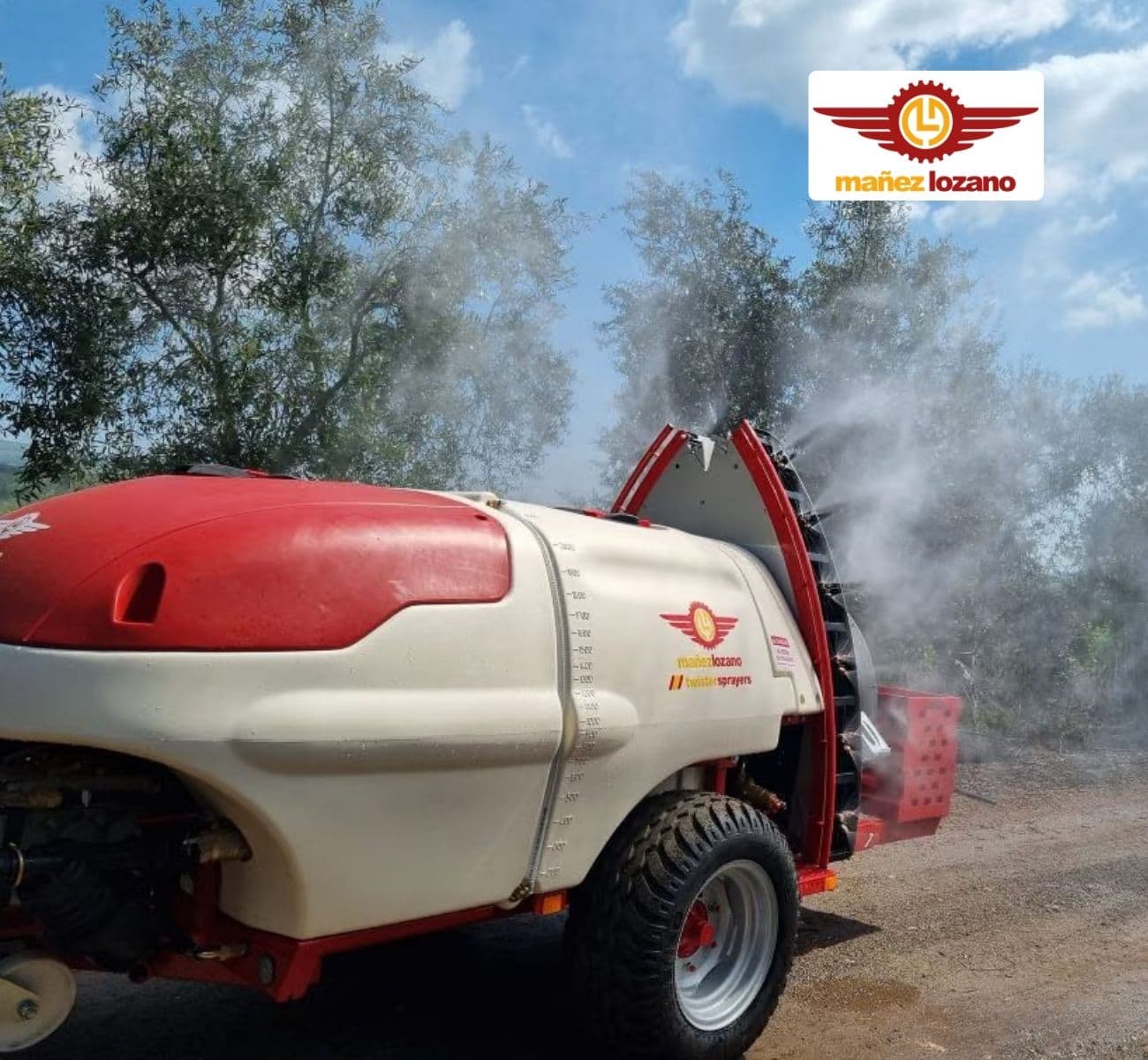
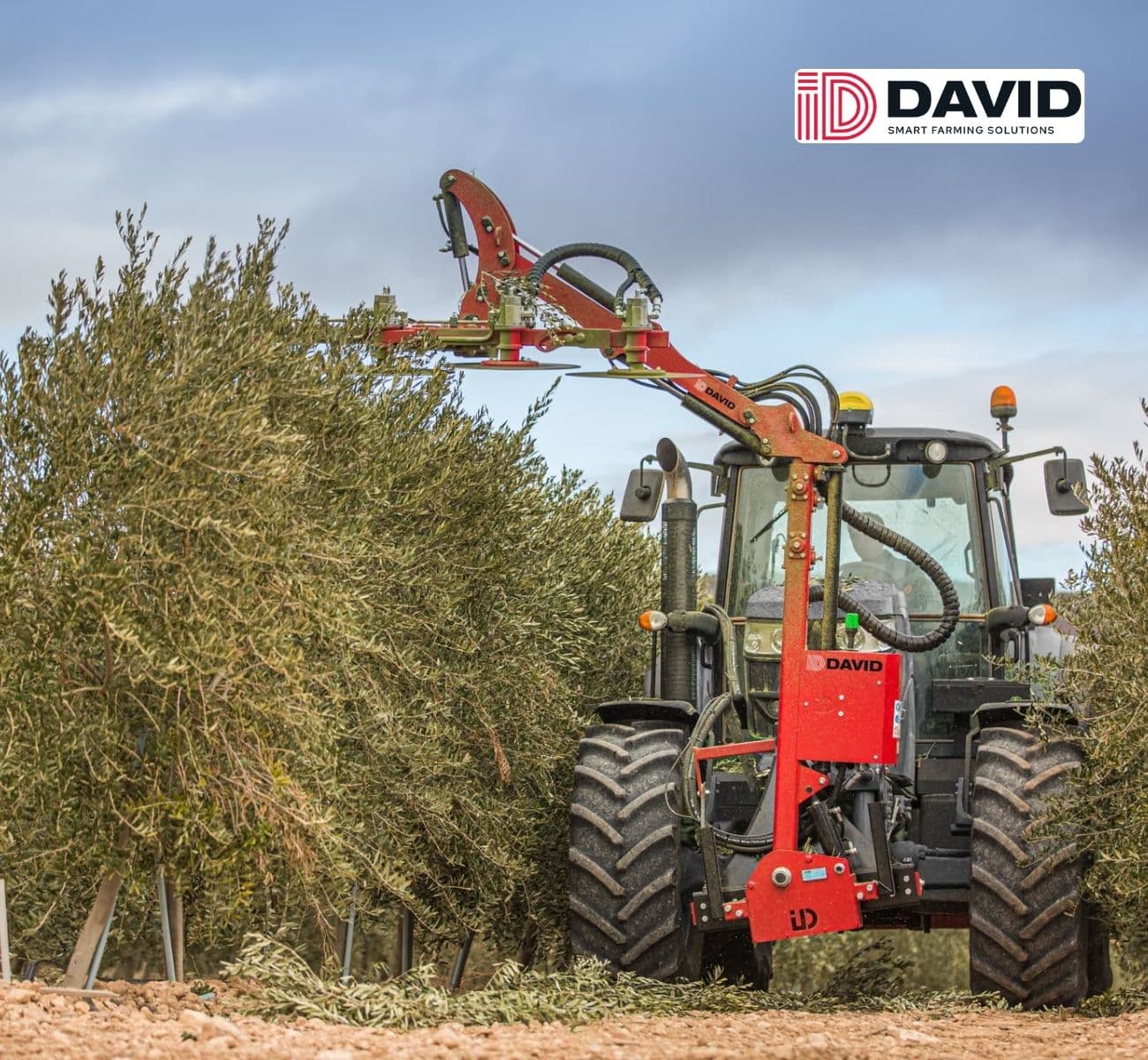
Almond blooms from mid to late March and suffers from late frosts, the recommendations note: opening buds withstand -5 °C and flowers -3 °C. A news forecast for 22 and 23 April 2021 expected frost of 0 to -2 °C in the southern foothills, dangerous for opened buds, flowers and young fruit. For care work, the ID DAVID ECOFEED spreads solid manure, the ID DAVID LAT&GO string mower controls weeds without herbicides, the Mañez Lozano Narrow Twister S6 sprays tall, dense canopies and the ID DAVID V1 disc pruner makes vertical and horizontal cuts.
Recommended Orchard Care & Maintenance Stages
Practical Tips for Almond Orchard Care & Maintenance
Where water allows, irrigate young plantings 6 to 8 times a season and bearing orchards 4 to 5 times, as the 2016 recommendations advise.
Whitewash young trunks with fresh slaked lime in late autumn against sunburn, especially in the first years after planting, as the recommendations advise.
Mulch tree circles in young rain-fed plantings with fresh-cut grass: the recommendations find mulching especially effective there.
Watch frost forecasts through March and April: almond blooms from mid to late March, and flowers withstand only about -3 °C.
Check shoots and fruit for the peach twig borer, which EPPO lists as present in Kyrgyzstan.
Control weeds without herbicides with a string mower such as the ID DAVID LAT&GO, and keep the orchard floor level for harvest.

Almond Harvesting in Kyrgyzstan
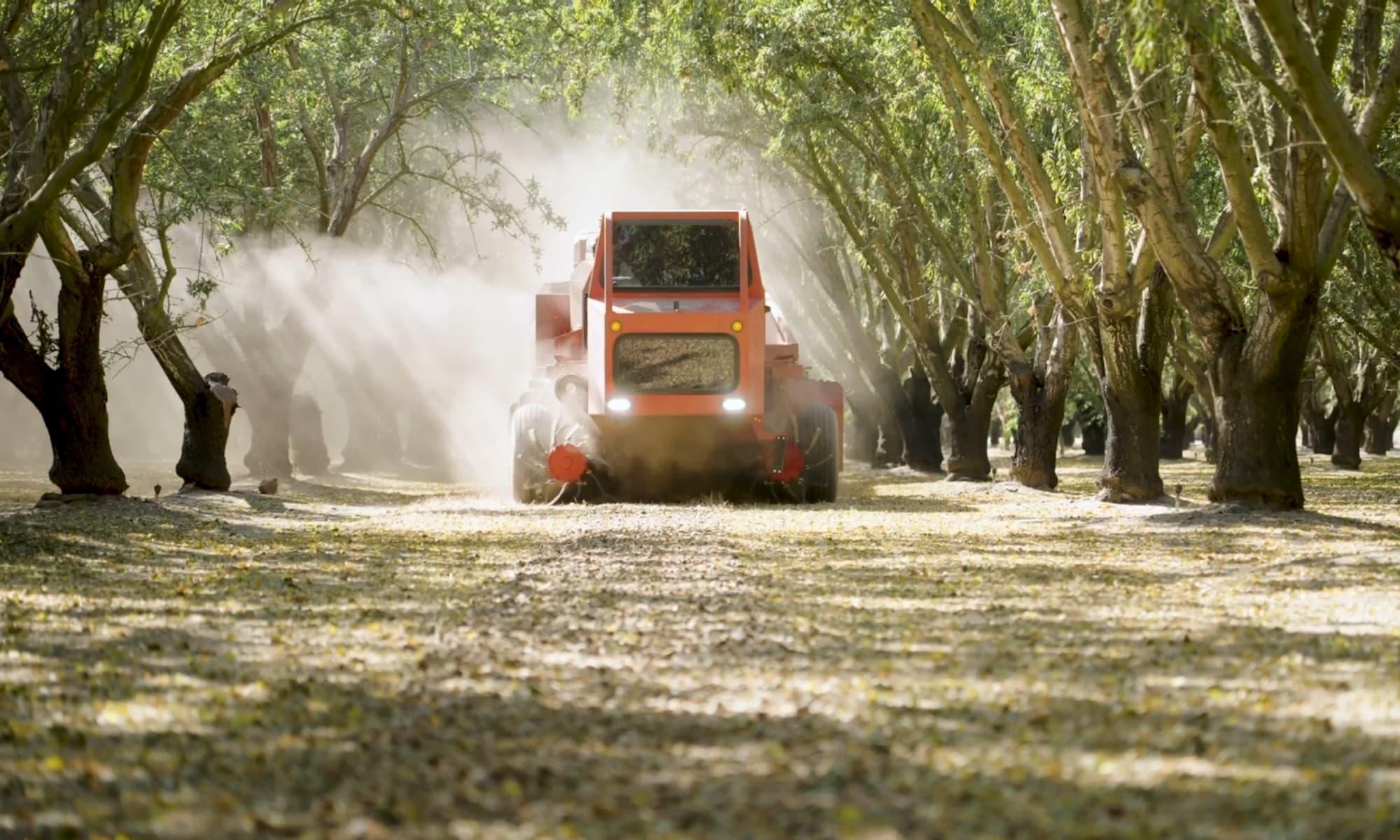
No Kyrgyz source found describes when or how almonds are harvested in Kyrgyzstan: the 2016 recommendations cover nurseries, planting and care, not harvest. University of California guidance dates the start of hull split from the first split hulls in the top southwestern part of the tree and advises harvesting as soon as the nuts come off well. In orchards planted for machines on suitable ground, mechanized harvesting can bring the crop in on time, with less risk of nuts deteriorating while they wait.
Kyrgyzhydromet's 1981 to 2010 normals for Osh, published by WMO, give 8 mm of rain in August and 8 mm in September, but 34 mm in October. In autumn 2024, Batken had 74% of its norm and other areas 108 to 266%. Osh's dry August and September would suit ground drying if harvest falls then, but no Kyrgyz source gives harvest dates, so this guide takes the cautious route: prompt pickup, with hulling and drying at once, alongside catching frames.
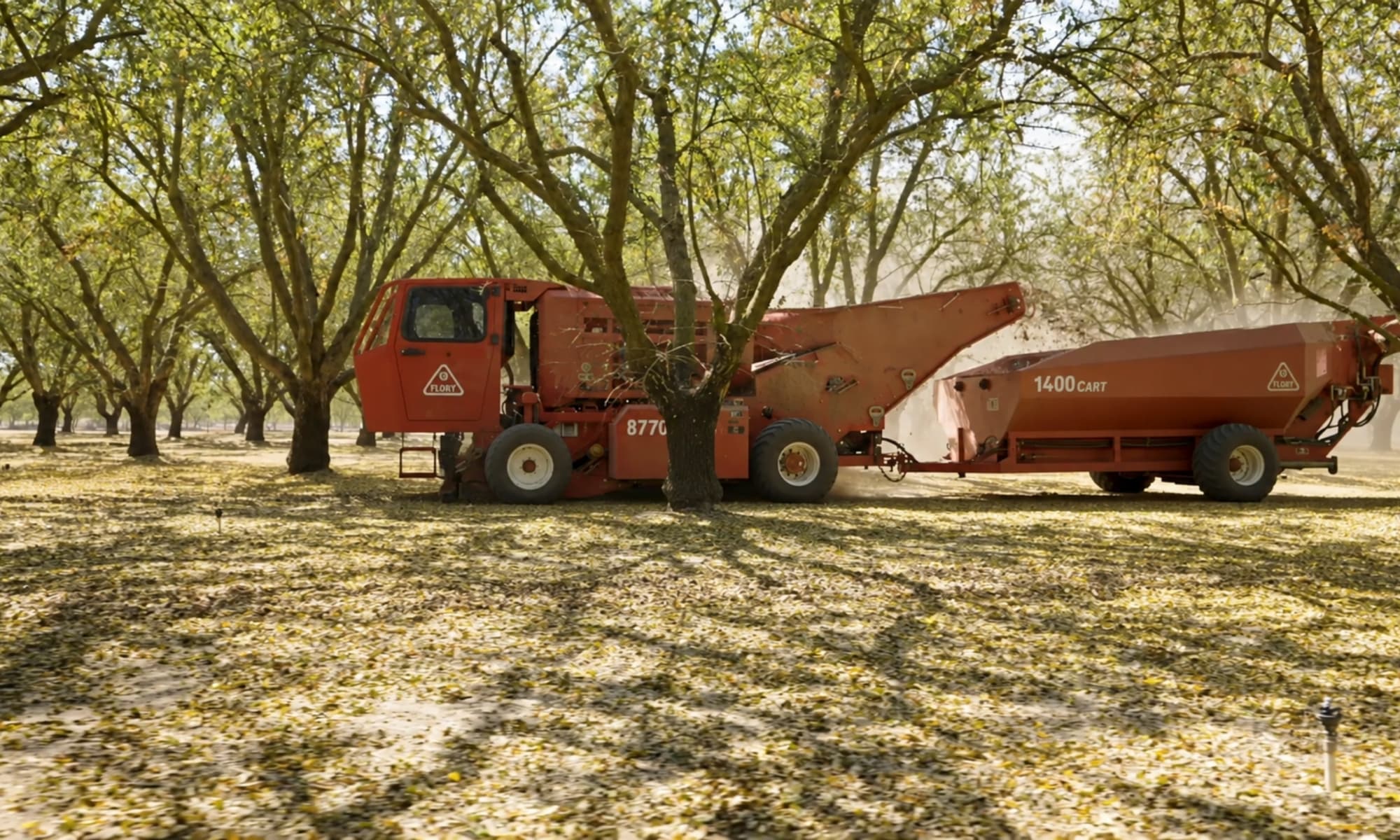
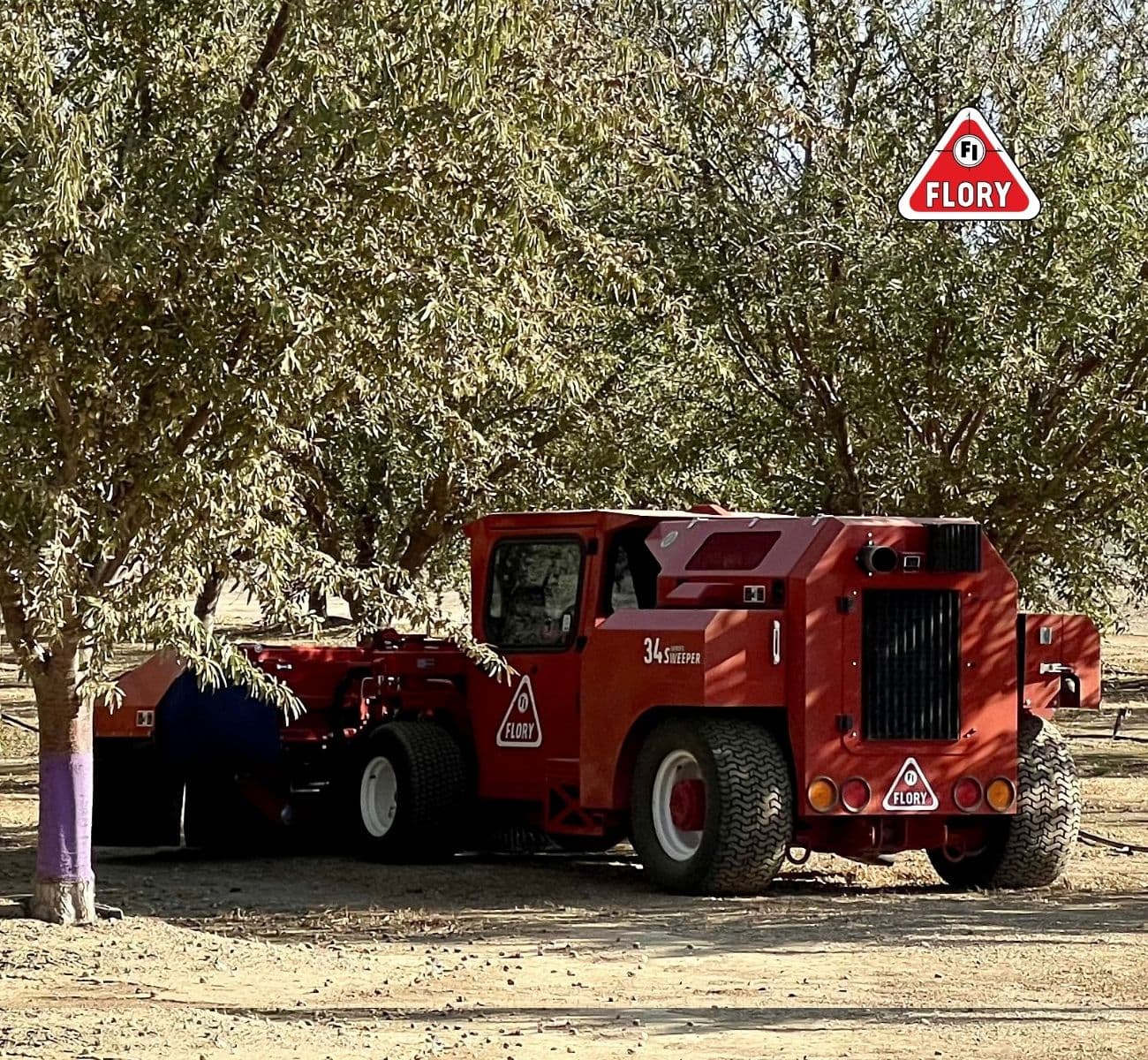
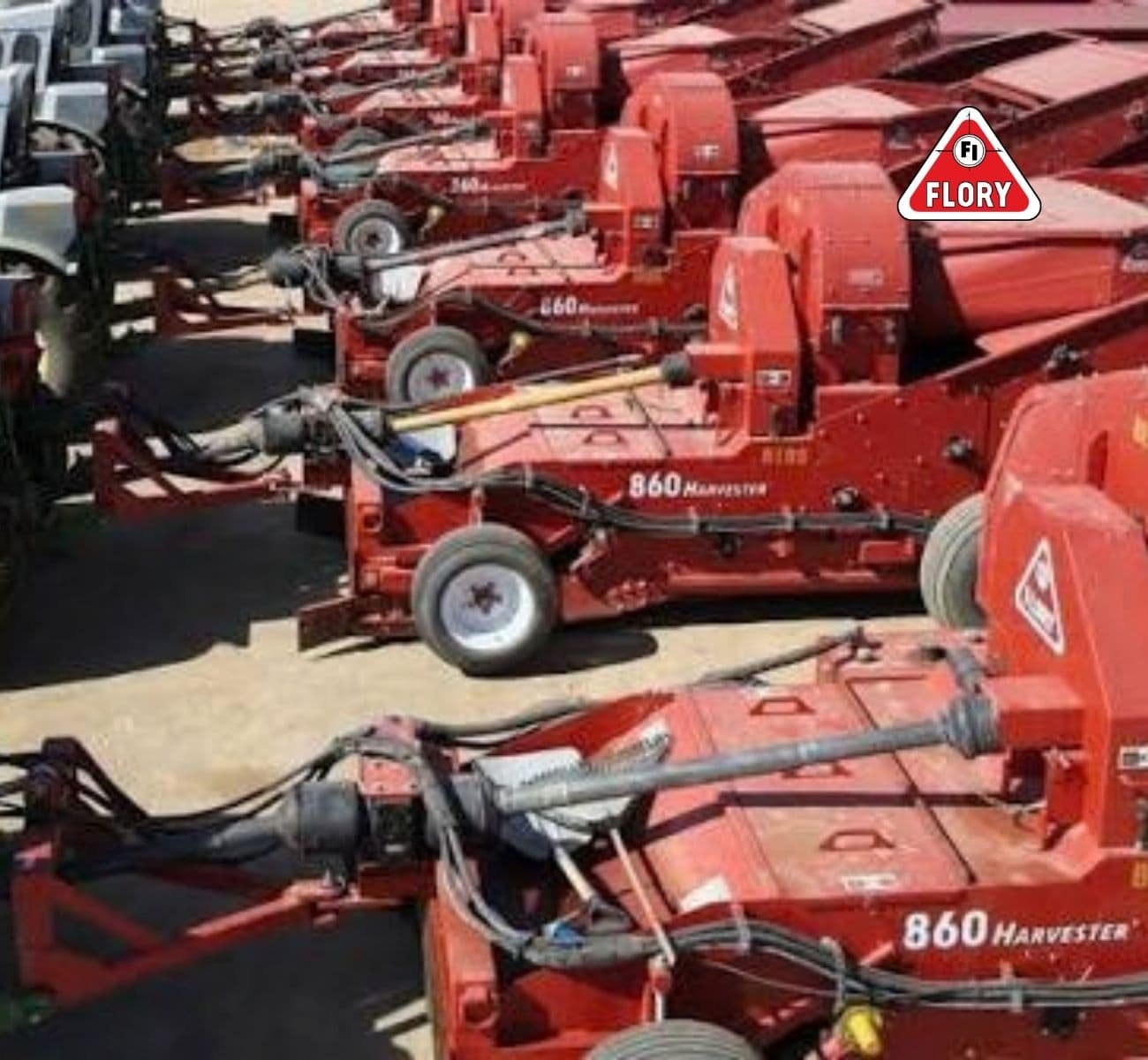
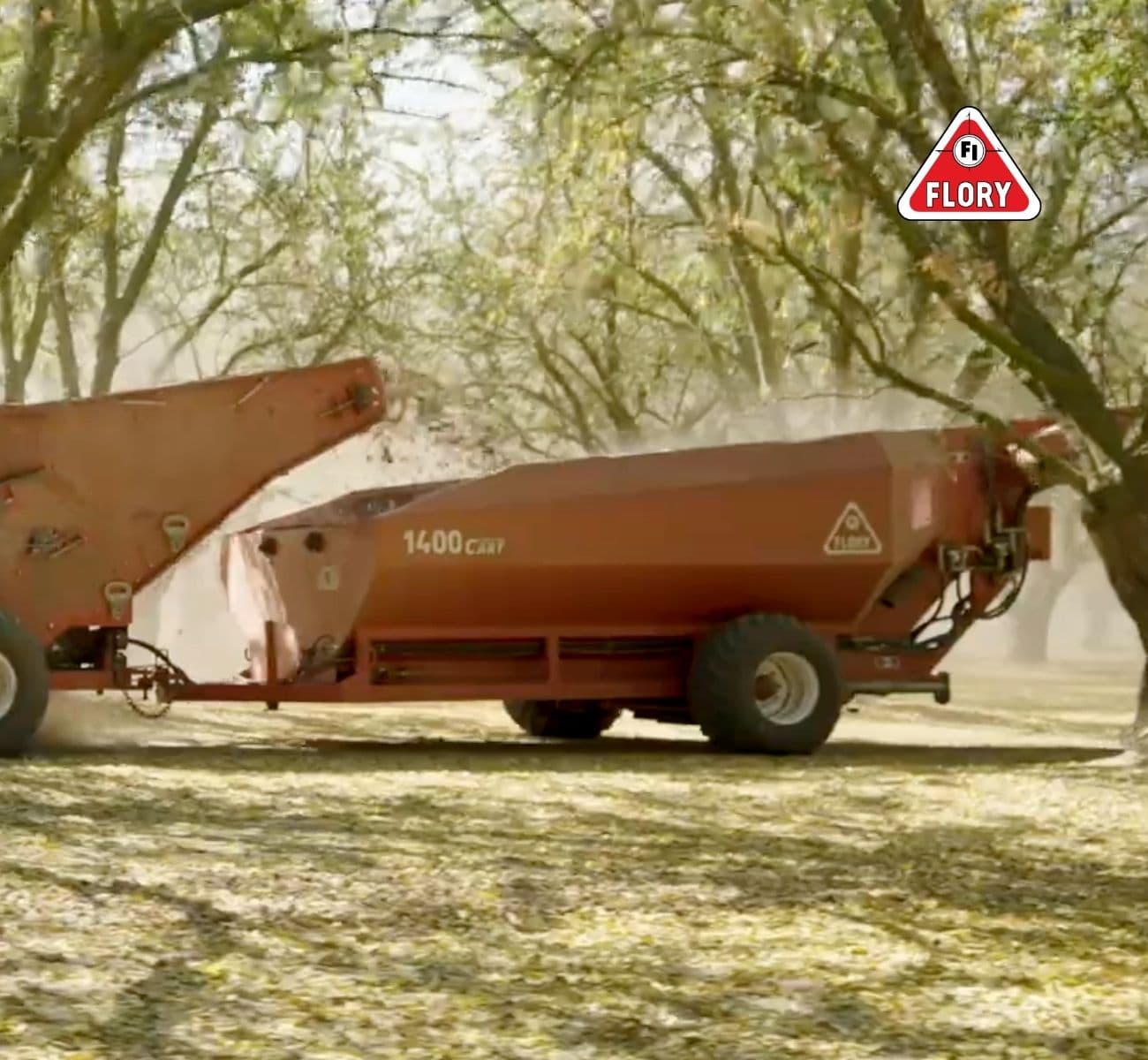
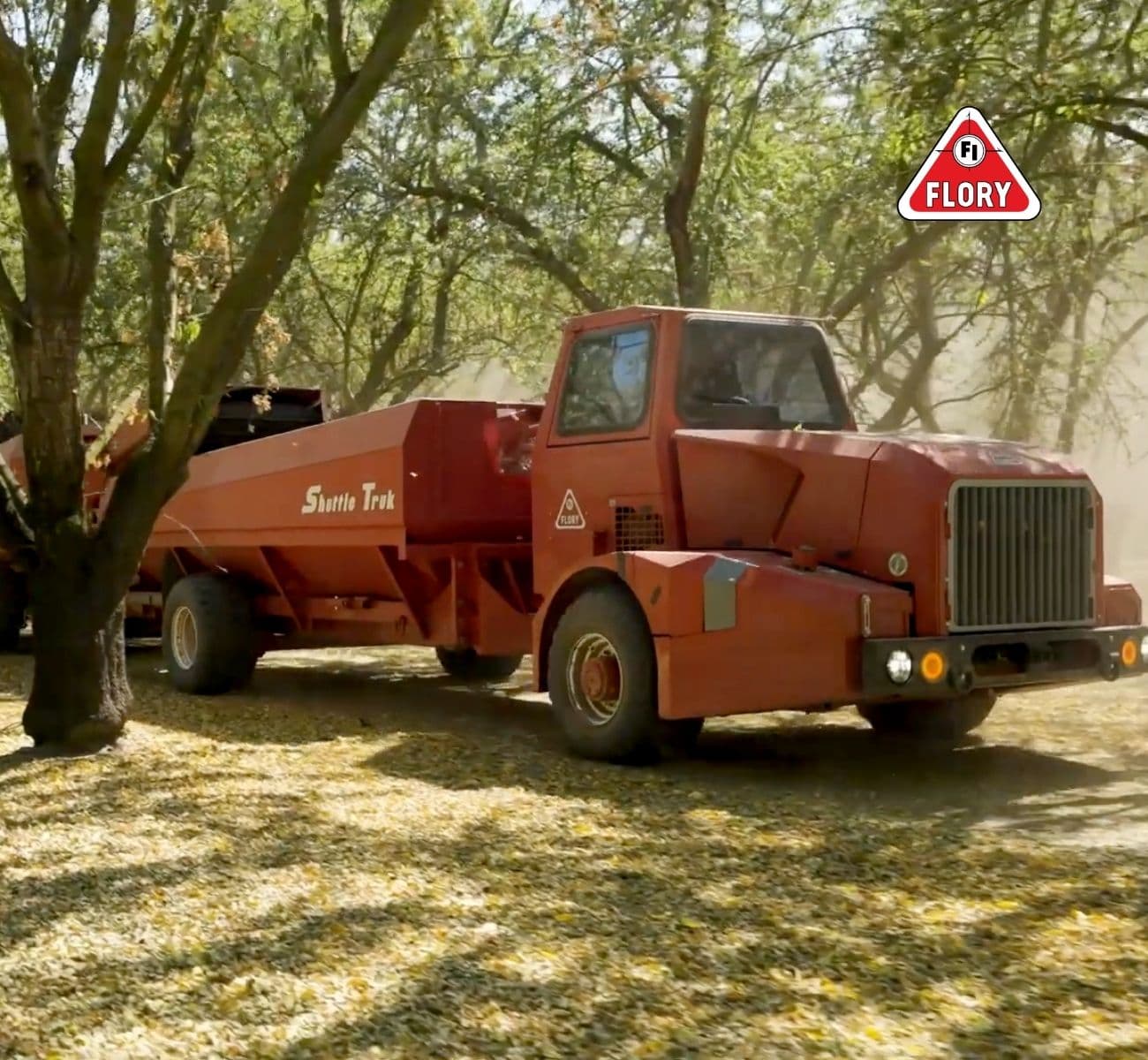
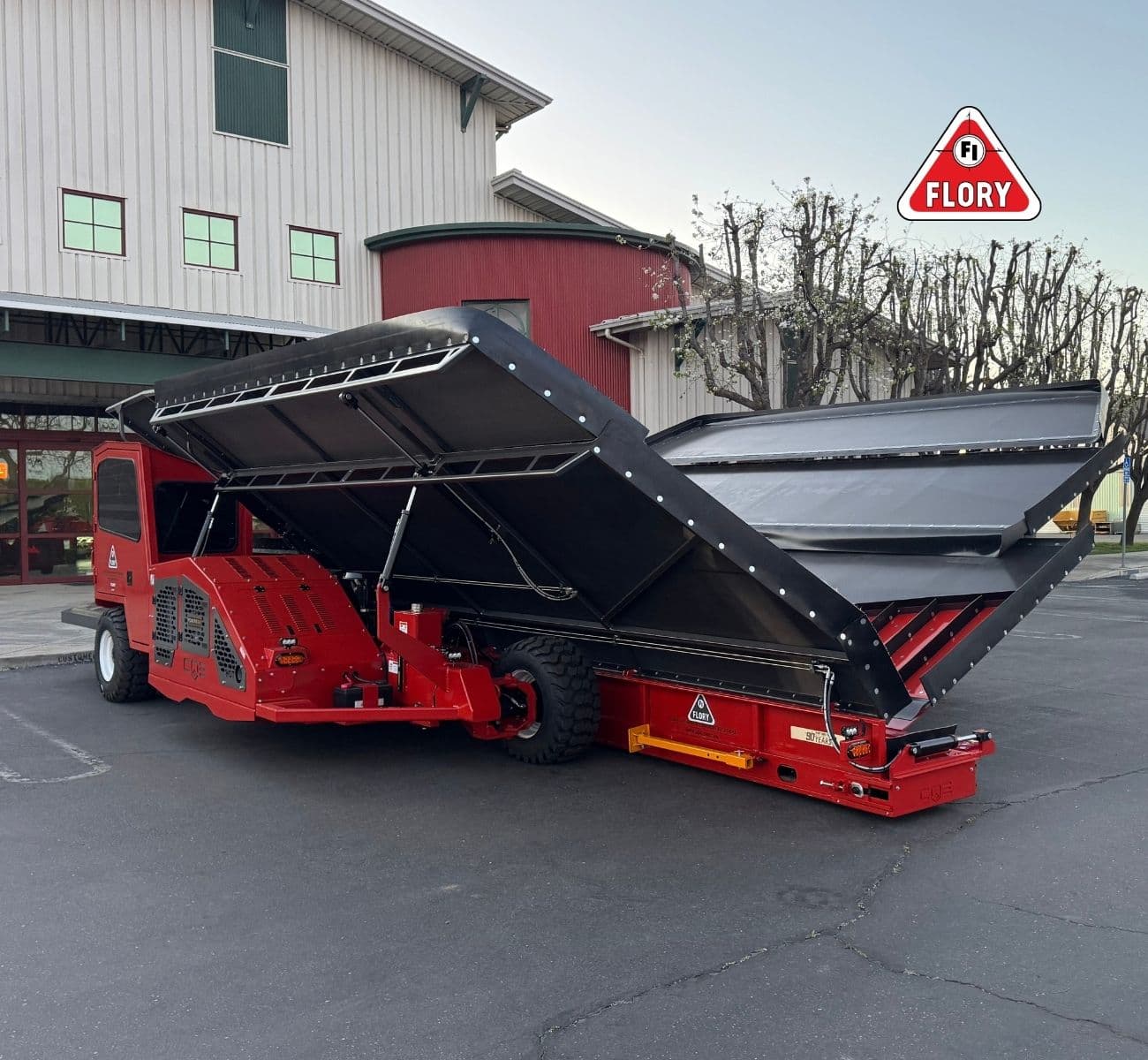
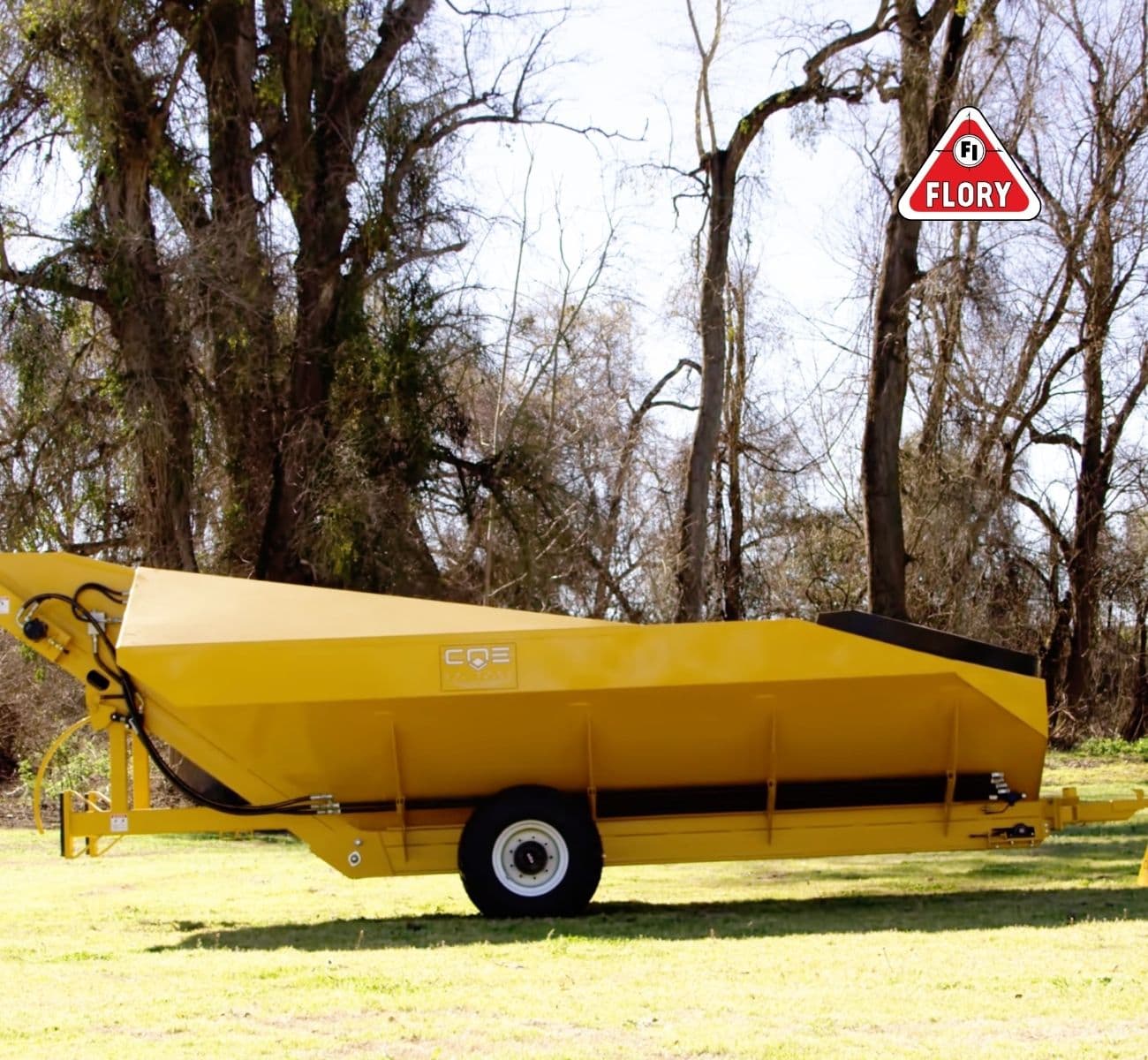
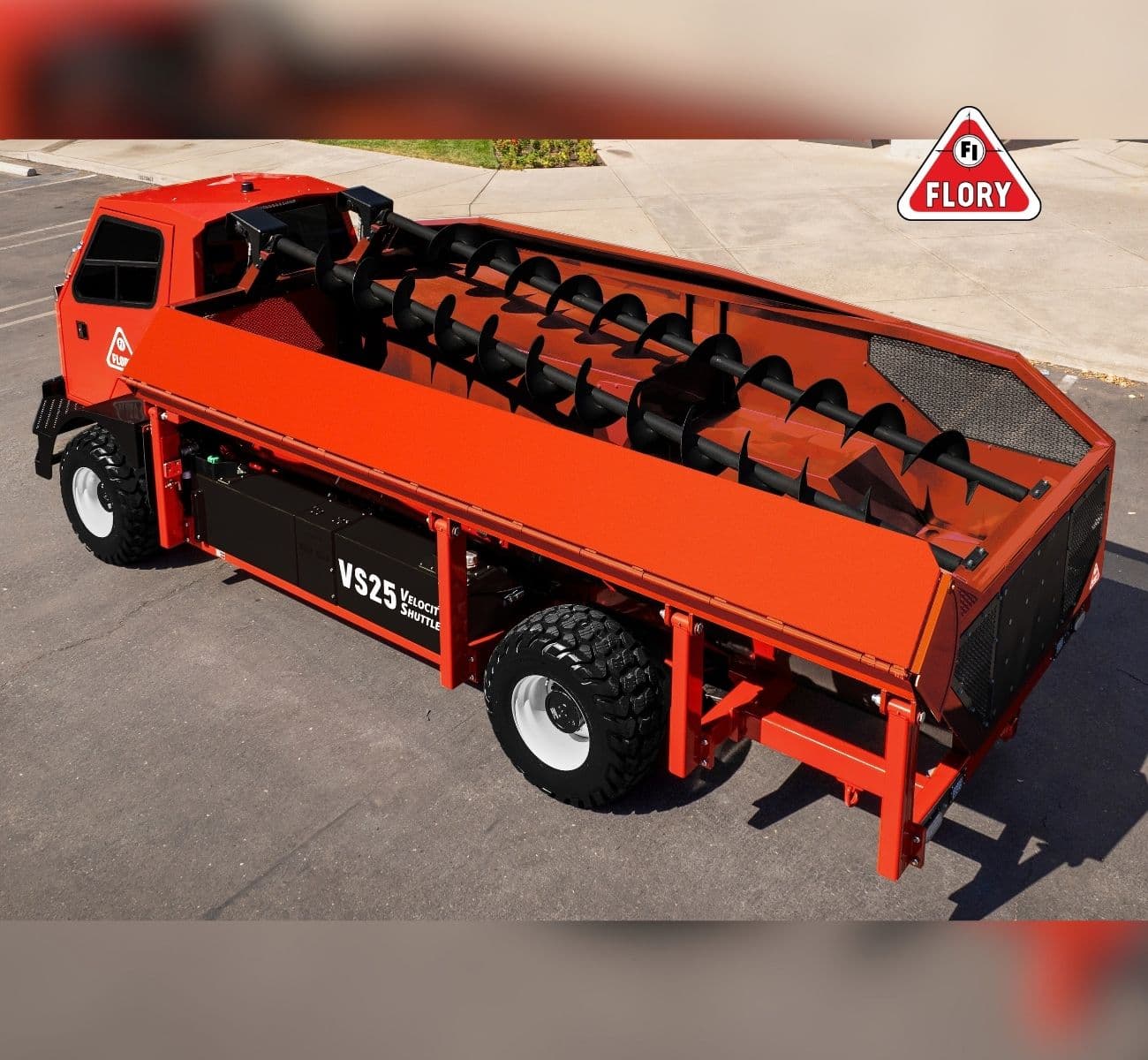
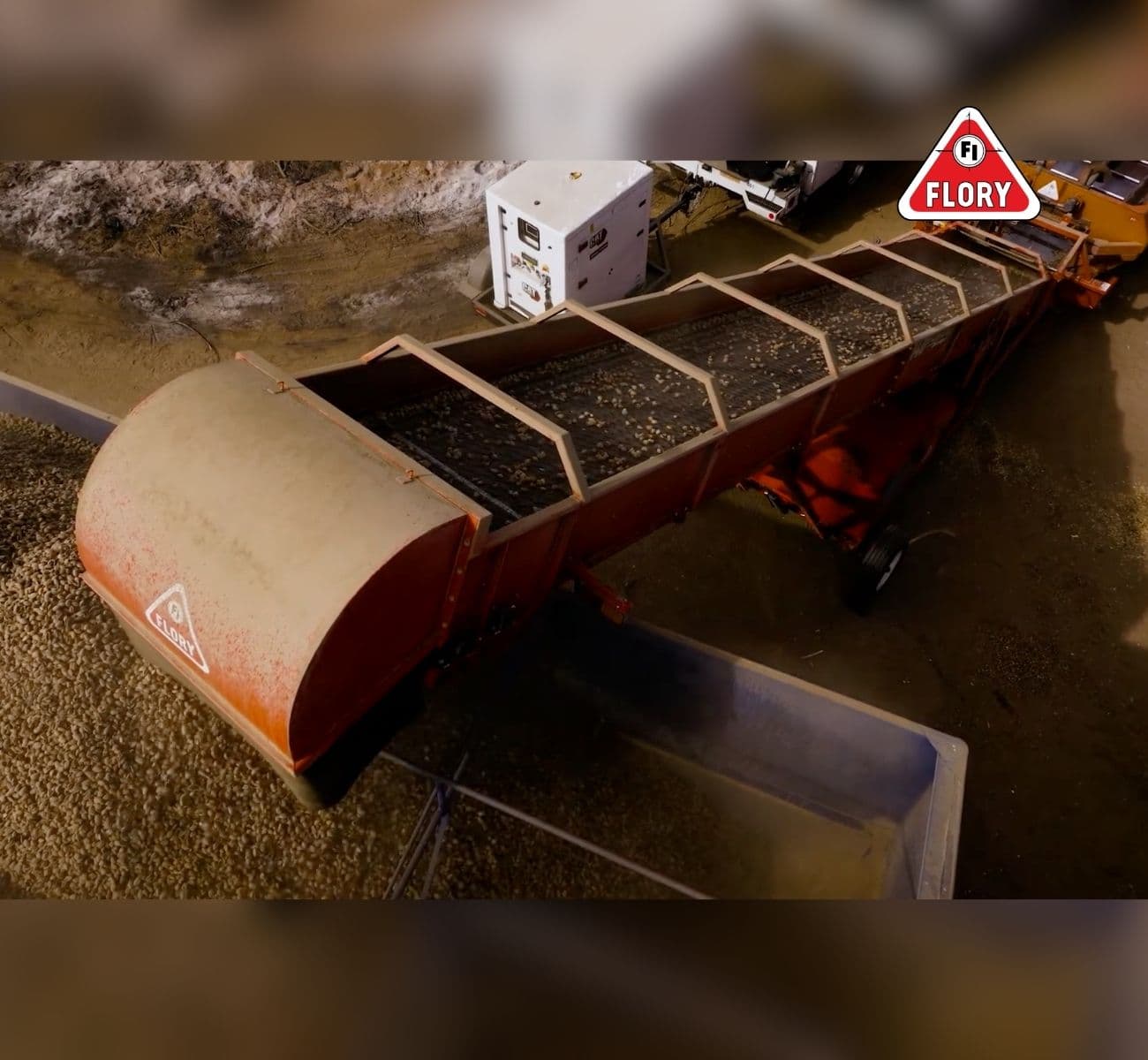
Flory harvesting machinery is available in Kyrgyzstan through OVE Europe for both systems. On the ground, the VR700 Shaker, 34 Series Sweeper and 860 Harvester (or the smaller 490) work with the 1500 Conveyor Cart and ST14 Shuttle. Off the ground, the Flory COE C7 Shaker and L2 Receiver catch the almonds in a frame around the trunk, the Flory COE B8 Cart and VS25 Shuttle carry them, and the 4840 Field Elevator loads trailers in both systems.
Almond Harvest Workflow (Recommended Equipment)


Practical Tips for Almond Harvesting
Track hull split from the first split hulls in the top southwestern part of the tree, and shake once nuts come off well, as University of California guidance advises.
Pick up promptly after shaking: University of California guidance notes that ant damage to nuts increases the longer they lie on the ground.
Aim to finish before the October rains: Osh averages 34 mm of rain in October against 8 mm in September (Kyrgyzhydromet normals).
If rain wets almonds on the ground, do not stockpile them wet: University of California guidance warns of mold and concealed damage.
Where almonds must stay off the ground, use catching frames: the Flory COE C7 Shaker works with the L2 Receiver.
Use shakers and catching frames only in orchards planted for machines, never on terraces, half-moon terraces, steep slopes or scattered trees.
Get your recommended harvest setup
Enter orchard size, spacing, terrain, and target throughput—we’ll suggest a practical harvest workflow and equipment lineup.

Almond Post-Harvest Handling & Processing in Kyrgyzstan
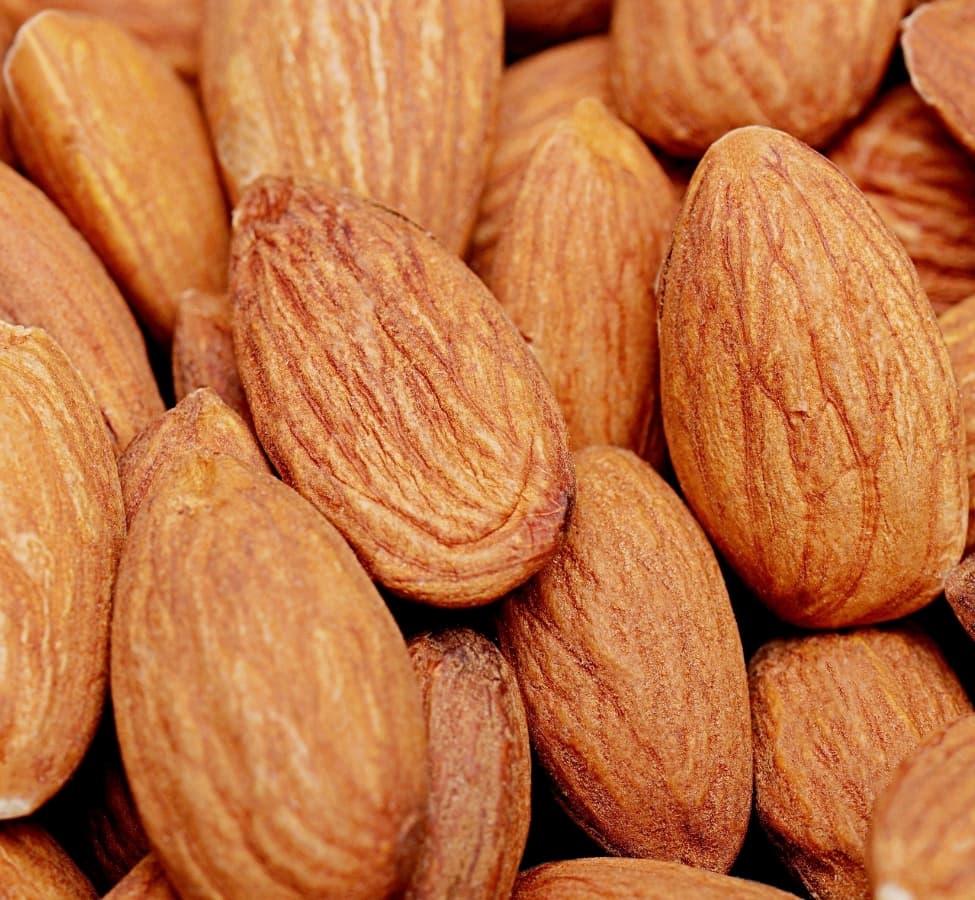
No Kyrgyz source found describes almond hulling, drying, storage or cracking in Kyrgyzstan. University of California guidance warns that rain-wet nuts do not hull cleanly, and that nuts should not be stockpiled above 12% moisture in the hull, 6% in the kernel or 9% for the whole fruit. Promptly picked or frame-caught almonds therefore need hulling and drying in the shell before storage.
Under the Customs Union technical regulation TR CU 021/2011 on food safety, which applies in Kyrgyzstan as a member of the Eurasian Economic Union, aflatoxin B1 in nuts may not exceed 0.005 mg/kg; almonds are not named separately. Kyrgyzstan is among the states that voted for the interstate standards GOST 32811-2014 for almonds in shell and GOST 32857-2014 for kernels; the latter allows kernels at most 6.5% moisture and calls for storage in clean, dry, odor-free rooms.
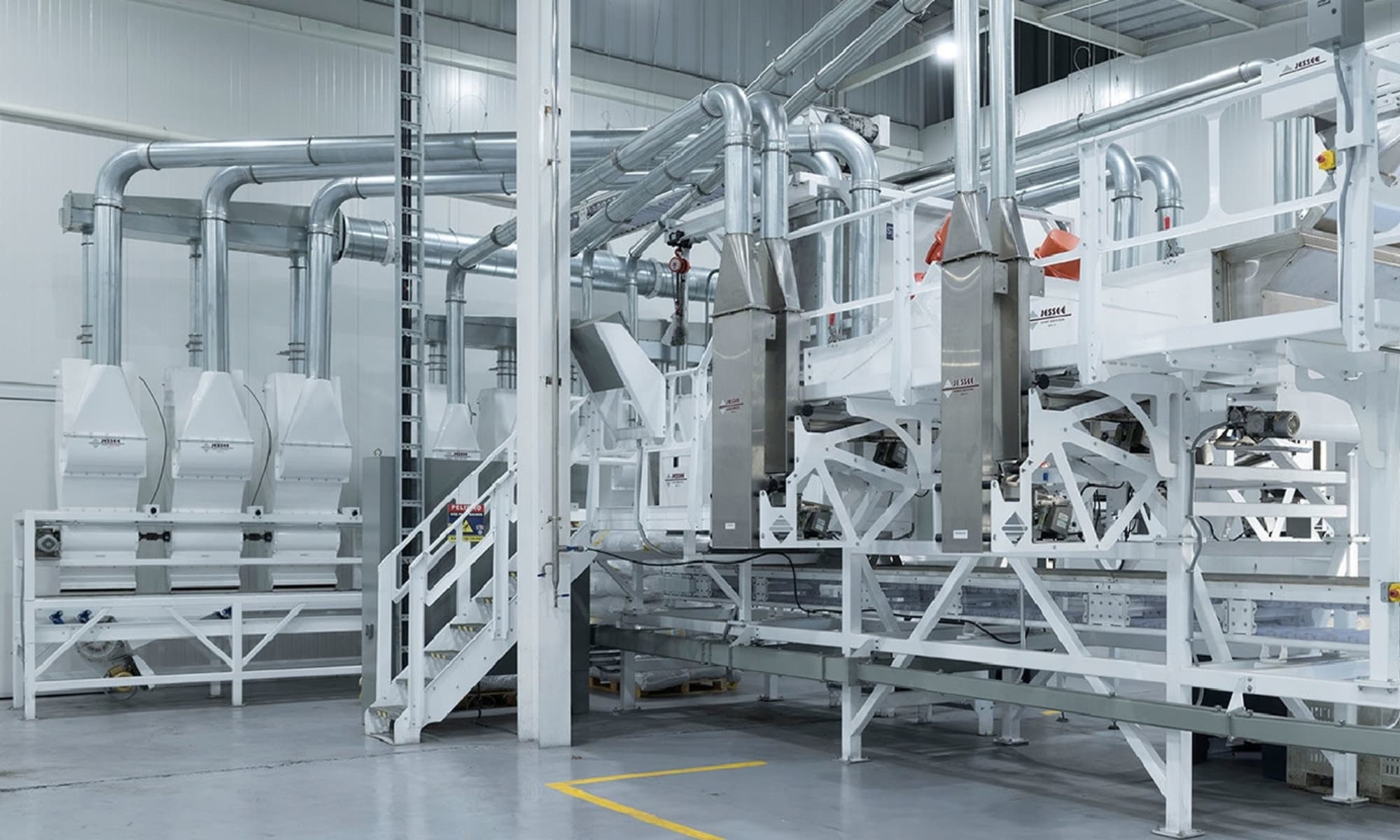
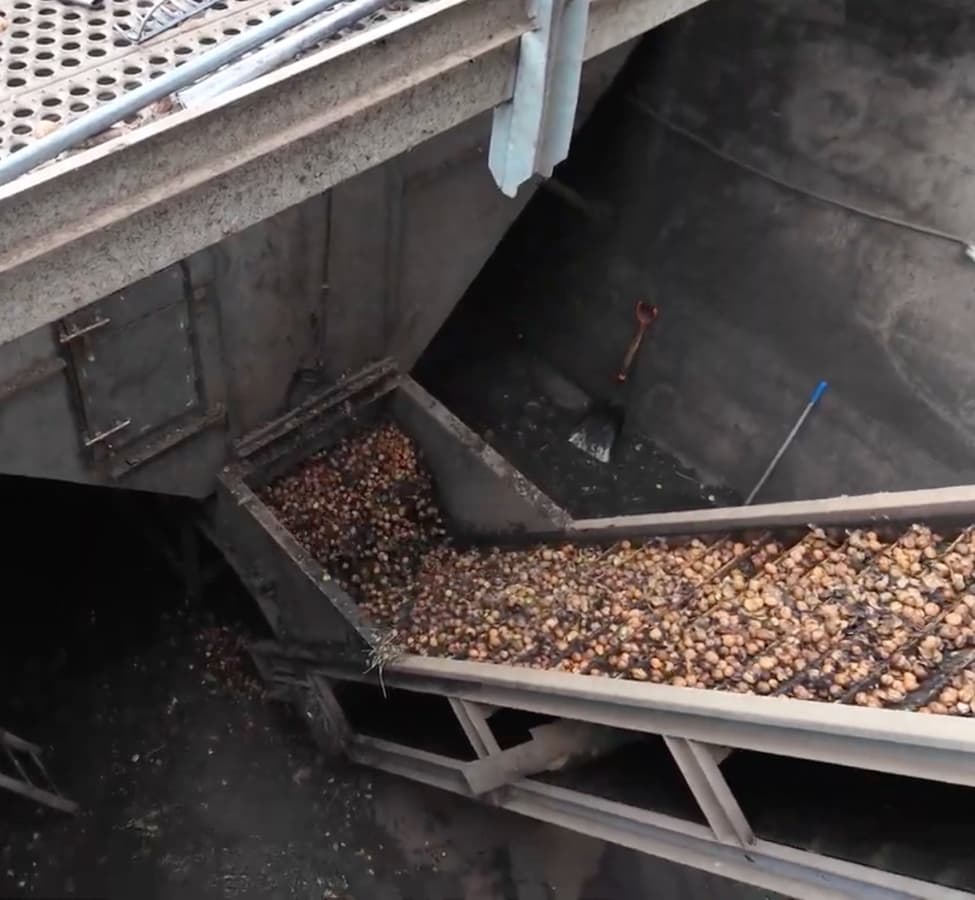
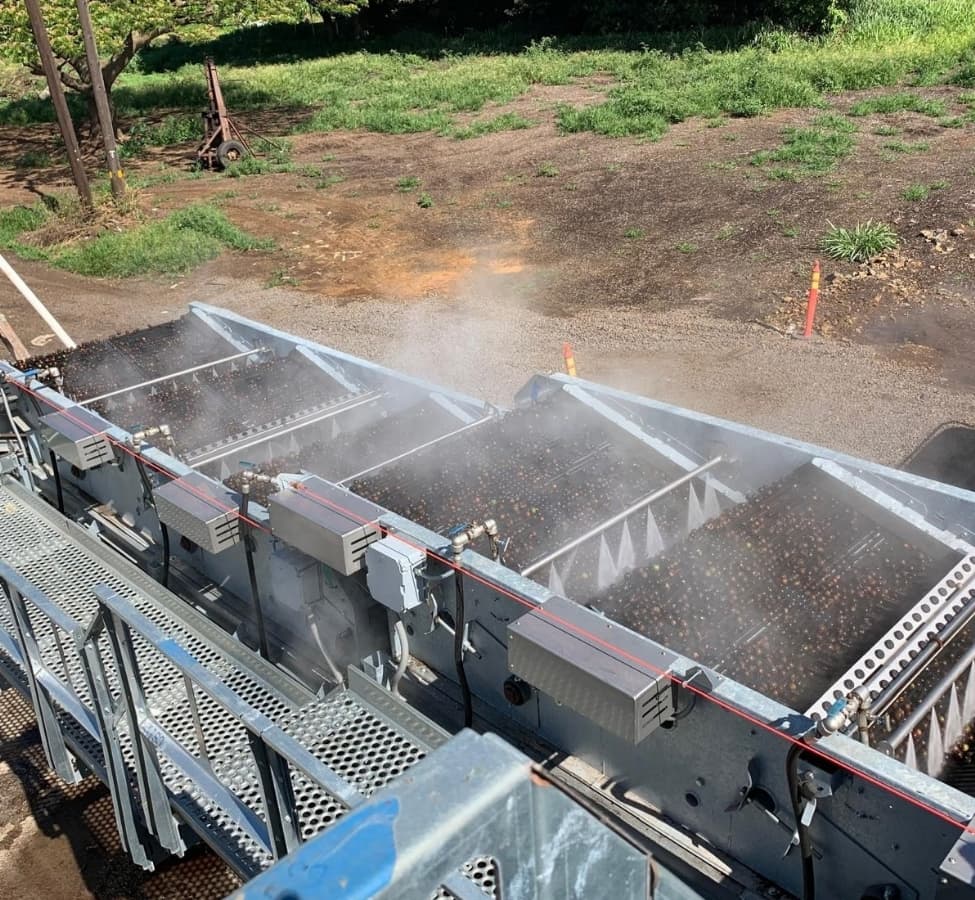
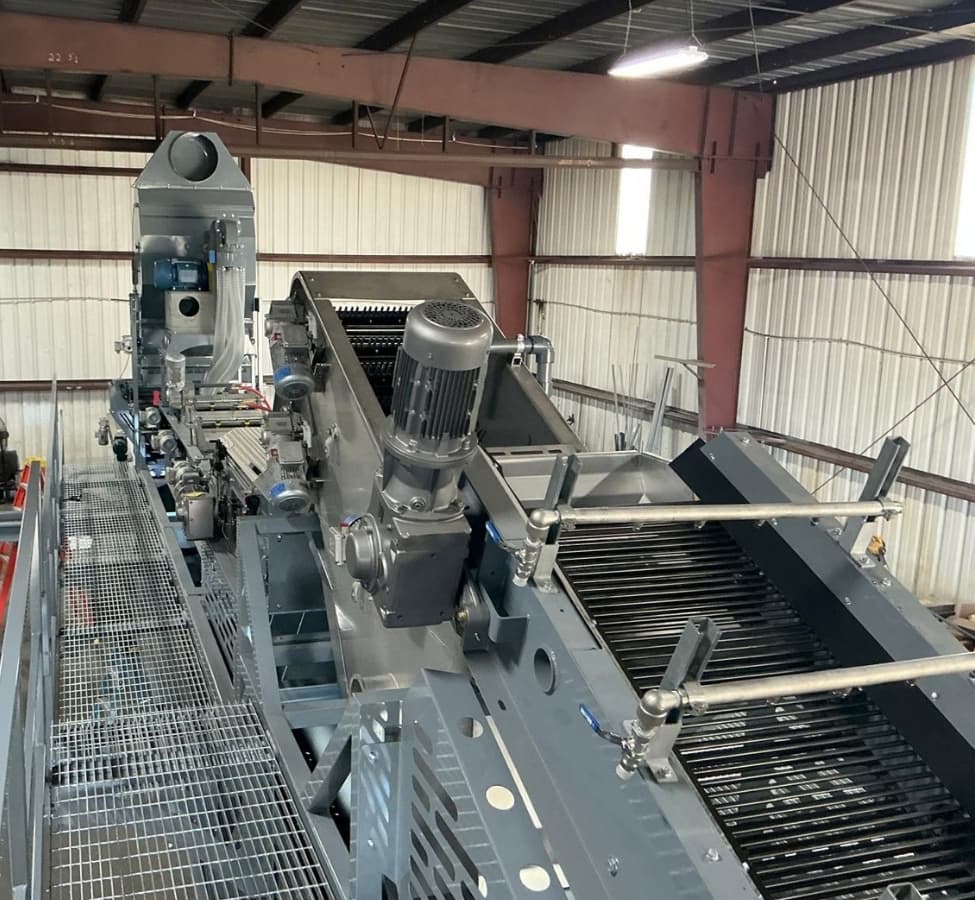
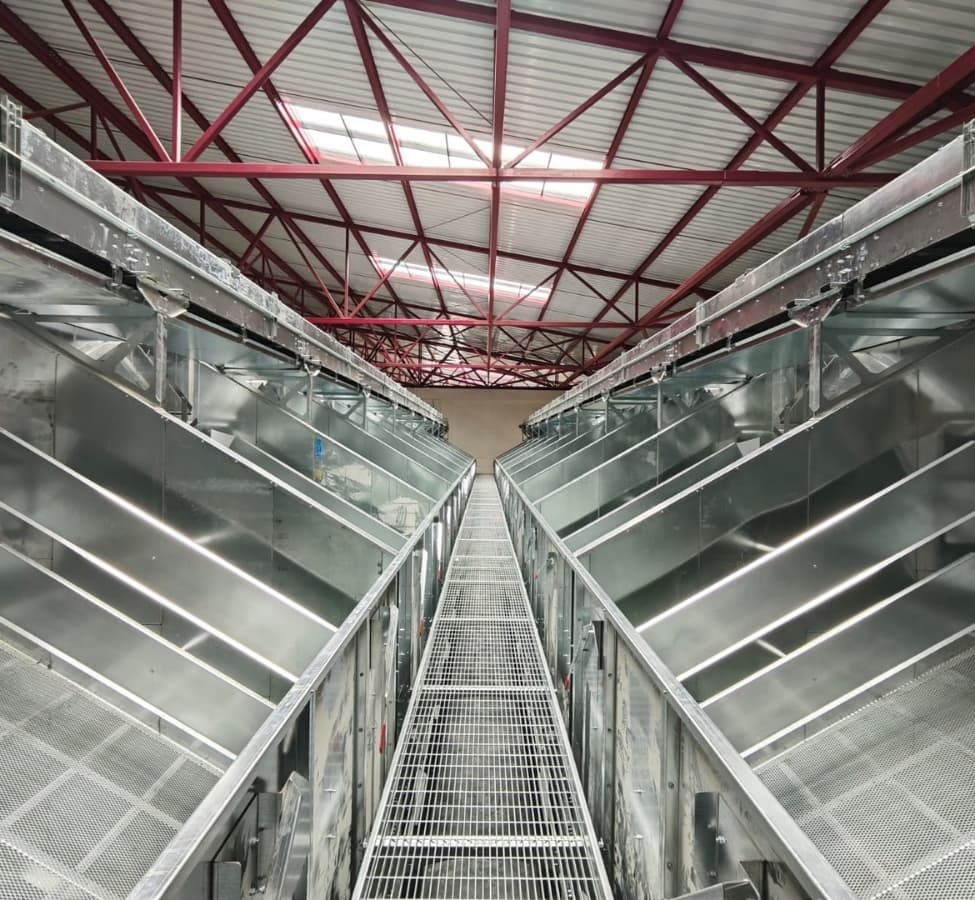
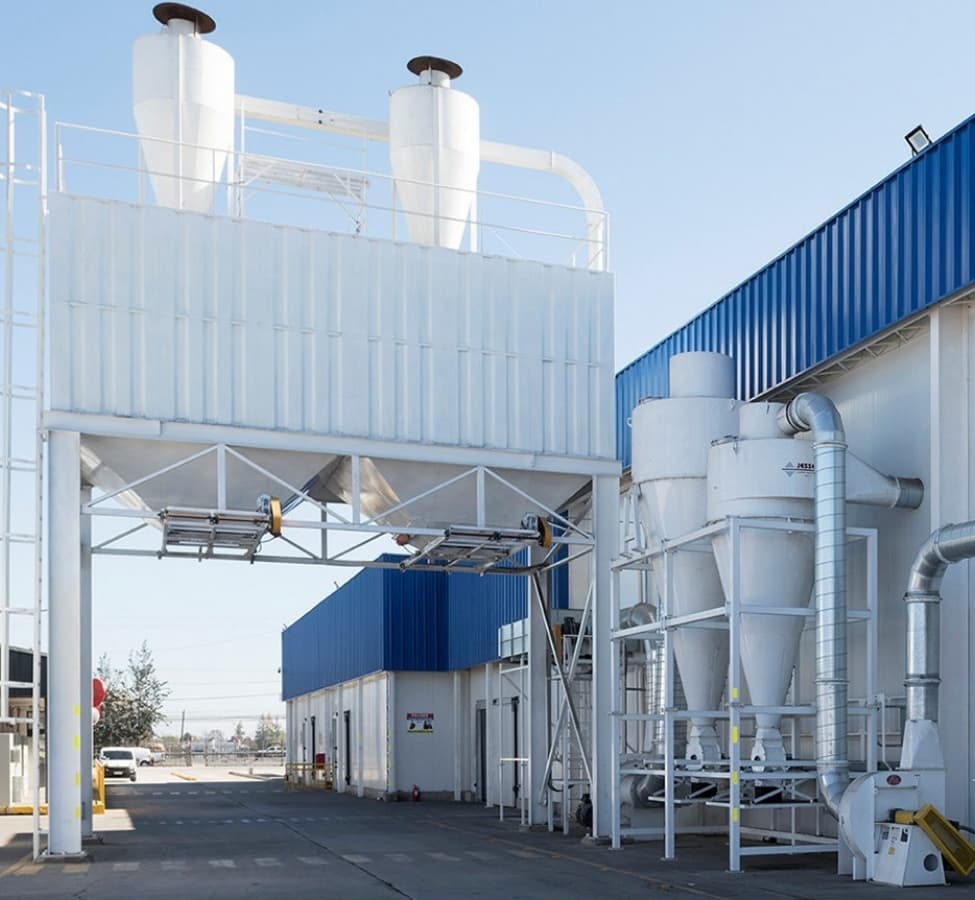
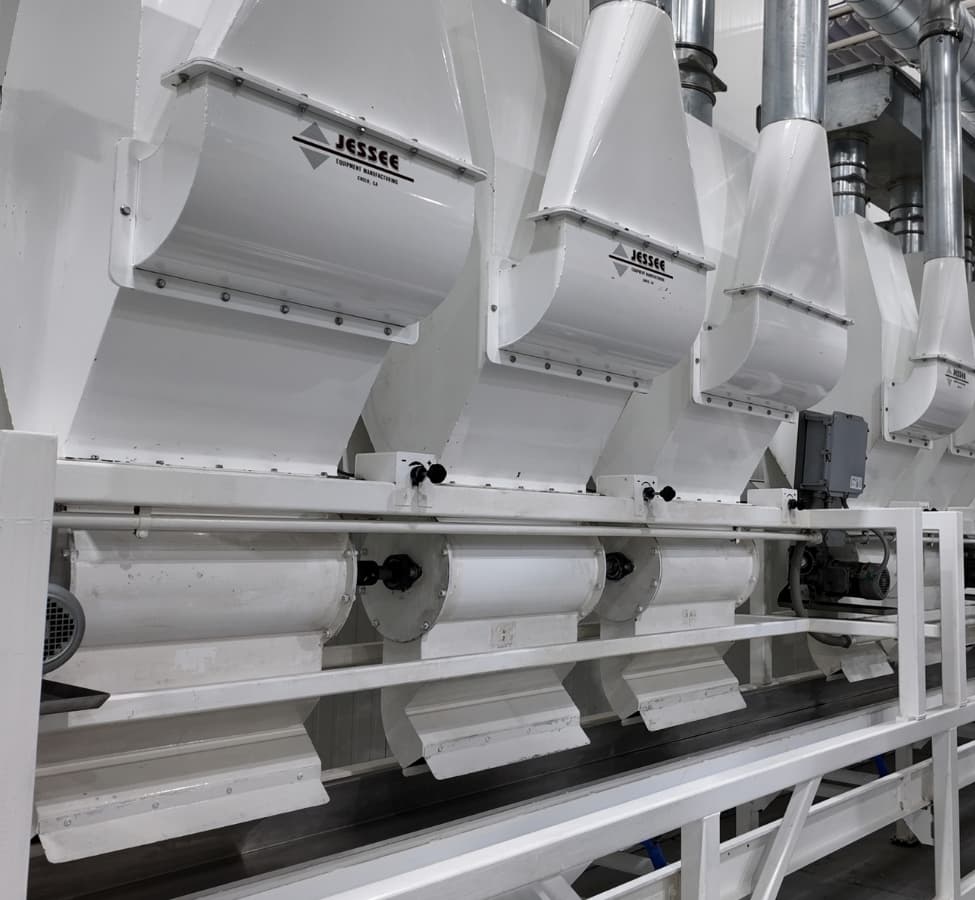
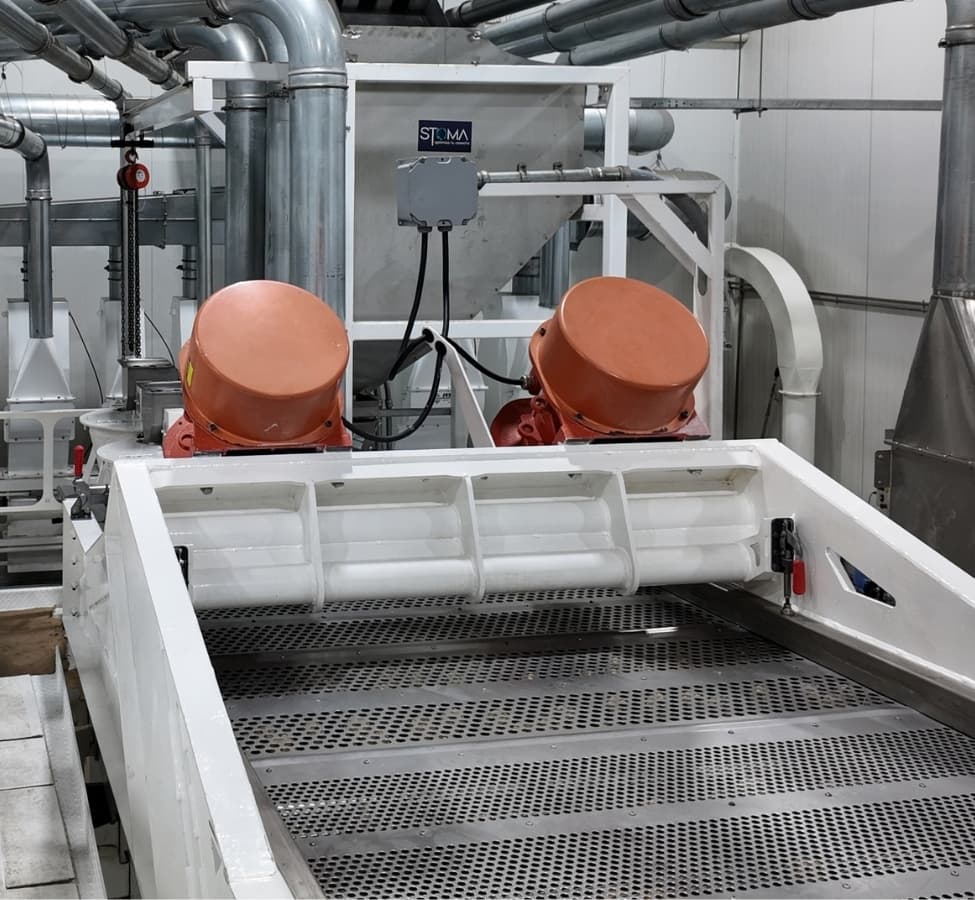
Kyrgyzstan was a net importer of almonds by weight in every year from 2015 to 2025 except 2016 and 2017. In 2025 it recorded 335.5 t of imports, about three quarters of them from Uzbekistan, and 107.6 t of exports, almost all to Uzbekistan (UN Comtrade via WITS); the records do not show where exports were grown. Jessee, whose processing lines OVE Europe supplies, builds hulling, drying, in-shell cleaning and sizing, and shelling systems; its Airlegs nut cleaner was developed for the almond industry.
For general information only. Information may become outdated and does not replace site-specific professional advice. Consult a qualified agronomist and confirm equipment suitability with OVE before acting.
Practical Tips for Almond Post-Harvest Handling & Processing
Hull promptly picked or frame-caught almonds while the hulls are fresh, then dry the nuts in the shell before storage.
Never stockpile undried almonds: University of California guidance warns against stockpiling above 12% hull, 6% kernel or 9% fruit moisture.
Dry kernels to 6.5% moisture or less where buyers work to GOST 32857-2014, and confirm the limit with each buyer.
Store kernels in clean, dry rooms free of foreign odors, as GOST 32857-2014 specifies, and keep each lot separate.
Test every lot for aflatoxin B1: TR CU 021/2011 limits it to 0.005 mg/kg in nuts.
Keep in-shell almonds and kernels in separate lots: separate interstate standards, GOST 32811-2014 and GOST 32857-2014, cover them.
Recommended Post-Harvest Handling & Processing Stages
Plan your post-harvest line
Estimate tons/day, cleaning & drying capacity, storage needs, and cost/kg—then build your equipment plan in phases.