


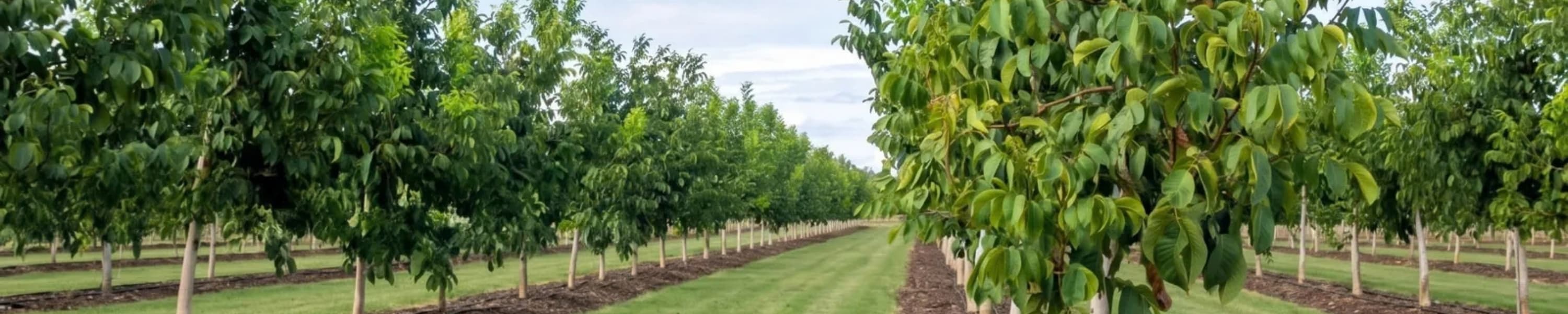




Walnut Orchard Establishment in Kyrgyzstan
Walnut-fruit forests grow on the slopes of the Fergana and Chatkal ranges in the south at about 900 to 2,100 m (NAS journal, 2020), and Jalal-Abad region holds the world's largest natural walnut forests (2024 study). In the Achy forestry enterprise nearly half the walnut stands grow at 1,401 to 1,600 m (2026). The Ak-Terek-Gava station, 17 km from the enterprise center, records 1,091 mm of precipitation a year and an absolute low of -22.1 °C, and the 2026 study finds walnut grows well only on deep, moist soils.
Late spring frost is a major risk to the crop. A frost on 20 April 1994 left the wild forests almost without nuts, and in a station collection a late-blooming, cold-hardy selection was one of the few cultivars still bearing (USDA expedition, 1994); spring snow at budding badly hit the 2020 crop around Arslanbob (RFE/RL). A 2017 dissertation, citing a 2007 study, puts flower-killing frosts at roughly three years in ten, and World Agroforestry expects warming to bring flowering earlier without reducing the frost risk.
Breeders have selected walnut from the forests since the 1930s; six forms, including Ak-Tereksky, Dessertny and Oshsky, went to state variety testing (2020 paper). Chandler, Fernor, Ideal and three other varieties were exempt from the temporary restriction (2024) and ban (2026) on imported fruit seedlings, both no longer in force. New plantings in grazed land need protection: a 2024 study in Jalal-Abad region recommends fencing seedlings in pastures.
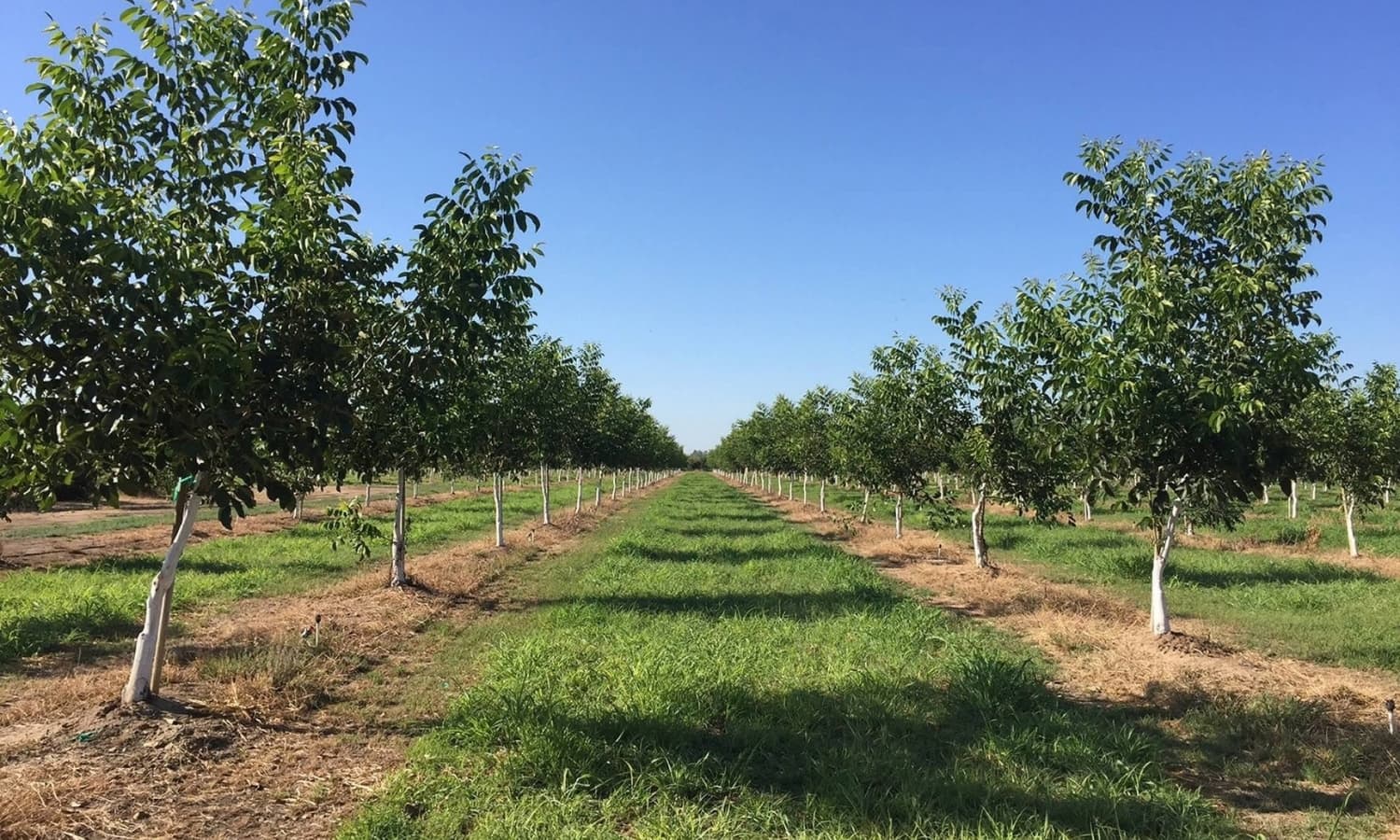

Practical Tips for Walnut Orchard Establishment
Choose deep, moist soils and avoid shallow, stony and dry sites: a 2026 study in the Achy forestry enterprise found walnut grows well only on deep, moist soils.
For new forest stands, choose north-facing slopes of up to 30° at 1,201 to 1,600 m, as the same study recommends.
Favor late-flowering forms where frost is common: after the 20 April frost of 1994, a late-blooming, cold-hardy selection was one of the few cultivars still bearing.
Fence seedlings in grazed areas: a 2024 study in Jalal-Abad region recommends fencing to stop livestock damaging young trees.
Plan commercial plantings outside the state forest fund, where a 2020 law governs nut plantations, on ground gentle enough for machines.
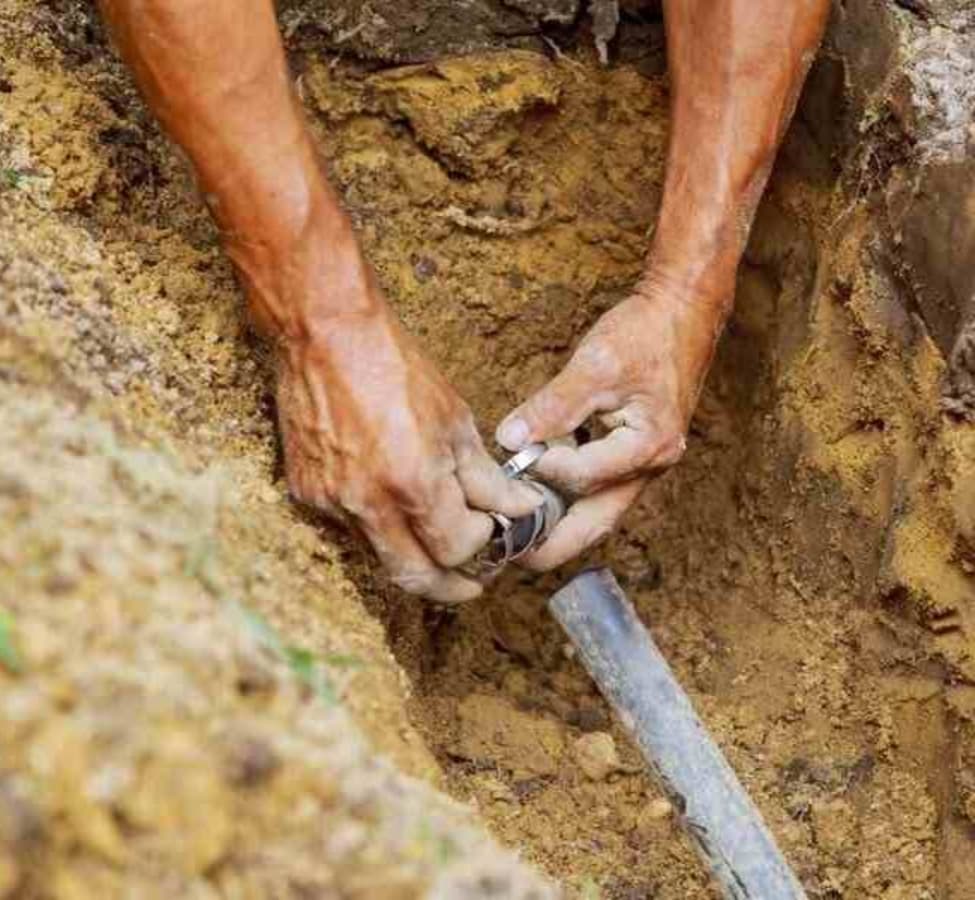
Before planting, plan rows, headlands and access lanes with your machinery supplier, so shakers, sweepers and shuttles can work and turn freely.
Recommended Establishment Stages
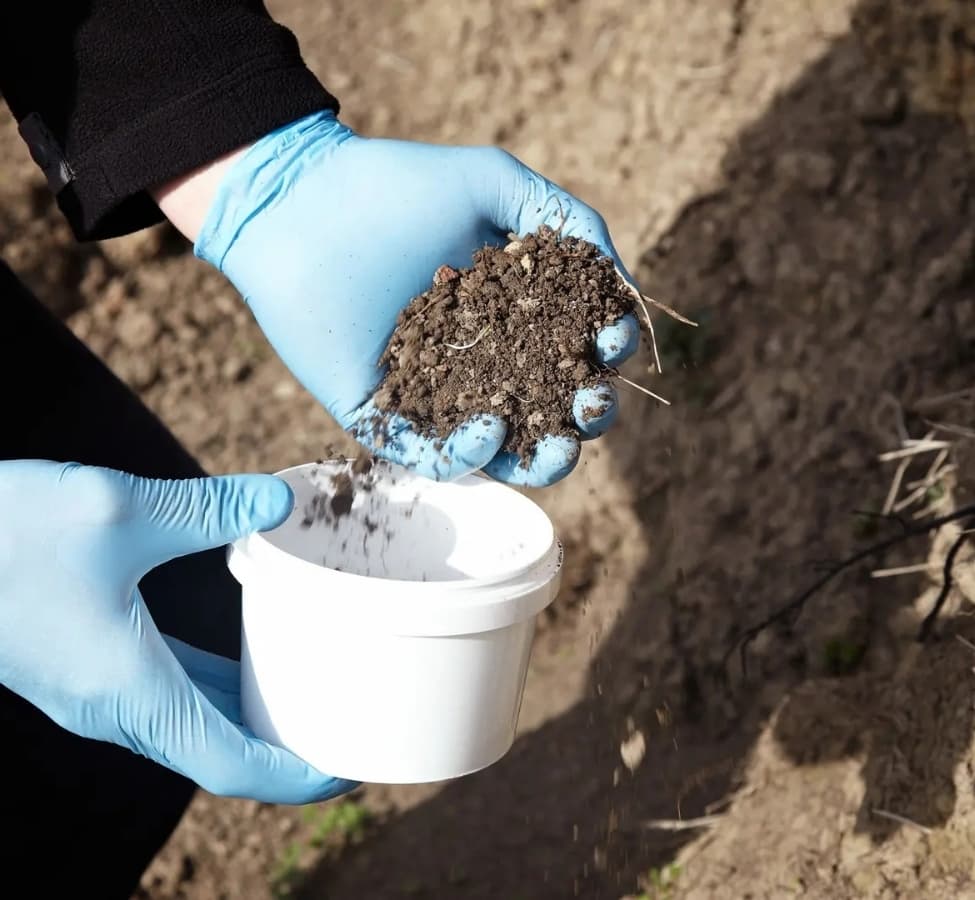



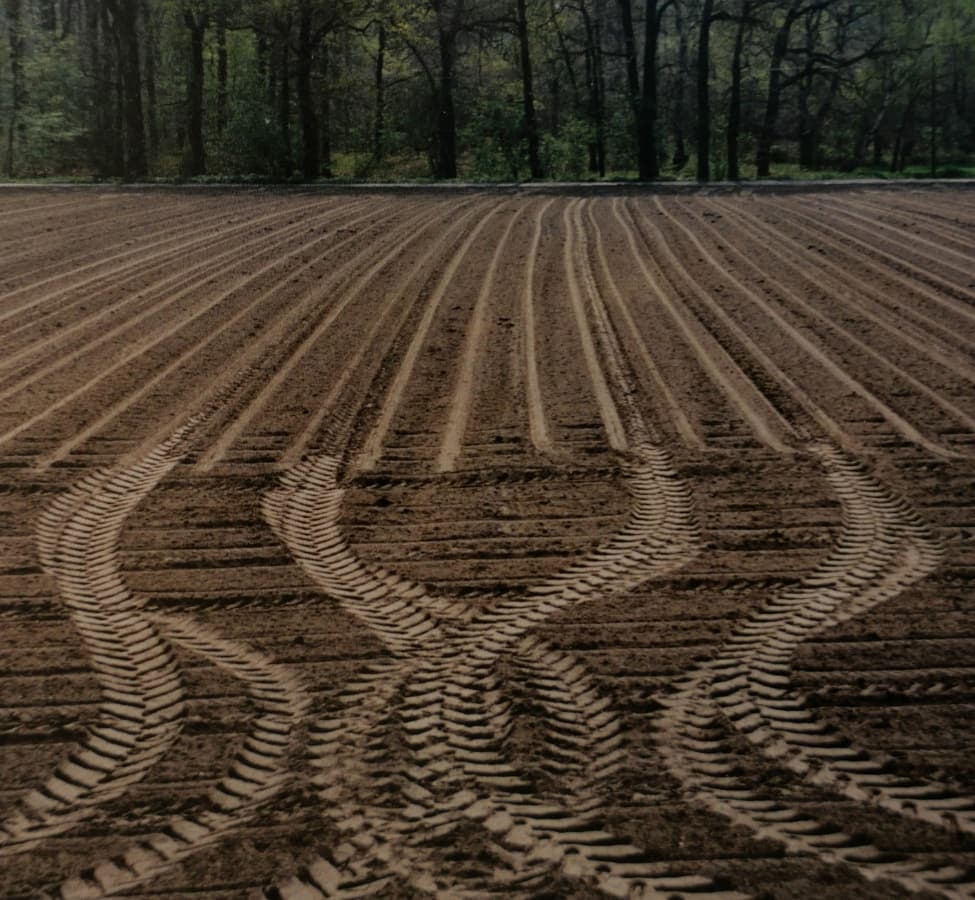


Walnut Orchard Care & Maintenance in Kyrgyzstan
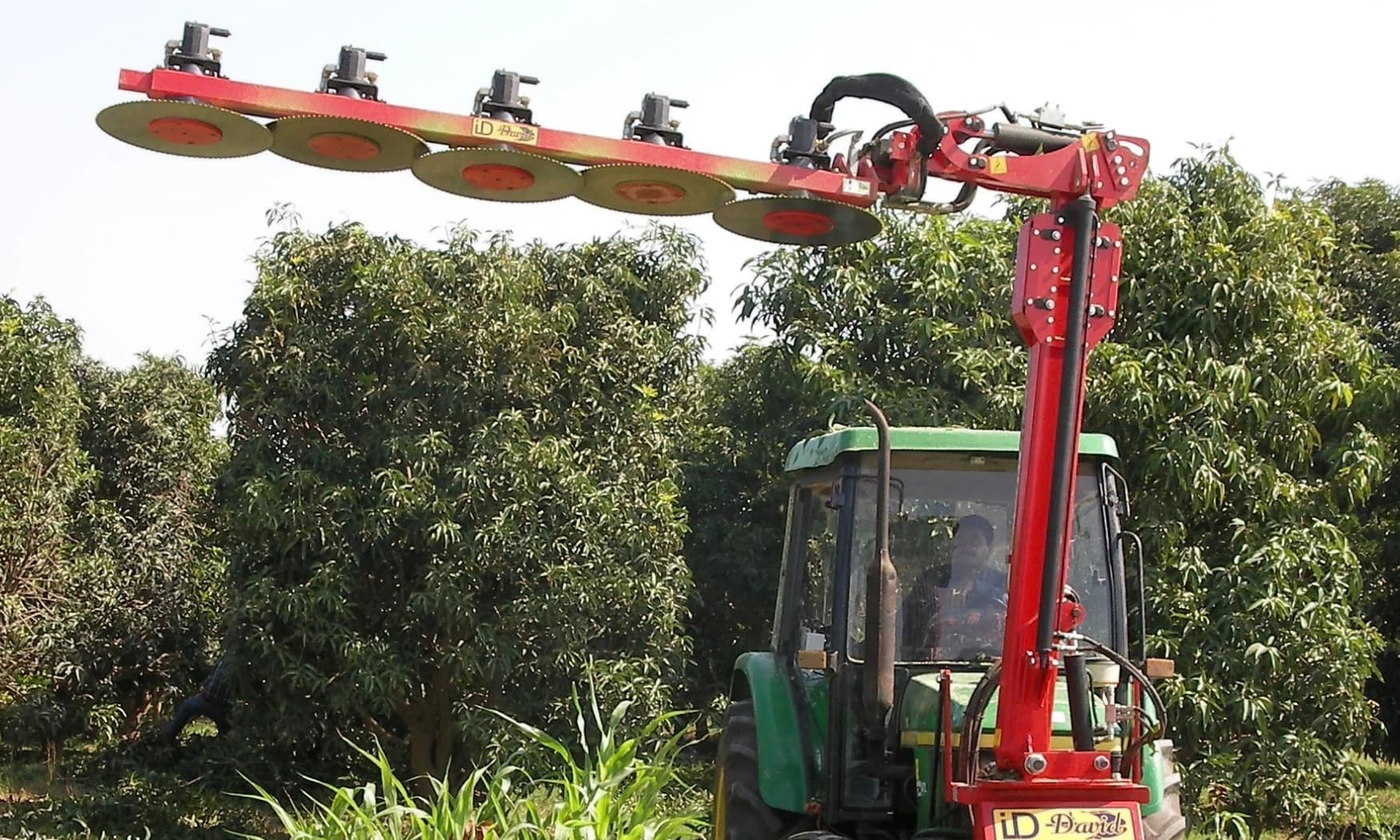
Care in the walnut-fruit forests is minimal. RFE/RL (2020) reported a government decree banning the felling of wild walnut trees and cited a World Bank report linking it to a lack of care for broken or diseased branches; in a 2013 study, only four of 19 interviewed farmers pruned their trees to raise yields. Almost 60% of the forest area is mature or overmature stands aged 100 to 120 years or more (NAS journal, 2020).
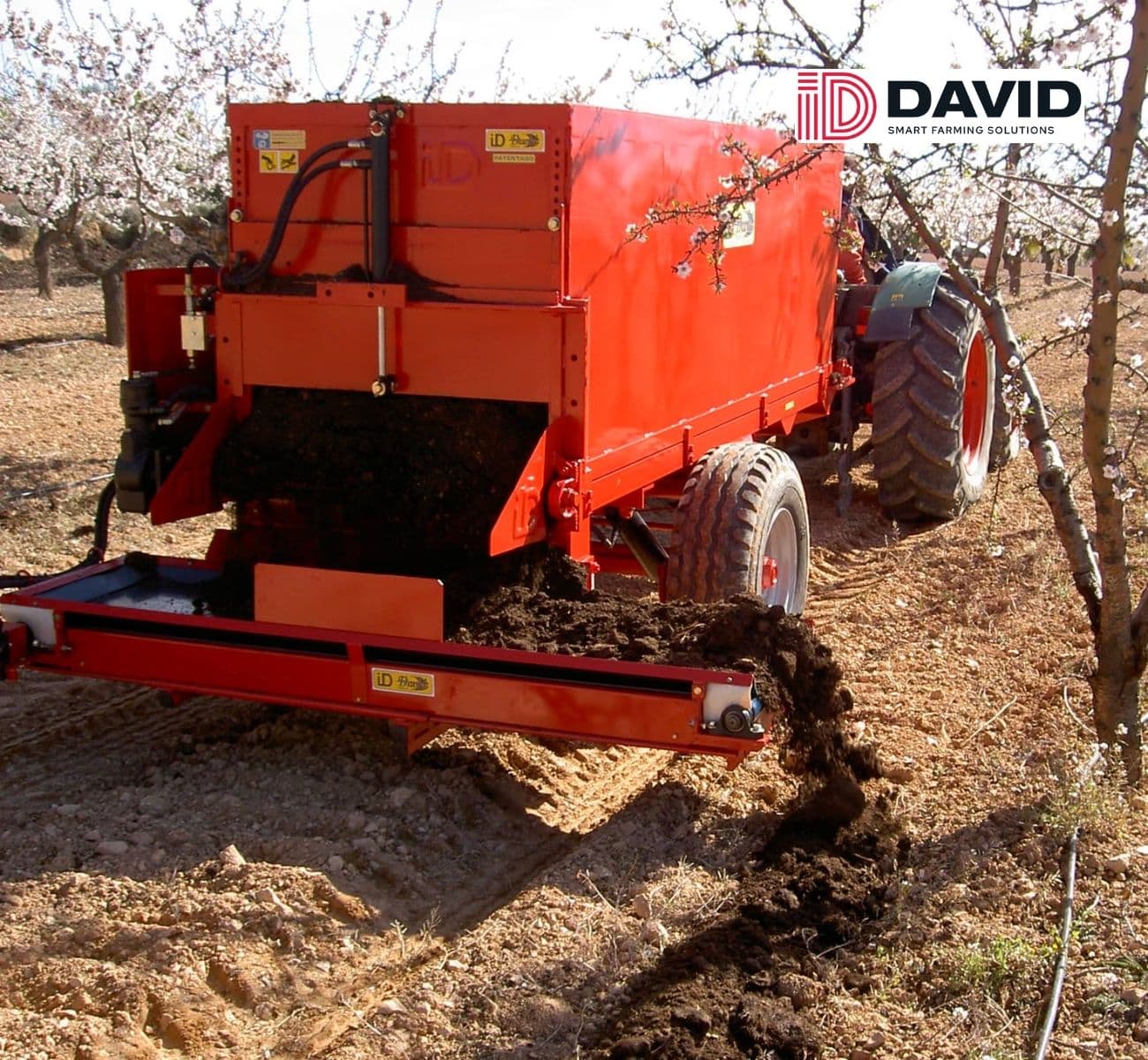
Grazing, hay-making and nut collection all hold back renewal. Livestock graze in the forest largely without restriction (Oryx, 2019), hay-making cuts young saplings (2013), and walnut saplings occur, as a rule, only on moist soils without mowing, grazing or thorough nut collection (2017). The 2007 lease rules obliged tenants to protect the forest from unsystematic grazing.
The forest pests named by FAO are mainly defoliators and a nut-feeding moth. The Asian walnut moth damaged up to 42% of nuts in naturally regenerating forests according to a 1984 study, and gypsy moth outbreaks covered 10,000 to 52,000 ha a year from the early 1980s (FAO, 2007). EPPO lists codling moth as present in Kyrgyzstan, but has no Kyrgyz record of walnut husk fly, walnut blight or anthracnose.
Recommended Orchard Care & Maintenance Stages



Practical Tips for Walnut Orchard Care & Maintenance
Keep livestock out of young stands and new plantings: Kyrgyz forest studies name grazing, along with hay-making, as a barrier to regeneration.
Ask the forestry enterprise before cutting any walnut wood: a 2020 RFE/RL report describes a government ban on felling wild walnut trees.
Watch for the Asian walnut moth, whose larvae feed inside the nuts: FAO calls it the most important walnut pest in Central Asia (2007).
Check the canopy for defoliators such as gypsy moth each spring; outbreaks have stripped thousands of hectares of the forests (FAO, 2007).
Monitor codling moth with traps in planted orchards from spring: EPPO lists it as present in Kyrgyzstan.
Check old trees for heart rot caused by Inonotus hispidus, which FAO found widespread in the walnut-fruit forests (2007).

Walnut Harvesting in Kyrgyzstan
In the walnut-fruit forests, walnuts are collected by hand. Many families camp in the forest for up to a month; young men climb the trees and shake the branches while others pick up the fallen nuts (Fleming, 2017), and one person can collect 15 to 30 kg a day around Arslanbob (Kaktus.media, 2019). Fruit ripens around 18 September at Achy (2026 study), October is harvest season, and unripe nuts are collected too (Eurasianet, 2018).
Collection follows forest tenure: families lease plots in the walnut-fruit forests from state forestry enterprises and keep the nuts they collect (Fleming, 2017); the 2007 lease rules allocated plots by competition, up to 5 ha, and excluded state nature reserves. The stands are not suited to machines: in the Achy enterprise fewer than a third of the walnut stands grow on slopes of 10° or less, and more than a quarter on slopes steeper than 20° (2026).
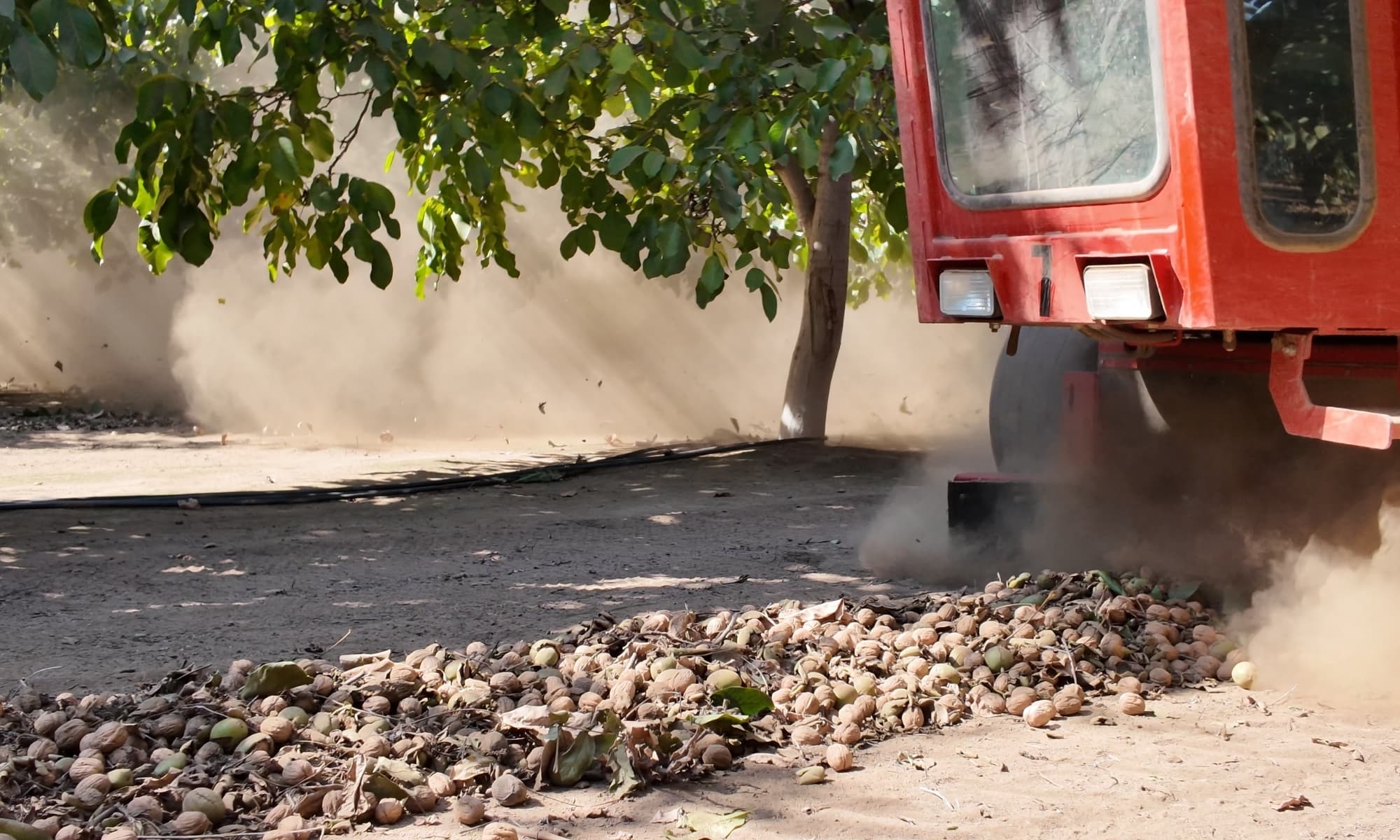
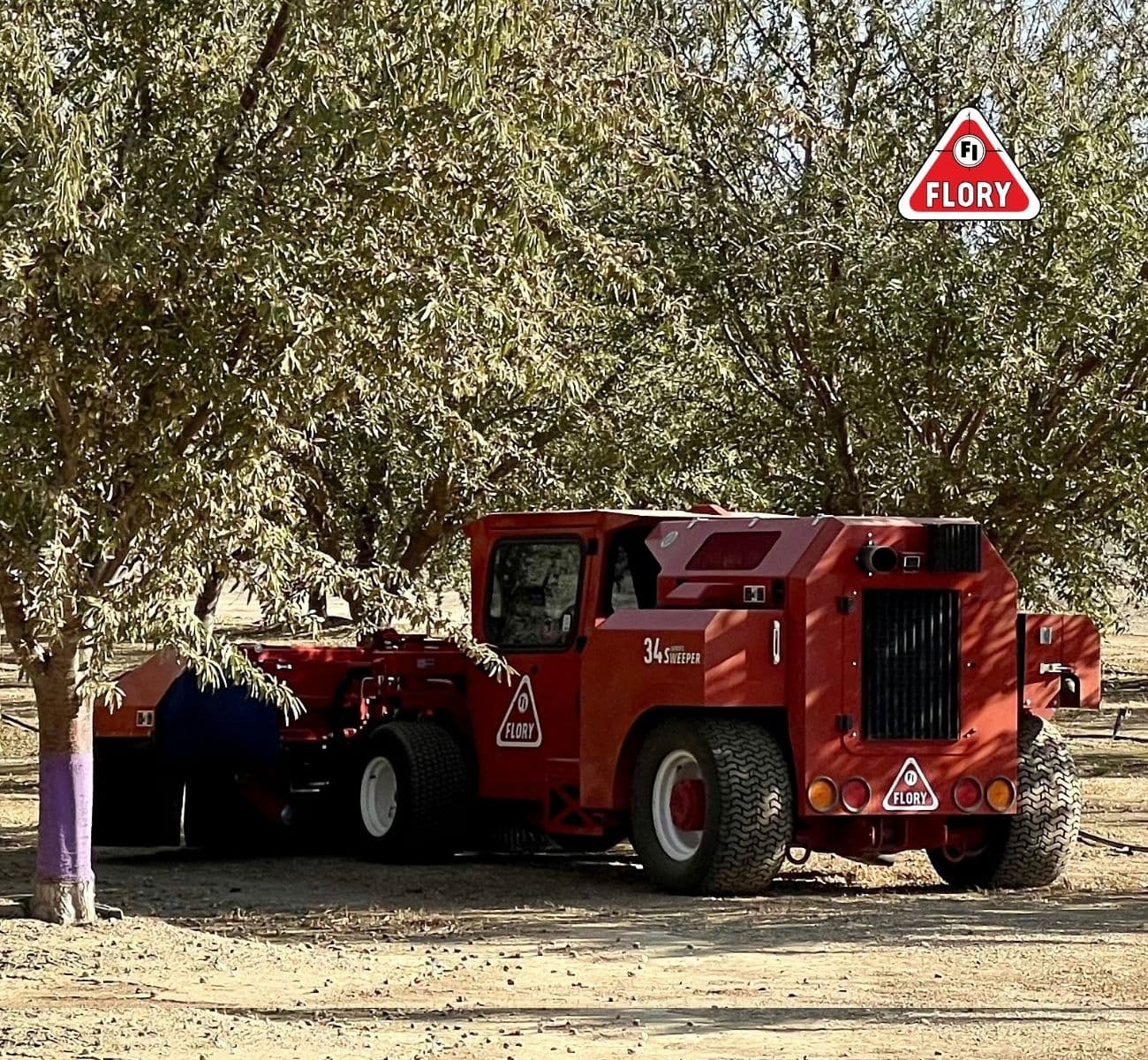
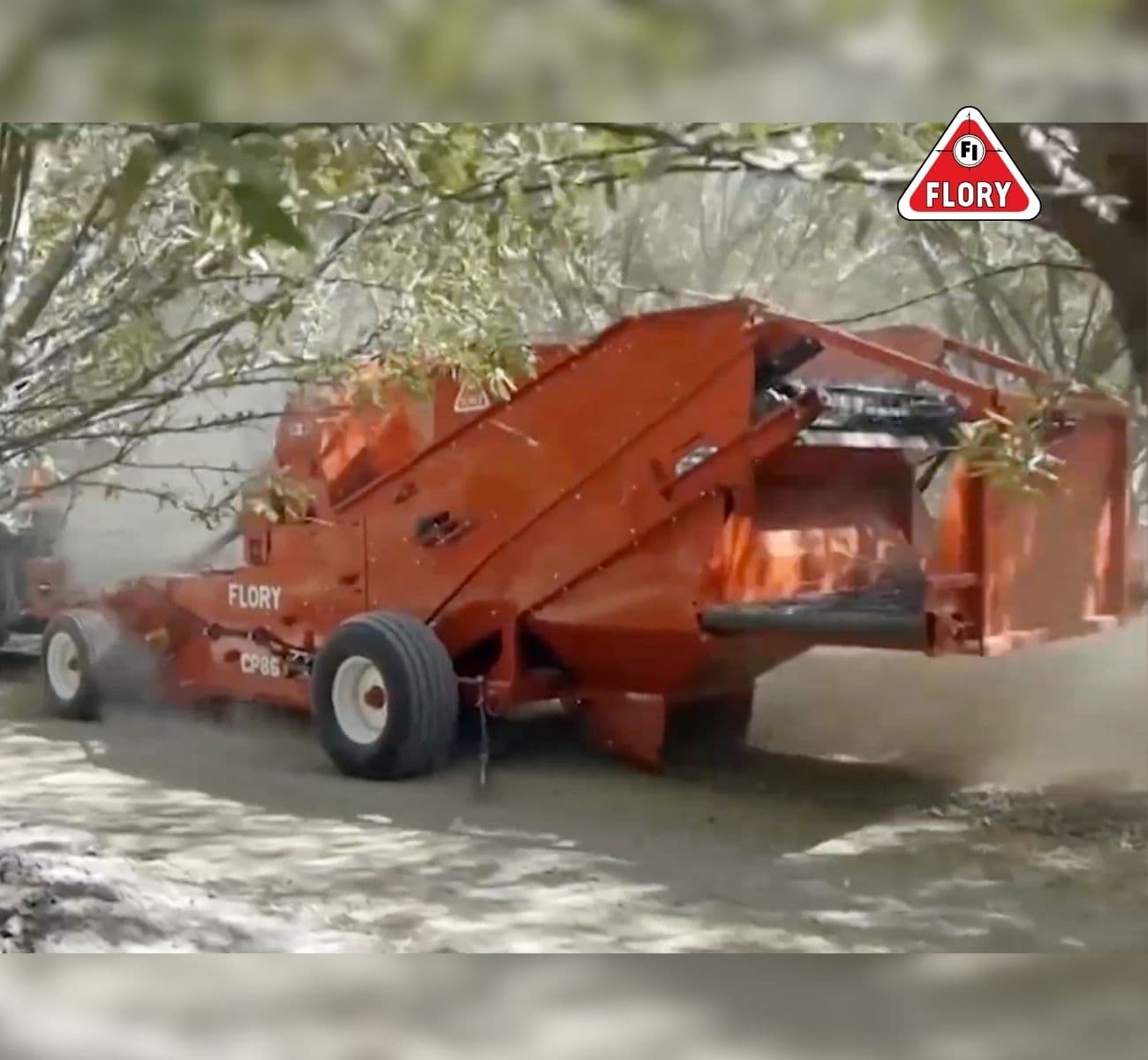
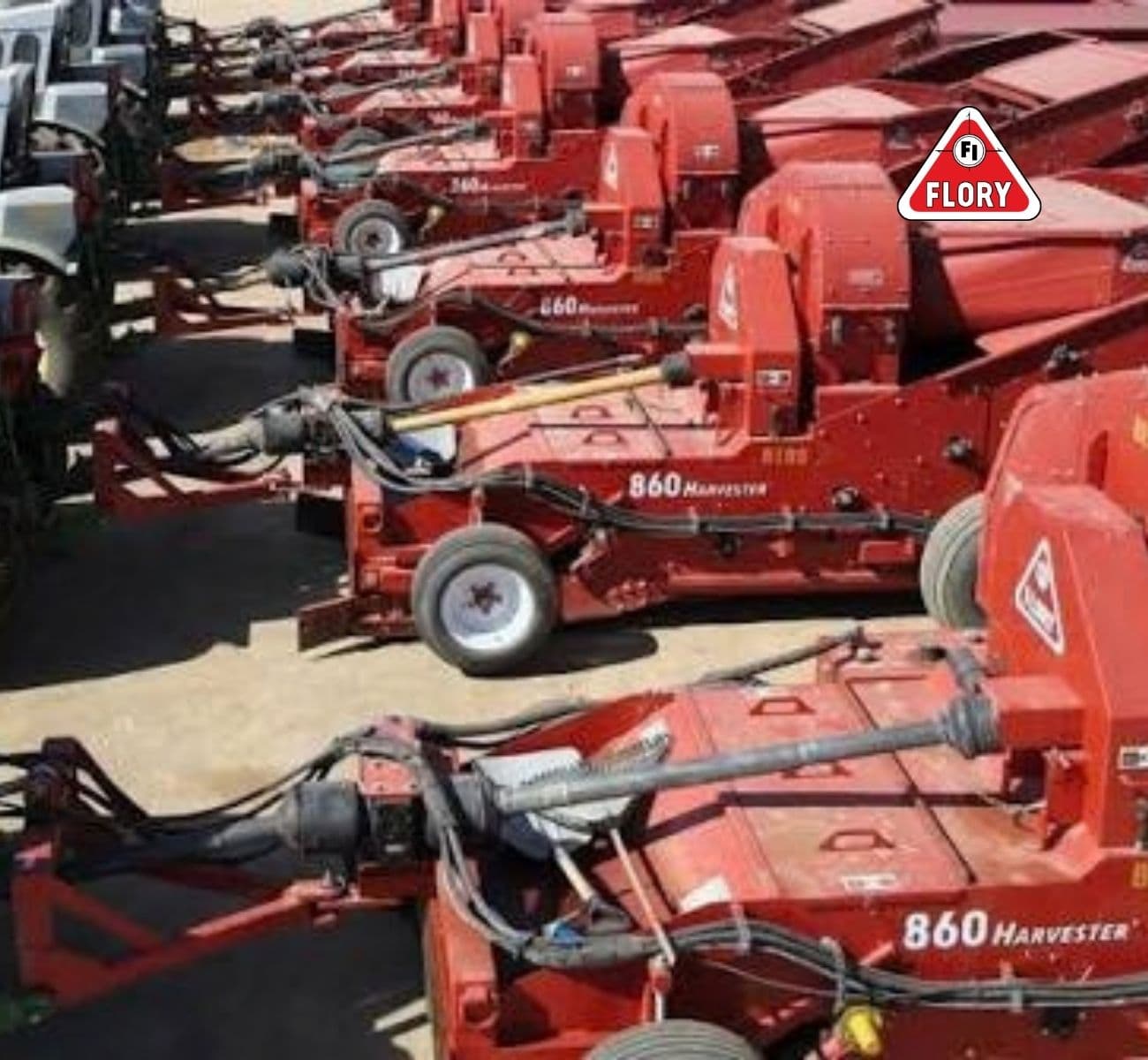
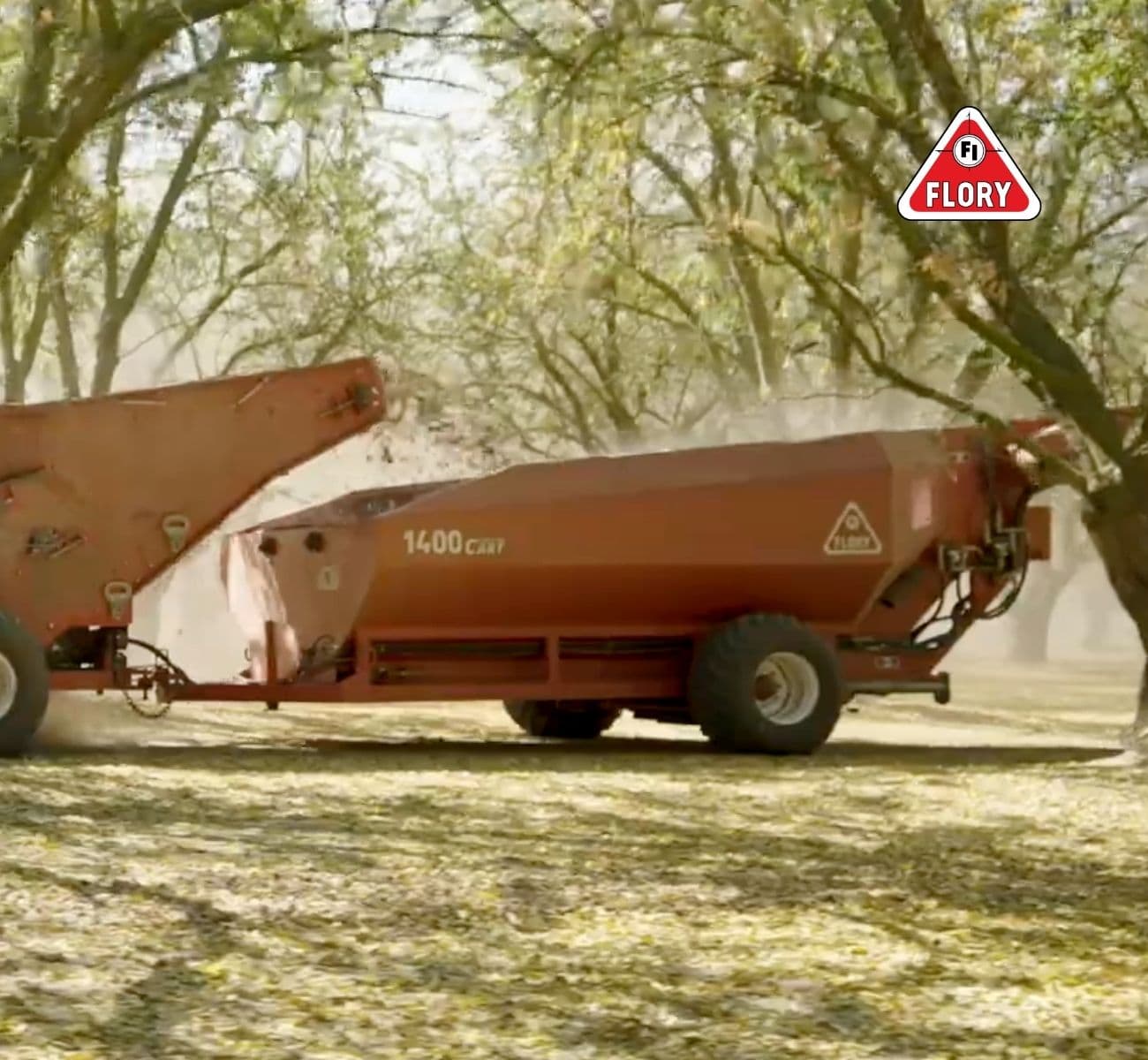
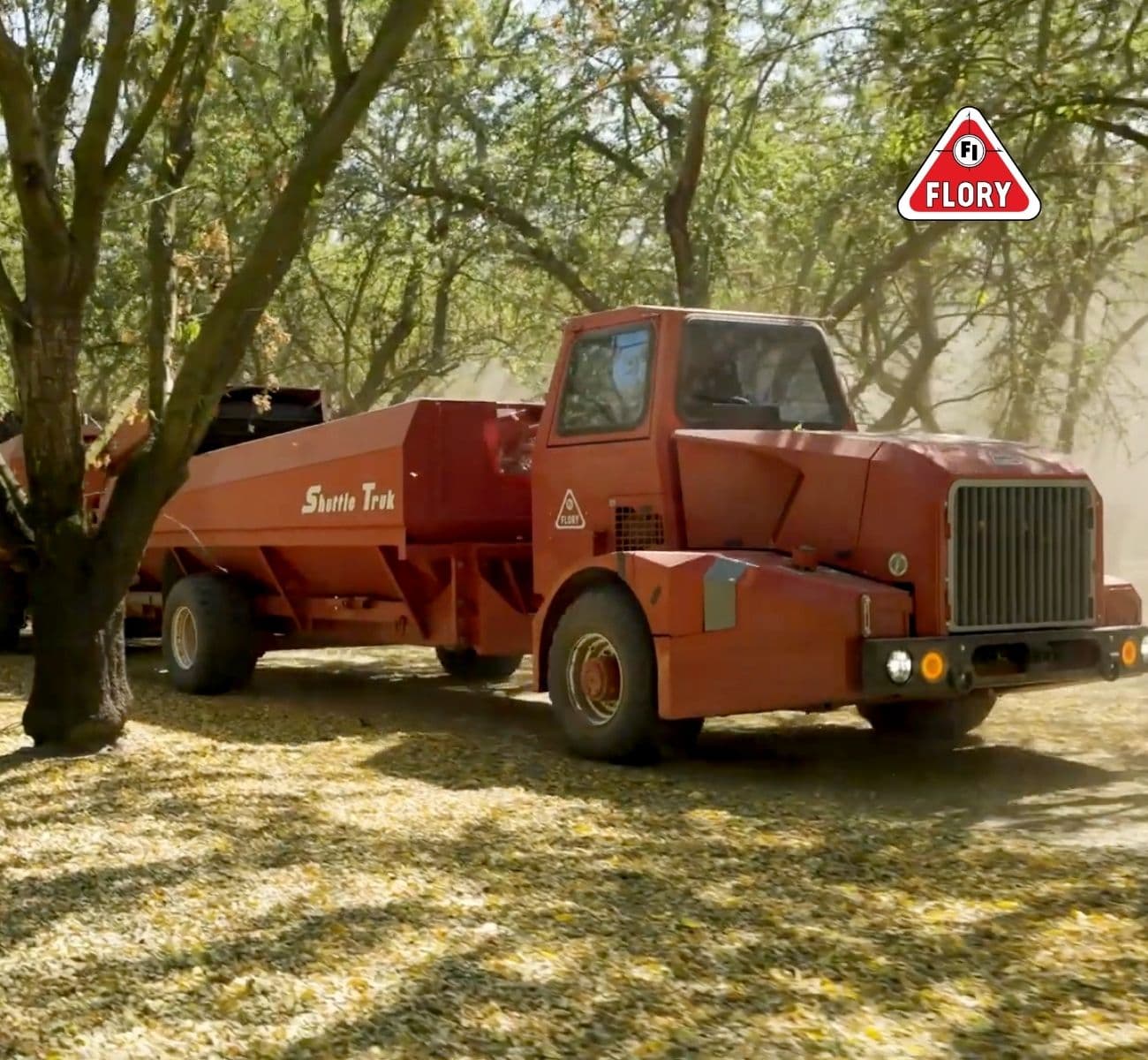
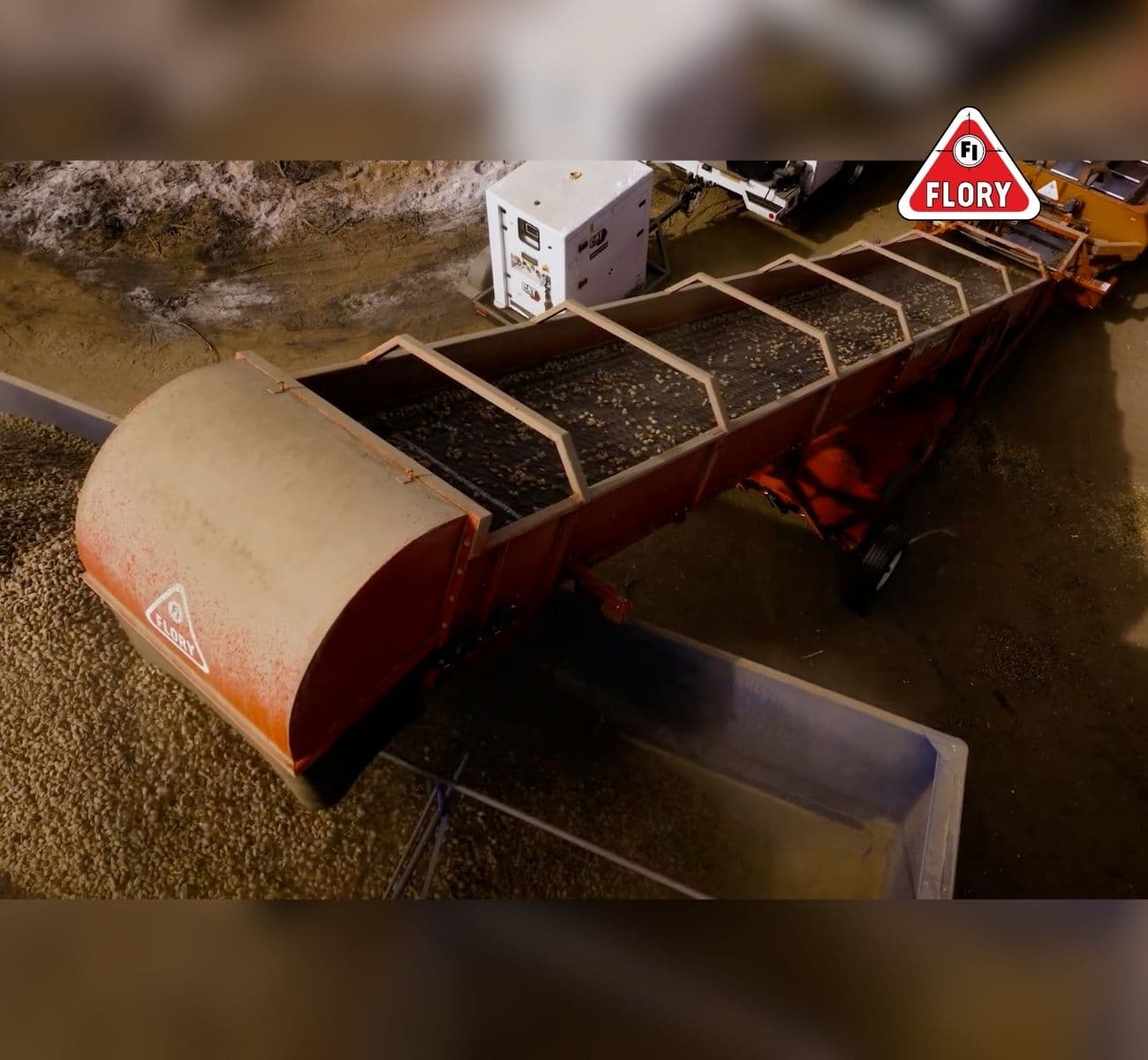
Mechanized harvesting belongs in planted orchards on gentle ground, where it brings the crop in quickly; University of California advisers note that most quality loss occurs in the first 9 hours after harvest. Flory harvesting machinery is available in Kyrgyzstan through OVE Europe: a line runs from the VR700 Shaker, 34 Series Sweeper and 860 Harvester, or the smaller 490, to the 1500 Conveyor Cart, ST14 Shuttle and 4840 Field Elevator.
Walnut Harvest Workflow (Recommended Equipment)

Practical Tips for Walnut Harvesting
Wait for the hulls to split before shaking: a 2018 press report describes unripe nuts carried out of the forest with the ripe crop.
Pick up fallen nuts every day: UC advisers say most quality loss occurs in the first 9 hours after harvest.
Never send workers up tall trees without safety gear: climbing to shake the branches is described as risking life and limb (RFE/RL, 2020).
Keep machines to planted orchards on gentle slopes; the forest stands, on slopes and partly in reserves, are harvested by hand.
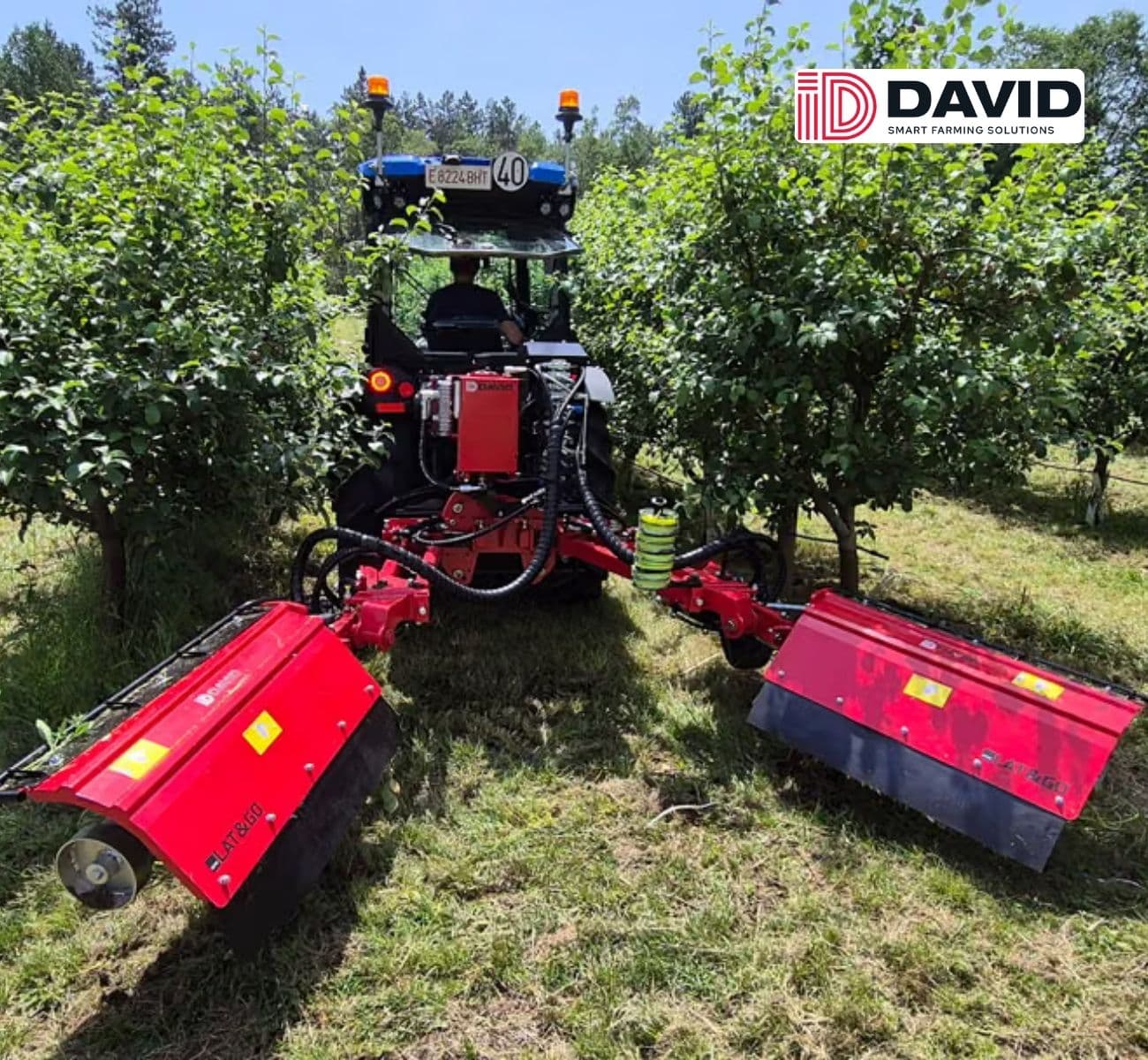
Before harvest, mow and level the orchard floor and clear branches and stones, so the sweeper and harvester pick up cleanly.
Size the sweeper and harvester to the area shaken each day, so shaken nuts never wait overnight on the ground.
Get your recommended harvest setup
Enter orchard size, spacing, terrain, and target throughput—we’ll suggest a practical harvest workflow and equipment lineup.

Walnut Post-Harvest Handling & Processing in Kyrgyzstan
Kyrgyz sources describe post-harvest work only in outline. Nuts are dried and cleaned in Arslanbob (Eurasianet, 2018), cracked mostly by hand, often by women with small hammers (2025 press report), and much of the output is still sold in shell or as kernels without further processing (Economist.kg, 2026). General guidance applies: hull promptly and dry the nuts to 8% moisture with air no hotter than 43 °C (University of California).
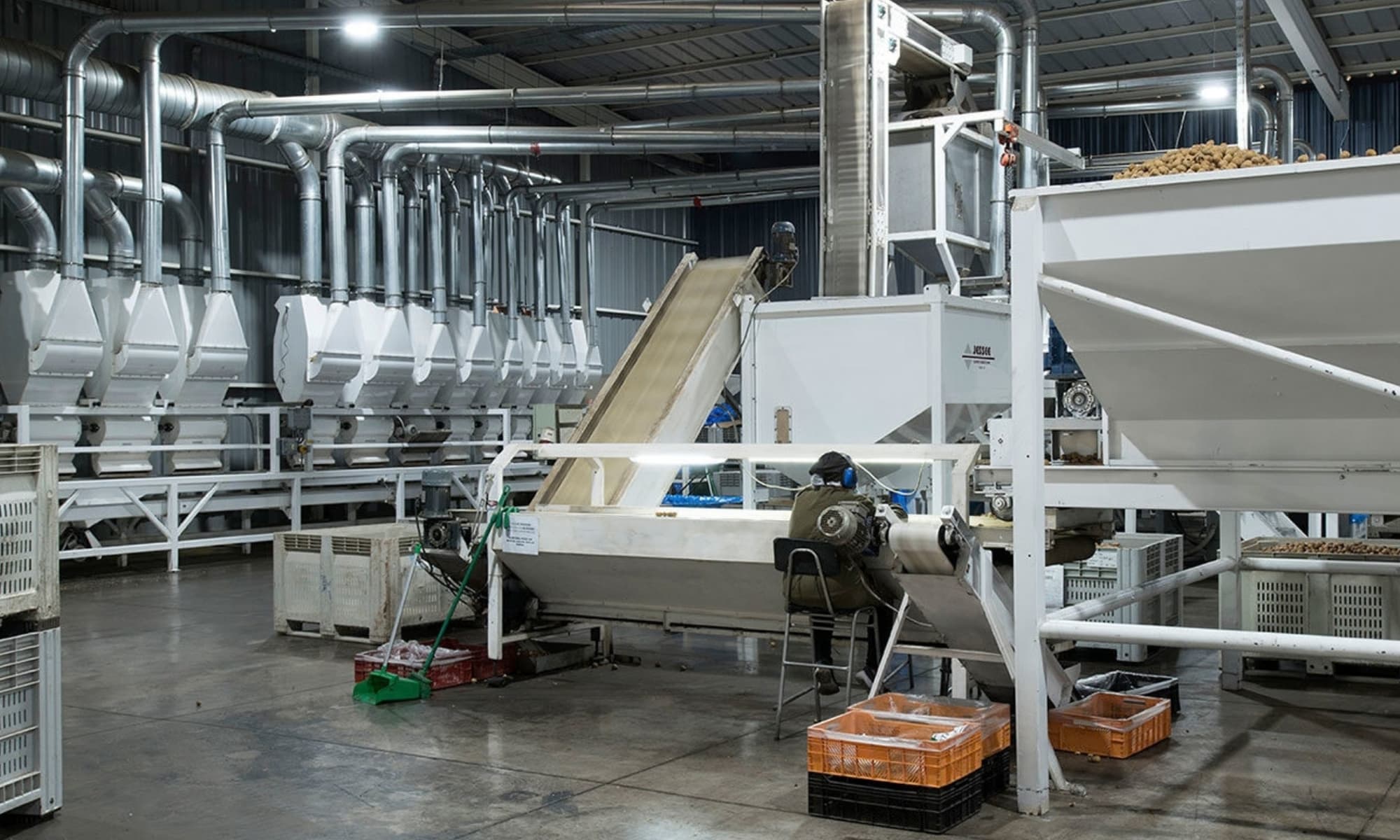
Kyrgyzstan voted for both interstate walnut standards: GOST 32874-2014 for in-shell walnuts (moisture at most 12%, at least 26 mm across for the higher and first grades) and GOST 16833-2014 for kernels (moisture at most 5.0%, three grades by quality and color). The Customs Union regulation TR TS 021/2011, which Kyrgyzstan applies, limits aflatoxin B1 in nuts to 0.005 mg/kg. Jessee, whose processing lines OVE Europe supplies, builds walnut hulling lines and drying, in-shell cleaning and sizing, and shelling systems.
For general information only. Information may become outdated and does not replace site-specific professional advice. Consult a qualified agronomist and confirm equipment suitability with OVE before acting.
Practical Tips for Walnut Post-Harvest Handling & Processing
Hull nuts as soon as possible after collection, as UC guidance advises: the longer the hulls stay on, the more nut quality deteriorates.
Dry to 8% moisture, measured on the whole nut, with air no hotter than 43 °C, and avoid sun drying, which UC guidance says darkens kernels.
Keep kernels light: AFP reported that whiter kernels are worth more, and an Arslanbob walnut seller said hotter, drier years turn kernels red inside (2025).
Grade kernels to GOST 16833-2014, which Kyrgyzstan voted for: three grades by quality and color, and moisture at most 5.0%.
Test kernels for aflatoxin before sale: TR TS 021/2011 limits aflatoxin B1 in nuts to 0.005 mg/kg; check the current text.
Store dried nuts and kernels in clean, dry rooms free of foreign odors, as both GOST standards specify, and keep each lot separate.
Recommended Post-Harvest Handling & Processing Stages









Plan your post-harvest line
Estimate tons/day, cleaning & drying capacity, storage needs, and cost/kg—then build your equipment plan in phases.