





Almond Orchard Establishment in Algeria
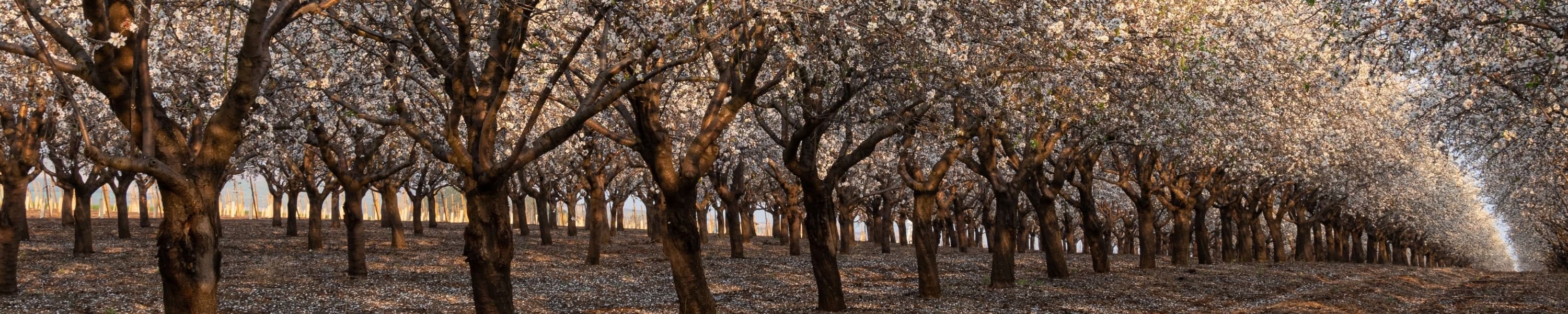
Tlemcen held about a fifth of Algeria's planted almond area in 2016, 2018 and 2019 (8,430 ha in 2019), and Médéa led production in 2019 with 15.3% of the crop (Série B). The planted area fell from 49,983 ha in 2016 to 41,559 ha in 2019, while some wilayas, such as Adrar in the Sahara with 540 ha, reported planted almond with no bearing area. A 2021 thesis describes a 110 ha orchard planted in 2018 near Ain Oussera (Djelfa) at 4 x 4 m.
Algeria's 2006 national report on plant genetic resources listed 11 almond varieties as registered and authorized for marketing, among them Aï, Ferragnès, Ferraduel, Marcona, Nonpareil and Texas. The catalogue order of 25 January 2026 lists no almond cultivar, only almond seedlings and the peach-almond hybrid GF 677 as rootstocks. A Tlemcen university course advises taking rootstock seed from bitter, hard-shelled almond trees, which Capnodis attacks less.
An Algerian master's thesis gives almond flowering from December to March and a chilling need of about 200 to 400 hours below 7.2 °C, and another says early bloom makes almond very sensitive to spring frost; an agronomist quoted in a 2017 article on Bouira advised avoiding frost-prone sites. No dated frost damage to almond was found. Southern French guidance (2021) spaces rows 6 to 7 m apart and trains trees as a high vase for catching-frame harvest.

Practical Tips for Almond Orchard Establishment
Pair self-incompatible cultivars such as Ferragnès with a pollinizer that flowers with them, such as Ferraduel, as southern French guidance advises.
Avoid frost-prone sites, as an agronomist quoted in a 2017 Bouira article advised: an Algerian thesis puts almond flowering from December to March.
Take rootstock seed from bitter, hard-shelled almond trees, as a Tlemcen university course advises, since Capnodis attacks them less.
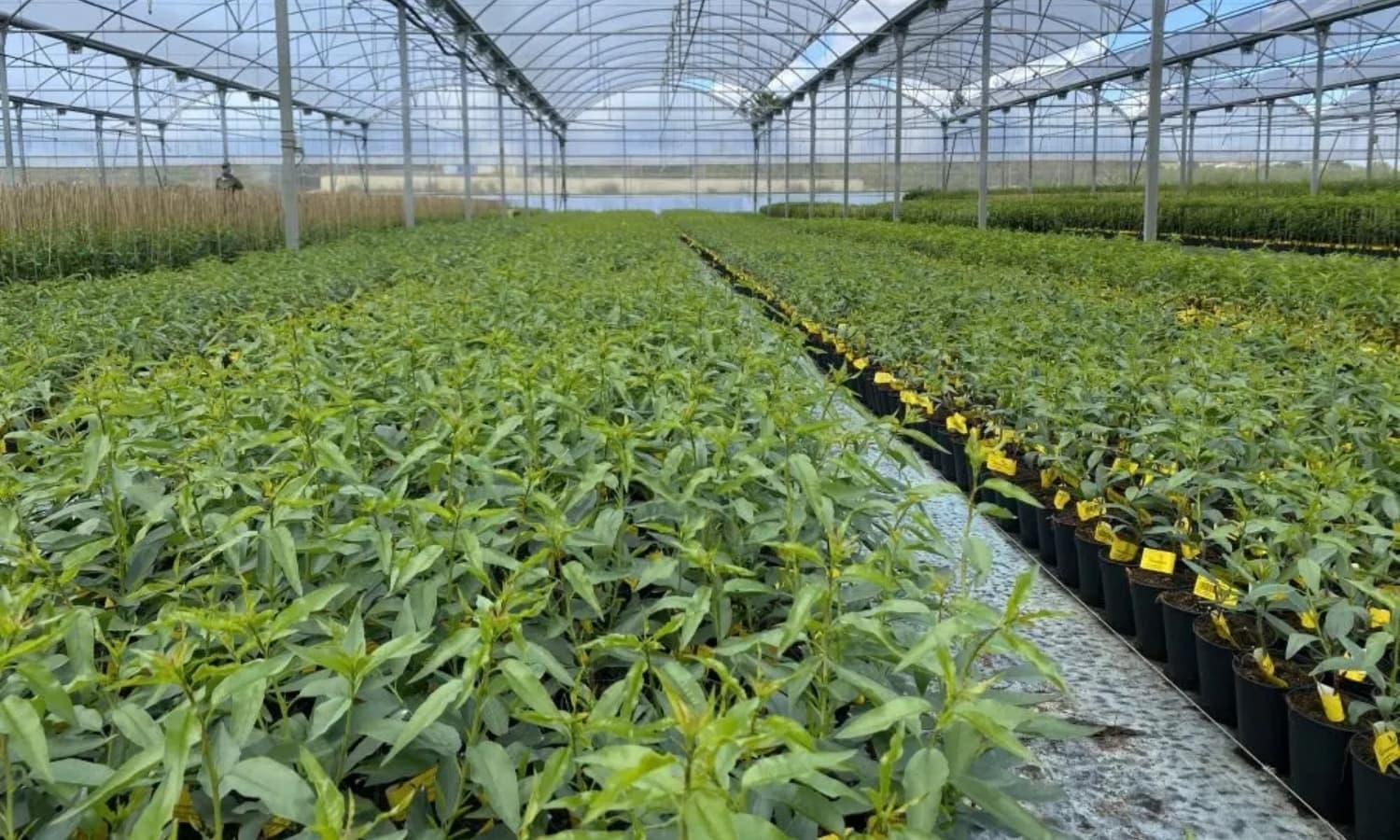
Buy grafted trees from nurseries under CNCC control: the national certification center checks varietal authenticity, root system and plant health.
Plan irrigation from the start: southern French guidance calls it very strongly recommended, if not indispensable, for almond orchards.
If you plan catching-frame harvest, space rows 6 to 7 m apart and train trees as a high vase, as southern French guidance describes.
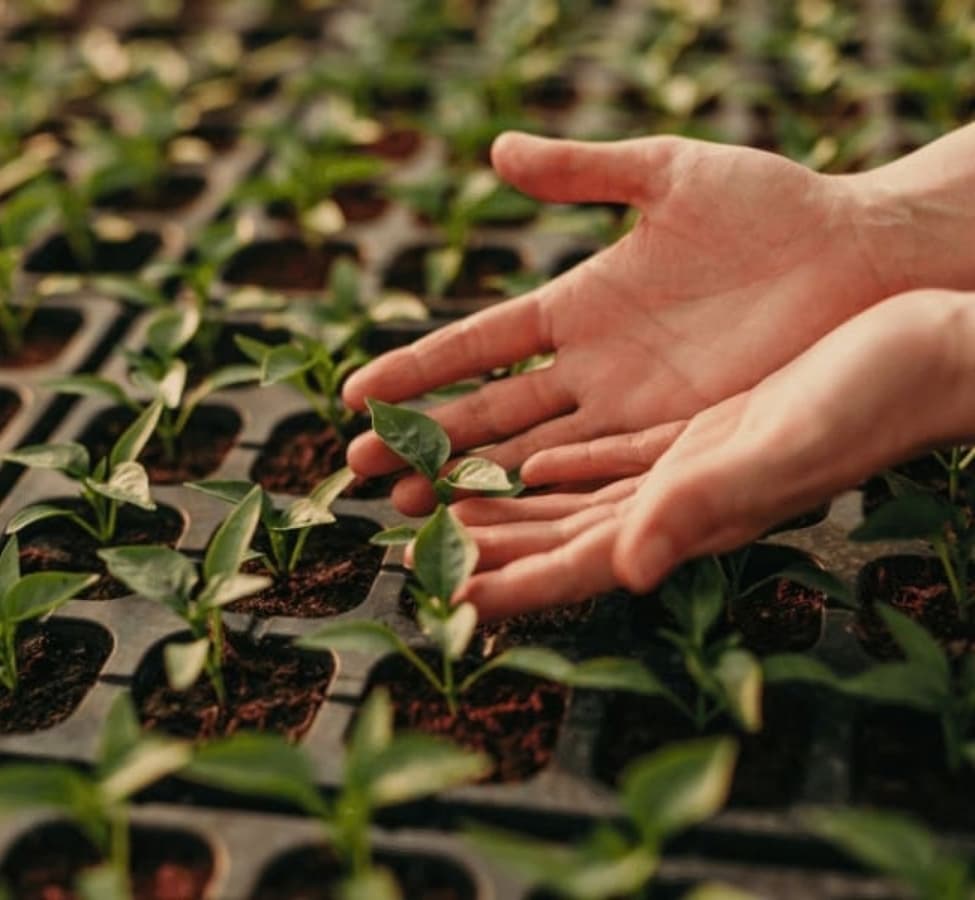
Recommended Establishment Stages
Almond Orchard Care & Maintenance in Algeria
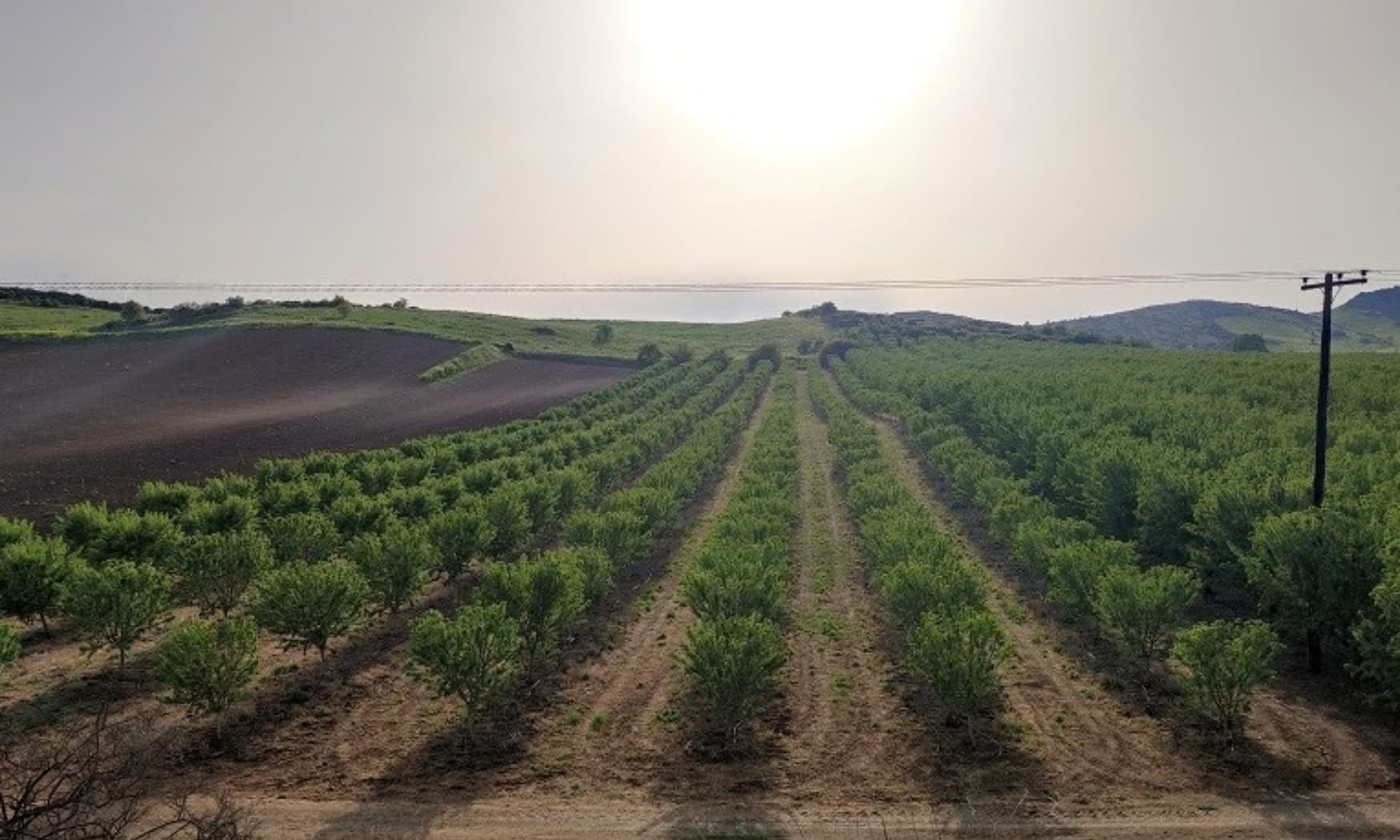
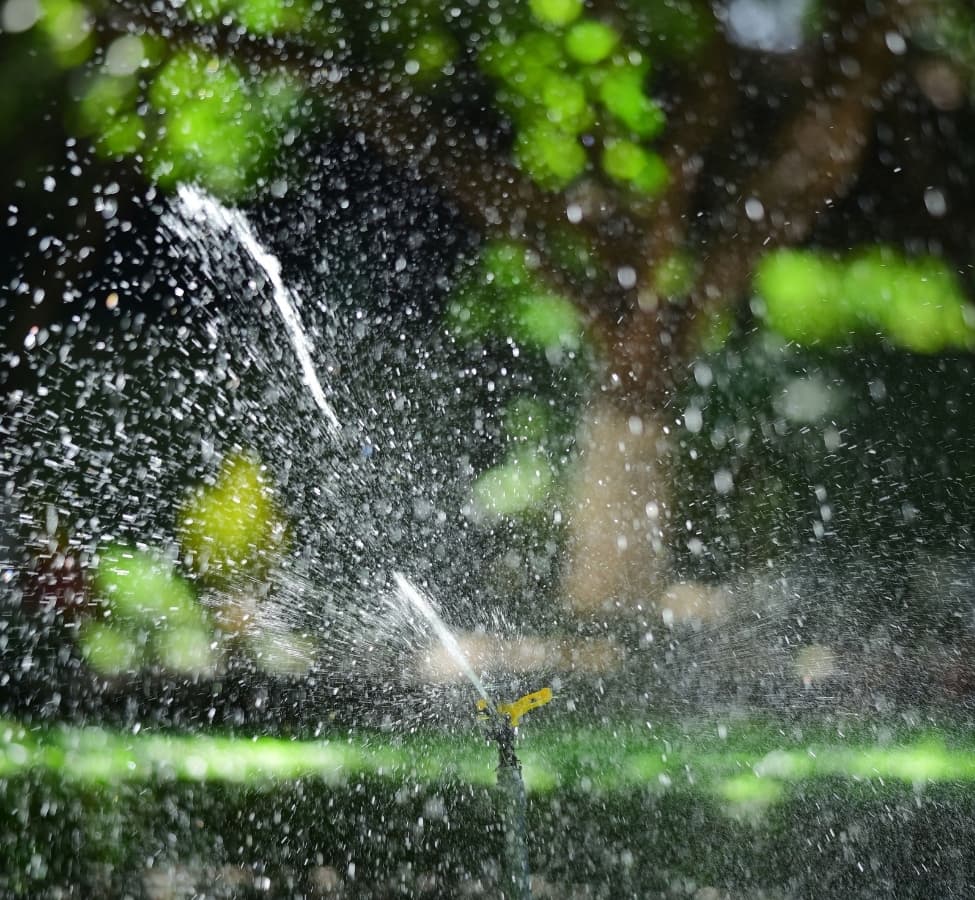
No Algerian irrigation norm for almond was found; one Algerian thesis describes almond as a species from dry regions, and another says it fears high humidity during flowering and fruit growth. Southern French guidance (2021) calls irrigation very strongly recommended, if not indispensable, and prefers drip or micro-sprinklers, which keep the foliage dry. The 2018 orchard near Ain Oussera is sheltered by a Casuarina windbreak.
EPPO lists peach twig borer as present in Algeria and does not list Xylella fastidiosa for the country (October 2026). A 2021 survey of the Ain Oussera orchard recorded 32 insect species in April and May, and eight thrips species were found on almond in Batna wilaya (2014 fieldwork). No Algerian thresholds were found; University of California guidance monitors twig borer with pheromone traps and checks shoots for strikes in mid-April.
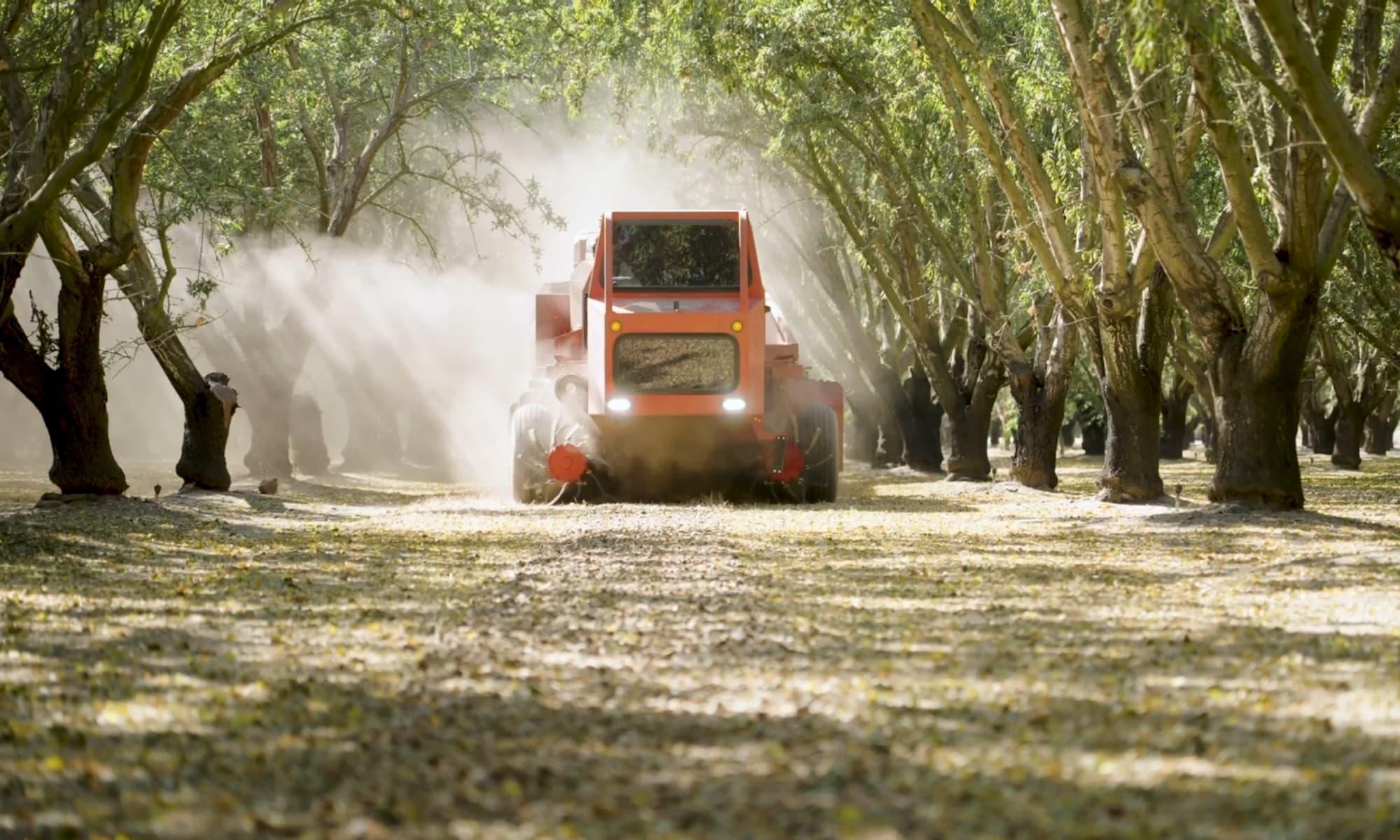
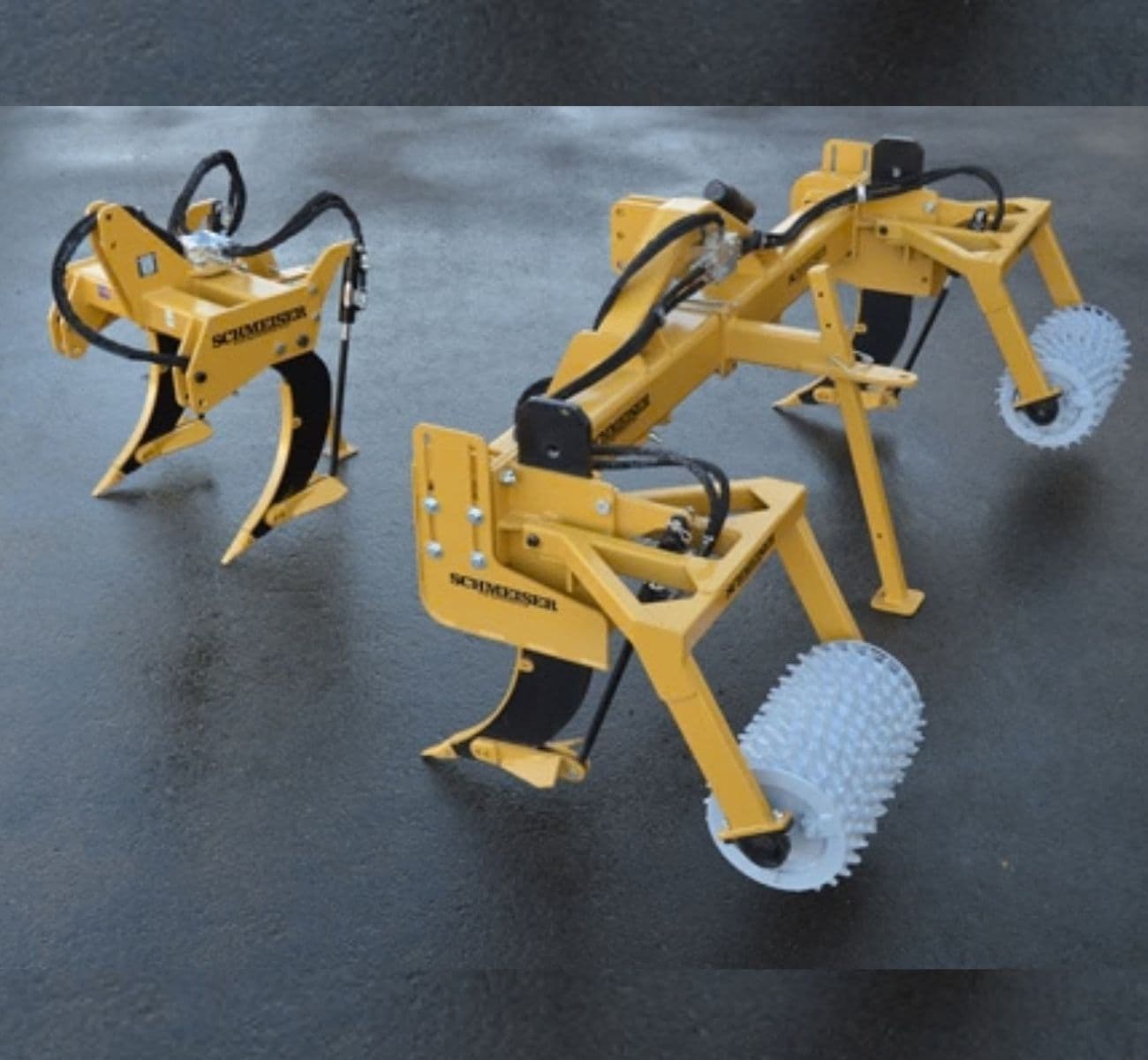
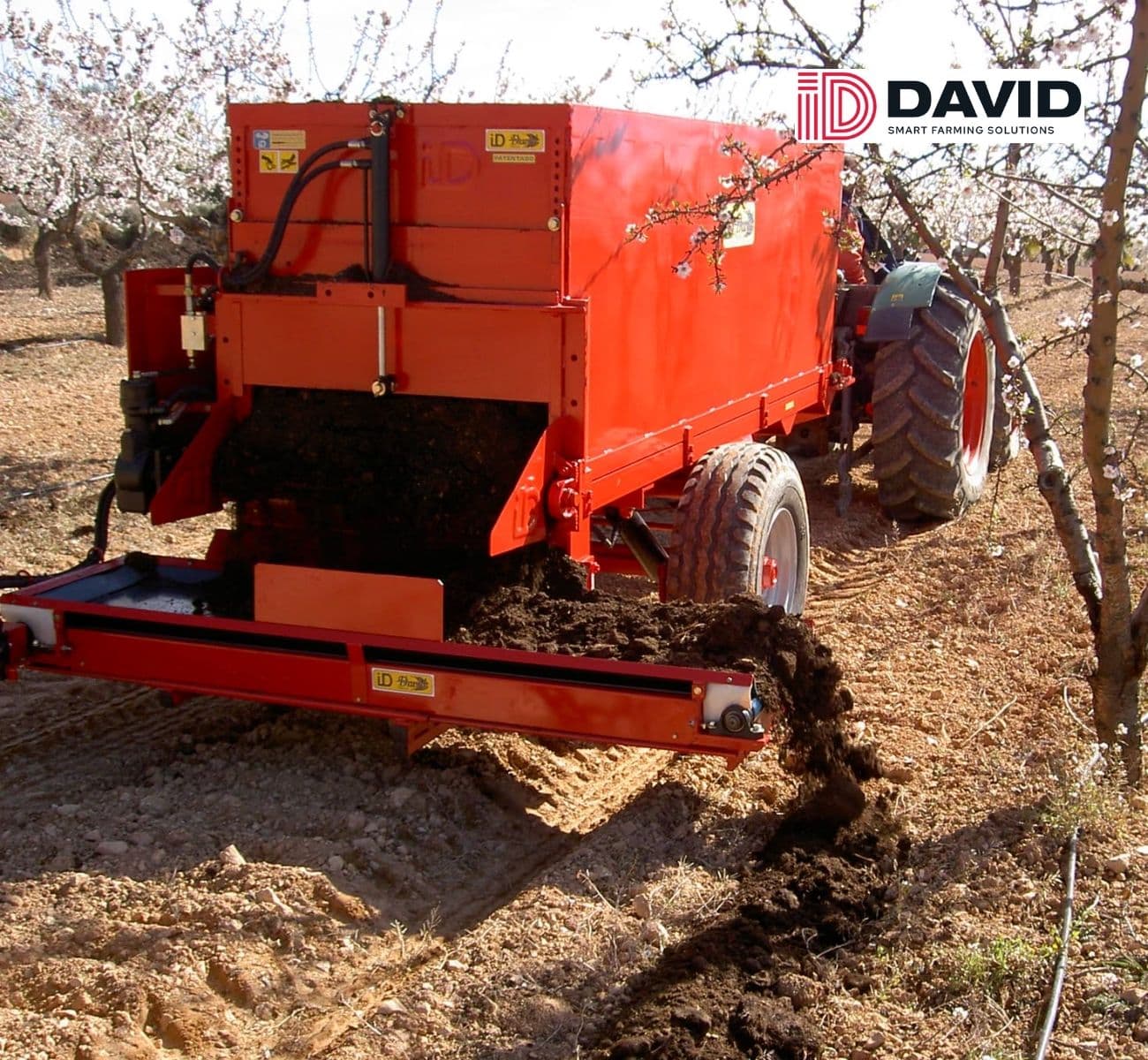
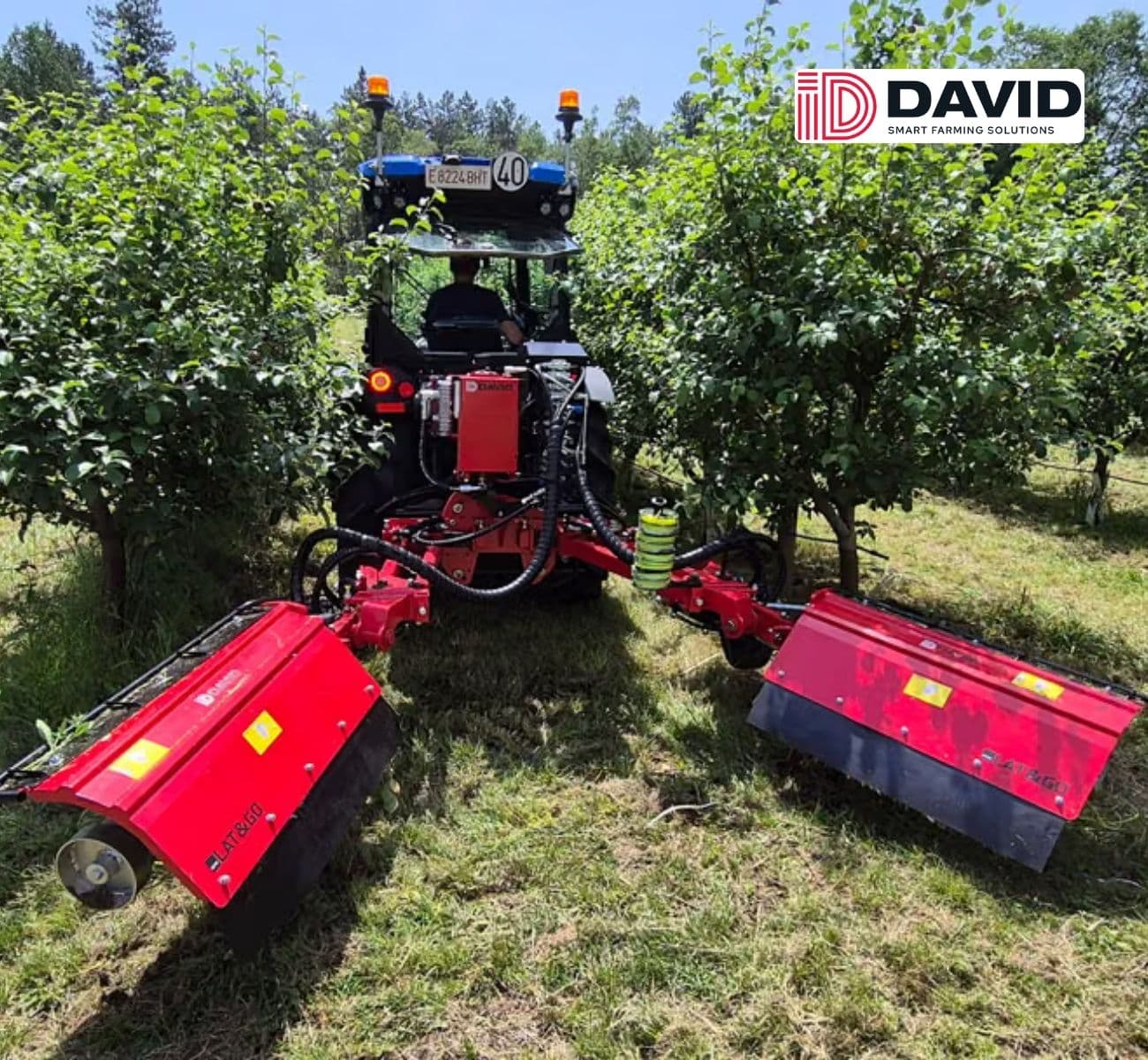
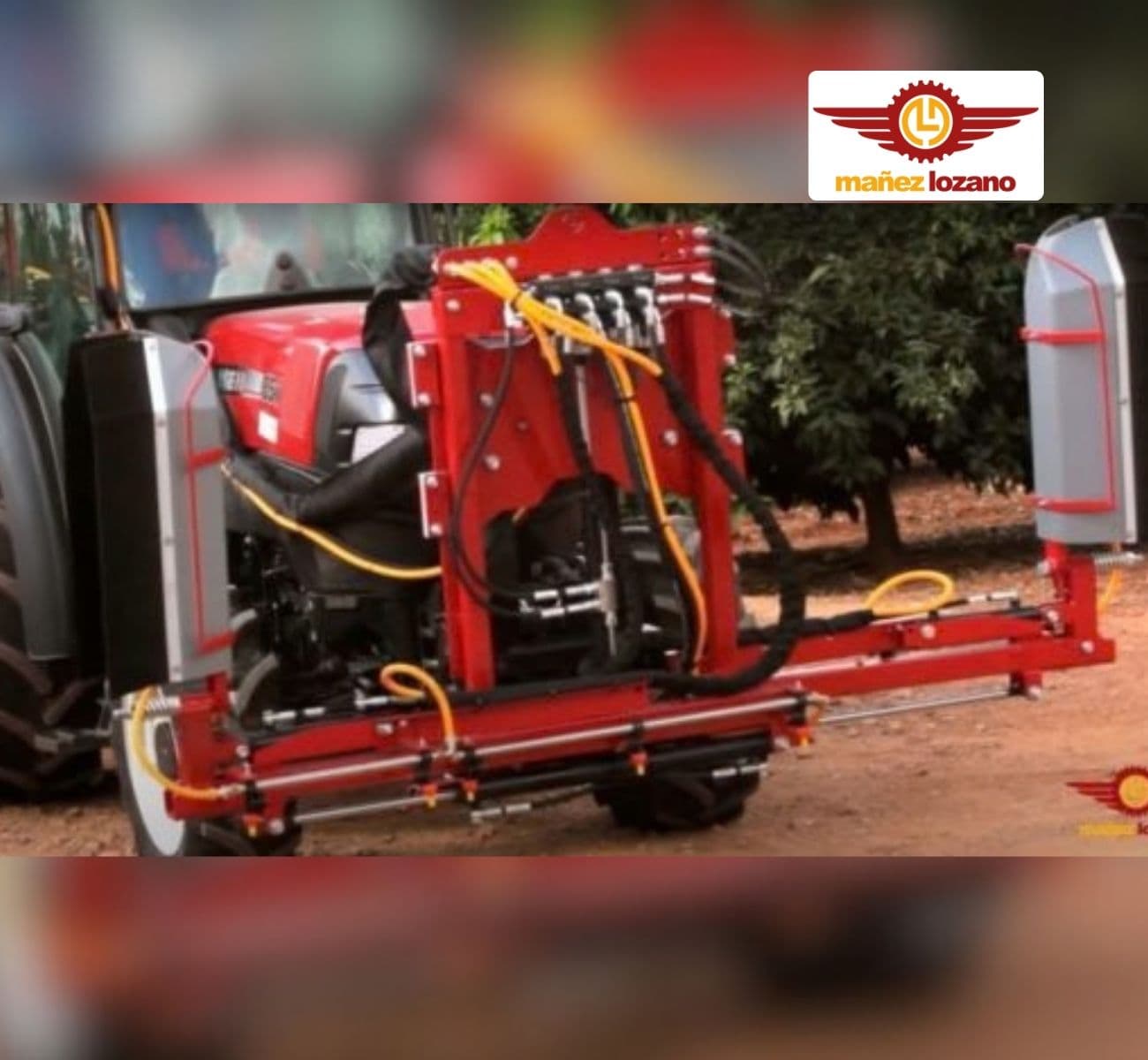
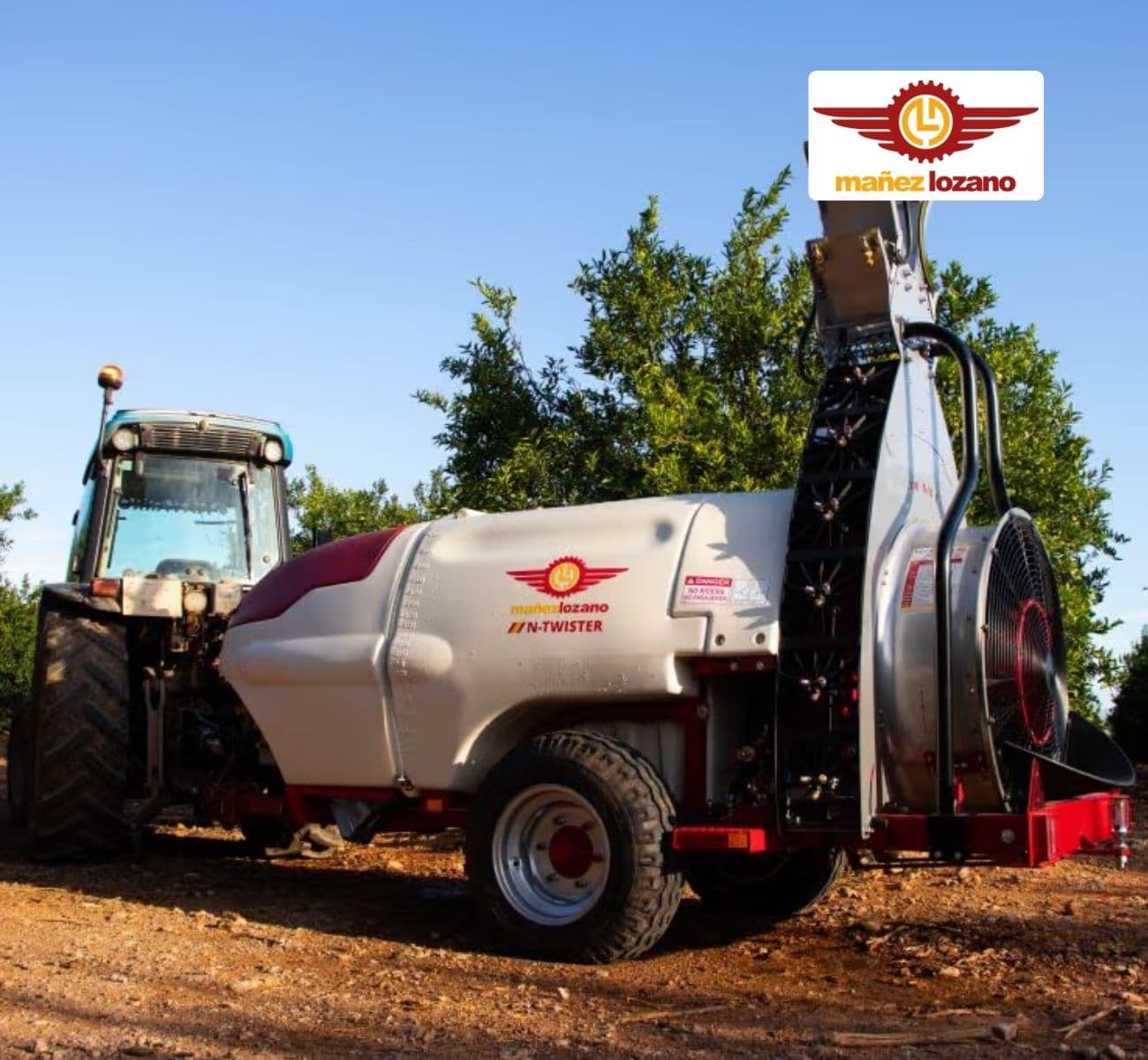
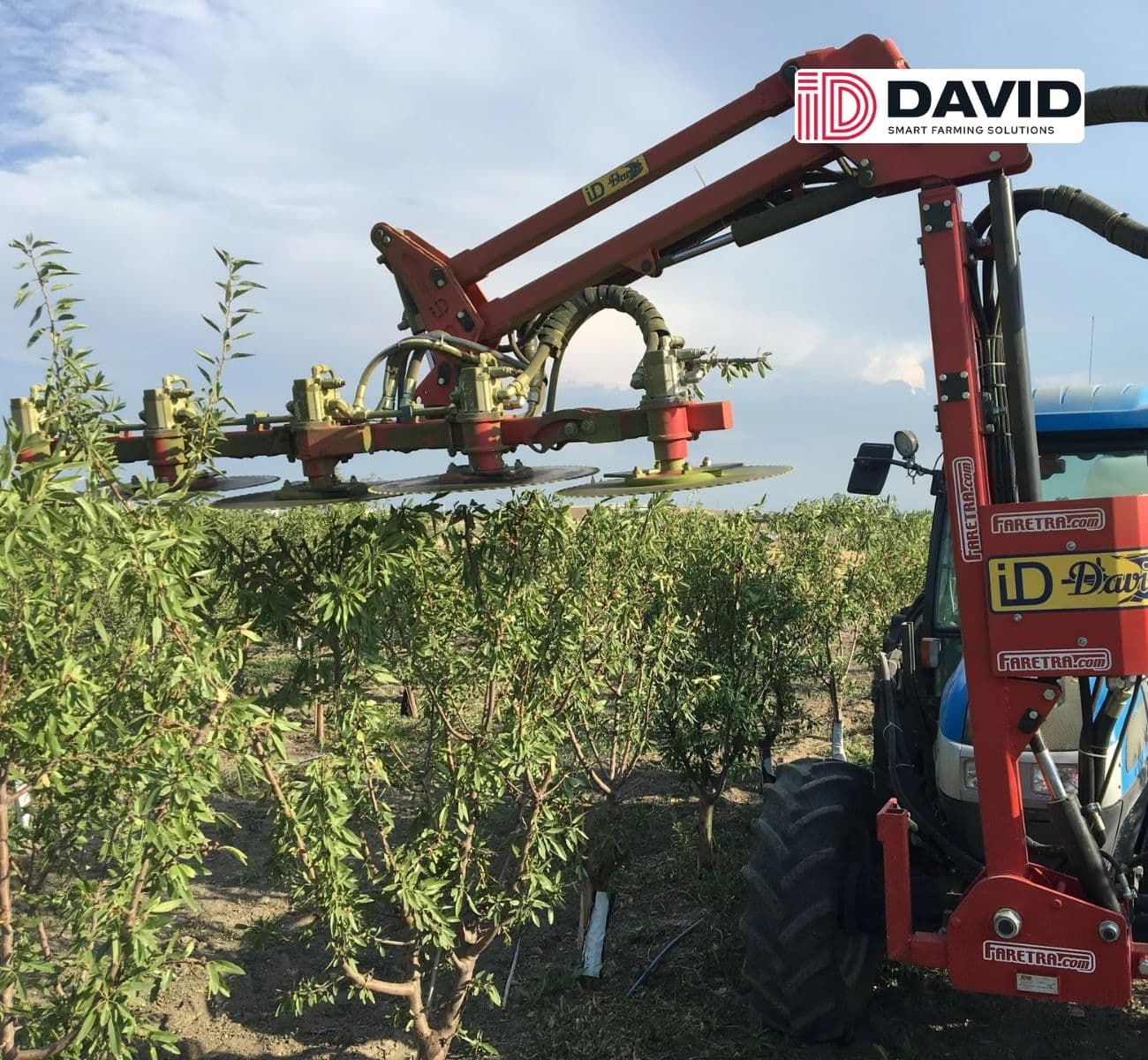
No Algerian pruning guidance for almond was found; southern French guidance trains trees as a high vase for catching-frame harvest. For care work, the ID DAVID ECOFEED spreads solid manure, the ID DAVID LAT&GO string mower controls weeds without herbicides, the Mañez Lozano Narrow Twister S6 sprays tall, dense canopies and the ID DAVID V1 disc pruner makes vertical and horizontal cuts.
Recommended Orchard Care & Maintenance Stages
Practical Tips for Almond Orchard Care & Maintenance
Water young trees through July and August, when Djelfa averages only about 8 and 18 mm of rain, and check soil moisture before each drip cycle.
Hang pheromone traps for peach twig borer, which EPPO lists as present in Algeria, and check spring shoots for wilted tips.
Remove mummified almonds left on the trees in winter: University of California guidance advises this because a Californian pest overwinters in them.
Prune young trees to a high, open vase with a clean trunk, the form southern French guidance uses for catching-frame harvest.
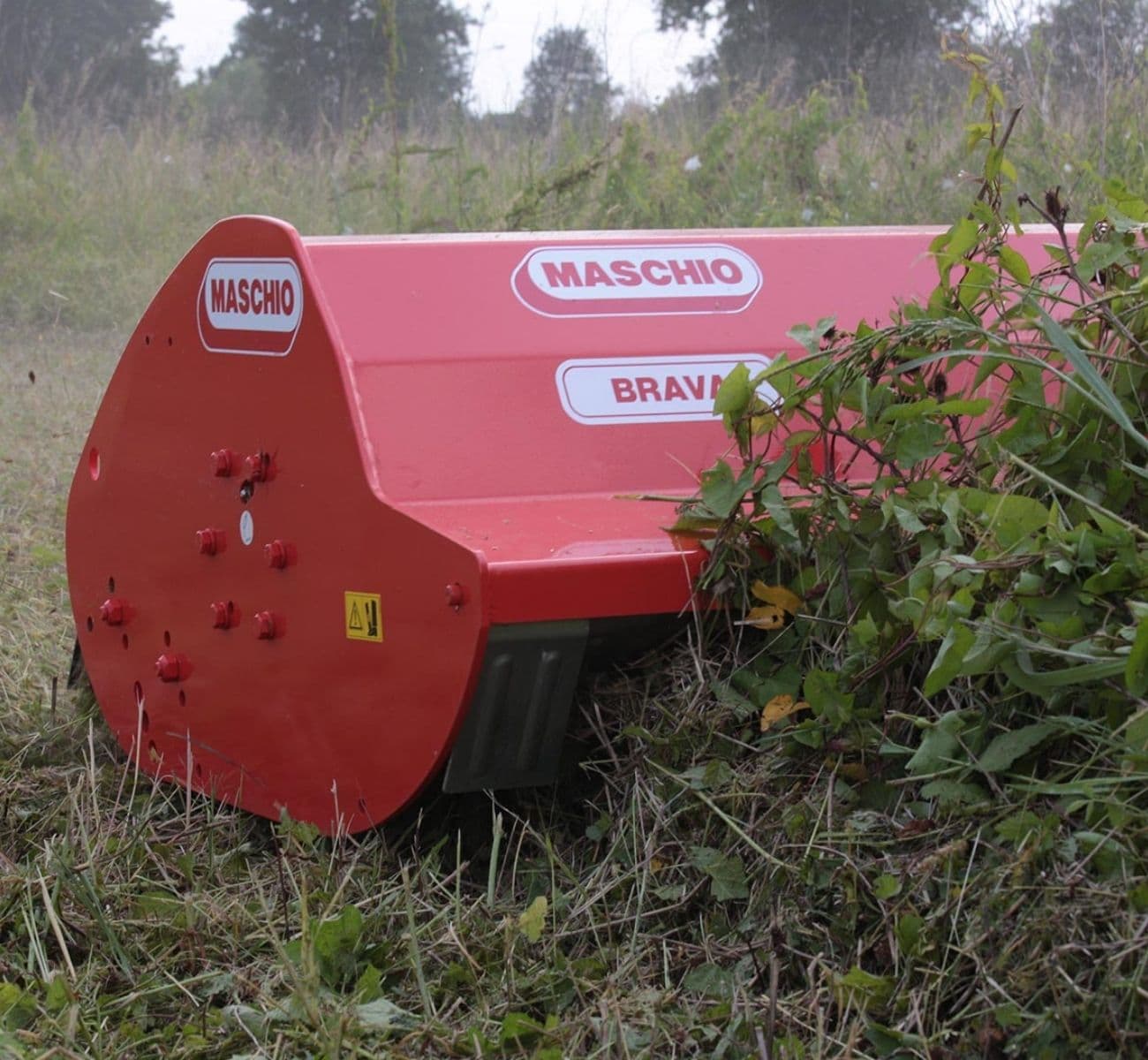
Mow between rows with a string mower such as the ID DAVID LAT&GO, which mulches weeds without herbicides, and keep the orchard floor level.
Spray tall, dense canopies evenly with a narrow trailed airblast sprayer such as the Mañez Lozano Narrow Twister S6.
Almond Harvesting in Algeria
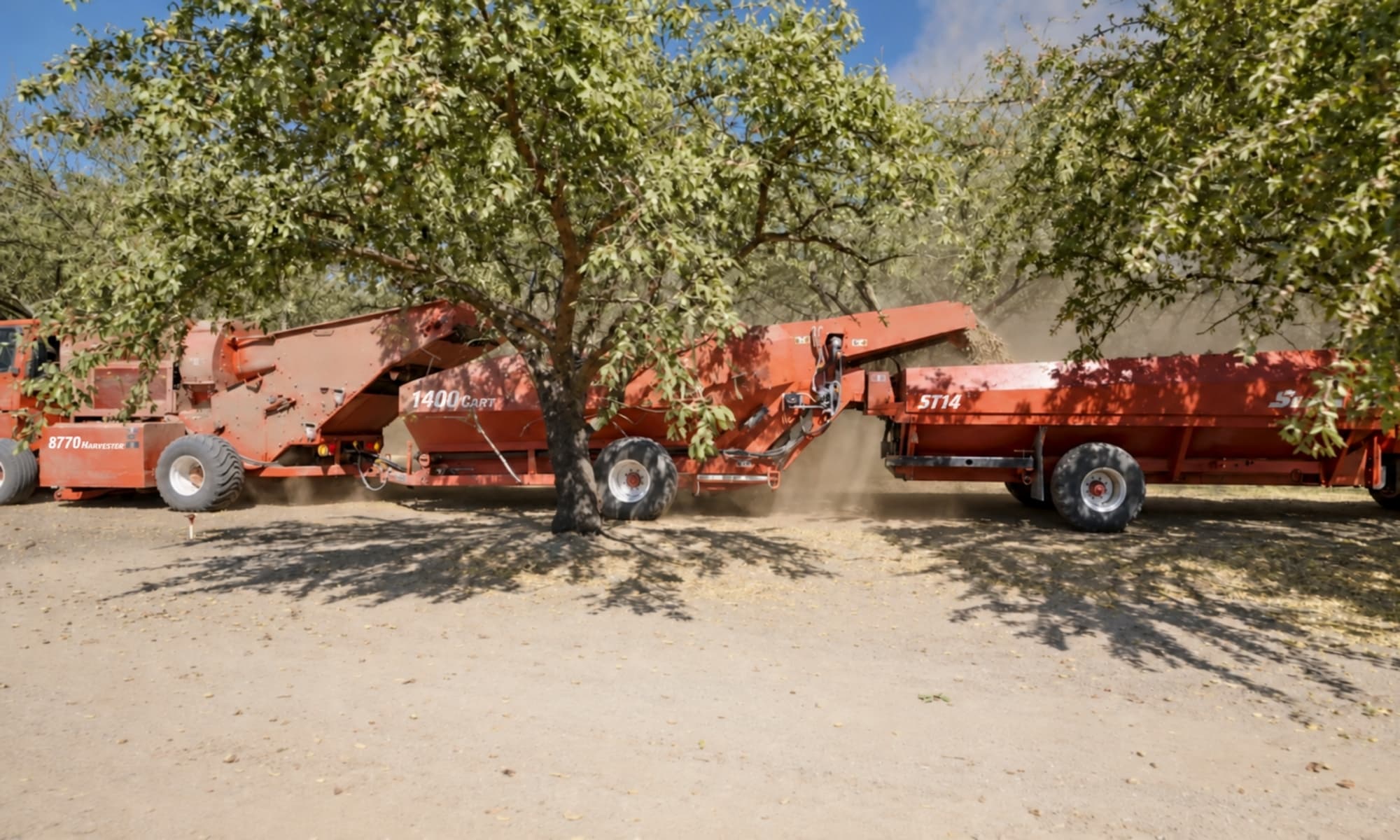
No Algerian source found gives almond harvest dates or describes harvesting or drying in detail. A 2020 engineering student project in Blida states that collection and kernel extraction remain manual, that cracking is still long and arduous in many villages and that extraction machines are scarce on the Algerian market. In orchards planted for machines, mechanized harvesting can bring the crop in on time, with less risk of nuts deteriorating while they wait.
Rainfall rises after the summer at Djelfa: national meteorological office data for 2009 to 2018, cited in a 2021 thesis, average about 8 mm in July, 18 mm in August and 32 mm in September, and no Algerian source says how growers dry almonds. Without evidence of a reliably dry harvest season, this guide shows prompt pickup, with drying after hulling, alongside catching frames that keep the nuts off the ground.
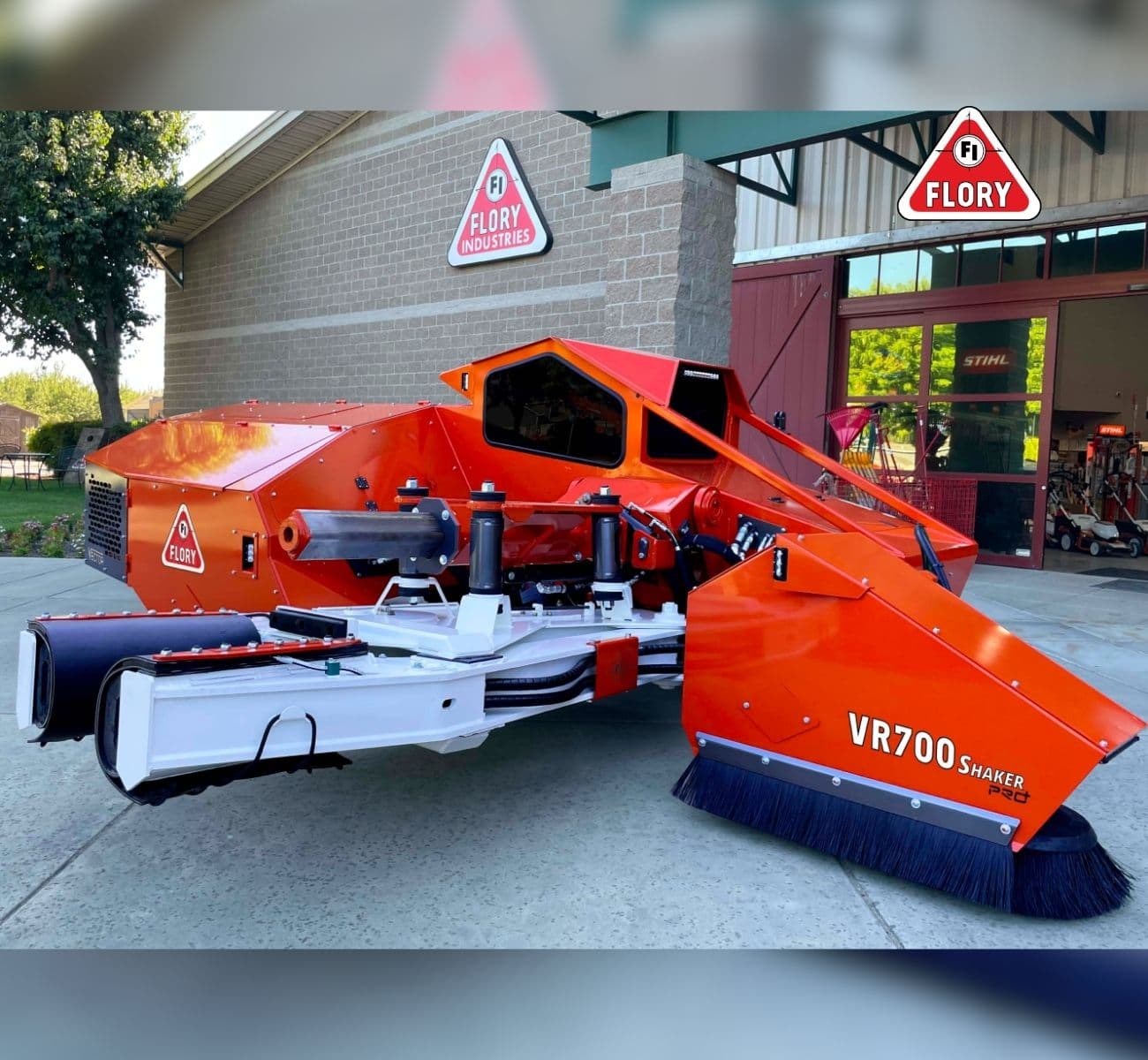
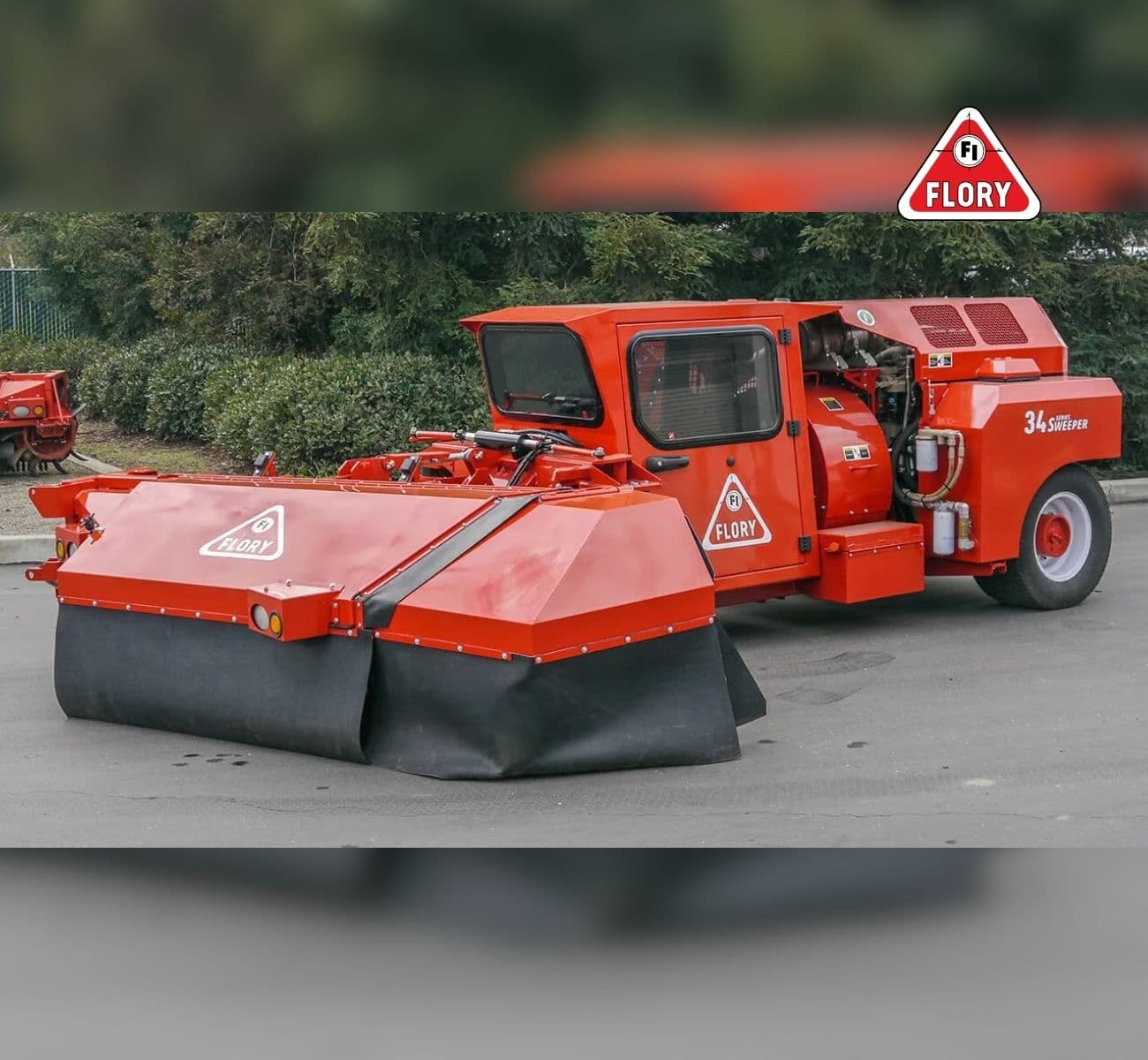
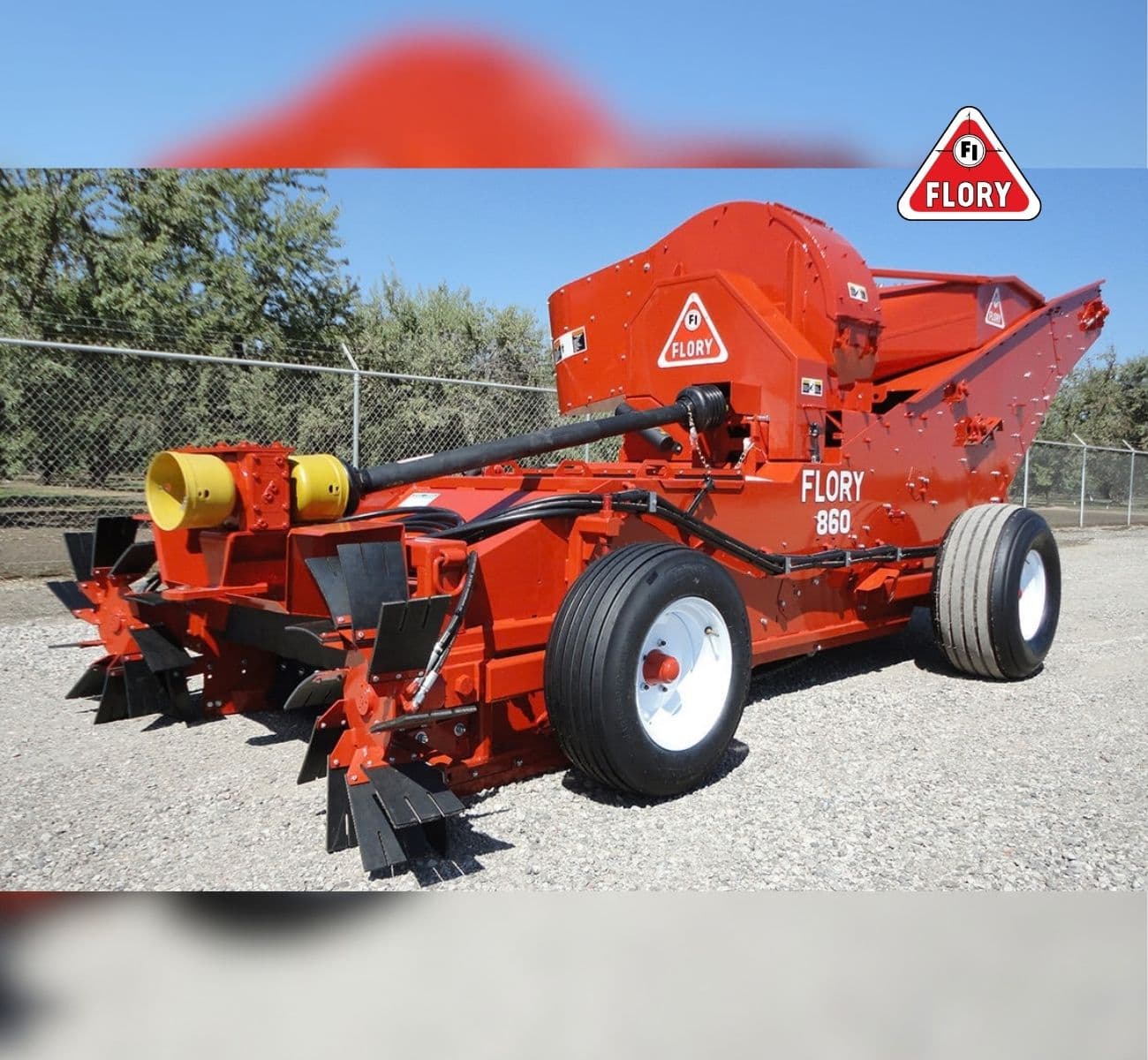
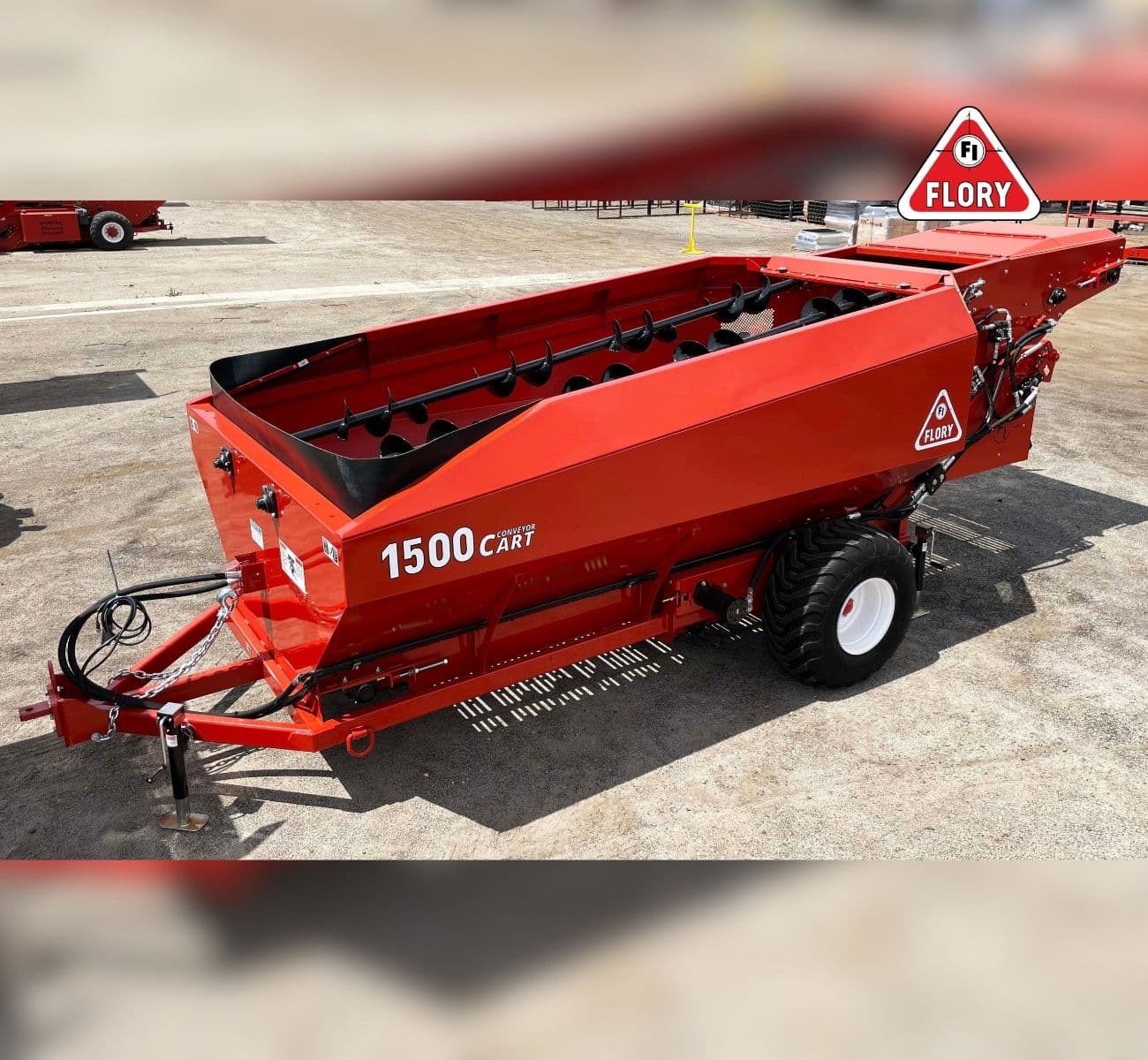
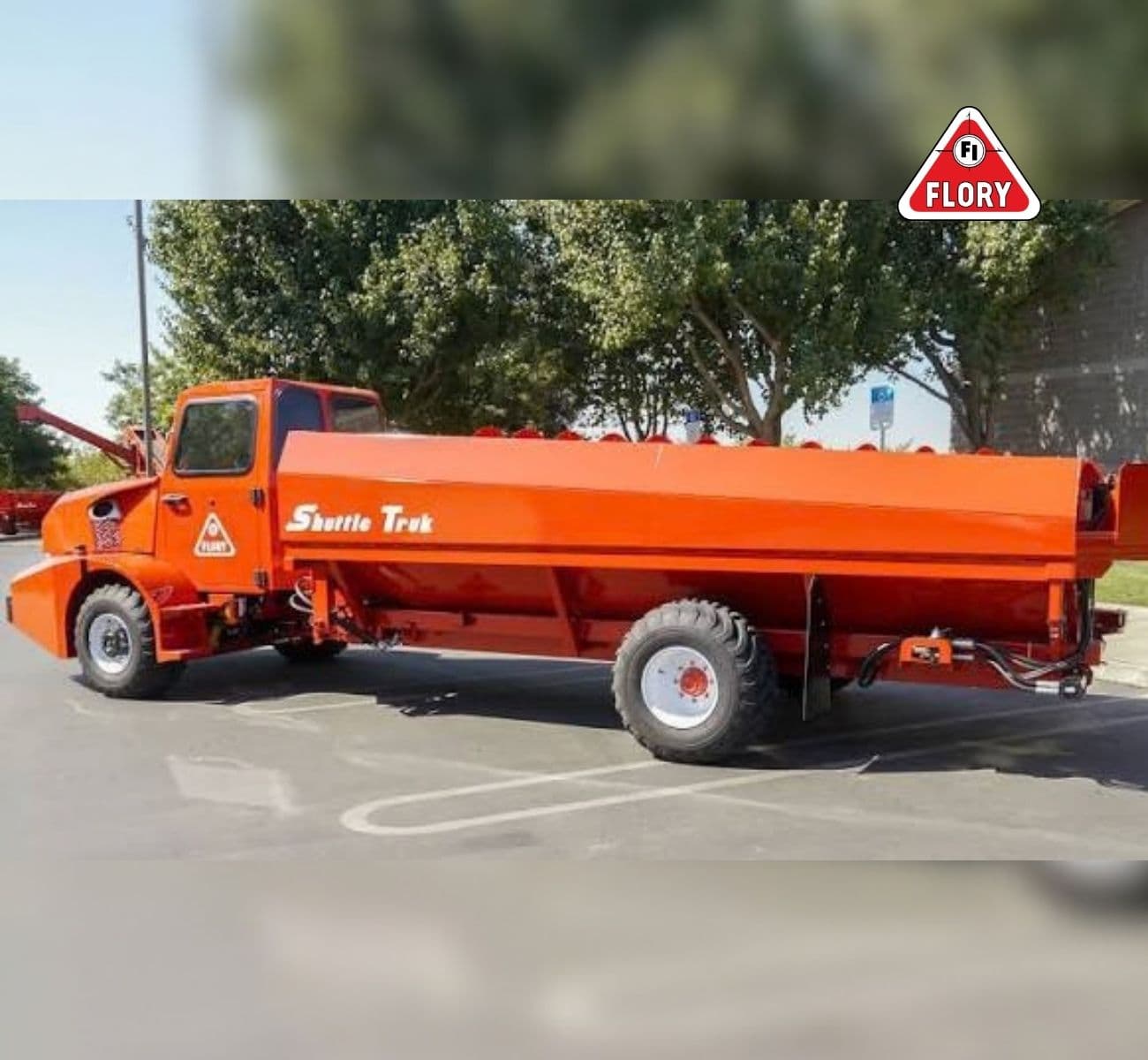
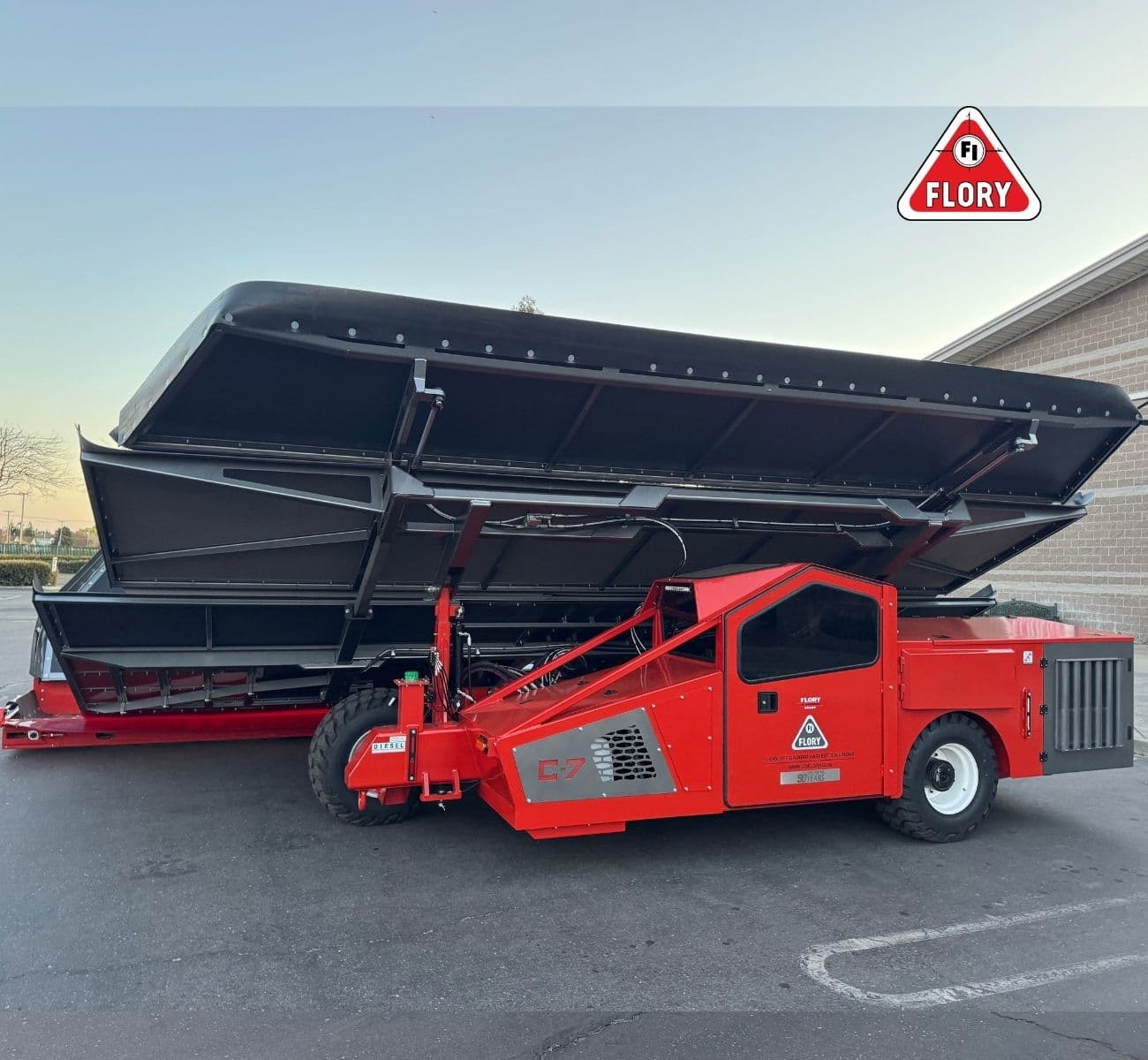
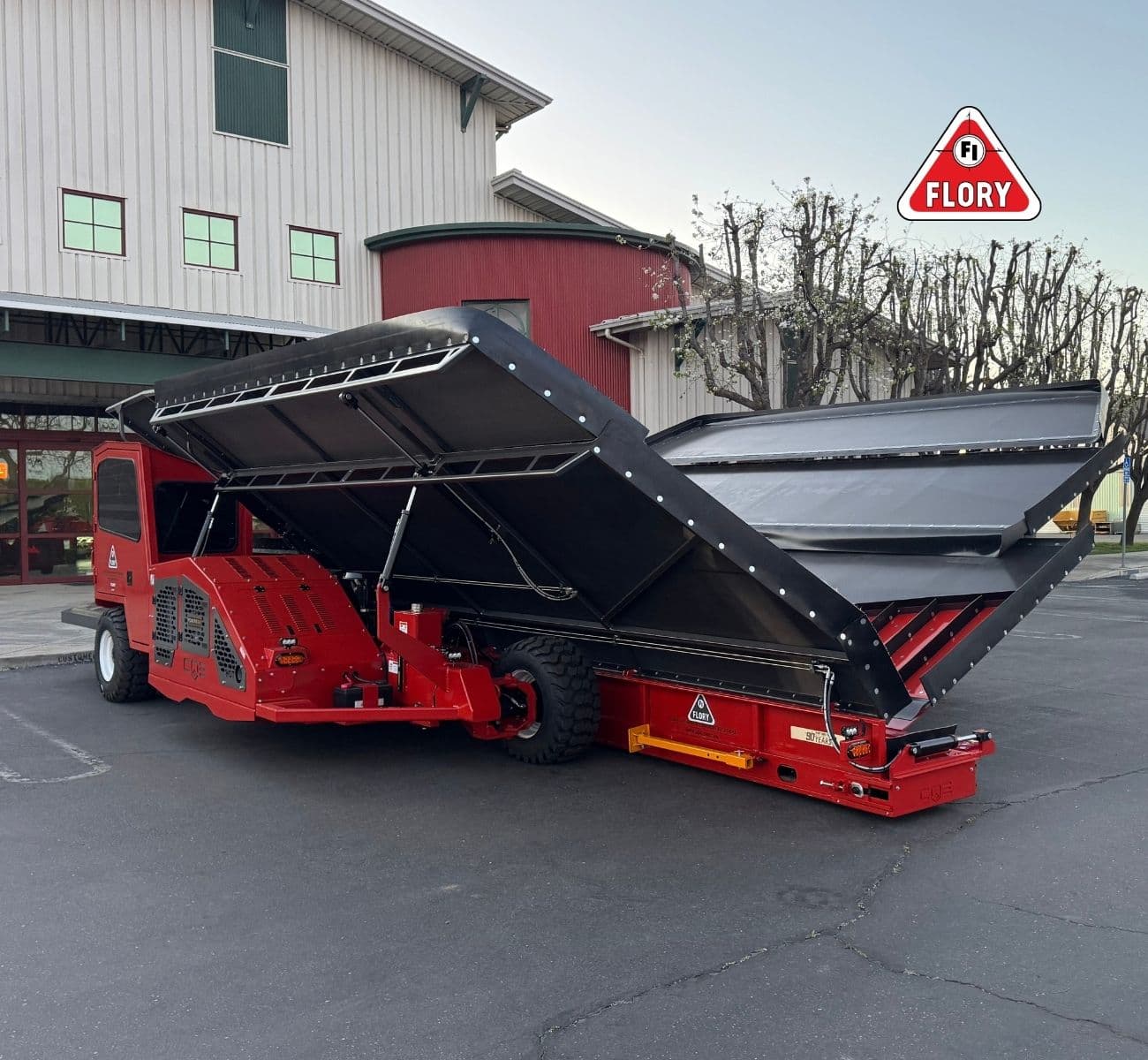
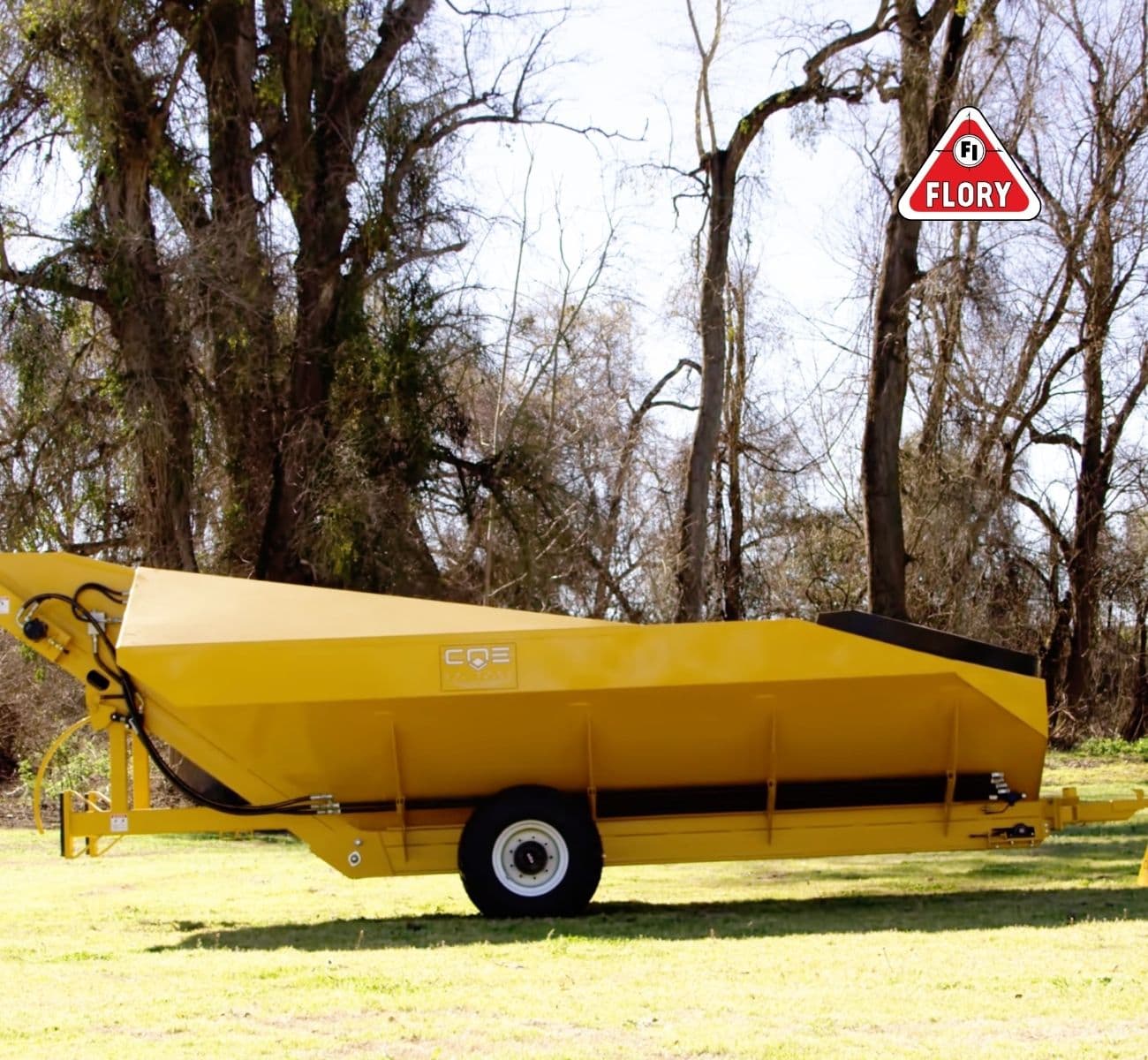
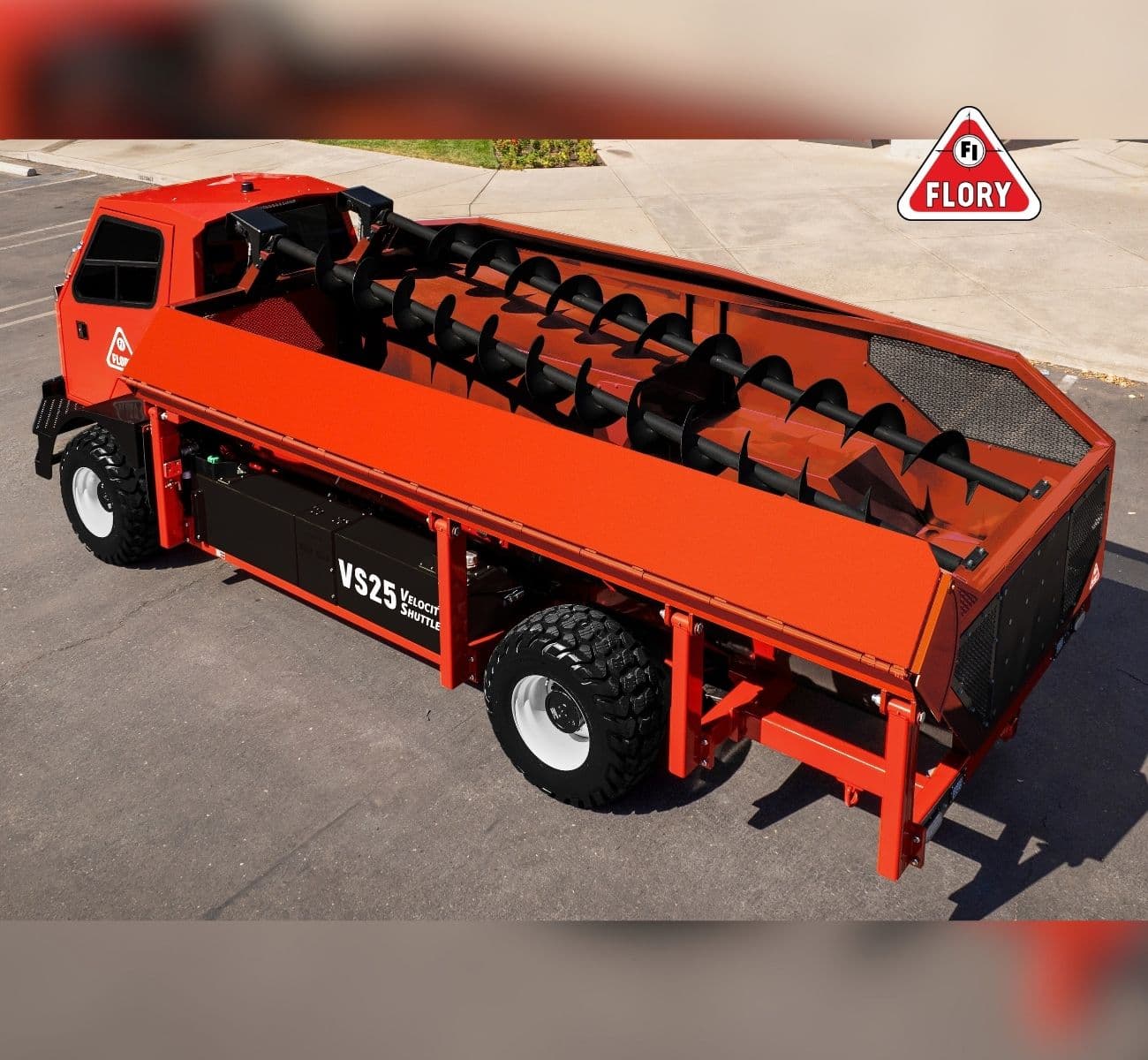
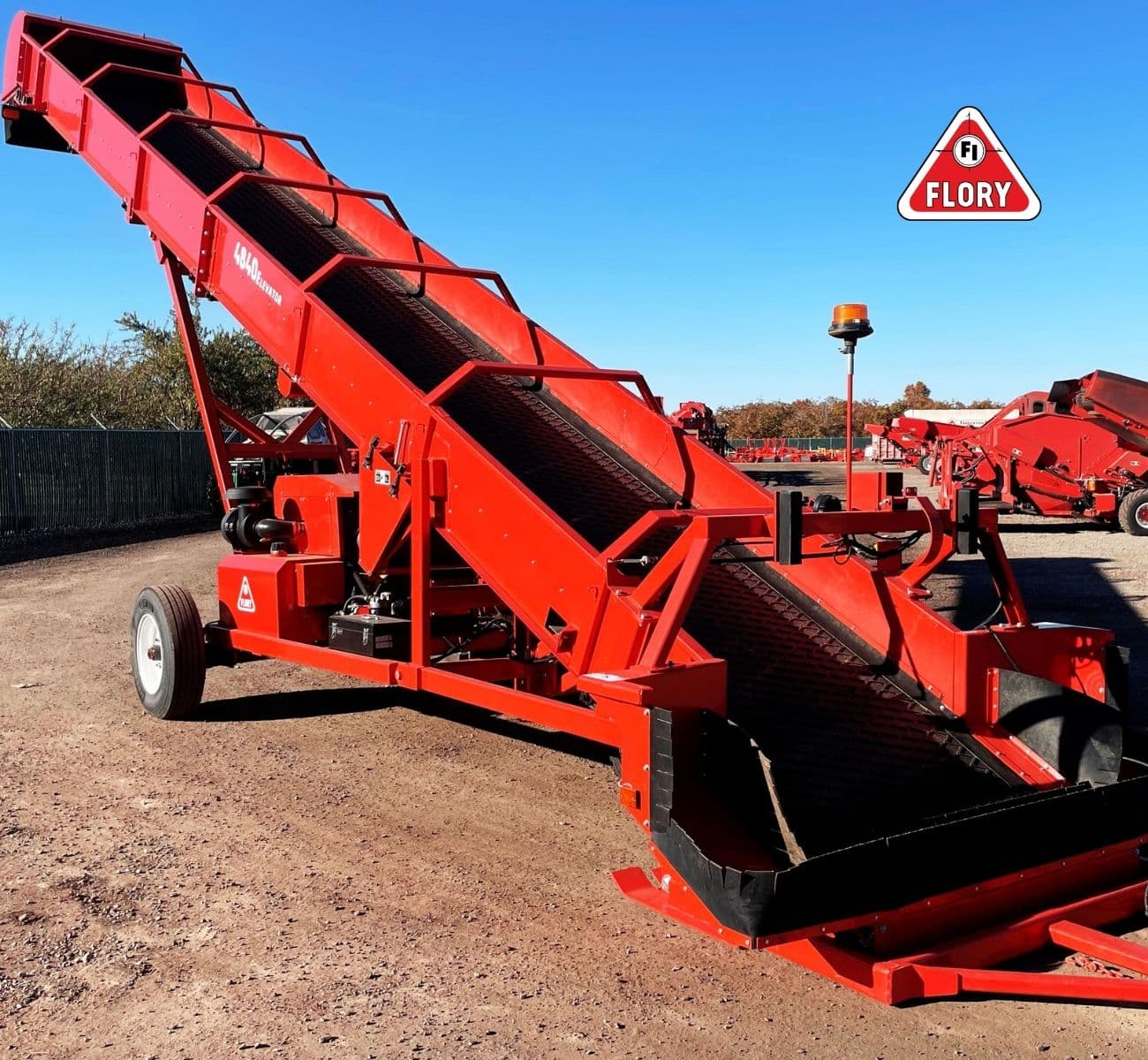
Flory harvesting machinery is available in Algeria through OVE Europe for both systems. On the ground, the VR700 Shaker, 34 Series Sweeper and 860 Harvester (or the smaller 490) work with the 1500 Conveyor Cart and ST14 Shuttle. Off the ground, the Flory COE C7 Shaker and L2 Receiver catch the almonds in a frame around the trunk, the Flory COE B8 Cart and VS25 Shuttle carry them, and the 4840 Field Elevator loads trailers in both systems.
Almond Harvest Workflow (Recommended Equipment)
Practical Tips for Almond Harvesting
Start harvest when about 80% of hulls have opened, the trigger in southern French guidance (2021), and check each cultivar separately.
Pick up shaken almonds soon after shaking, above all in September, when rainfall at Djelfa rises from about 18 mm in August to 32 mm.
Check the forecast before shaking in September and shake only as many trees as you can pick up promptly.
Where almonds must stay clean and off the ground, use catching frames: the Flory COE C7 Shaker works with the L2 Receiver.
Keep shakers and frames for orchards planted for machines, never wild or forest-edge trees, scattered village trees or steep slopes.
Before harvest, mow and level the orchard floor and clear stones and branches, so the sweeper and harvester pick up cleanly.
Get your recommended harvest setup
Enter orchard size, spacing, terrain, and target throughput—we’ll suggest a practical harvest workflow and equipment lineup.
Almond Post-Harvest Handling & Processing in Algeria
No Algerian source found describes how almonds are hulled, dried or stored. In this workflow, promptly picked or frame-caught almonds are hulled first and then dried in the shell. Southern French guidance (2021) says harvest weather usually brings almonds down to 6% moisture, with mobile ventilated dryers in wetter years, and the Almond Board of California advises keeping almond moisture at 6% or less.
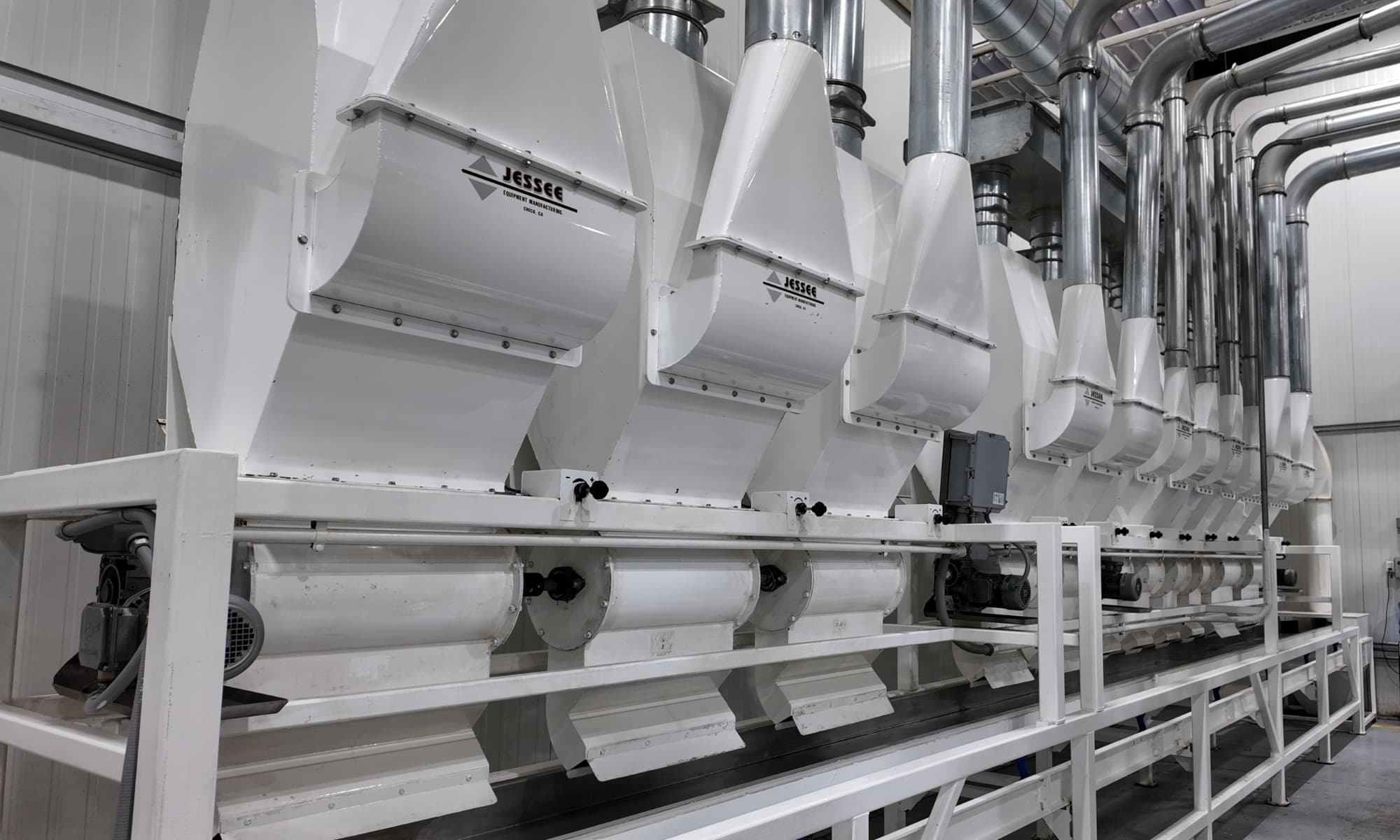
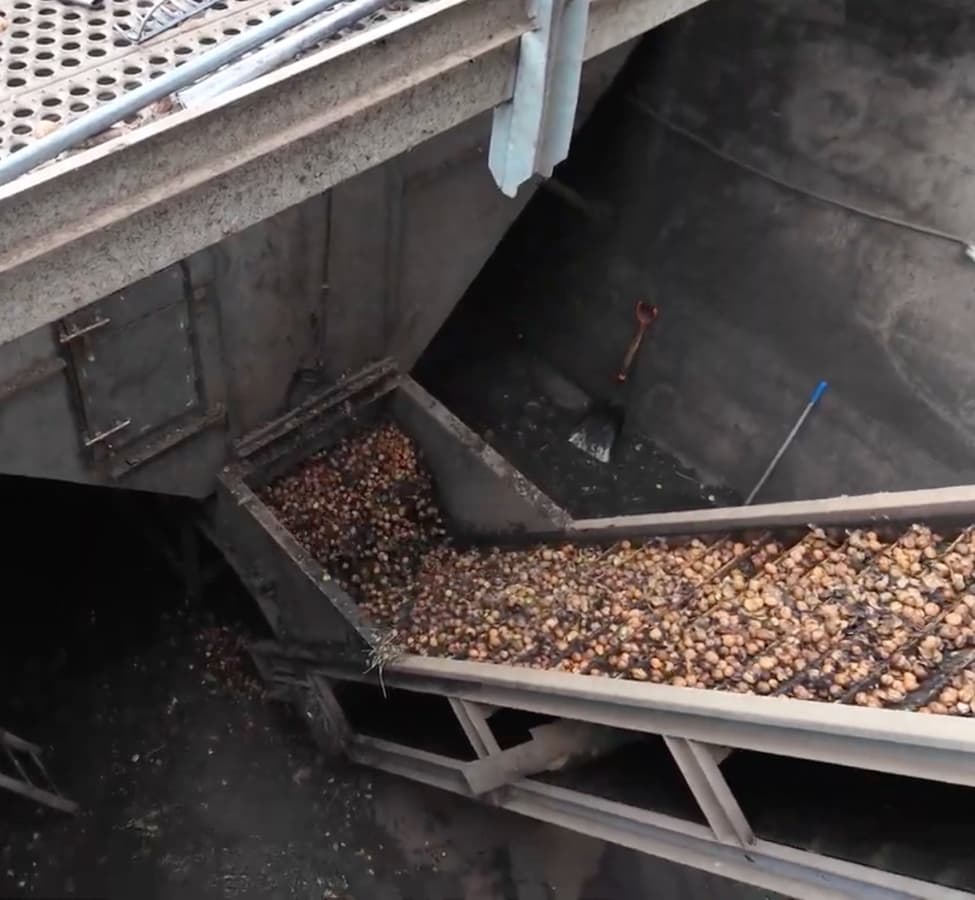
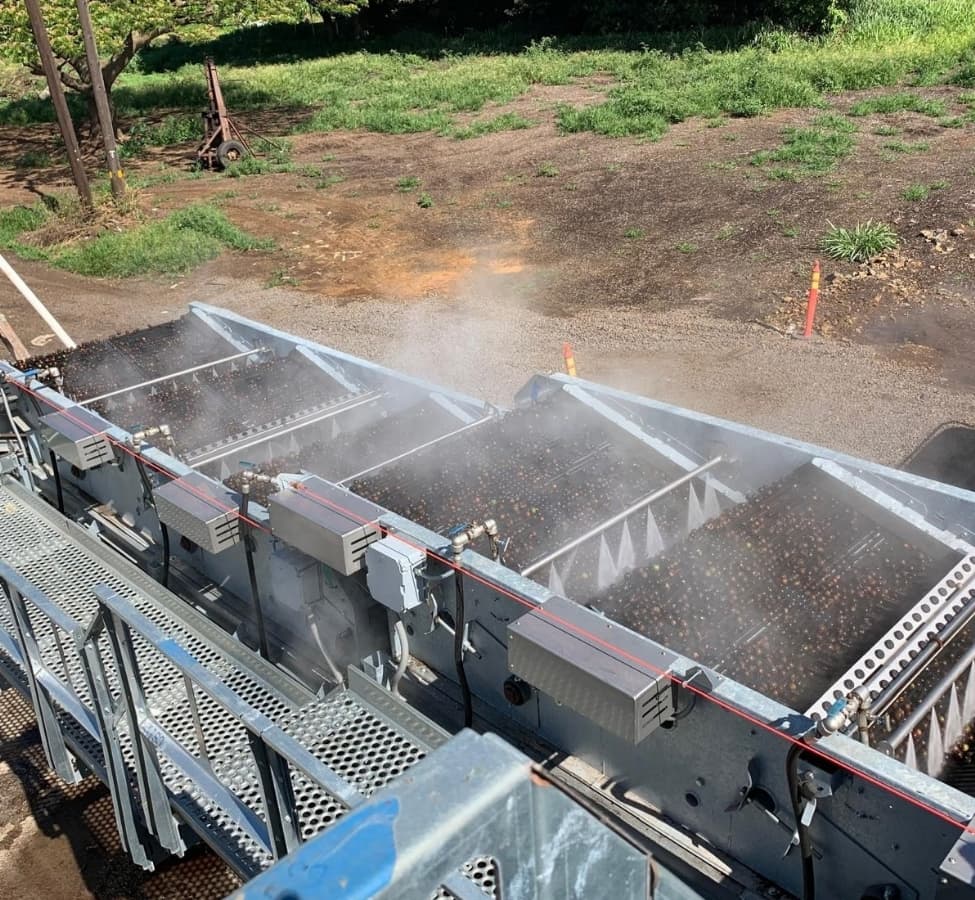
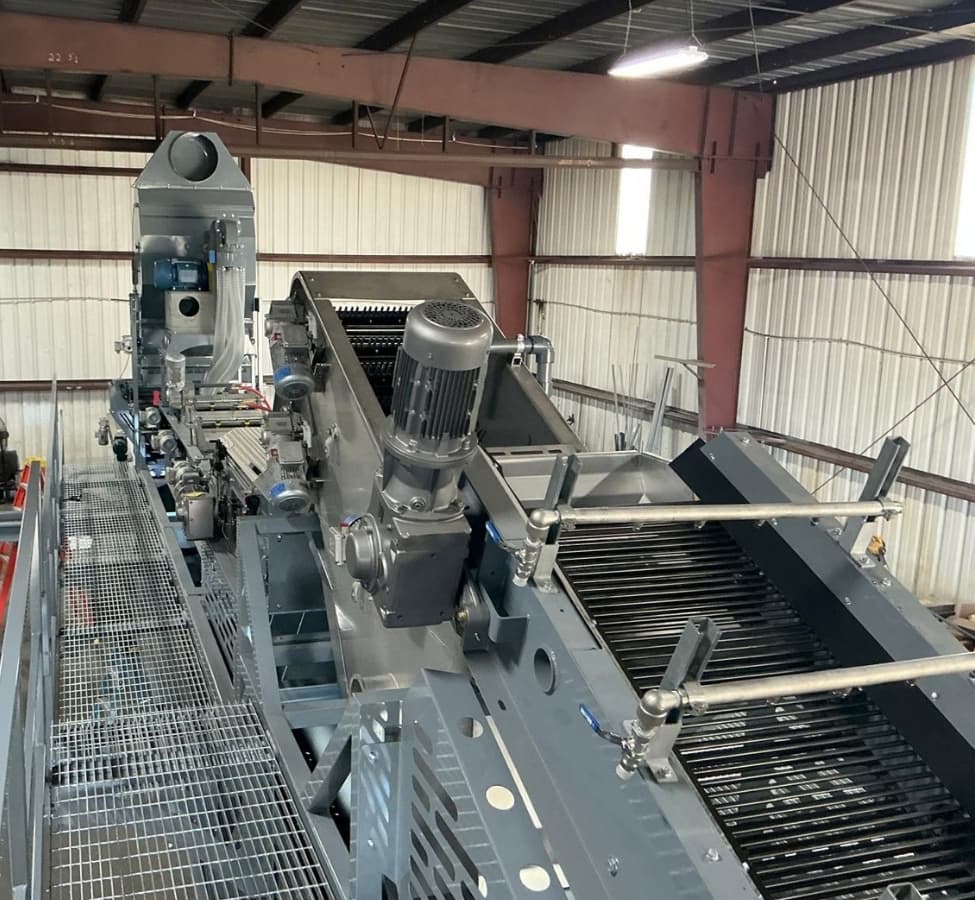
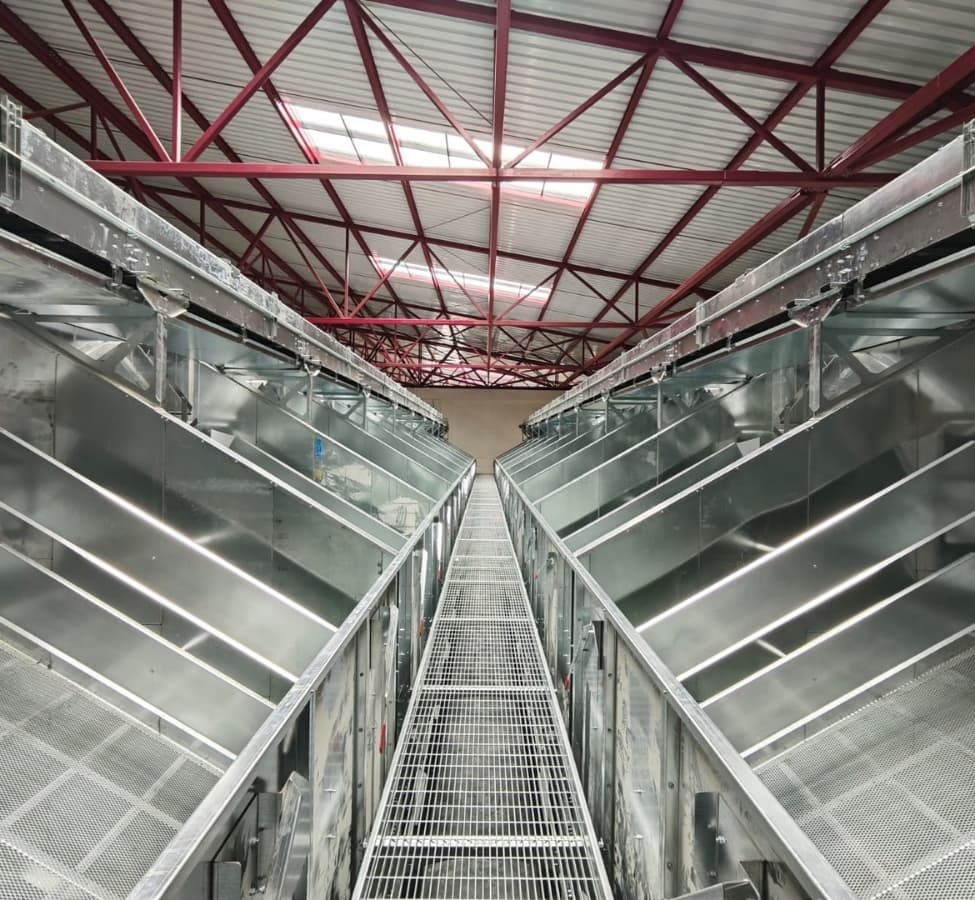
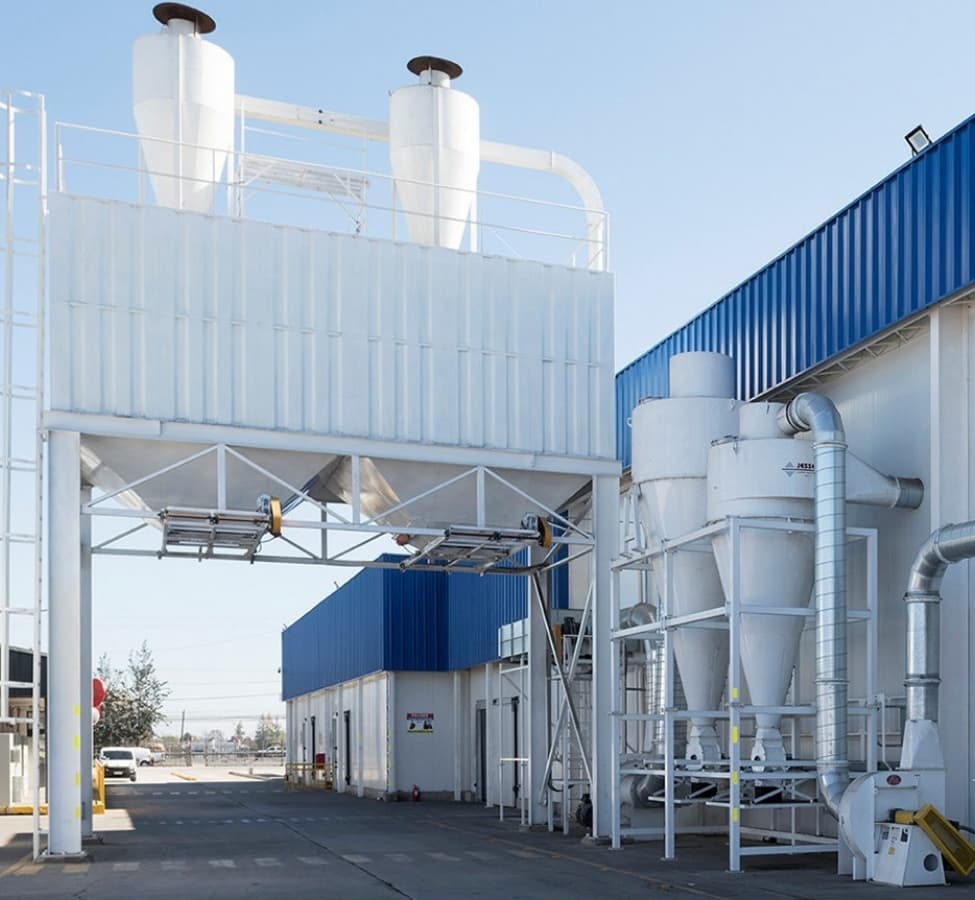
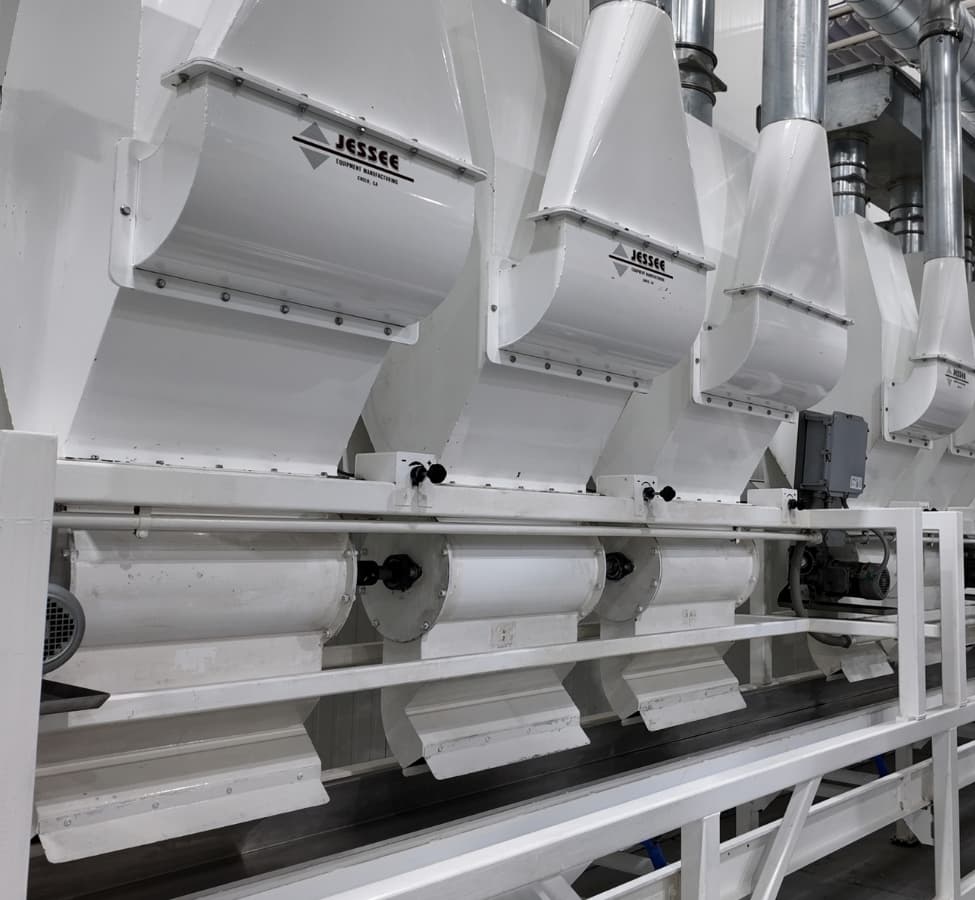
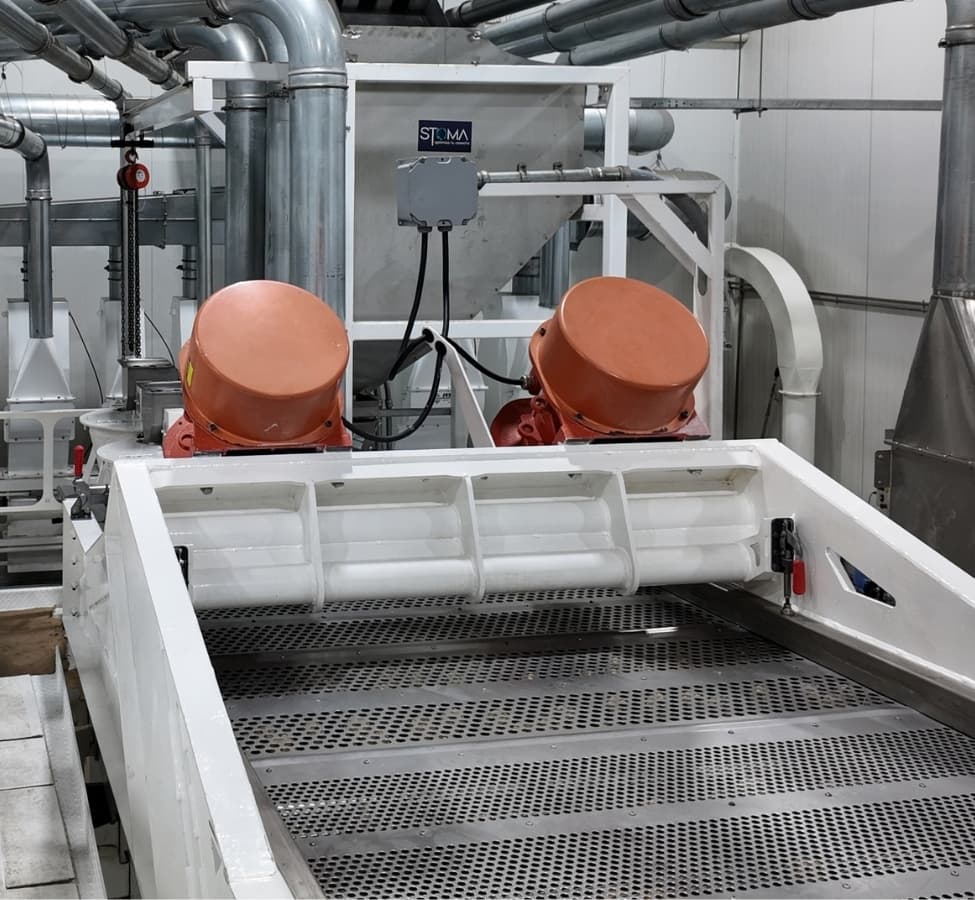
Cracking is the bottleneck the sources name: the Blida project describes it as long and arduous in many villages, with kernels and shells still hard to separate, and notes that extraction quality depends on shell moisture. A 2017 thesis linked molds in almonds bought from Tlemcen wholesalers, of unstated origin, to poor storage and marketing. Jessee, whose processing lines OVE Europe supplies, builds hulling, drying, in-shell cleaning and sizing, and shelling systems; its Airlegs nut cleaner was developed for the almond industry.
No Algerian almond standard or aflatoxin limit for almonds was found in the sources read, including the national standards catalogue. Almonds sold in the EU must meet Regulation (EU) 2023/915: 8.0 µg/kg of aflatoxin B1 and 10.0 µg/kg in total for the final consumer or as an ingredient, and 12.0 and 15.0 µg/kg for almonds to be sorted first. Shelled almonds are exempt from the EU marketing standard except for the country of origin (Delegated Regulation (EU) 2023/2429).
For general information only. Information may become outdated and does not replace site-specific professional advice. Consult a qualified agronomist and confirm equipment suitability with OVE before acting.
Practical Tips for Almond Post-Harvest Handling & Processing
Hull promptly picked almonds while the hulls are fresh, then dry them in the shell, with dryer capacity ready for a wet September.
Dry to about 6% moisture, the level southern French guidance reaches in usual harvest weather, and check samples before storage.
Store dried almonds by lot in a dry, clean store: a Tlemcen study linked molds in traded almonds to poor storage and marketing.
Check shell moisture before cracking: a Blida student project notes that the quality of kernel extraction depends on it.
Test lots for the EU against Regulation (EU) 2023/915: 8.0 µg/kg of aflatoxin B1 and 10.0 µg/kg in total for almonds sold to consumers.
Label shelled almonds for EU buyers with their country of origin, as Delegated Regulation (EU) 2023/2429 requires.
Recommended Post-Harvest Handling & Processing Stages
Plan your post-harvest line
Estimate tons/day, cleaning & drying capacity, storage needs, and cost/kg—then build your equipment plan in phases.