


When Does Mechanization Become Economically Necessary in Orchards?
February 20, 2026
Rising labor costs, tighter harvest windows, and expanding orchard size are reshaping production economics. This guide explains when mechanization becomes financially justified by analyzing labor trends, harvest capacity, yield protection, and cost per harvested ton. A practical economic guide to orchard mechanization, harvest efficiency, and cost per ton.
The Economic Shift in Modern Orchards
Orchard mechanization is no longer driven by technology adoption alone—it is driven by economics. As orchard size increases and production volumes grow, manual harvesting systems reach structural limits. When harvest labor costs rise, operational bottlenecks slow throughput, and timing delays reduce crop quality, mechanized harvesting becomes a strategic necessity rather than a capital preference.
Harvest Labor Costs and Operational Pressure
Seasonal agricultural labor is becoming more expensive and less predictable across major nut-producing regions. When labor cost per hectare increases year after year—or when insufficient crews delay orchard harvest—the financial impact compounds quickly. Late harvesting can result in field losses, inconsistent moisture levels, quality downgrades, and exposure to rain or heat stress. Mechanized harvest systems reduce dependency on large labor crews, stabilize harvest timing, and improve cost predictability. At a certain labor threshold, mechanization directly lowers cost per hectare while protecting yield value.
Orchard Scale, Throughput, and Harvest Capacity
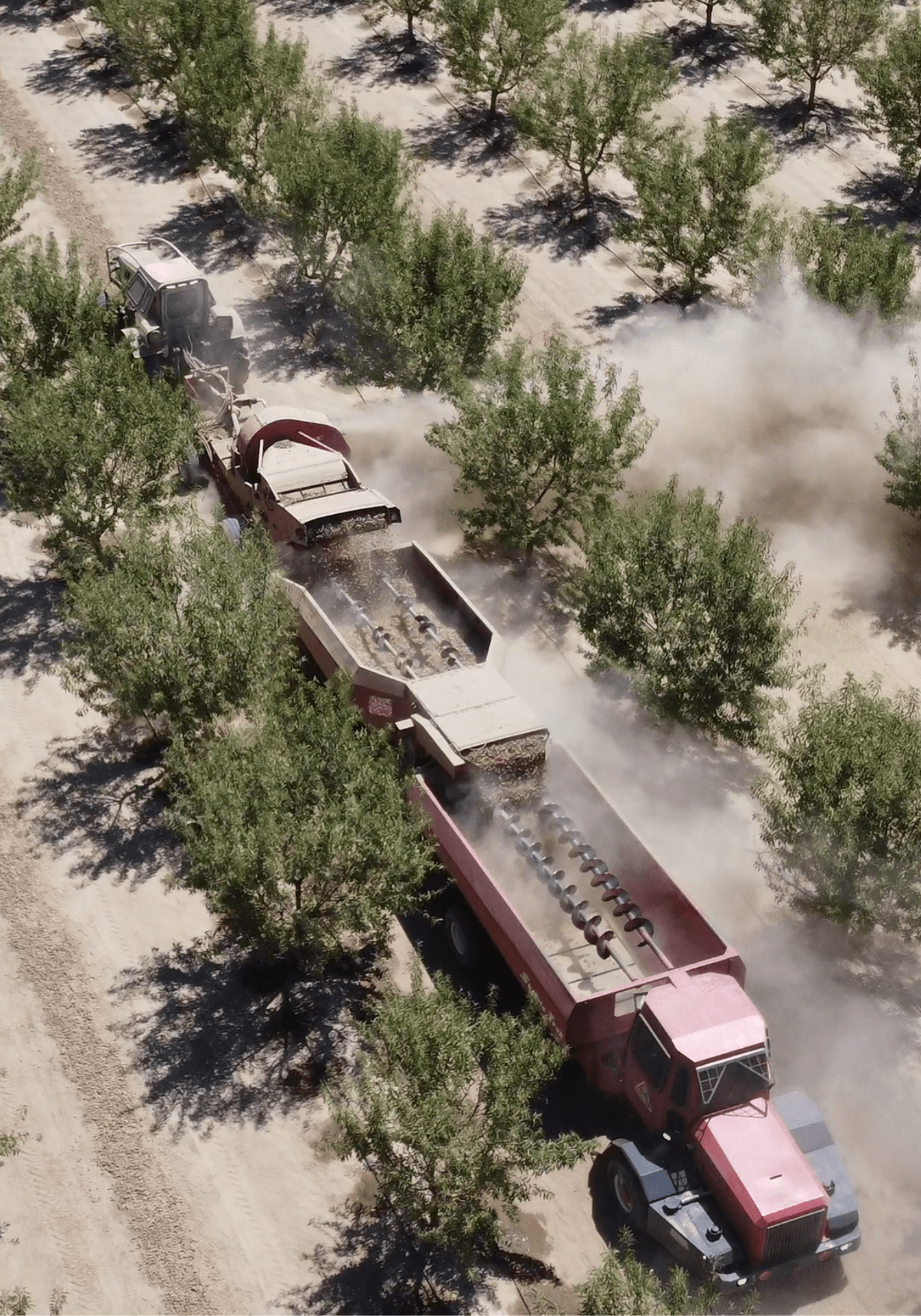
As planted hectares expand, harvest capacity must scale accordingly. When orchard output grows faster than clearing speed, blocks cannot be harvested at optimal maturity. This creates bottlenecks in cleaning, drying, and storage systems, reducing operational efficiency and compressing logistics. Mechanized orchard harvesting increases daily throughput, shortens total harvest duration, and aligns harvest capacity with production volume. In commercial nut orchards, this alignment is essential for maintaining grade consistency and maximizing market returns.
Cost per Harvested Ton: The Break-Even Calculation
The key metric in orchard mechanization is cost per harvested ton over multiple seasons. Manual harvesting carries ongoing labor exposure, variability, and extended harvest cycles. Mechanized harvesting requires capital investment, but when amortized across hectares and years, it frequently reduces total cost per unit. The economic break-even point occurs when annual labor costs continue rising, field losses reduce total saleable yield, harvest delays impact quality premiums, and expansion plans exceed manual capacity. At this inflection point, mechanization improves both efficiency and profitability.
Harvest Timing, Weather Risk, and Yield Protection
Weather volatility increases the economic importance of harvest speed. Rain events, heat spikes, or early frost can significantly reduce crop value if orchards are not cleared quickly. Mechanized systems shorten harvest windows, improve predictability, and reduce exposure to climate-related losses. In commercial orchard management, speed is not only an efficiency factor—it is a form of financial risk management. Protecting yield and quality during peak maturity directly influences revenue stability.
From Equipment to Harvest Infrastructure
Mechanization becomes economically necessary when inefficiency begins costing more than investment. At this stage, harvest machinery transitions from optional equipment to core infrastructure supporting orchard profitability, scalability, and quality control. For growers evaluating this decision, the focus should not be solely on machinery selection but on harvest system design—ensuring shaker capacity, sweeping efficiency, conditioning throughput, and hauling logistics are aligned with orchard scale and long-term growth strategy. At OVE, we support commercial producers in evaluating orchard scale, crop type, row geometry, and harvest windows to structure integrated harvesting systems. Our approach focuses on aligning capacity with production targets, reducing cost per ton, and building scalable solutions that protect yield quality as operations expand.