





Almond Orchard Establishment in Croatia
The advisory service's 2023 almond guide calls early bloom the reason almond is not more widespread: flower buds just before opening survive -3.5 °C, open flowers are damaged at -1.5 to -2 °C and young fruits of some cultivars at -1.1 to -1.5 °C. In early April 2020 the service reported that early-blooming fruit in Šibenik-Knin County, mainly almonds, was damaged, with -4 to -7 °C in frost-prone areas.
A 2017 article by the advisory service's Zadar office names medium-late to late bloom as the shared strength of the cultivars it lists, and the service's 2023 guide calls Ferragnes, Ferraduel, Tuono and Texas late-blooming and Tuono self-fertile; Ferragnes needs pollinizers such as Ferraduel, Texas or Tuono. The national variety list (September 2025) registers 14 almond cultivars, among them Ferragnes, Tuono, Nonpareil and Supernova.
According to a 2019 thesis, bitter almond seedlings, peach seedlings and the almond-peach hybrid GF 677 are the most used rootstocks. The Zadar office (2017) puts almond seedlings on dry, stony, calcareous soils with up to 15% active lime and GF 677 on 5 to 12%, but the 2023 guide warns that almond grows poorly on shallow, skeletal soils. The guide spaces trees on GF 677 at 6 × 5 m with irrigation and 6 × 4 m without.

Practical Tips for Almond Orchard Establishment
Favor late-blooming cultivars: Croatia's advisory service calls Ferragnes, Ferraduel, Tuono and Texas late-blooming, and Tuono self-fertile.
Avoid frost-prone sites: in early April 2020, frost-prone areas of Šibenik-Knin County fell to -4 to -7 °C, and early-blooming fruit, mainly almonds, was damaged.
Plan pollination: Ferragnes needs pollinizers such as Ferraduel, Texas or Tuono, and the Zadar advisory office advises 8 to 10 beehives per hectare.
Match the rootstock to the soil: the Zadar advisory office gives almond seedlings for dry, stony, calcareous soils up to 15% active lime and GF 677 for 5 to 12%.
Train trees for machines: the Zadar advisory office advises a trunk of about 1 m (0.9 to 1.1 m) so that the orchard can be harvested by machine.
Plan rows, headlands and tree form for the shaker, sweeper and harvester before planting, and check trunk clearance with OVE Europe.
Recommended Establishment Stages

Almond Orchard Care & Maintenance in Croatia
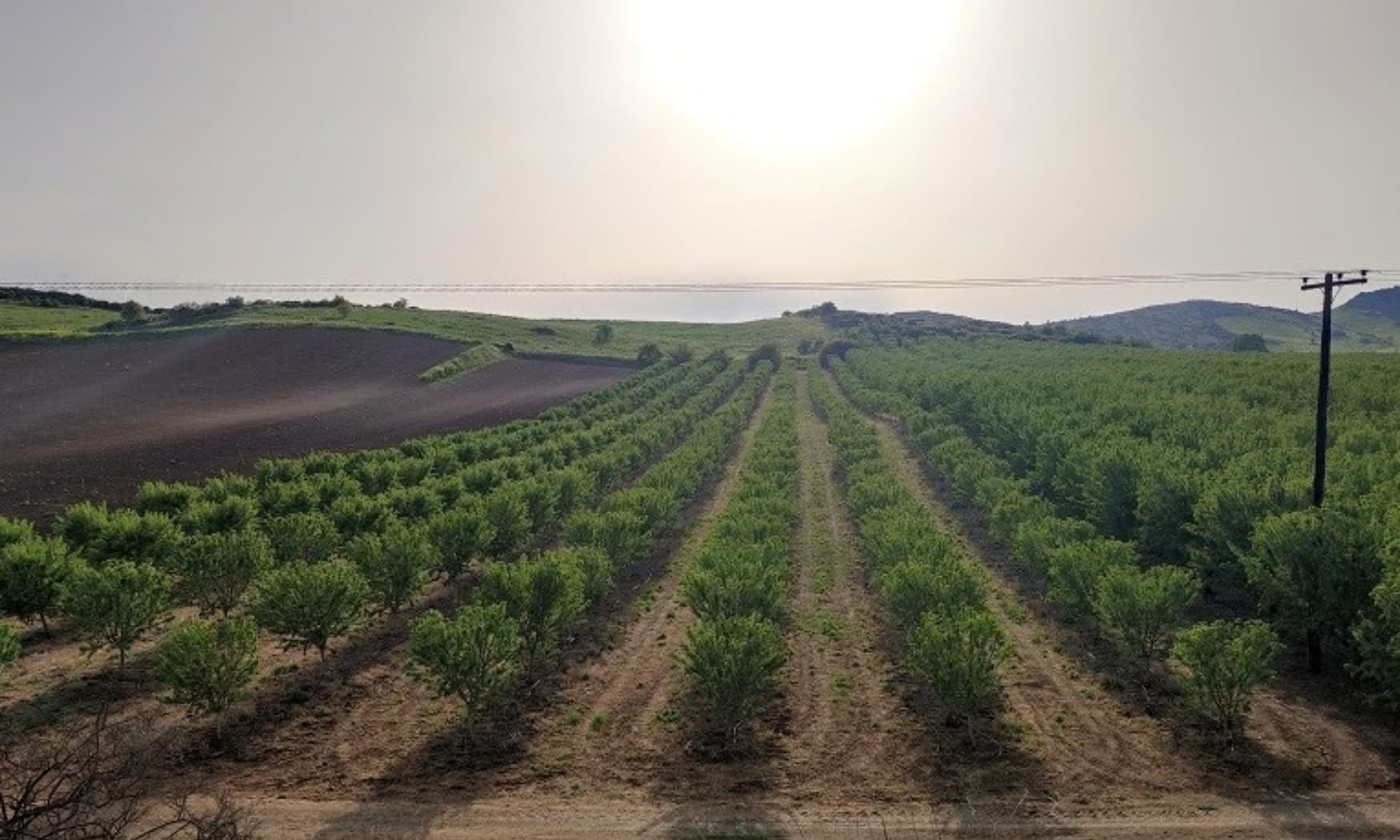
A 2019 thesis notes that almond in Croatia is mainly grown without irrigation, but the advisory service's 2023 guide links stable yields to systematic irrigation and says the tree can crop on 500 mm of rain a year if most of it falls in the first half of the season. In the 2015 drought, young unirrigated orchards on the coast showed yellowing and drying leaves.
The 2023 guide lists blossom and shoot blight (Monilinia), shot hole, leaf spot, rust, Capnodis, thrips and mites among almond problems. The Šibenik-Knin advisory office links blossom blight to rain at bloom and times protection at the start and end of bloom. EPPO lists peach twig borer as widespread in Croatia on 1996 information and has no Croatian record of the almond seed wasp.
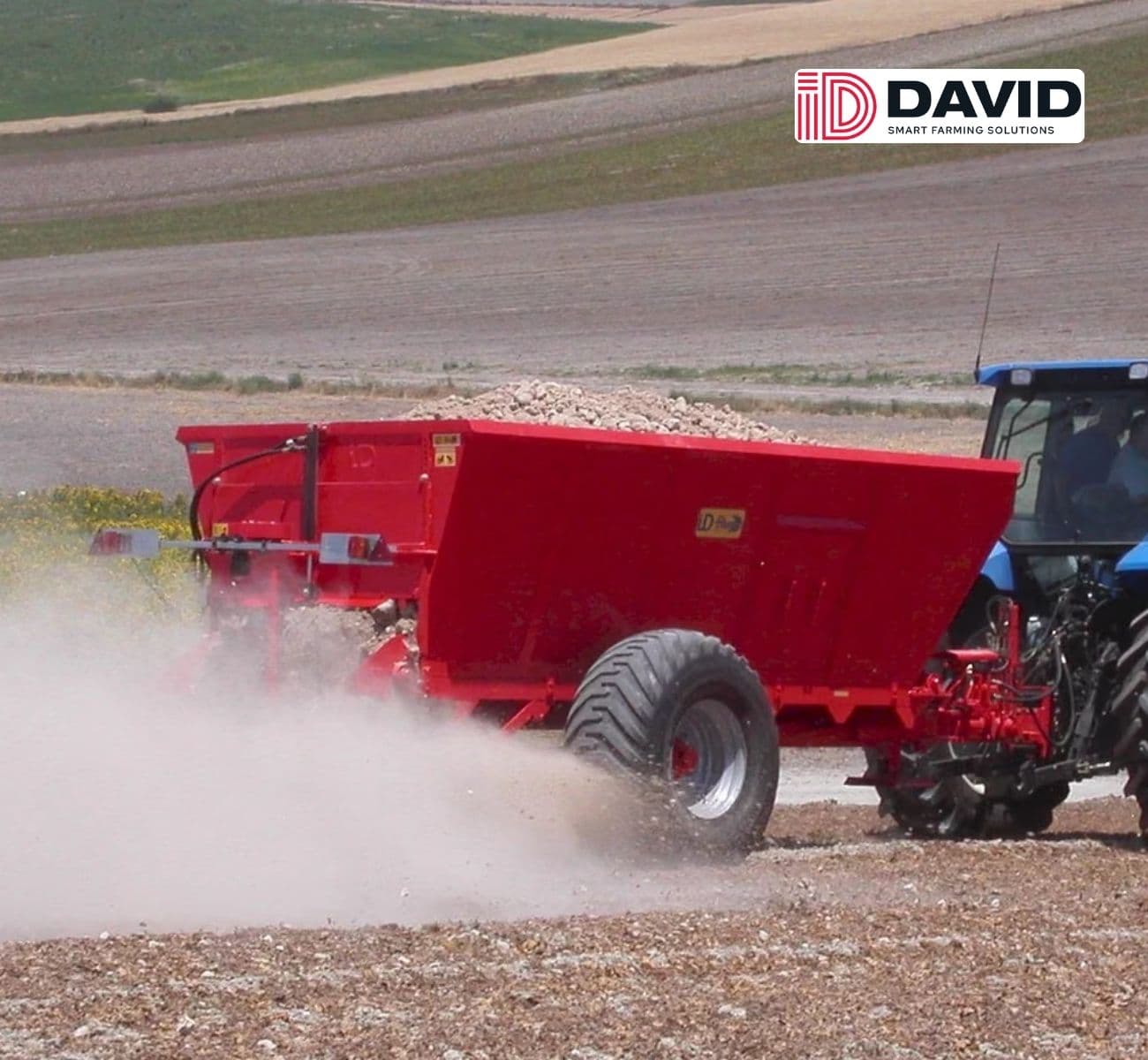
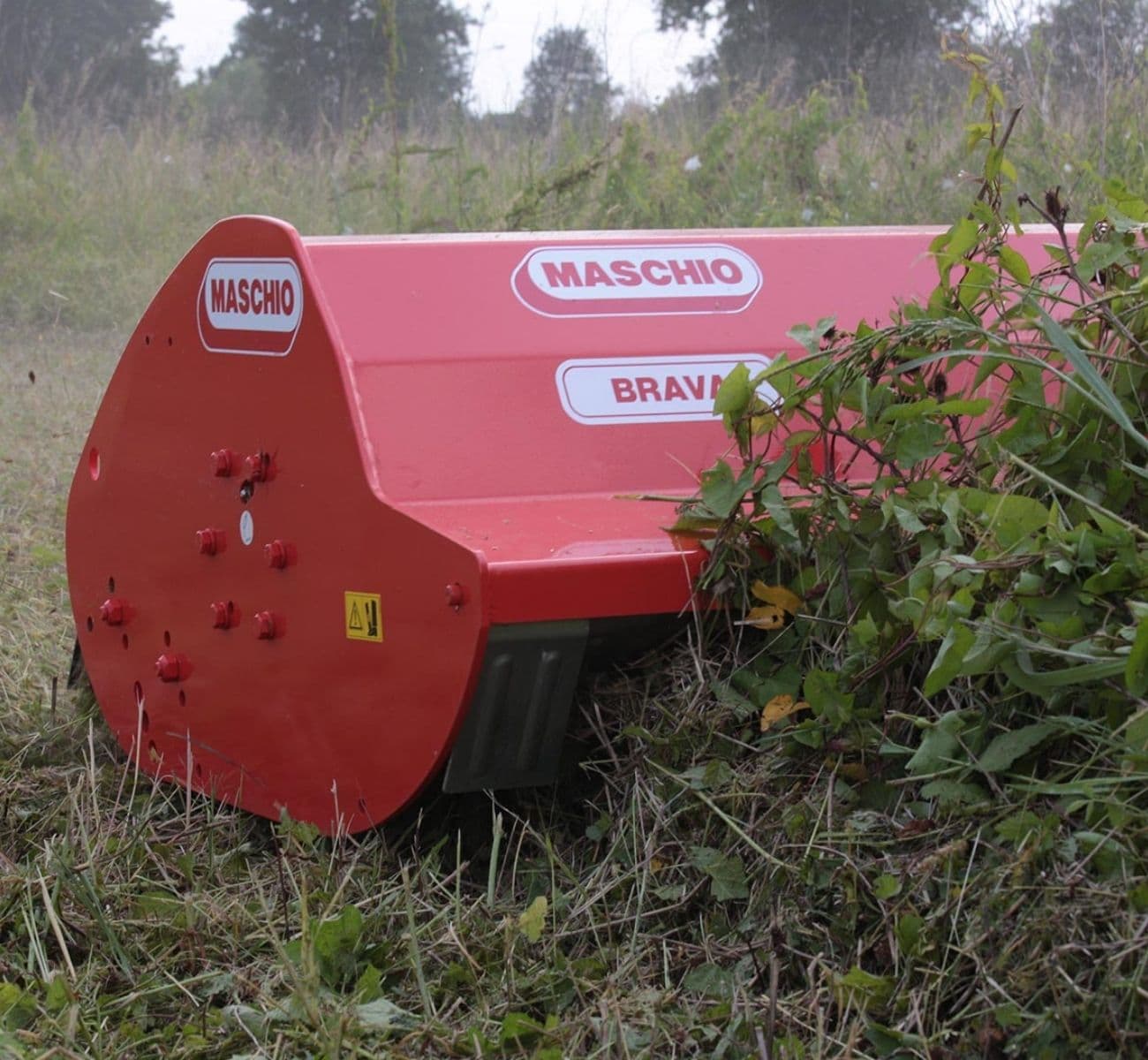
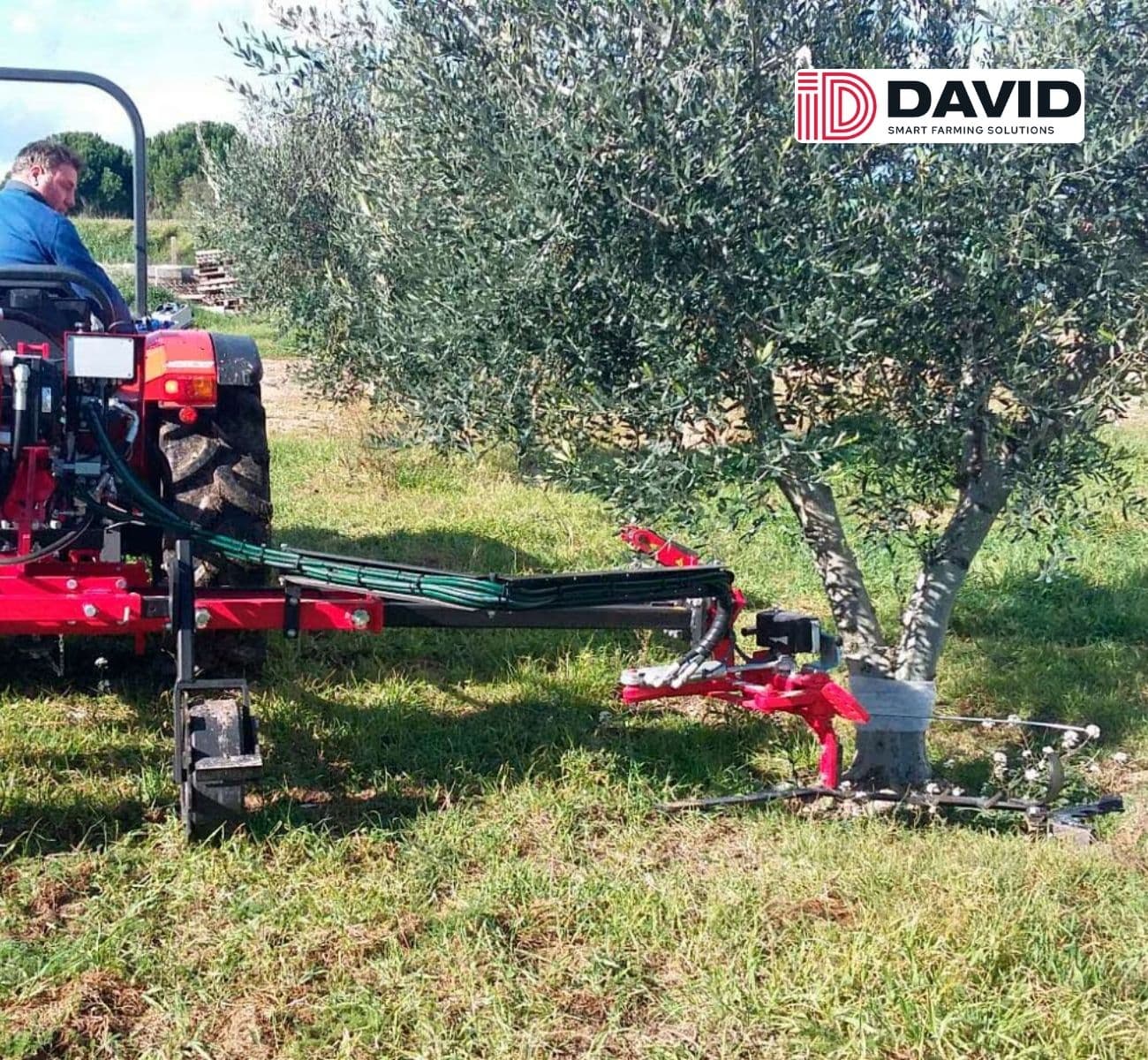
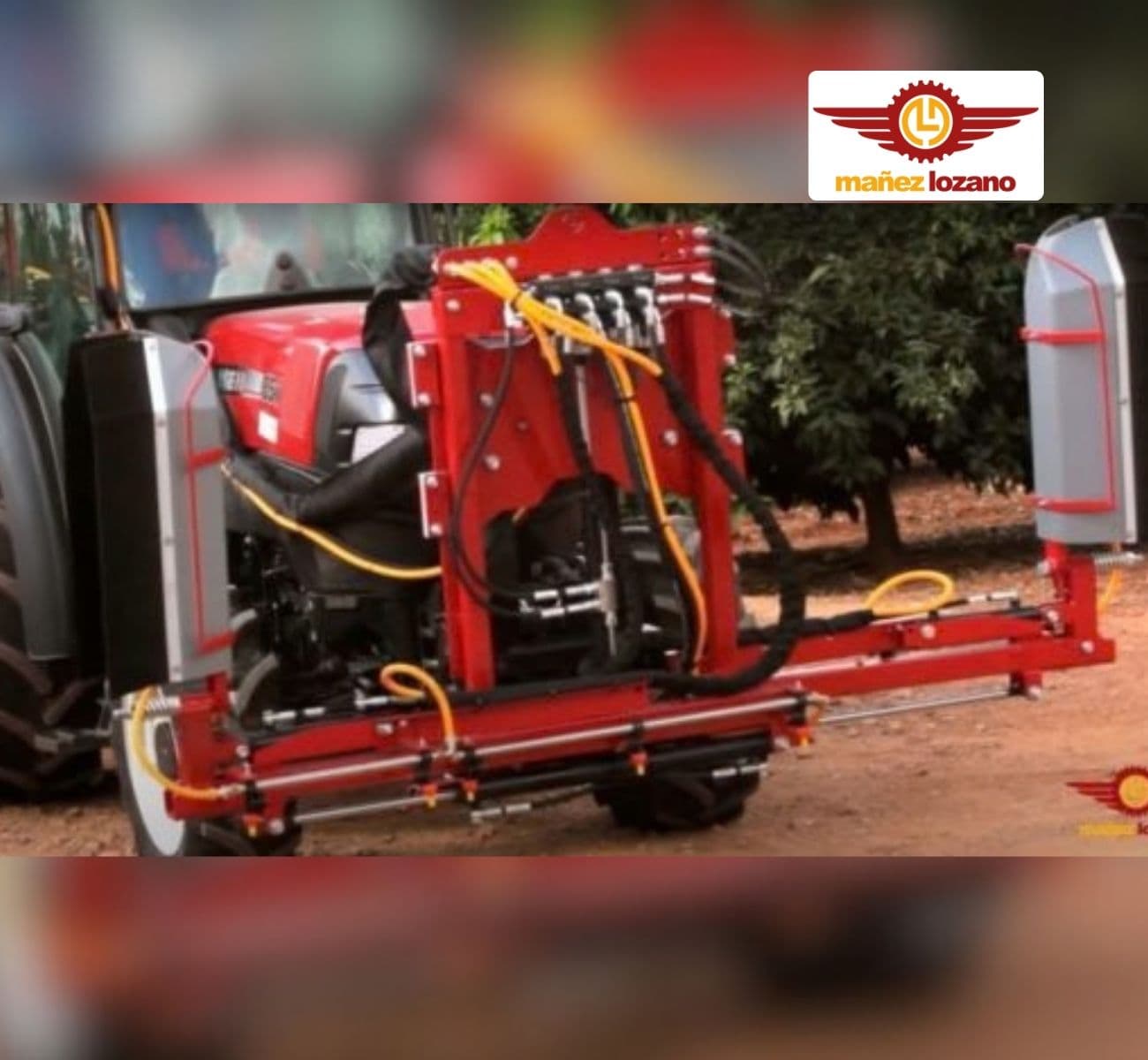
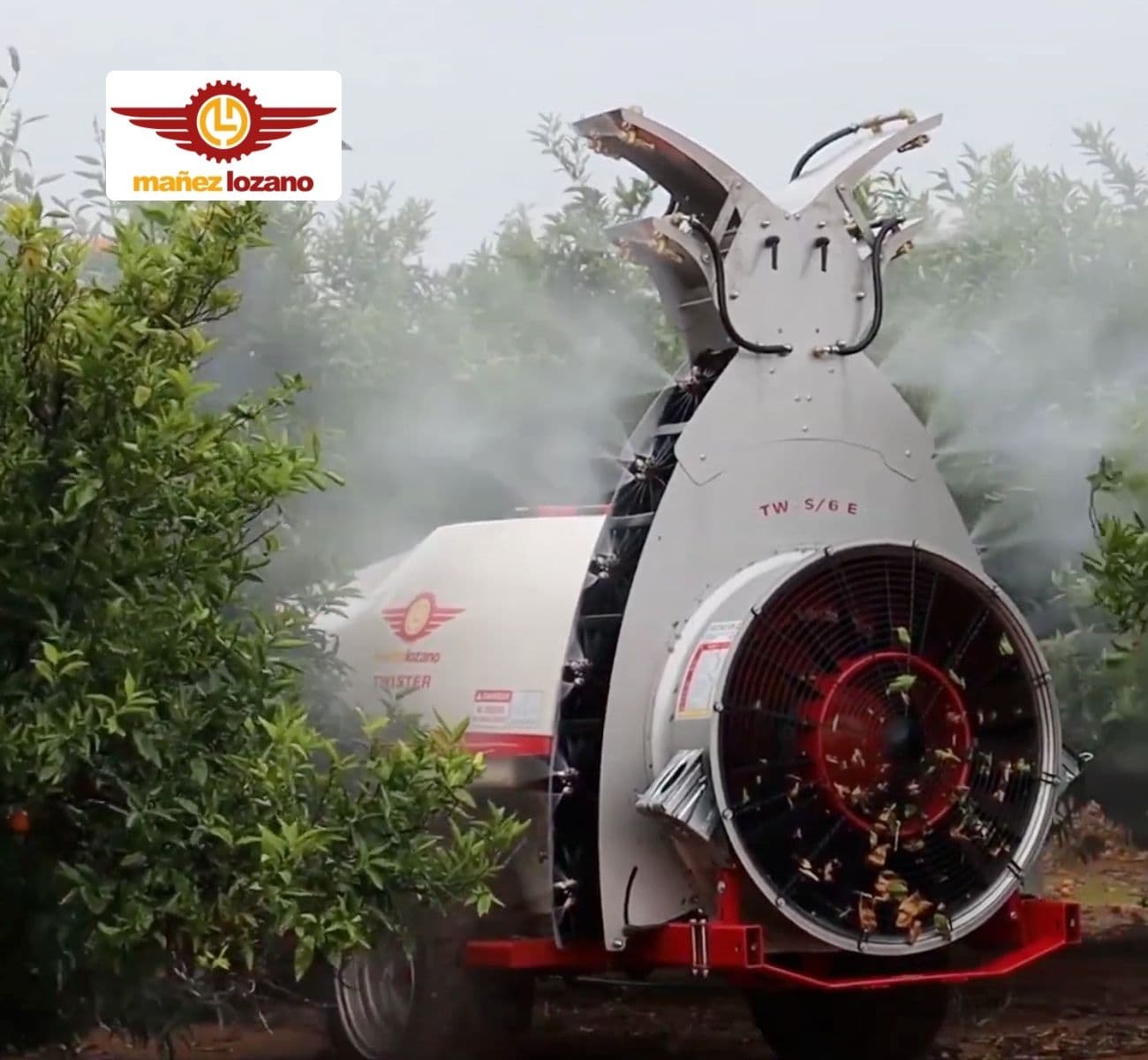
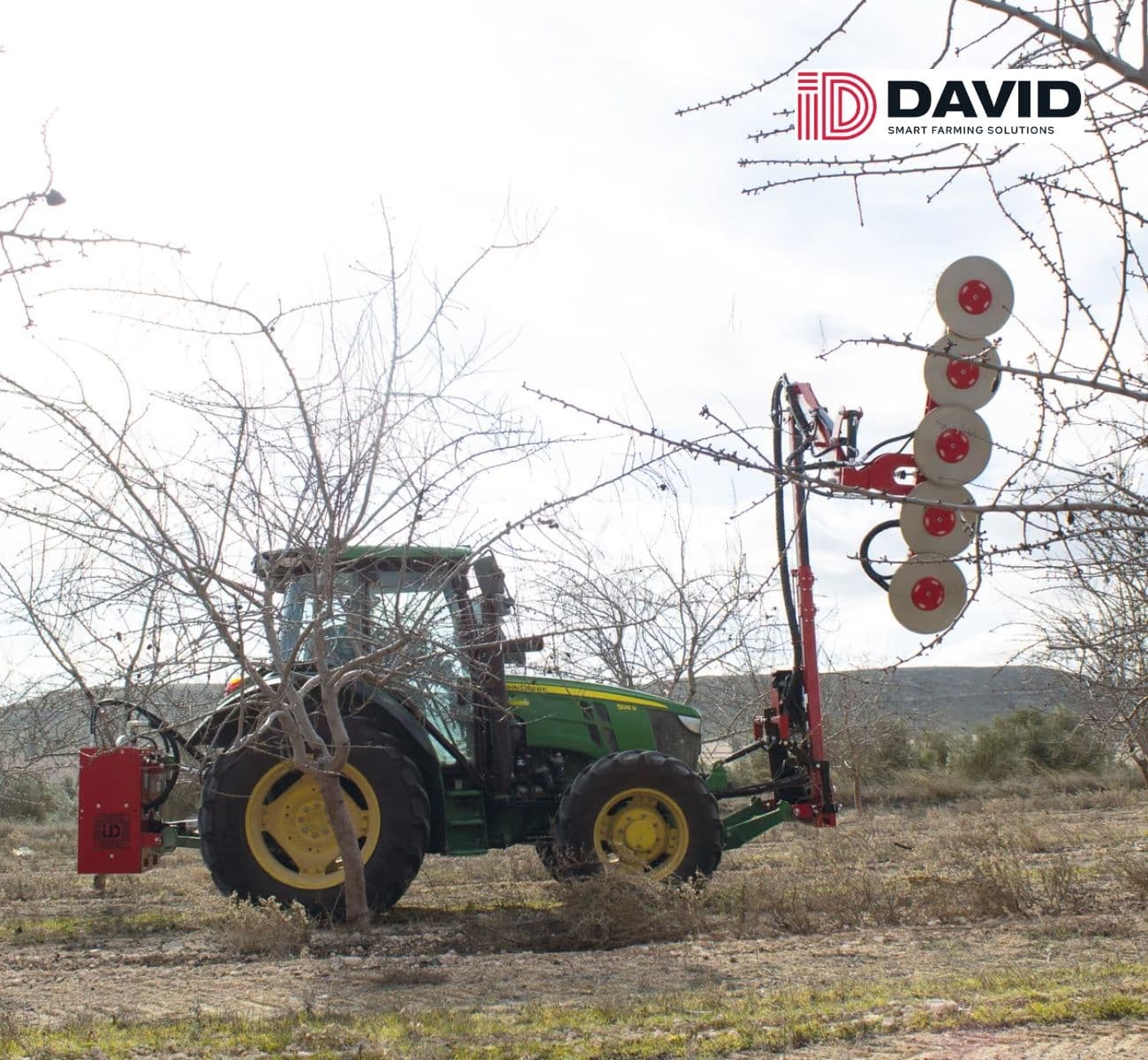
A 2019 advisory service article recommends a modified open vase with three or four primary scaffolds, formed over the first three years by winter pruning and summer pinching. For care work, the ID DAVID SURFEED spreads solid manure, the ID-XL weeds the tree row, the Mañez Lozano Mega Twister S6 sprays tall, dense canopies and the ID DAVID ID-REX disc pruner makes lateral and topping cuts.
Recommended Orchard Care & Maintenance Stages
Practical Tips for Almond Orchard Care & Maintenance
Water young orchards through dry summers where water allows: in the 2015 drought, young unirrigated coastal orchards showed yellowing and drying leaves.
Watch for blossom blight in wet weather at bloom: the Šibenik-Knin advisory office times protection at the start and end of bloom.
In May, inspect orchards for caterpillars, aphids and peach twig borer, as the Šibenik-Knin advisory office advises, and remove webbed shoots.
On dry coastal sites watch for Capnodis: the Zadar advisory office notes that irrigation in June and July reduces attacks in stone-fruit orchards.
Keep the tree row weed-free with an in-row weeder such as the ID DAVID ID-XL, and keep the orchard floor level for harvest.
Spray tall, dense canopies evenly with a trailed airblast sprayer such as the Mañez Lozano Mega Twister S6.

Almond Harvesting in Croatia
A text based on a 2004 Croatian textbook says small orchards are harvested by hand into nets and larger ones with shakers, and the advisory service's 2023 guide adds stone-fruit harvesters and battery or pneumatic shakers. No Croatian source found describes how almonds are dried or how fast they are picked up. In orchards planted for machines on suitable ground, mechanized harvesting can bring the crop in on time, with less risk of nuts deteriorating while they wait.
The advisory service puts the harvest from mid-August to the end of September, depending on the cultivar. At six Dalmatian stations of the Croatian Meteorological and Hydrological Service (DHMZ), long-term mean rainfall is clearly higher in September than in August (Zadar 110.9 mm against 52.8 mm), and in September 2024 rain was above normal at every DHMZ station. This guide therefore shows prompt pickup, with drying after hulling, alongside catching frames.
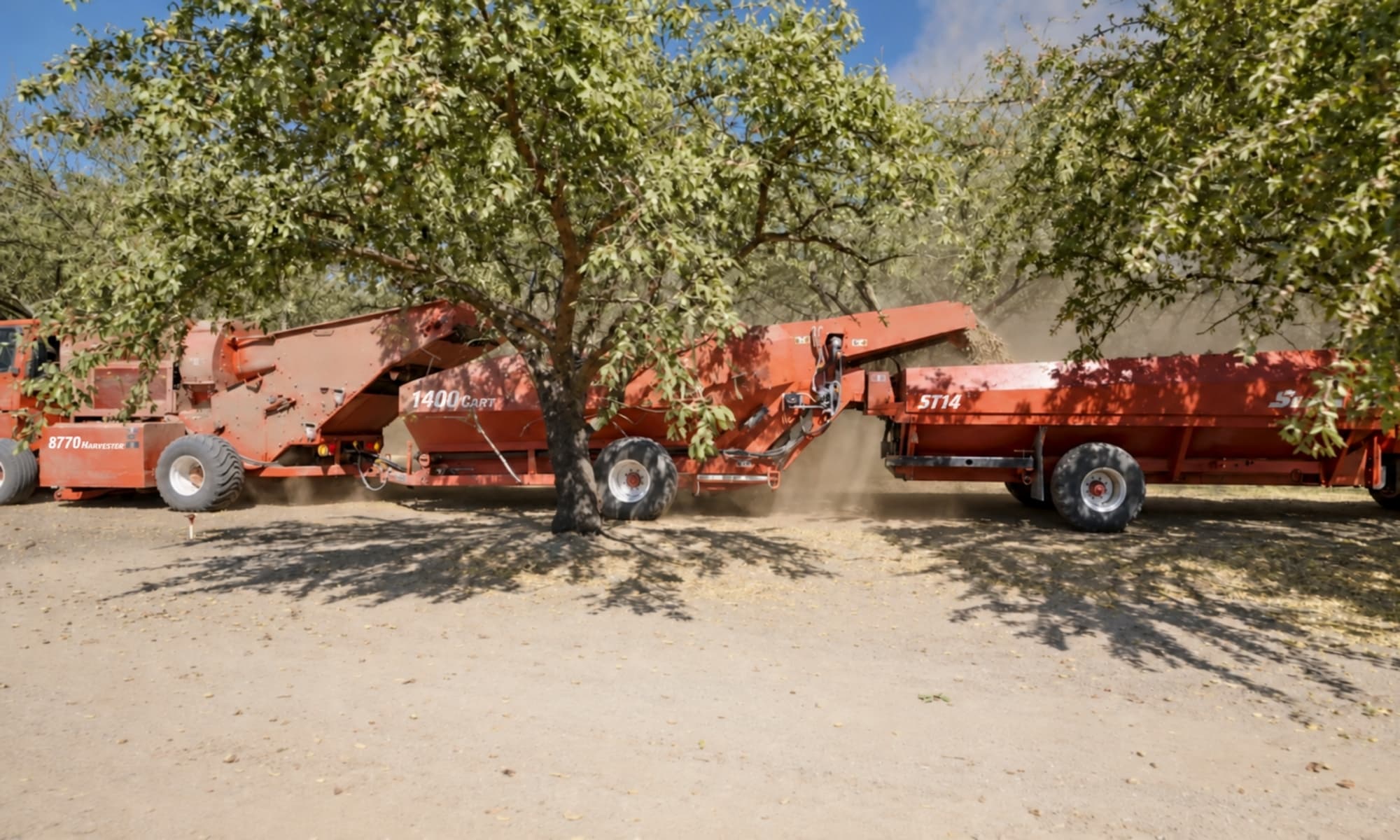
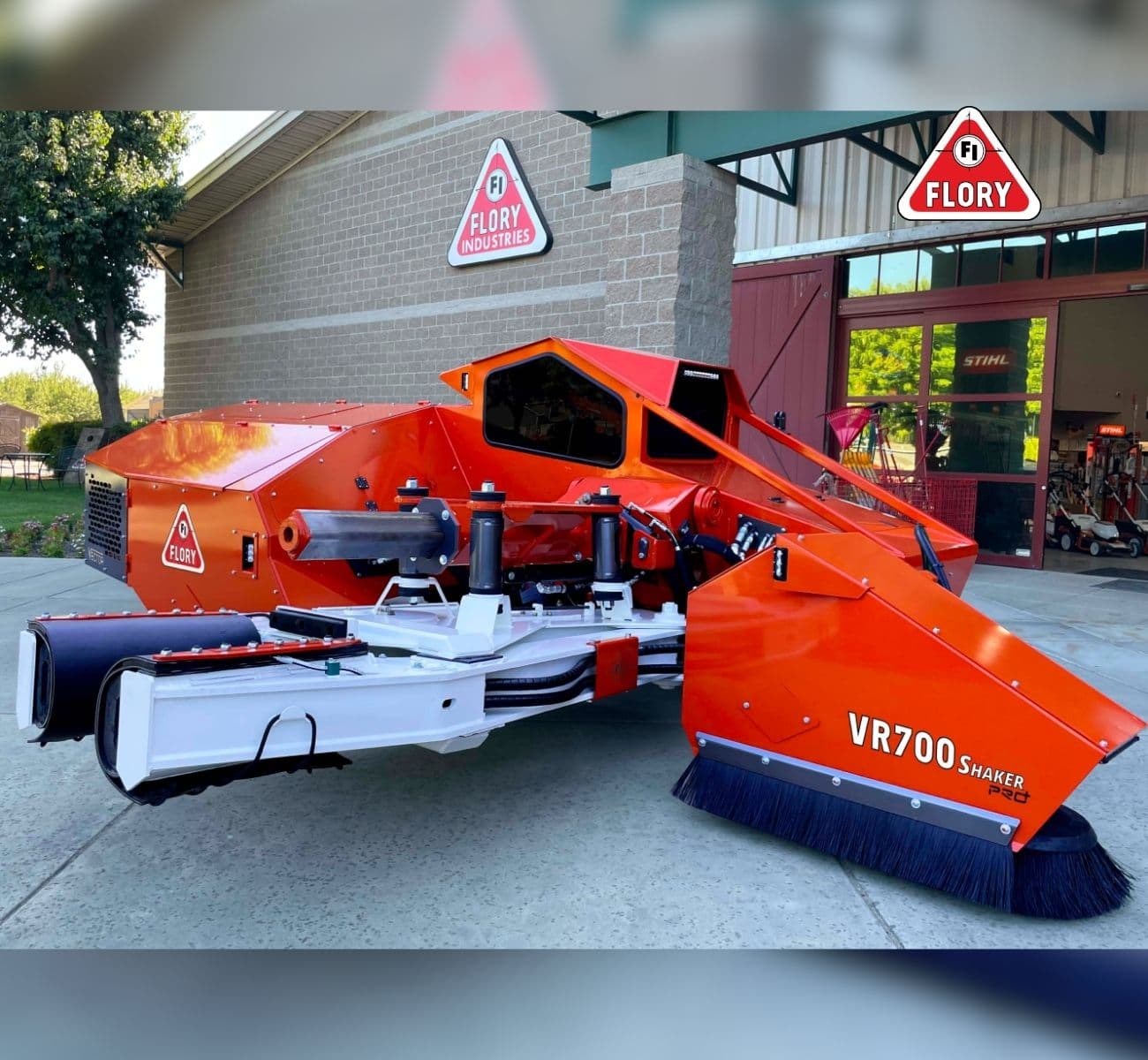
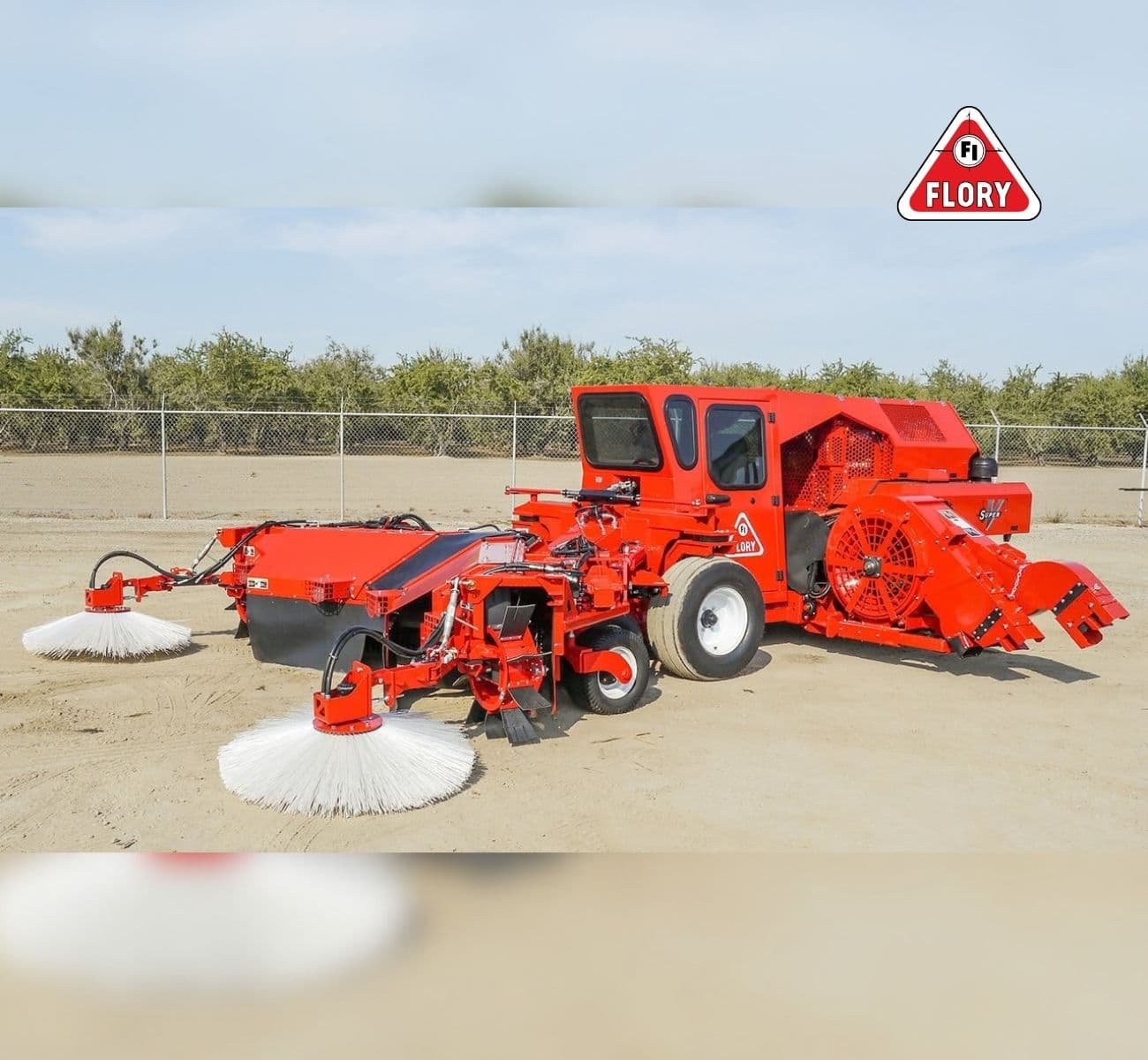
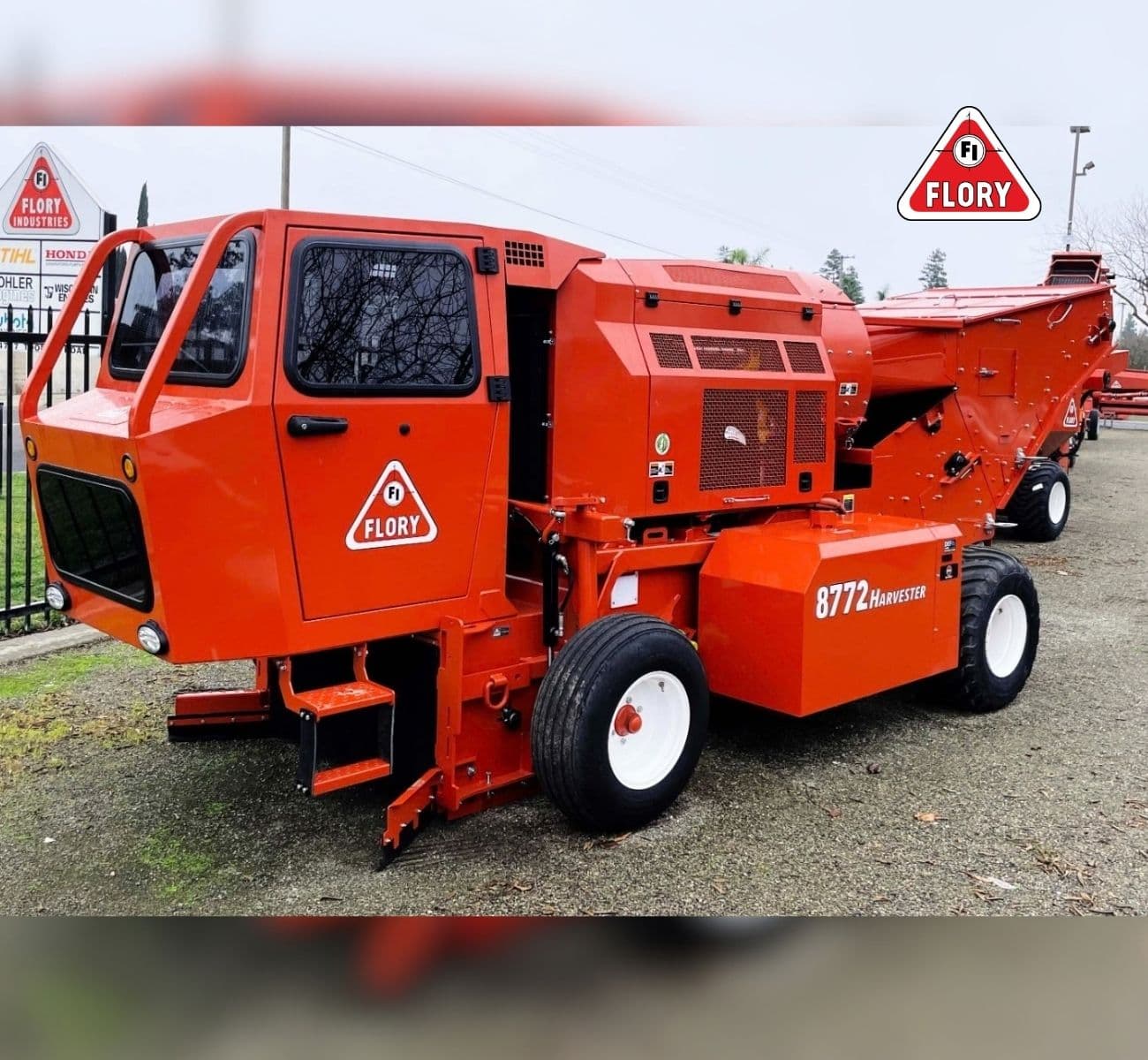
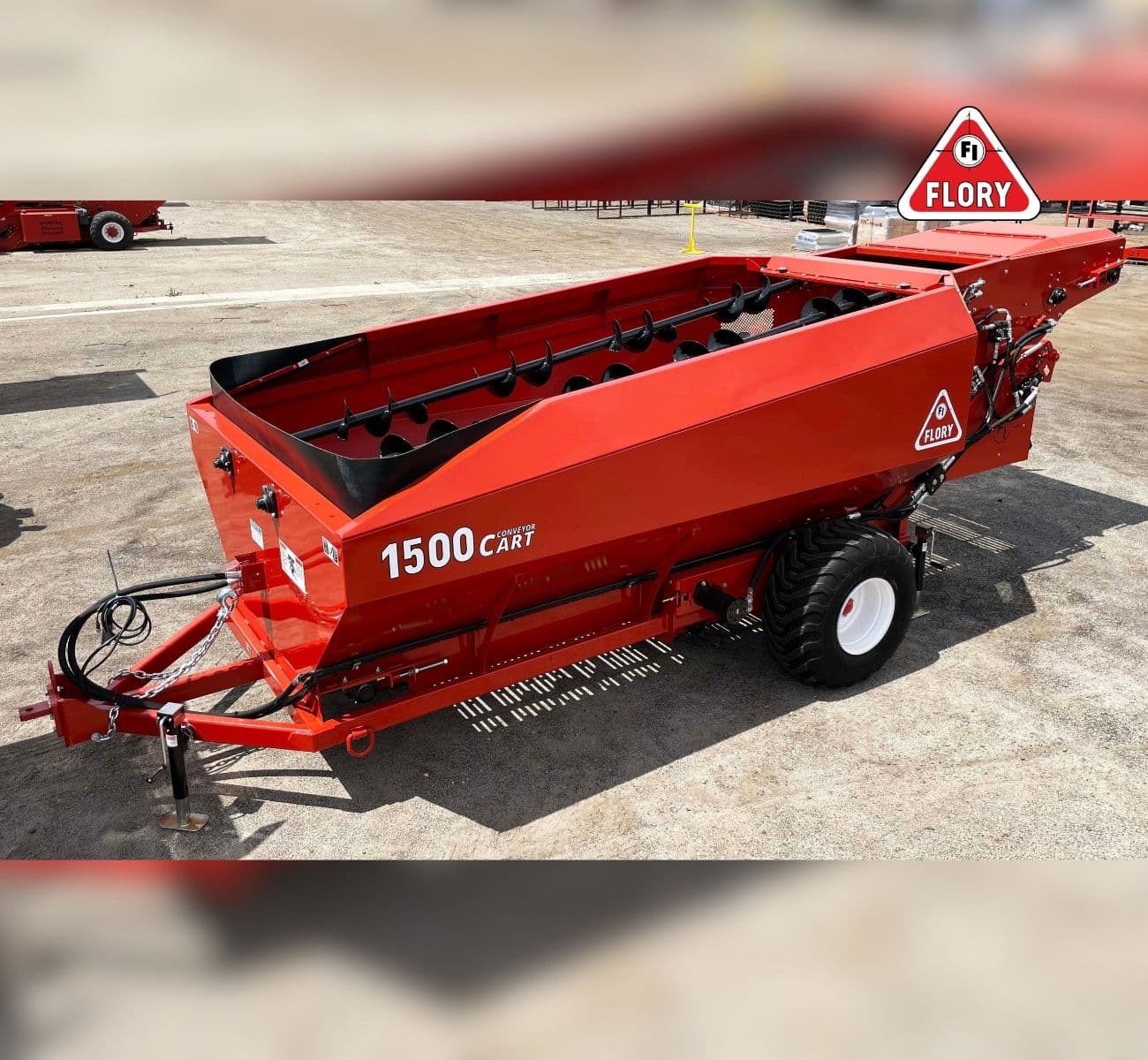
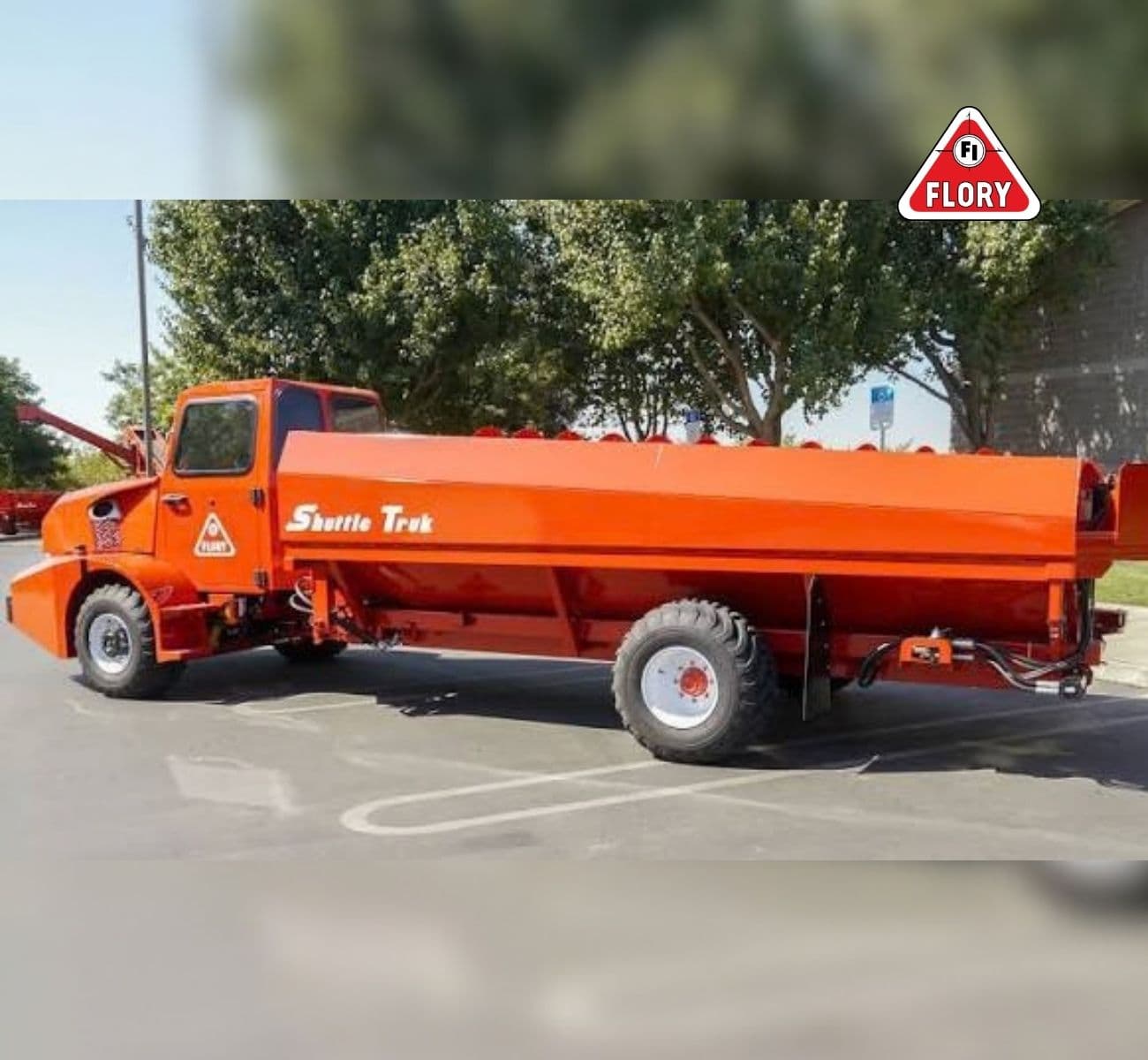
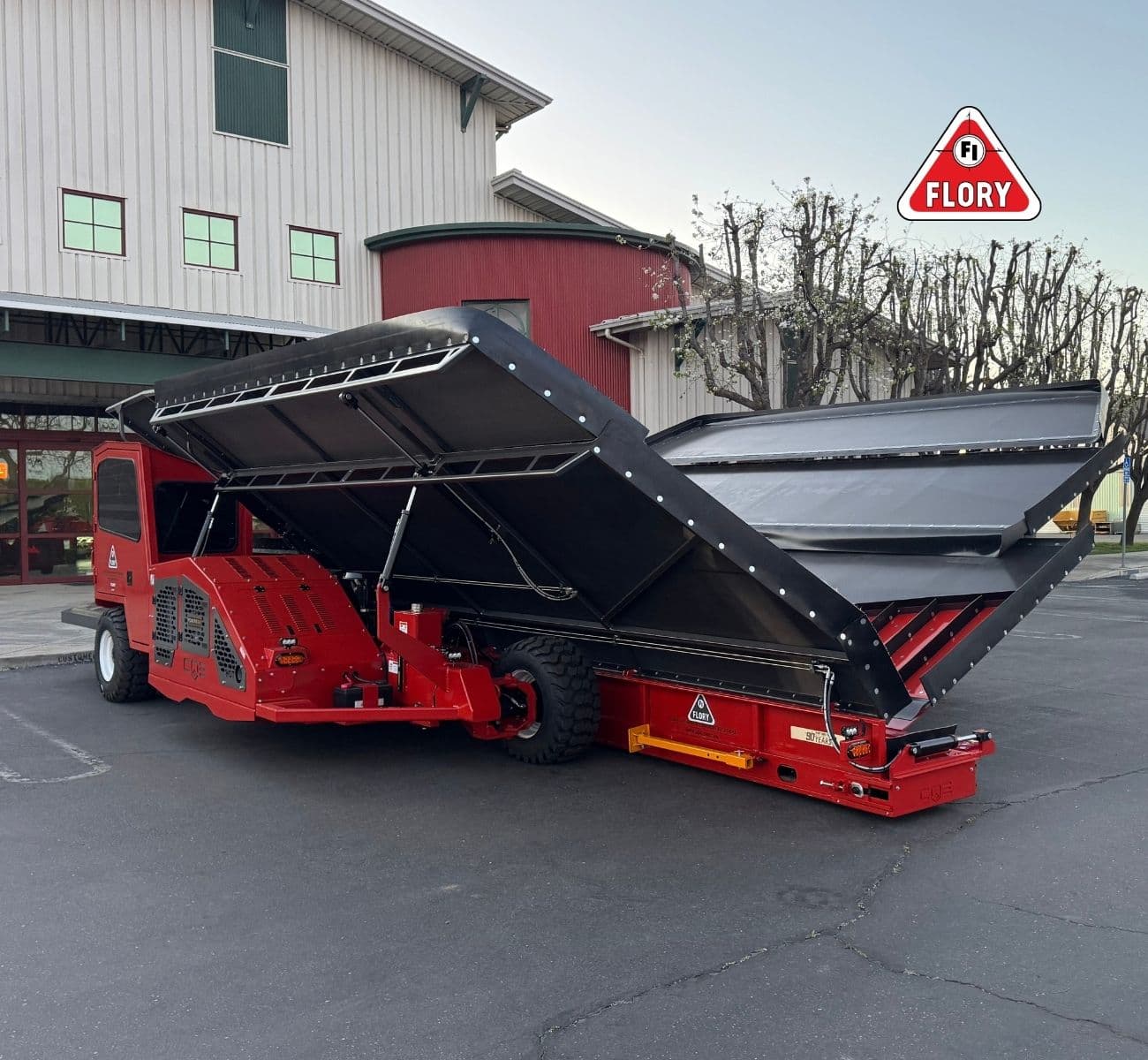
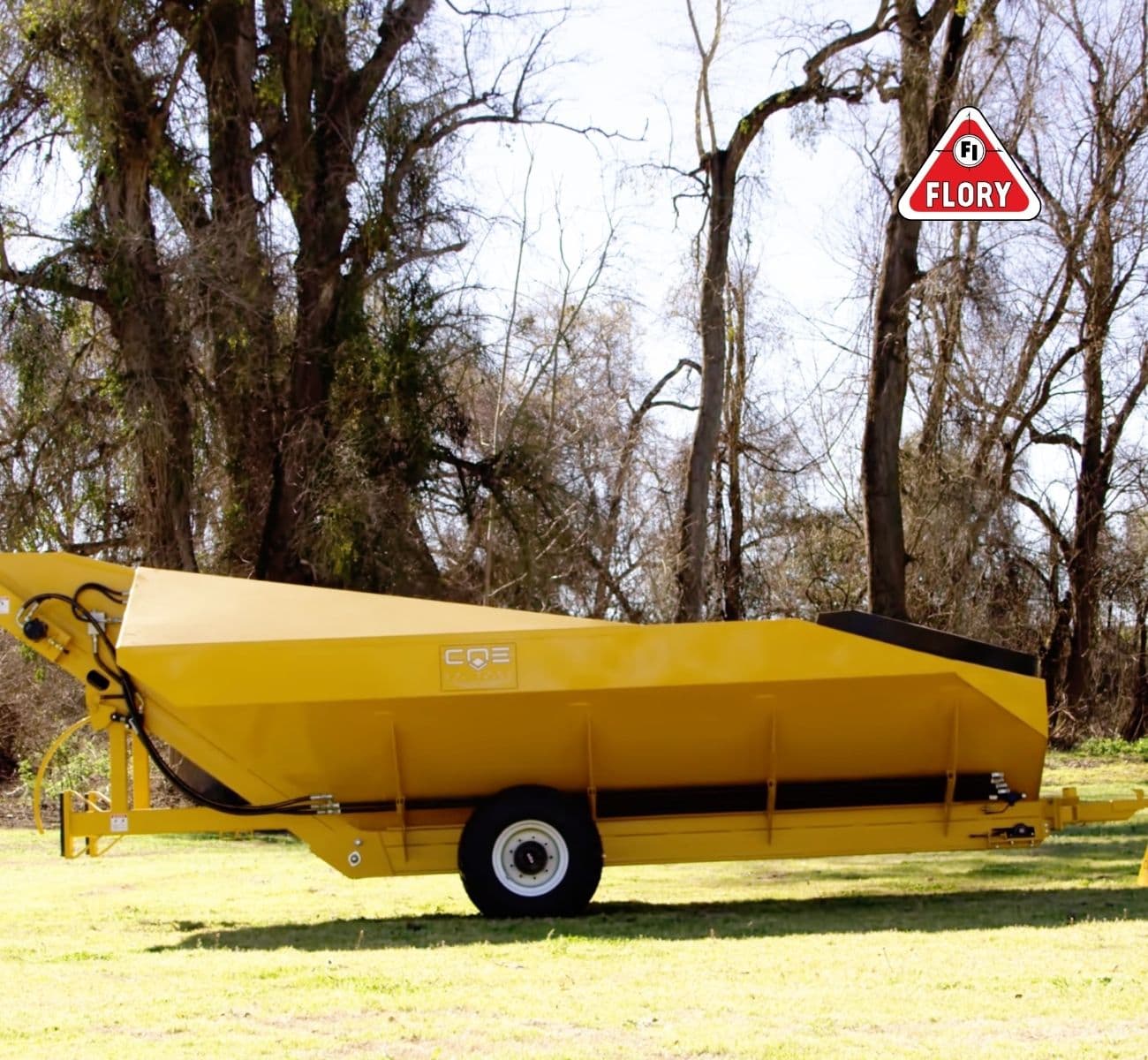
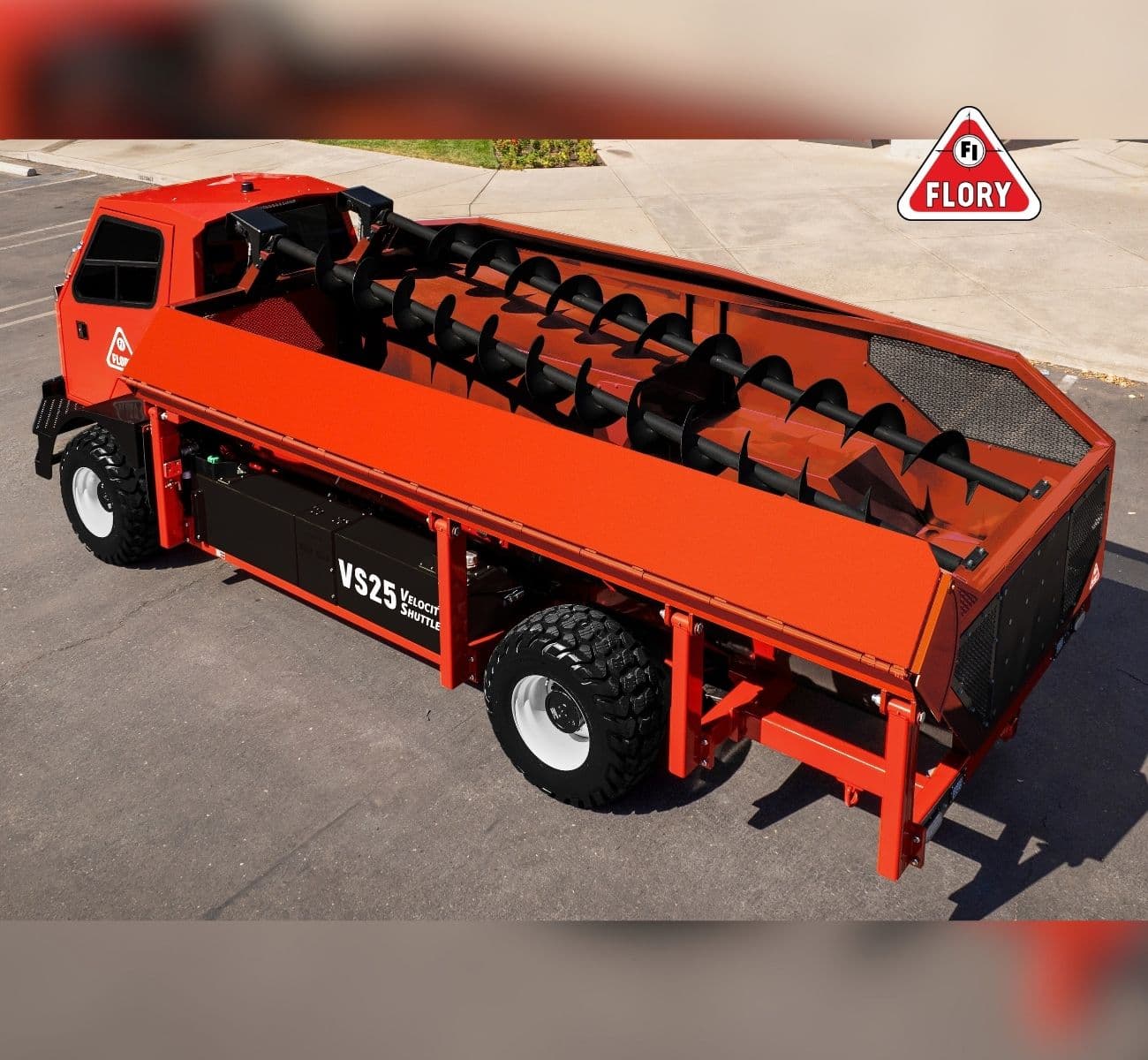
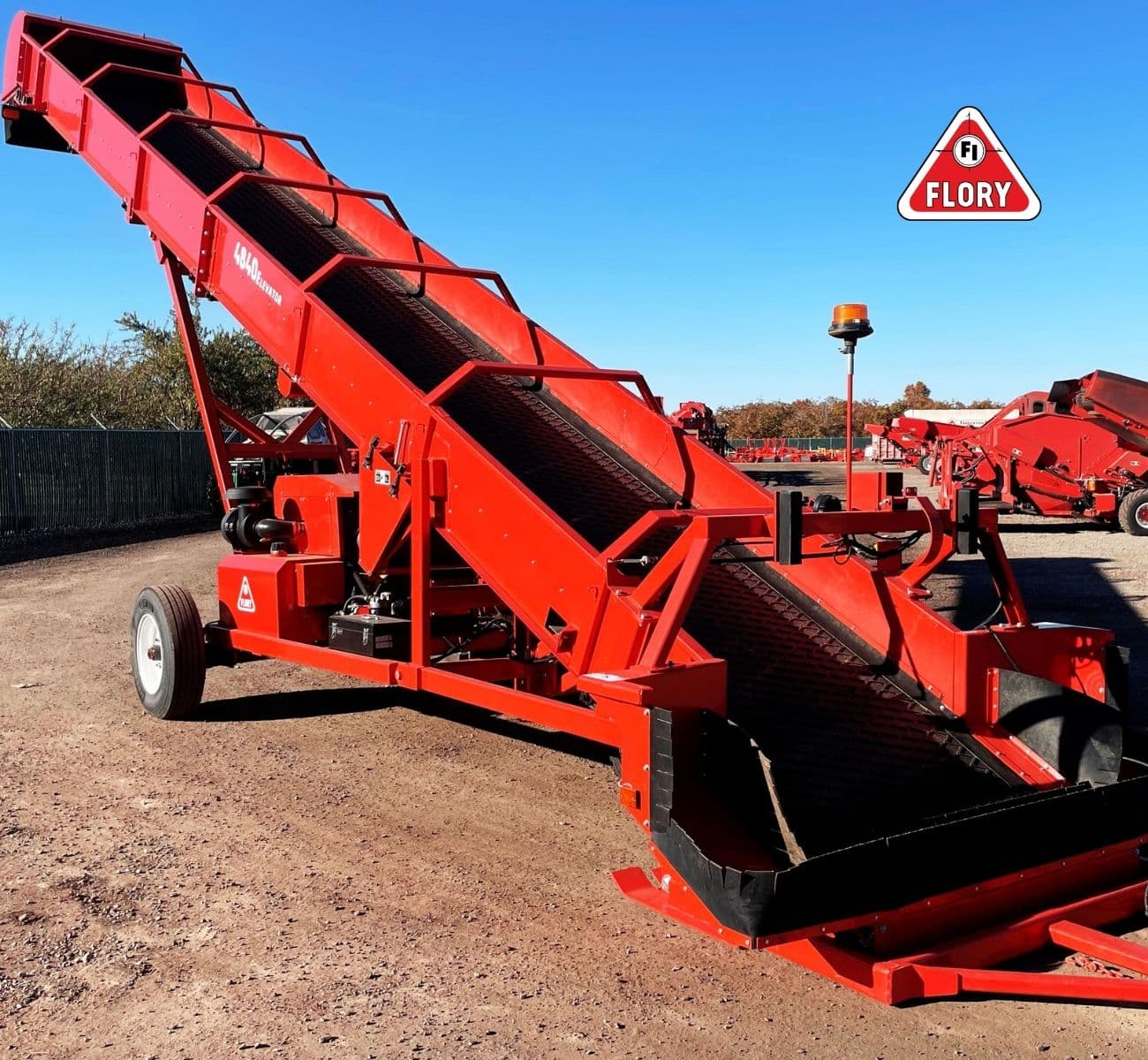
Flory harvesting machinery is available in Croatia through OVE Europe for both systems. On the ground, the VR700 Shaker, V62 Sweeper and 8772 Harvester feed the 1500 Conveyor Cart and ST14 Shuttle. Off the ground, the Flory COE C7 Shaker and L2 Receiver catch the almonds in a frame around the trunk, the Flory COE B8 Cart and VS25 Shuttle carry them, and the 4840 Field Elevator loads trailers in both systems.
Almond Harvest Workflow (Recommended Equipment)

Practical Tips for Almond Harvesting
Plan the harvest by cultivar: the Zadar advisory office puts the harvest of Ferragnes and Texas in the first half of September.
Start shaking when 95 to 100% of hulls have split, as University of California guidance advises, and check each cultivar separately.
Check the forecast before shaking and shake only what you can pick up promptly: in September 2024 DHMZ recorded above-normal rain at every station.
Sweep and pick up soon after shaking, then hull and dry the almonds off the ground; University of California guidance adds that prompt pickup avoids ant damage.
Where almonds must stay off wet ground, use catching frames in orchards planted for machines: the Flory COE C7 Shaker works with the L2 Receiver.
Use shakers in orchards planted on workable ground; for small orchards, a text based on a 2004 Croatian textbook describes hand harvest into nets.
Get your recommended harvest setup
Enter orchard size, spacing, terrain, and target throughput—we’ll suggest a practical harvest workflow and equipment lineup.

Almond Post-Harvest Handling & Processing in Croatia
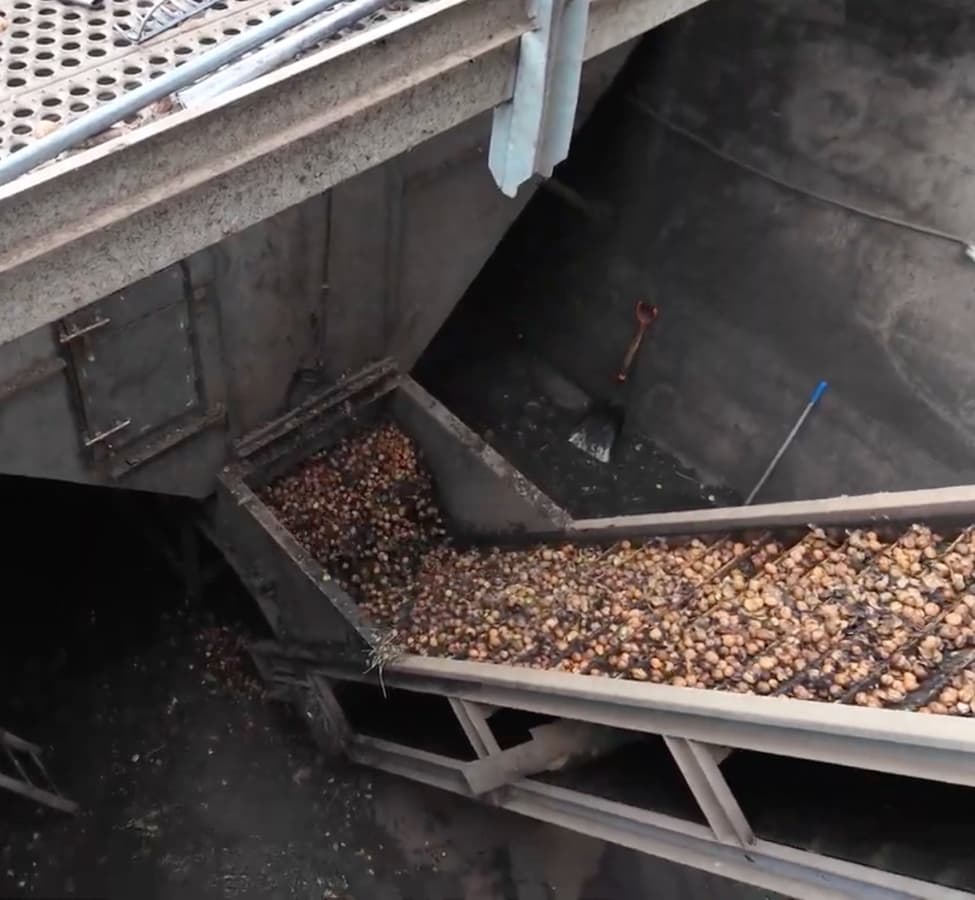
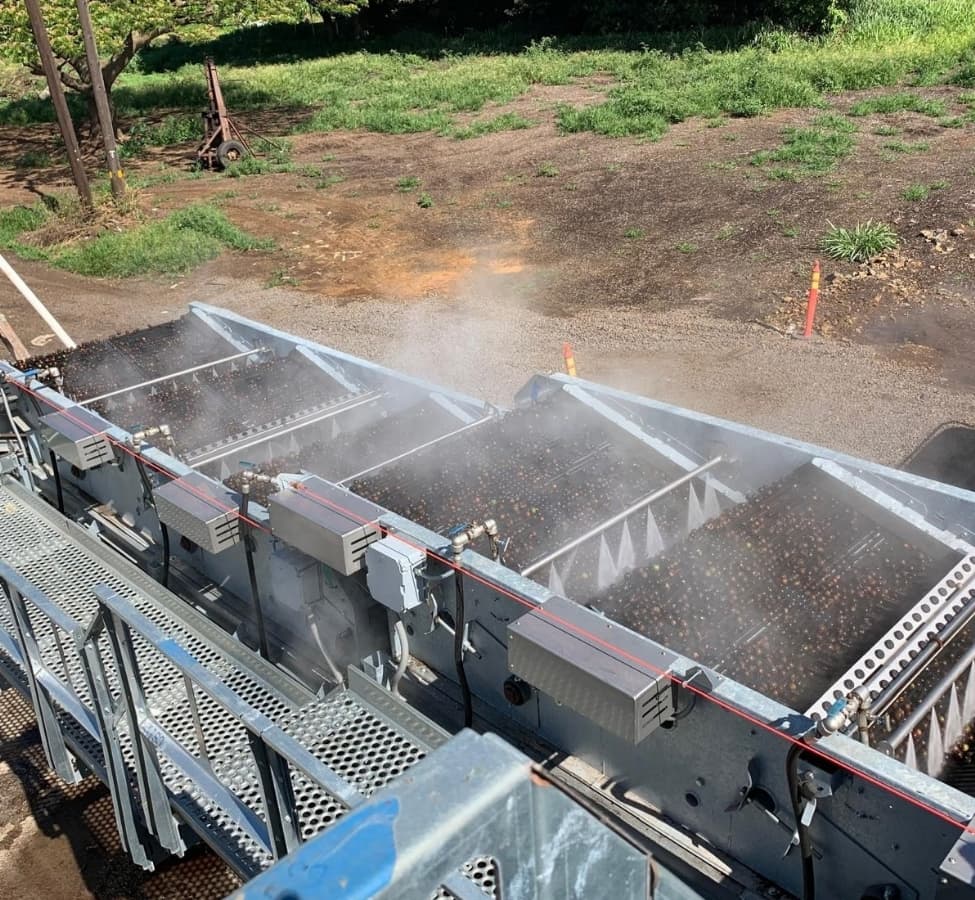
No Croatian source found describes how growers hull, dry or crack almonds; the textbook-based reference text says almonds are cleaned and dried before storage in a dry, ventilated place. In this workflow, promptly picked or frame-caught almonds are hulled while the hulls are fresh, then dried in the shell; University of California guidance, written for nuts dried on the ground, advises against stockpiling nuts above 12% hull, 6% kernel or 9% total fruit moisture.
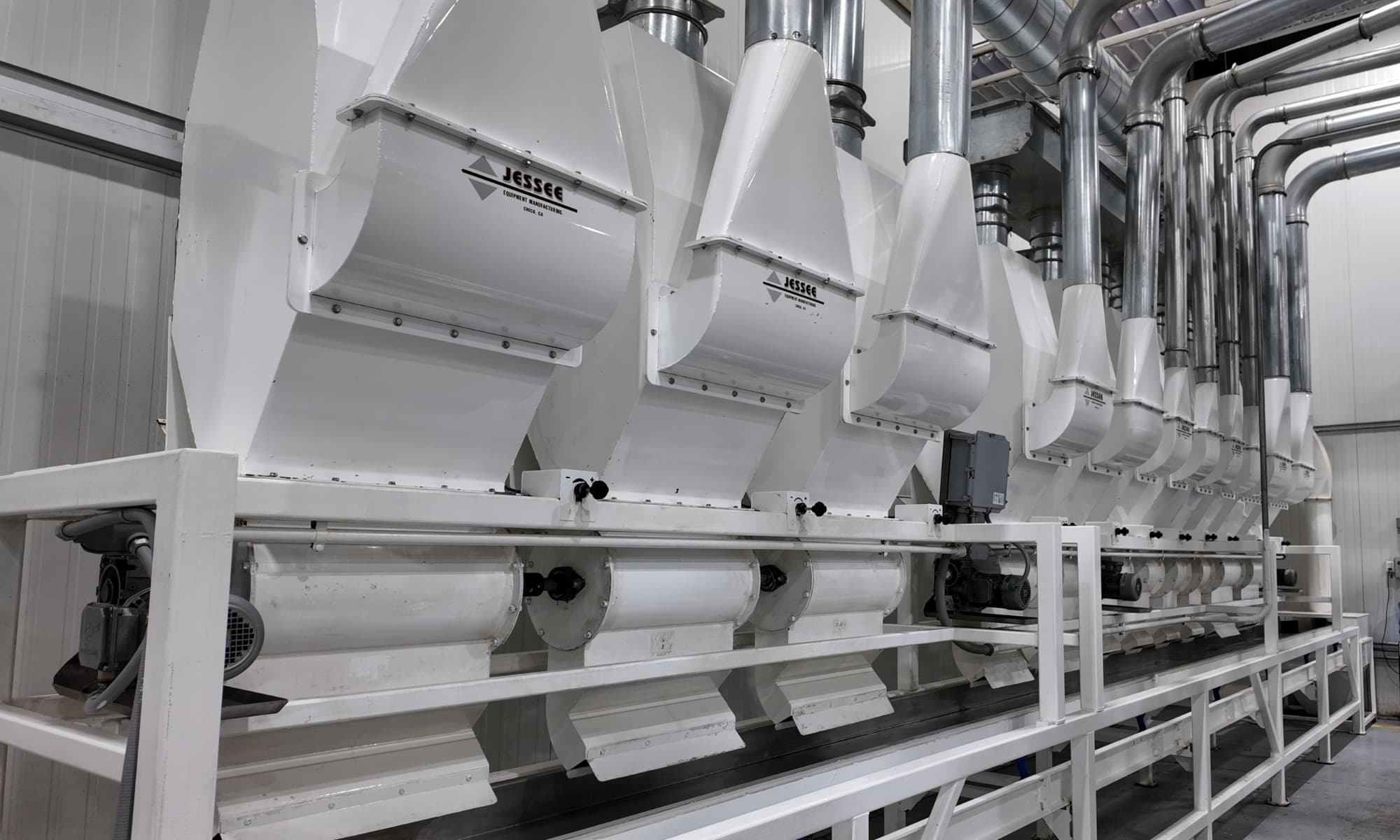
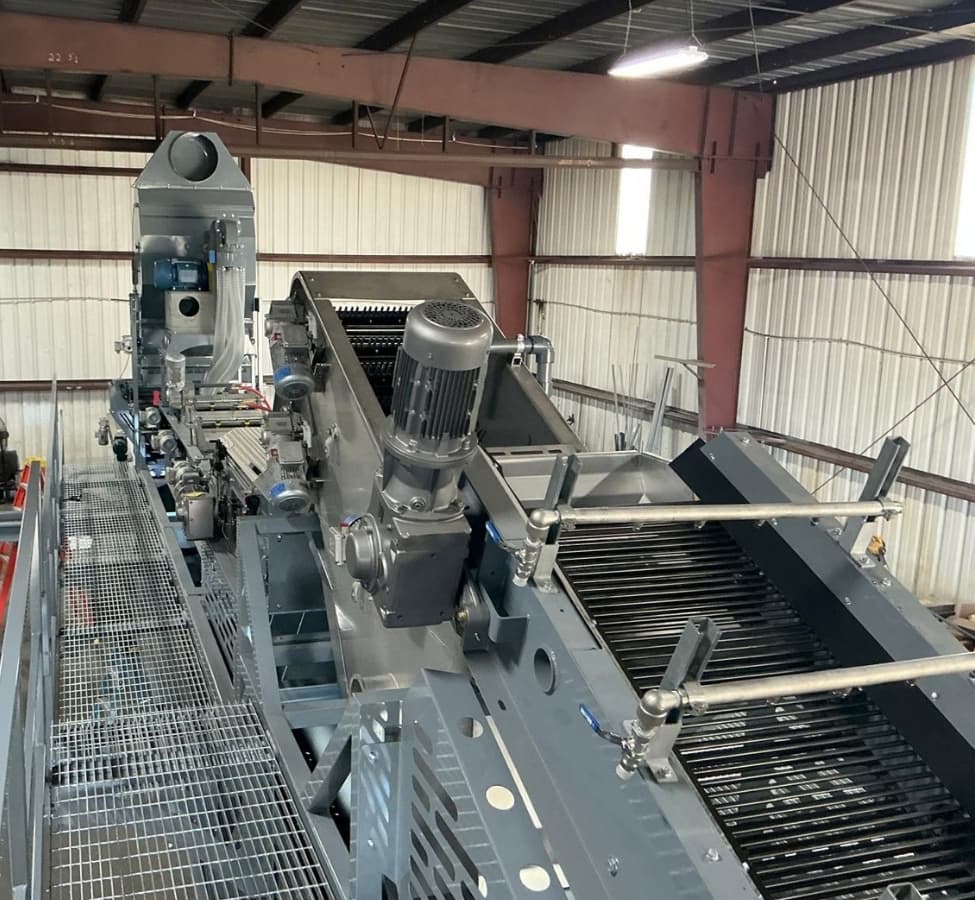
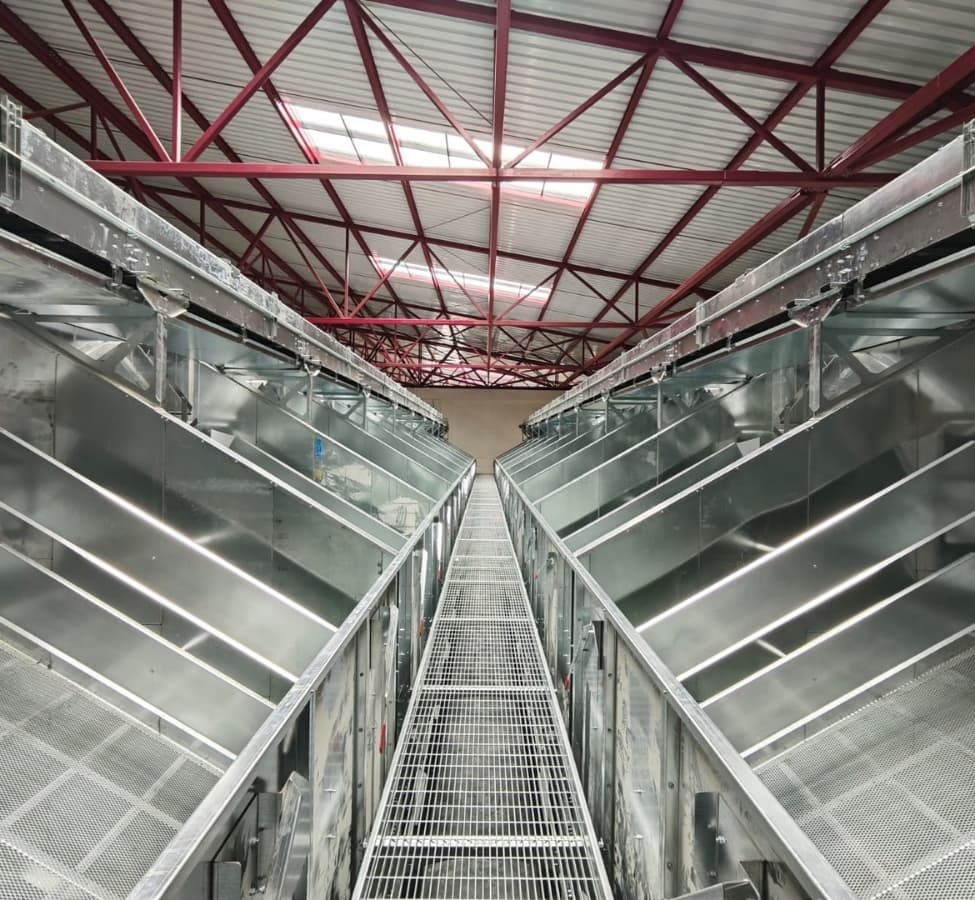
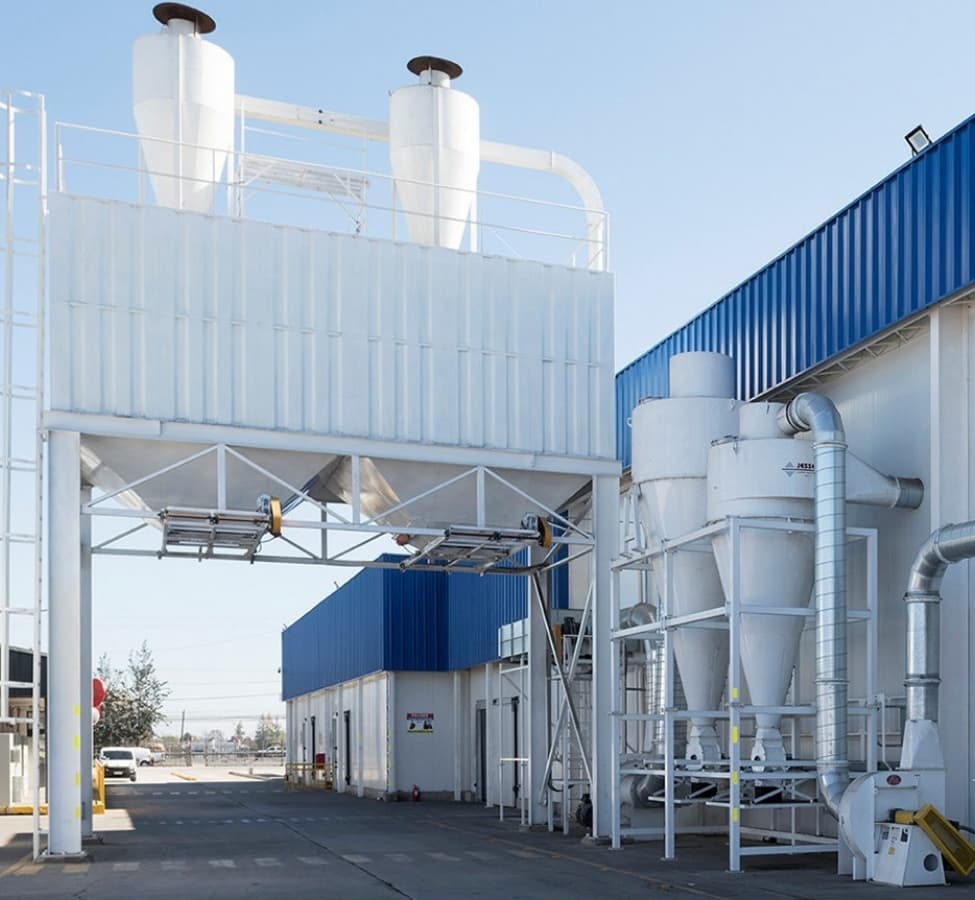
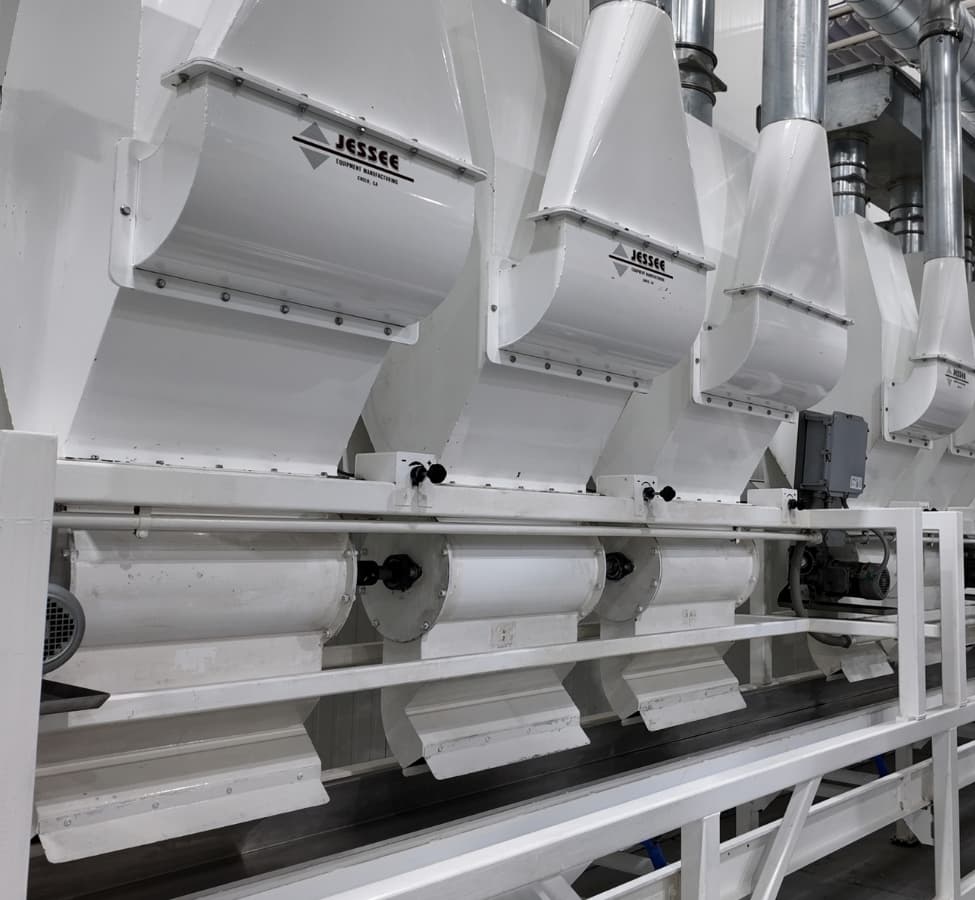
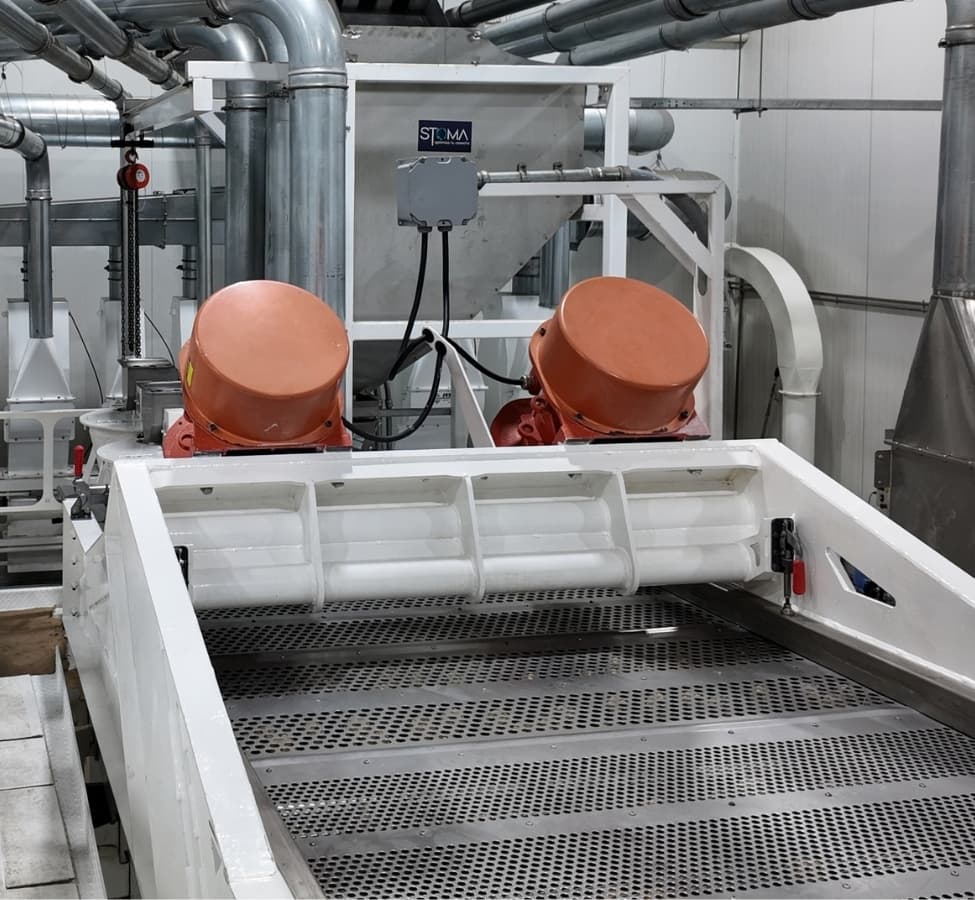
Croatia imports far more almonds than it grows: in 2025 it imported 1,845.2 t of shelled almonds, 68.0% of them from the United States, and exported 138.1 t, mainly to Slovenia (UN Comtrade via WITS). Jessee, whose processing lines OVE Europe supplies, builds hulling, drying, in-shell cleaning and sizing, and shelling systems; its Airlegs nut cleaner was developed for the almond industry.
As an EU member, Croatia applies Regulation (EU) 2023/915: 8.0 µg/kg of aflatoxin B1 and 10.0 µg/kg in total for almonds sold to the final consumer or used as an ingredient, and 12.0 and 15.0 µg/kg for almonds to be sorted first. A 2022 study of kernels sampled just before harvest in one organic orchard in Ravni kotari detected no aflatoxins and no residues of the 402 pesticides screened.
For general information only. Information may become outdated and does not replace site-specific professional advice. Consult a qualified agronomist and confirm equipment suitability with OVE before acting.
Practical Tips for Almond Post-Harvest Handling & Processing
Hull promptly picked or frame-caught almonds while the hulls are fresh, then dry the nuts in the shell before storage.
Never stockpile undried almonds: University of California limits, set for nuts dried on the ground, are 12% hull, 6% kernel and 9% total fruit moisture.
Store dried almonds clean in a dry, ventilated place, as a text based on a 2004 Croatian textbook describes, and keep lots apart by cultivar and block.
Plan cracking and sales around kernel out-turn: the advisory service gives 64% for Nonpareil but 39% for Ferragnes and 28% for Ferraduel.
Test lots against Regulation (EU) 2023/915: 8.0 µg/kg of aflatoxin B1 and 10.0 µg/kg in total for almonds sold to consumers.
Plan sales at home: Croatia imported 1,845.2 t of shelled almonds in 2025, and in 2017 the Zadar office saw almost no domestic almond on the market.
Recommended Post-Harvest Handling & Processing Stages
Plan your post-harvest line
Estimate tons/day, cleaning & drying capacity, storage needs, and cost/kg—then build your equipment plan in phases.