


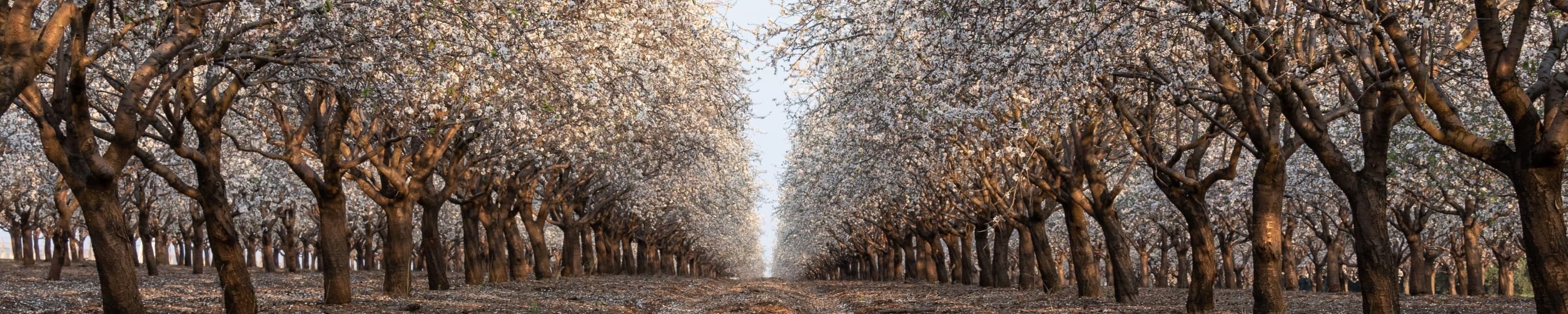




Almond Orchard Establishment in Cyprus
Almond grows wild in many parts of Cyprus and has been cultivated there for a very long time, but the Department of Agriculture's almond leaflet (2016) notes that its large area does not bring a corresponding value of production and that local varieties, though well adapted where they grow, rarely have good commercial traits. The 2003 census counted about 1.2 million almond trees on 12,106 holdings.
Among imported cultivars the leaflet names Texas (Mission), Ferragnes, Marcona, Troito and Retsou. It describes Texas, Ferragnes, Troito and Retsou as late-blooming and Troito as self-fertile, while Marcona blooms early and needs a pollinizer that the Department propagates only for that purpose. The usual layout is one pollinizer row for every two or three rows of the main cultivar, or one pollinizer per eight trees.
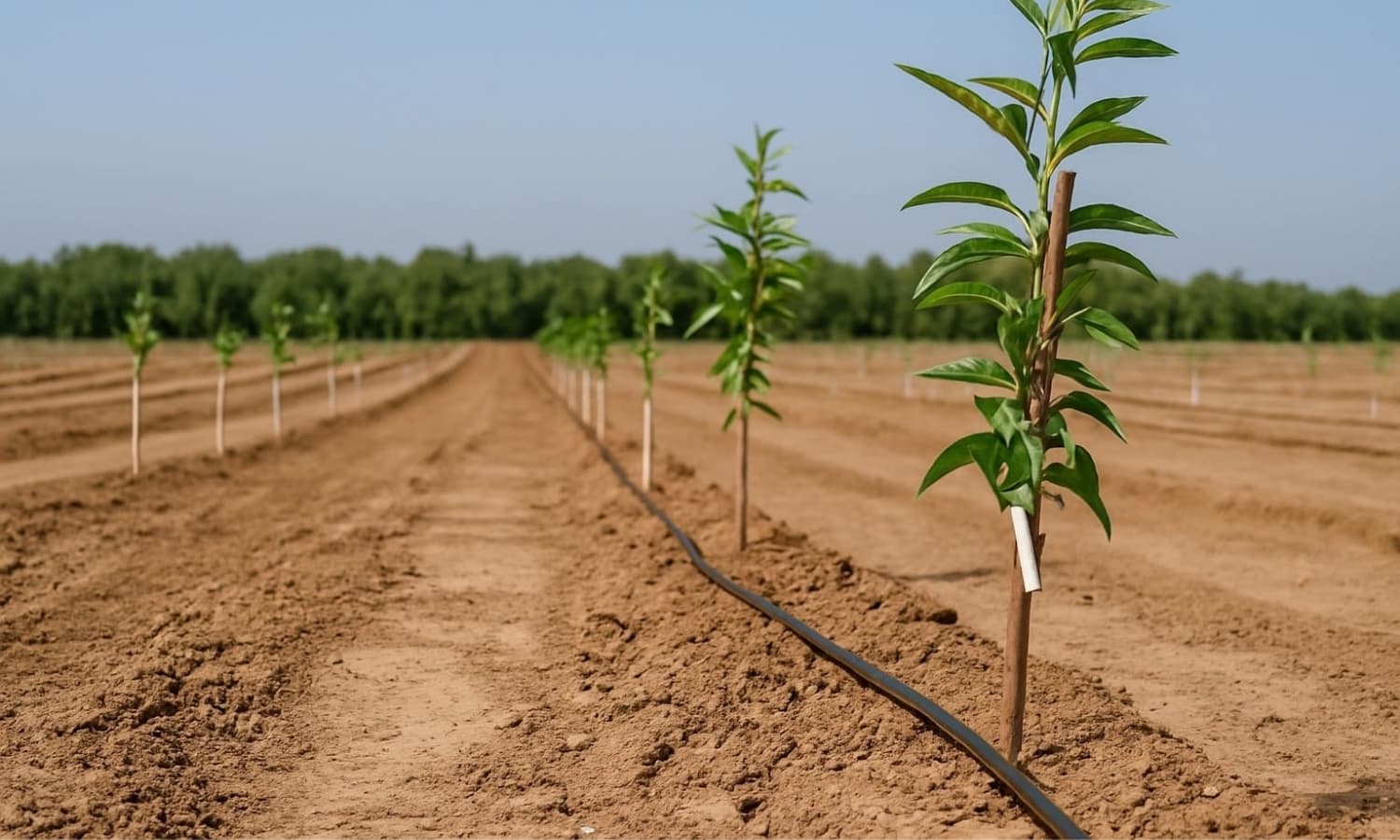
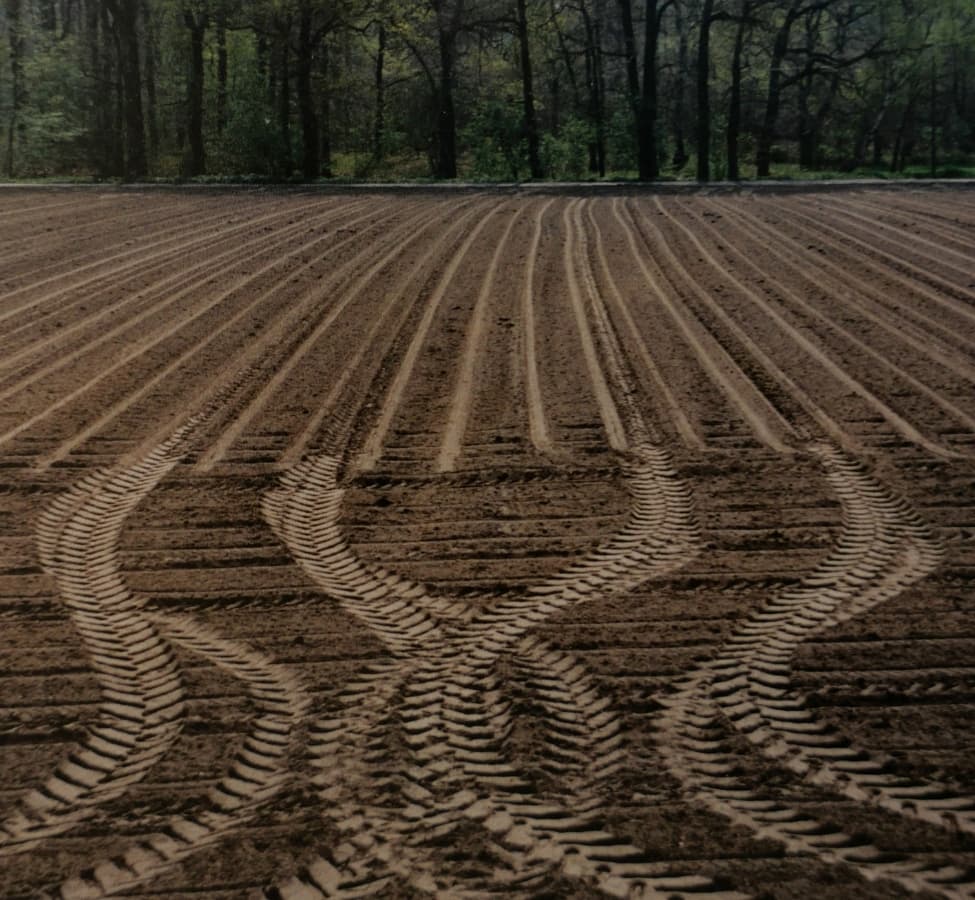
The leaflet asks for deep, light to medium soils with good drainage and aeration, warns against heavy clay soils, above all on almond rootstock, and puts tree spacing at 6 to 8 m, depending on vigor, soil fertility and irrigation. GF 677 is widely used and brings trees into bearing earlier than almond or peach seedlings, and wide alleys must be left where the orchard will be harvested by machine.

Practical Tips for Almond Orchard Establishment
Choose deep, well-drained, light to medium soils and avoid heavy clay, as the Department of Agriculture advises, above all on almond rootstock.
Space trees 6 to 8 m apart by vigor, soil and water, and leave wide alleys if the orchard will be harvested by machine.
Plan pollination: one pollinizer row for every two or three rows of the main cultivar, or one pollinizer per eight trees, as the leaflet suggests.
Where frost is possible during bloom, prefer the late-blooming cultivars the leaflet lists: Texas (Mission), Ferragnes, Troito and Retsou; Marcona blooms early.
Without irrigation water, choose drought-resistant cultivars such as Retsou and Troito and avoid drought-sensitive Texas, as the Department of Agriculture advises.
Plan rows, headlands and tree form for the shaker, sweeper and harvester before planting, and check trunk clearance with OVE Europe.
Recommended Establishment Stages

Almond Orchard Care & Maintenance in Cyprus
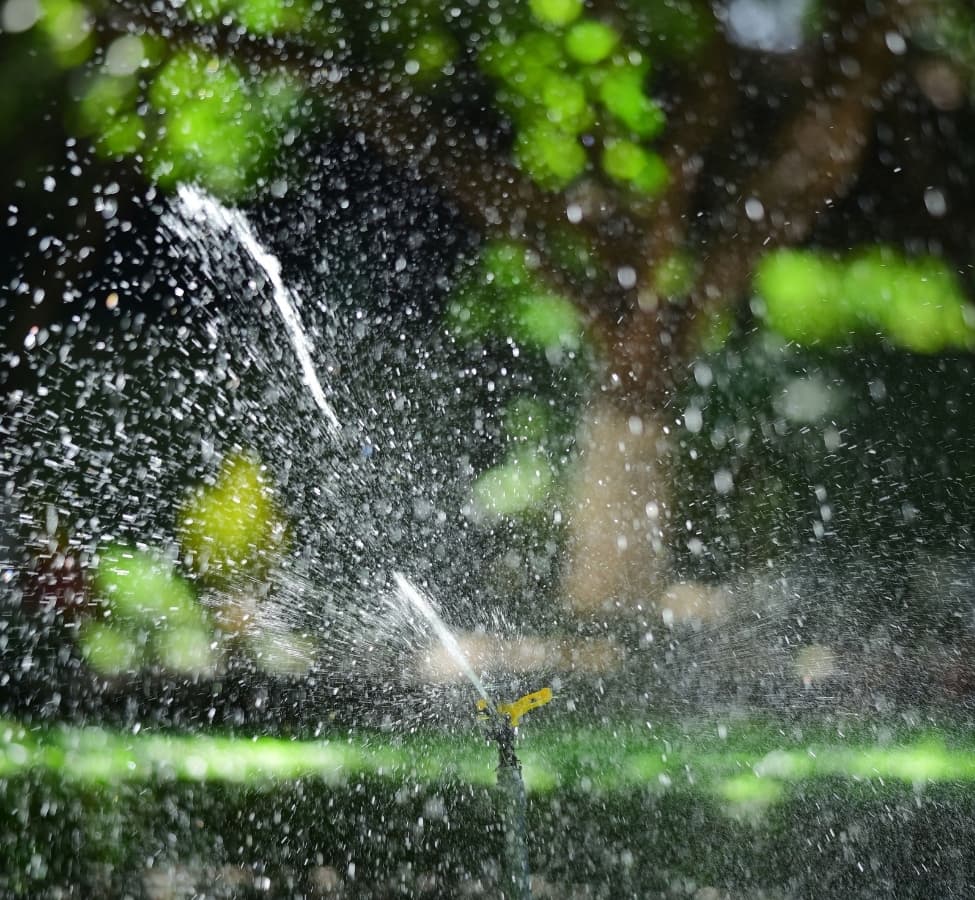
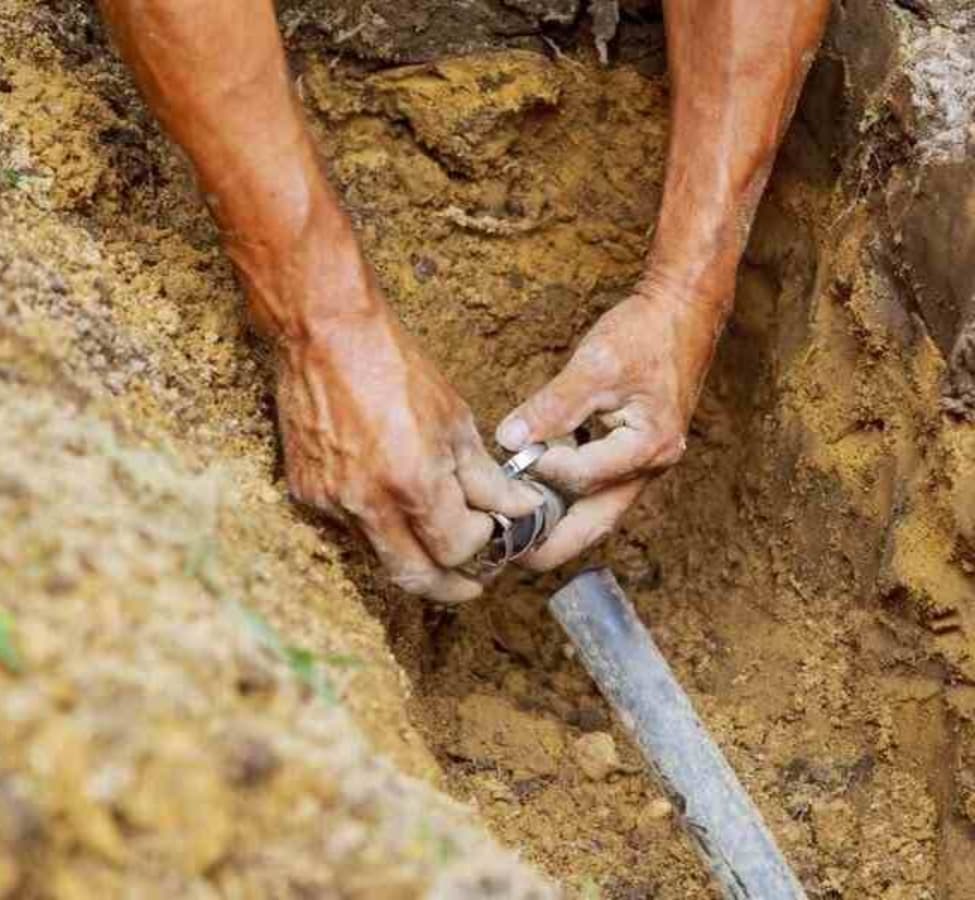
The Department of Agriculture says almond, though often seen as a rain-fed crop, must be partly or fully irrigated to yield well, and that kernels from water-stressed trees are fit only as second quality for processing. Summers are hot and dry from mid-May to mid-September (Department of Meteorology), and rainfall from October 2024 to September 2025 was about 62% of normal.
The Department of Meteorology's agrometeorology calendar for deciduous trees says seed wasp attacks may begin around the end of March and advises monitoring adults emerging from last year's infested fruits to time control; it flags spring conditions that favor Monilinia and shot hole on almond, and mites in the hot, dry summer. The 2016 leaflet names the seed wasp, aphids and lace bug as the most serious almond pests in Cyprus; EPPO records peach twig borer with a restricted distribution.
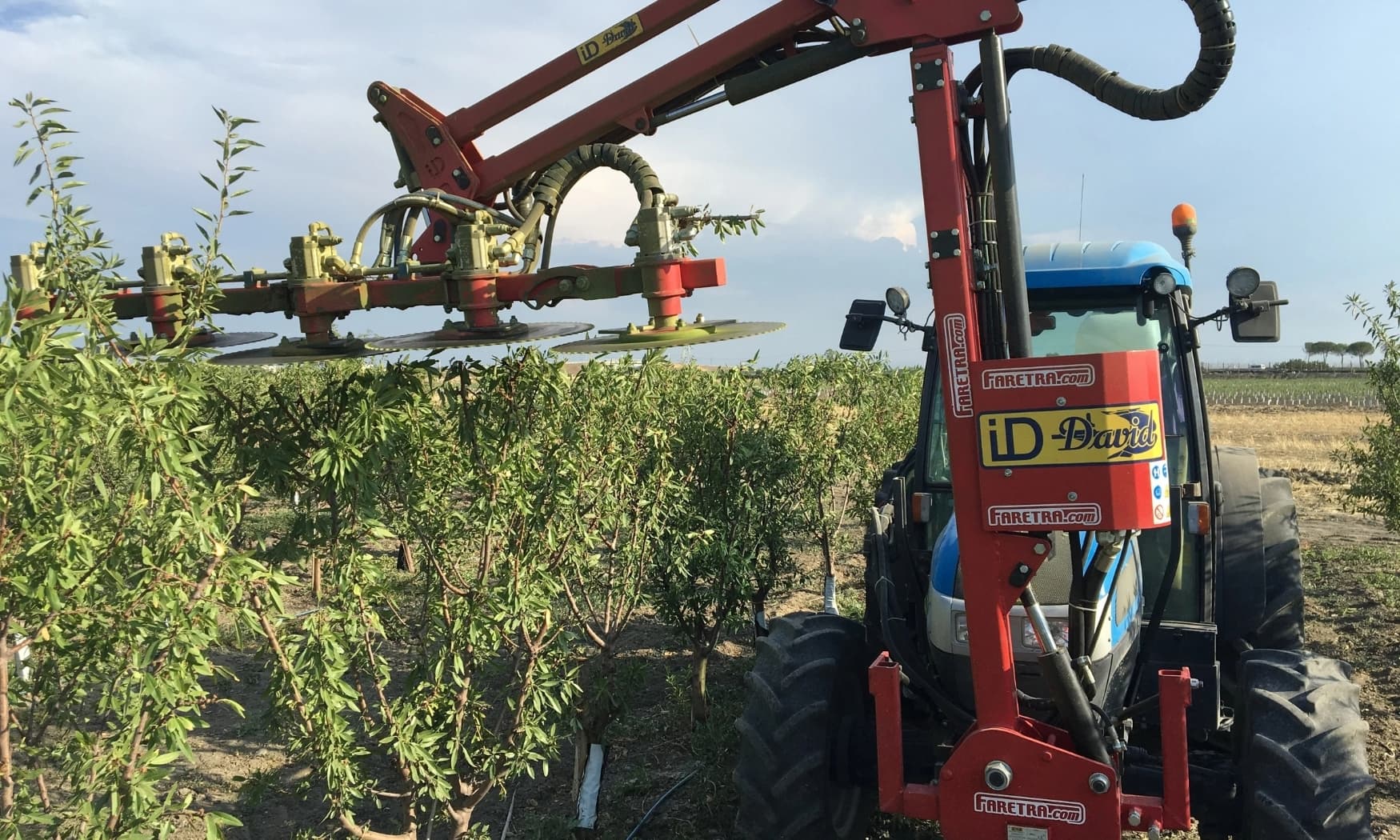
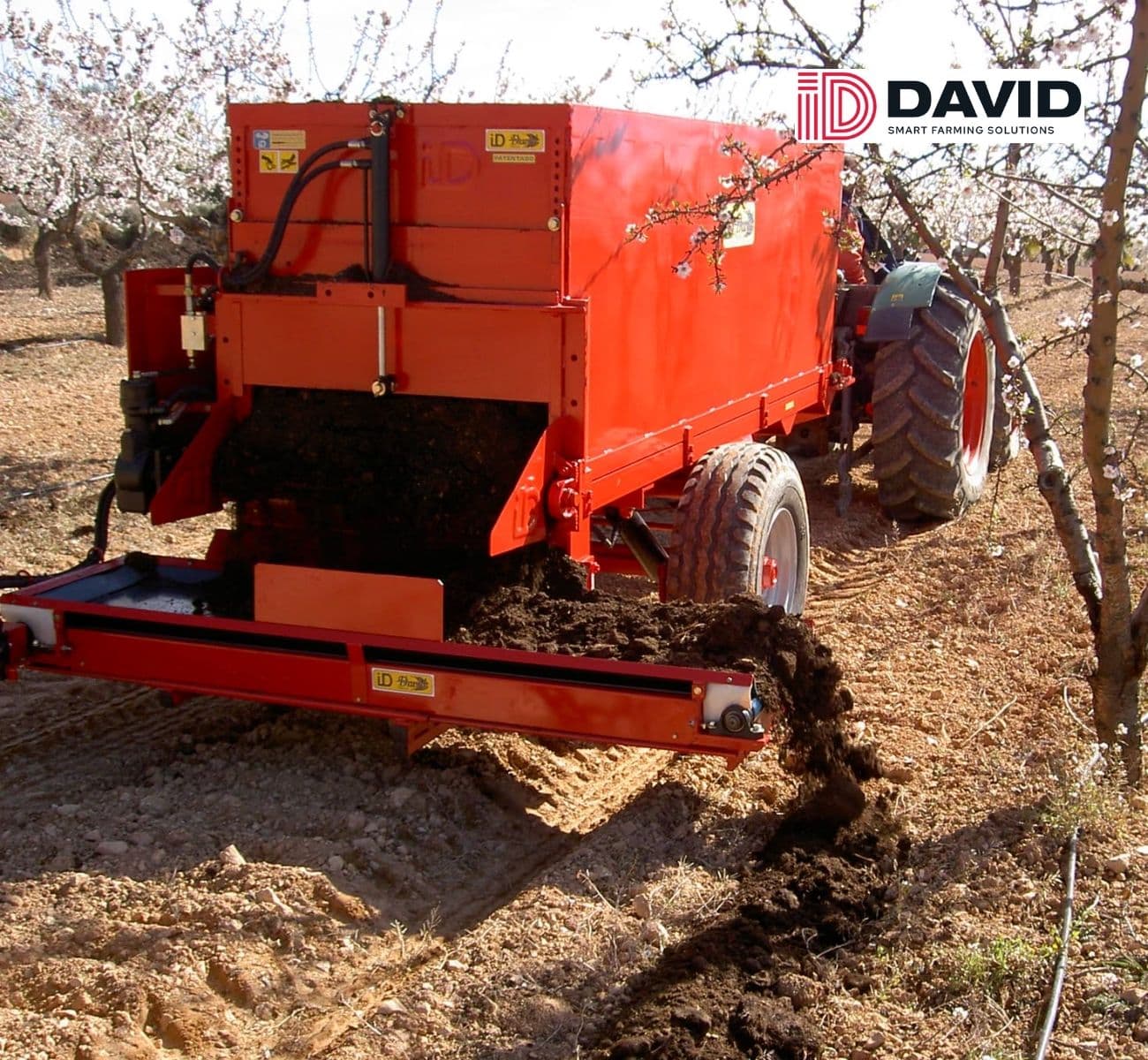
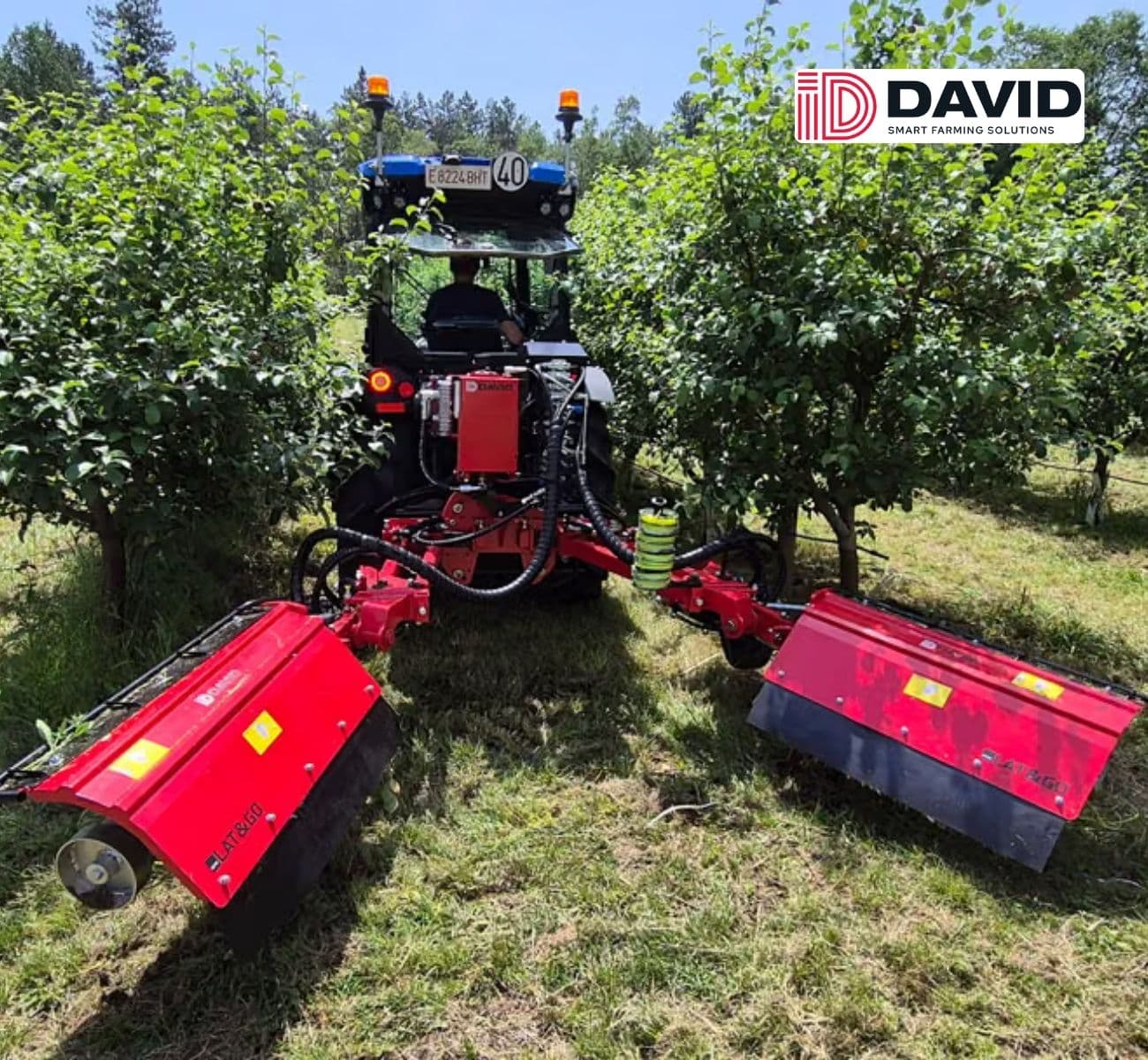
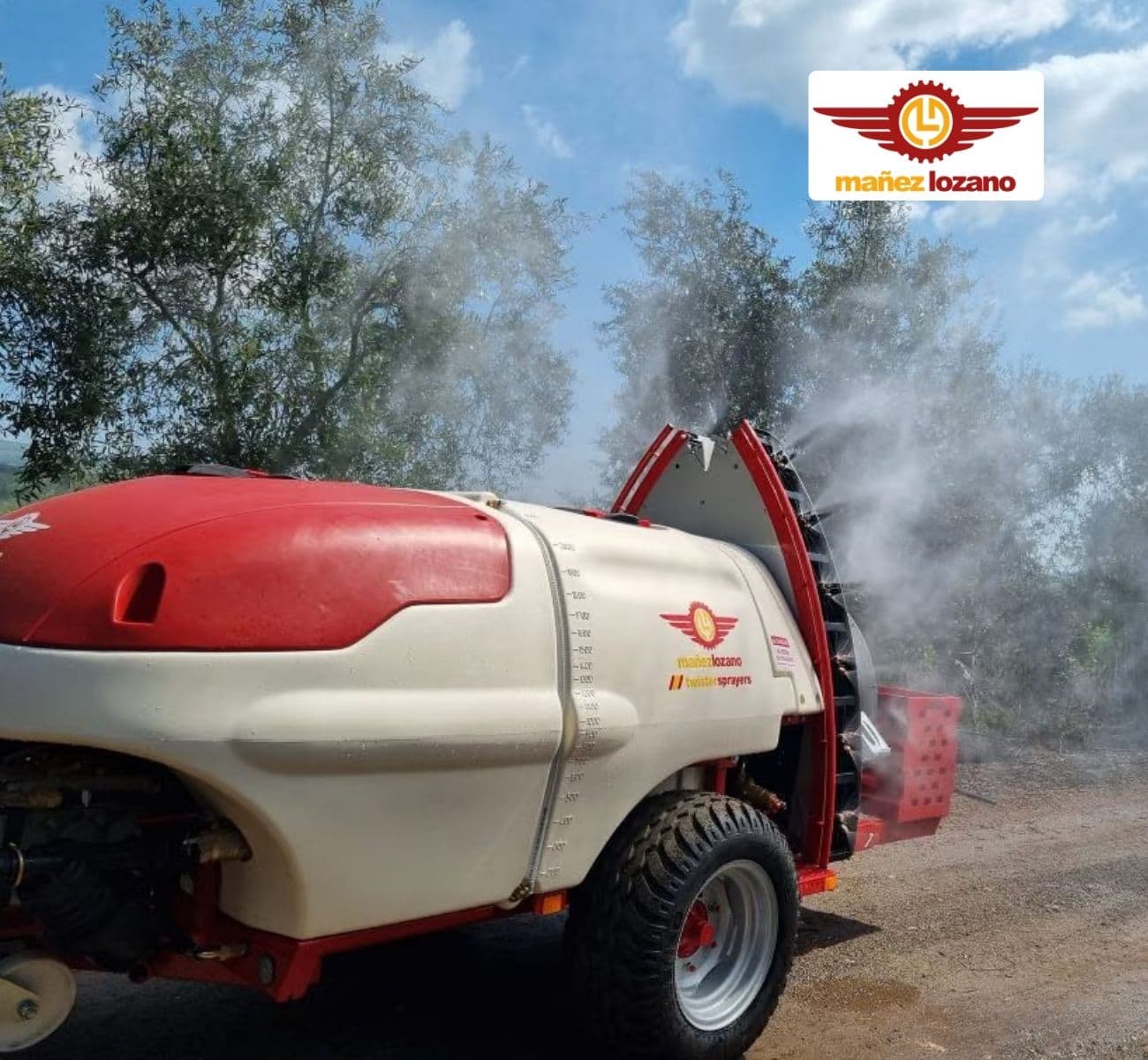
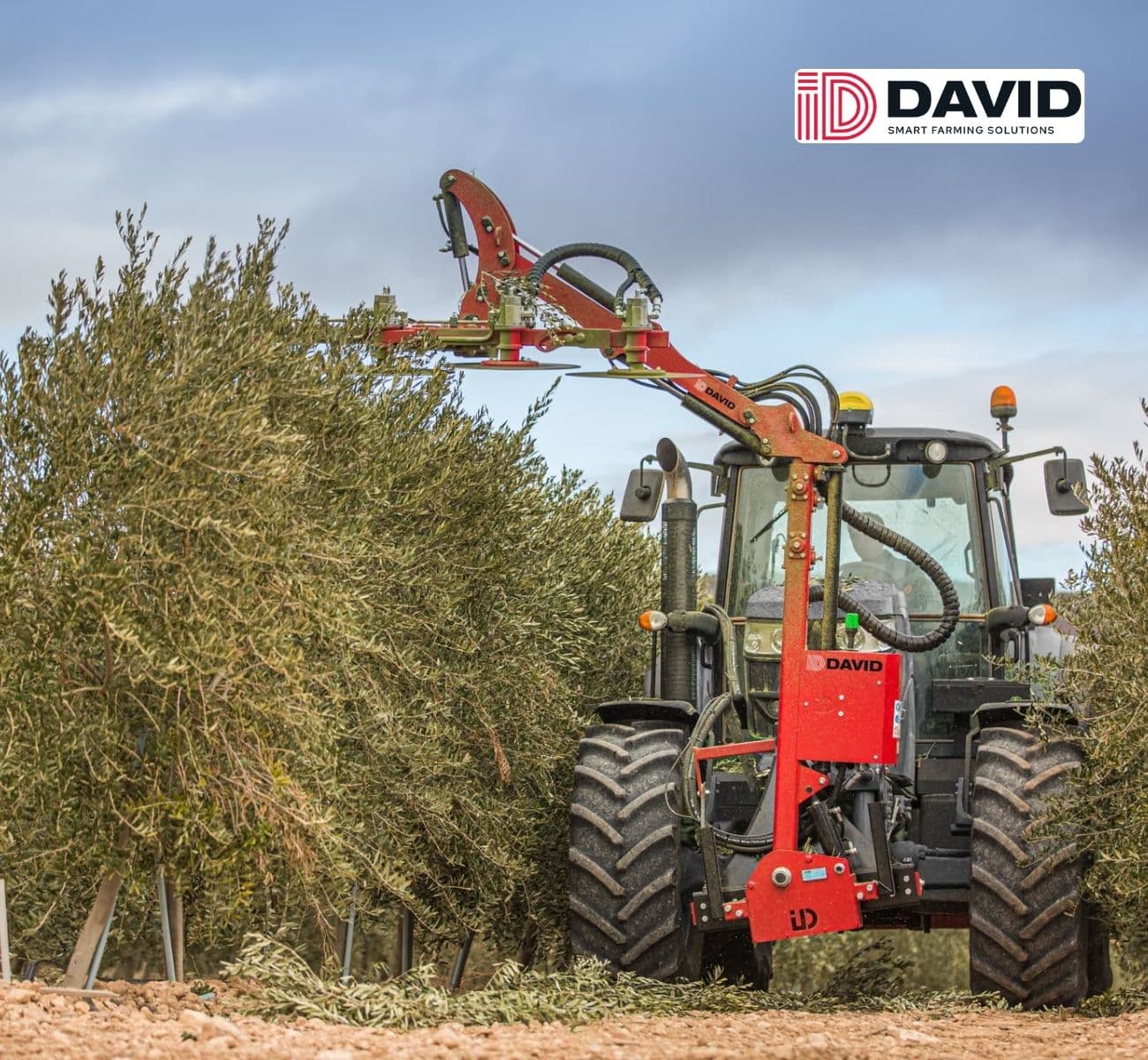
The calendar starts winter pruning in January where there is no frost or wet weather, with fruiting pruning on mature trees and formative pruning on young ones. For care work, the ID DAVID ECOFEED spreads solid manure, the ID DAVID LAT&GO string mower controls weeds without herbicides, the Mañez Lozano Narrow Twister S6 sprays tall, dense canopies and the ID DAVID V1 disc pruner makes vertical and horizontal cuts.
Recommended Orchard Care & Maintenance Stages
Practical Tips for Almond Orchard Care & Maintenance
Irrigate where water allows: the Department of Agriculture says almonds yield well only with partial or full irrigation; stressed trees give second-quality kernels.
From March, monitor seed wasp adults emerging from last year's infested fruits to time control, as the official crop calendar advises.
Watch for Monilinia and shot hole in spring and for mites in hot, dry summers, as the Department of Meteorology's crop calendar advises.
Prune in winter where there is no frost or wet weather, as the calendar advises, and remove or destroy the prunings.
Control weeds without herbicides with a string mower such as the ID DAVID LAT&GO, and keep the orchard floor level for harvest.
Spray tall, dense canopies evenly with a narrow trailed airblast sprayer such as the Mañez Lozano Narrow Twister S6.

Almond Harvesting in Cyprus
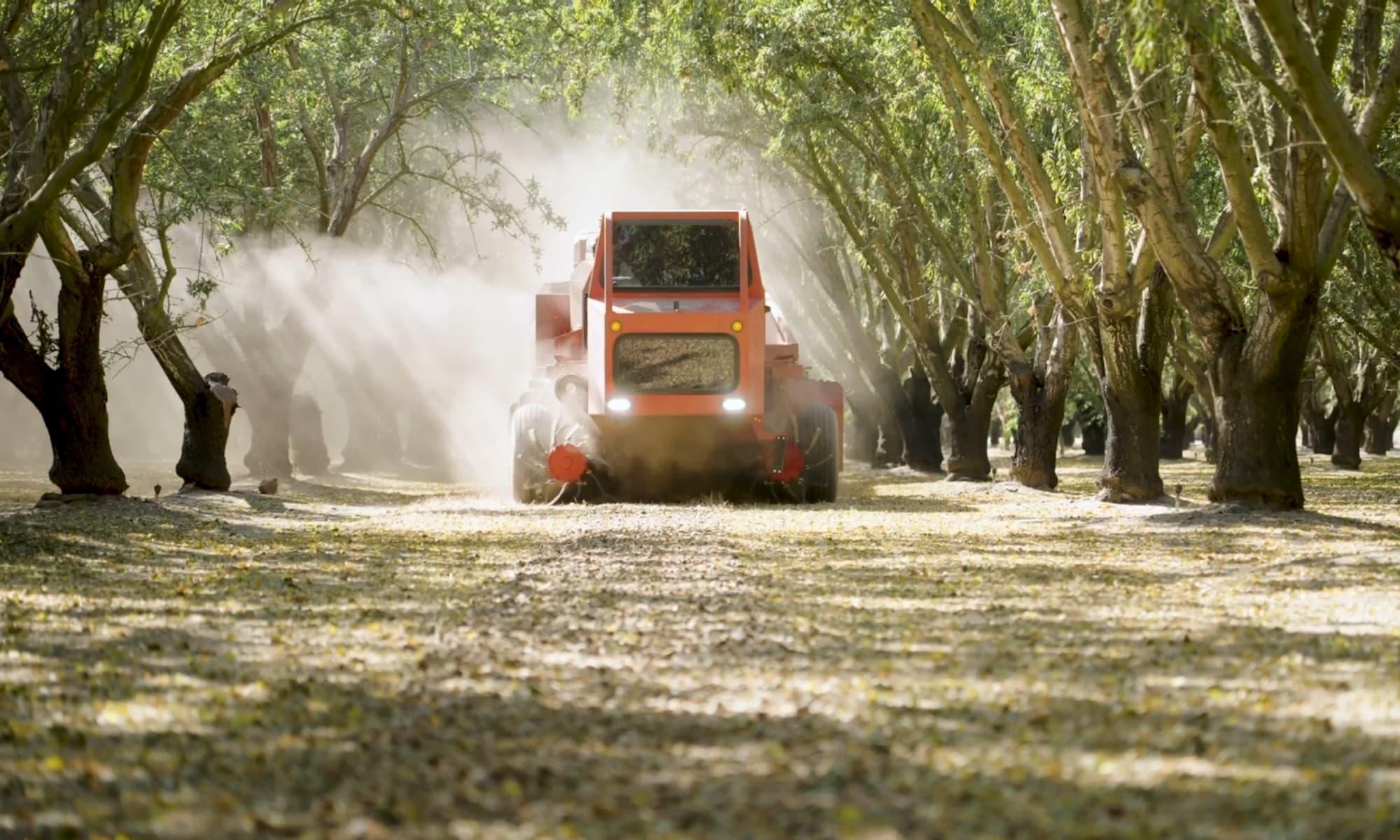
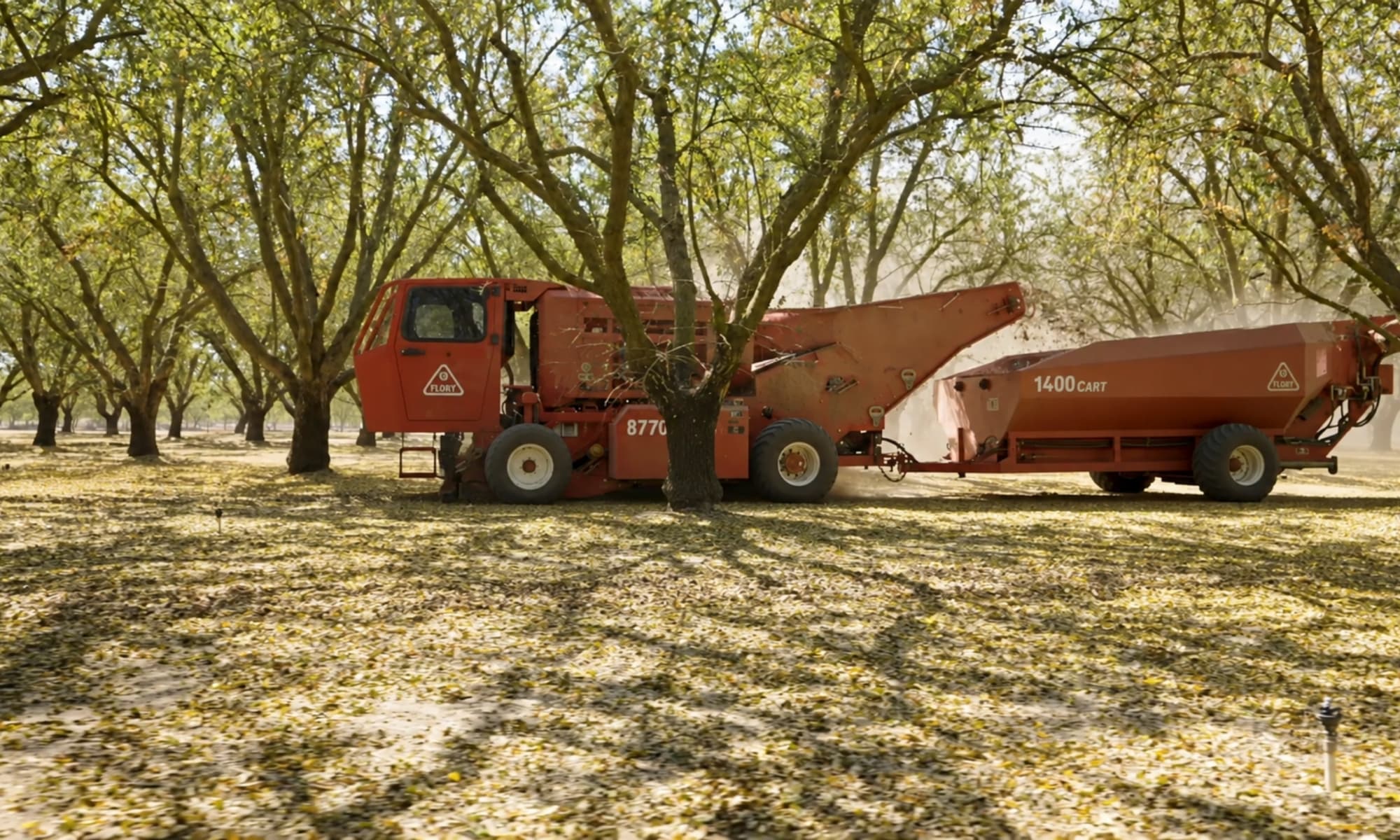
In its 2016 leaflet, the Department of Agriculture describes the most widespread harvest as manual: the inside of the canopy is beaten with poles so the almonds fall onto nets under the trees. It asks growers to start only when the hulls have split inside the canopy too. No Cypriot source found reports shakers or other harvest machines in use. In orchards planted for machines on suitable ground, mechanized harvesting can bring the crop in on time, with less risk of nuts deteriorating while they wait.
The leaflet puts the harvest from late August to October, depending on the cultivar. August is almost rainless at Nicosia (0.8 mm, 2002 to 2011 normals), but October averages 25.8 mm there, and recent seasons brought storms: September 2024 had an island average of 20.6 mm, 458% of normal, and August 2026 was the wettest August recorded since 1901 (Department of Meteorology). This guide therefore shows prompt pickup, with drying after hulling, alongside catching frames.
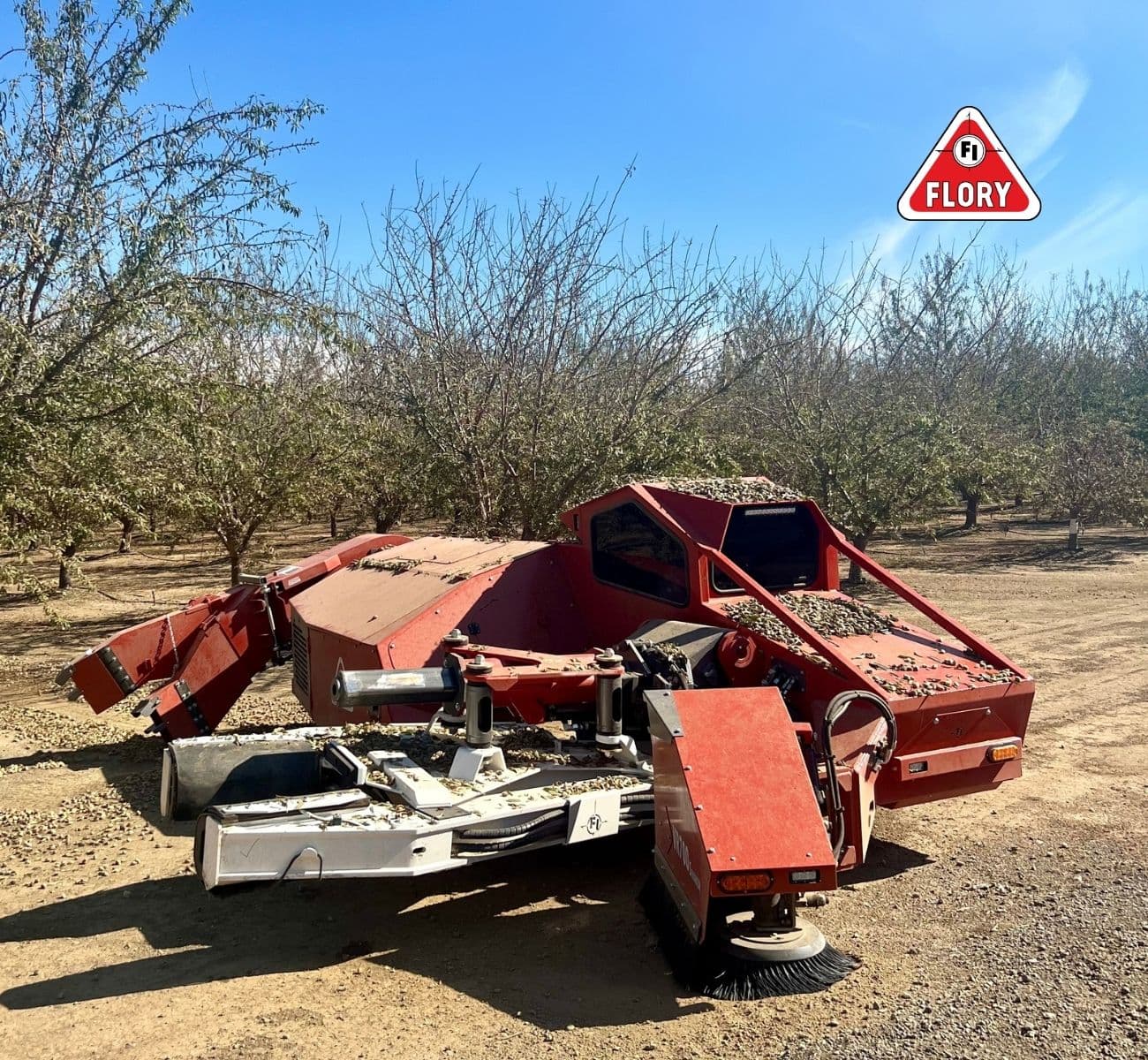
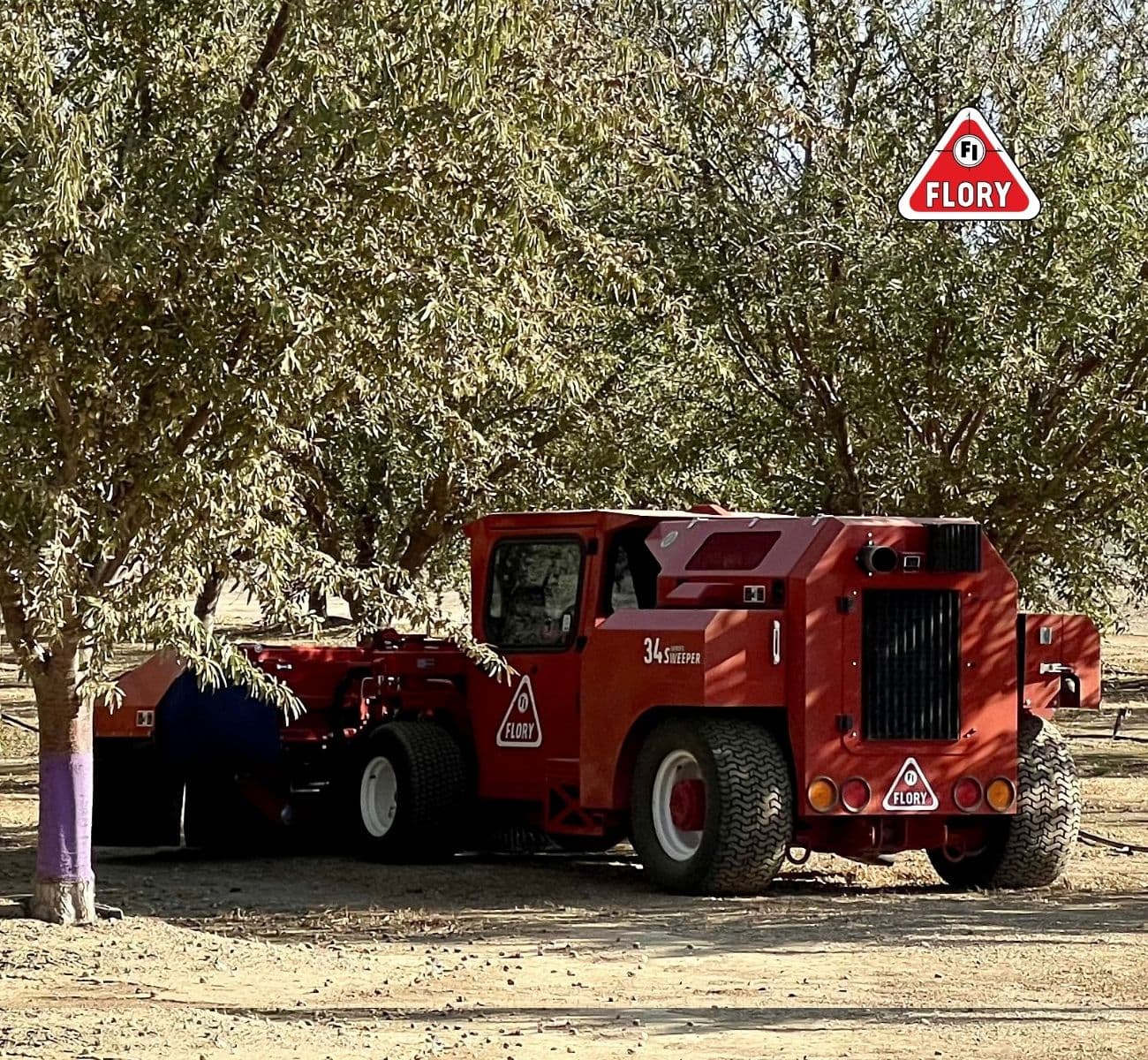
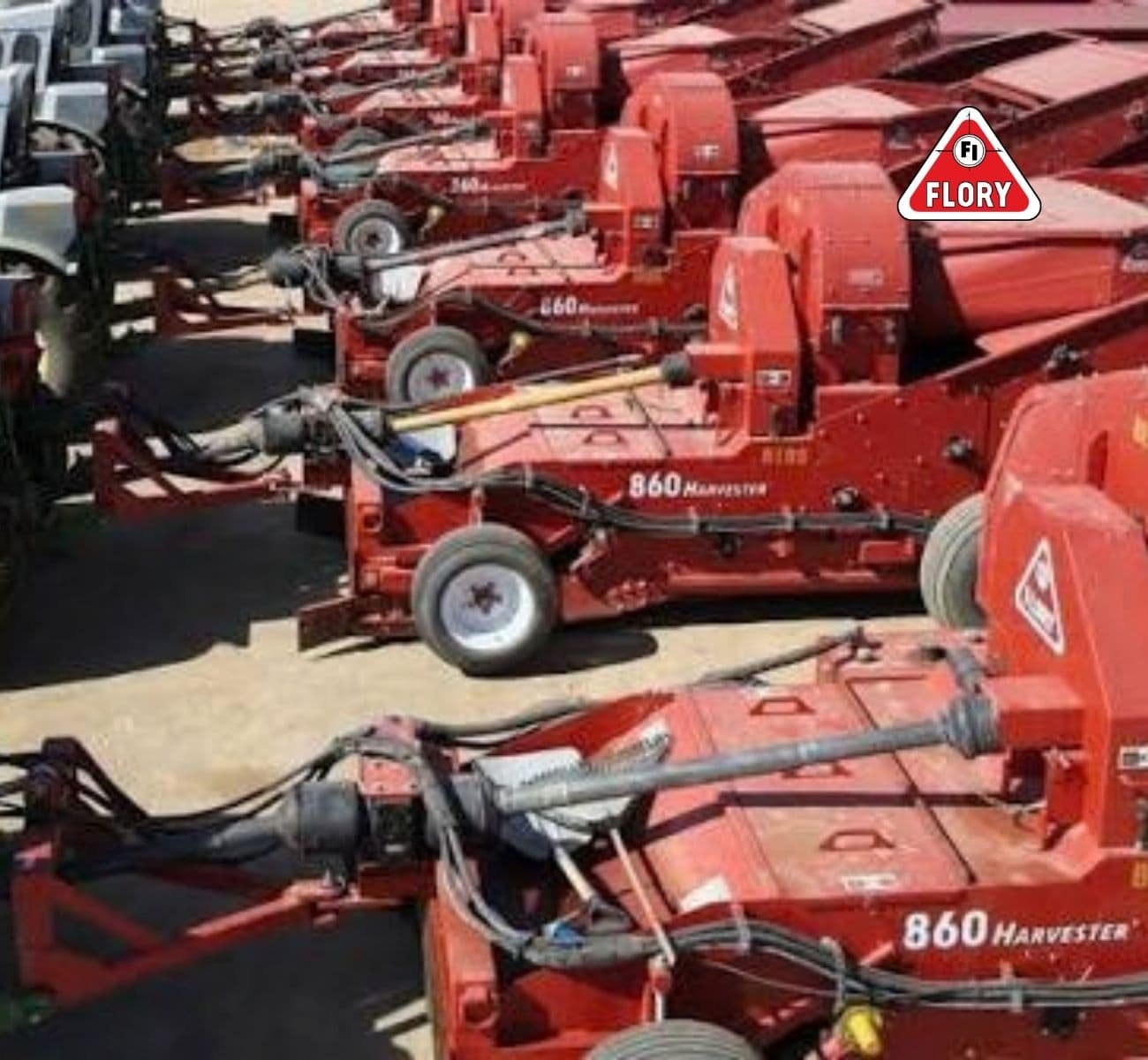
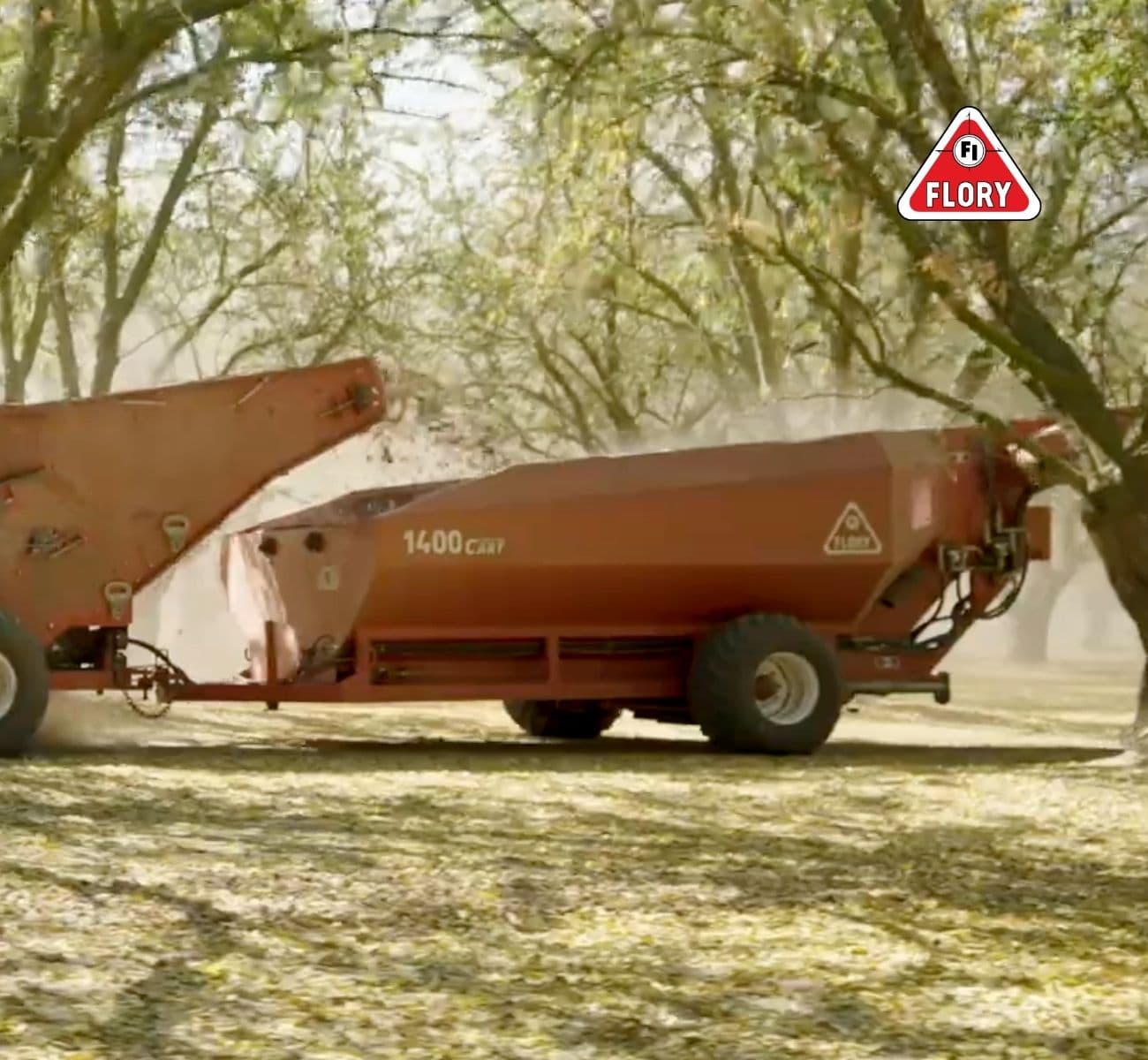
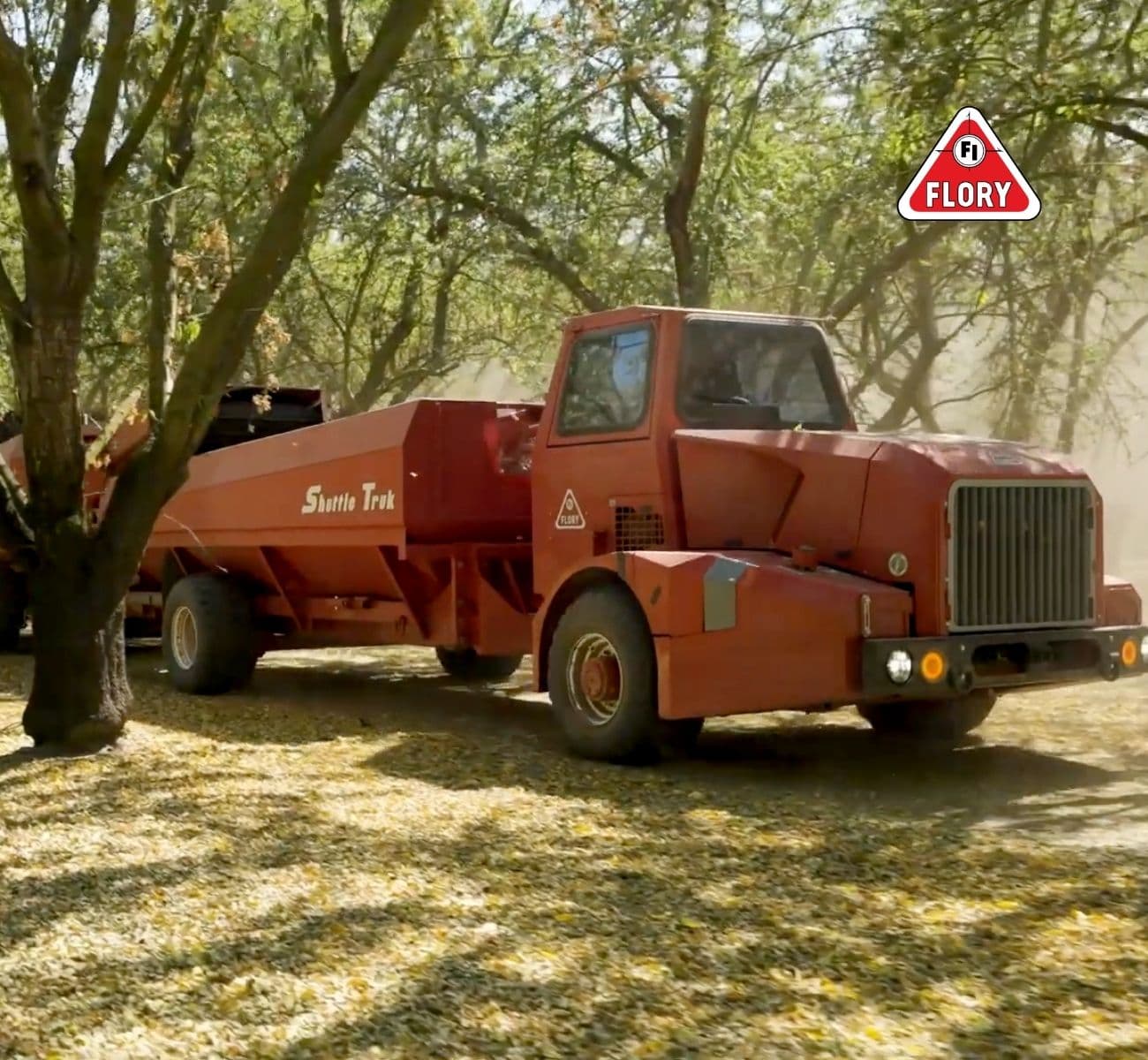
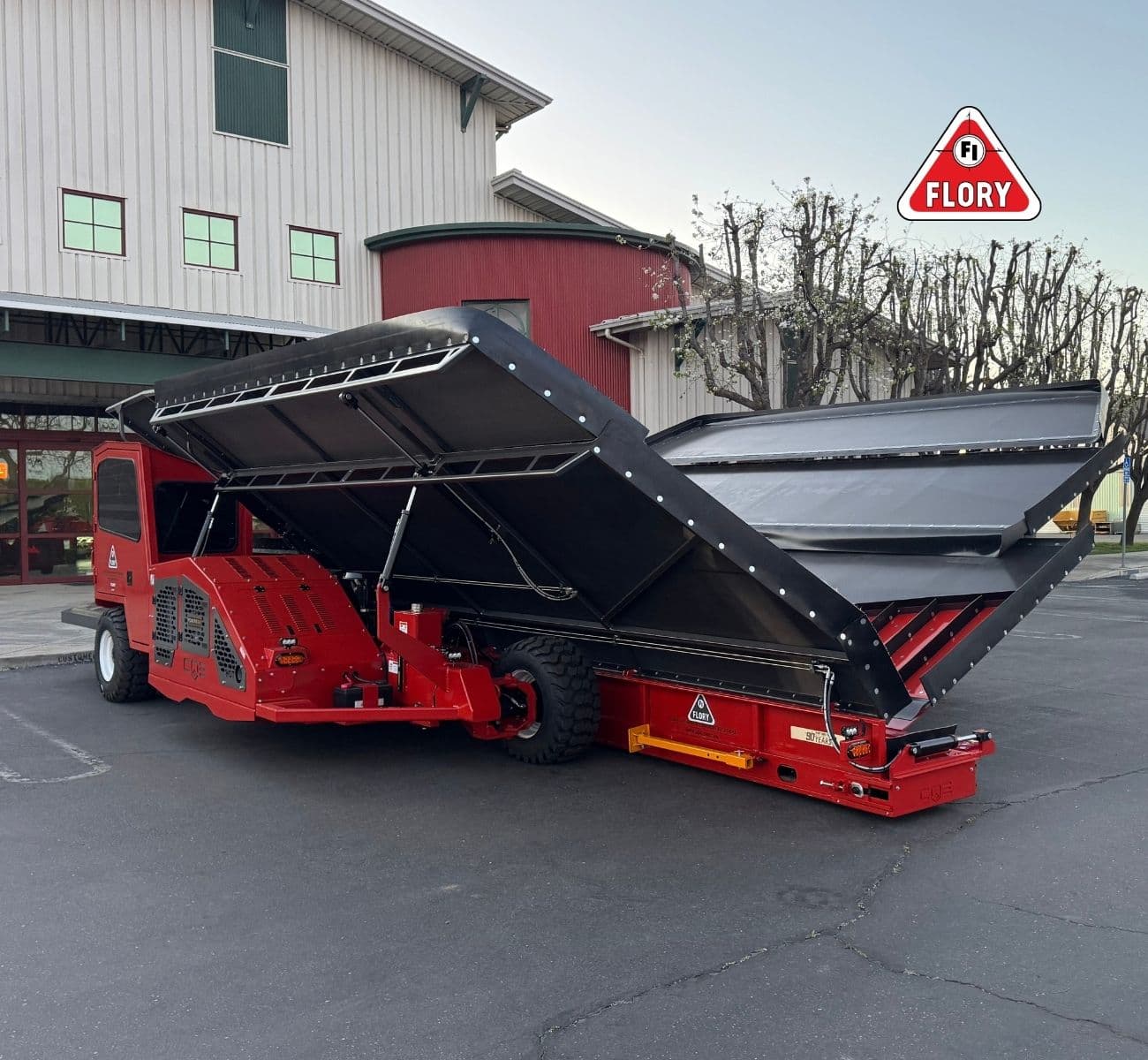
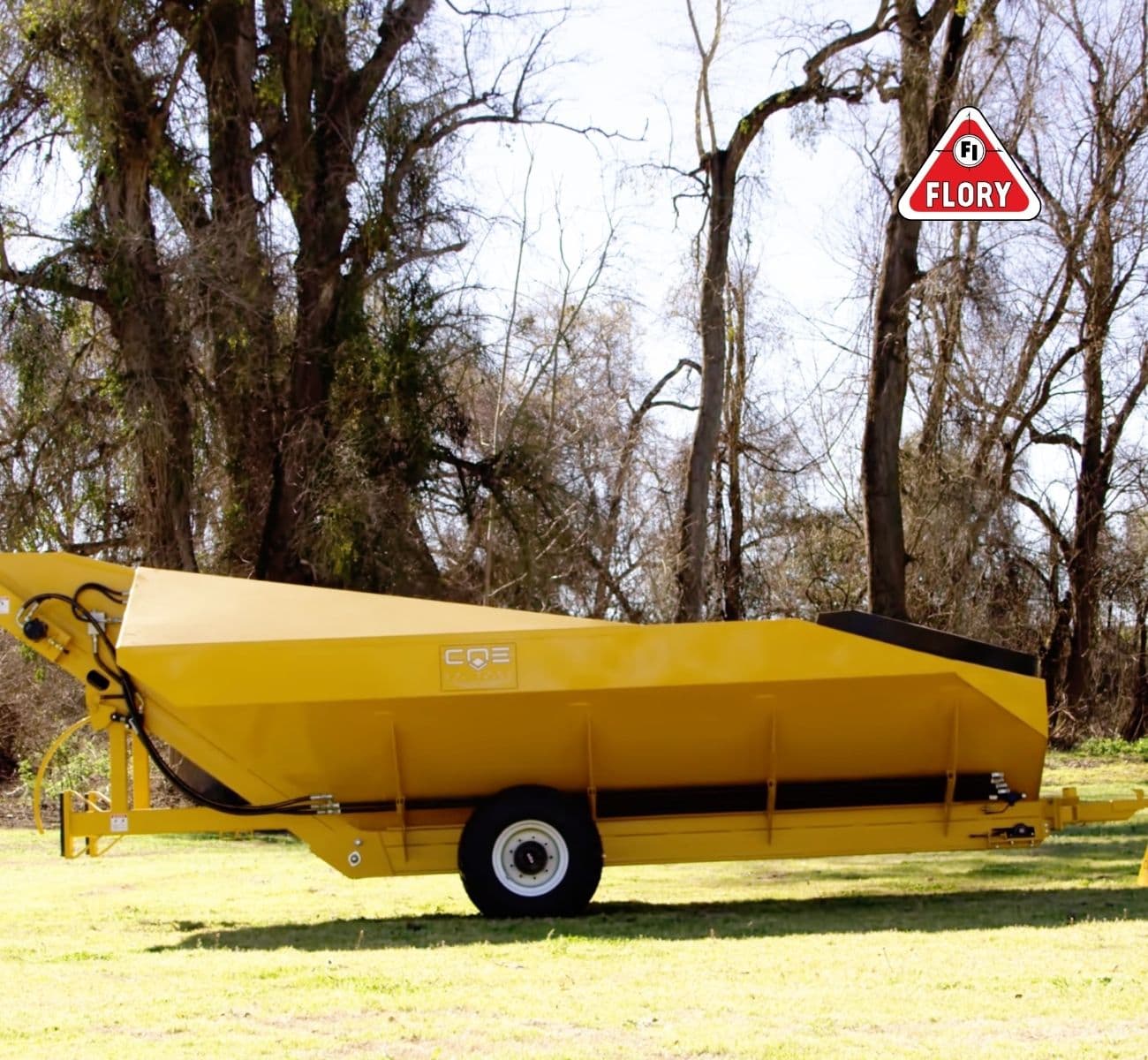
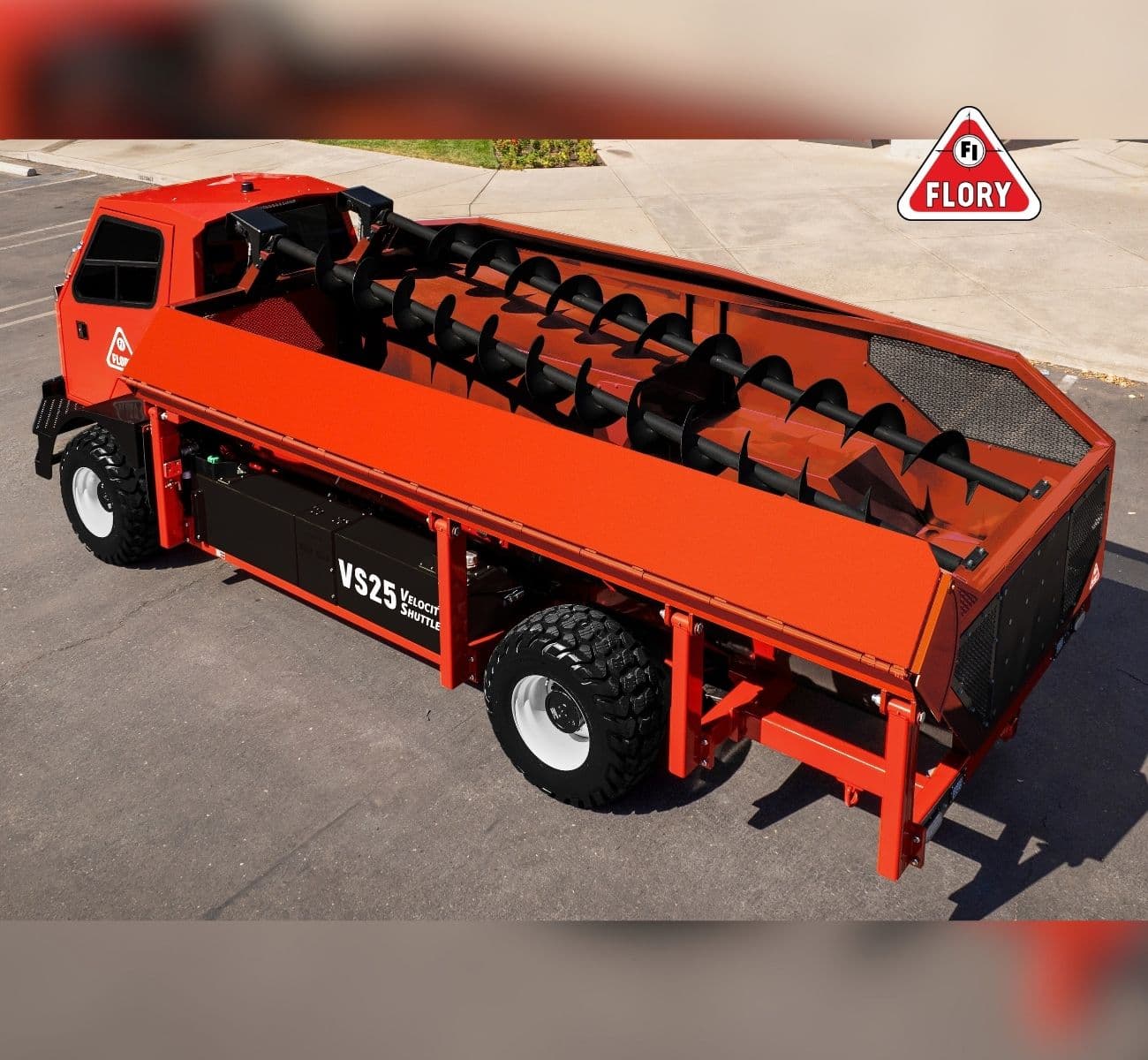
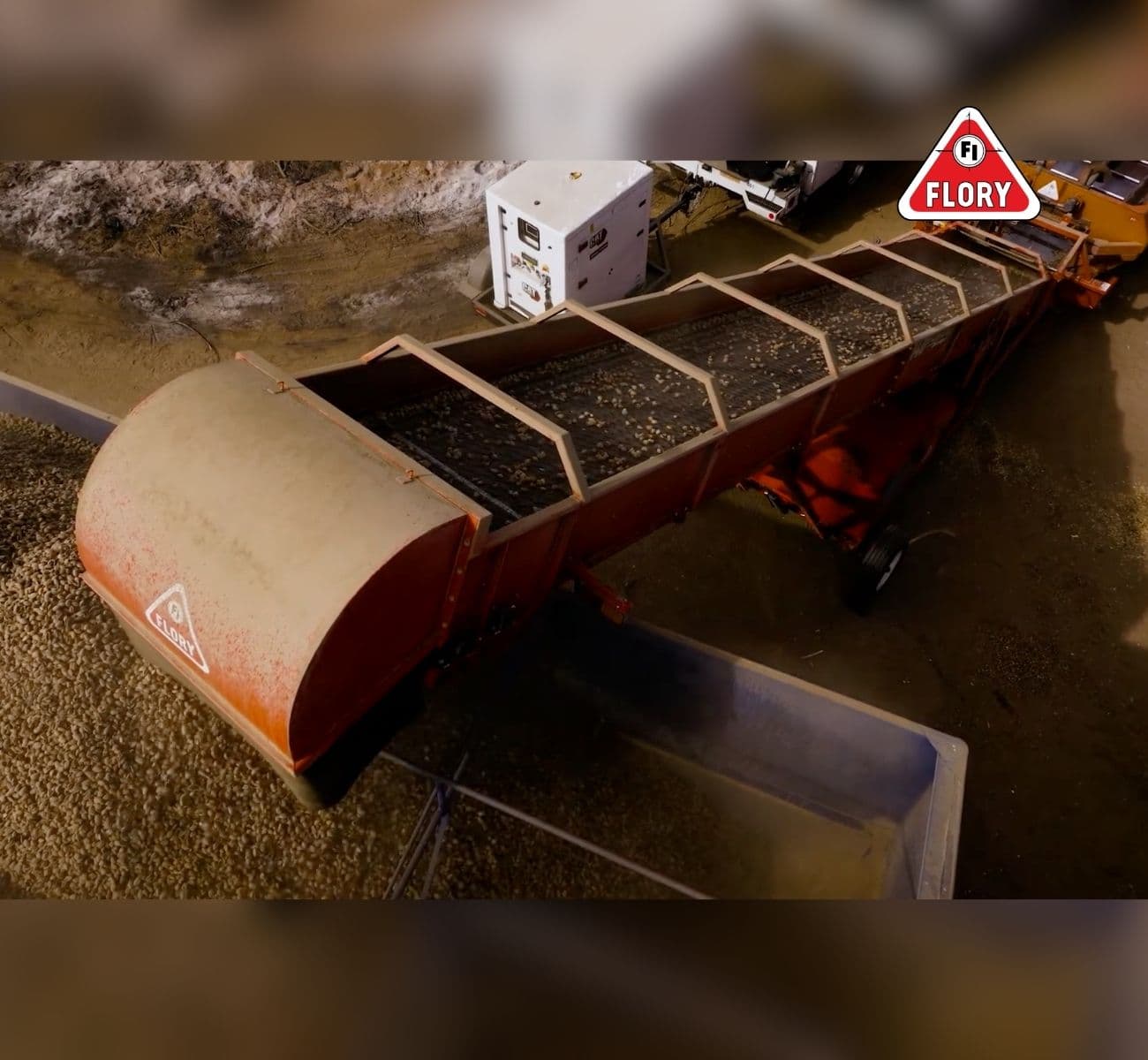
Flory harvesting machinery is available in Cyprus through OVE Europe for both systems. On the ground, the VR700 Shaker, 34 Series Sweeper and 860 Harvester (or the smaller 490) work with the 1500 Conveyor Cart and ST14 Shuttle. Off the ground, the Flory COE C7 Shaker and L2 Receiver catch the almonds in a frame around the trunk, the Flory COE B8 Cart and VS25 Shuttle carry them, and the 4840 Field Elevator loads trailers in both systems.
Almond Harvest Workflow (Recommended Equipment)

Practical Tips for Almond Harvesting
Wait until hulls have split inside the canopy too: the Department of Agriculture notes that hull split starts at the canopy's periphery.
Check each block separately: the Department of Agriculture puts the harvest from late August to October, depending on the cultivar.
Check the forecast before shaking and shake only what you can pick up promptly: September 2024 brought an island average of 20.6 mm of rain, 458% of normal.
Sweep and pick up soon after shaking, then hull and dry the almonds off the ground; University of California guidance adds that quick removal limits ant damage.
Where almonds must stay off wet ground, use catching frames: the Flory COE C7 Shaker works with the L2 Receiver.
Keep shakers and frames for larger orchards planted for machines, never household or scattered trees, small plots, terraces or steep slopes.
Get your recommended harvest setup
Enter orchard size, spacing, terrain, and target throughput—we’ll suggest a practical harvest workflow and equipment lineup.

Almond Post-Harvest Handling & Processing in Cyprus
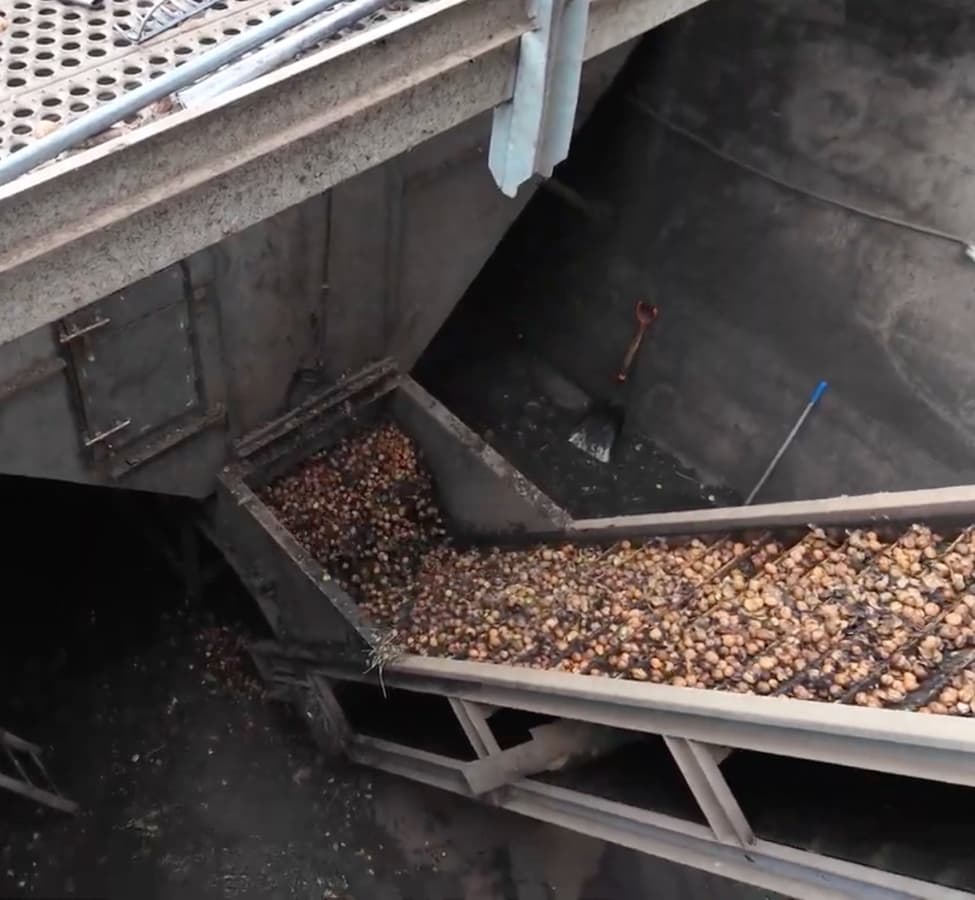
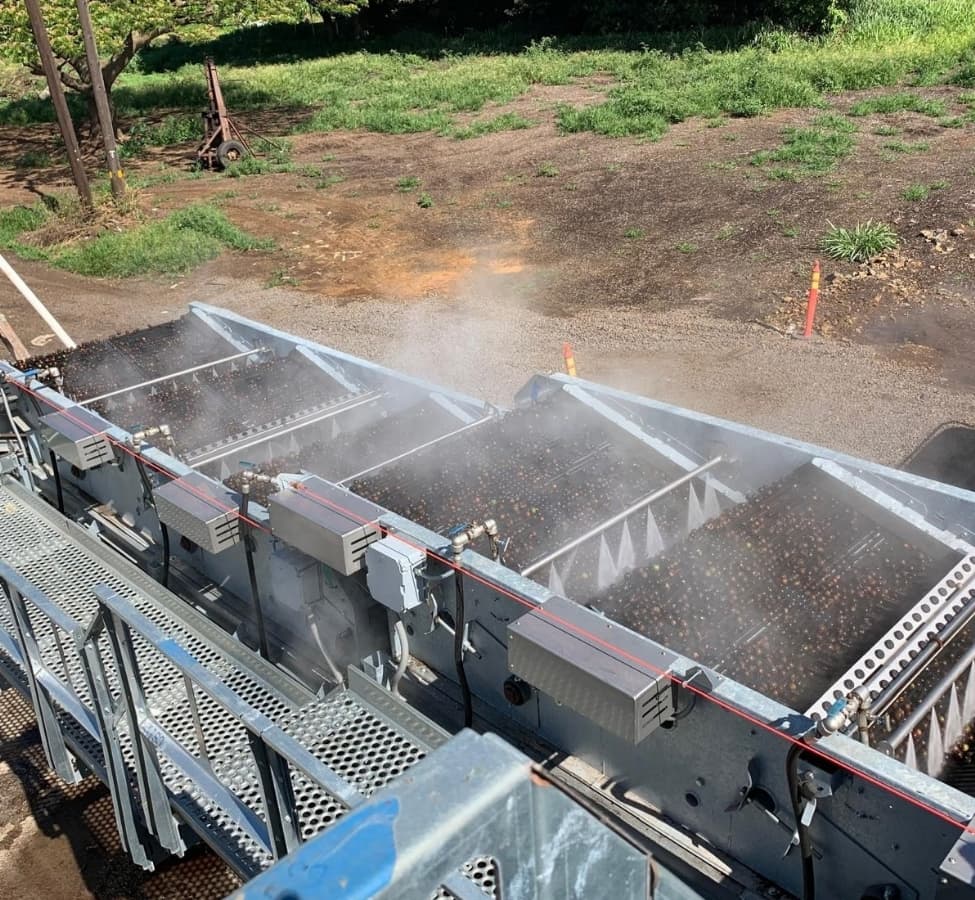
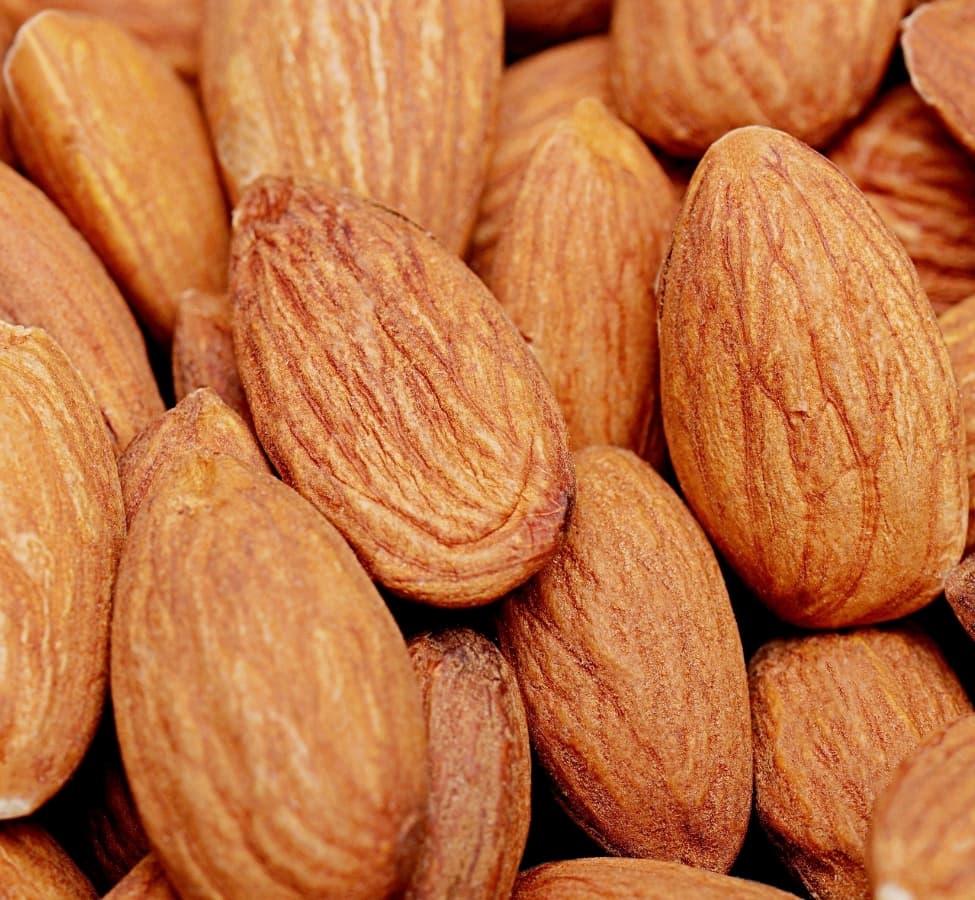
The Department of Agriculture's leaflet says harvested almonds are hulled in special hulling machines and then dried in the sun or in a dryer at 42 to 43 °C, to about 10% moisture or less, preferably 5 to 7%. Almonds are sold in the shell or as kernels after cracking in special machines, and kernels from water-stressed trees are fit only as second quality for processing.
A 2001 Cypriot order on almond quality set a maximum of 9% moisture for hulled almonds sold for direct consumption. As an EU member, Cyprus applies Regulation (EU) 2023/915: 8.0 µg/kg of aflatoxin B1 and 10.0 µg/kg in total for almonds sold to the final consumer or used as an ingredient, and 12.0 and 15.0 µg/kg for almonds to be sorted first.
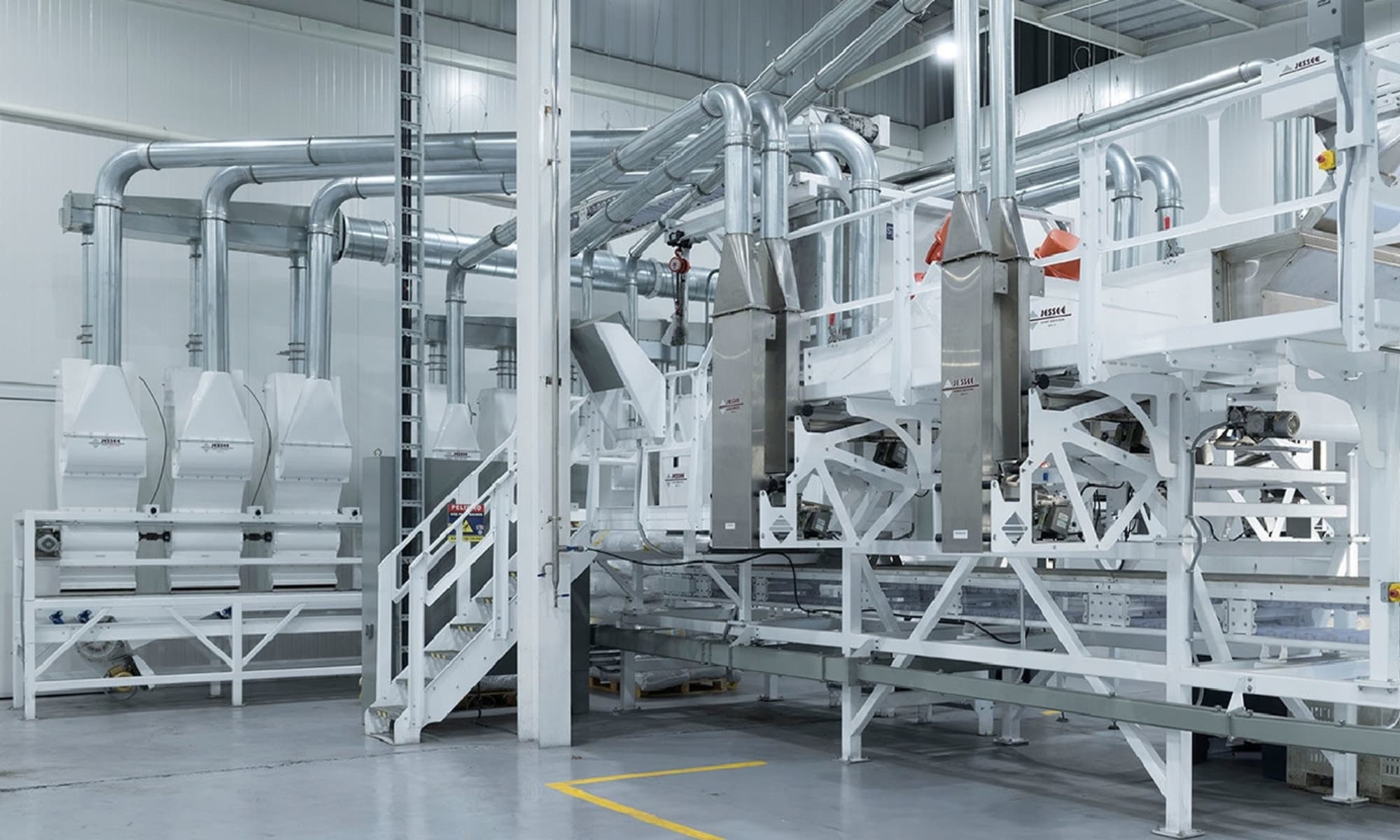
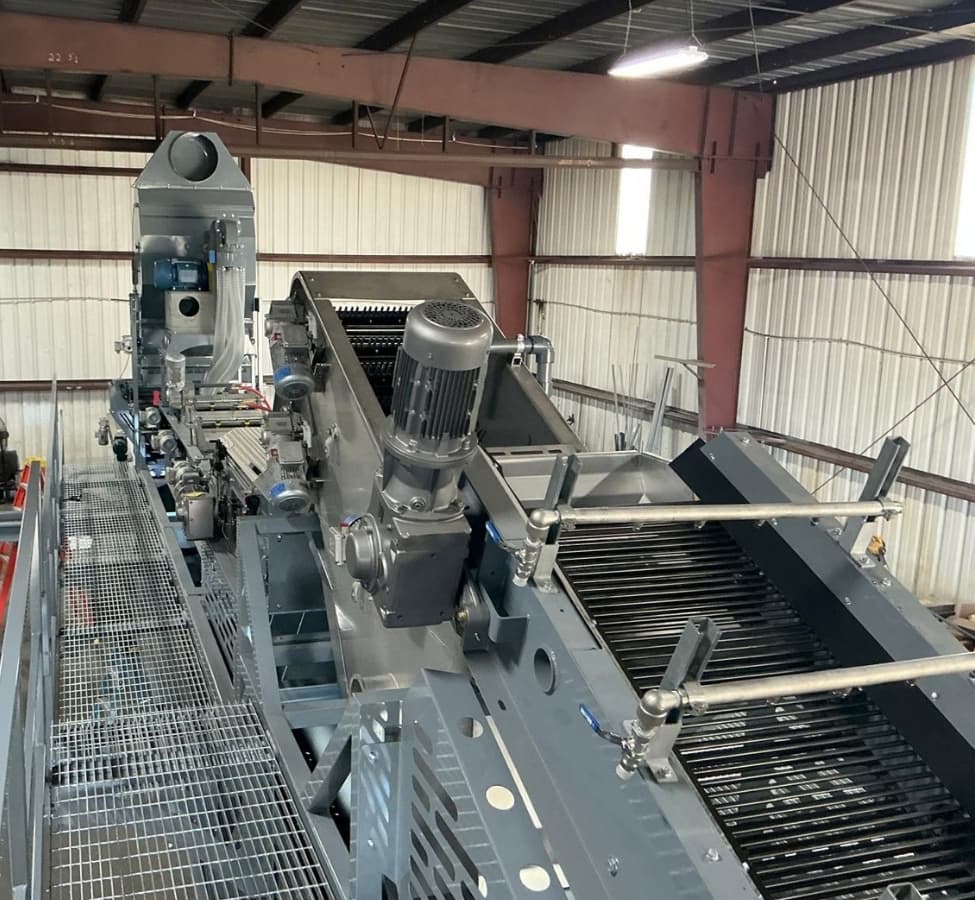
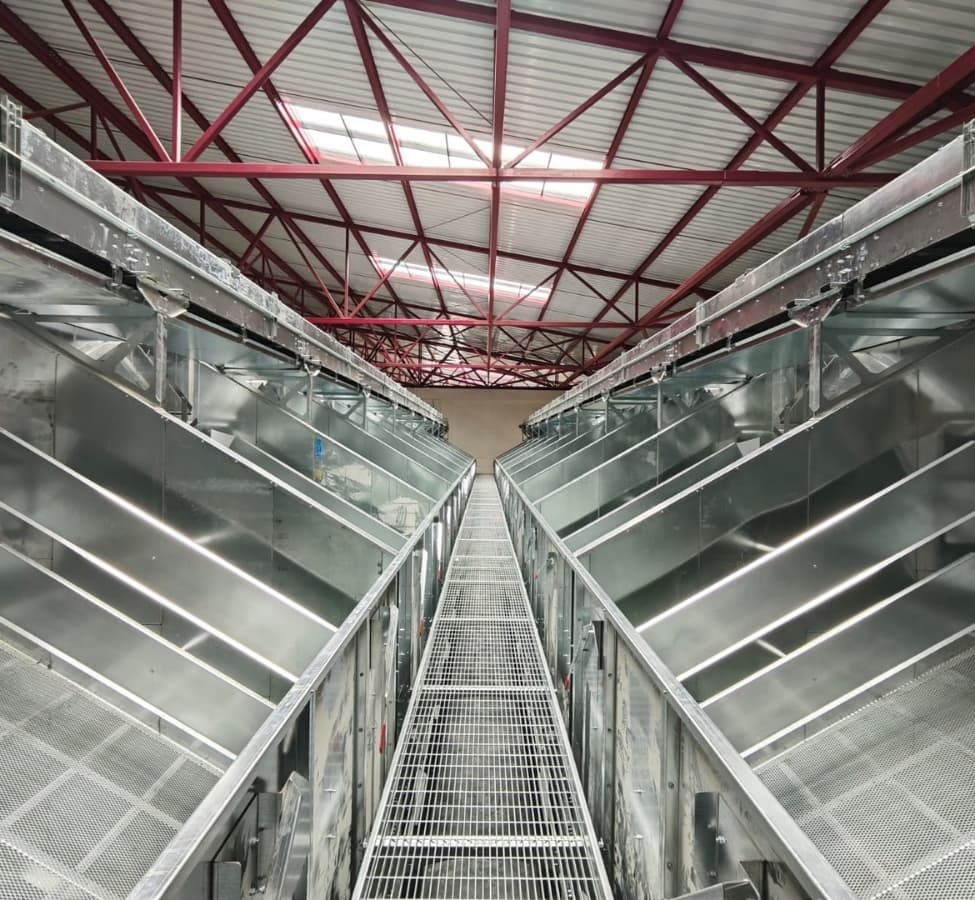
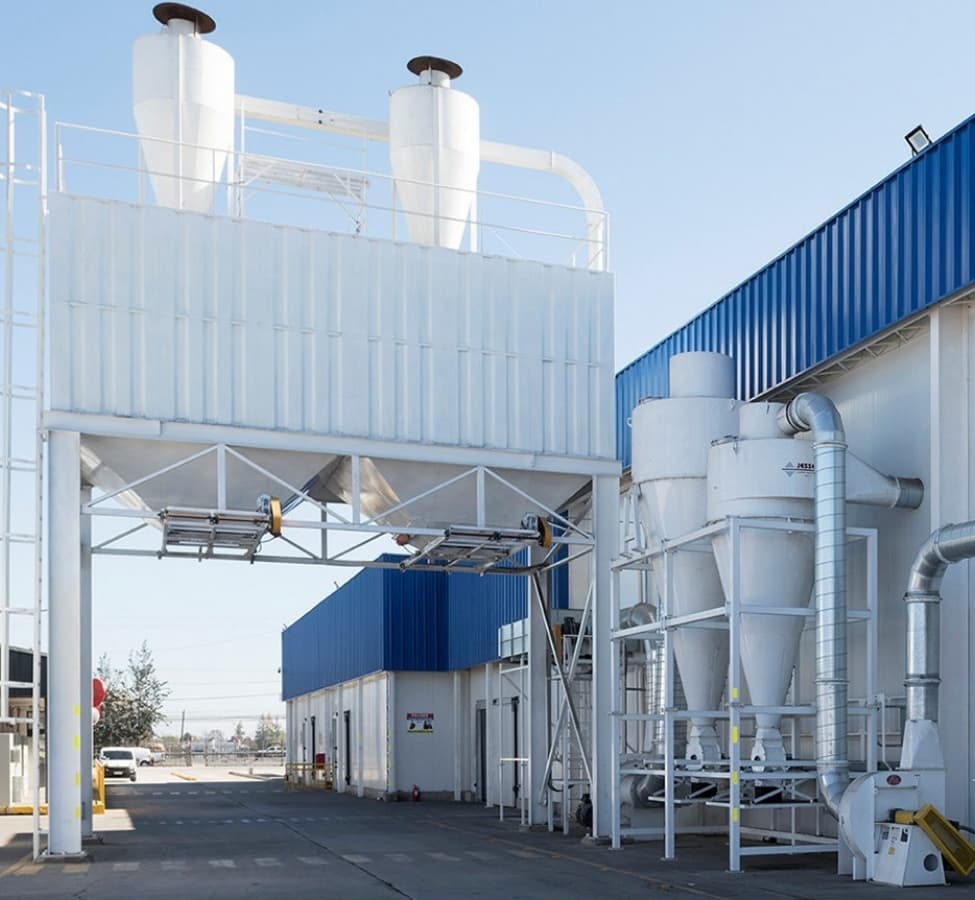
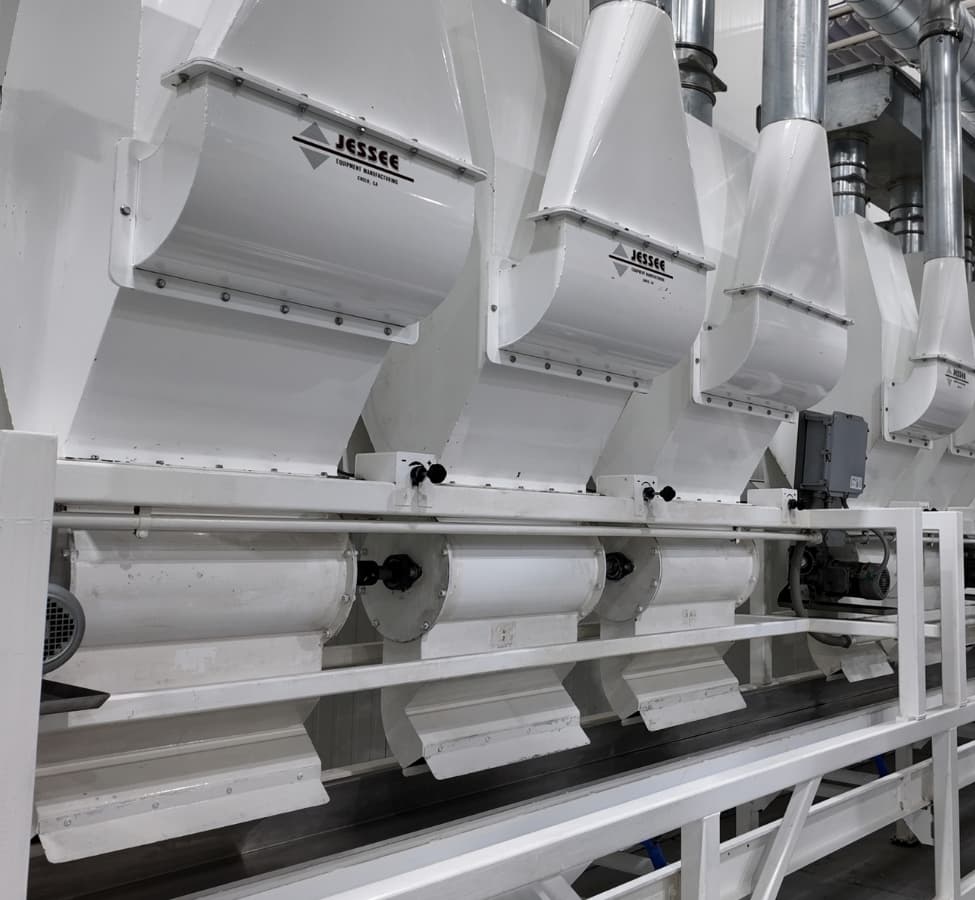
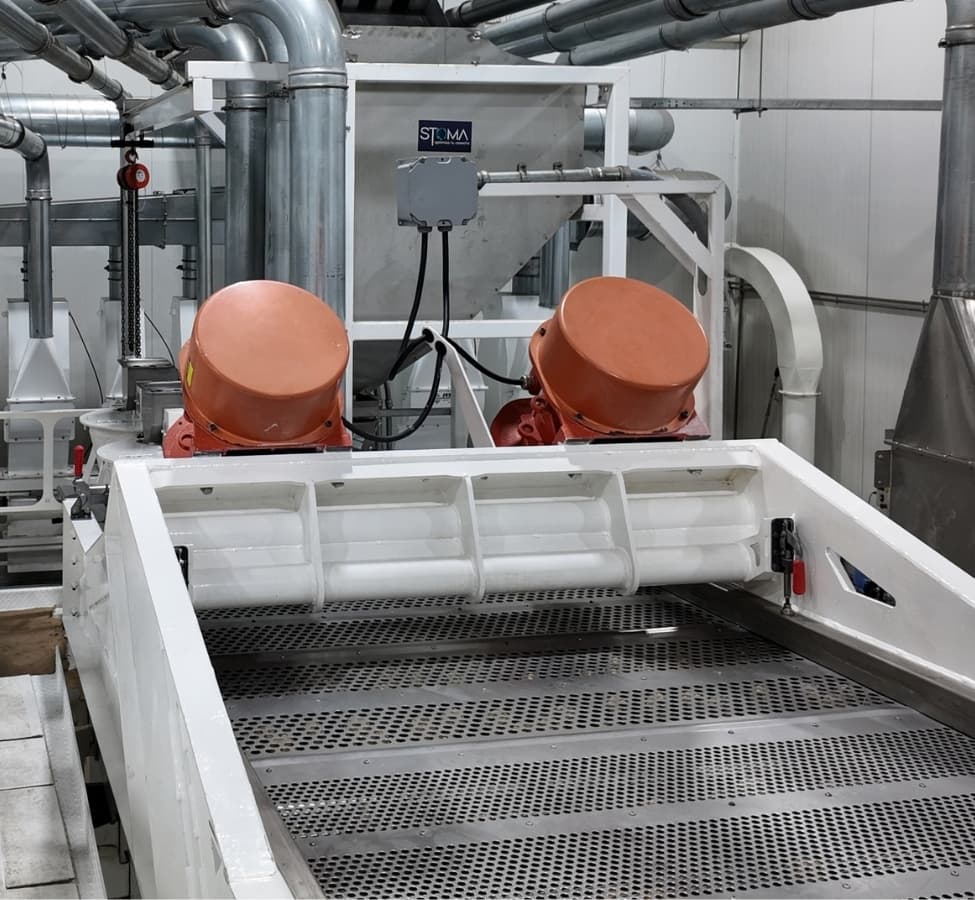
Cyprus imports far more almonds than it grows: in 2025 it imported 1,046.7 t of shelled almonds, 55.4% of them by weight from the United States and 27.3% from Greece, and exported 3.1 t of shelled almonds (UN Comtrade via WITS). Jessee, whose processing lines OVE Europe supplies, builds hulling, drying, in-shell cleaning and sizing, and shelling systems; its Airlegs nut cleaner was developed for the almond industry.
For general information only. Information may become outdated and does not replace site-specific professional advice. Consult a qualified agronomist and confirm equipment suitability with OVE before acting.
Practical Tips for Almond Post-Harvest Handling & Processing
Hull promptly picked or frame-caught almonds while the hulls are fresh, then dry the nuts in the shell before storage.
Dry to 5 to 7% moisture where possible: the Department of Agriculture asks for about 10% or less, preferably 5 to 7%, in the sun or in dryers at 42 to 43 °C.
Never stockpile undried almonds: University of California guidance for nuts dried on the ground warns against stockpiling above 12% hull, 6% kernel or 9% fruit moisture.
Store dried almonds dry and by lot: a 2001 Cypriot order capped moisture at 9% for hulled almonds sold for direct consumption.
Test lots against Regulation (EU) 2023/915: 8.0 µg/kg of aflatoxin B1 and 10.0 µg/kg in total for almonds sold to consumers.
Keep bitter almonds out of sweet lots: the 2001 order allowed at most 2% bitter almonds in Class I and 3% in Class II.
Recommended Post-Harvest Handling & Processing Stages
Plan your post-harvest line
Estimate tons/day, cleaning & drying capacity, storage needs, and cost/kg—then build your equipment plan in phases.