





Almond Orchard Establishment in Egypt
Almond is a small crop in Egypt, grown almost entirely in the governorates outside the Nile valley: of 1,156 feddans in 2019, Matrouh had 719, North Sinai 295 and South Sinai 109 (Ministry of Agriculture and Land Reclamation). A 2012 Horticulture Research Institute paper calls Egypt's almond production very little compared with world output, and in North Sinai, a 2023 report says, almonds are sown from seed each October at least 3 m apart.
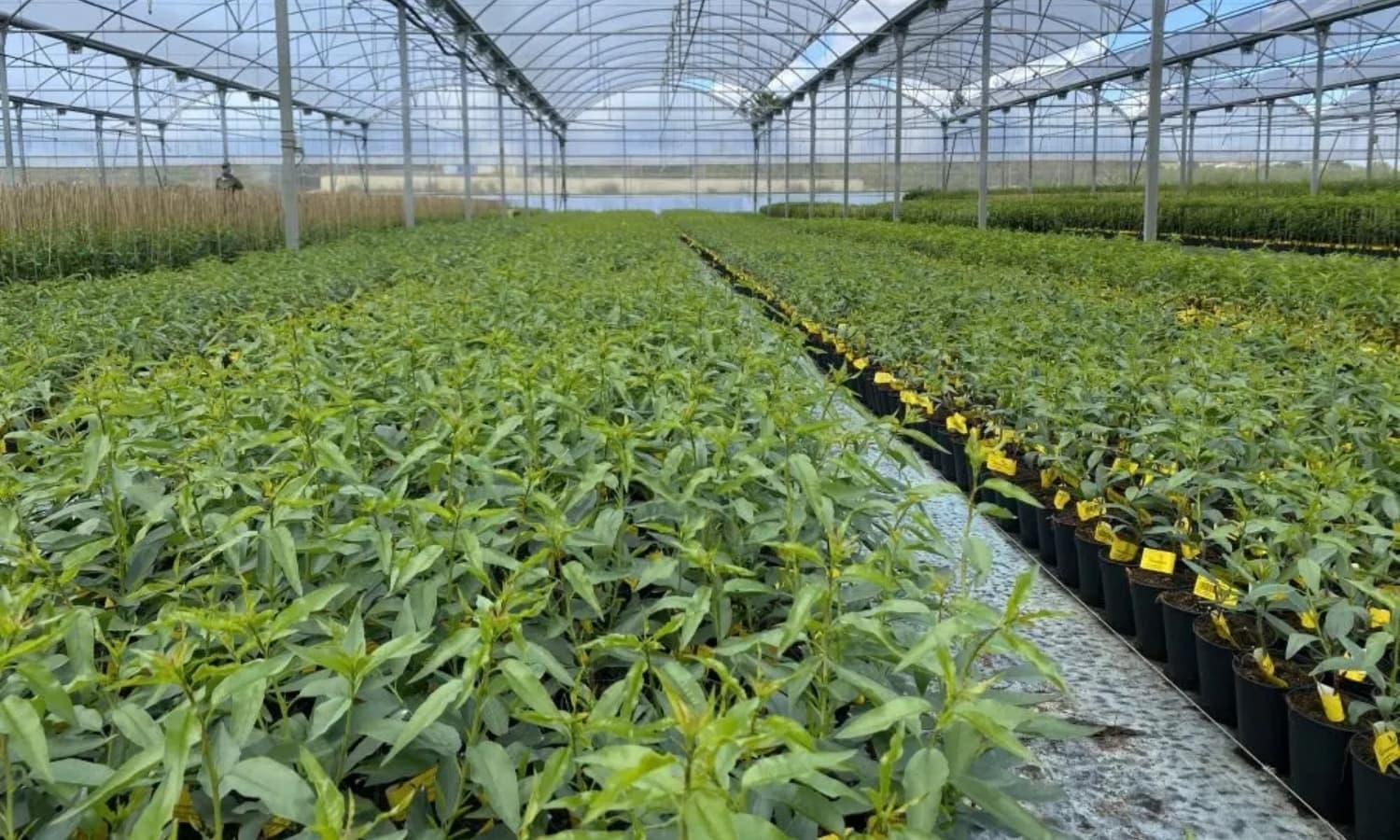
The same paper says Egyptian almonds are mainly budded on bitter almond rootstock, which needs deep, well-drained soil, so production is limited to porous soils with a deep water table; bitter almond roots are also prone to nematodes. Desert Research Center advice from Matrouh, reported in 2020, calls bitter almond a strong, drought-tolerant rootstock, grafted when seedlings are three years old or their stem is about 2.5 cm thick.
Studied plantings range from 7 × 7 m in a rain-fed Matrouh orchard of the cultivar Umm al-Fahm to 5 × 5 m for young budded trees under drip on sandy soil at the National Research Centre's Nubaria station, where Nonpareil and Ne Plus Ultra were tested. Advice from Matrouh warns against wadi spots where flood water stands for days and soils with shallow impermeable layers, as young almond trees are very sensitive to waterlogging.

Practical Tips for Almond Orchard Establishment
Choose deep, porous soils with a deep water table for trees on bitter almond rootstock, as Horticulture Research Institute work notes.
Avoid wadi spots where flood water stands for days and soils with shallow impermeable layers: young almond trees are very sensitive to waterlogging.
Match the rootstock to the water: a 2016 CIHEAM review rates almond seedlings as suitable for rain-fed orchards and peach seedlings for irrigated ones.
On sandy soil under drip, consider Nemaguard: in a 2017 to 2019 National Research Centre trial at Nubaria, it gave the strongest young Nonpareil and Ne Plus Ultra trees.
In the nursery, bud in mid-July: in a Horticulture Research Institute trial on sandy soil (2009 and 2010), it did better than mid-August or mid-September.
Plan rows, headlands and tree form for the shaker, sweeper and harvester before planting, and check trunk clearance with OVE Europe.
Recommended Establishment Stages
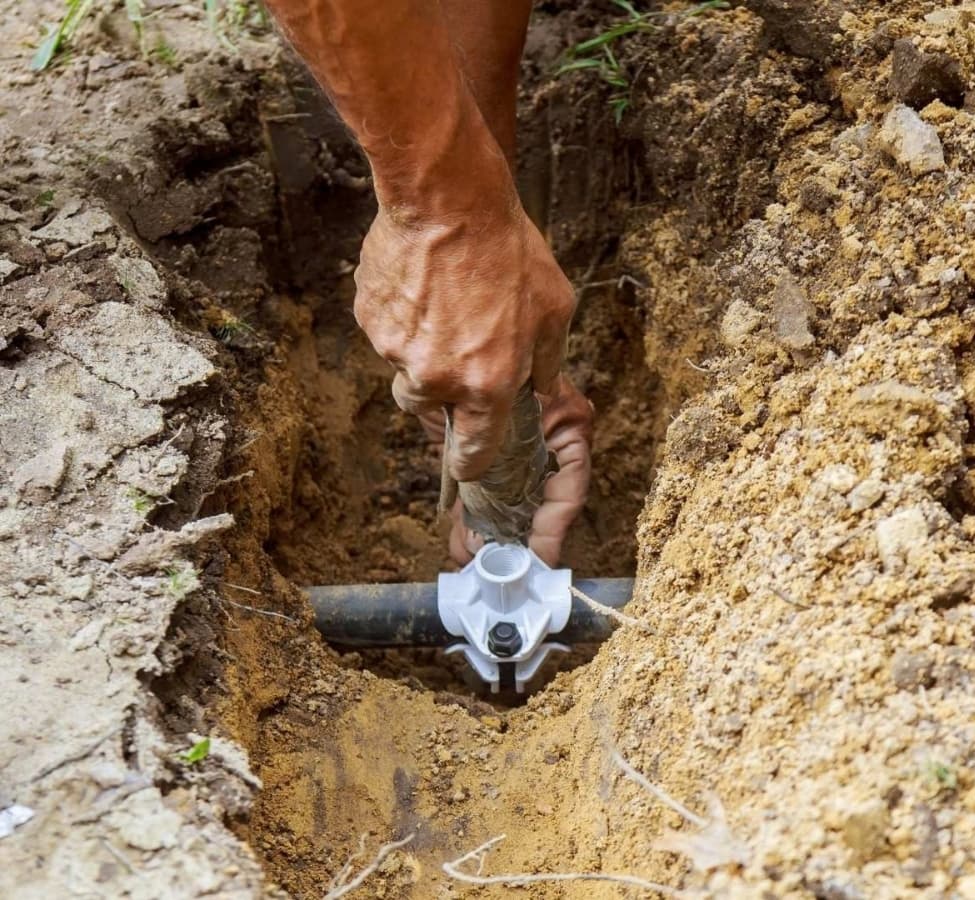
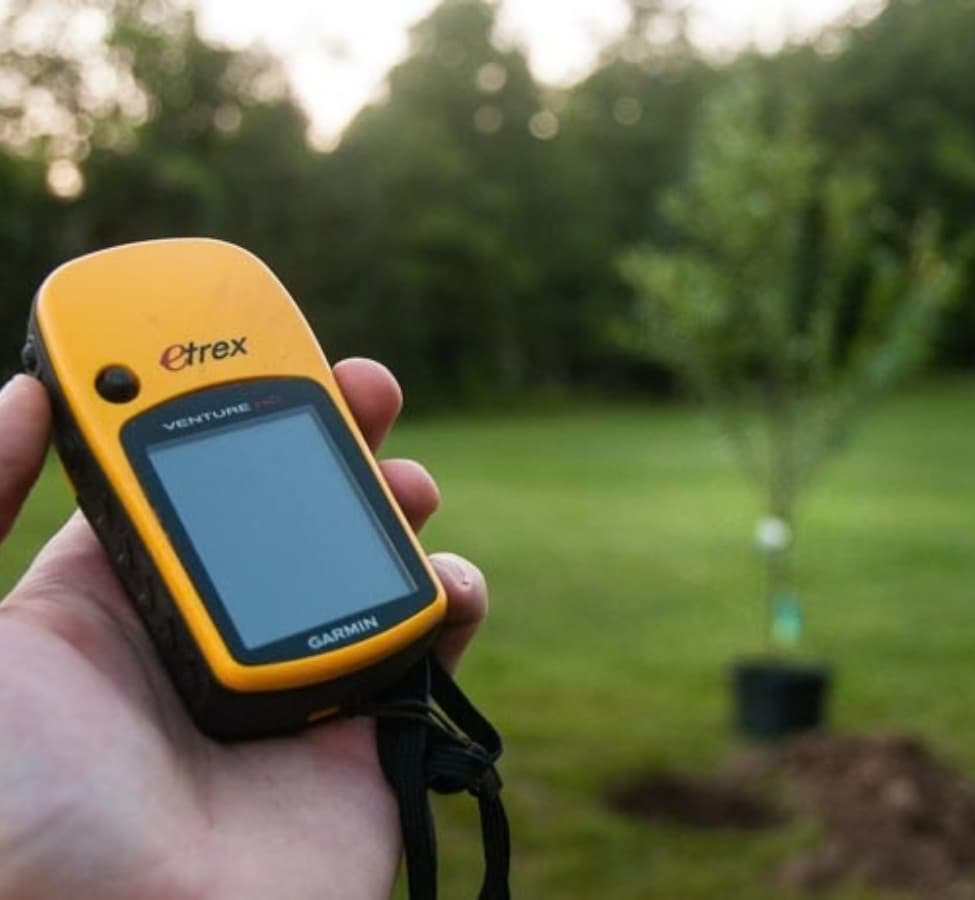

Almond Orchard Care & Maintenance in Egypt
Rain-fed almond depends on winter rain: the Matrouh orchard studied by the Desert Research Center received about 253 and 261 mm from November to March in the 2021-22 and 2022-23 seasons, with January the wettest month. A 2026 newspaper report from North Sinai says that two dry years in a row can make trees wilt and die, and that changing rainfall has led some farmers to switch to more drought-tolerant crops.
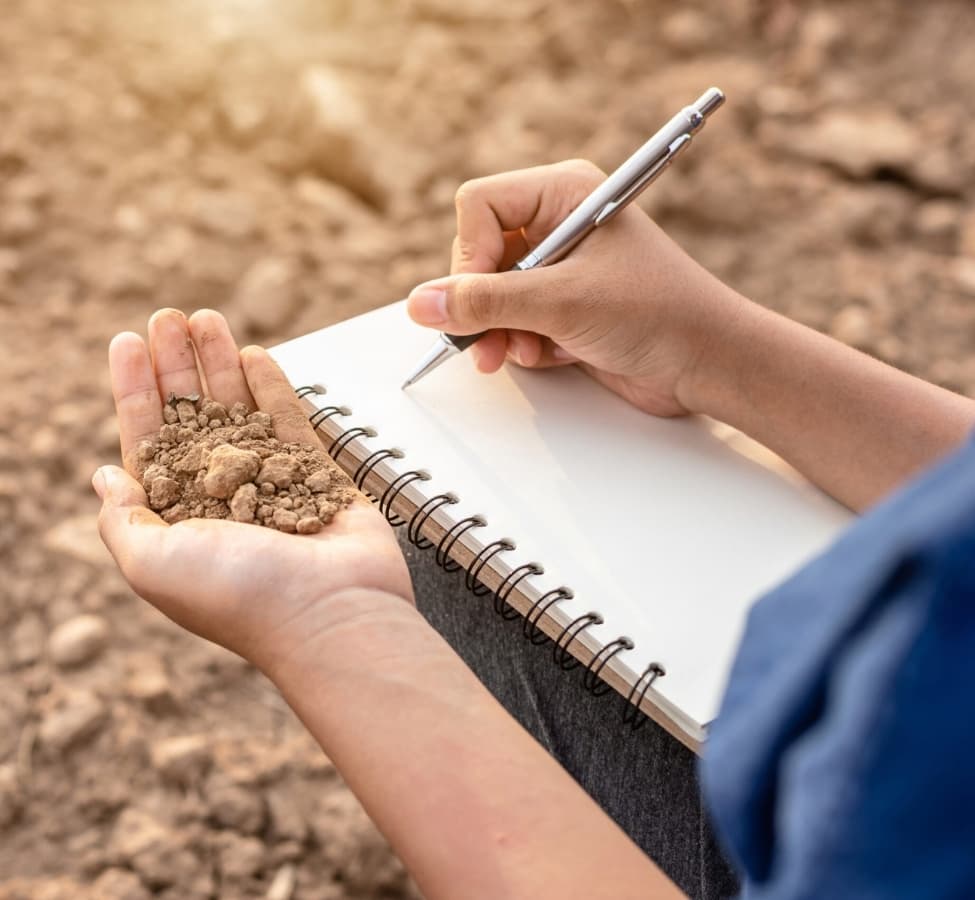
In the Matrouh study orchard, trees received their winter care in mid-November, before the rains, with sheep manure and mineral fertilizer; citing earlier work, the study says Matrouh almond trees get no fertilizer after that, and it notes that rain-fed almond trees in Egypt lack nutrients, especially boron. Matrouh advice for bitter almond seedlings before grafting is 20 liters of fresh water every 10 days, with shade from palm fronds, straw or brushwood.
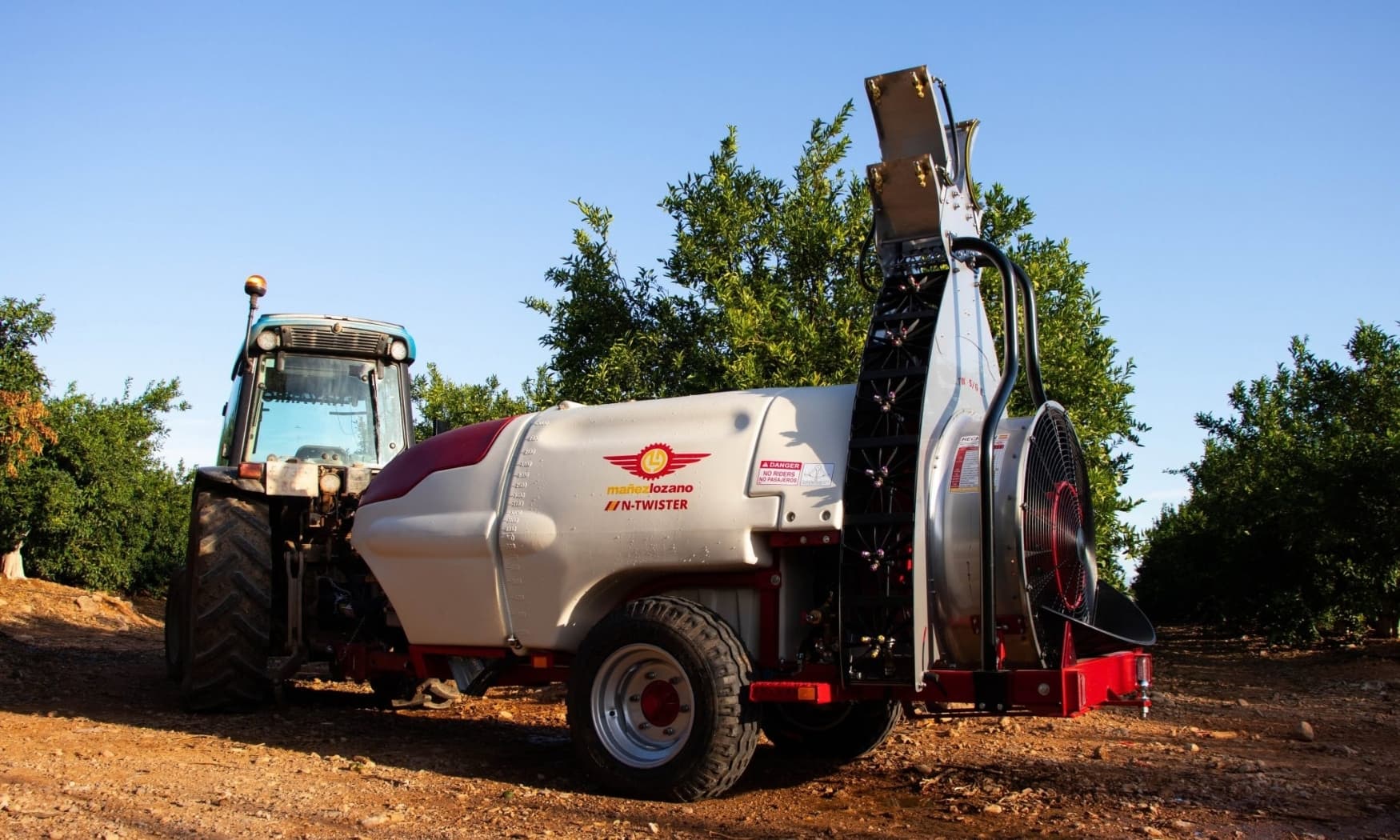
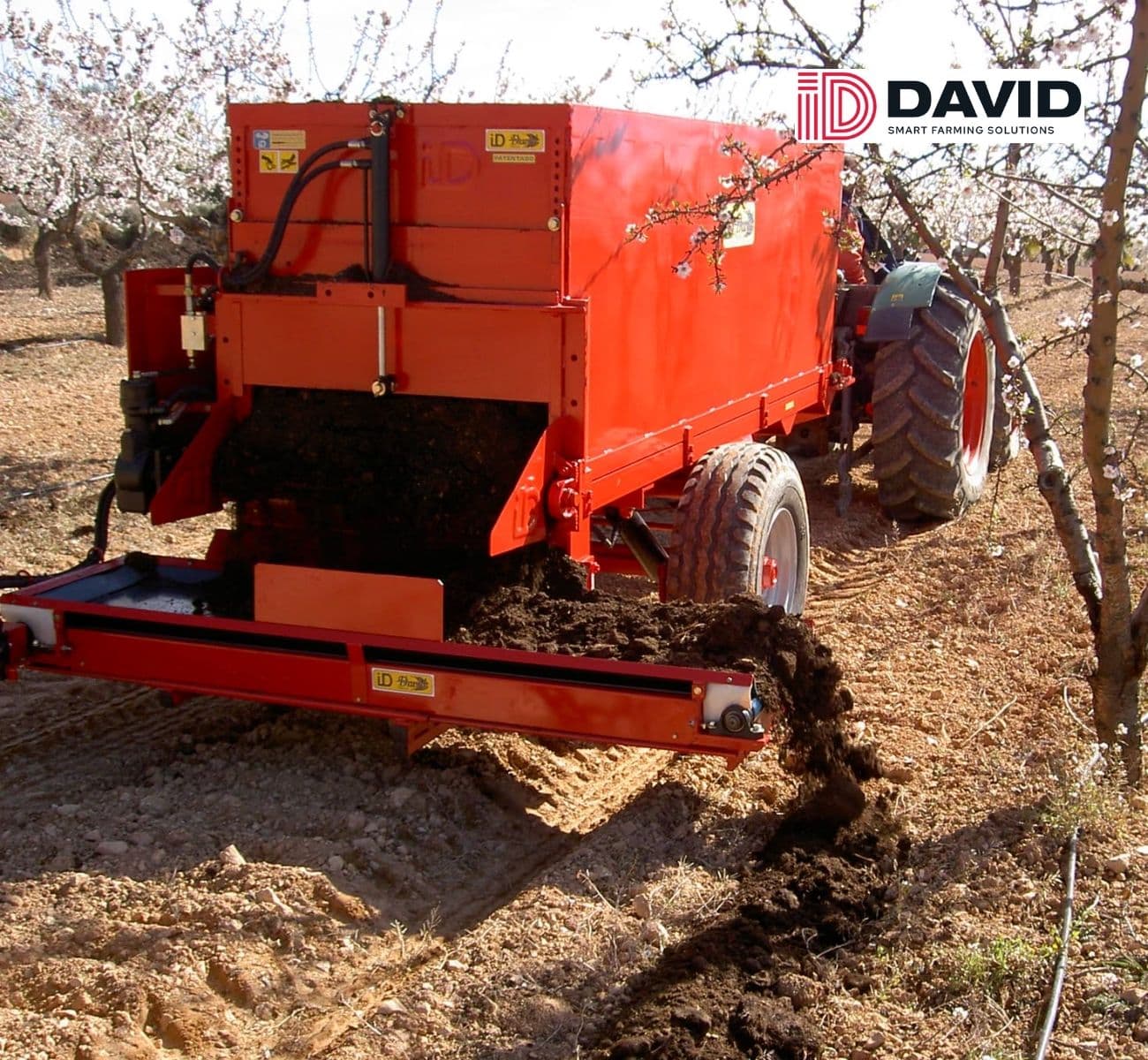
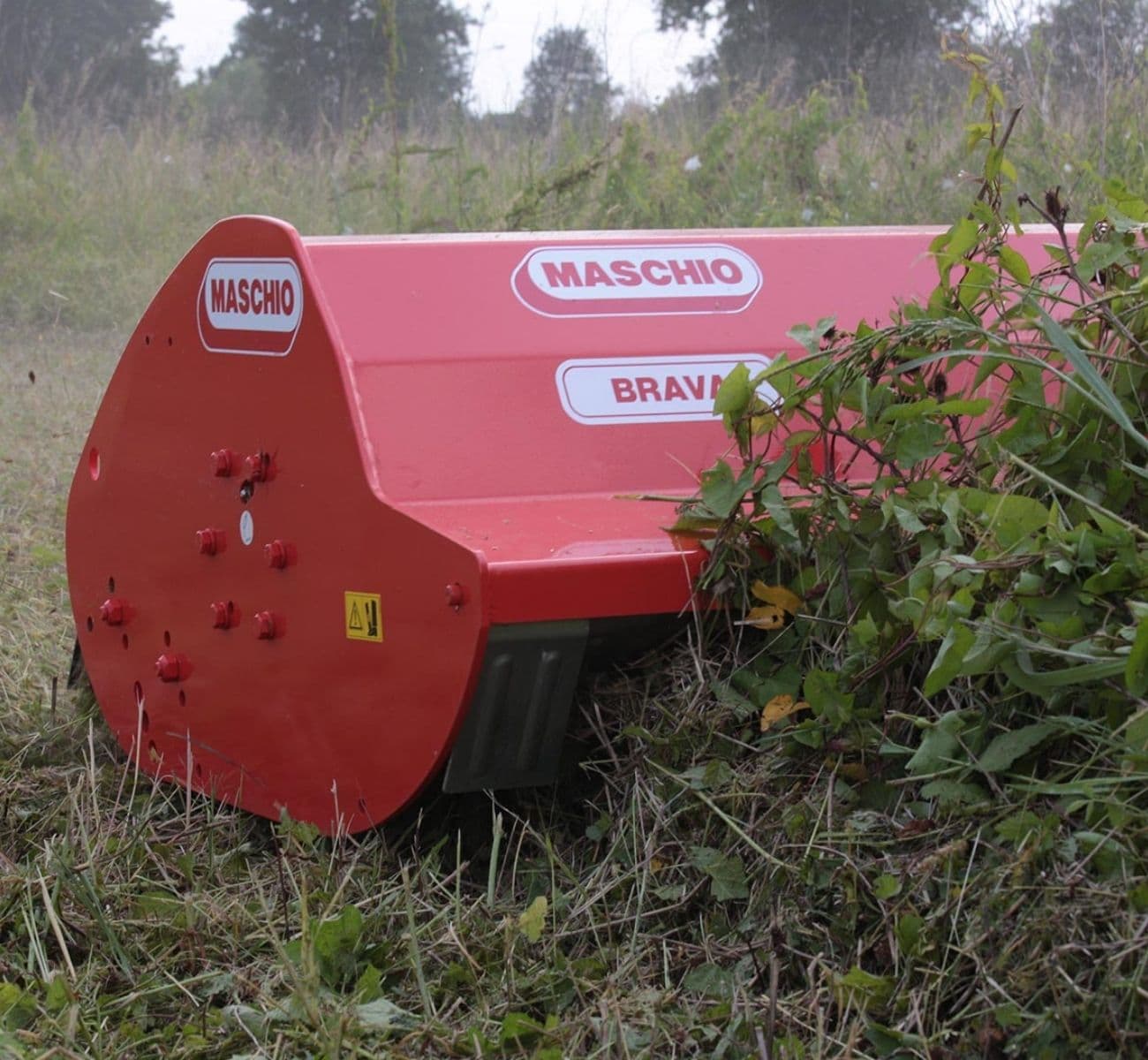
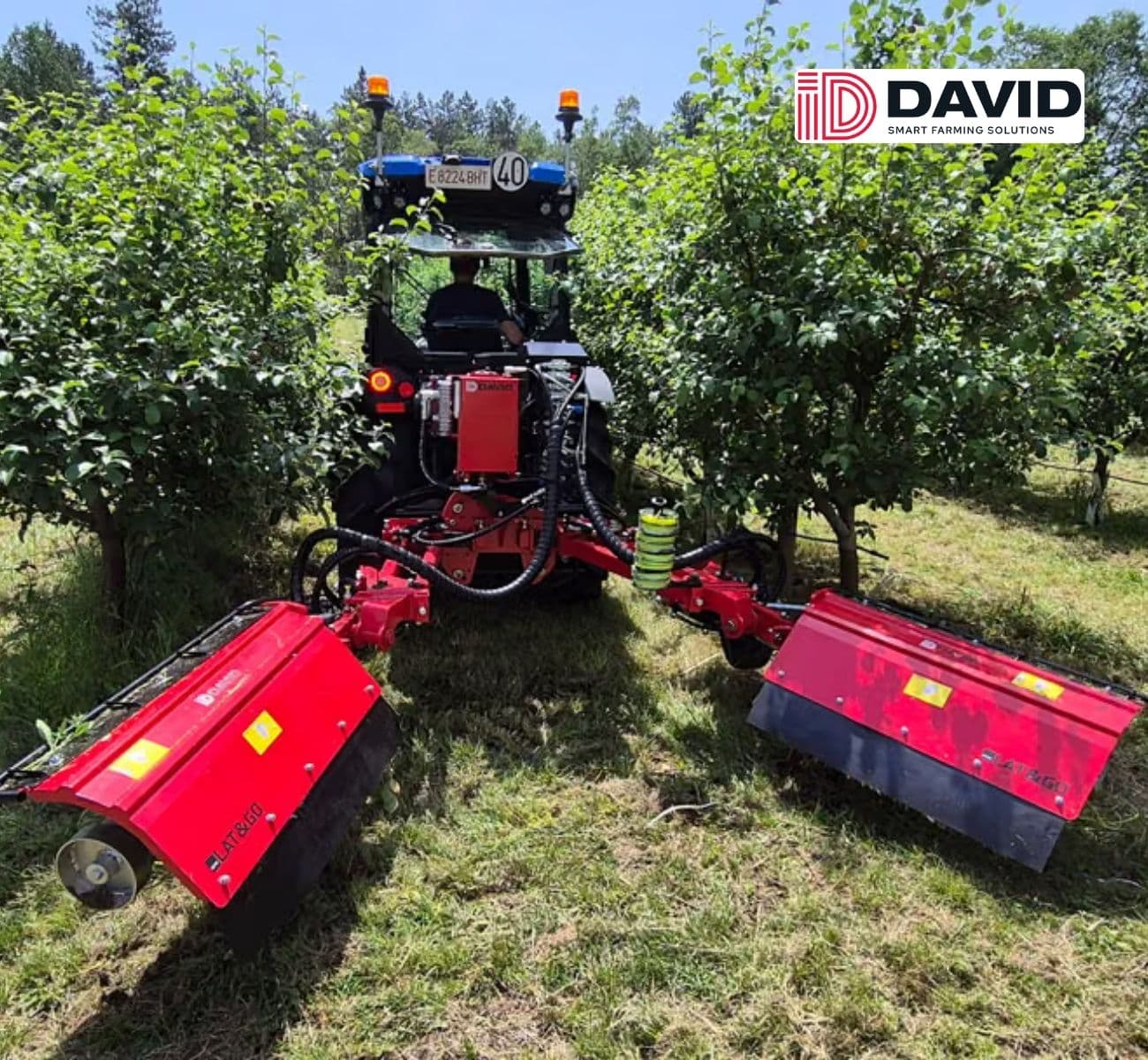
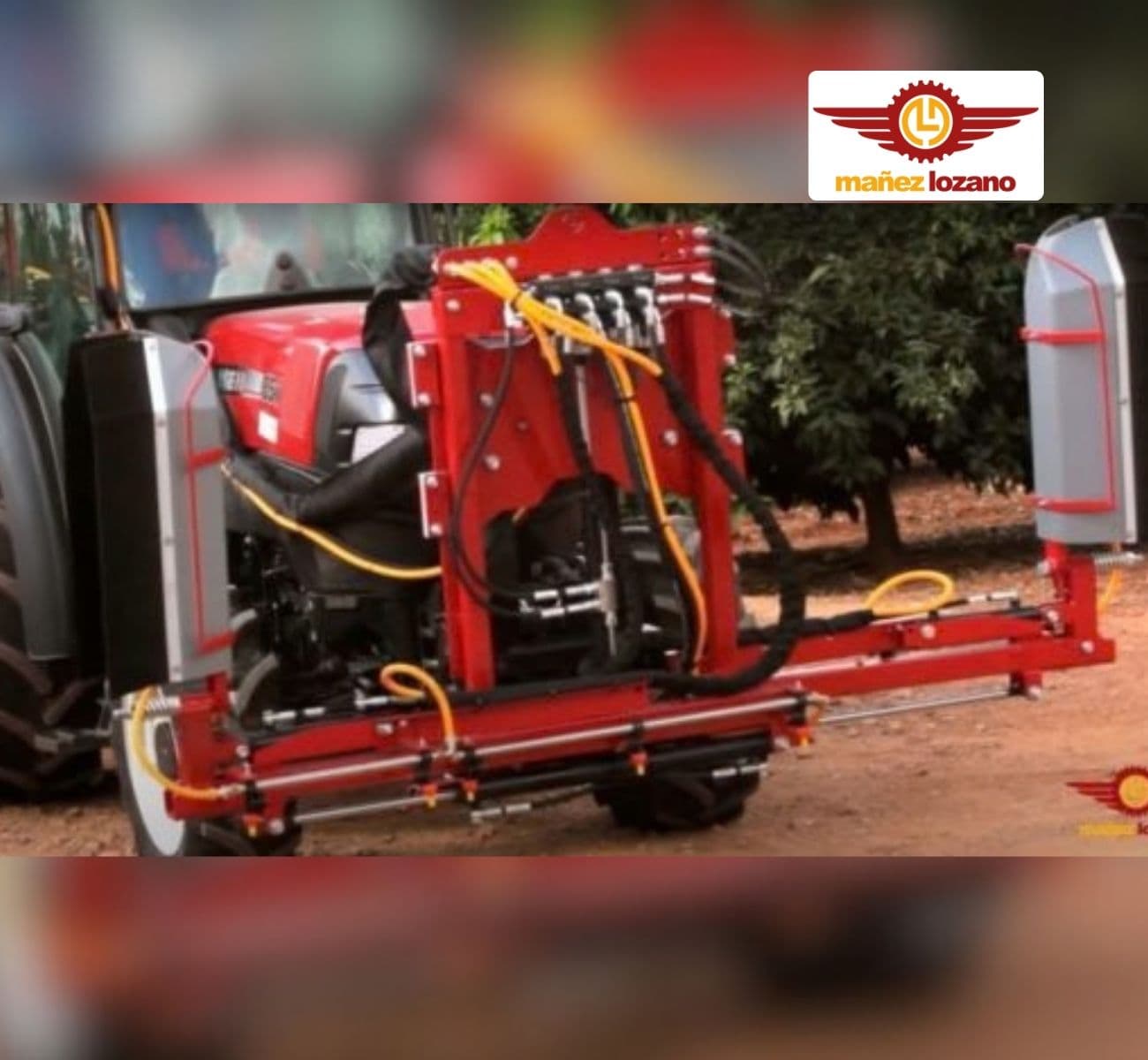
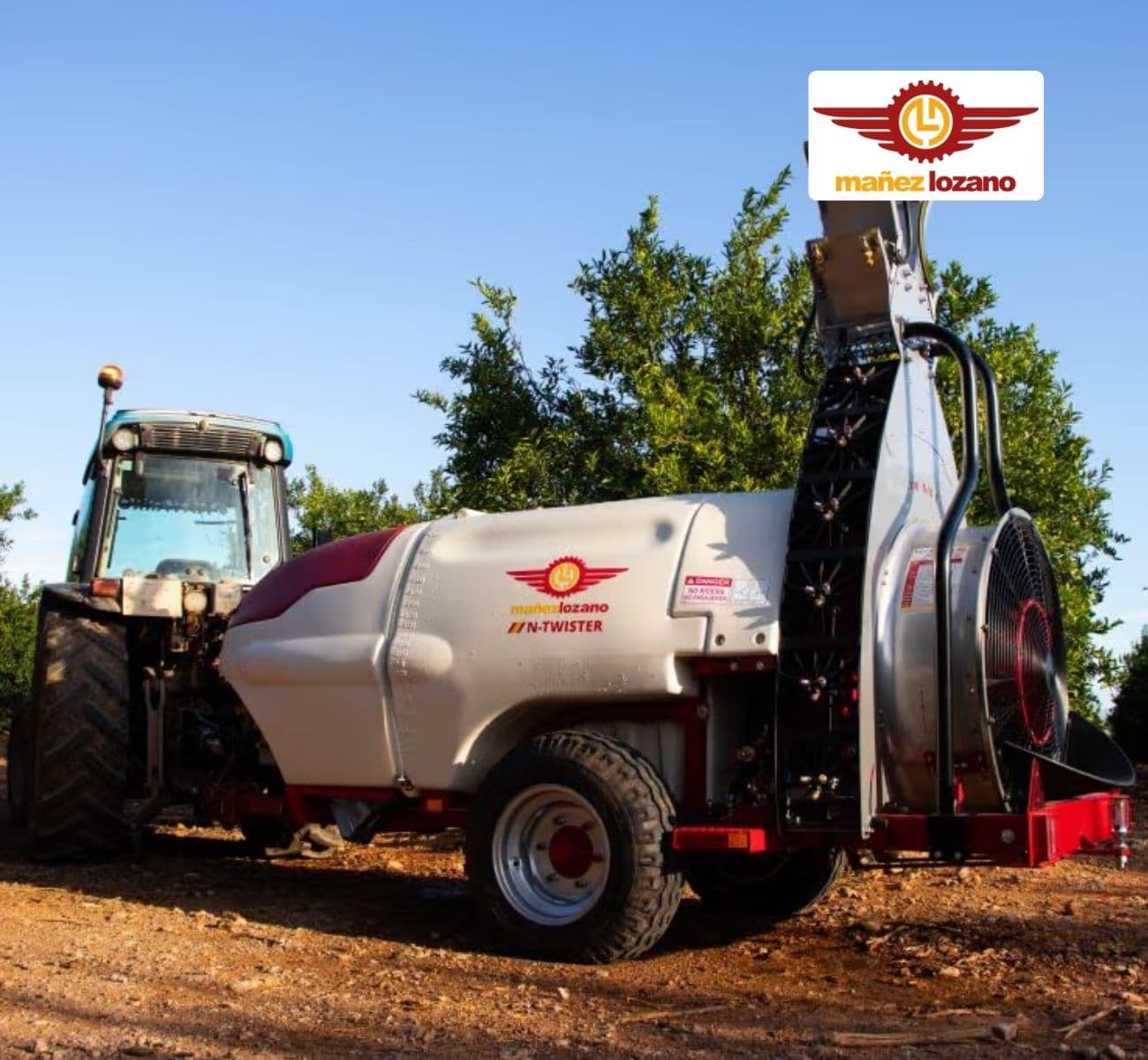
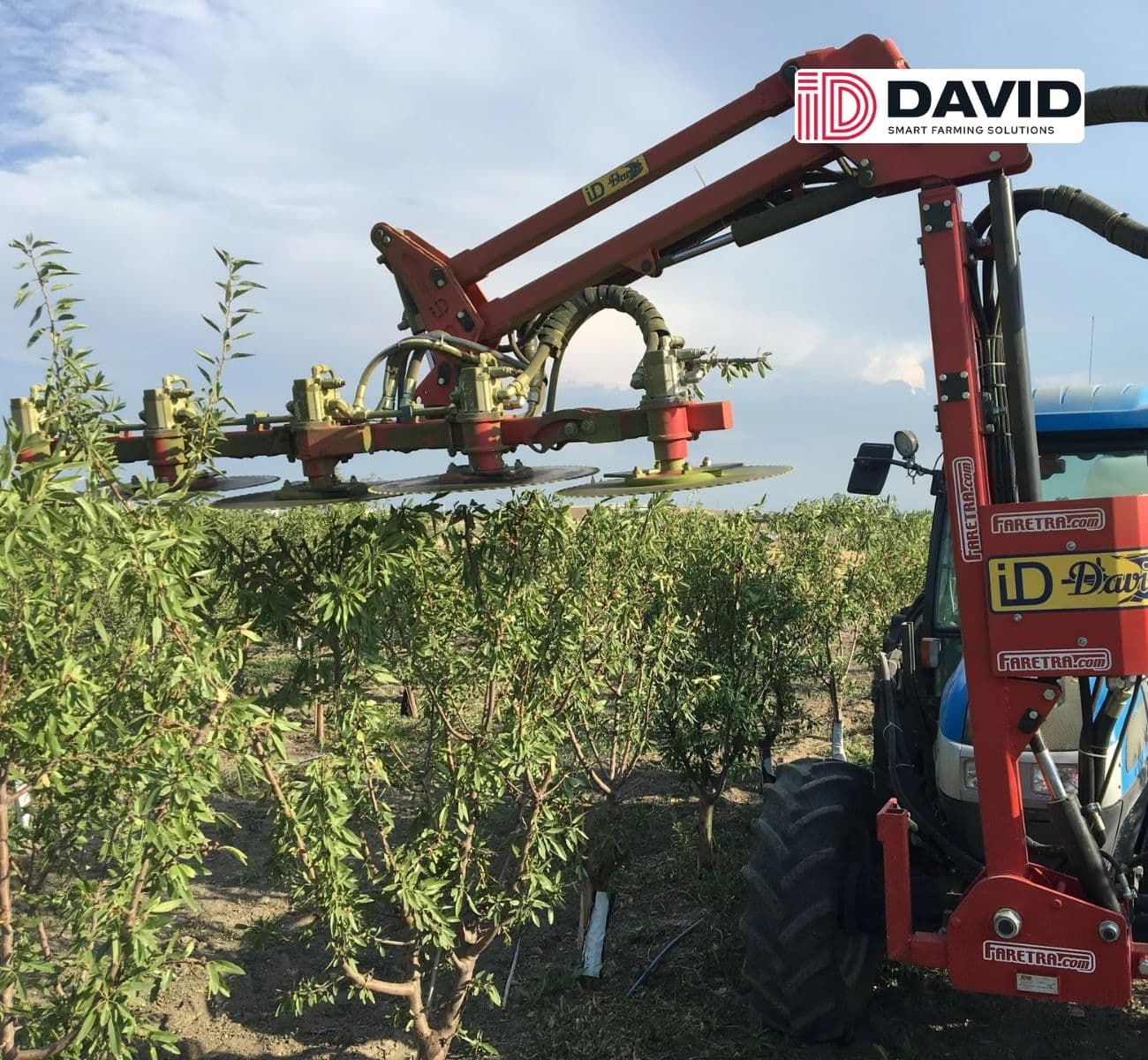
The almond pest records found for Egypt are old: chemical control trials against the shot-hole borer on almond at Bourg El-Arab, on the North Coast, date from 1977 to 1979, and EPPO lists peach twig borer as present in Egypt on information from 1992. For care work, the ID DAVID ECOFEED spreads solid manure, the ID DAVID LAT&GO string mower controls weeds without herbicides, the Mañez Lozano Narrow Twister S6 sprays tall, dense canopies and the ID DAVID V1 disc pruner makes vertical and horizontal cuts.
Recommended Orchard Care & Maintenance Stages
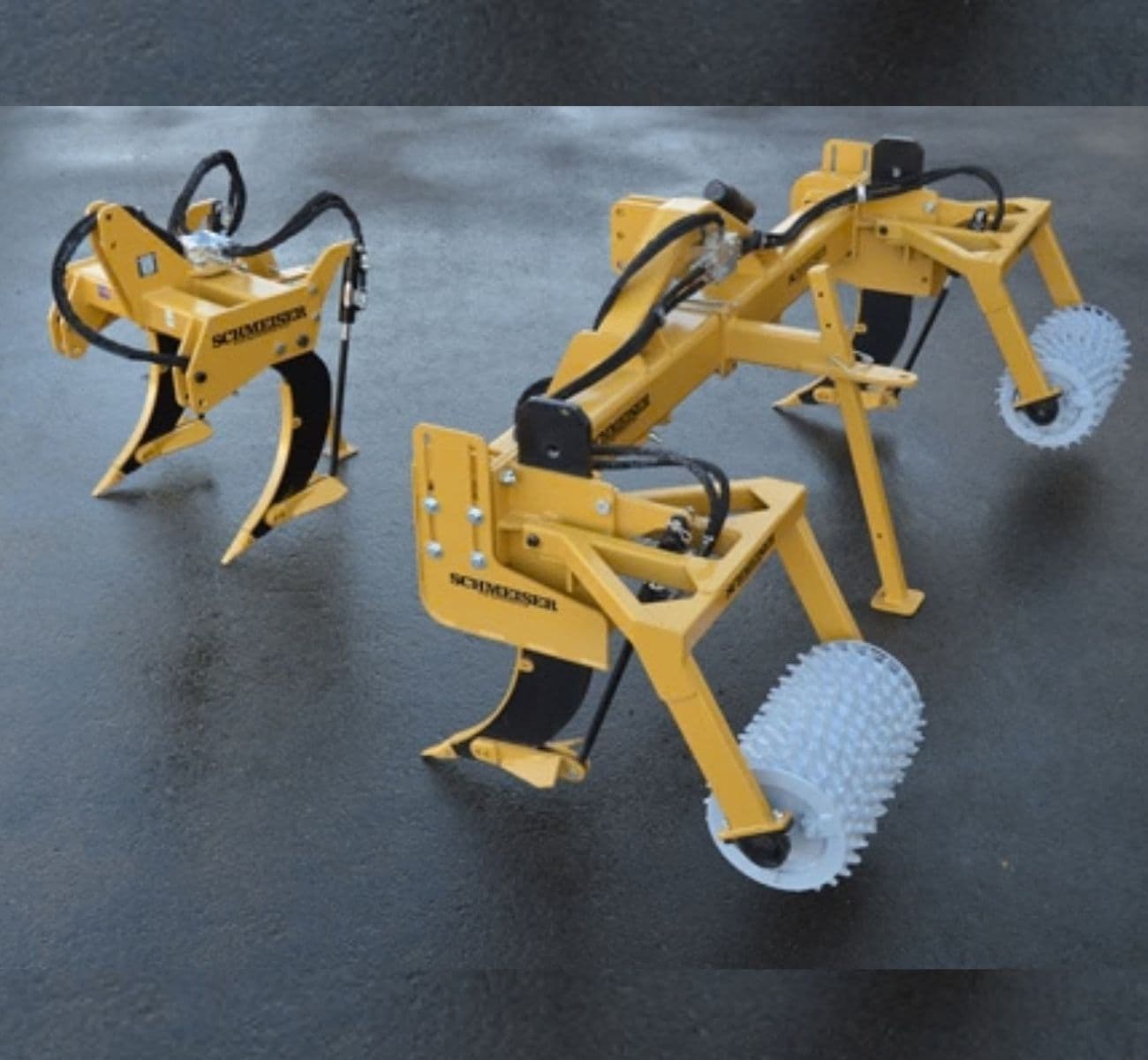
Practical Tips for Almond Orchard Care & Maintenance
Give winter care before the rains: in the Matrouh study orchard, manure and fertilizer went on in mid-November, ahead of the rainy season.
Check the nutrition of rain-fed trees: a 2026 Desert Research Center study notes nutrient shortages in Egypt's rain-fed almond trees, especially of boron.
Water bitter almond seedlings before grafting: Matrouh advice is 20 liters of fresh water per plant every 10 days, with shade from palm fronds or straw.
Plan for drought: a 2026 report from North Sinai says two dry years in a row can make rain-fed trees wilt and die, so secure water for dry spells where you can.
Control weeds without herbicides with a string mower such as the ID DAVID LAT&GO, and keep the orchard floor level for harvest.
Spray tall, dense canopies evenly with a narrow trailed airblast sprayer such as the Mañez Lozano Narrow Twister S6.

Almond Harvesting in Egypt
No Egyptian source found describes almond harvest methods, labor or machines: a 2023 report from North Sinai says only that once the shells harden, the nuts are collected and cracked to extract the kernels. In the Matrouh orchard studied by the Desert Research Center, the harvest was recorded on 15 August. In orchards planted for machines on suitable ground, mechanized harvesting can bring the crop in on time, with less risk of nuts deteriorating while they wait.
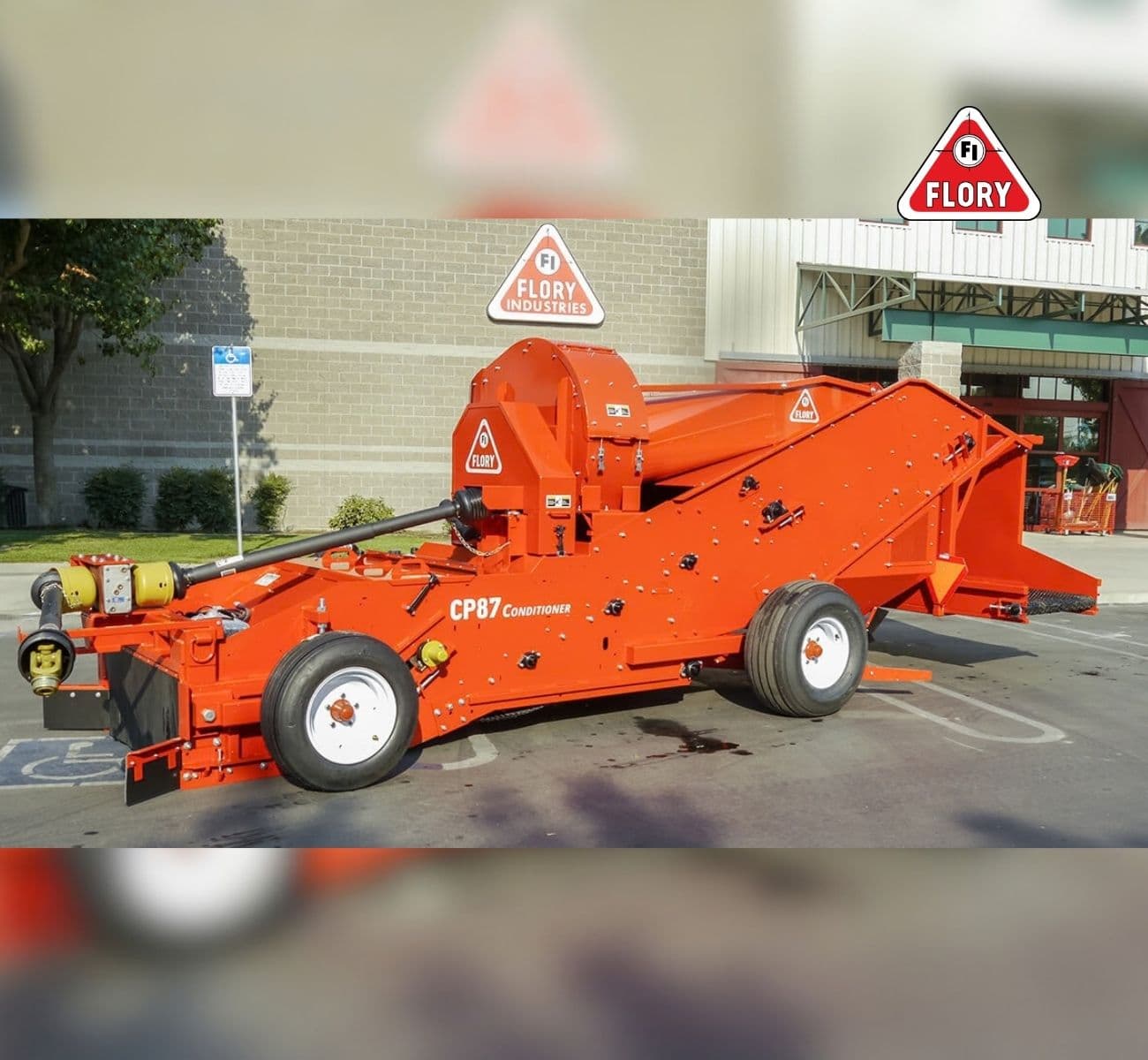
Summer harvests, as in the Matrouh study orchard, are reliably dry: the World Bank's climate portal calls Egypt's summer, May to September, hot and dry, and the Egyptian Meteorological Authority's 1981 to 2010 normals for Alexandria, on the coast between Matrouh and Sinai, show no rain from June to August, 0.5 mm in September and 7.8 mm in October (WMO). This guide therefore shows ground drying of shaken almonds on the orchard floor, with the Flory CP87 Conditioner, as an option the climate allows; no Egyptian source describes it.
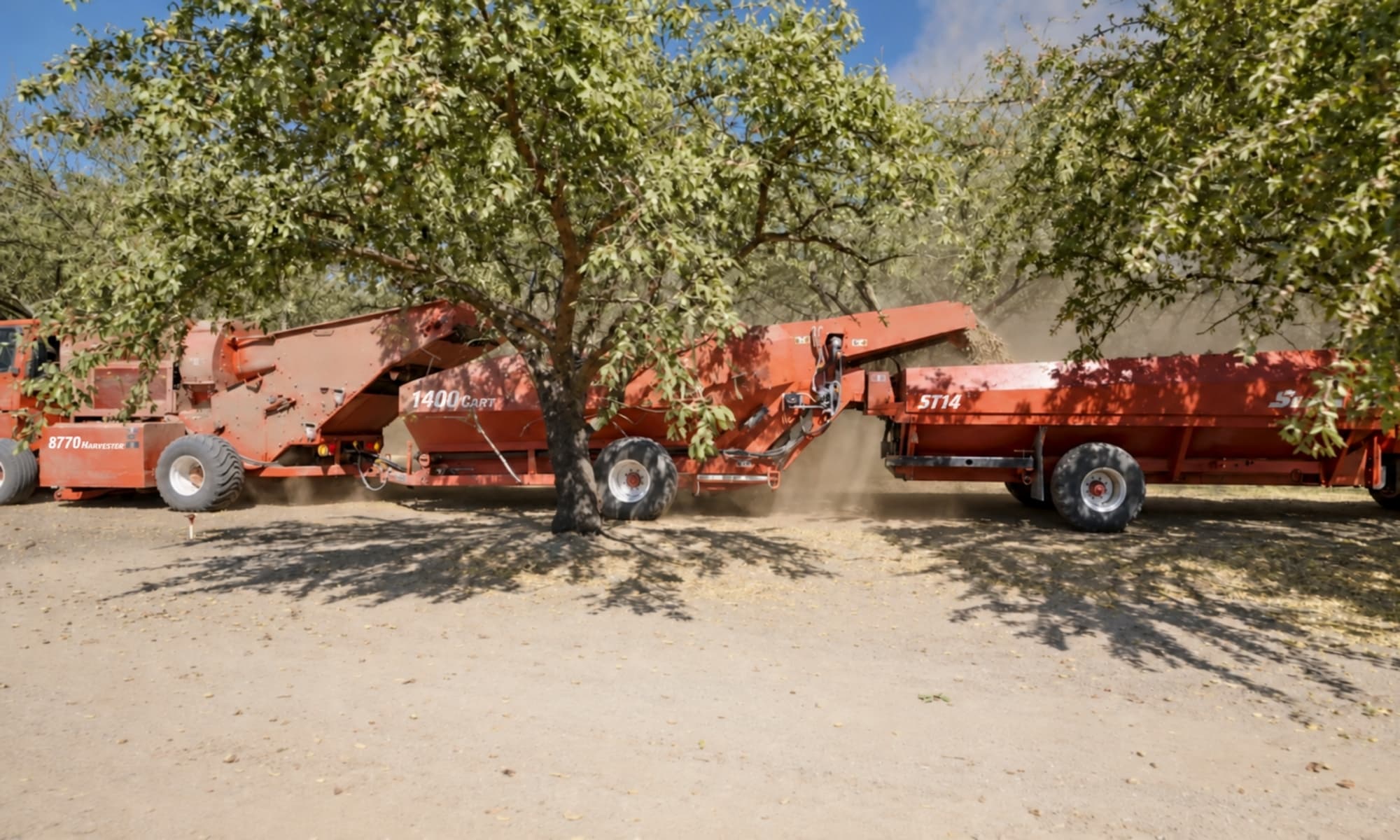
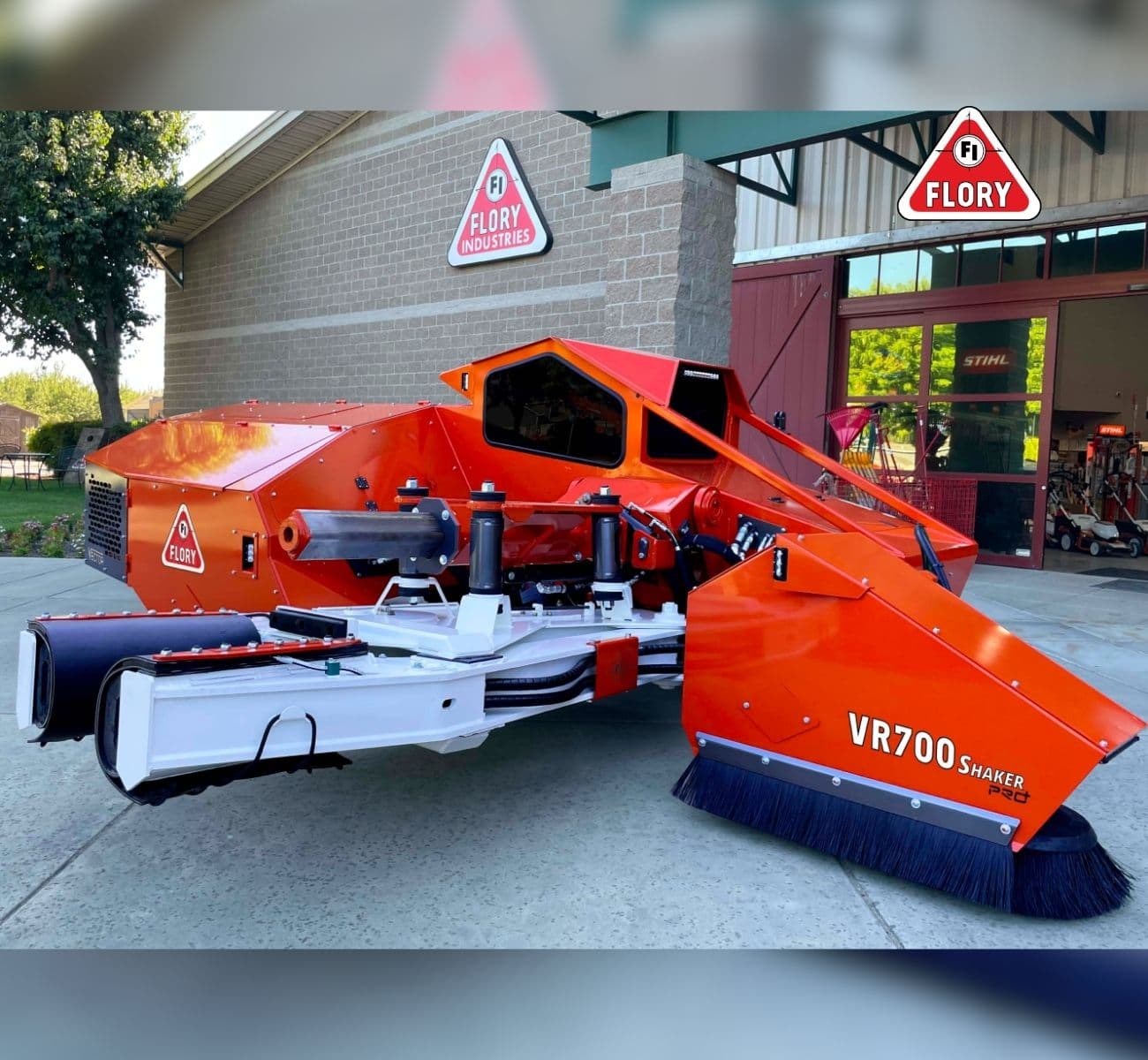
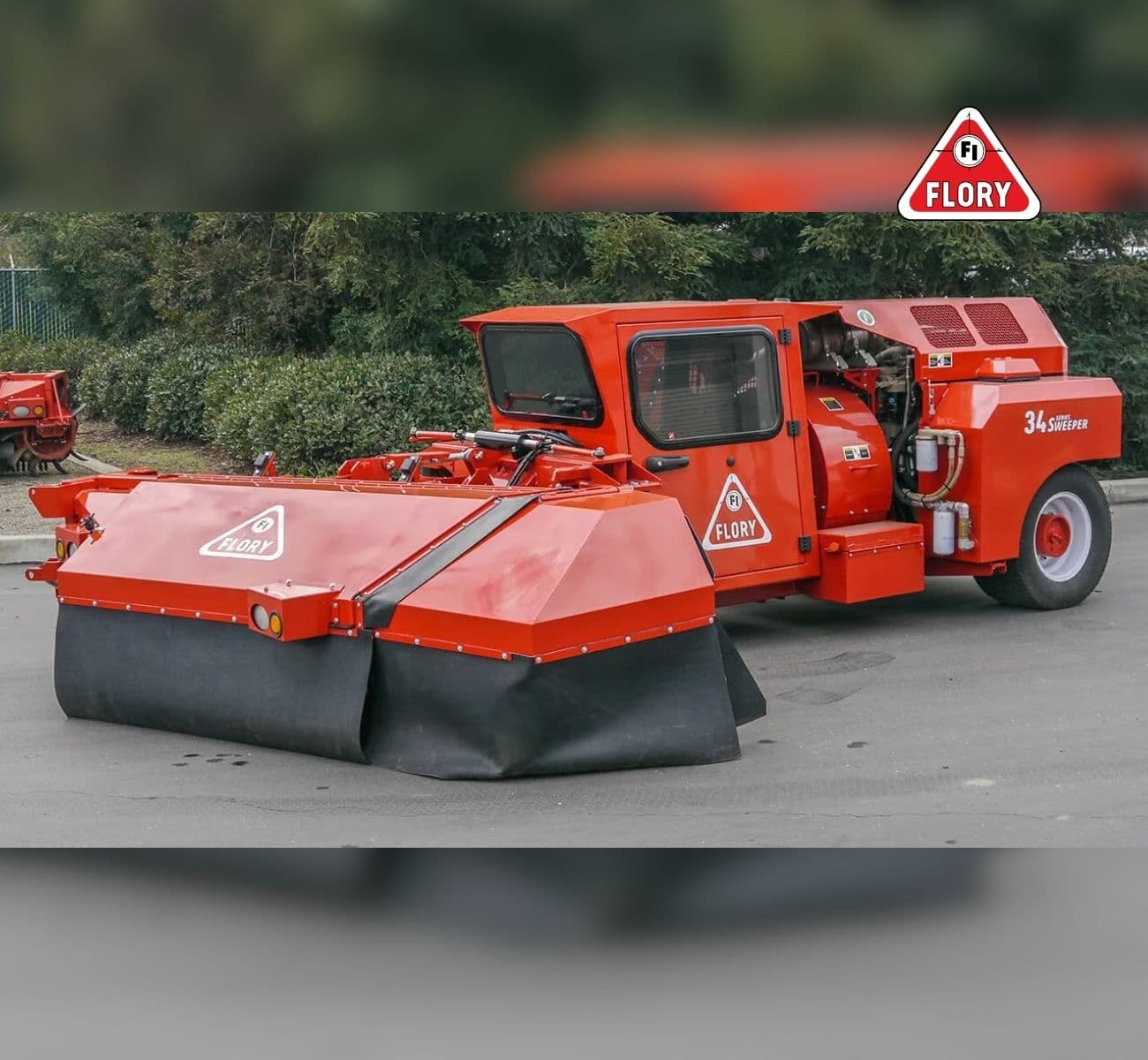
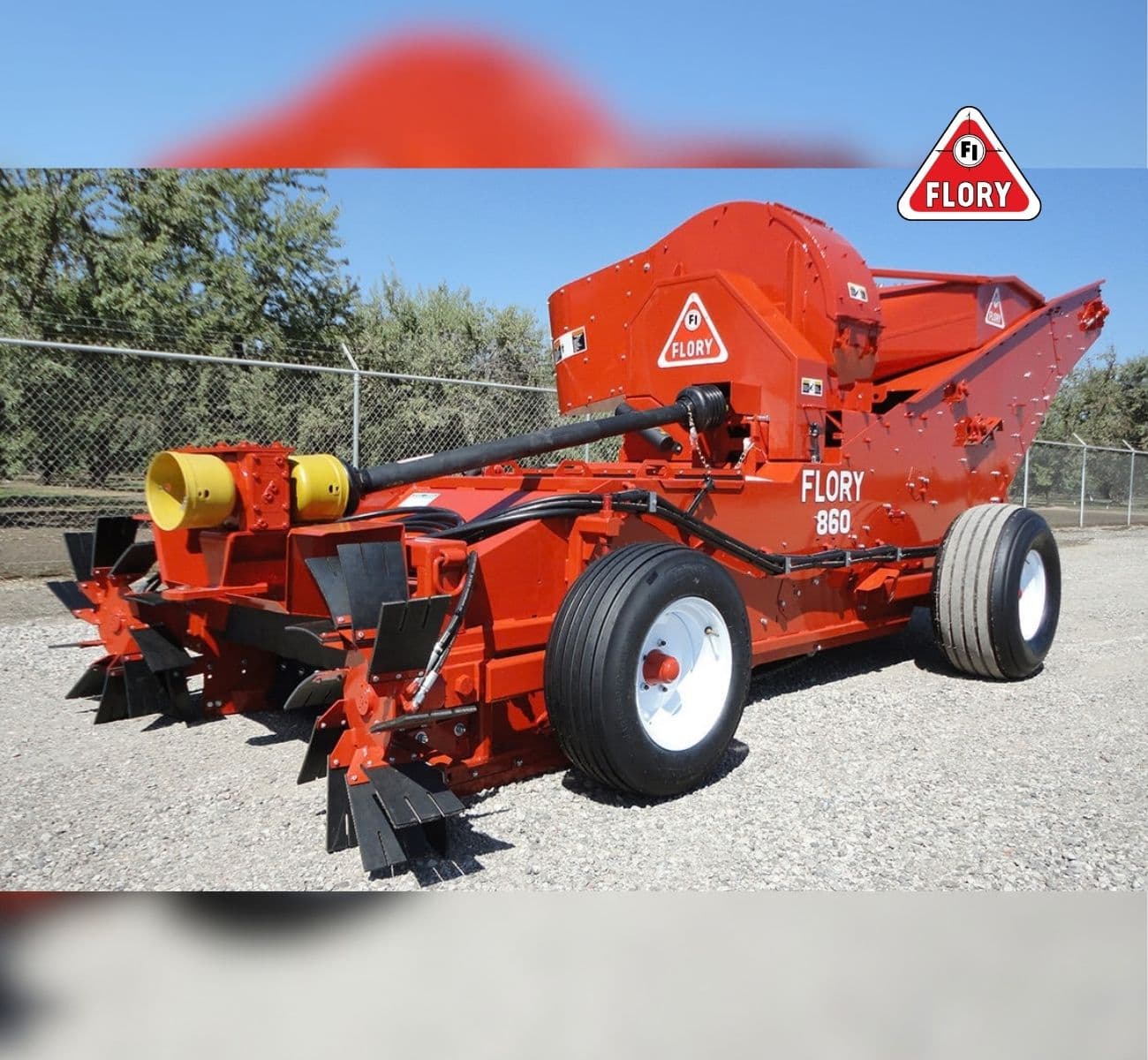
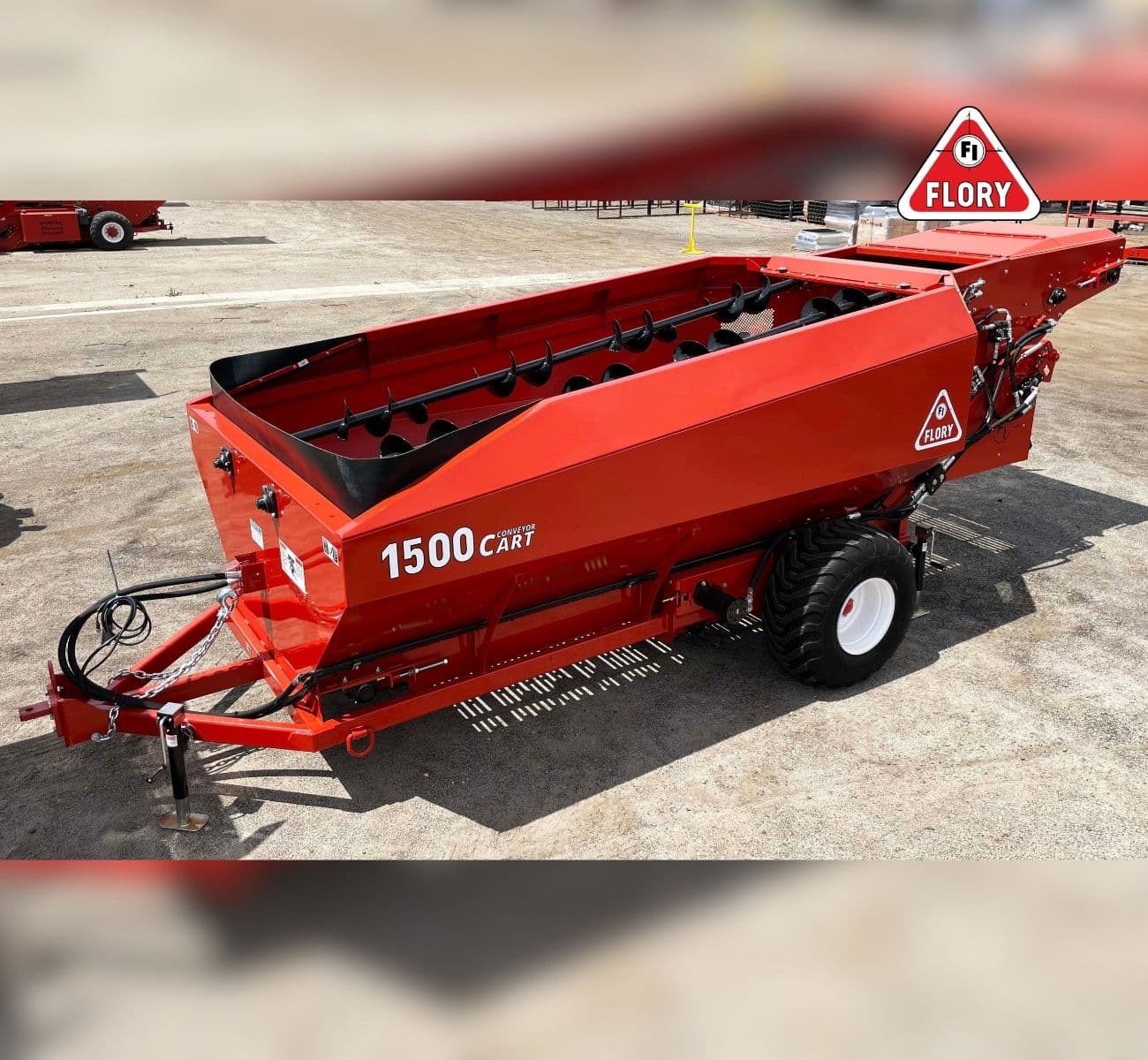
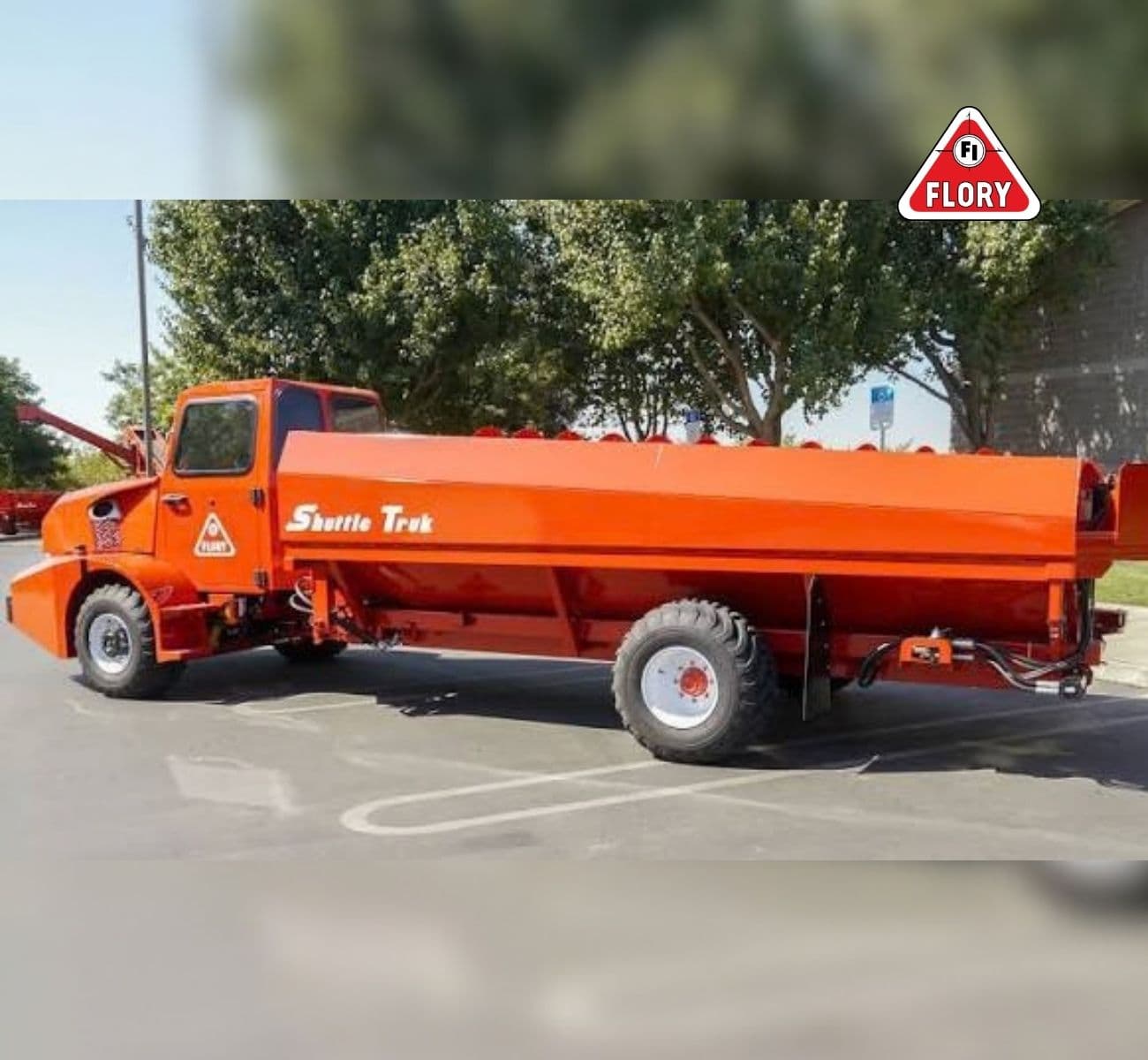
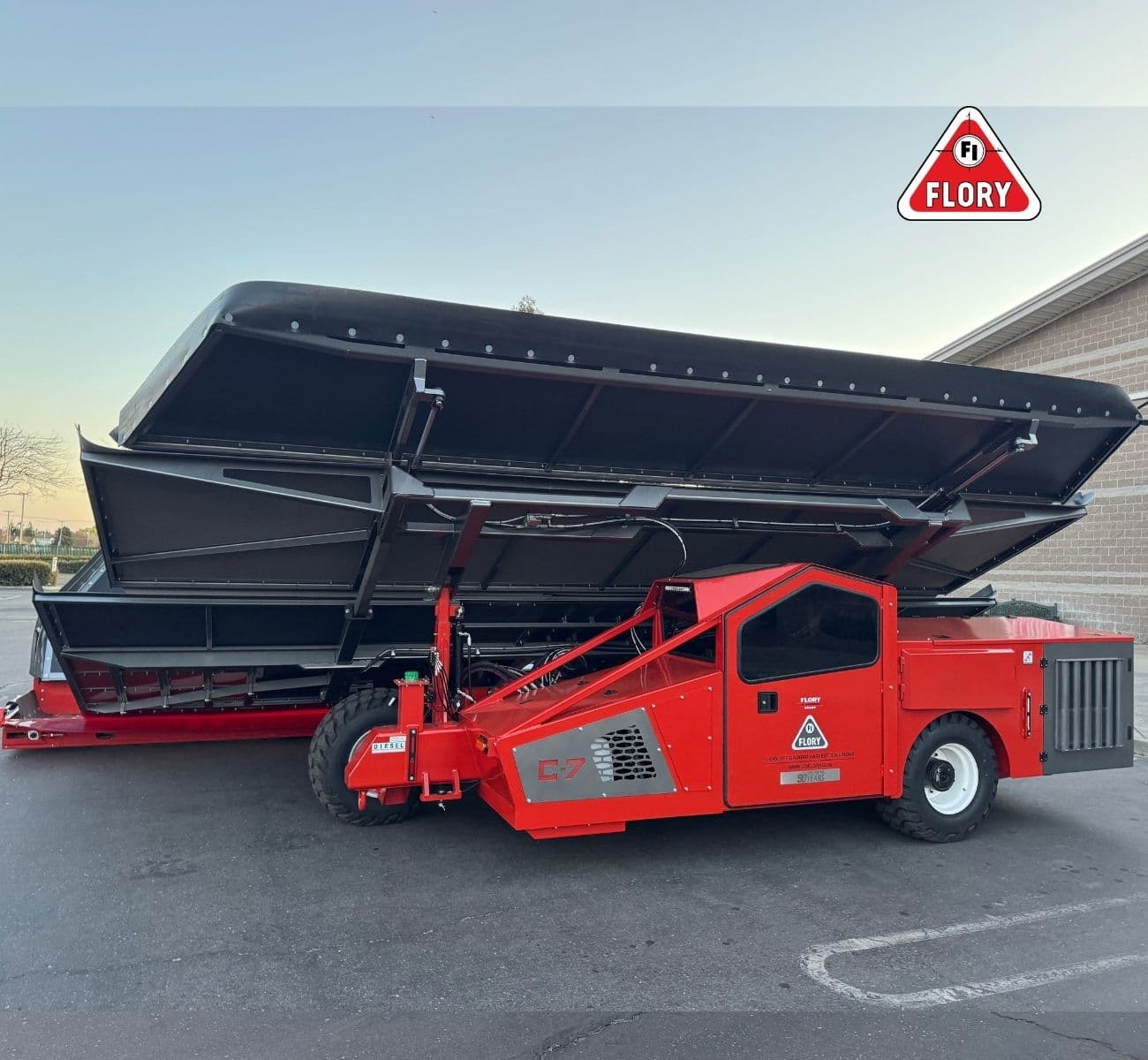
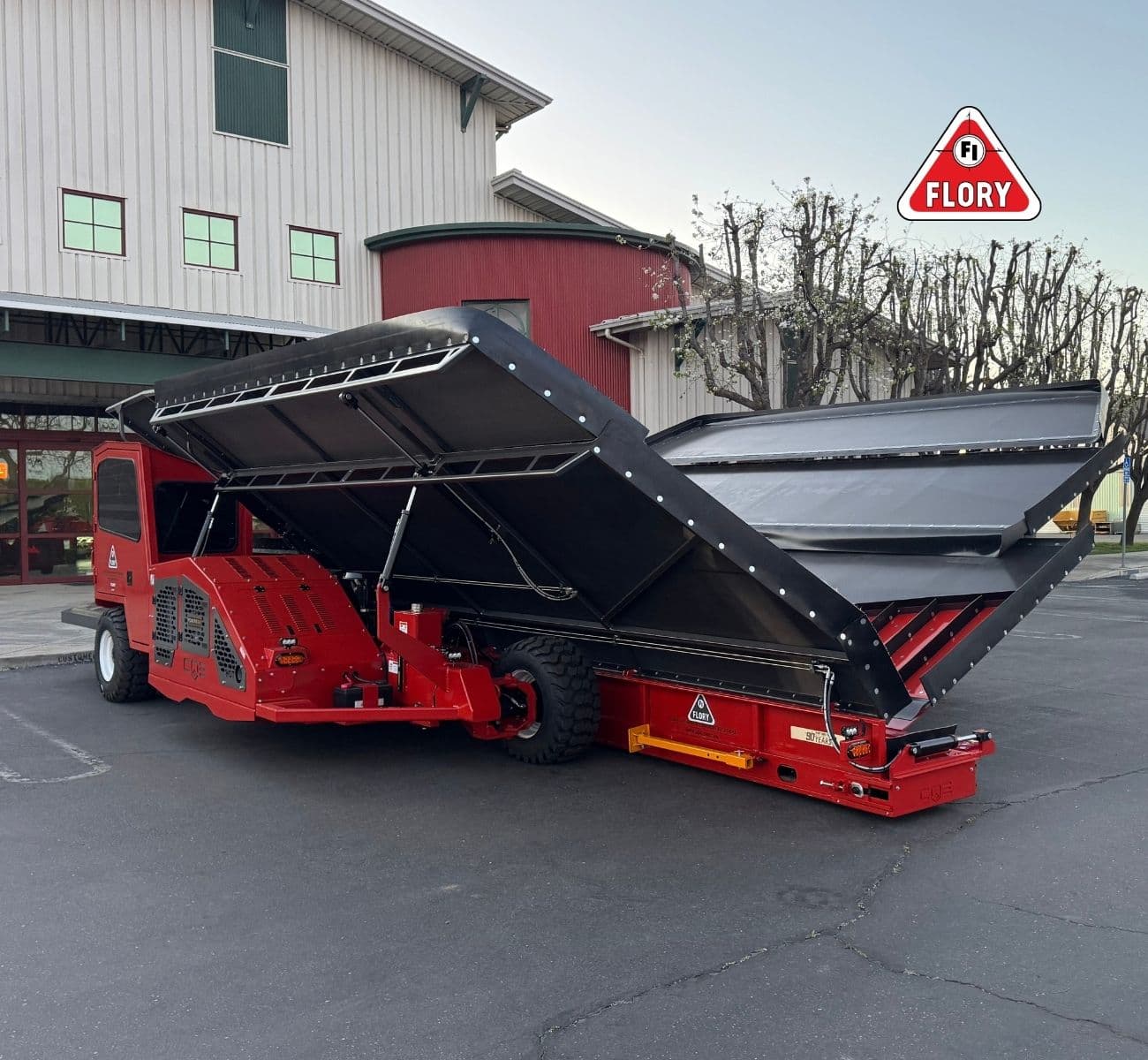
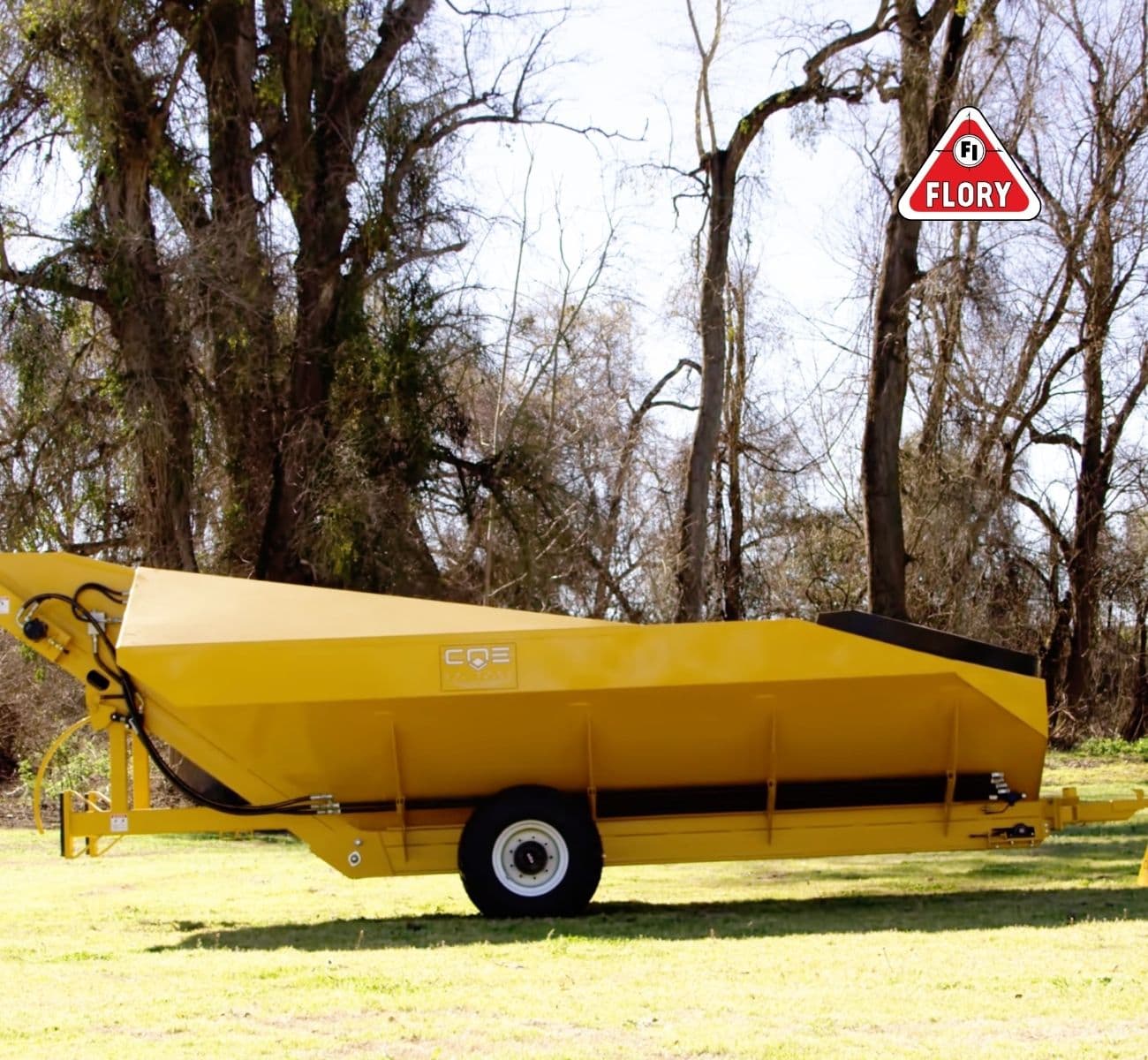
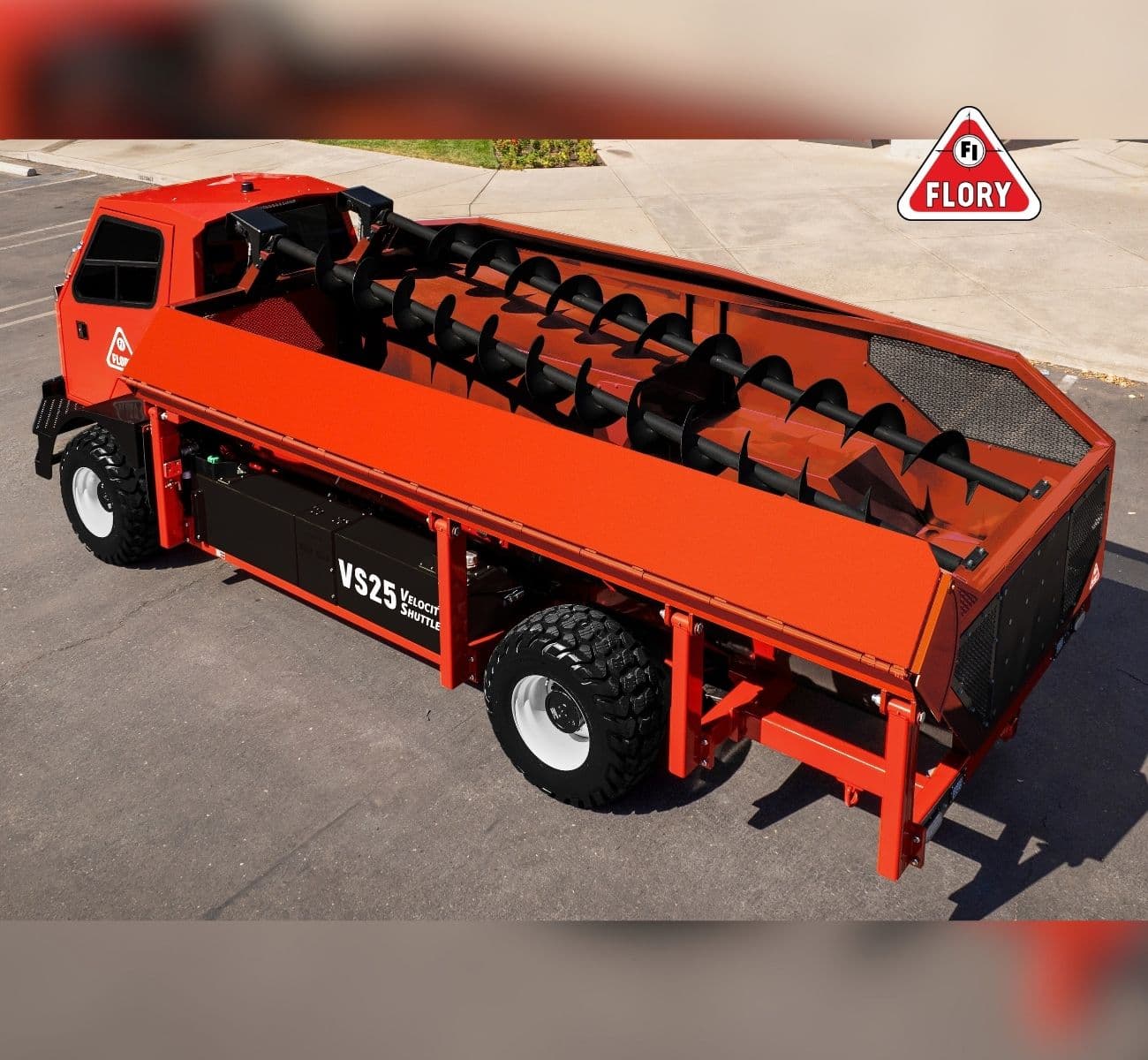
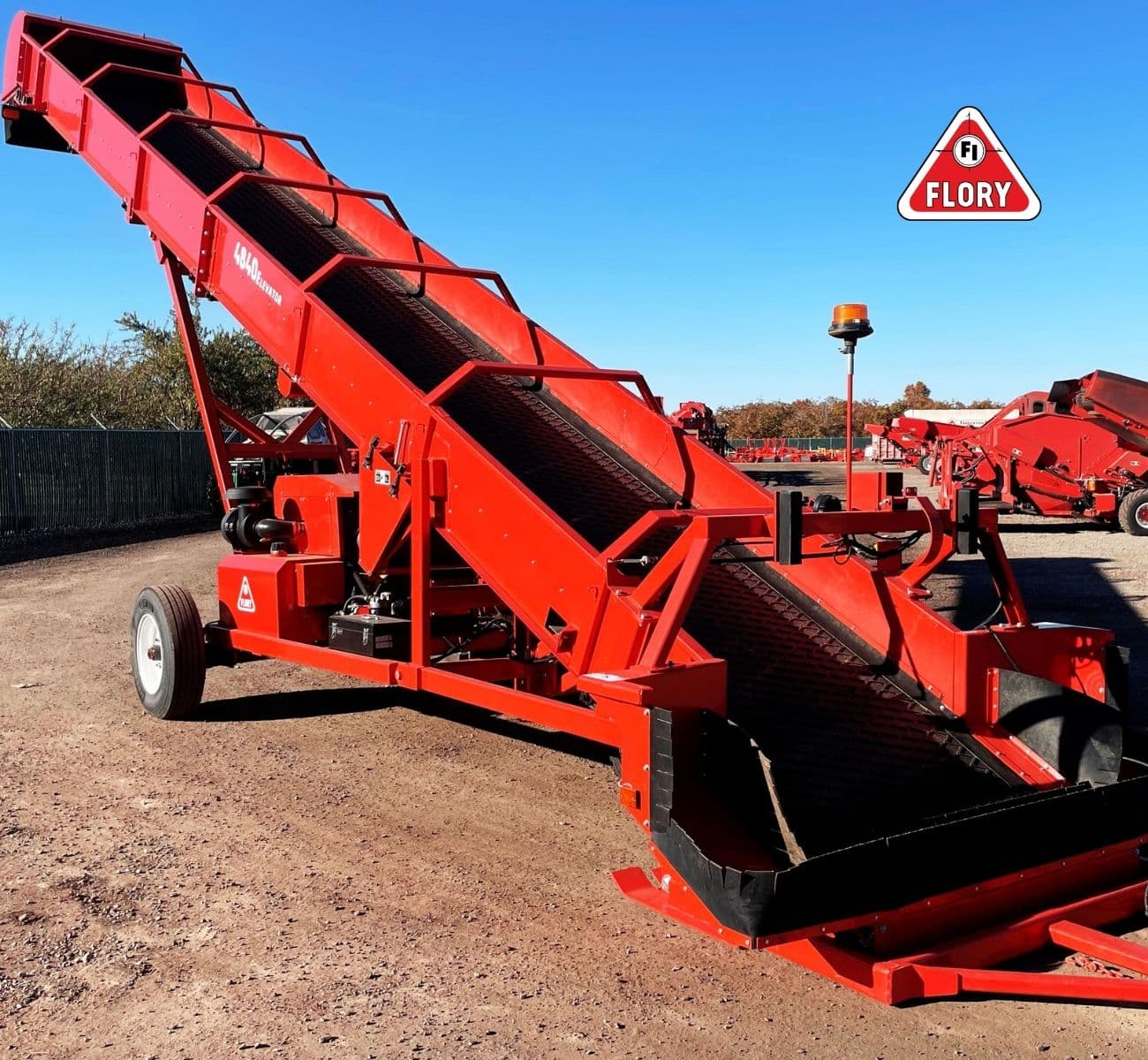
Flory harvesting machinery is available in Egypt through OVE Europe for both systems. On the ground, the VR700 Shaker, 34 Series Sweeper, CP87 Conditioner and 860 Harvester (or the smaller 490) work with the 1500 Conveyor Cart and ST14 Shuttle. Off the ground, the Flory COE C7 Shaker and L2 Receiver catch the almonds in a frame around the trunk, the Flory COE B8 Cart and VS25 Shuttle carry them, and the 4840 Field Elevator loads trailers in both systems.
Almond Harvest Workflow (Recommended Equipment)
Practical Tips for Almond Harvesting
Time the harvest by hull split: in the Matrouh orchard studied by the Desert Research Center, ripe nuts were sampled once at least 80% of hulls had opened.
Leave shaken almonds on the ground only while the forecast stays dry: light showers are occasionally forecast for the North Coast even in summer.
Keep ground time short: University of California guidance links ant damage to the time almonds spend on the orchard floor.
After drying on the floor, sweep almonds into windrows; a conditioner such as the Flory CP87 cleans and re-lays them so they dry faster before pickup.
If the harvest runs into October and its first rains, pick up promptly or use catching frames: the Flory COE C7 Shaker works with the L2 Receiver.
Keep shakers and frames for orchards planted for machines, never seed-grown trees at close spacing, wadi plantings or young trees.
Get your recommended harvest setup
Enter orchard size, spacing, terrain, and target throughput—we’ll suggest a practical harvest workflow and equipment lineup.

Almond Post-Harvest Handling & Processing in Egypt
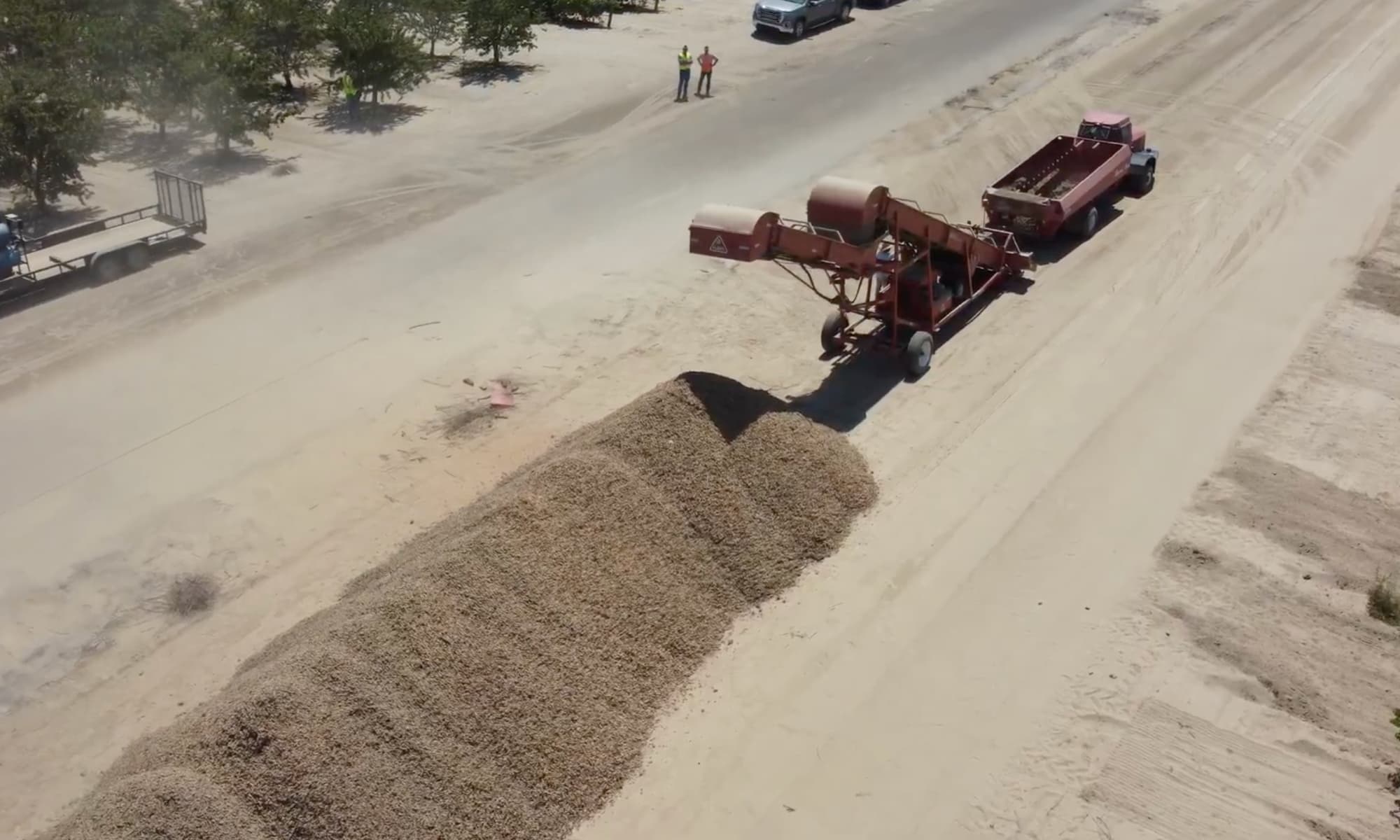
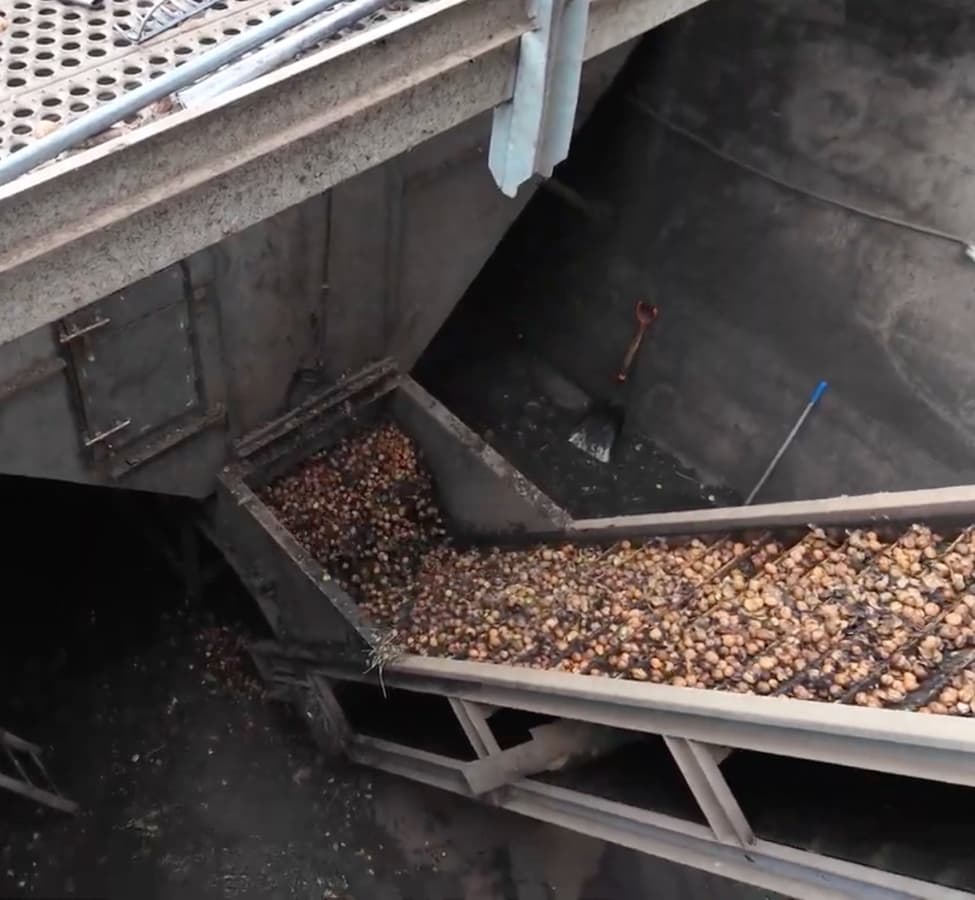
No Egyptian source found describes how almonds are hulled, dried, stored or graded; the 2023 North Sinai report mentions only collecting and cracking. In this workflow, almonds dried on the orchard floor arrive with dry hulls and are hulled, then dried further only if their moisture is still above target; frame-caught almonds are hulled first and then dried in the shell. University of California guidance warns that wet nuts sent straight to the huller will not hull cleanly.
Egypt's National Food Safety Authority set aflatoxin limits for almonds in its Decision No. 6 of 2022: 8 µg/kg of aflatoxin B1 and 10 µg/kg in total for almonds for direct consumption or use as an ingredient, and 12 and 15 µg/kg for almonds to be sorted or otherwise treated first. These values match Regulation (EU) 2023/915, which applies to almonds sold in the EU.
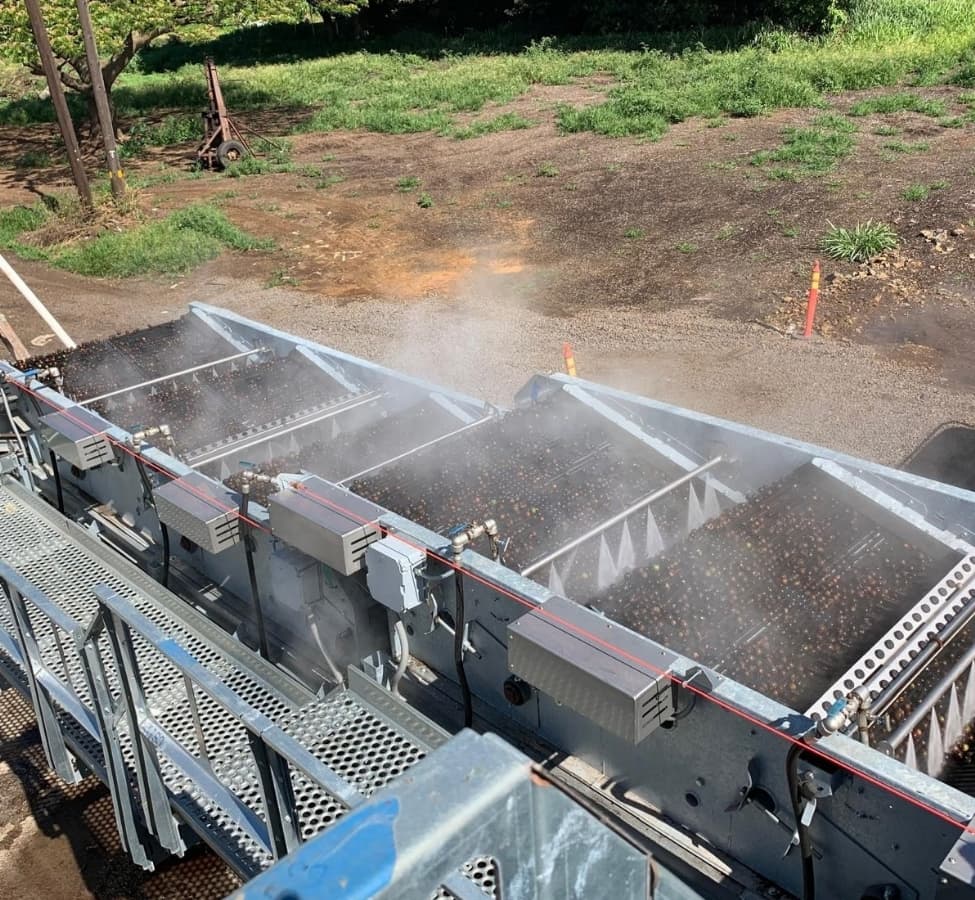
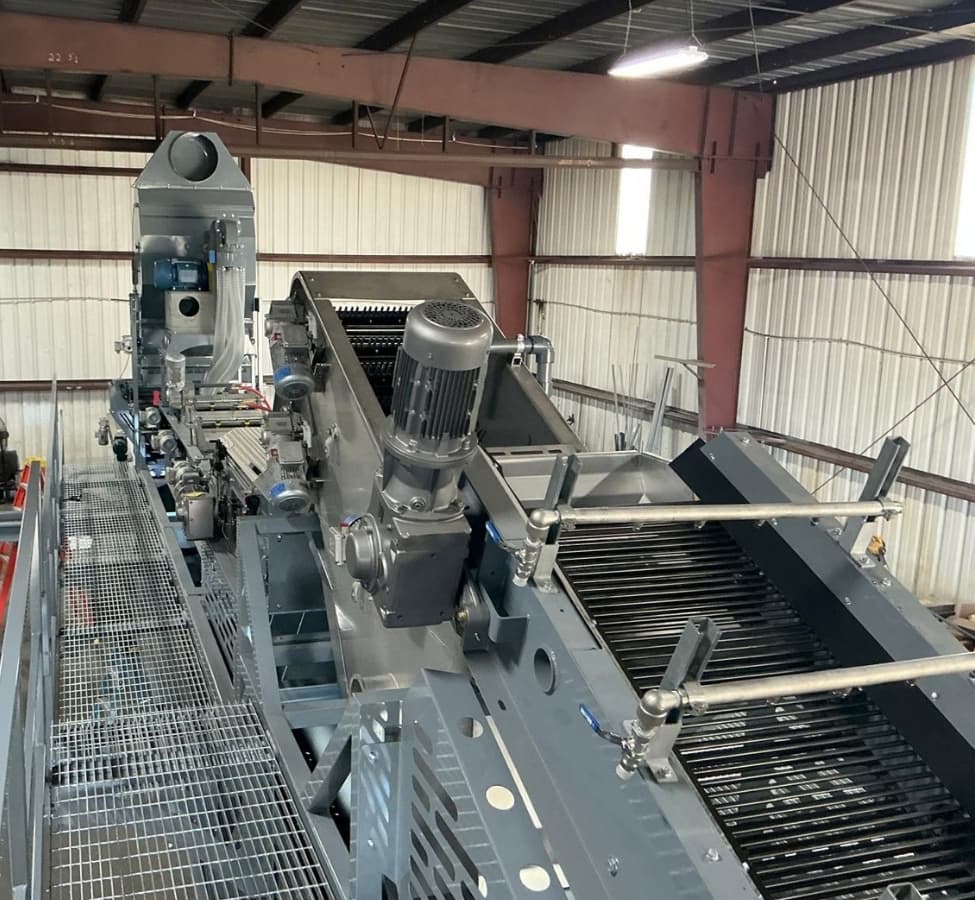
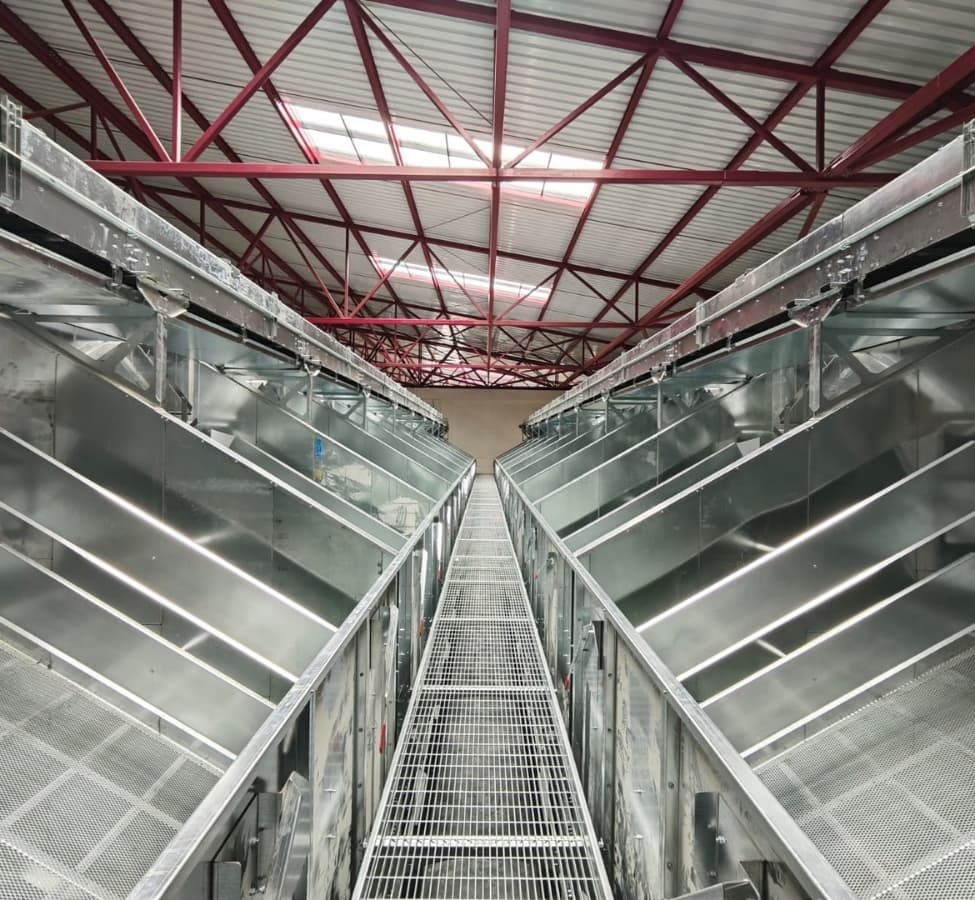
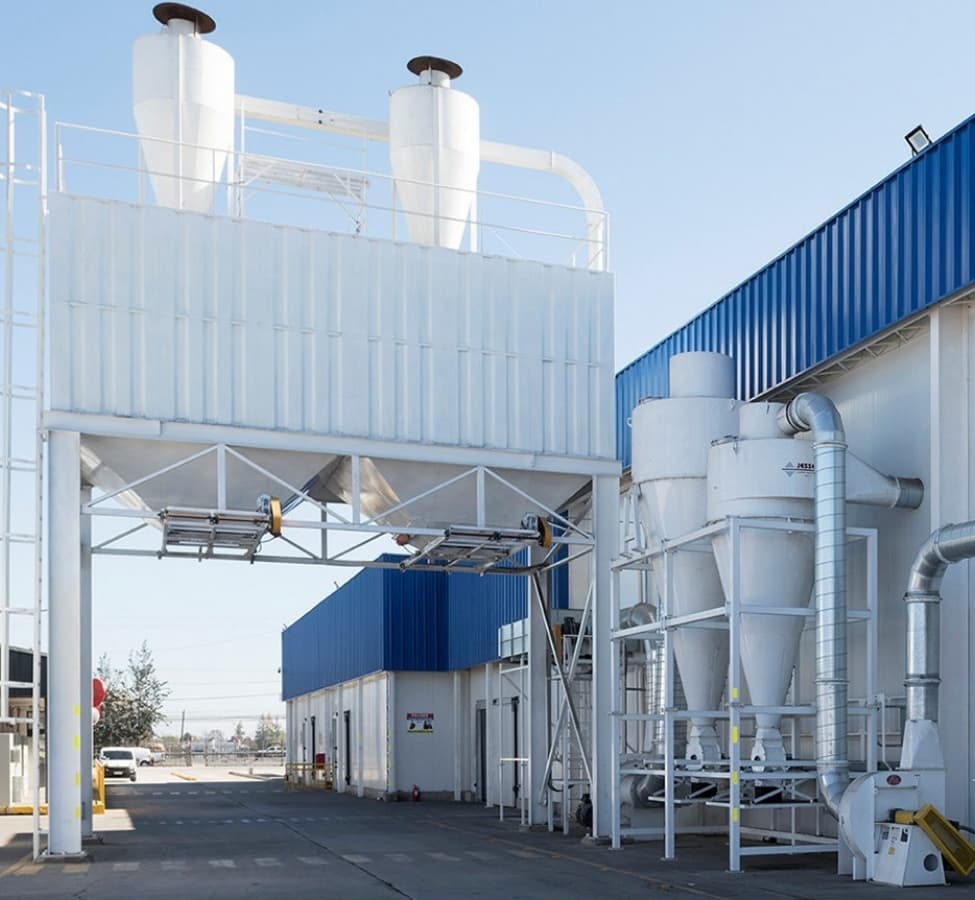
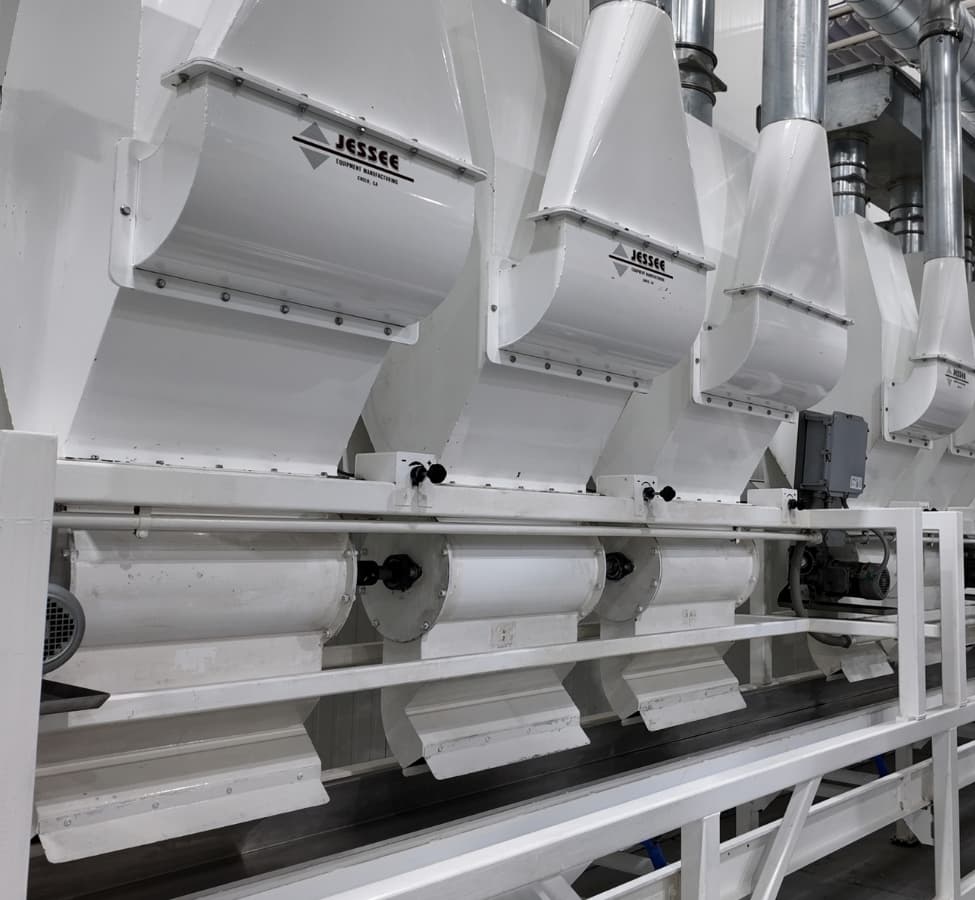
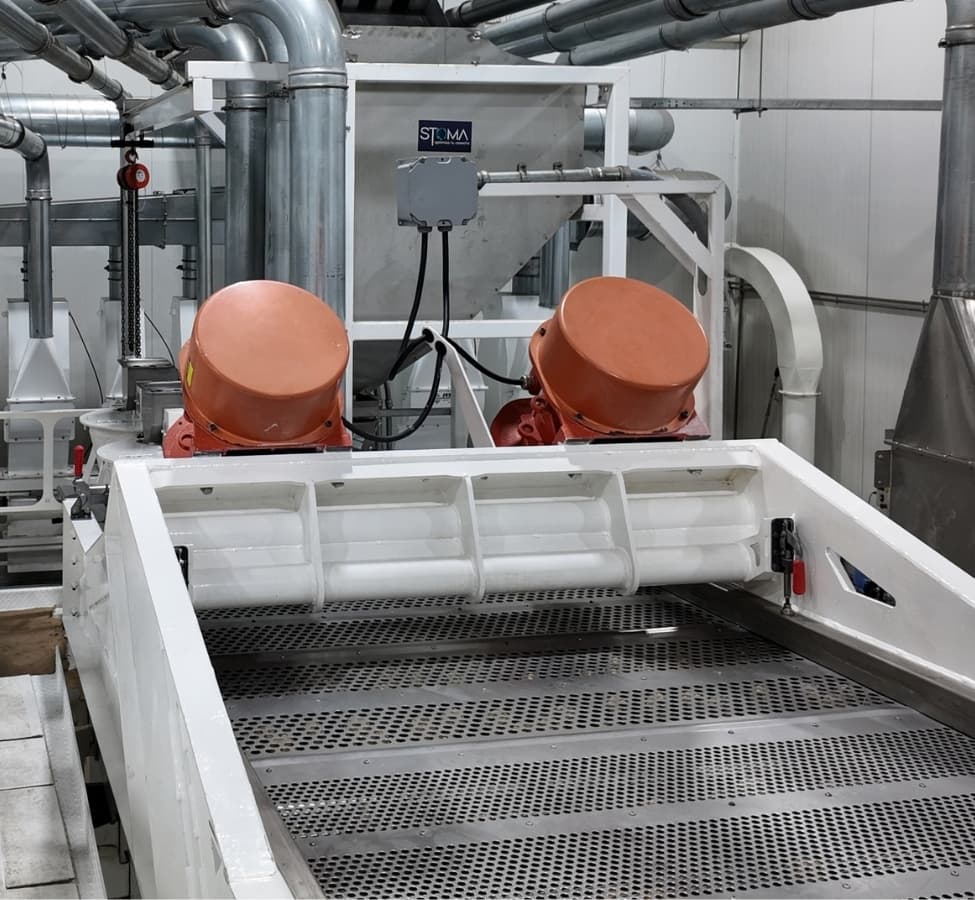
Almost all the almonds Egypt imports are kernels: shelled almonds made up 96.9% by weight of the 7,287.1 t of almonds imported in 2025, and Egypt recorded no almond exports that year (UN Comtrade via WITS). Jessee, whose processing lines OVE Europe supplies, builds hulling, drying, in-shell cleaning and sizing, and shelling systems; its Airlegs nut cleaner was developed for the almond industry.
For general information only. Information may become outdated and does not replace site-specific professional advice. Consult a qualified agronomist and confirm equipment suitability with OVE before acting.
Practical Tips for Almond Post-Harvest Handling & Processing
Pick up ground-dried almonds as soon as they are dry, then hull them and check moisture before storage.
Hull frame-caught almonds while the hulls are fresh, then dry the nuts in the shell before storage.
Do not send rain-wet almonds straight to the huller: University of California guidance warns that wet nuts will not hull cleanly and quality will suffer.
Never stockpile undried almonds: University of California guidance for nuts dried on the ground warns against stockpiling above 12% hull, 6% kernel or 9% fruit moisture.
Keep bitter almonds out of sweet lots: bitter almond is grown in Matrouh as a rootstock, and specialists there consider its kernels fit only for industrial oil.
Test lots against NFSA Decision No. 6 of 2022: 8 µg/kg of aflatoxin B1 and 10 µg/kg in total for almonds for direct consumption.
Recommended Post-Harvest Handling & Processing Stages
Plan your post-harvest line
Estimate tons/day, cleaning & drying capacity, storage needs, and cost/kg—then build your equipment plan in phases.