






Almond Orchard Establishment in France
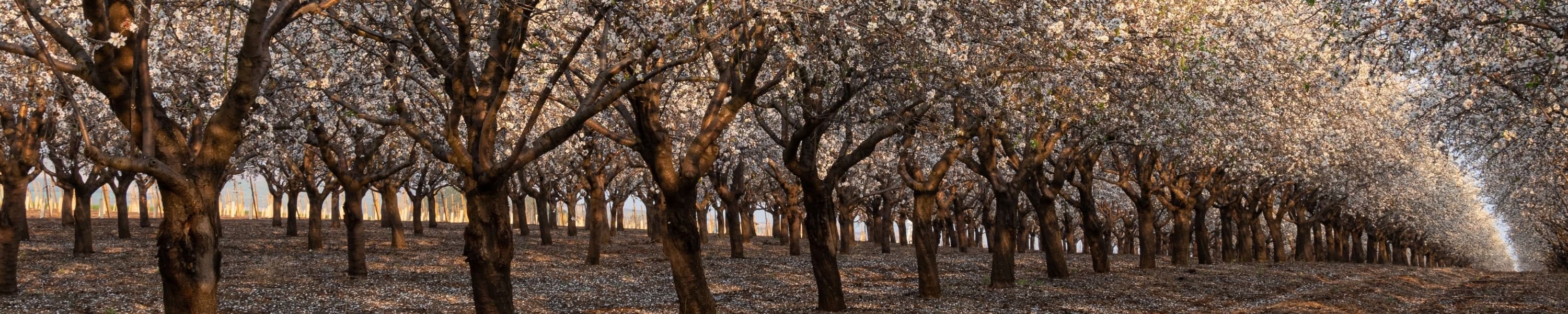
The 2016-2017 technical reference for almond in Provence-Alpes-Côte d'Azur (PACA), written by chambers of agriculture with the Provence almond growers' union, calls frost the main limiting factor of almond production: damage can start at -3.3 °C at bud stage, -2 to -3 °C in flower and -1.1 °C on young fruit. It rules out frost-prone low plots and north-facing slopes, and the Occitanie chamber's 2021 sheet says planting above 450 m becomes too risky.
Ferragnès, bred by INRA (now INRAE), is the main variety of the French orchard in the Occitanie chamber's 2021 sheet; it is self-sterile and sensitive to Fusicoccum canker. Self-fertile Lauranne has become its usual pollinizer, Mandaline is a recent self-fertile INRA variety and Ferraduel the traditional pollinizer. The PACA reference advises two pollinizer rows for every two rows of the main variety and four hives per ha, or eight if bloom is early.
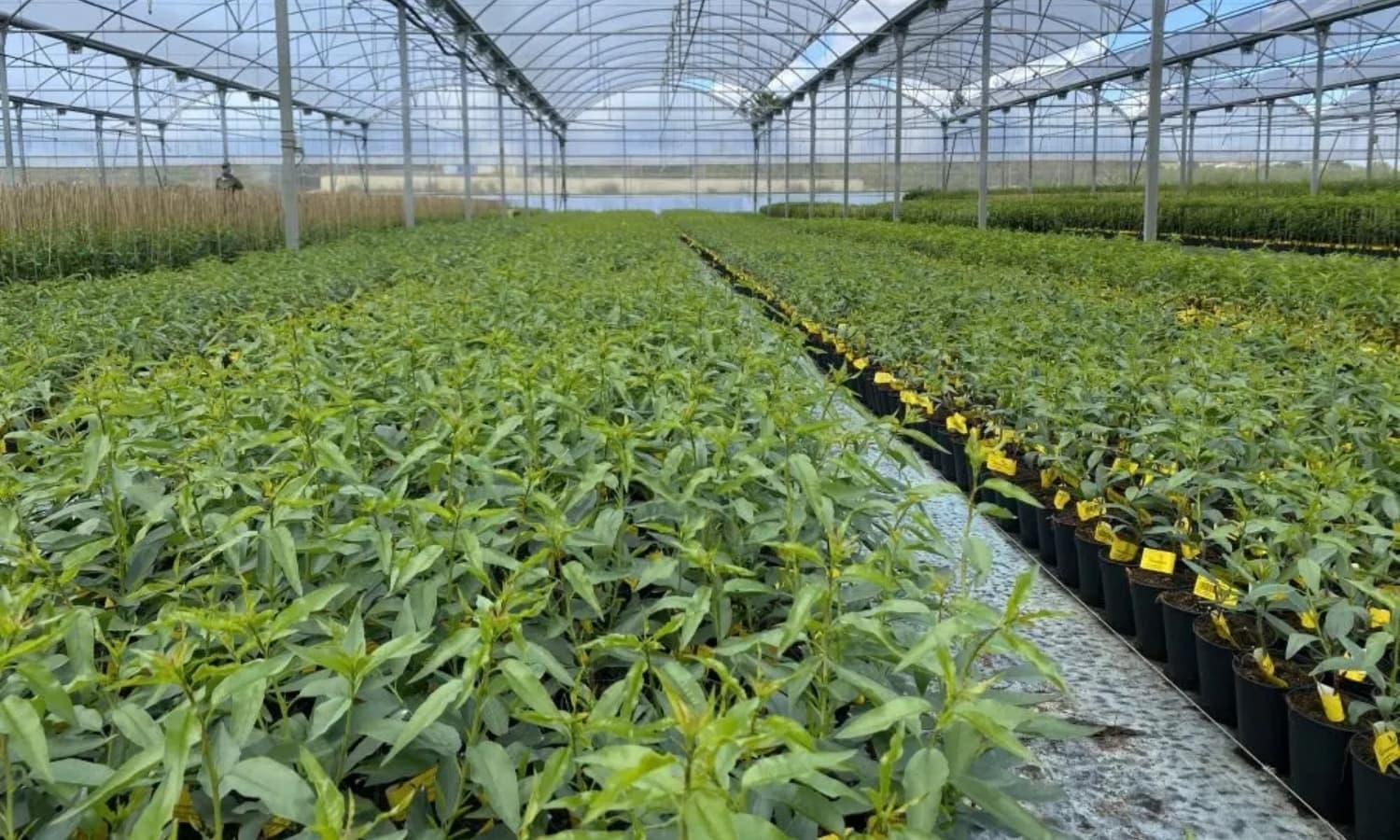
For corolla shakers, which catch the nuts in an inverted umbrella, the reference plans 7 to 8 m between rows and 5 to 6 m in the row, warns that less than 5 m would block harvest machines and strongly advises orchards of at least 5 ha. It names GF 677 as the most used rootstock. Almond prefers light, free-draining soils and is very sensitive to root asphyxia, and the Occitanie chamber's 2017 organic sheet sets a maximum slope of 10% for soil care and machine harvest.

Practical Tips for Almond Orchard Establishment
Avoid frost-prone low plots and north-facing slopes: the PACA reference calls frost the main limiting factor of almond production.
Plant below about 450 m: the Occitanie chamber's 2021 sheet says planting almonds higher up becomes too risky.
Plan pollination: two rows of a pollinizer such as self-fertile Lauranne for every two rows of Ferragnès, plus four hives per ha.
Leave 7 to 8 m between rows and 5 to 6 m in the row for corolla shakers: the PACA reference warns that less than 5 m would block harvest machines.
Choose light, free-draining soils and slopes of 10% at most: almond is very sensitive to root asphyxia, and steeper plots hinder machines.
Plan rows, headlands and tree form for the shaker, sweeper and harvester before planting, and check trunk clearance with OVE Europe.
Recommended Establishment Stages




Almond Orchard Care & Maintenance in France
The Occitanie chamber's 2021 sheet calls irrigation very strongly recommended, if not essential, and prefers micro-sprinklers or drip. The PACA reference cites total water needs of 400 to 850 mm a year, puts average irrigation needs at 230 to 350 mm, suggests drip emitters of 1 to 2 L/h spaced 0.5 to 1 m apart and plans irrigation of adult orchards from mid-March to late September.
The PACA reference calls the almond seed wasp the main almond pest in southern France: first found in the Var and Bouches-du-Rhône in 1981, it can destroy up to 80% of the crop in some orchards (INRA and CTIFL, 2010). The PACA plant health bulletins, based on a network of 14 plots, report adults emerging from late March or early April out of previous years' infested almonds left on the trees, and advise emergence traps from mid-March and removing those almonds at pruning.
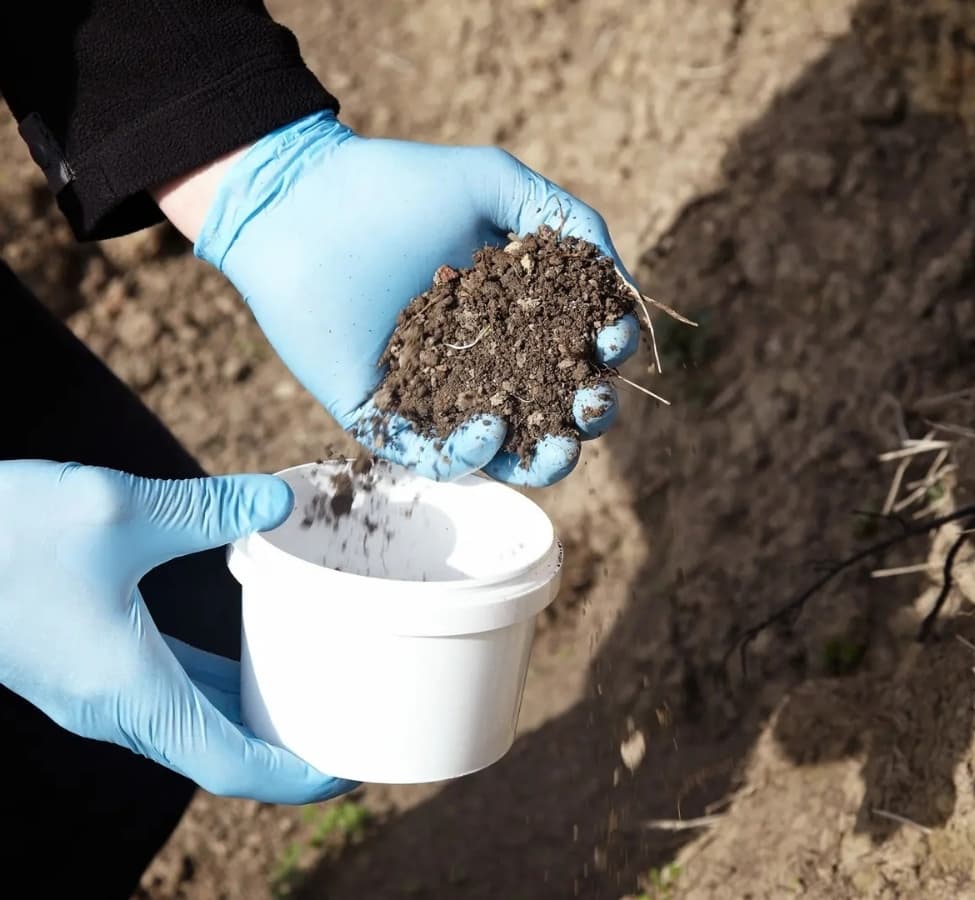
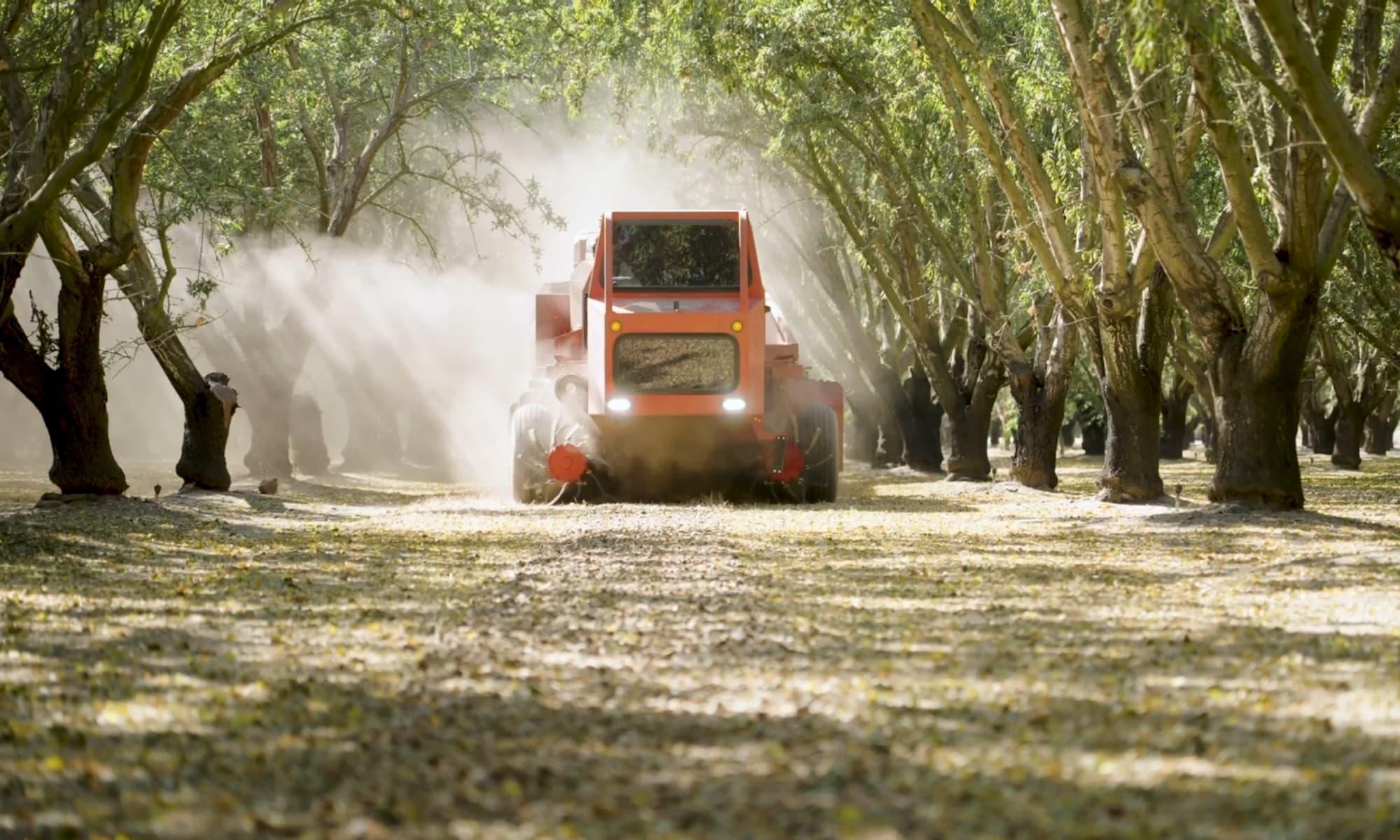
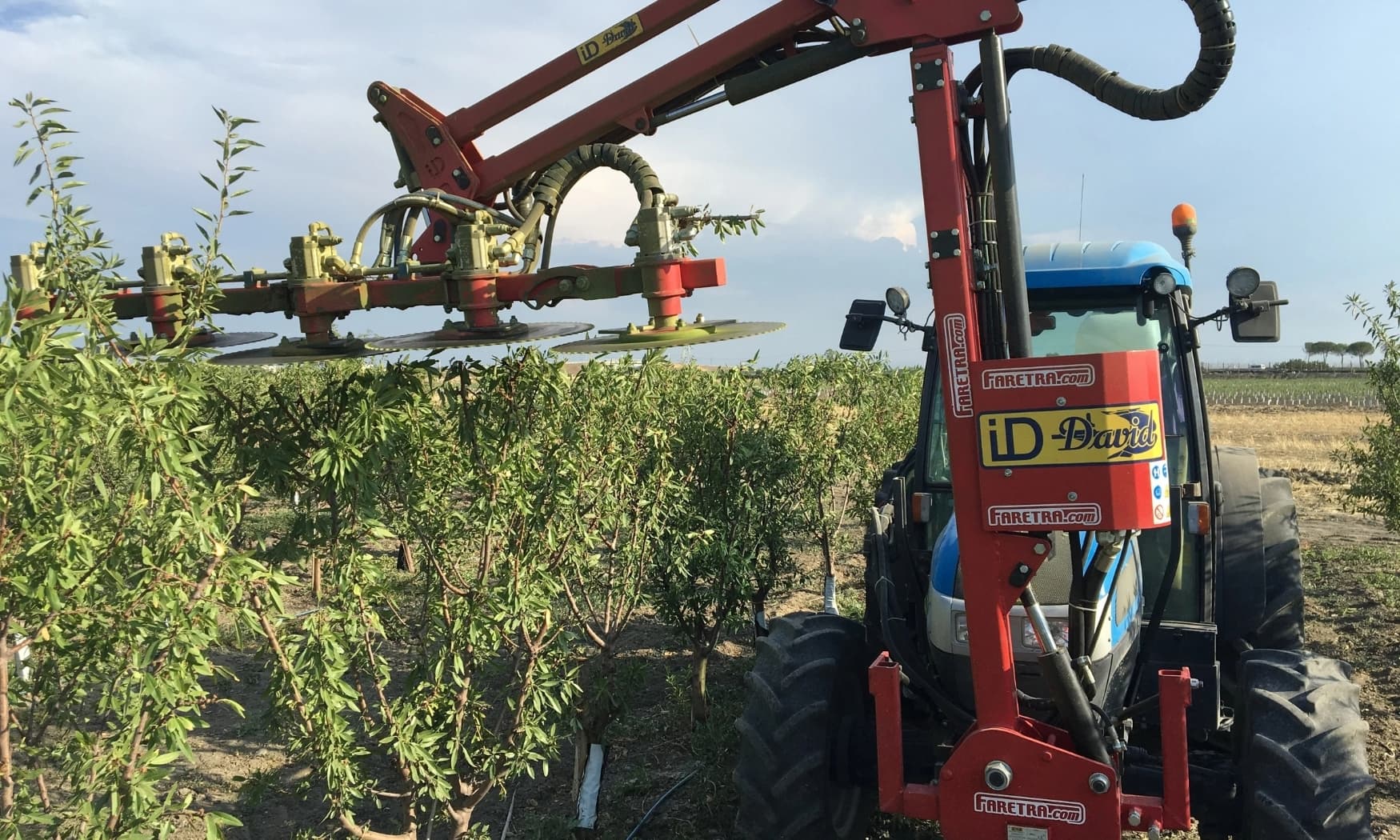
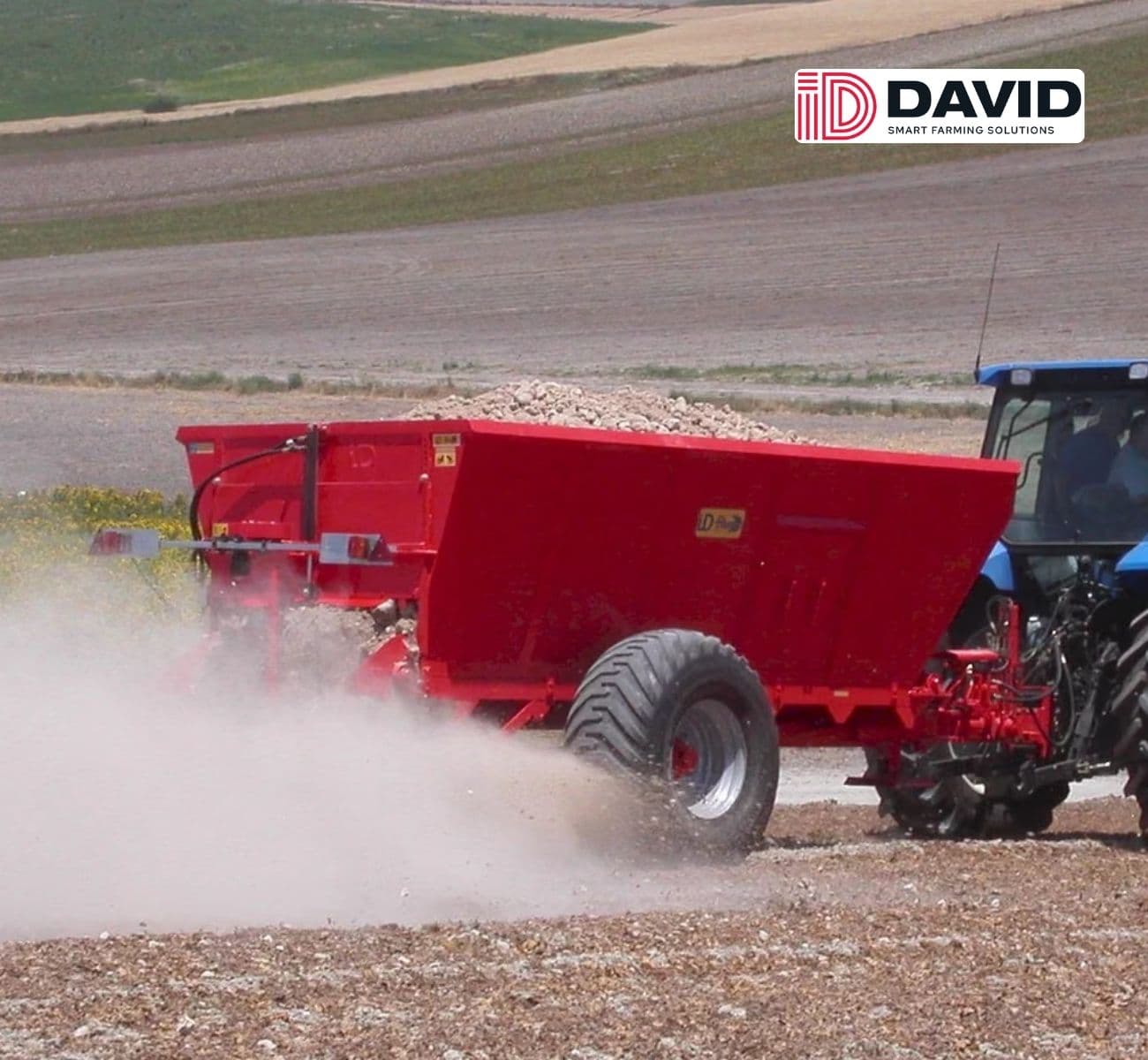
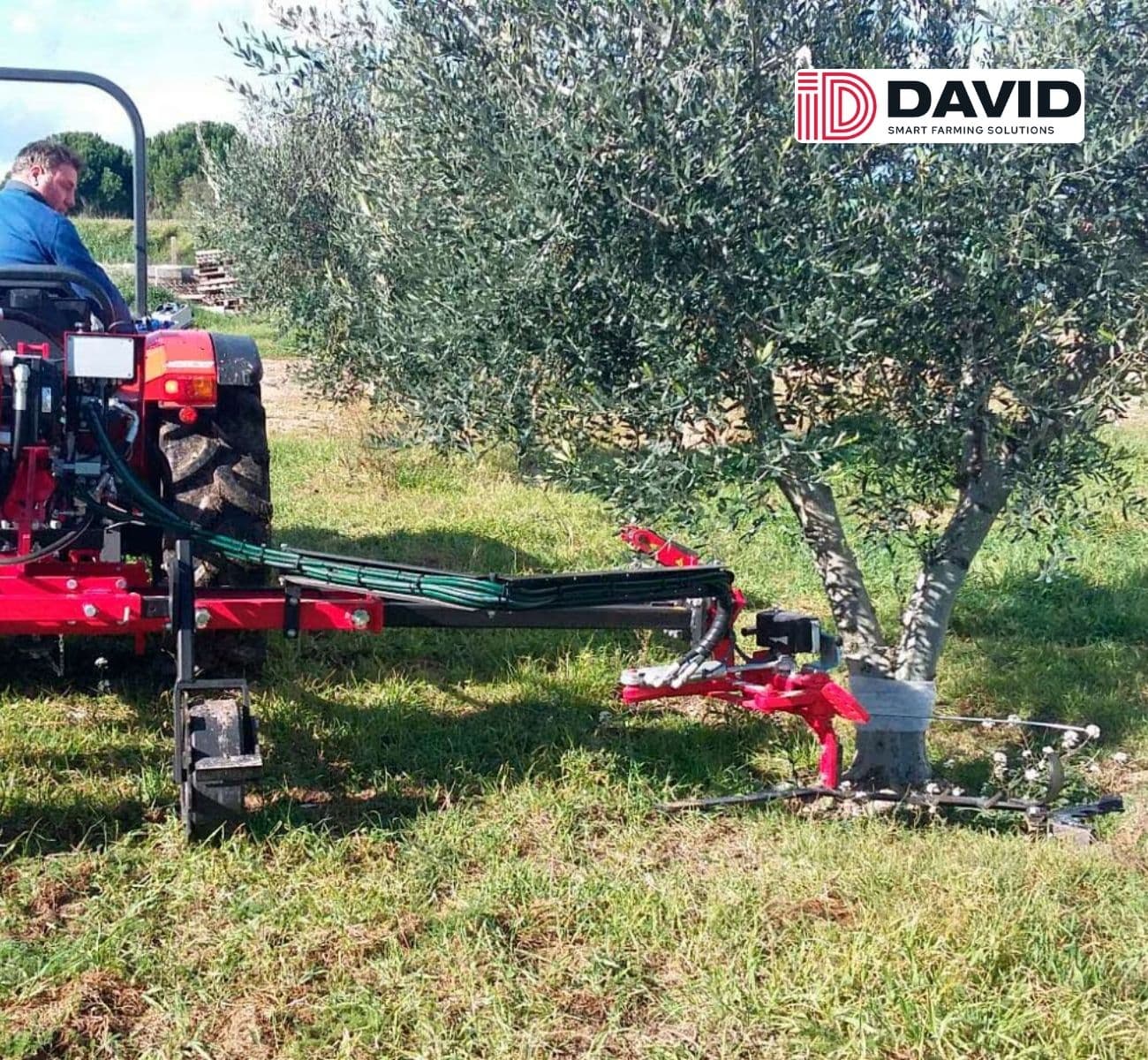
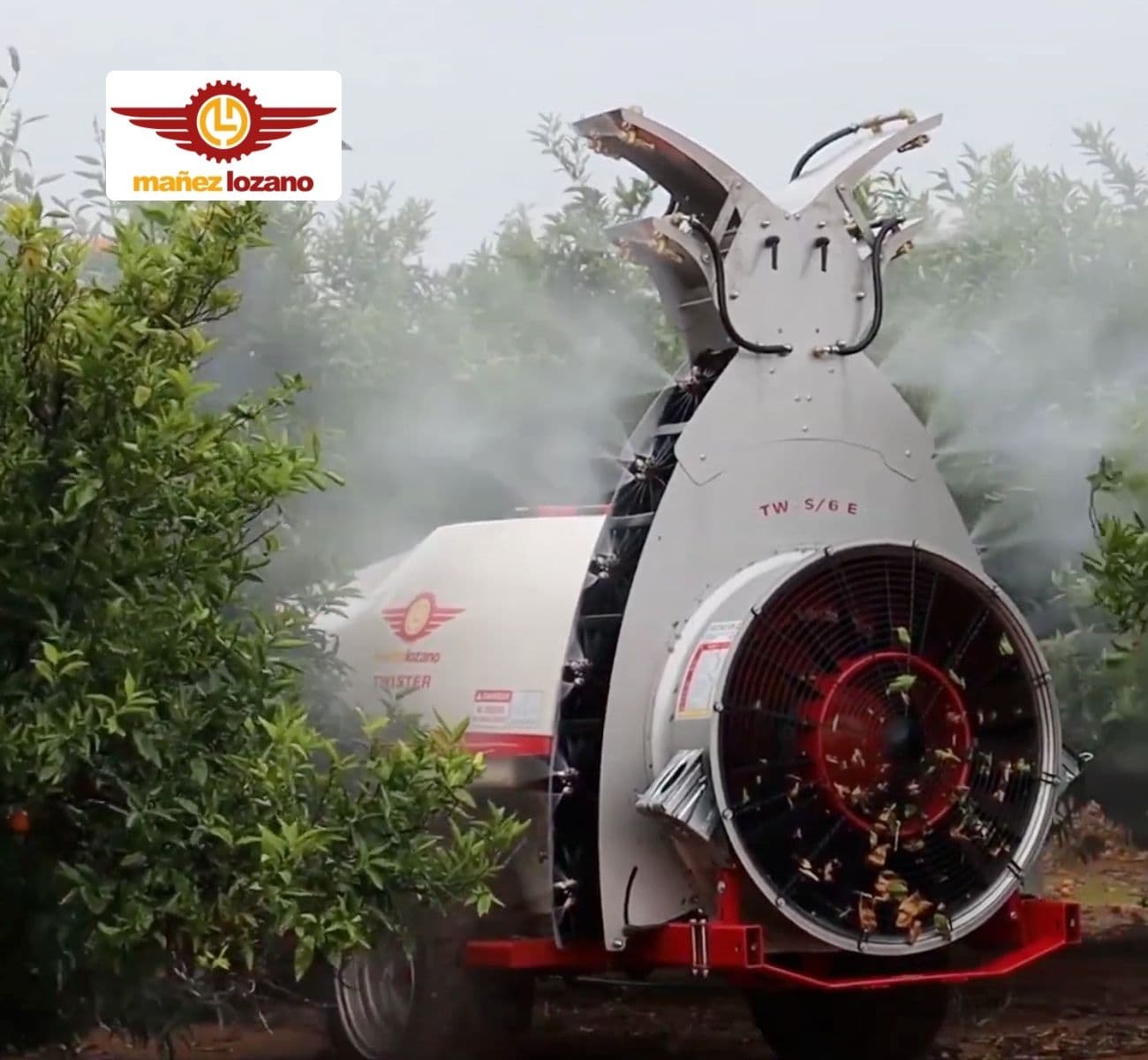
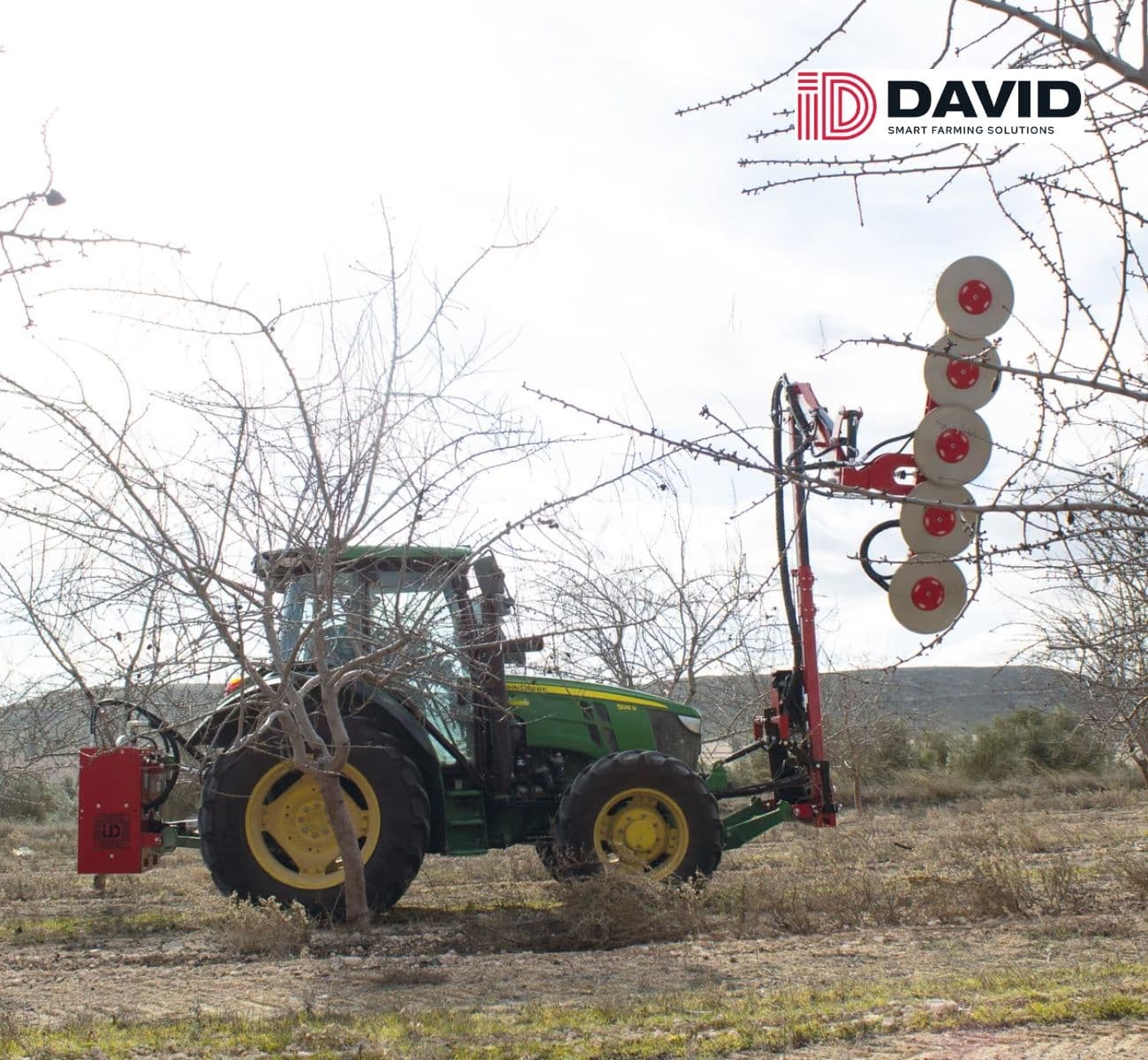
The bulletins also flag Fusicoccum canker and Monilinia around bloom in humid weather and advise removing mummified fruit and affected shoots at pruning. For care work, the ID DAVID SURFEED spreads solid manure, the ID-XL weeds the tree row, the Mañez Lozano Mega Twister S6 sprays tall, dense canopies and the ID DAVID ID-REX disc pruner makes lateral and topping cuts.
Recommended Orchard Care & Maintenance Stages



Practical Tips for Almond Orchard Care & Maintenance
Irrigate where water allows: the PACA reference puts average irrigation needs at 230 to 350 mm a year, from mid-March to late September in adult orchards.
From mid-March, set emergence traps with infested almonds taken from the trees and check them once or twice a week to time seed wasp control.
Remove and destroy almonds left on the trees at pruning: last year's infested almonds release the next seed wasps in spring.
Watch for Fusicoccum and Monilinia around bloom in humid weather, and remove mummified fruit and affected shoots at pruning.
Keep the tree row weed-free with an in-row weeder such as the ID DAVID ID-XL, and keep the orchard floor level for harvest.
Spray tall, dense canopies evenly with a trailed airblast sprayer such as the Mañez Lozano Mega Twister S6.

Almond Harvesting in France
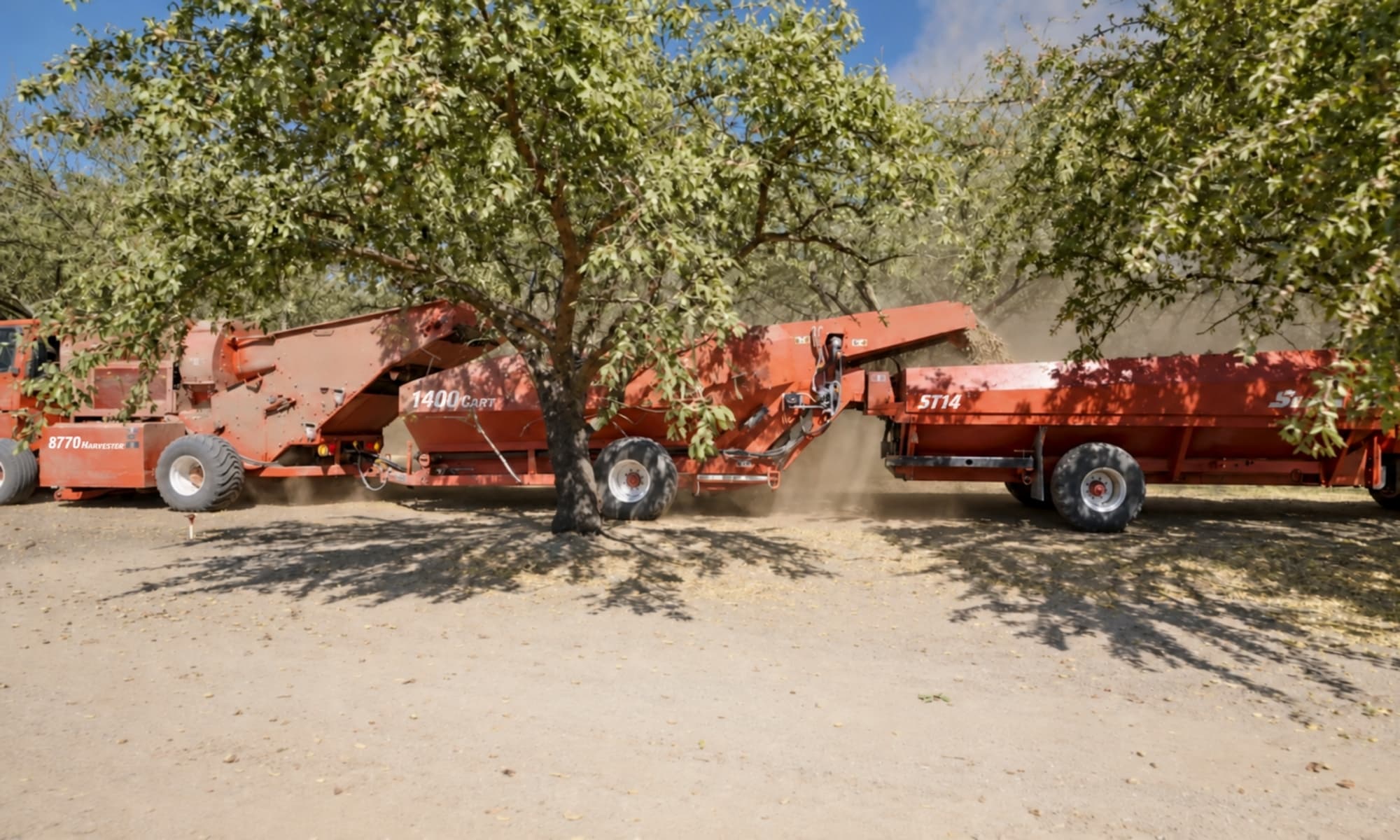
French guidance describes several machine systems: trunk shakers with a corolla that collects the almonds into a hopper, shakers with a conveyor trailer, or a ground sheet that a machine rolls up, while high-density orchards are harvested with a raised grape harvester. The Occitanie chamber says machine harvest is a must above 4 to 5 ha and 5 years of age. In orchards planted for machines on suitable ground, mechanized harvesting can bring the crop in on time, with less risk of nuts deteriorating while they wait.
Harvest starts when 80% of hulls have opened: in early September at Nîmes for Lauranne and Ferragnès (PACA reference); Agreste dates the dry harvest from September to mid-October. September is the wettest month at Carpentras (98.7 mm on 5.5 days) and Nîmes (100.3 mm) in Météo-France's 1991 to 2020 normals, and recent Septembers at Carpentras swung from dry (2023, 2026) to very wet (2024, 2025, with hail in the Vaucluse on 4 September 2025). This guide therefore shows prompt pickup, with hulling and drying at once, alongside catching frames.
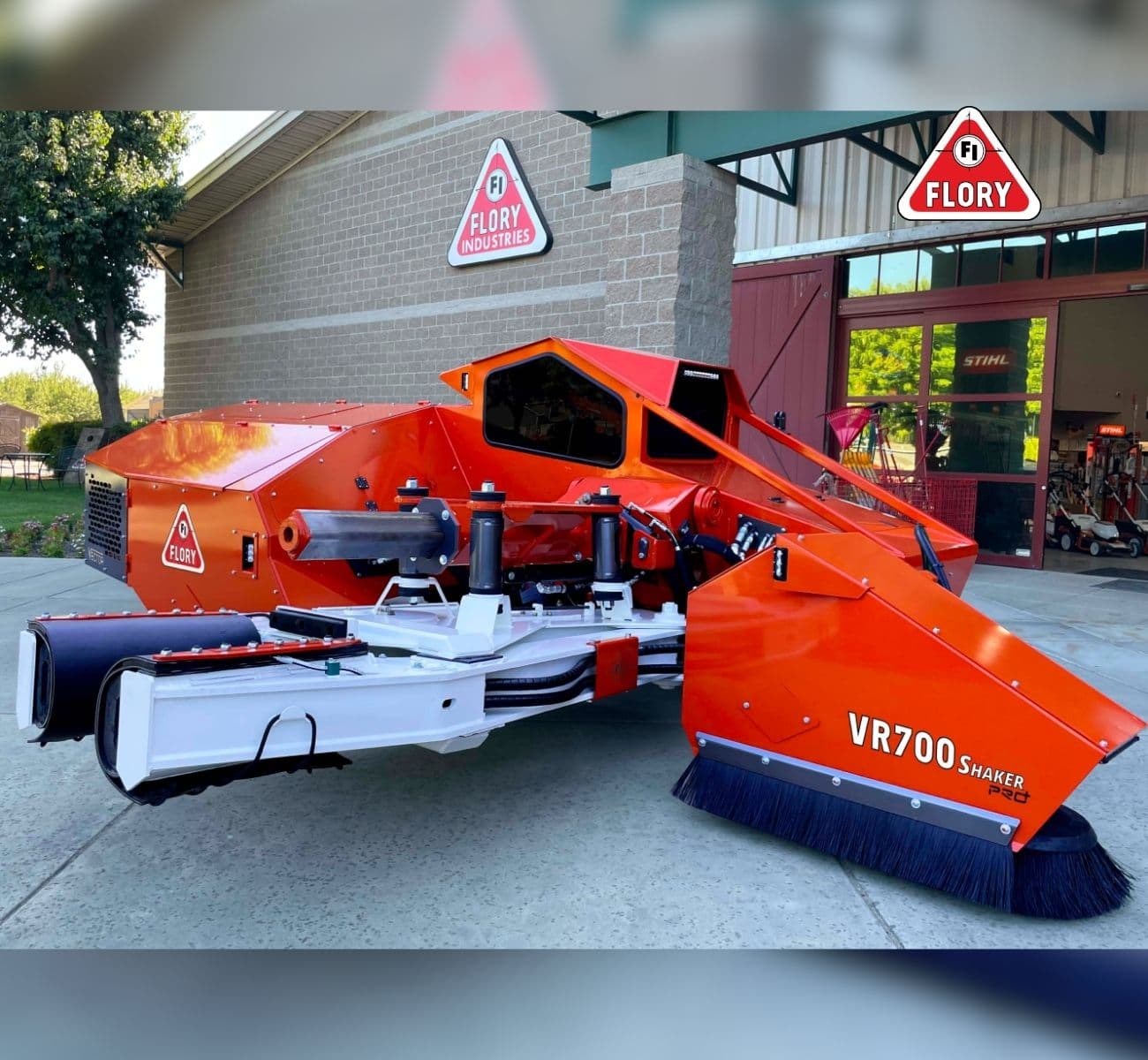
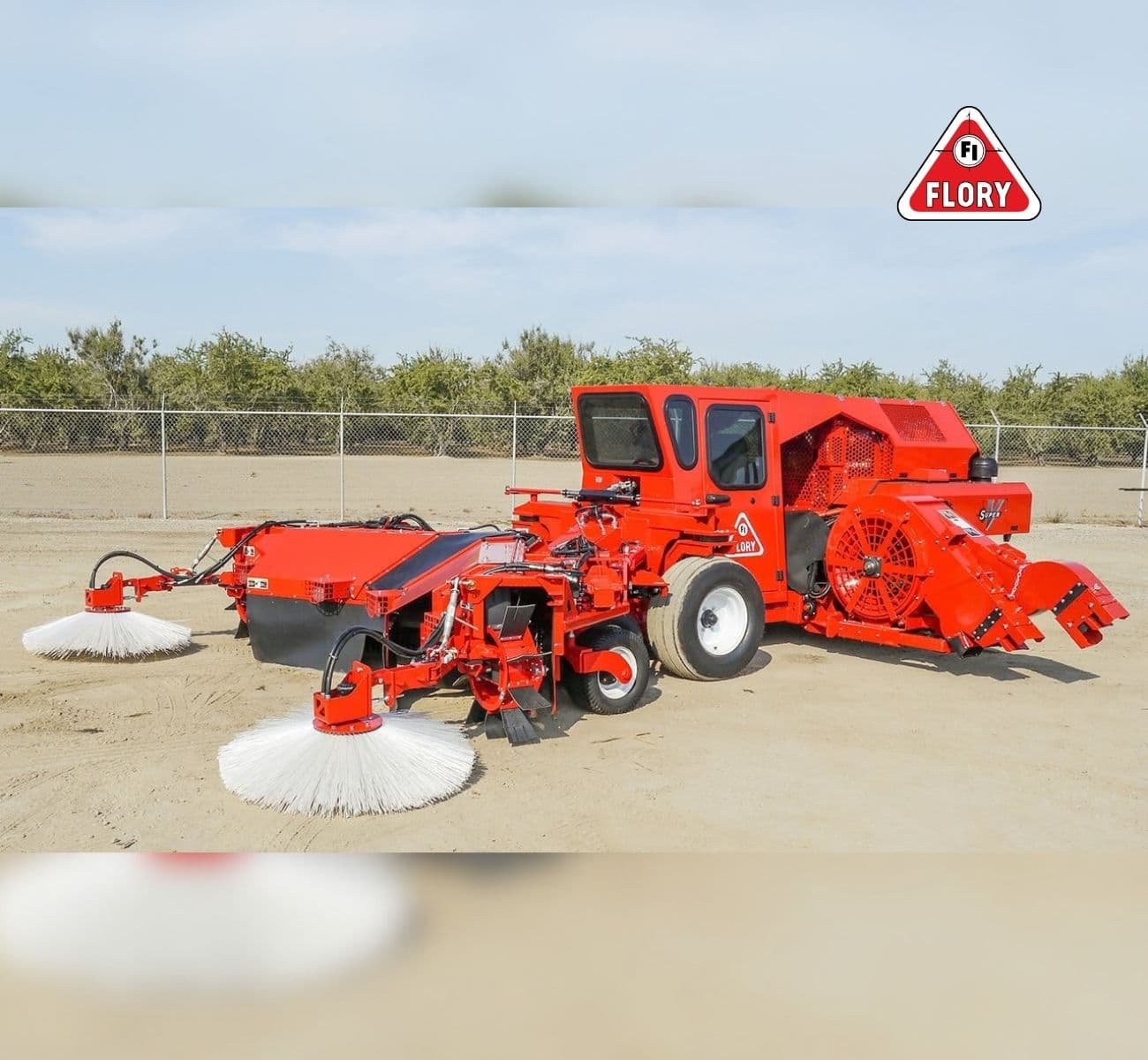
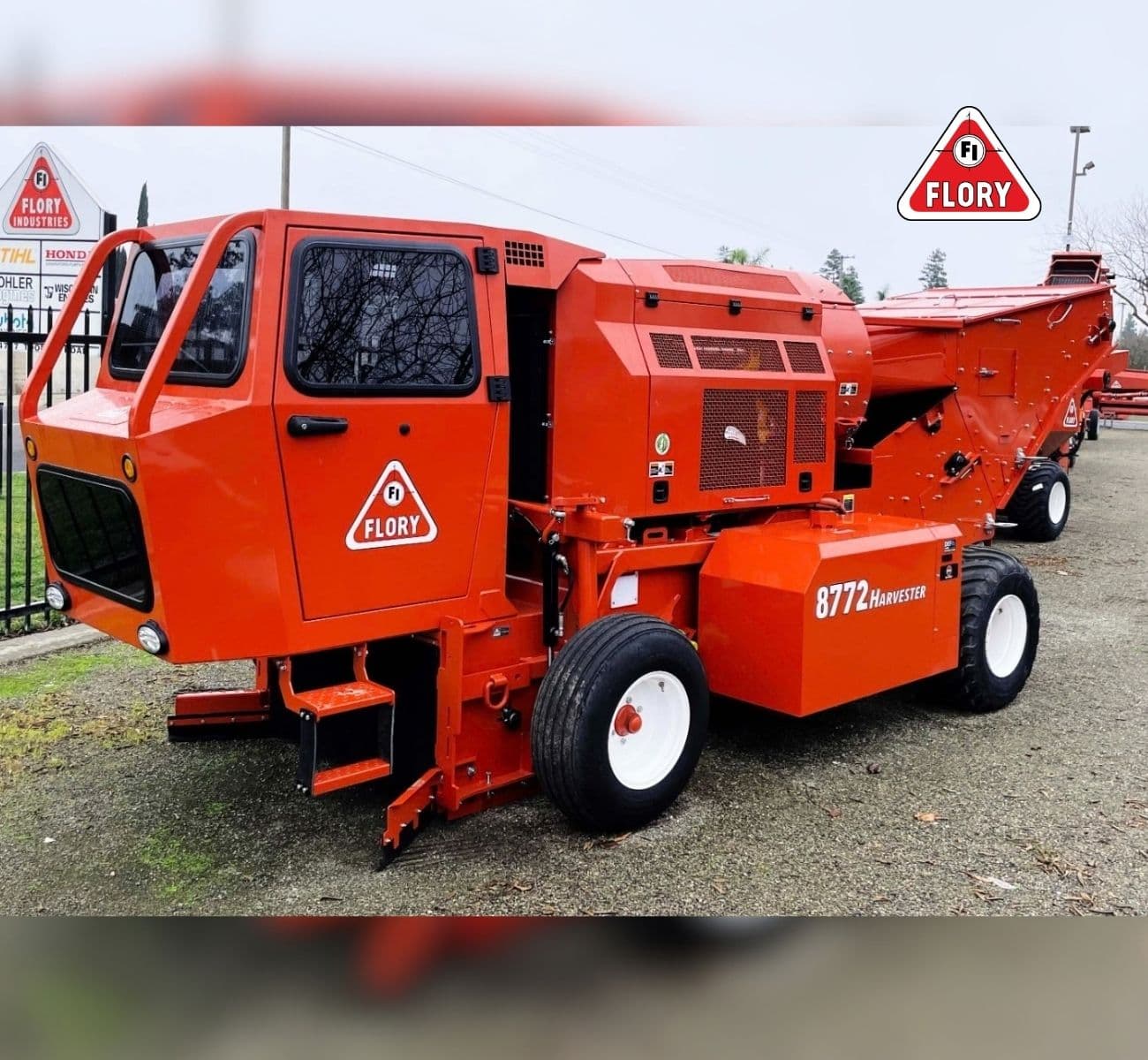
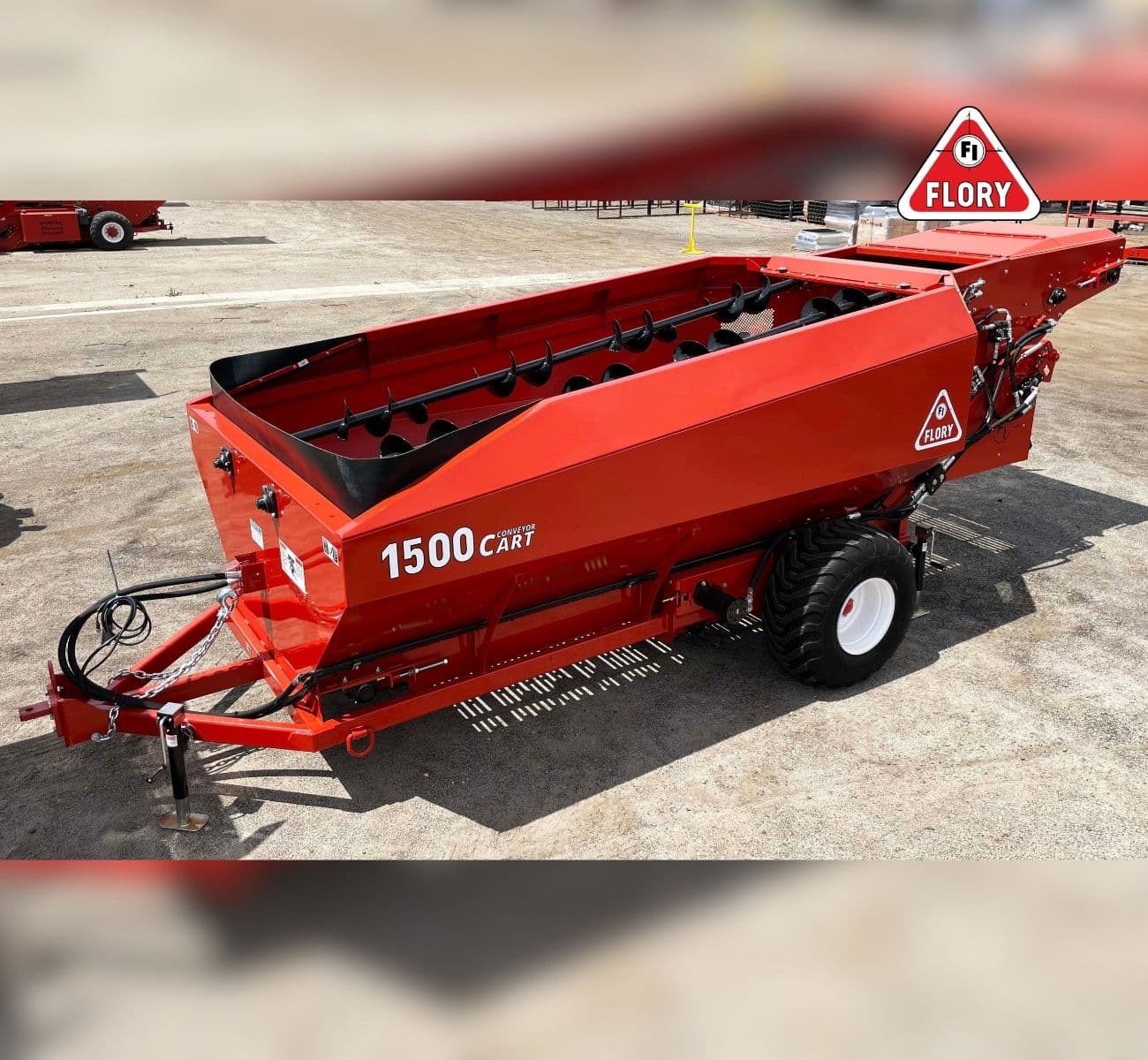
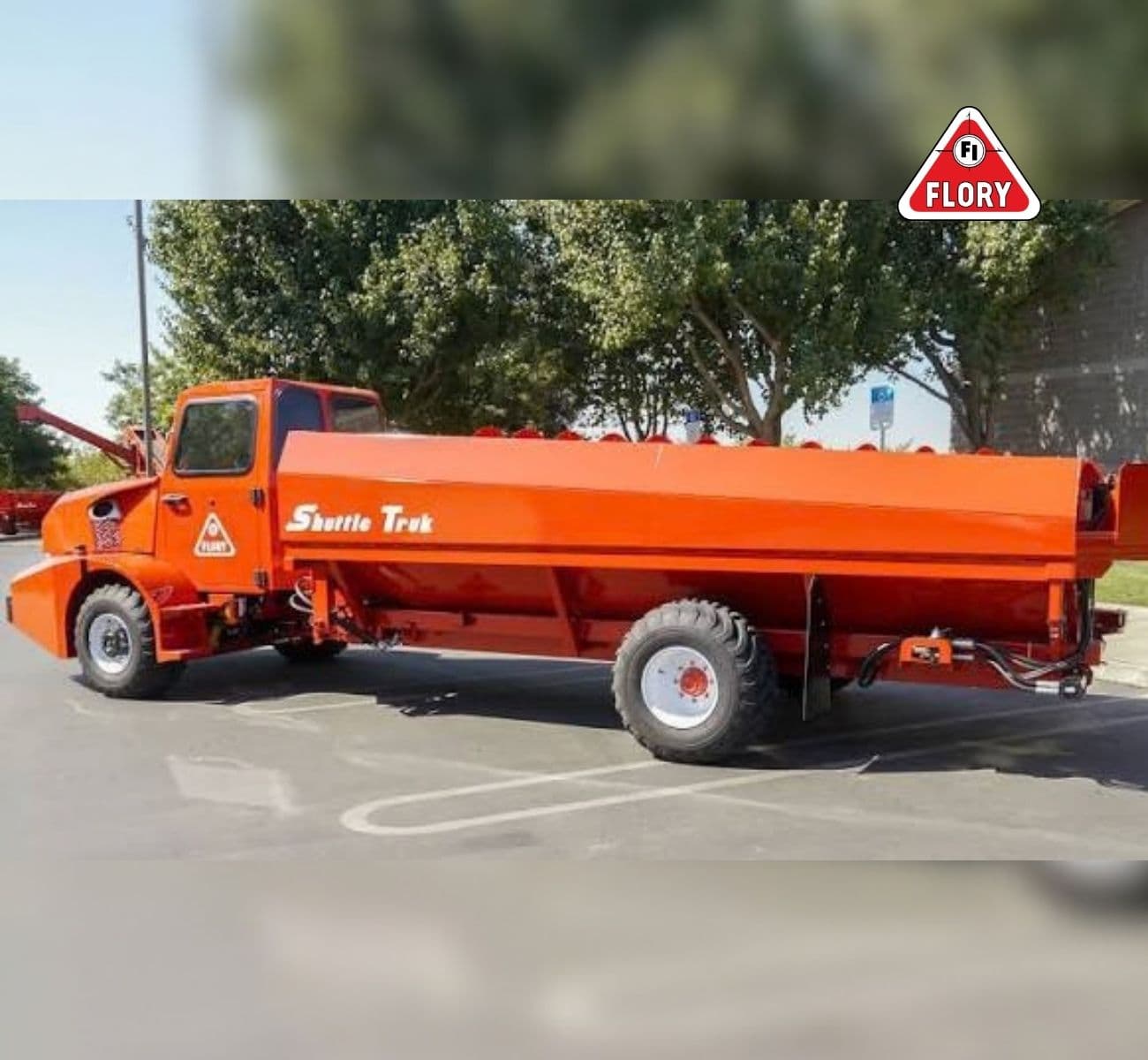
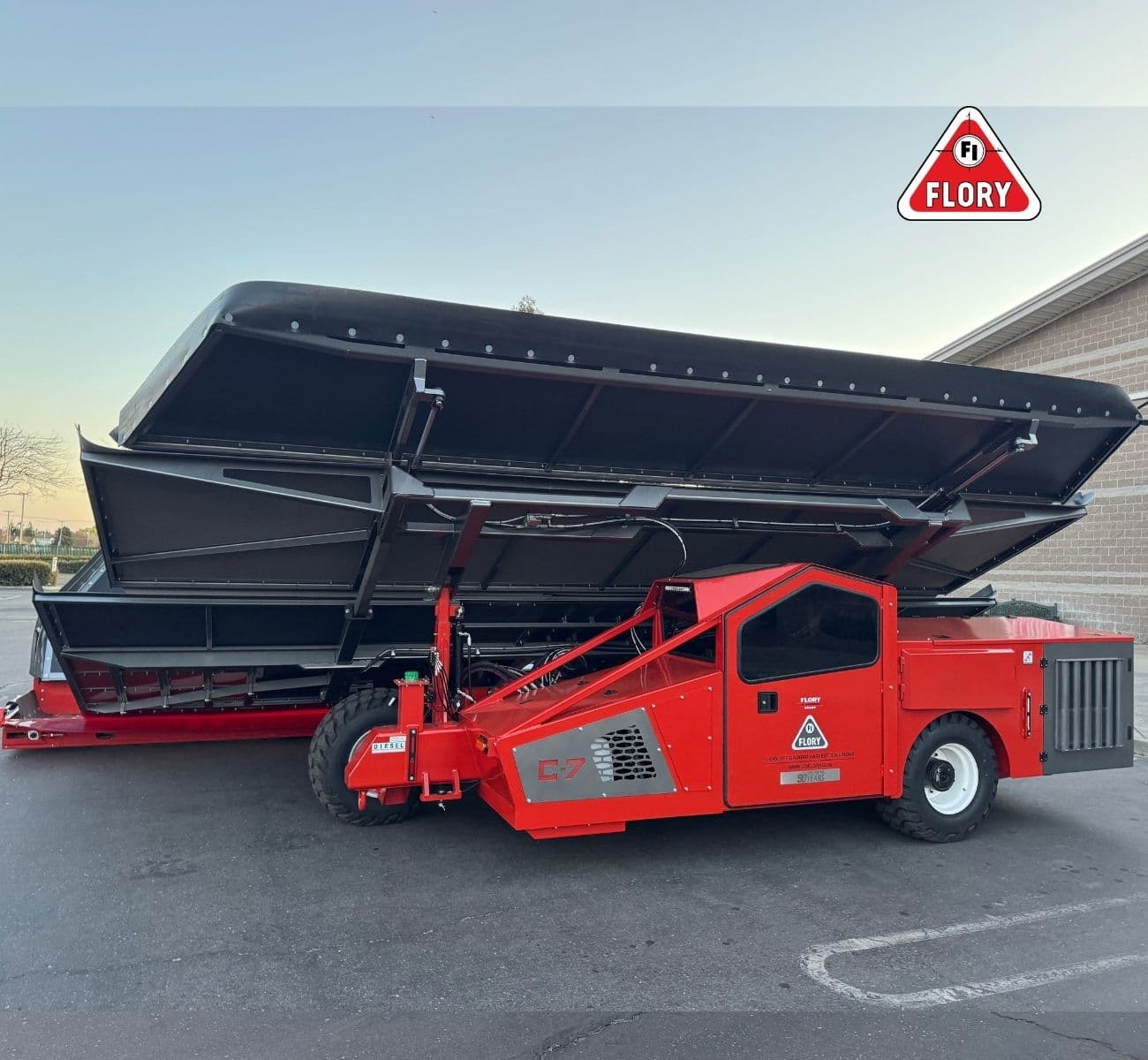
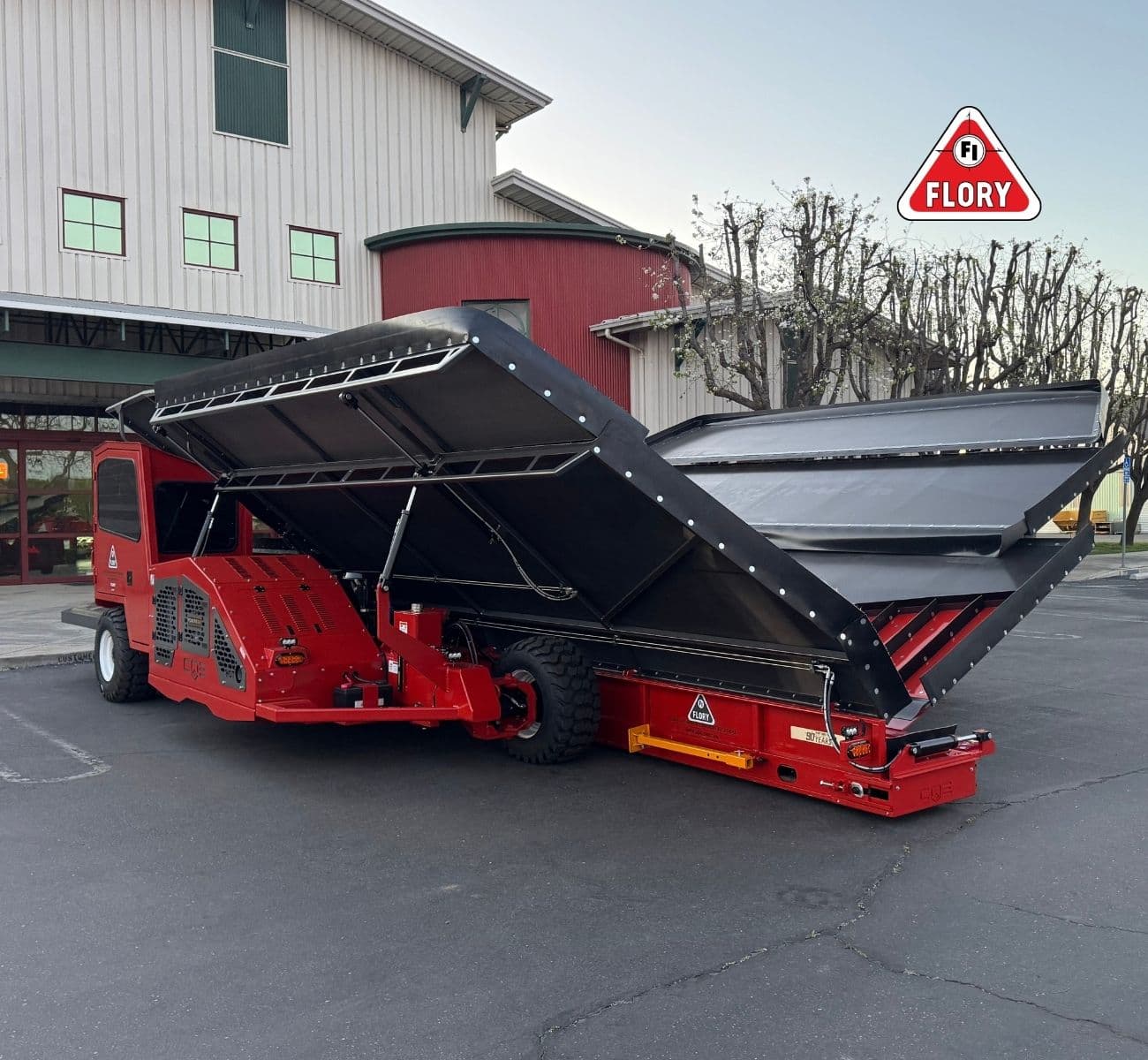
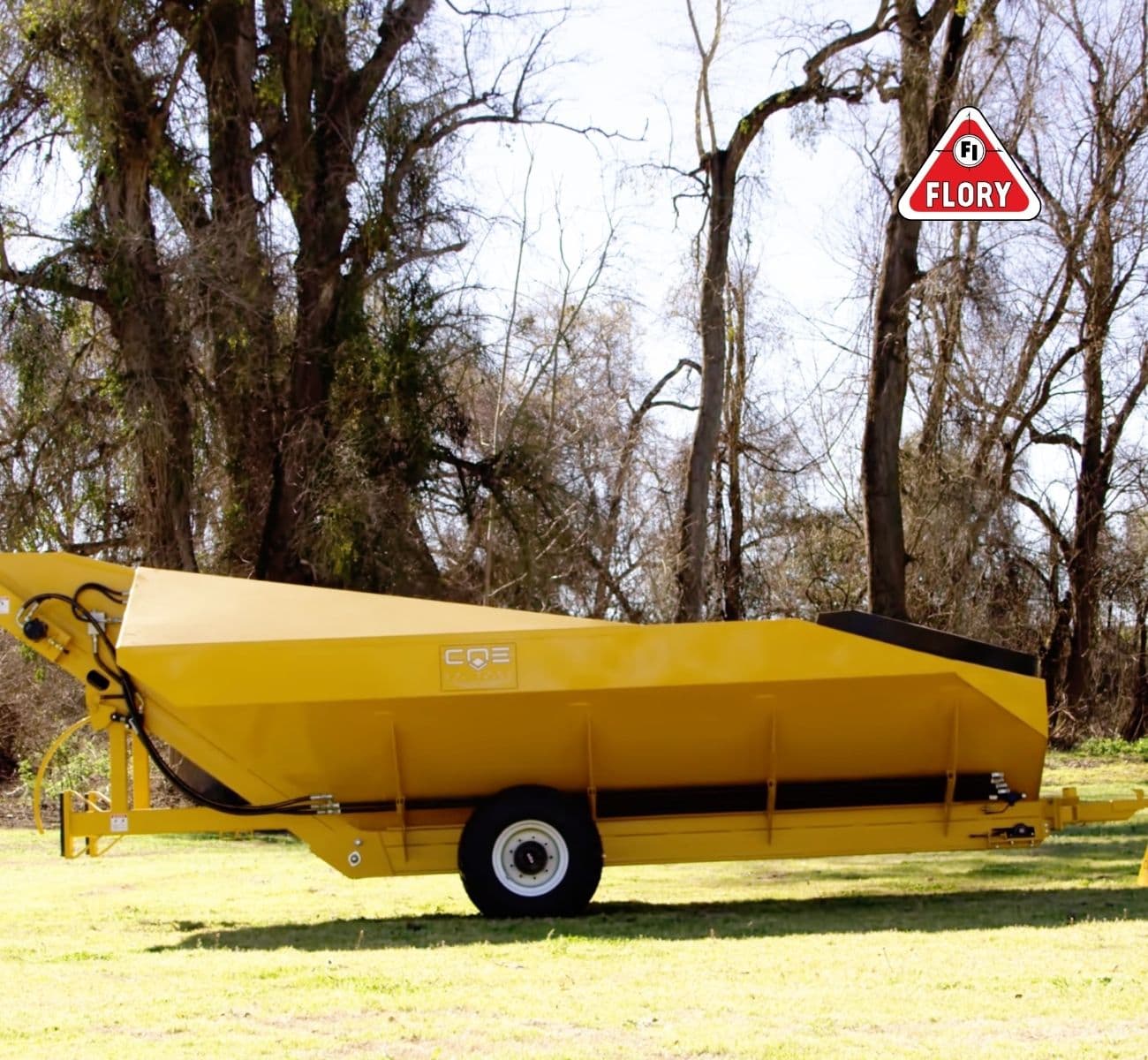
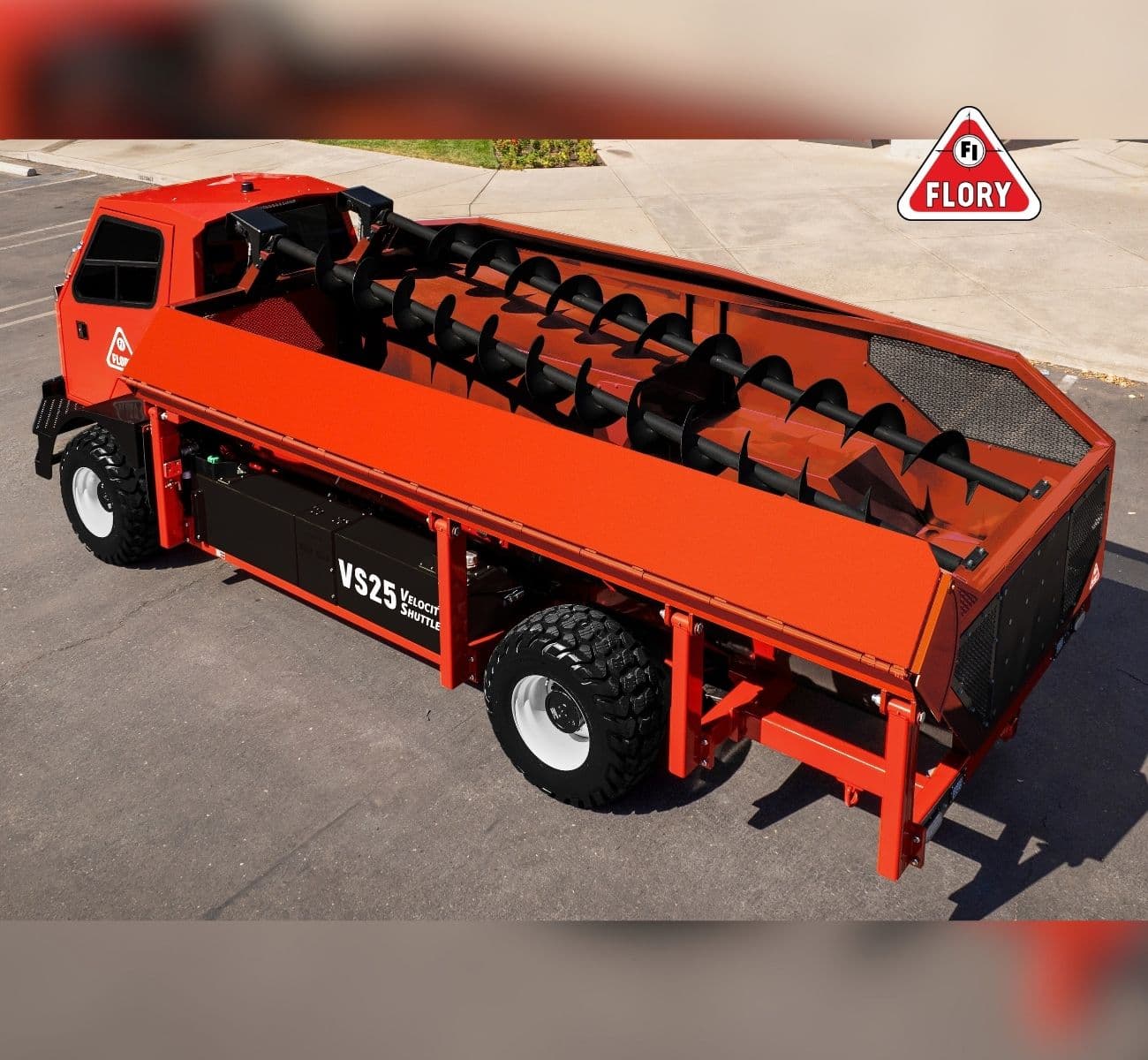
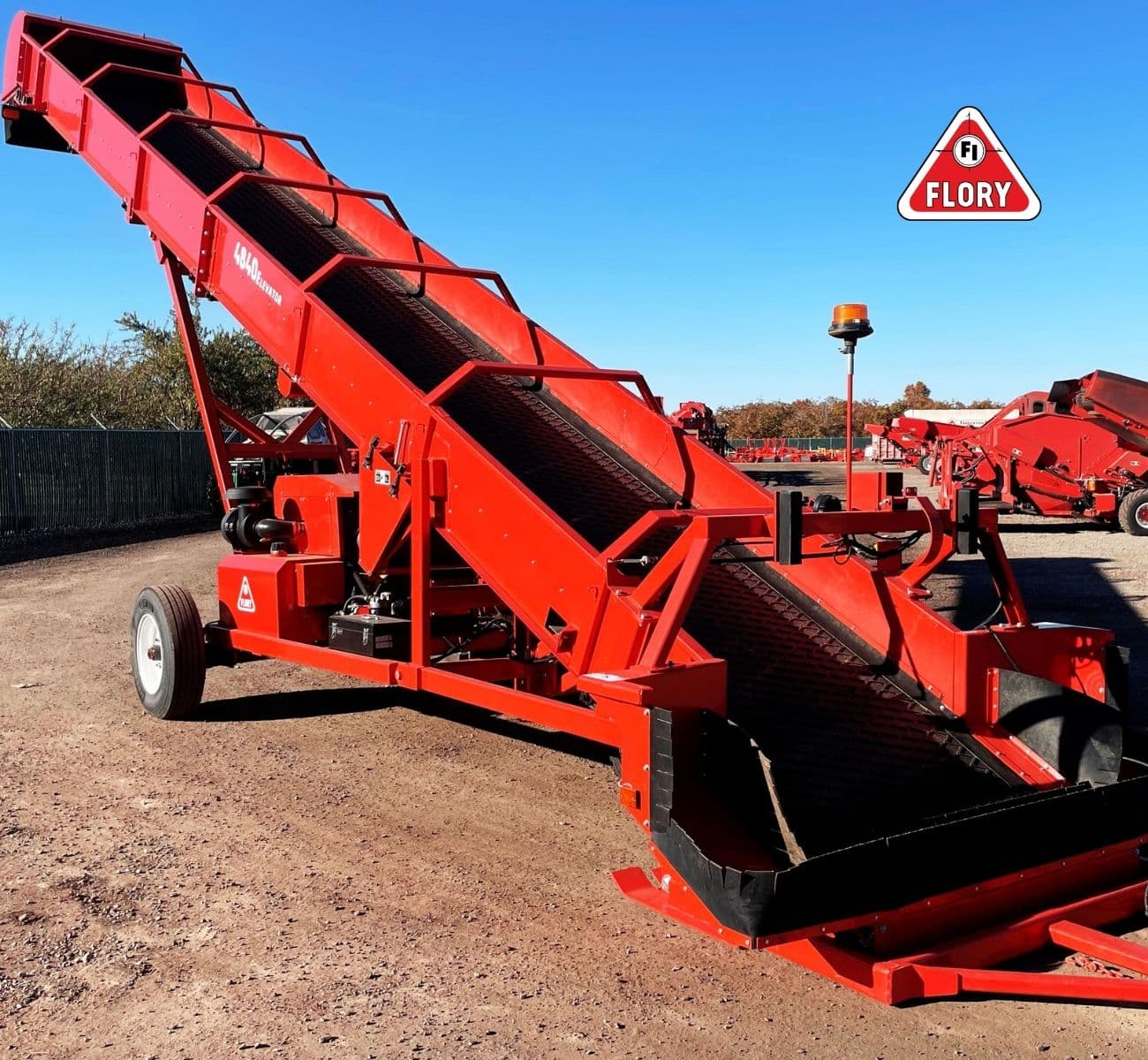
Flory harvesting machinery is available in France through OVE Europe for both systems. On the ground, the VR700 Shaker, V62 Sweeper and 8772 Harvester feed the 1500 Conveyor Cart and ST14 Shuttle. Off the ground, the Flory COE C7 Shaker and L2 Receiver catch the almonds in a frame around the trunk, the Flory COE B8 Cart and VS25 Shuttle carry them, and the 4840 Field Elevator loads trailers in both systems.
Almond Harvest Workflow (Recommended Equipment)
Practical Tips for Almond Harvesting
Start when 80% of hulls have opened, as the Occitanie chamber advises, and finish within the 12 to 15 days the PACA reference allows.
Do not wait once almonds are ripe: the PACA reference warns that strong winds and heavy rain can knock them to the ground.
Sweep and pick up soon after shaking, then hull and dry the almonds off the ground; University of California guidance adds that quick removal limits ant damage.
Where almonds must stay off wet ground, use catching frames: the Flory COE C7 Shaker works with the L2 Receiver.
As a 2022 harvest demonstration in the Aude noted, shake only trees from 5 or 6 years of age with no branches below about 1 m, on fairly flat ground.
Keep shakers and frames for orchards planted for machines, never household or heritage trees, terraces or steep slopes.
Get your recommended harvest setup
Enter orchard size, spacing, terrain, and target throughput—we’ll suggest a practical harvest workflow and equipment lineup.

Almond Post-Harvest Handling & Processing in France
French guidance calls for hulling at once: the 2016-2017 PACA reference says hulling, drying and storage must follow each other very quickly after harvest, as quick hulling keeps the hull from sticking to the shell, helps drying and limits mold that can lead to mycotoxins. Almonds hold 15 to 25% moisture at harvest; the dryer the reference calls most widespread, with heated air blown through mesh-bottomed cells, takes 24 to 36 hours to bring them to a stable 6%.
Dry almonds keep up to 20 months at 0 °C, 16 months at 10 °C and 8 months at 20 °C, with 65% air humidity recommended (PACA reference). Almonds sold in the EU must meet Regulation (EU) 2023/915: 8.0 µg/kg of aflatoxin B1 and 10.0 µg/kg in total for the final consumer or as an ingredient, and 12.0 and 15.0 µg/kg for almonds to be sorted first.
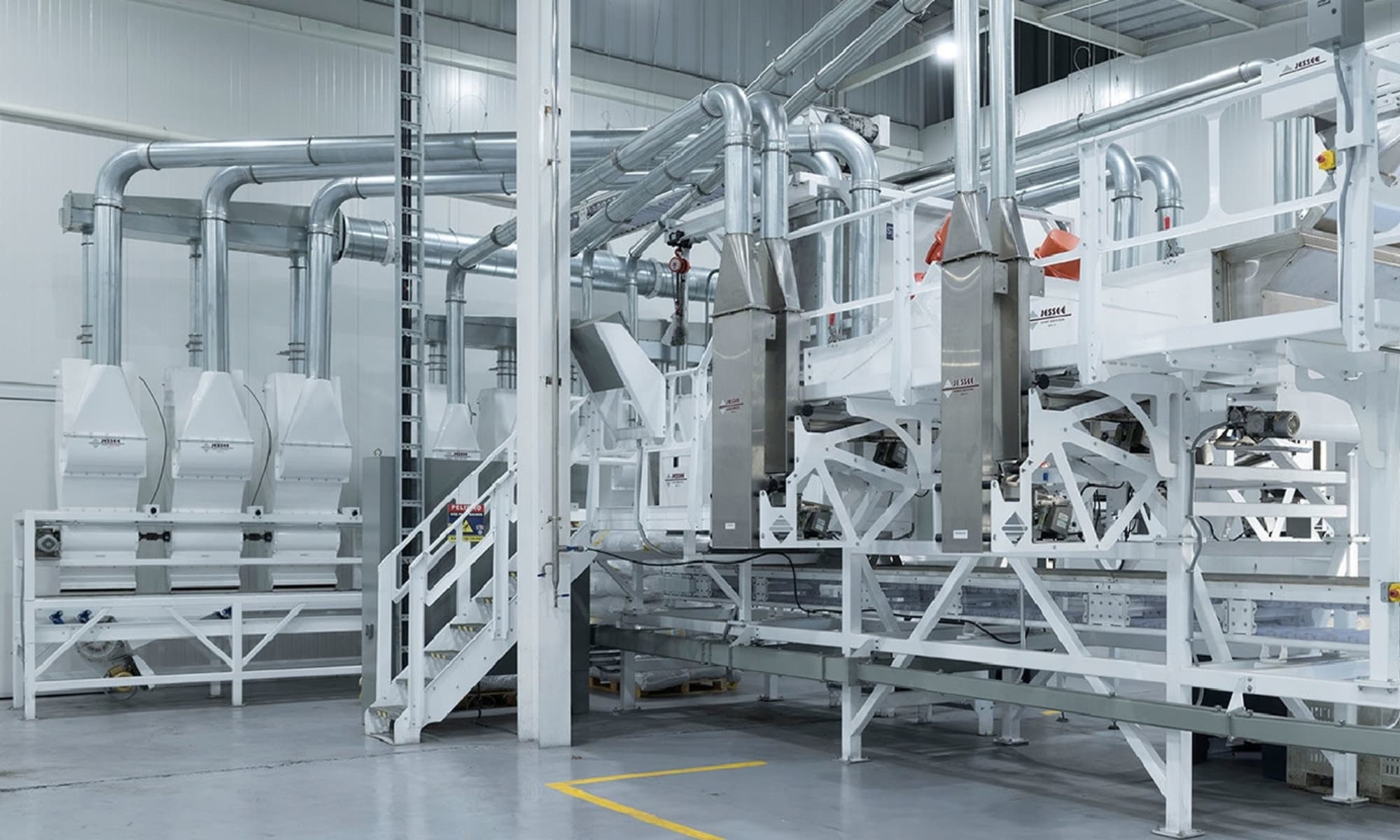
Shelled almonds made up 96.4% of the 53,535.1 t of almonds France imported in 2025, and these kernel imports alone were about 30 times the provisional 2025 kernel crop. Jessee, whose processing lines OVE Europe supplies, builds hulling, drying, in-shell cleaning and sizing, and shelling systems; its Airlegs nut cleaner was developed for the almond industry.
For general information only. Information may become outdated and does not replace site-specific professional advice. Consult a qualified agronomist and confirm equipment suitability with OVE before acting.
Practical Tips for Almond Post-Harvest Handling & Processing
Hull promptly picked or frame-caught almonds while the hulls are fresh, then dry the nuts in the shell before storage.
Dry to about 6%, which takes 24 to 36 hours in a false-bottom dryer, and calibrate the moisture meter before each season.
Never stockpile undried almonds: University of California guidance for nuts dried on the ground warns against stockpiling above 12% hull, 6% kernel or 9% fruit moisture.
Keep dry almonds cool: the PACA reference gives up to 20 months at 0 °C, 16 at 10 °C and 8 at 20 °C, at 65% air humidity.
Never put almonds that are still damp in cold storage, and deliver them dry: wet almonds may be refused at the cracking plant.
Test lots against Regulation (EU) 2023/915: 8.0 µg/kg of aflatoxin B1 and 10.0 µg/kg in total for almonds sold to consumers.
Recommended Post-Harvest Handling & Processing Stages







Plan your post-harvest line
Estimate tons/day, cleaning & drying capacity, storage needs, and cost/kg—then build your equipment plan in phases.