


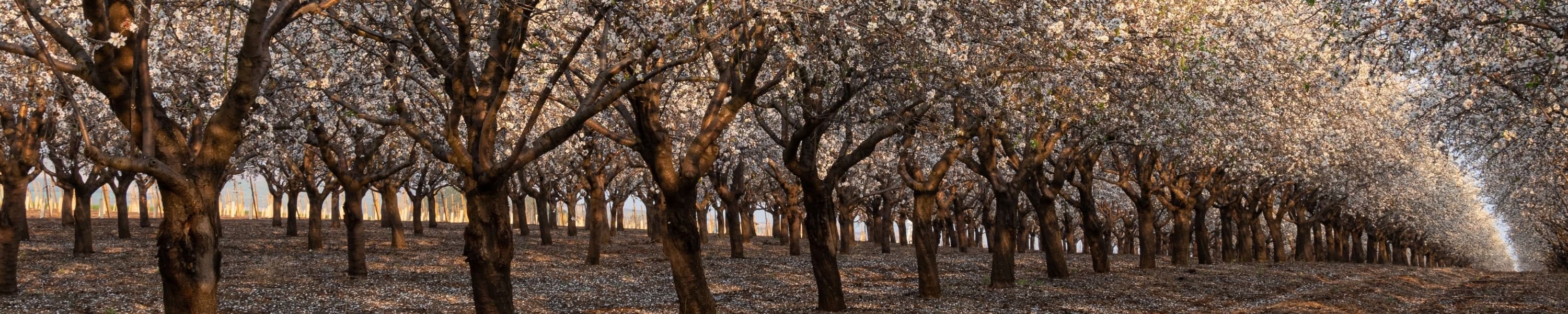




Almond Orchard Establishment in Greece
University of Thessaly slides of 2017 place almond in Thessaly and Central Greece and, to a lesser extent, in warm parts of northern Greece; recent reports name producing areas in Larissa, Magnesia, Fthiotida, Serres and Kavala. The university's 2019 notes say late spring frosts are the rule in the north, where late-blooming cultivars help only on frost-free sites, and that almond tolerates drought and lime but yields best on fertile, light, well-drained, irrigated soils.
A 2023 study names Ferragnès and Texas, both self-incompatible, as the most popular cultivars, with Ferraduel as the main pollinizer of Ferragnès, and says Ferragnès is shrinking as new cultivars replace it after limited testing in Greece. The university's notes call Texas the main cultivar, suited to northern Greece but best kept to fertile, irrigated soils, and advise Ferragnès where late frost is a risk; they also list newer self-fertile cultivars planted in Greece, such as Vairo, Soleta and Marinada.
For irrigated fields, the notes give at least 5 by 5 m for Texas on almond seedlings and 6 by 6 m for Ferragnès on GF 677, wider without irrigation, and say a shaker with a catching umbrella needs 6 by 6 m, better 6 m in the row and 7 m between rows. Seedlings suit rain-fed or poor soils, while GF 677 seems more productive under good irrigation. Some newer plantings are much denser: one Larissa producer group grows 135 trees per stremma (0.1 ha) instead of 30, harvested by machine (2024 report).
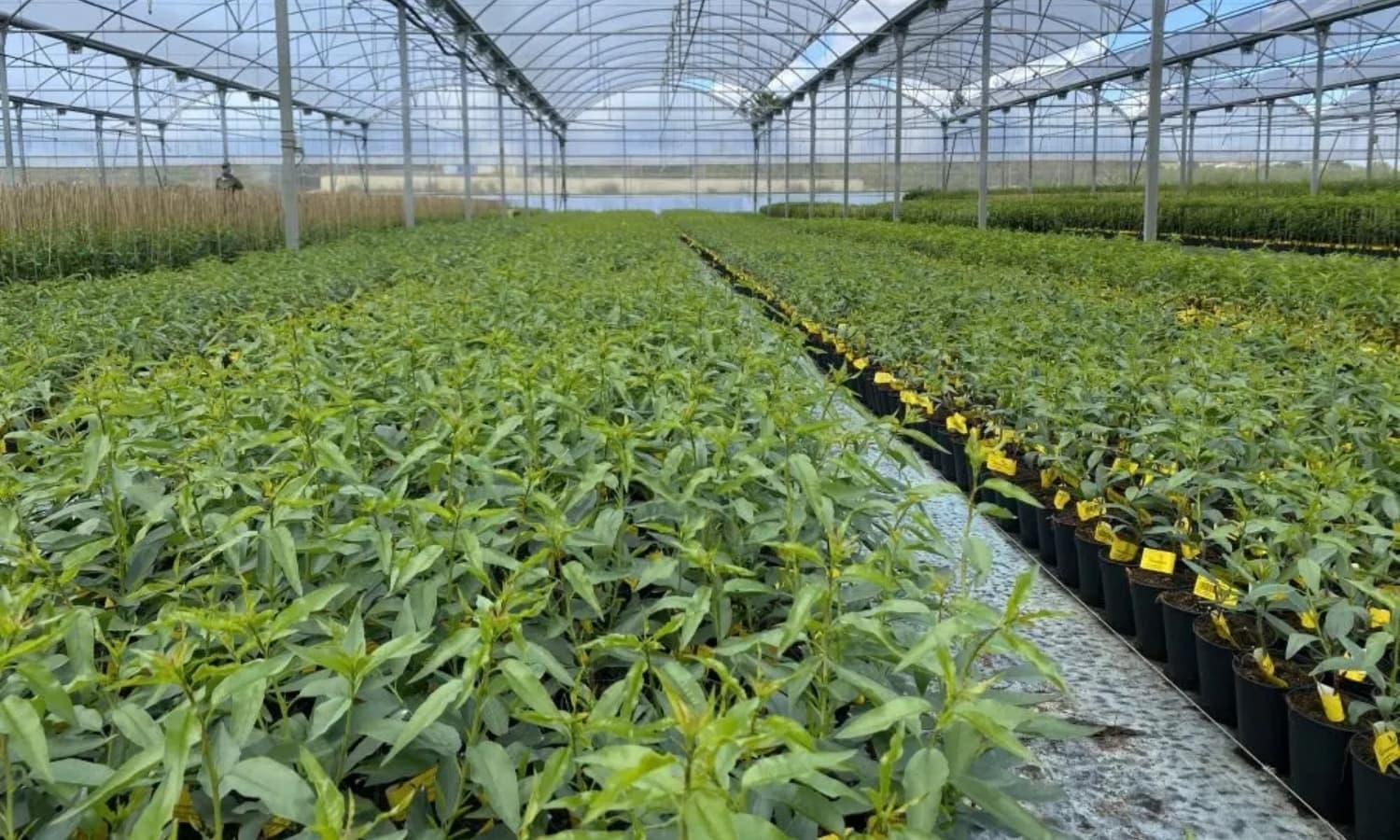

Practical Tips for Almond Orchard Establishment
Avoid closed valleys and frost pockets: University of Thessaly notes say late spring frosts are the rule in northern Greece.
Keep Texas to fertile, irrigated soils: the notes call growing it beyond them the basic mistake made with this cultivar.
Plant 20 to 30% pollinizers, never fewer than 10 to 15%, and bring hives at the start of bloom, as University of Thessaly notes advise.
Match the rootstock to the water: the notes suggest almond seedlings for rain-fed or poor soils and find GF 677 more productive under good irrigation.
For shakers with a folding catching sheet, the notes advise about 6 to 6.5 m in the row, at least 6.5 m between rows and trunks above 80 cm.
Plan rows, headlands and tree form for the shaker, sweeper and harvester before planting, and check trunk clearance with OVE Europe.
Recommended Establishment Stages
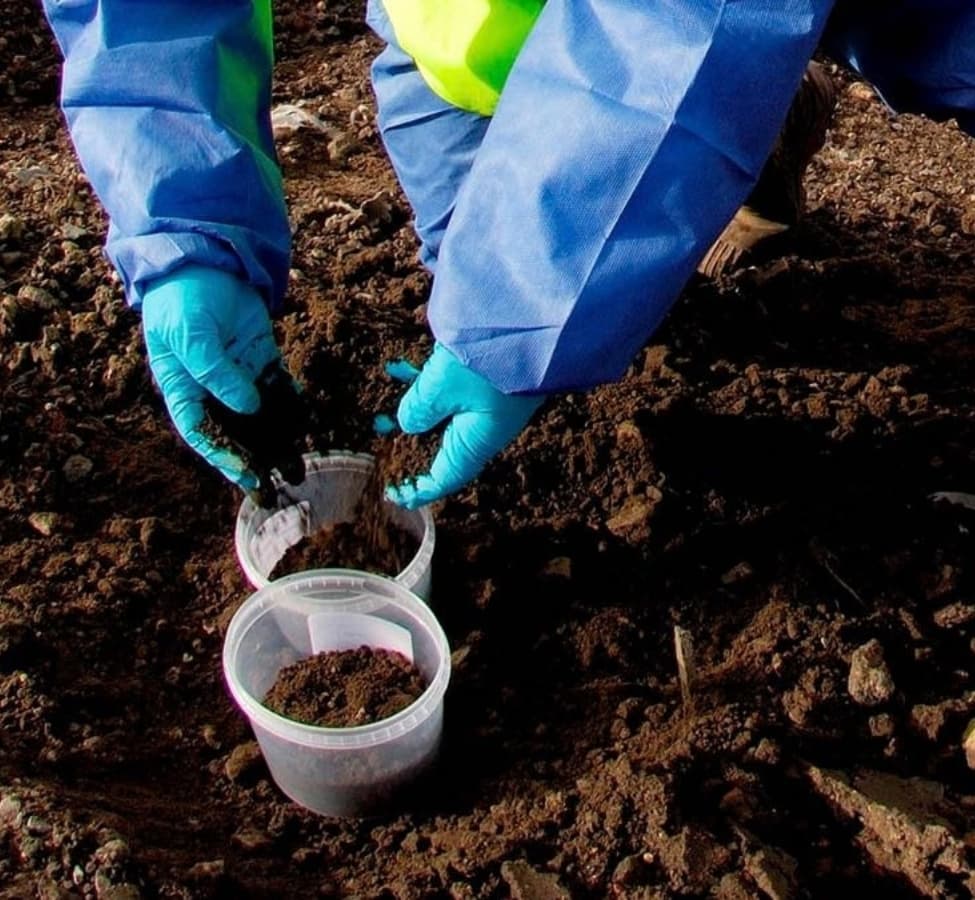

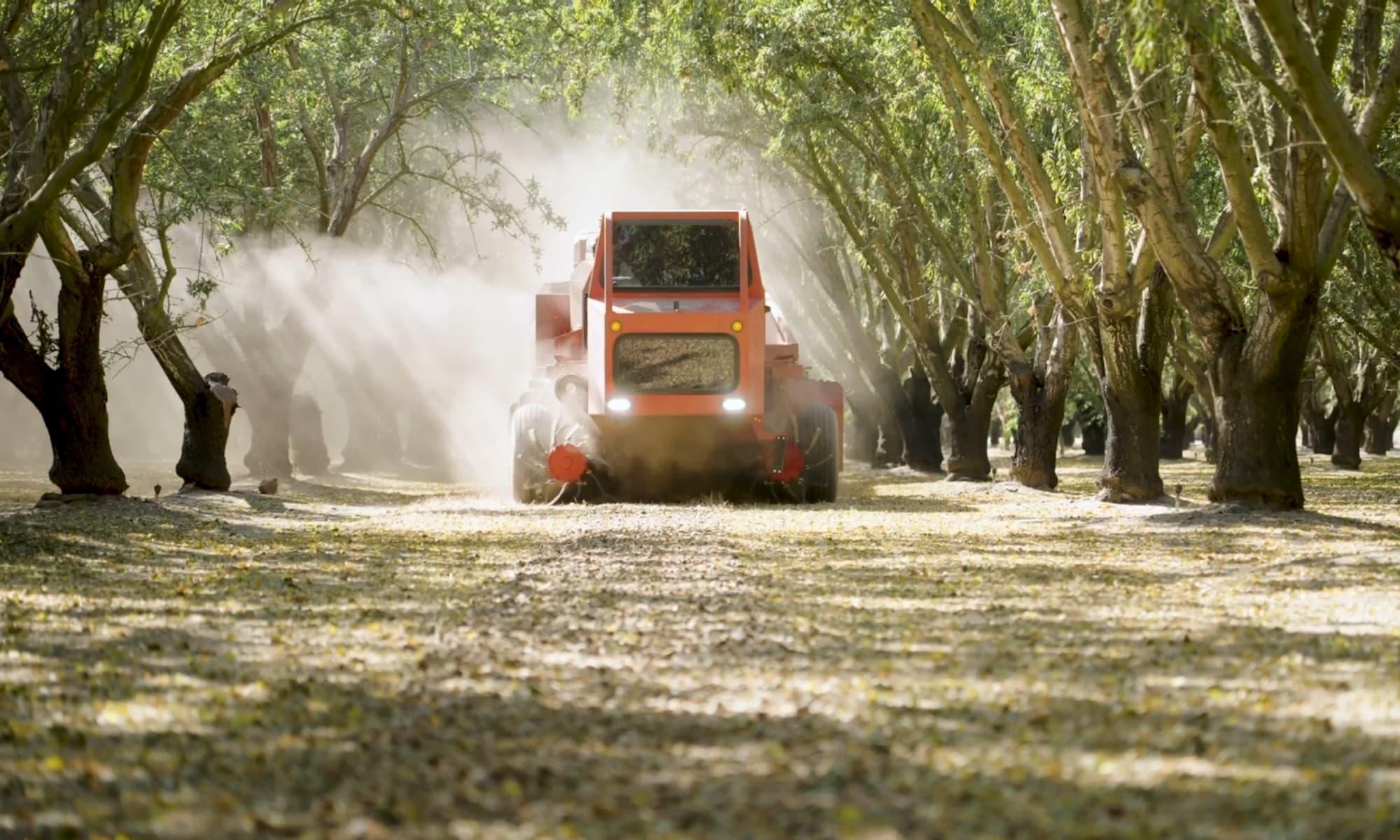



Almond Orchard Care & Maintenance in Greece
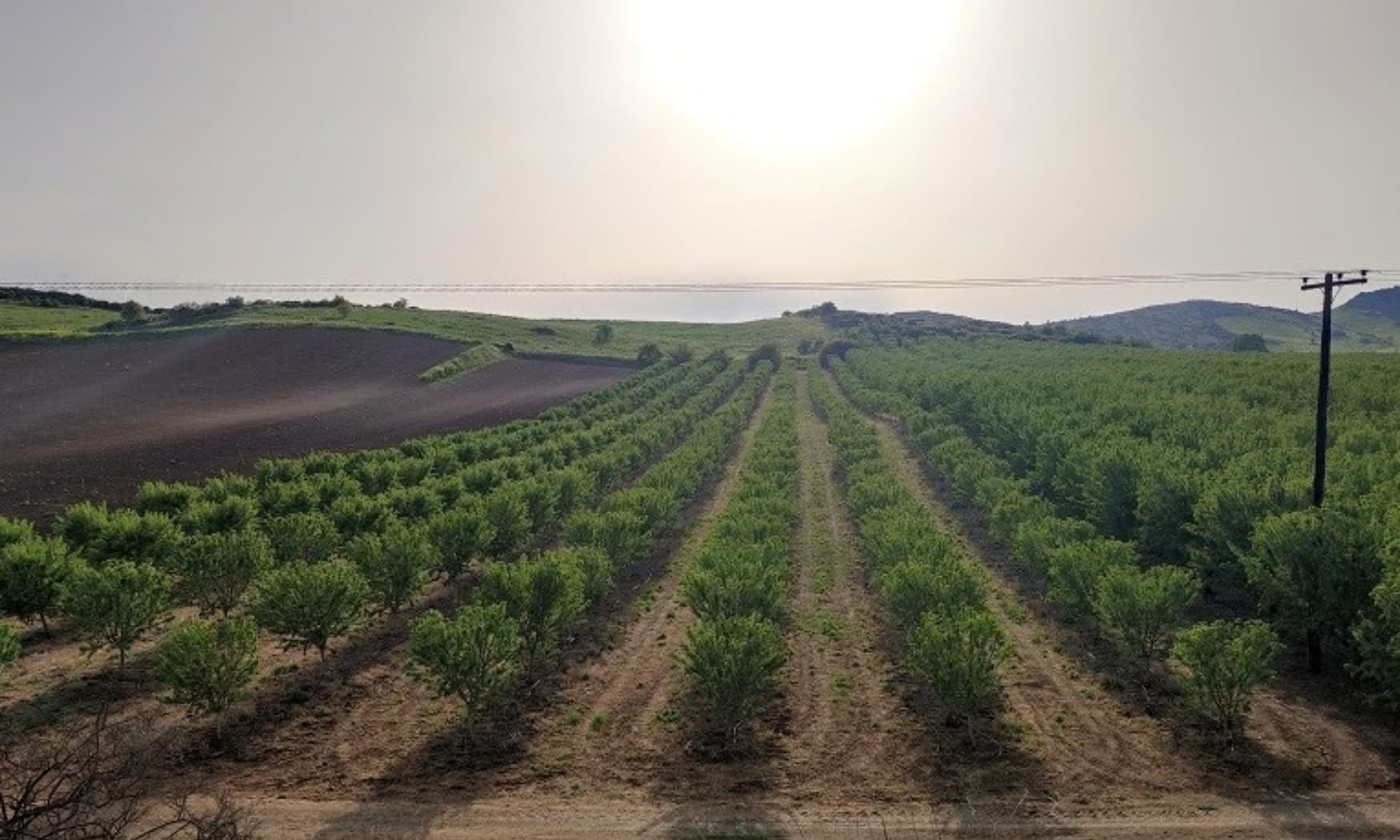
Summers are hot and dry: Larissa averages a 32.6 °C maximum and 16.4 mm of rain in August, in Hellenic National Meteorological Service normals published by WMO (period not stated). University of Thessaly notes advise starting irrigation from late April to mid-May, depending on the area, and stress the July to September irrigations; the university's slides add that drip irrigation raises yield and kernel quality compared with none.
The Ministry's plant-protection center in Volos calls the seed wasp the most important insect pest of almond: adults can emerge from late March or mid-April, the flight lasts 6 to 30 days, jars of last year's infested nuts are checked from mid-March to early May, and infested and mummified nuts should be collected and burned. Kavala's bulletins name Monilinia as the main fungal disease and Ferragnès as very susceptible to Fusicoccum canker, which Texas resists, and report bacterial spot in Serres, Kavala, Larissa and Fthiotida.
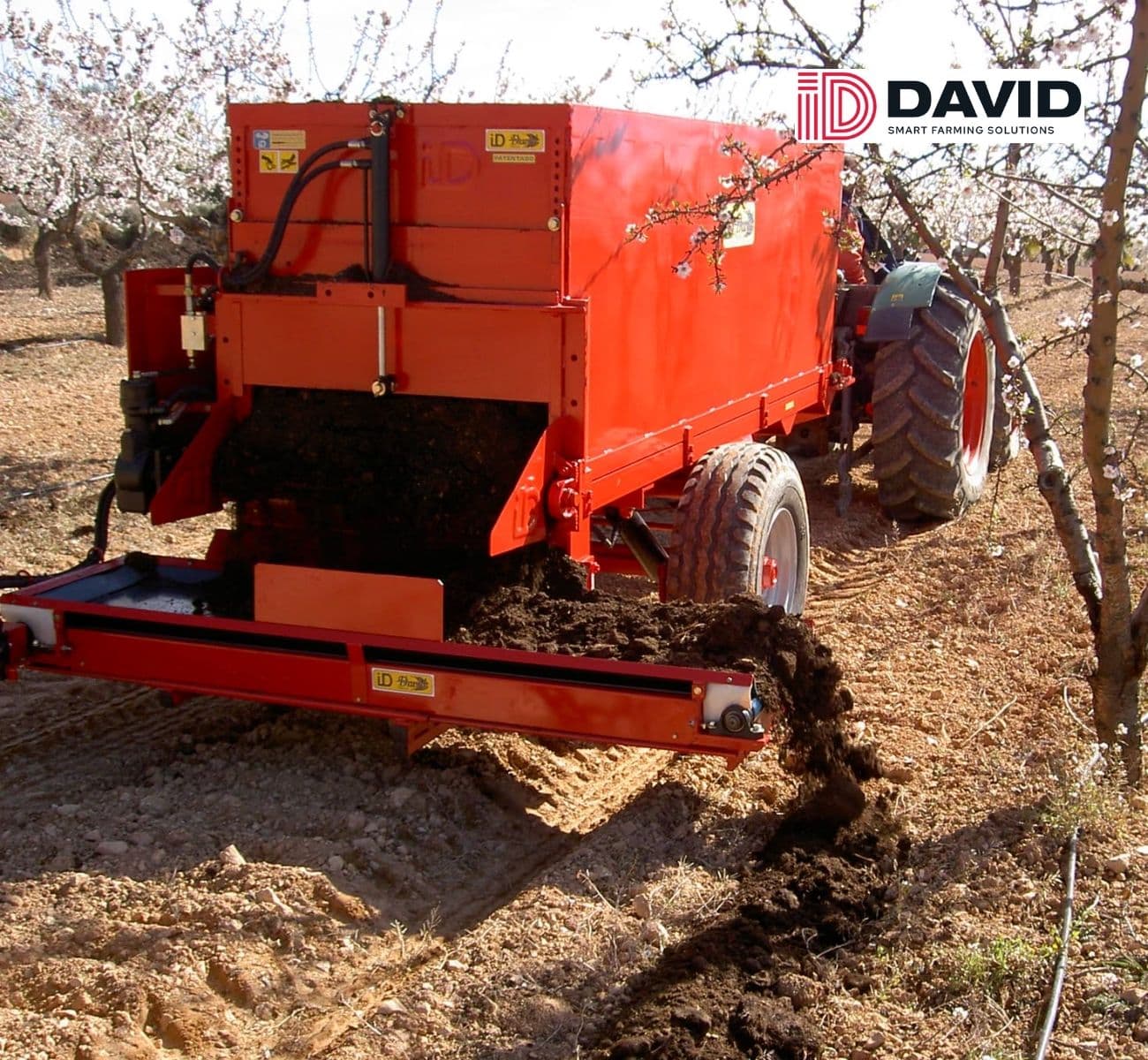
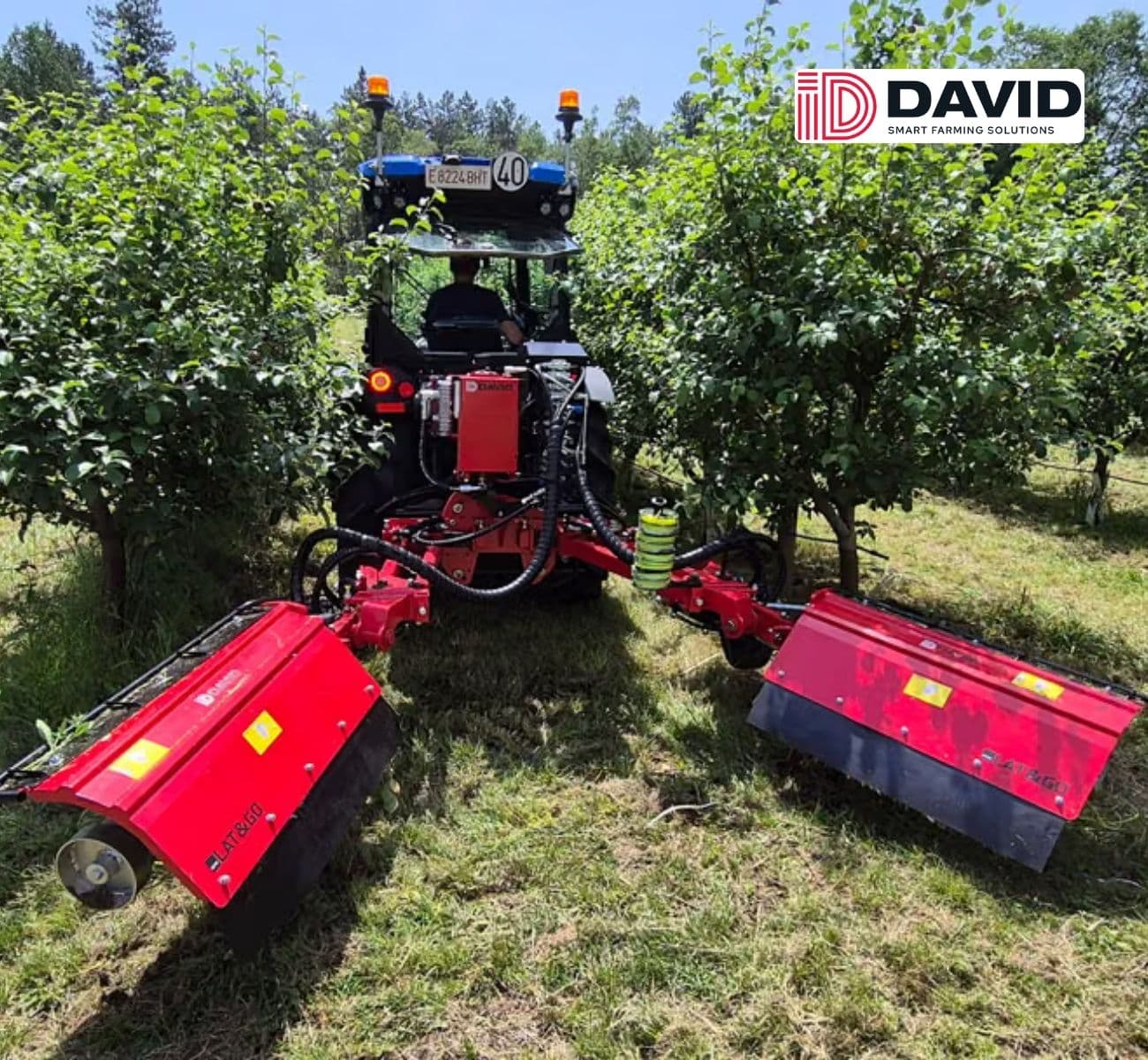
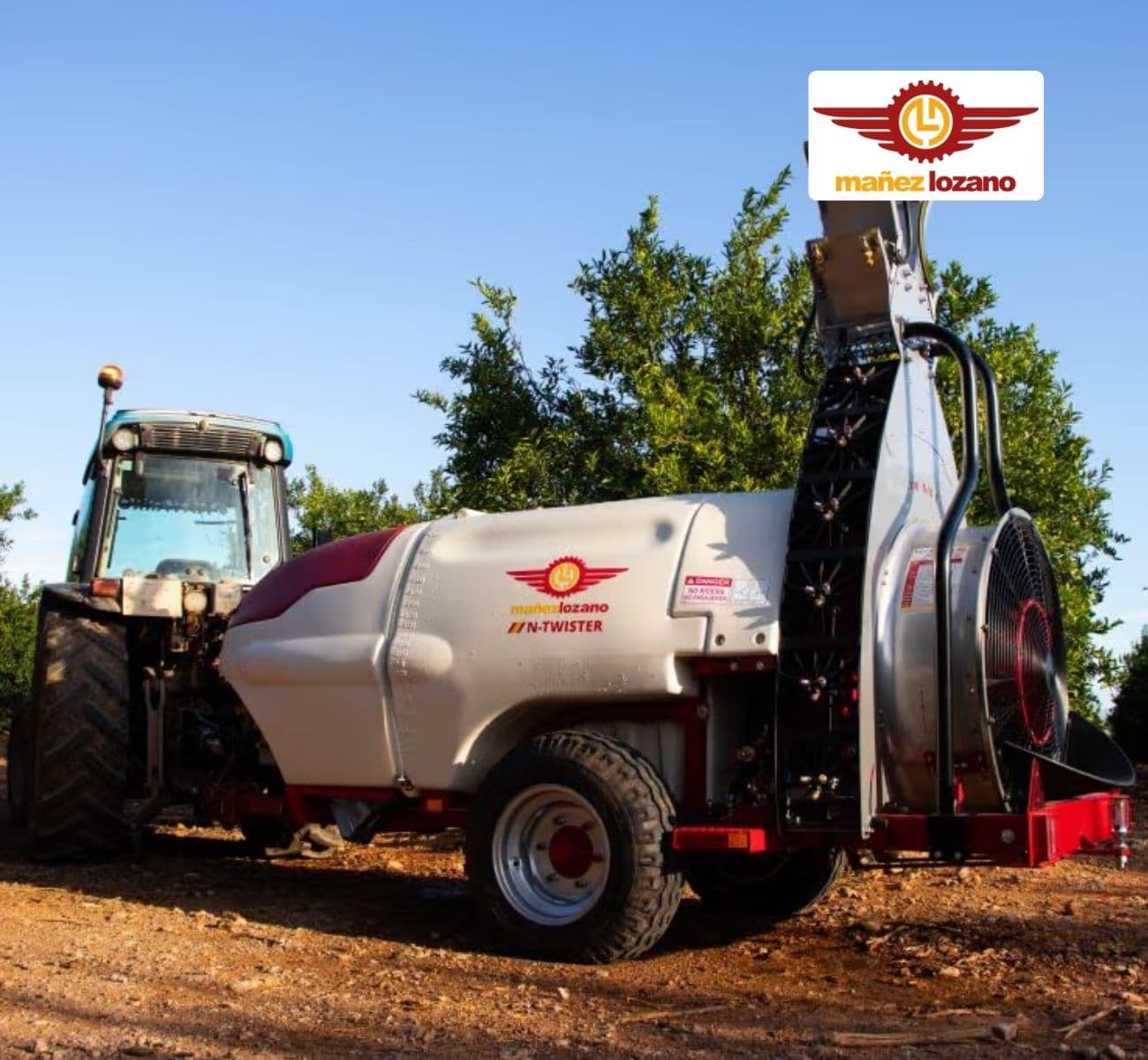
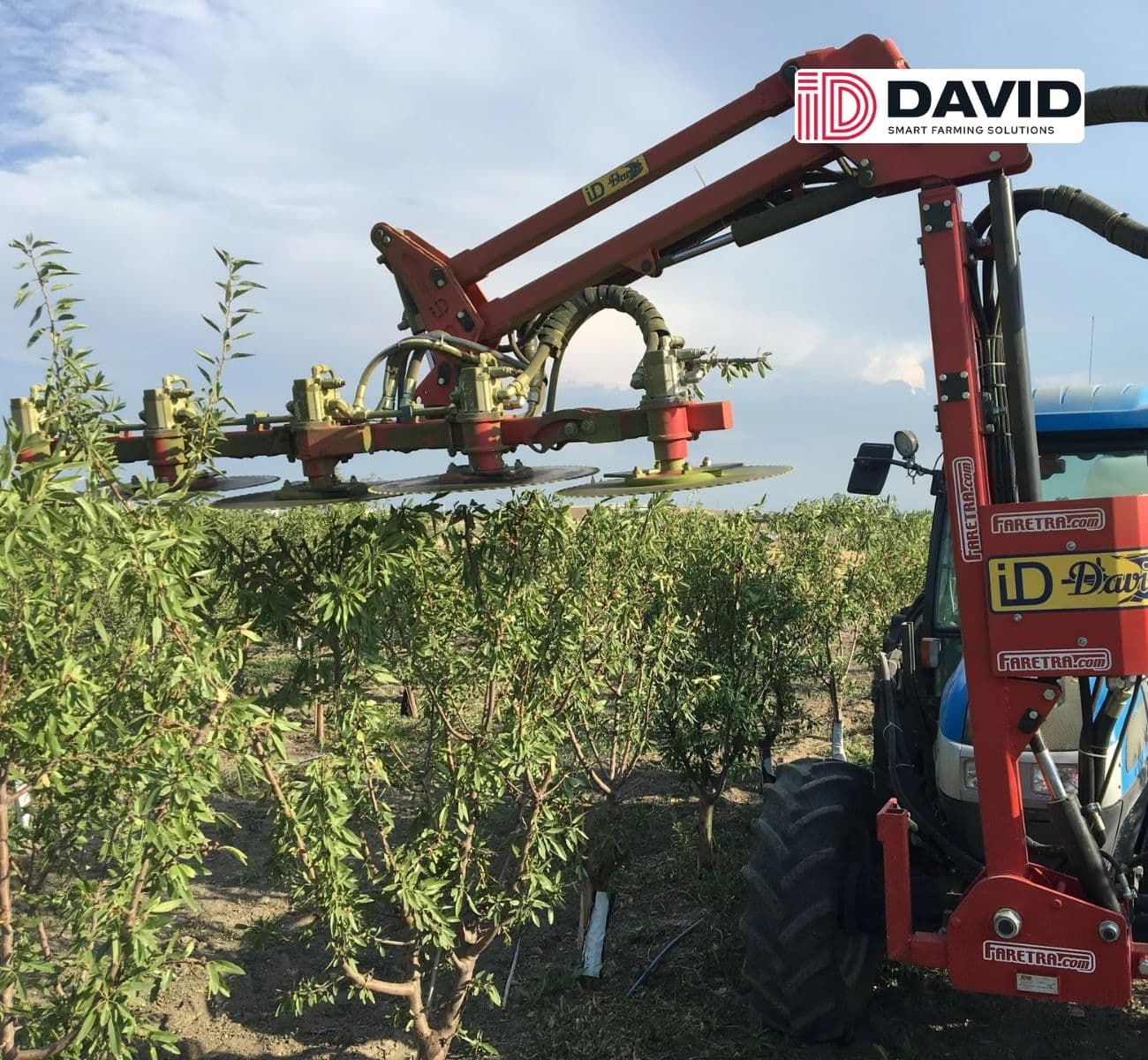
Frost recurs: on 19 and 20 March 2025, with almonds in bloom and fruit set, temperatures fell below zero in the Amphipolis area of Serres; a Larissa grower in the trade press gave -1 to -2 °C, and a June report quoted -5 to -6 °C from Larissa northward. For care work, the ID DAVID ECOFEED spreads solid manure, the ID DAVID LAT&GO string mower controls weeds without herbicides, the Mañez Lozano Narrow Twister S6 sprays tall, dense canopies and the ID DAVID V1 disc pruner makes vertical and horizontal cuts.
Recommended Orchard Care & Maintenance Stages



Practical Tips for Almond Orchard Care & Maintenance
Start irrigating from late April to mid-May, depending on the area, and keep watering through July, August and September, as University of Thessaly notes advise.
Monitor the seed wasp from mid-March with jars of last year's infested nuts, as the regional centers advise; Texas is more susceptible to it.
Collect and burn infested and mummified nuts to cut the number of seed wasp larvae that overwinter, as the official bulletins advise.
Watch for Monilinia from white bud to petal fall and, on Ferragnès, for Fusicoccum canker at 15 to 25 °C with rain, as the regional bulletins warn.
Prune in October or November, removing about a fifth of the bearing wood each year and keeping enough scaffolds for easy shaking, as the notes advise.
Spray tall, dense canopies evenly with a narrow trailed airblast sprayer such as the Mañez Lozano Narrow Twister S6.

Almond Harvesting in Greece
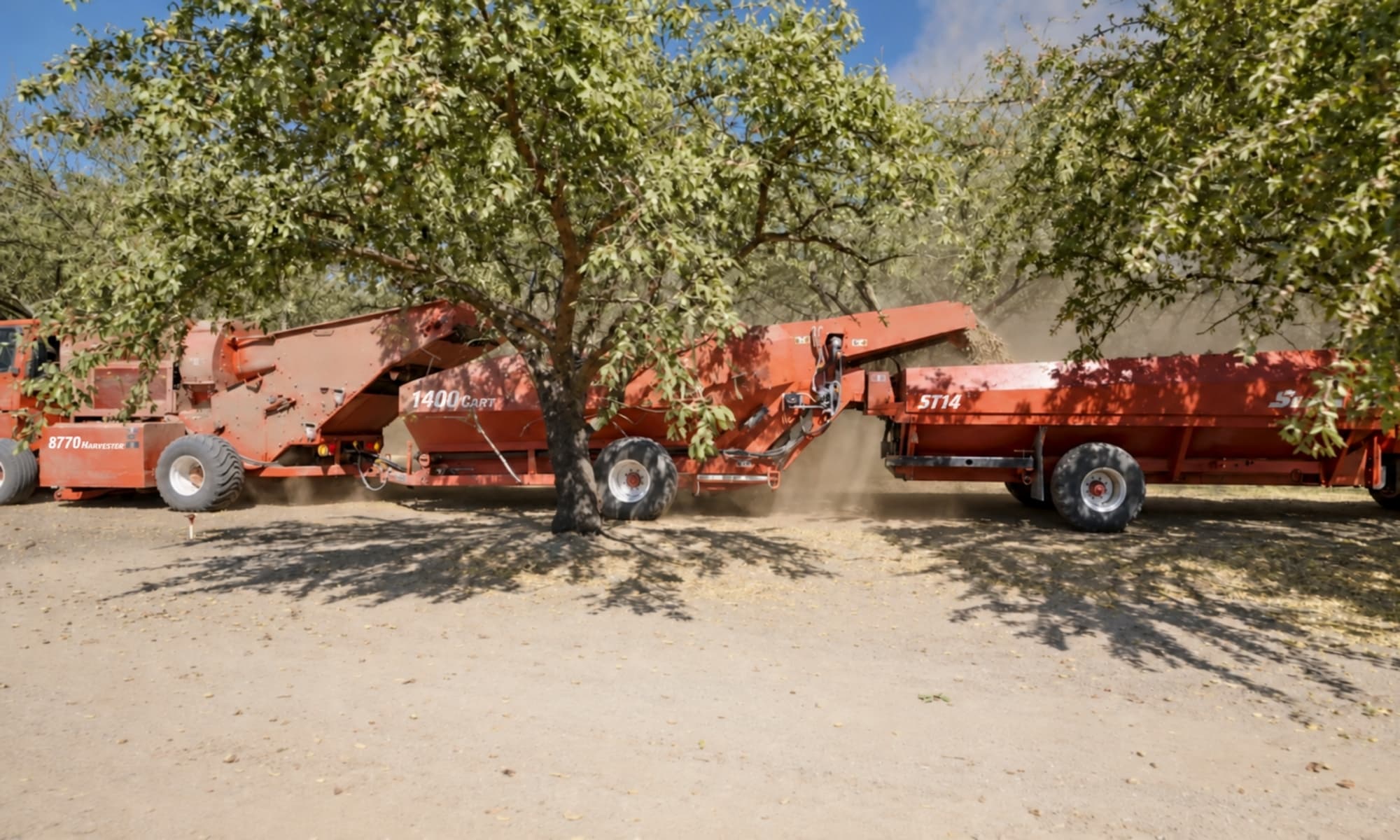
The university's 2019 notes, first published in 2013, describe three harvest methods in Greece: on smaller fields, sheets under the tree and branches beaten with poles or light shakers, which takes many labor days; tractor-mounted shakers with a folding sheet that catch the nuts; and, among larger growers, shaking onto the ground, drying there, sweeping and machine pickup. In orchards planted for machines on suitable ground, mechanized harvesting can bring the crop in on time, with less risk of nuts deteriorating while they wait.
Almonds ripen from late August for Ferragnès to mid-September for Texas, and the harvest falls mainly in September. That month is not reliably dry: Larissa averages 30.2 mm on 6.3 rain days, and Storm Daniel flooded large parts of Thessaly from 4 September 2023. The notes add that rain often stains the shell of Texas. This guide therefore shows prompt pickup, with hulling and drying at once, alongside catching frames.
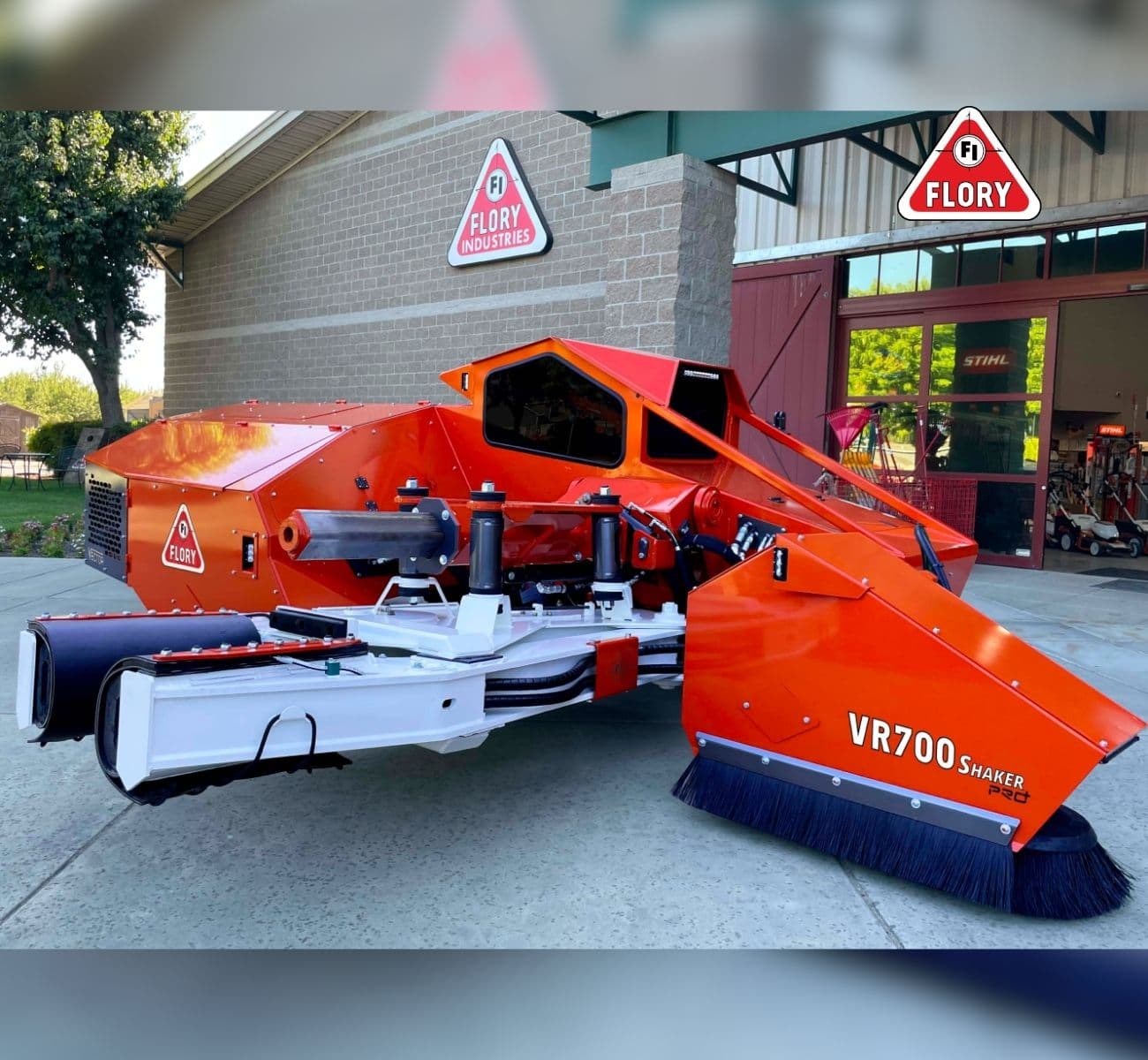
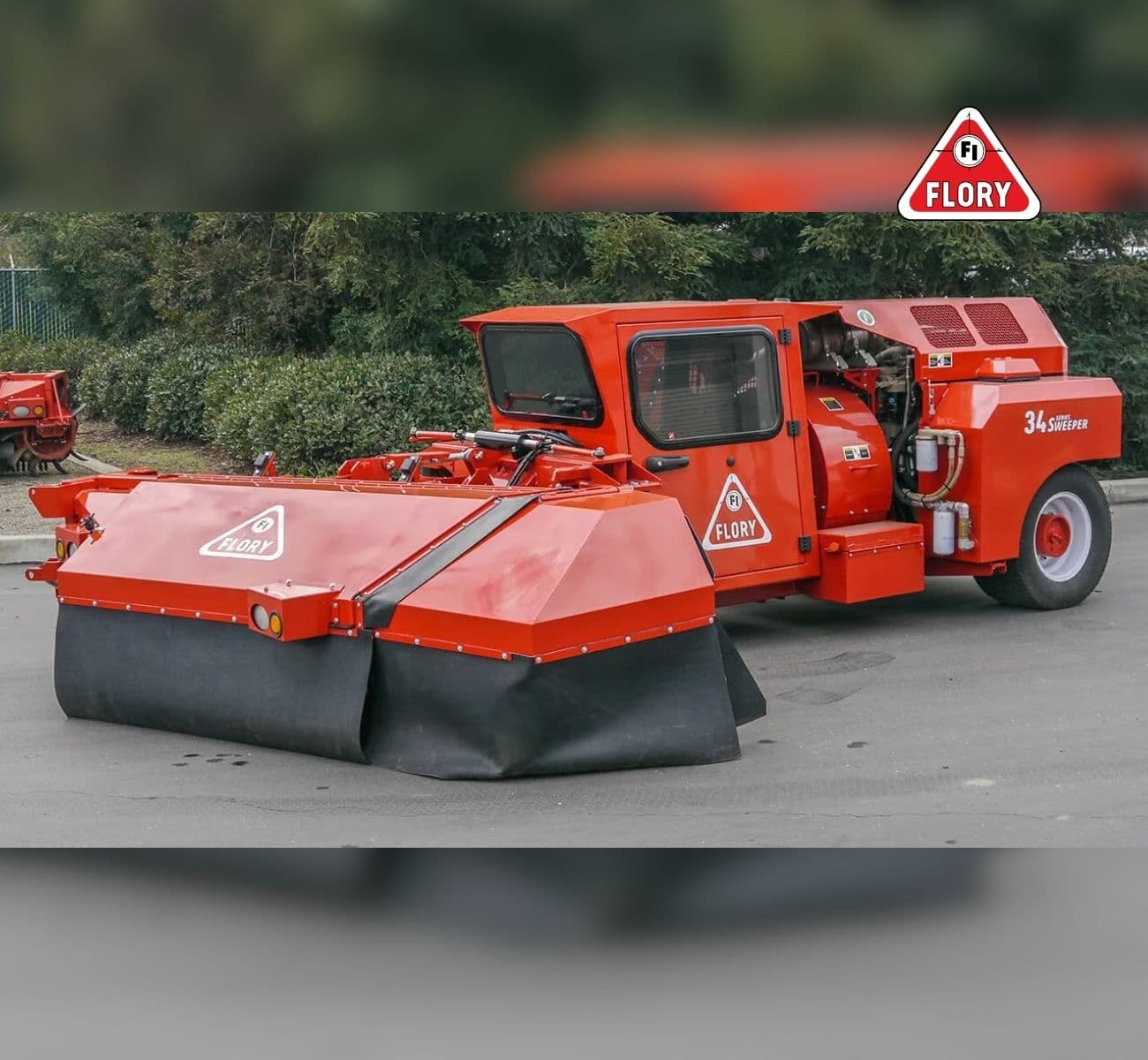
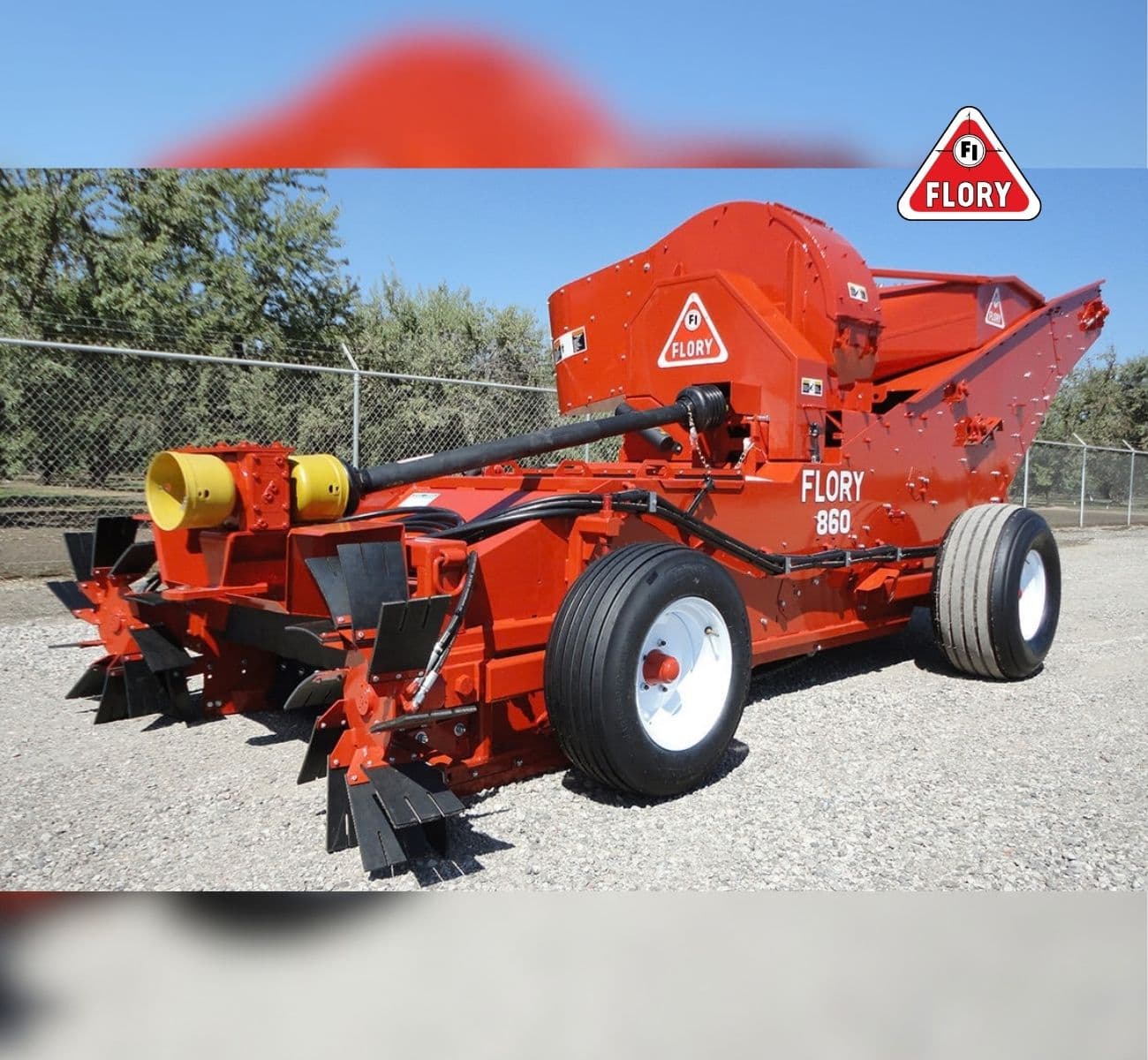
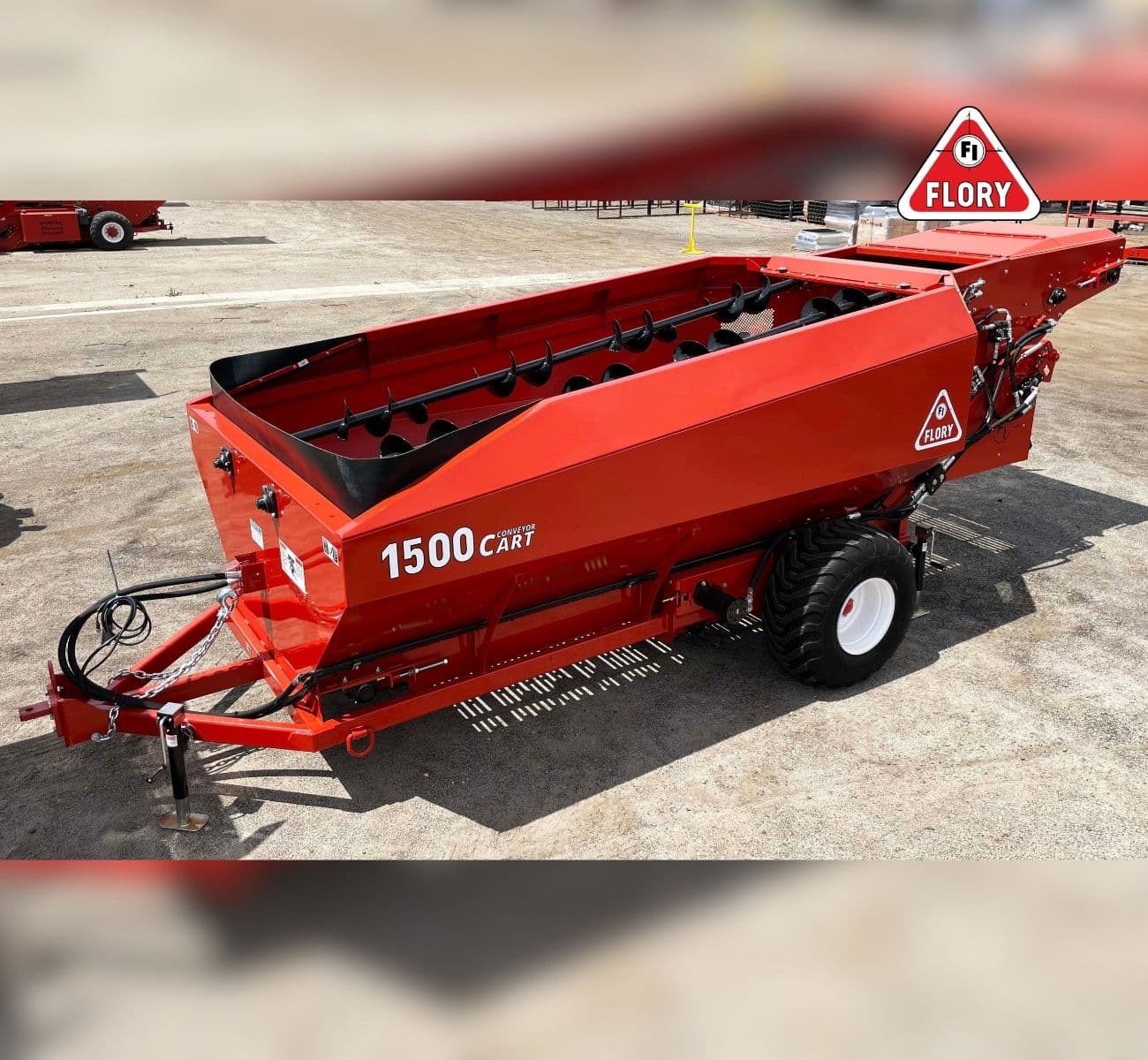
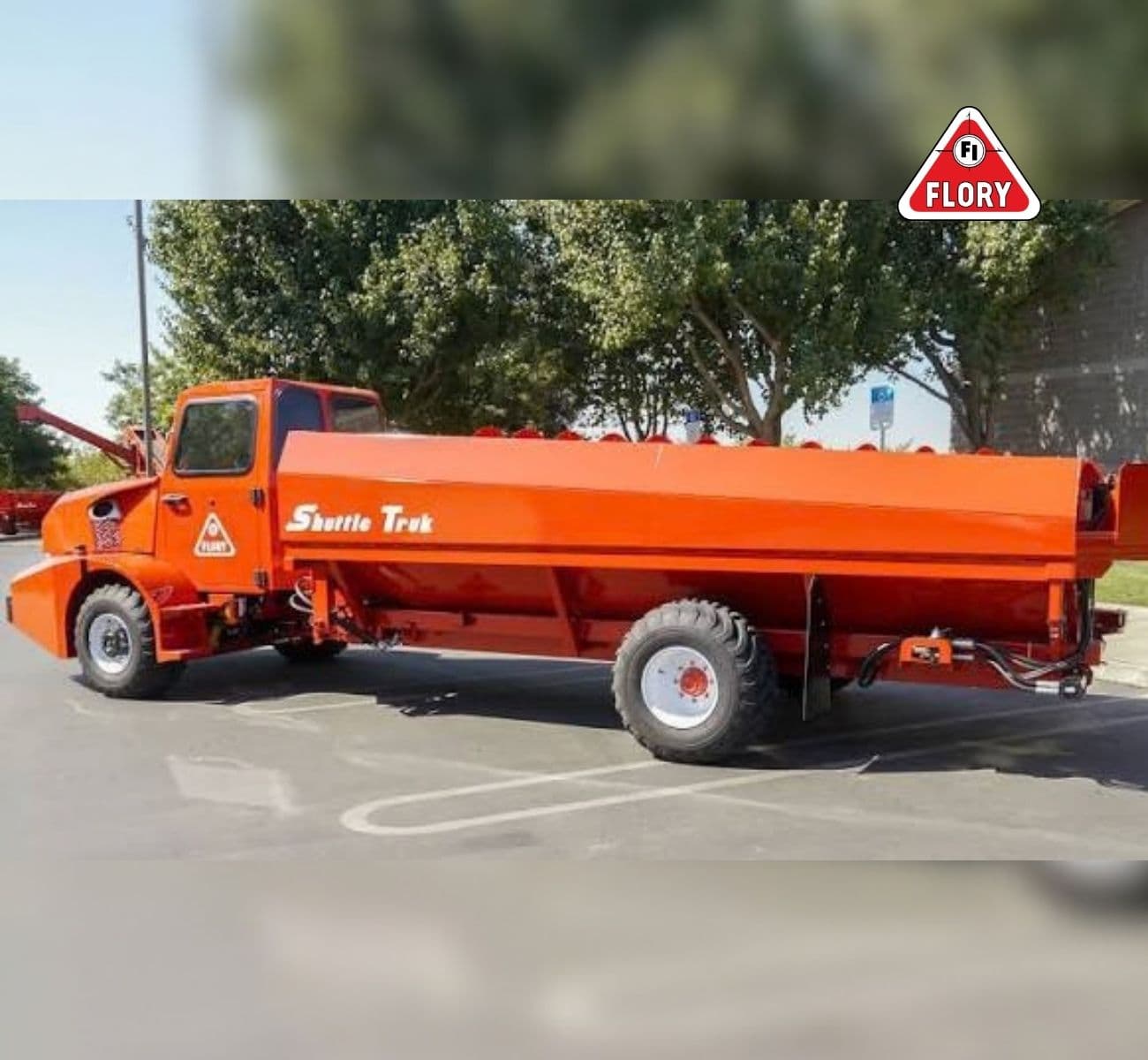
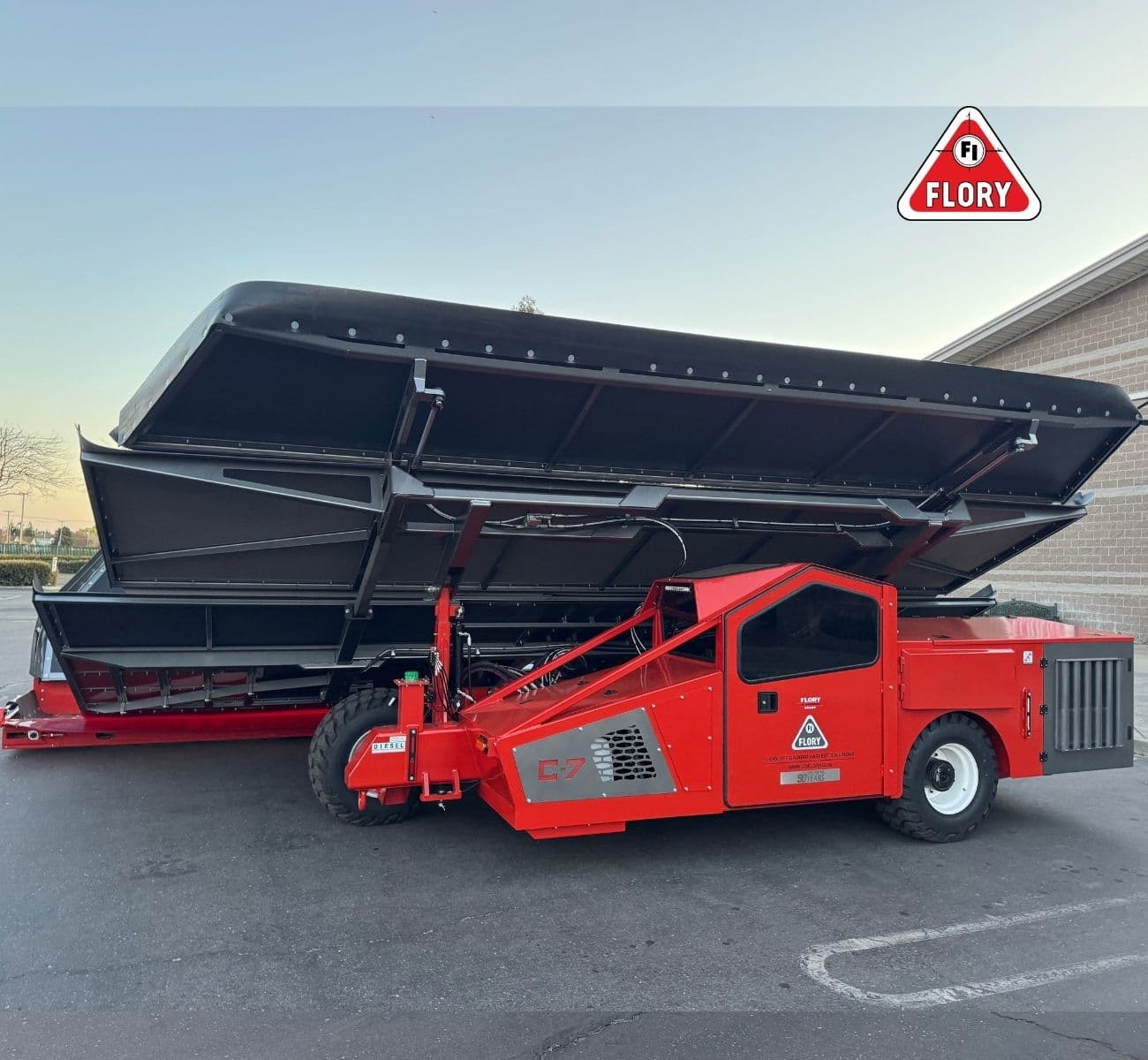
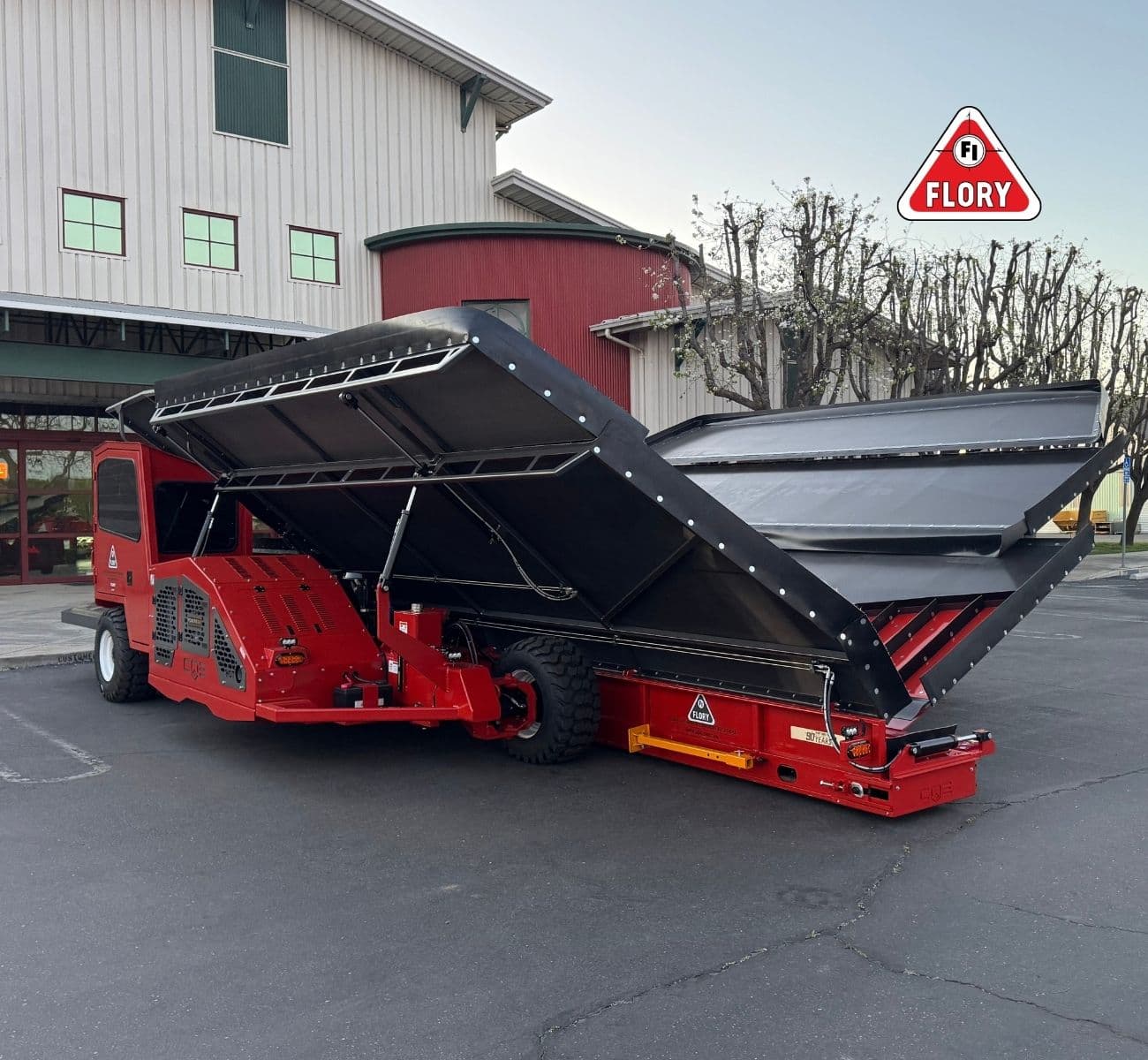
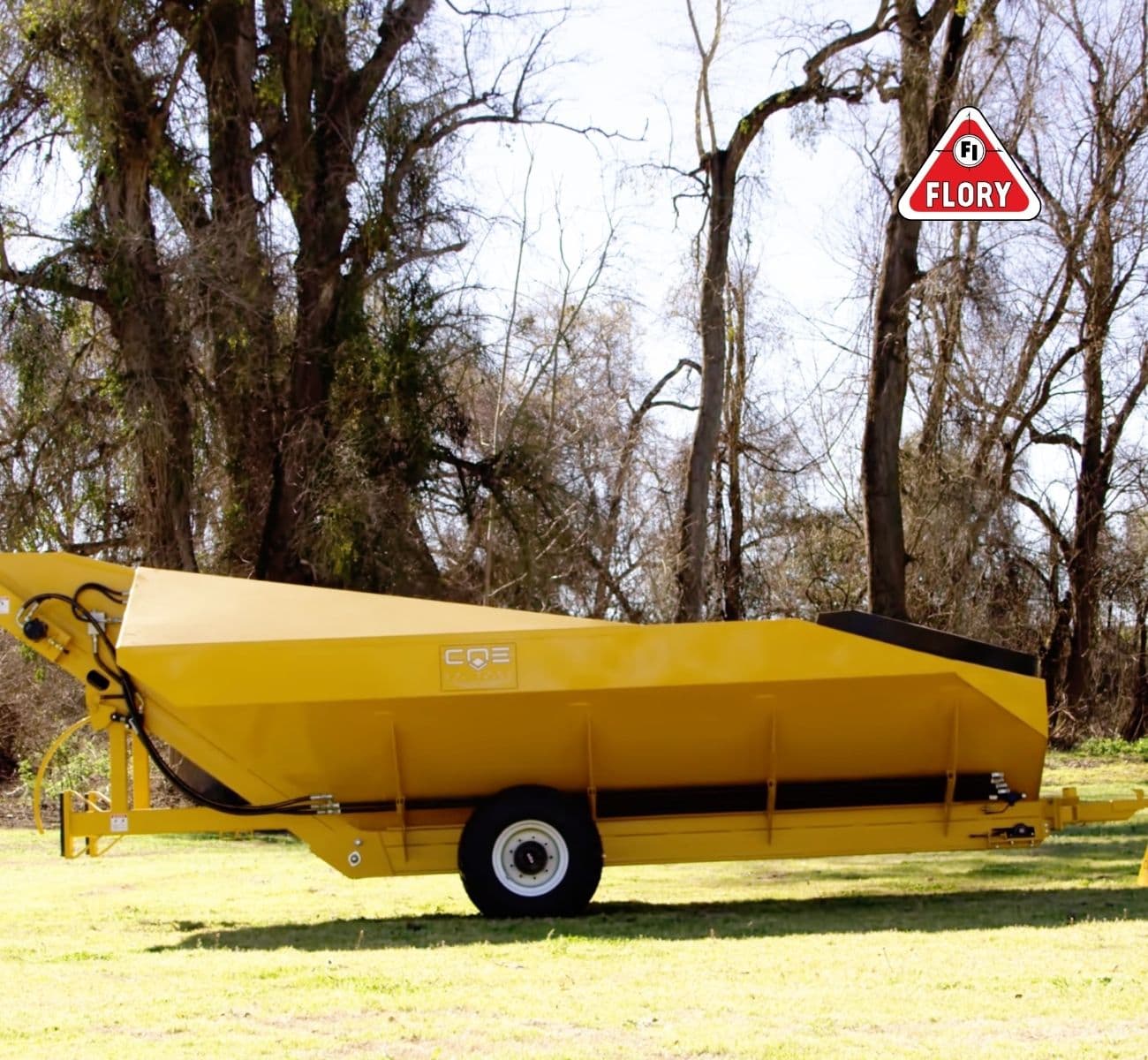
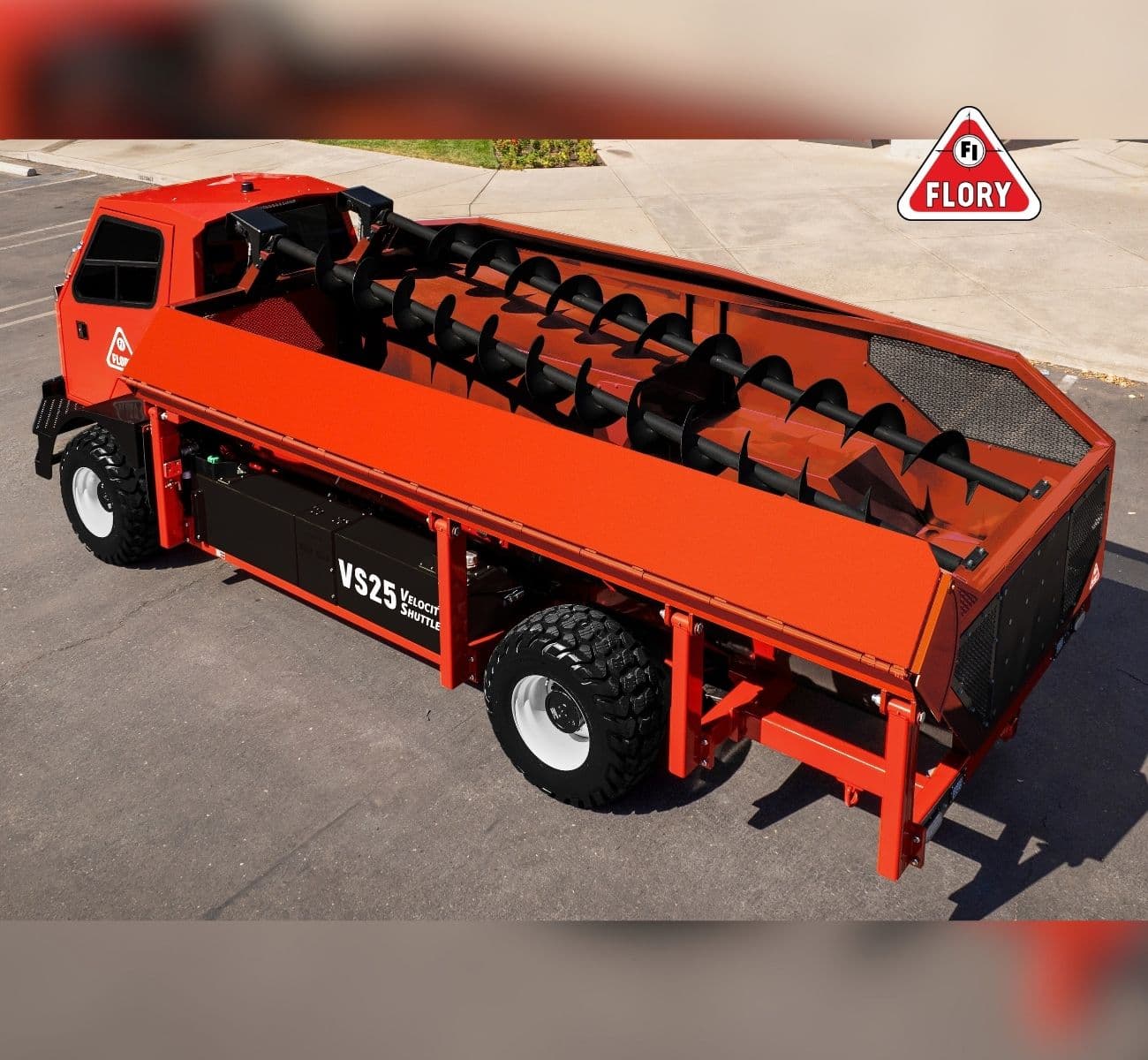
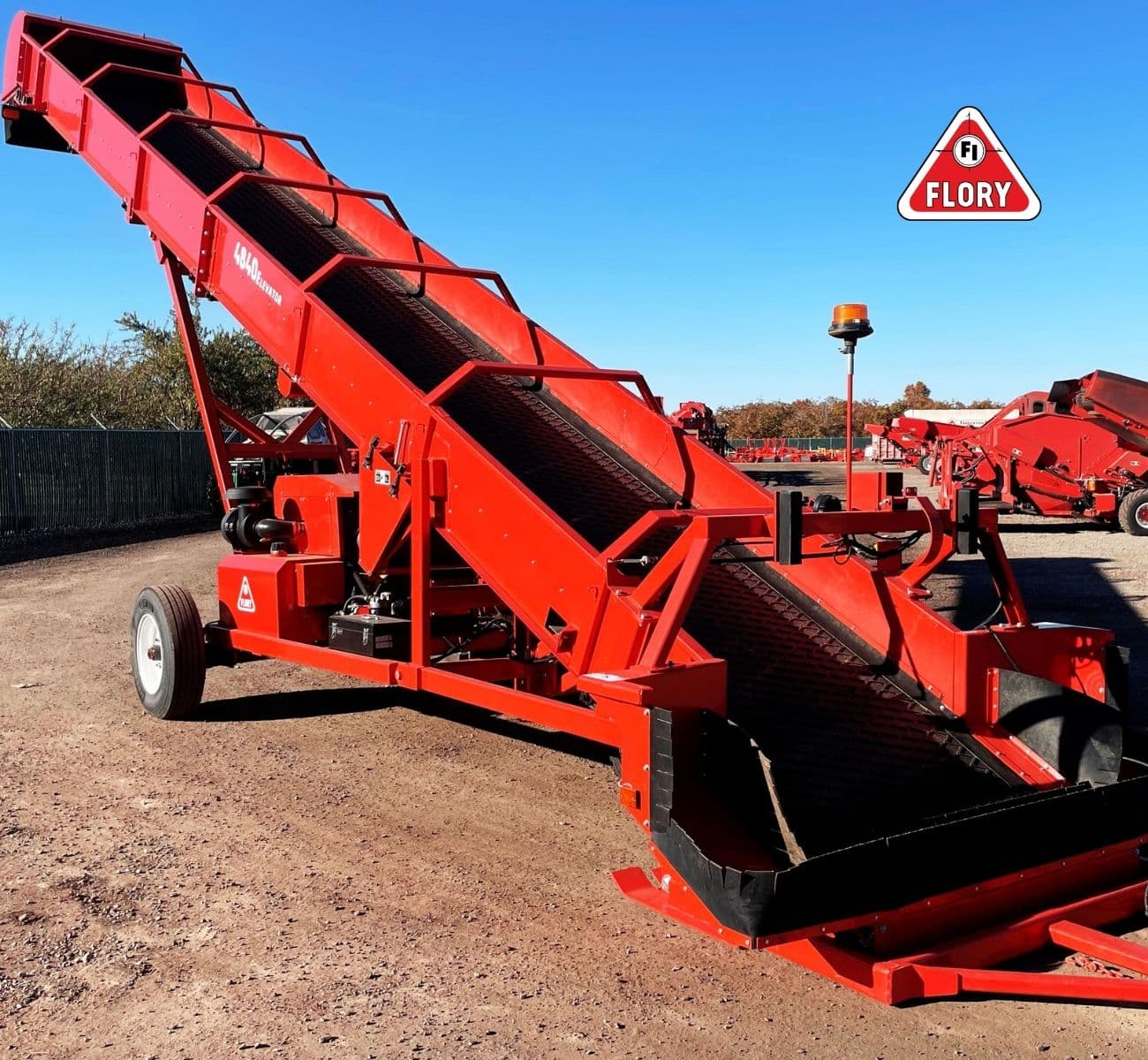
Flory harvesting machinery is available in Greece through OVE Europe for both systems. On the ground, the VR700 Shaker, 34 Series Sweeper and 860 Harvester (or the smaller 490) work with the 1500 Conveyor Cart and ST14 Shuttle. Off the ground, the Flory COE C7 Shaker and L2 Receiver catch the almonds in a frame around the trunk, the Flory COE B8 Cart and VS25 Shuttle carry them, and the 4840 Field Elevator loads trailers in both systems.
Almond Harvest Workflow (Recommended Equipment)
Practical Tips for Almond Harvesting
Plan the order by cultivar: University of Thessaly notes put the Ferragnès harvest about 9 days before Texas, which is picked in mid-September.
Start once the hull has split all over, as Greek university slides advise, and do not delay: an early harvest gives somewhat better quality.
Check the forecast before shaking and shake only what you can pick up promptly: September at Larissa averages 6.3 rain days.
Sweep and pick up soon after shaking, then hull and dry off the ground: the notes link a short time on the ground to less damage by ants, birds and rodents.
Where you can, catch the nuts: Greek teaching material describes sheets under the trees, and the Flory COE C7 Shaker works with the L2 Receiver as a catching frame.
Keep shakers and frames for orchards planted for machines, never household or scattered trees, low-trunked or drooping trees, young trees, terraces or steep slopes.
Get your recommended harvest setup
Enter orchard size, spacing, terrain, and target throughput—we’ll suggest a practical harvest workflow and equipment lineup.

Almond Post-Harvest Handling & Processing in Greece
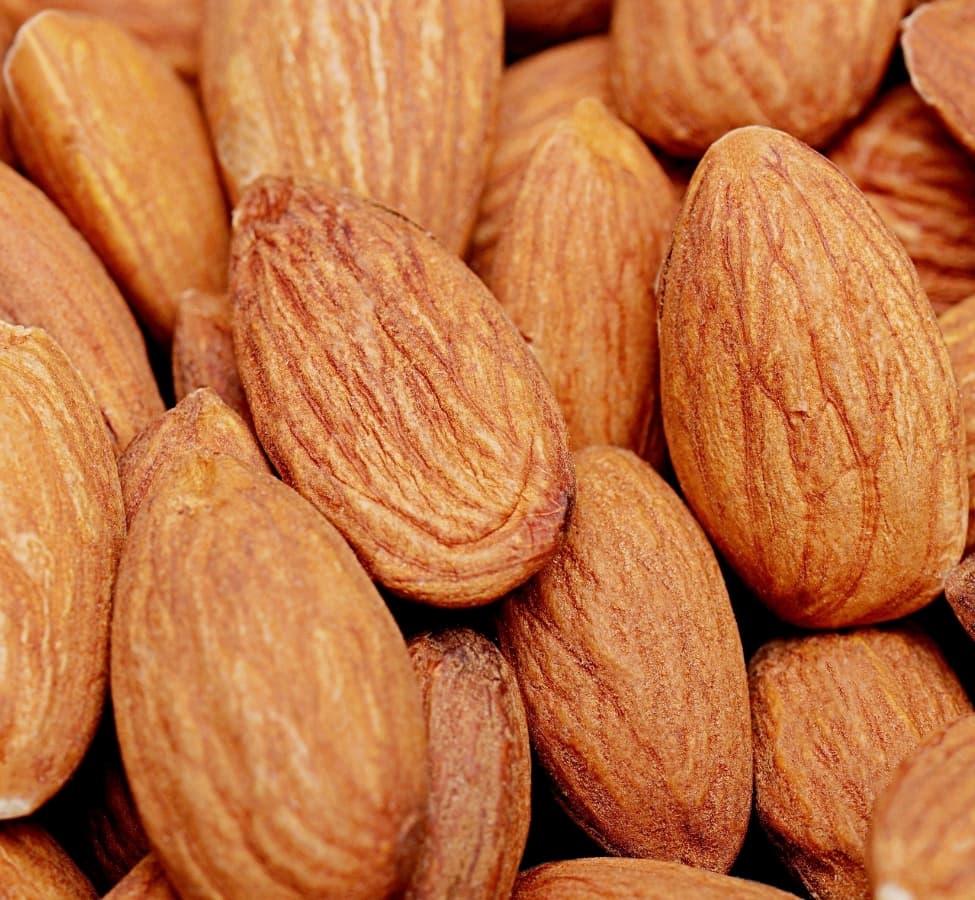
Greek teaching material describes hulling on the day of harvest and spreading the nuts to dry in sun or shade; frame-caught nuts are hulled and must dry in places protected from rain, while ground-dried nuts can wait in their hulls in protected piles until hulling and cracking. Texas hulls well in hulling machines unless its hull has dried onto the nut, and Ferragnès hulls perfectly. In-shell almonds keep for up to a year without loss of quality.
Under Regulation (EU) 2023/915, almonds sold to the final consumer or used as an ingredient may contain at most 8.0 µg/kg of aflatoxin B1 and 10.0 µg/kg in total, and almonds to be sorted first 12.0 and 15.0 µg/kg. Article 121 of the Greek Food and Beverages Code (2011 edition) allows shelled kernels with no more than 0.5% shell residue and requires drying that protects the product from any contamination.
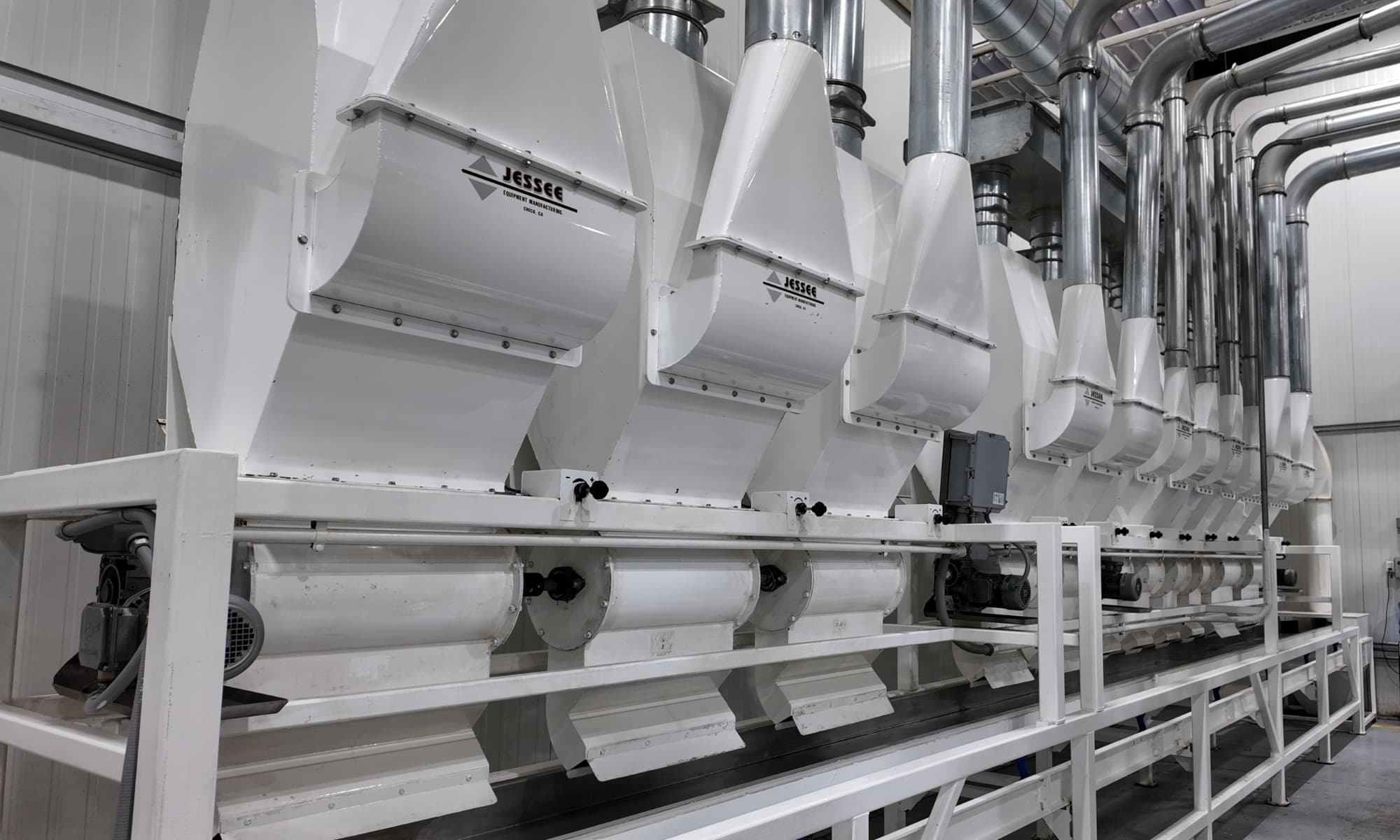
The trade press describes a cooperative and a producer group that sell almond kernels, the group cracking its own crop. Greece imported 9,715.7 t of shelled almonds and 387.1 t in shell in 2025 and exported 2,275.5 t of shelled almonds, mainly to Albania, Bulgaria and Cyprus (UN Comtrade via WITS). Jessee, whose processing lines OVE Europe supplies, builds hulling, drying, in-shell cleaning and sizing, and shelling systems; its Airlegs nut cleaner was developed for the almond industry.
For general information only. Information may become outdated and does not replace site-specific professional advice. Consult a qualified agronomist and confirm equipment suitability with OVE before acting.
Practical Tips for Almond Post-Harvest Handling & Processing
Hull caught or promptly picked almonds on the day of harvest, as Greek teaching material describes, then dry them in the shell before storage.
Dry hulled almonds where rain cannot reach them, as University of Thessaly notes advise, and do not let the hull dry onto Texas nuts before hulling.
Never stockpile undried almonds: University of California guidance for nuts dried on the ground warns against stockpiling above 12% hull, 6% kernel or 9% fruit moisture.
Keep in-shell almonds cool and dry: Greek university slides say they keep up to a year without quality loss, and nuts for long cold storage should be disinfested.
Test lots against Regulation (EU) 2023/915: 8.0 µg/kg of aflatoxin B1 and 10.0 µg/kg in total for almonds sold to consumers.
Keep kernels clean of shell: the Greek Food and Beverages Code allows no more than 0.5% shell residue in shelled almonds.
Recommended Post-Harvest Handling & Processing Stages







Plan your post-harvest line
Estimate tons/day, cleaning & drying capacity, storage needs, and cost/kg—then build your equipment plan in phases.