


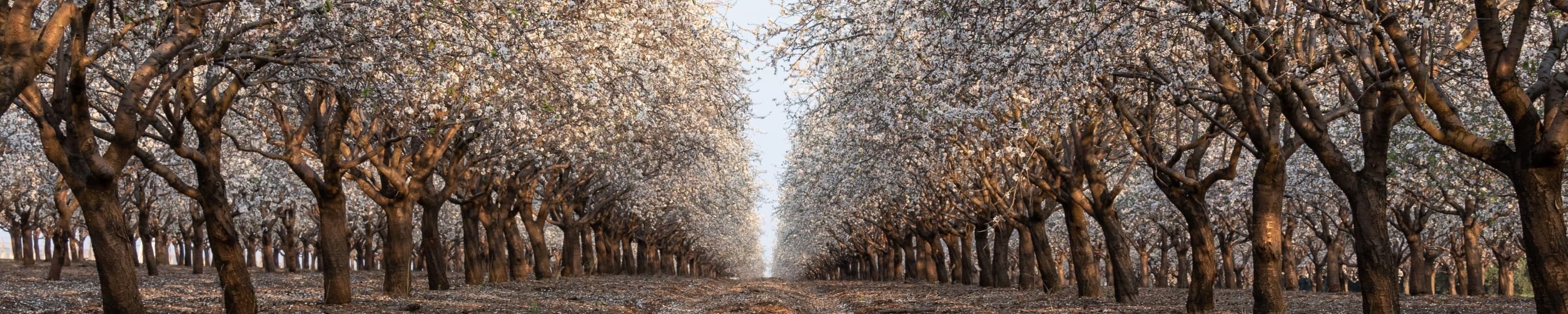




Almond Orchard Establishment in Italy
Almond growing in Italy centers on Sicily and Puglia: ISMEA names Bari, Agrigento and Caltanissetta as the leading provinces, Syracuse province is home to the Noto and Avola almonds, and the 2020 census also found new orchards in Lazio, Piedmont and Veneto. A 2020 study of 30 Sicilian farms describes traditional orchards, rain-fed, at 6 by 6 m or wider with about 270 to 300 trees per ha, and modern ones of grafted trees at over 370 trees per ha, fertigated and most often on GF 677.
A 2014 review found most new acreage planted with Tuono, usually alongside Genco; both are self-fertile (2020 study), and USDA names Tuono, Genco and Lauranne as the leading varieties. Traditional Sicilian orchards grow mainly Pizzuta d'Avola, Fascionello, Romana, Vinci a tutti and Cavalera (2020 study). Pizzuta d'Avola blooms very early and Fascionello early, and a 2001 evaluation found both self-incompatible, so they need cross-pollination from other cultivars.
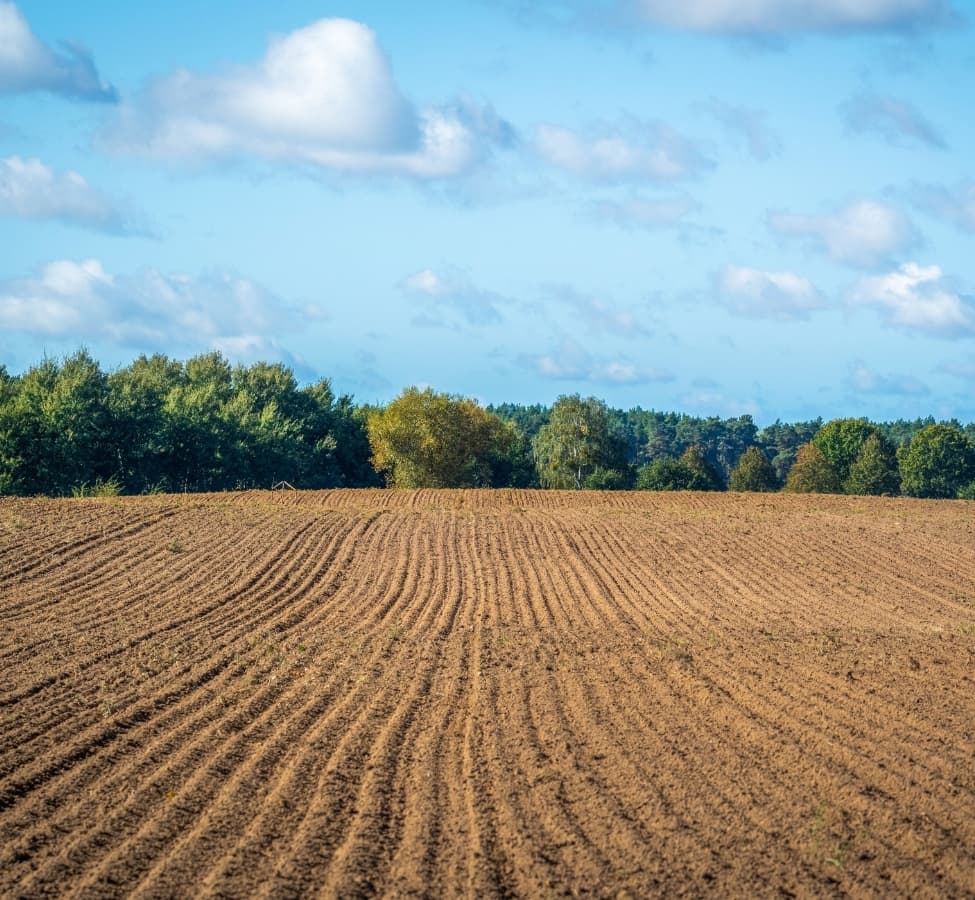
New plantings in 2014 were set at 300 to 400 trees per ha (6 by 6 to 5 by 5 m) with drip irrigation, and the industry relied largely on seedling rootstocks; modern Sicilian orchards mostly use GF 677 (2020 study). For trunk shakers, a Sardinian trial trained trees as a free vase with three or four scaffolds at 80 cm (2023). Italy's first super-high-density hedgerow orchard was planted at Andria in 2013; this guide covers wider-spaced orchards harvested by shakers.
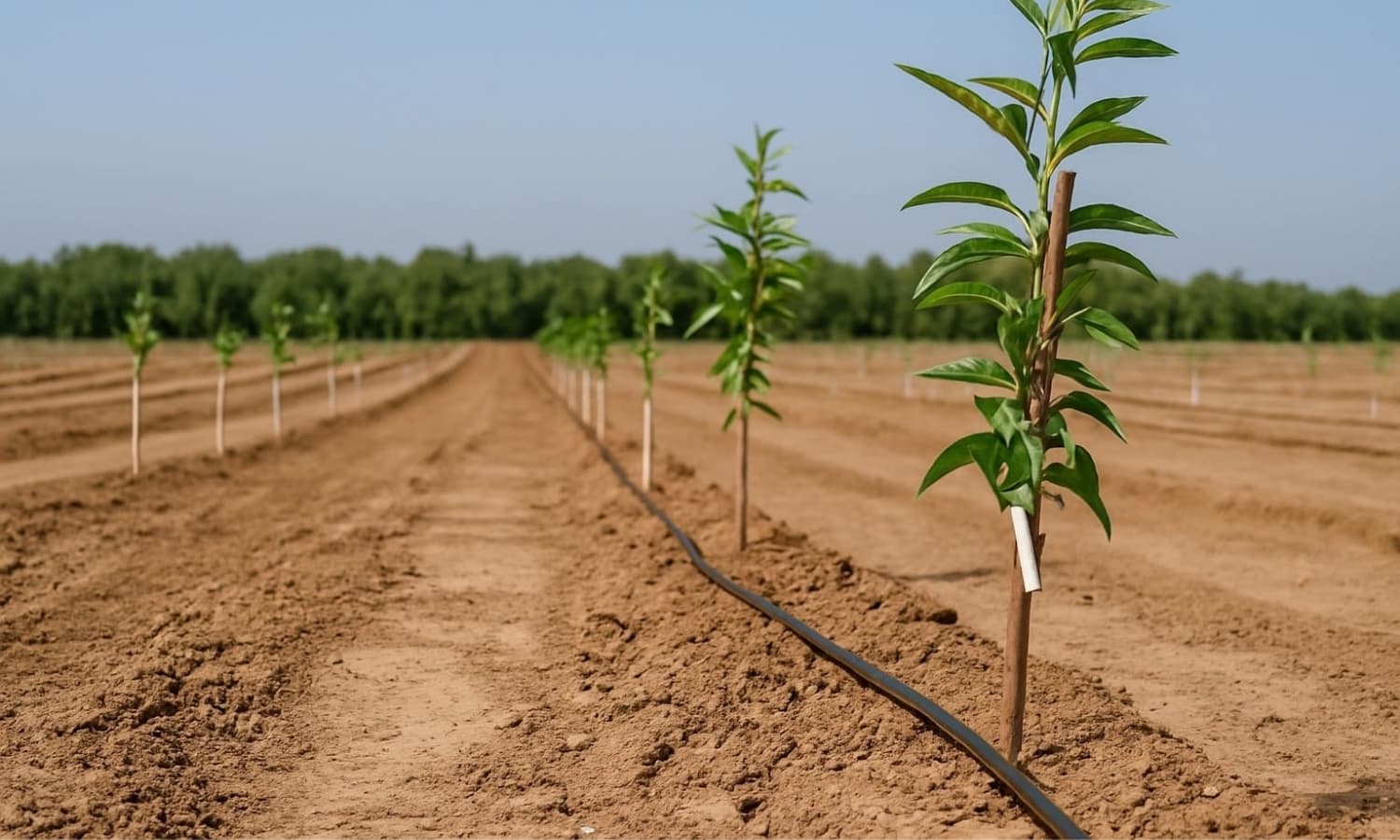

Practical Tips for Almond Orchard Establishment
Avoid low sites where cold air settles: almonds bloom from January to March in the Val di Noto, and a March 2020 frost hit Apulian orchards in full bloom.
On the mainland, favor self-fertile, later-blooming cultivars: a 2001 evaluation judged two early, self-sterile Sicilian cultivars poorly suited to continental Italy.
Never plant Pizzuta d'Avola or Fascionello in single-cultivar blocks: a 2001 evaluation found both self-incompatible, so they need pollen from other cultivars.
Use healthy, certified planting material, as Umbria's 2026 almond norms advise, to keep out viruses and bacterial canker.
Head trees for shakers: a Sardinian trial formed a free vase with three or four scaffolds at 80 cm to allow efficient mechanical harvesting.
Plan rows, headlands and tree form for the shaker, sweeper and harvester before planting, and check trunk clearance with OVE Europe.
Recommended Establishment Stages
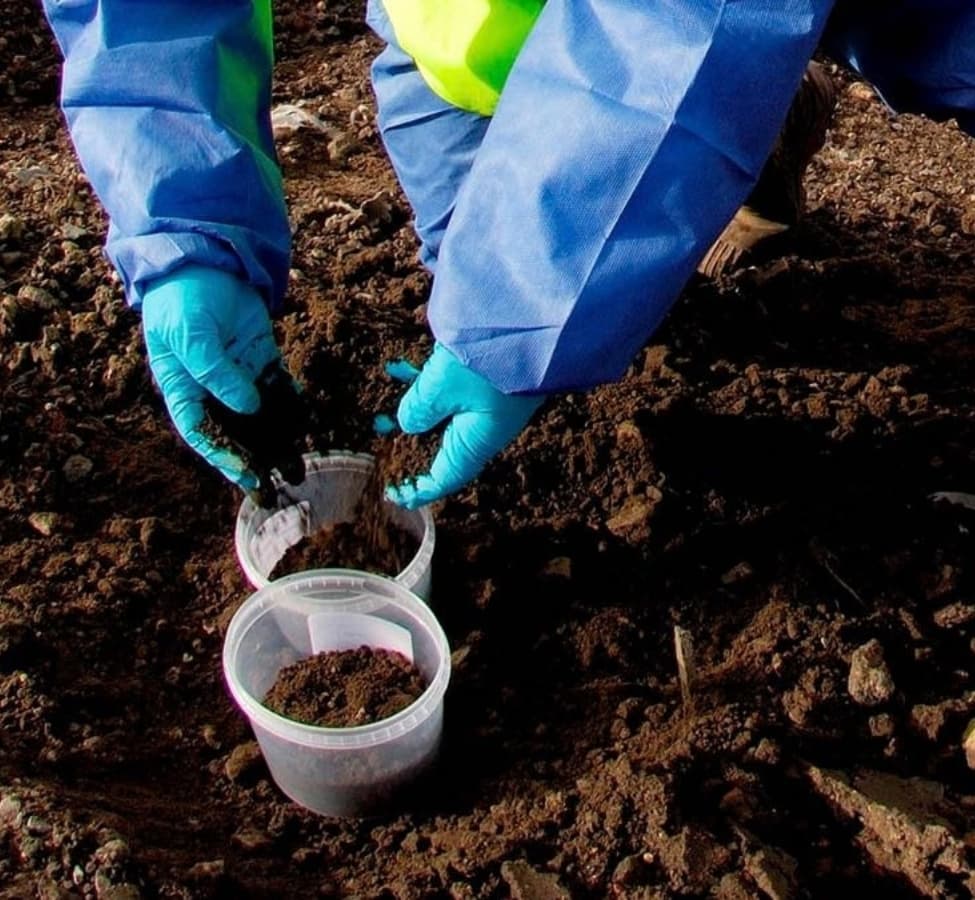
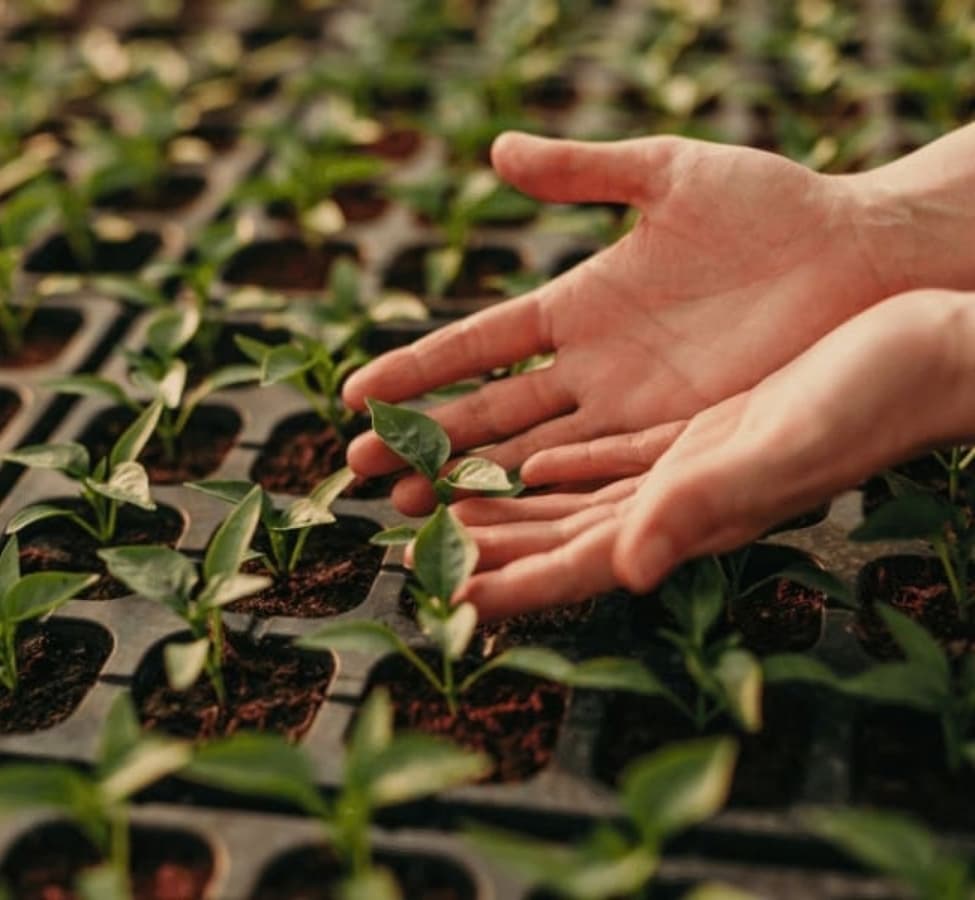

Almond Orchard Care & Maintenance in Italy
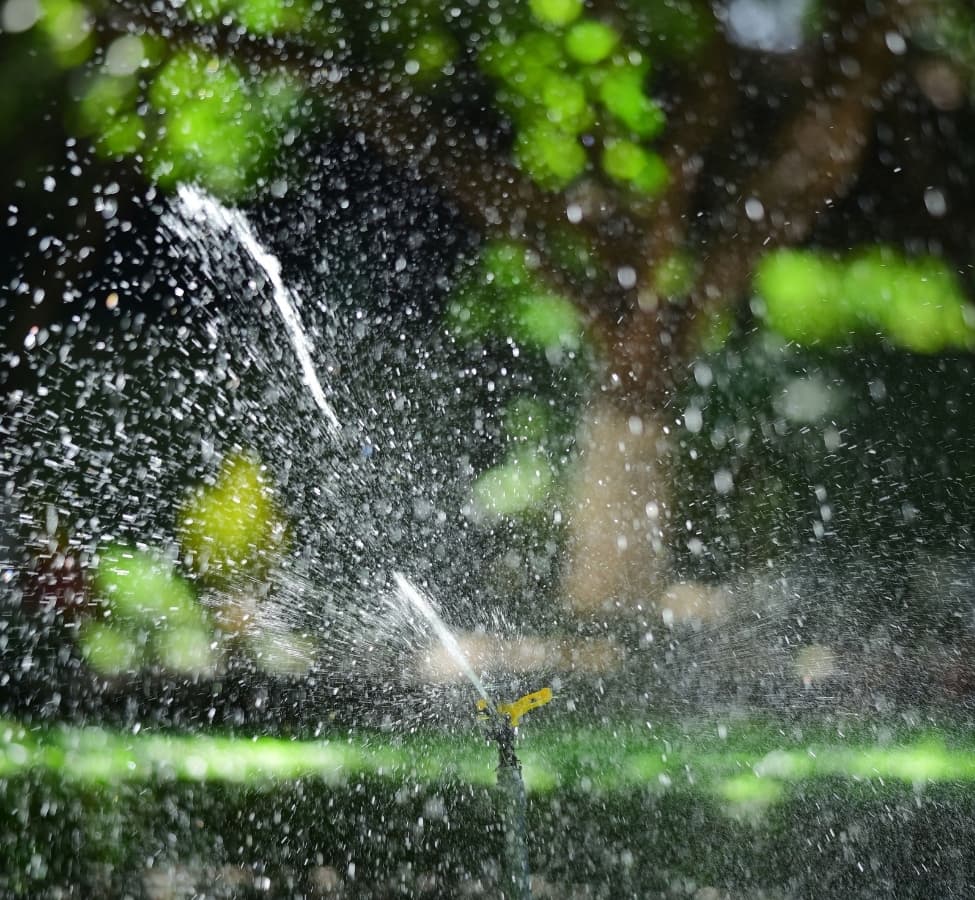
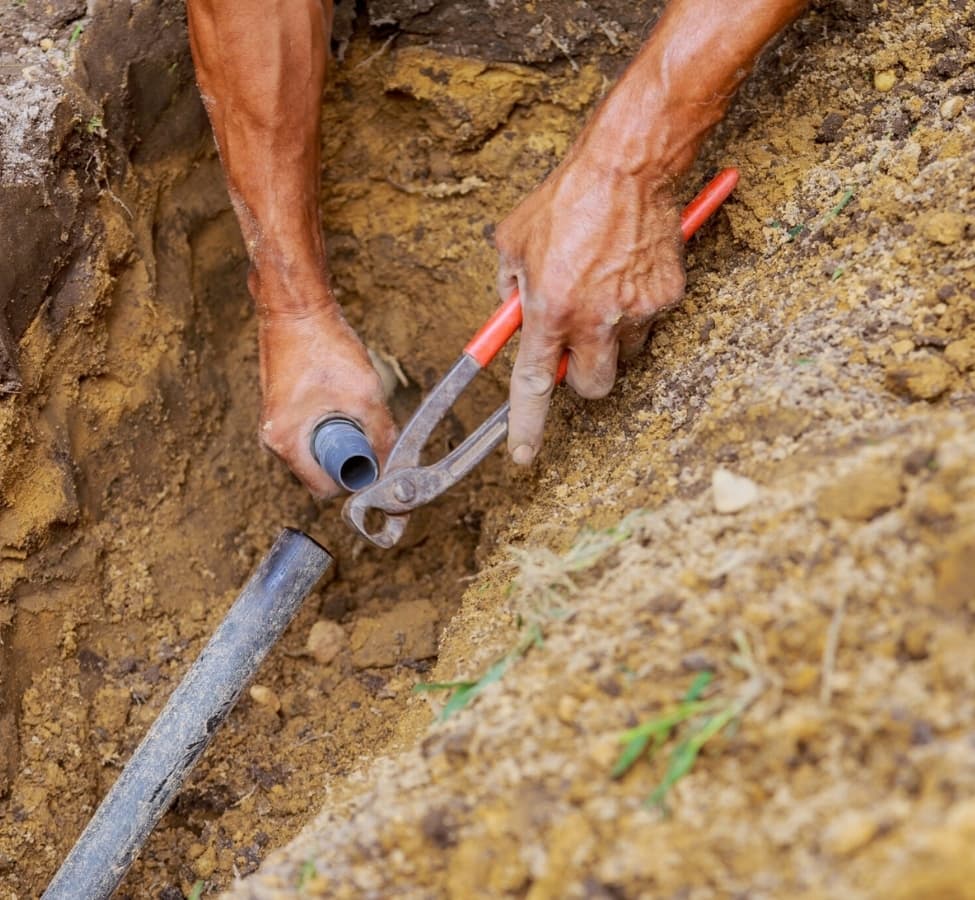
Summers are hot and dry: in Italian Air Force normals published by WMO, the August mean maximum is 29.2 °C at Bari (1971 to 2000) and 33.3 °C at Catania (period not stated), and ISPRA's 1991 to 2020 normals place Italy's driest areas mainly in southern Sicily, Puglia and southern Sardinia. Traditional Sicilian orchards are rain-fed and modern ones fertigated (2020 study); in a Sardinian trial, subsurface drip supplied 372 mm in 2020 and 495 mm in 2021, from May to September.
In Puglia, a February 2026 act of the regional plant-health service states that almond is susceptible to all three Xylella fastidiosa subspecies present there and, in monitoring, the most infected species in the areas demarcated for subsp. fastidiosa and multiplex; in 2026 the bacterium was also found on an almond tree near Matera, in Basilicata (news). EPPO lists the peach twig borer (Anarsia lineatella) as widespread in Italy, and monk parakeets near Bari and in the Alta Murgia crack almond shells to eat the kernels (2025 report).
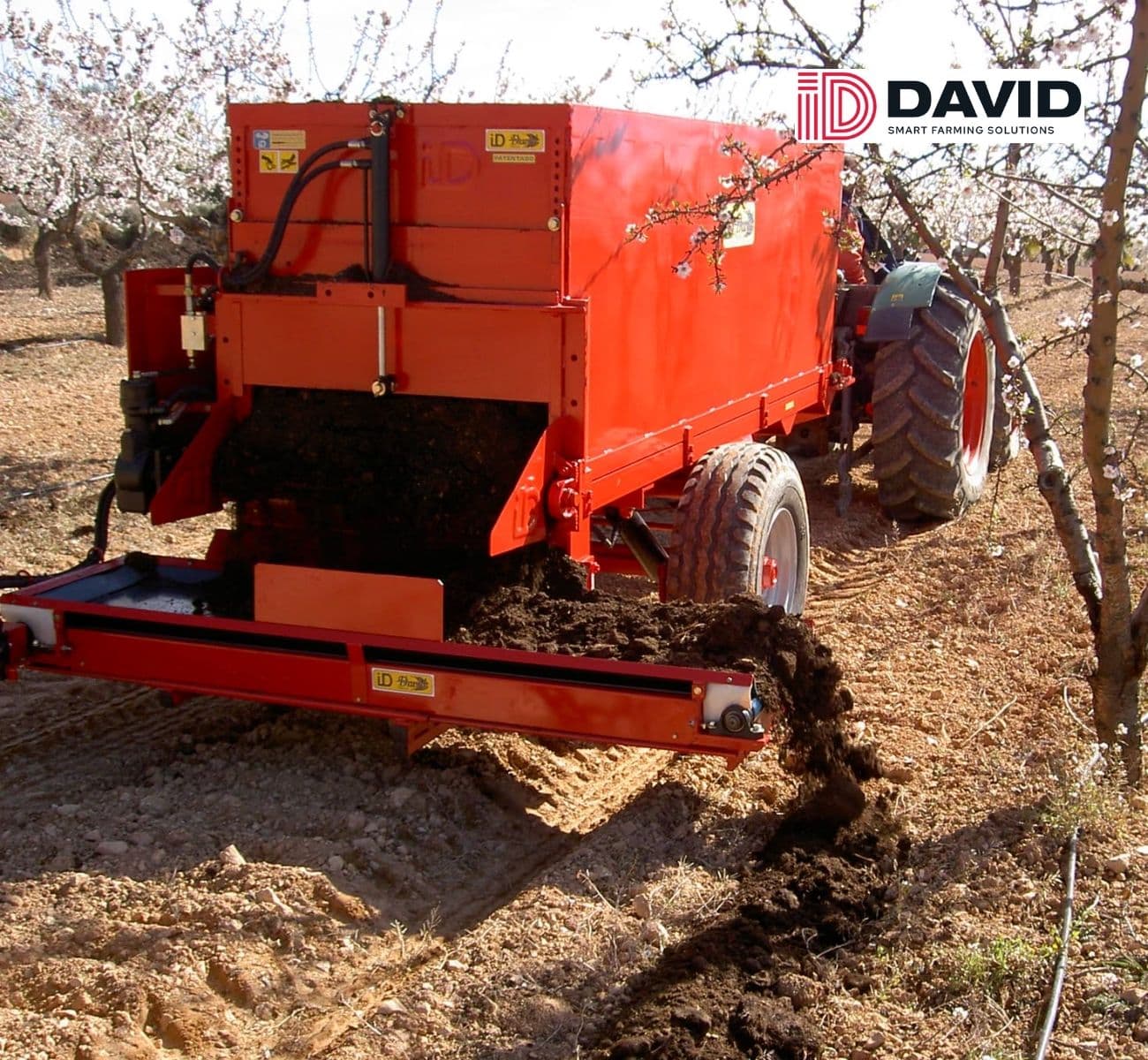
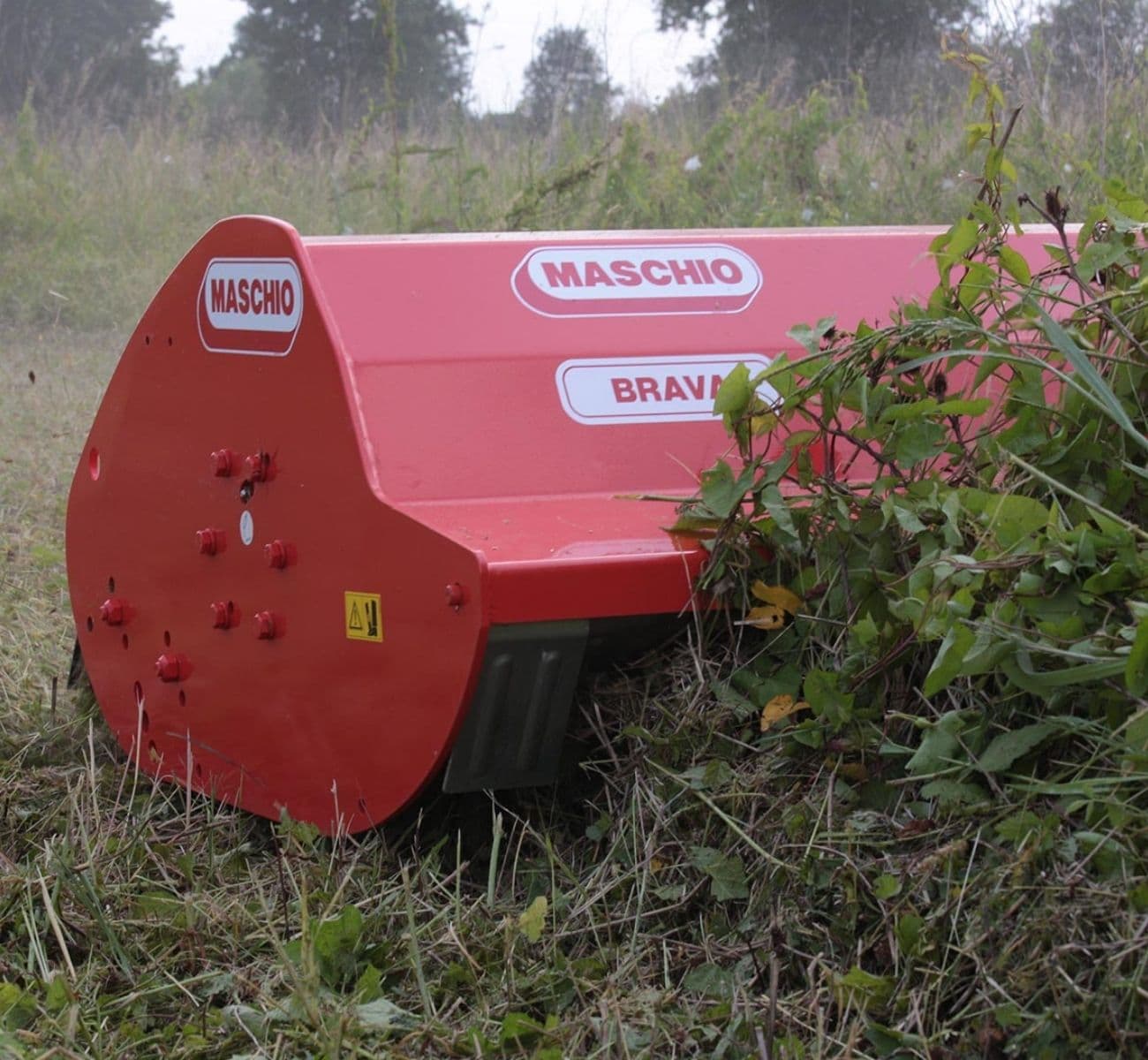
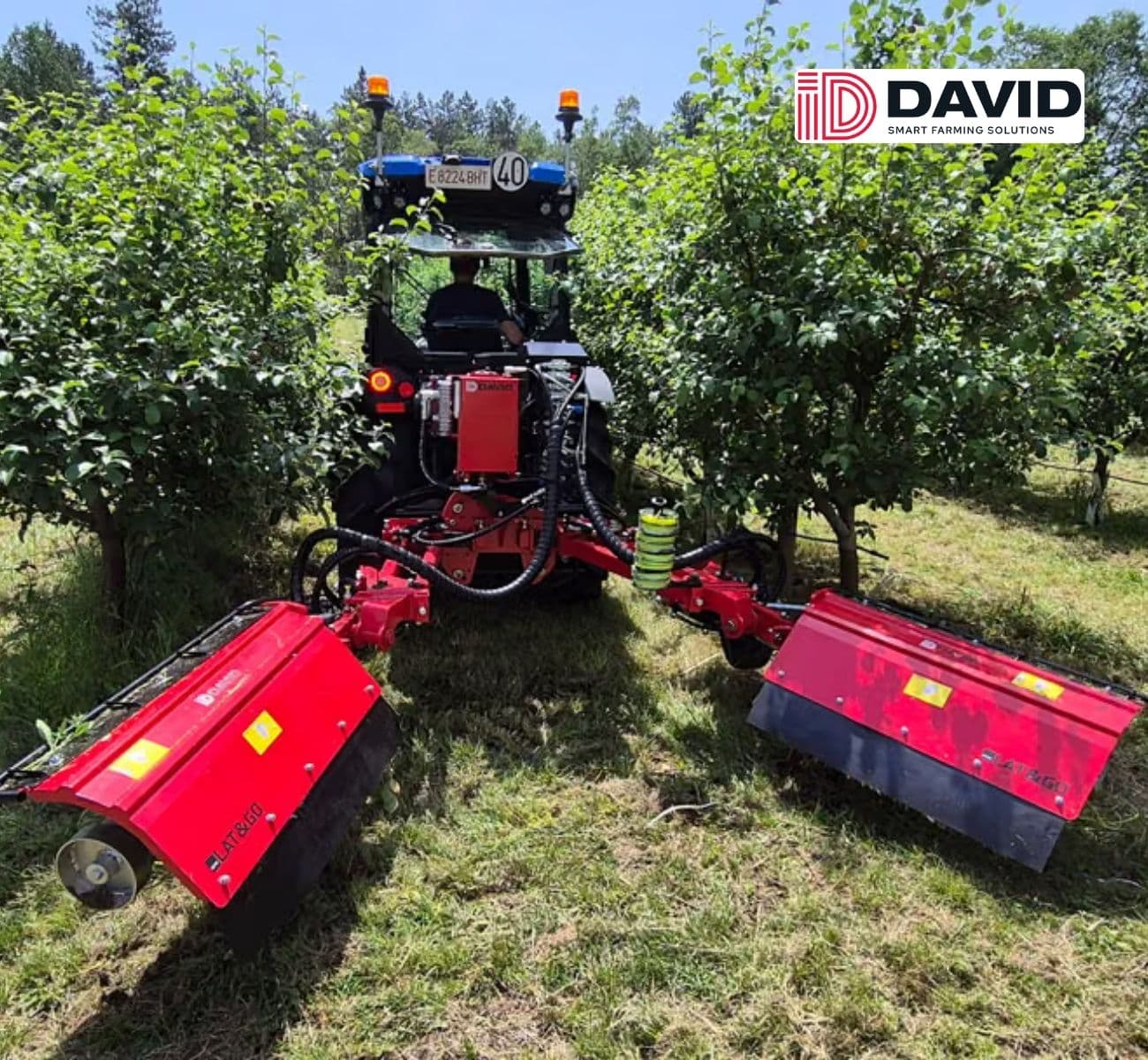
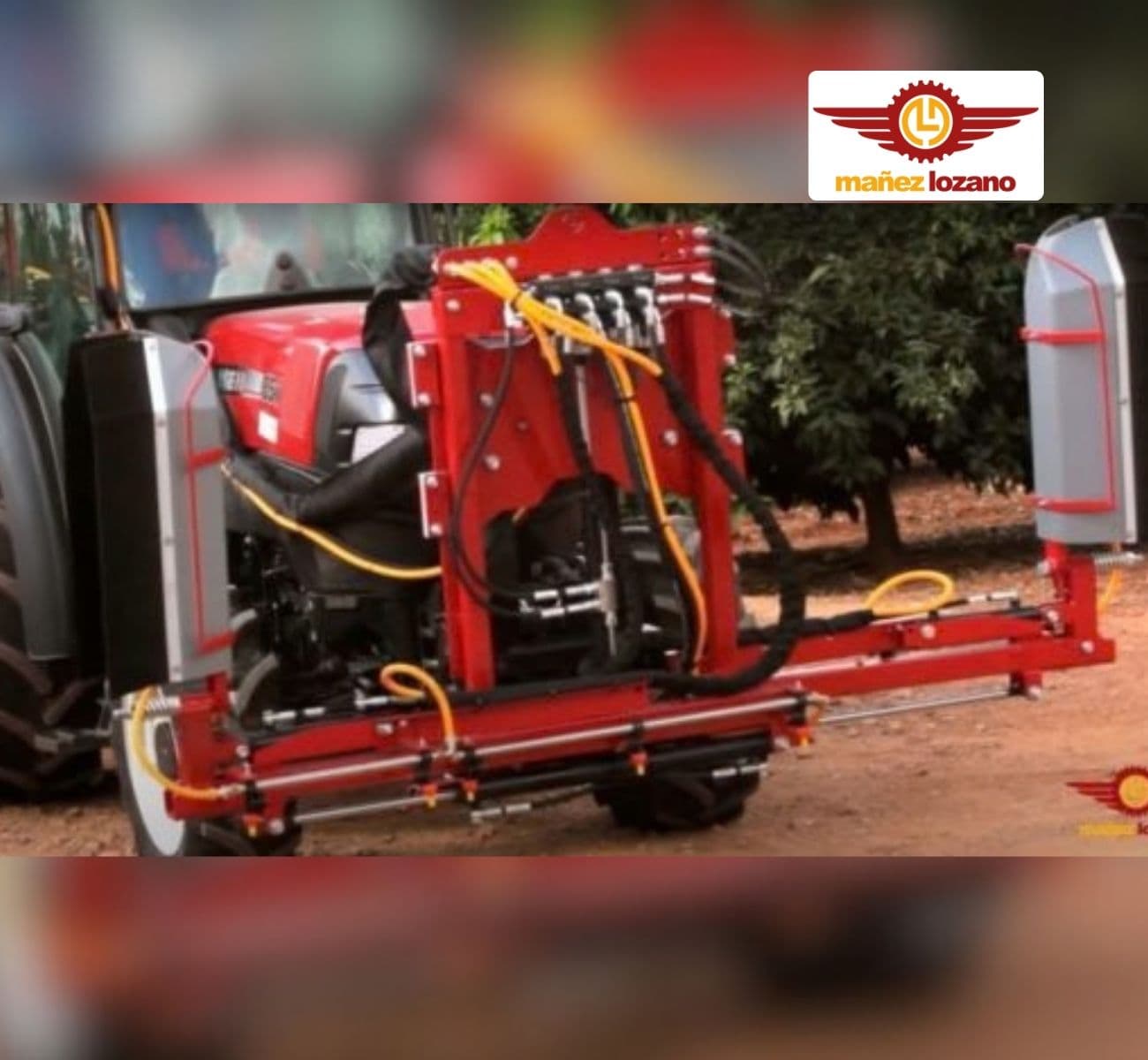
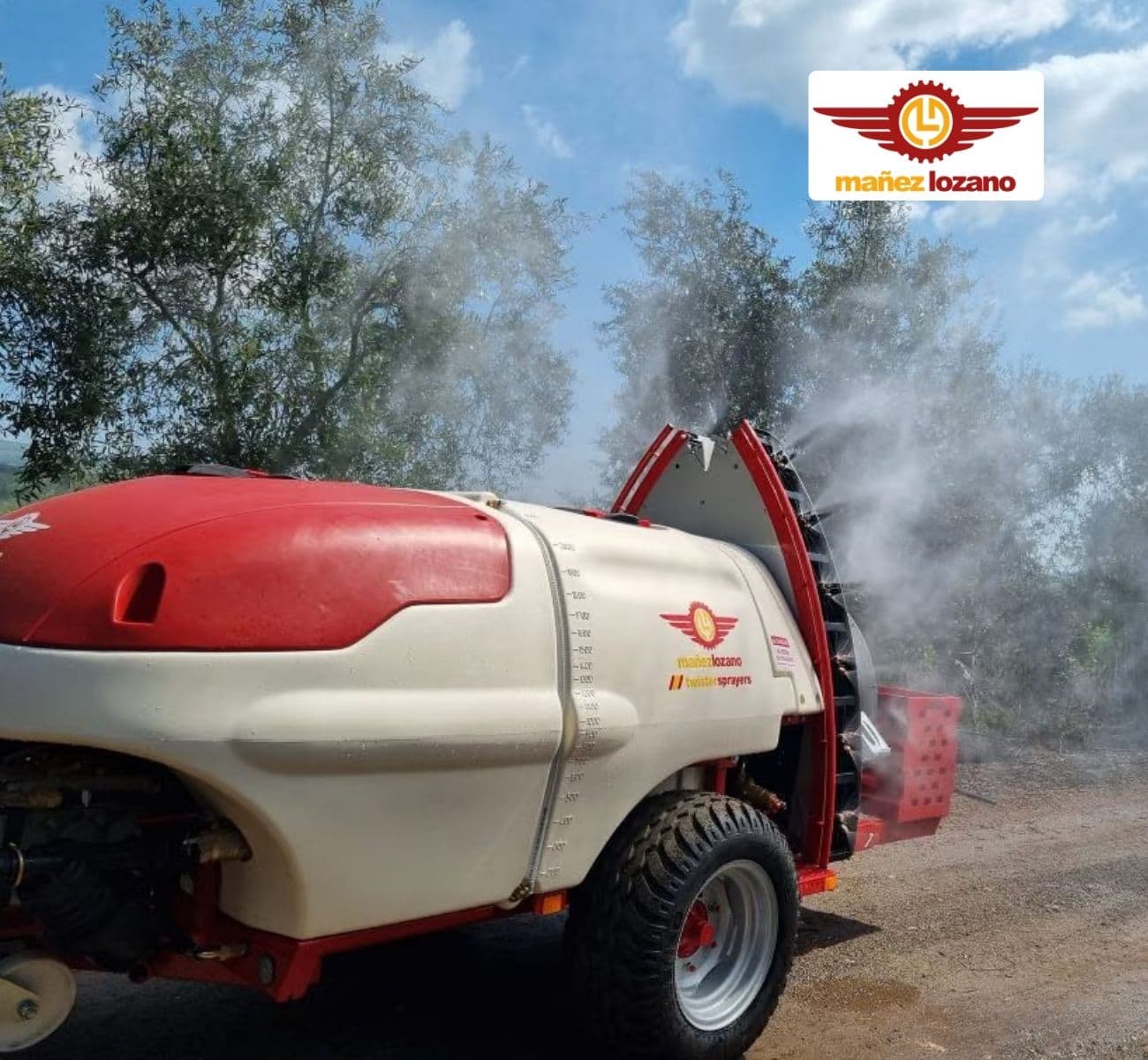
Bloom comes early, from January to March in the Val di Noto (2022 report), and frost on 24 and 25 March 2020, then snow on 1 April, struck almonds in full bloom in four Apulian provinces (news). For care work, the ID DAVID ECOFEED spreads solid manure, the ID DAVID LAT&GO string mower controls weeds without herbicides, the Mañez Lozano Narrow Twister S6 sprays tall, dense canopies and the ID DAVID V1 disc pruner makes vertical and horizontal cuts.
Recommended Orchard Care & Maintenance Stages
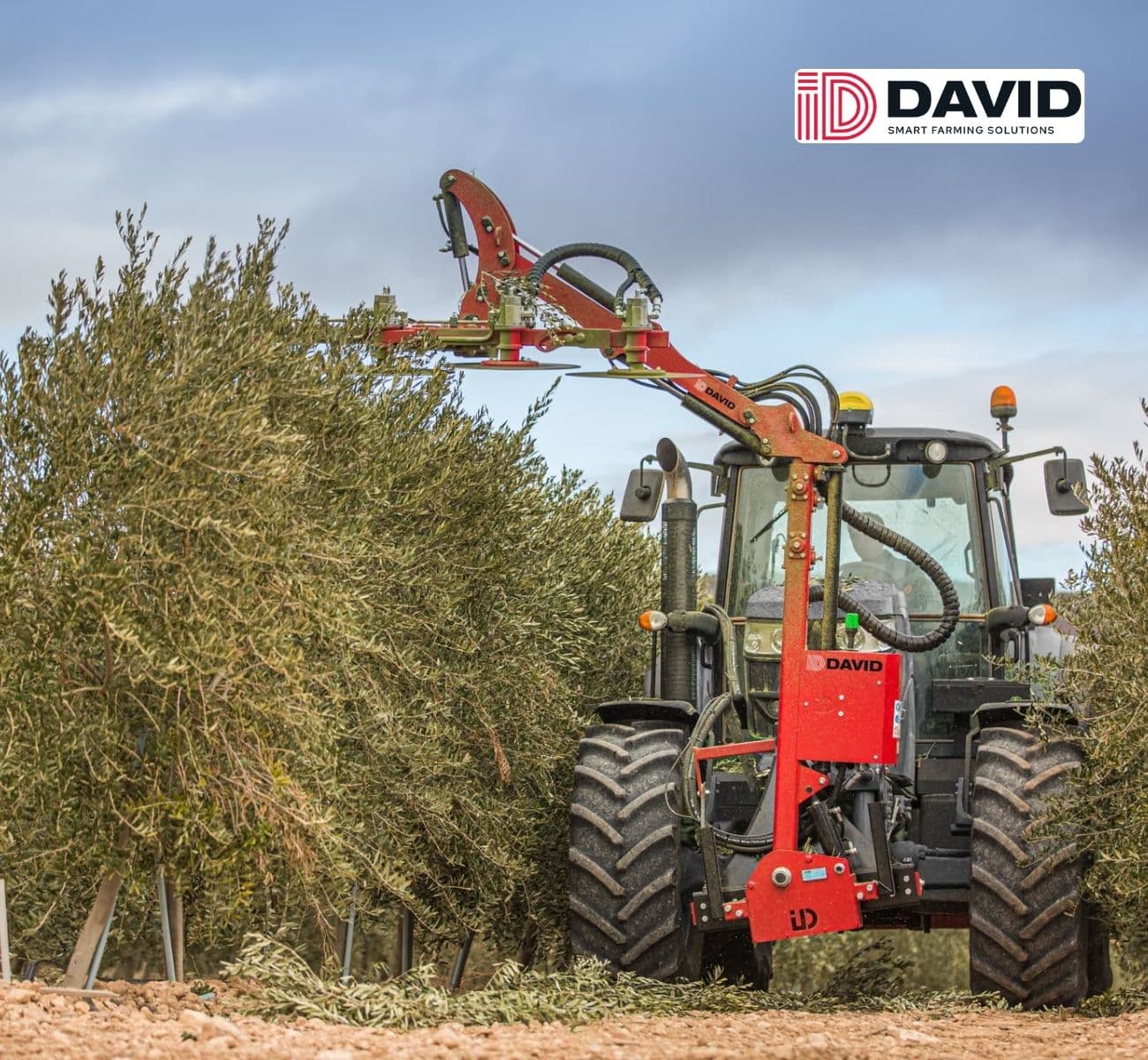
Practical Tips for Almond Orchard Care & Maintenance
Where water allows, irrigate by drip, the main system in new Italian plantings according to a 2014 review.
Cut out and burn shoots struck by Monilinia; Umbria's 2026 almond norms advise a pre-bloom treatment, repeated after bloom if bloom weather is wet.
Expect shot hole on leaves in humid spells at 15 to 20 °C: remove and burn struck shoots and treat at leaf fall, as Umbria's 2026 norms advise.
Watch almond trees in Puglia and Basilicata for Xylella: Puglia's plant-health service finds almond the most infected host in its fastidiosa and multiplex areas.
Spray tall, dense canopies evenly with a narrow trailed airblast sprayer such as the Mañez Lozano Narrow Twister S6.
Control weeds without herbicides with a string mower such as the ID DAVID LAT&GO, and keep the orchard floor level for harvest.

Almond Harvesting in Italy
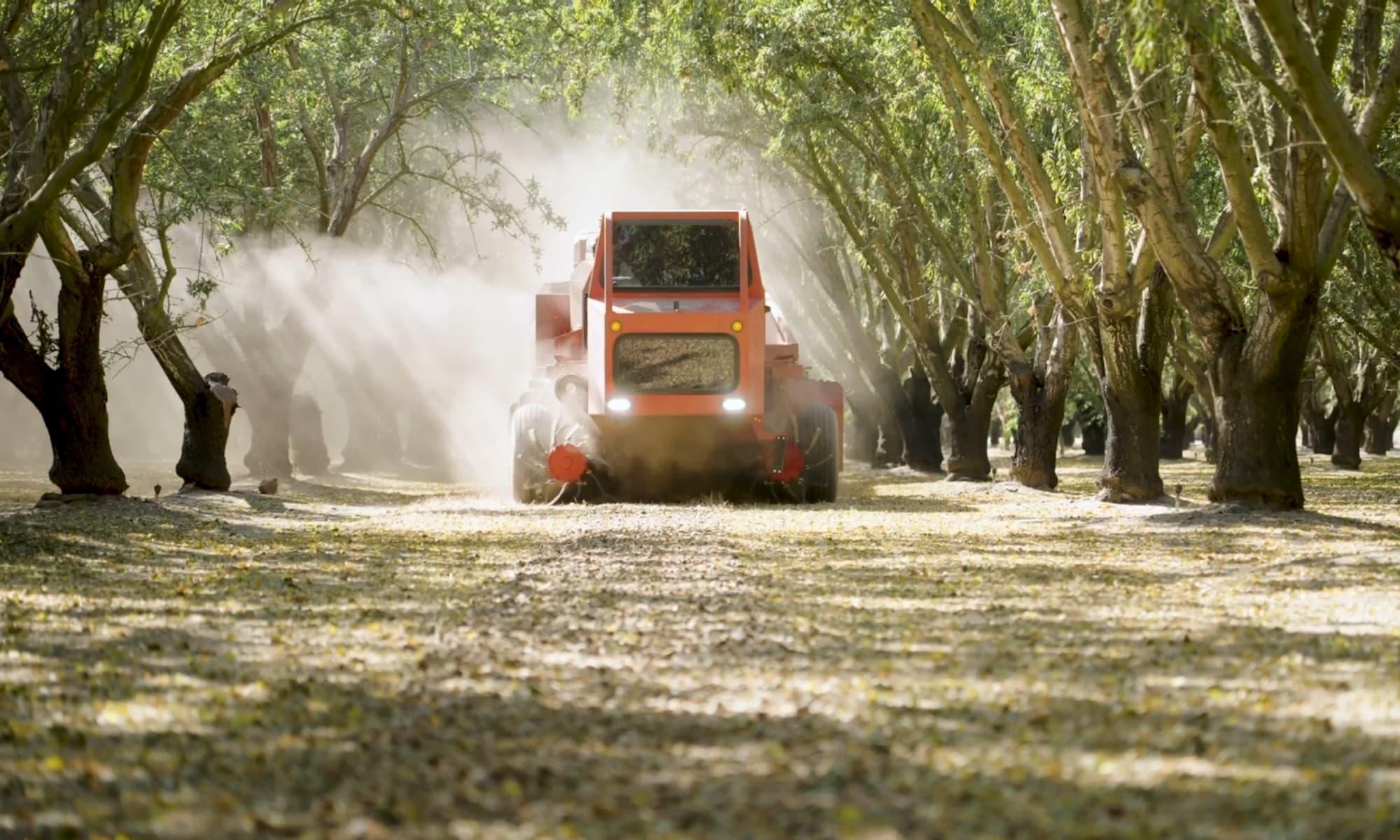
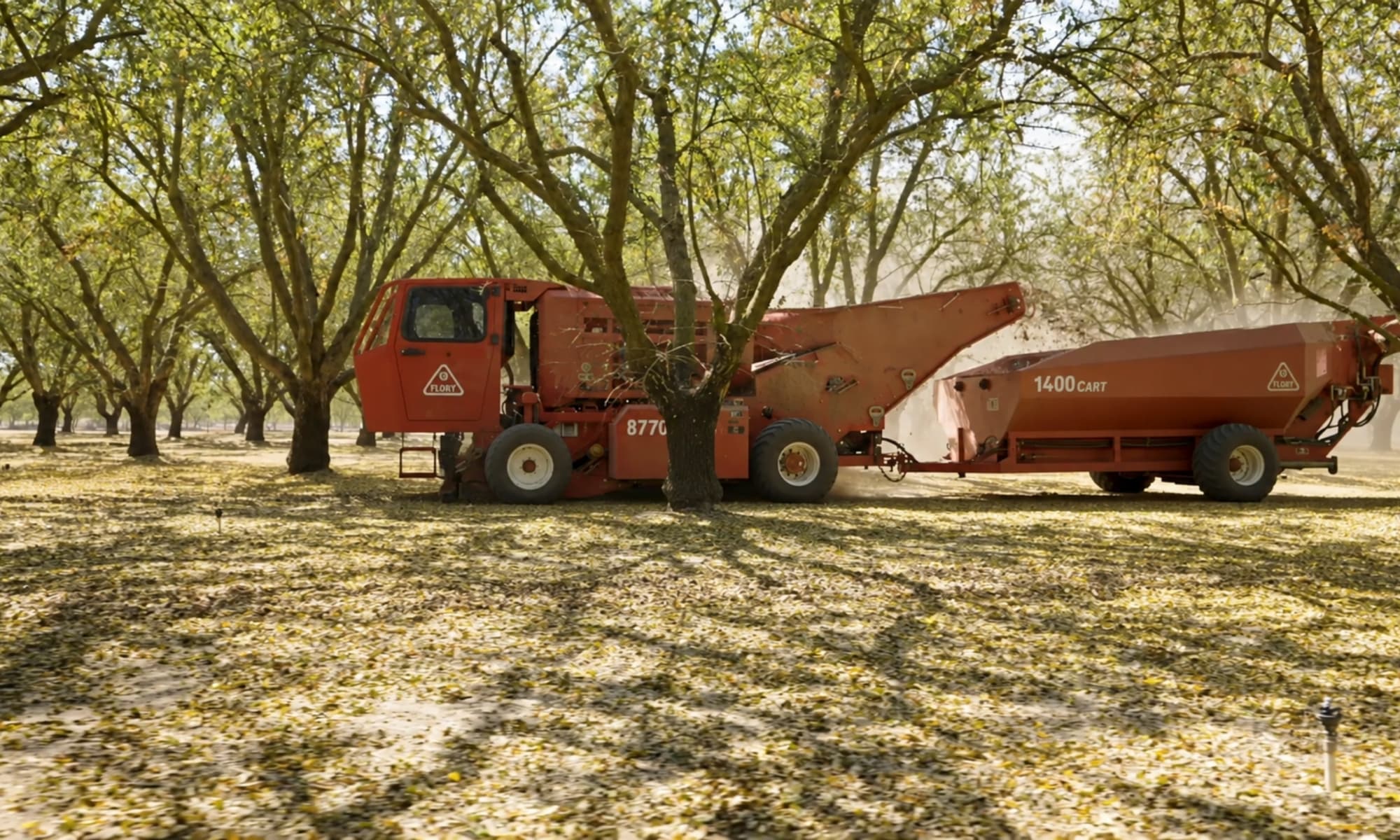
Crews still beat traditional trees with canes or poles over sheets or nets, at most using an inverted-umbrella machine (Avola, 2022 report). New plantations use trunk shakers (2014 review); a 2021 Sicilian study describes a self-propelled inverted-umbrella shaker. Harvest is the most labor-intensive task, and mechanization cuts its labor cost (2017 study). With high costs, farmers sometimes leave fruit unharvested (USDA, 2024). In orchards planted for machines, mechanized harvesting brings the crop in on time and limits deterioration.
Harvest runs from July around Noto, in Sicily, to early October at Toritto, near Bari, depending on cultivar (Slow Food). In Italian Air Force normals via WMO, August is nearly rainless at Catania (13.1 mm on 1.9 days; period not stated), but Bari averages 59.7 mm on 5.0 rain days in September (1971 to 2000). A 2014 review puts hulling and drying 24 to 48 hours after harvest, and none of the Italian sources found describes drying on the orchard floor, so this guide shows prompt pickup alongside catching frames.
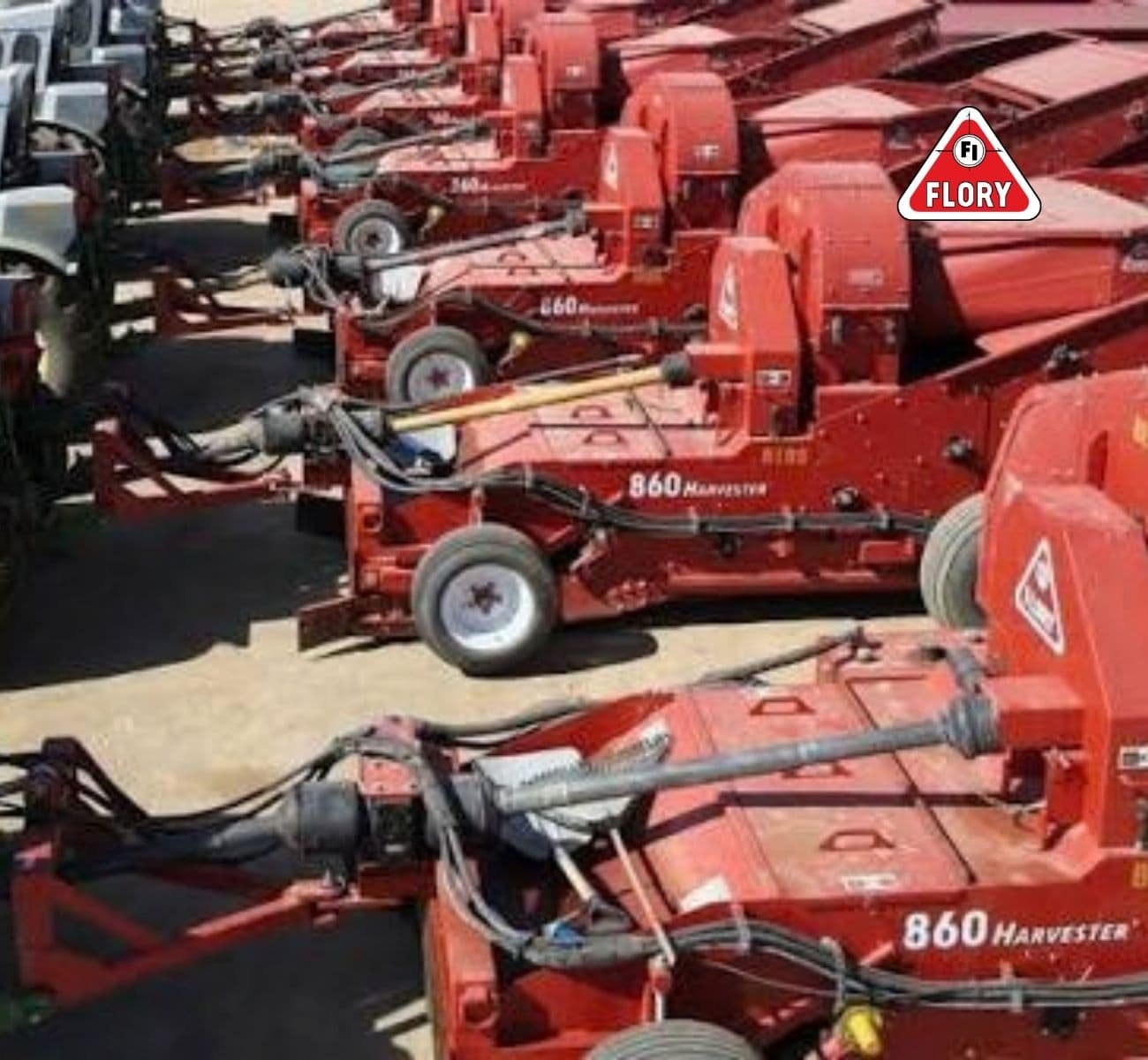
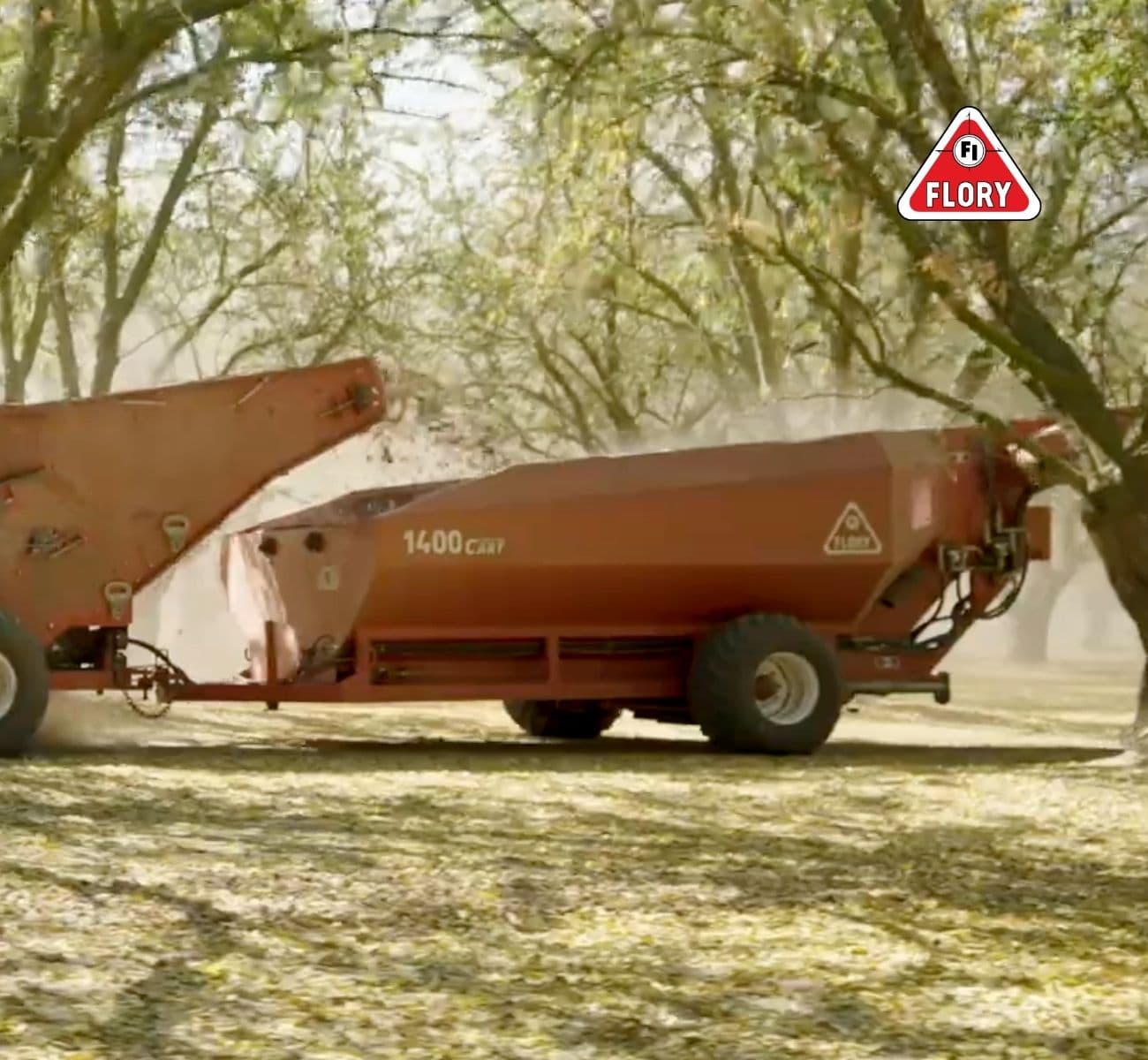
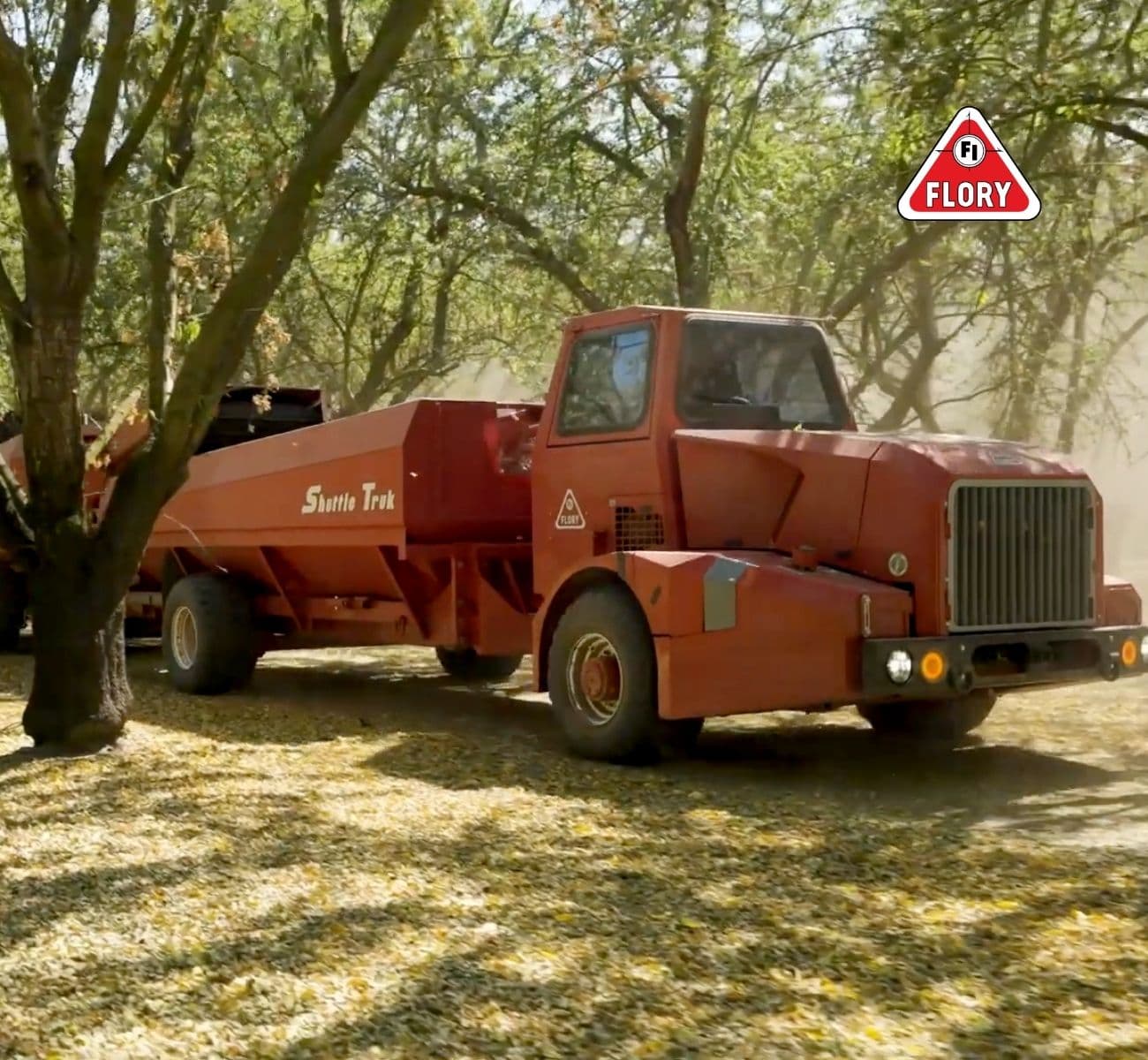
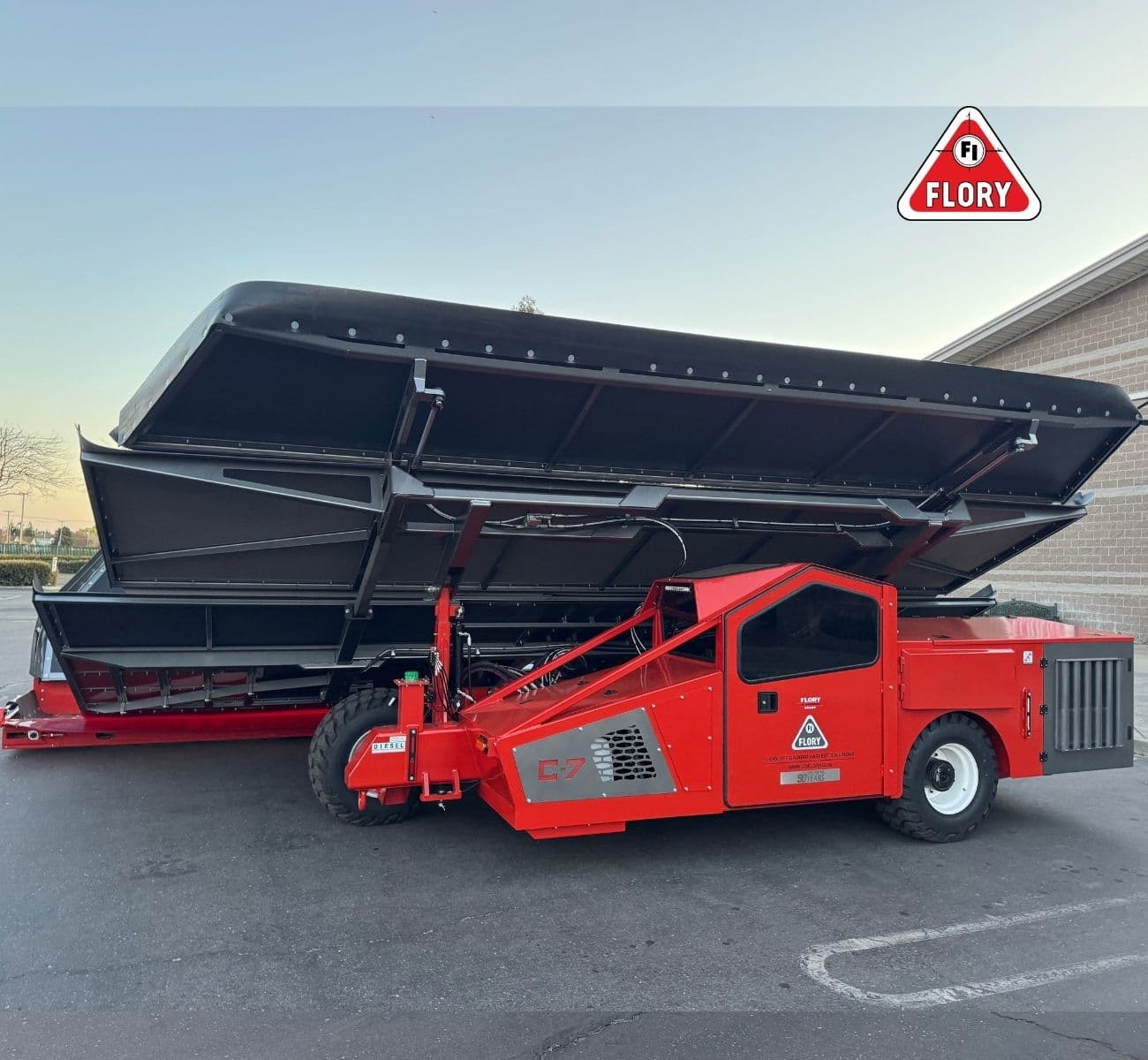
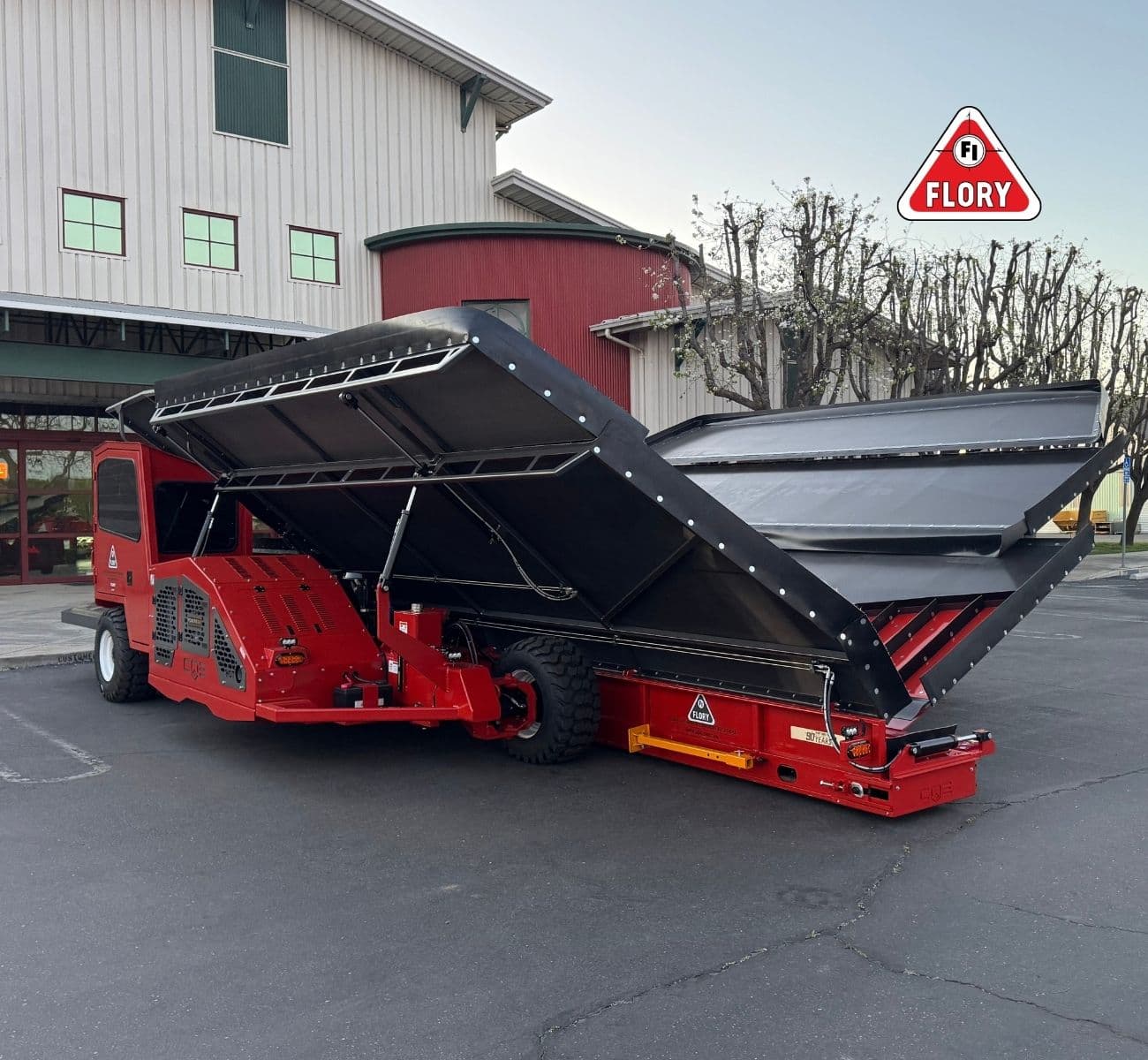
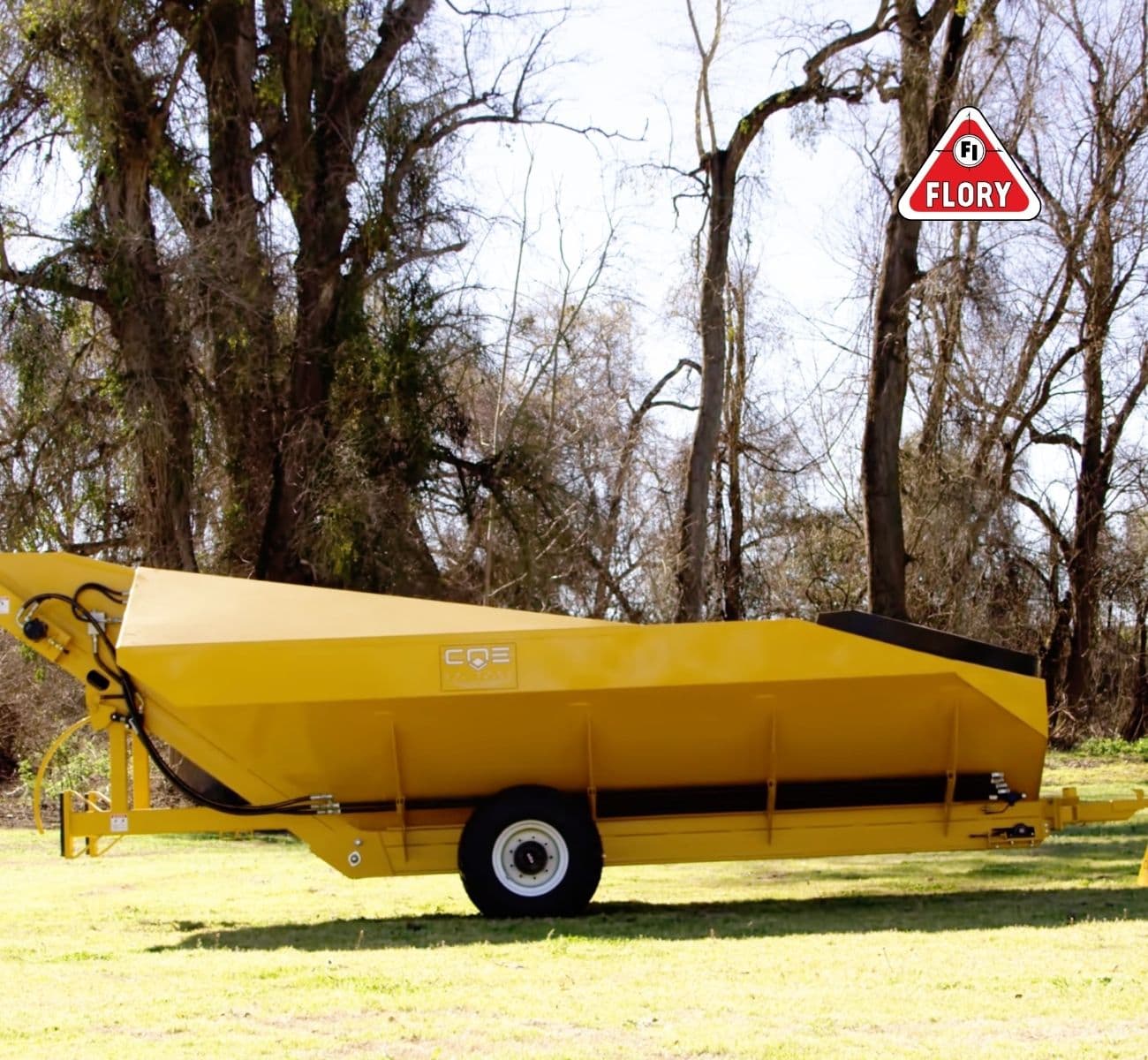
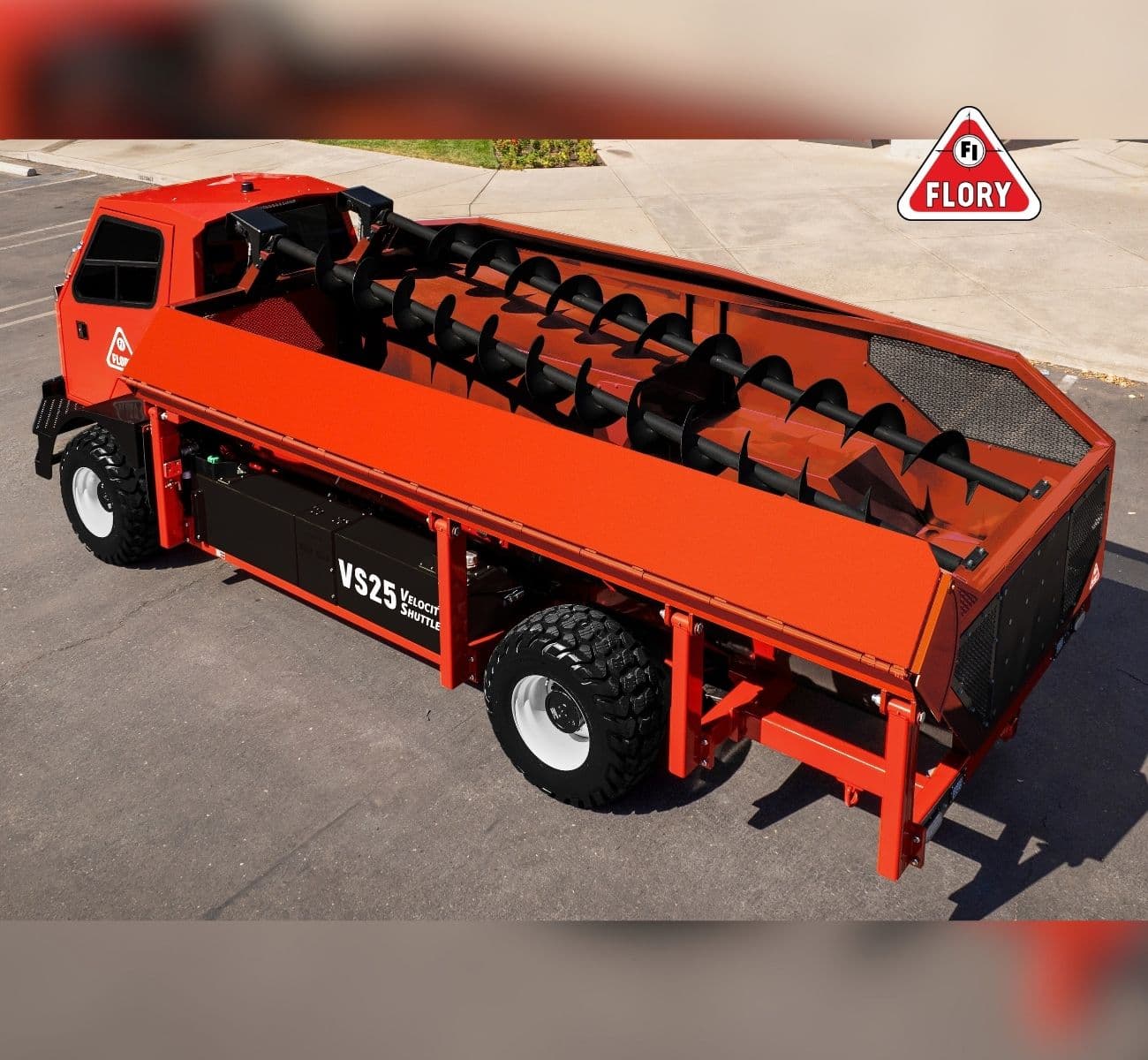
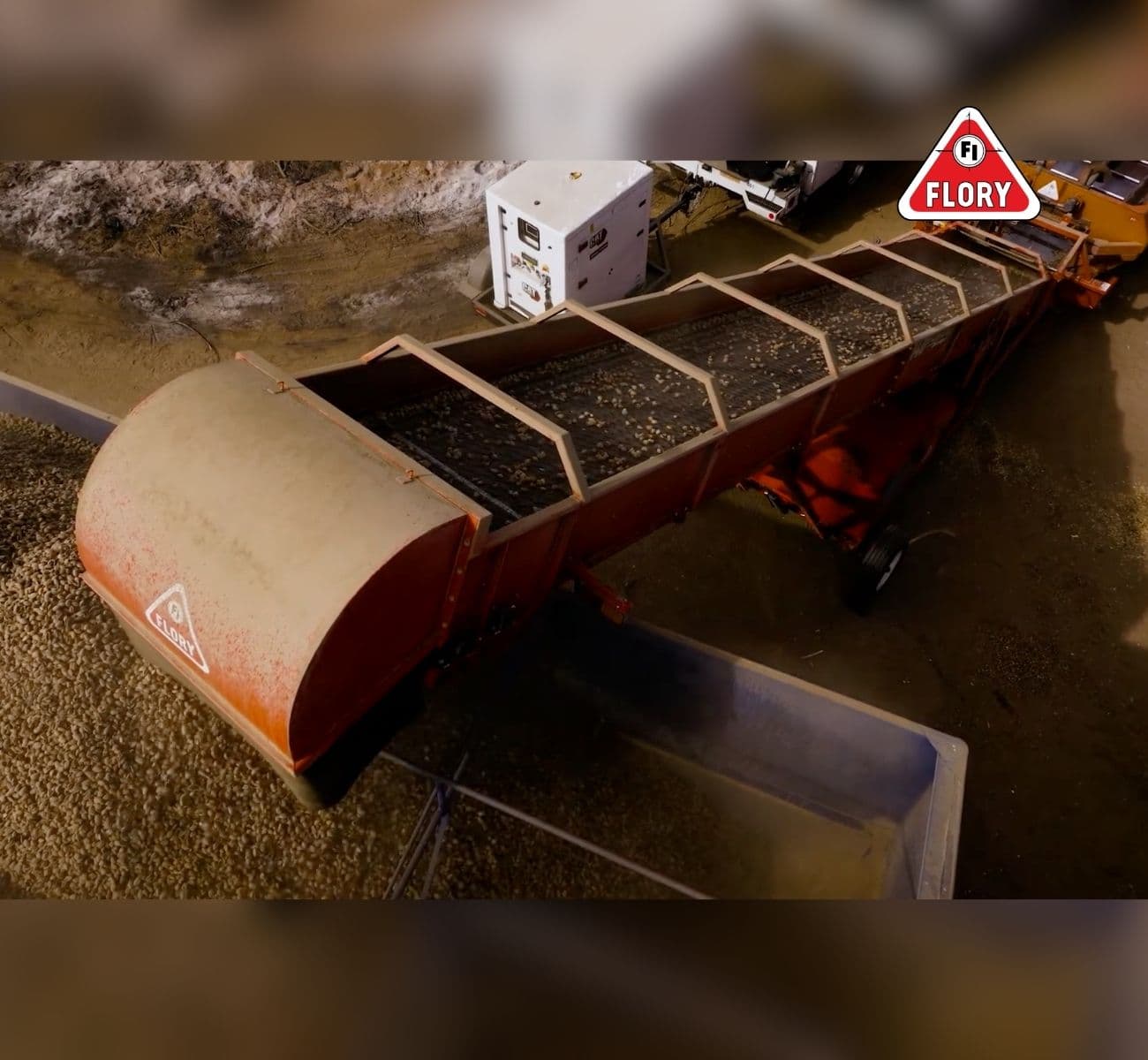
Flory harvesting machinery is available in Italy through OVE Europe for both systems. On the ground, the VR700 Shaker, 34 Series Sweeper and 860 Harvester (or the smaller 490) work with the 1500 Conveyor Cart and ST14 Shuttle. Off the ground, the Flory COE C7 Shaker and L2 Receiver catch the almonds in a frame around the trunk, the Flory COE B8 Cart and VS25 Shuttle carry them, and the 4840 Field Elevator loads trailers in both systems.
Almond Harvest Workflow (Recommended Equipment)
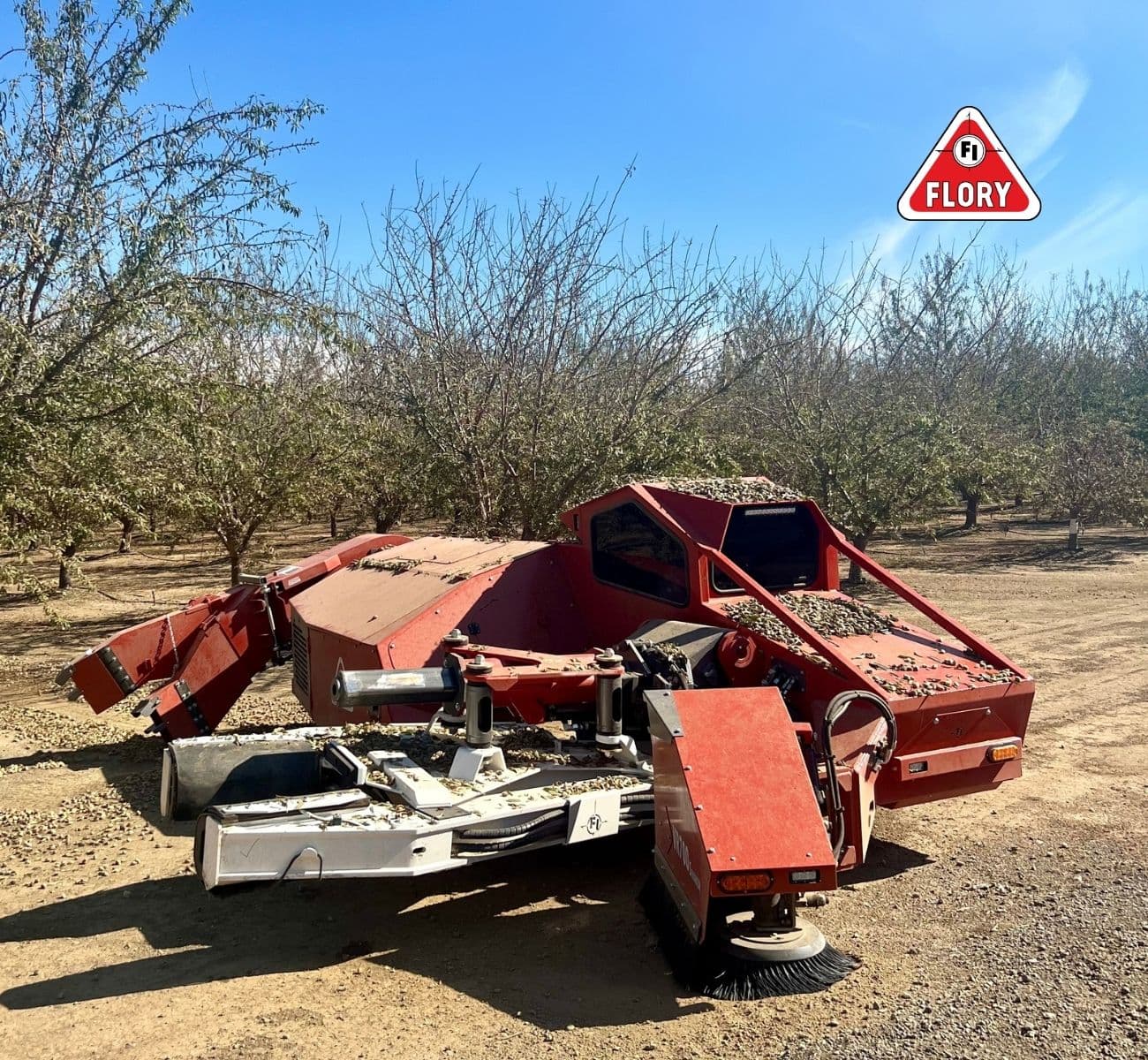
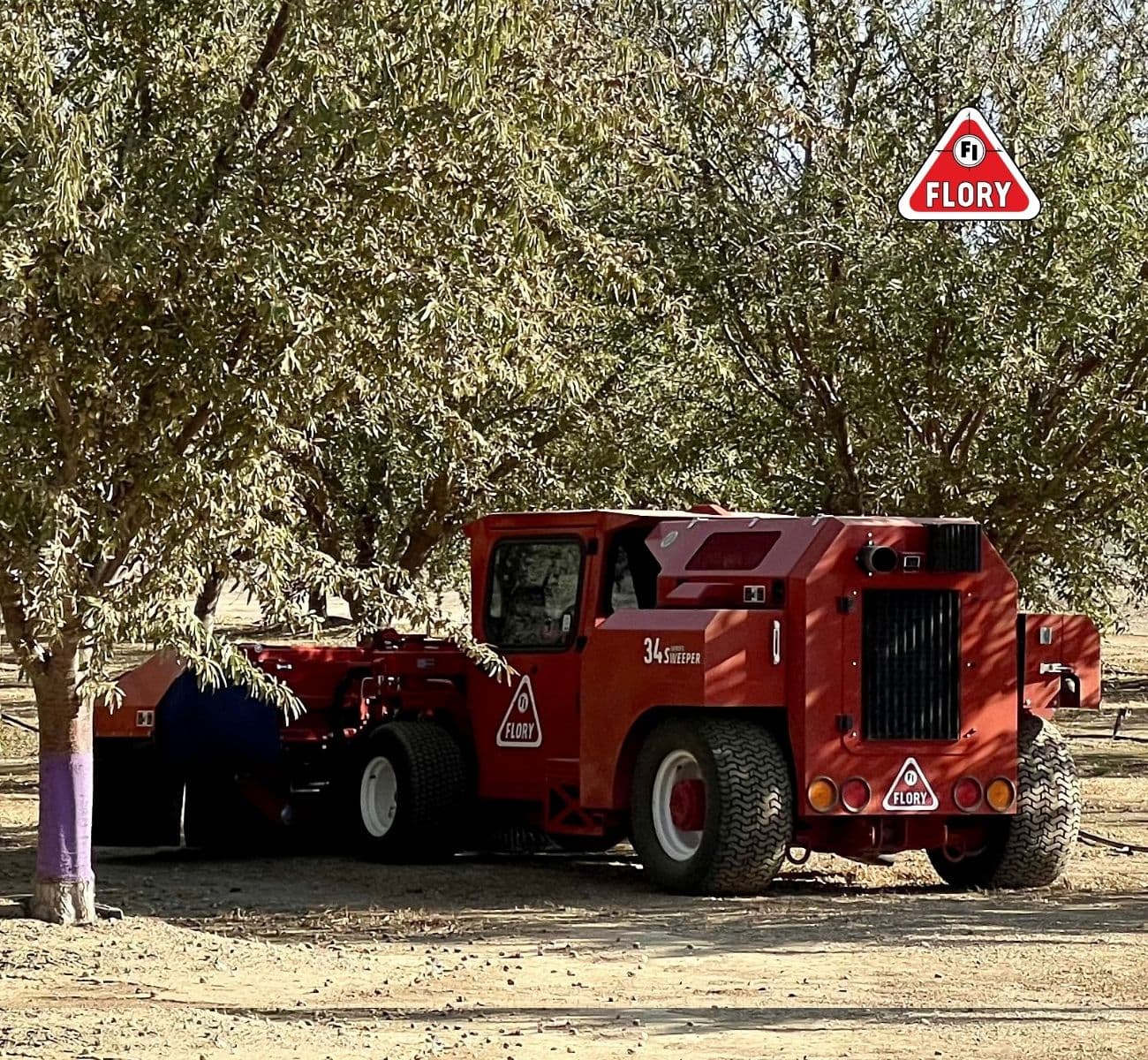
Practical Tips for Almond Harvesting
Plan the order by cultivar: a national evaluation reported in 2001 put the Tuono harvest in late August and Genco in late September.
Shake at hull split: a 2017 Italian study describes harvest during hull dehiscence, so check that hulls have opened across the canopy before shaking.
Check the forecast before shaking and shake only what you can pick up promptly: September at Bari averages 5.0 rain days.
Smooth and firm the floor before ground pickup: a pickup machine in a 2015 Brindisi test collected only 30% of almonds on unprepared ground, missing nuts by the trunk.
Where trees are shaken onto inverted umbrellas in orchards planted for machines, catching frames may suit: the Flory COE C7 Shaker pairs with the L2 Receiver.
Keep shakers and frames for orchards planted for machines, never scattered trees among other crops, unpruned old trees, small plots, terraces or steep slopes.
Get your recommended harvest setup
Enter orchard size, spacing, terrain, and target throughput—we’ll suggest a practical harvest workflow and equipment lineup.

Almond Post-Harvest Handling & Processing in Italy
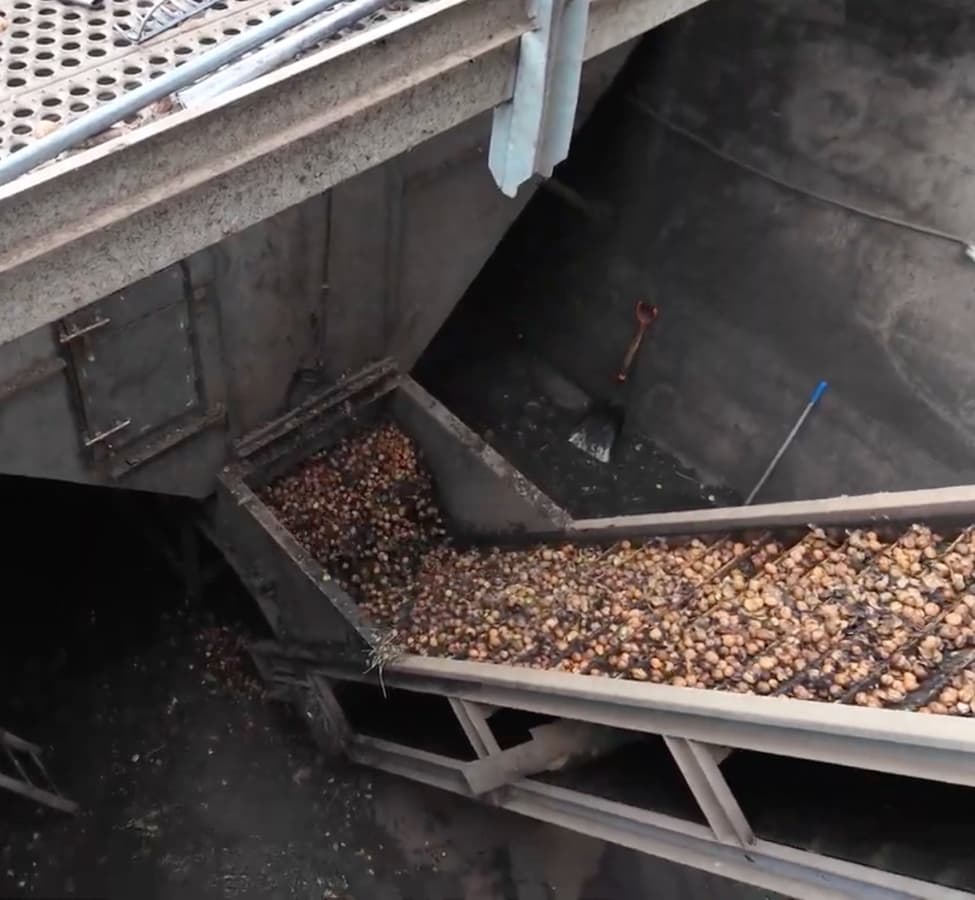
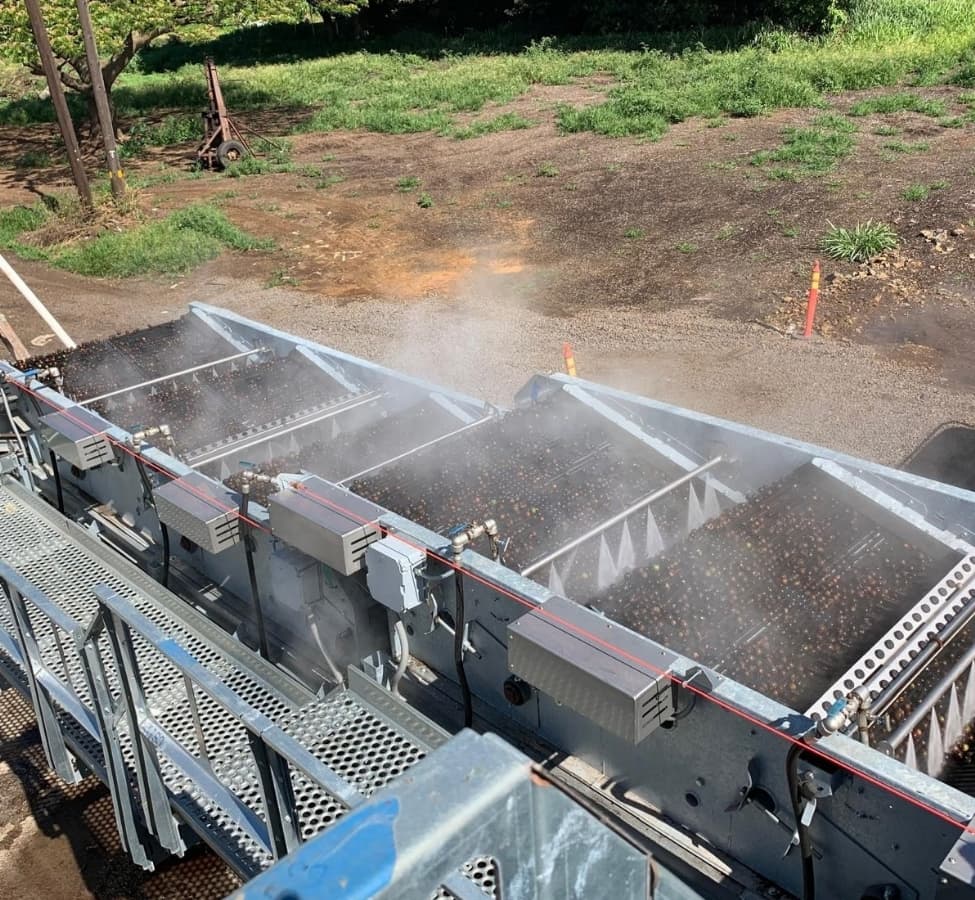
Hulling normally takes place on the farm, a CREA article notes (2023), though a 2017 study says hulling and drying were traditionally done off the farm; in its 2015 Brindisi case, a hulling plant worked outdoors at the farm at 170 to 200 kg an hour. Sicilian sources describe sun drying after hulling, and a 2020 study credits Sicily's dry summers with a very simple post-harvest routine. At Noto, almonds stay in the shell until processing; in a 2021 study, they were stored in 1,000 kg bags at 20 °C.
Under Regulation (EU) 2023/915, almonds sold to the final consumer or used as an ingredient may contain at most 8.0 µg/kg of aflatoxin B1 and 10.0 µg/kg in total, and almonds to be sorted first 12.0 and 15.0 µg/kg. The Bari Chamber of Commerce holds a weekly national market day for fruit, vegetables and almonds; on 13 October 2026 its price list quoted shelled sweet almonds at EUR 7,800 to 8,300 per tonne ex-warehouse, VAT excluded.
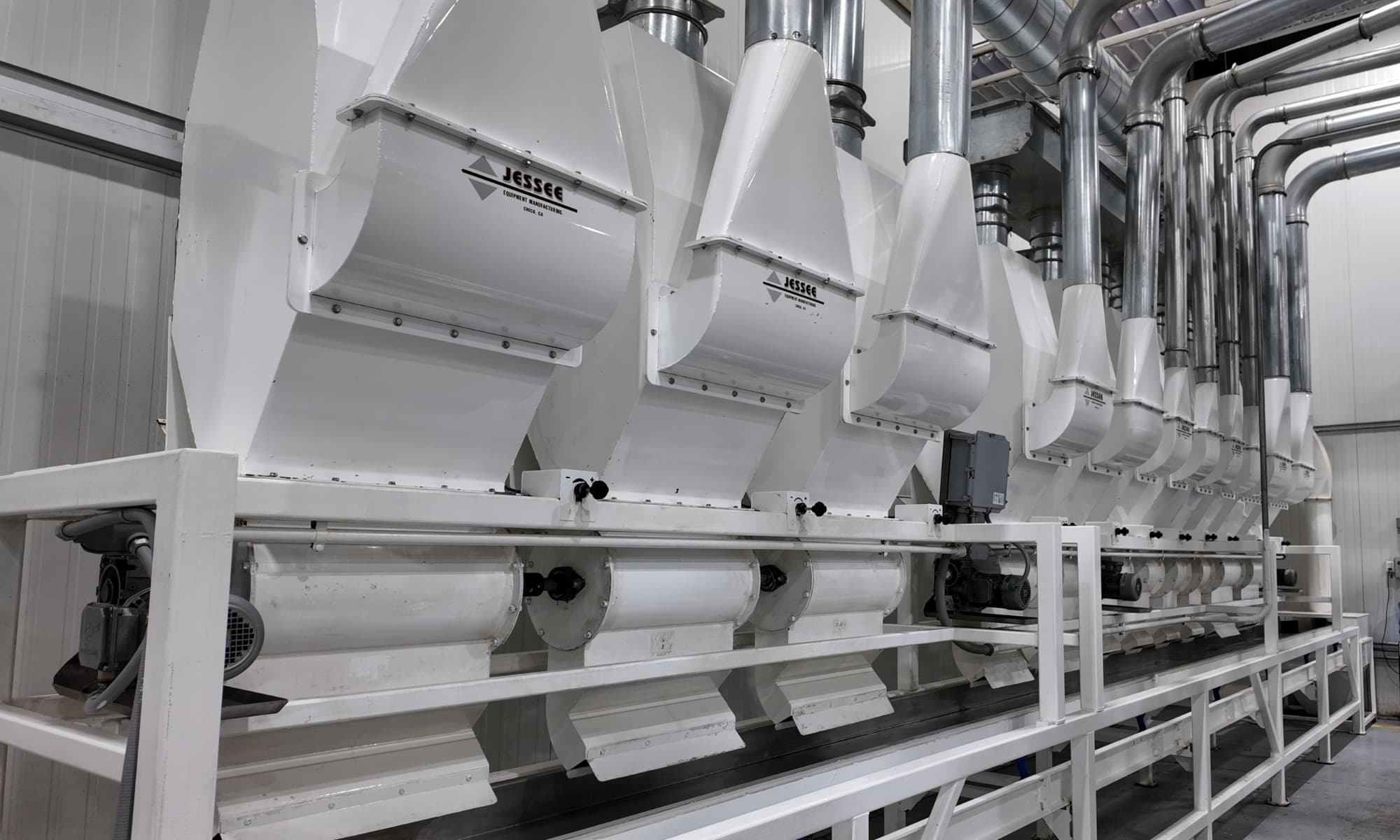
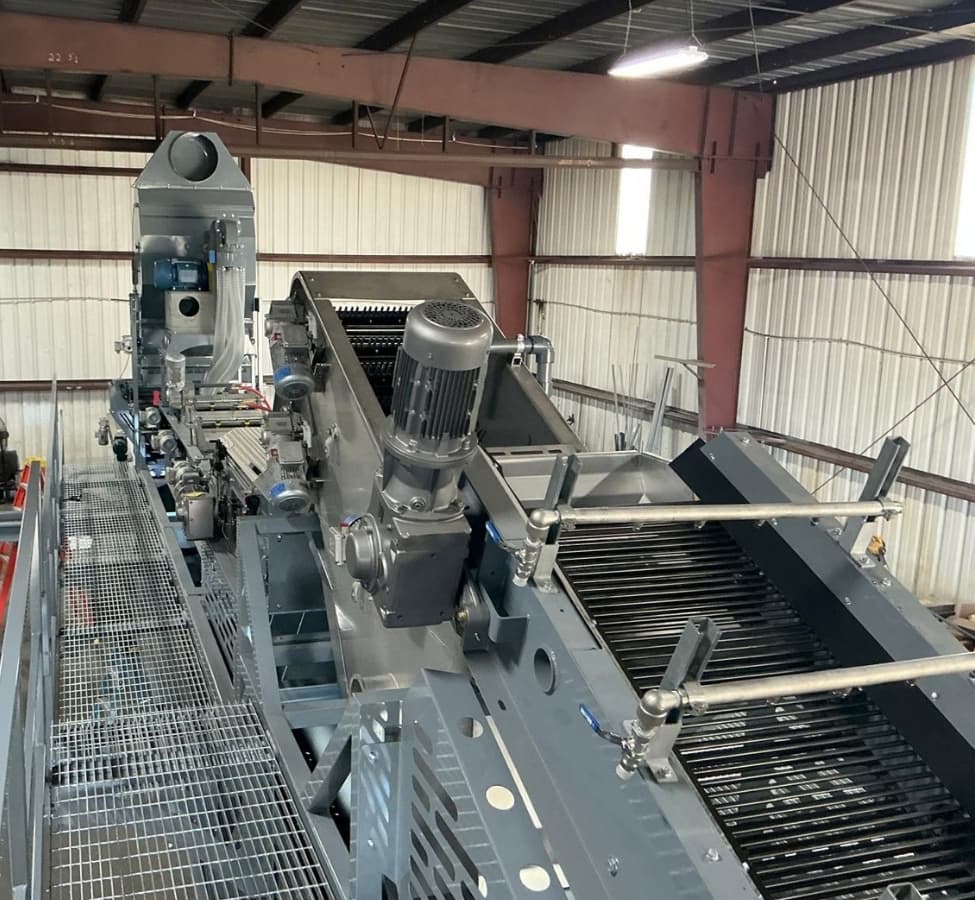
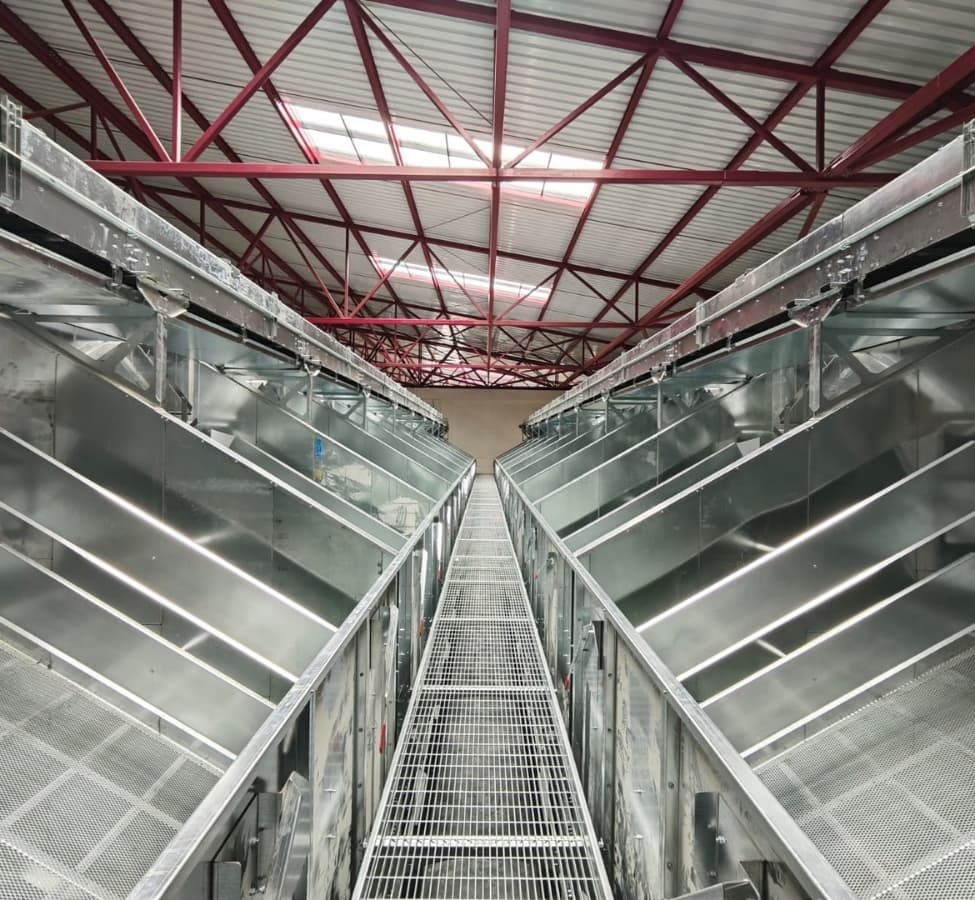
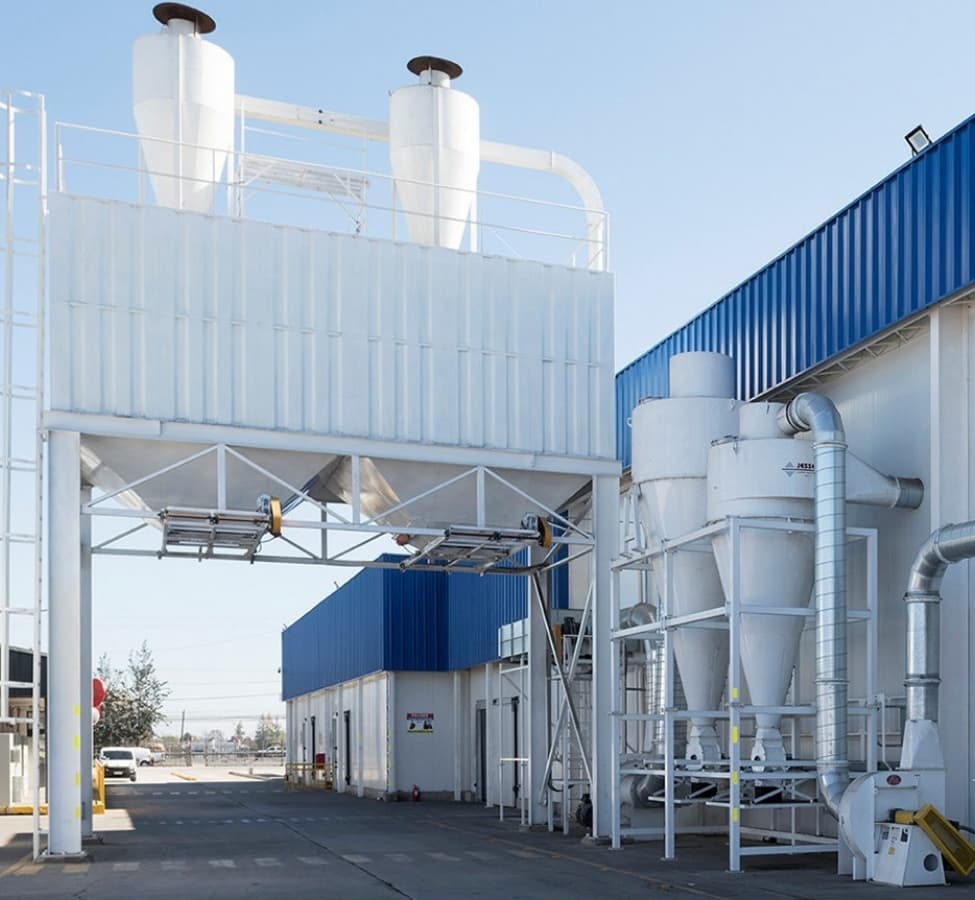
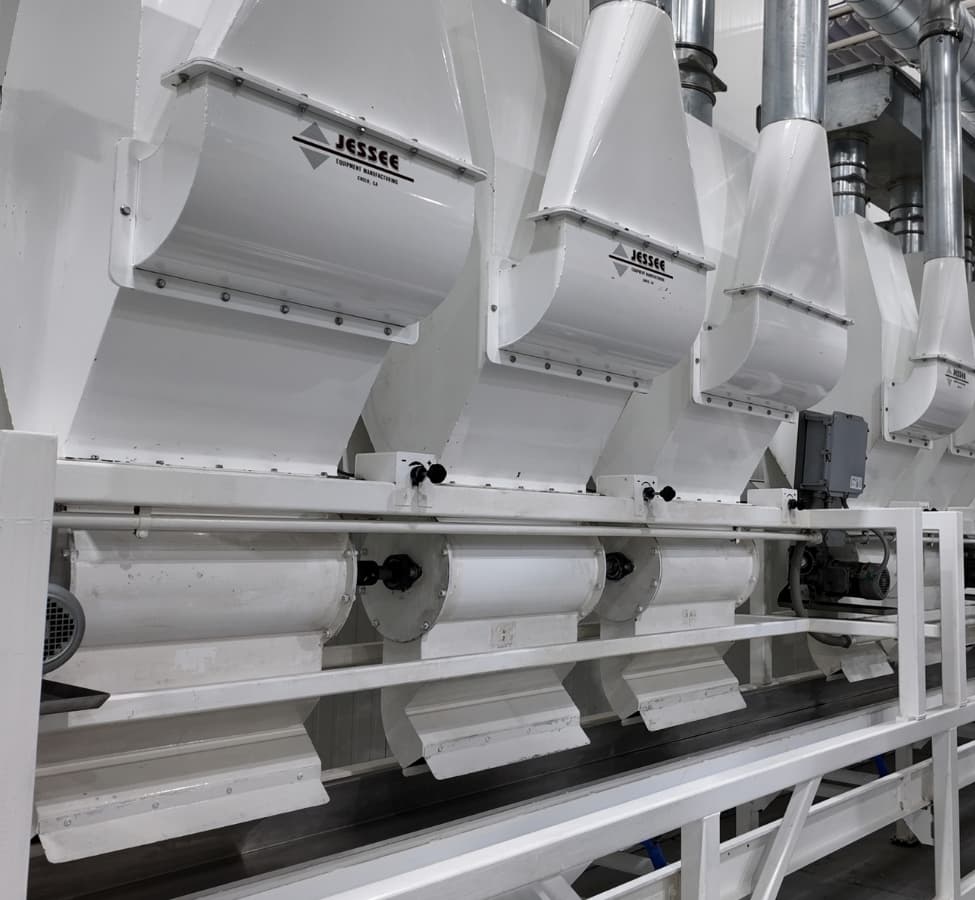
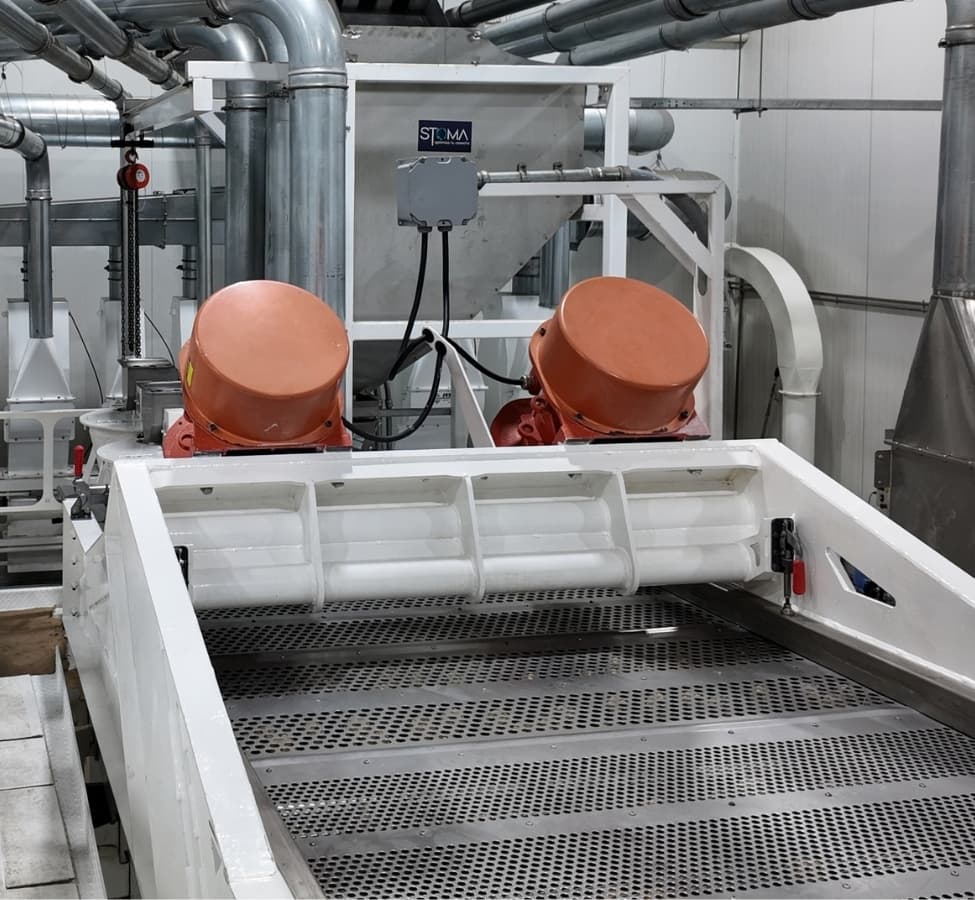
Almonds are marketed mainly as whole kernels, which can be processed further for the confectionery and food industries (2014 review), and Pizzuta d'Avola is sought by confectioners in Italy, France and Belgium, a 2025 report says. In 2025 Italy exported 16,607.7 t of shelled almonds, mainly to Germany and France (UN Comtrade via WITS). Jessee, whose processing lines OVE Europe supplies, builds hulling, drying, in-shell cleaning and sizing, and shelling systems; its Airlegs nut cleaner was developed for the almond industry.
For general information only. Information may become outdated and does not replace site-specific professional advice. Consult a qualified agronomist and confirm equipment suitability with OVE before acting.
Practical Tips for Almond Post-Harvest Handling & Processing
Hull promptly picked or frame-caught almonds while the hulls are fresh, then dry the nuts in the shell before storage.
Sun-dry hulled almonds only in settled weather, as is done in Sicily in summer, and keep a covered option for September rain.
Never stockpile undried almonds: University of California guidance for nuts dried on the ground warns against stockpiling above 12% hull, 6% kernel or 9% fruit moisture.
Store almonds in the shell until processing, as at Noto: a 2020 study notes lower storage costs and a longer selling period for in-shell almonds.
Test lots against Regulation (EU) 2023/915: 8.0 µg/kg of aflatoxin B1 and 10.0 µg/kg in total for almonds sold to consumers.
Keep kernels within buyers' limits: the Bari price list quotes shelled almonds at up to 6% moisture, 5% broken kernels and 0.5% impurities.
Recommended Post-Harvest Handling & Processing Stages
Plan your post-harvest line
Estimate tons/day, cleaning & drying capacity, storage needs, and cost/kg—then build your equipment plan in phases.