





Almond Orchard Establishment in Jordan
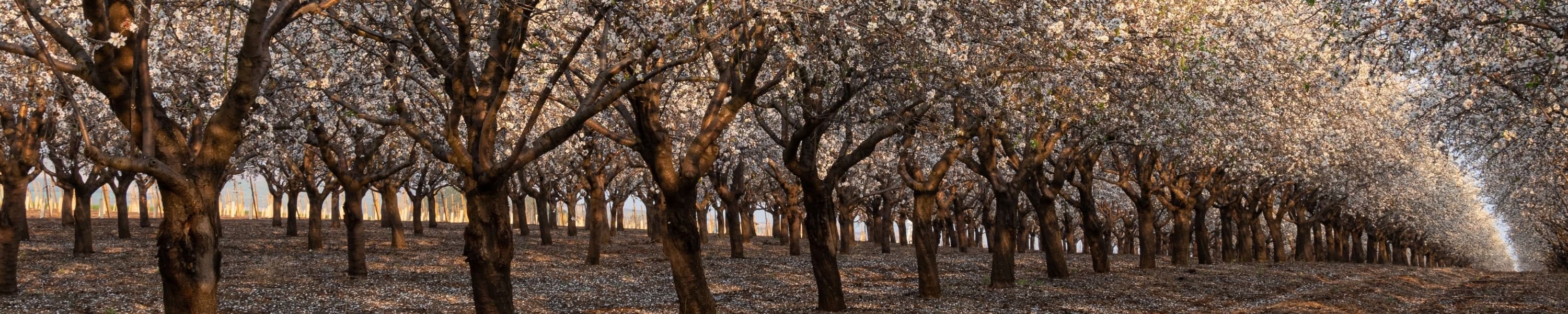
NARC's guide says almond growing in Jordan is concentrated in areas of moderate temperature free of spring frost: by area in Irbid, Ajloun and Jerash, then Ma'an, Mafraq and Madaba, then Tafilah, Karak, Balqa and Zarqa. It rates northern and north-eastern mountain slopes as more suitable, because trees bloom later there than on southern ones. In the 2017 census, 65% of the almond area was rain-fed, and all of Ma'an's almonds were irrigated.
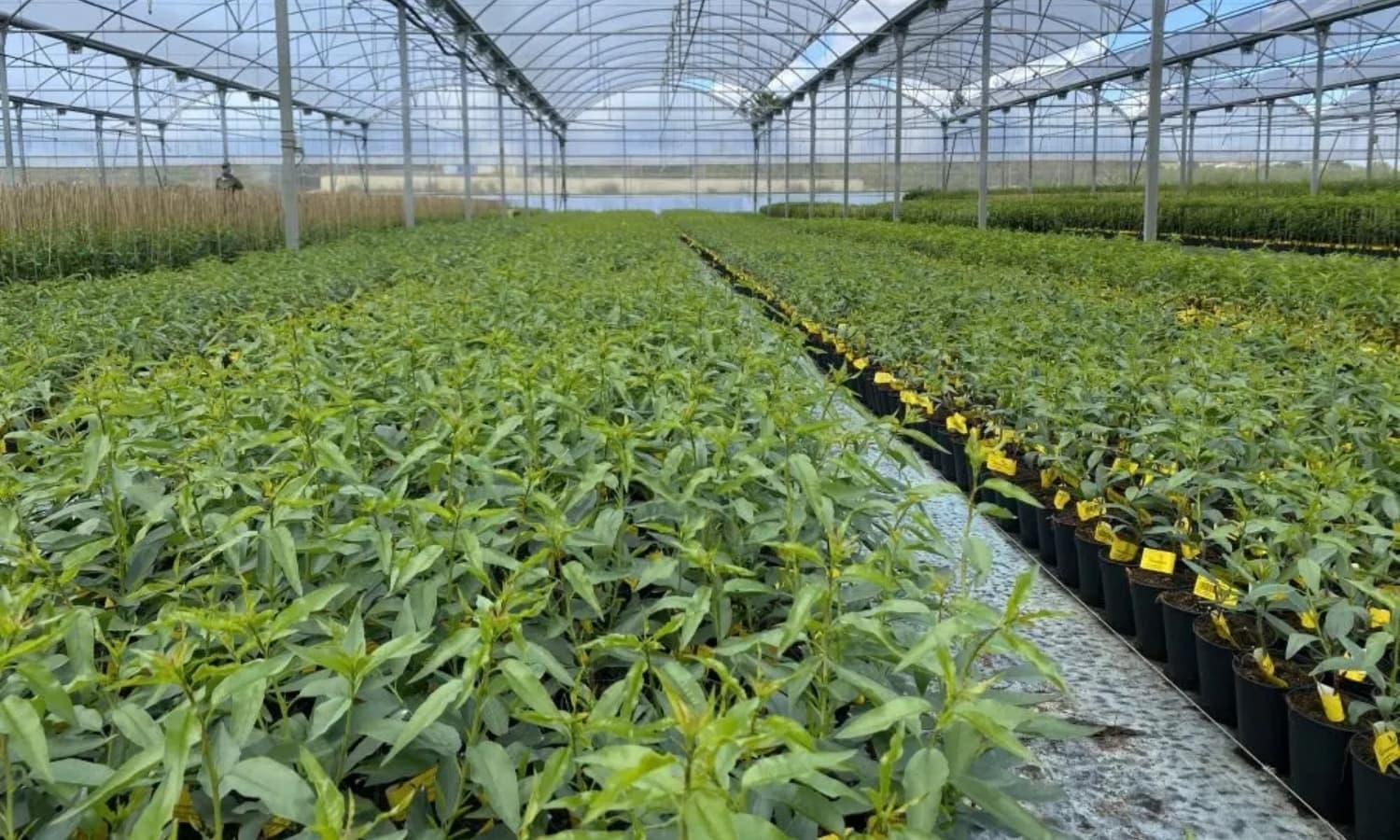
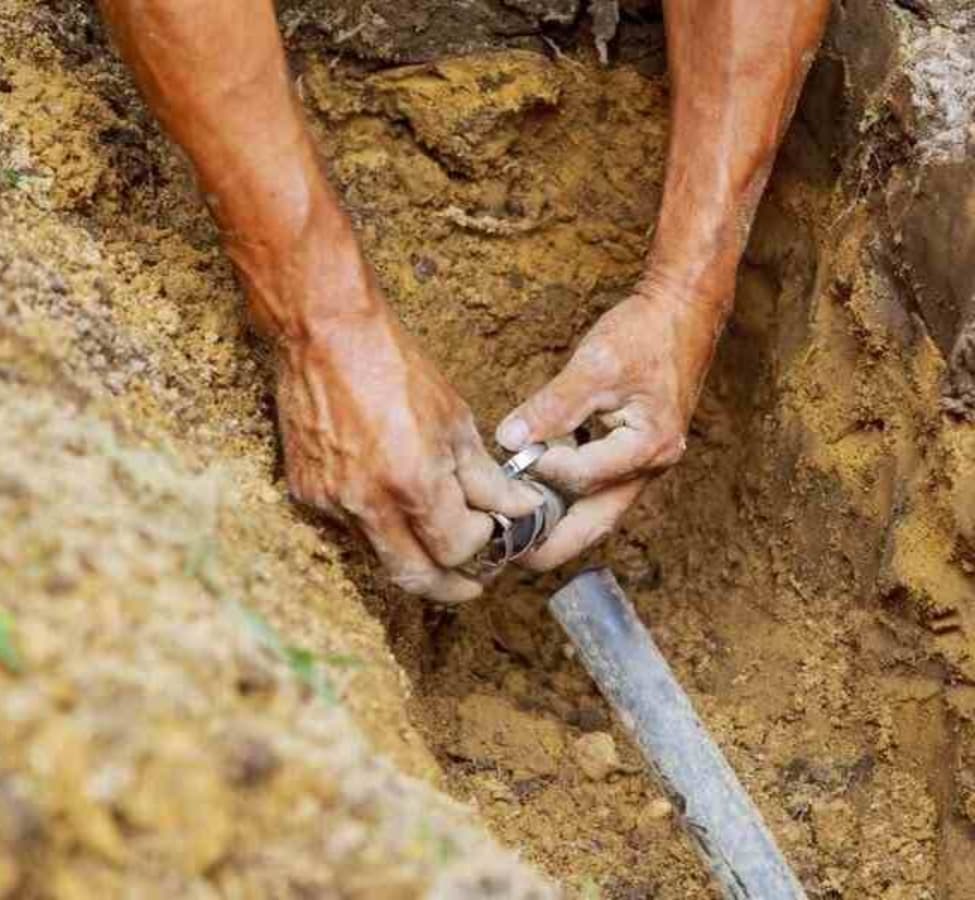
The guide names sweet and bitter almond seedlings as the rootstocks most used in Jordan: trees on bitter almond tolerate drought better, but the rootstock is prone to nematodes and crown rot. On soils with nematodes it advises the peach rootstocks Nemaguard, Yunnan or Shalil, and it lists GF 677 for dry calcareous soils. It advises planting from October to early February, later in cold areas once the frost period has passed.
Most sweet almond cultivars are self-sterile, the guide notes, so it advises at least two cultivars that bloom together, one row of pollinizer for every three or four rows of the main cultivar, and one beehive per dunum (0.1 ha). It describes open-vase or central-leader training and first crops in the tree's third or fourth year. Plan rows, headlands and trunk height for shakers and catching frames before planting.

Practical Tips for Almond Orchard Establishment
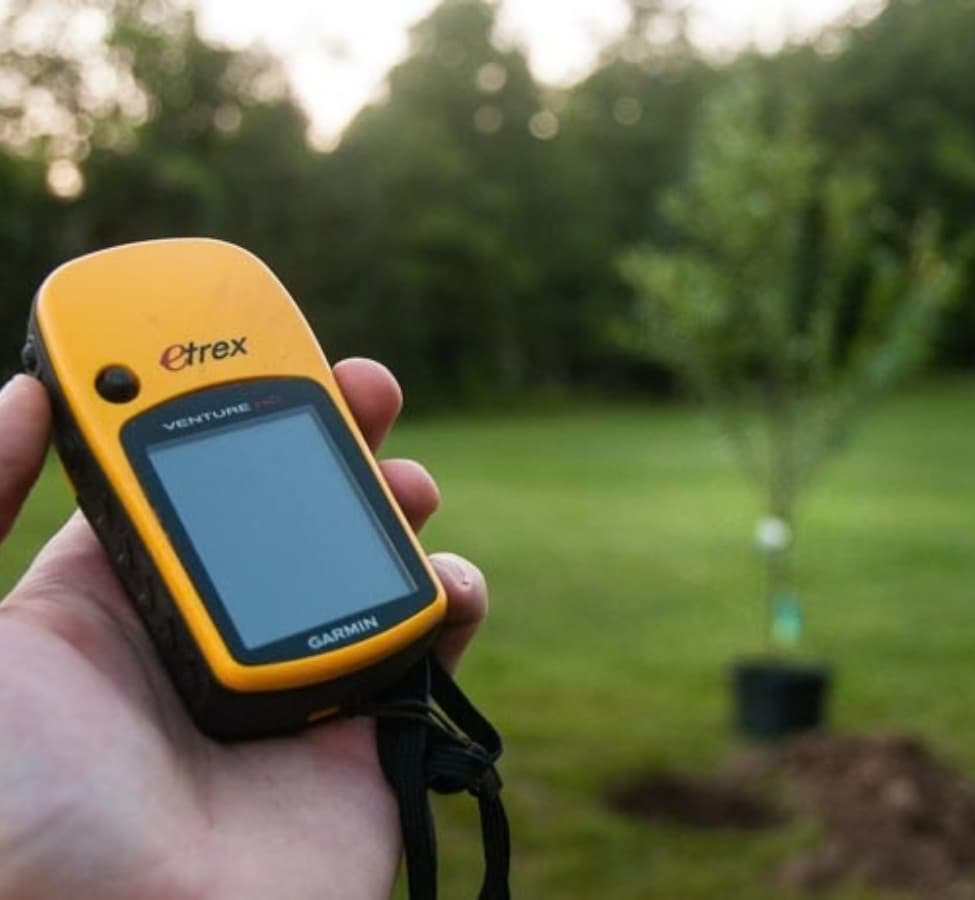
Prefer northern or north-eastern slopes where the site allows: NARC's guide says almonds bloom later there. Check slope limits for machines with OVE Europe.
Plant at least two cultivars that bloom together, with one row of pollinizer for every three or four rows of the main cultivar.
Place about one beehive per dunum (0.1 ha) for bloom, and avoid spraying at bloom and early fruit set unless necessary, as NARC's guide advises.
On soils with nematodes, use a peach rootstock such as Nemaguard, as the guide advises: bitter almond seedlings tolerate drought but are prone to nematodes.
Plant from October to early February so young trees use the winter rains, and later in cold areas, once the frost period is over.
Plan rows, headlands and tree form for the shaker, sweeper and harvester before planting, and check trunk clearance with OVE Europe.
Recommended Establishment Stages

Almond Orchard Care & Maintenance in Jordan
NARC's guide says Capnodis is most severe in rain-fed orchards and advises watching for the beetles from April to September, collecting the adults and checking the trunk base of wilting trees. It names the almond seed wasp, which EPPO lists as present in Jordan on information from 1991, and ranks brown rot (Monilinia laxa) among the most dangerous diseases, with bloom and the days before harvest the sensitive periods.
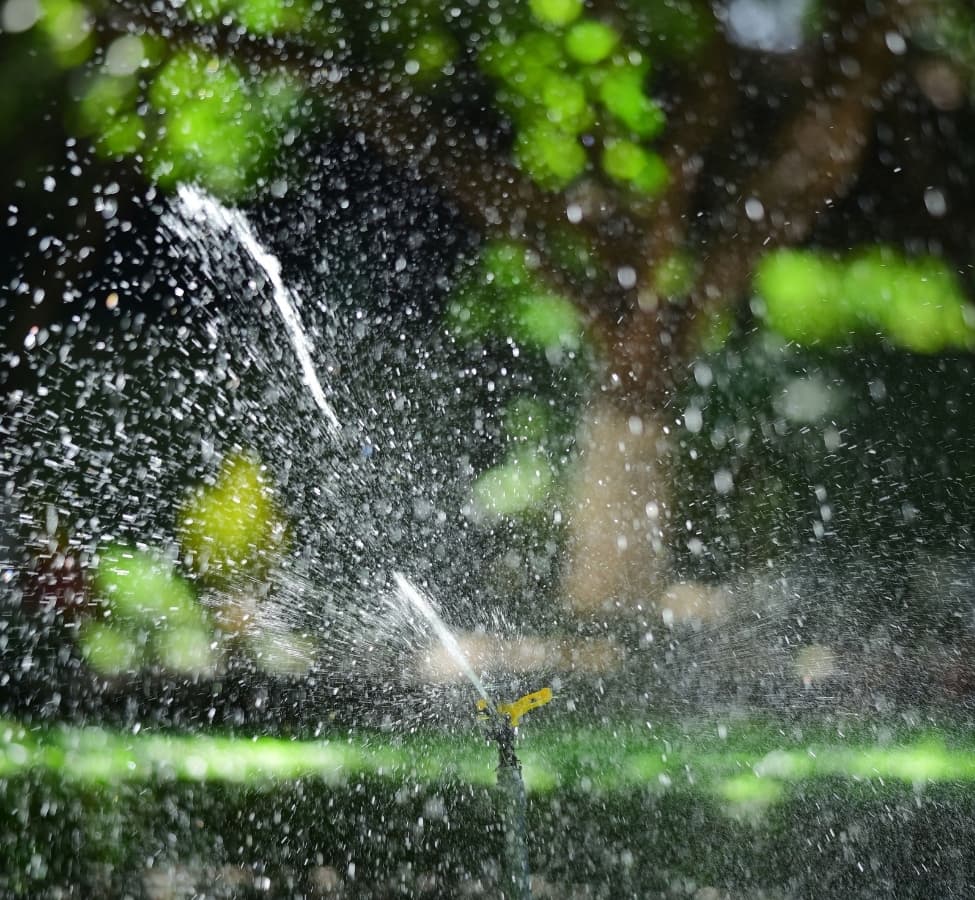
The guide describes almond as drought tolerant. In irrigated areas it advises a watering in January before bloom and another after fruit set, then watering as the soil needs from late April to October, but not at harvest time; a watering after harvest encourages the roots. It warns that overwatering causes root rot and can kill trees, and that the graft union must stay above the water to avoid stem rot and gummosis.
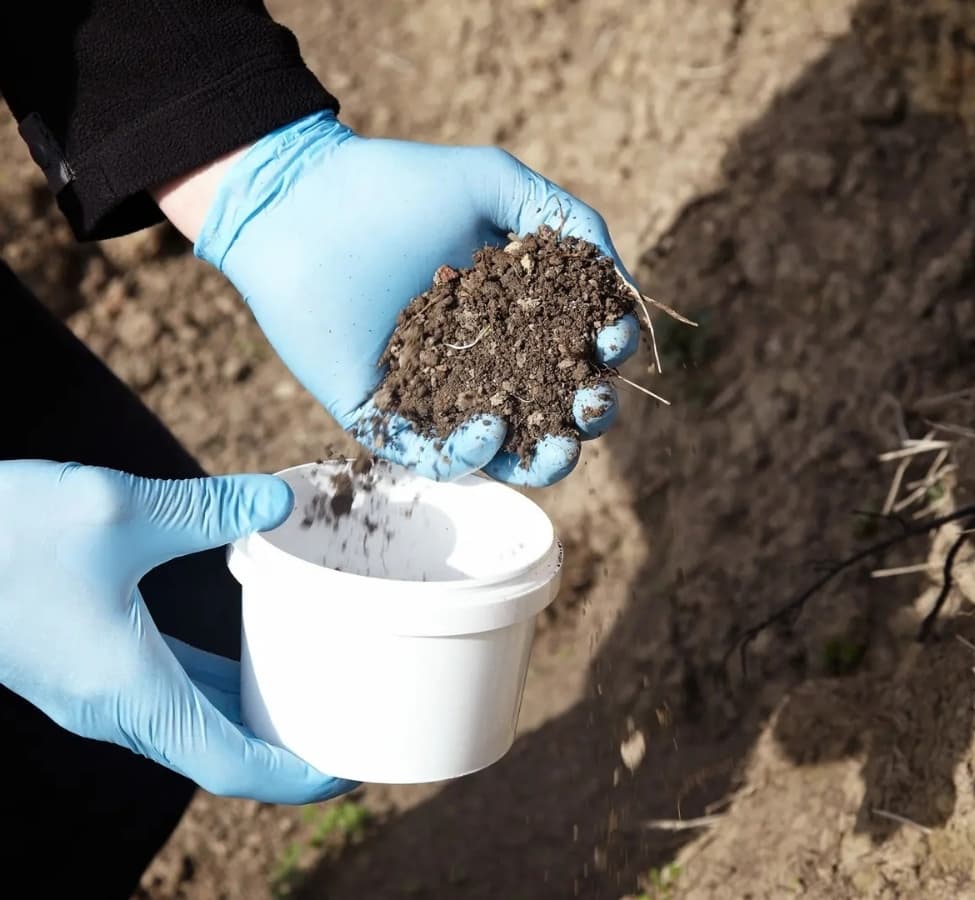
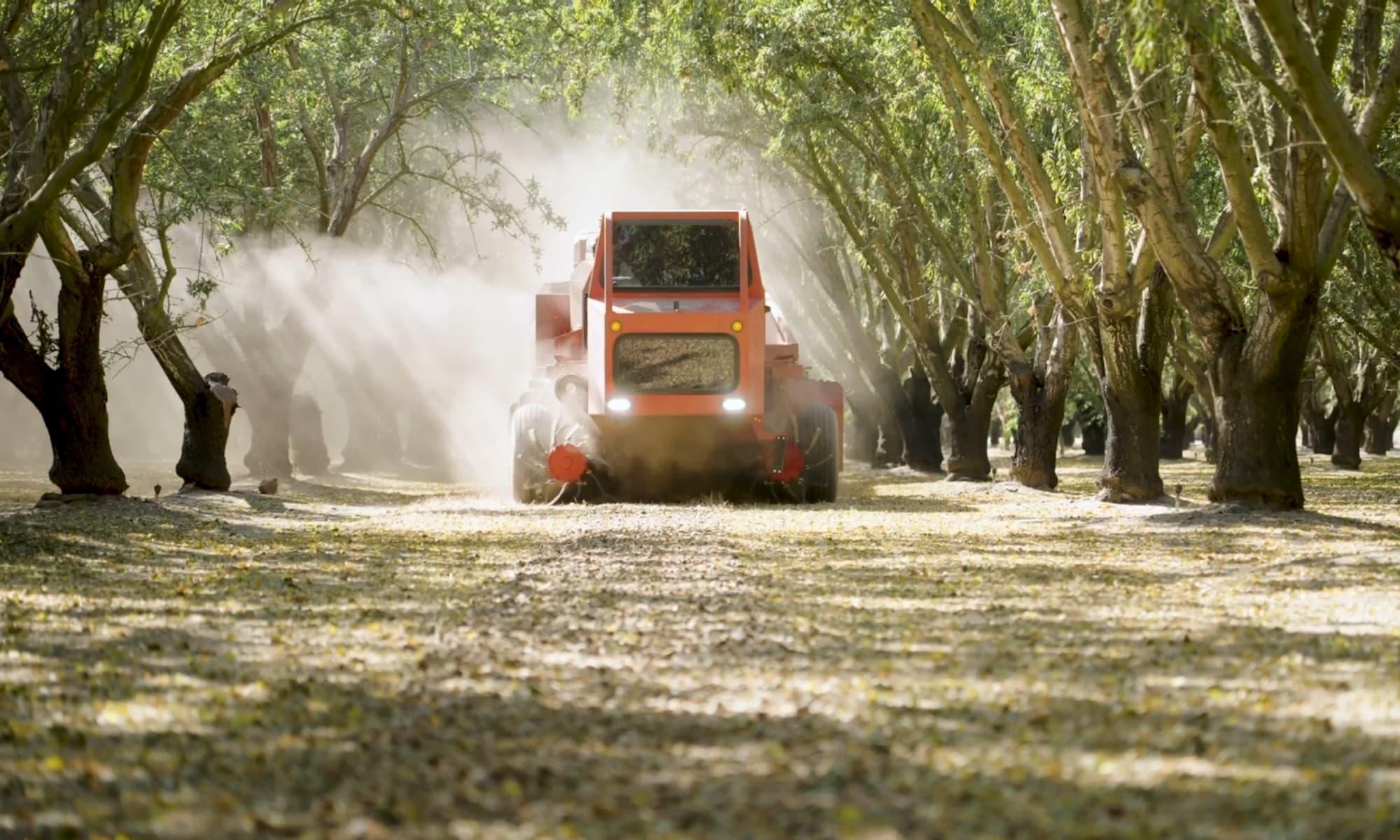
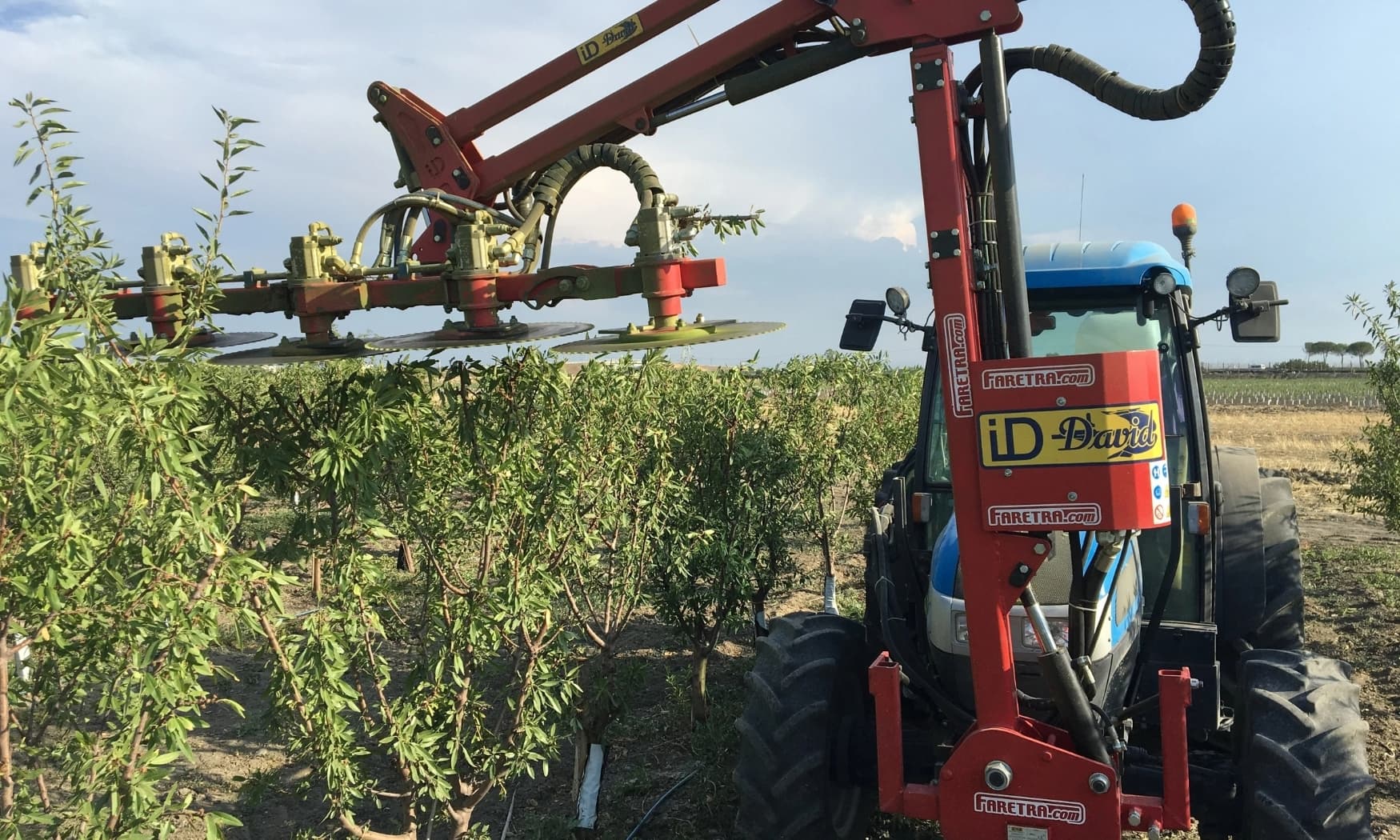
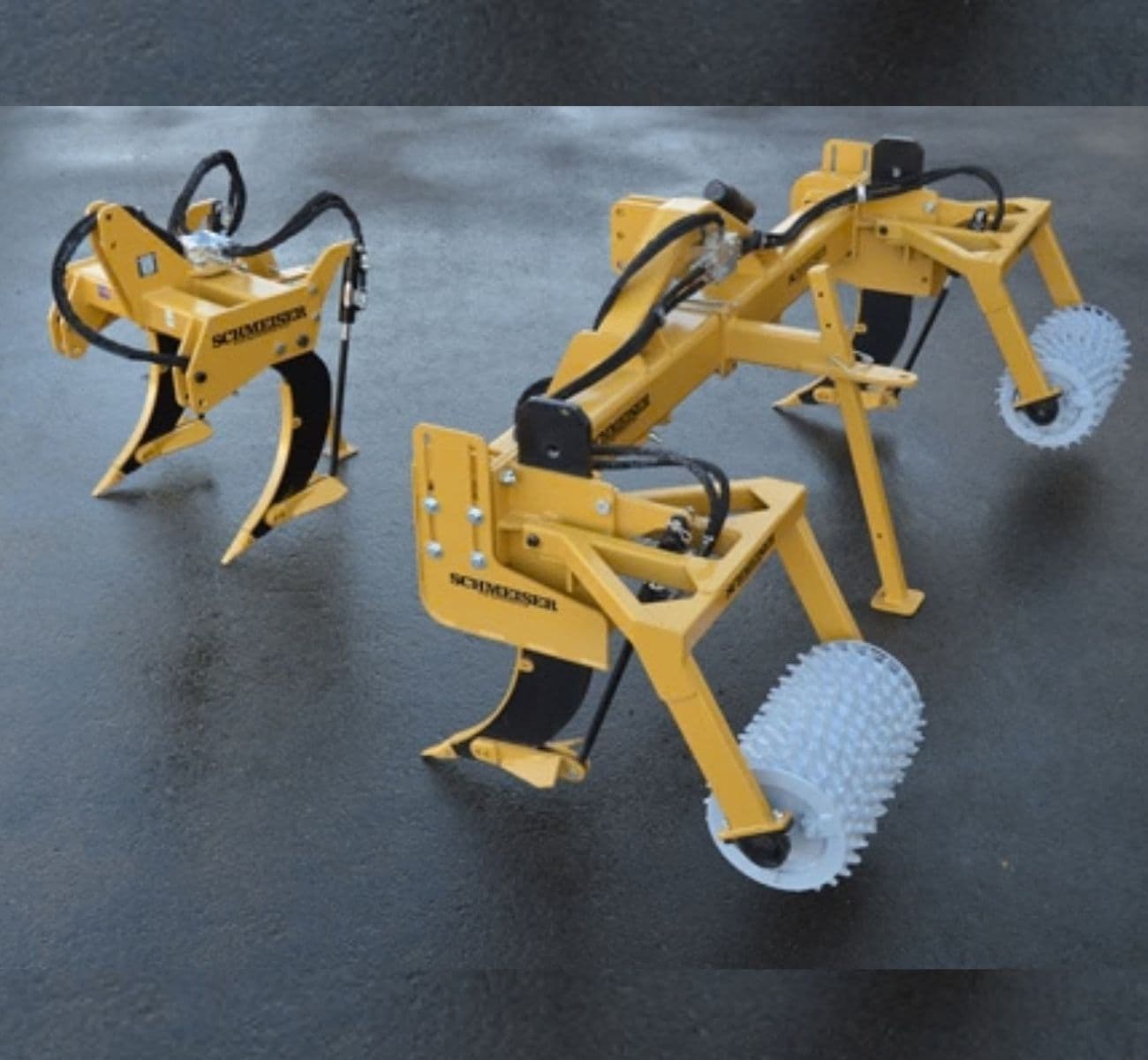
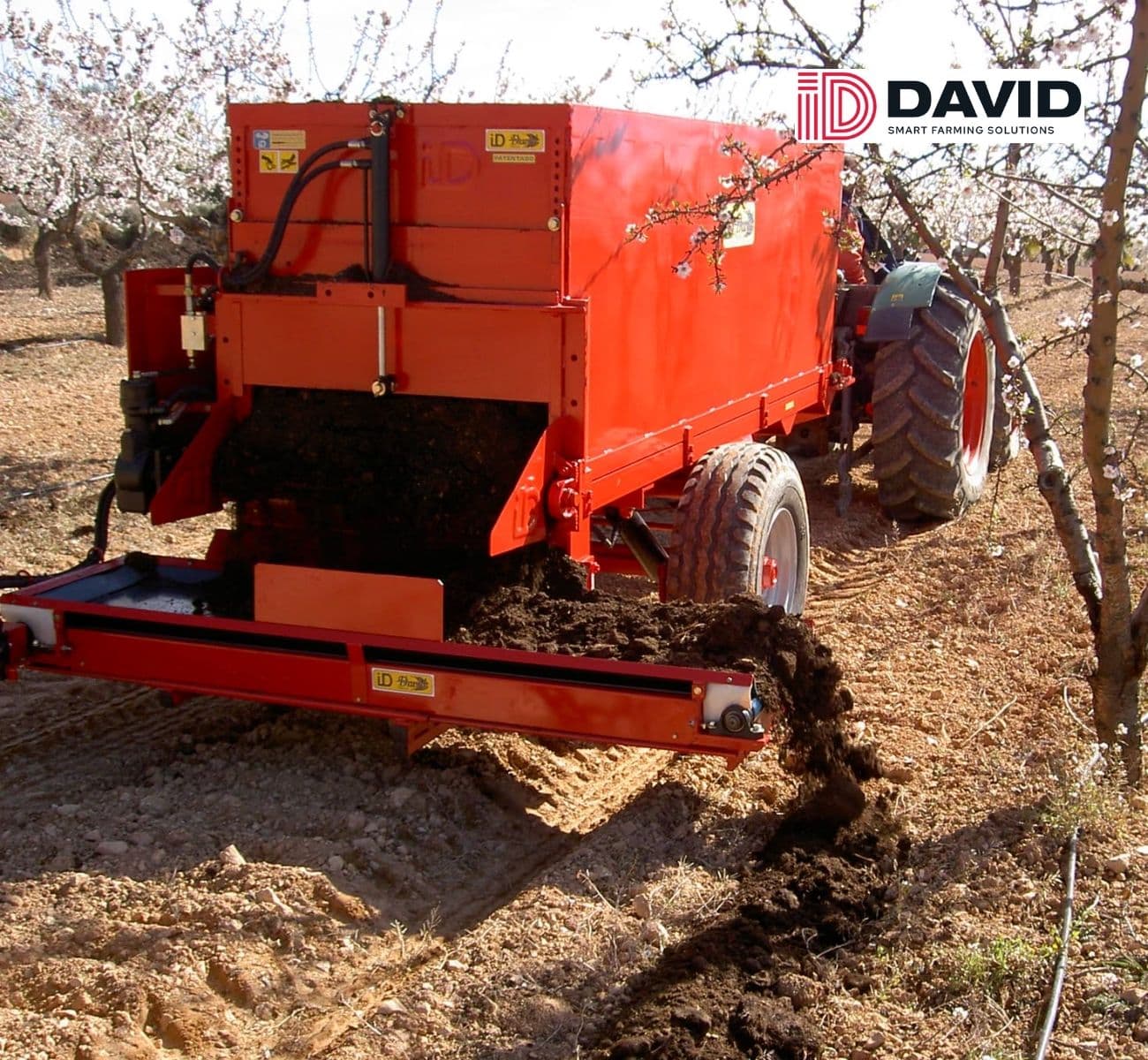
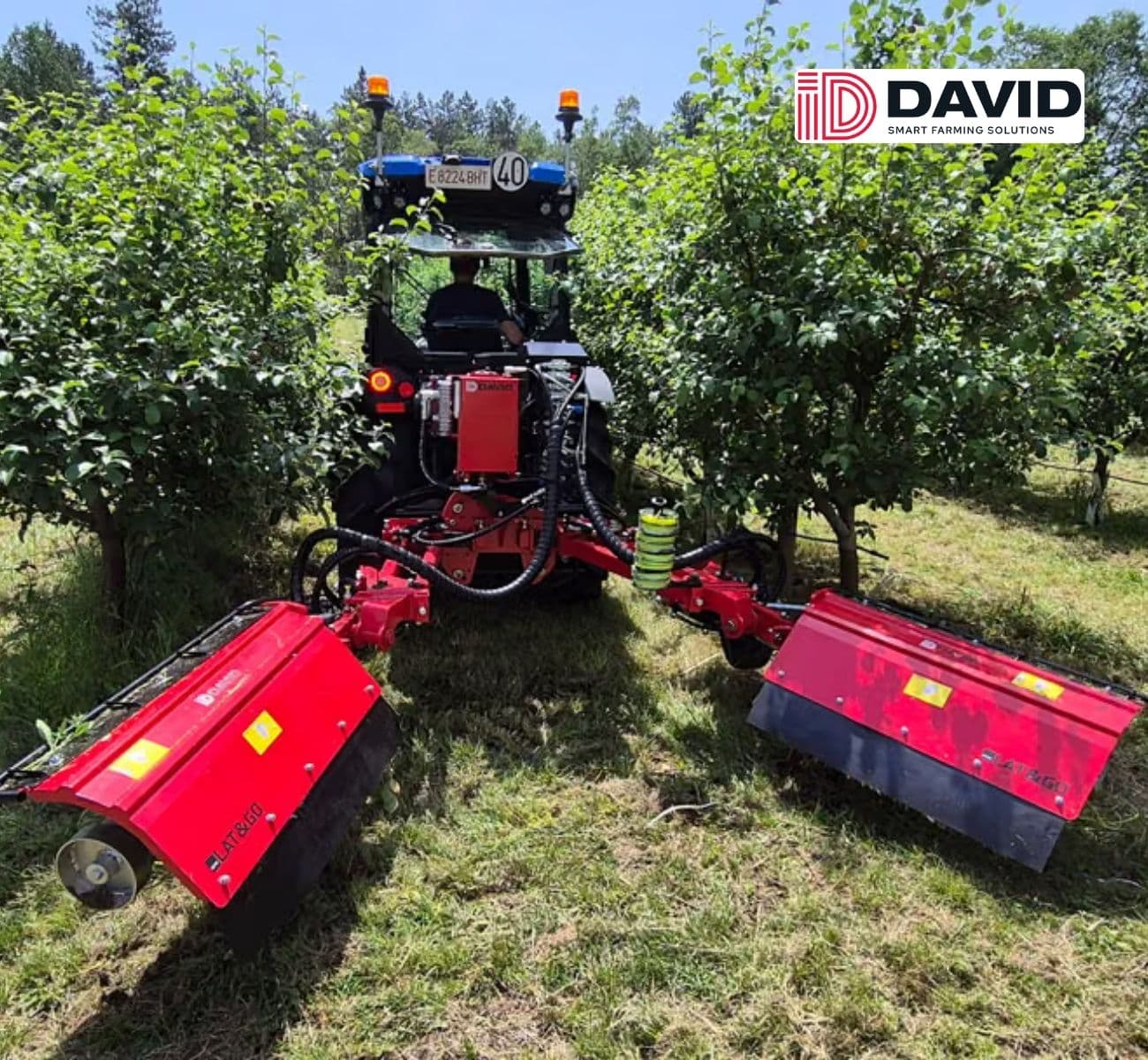
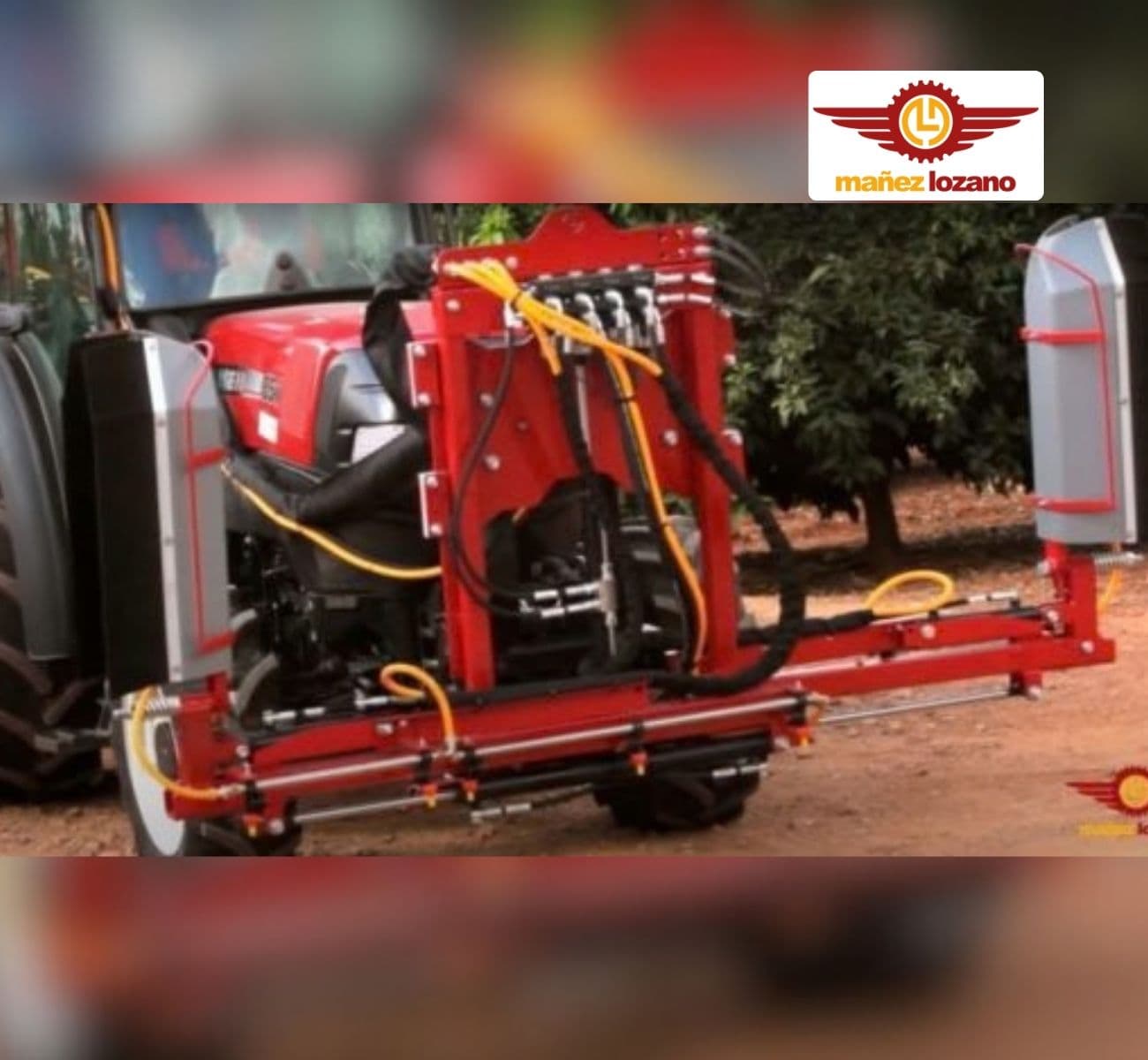
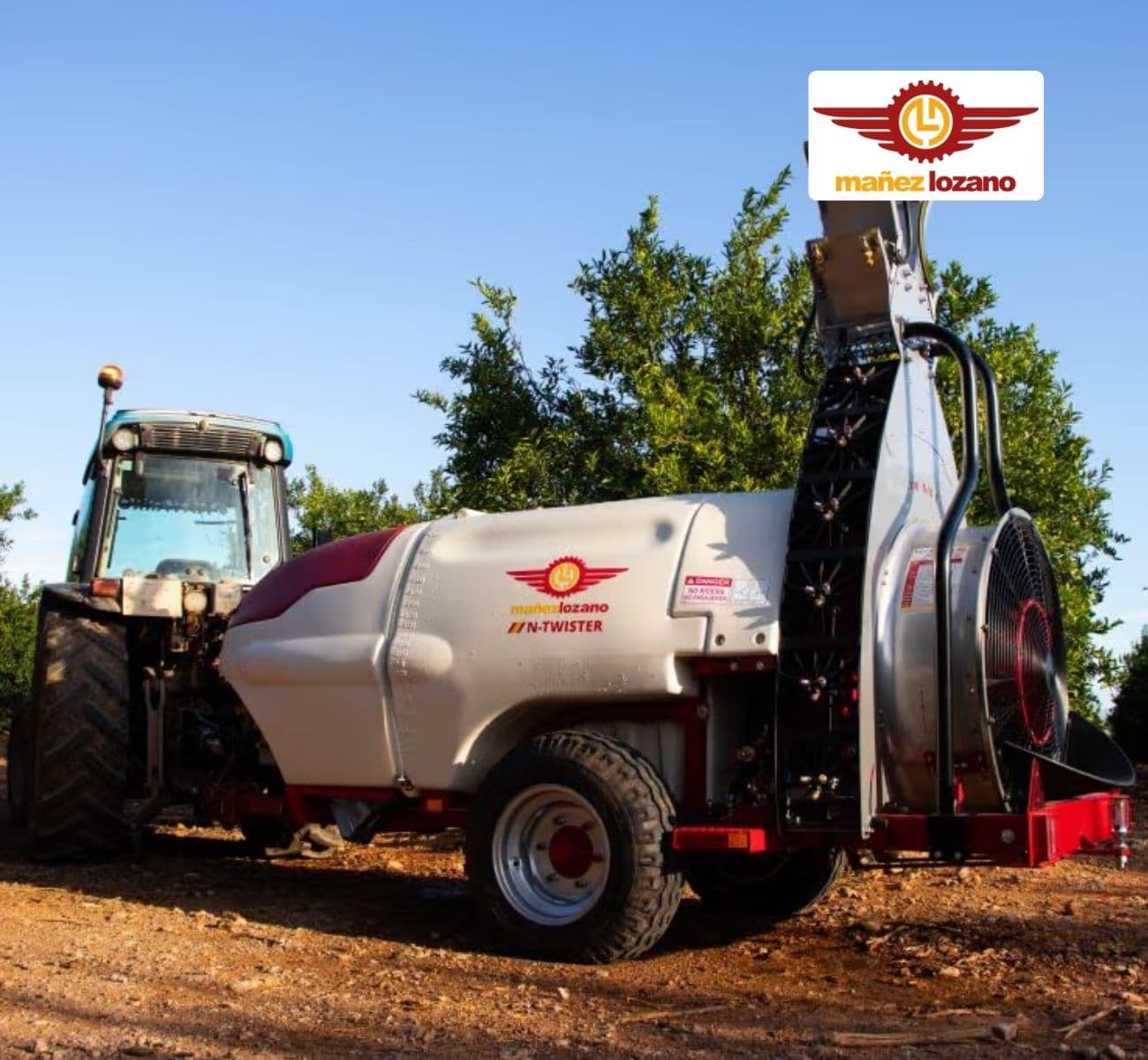
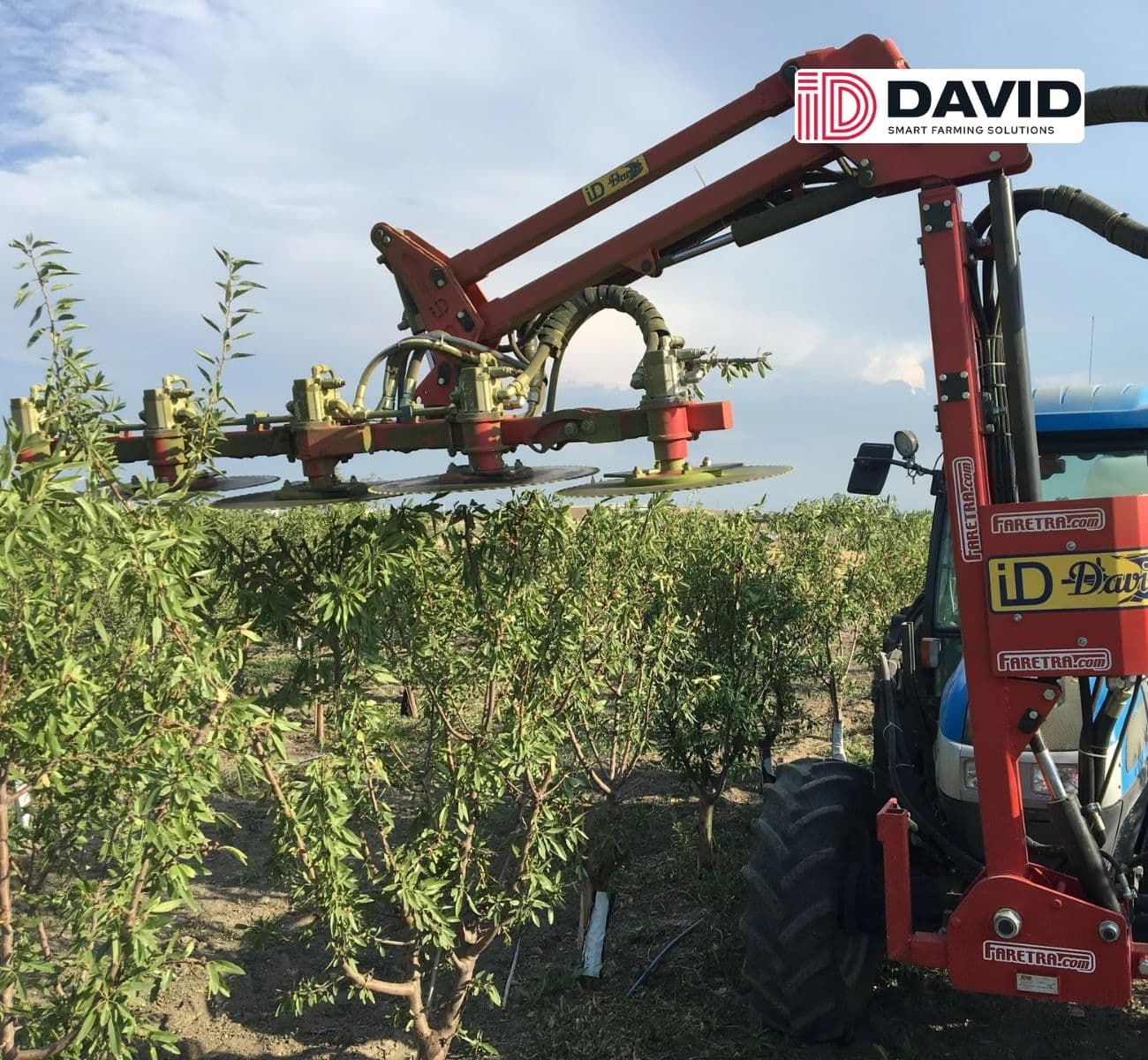
The guide advises composted manure at least once every three years. For care work, the ID DAVID ECOFEED spreads solid manure, the ID DAVID LAT&GO string mower controls weeds without herbicides, the Mañez Lozano Narrow Twister S6 sprays tall, dense canopies and the ID DAVID V1 disc pruner makes vertical and horizontal cuts.
Recommended Orchard Care & Maintenance Stages
Practical Tips for Almond Orchard Care & Maintenance
Check the trunk base of weak or wilting trees for Capnodis tunnels, and watch for the adults from April to September, as NARC's guide advises.
Collect and destroy almonds left on the trees or the ground after harvest: the guide warns they become a source of insects next season.
In irrigated orchards, water in January before bloom and again after fruit set, and stop irrigating at harvest time, as the guide advises.
Remove twigs with brown rot and collect mummified fruits: the guide ranks this disease, caused by Monilinia laxa, among the most dangerous for almond.
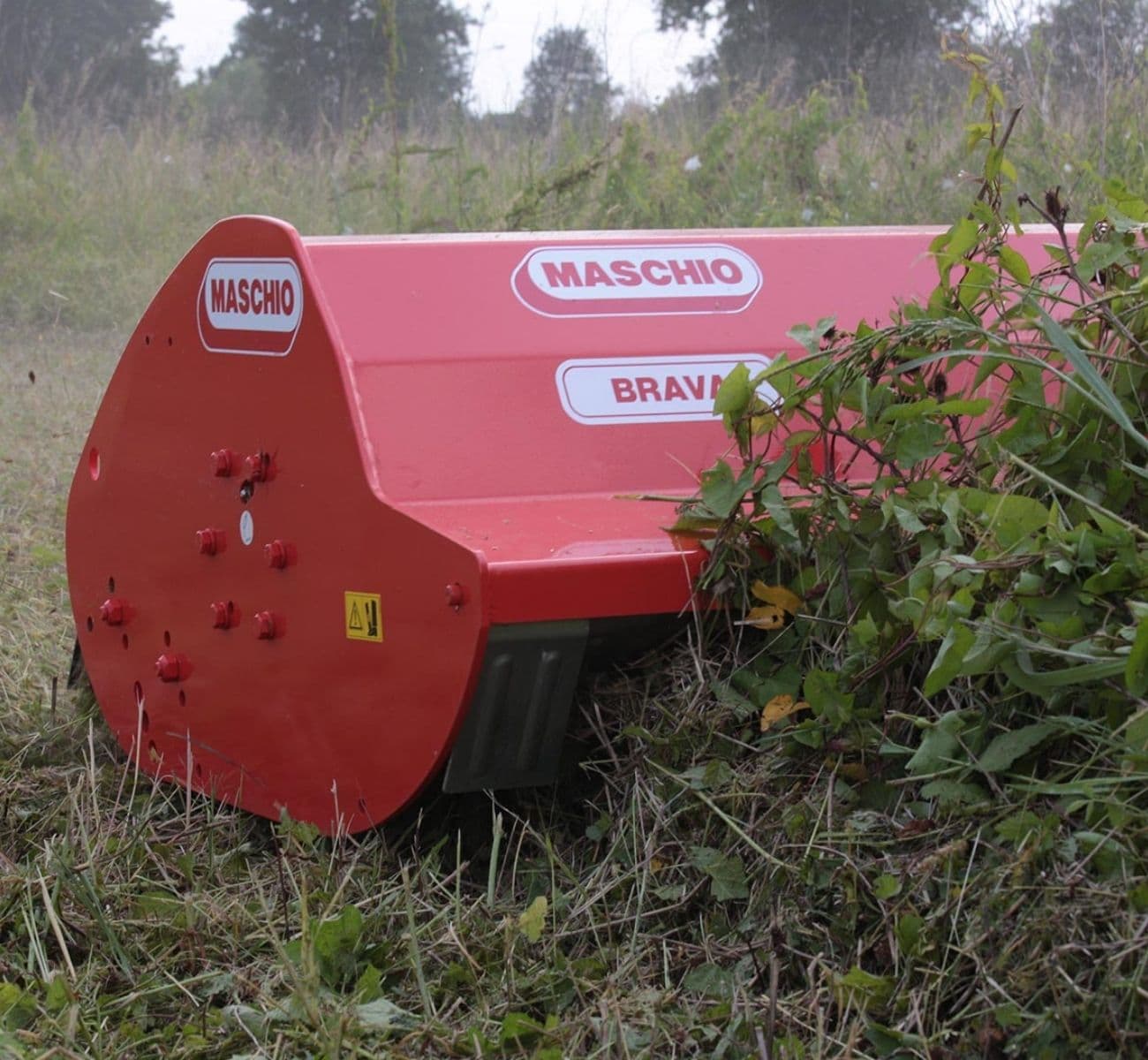
Control weeds without herbicides with a string mower such as the ID DAVID LAT&GO, and keep the orchard floor level for harvest.
Spray tall, dense canopies evenly with a narrow trailed airblast sprayer such as the Mañez Lozano Narrow Twister S6.

Almond Harvesting in Jordan
NARC's guide says most Jordanian almonds are sold green, picked by hand in April and May. Dry almonds dry on the tree and are harvested in July and August, usually in three rounds, by beating the branches with stick or rubber mallets, which the guide calls costly and harmful to trees, or by shaking onto mats or nets; it says machine harvesting is still new in Jordan. In orchards planted for machines on suitable ground, mechanized harvesting can bring the crop in on time, with less risk of nuts deteriorating while they wait.
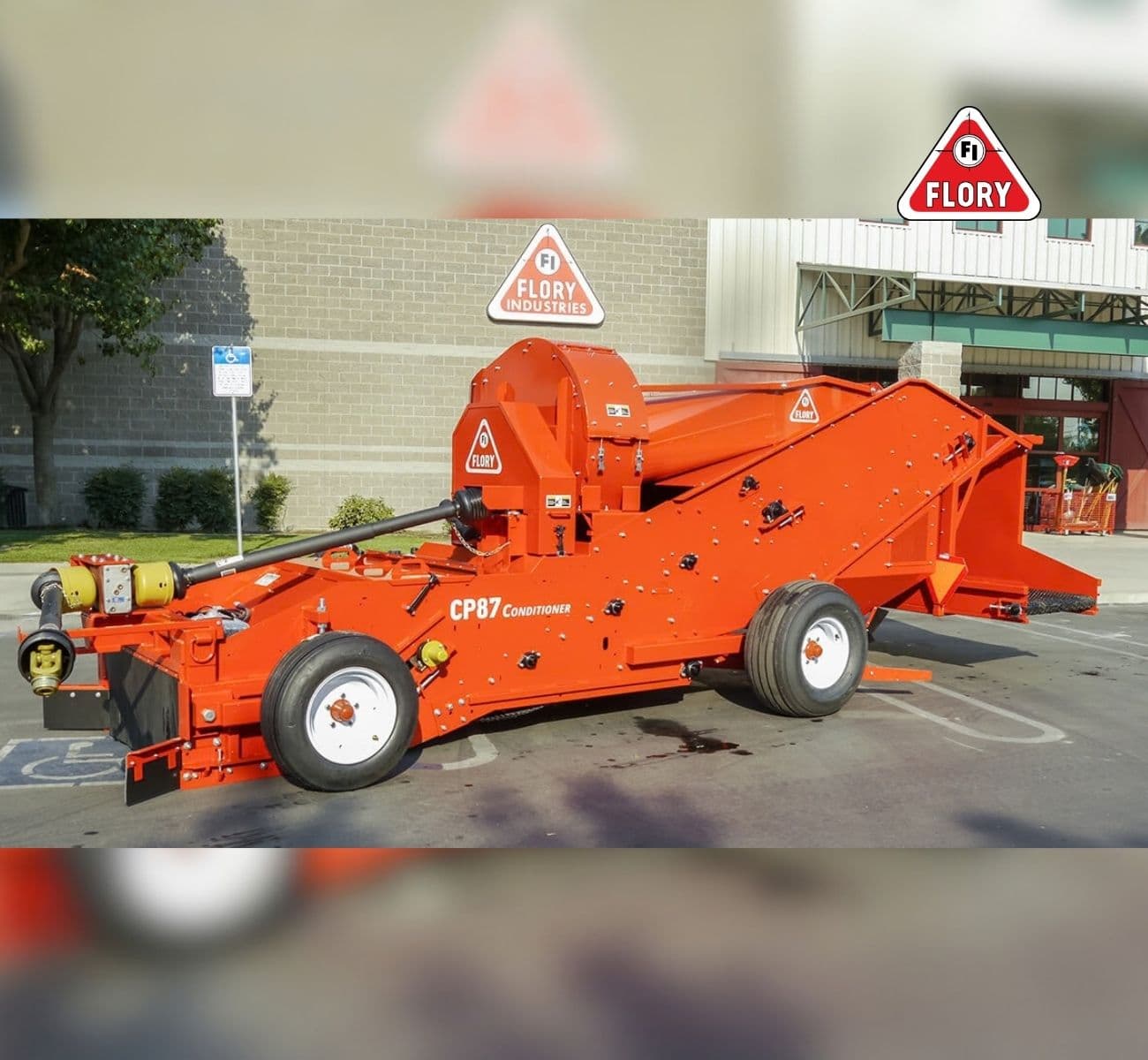
WMO averages from the Jordan Meteorological Department (period not stated) give 0.0 mm of rain in July and August at Irbid and Amman Airport and 0.3 to 0.7 mm in September. Showers are still possible: the department forecast rain for northern Jordan in late August 2026 and reported rain in Irbid, Ajloun and parts of Jerash on 25 September 2025. No Jordanian source describes ground drying, so this guide shows it, with the Flory CP87 Conditioner, as an option, with prompt pickup or catching frames for late cultivars or when rain is forecast.
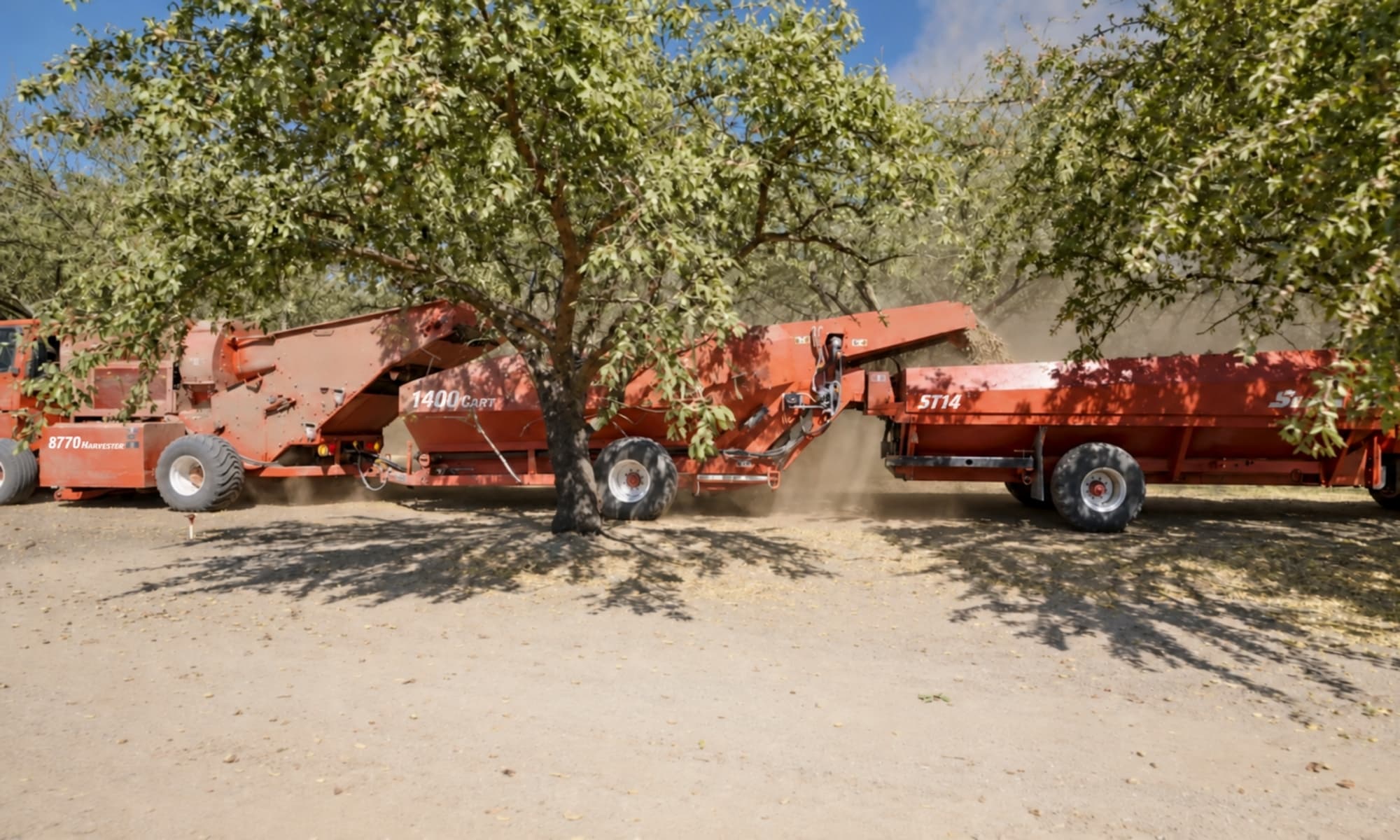
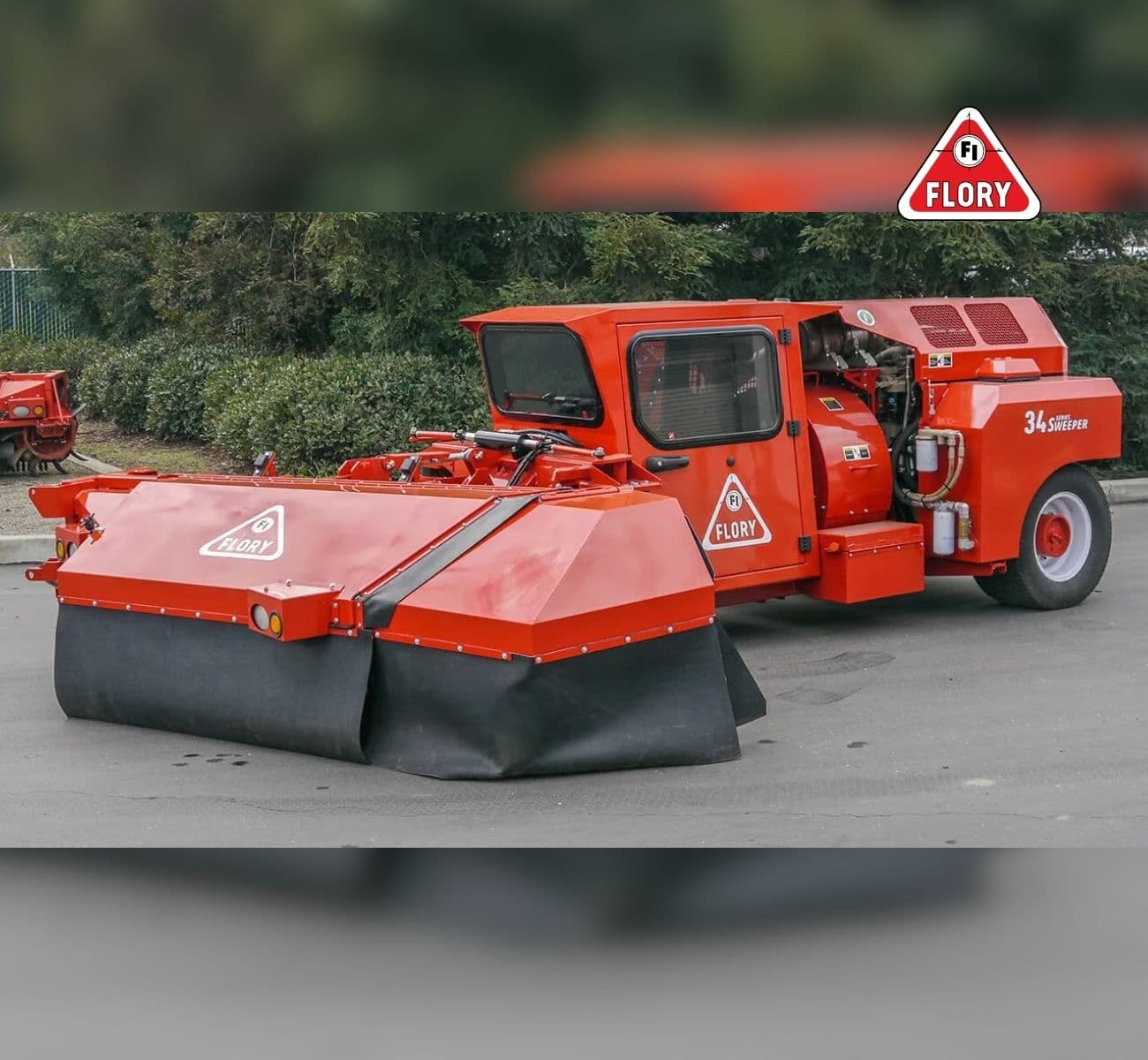
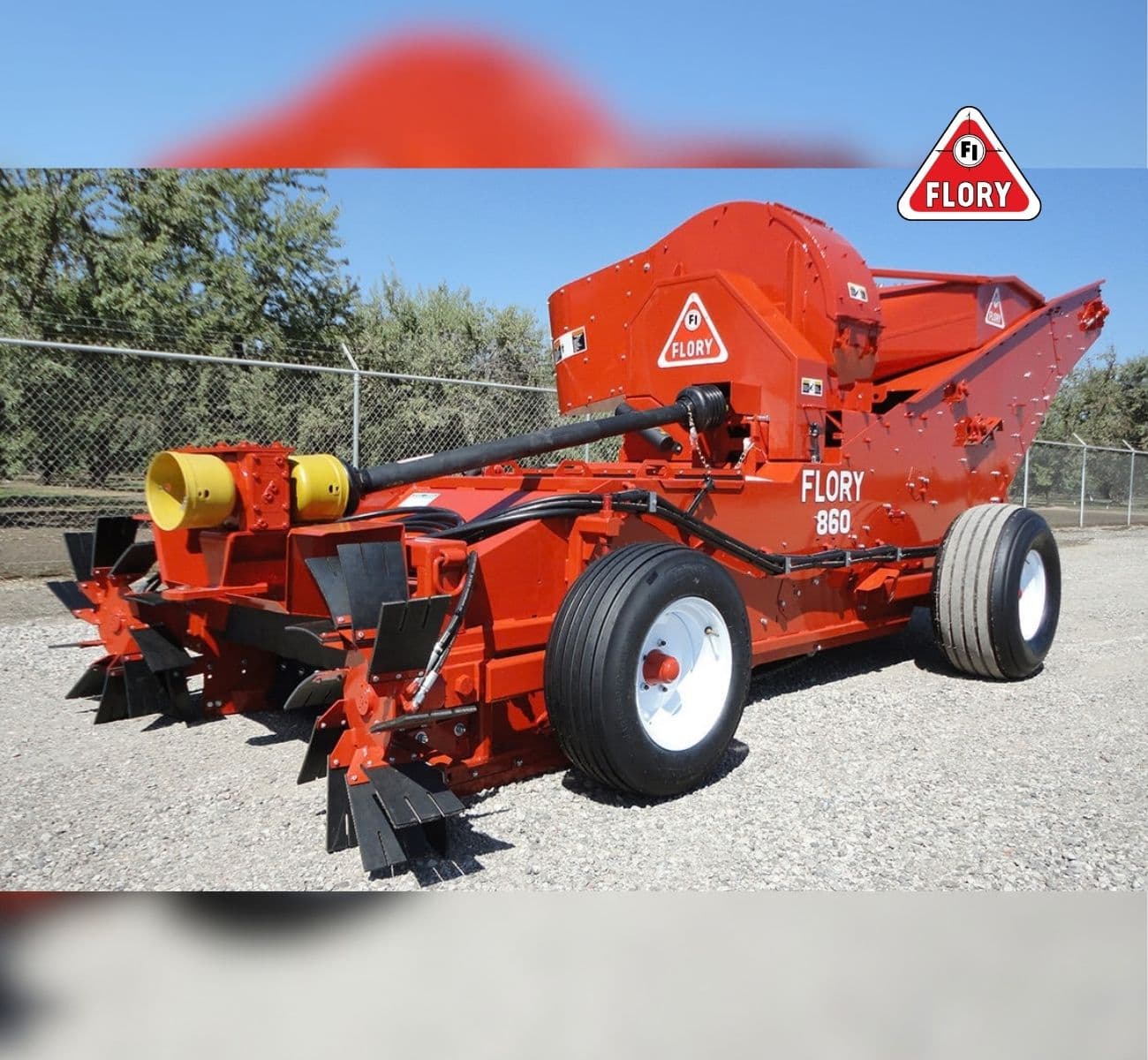
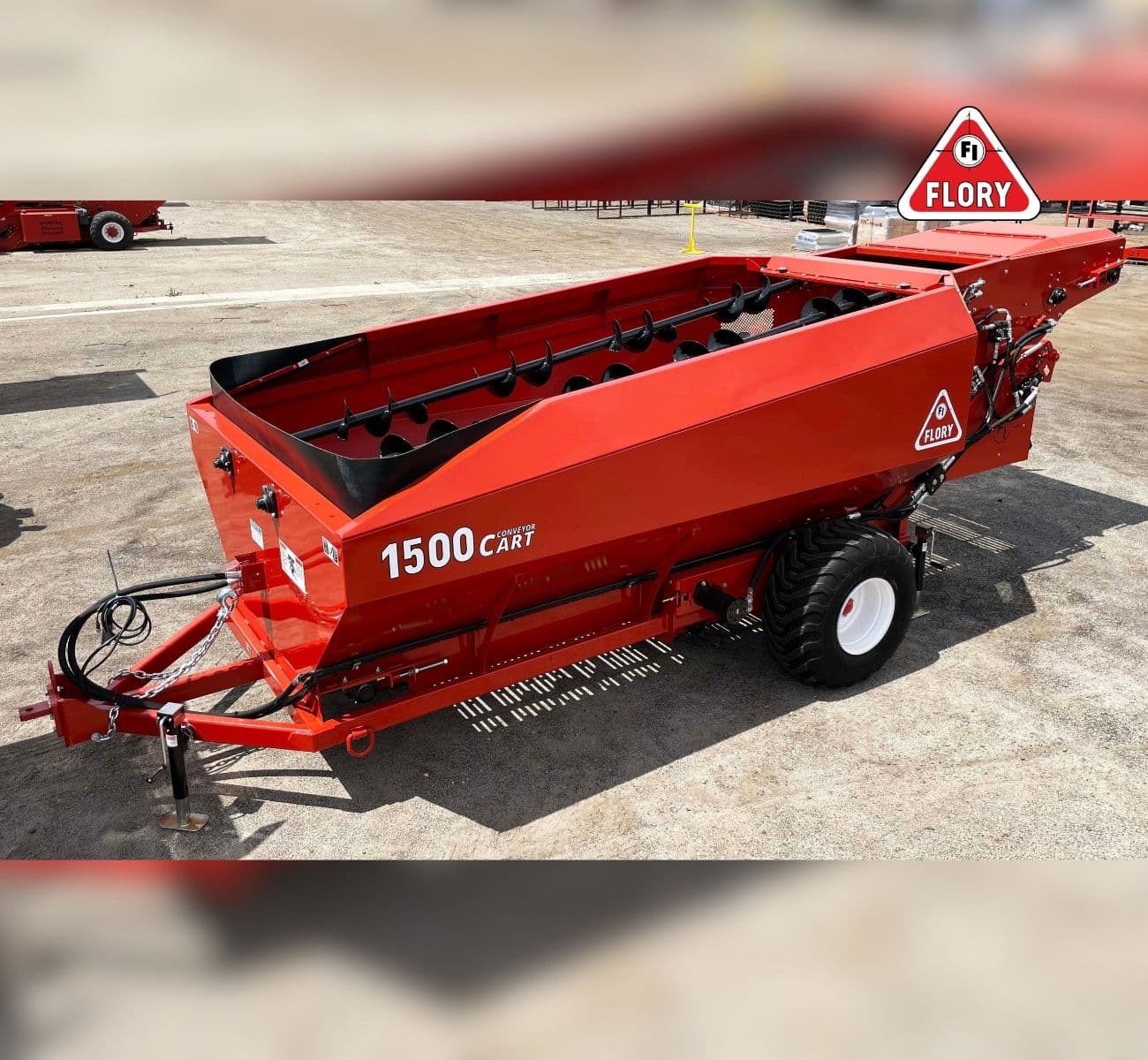
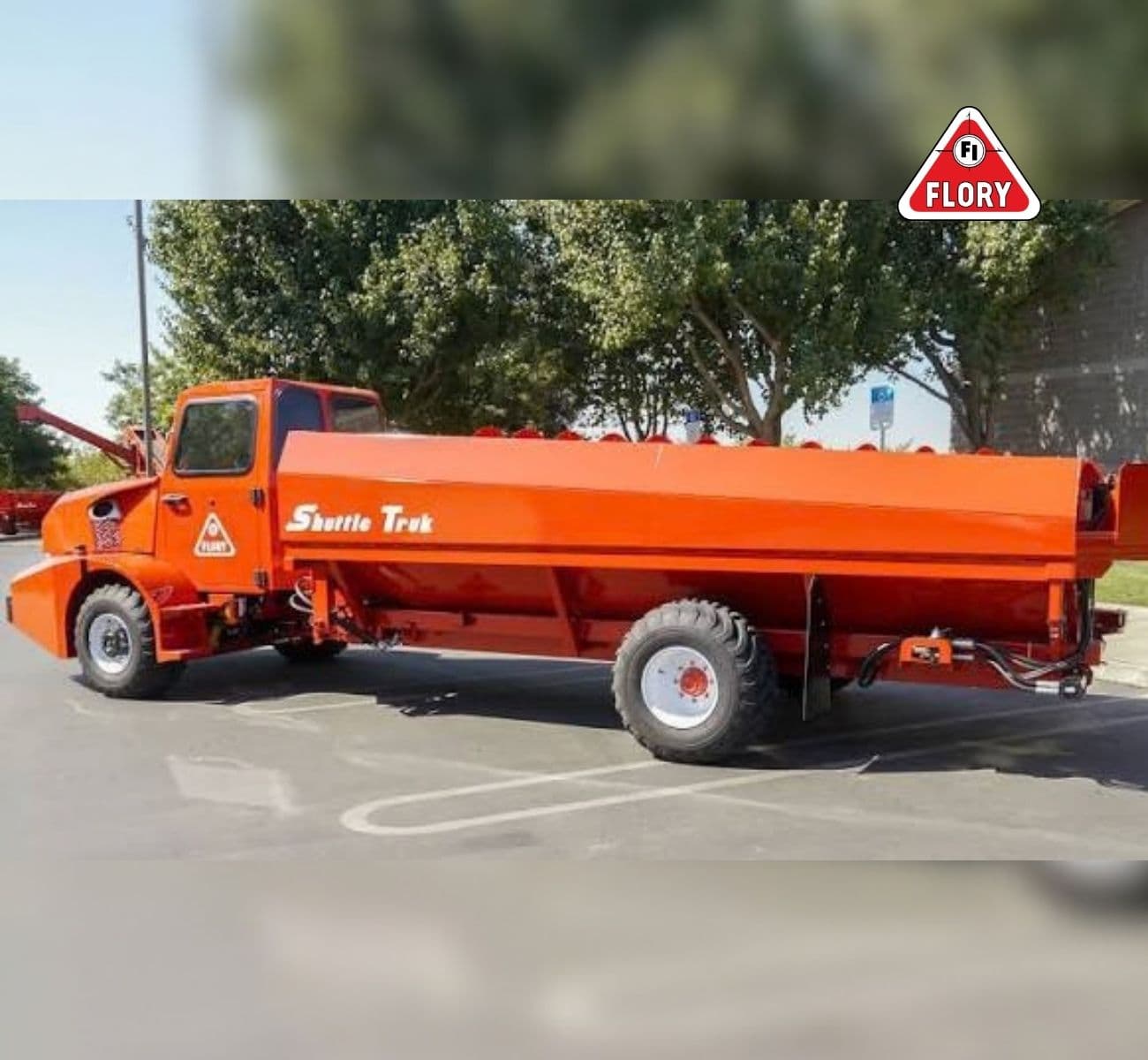
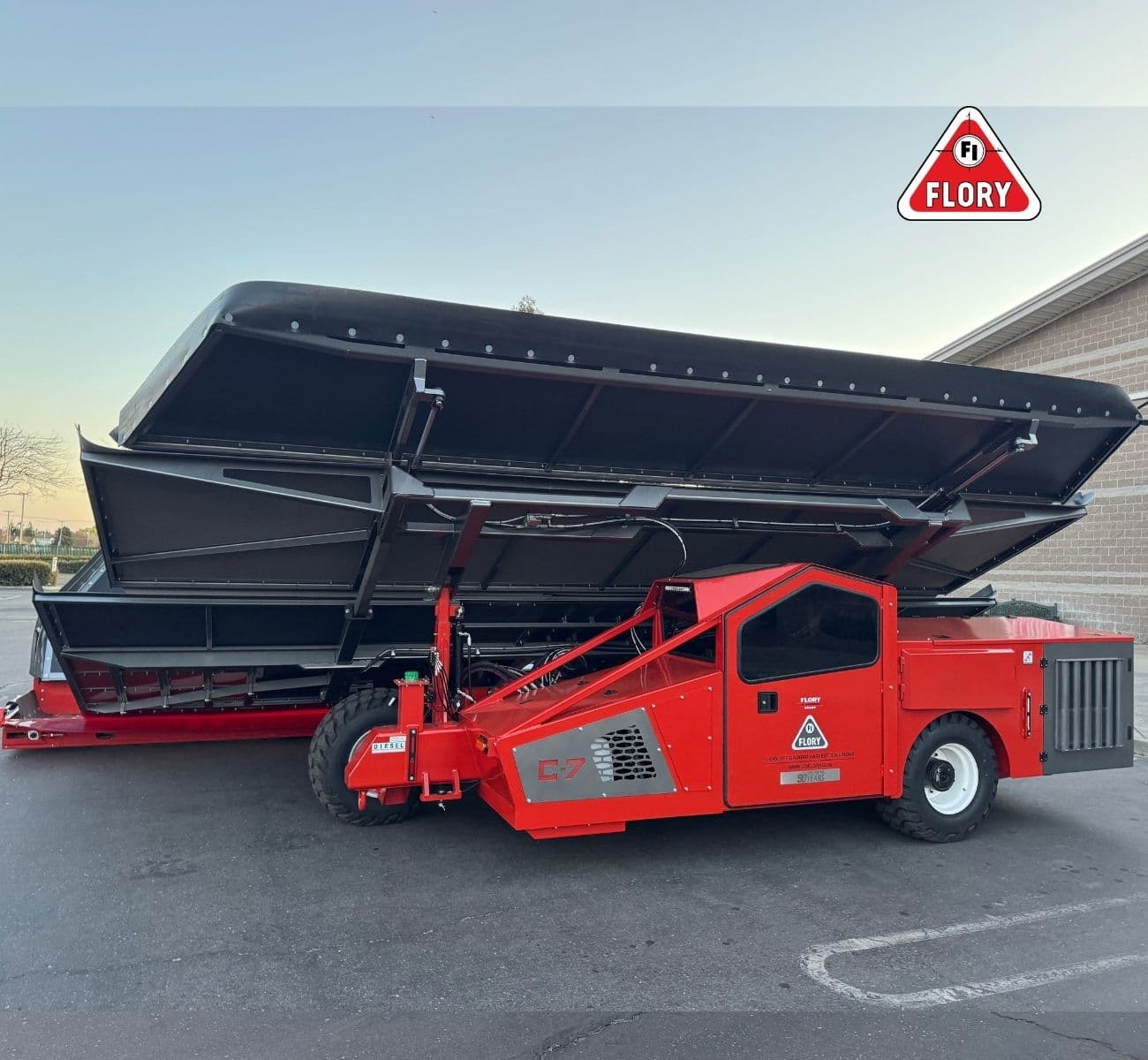
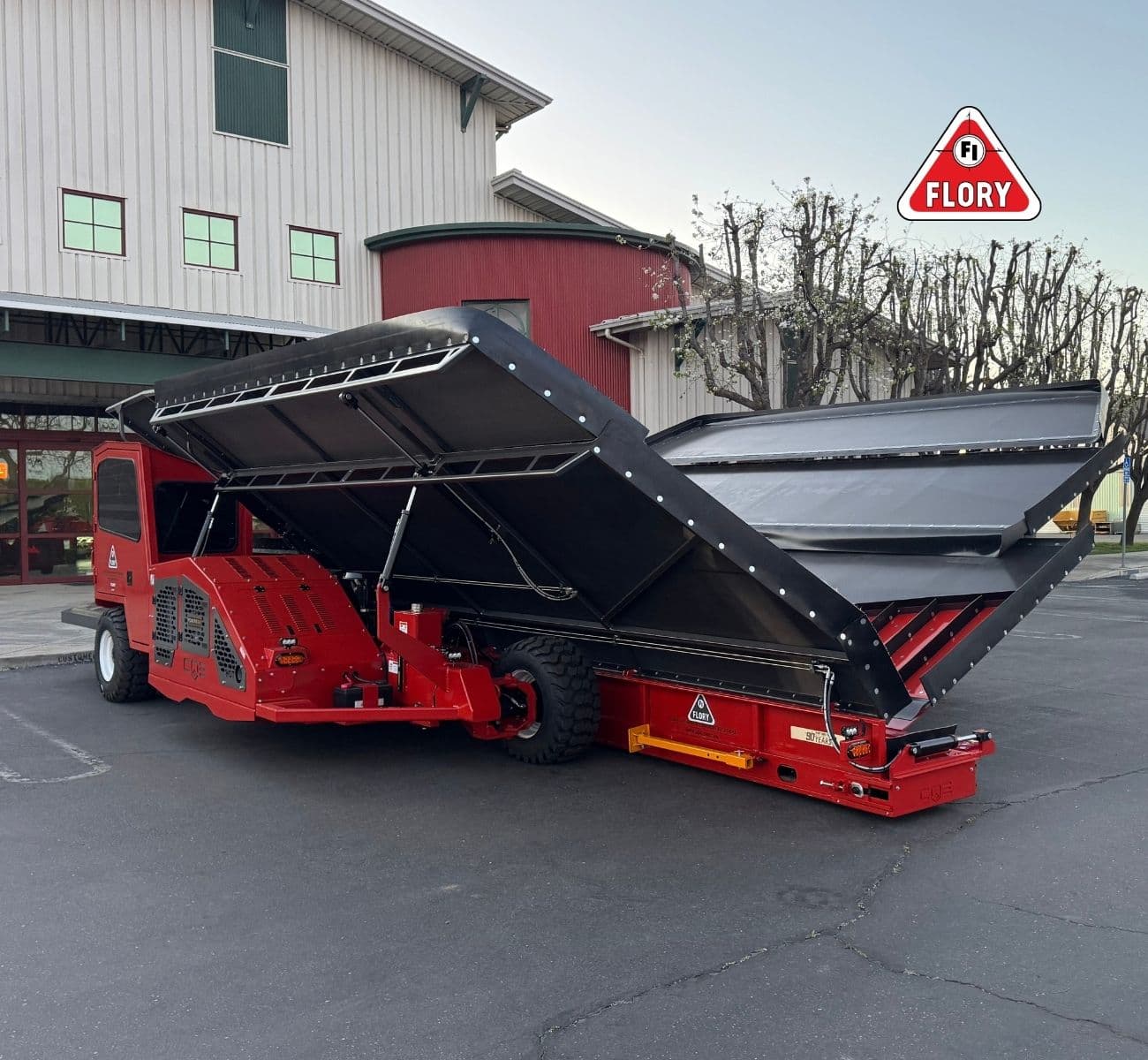
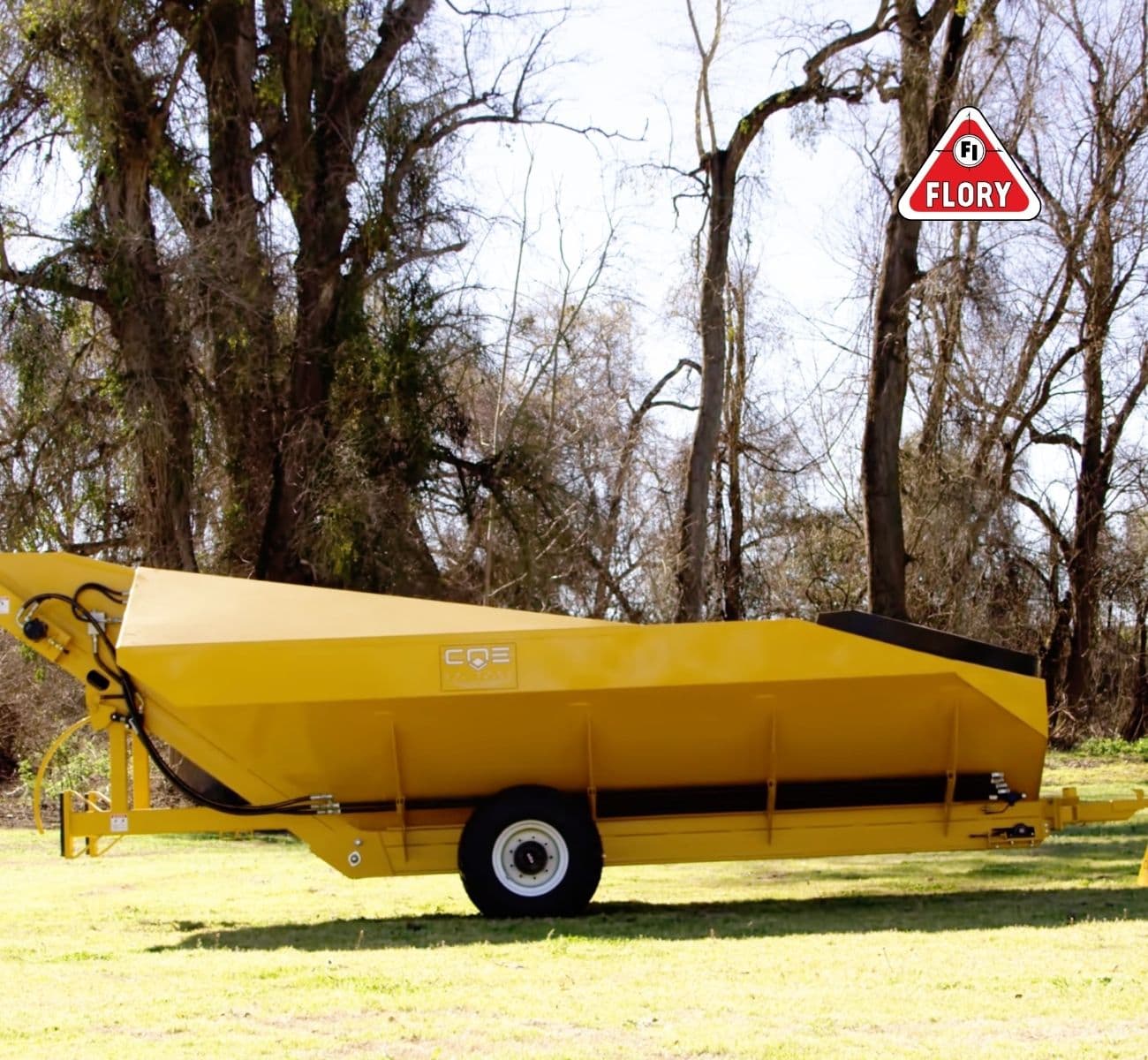
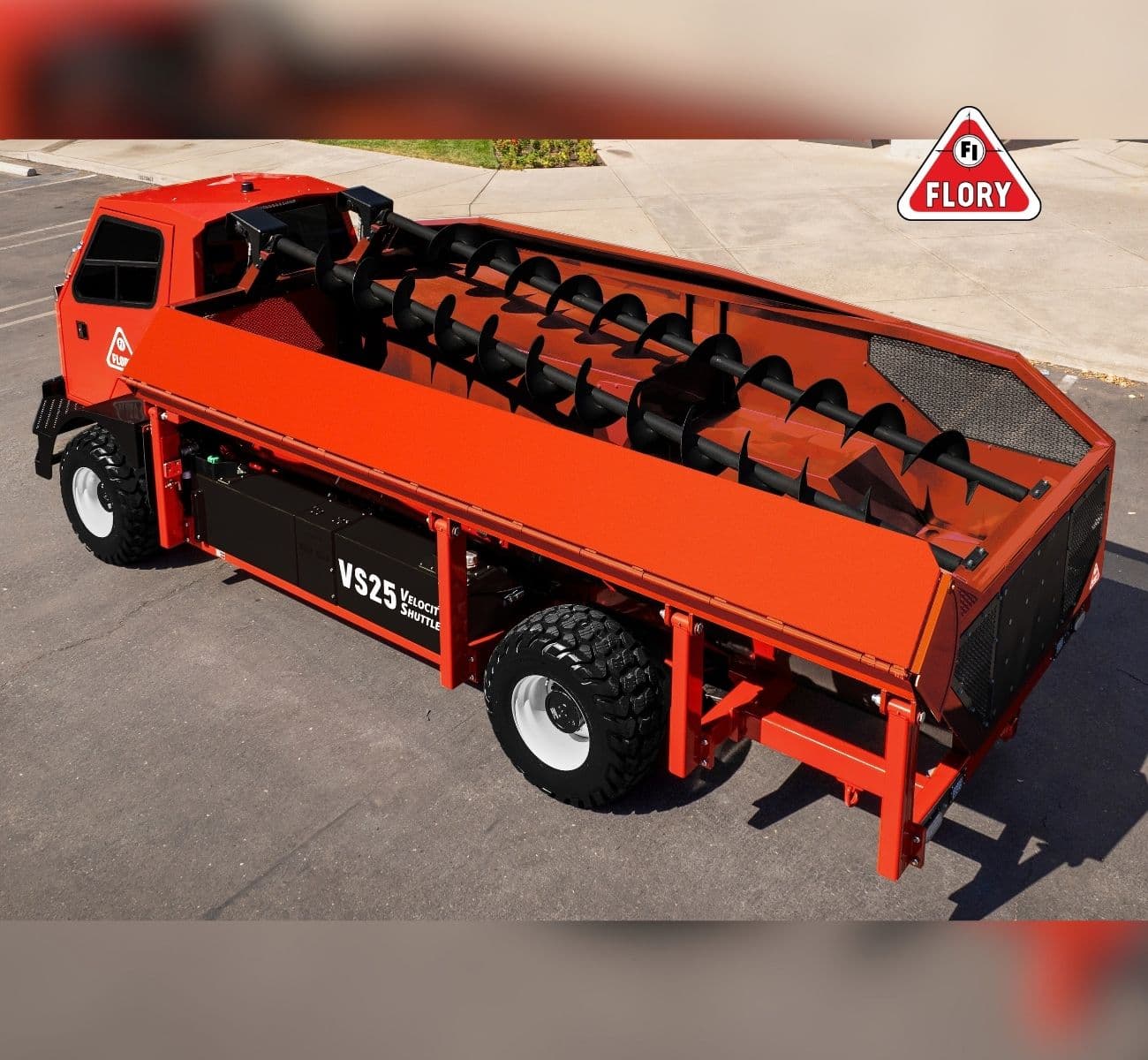
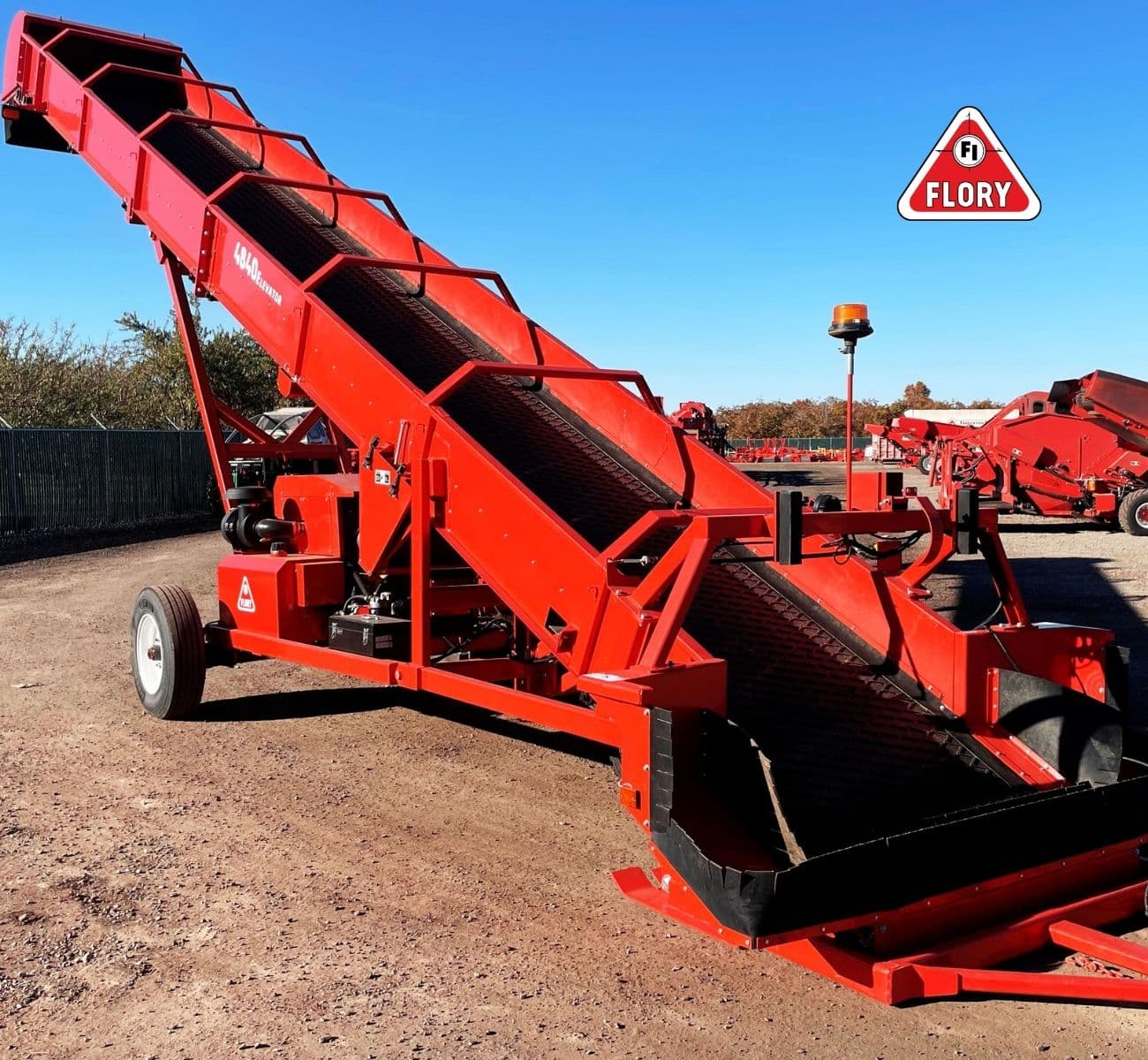
Flory harvesting machinery is available in Jordan through OVE Europe for both systems. On the ground, the VR700 Shaker, 34 Series Sweeper, CP87 Conditioner and 860 Harvester (or the smaller 490) work with the 1500 Conveyor Cart and ST14 Shuttle. Off the ground, the Flory COE C7 Shaker and L2 Receiver catch the almonds in a frame around the trunk, the Flory COE B8 Cart and VS25 Shuttle carry them, and the 4840 Field Elevator loads trailers in both systems.
Almond Harvest Workflow (Recommended Equipment)

Practical Tips for Almond Harvesting
Time the dry harvest by the hull: NARC's guide says ripening varies by cultivar and area, and takes hull splitting and separation as signs of ripeness.
Do not irrigate at harvest time, as NARC's guide advises, and leave shaken almonds on the ground only while the forecast stays dry.
Keep ground time short: University of California guidance links ant damage to the time almonds spend on the orchard floor.
After drying on the floor, sweep almonds into windrows; a conditioner such as the Flory CP87 cleans and re-lays them so they dry faster before pickup.
For late cultivars such as Texas, or if rain is forecast, pick up promptly or use catching frames: the Flory COE C7 Shaker works with the L2 Receiver.
Pick green almonds by hand, and keep shakers and frames for dry almonds in orchards planted for machines, never scattered trees.
Get your recommended harvest setup
Enter orchard size, spacing, terrain, and target throughput—we’ll suggest a practical harvest workflow and equipment lineup.

Almond Post-Harvest Handling & Processing in Jordan
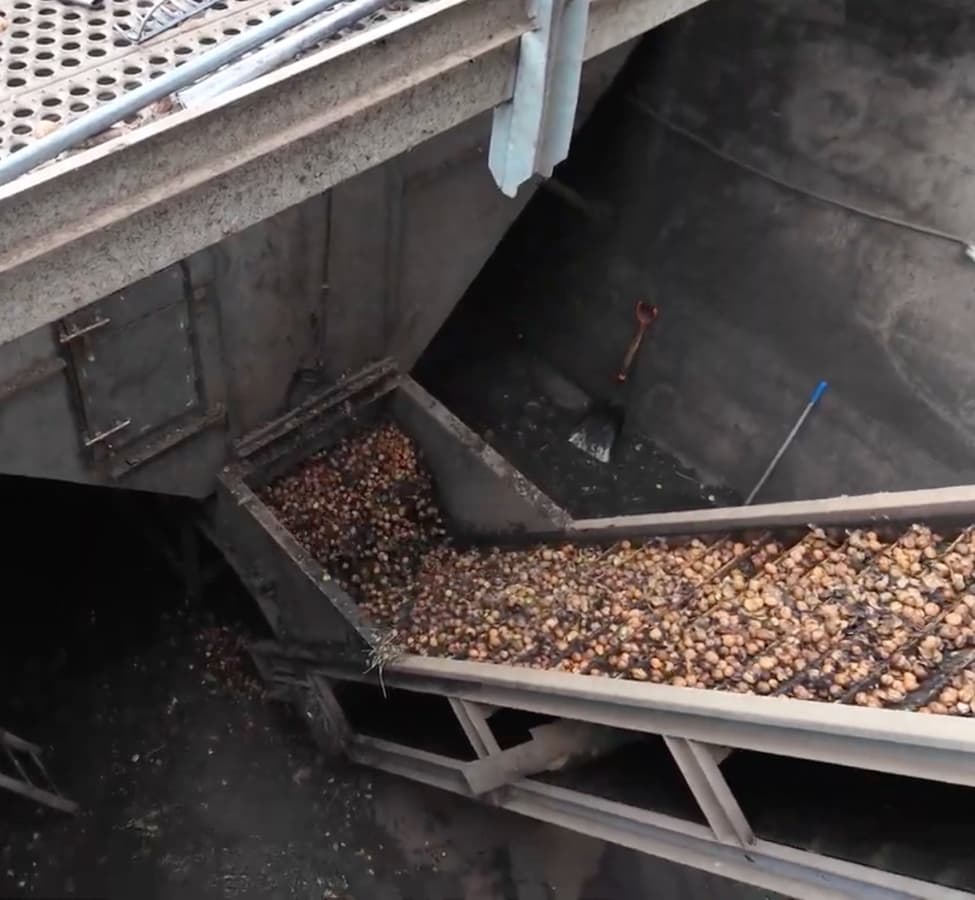
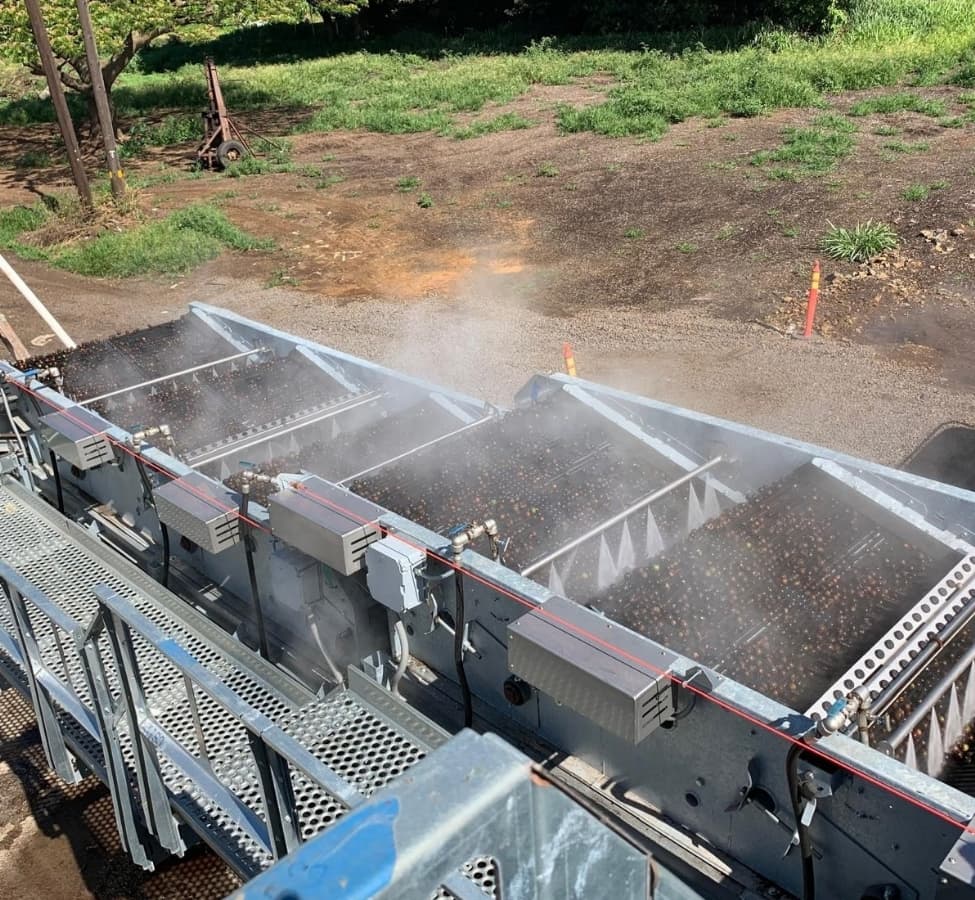
NARC's guide describes drying almonds on the tree or in hot-air dryers, mechanical hulling with the nuts falling into boxes by size, and storage in airtight containers, preferably cool. In this workflow, almonds dried on the orchard floor arrive with dry hulls and are dried further only if needed, while frame-caught almonds are hulled first and then dried in the shell.
Jordanian standard JS 1768 of 2007 covers shelled sweet almond kernels. A 2025 study of imported nuts sold in Jordan notes that Jordanian standards set no almond aflatoxin limits and refer to international ones; two of its almond samples exceeded the B1 limit it applied. For exports to the EU, Regulation (EU) 2023/915 allows 8.0 µg/kg of aflatoxin B1 and 10.0 µg/kg in total in almonds for consumers, and 12.0 and 15.0 µg/kg in almonds to be sorted first.
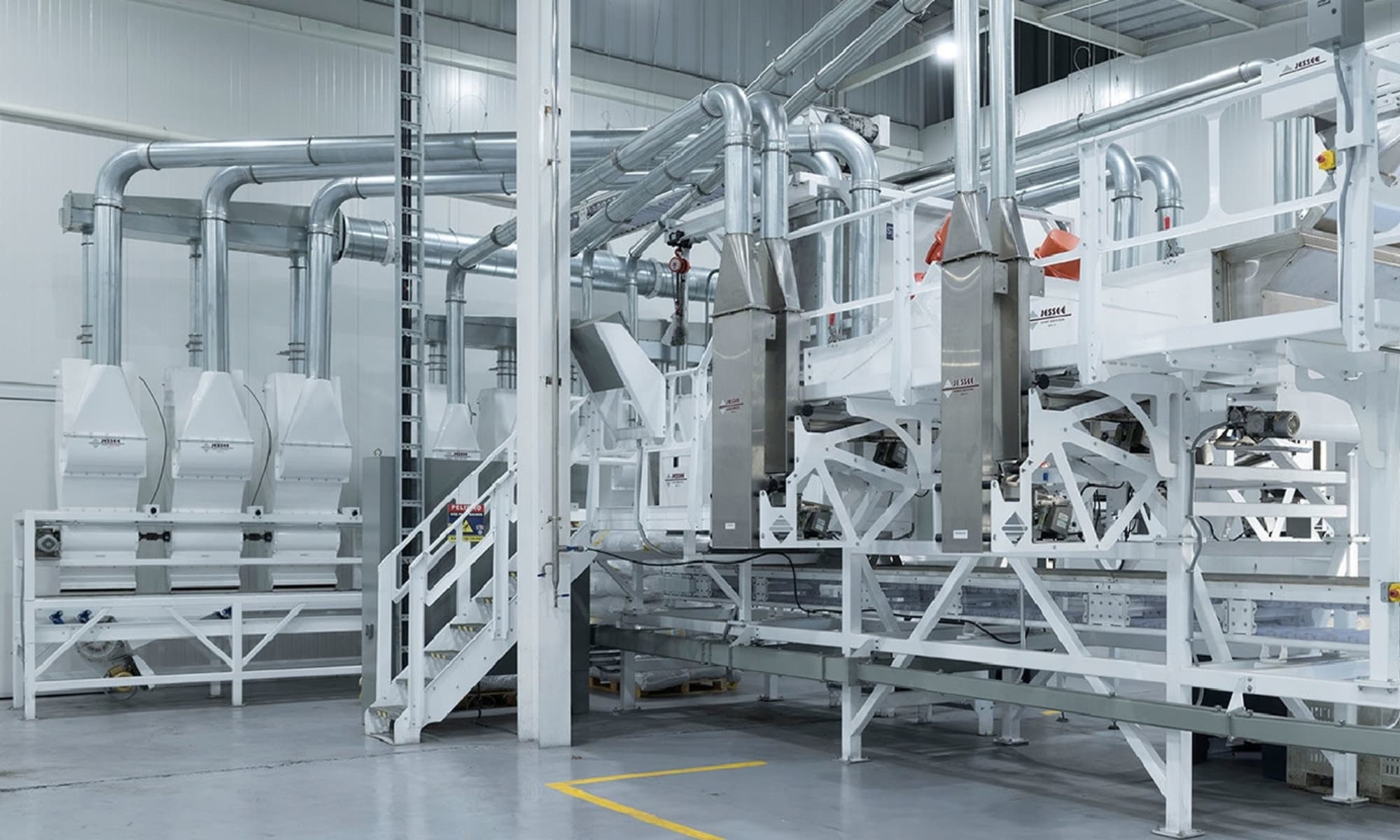
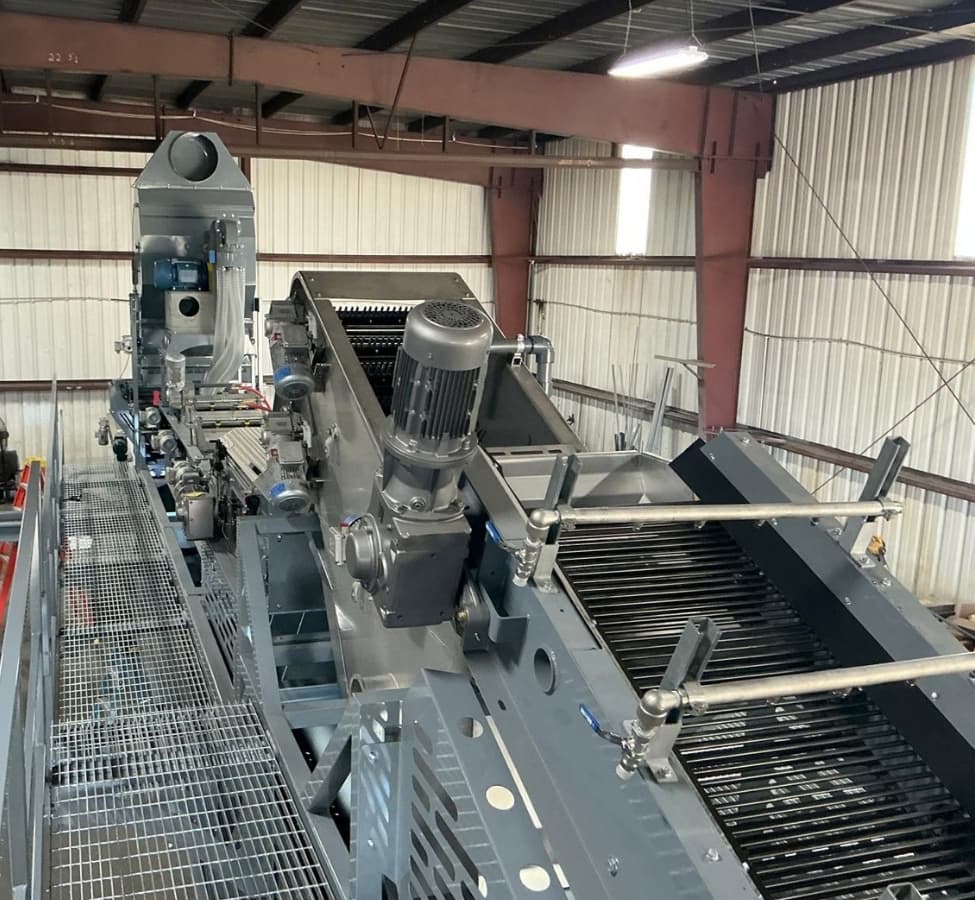
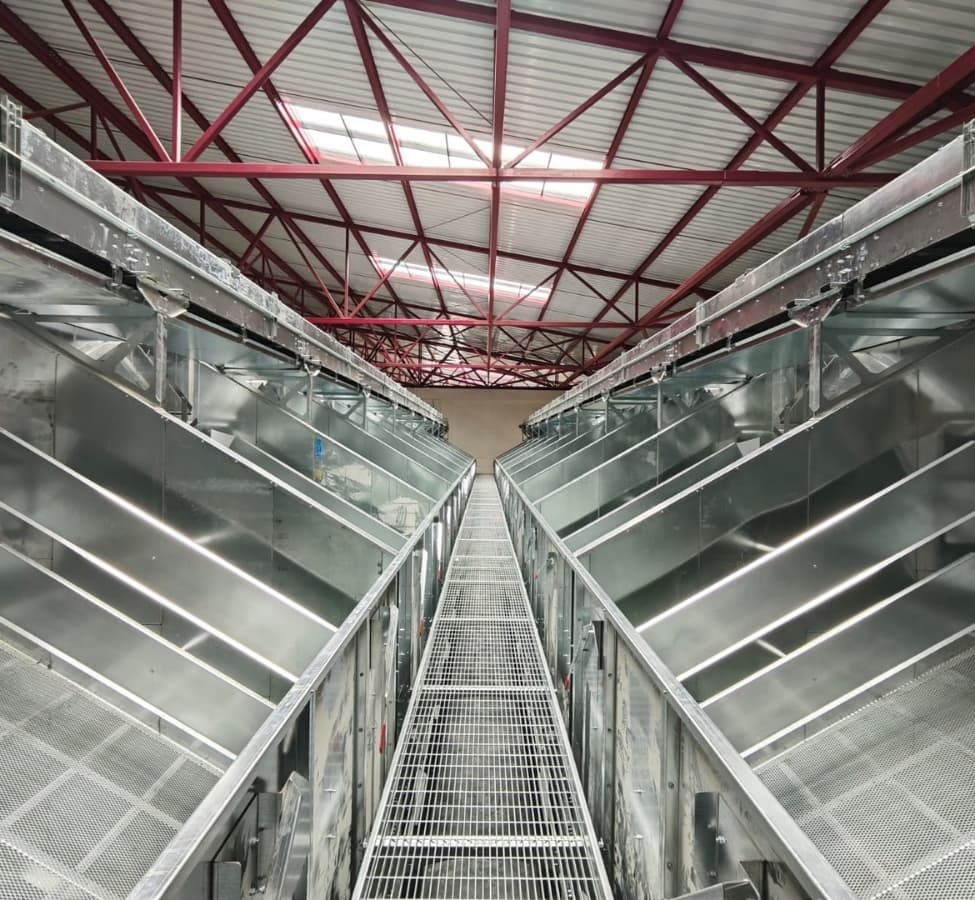
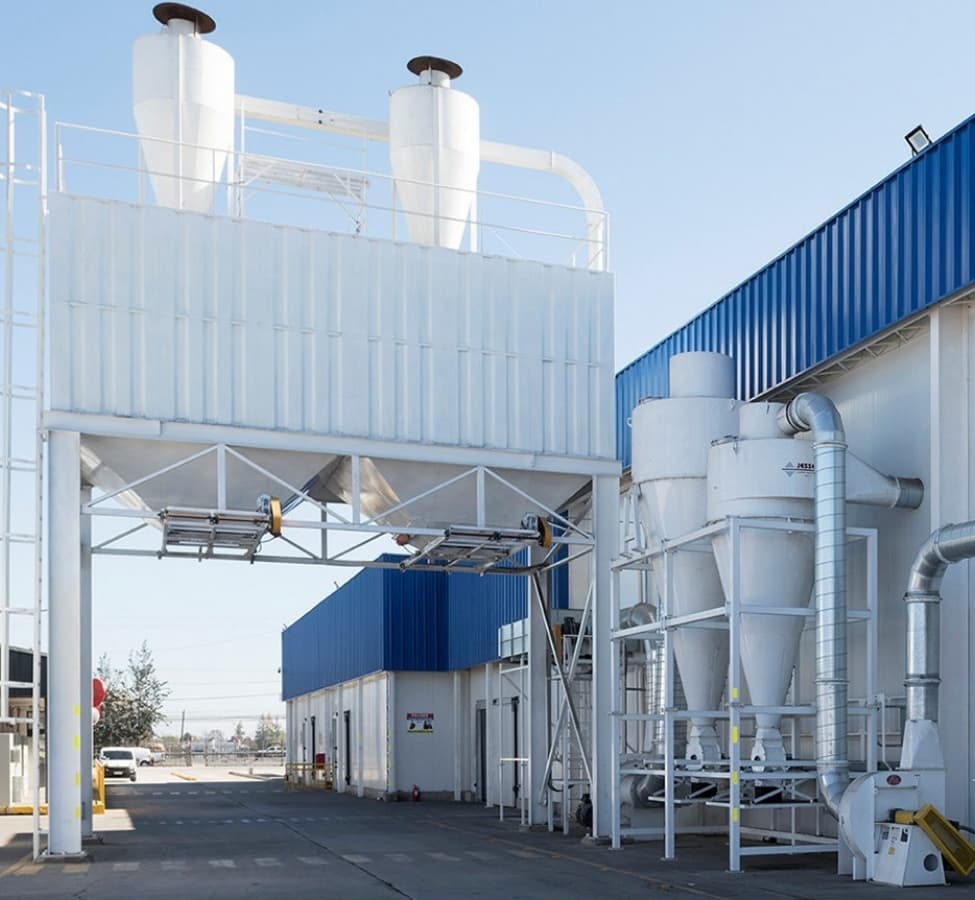
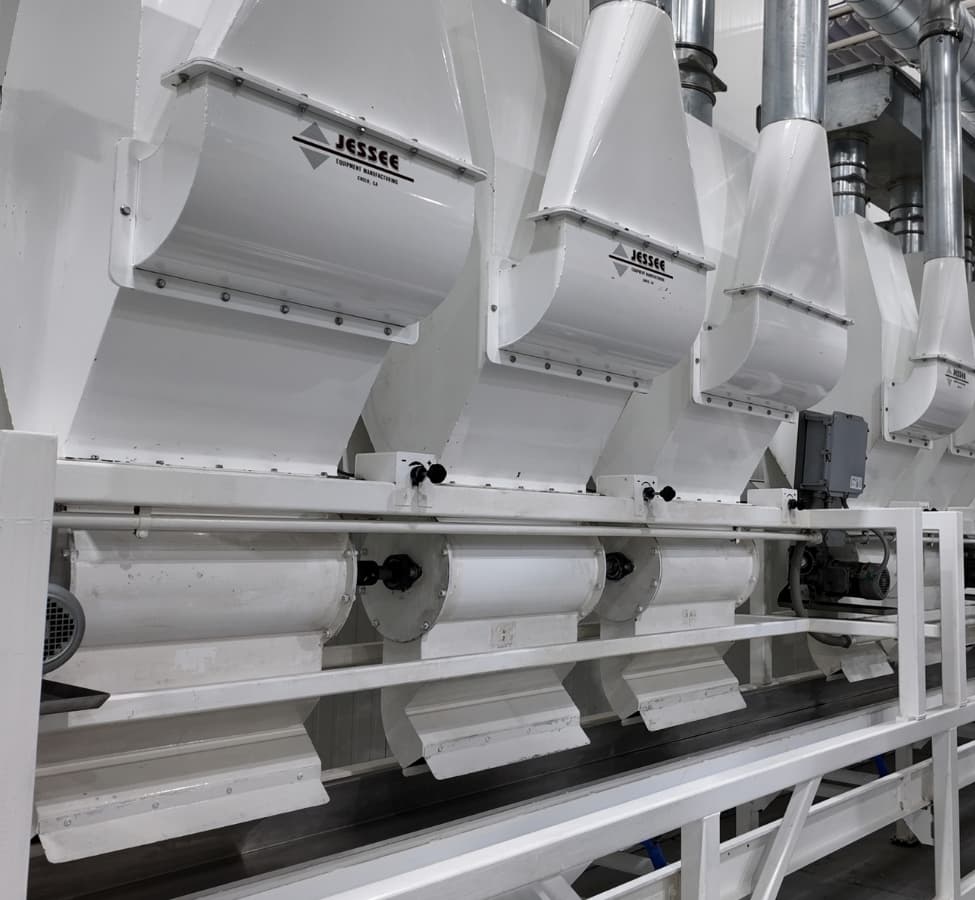
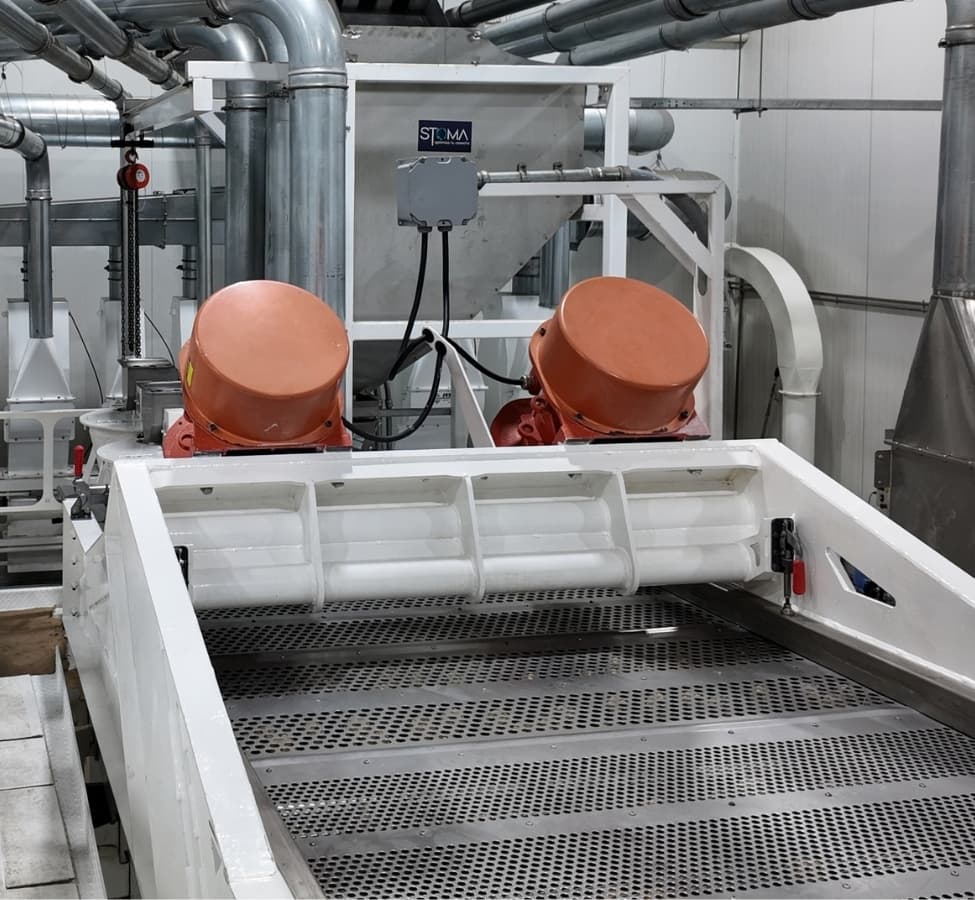
Jordan imported 7,393.1 t of shelled almonds in 2024, 81.5% of them by weight recorded for the United States and 15.6% for Australia, and 319.5 t in shell; it exported 565.4 t shelled and 120.6 t in shell (UN Comtrade via WITS). Jessee, whose processing lines OVE Europe supplies, builds hulling, drying, in-shell cleaning and sizing, and shelling systems; its Airlegs nut cleaner was developed for the almond industry.
For general information only. Information may become outdated and does not replace site-specific professional advice. Consult a qualified agronomist and confirm equipment suitability with OVE before acting.
Practical Tips for Almond Post-Harvest Handling & Processing
Pick up ground-dried almonds as soon as they are dry, then hull them and check moisture before storage.
Hull frame-caught almonds while the hulls are fresh, then dry the nuts in the shell before storage.
Never pick up or stockpile rain-wet almonds: University of California guidance warns that stockpiling wet nuts risks mold and concealed damage.
Store dried almonds in airtight containers, preferably cool, as NARC's guide advises, and keep each lot separate by cultivar and block.
Put the hulls to use: NARC's guide notes that they serve as bedding or as livestock feed.
Test lots bound for the EU against Regulation (EU) 2023/915: 8.0 µg/kg of aflatoxin B1 and 10.0 µg/kg in total for almonds sold to consumers or used in food.
Recommended Post-Harvest Handling & Processing Stages
Plan your post-harvest line
Estimate tons/day, cleaning & drying capacity, storage needs, and cost/kg—then build your equipment plan in phases.