


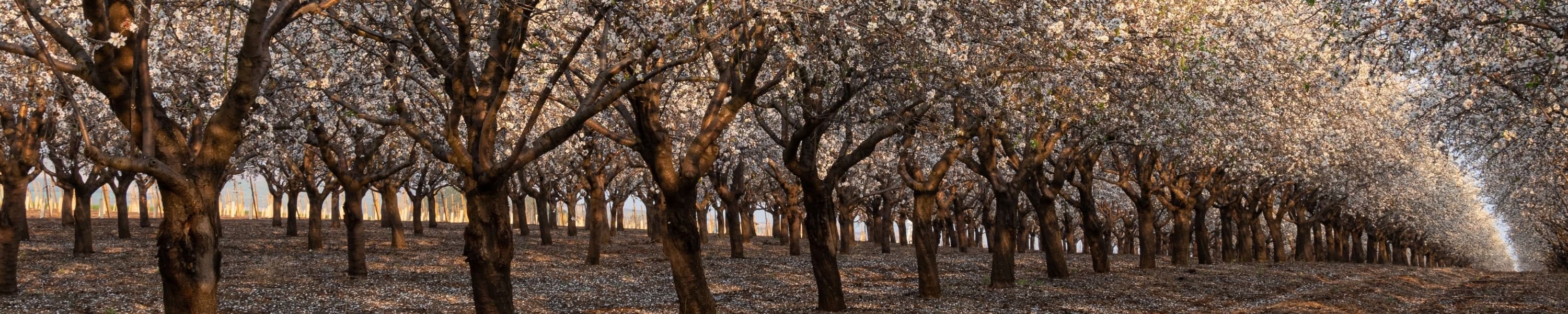




Almond Orchard Establishment in North Macedonia
In North Macedonia almond was traditionally raised from seed, without grafting, researchers of the Faculty of Agriculture in Skopje wrote in 1998, and commercial orchards of the best cultivars were planted without irrigation. From 1986 they tested nine Hungarian cultivars near Skopje, at 240 and 600 m, with Nonpareil and Ferragnès as standards: all nine are self-incompatible and bloom about one week before Nonpareil and two weeks before Ferragnès.
The researchers describe a moderate continental climate with frequent strong winter and spring frosts. The first of two spring frosts in 1992, on 30 March, damaged early-blooming cultivars most and late bloomers not at all, and -25 °C near Skopje on 5 to 7 January 1993 killed 11 to 99% of flower buds, depending on the cultivar.
In those trials, almonds near Skopje bloomed from the second half of March into early April, and later on higher sites; the Hungarian cultivars were proposed for hilly and colder regions too. The 1986 trial orchards were planted at 4.5 × 3.5 m and 5 × 4 m. No current spacing guidance was found: choose sites outside frost pockets, and plan rows, headlands and trunk height for the shaker, sweeper and harvester.
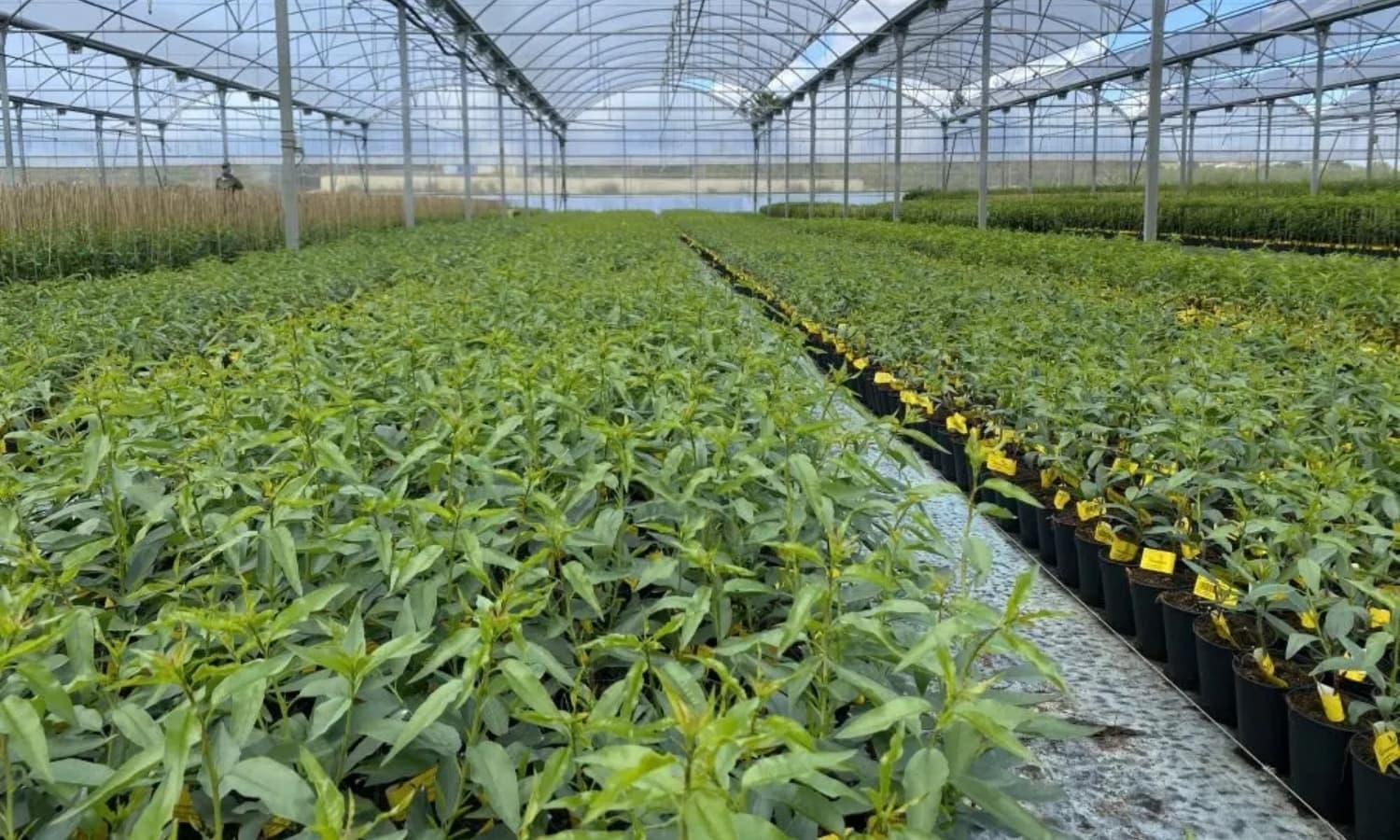

Practical Tips for Almond Orchard Establishment
Favor later-blooming cultivars on frost-prone sites: the first spring frost of 1992 near Skopje damaged early bloomers most.
Avoid frost pockets and choose winter-hardy cultivars: -25 °C near Skopje in January 1993 killed 11 to 99% of flower buds, depending on the cultivar.
Plant pollinizers: all nine Hungarian cultivars tested near Skopje are self-incompatible, the 1998 research notes.
Test cultivars locally first: the 1998 research suggests that cultivars from hotter regions may suffer disorders that make flower buds drop, even in mild winters.
Buy certified trees of named varieties: a 2011 rulebook on fruit planting material, which covers almond, requires their certificate to name the variety.
Plan rows, headlands and tree form for the shaker, sweeper and harvester before planting, and check trunk clearance with OVE Europe.
Recommended Establishment Stages



Almond Orchard Care & Maintenance in North Macedonia
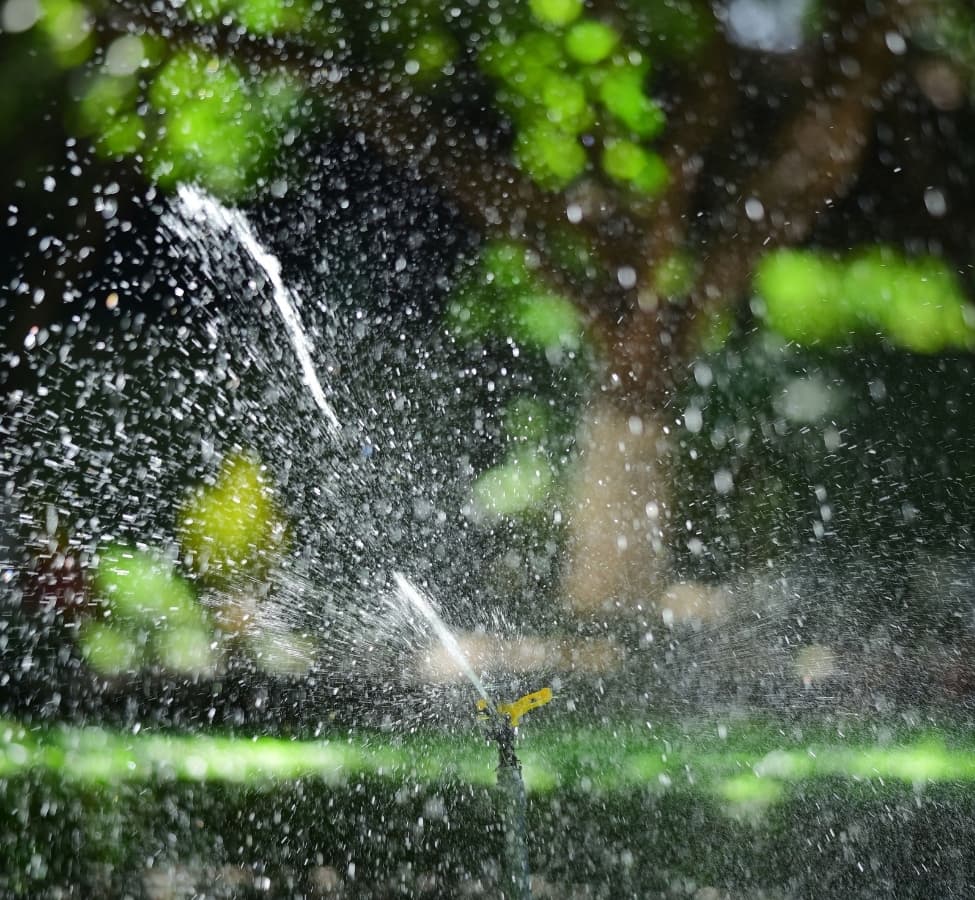
Drought is the other recurring problem: the 1998 research describes commercial orchards planted without irrigation, and of the eight years to 1995, five were warmer, with long droughts, and three cooler and wetter. The driest areas, the middle Vardar valley and the Radoviš plain, get 440 to 492 mm of precipitation a year (data from 1925 to 2003). No guidance from North Macedonia on almond irrigation, nutrition or pruning was found.
Flower buds can also drop without frost: in the trials, drop was heavier after a cooler, more humid year and at higher sites, and drop above 80 to 90% cut yields. EPPO lists the almond seed wasp as present in North Macedonia on 1980 information, and does not list the peach twig borer, Xanthomonas arboricola pv. pruni or Xylella fastidiosa there, which is not proof of absence.
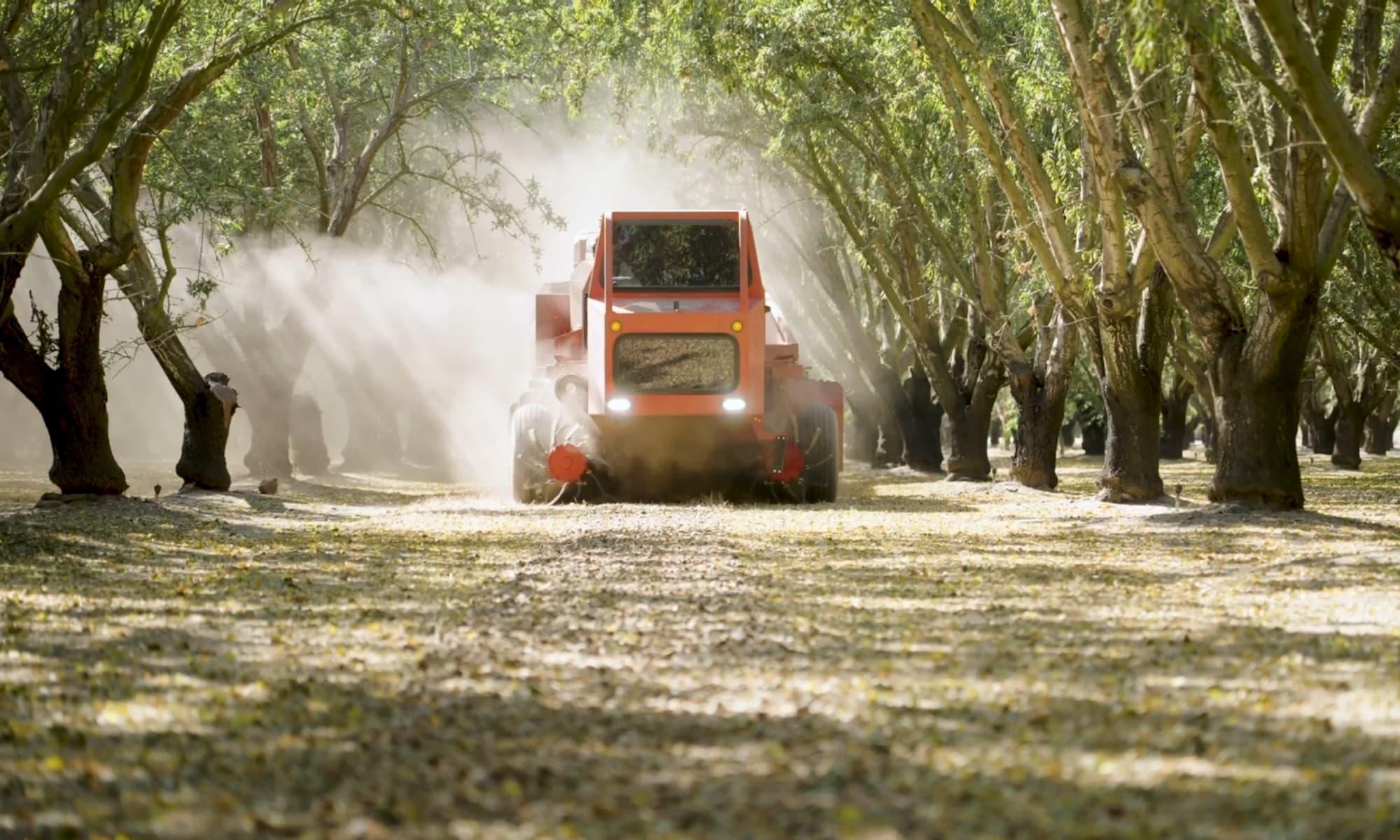
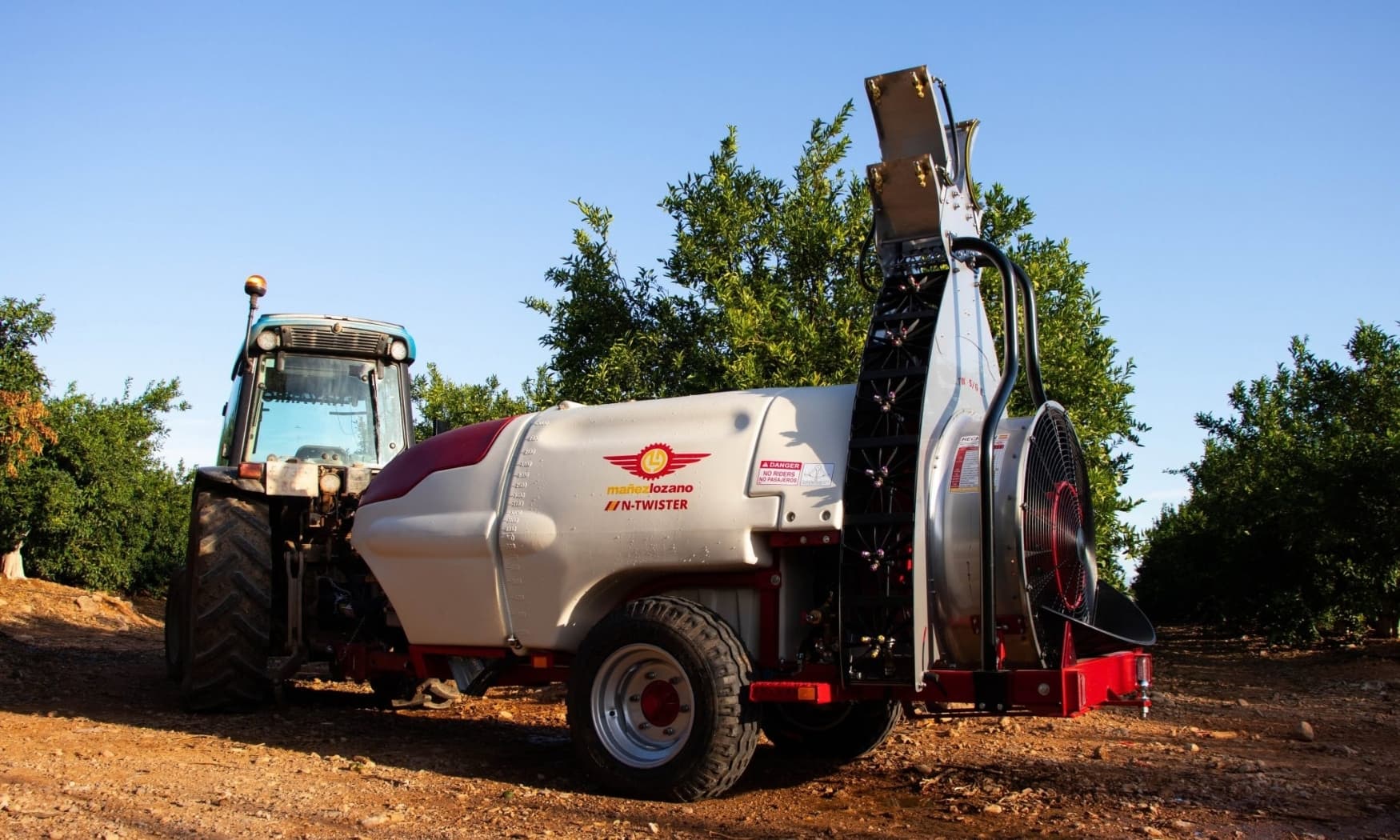
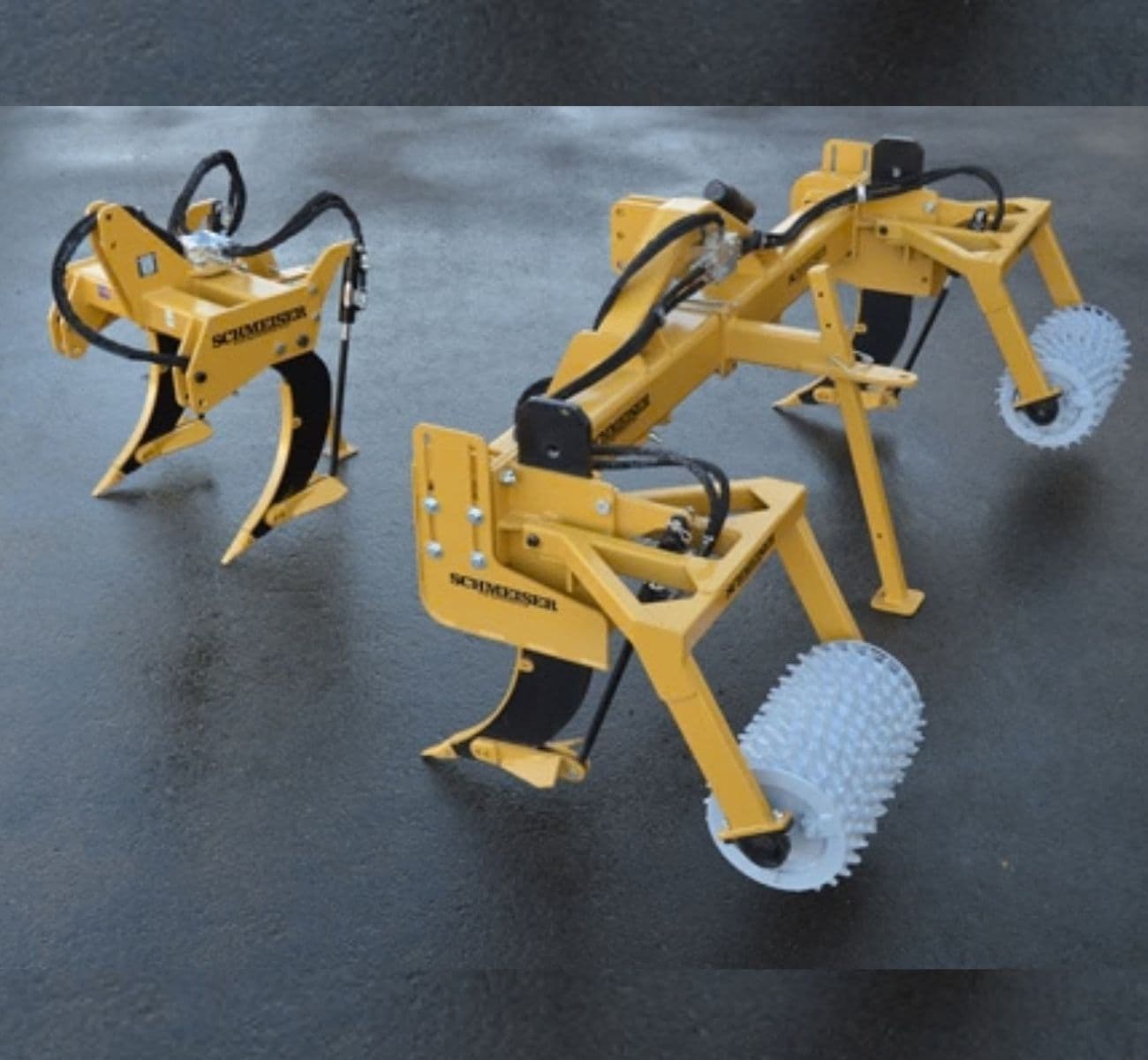
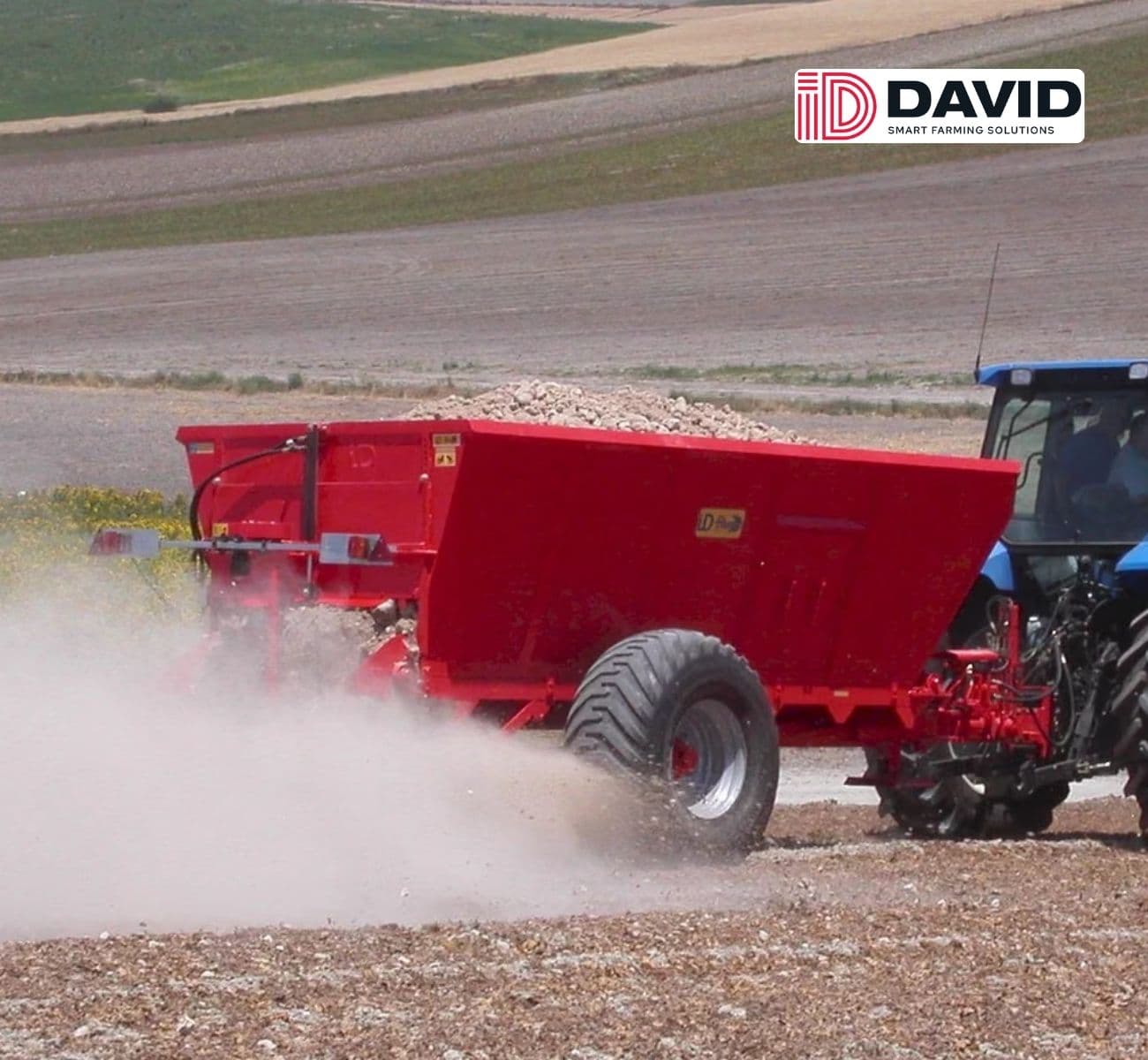
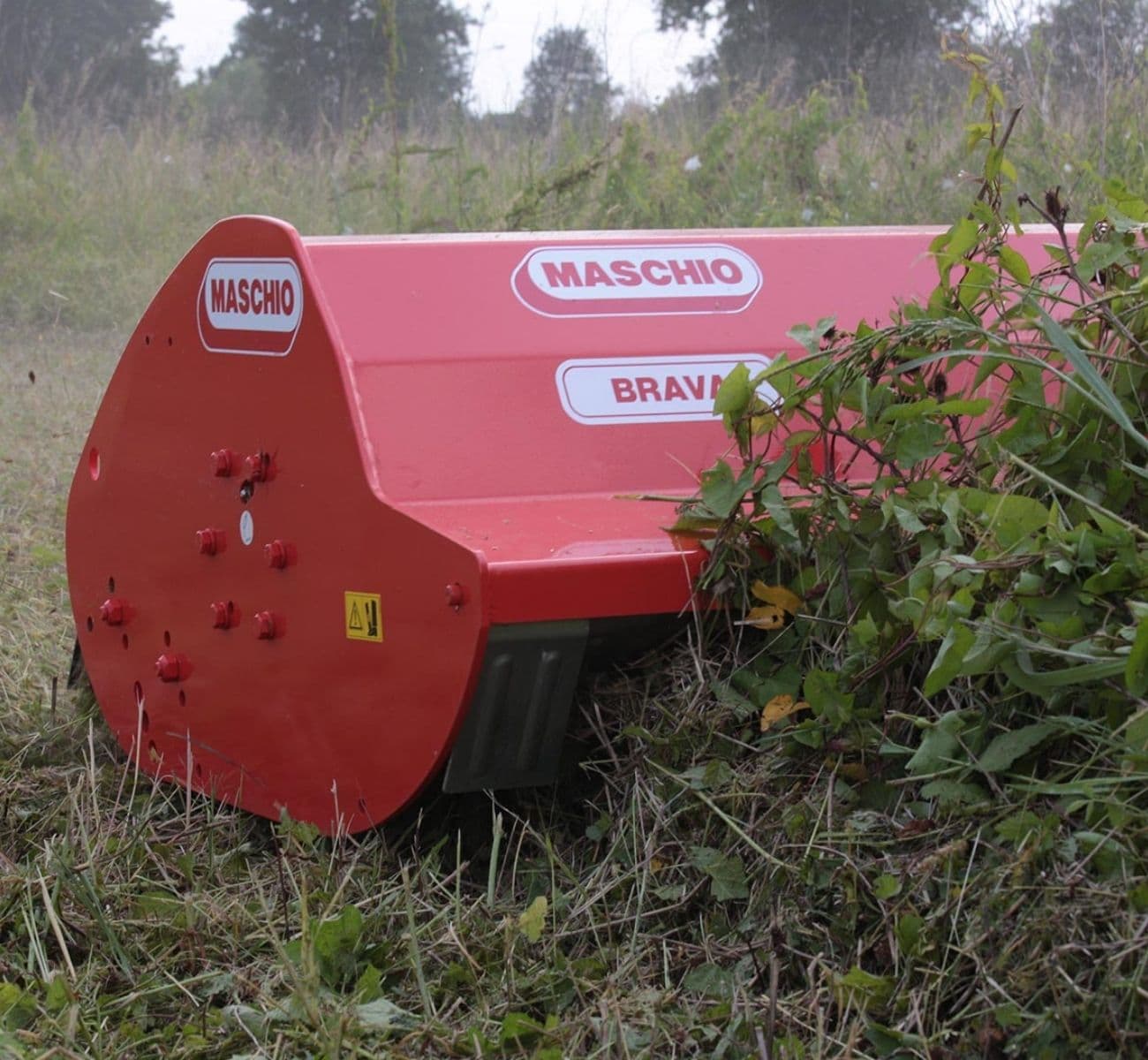
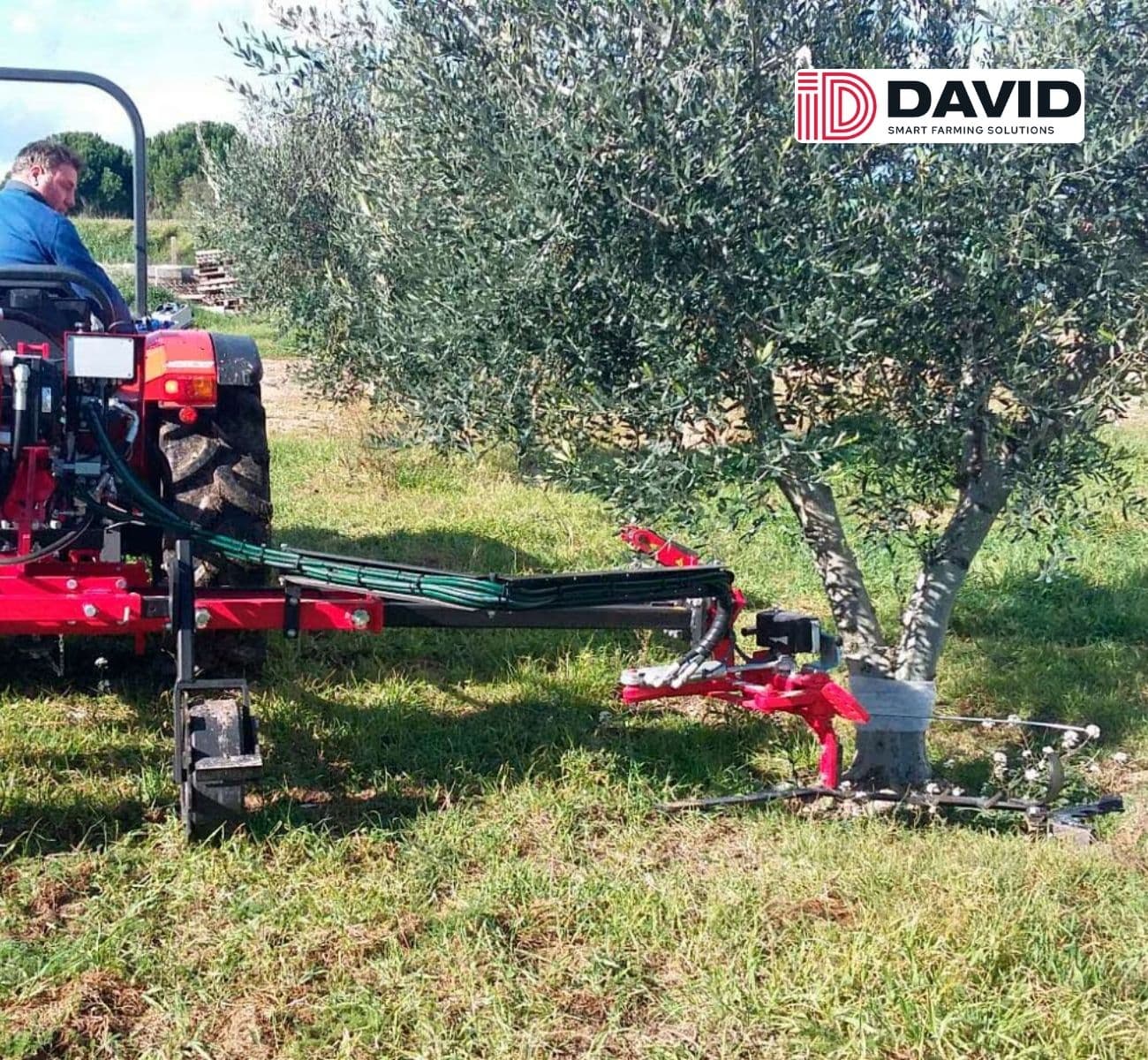
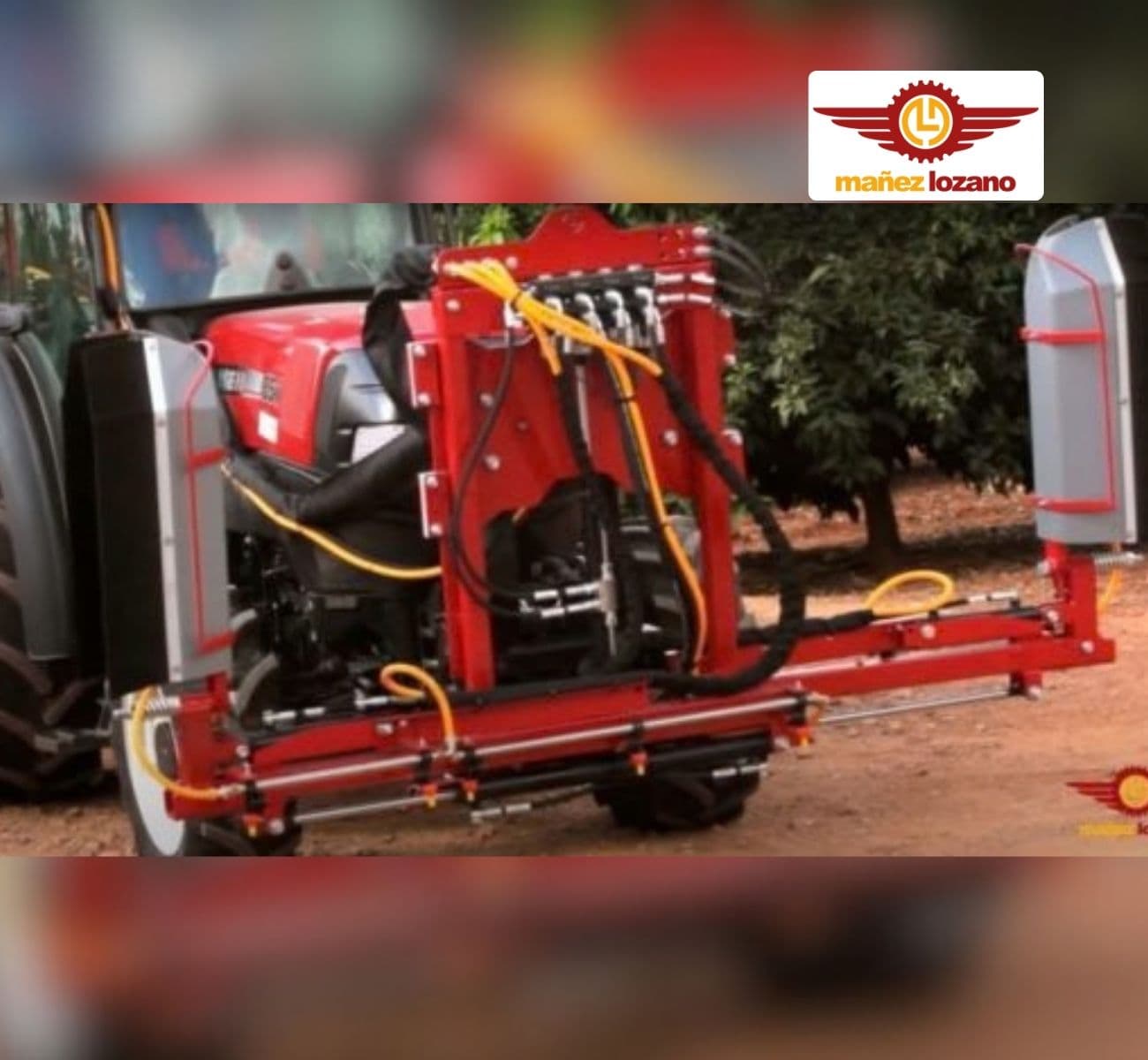
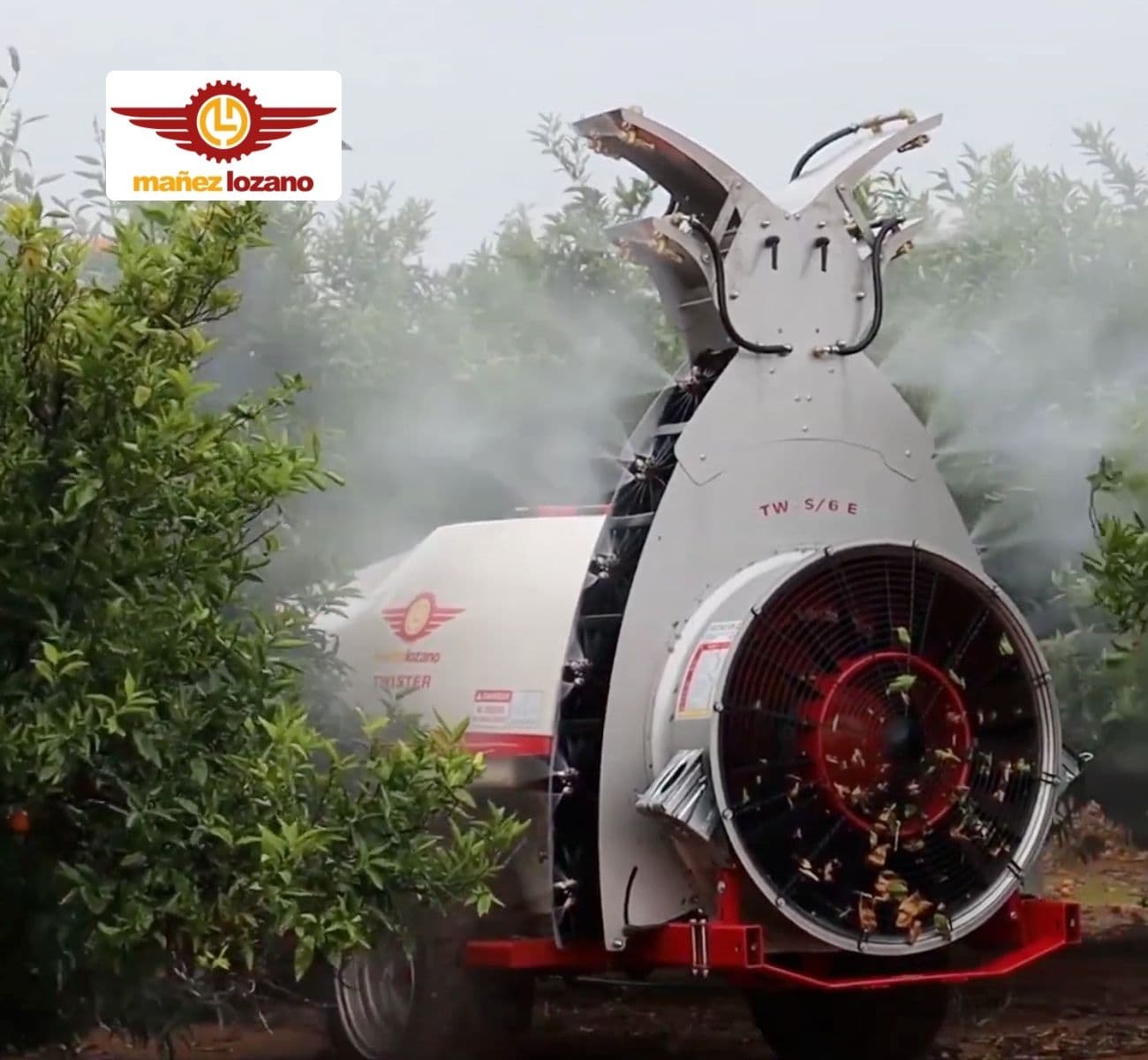
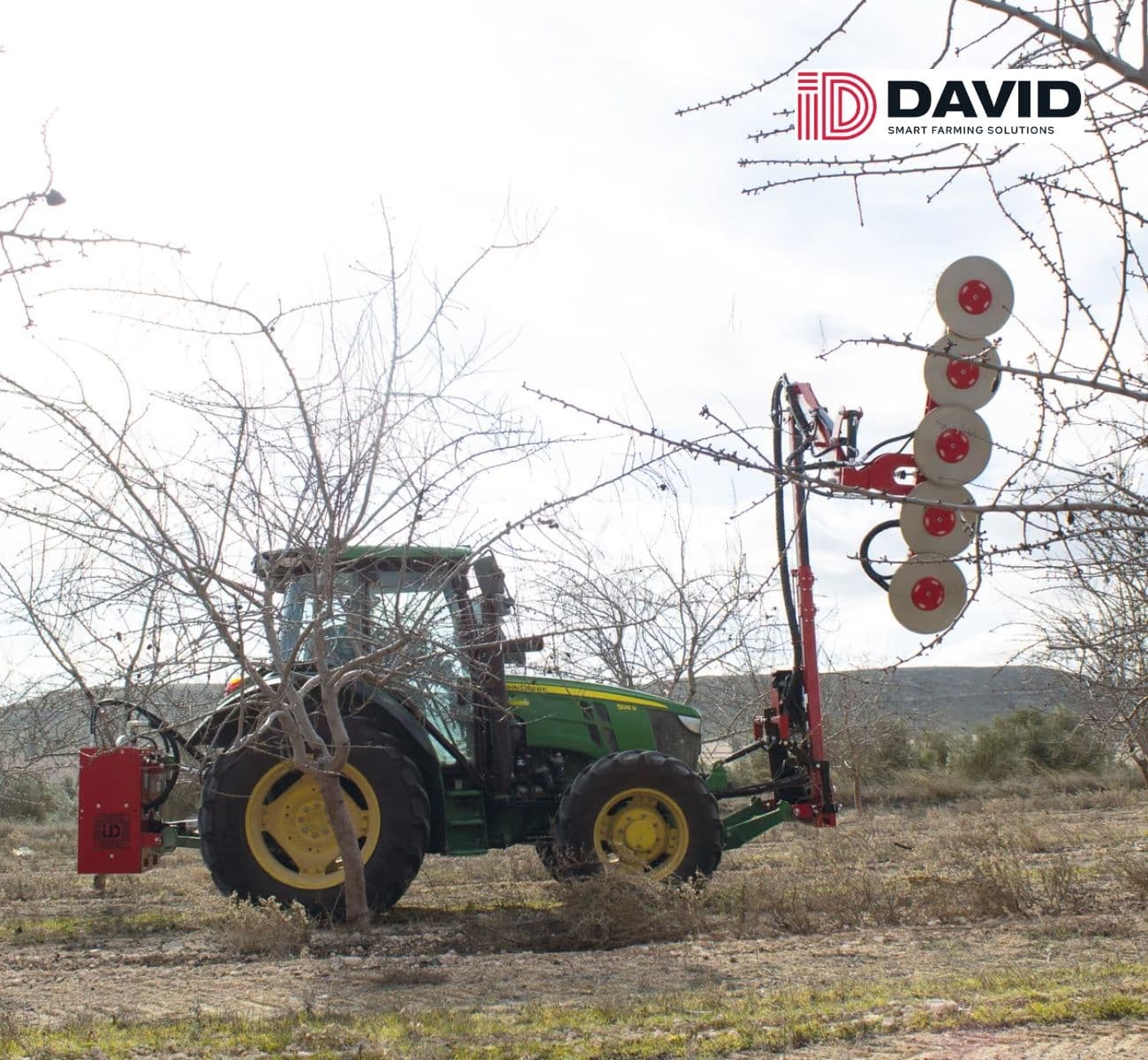
Summers are hot: Skopje averages a 30.0 °C maximum in August (WMO), and Gevgelija's mean August temperature rose from 24.1 °C in 1961 to 1990 to 26.4 °C in 2001 to 2009. For care work, the ID DAVID SURFEED spreads solid manure, the ID-XL weeds the tree row, the Mañez Lozano Mega Twister S6 sprays tall, dense canopies and the ID DAVID ID-REX disc pruner makes lateral and topping cuts.
Recommended Orchard Care & Maintenance Stages
Practical Tips for Almond Orchard Care & Maintenance
Plan water for dry summers: five of the eight years to 1995 brought long droughts, the 1998 research reports.
Remove mummified nuts from the trees: a 2024 study in Spain found this an important control of the almond seed wasp, recorded in North Macedonia (EPPO, 1980 data).
Watch flower-bud drop: in the 1990s trials it was heavier after a cooler, more humid year and at higher sites.
In wet springs, watch for brown rot blossom blight: University of California guidance says flowers are most susceptible when fully open.
Keep the tree row weed-free with an in-row weeder such as the ID DAVID ID-XL, and keep the orchard floor level for harvest.
Spray tall, dense canopies evenly with a trailed airblast sprayer such as the Mañez Lozano Mega Twister S6.

Almond Harvesting in North Macedonia
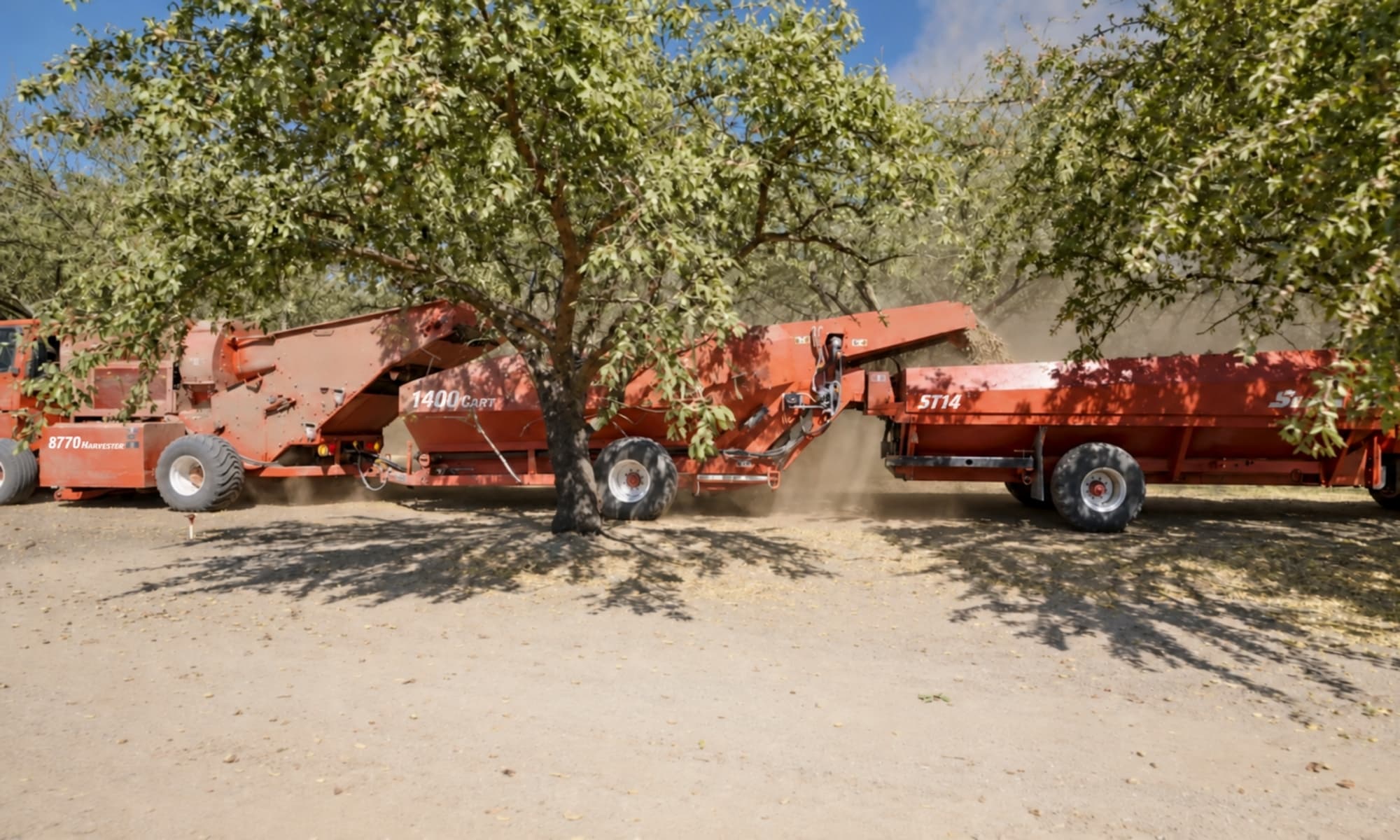
No source from North Macedonia describes how almonds are harvested today. In 1990, the cultivars tested in a trial orchard near Skopje at 240 m ripened from 18 August to 5 September, except one on 20 September, and ripening comes later at higher sites, the 1998 research notes; it adds that early ripening makes harvesting, hulling and drying easier. In orchards planted for machines on suitable ground, mechanized harvesting can bring the crop in on time, with less risk of nuts deteriorating while they wait.
Rain falls in the harvest weeks: Skopje averages 27 mm on 6 rain days in August and 36 mm on 6 days in September (WMO), and Gevgelija, in the south, averaged 38.8 and 56.3 mm in those months in 2001 to 2009. Neither station is in Radoviš or Štip, the largest almond municipalities, and no source from North Macedonia describes drying almonds on the ground, so this guide shows prompt pickup, with hulling and drying at once, alongside catching frames.
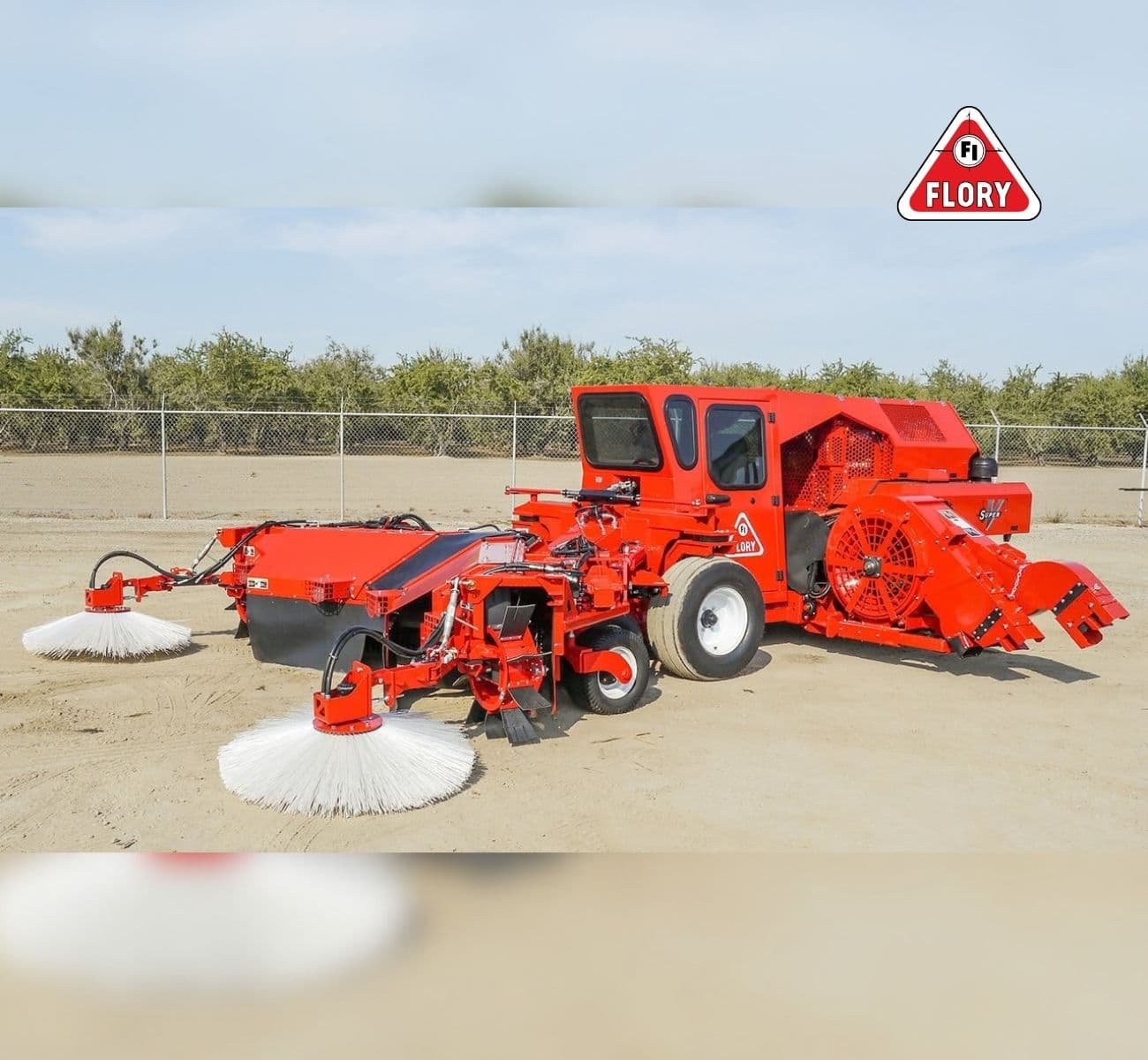
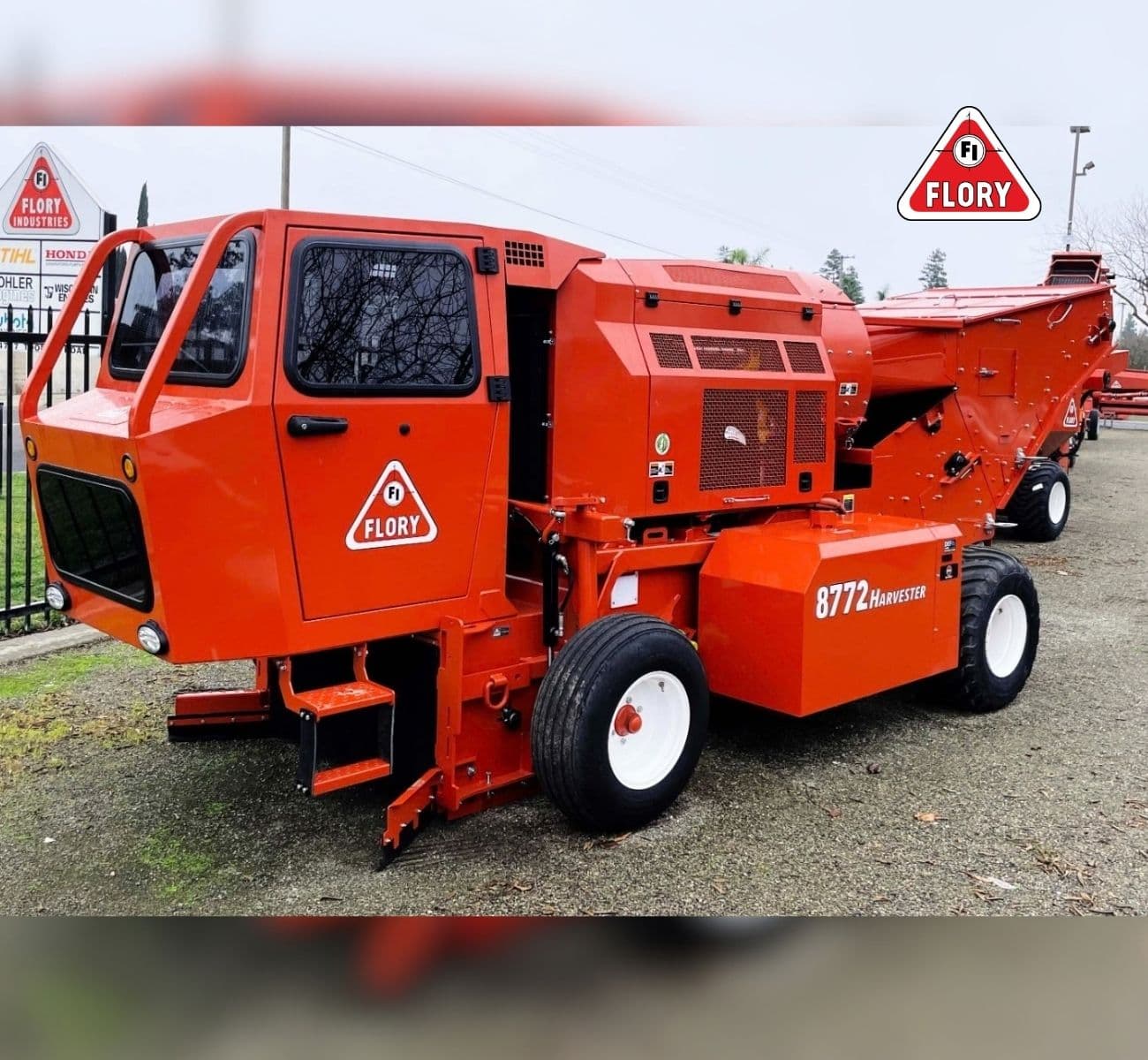
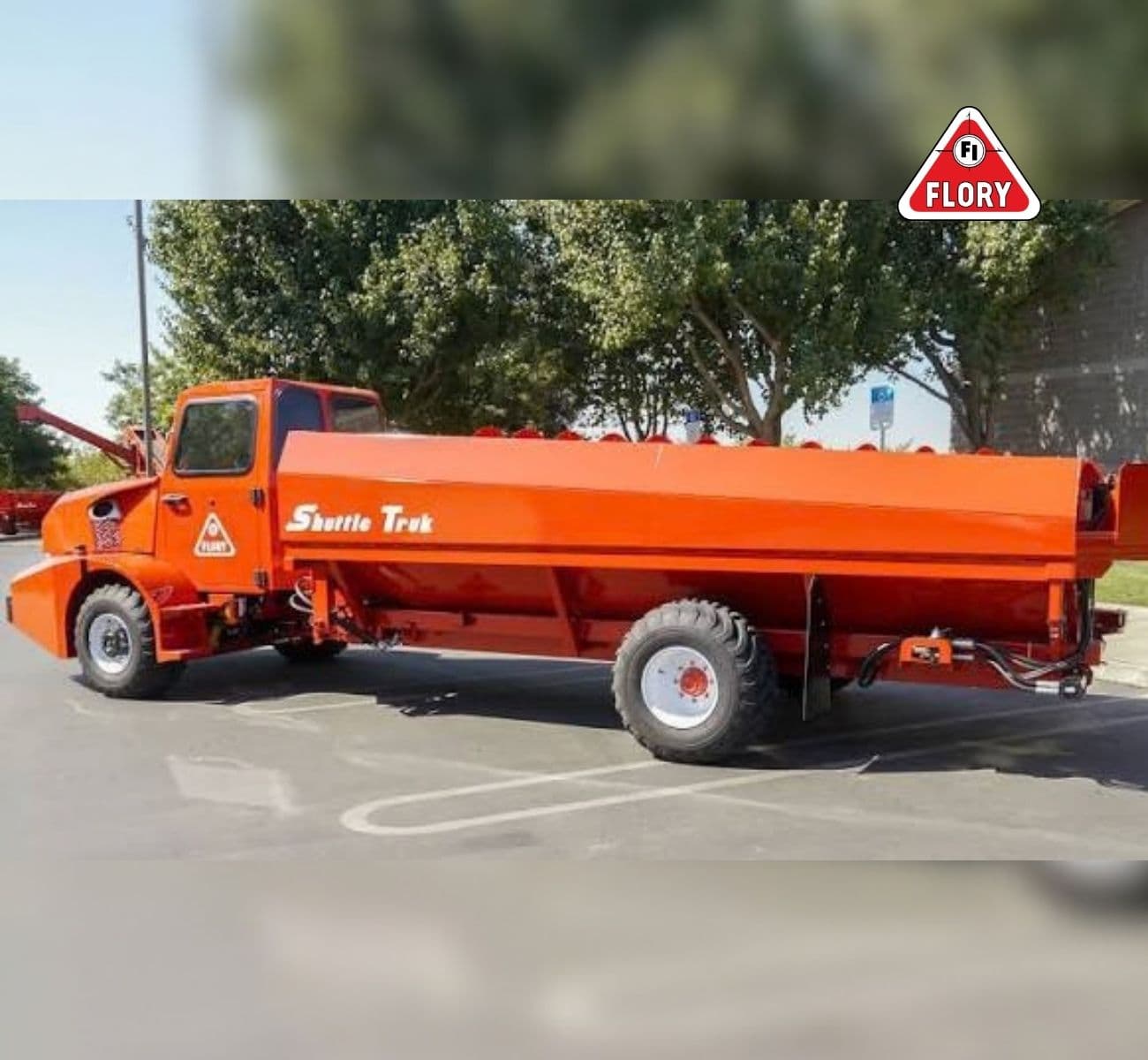
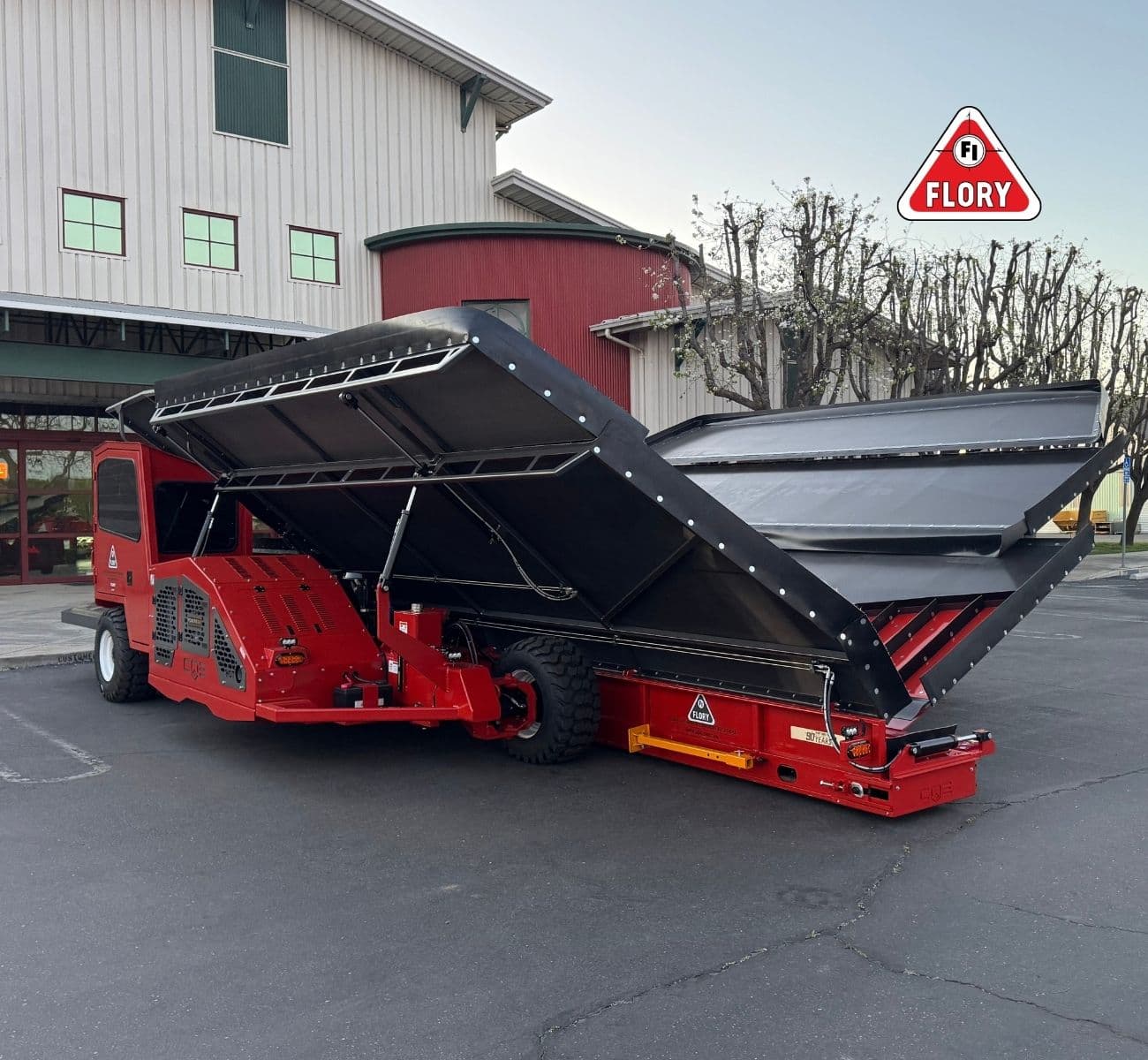
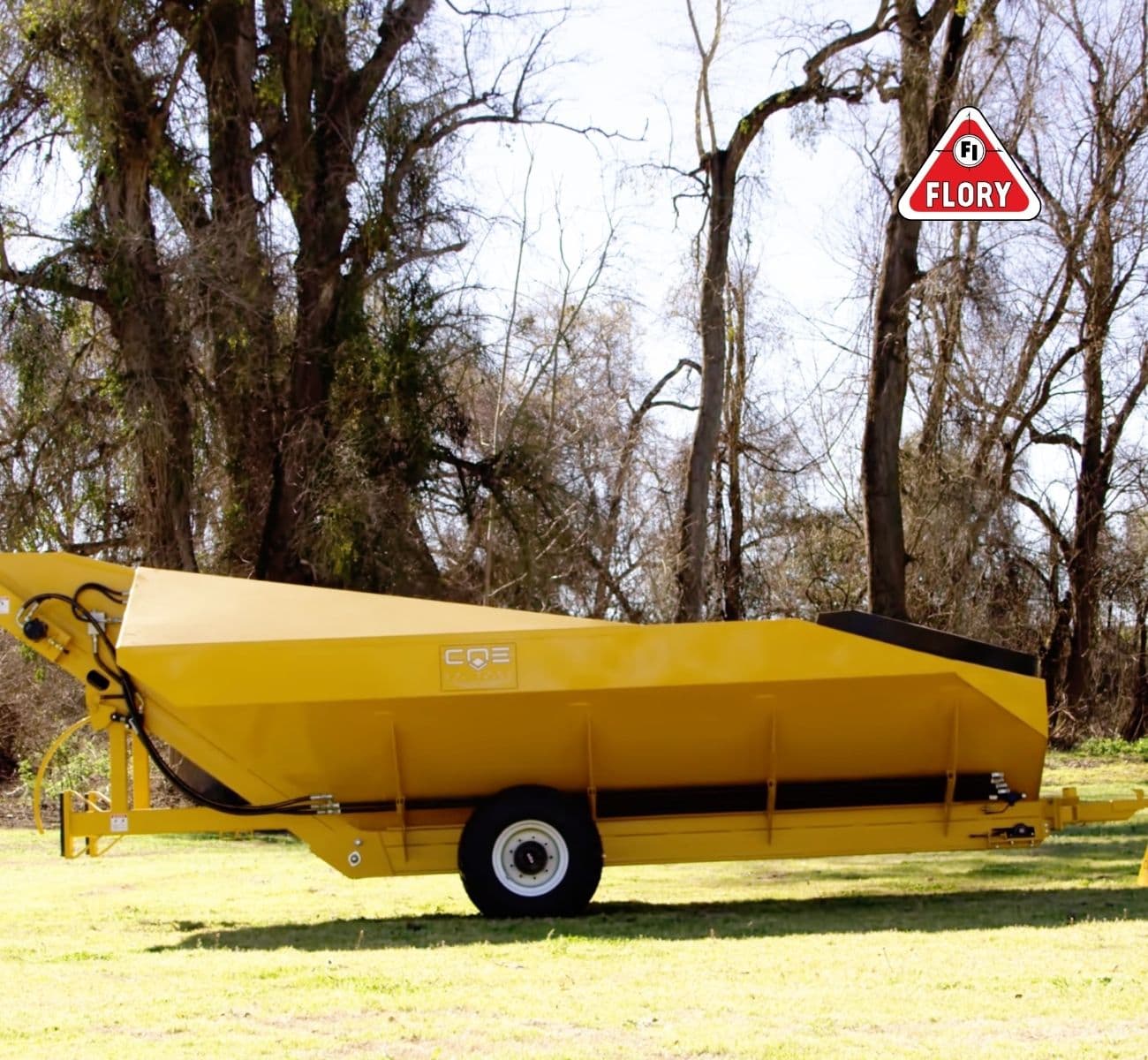
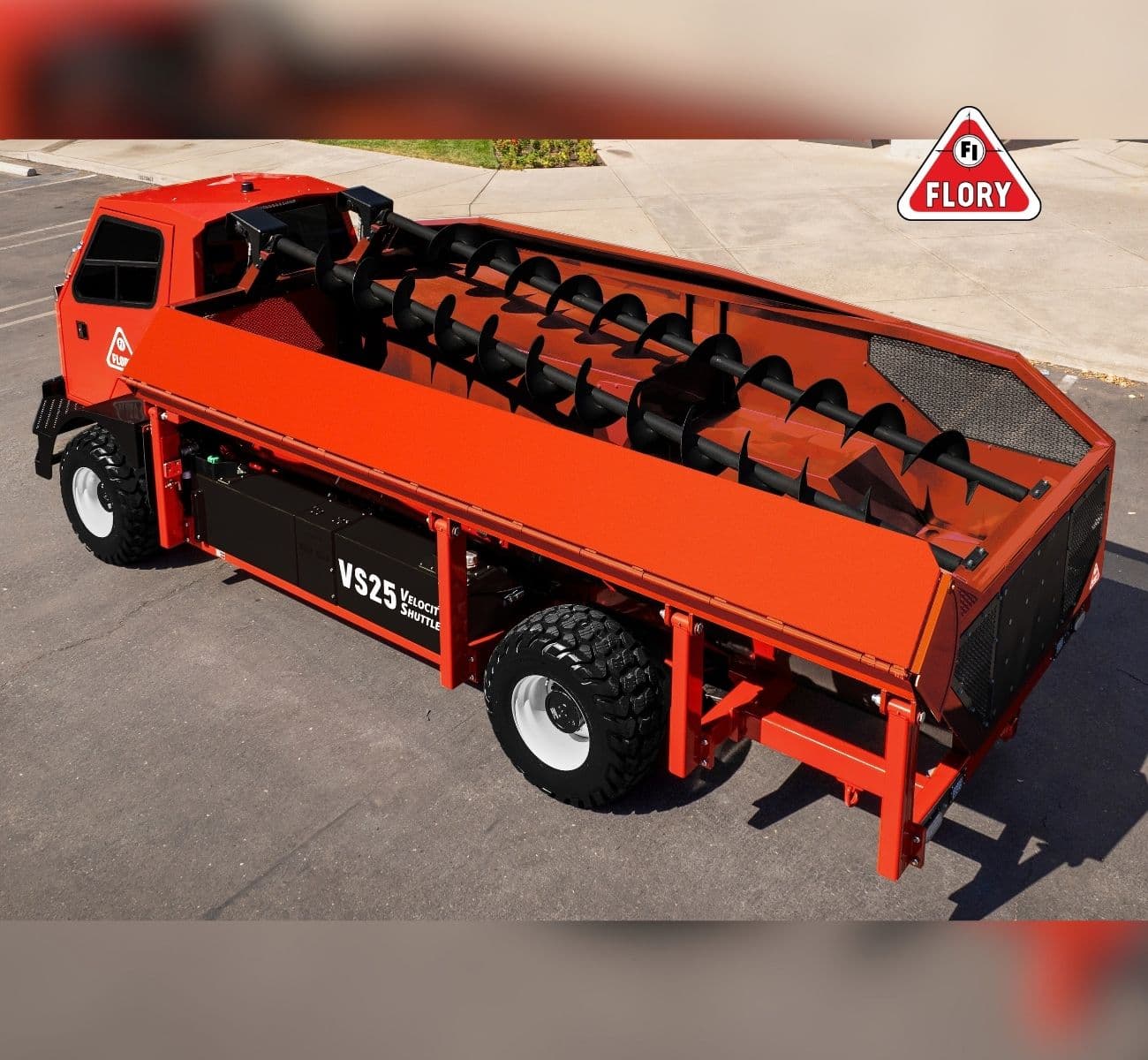
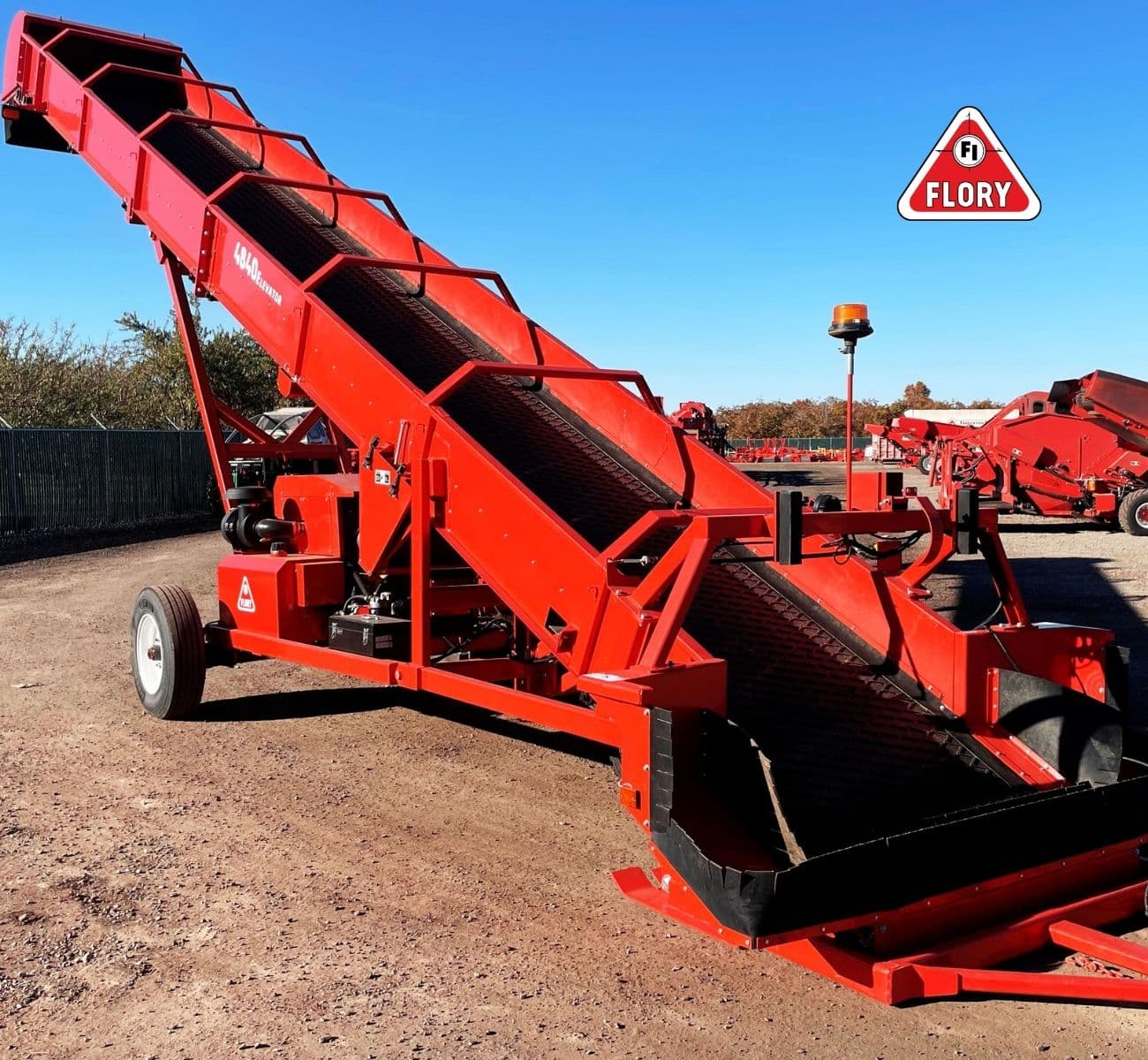
Flory harvesting machinery is available in North Macedonia through OVE Europe for both systems. On the ground, the VR700 Shaker, V62 Sweeper and 8772 Harvester feed the 1500 Conveyor Cart and ST14 Shuttle. Off the ground, the Flory COE C7 Shaker and L2 Receiver catch the almonds in a frame around the trunk, the Flory COE B8 Cart and VS25 Shuttle carry them, and the 4840 Field Elevator loads trailers in both systems.
Almond Harvest Workflow (Recommended Equipment)



Practical Tips for Almond Harvesting
Track hull split from the first split hulls in the top southwestern part of the tree, and shake once nuts come off well, as University of California guidance advises.
Plan for rain at harvest: Skopje averages 27 mm on 6 rain days in August and 36 mm on 6 days in September (WMO).
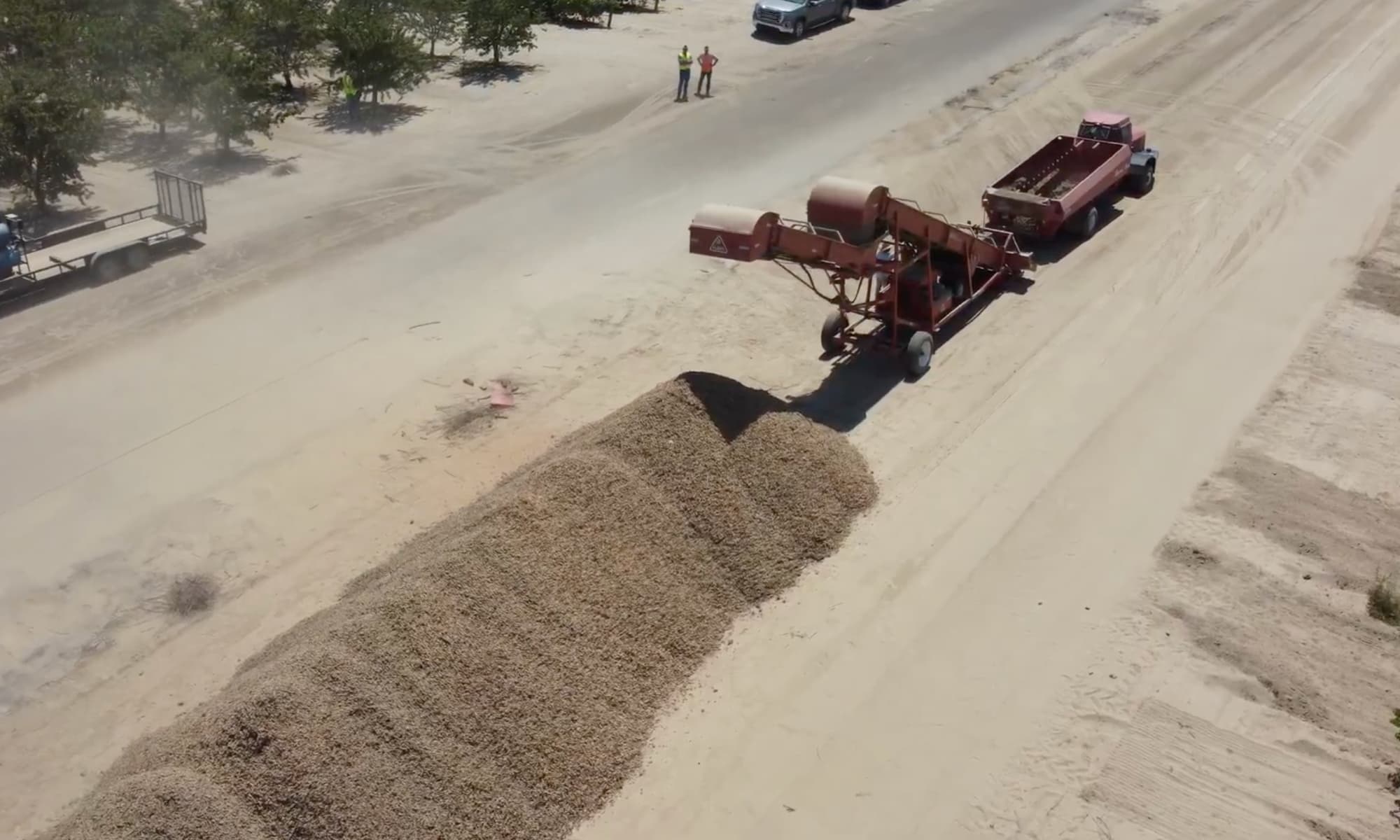
Sweep and pick up soon after shaking, then hull and dry the almonds off the ground; University of California guidance adds that quick removal limits ant damage.
Favor easy-to-hull cultivars: four of the Hungarian cultivars tested near Skopje were easy to pick and hull, the 1998 research notes.
Where almonds must stay off wet ground, use catching frames: the Flory COE C7 Shaker works with the L2 Receiver.
Keep shakers and frames for larger orchards planted for machines, never seed-grown or household trees, small plots or steep slopes.
Get your recommended harvest setup
Enter orchard size, spacing, terrain, and target throughput—we’ll suggest a practical harvest workflow and equipment lineup.

Almond Post-Harvest Handling & Processing in North Macedonia
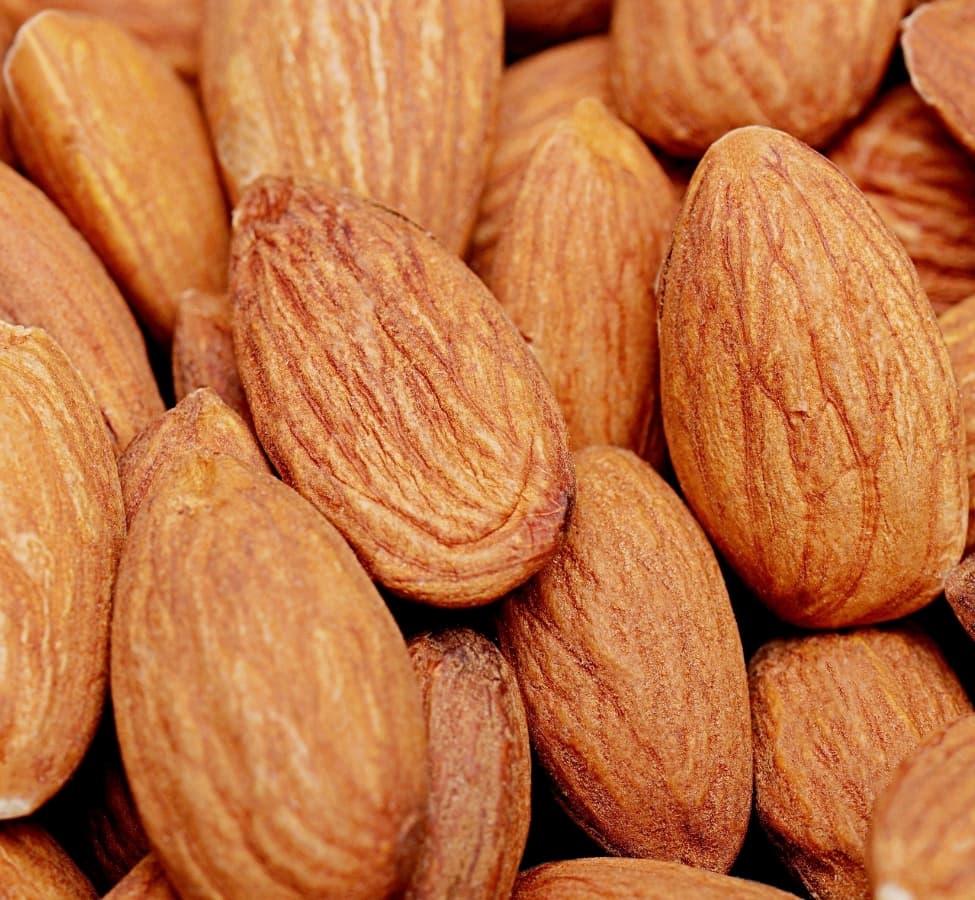
No source from North Macedonia describes how almonds are hulled, dried or stored there today. University of California guidance warns that rain-wet nuts do not hull cleanly and that nuts should not be picked up and stockpiled above 12% moisture in the hull, 6% in the kernel or 9% for the whole fruit. This guide plans for promptly picked or frame-caught almonds to be hulled at once and dried in the shell before storage.
North Macedonia's rulebook on contaminants in food of July 2024 states that it aligns with Regulation (EU) 2023/915. Its almond values could not be read, so this guide gives the EU's: 8.0 µg/kg of aflatoxin B1 and 10.0 µg/kg in total for almonds placed on the market for the final consumer or used as an ingredient, and 12.0 and 15.0 µg/kg for almonds to be sorted first.
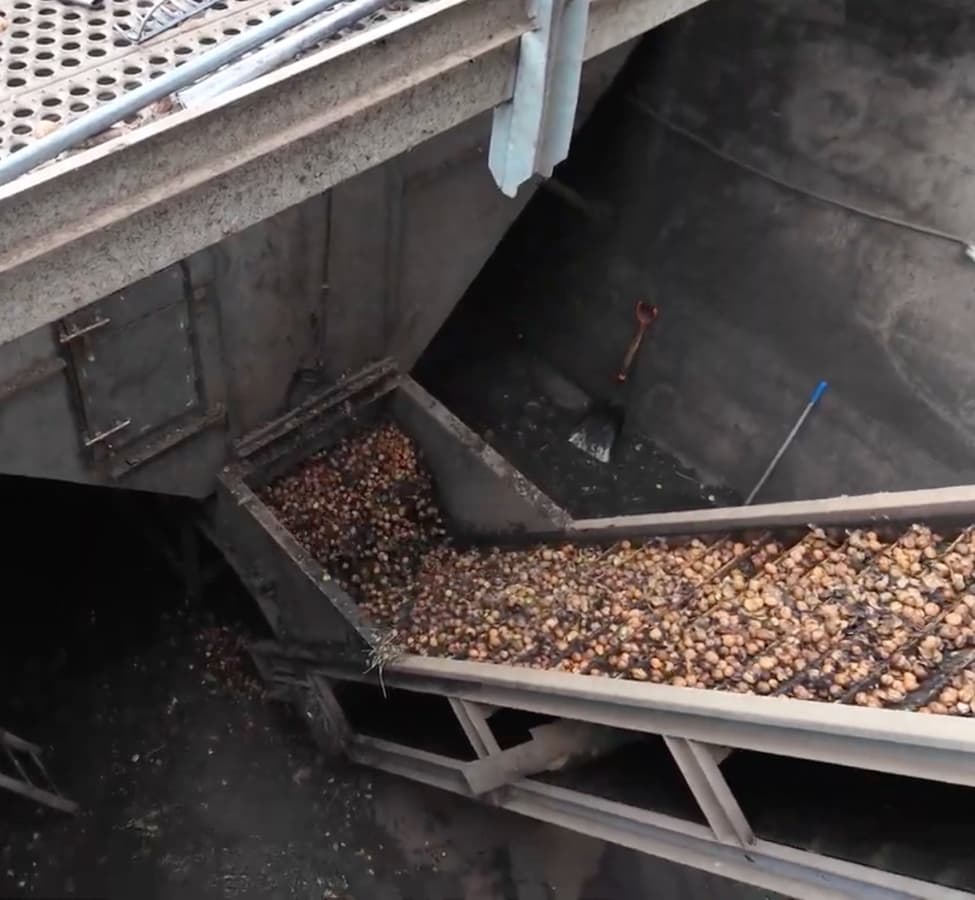
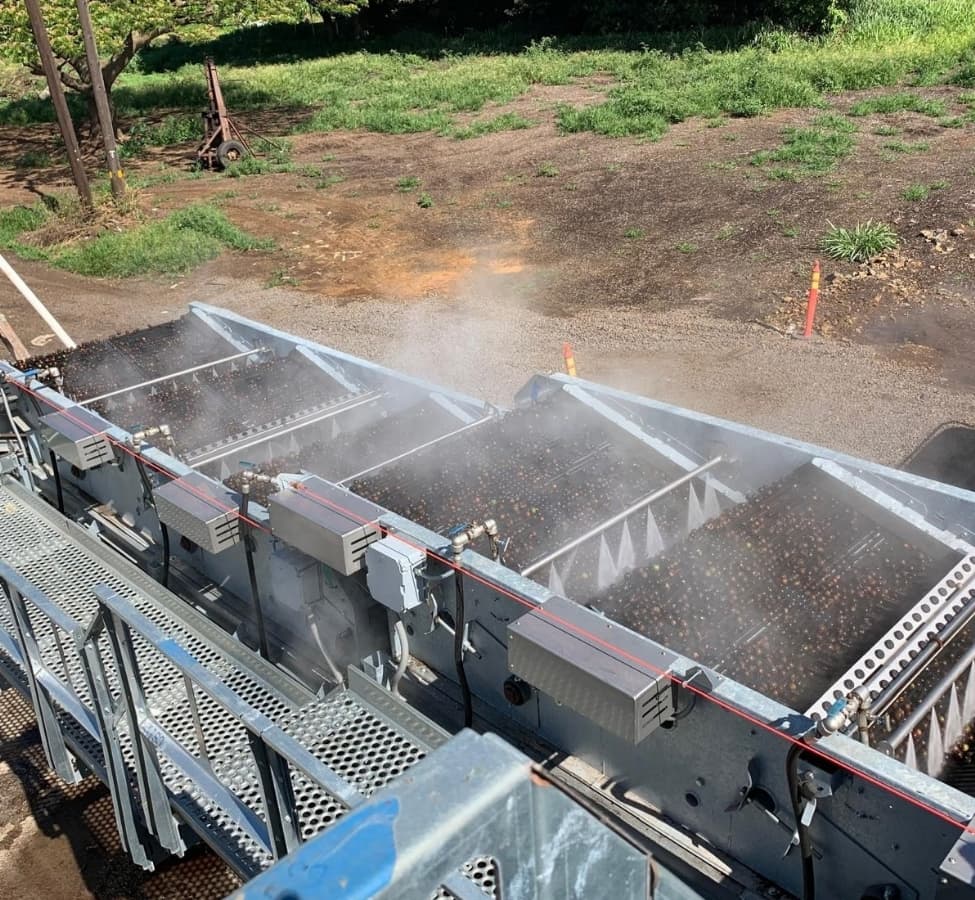
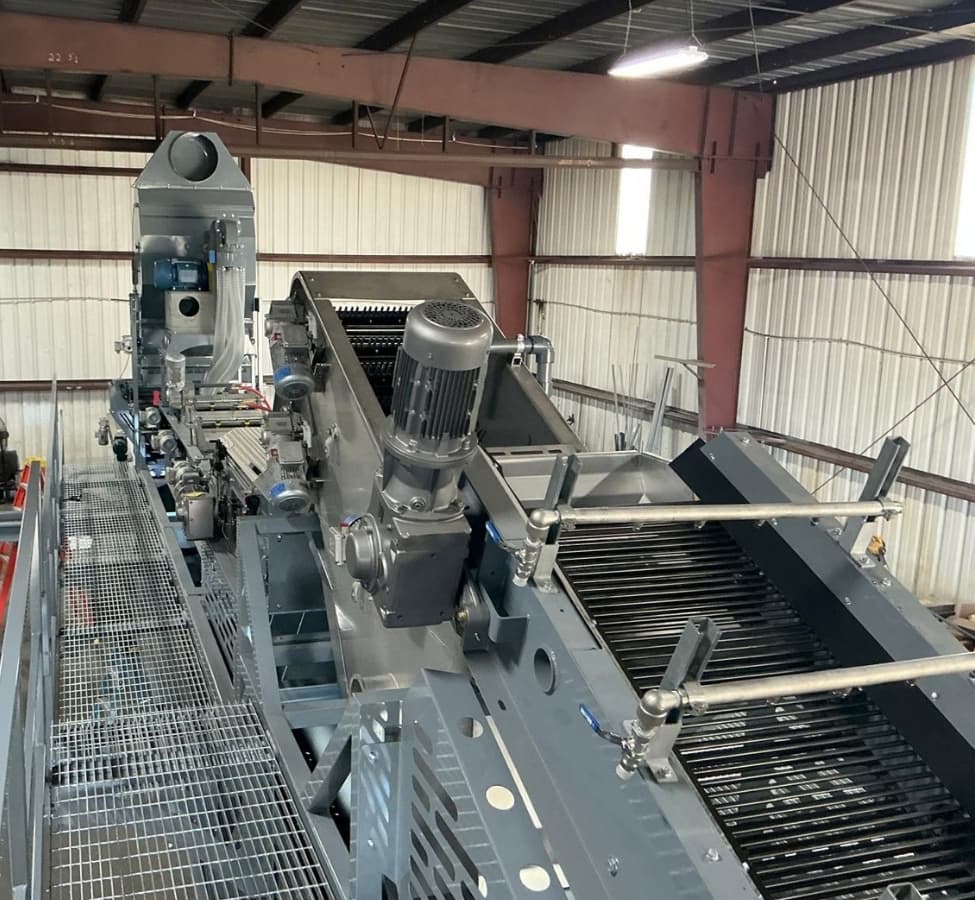
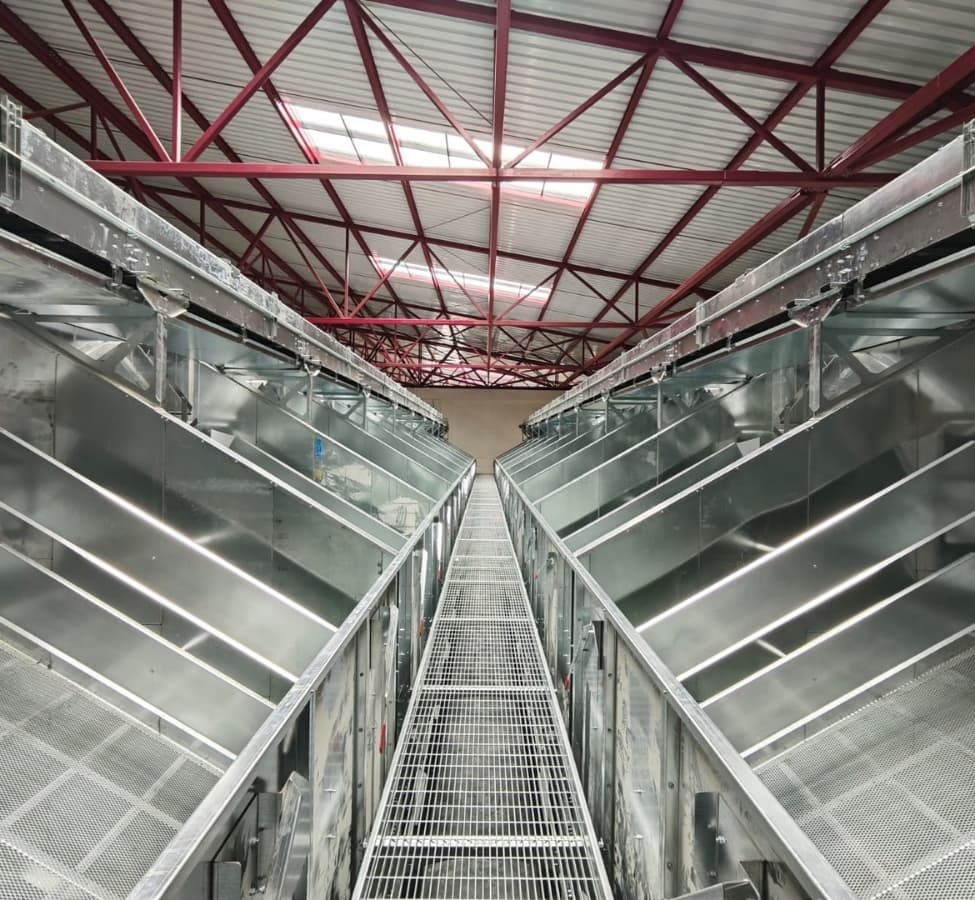
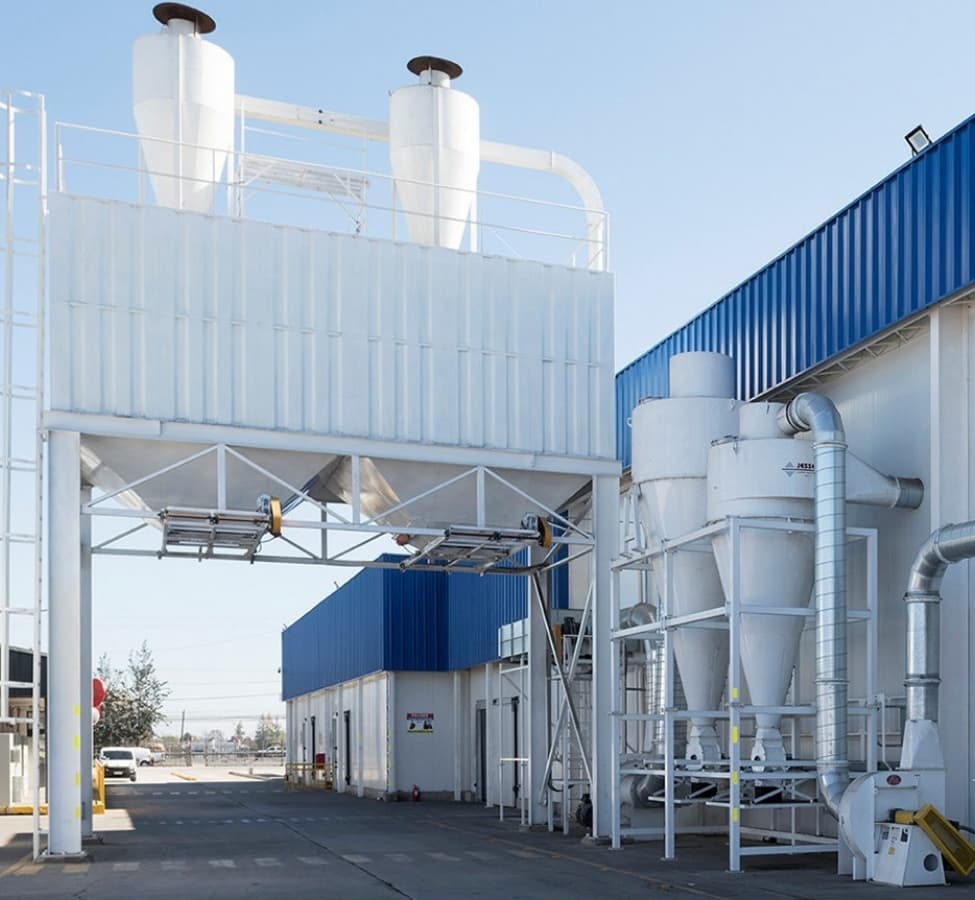
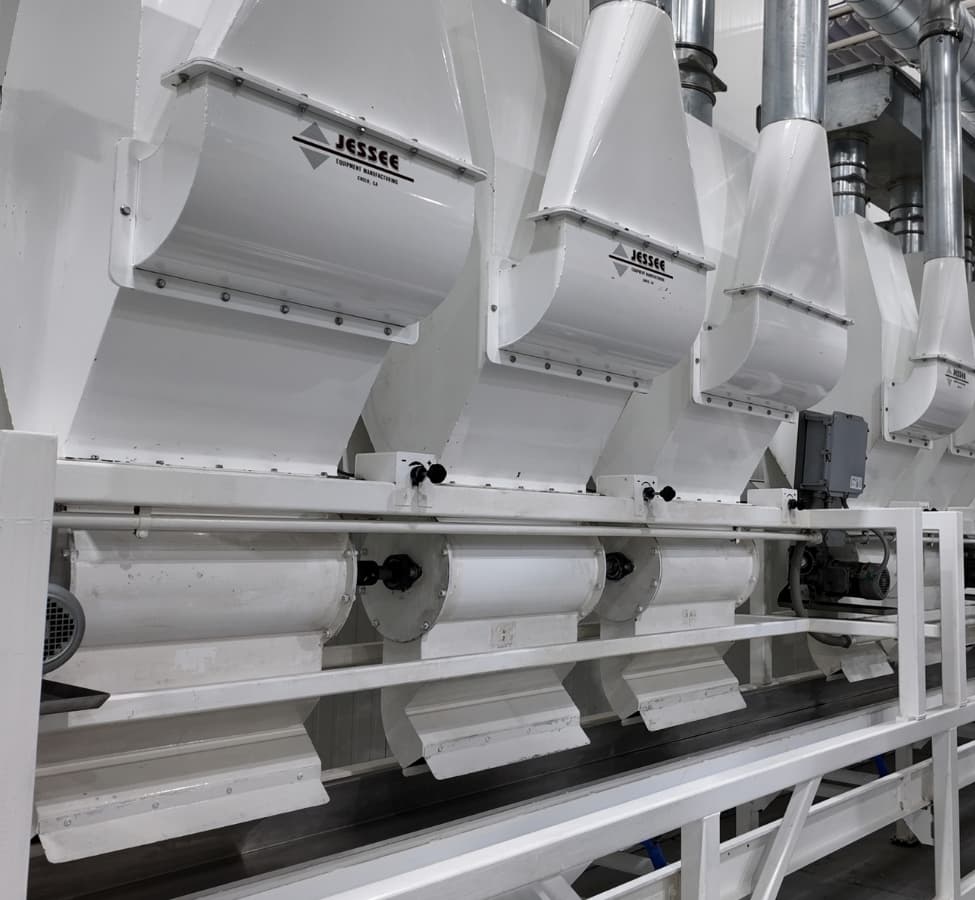
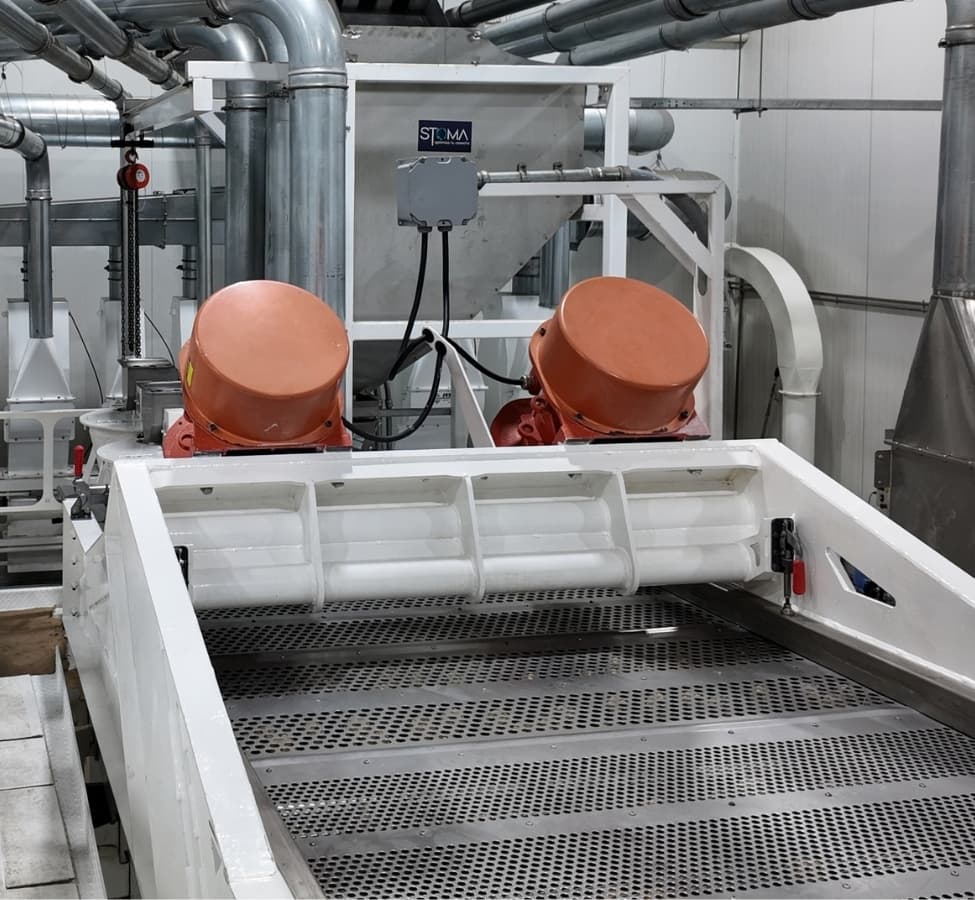
North Macedonia imported more almonds than it exported in every year from 2015 to 2025. In 2025 it imported 664.2 t of shelled almonds, 75.0% of them by weight from the United States, and 84.8 t in shell, and exported 2.7 t of shelled and 5.7 t of in-shell almonds (UN Comtrade via WITS). Jessee, whose processing lines OVE Europe supplies, builds hulling, drying, in-shell cleaning and sizing, and shelling systems; its Airlegs nut cleaner was developed for the almond industry.
For general information only. Information may become outdated and does not replace site-specific professional advice. Consult a qualified agronomist and confirm equipment suitability with OVE before acting.
Practical Tips for Almond Post-Harvest Handling & Processing
Hull promptly picked or frame-caught almonds while the hulls are fresh, then dry the nuts in the shell before storage.
Never pick up or stockpile rain-wet almonds: University of California guidance warns that stockpiling wet nuts risks mold and concealed damage.
Dry hulled almonds until the kernels reach 6% moisture or less, the University of California limit for stockpiling.
Test lots for aflatoxins against Regulation (EU) 2023/915, which the 2024 rulebook follows: 8.0 µg/kg of B1 and 10.0 µg/kg in total for consumers.
Keep each lot separate by cultivar and orchard block, and store dried almonds in a dry, clean place.
Plan sales with imports in mind: North Macedonia imported 664.2 t of shelled almonds in 2025, mostly from the United States.
Recommended Post-Harvest Handling & Processing Stages
Plan your post-harvest line
Estimate tons/day, cleaning & drying capacity, storage needs, and cost/kg—then build your equipment plan in phases.