







Hazelnut Orchard Establishment in North Macedonia
In the 2016 survey, the Polog region led with 92,369 hazelnut trees on 126 ha, ahead of the Northeast (109 ha) and East (90 ha) regions, and individual holdings held 476 of the 487 ha. No later official total was found; the office's organic hazelnut series to 2025 could not be read. In 2021, university researchers in Štip wrote of more than 800 ha of hazelnut plantations in the country, without giving a source or year.
Sources name few cultivars. The researchers in Štip took samples from 'Mortarella' and 'Tonda Gentile Romana' trees near Vinica in June 2021. In a greenhouse trial at the Institute of Agriculture in Skopje (cuttings of 2004 to 2005, published in 2016), hardwood cuttings of 'Tonda Romana' rooted best of six cultivars, at 85.5%. Hazelnut is self-incompatible, so Oregon State University (OSU) advises three pollinizer varieties, early, mid and late, on about 11% of the trees.
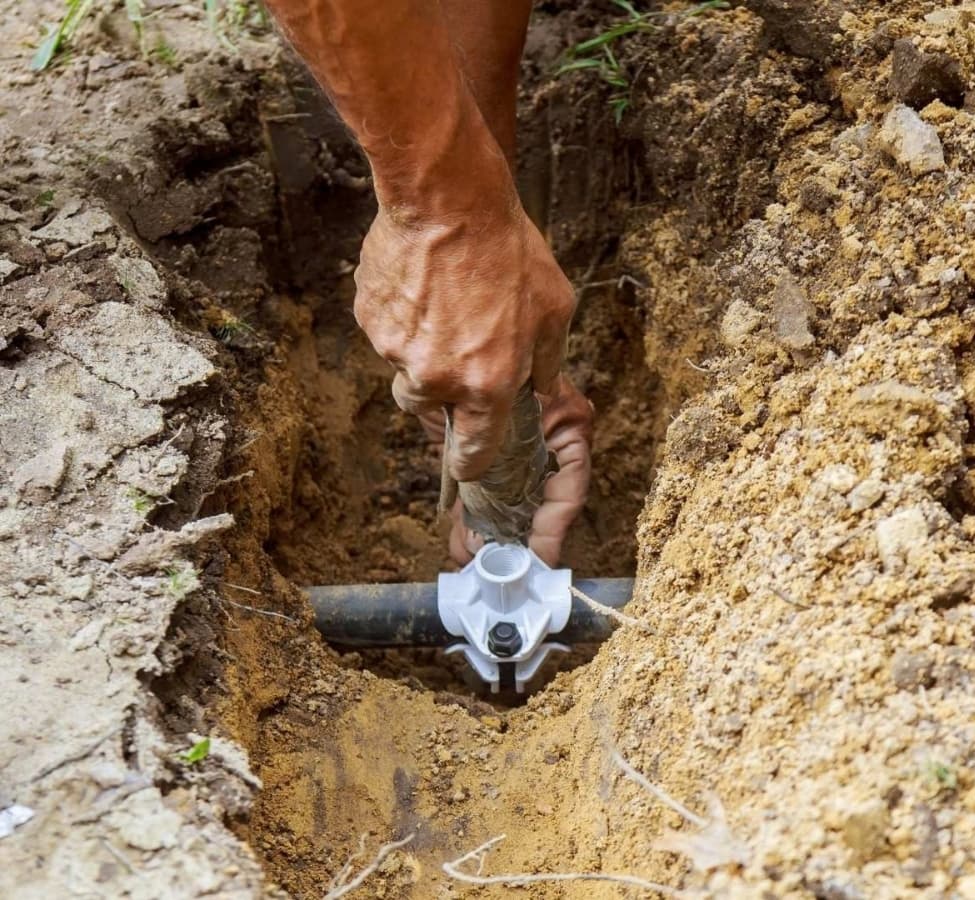
A 2011 paper on soils surveyed in November 2010 on 15 ha near Pehčevo, at about 1,000 m, for a planned hazelnut plantation found weakly humic, slightly to moderately acid soils and depressions waterlogged in the wet part of the year, and advised subsoiling to up to 1 m and drainage ditches around the plot. For machine harvest, this guide assumes single-trunk trees, which OSU describes as the usual form in the United States, at its standard spacing of 6 x 6 m.
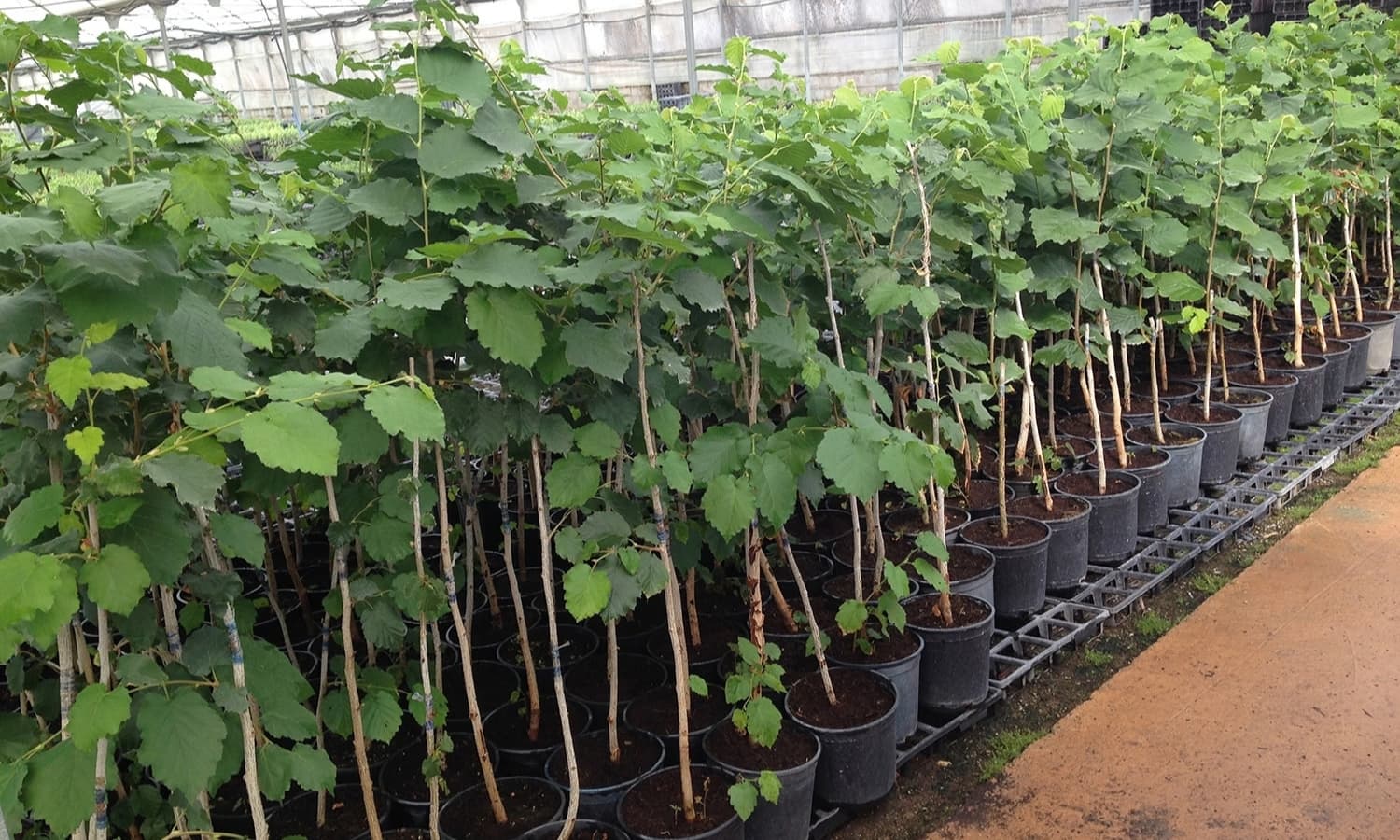

Practical Tips for Hazelnut Orchard Establishment
Choose airy sites where humidity does not build up around the plants: the researchers in Štip advise this to avoid conditions for disease.
Drain hollows that waterlog in the wet season: the Pehčevo soil study advised drainage ditches around the plot, and OSU says hazelnut does not tolerate wet soils.
Break impermeable layers before planting by subsoiling to up to 1 m without turning the soil over, as the Pehčevo soil study advised.
Plant healthy stock: the 2021 national lists of harmful organisms name bacterial blight for hazel plants and eastern filbert blight for those from Canada and the USA.
Plant three pollinizer varieties, early, mid and late, on every third tree in every third row, as OSU advises: hazelnut cannot set nuts with its own pollen.
Smooth the orchard floor at least a year before the first commercial harvest, as OSU advises, and remove soil mounds so sweepers can reach the trunks.
Recommended Establishment Stages
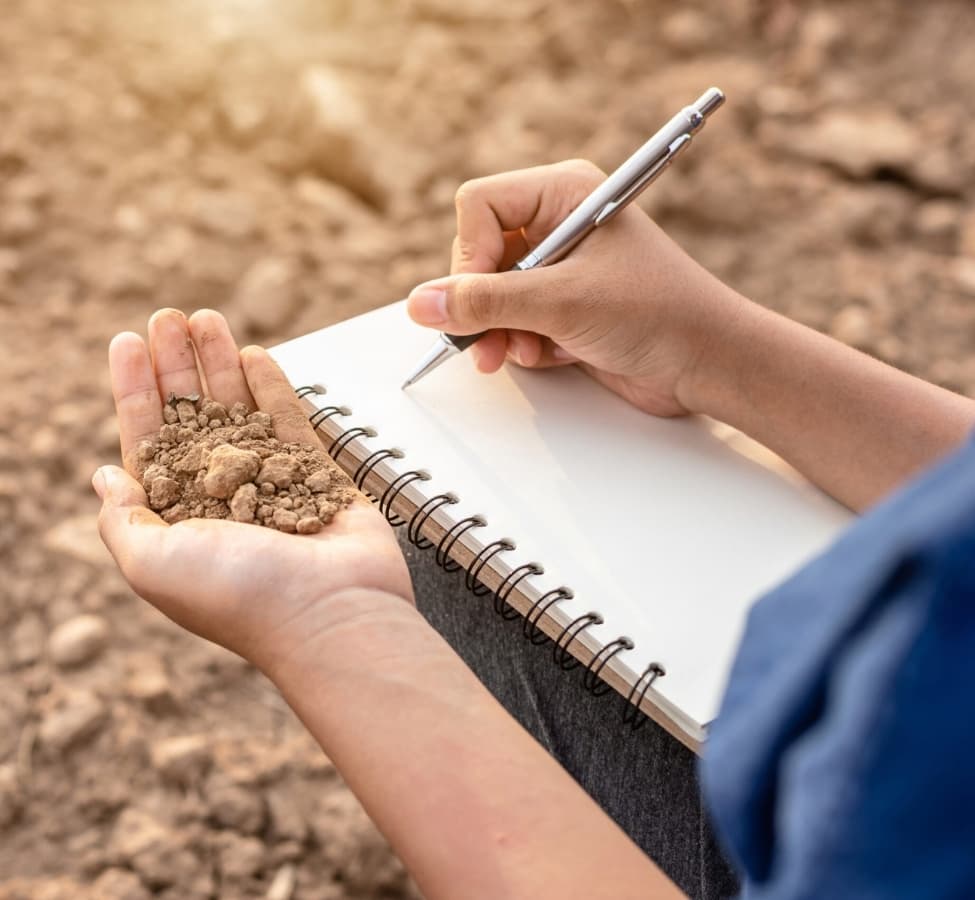

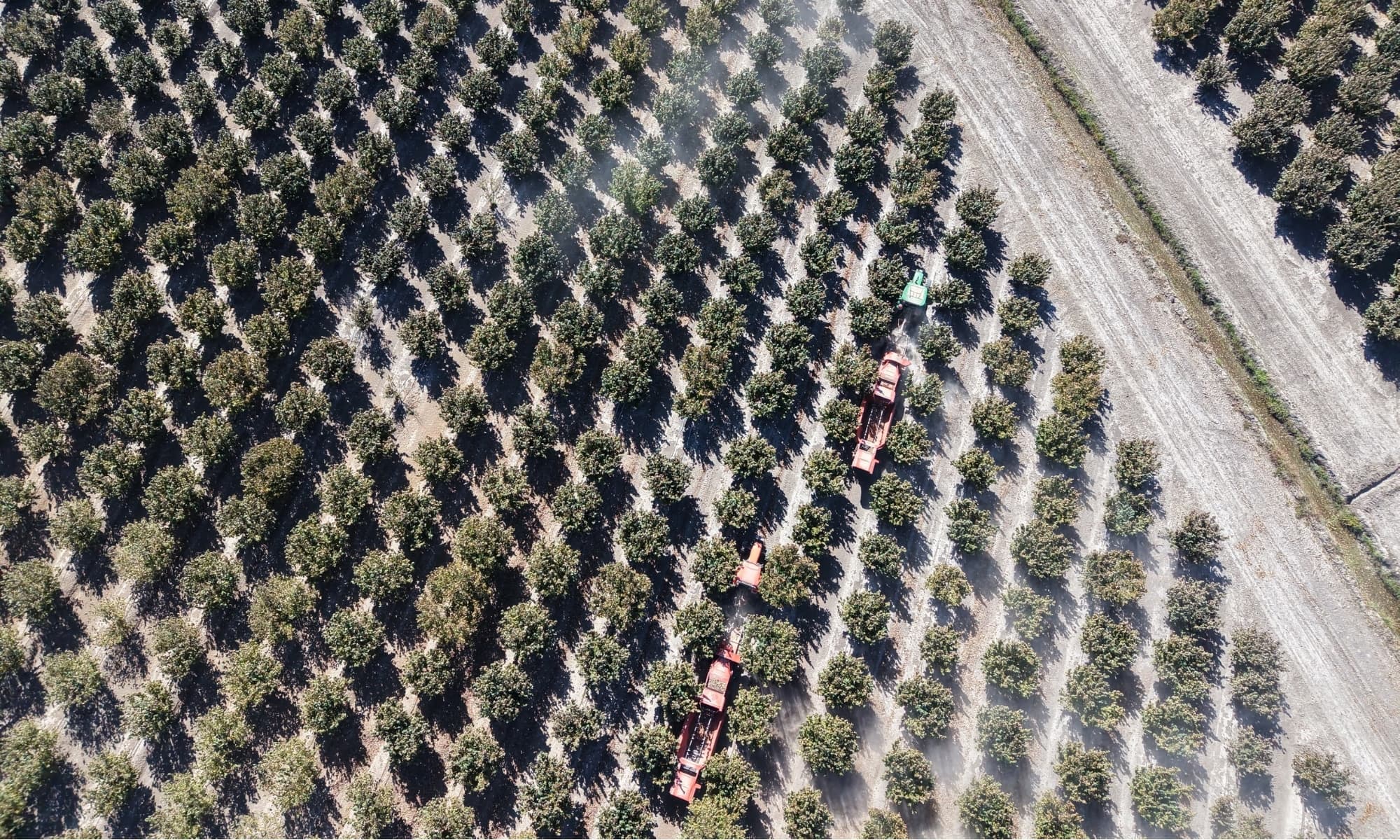

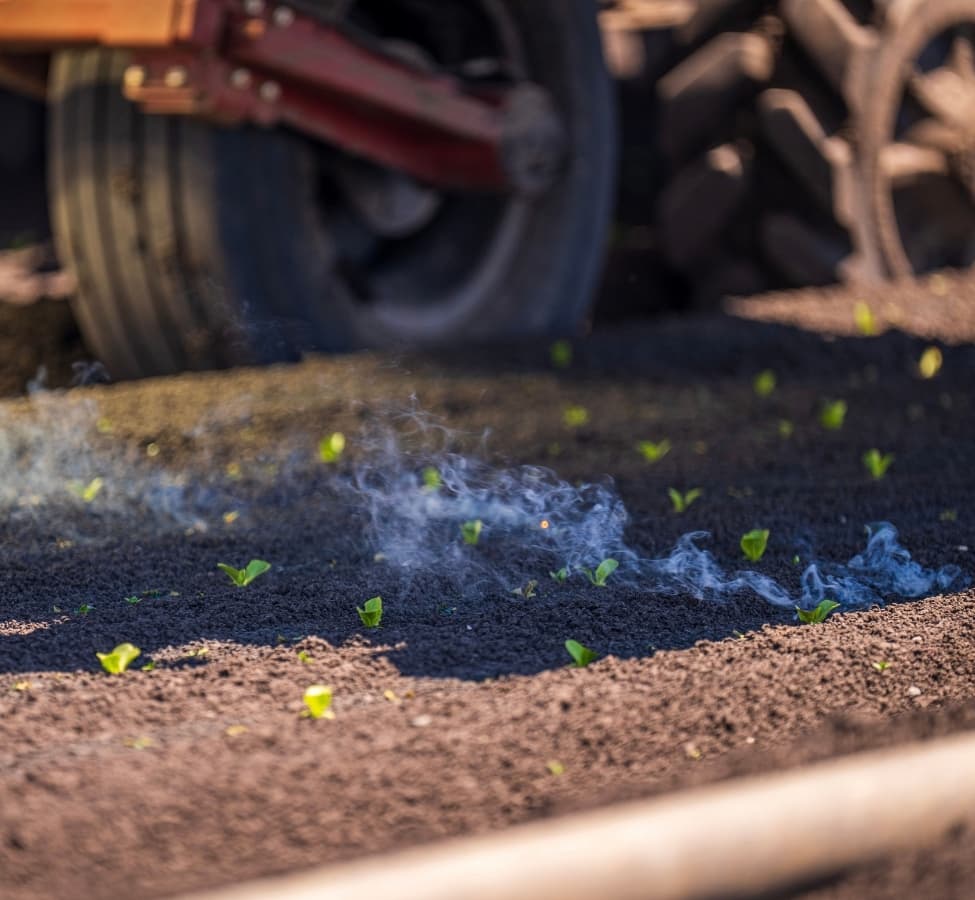


Hazelnut Orchard Care & Maintenance in North Macedonia
No source from North Macedonia covers hazelnut irrigation. WMO's normals for Skopje, whose period is not stated, give 34 mm of rain in July and 27 mm in August, with mean daily maxima of 29.8 and 30.0 °C, and in a 2021 poster the researchers in Štip linked heat waves, storms and droughts to a number of hazelnut diseases. OSU links midsummer water stress with greater susceptibility to bacterial blight, and the Codex code warns that under drought stress aflatoxin contamination is likely to be high.
In a 2020/21 study of hazelnut diseases on around 200 to 300 ha in the east of the country, the researchers in Štip found powdery mildew with significant but unquantified losses; near Vinica it was widespread on samples of 29 June 2021 and recurred with high air humidity and more rain. EPPO lists bacterial blight (Xanthomonas arboricola pv. corylina) as present, on information dated 2008, and the brown marmorated stink bug as present with a restricted distribution, first recorded in 2019 (information dated 2020); no record on hazel was found.
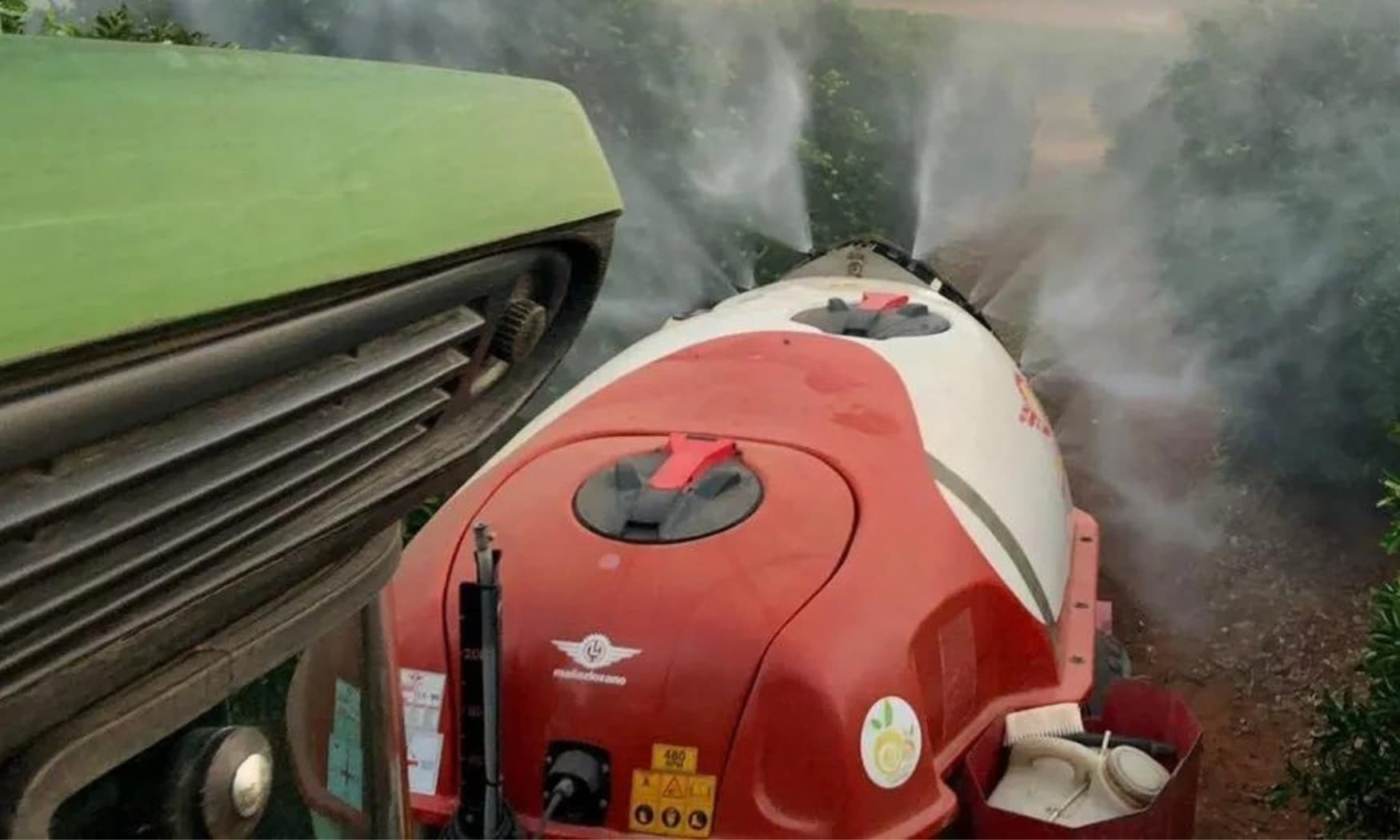
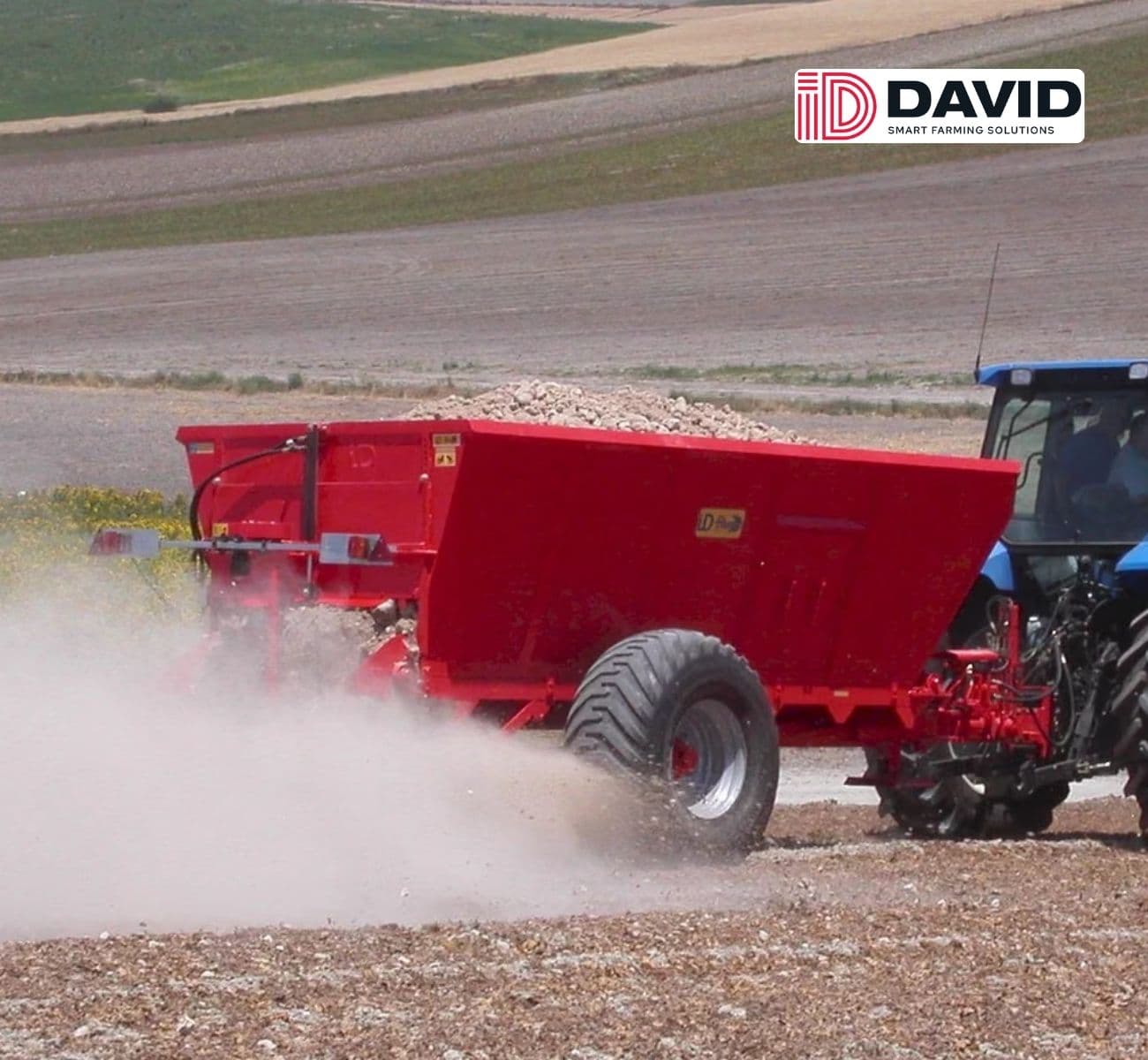
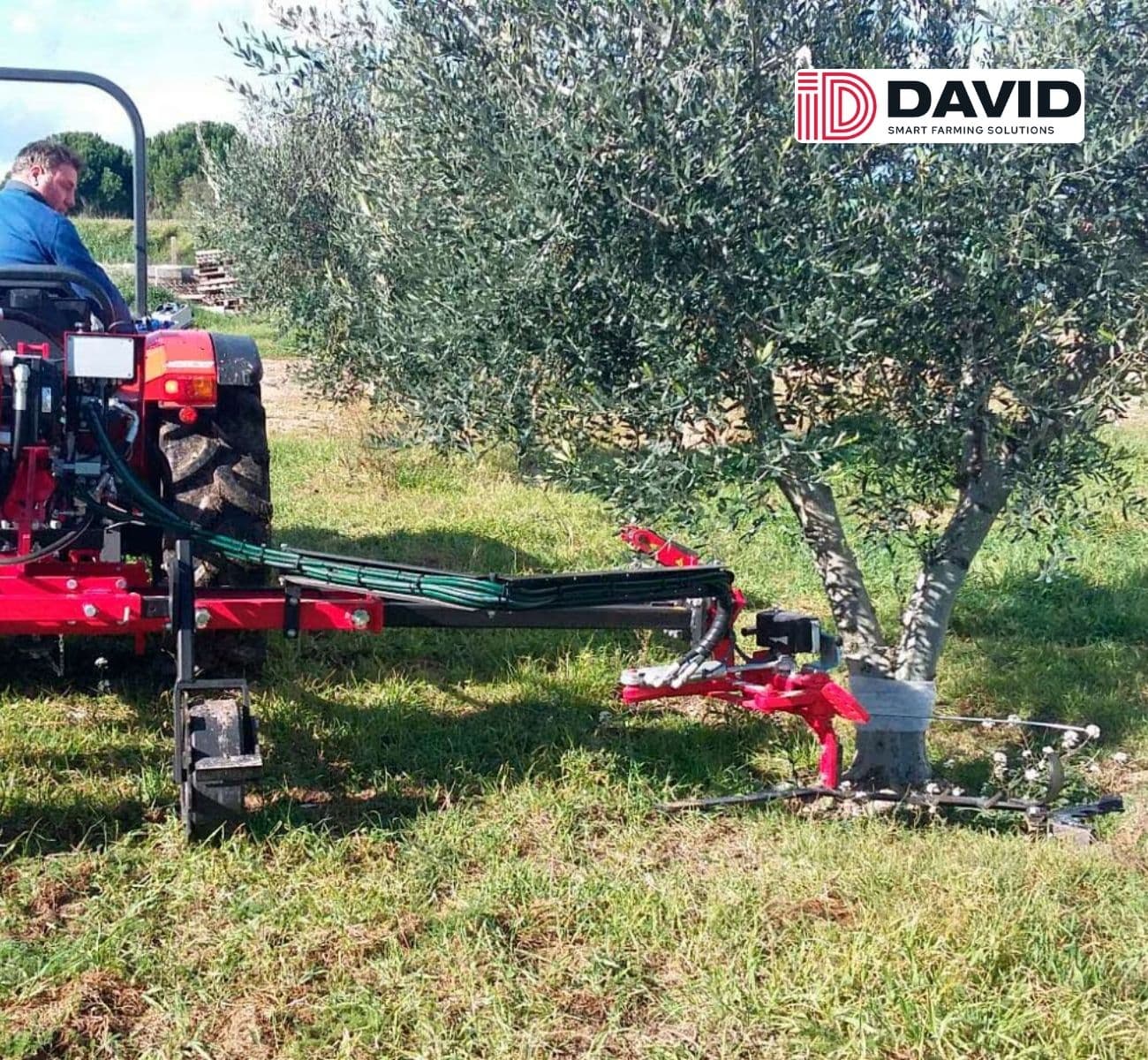
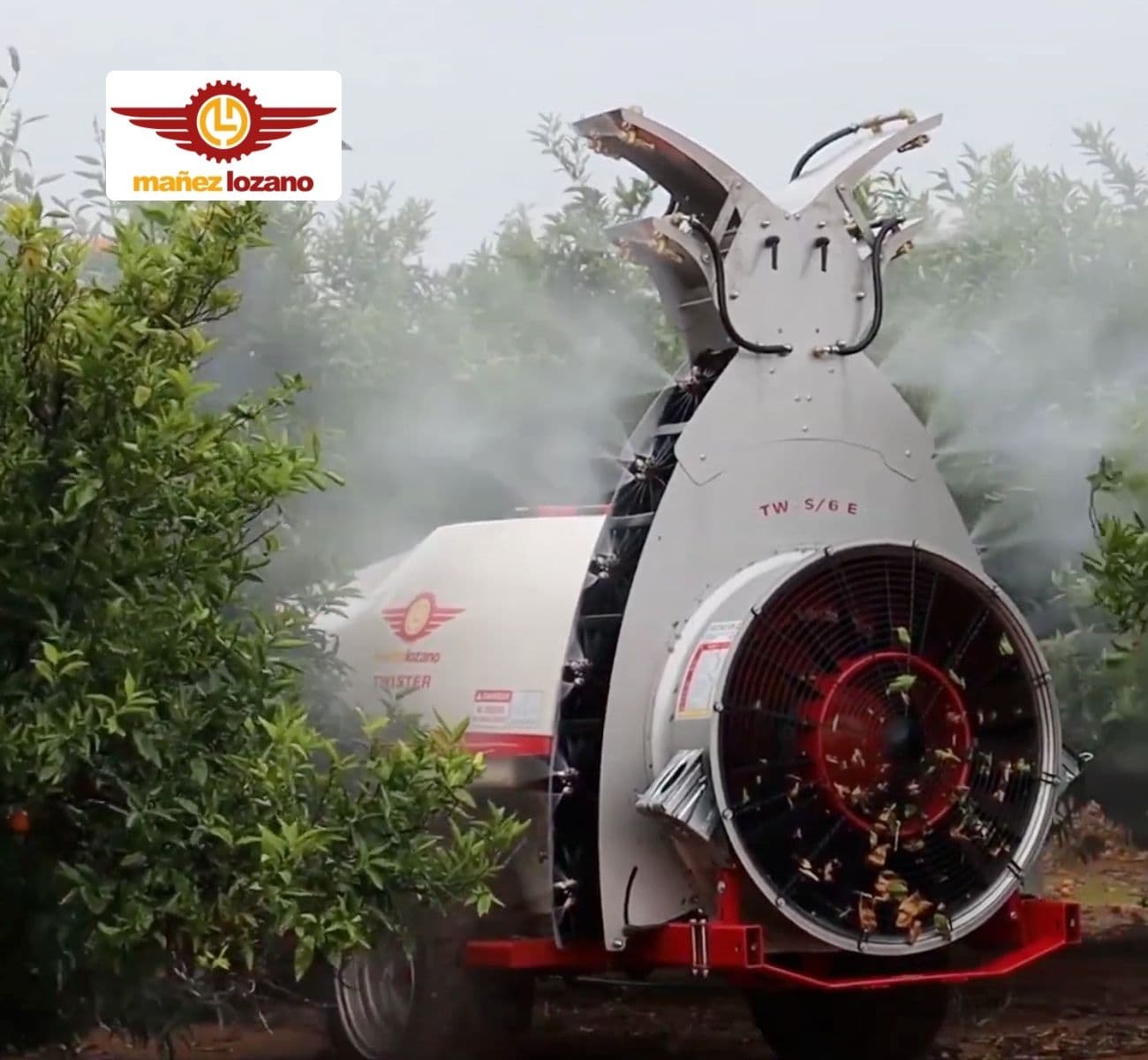
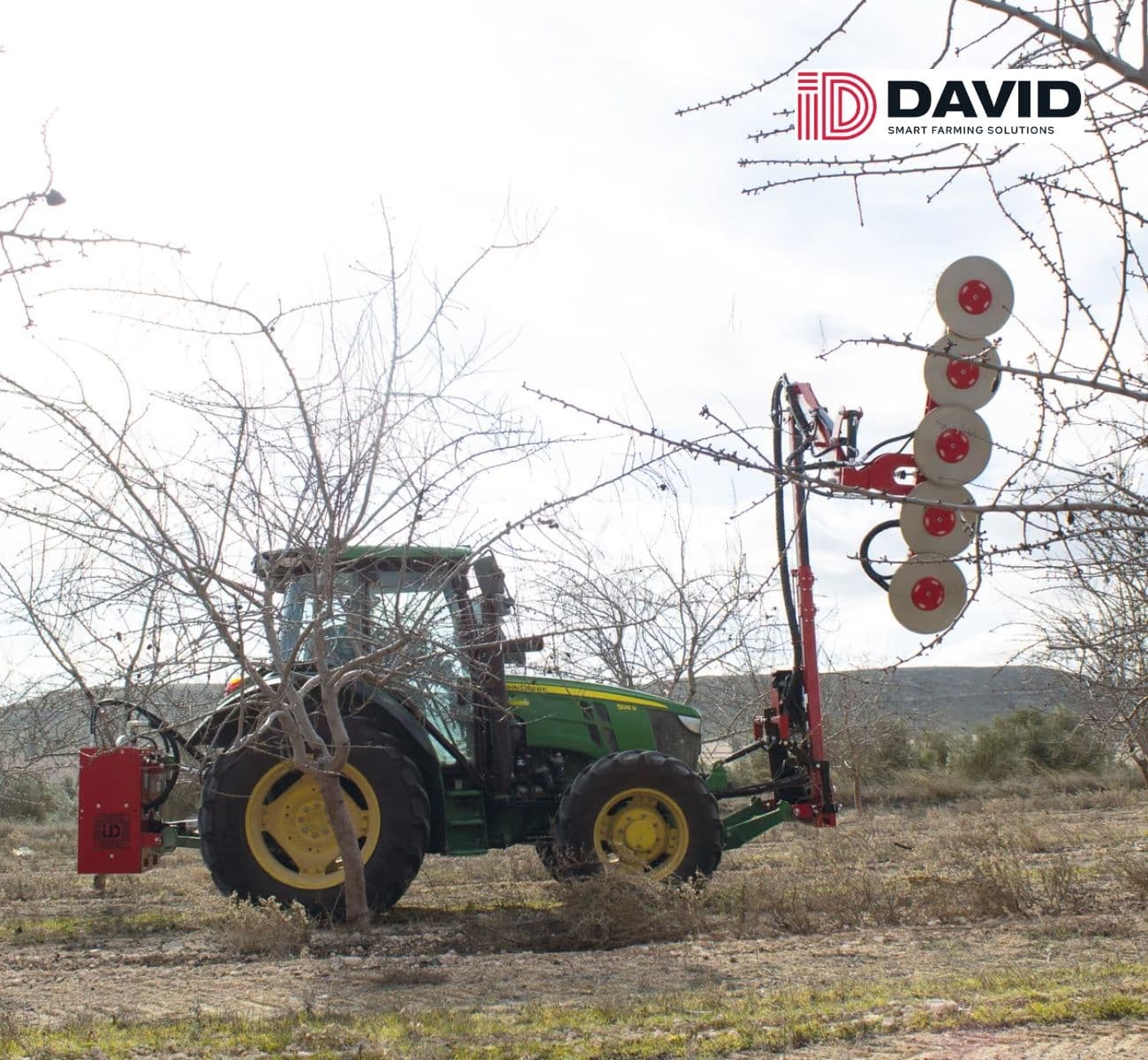
OSU advises pruning mature trees on a five-year rotation, one-fifth of the orchard each year, notes that all hazelnut varieties produce suckers, and says that flail mowing four to six times a season usually controls weeds. In single-stem orchards planted for machines, the ID DAVID SURFEED spreads solid manure, the ID-XL weeds the tree row, the Mañez Lozano Mega Twister S6 sprays tall, dense canopies and the ID-REX disc pruner makes lateral and topping cuts.
Recommended Orchard Care & Maintenance Stages



Practical Tips for Hazelnut Orchard Care & Maintenance
Plan drip irrigation for hot, dry summers: WMO's normals for Skopje give 27 mm of rain in August and a mean daily maximum of 30.0 °C.
Water young trees from their first season: OSU says irrigation in the first year lowers tree losses to bacterial blight.
Check leaves for powdery mildew in humid, rainy spells: the researchers in Štip found it widespread near Vinica in June 2021.
Watch for the brown marmorated stink bug, found in parts of North Macedonia: OSU notes that its feeding can leave kernels empty, shriveled or corked.
Inspect new orchards for eastern filbert blight for 2 years after planting, as OSU advises; EPPO lists it as present only in Canada and the USA.
Prune mature trees on a five-year rotation, one-fifth of the orchard each year, as OSU advises in its training and pruning guide.

Hazelnut Harvesting in North Macedonia
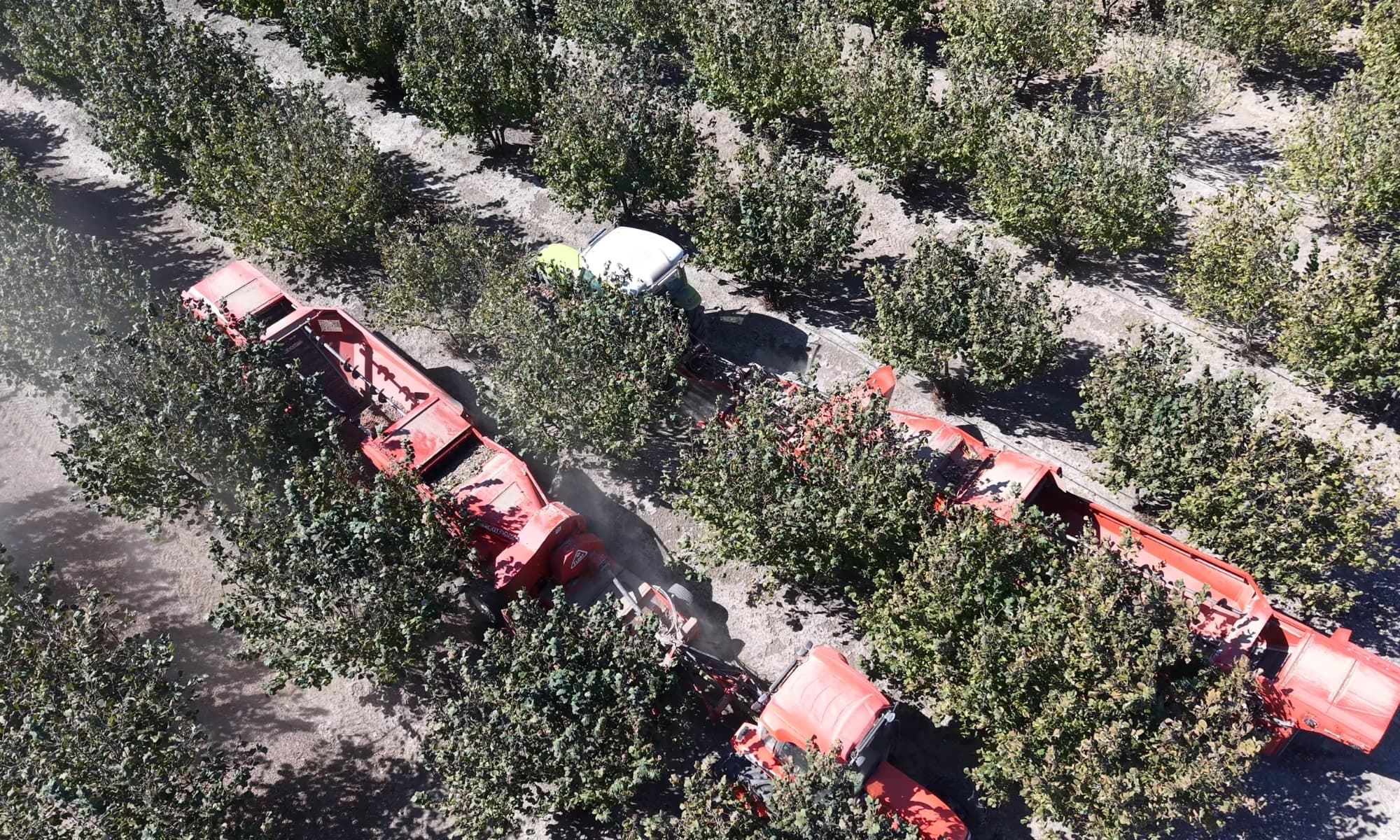
No source from North Macedonia gives hazelnut harvest dates or describes how hazelnuts are harvested, husked or dried. In a cultivar study at Čačak in Serbia, published in 2000, the earliest cultivar ripened on 18 August. In single-stem orchards planted for machines, mechanized harvesting can bring the crop in on time, with less risk of nuts deteriorating while they wait.
The system in this guide does not shake the trees: OSU explains that the thin-barked, shallow-rooted trees would be damaged. The nuts drop onto a level, mown floor and are picked up in several passes; in Oregon they begin to drop in September, and in most years it is October before all have fallen. WMO's normals give Skopje 27 mm of rain in August and 36 mm in September, and Ohrid averaged 76.1 mm on 10 days of 0.1 mm or more in October in 1971 to 2000.
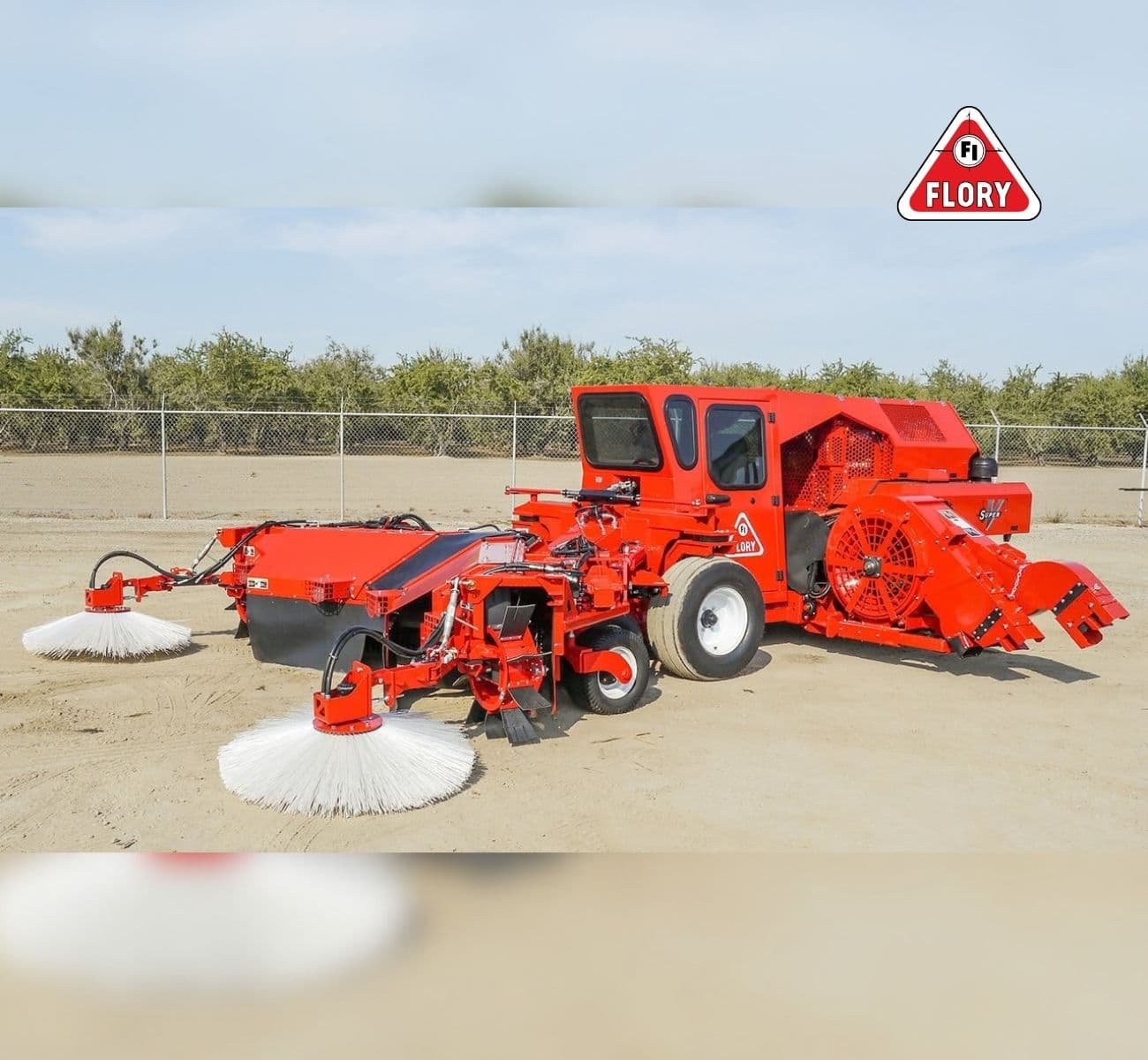
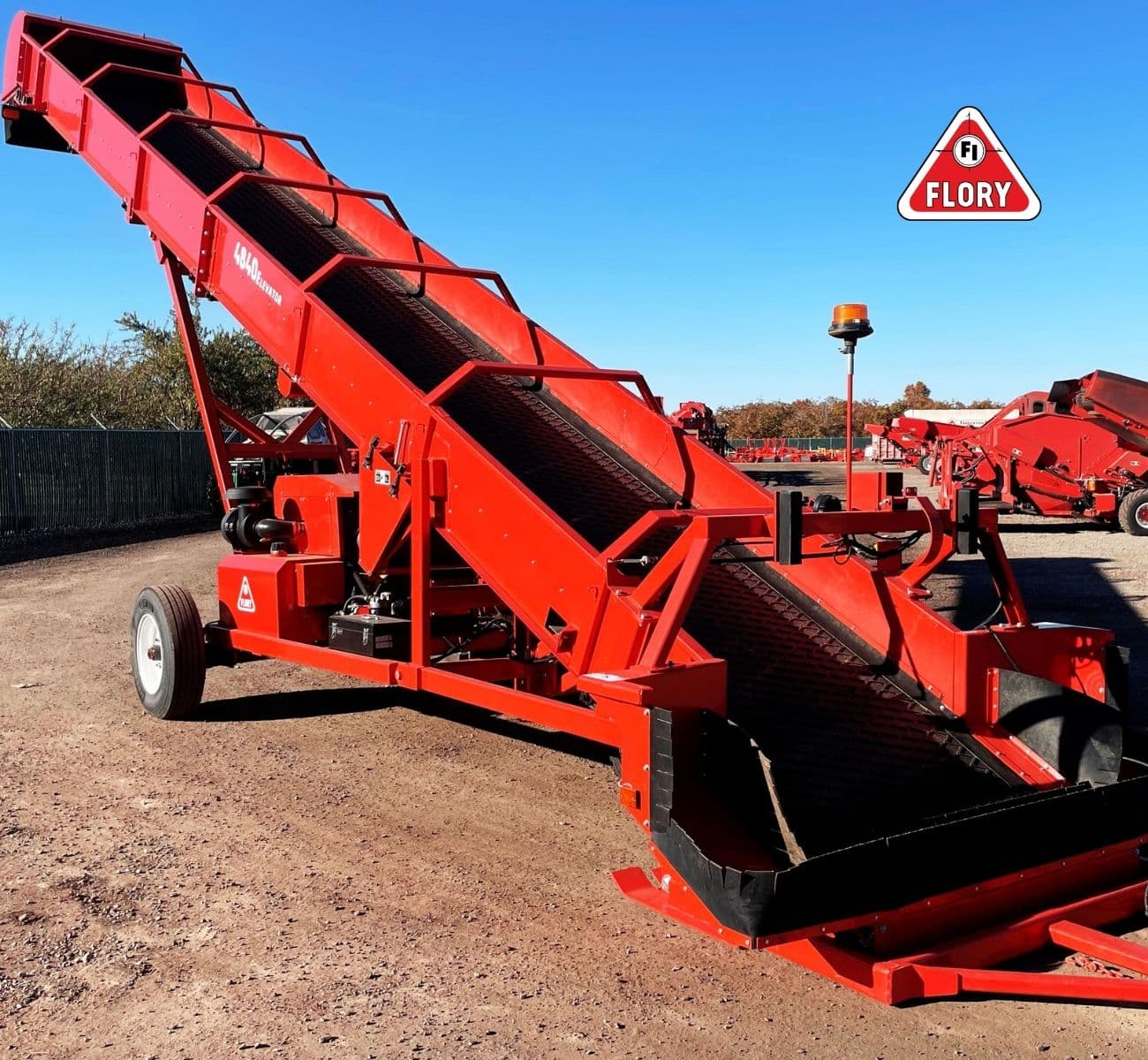
Flory harvesting machinery is available in North Macedonia through OVE Europe for single-stem orchards planted for machines. The self-propelled Flory V62 Sweeper sweeps the nuts into windrows, and the self-propelled 8772 Harvester picks them up; Flory lists a mud brush as standard for hazelnuts on the 8772. The 1500 Conveyor Cart receives the nuts, the ST14 Shuttle carries them and the 4840 Field Elevator loads trailers for the processing site.
Hazelnut Harvest Workflow (Recommended Equipment)



Practical Tips for Hazelnut Harvesting
Plan several pickup passes: OSU notes that most growers in Oregon harvest multiple times, as nuts fall over a period and the weather can turn too wet.
Keep pickup passes ahead of autumn rain where nut drop allows: at Ohrid, rain rose from 47.9 mm in September to 76.1 mm in October (1971 to 2000).
Level, smooth and flail-mow the orchard floor before nut drop, as OSU describes, so the sweeper can work right up to the trunks.
Gather fallen nuts before autumn rain where possible: British Columbia's hazelnut guide warns that a crop harvested wet causes storage problems.
Sweep only fast enough to keep ahead of the pickup machine, as British Columbia's guide advises, and clean harvesters between orchards.
Keep bins of harvested nuts out of the rain until drying: OSU notes that nuts in bins left in the rain before drying can turn moldy.
Get your recommended harvest setup
Enter orchard size, spacing, terrain, and target throughput—we’ll suggest a practical harvest workflow and equipment lineup.

Hazelnut Post-Harvest Handling & Processing in North Macedonia
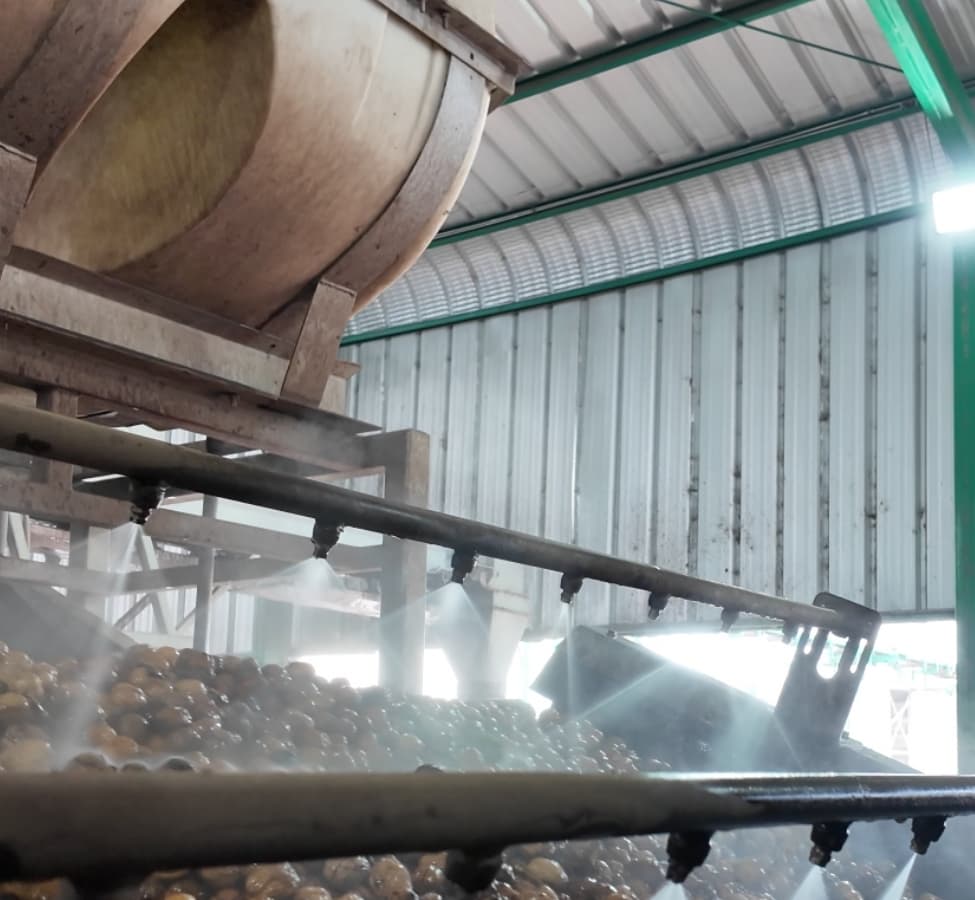
No source from North Macedonia describes how growers husk, dry or store hazelnuts. An article on a farming news site in North Macedonia advised in October 2026 taking nuts out of sacks soon after harvest and spreading them in a thin, even layer on a clean surface, a grid or a shallow crate. British Columbia's guide describes nuts husked, cleaned, washed, sanitized and dried to 5 to 8% moisture within 24 hours of harvest.
No marketing standard for hazelnuts was found among the rulebooks that the Food and Veterinary Agency lists under the law on the quality of agricultural products. Under UNECE's 2025 standards, in-shell hazelnuts may contain at most 12.0% moisture for the whole nut or 7.0% for the kernel, and kernels at most 6.0%. The Codex code advises storage, if possible, below 70% relative humidity and at 0 to 10 °C.
North Macedonia's 2024 rulebook on contaminants in food, whose annex was replaced in September 2024, aligns with Regulation (EU) 2023/915, which sets 5.0 µg/kg of aflatoxin B1 and 10.0 µg/kg in total for hazelnuts for the final consumer or used as an ingredient, and 8.0 and 15.0 µg/kg for hazelnuts still to be sorted. Jessee, whose processing lines OVE Europe supplies, builds drying, in-shell cleaning and sizing, and shelling systems, and it established product lines for hazelnuts in the 1980s.
For general information only. Information may become outdated and does not replace site-specific professional advice. Consult a qualified agronomist and confirm equipment suitability with OVE before acting.

Practical Tips for Hazelnut Post-Harvest Handling & Processing
Take nuts out of sacks soon after harvest and spread them in a thin, even layer, as a 2026 article on a farming news site in North Macedonia advises.
Do not cover drying nuts with plastic while they still release moisture, and keep undried nuts out of closed plastic sacks, as the same article warns.
Where possible, dry nuts in a dryer rather than in the sun: the Codex code warns that sun-dried nuts face a greater risk of contamination from fungal growth or pests.
Keep in-shell nuts within 12% moisture for the whole nut and 7% for the kernel, the limits in UNECE's 2025 standard for in-shell hazelnuts.
Test EU-bound lots against Regulation (EU) 2023/915: aflatoxin B1 5.0 and total 10.0 µg/kg for food use, or 8.0 and 15.0 µg/kg for nuts still to be sorted.
Sort out damaged, rotten, empty and rancid nuts after collection and move them to processing as soon as possible, as the Codex code advises.
Recommended Post-Harvest Handling & Processing Stages







Plan your post-harvest line
Estimate tons/day, cleaning & drying capacity, storage needs, and cost/kg—then build your equipment plan in phases.