






Almond Orchard Establishment in Portugal
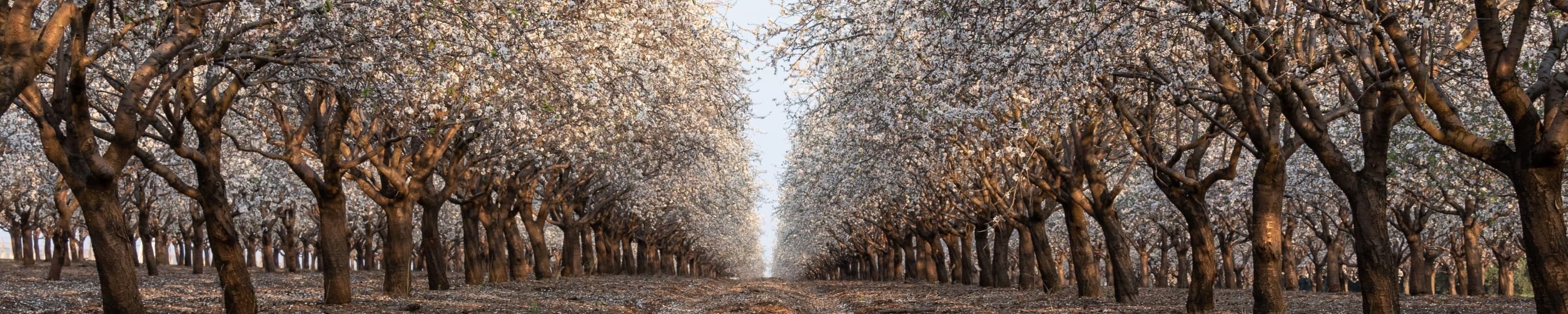
Traditional Portuguese cultivars, grown rain-fed, flower early and are self-incompatible, and the cultivars most used today are mostly self-fertile ones bred in France and Spain, such as Lauranne, Belona, Guara and Vairo, the national nut competence center's 2020 manual notes. Late bloom is common to the new cultivars, a manual of the national agrarian research institute (INIAV) adds. Twelve traditional Algarve cultivars are in the national variety register.
The almond is the first fruit tree to flower in Portugal: from the first half of January in the Algarve and between February and March in the Alto Douro, the center's 2017 manual notes. Open flowers begin to be damaged at 0.5 to -1.1 °C (2020 manual), and in 2025 low temperatures at bloom cut yields in parts of Trás-os-Montes, above all in traditional cultivars (INE).
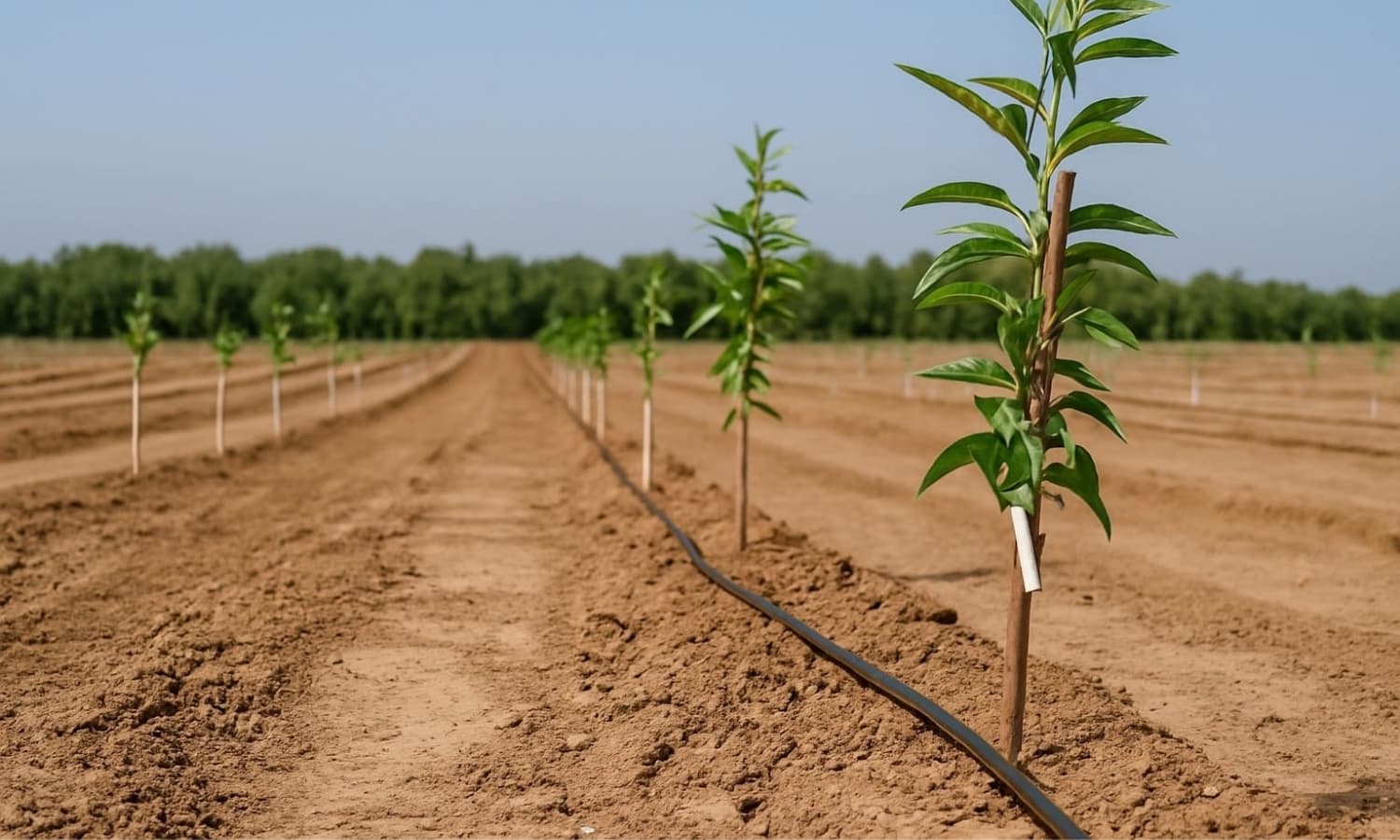
Spacings of 5 × 6 or 6 × 6 m are the most frequent (2020 manual). The INIAV manual finds the open vase best suited to the movement of machines, and the 2017 manual says catching frames need 8 to 9 m of diameter and spacings under 4 to 5 m hinder or prevent their use. Super-high-density hedgerows, harvested by straddle machines, are outside this guide. Plan rows, headlands and trunk height for the shaker, sweeper and harvester, and check them with OVE Europe.

Practical Tips for Almond Orchard Establishment
Favor later-blooming cultivars on frost-prone sites, as the national nut competence center's 2017 manual advises.
Plant 20 to 30% pollinizers with self-incompatible cultivars, as the 2017 manual advises; self-fertile cultivars can be planted alone.
Bring in hives at bloom: the INIAV manual recommends 10 hives per hectare, and at least 5 even for self-fertile cultivars.
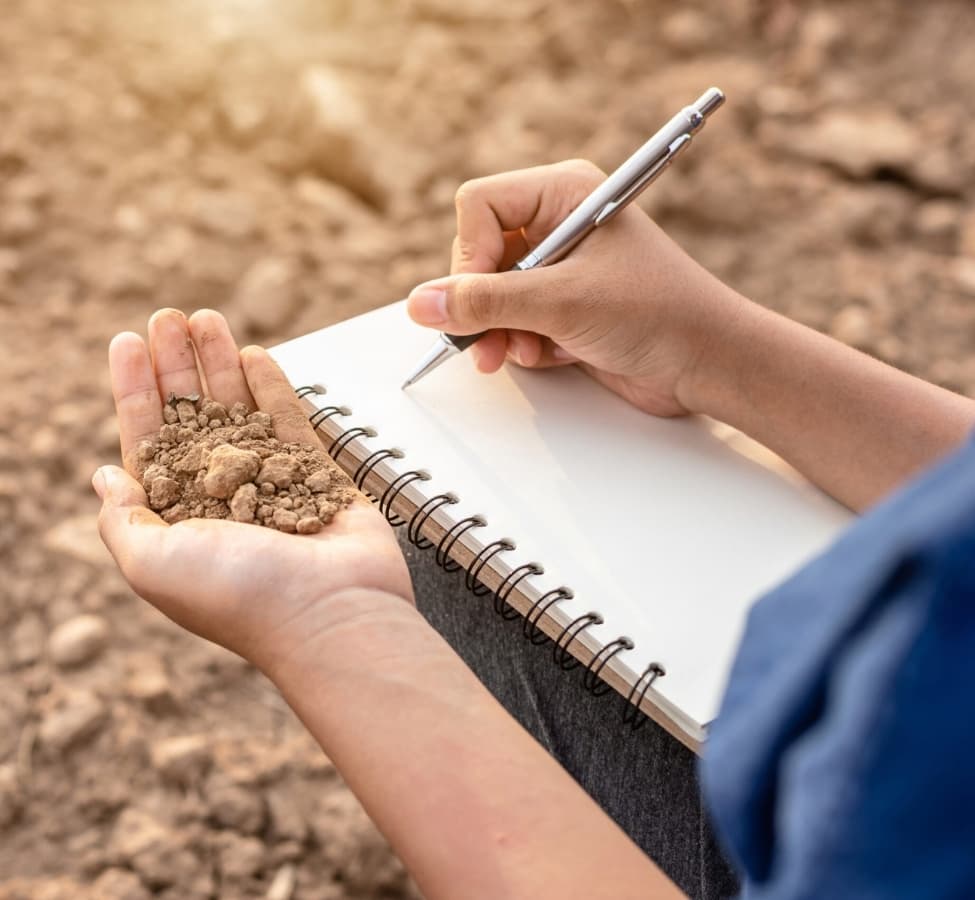
Correct soil pH below 5.5 before planting, as the 2020 manual advises; acid soils are common in Trás-os-Montes almond areas (2017 manual).
Avoid heavy, compact, clay and poorly drained soils; in the Alentejo, almond has been planted on ridges, the INIAV manual notes.
Plan rows, headlands and tree form for the shaker, sweeper and harvester before planting, and check trunk clearance with OVE Europe.
Recommended Establishment Stages


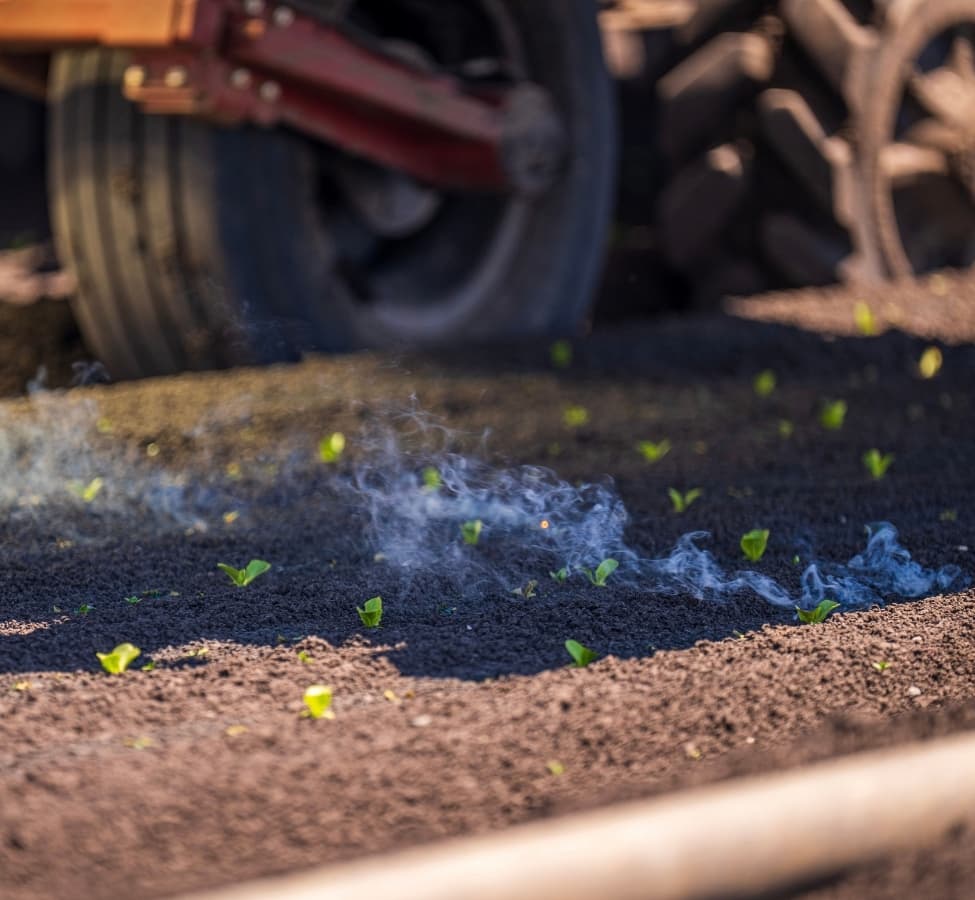
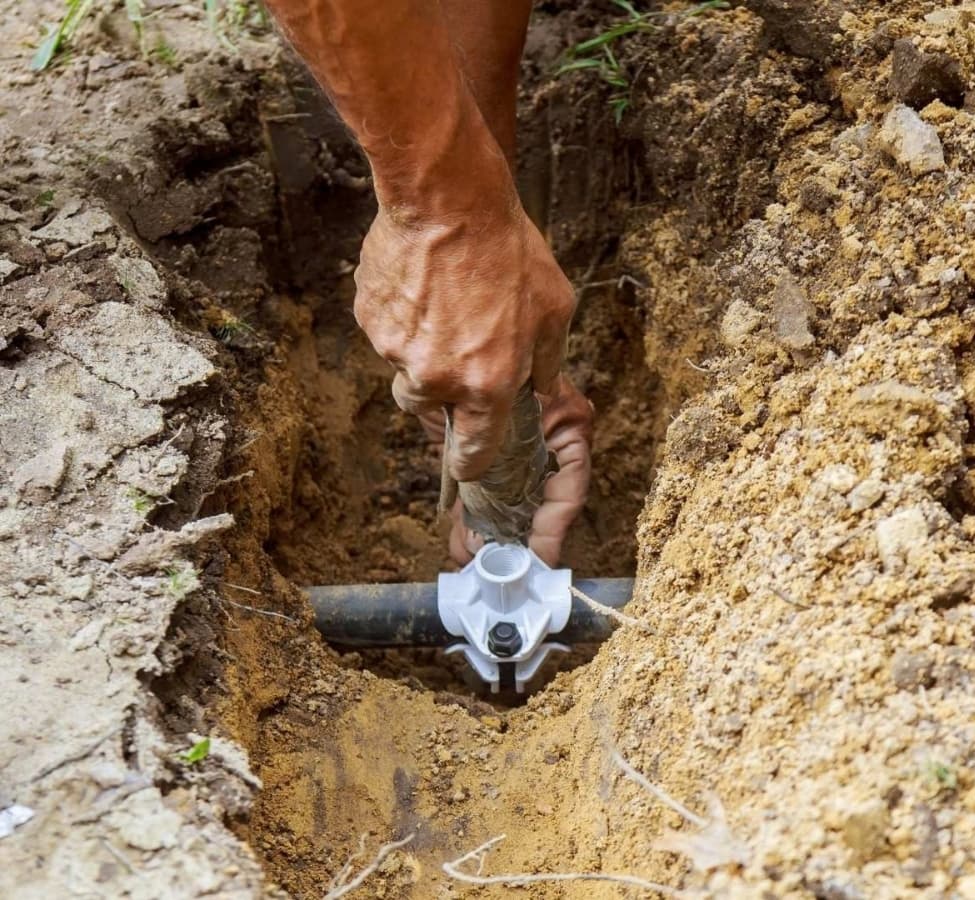


Almond Orchard Care & Maintenance in Portugal
Water sets yields apart. Rain-fed orchards are possible from about 300 mm of rain a year, the 2017 manual notes, while irrigation is a critical factor for yield and quality, and drip suits the crop best. Rain-fed orchards prevail in Trás-os-Montes, while the new Alentejo orchards are irrigated, and the INIAV manual recommends regulated deficit irrigation.
The lace bug Monosteira unicostata had three generations a year in a Trás-os-Montes orchard studied in 2018 and 2019, the first from mid-May to mid-June, a 2020 paper found, and the 2017 manual puts the economic threshold at more than 8 to 10% of leaves with eggs and young nymphs. EPPO records Xylella fastidiosa in Portugal under eradication; in 2022 it was found on almond plants in nurseries in the Centro region.
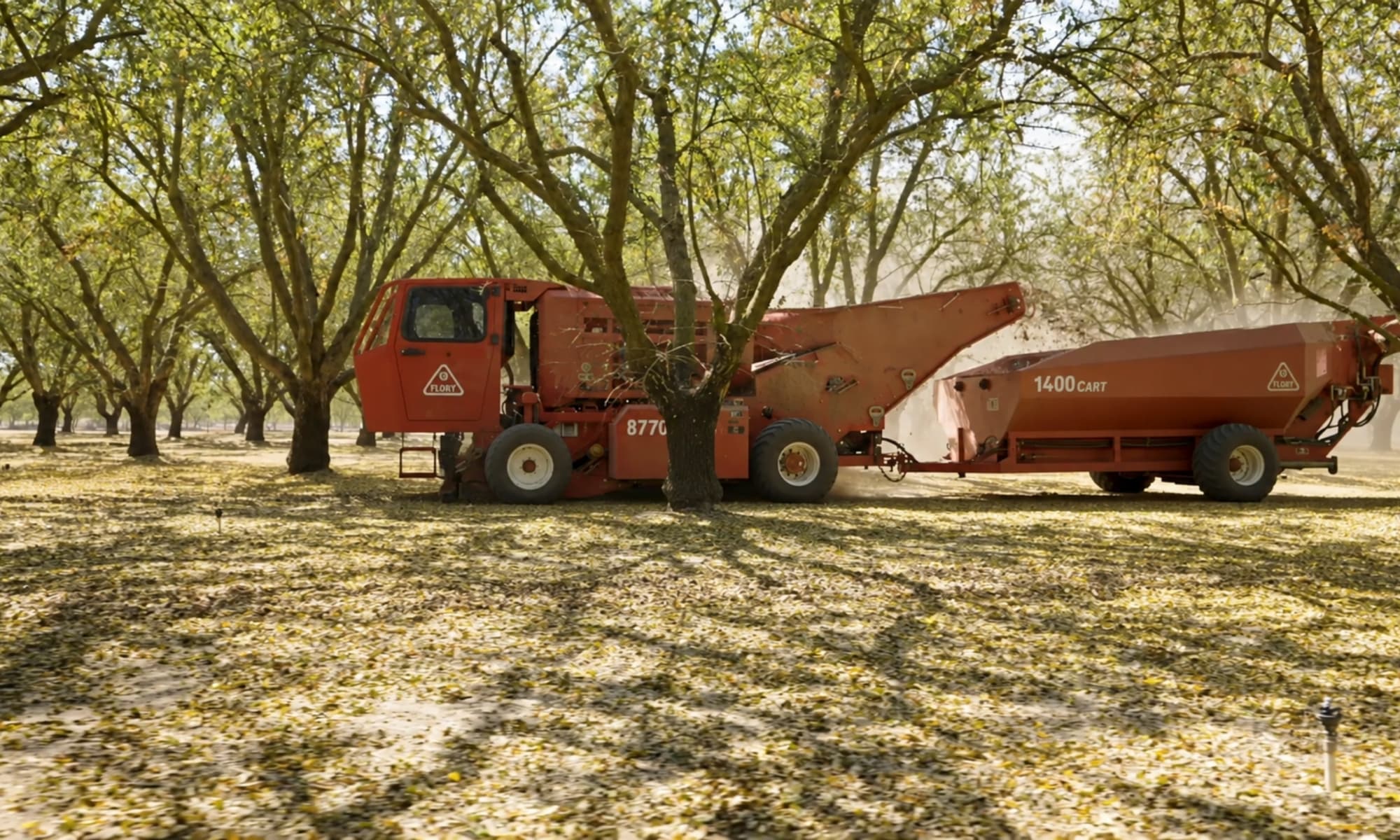
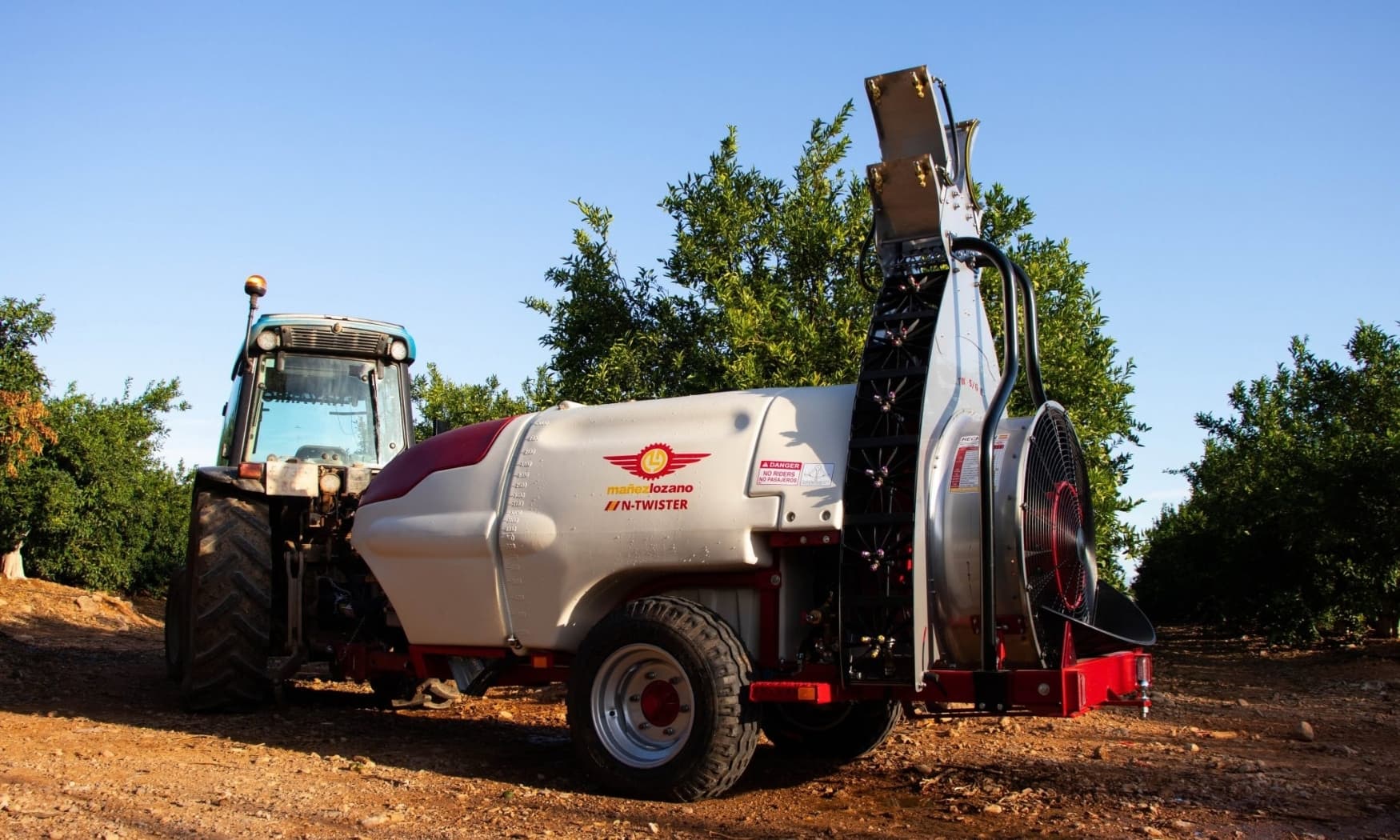
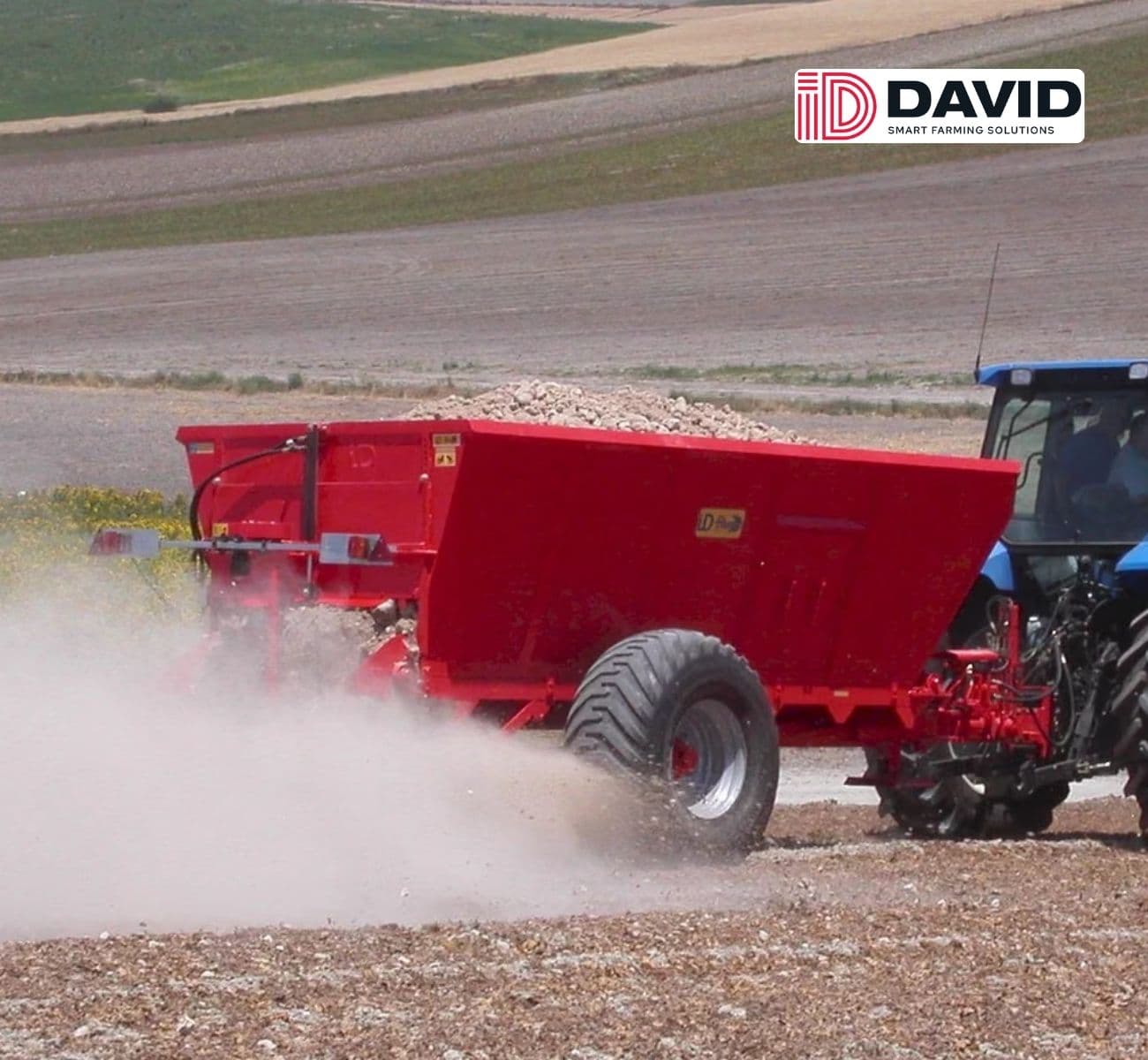
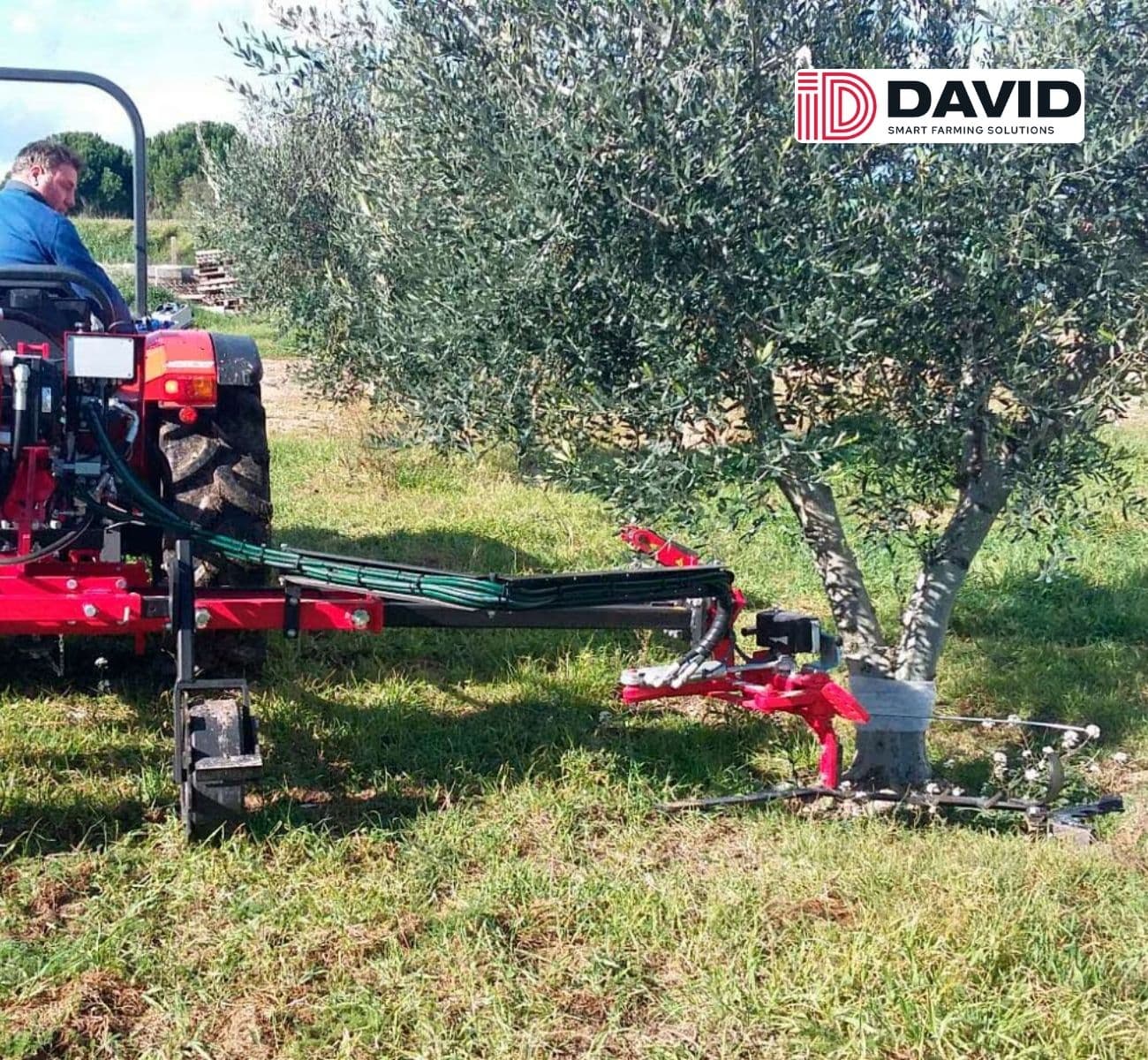
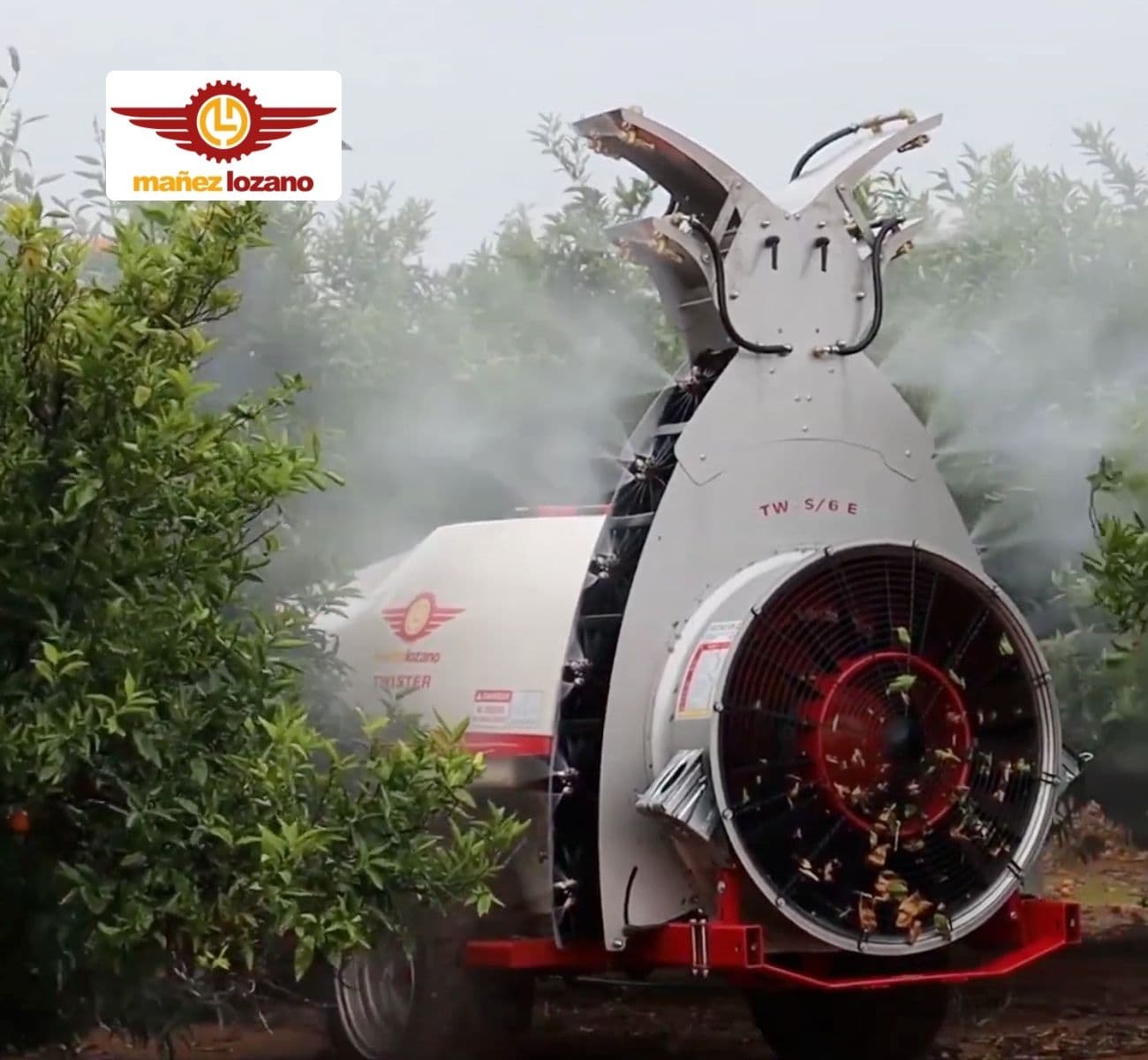
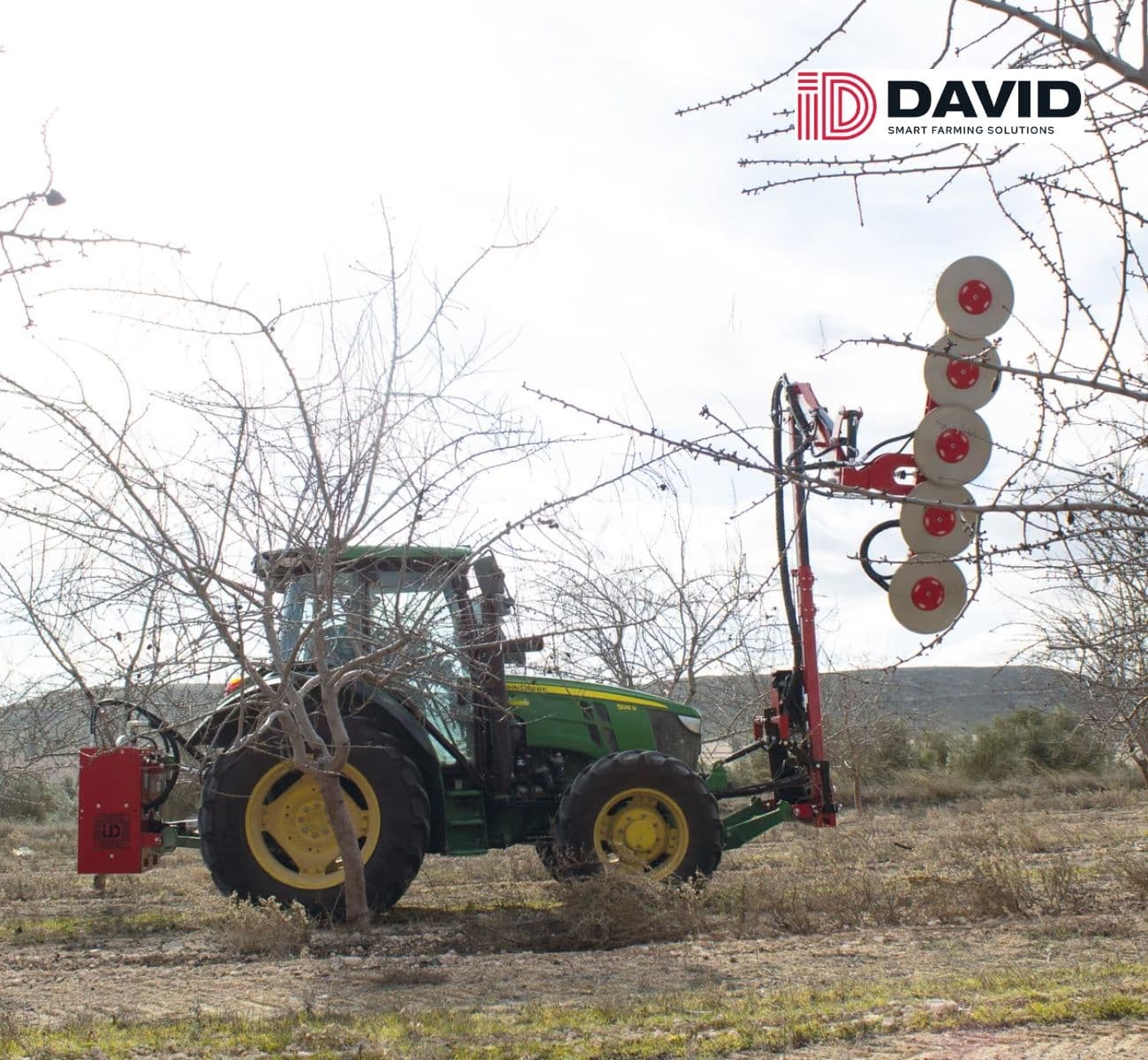
Summers are hot: Beja averages a 33.4 °C maximum in August (1991 to 2020, IPMA). For care work, the ID DAVID SURFEED spreads solid manure, the ID-XL weeds the tree row, the Mañez Lozano Mega Twister S6 sprays tall, dense canopies and the ID DAVID ID-REX disc pruner makes lateral and topping cuts.
Recommended Orchard Care & Maintenance Stages



Practical Tips for Almond Orchard Care & Maintenance
Where water is limited, use drip, which suits the crop best (2017 manual), with regulated deficit irrigation, as the INIAV manual recommends.
Every two weeks until September, sample leaves and count eggs and nymphs under a binocular magnifier to check the lace bug against the 2017 manual's threshold.
Prune in dry weather, avoid drastic cuts and remove cankered branches, as the 2017 manual advises.
Watch irrigated orchards for disease: the INIAV manual notes that irrigation raises humidity, which favors diseases such as anthracnose.
Keep the tree row weed-free with an in-row weeder such as the ID DAVID ID-XL, and keep the orchard floor level for harvest.
Spray tall, dense canopies evenly with a trailed airblast sprayer such as the Mañez Lozano Mega Twister S6.

Almond Harvesting in Portugal
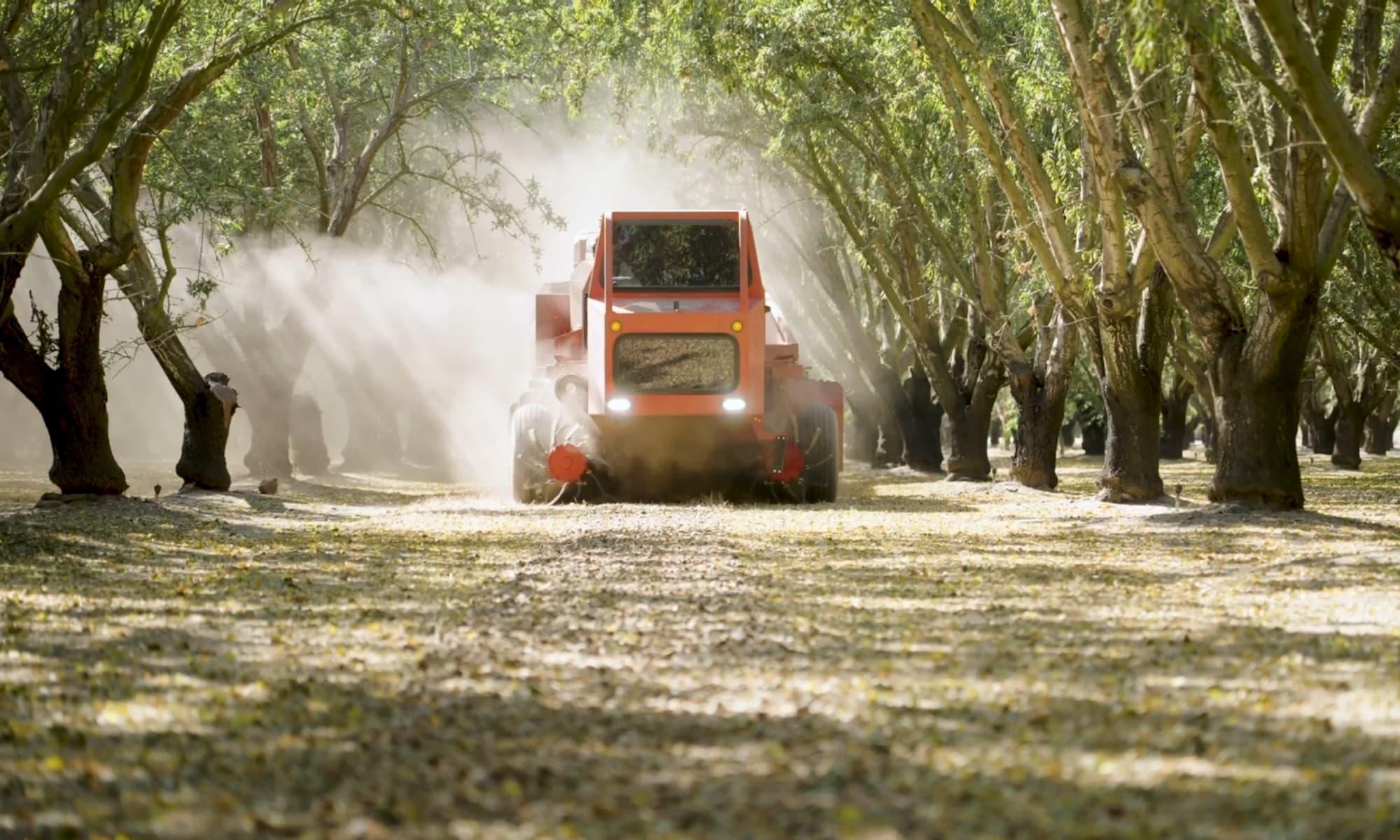
Almonds were traditionally harvested by hand, knocked with poles onto the ground or onto sheets, which takes much costly labor, and a growing number of growers were mechanizing, the 2017 manual notes; the INIAV manual dates the harvest from about 20 August for early cultivars and from about 20 September for late ones. In orchards planted for machines on suitable ground, mechanized harvesting can bring the crop in on time, with less risk of nuts deteriorating while they wait.
August is reliably dry in the south: Beja averages 4.4 mm on 0.5 rain days (1991 to 2020, IPMA). September is not: Beja averages 27.4 mm on 3.1 rain days and Mirandela, in the north, 32.7 mm on 3.8, and Beja had 93.8 mm in September 2022 but 0.1 mm in 2025. The INIAV manual warns that autumn rain at harvest hinders hulling and drying and calls pickup from the ground less common in Portugal, so this guide pairs catching frames with prompt pickup rather than ground drying.
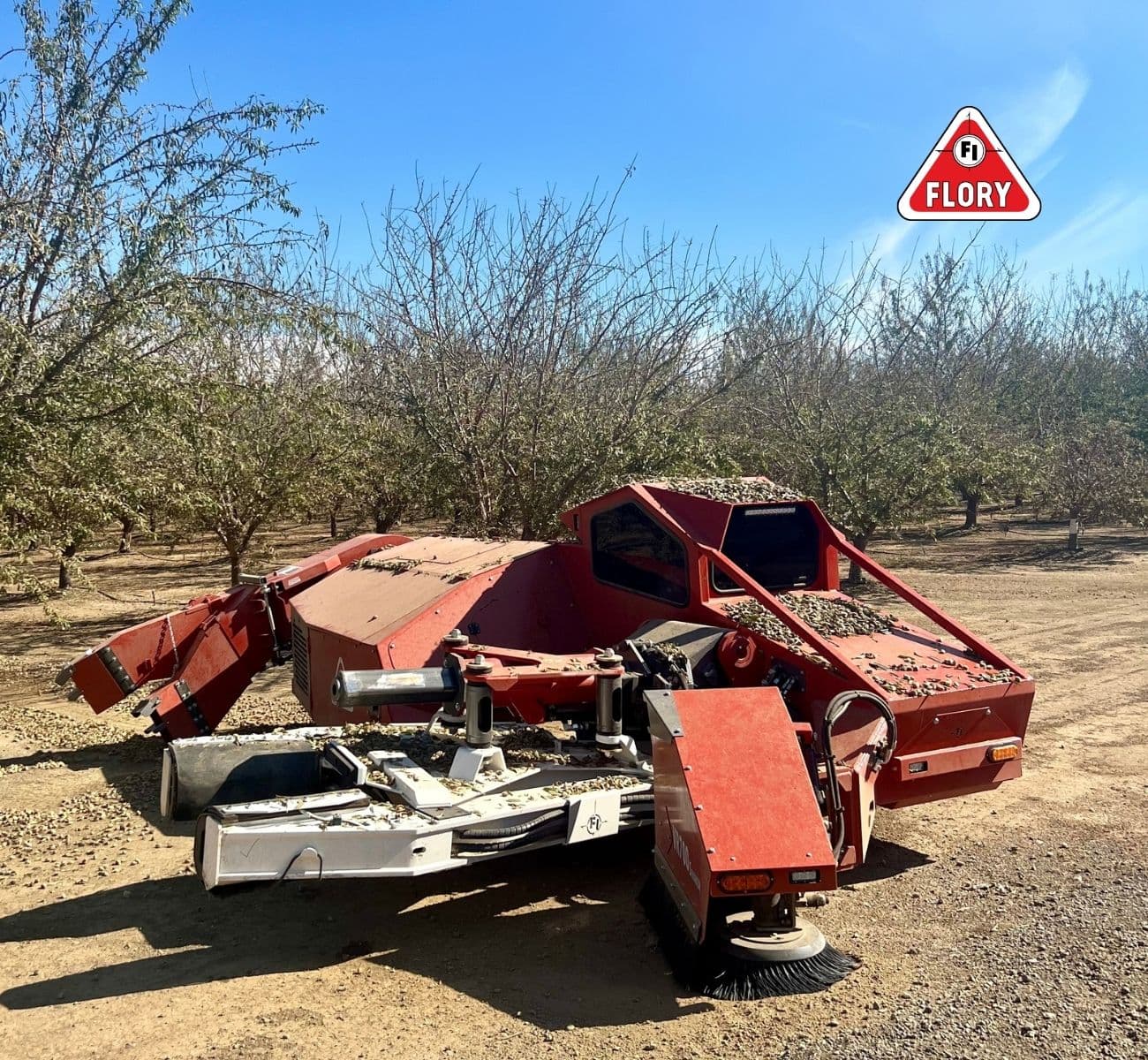
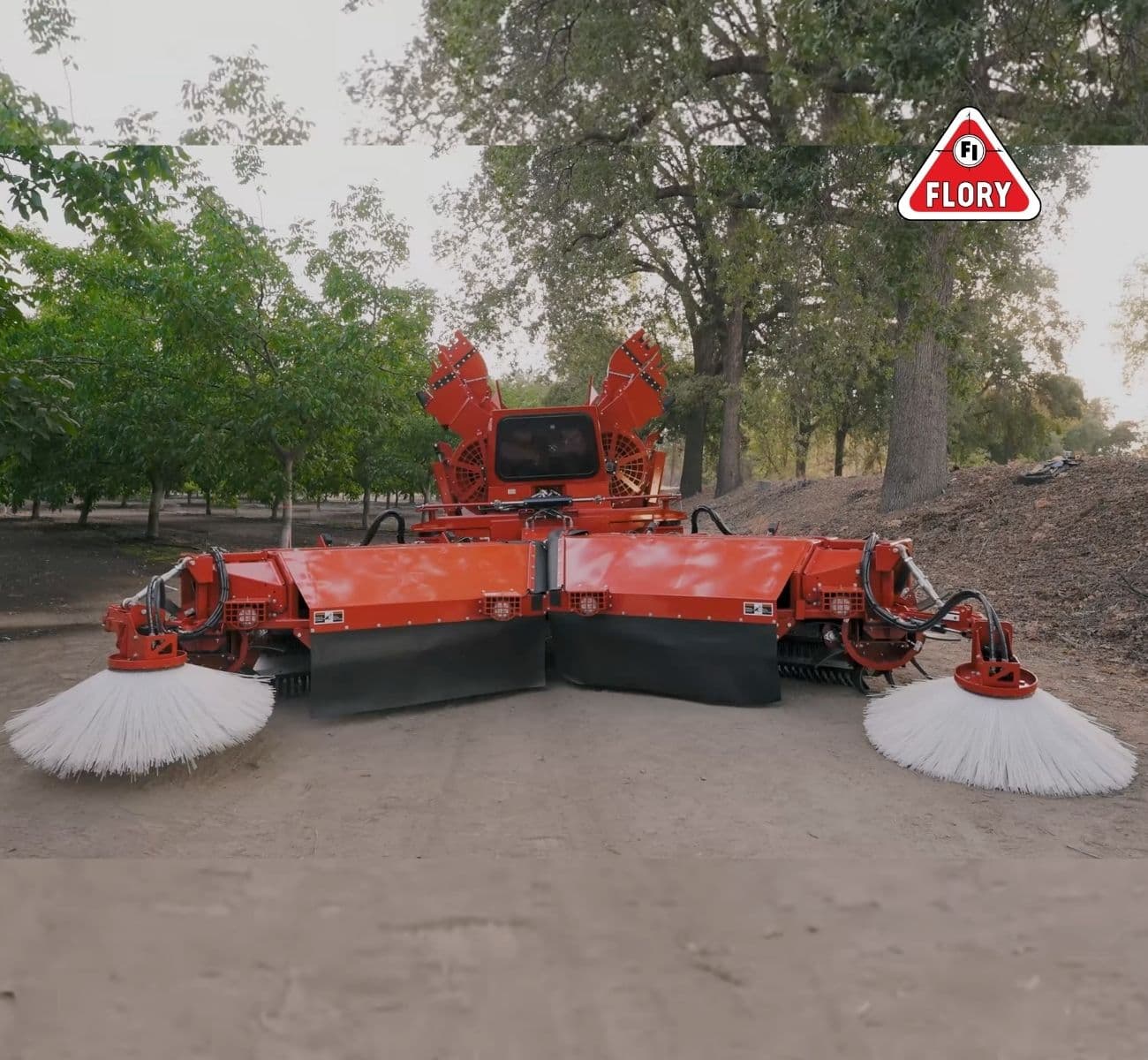
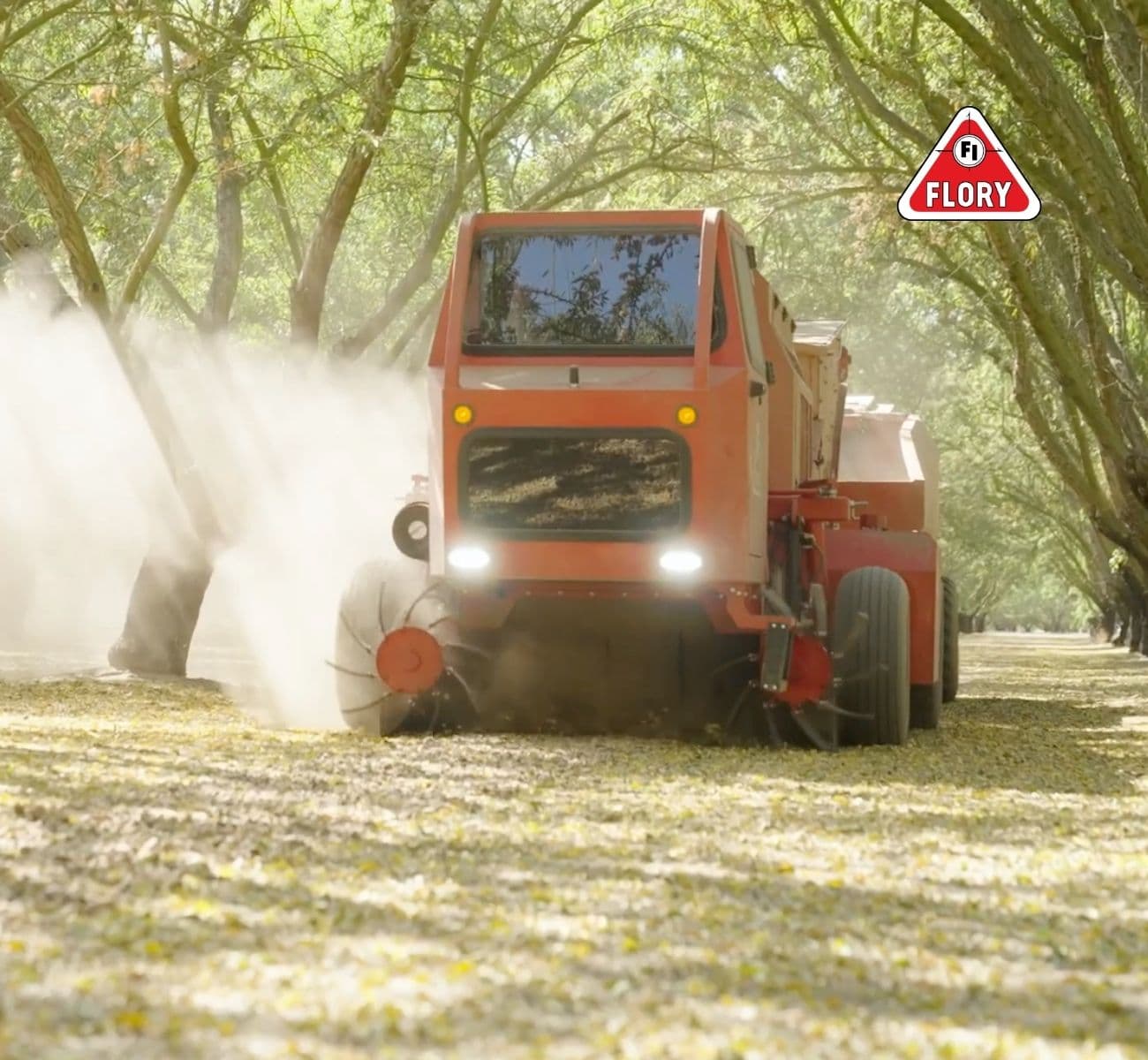
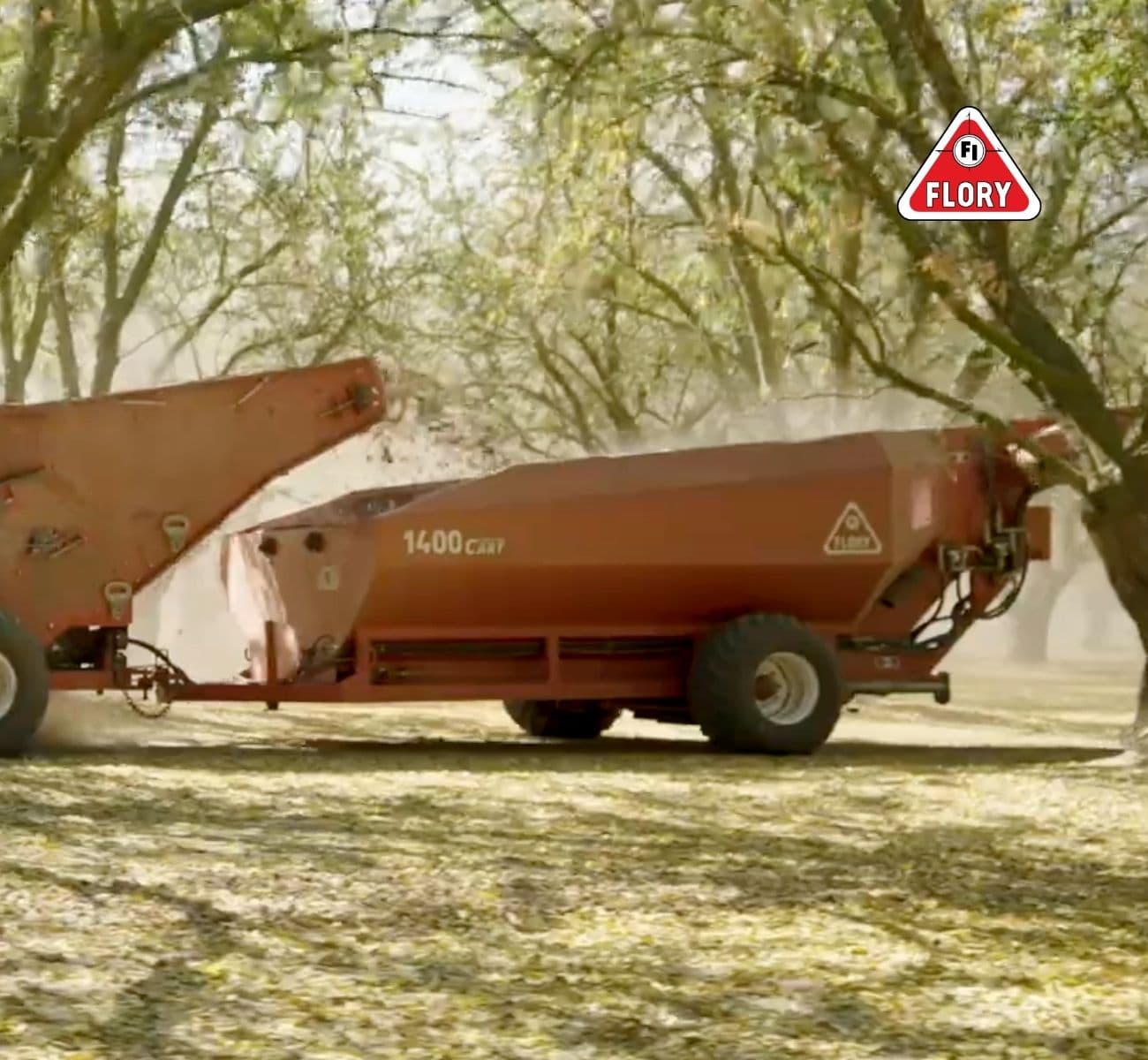
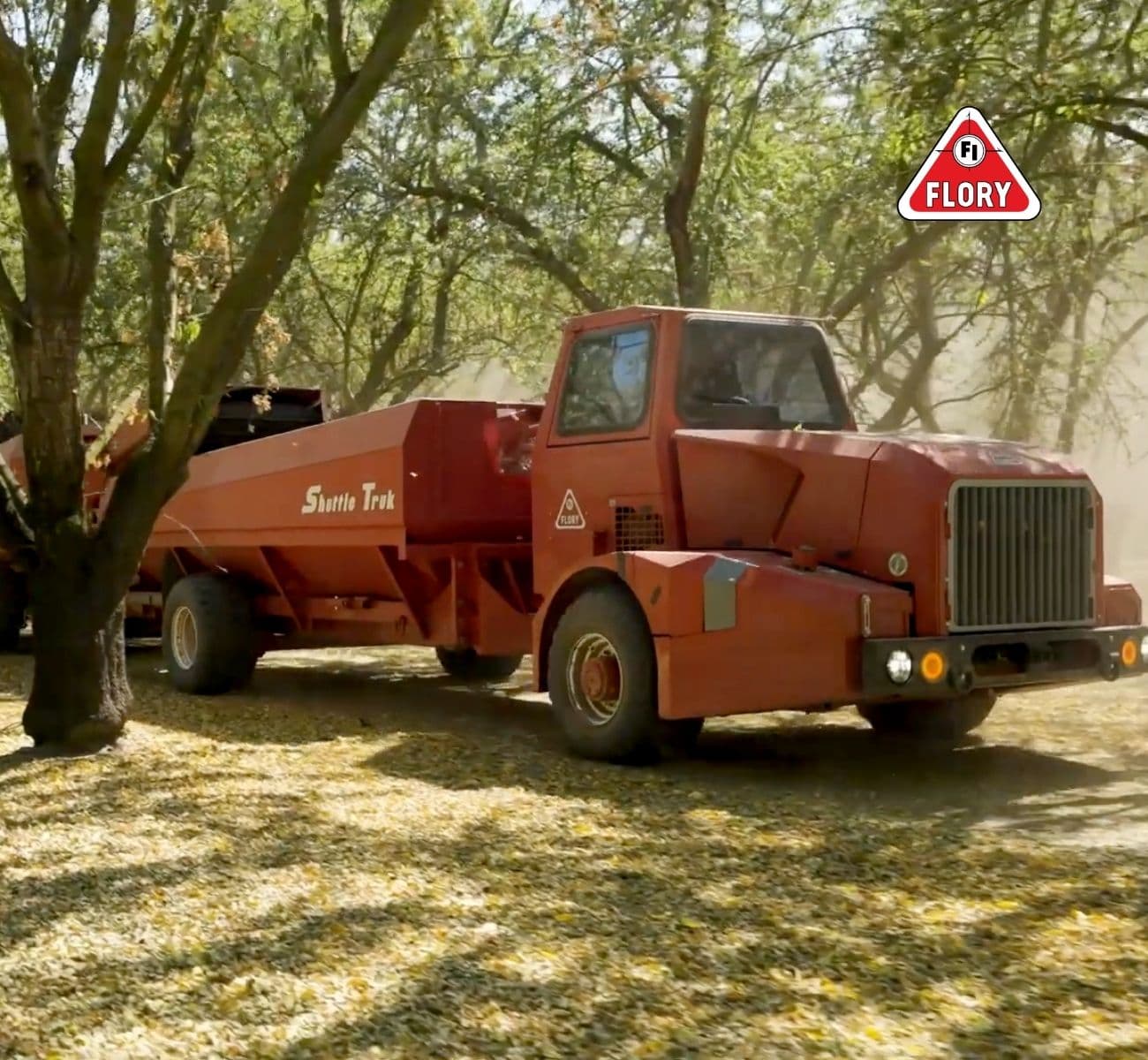
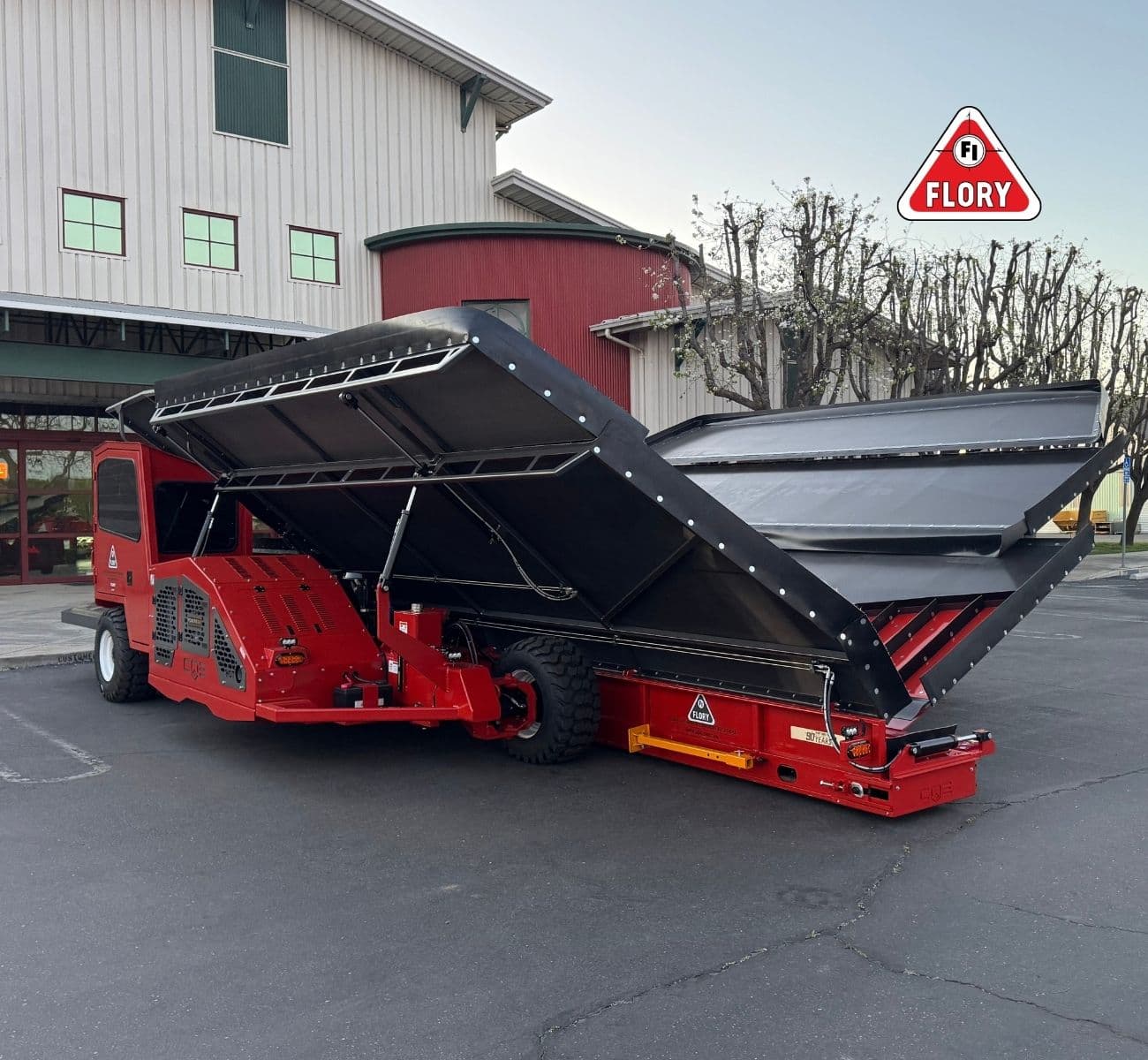
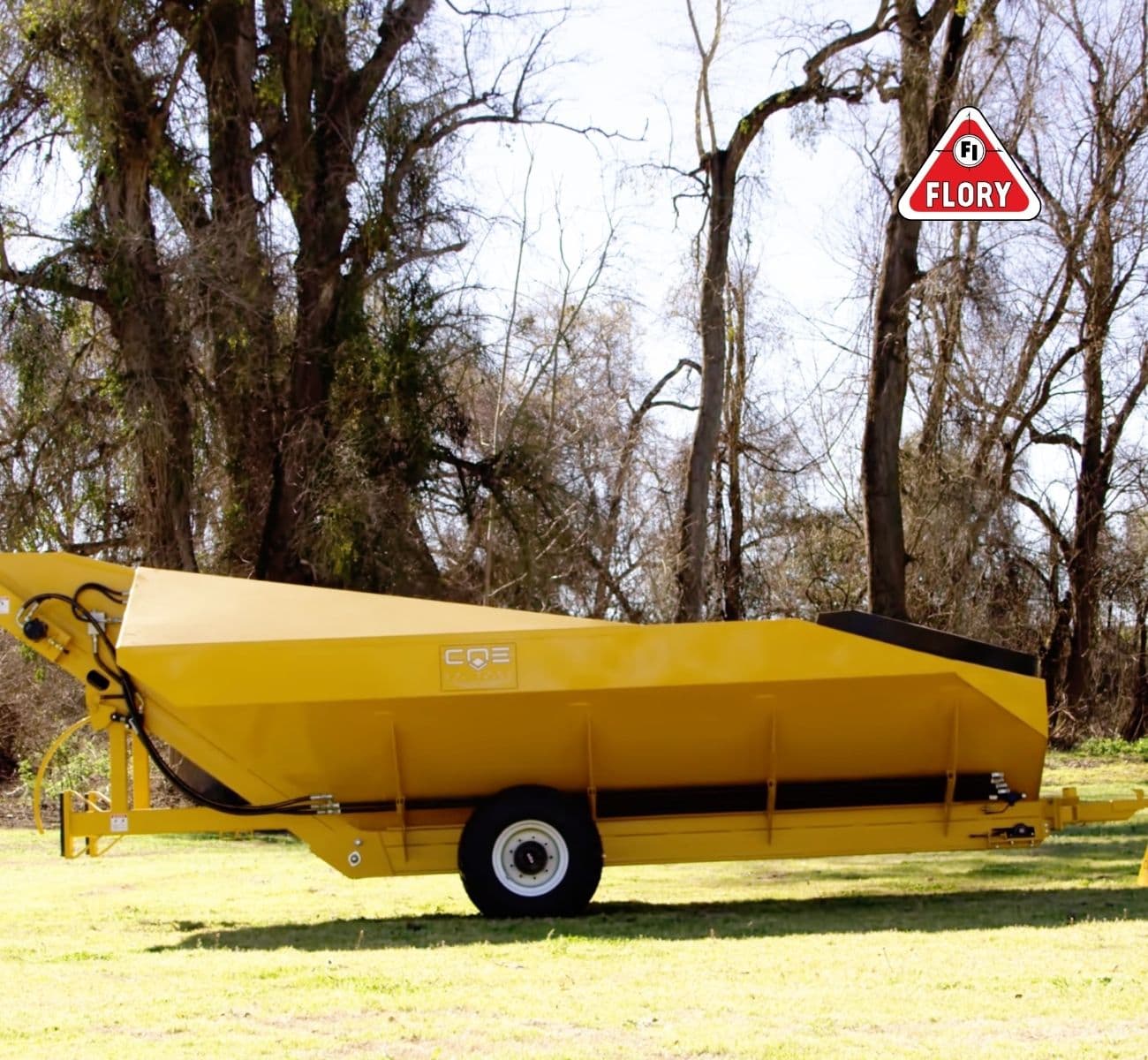
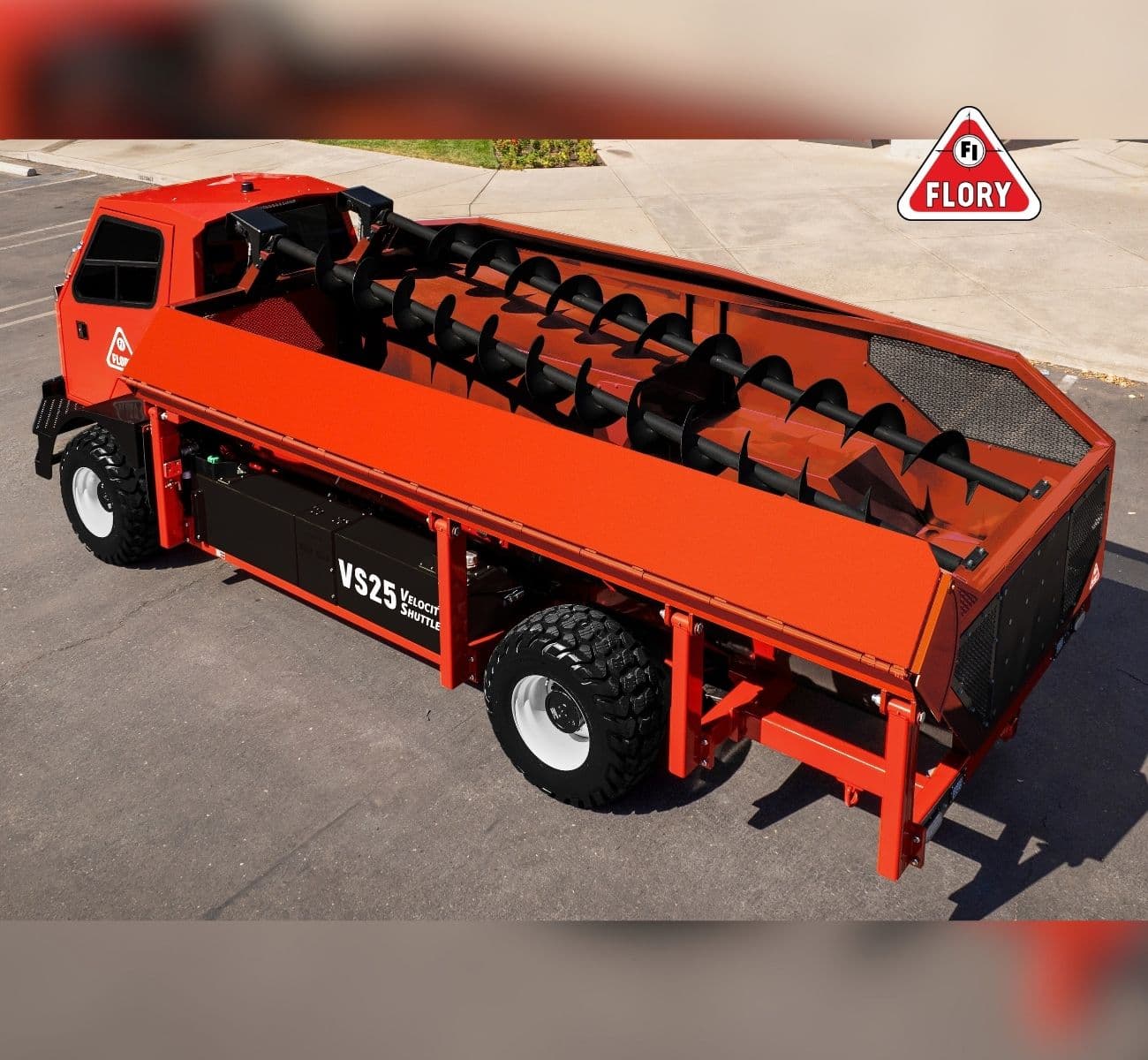
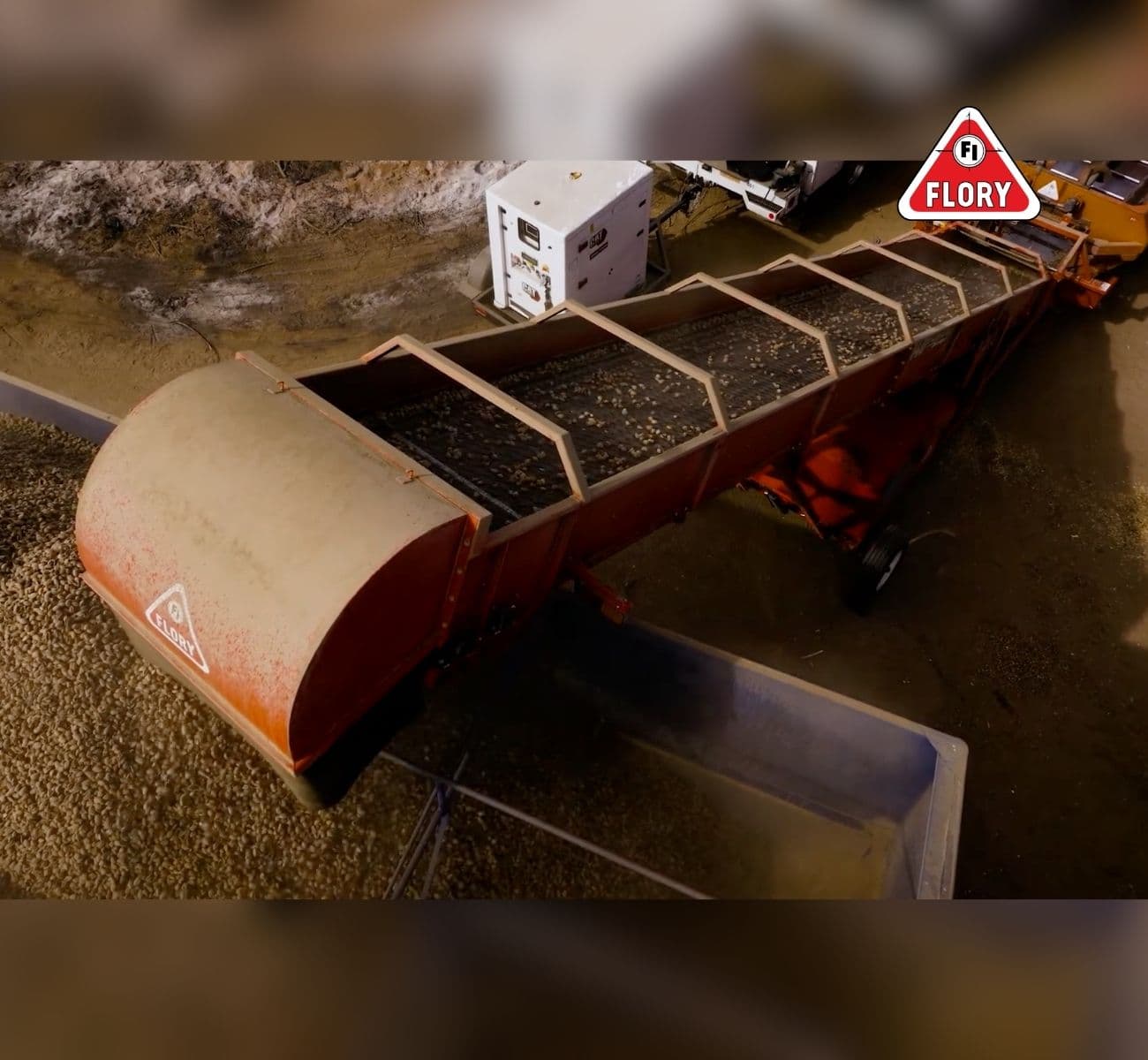
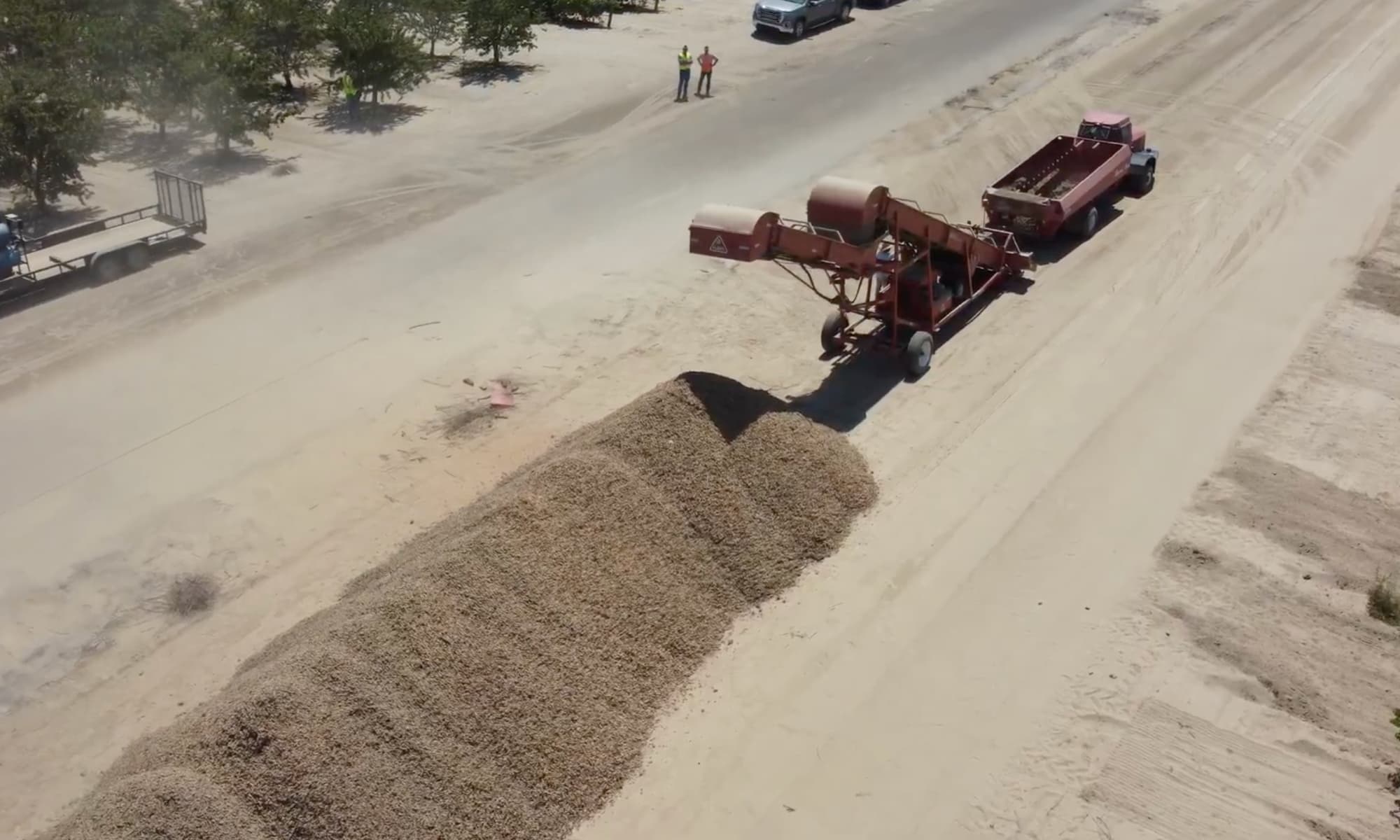
Flory harvesting machinery is available in Portugal through OVE Europe for both systems. On the ground, the VR700 Shaker, V62 Sweeper and 8772 Harvester feed the 1500 Conveyor Cart and ST14 Shuttle. Off the ground, the Flory COE C7 Shaker and L2 Receiver catch the almonds in a frame around the trunk, the Flory COE B8 Cart and VS25 Shuttle carry them, and the 4840 Field Elevator loads trailers in both systems.
Almond Harvest Workflow (Recommended Equipment)

Practical Tips for Almond Harvesting
Start harvest when about 75% of the almonds on the tree have open hulls, as the INIAV manual suggests.
Plan for September rain: Beja averages 27.4 mm on 3.1 rain days, and had 93.8 mm in September 2022 but 0.1 mm in 2025 (IPMA).
Sweep and pick up soon after shaking, then hull and dry the almonds off the ground; University of California guidance adds that quick removal limits ant damage.
Leave room for catching frames: they need 8 to 9 m of diameter, and spacings under 4 to 5 m hinder their use (2017 manual).
Where almonds must stay off wet ground, use catching frames: the Flory COE C7 Shaker works with the L2 Receiver.
Use shakers, frames and sweepers only in orchards planted for machines, never on scattered or garden trees, terraces or steep, stony slopes.
Get your recommended harvest setup
Enter orchard size, spacing, terrain, and target throughput—we’ll suggest a practical harvest workflow and equipment lineup.

Almond Post-Harvest Handling & Processing in Portugal
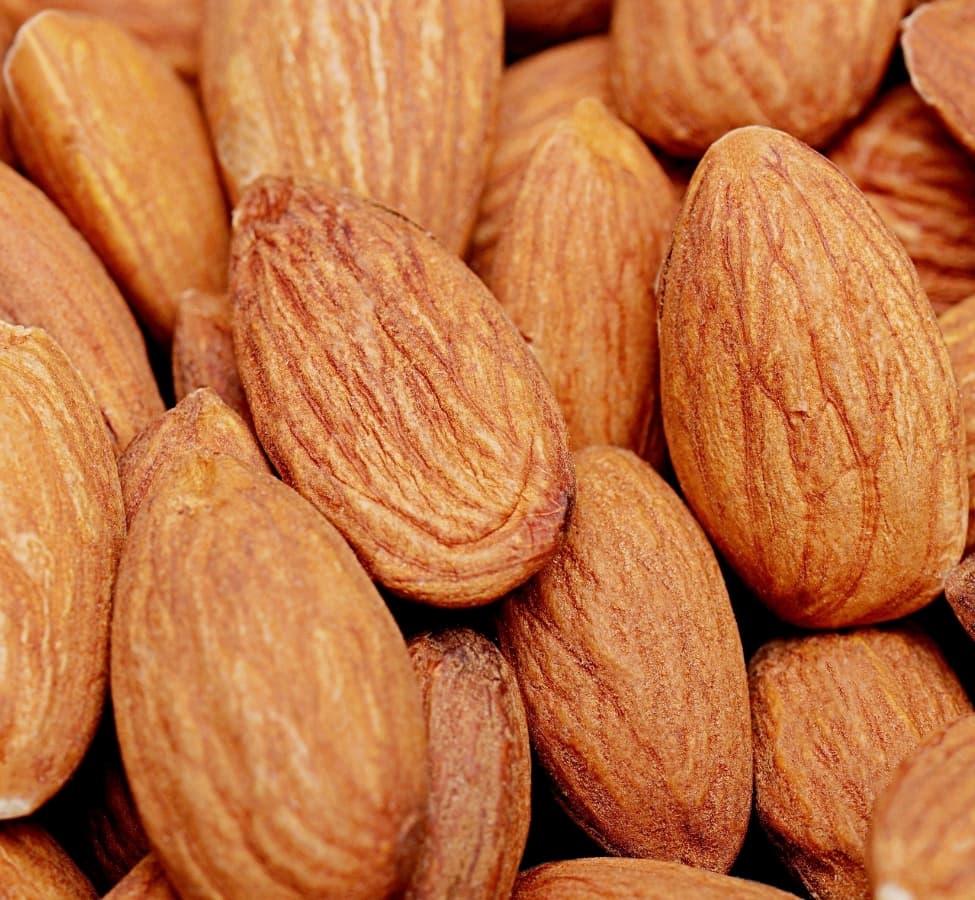
Almonds can hold more than 20% moisture at harvest and must be dried to about 6% for storage, spread on dry, ventilated surfaces or in dryers, the 2017 manual notes. Growers sell almonds in shell to collectors and cracking firms (2020 manual), with the price tied to kernel yield, the center's 2017 marketing manual notes.
Regulation (EU) 2023/915 allows 8.0 µg/kg of aflatoxin B1 and 10.0 µg/kg in total in almonds for consumers, and 12.0 and 15.0 µg/kg in almonds to be sorted first. A 2012 study found aflatoxins in only one of 21 samples of Portuguese almonds taken from 2007 to 2009 and advised drying to a water activity below 0.70 and removing damaged nuts before processing.
Portugal exported more almonds than it imported in every year from 2019 to 2025. In 2025 it exported 16,429 t of shelled almonds, 70.4% of them by weight to Spain, and 14,707 t in shell, almost all to Spain, and imported 5,181 t shelled and 1,636 t in shell (UN Comtrade via WITS). Jessee, whose processing lines OVE Europe supplies, builds hulling, drying, in-shell cleaning and sizing, and shelling systems; its Airlegs nut cleaner was developed for the almond industry.
For general information only. Information may become outdated and does not replace site-specific professional advice. Consult a qualified agronomist and confirm equipment suitability with OVE before acting.
Practical Tips for Almond Post-Harvest Handling & Processing
Hull promptly picked or frame-caught almonds while the hulls are fresh, then dry the nuts in the shell before storage.
Dry hulled almonds to about 6% moisture before storage, as the 2017 manual and the INIAV manual advise.
Remove damaged nuts before processing and dry to a water activity below 0.70, as a 2012 study of Portuguese almonds advises.
Test lots for aflatoxins against Regulation (EU) 2023/915: 8.0 µg/kg of B1 and 10.0 µg/kg in total for consumers.
Keep each lot separate by cultivar and orchard block, and store dried almonds in a dry, clean place.
Plan sales with Spain in mind: it took 70.4% of Portugal's shelled-almond exports by weight in 2025.
Recommended Post-Harvest Handling & Processing Stages







Plan your post-harvest line
Estimate tons/day, cleaning & drying capacity, storage needs, and cost/kg—then build your equipment plan in phases.