







Hazelnut Orchard Establishment in Romania
Romania's 2026 official variety catalog lists nine hazelnut cultivars. The University of Craiova at Râmnicu Vâlcea maintains four: 'Vâlcea 22' and 'Cozia', first listed in 1980 and 1987 and renewed in 2015, and 'Romantela' and 'Romnut' (2016). 'Astra', 'Briza', 'Gloria', 'Mitica' and 'Selena', maintained by a cooperative, were listed in 2026. 'Tonda delle Langhe' and 'Uriașe de Halle' are kept on a separate list of varieties and landraces.
At the Vâlcea station in 2000 to 2016, female flowers usually opened between 10 January and 20 March, and in some years some cultivars began blooming in December. A study there in 1990 to 1995 gives minimums of -18 to -20 °C during bloom, which makes late-blooming cultivars of interest. 'Arutela', released in 2005, blooms early but tolerates -20 °C in bloom. In the 2000 to 2016 trials, large-fruited 'Ennis', 'Vâlcea 22' and 'Uriașe de Vâlcea' proved most suitable. Of the cultivars named here, only 'Vâlcea 22' is in the 2026 catalog.
A 2001 zoning study placed Romania at the northern limit for hazelnuts in Europe. It rated the sub-Carpathian hills of Oltenia, Muntenia, Banat and Maramureș and the Dobrogea region most favorable, while winter lows of -30 to -33 °C ruled out intensive culture in central and eastern Transylvania and almost all of the historical region of Moldavia. In 2012 the Vâlcea station listed intensive single-trunk culture and layering among its technologies; its 2000 to 2016 trials used 5 x 3 m, without irrigation.
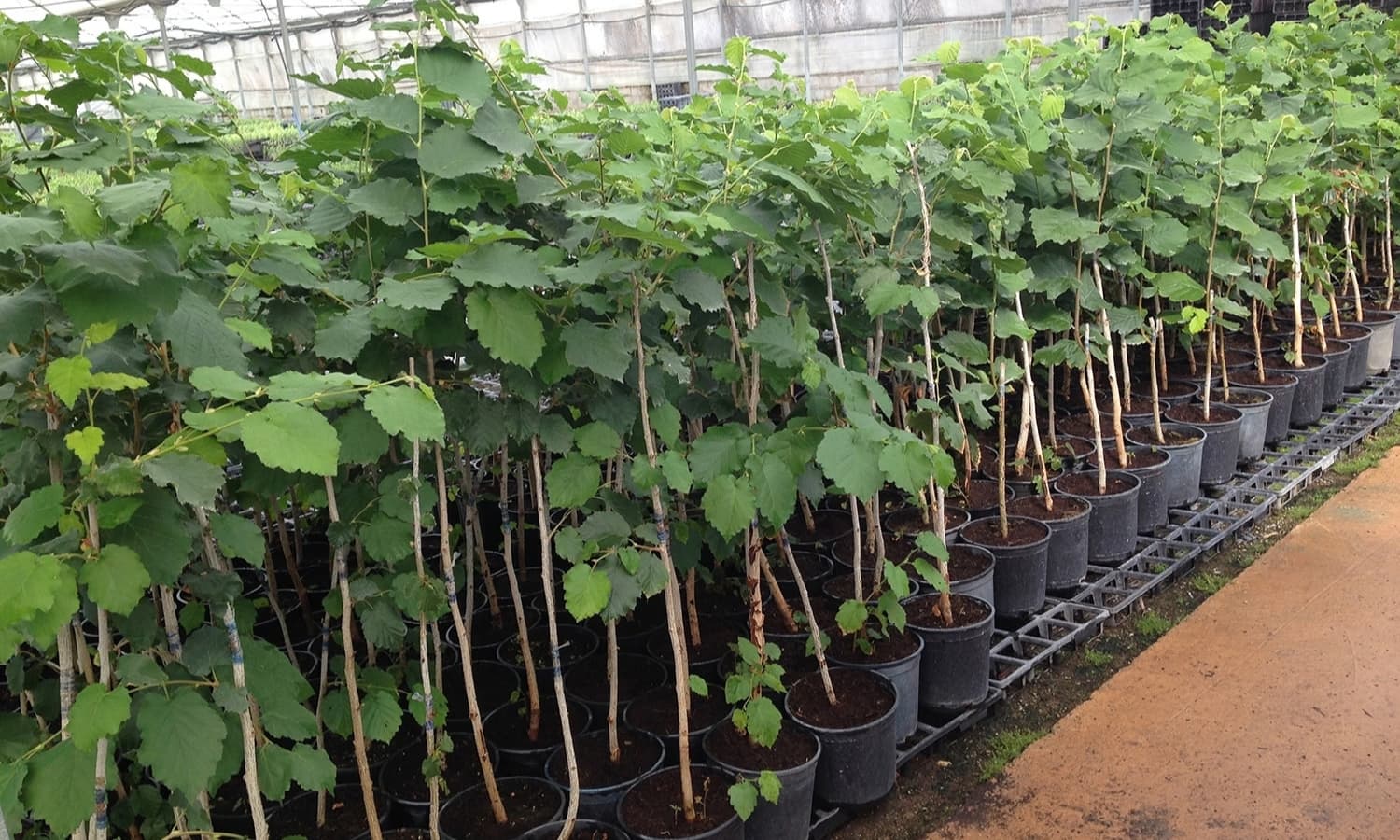

Practical Tips for Hazelnut Orchard Establishment
Choose cultivars from the 2026 national catalog, which lists nine; it describes the five listed in 2026 as very early to mid-season bloomers, none as late.
Where frost at bloom is a risk, favor late-blooming cultivars: a 1997 Vâlcea study gives minimums of -18 to -20 °C during bloom.
Plant compatible pollinizers: Oregon State University (OSU) notes that a hazelnut tree cannot set nuts with its own pollen.
Avoid clay-rich, shallow and wet soils: the 2001 zoning study found many such soils in Romania unsuitable for hazelnut growing.
Where you plan machine harvest, train single-trunk trees, a system the Vâlcea station listed among its technologies in 2012, and keep the rows on level ground.
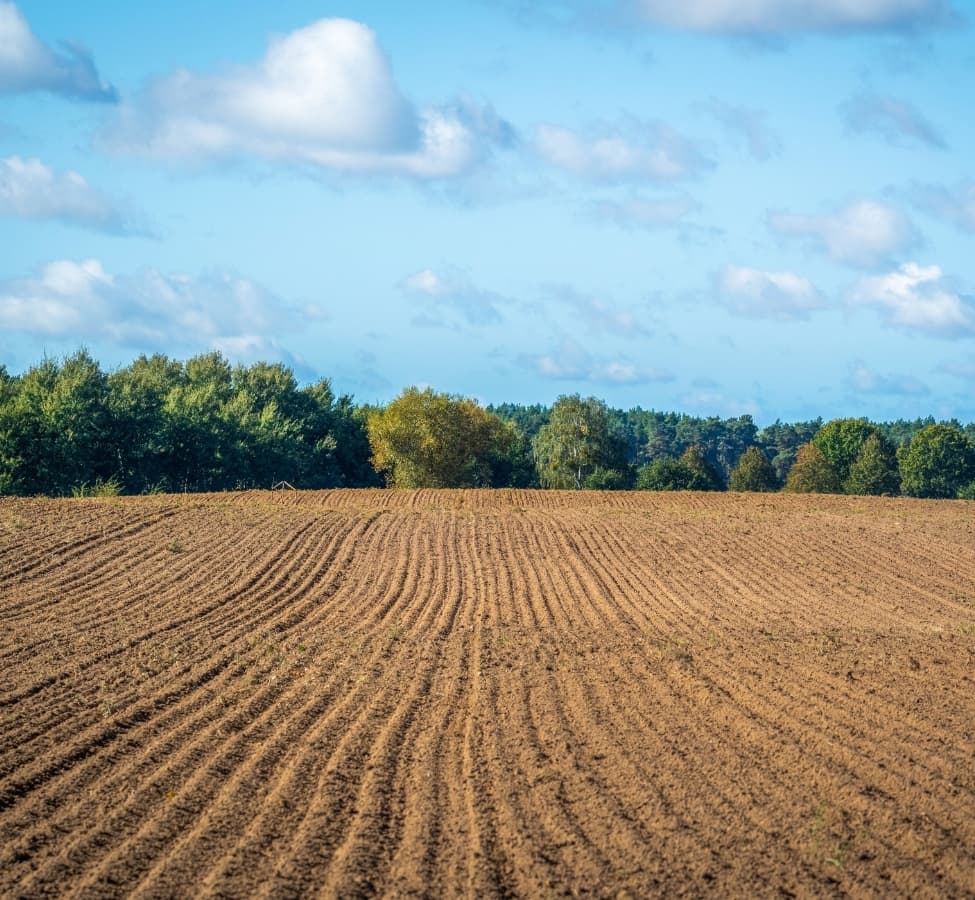
Smooth and firm the orchard floor at least a year before the first commercial harvest, as OSU advises, so sweepers can work up to the trunks.
Recommended Establishment Stages





Hazelnut Orchard Care & Maintenance in Romania
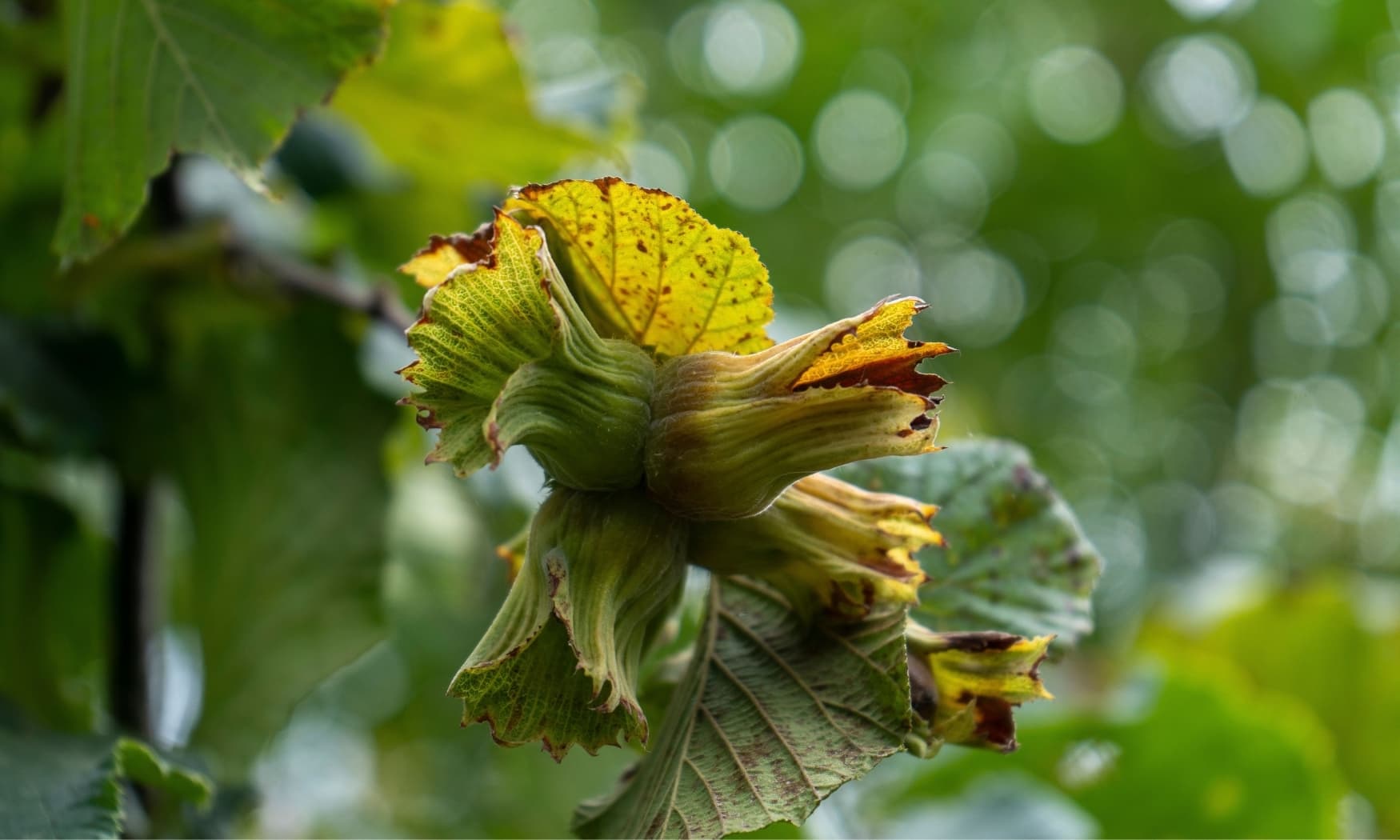
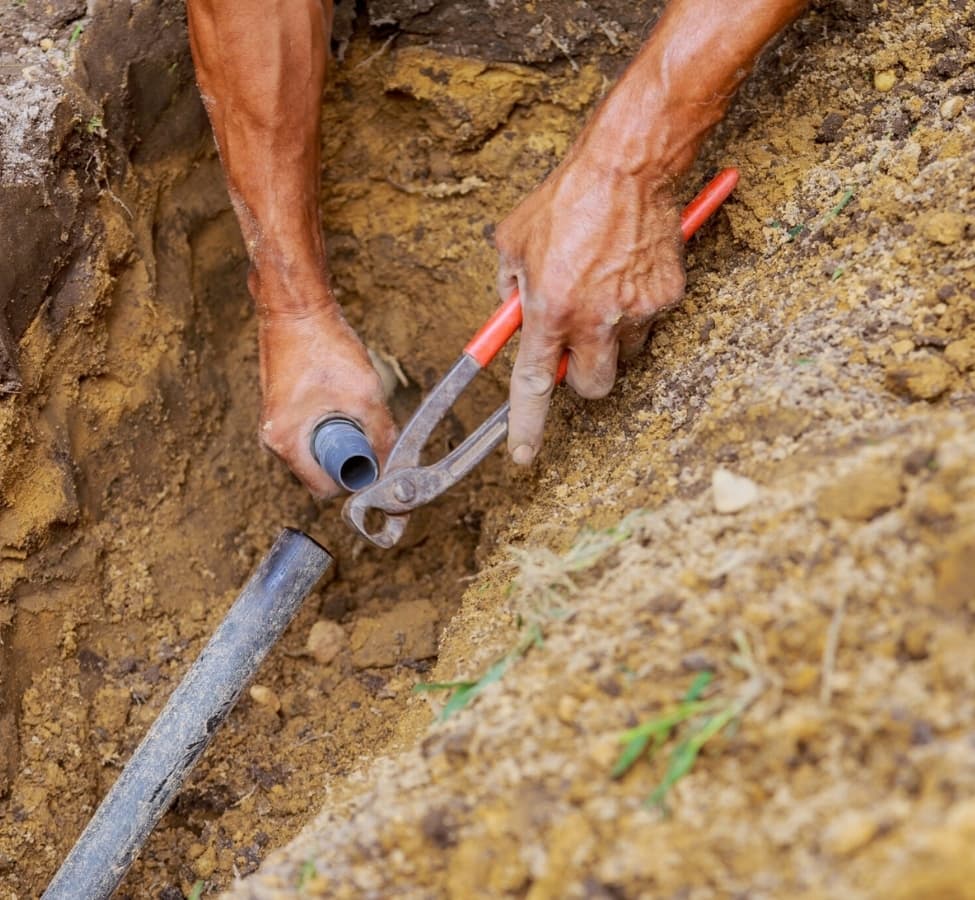
The 2001 zoning study found annual rainfall sufficient, at 700 to 900 mm, in the southern and western sub-Carpathian areas, but inadequate on the southern plains and in Dobrogea, where irrigation would be required. Recent Augusts were dry: Romania's National Meteorological Administration (ANM) put national mean rainfall 31.8% below the 1991 to 2020 median in August 2025 and 46.9% below in August 2026, with maximums above 40 °C in southern Oltenia in August 2025.
EPPO lists Erysiphe corylacearum, a powdery mildew of hazel, as present in Romania, first observed on hazel in Carpathian forests in 2019 to 2020, and the brown marmorated stink bug (Halyomorpha halys) as present since 2014, with no Romanian record on hazel found. It does not list eastern filbert blight or bacterial blight for Romania, which is not proof of absence. In 1990 to 1995, a study in the Râmnicu Vâlcea area covered the hazelnut weevil, a hazel sawfly and the big bud mite.
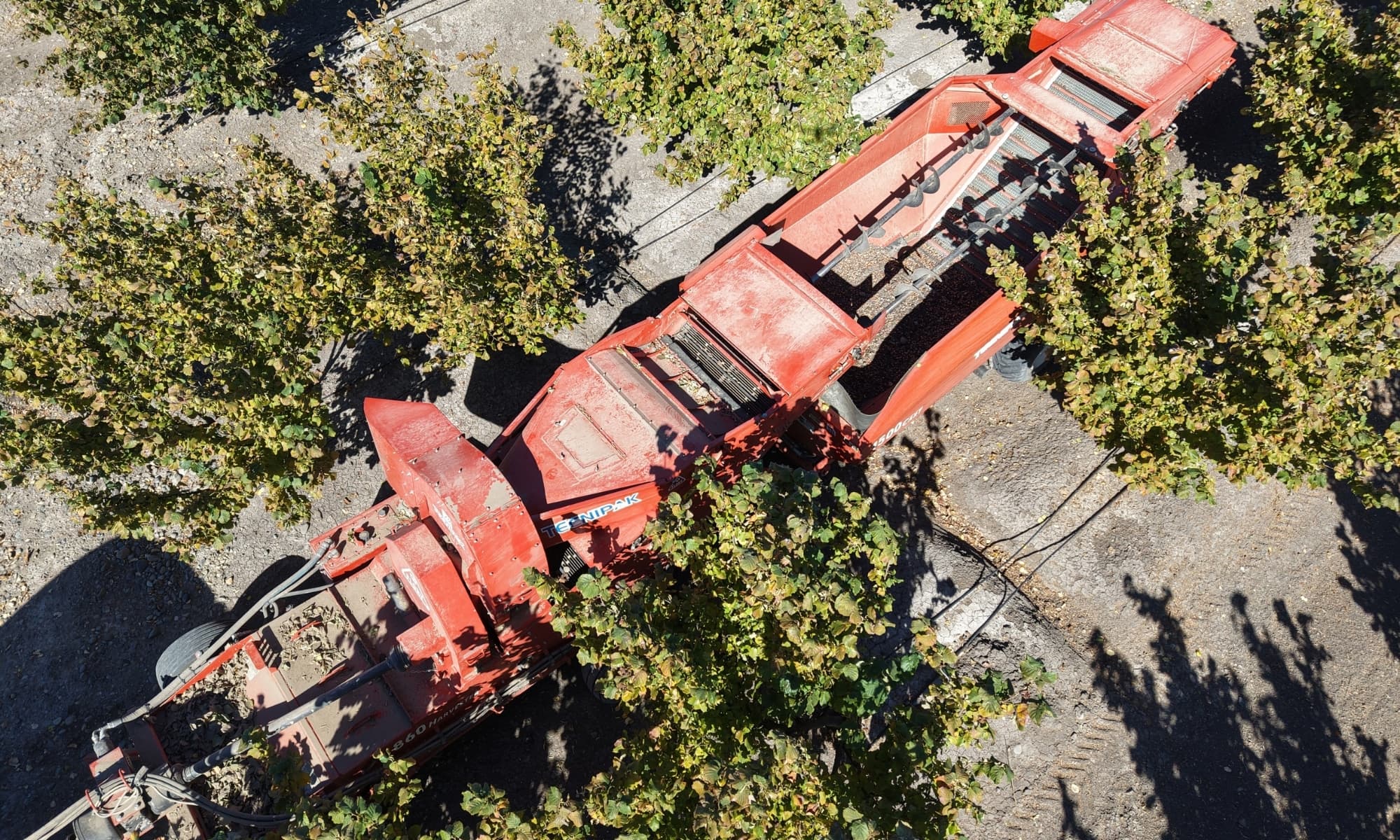
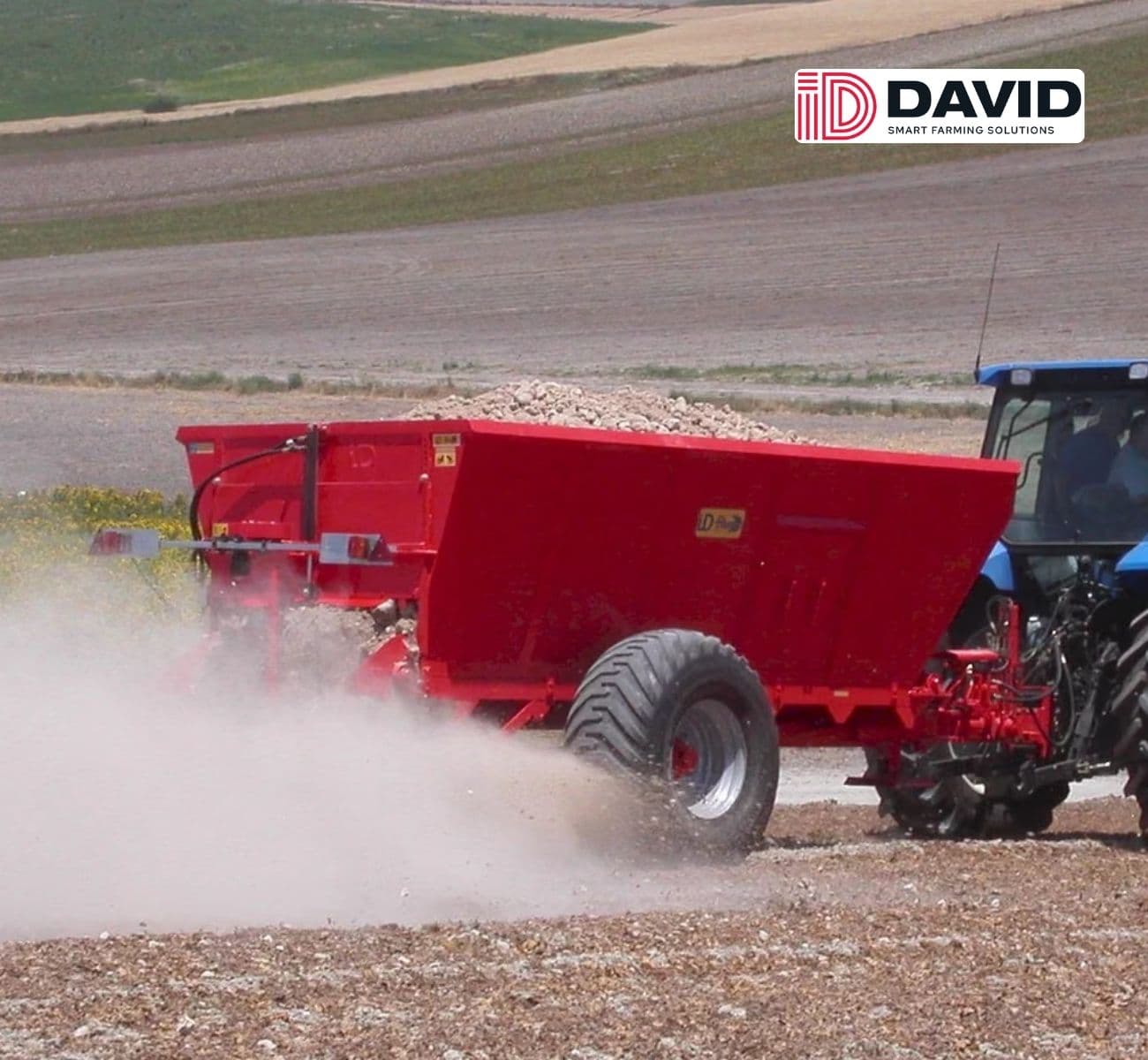
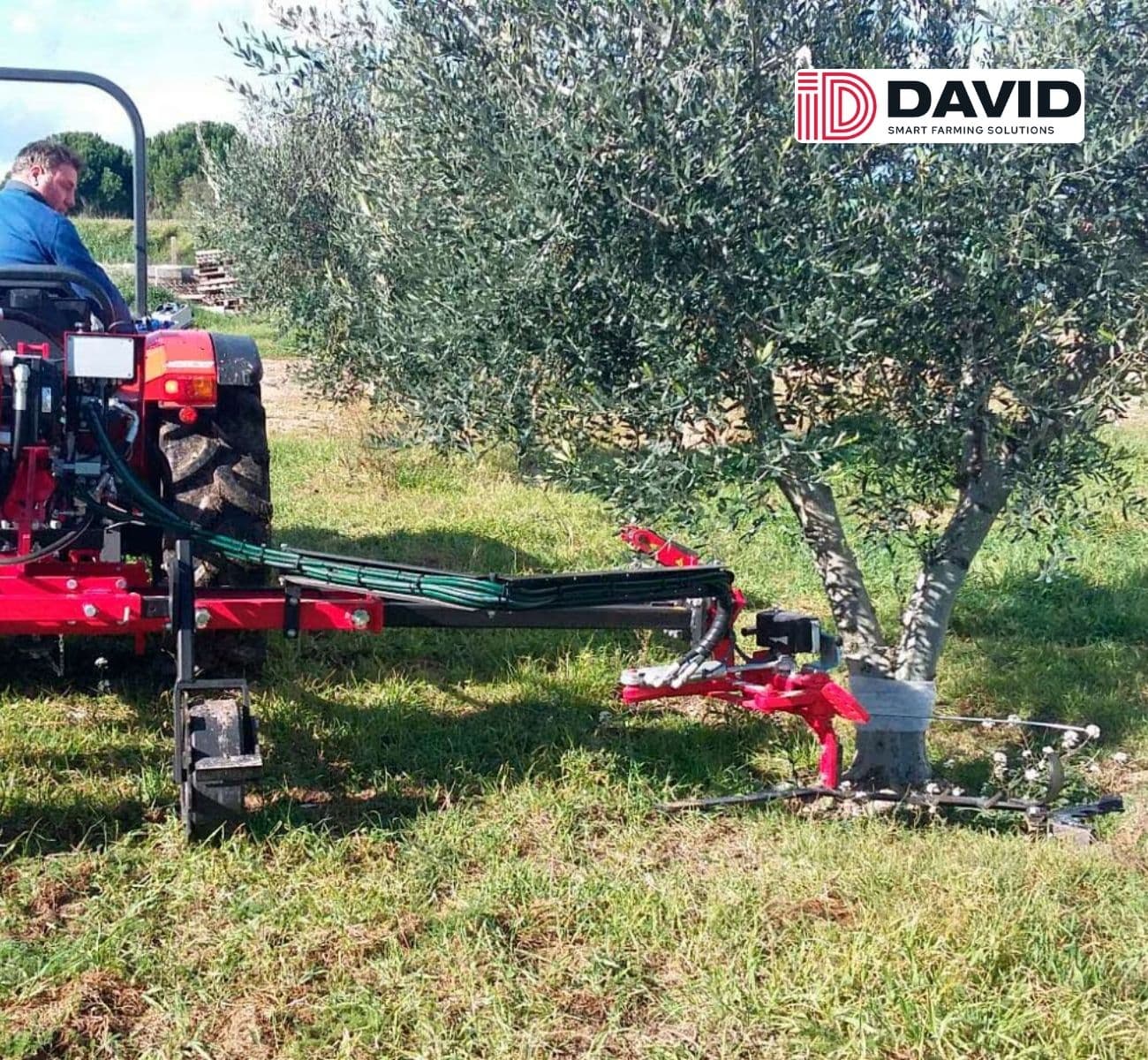
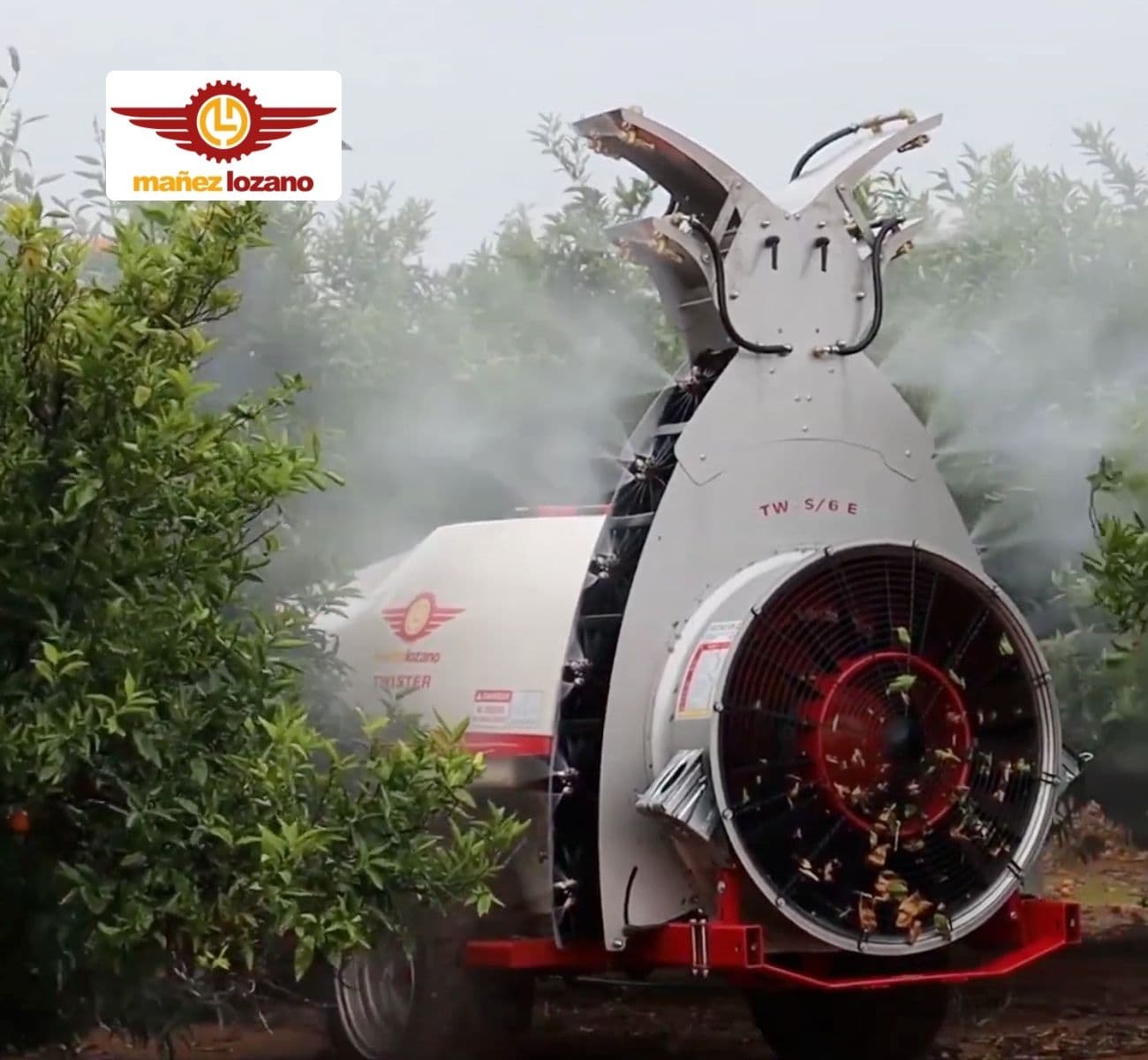
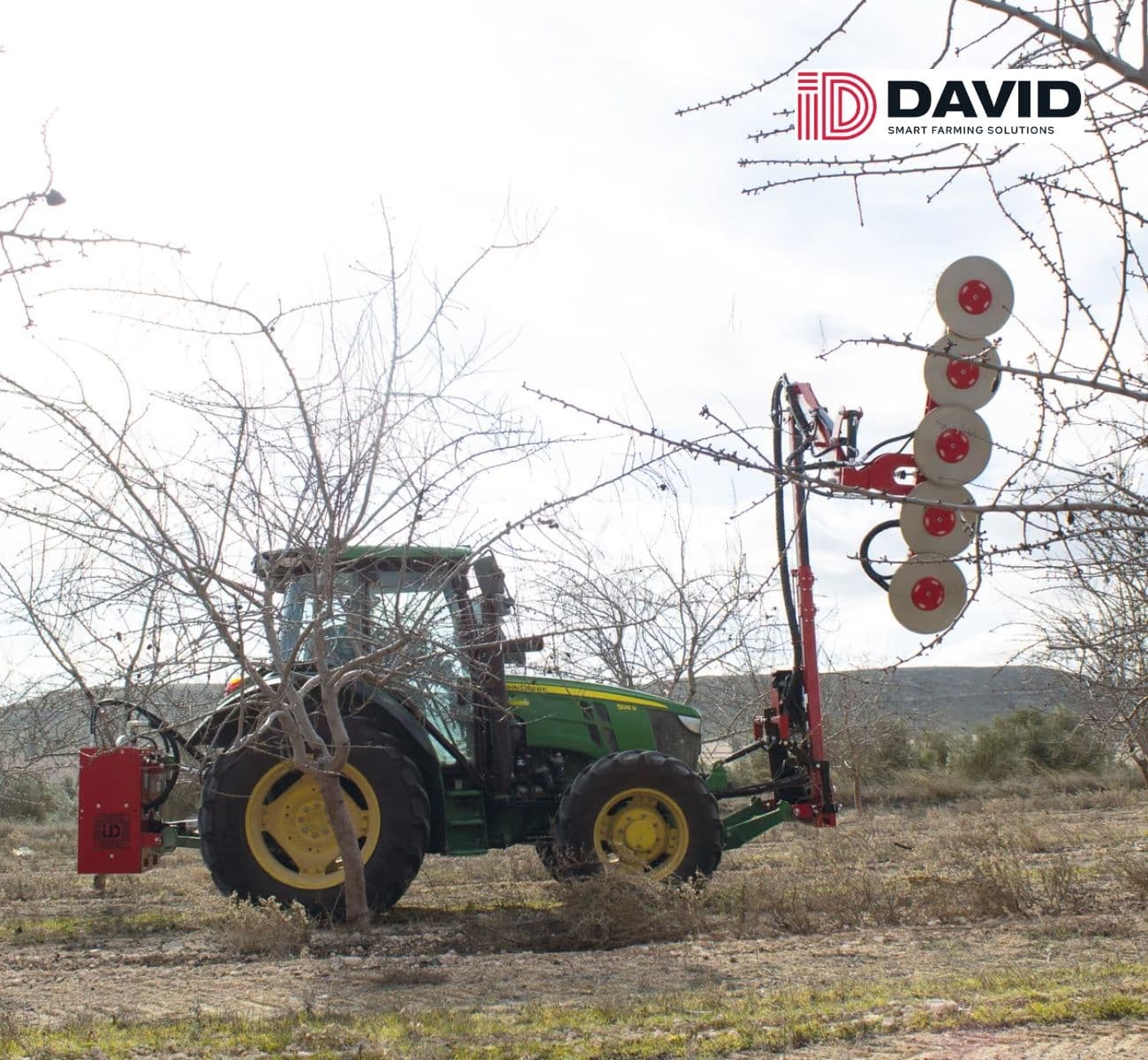
In 2012 the Vâlcea station listed single-trunk culture among its technologies, while a farm in Sibiu county described in 2013 kept four suckers around each adult tree to raise the yield per bush. In single-stem orchards planted for machines, the ID DAVID SURFEED spreads solid manure, the ID-XL weeds the tree row, the Mañez Lozano Mega Twister S6 sprays tall, dense canopies and the ID-REX disc pruner makes lateral and topping cuts.
Recommended Orchard Care & Maintenance Stages



Practical Tips for Hazelnut Orchard Care & Maintenance
Plan irrigation on the southern plains and in Dobrogea, where the 2001 zoning study found rainfall inadequate for hazelnuts.
Plan for dry late summers: ANM reported August rainfall below 40 mm in most of the country in 2024 and 46.9% below the median in 2026.
Check leaves for powdery mildew: EPPO lists Erysiphe corylacearum as present in Romania, first observed on hazel in Carpathian forests in 2019 to 2020.
Watch for the brown marmorated stink bug, present in Romania since 2014: OSU notes that its feeding can leave kernels empty, shriveled or corked.
Inspect new orchards for eastern filbert blight for 2 years after planting, as OSU advises; EPPO lists it as present only in Canada and the USA.
Remove suckers from single-trunk trees: OSU notes that all hazelnut varieties produce them; the 2026 catalog notes strong suckering in 'Astra' and other new cultivars.

Hazelnut Harvesting in Romania
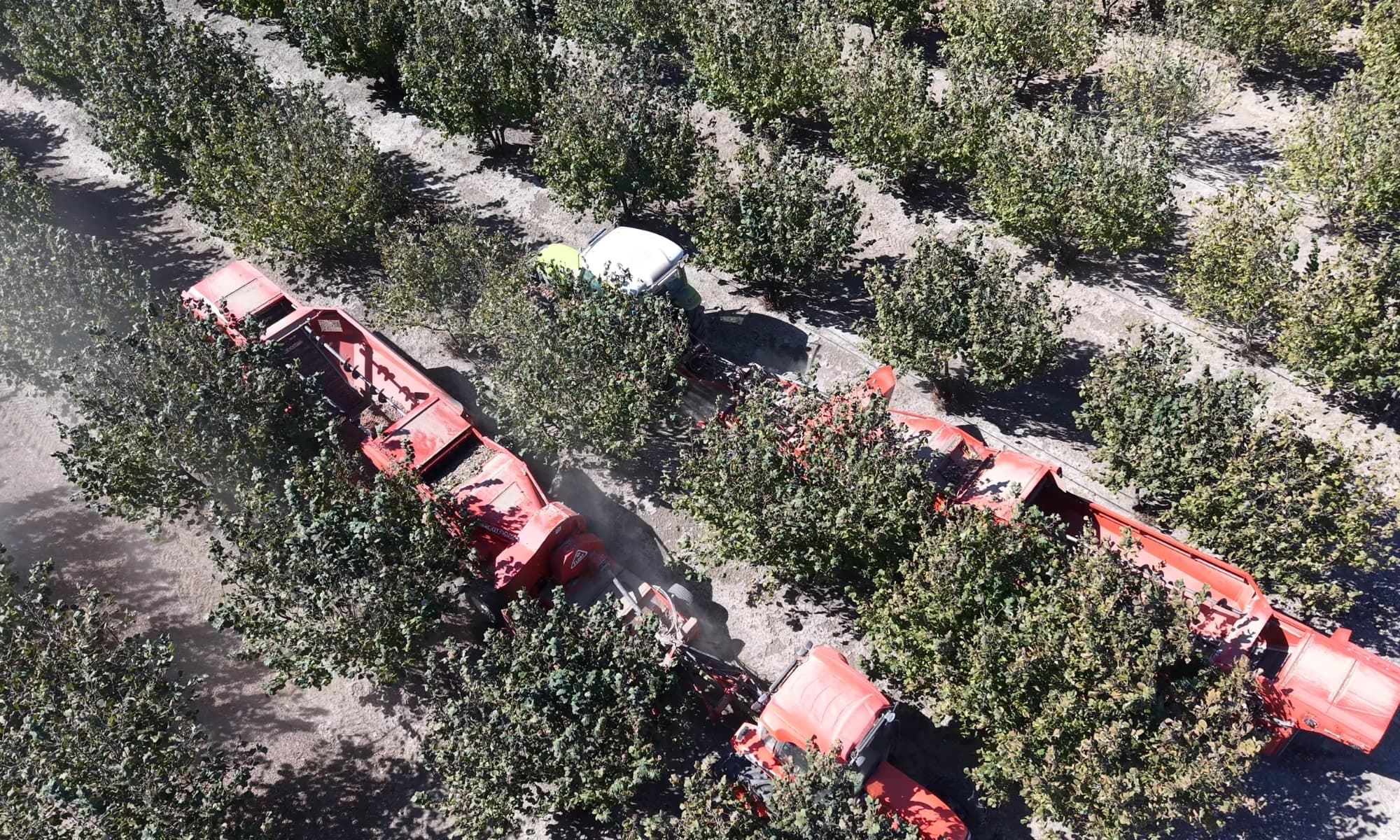
The sources found describe Romanian harvest practice only in news on single farms. A 2017 report on a large plantation in Timiș county says harvest starts on 1 September and lasts a month, by harvesters and, where access is harder, by hand. On a farm in Sibiu county in 2013, fallen nuts were raked into heaps for a tractor-mounted vacuum that also cleaned and sized them. In single-stem orchards planted for machines, mechanized harvesting can bring the crop in on time, with less risk of nuts deteriorating while they wait.
The system in this guide does not shake the trees: OSU explains that the thin-barked, shallow-rooted trees would be damaged. The nuts drop onto a level, mown floor and are picked up in several passes. At Vâlcea, 'Arutela' ripens at the end of August, and the 2026 catalog describes early ripening for 'Astra' and 'Briza'. WMO's 1981 to 2010 normals give Râmnicu Vâlcea 81.3 mm of rain in August and 55.9 mm in September, on 9.5 and 8.9 days of 0.1 mm or more.
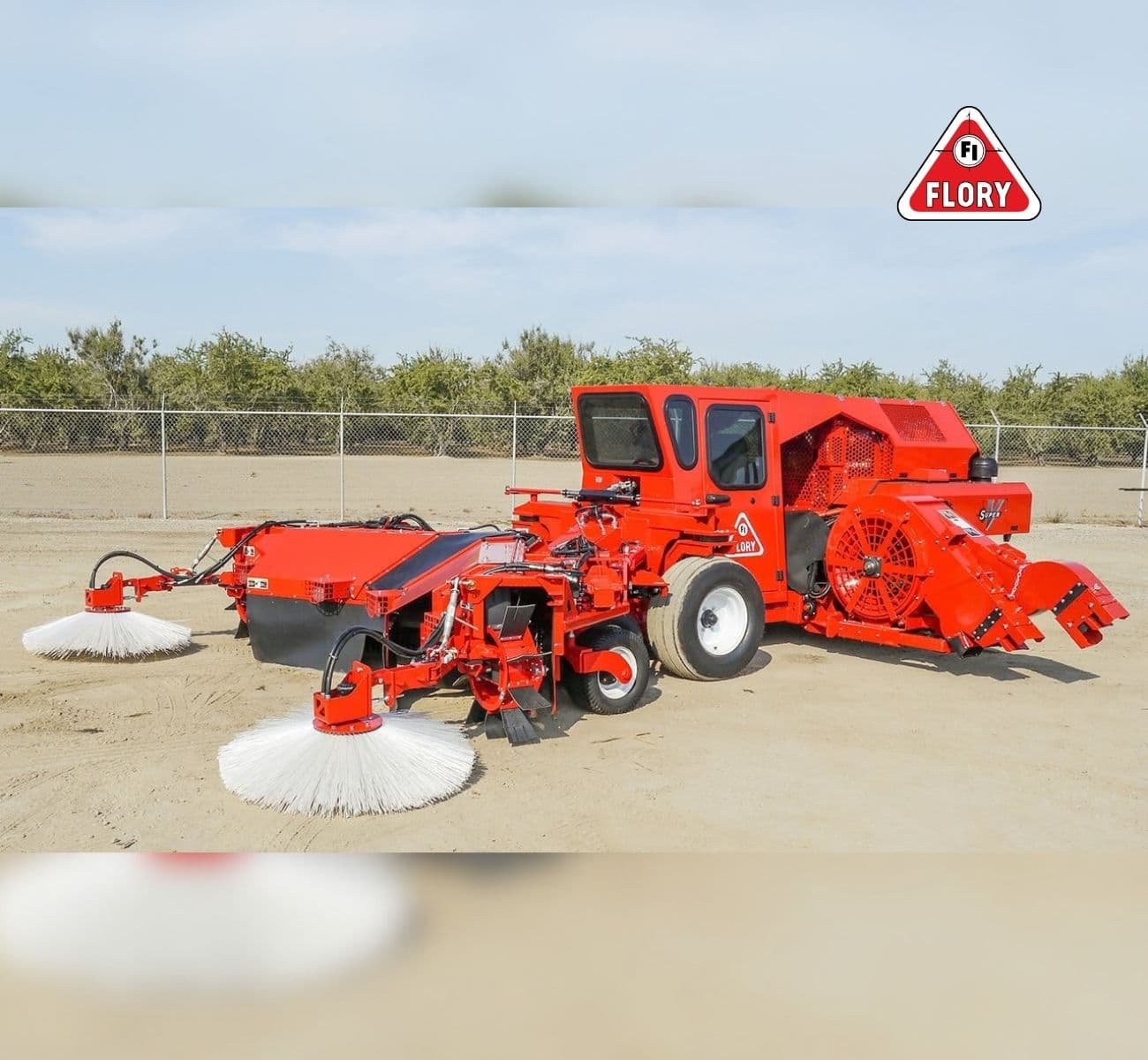
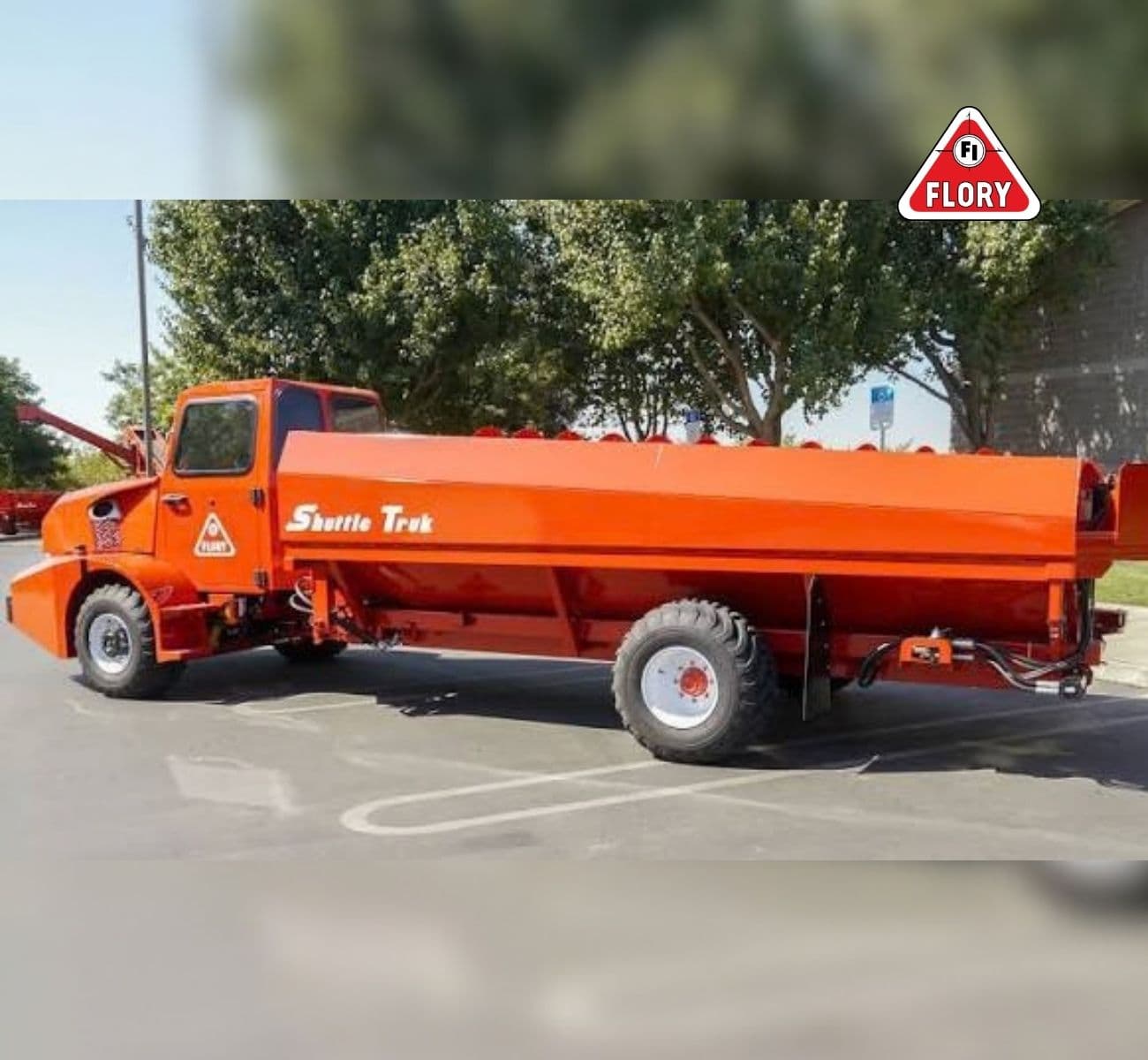
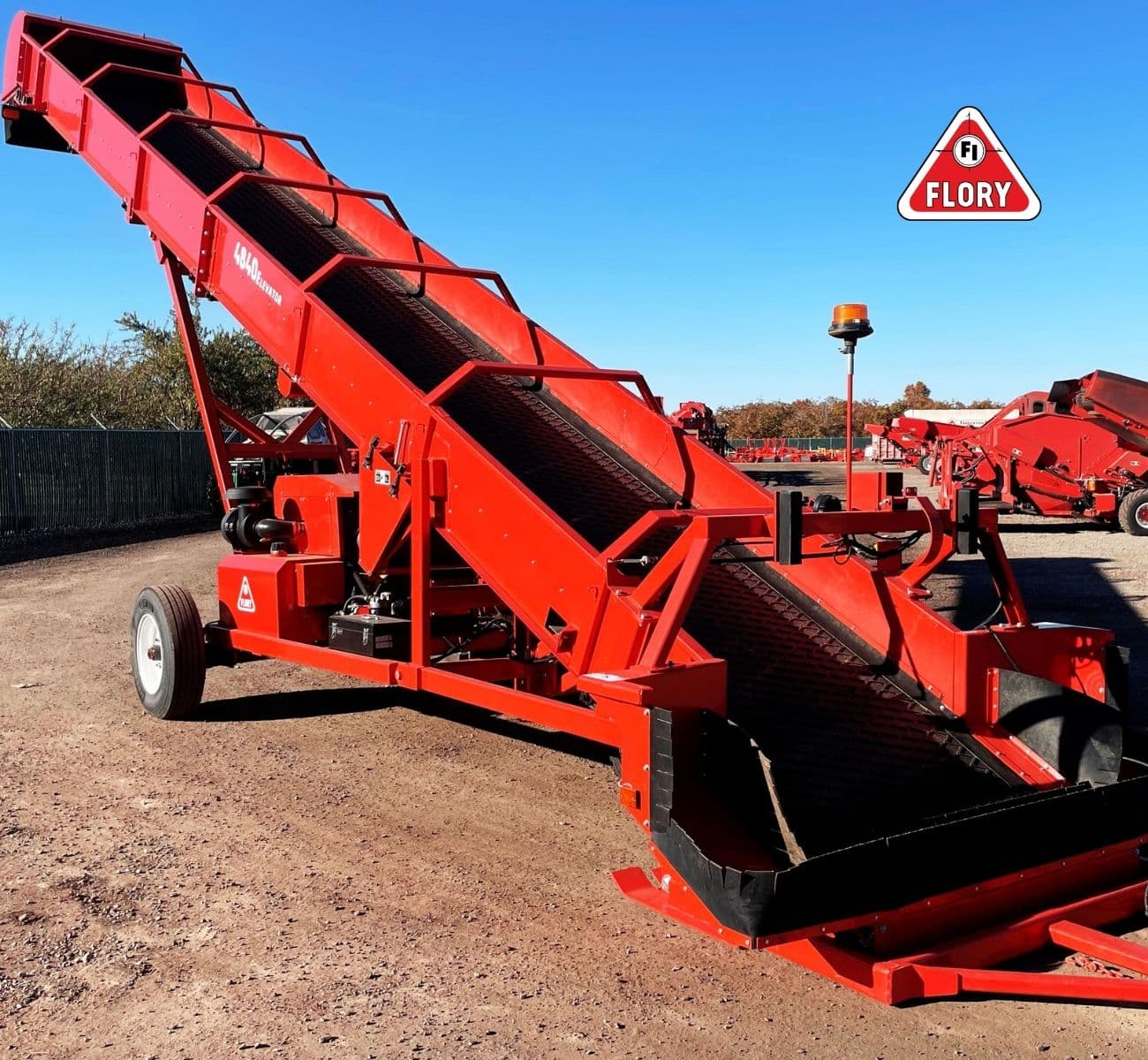
Flory harvesting machinery is available in Romania through OVE Europe for single-stem orchards planted for machines. The self-propelled Flory V62 Sweeper sweeps the nuts into windrows, and the self-propelled 8772 Harvester picks them up; Flory lists a mud brush as standard for hazelnuts on the 8772. The 1500 Conveyor Cart receives the nuts, the ST14 Shuttle carries them and the 4840 Field Elevator loads trailers for the processing site.
Hazelnut Harvest Workflow (Recommended Equipment)


Practical Tips for Hazelnut Harvesting
Plan several pickup passes: OSU notes that most growers in Oregon harvest multiple times, as nuts fall over a period and the weather can turn too wet.
Keep pickup ahead of autumn rain where nut drop allows: in October 2025, ANM reported very or extremely excessive rain in most of Oltenia, Muntenia and Dobrogea.
Level, smooth and flail-mow the orchard floor before nut drop, as OSU describes, so the sweeper can work right up to the trunks.
Gather fallen nuts before autumn rain where possible: British Columbia's hazelnut guide warns that a crop harvested wet causes storage problems.
Sweep only fast enough to keep ahead of the pickup machine, as British Columbia's guide advises, and clean harvesters between orchards.
Keep bins of harvested nuts out of the rain until drying: OSU notes that nuts in bins left in the rain before drying can turn moldy.
Get your recommended harvest setup
Enter orchard size, spacing, terrain, and target throughput—we’ll suggest a practical harvest workflow and equipment lineup.

Hazelnut Post-Harvest Handling & Processing in Romania
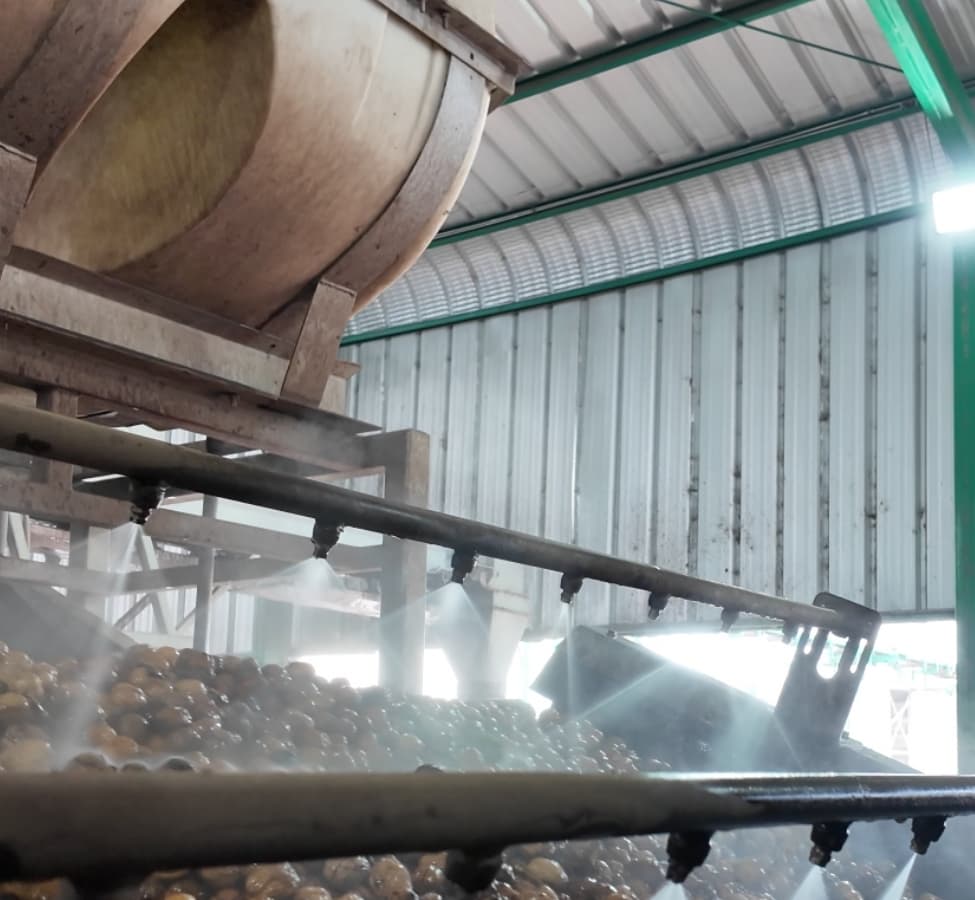
No Romanian source found gives drying temperatures, times or moisture targets. On the Timiș plantation described in 2017, harvested nuts went to a dryer hall, where they were sorted, washed of dust and dried. British Columbia's guide describes nuts husked, cleaned, washed, sanitized and dried to 5 to 8% moisture within 24 hours of harvest, and in OSU research, drying at 43 to 49 °C and 40% relative humidity improved drying efficiency and retained quality.
Under UNECE's 2025 standards, in-shell hazelnuts may contain at most 12.0% moisture for the whole nut or 7.0% for the kernel, and kernels at most 6.0%. As an EU member, Romania applies Regulation (EU) 2023/2429, under which shelled hazelnuts need not conform to the marketing standard except for the indication of their country of origin. No Romanian national standard for hazelnuts was found.
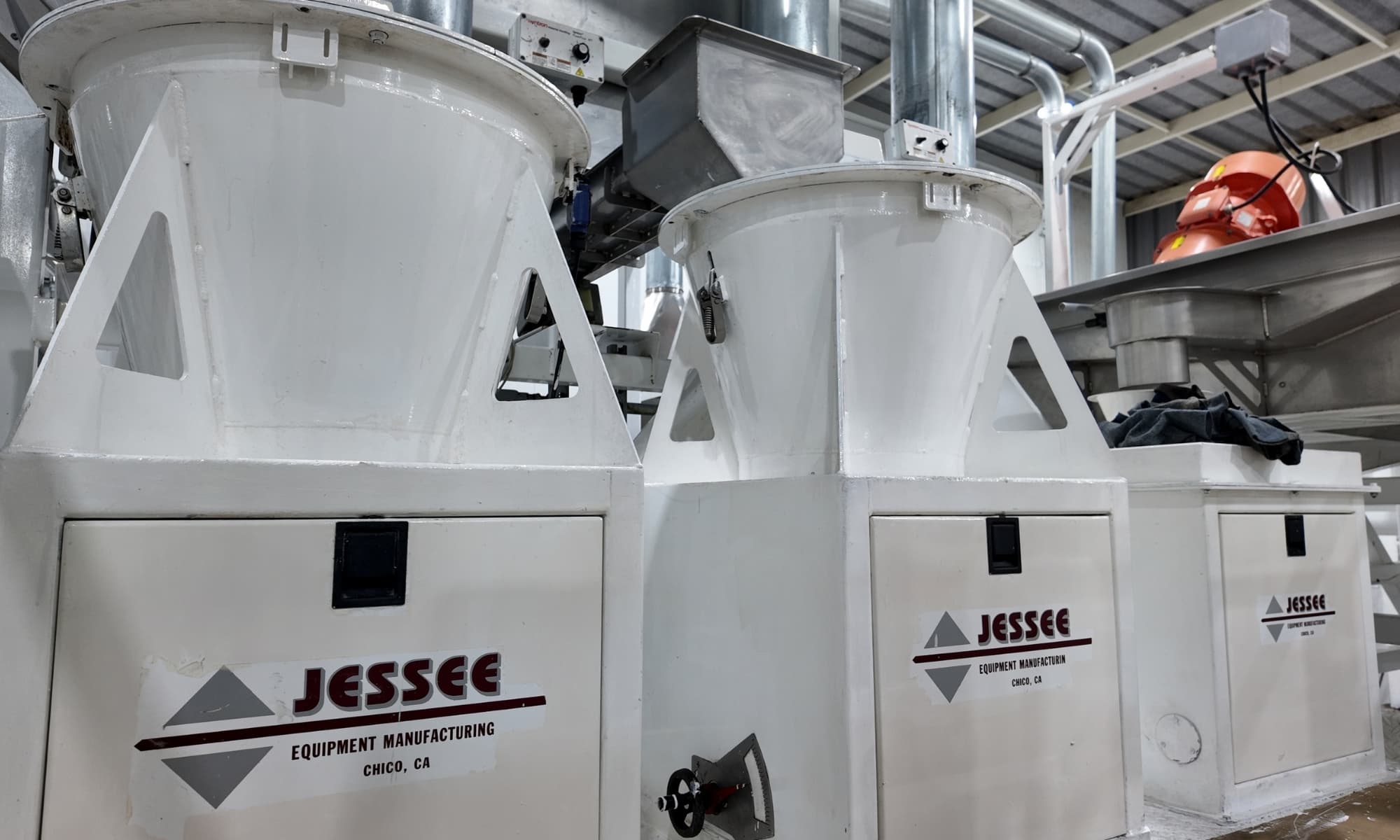
Romania also applies Regulation (EU) 2023/915: 5.0 µg/kg of aflatoxin B1 and 10.0 µg/kg in total for hazelnuts for the final consumer or used as an ingredient, and 8.0 and 15.0 µg/kg for nuts to be sorted first. Jessee, whose processing lines OVE Europe supplies, builds drying, in-shell cleaning and sizing, and shelling systems, and it established product lines for hazelnuts in the 1980s.
For general information only. Information may become outdated and does not replace site-specific professional advice. Consult a qualified agronomist and confirm equipment suitability with OVE before acting.
Practical Tips for Hazelnut Post-Harvest Handling & Processing
Dry nuts promptly after harvest: British Columbia's guide gives 5 to 8% moisture within 24 hours, after husking, cleaning and washing.
Where possible, dry nuts in a dryer rather than in the sun: the Codex code warns that sun-dried nuts face a greater risk of contamination from fungal growth or pests.
Consider drying air at 43 to 49 °C and 40% relative humidity: in OSU research, these conditions improved drying efficiency and kept quality.
Keep in-shell nuts within 12.0% moisture for the whole nut or 7.0% for the kernel, the limits in UNECE's 2025 standard for in-shell hazelnuts.
Store dried nuts by lot below 70% relative humidity and at 0 to 10 °C where possible, as the Codex code advises.
Test lots for aflatoxins: in the EU, hazelnuts for the final consumer or used as an ingredient must not exceed 5.0 µg/kg of B1 and 10.0 µg/kg in total.
Recommended Post-Harvest Handling & Processing Stages








Plan your post-harvest line
Estimate tons/day, cleaning & drying capacity, storage needs, and cost/kg—then build your equipment plan in phases.