


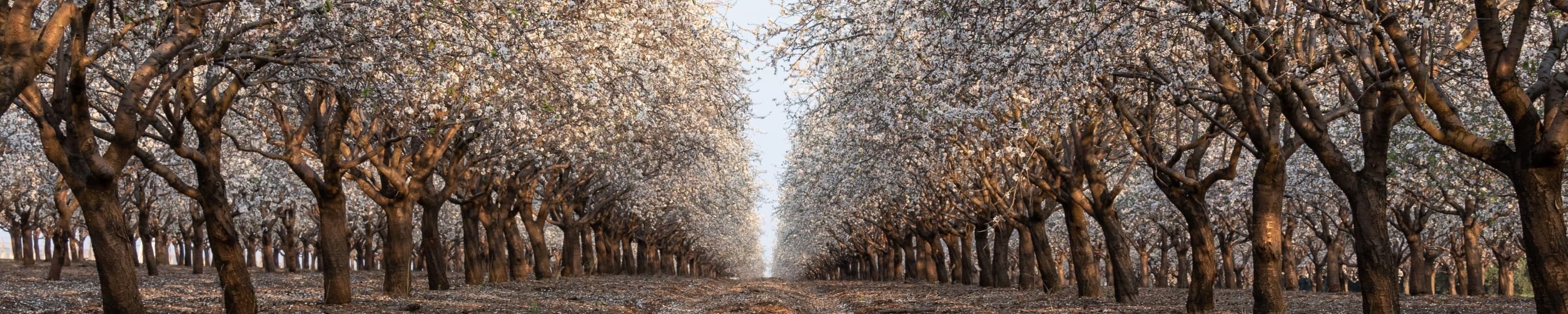




Almond Orchard Establishment in Serbia
Frost at bloom is the key risk. A 2017 paper on a trial at the University of Belgrade Faculty of Agriculture's Radmilovac estate gives irregular bearing, mainly from early bloom and sensitivity to late spring frost, as the main reason for small almond production. There, bloom began on 20 March on average in 2012 to 2015, from 14 March (Exinograd, Nessebar) to 1 April (Mari de Stepa), and late frosts of -1.8 °C to -3.5 °C were recorded during bloom in every year.
A 2021 paper on a Belgrade-region trial records a March 2017 frost that significantly reduced yields of early-flowering cultivars, finds the region suitable for late-flowering ones and rates Tuono the most productive. At Surduk in northern Serbia, researchers concluded after 2010 to 2014 trials that Troito, Texas and four local selections can be recommended for that area. Serbia's register of recognized varieties (19 October 2026) lists 20 almond varieties and six rootstocks, among them peach and almond seedlings and almond × peach hybrids.
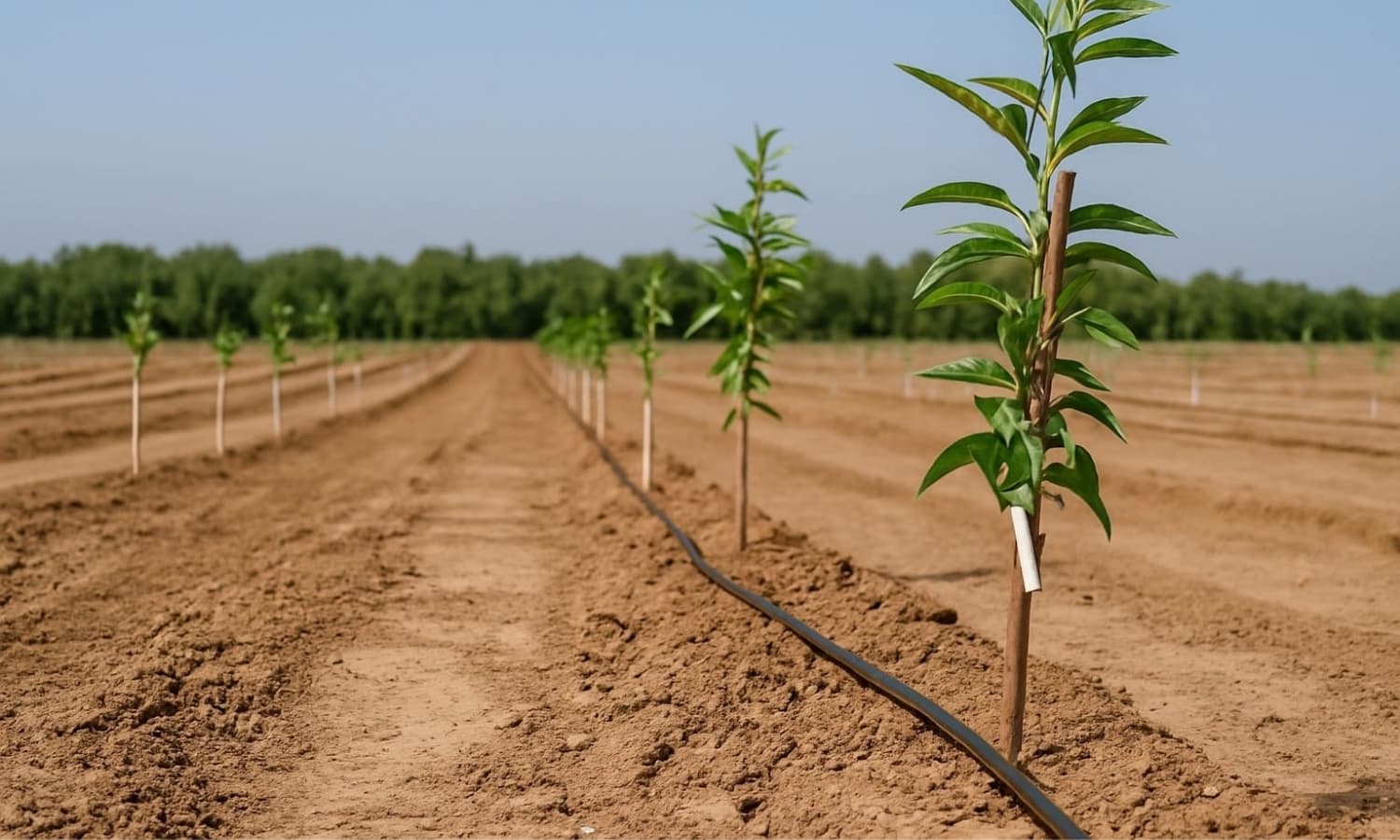
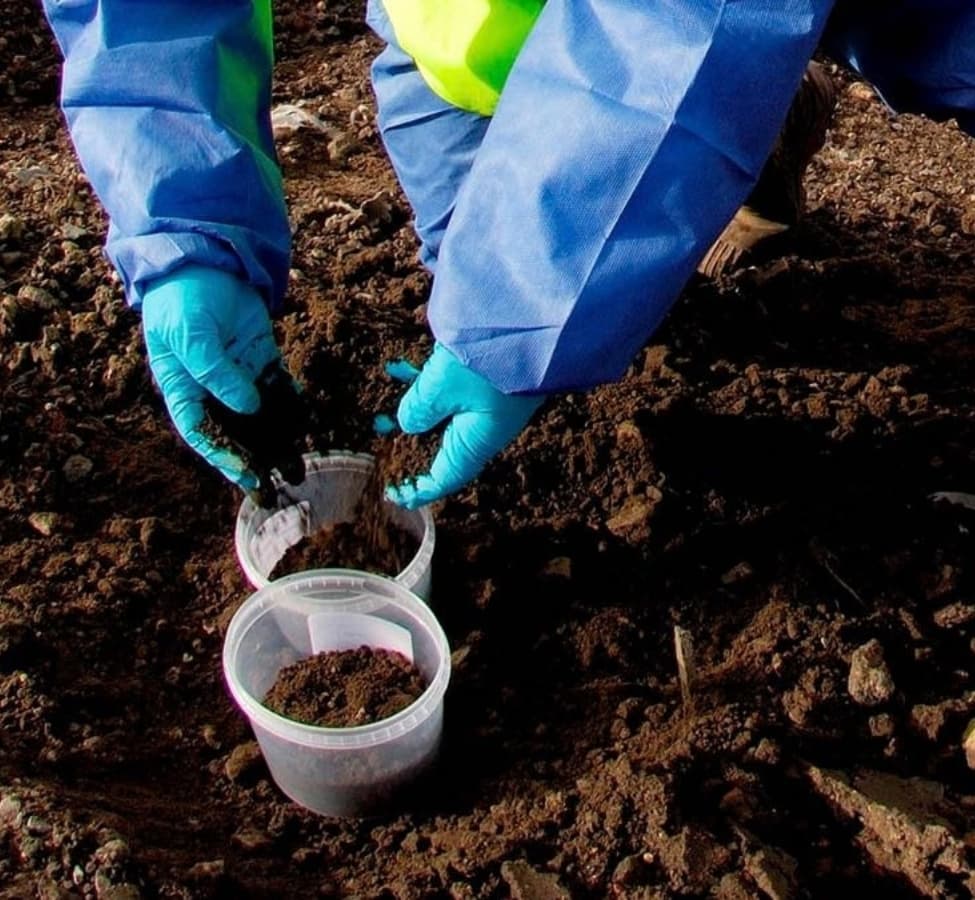
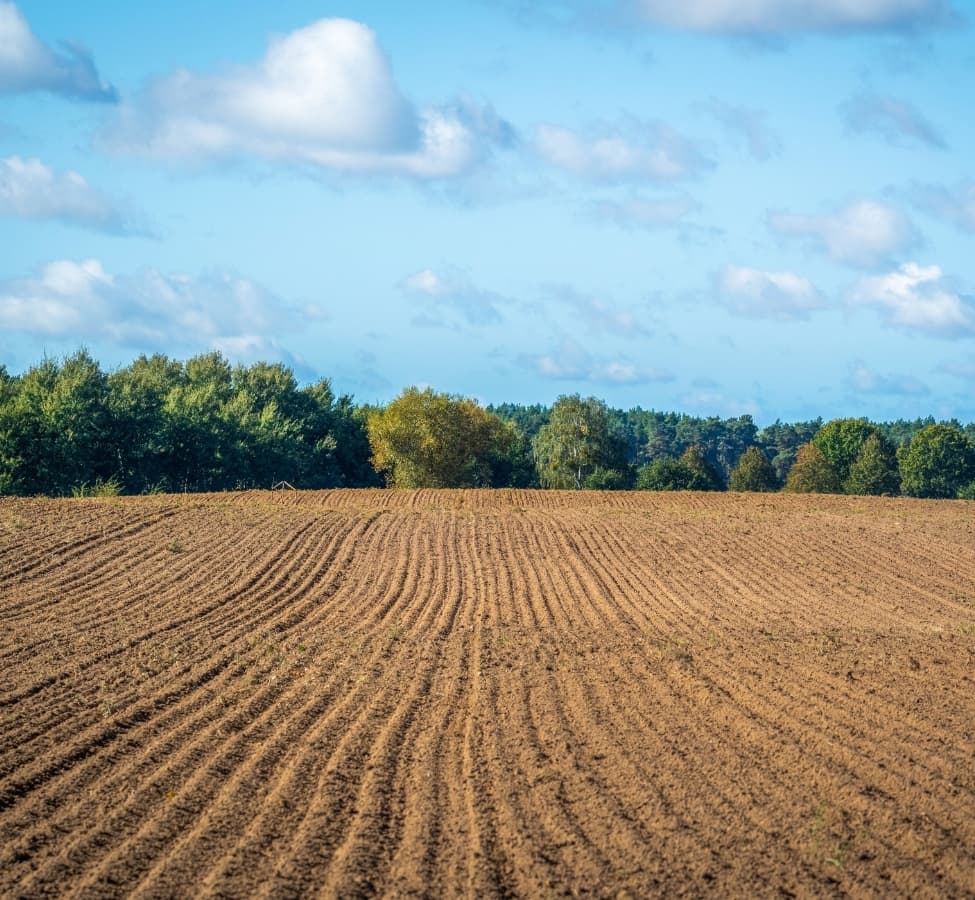
The Radmilovac trees, planted in 2006 on vineyard peach seedlings at 4.5 × 2.5 m and trained to an improved pyramid, were grown without irrigation. Machines suit orchards planted for them on suitable ground, not scattered garden trees: before planting, plan rows, headlands, drip lines and trunk height for shakers and catching frames, and check the soil and drainage of each site.

Practical Tips for Almond Orchard Establishment
Favor late-flowering cultivars: a 2021 trial paper found the Belgrade region suitable for late-flowering almond cultivars.
Avoid frost pockets: late spring frosts of -1.8 °C to -3.5 °C were recorded at bloom in every year of the 2012 to 2015 Radmilovac trial.
Plant pollinizers: a 2010 study found all 19 local genotypes from Slankamen Hill self-incompatible (2005 and 2006 data).
Check the register of recognized varieties: its edition of 19 October 2026 lists 20 almond varieties and six rootstocks.
Plan for hard winters: the RHMZ weather service gives absolute January minima of -27.6 °C at Novi Sad and -29.5 °C at Sremska Mitrovica (1981 to 2010).
Plan rows, headlands and tree form for the shaker, sweeper and harvester before planting, and check trunk clearance with OVE Europe.
Recommended Establishment Stages

Almond Orchard Care & Maintenance in Serbia
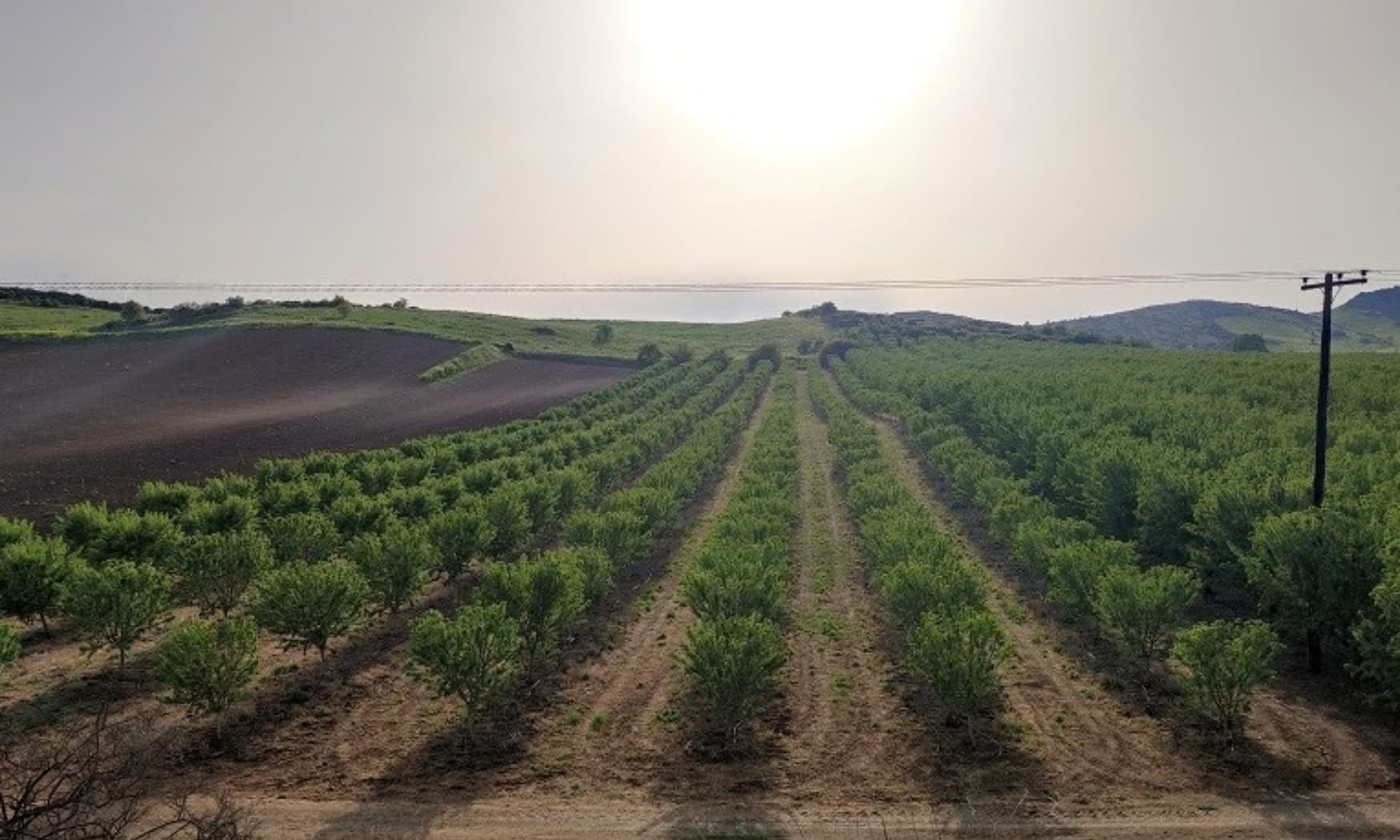
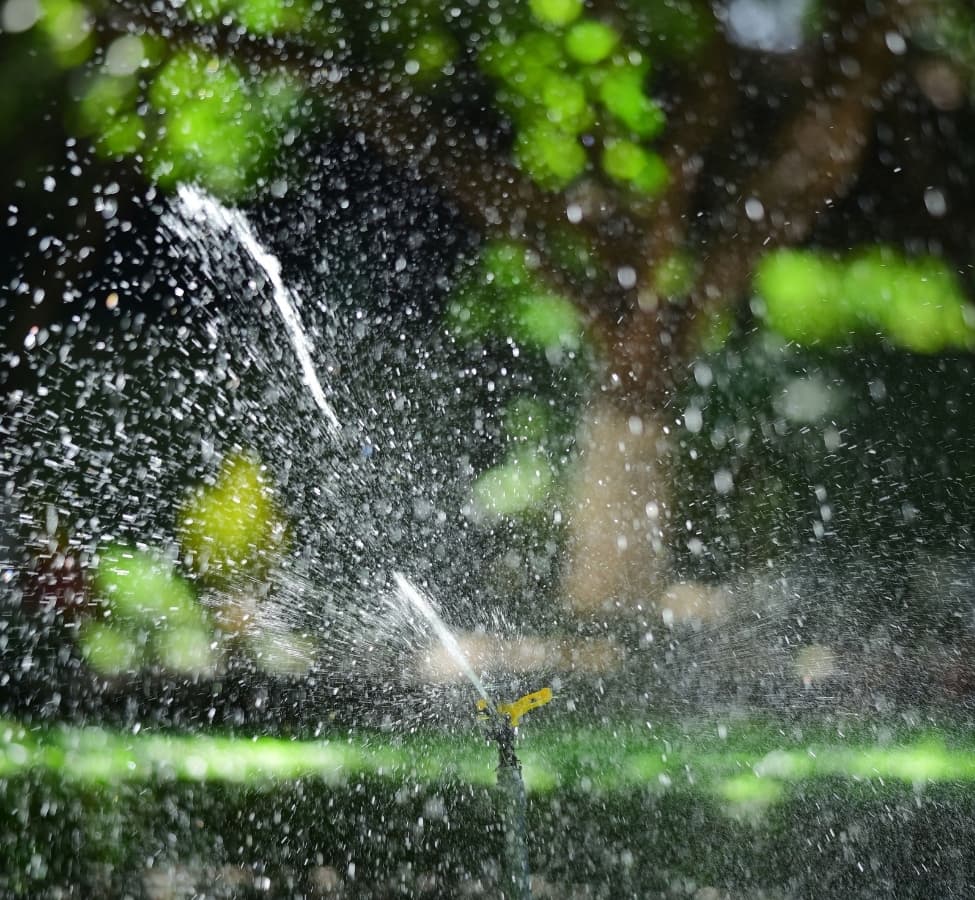
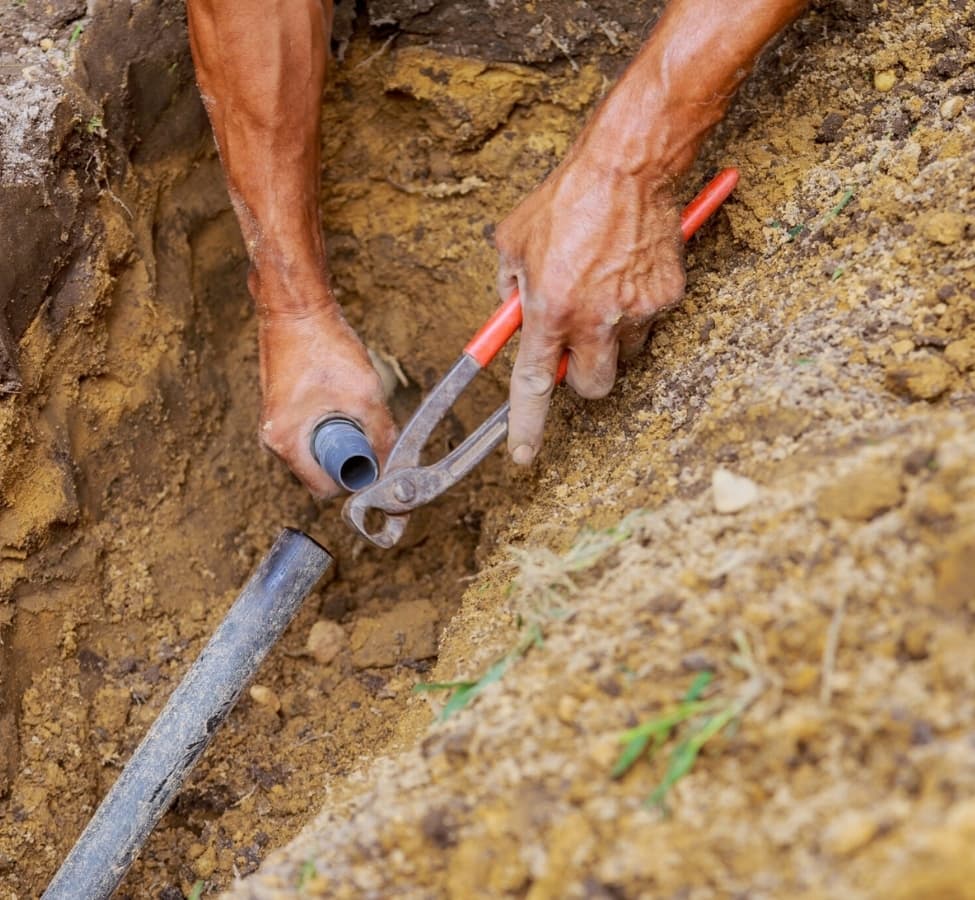
No Serbian guidance on almond irrigation or nutrition was found, and the Radmilovac trial trees grew without irrigation. The Republic Hydrometeorological Service of Serbia (RHMZ) gives mean August potential evapotranspiration of 124.5 to 129.5 mm at Sremska Mitrovica, Novi Sad and Belgrade (1971 to 2000), well above the 52.8 to 57.5 mm of August rain at Sremska Mitrovica and Novi Sad (1981 to 2010). Where water is available, plan drip irrigation for new orchards from the start.
EPPO lists bacterial spot (Xanthomonas arboricola pv. pruni), which also affects almond, as present in Serbia with a restricted distribution and under eradication; it has been found on peach and apricot in the Fruška Gora region since 2019. EPPO also lists the peach twig borer (Anarsia lineatella), on information from 1992, but not the almond seed wasp (Eurytoma amygdali), which it records in neighboring countries; a missing record does not prove absence.
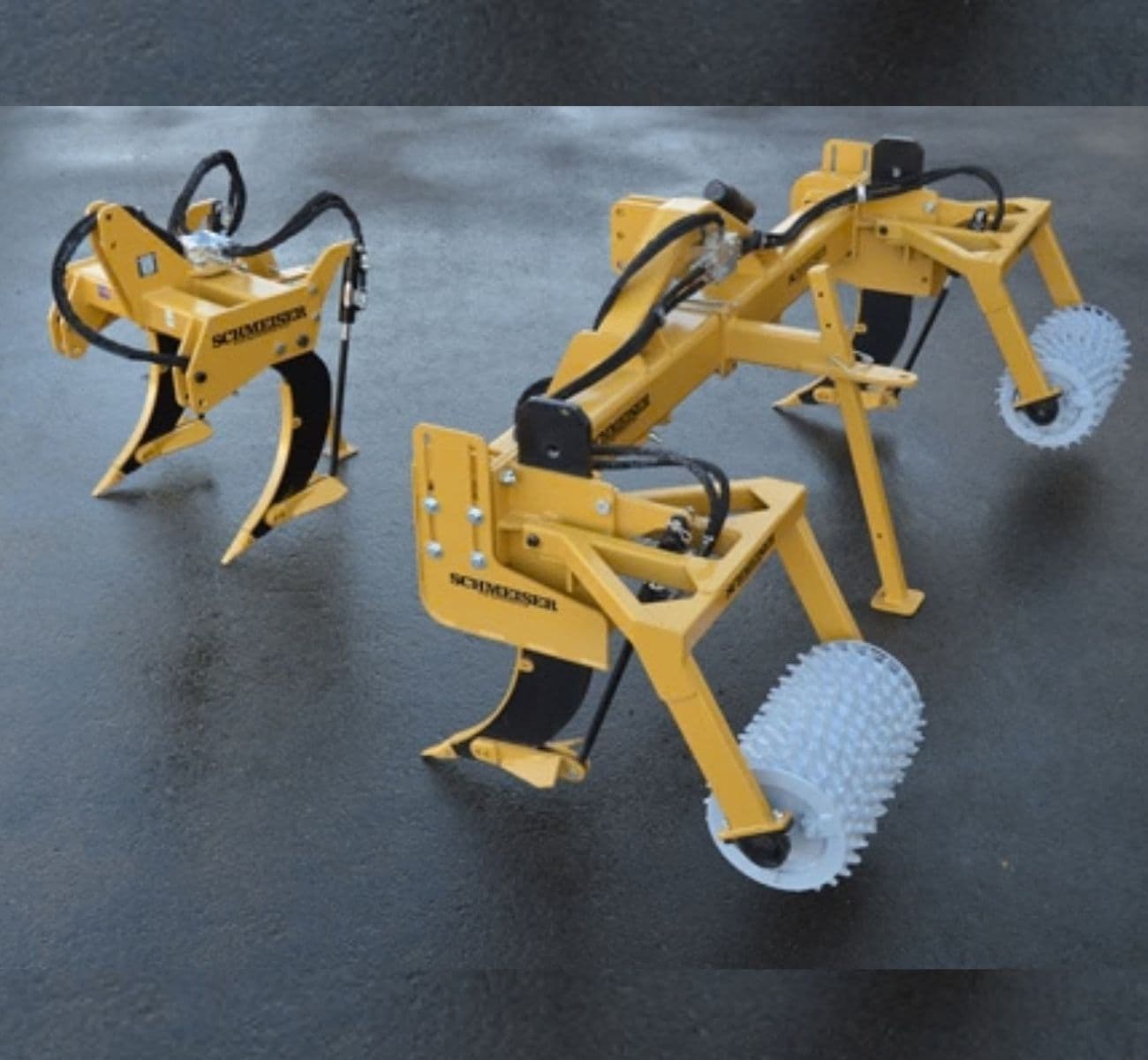
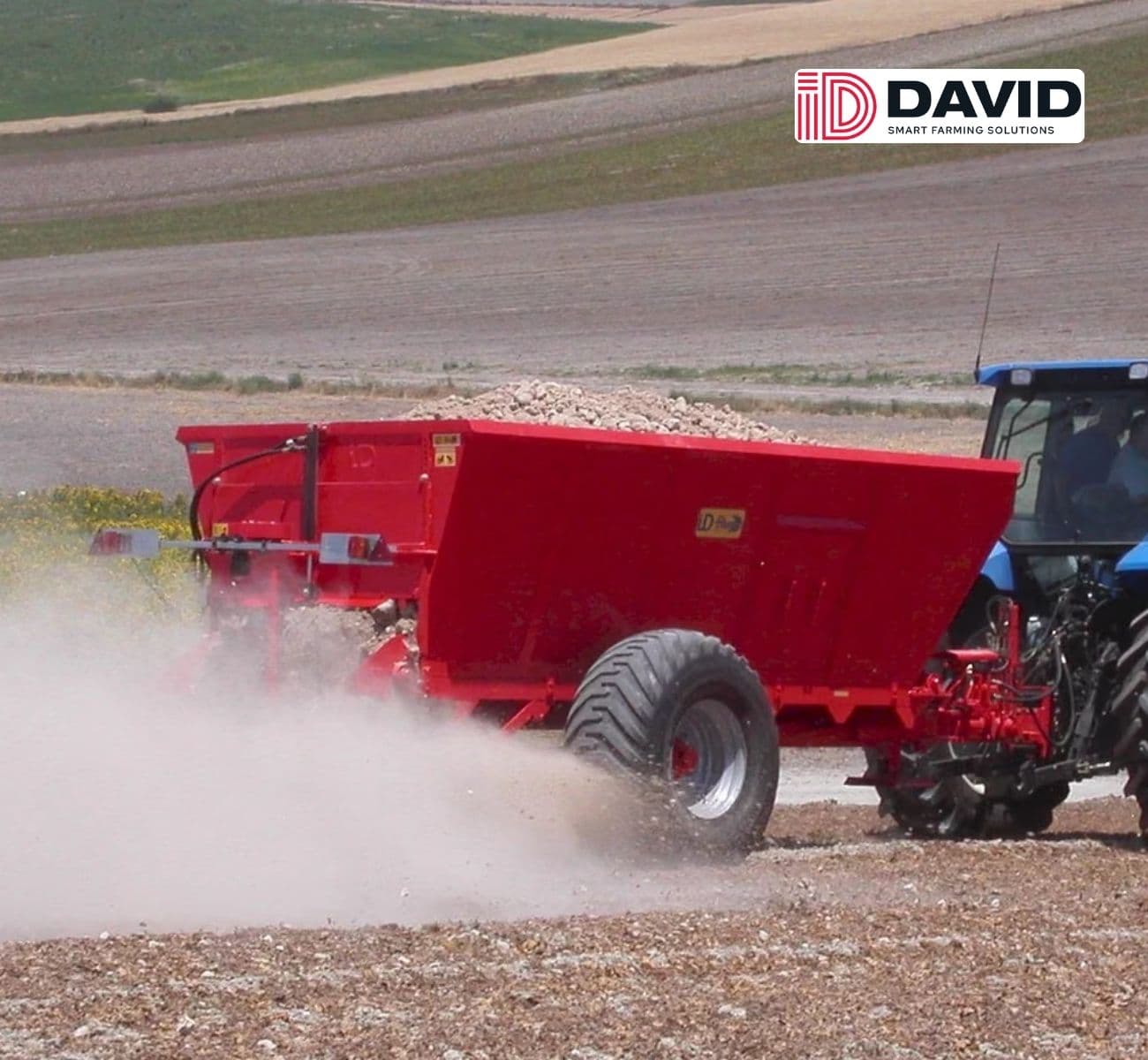
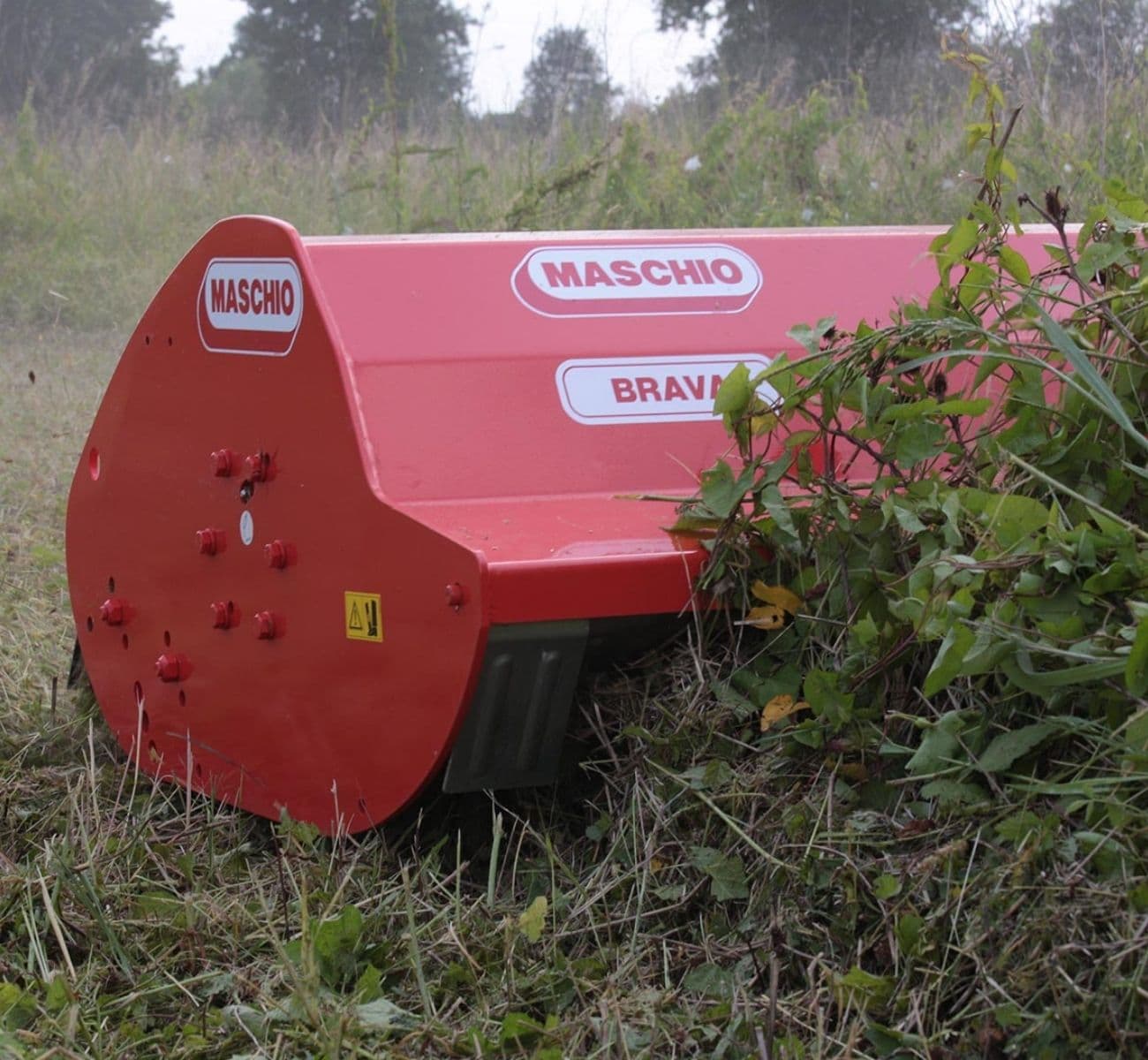
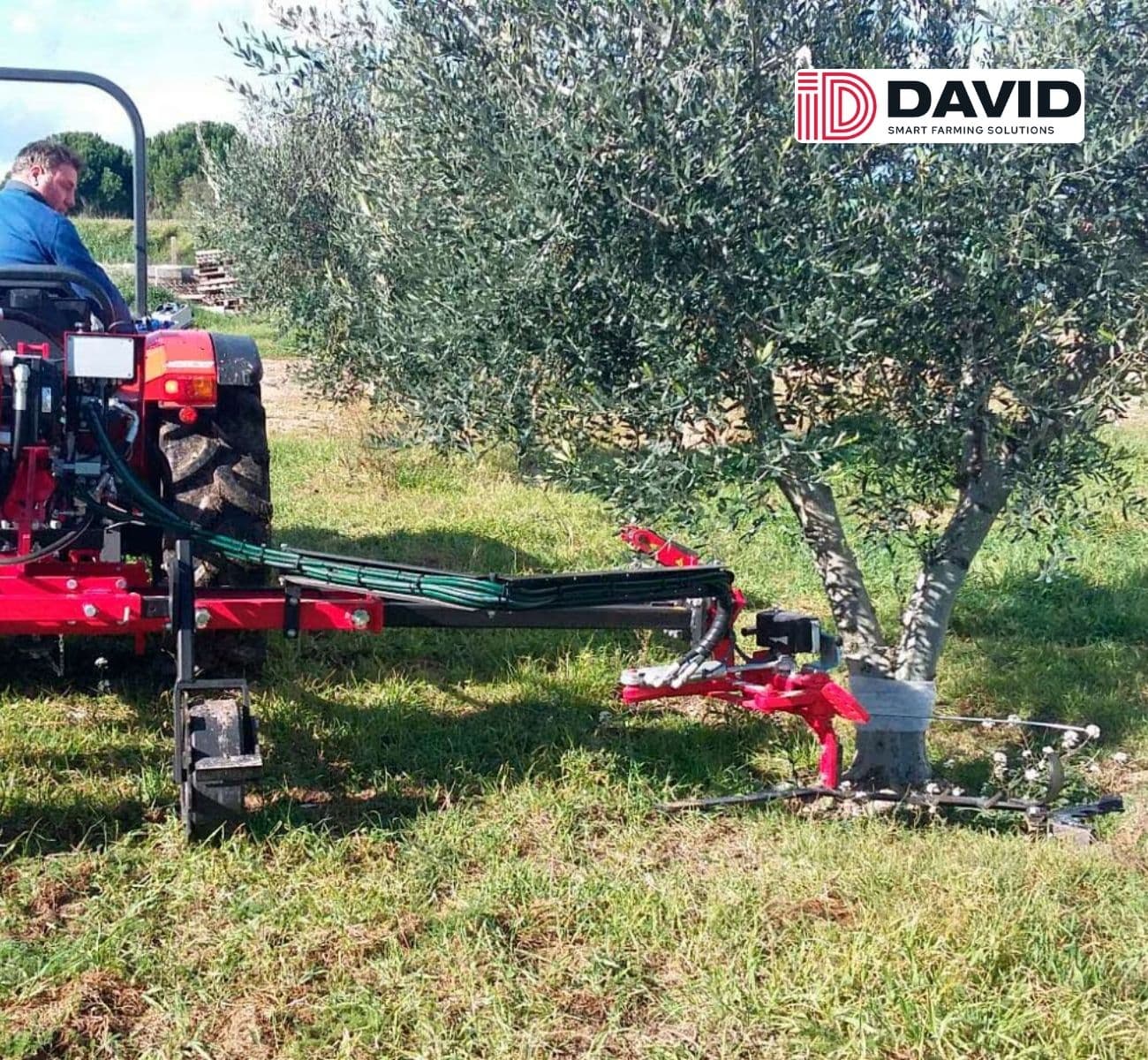
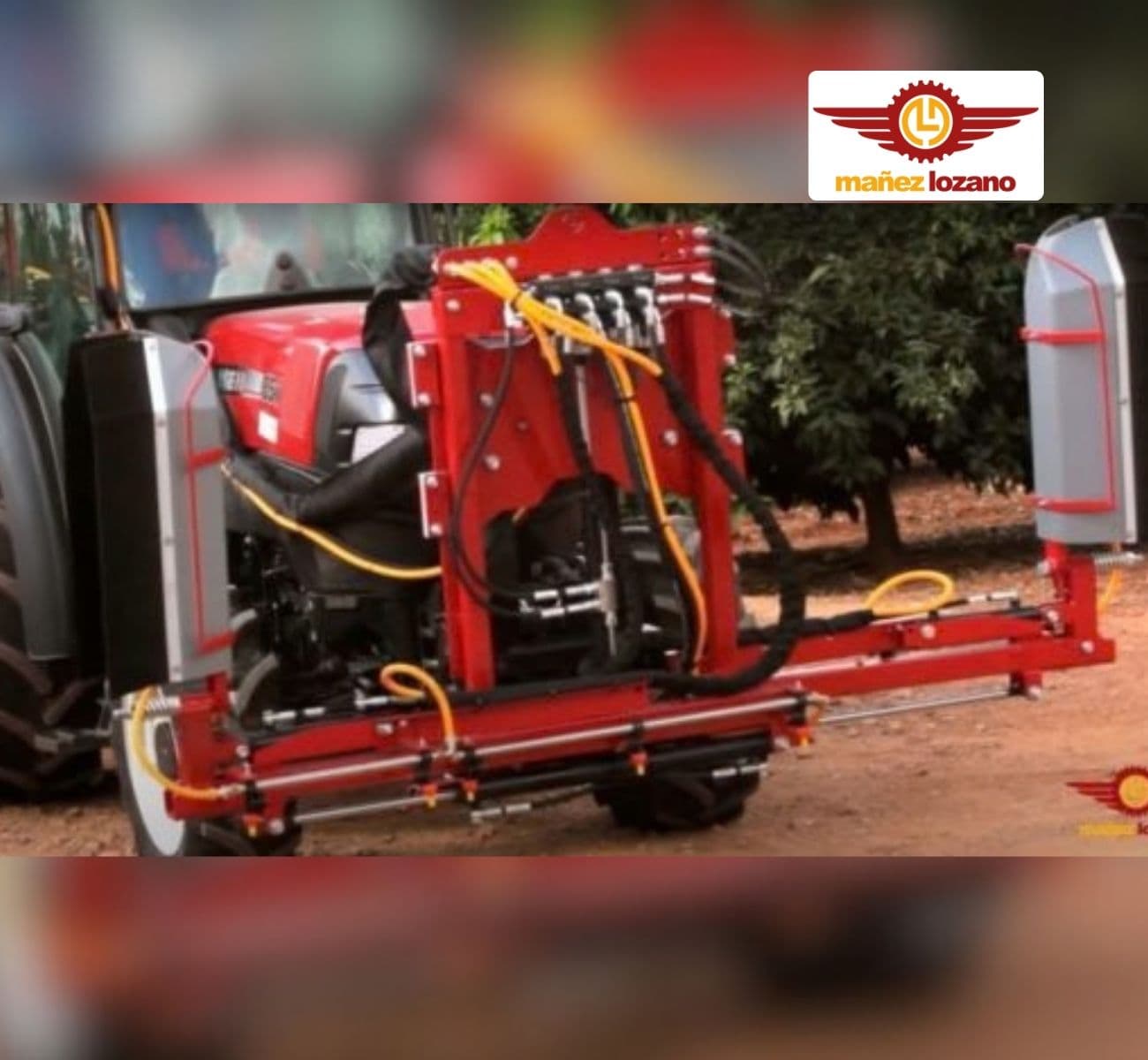
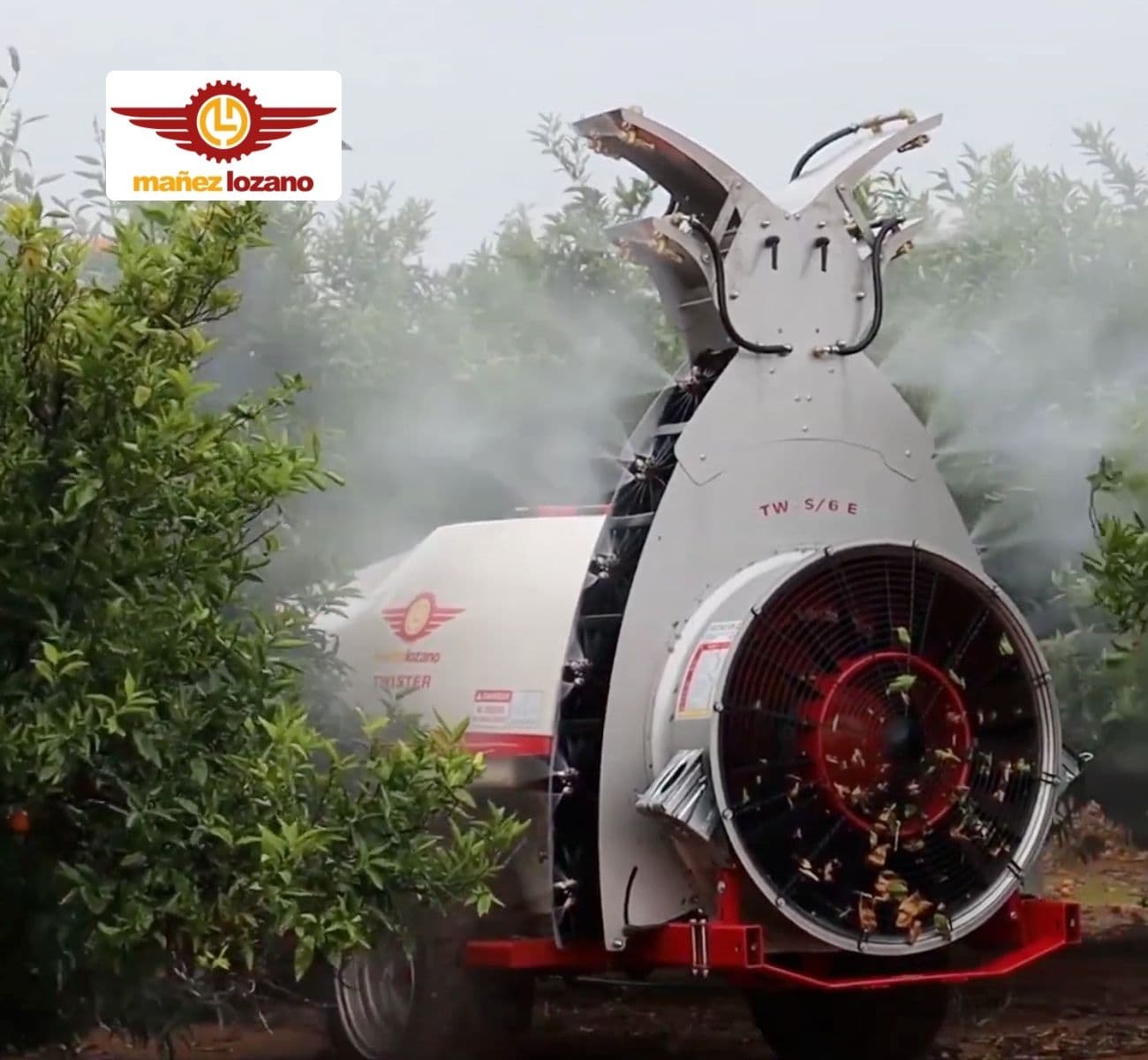
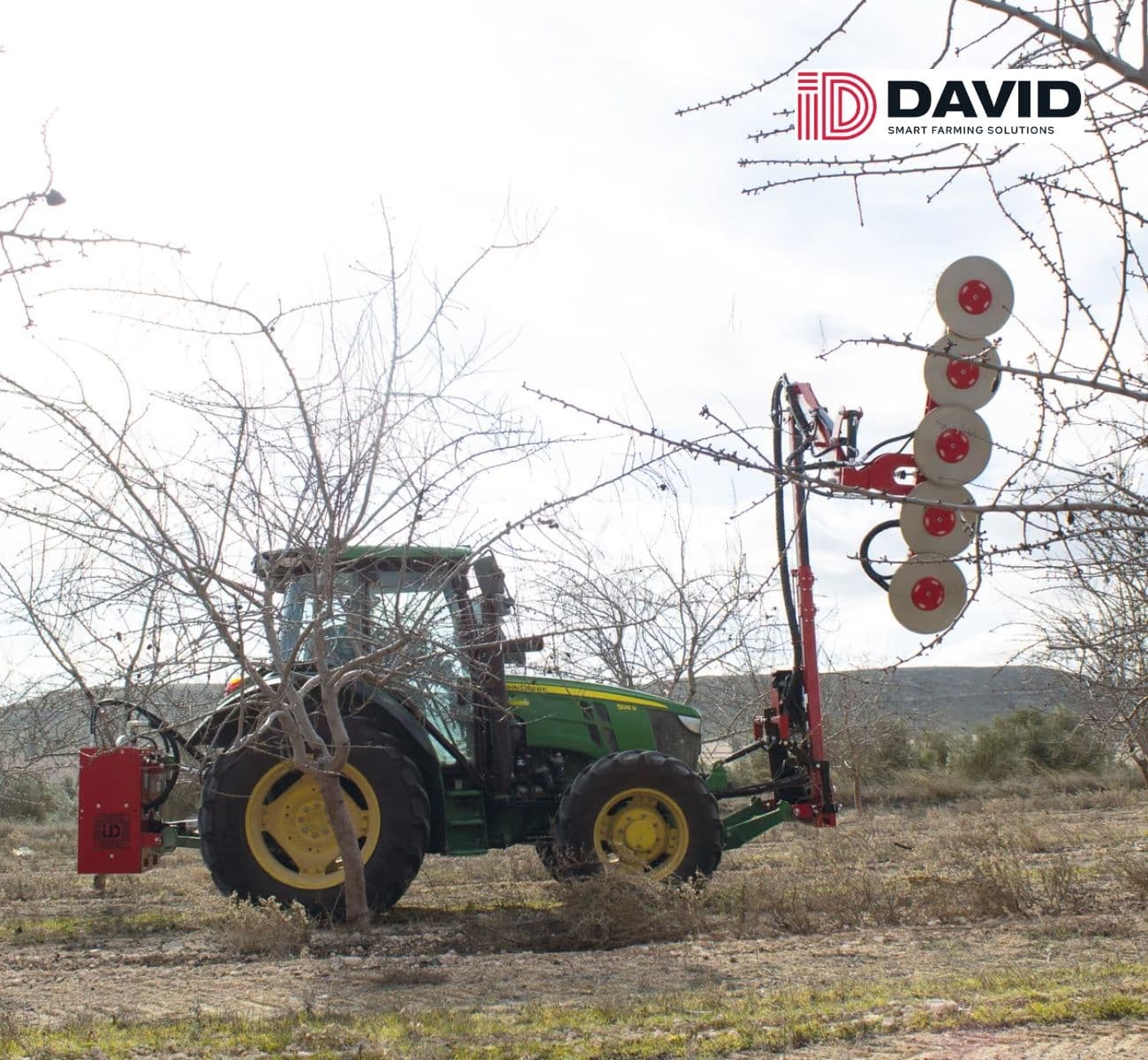
Watch bloom: Novi Sad and Sremska Mitrovica average 10 and 11 frost days in March and 2 in April (RHMZ, 1981 to 2010), and a 2021 Belgrade-region study gives the second half of March and the first ten days of April as the average flowering time. For care work, the ID DAVID SURFEED spreads solid manure, the ID-XL weeds the tree row, the Mañez Lozano Mega Twister S6 sprays tall, dense canopies and the ID DAVID ID-REX disc pruner makes lateral and topping cuts.
Recommended Orchard Care & Maintenance Stages
Practical Tips for Almond Orchard Care & Maintenance
Plan water for dry summers: the RHMZ weather service ranked August 2024 the 6th driest August in Serbia since 1951.
Watch bloom for frost: Novi Sad averages 10 frost days in March and 2 in April (RHMZ weather service, 1981 to 2010).
Plant healthy, certified trees: EPPO lists bacterial spot, a disease of almond and stone fruit, as present in Serbia and under eradication.
Watch for the almond seed wasp: EPPO records it in neighboring countries, though not in Serbia, and a missing record is not proof of absence.
Keep the tree row weed-free with an in-row weeder such as the ID DAVID ID-XL, and keep the orchard floor level for harvest.
Spray tall, dense canopies evenly with a trailed airblast sprayer such as the Mañez Lozano Mega Twister S6.

Almond Harvesting in Serbia
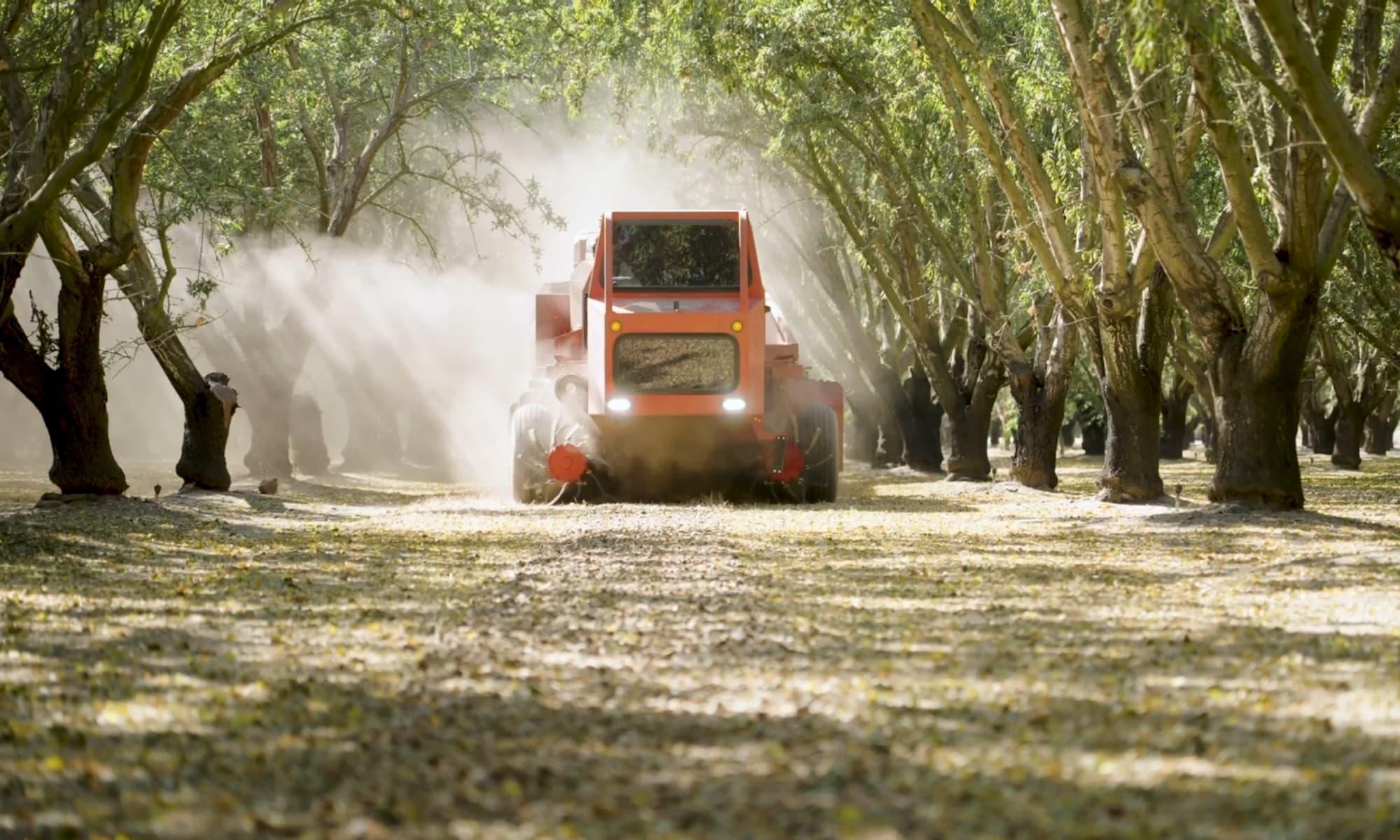
No Serbian source found describes how growers harvest almonds today. In a Belgrade-region trial, maturity began between 15 and 28 August, depending on the cultivar (2021 paper), and a 2012 paper gives mean harvest dates from 28 August to 5 September for garden-tree genotypes on Slankamen Hill (2004 to 2006), with nuts sampled when the hull was fully dry and open along the suture. In orchards planted for machines on suitable ground, mechanized harvesting can bring the crop in on time, with less risk of nuts deteriorating while they wait.
RHMZ normals for 1981 to 2010 give Novi Sad and Sremska Mitrovica 9 days of 0.1 mm or more of rain in August and 10 in September, with 50.3 to 57.5 mm a month. RHMZ ranked September 2021 the 11th driest and September 2022 the 5th wettest in Serbia, and in 2024 August was the 6th driest and September the 8th wettest since 1951. As these months are not reliably dry and no Serbian source describes ground drying, this guide shows prompt pickup, hulling and drying at once, beside catching frames.
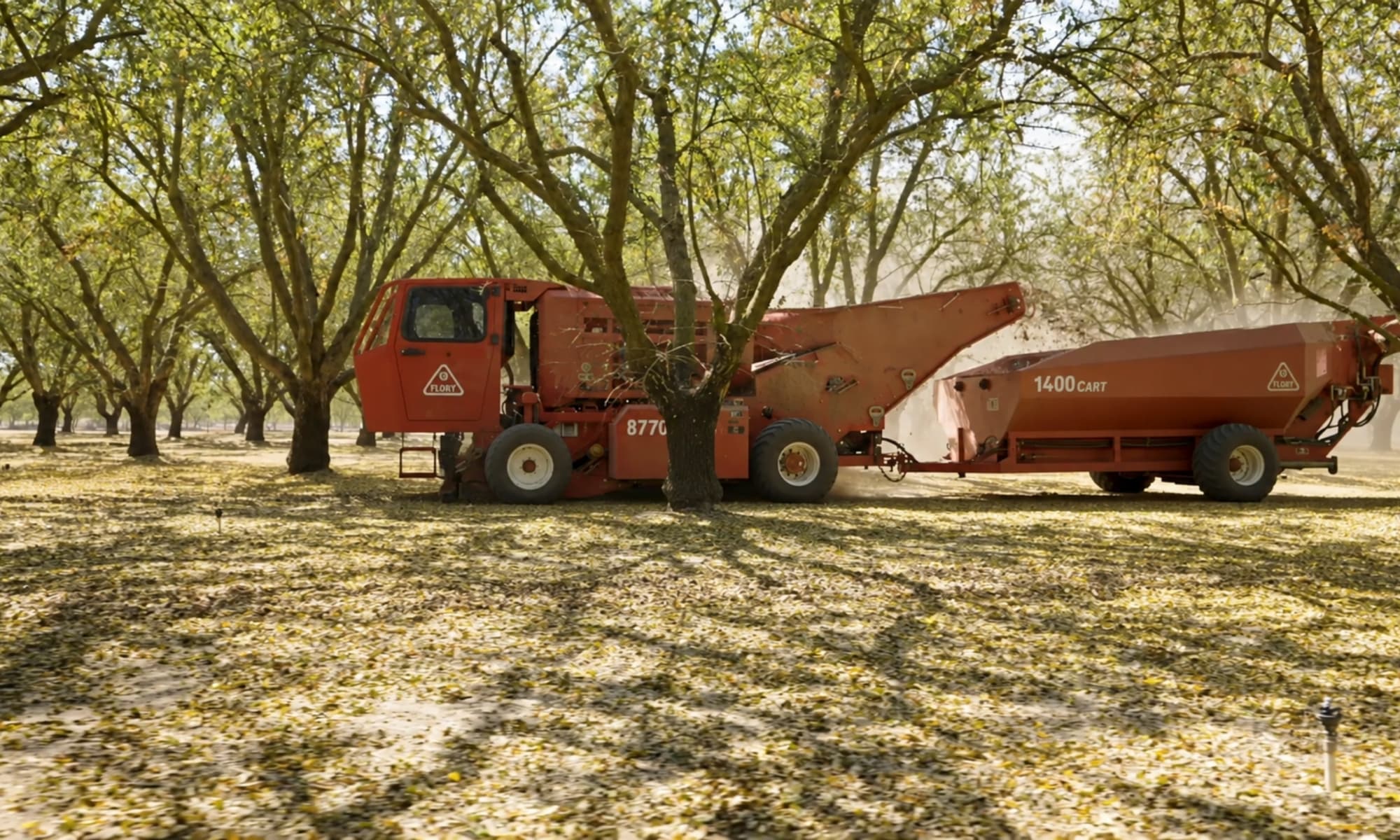
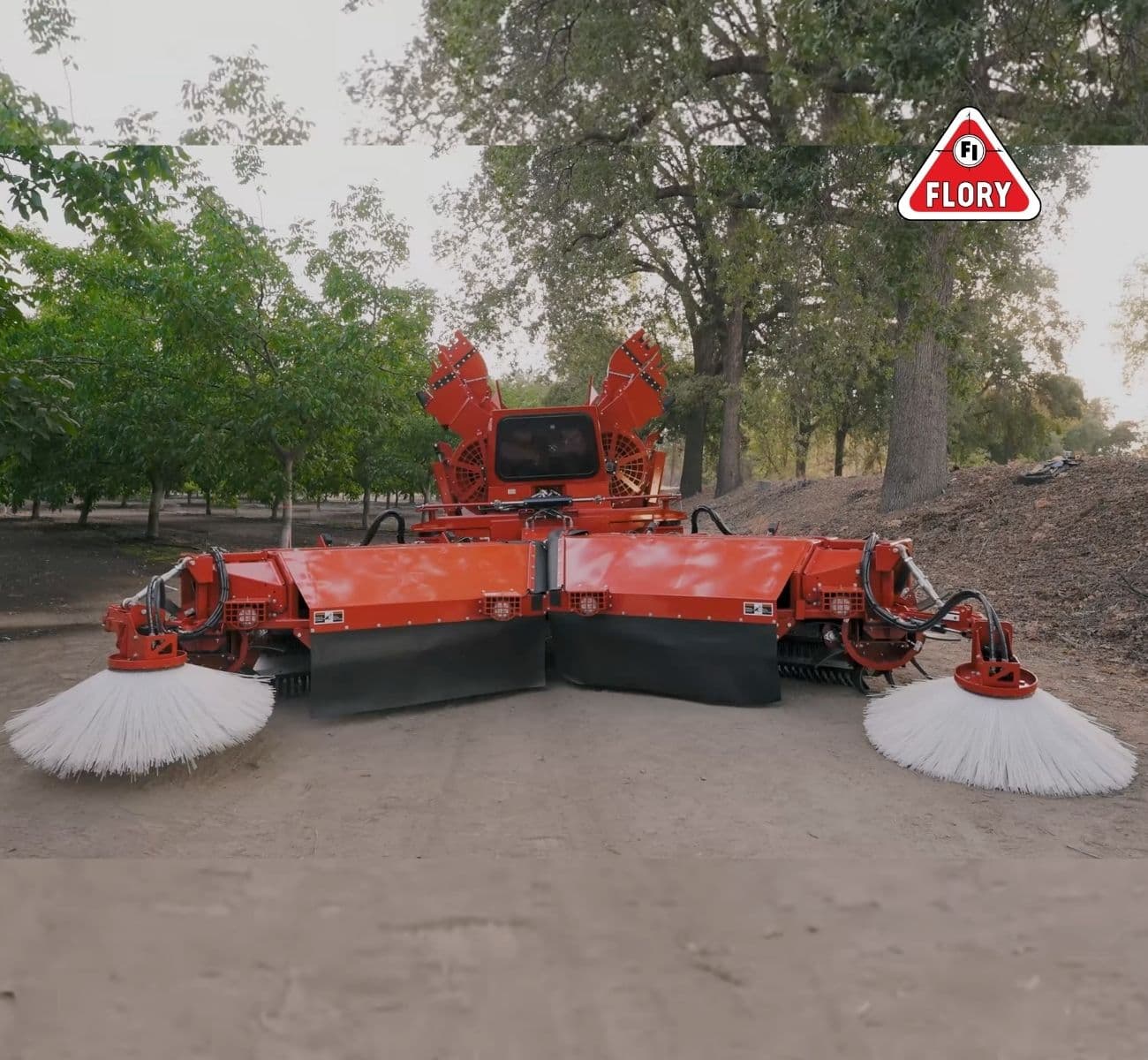
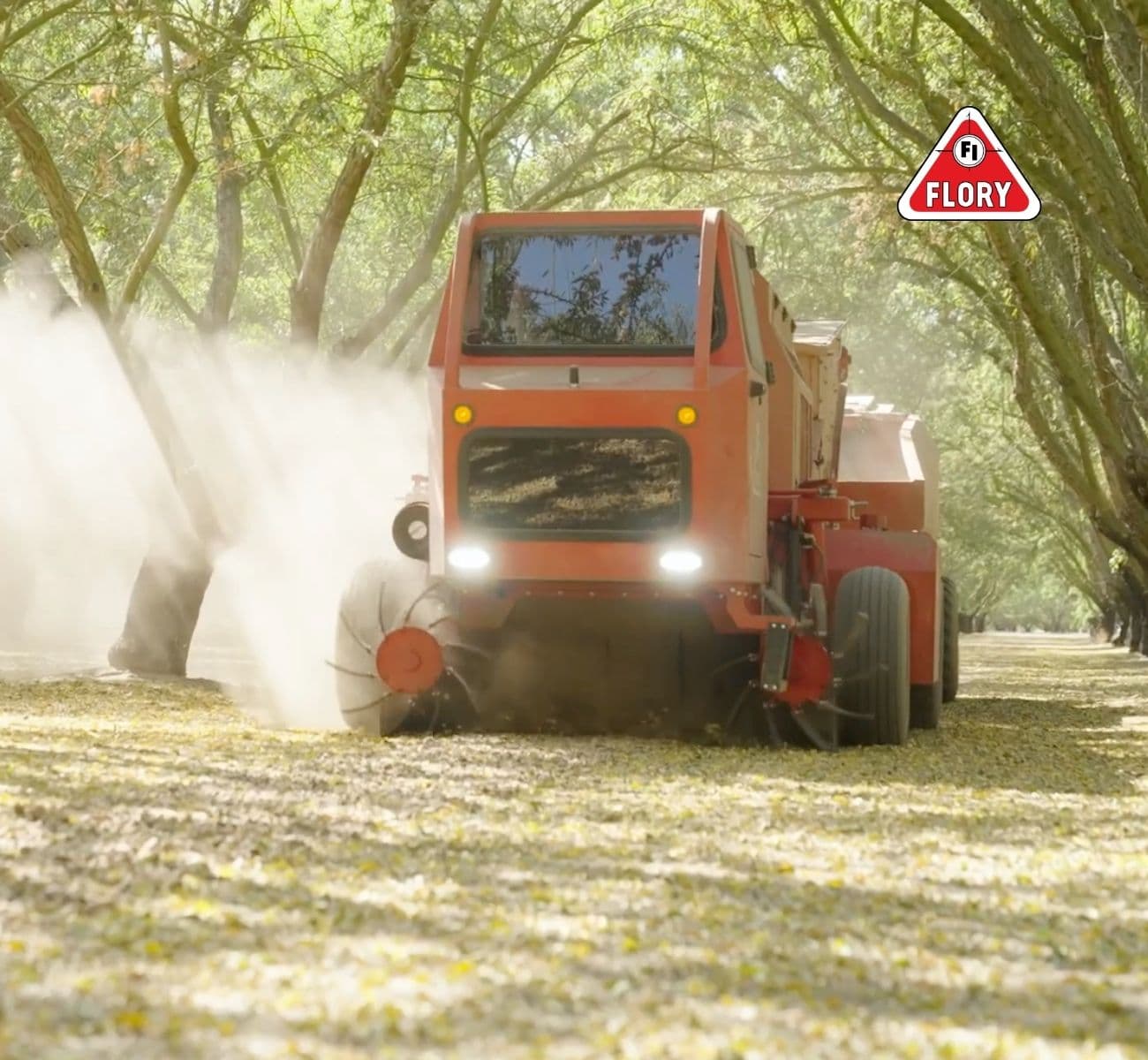
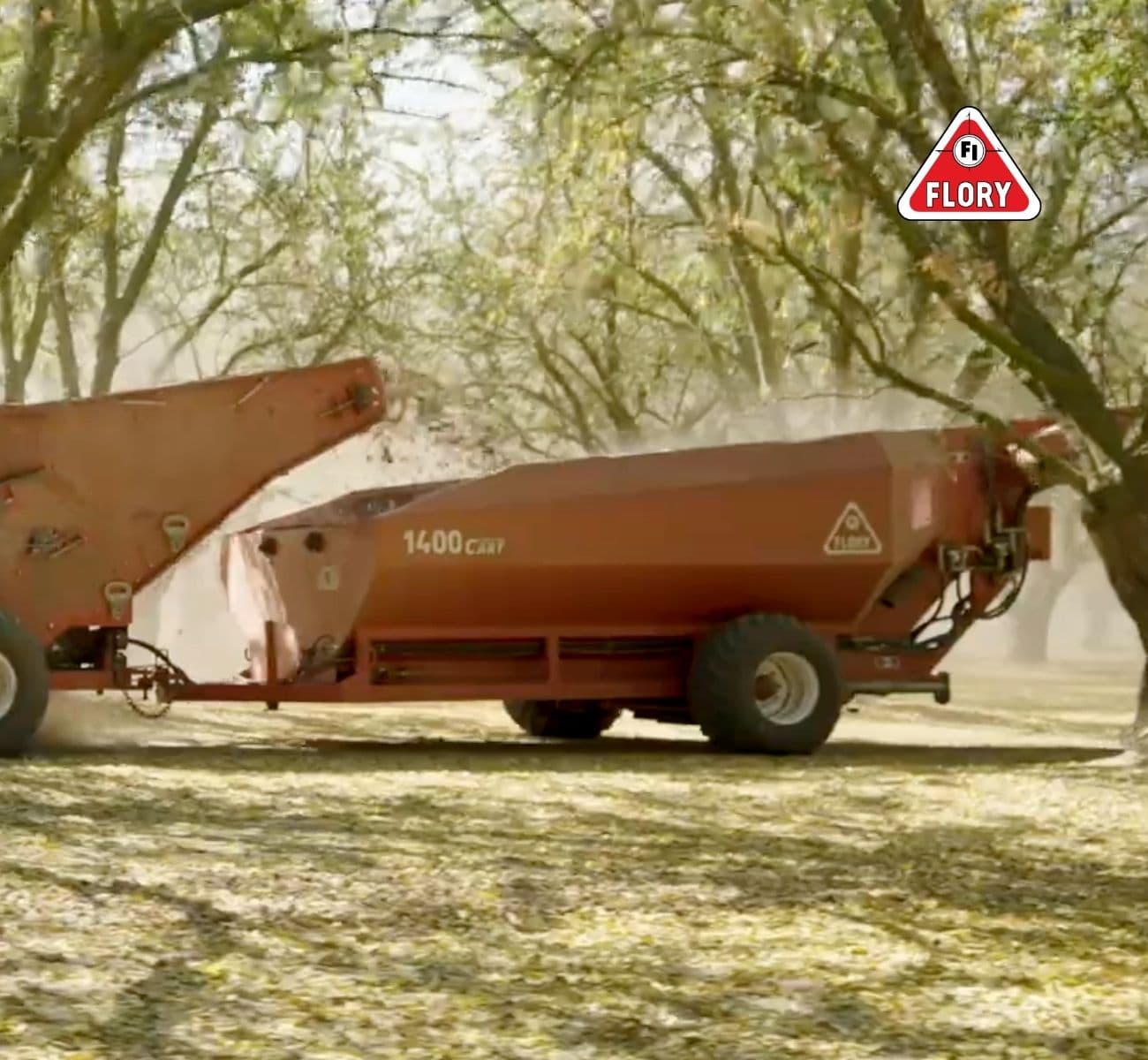
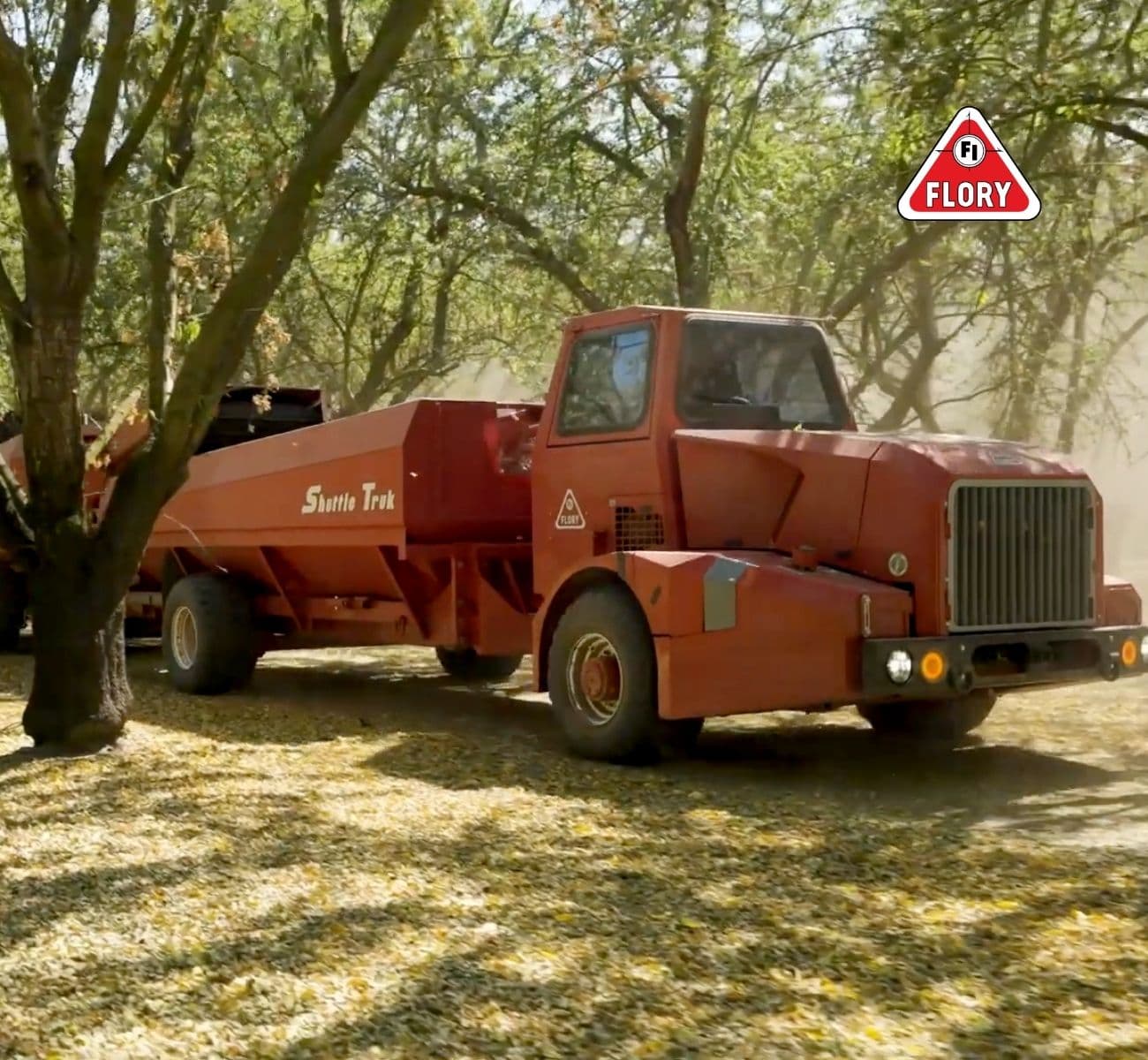
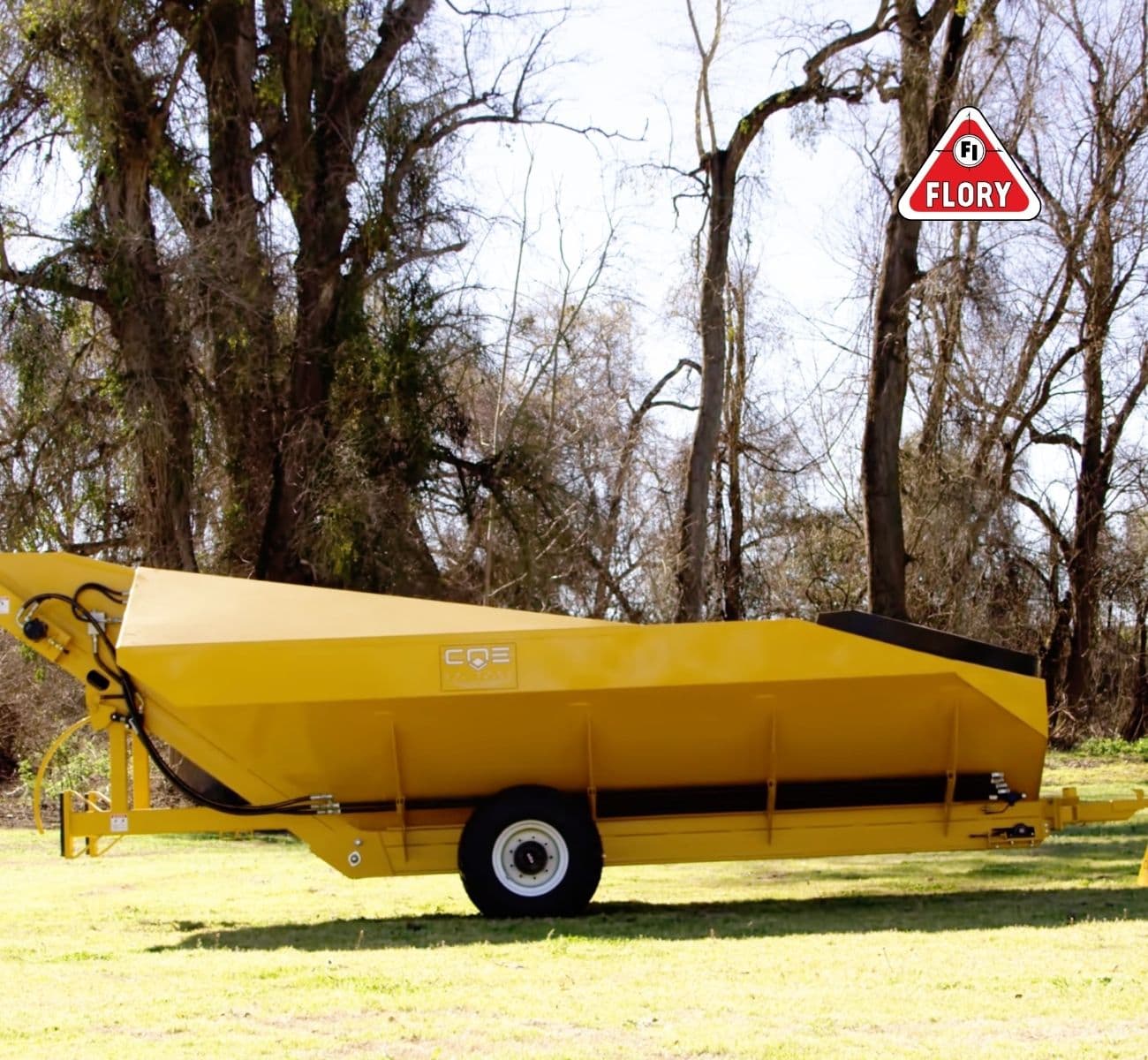
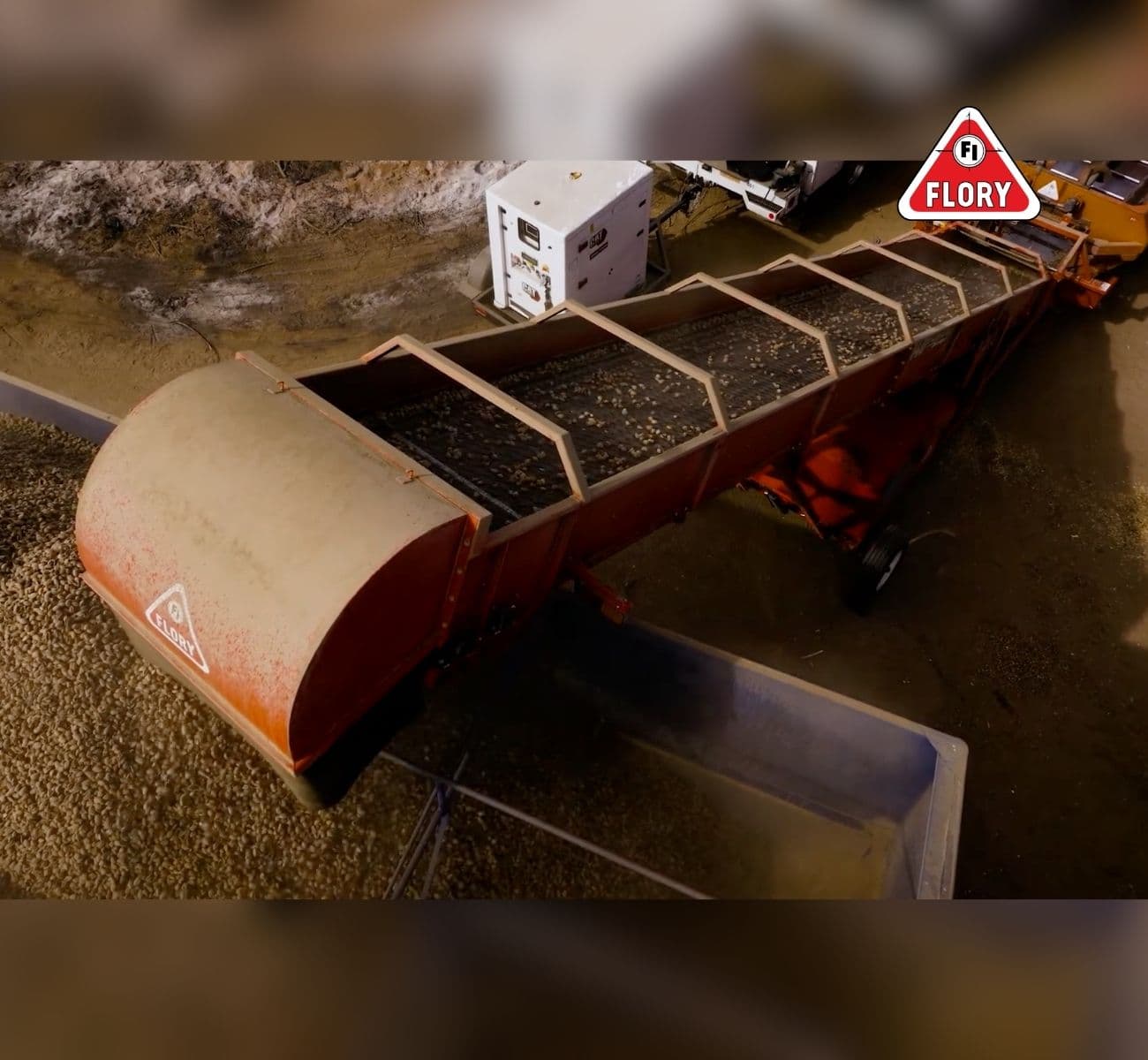
Flory harvesting machinery is available in Serbia through OVE Europe for both systems. On the ground, the VR700 Shaker, V62 Sweeper and 8772 Harvester feed the 1500 Conveyor Cart and ST14 Shuttle. Off the ground, the Flory COE C7 Shaker and L2 Receiver catch the almonds in a frame around the trunk, the Flory COE B8 Cart and VS25 Shuttle carry them, and the 4840 Field Elevator loads trailers in both systems.
Almond Harvest Workflow (Recommended Equipment)




Practical Tips for Almond Harvesting
Harvest once the hulls split: University of California guidance says almonds are mature when hulls are split and nuts knock easily from the tree.
Harvest each cultivar as it matures: in a Belgrade-region trial, maturity began between 15 and 28 August, depending on the cultivar.
Plan for harvest-time rain: Novi Sad averages 9 days with rain in August and 10 in September (RHMZ weather service, 1981 to 2010).
Do not leave wet nuts in piles: University of California guidance warns that wet almonds left in a pile, bag or container mold very quickly.
Where almonds must stay off wet ground, use catching frames: the Flory COE C7 Shaker works with the L2 Receiver.
Use shakers, frames and sweepers only in orchards planted for machines, never on household or free-growing trees.
Get your recommended harvest setup
Enter orchard size, spacing, terrain, and target throughput—we’ll suggest a practical harvest workflow and equipment lineup.

Almond Post-Harvest Handling & Processing in Serbia
No Serbian source found describes how almonds are hulled, dried or stored. University of California extension guidance for home growers says that nuts hulled by hand can lose the green hull before or after drying, that nuts should be spread no more than one or two deep on a firm surface, and that almonds are ready for storage when the kernels are crisp to brittle when broken.
Serbia's rulebook on maximum concentrations of certain contaminants in food (Official Gazette 73/2024, as amended to 103/2025) sets the same aflatoxin limits for almonds as Regulation (EU) 2023/915: 8.0 µg/kg of B1 and 10.0 µg/kg in total for almonds placed on the market for the final consumer or used as an ingredient, and 12.0 and 15.0 µg/kg for almonds to be sorted or otherwise physically treated first. No Serbian standard for almonds was found.
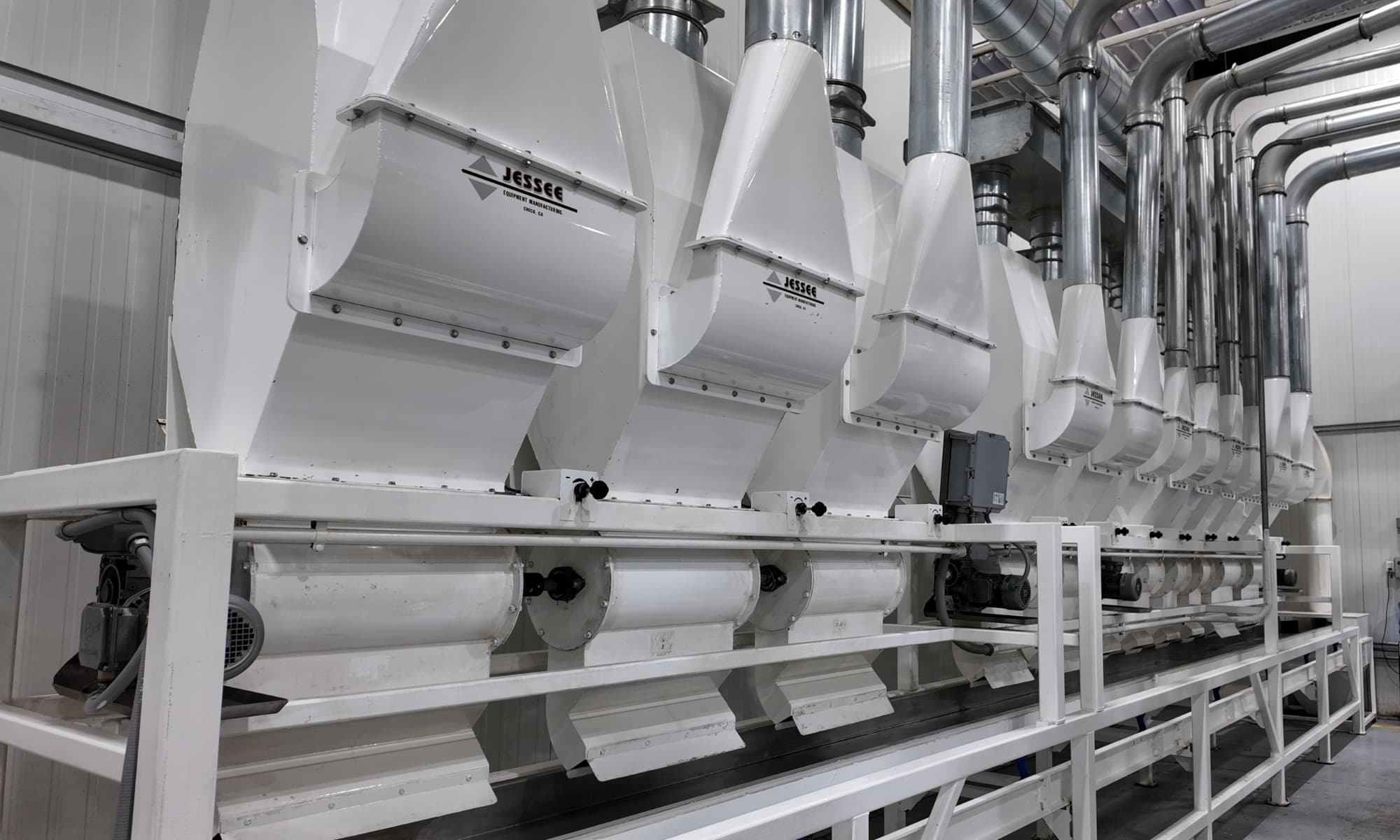
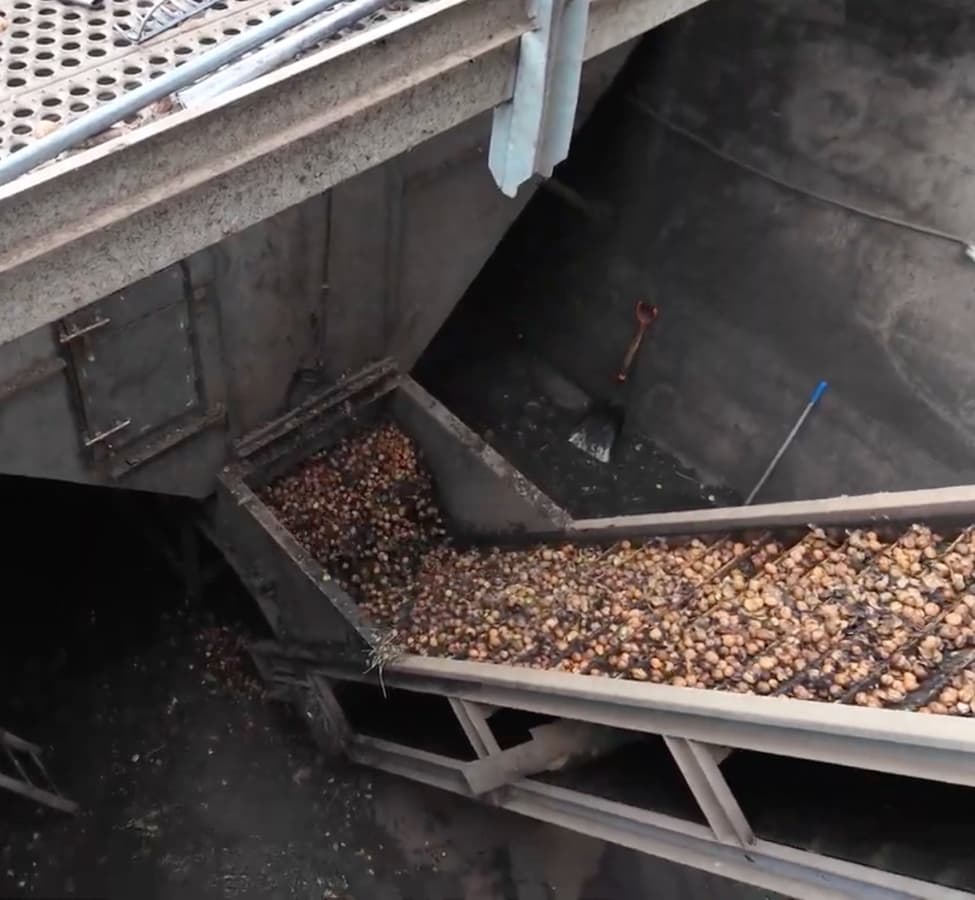
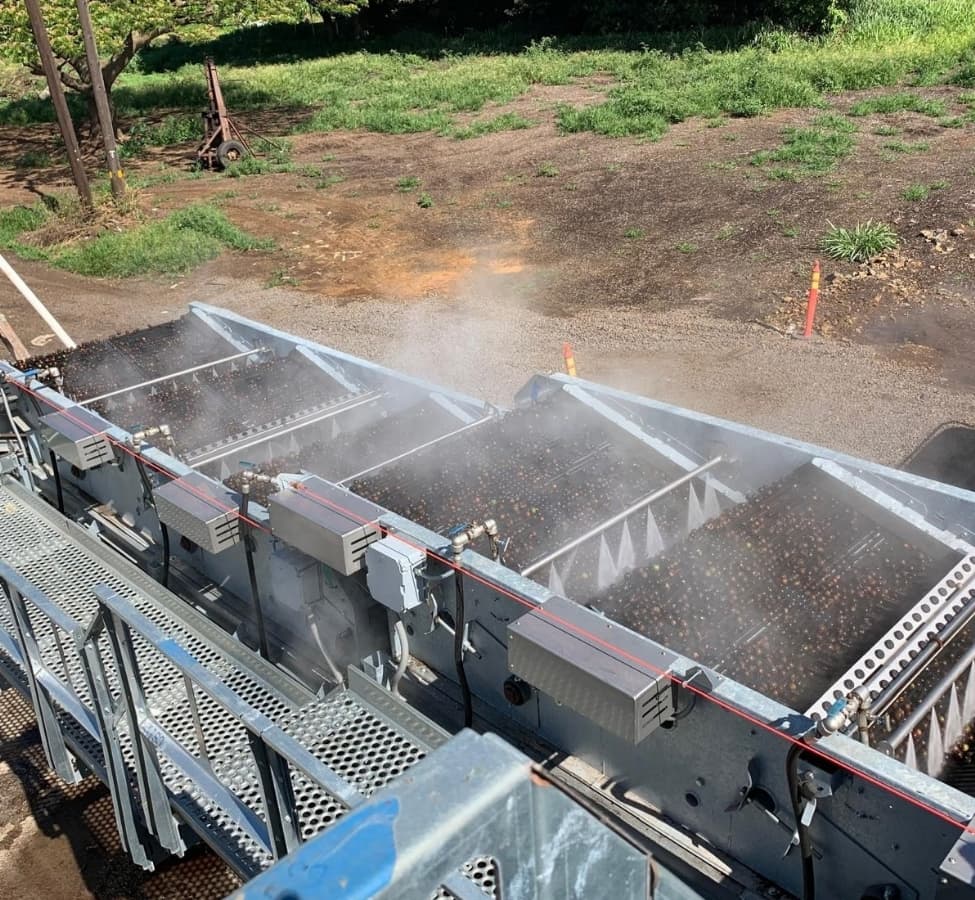
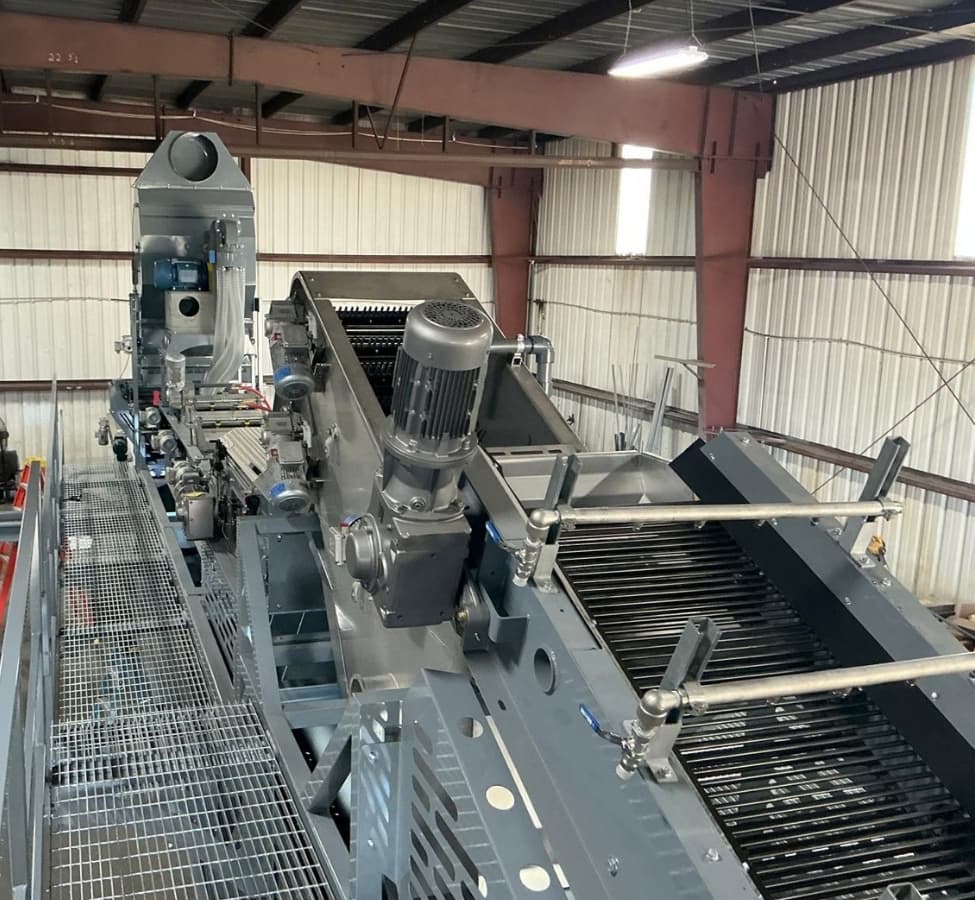
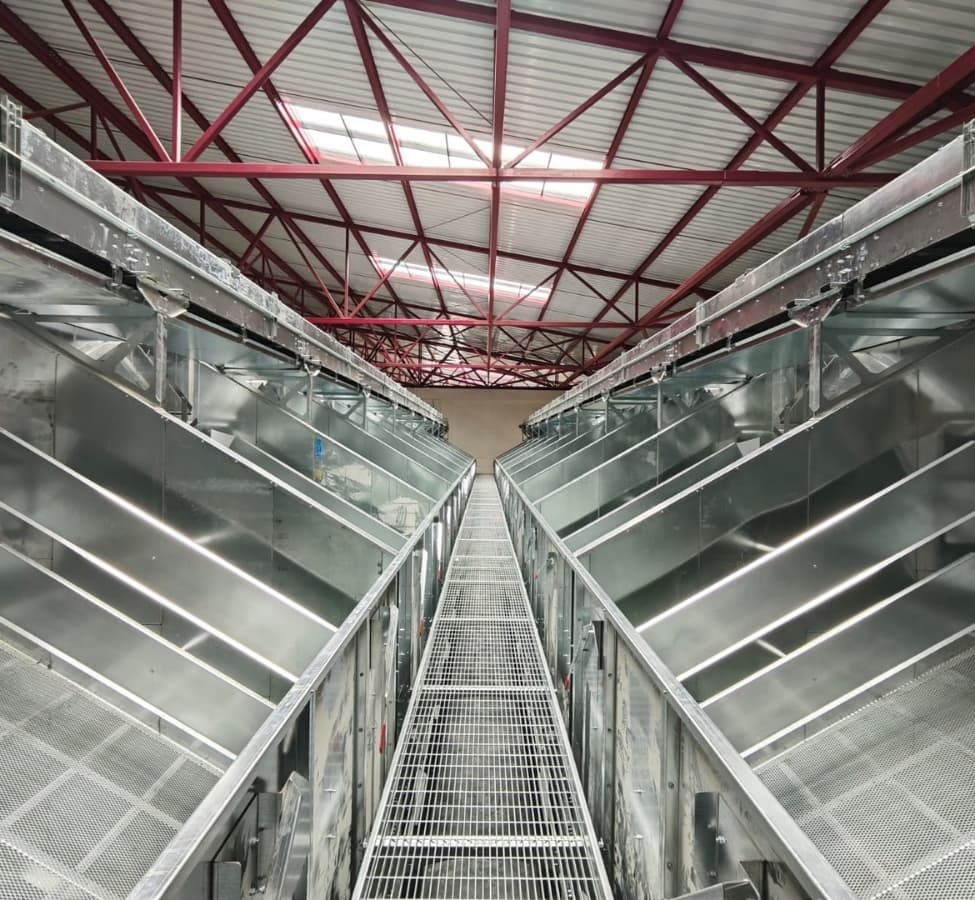
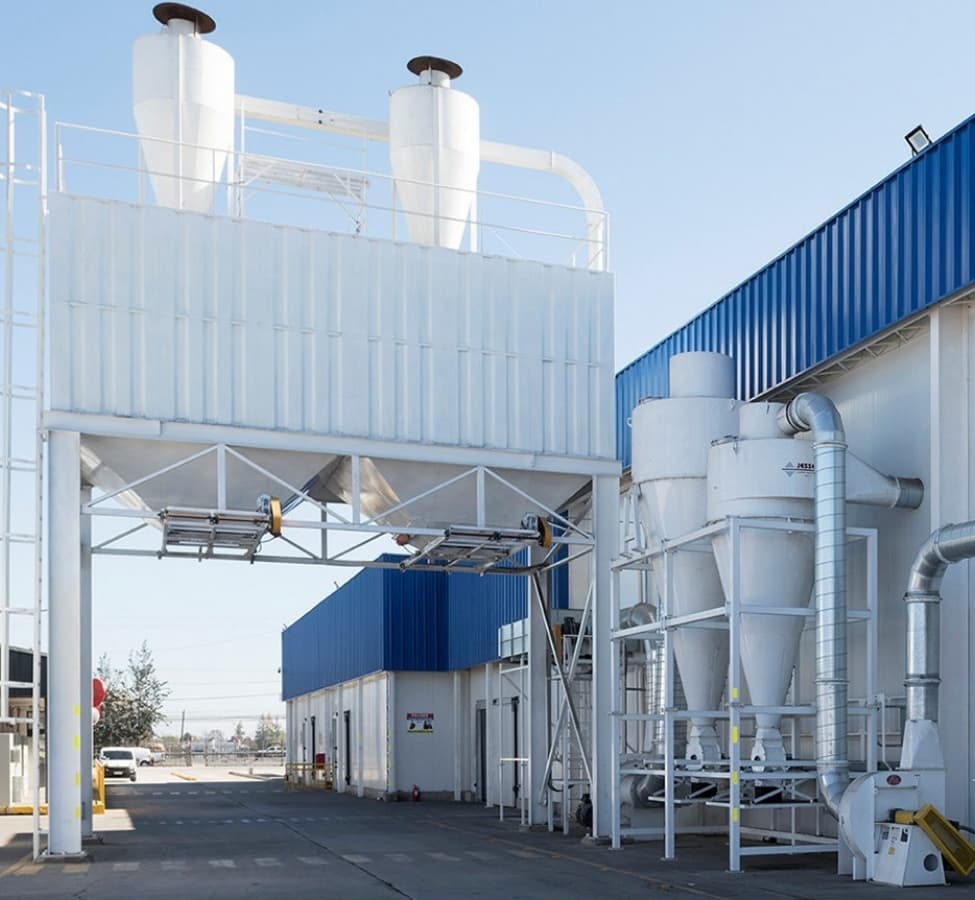
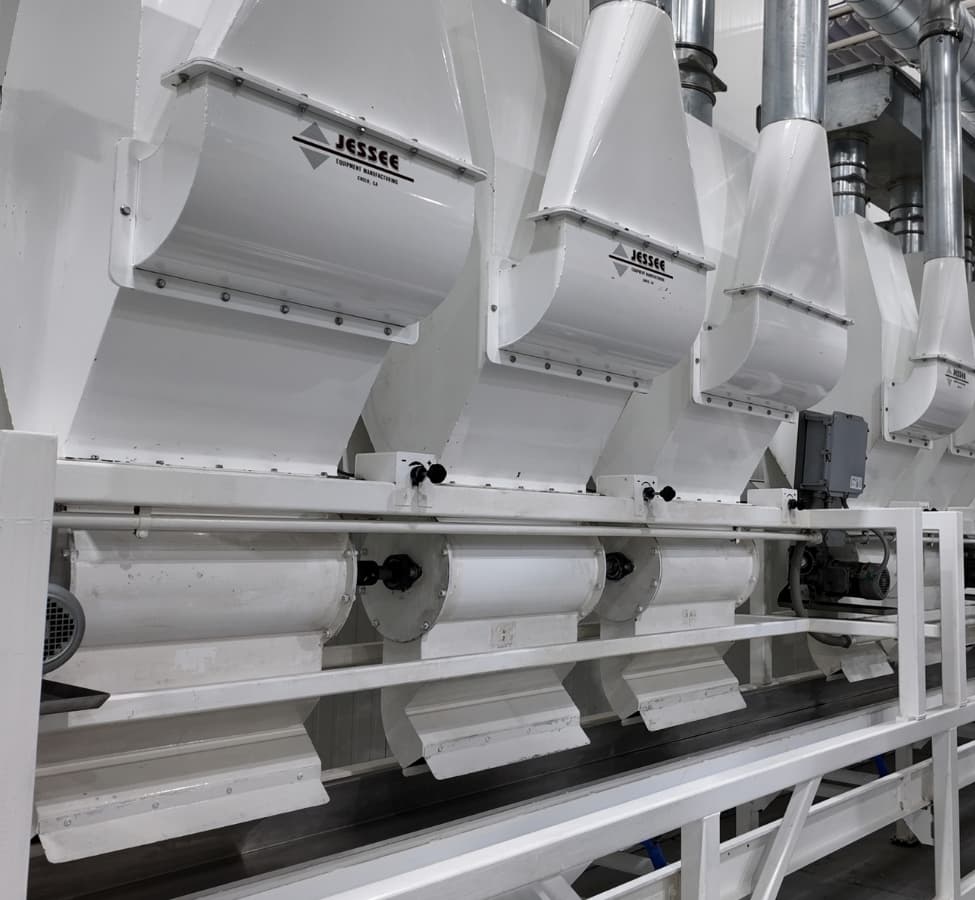
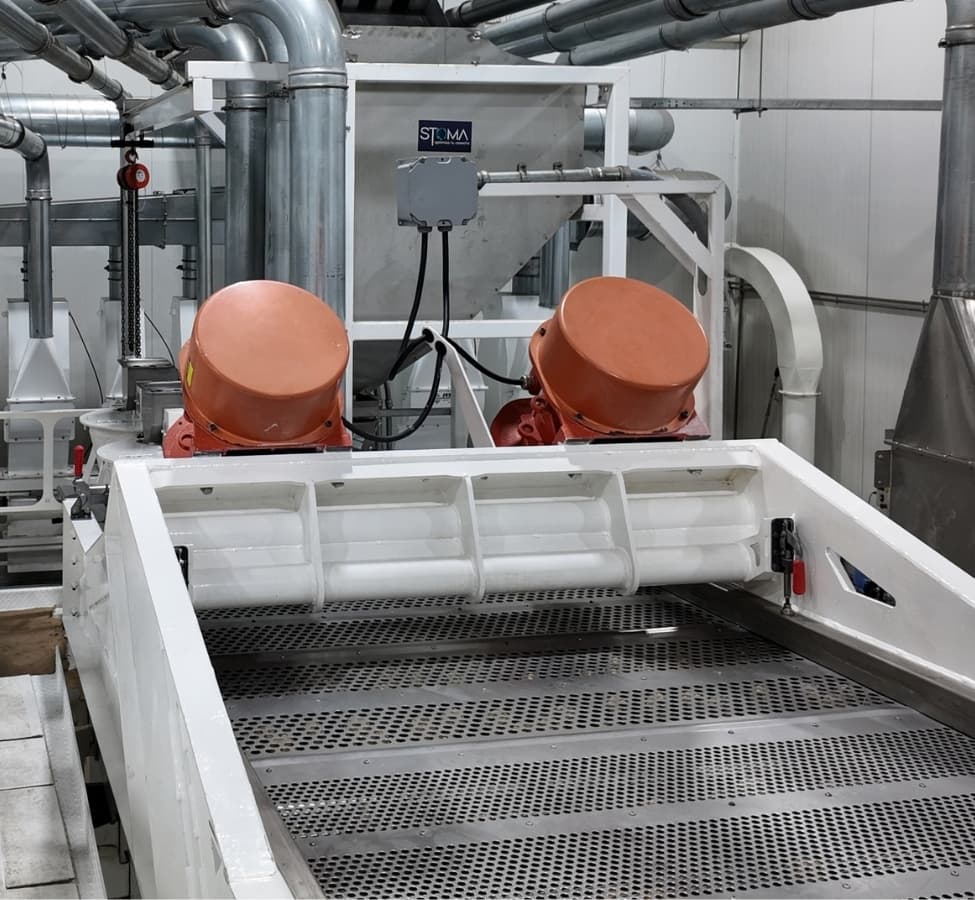
Serbia imported more almonds than it exported in every year from 2015 to 2025. By its own records, it imported 2,046.8 t of shelled almonds in 2024, mostly from the United States, Germany and Spain, and exported 125.5 t (UN Comtrade); US records show 175.2 t shipped to Serbia that year, against 975.6 t that Serbia recorded for the United States. Jessee, whose processing lines OVE Europe supplies, builds hulling, drying, in-shell cleaning and sizing, and shelling systems; its Airlegs nut cleaner was developed for the almond industry.
For general information only. Information may become outdated and does not replace site-specific professional advice. Consult a qualified agronomist and confirm equipment suitability with OVE before acting.
Practical Tips for Almond Post-Harvest Handling & Processing
Hull promptly picked or frame-caught almonds while the hulls are fresh, then dry the nuts in the shell before storage.
Spread drying almonds no more than one or two nuts deep on a firm surface, as University of California guidance advises.
Store almonds only when the kernels are crisp to brittle when broken, the University of California's test of dryness.
Test lots for aflatoxins: Serbian and EU limits for almonds sold to consumers are 8.0 µg/kg of B1 and 10.0 µg/kg in total.
Keep each lot separate by cultivar and orchard block, and store dried almonds in a dry, clean place.
Plan sales with imports in mind: by Serbia's own records, it imported 2,046.8 t of shelled almonds in 2024.
Recommended Post-Harvest Handling & Processing Stages
Plan your post-harvest line
Estimate tons/day, cleaning & drying capacity, storage needs, and cost/kg—then build your equipment plan in phases.