


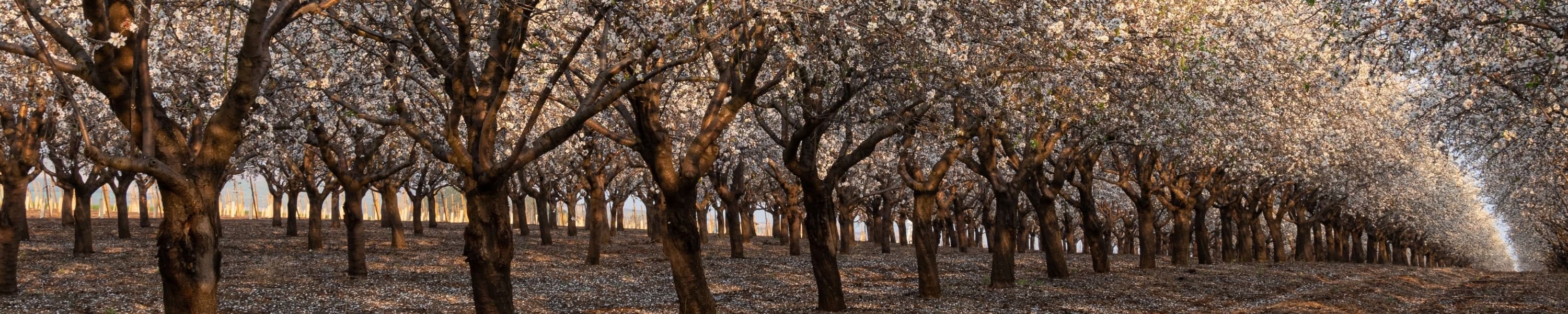




Almond Orchard Establishment in Syria
In the Ministry of Agriculture's 2023 figures, Homs governorate held 58,193 ha of almonds, 82% of the area, ahead of Hama (4,252 ha), As-Suwayda (2,810 ha), Rural Damascus (2,723 ha) and Aleppo (2,104 ha); only 1,793 ha nationwide were irrigated. The General Commission for Scientific Agricultural Research (GCSAR) lists almond among the main fruit trees of agricultural stability zone 2, with 250 to 350 mm of rain a year.
No national cultivar list was found. At GCSAR's almond gene bank in Homs, a study in 2008 and 2009 found most accessions relatively late in blooming, which protected them from spring frost, and three accessions completely self-sterile. A 2011 report from rural Aleppo governorate says people there distinguish sweet and bitter almonds, and an easily cracked type from a hard-shelled one that needs a hammer or a stone.
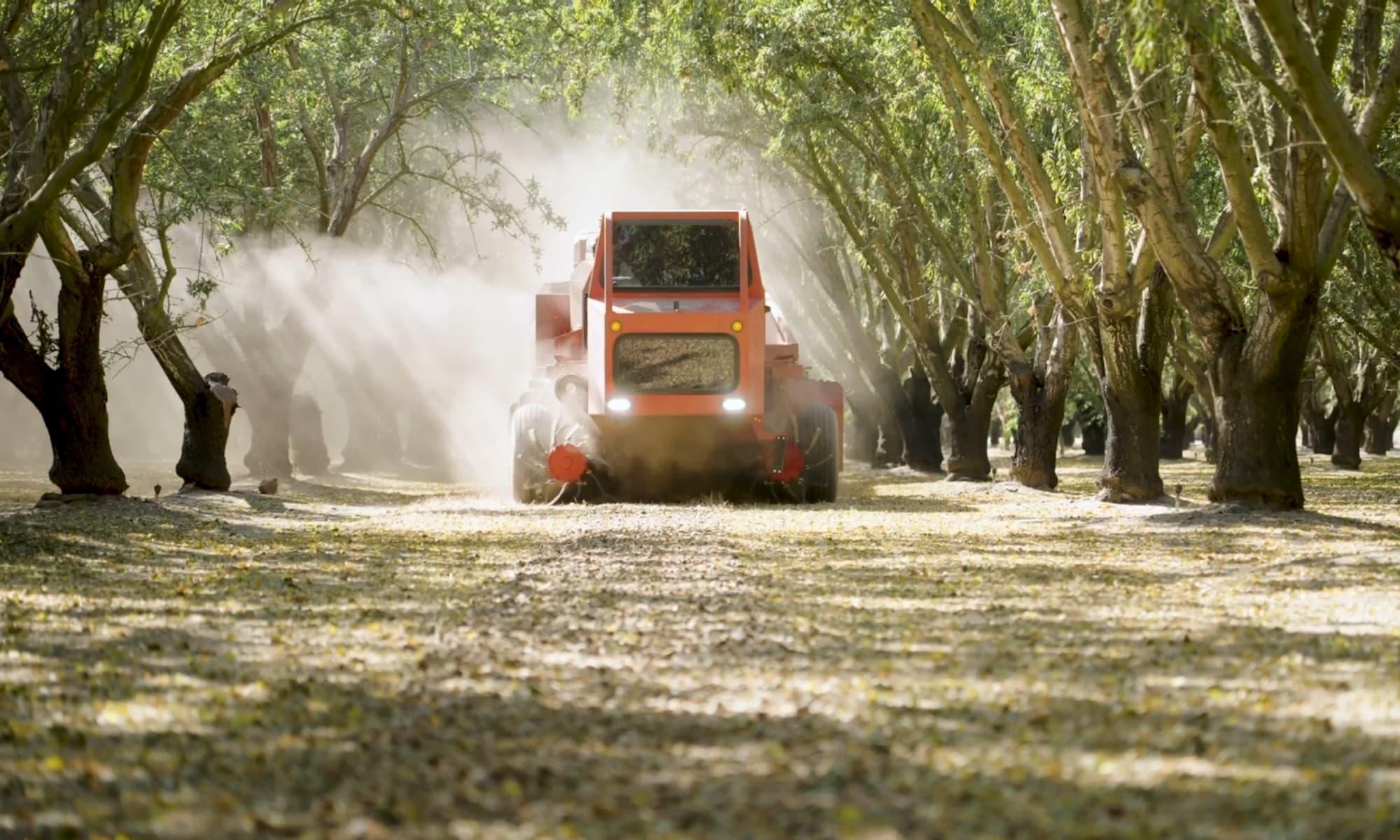
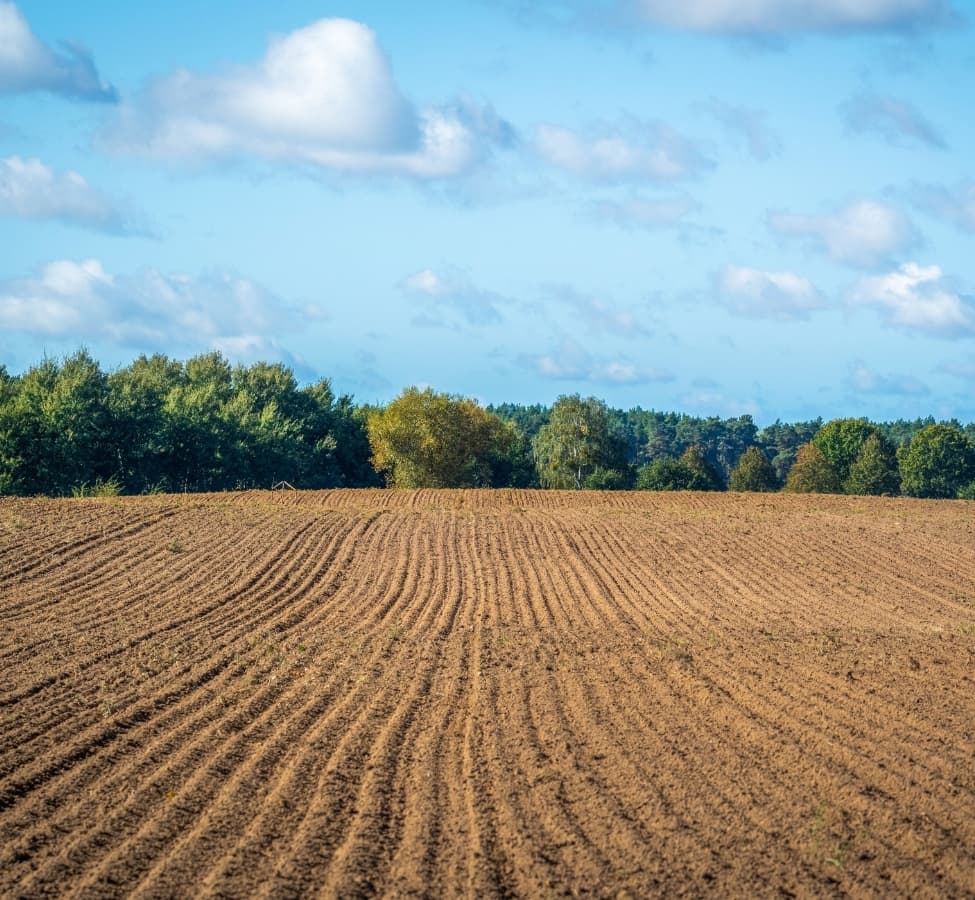
GCSAR's research center in As-Suwayda lists research on wild almond species growing in Syria as rootstocks for cultivated varieties and on their drought tolerance compared with seedling rootstock. Farms are small: in a survey of 203 Homs farmers (2015 season), each grew 8 to 60 dunams (0.8 to 6 ha) of almonds. Plan rows, headlands and trunk height for shakers and catching frames before planting.
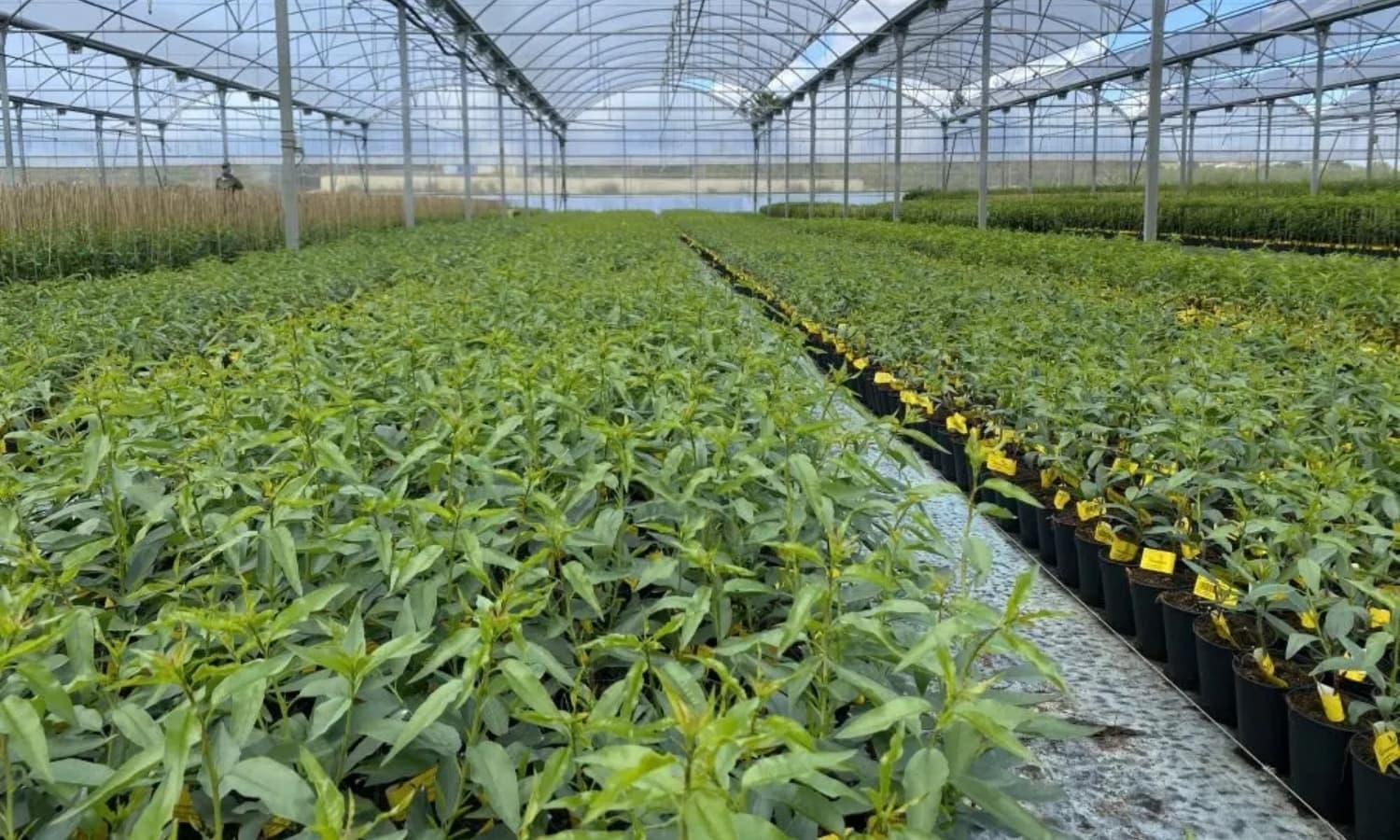

Practical Tips for Almond Orchard Establishment
Favor late-blooming types where spring frost is a risk: in GCSAR's Homs gene bank, late bloom protected most accessions from frost.
Plant pollinizers that bloom with the main cultivar: accessions 101, 108 and 110 in the Homs gene bank proved completely self-sterile.
For new orchards, plant grafted trees of known types rather than seedlings, which households in rural Aleppo governorate raise from seed (2011 report).
Match the rootstock to dry sites: GCSAR's As-Suwayda center lists research on wild almond species as rootstocks and on their drought tolerance.
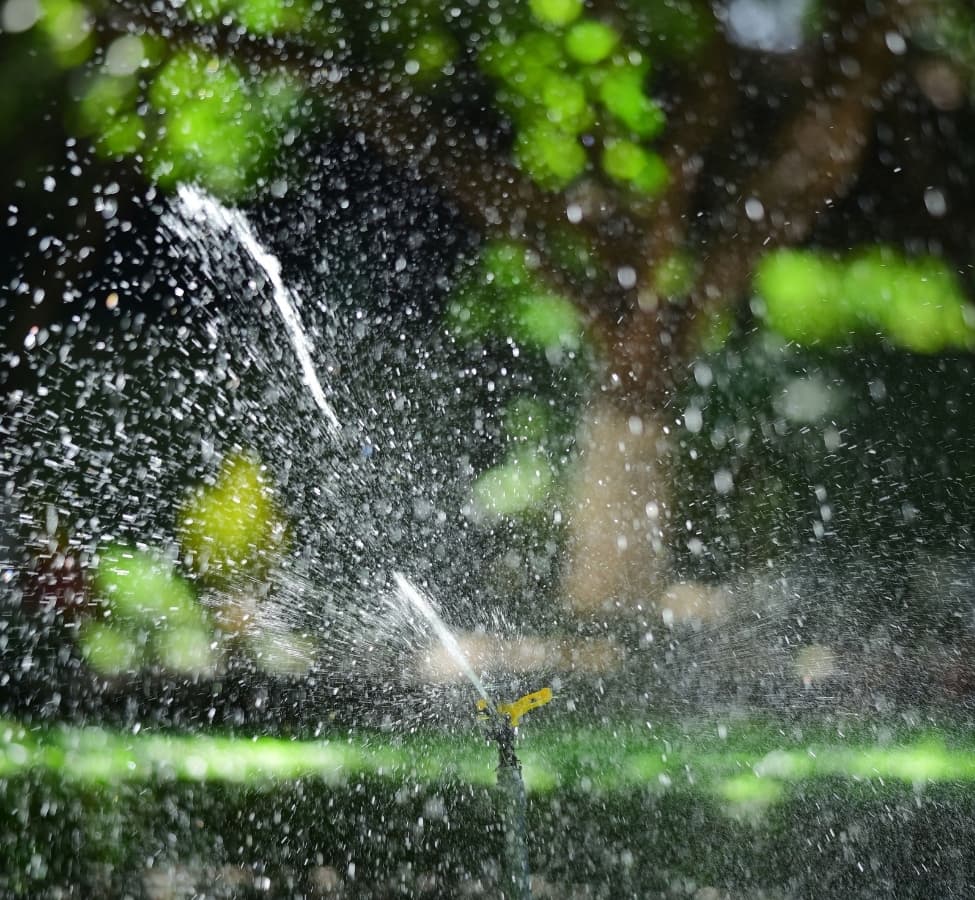
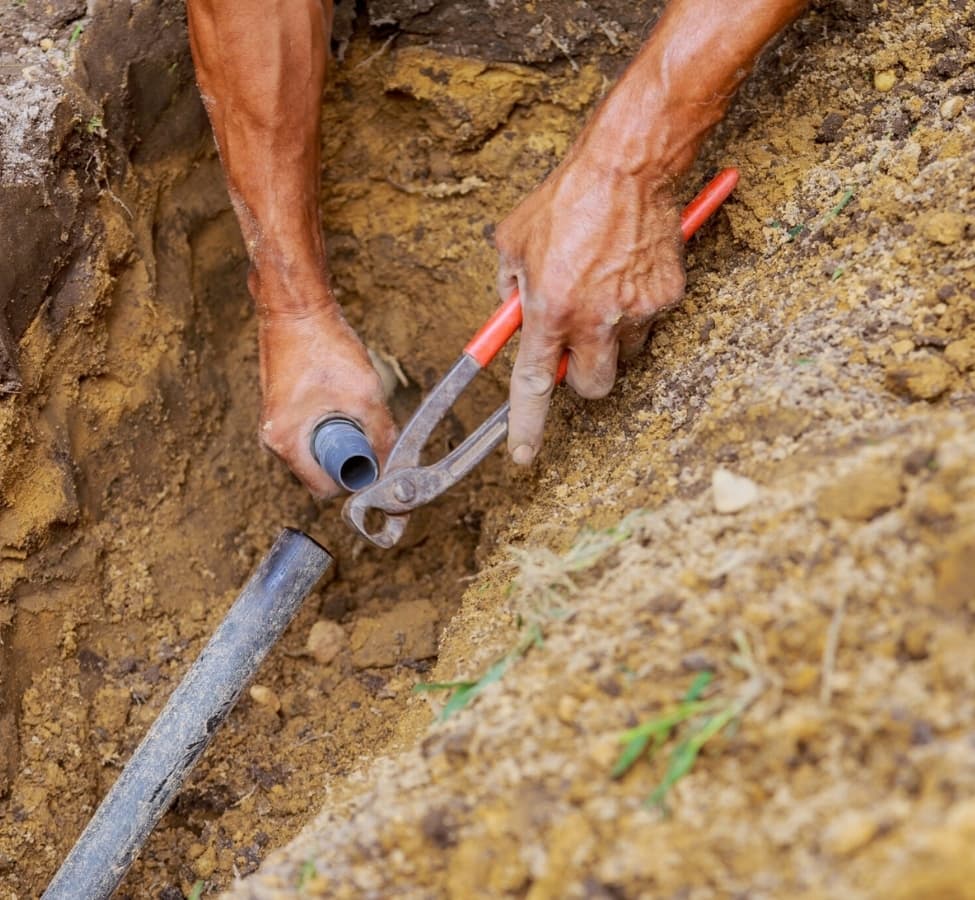
Secure water before planting where you can: in 2023, only 1,793 of Syria's 71,118 ha of almonds were irrigated (Ministry of Agriculture).
Plan rows, headlands and tree form for the shaker, sweeper and harvester before planting, and keep a clear trunk for the shaker clamp.
Recommended Establishment Stages

Almond Orchard Care & Maintenance in Syria
EPPO lists the almond seed wasp, Eurytoma amygdali, as present in Syria on information dated 1991, and a 2011 Damascus University paper calls it an important almond pest causing large crop losses; adults were sampled in Homs, As-Suwayda and Rural Damascus. In trials at a Homs site, infestation on untreated trees was 39% in 2009 and 40% in 2010 (a 2013 thesis abstract). EPPO also lists the peach twig borer, Anarsia lineatella, as present (1992 information).
A survey of stone-fruit orchards in Latakia governorate in 2006 and 2007 found six Capnodis species, with Capnodis tenebrionis dominant and adults appearing on the trees from the second half of May. A 2020 Syrian study names almond as one of mistletoe's two main hosts, with samples from Al Kalamoun and As-Suwayda, and farmers in rural Aleppo governorate regard woodpeckers as the main enemy of almond fruit (2011 report).
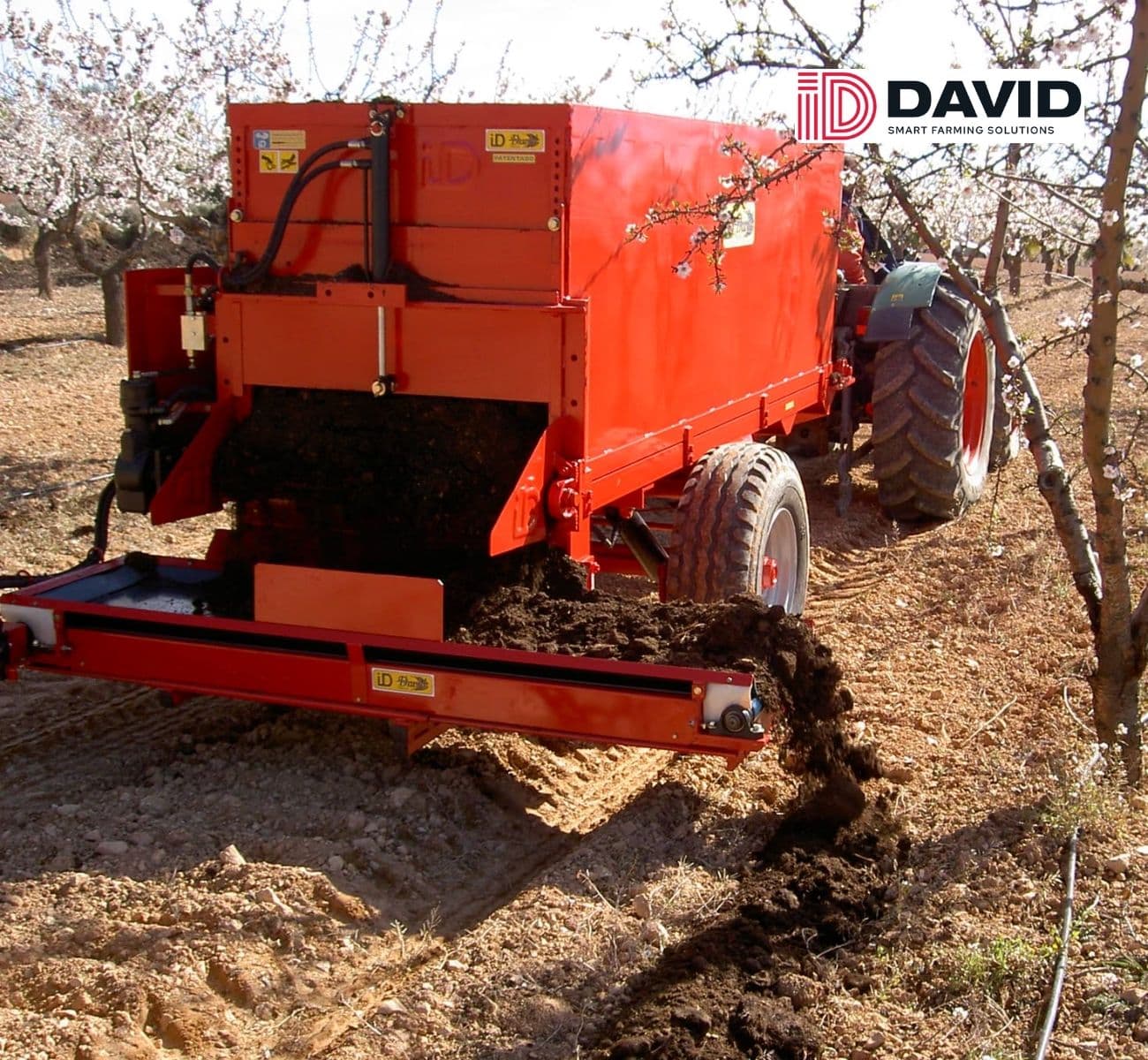
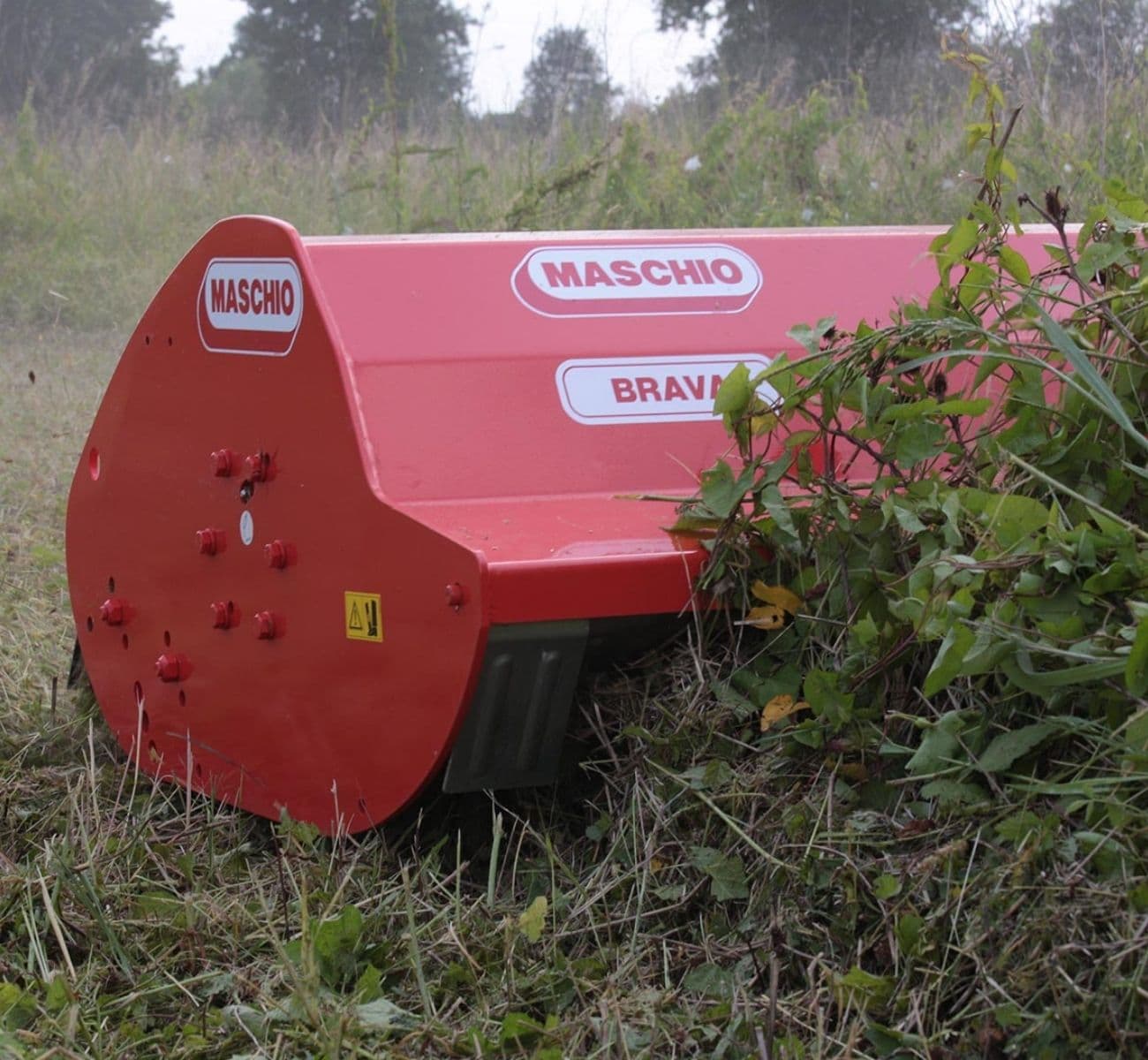
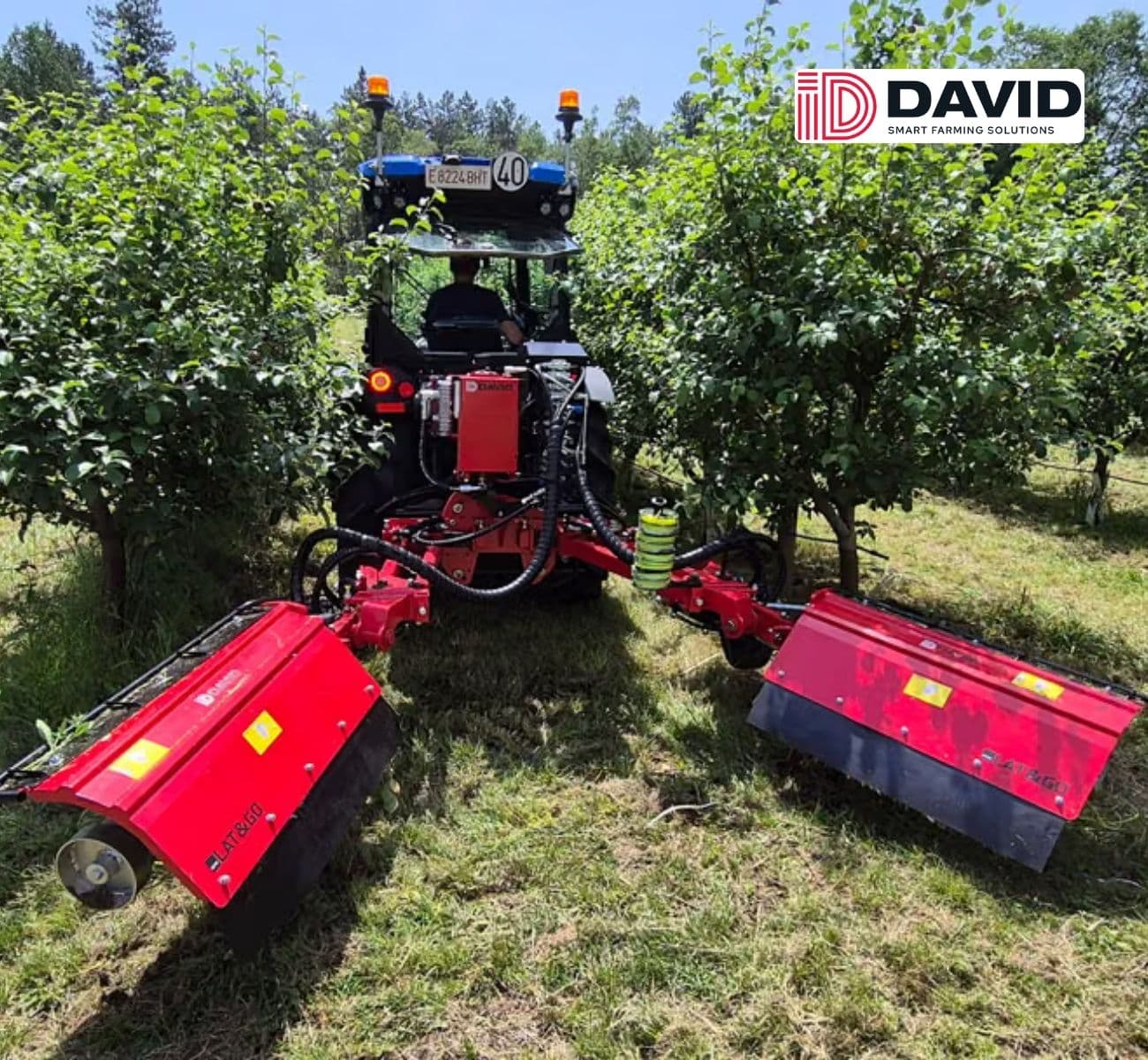
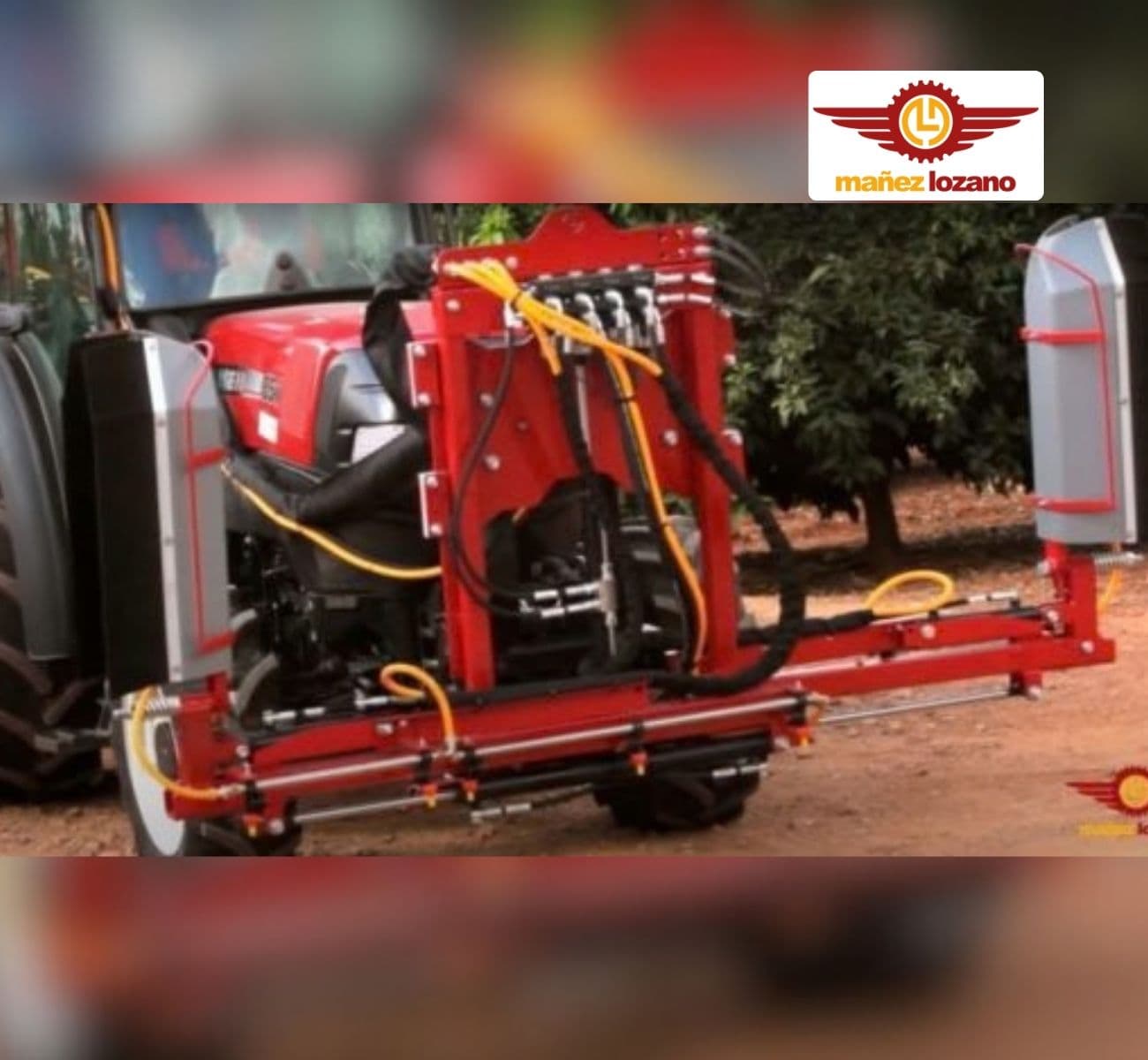
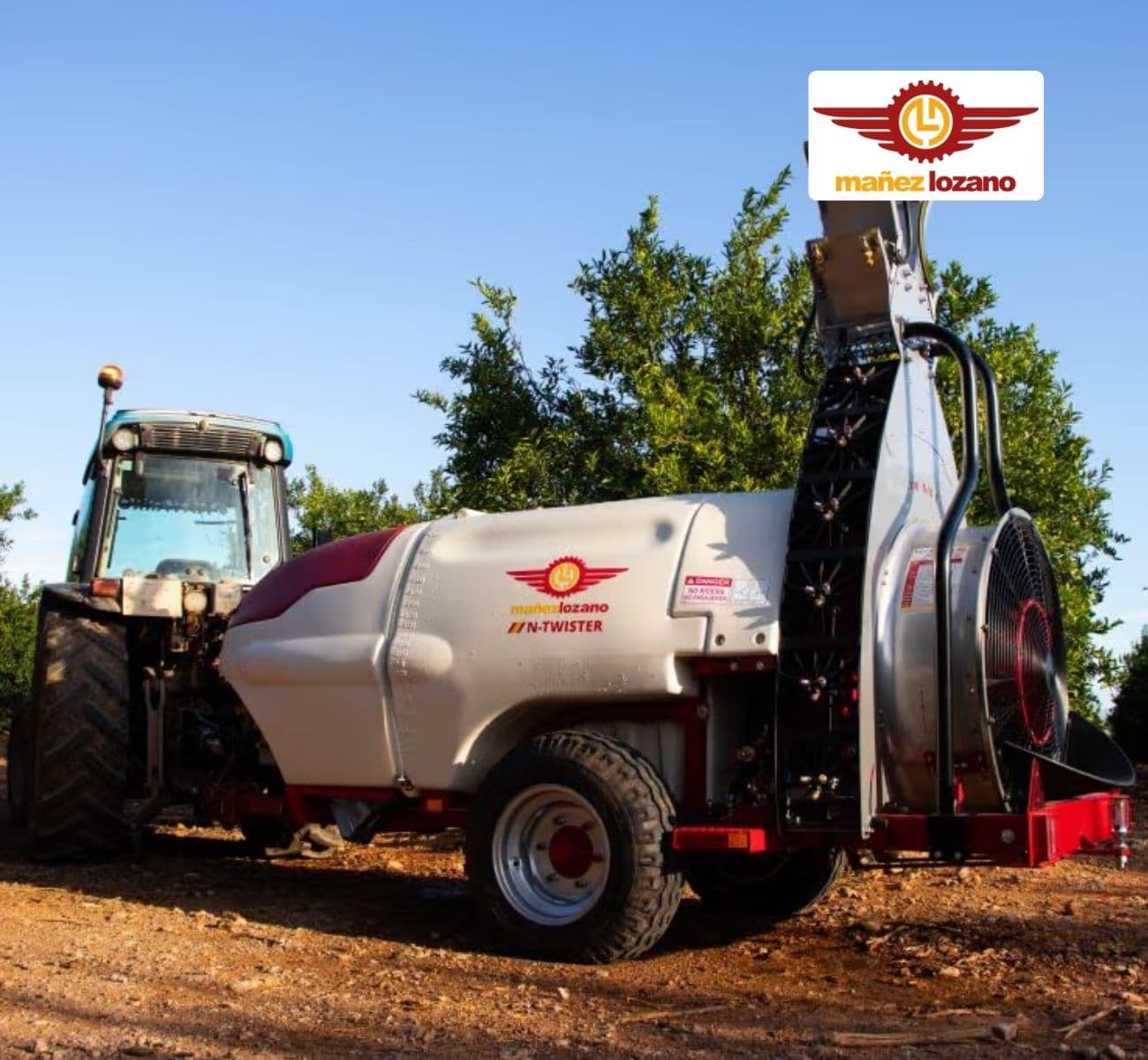
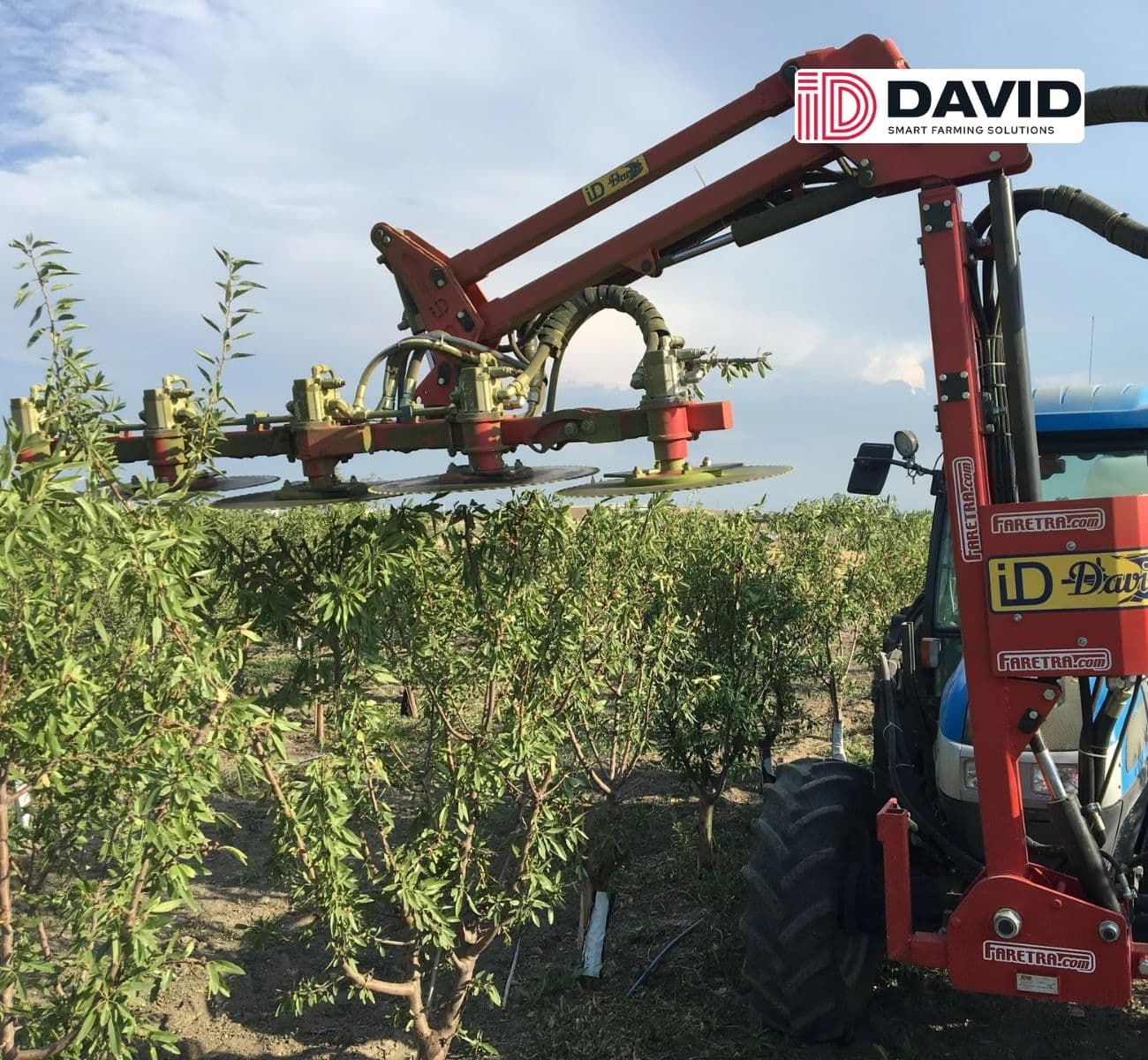
No Syrian guidance on almond irrigation, nutrition or pruning was found; As-Suwayda's agricultural directorate calls almond drought tolerant, and rain-fed orchards hold 97.5% of the area. For care work, the ID DAVID ECOFEED spreads solid manure, the ID DAVID LAT&GO string mower controls weeds without herbicides, the Mañez Lozano Narrow Twister S6 sprays tall, dense canopies and the ID DAVID V1 disc pruner makes vertical and horizontal cuts.
Recommended Orchard Care & Maintenance Stages
Practical Tips for Almond Orchard Care & Maintenance
Watch for Capnodis adults from the second half of May, when a 2006 and 2007 survey of stone-fruit orchards in Latakia governorate found them on the trees.
Monitor the crop for seed wasp every season: in trials at a Homs site, infestation on untreated trees was 39% in 2009 and 40% in 2010.
Check almond trees for mistletoe: a 2020 Syrian study names almond as one of its two main hosts, with samples from Al Kalamoun and As-Suwayda.
Protect ripening almonds from woodpeckers: farmers in rural Aleppo governorate regard them as the main enemy of almond fruit and put up scarecrows (2011).
Control weeds without herbicides with a string mower such as the ID DAVID LAT&GO, and keep the orchard floor level for harvest.
Spray tall, dense canopies evenly with a narrow trailed airblast sprayer such as the Mañez Lozano Narrow Twister S6.

Almond Harvesting in Syria
The only Syrian description of harvest practice found, one household's account in a 2011 report from rural Aleppo governorate, says dry almonds stay on the tree until mid-August, then are picked, carried home and hulled by hand. In a survey of 203 Homs farmers (2015 season), harvest was the costliest operation, at 18.12% of costs, and 26% cited scarce, costly harvest labor. In orchards planted for machines on suitable ground, mechanized harvesting can bring the crop in on time, with less risk of nuts deteriorating while they wait.
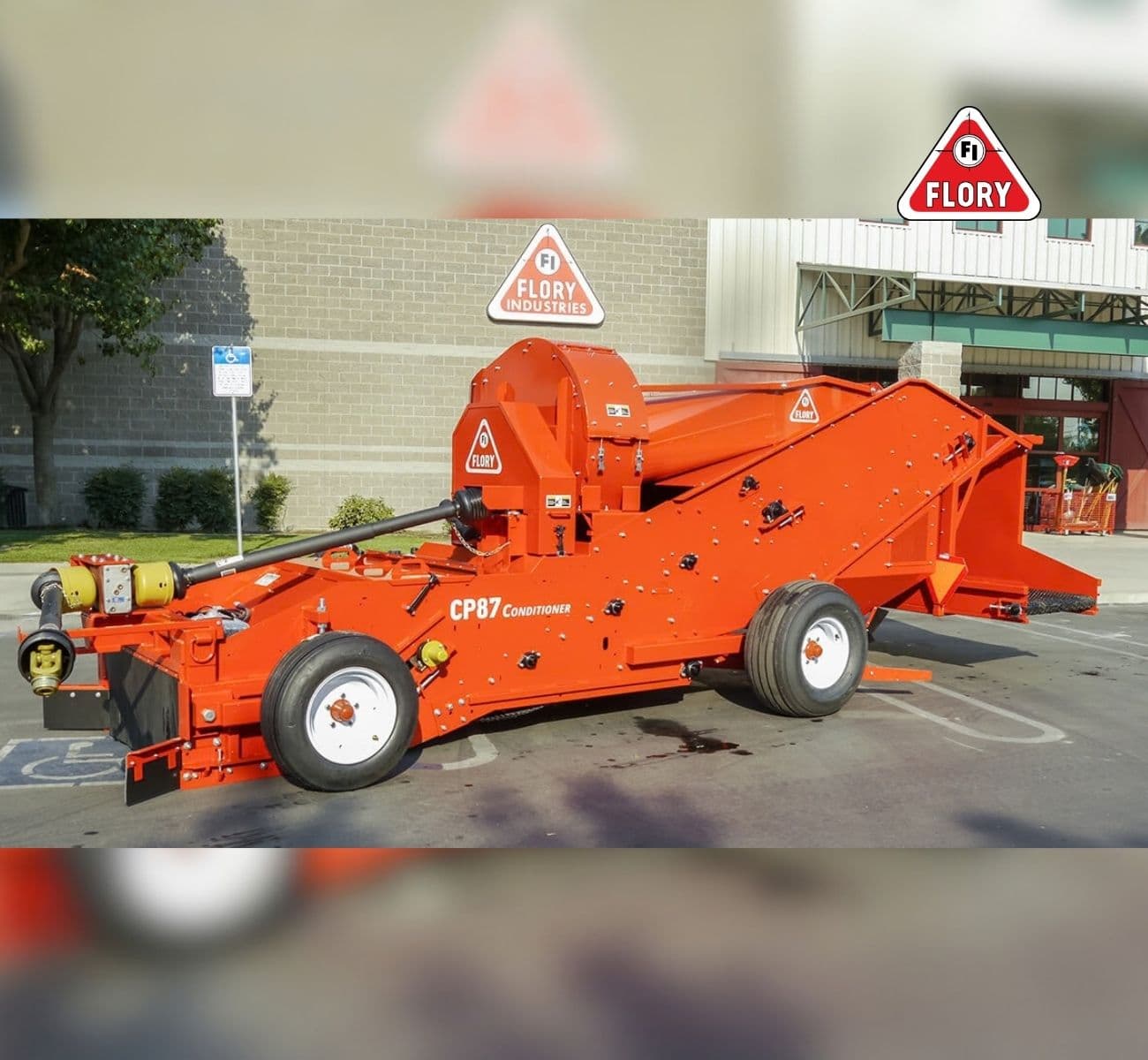
WMO long-term averages from Syria's meteorological service, with records ending in 2004, give Homs, Aleppo and Damascus International Airport 0.0 to 0.3 mm of rain in August, 0.2 to 2.4 mm in September and 7.1 to 21.1 mm in October. Latakia, on the coast, gets 7.8 mm in September and 67.1 mm in October. No Syrian source describes ground drying, so this guide shows it, with the Flory CP87 Conditioner, as an option for August and September harvests inland, with prompt pickup or catching frames on the coast and in October.
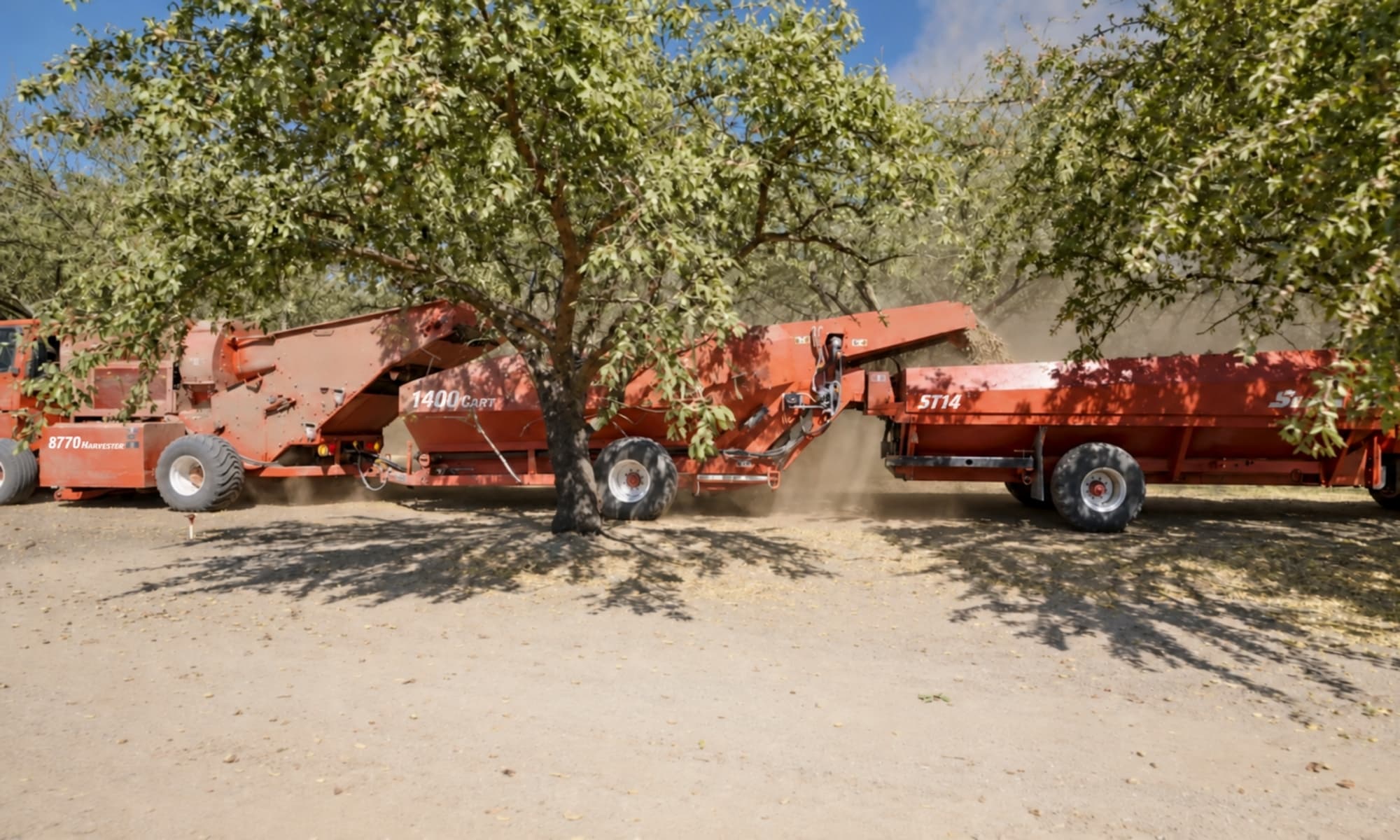
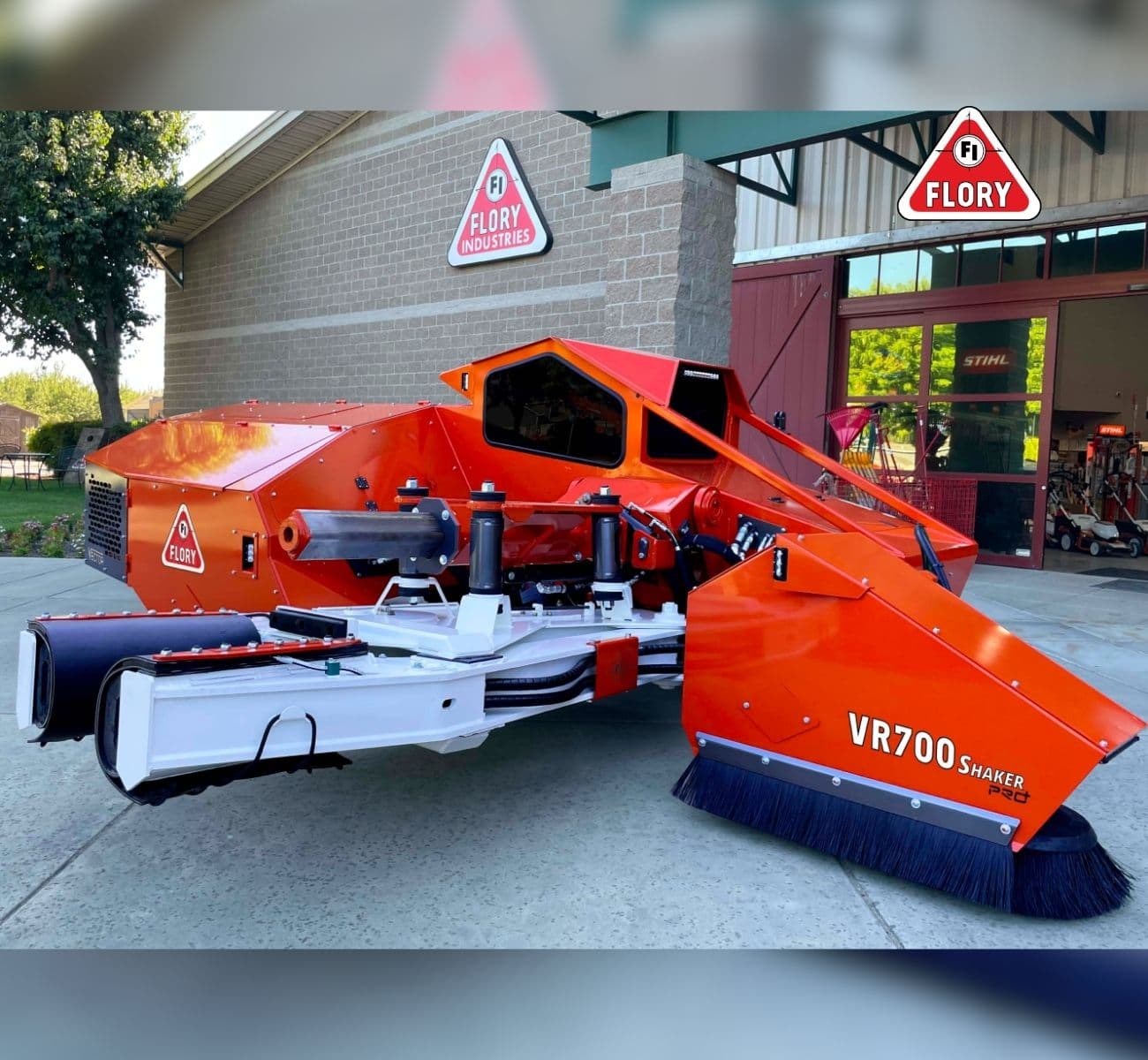
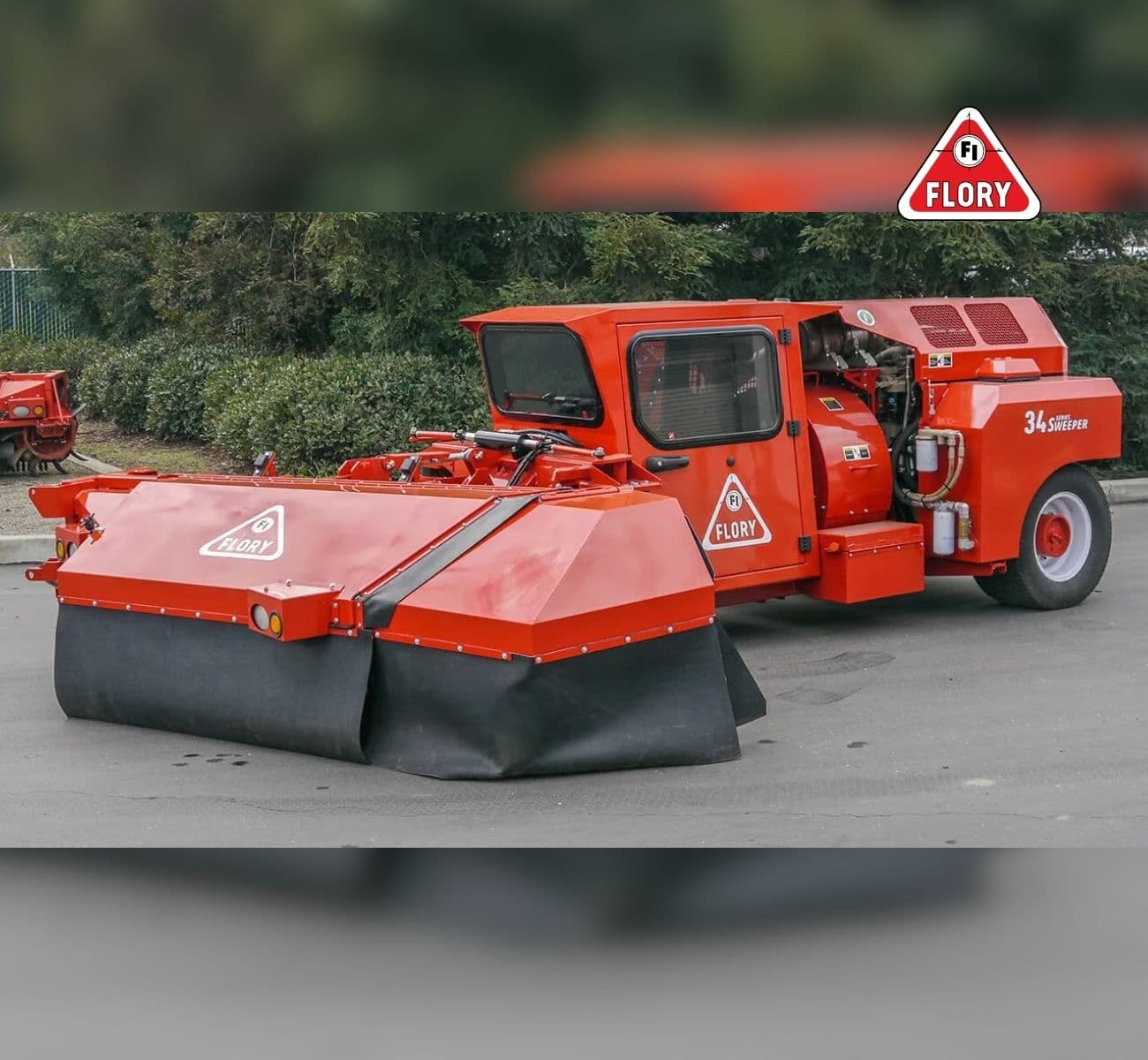
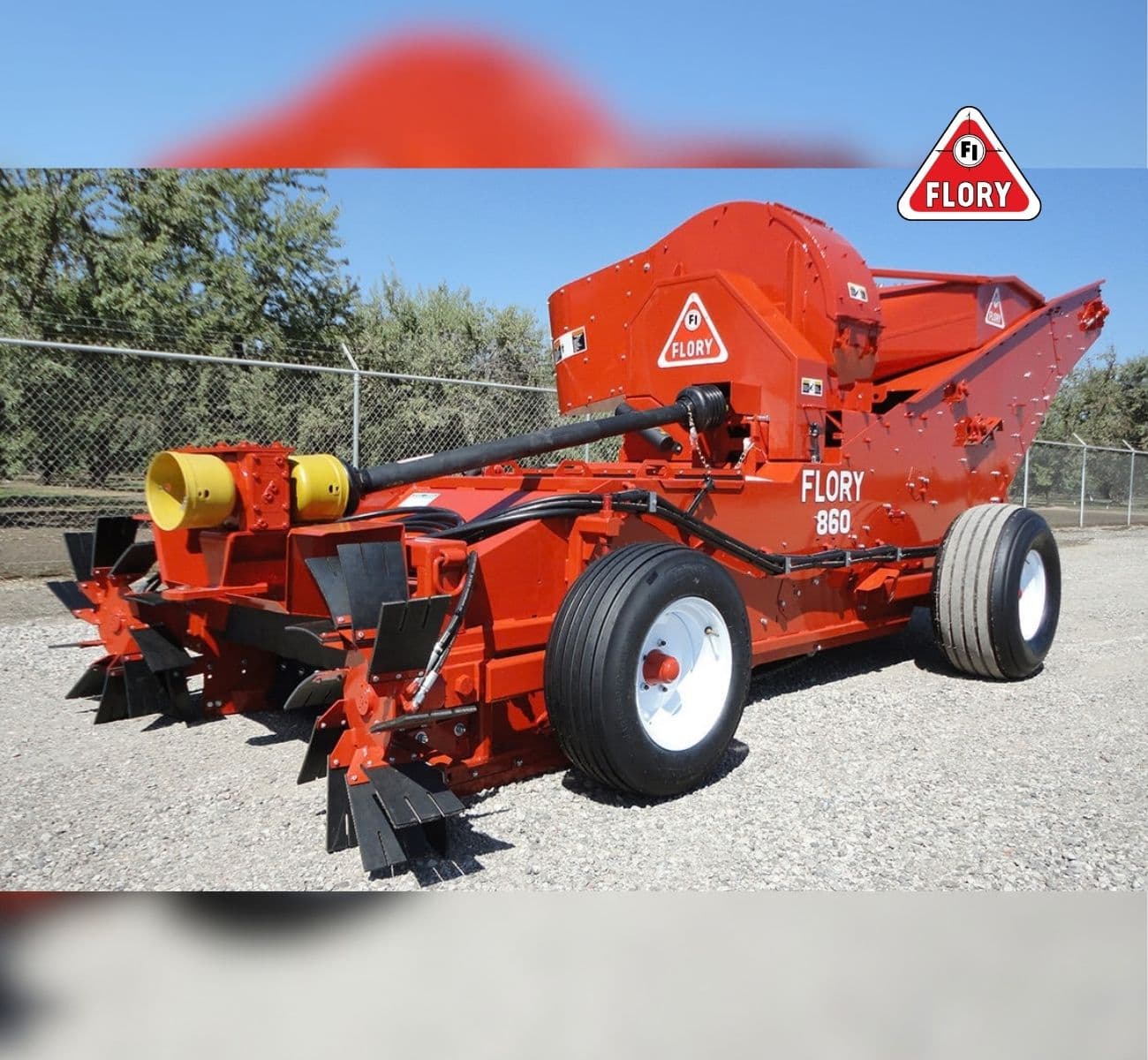
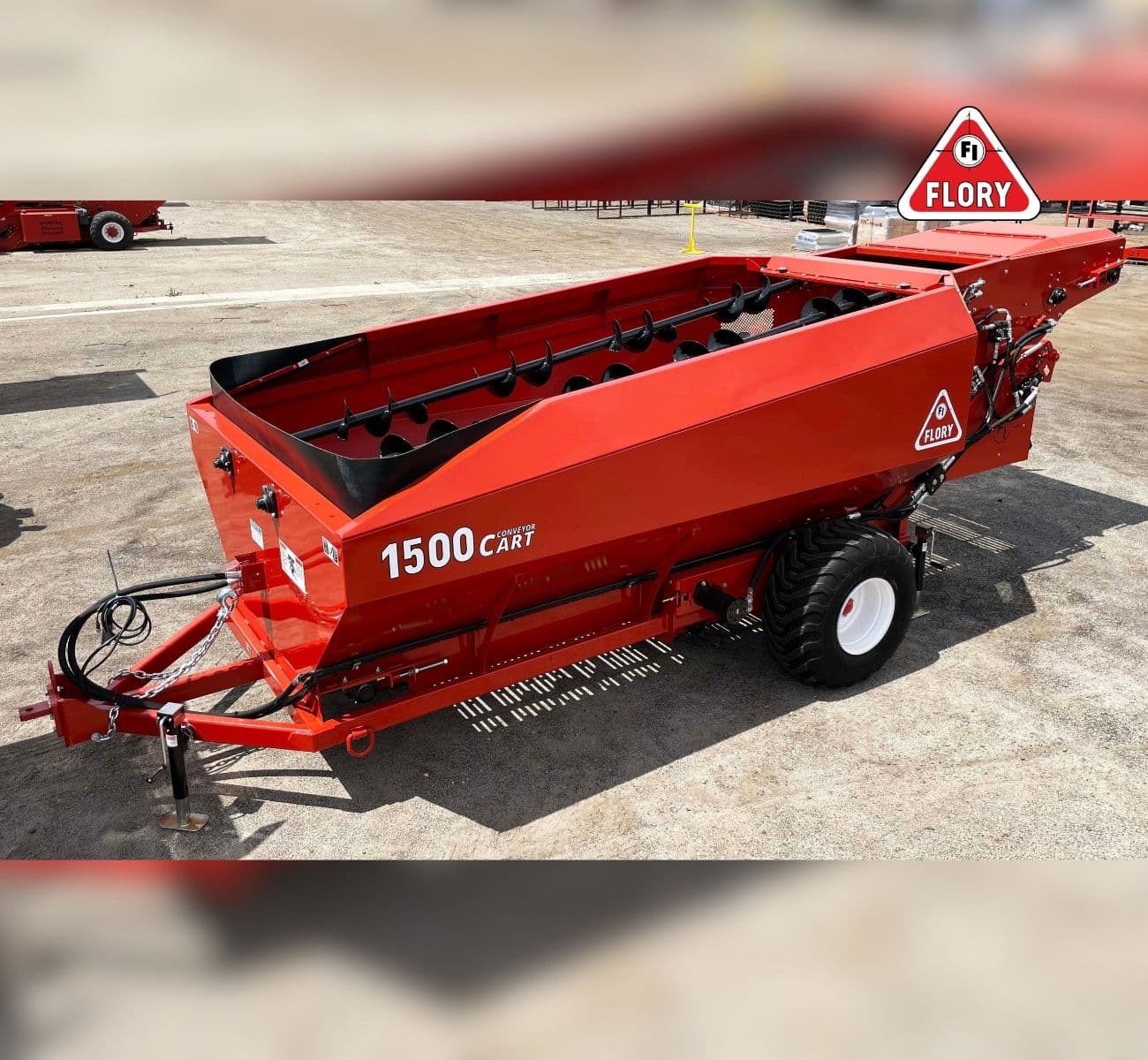
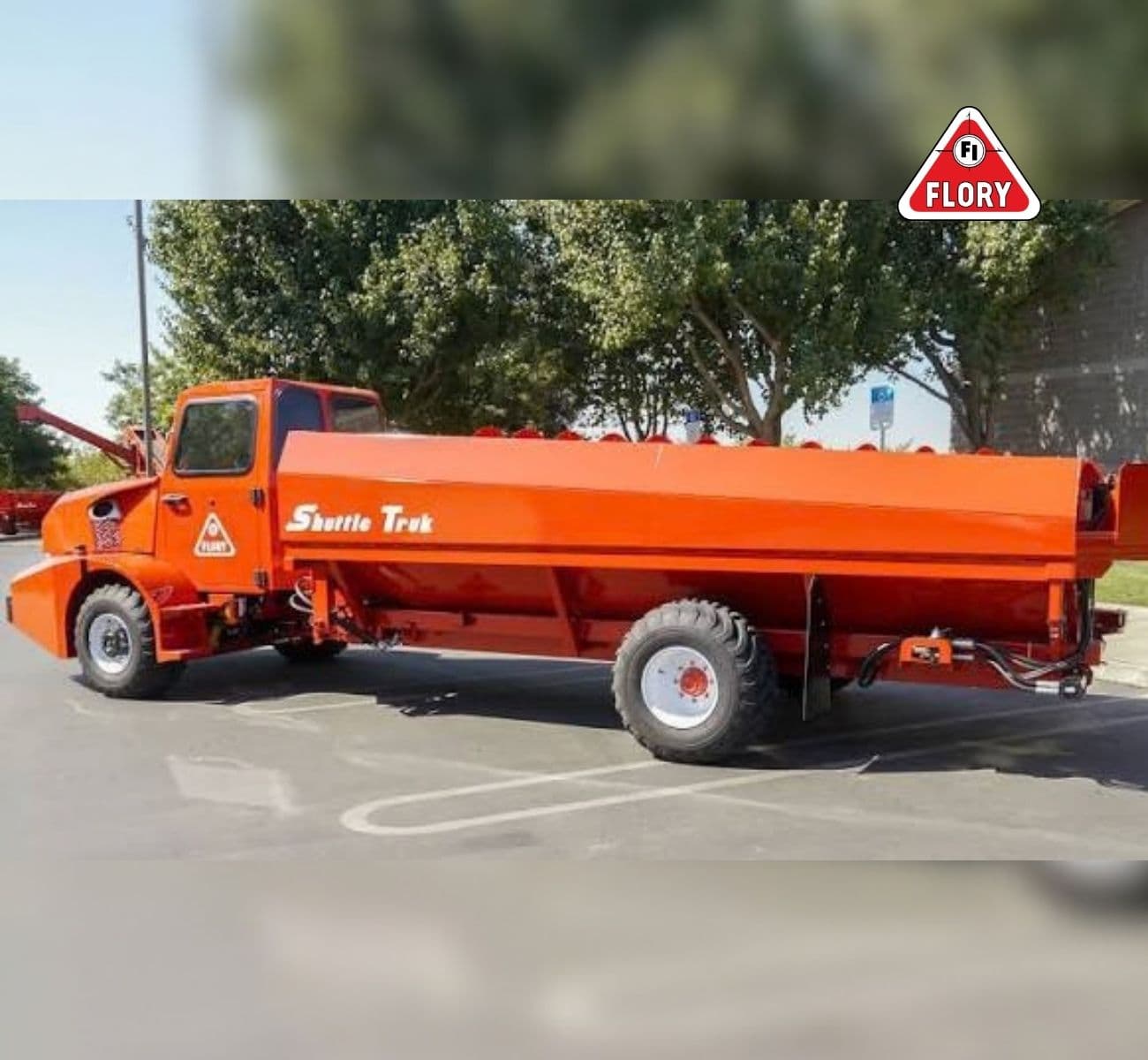
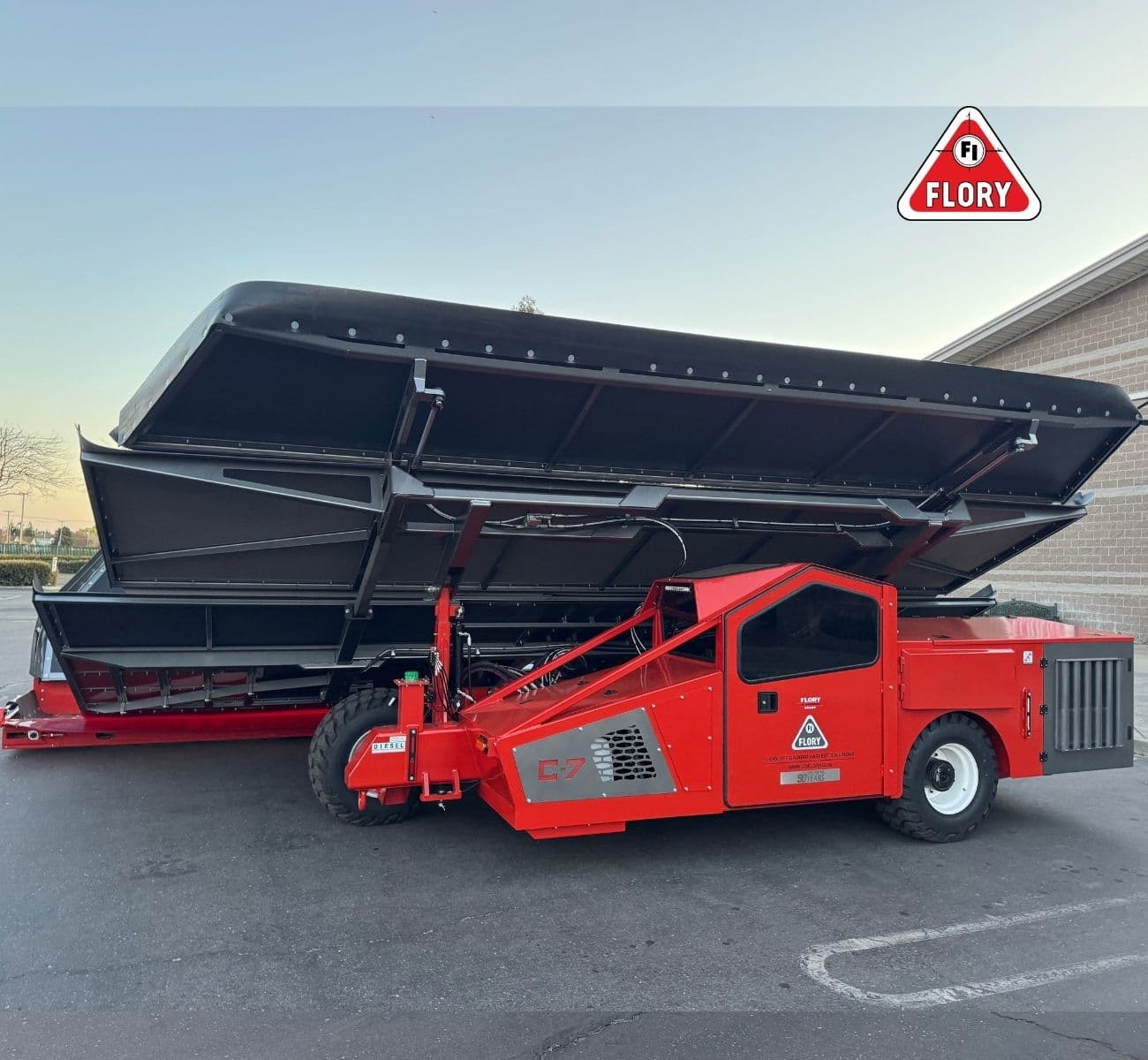
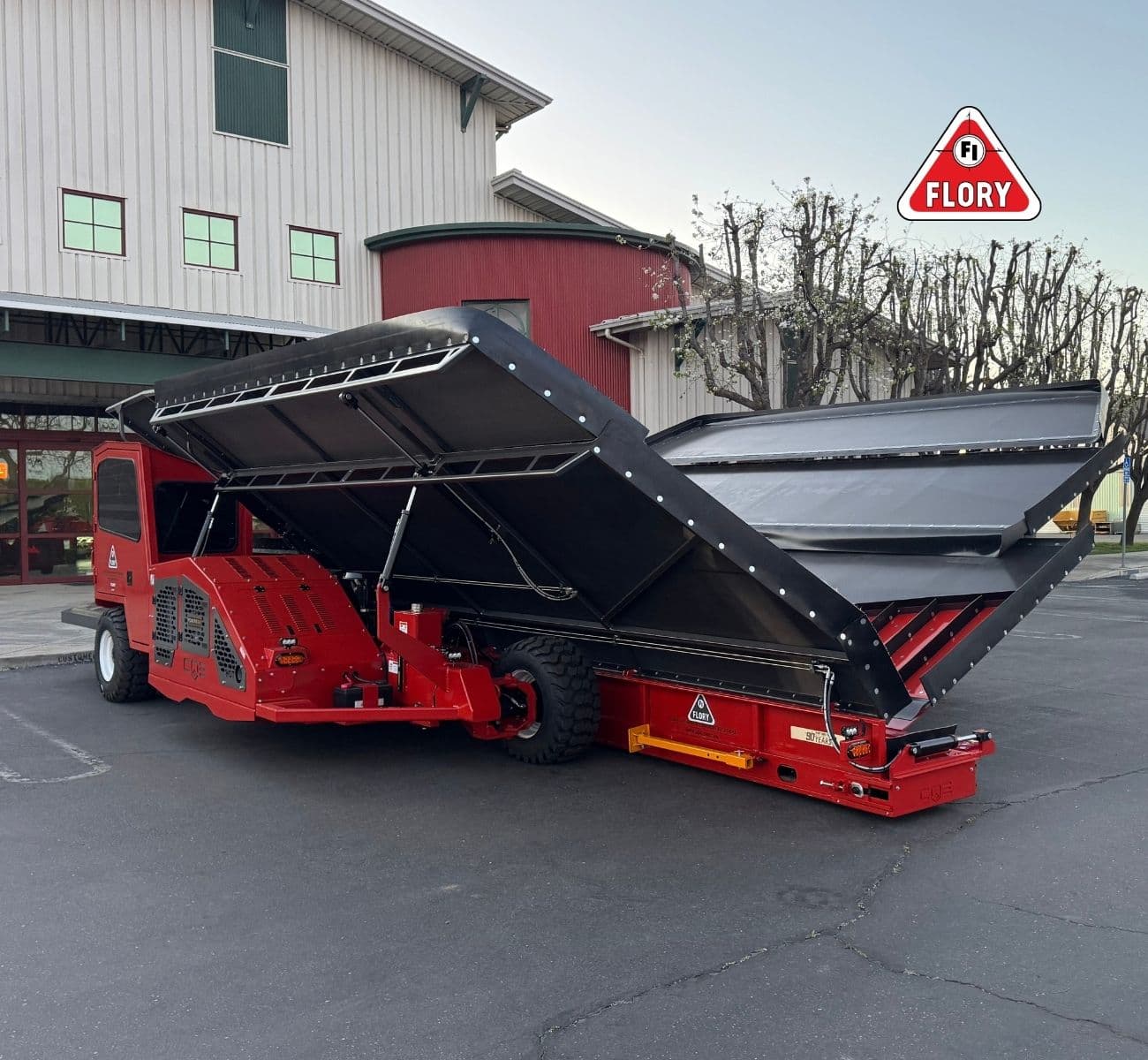
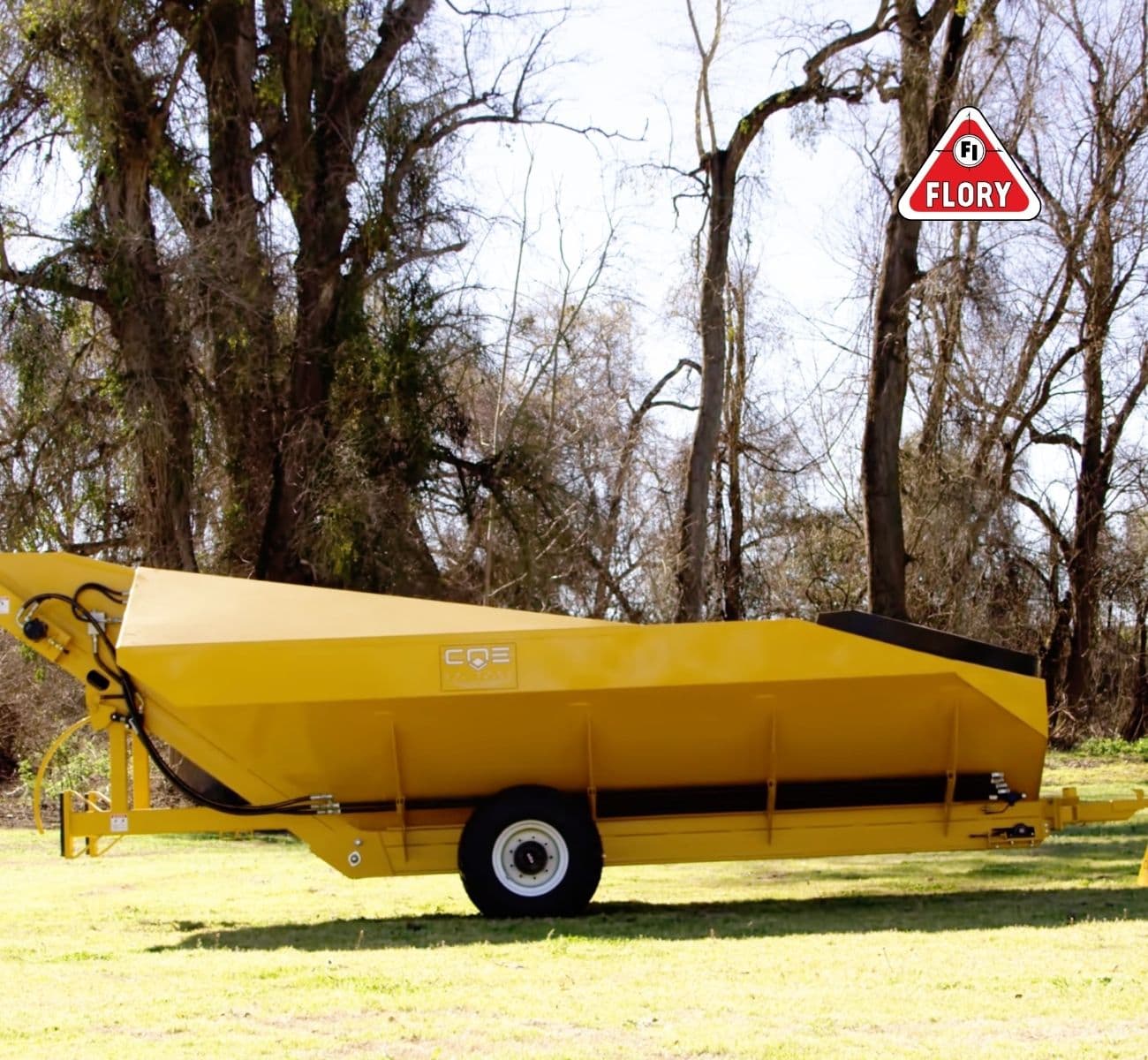
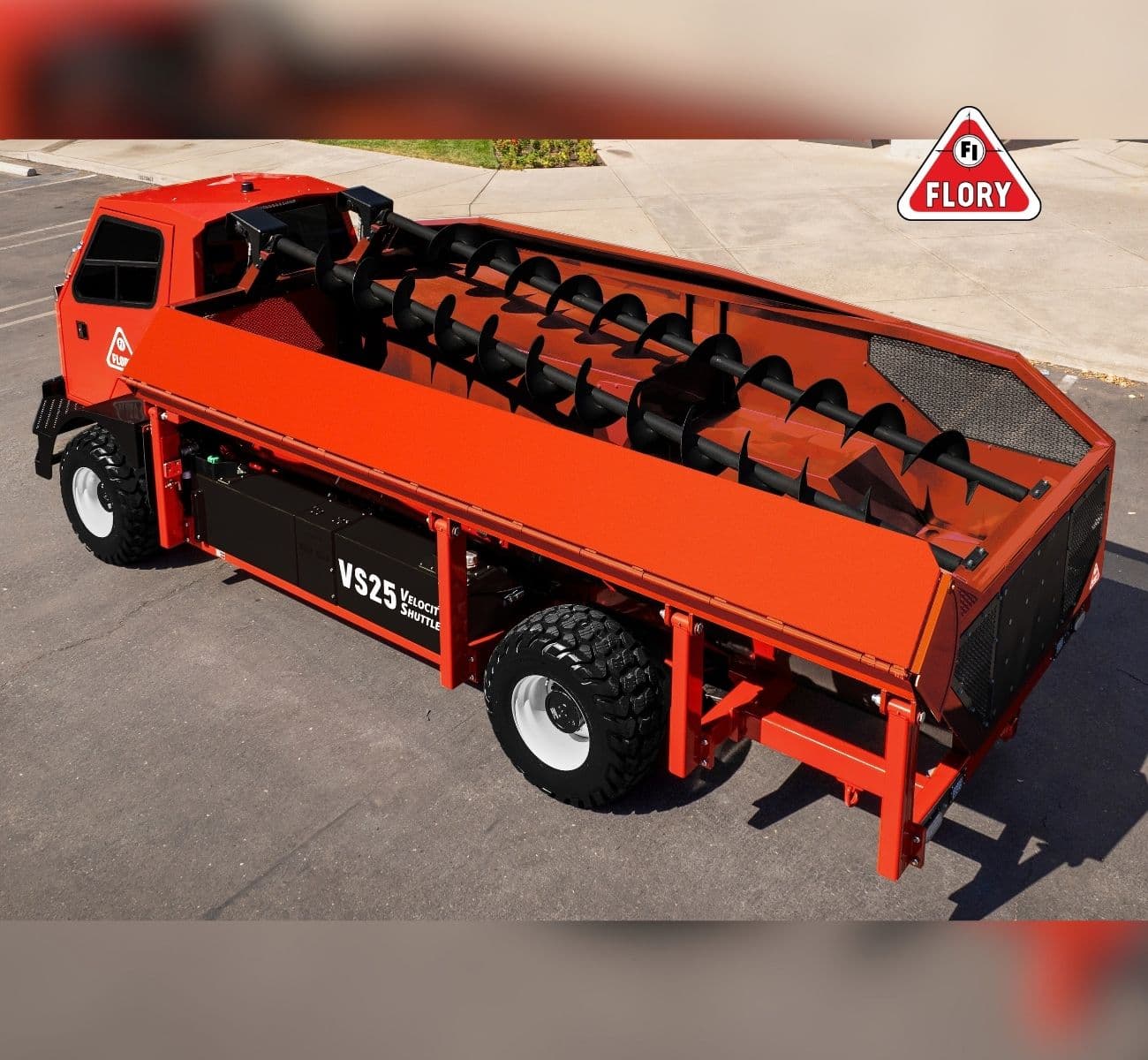
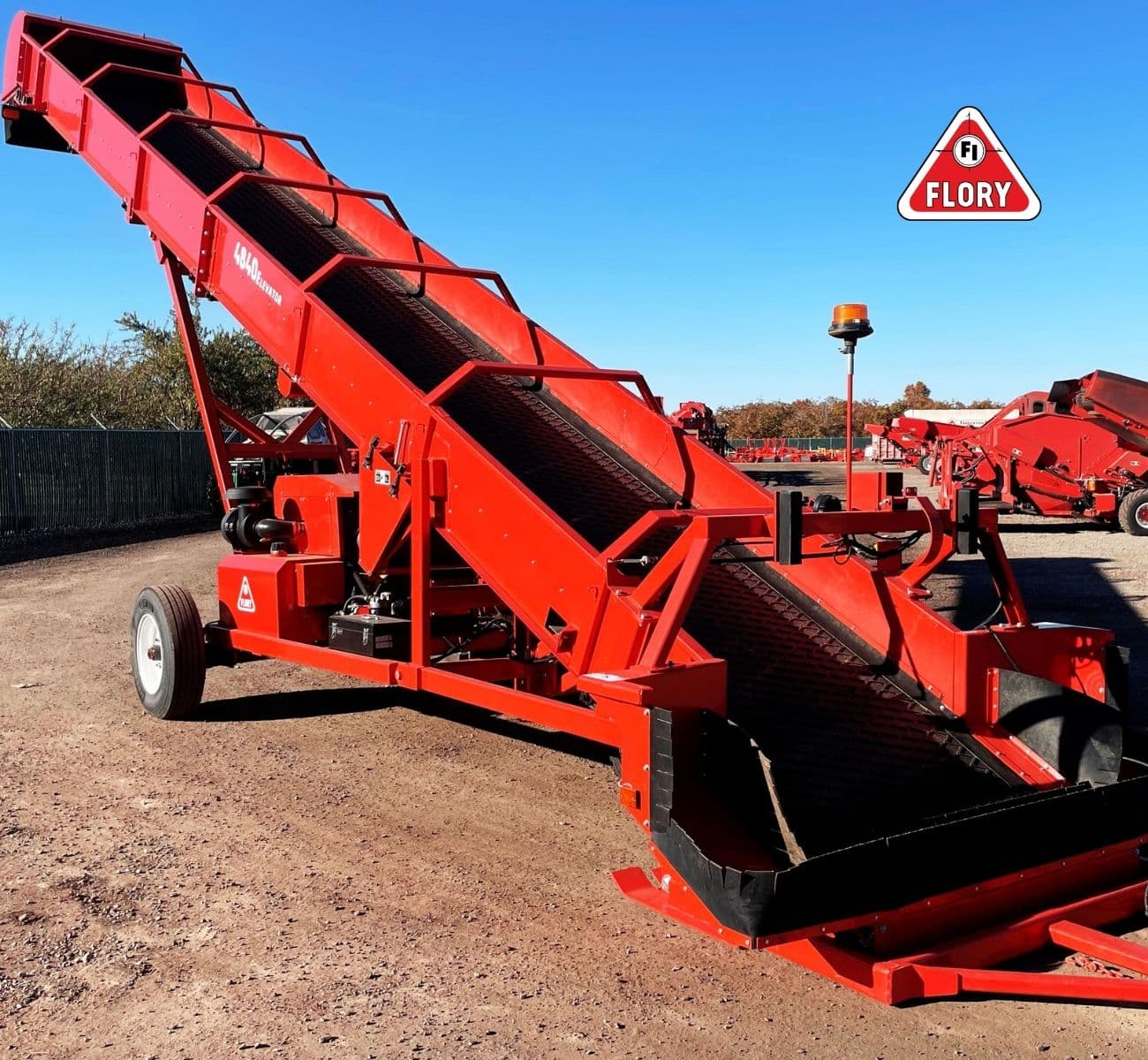
No Syrian source found describes mechanized almond harvesting. OVE Europe's guides use Flory's line as the reference: on the ground, the VR700 Shaker, 34 Series Sweeper, CP87 Conditioner and 860 Harvester, or the smaller 490, work with the 1500 Conveyor Cart and ST14 Shuttle; off the ground, the Flory COE C7 Shaker and L2 Receiver catch the almonds in a frame around the trunk, the Flory COE B8 Cart and VS25 Shuttle carry them, and the 4840 Field Elevator loads trailers in both systems.
Almond Harvest Workflow (Recommended Equipment)
Practical Tips for Almond Harvesting
Track hull split from the first split hulls in the top southwestern part of the tree, and shake once nuts come off well, as University of California guidance advises.
Leave shaken almonds on the ground only while the forecast stays dry; inland, long-term averages show almost no rain in August and September.
Keep ground time short: University of California guidance links ant damage to the time almonds spend on the orchard floor.
After drying on the floor, sweep almonds into windrows; a conditioner such as the Flory CP87 cleans and re-lays them so they dry faster before pickup.
On the coast, or if harvest runs into October, pick up promptly or use catching frames: Latakia averages 67.1 mm of rain in October.
Pick green almonds by hand, and keep shakers and frames for dry almonds in orchards planted for machines, never household or scattered trees.
Get your recommended harvest setup
Enter orchard size, spacing, terrain, and target throughput—we’ll suggest a practical harvest workflow and equipment lineup.

Almond Post-Harvest Handling & Processing in Syria
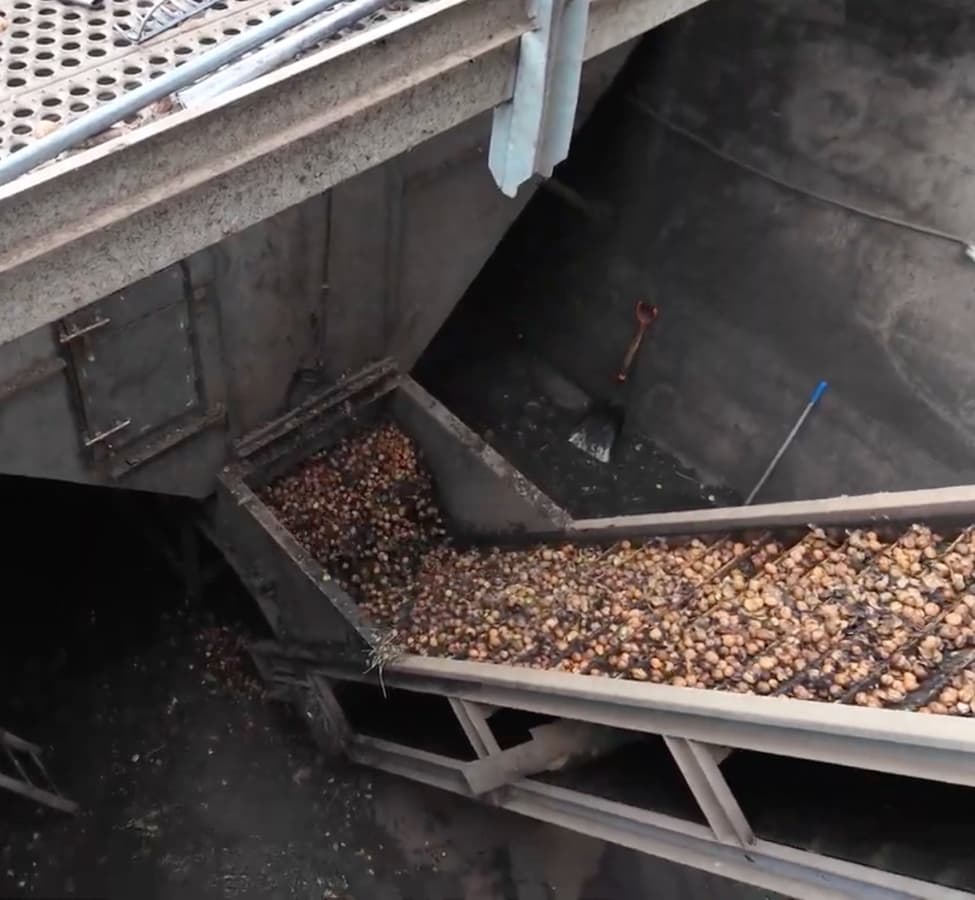
In the household account of the 2011 report from rural Aleppo governorate, hulled almonds are dried in the sun for several days until fully dry, then kept in cloth bags in a dry place, away from humidity, or cracked at once for the kernels. In this workflow, almonds dried on the orchard floor arrive with dry hulls and are dried further only if needed, while promptly picked or frame-caught almonds are hulled first and then dried in the shell.
No Syrian product standard for almonds was found. A 2011 Damascus University thesis on aflatoxins in common Syrian foods compared its samples with Syrian standard No. 2680 of 2008, whose scope was not seen; its abstract lists no almond samples. For exports to the EU, Regulation (EU) 2023/915 allows 8.0 µg/kg of aflatoxin B1 and 10.0 µg/kg in total in almonds for consumers, and 12.0 and 15.0 µg/kg in almonds to be sorted first.
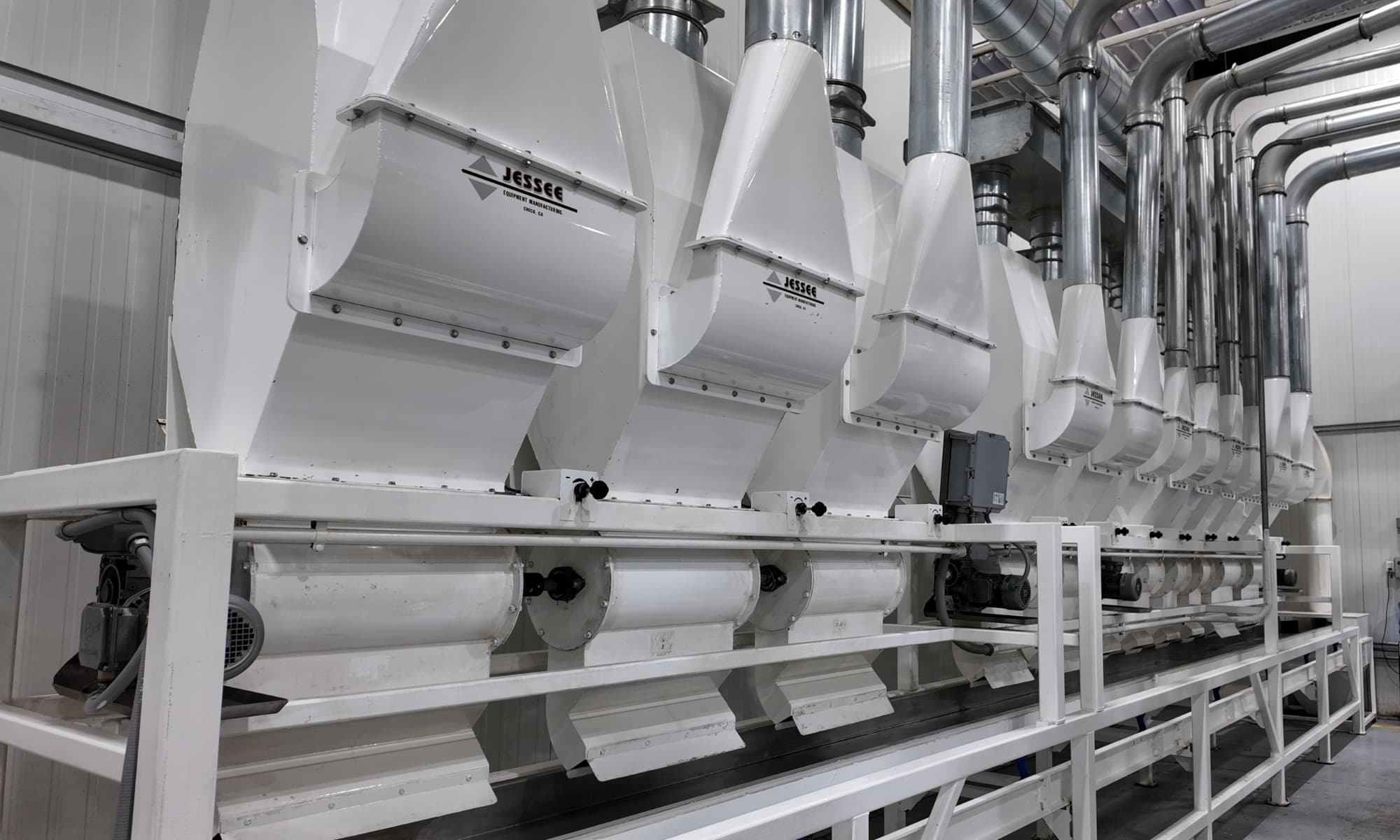
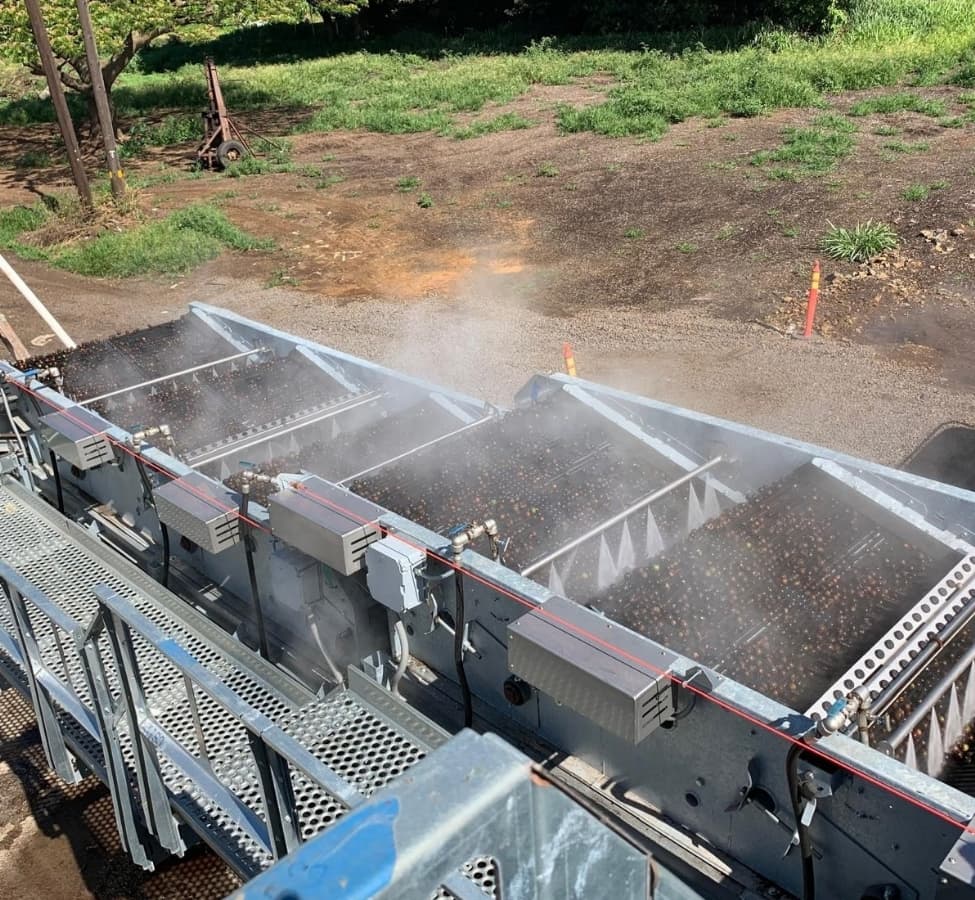
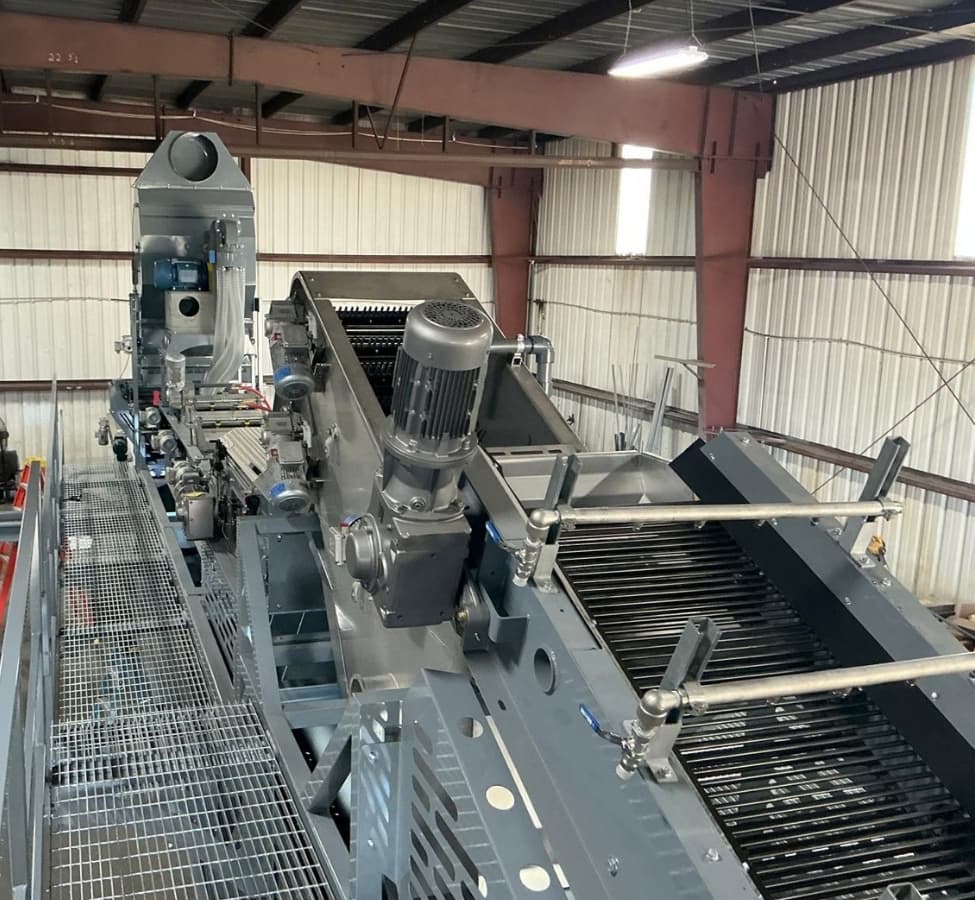
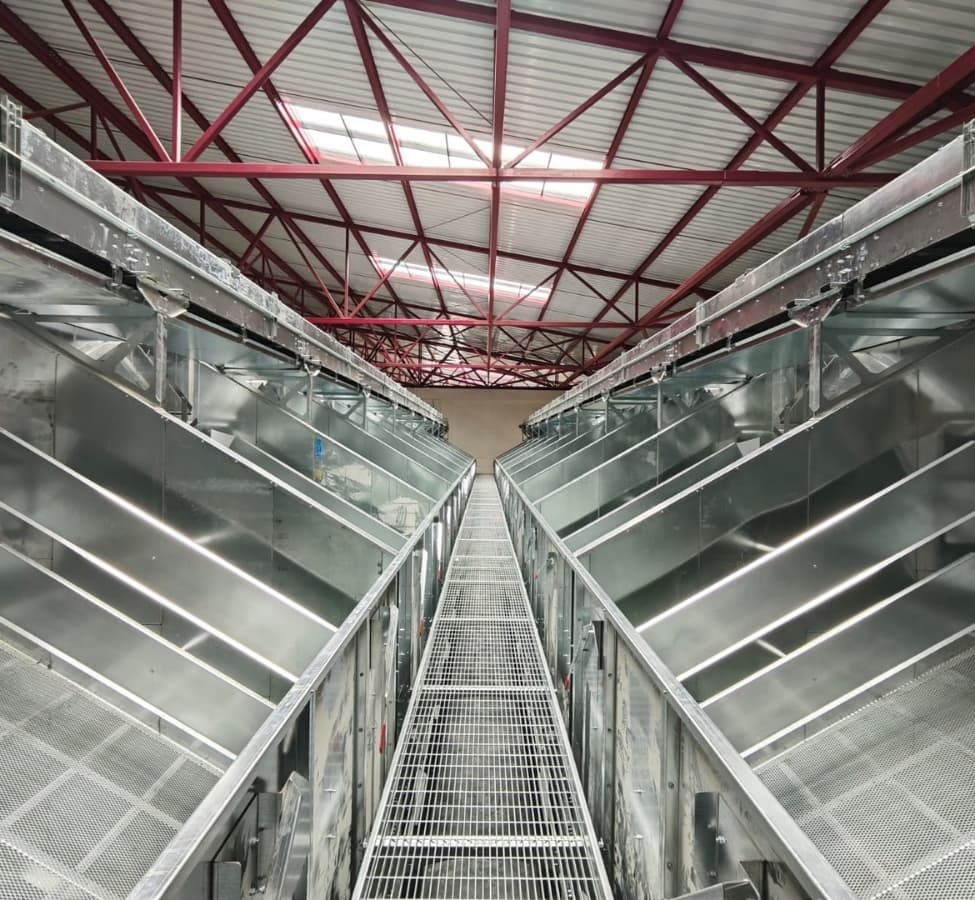
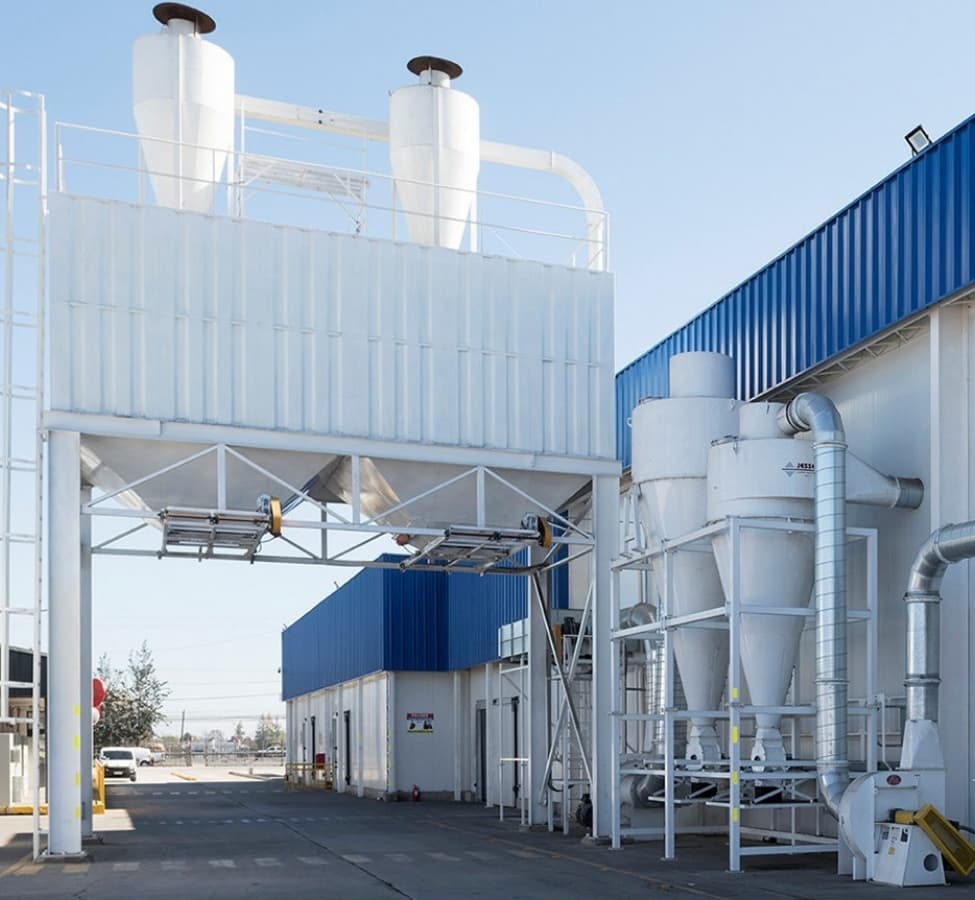
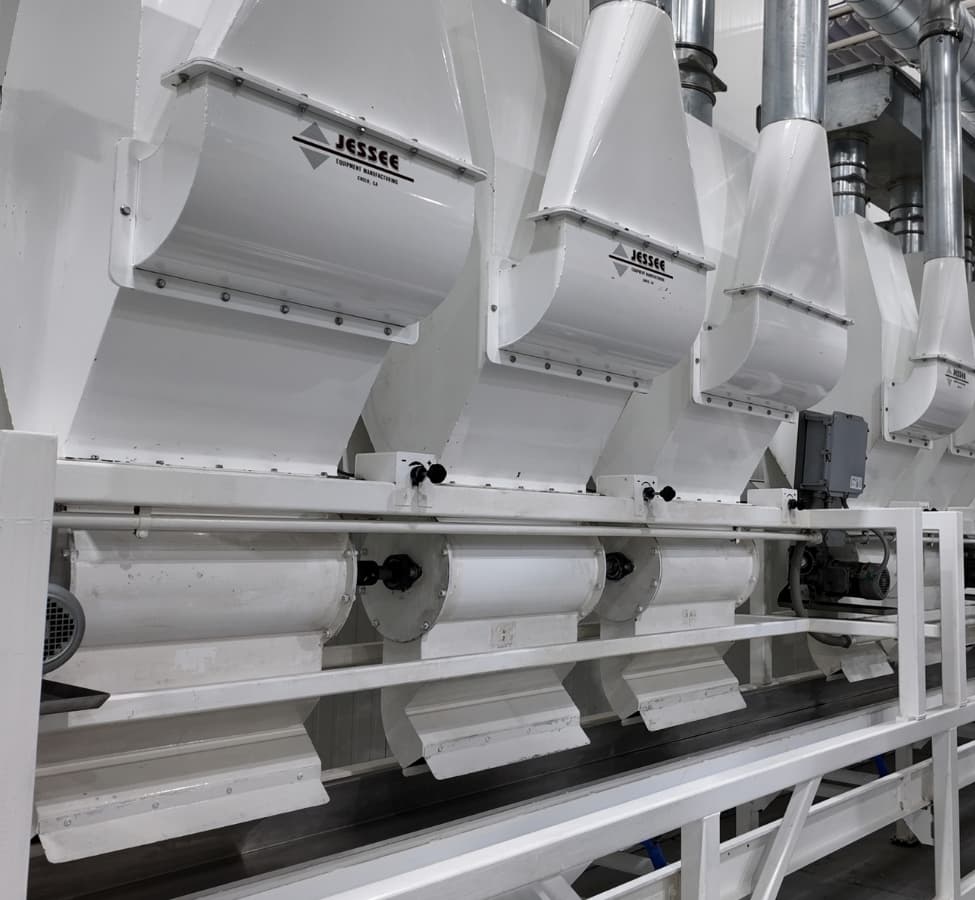
In partner countries' 2024 records, Syria shipped 1,316.1 t of shelled almonds, mainly to Türkiye, India and Egypt, and 302.6 t in shell, mainly to Saudi Arabia, and received 1,023.2 t of shelled almonds from Türkiye (UN Comtrade via WITS). Jessee, a US maker of nut processing lines, builds hulling, drying, in-shell cleaning and sizing, and shelling systems; its Airlegs nut cleaner was developed for the almond industry.
For general information only. Information may become outdated and does not replace site-specific professional advice. Consult a qualified agronomist and confirm equipment suitability with OVE before acting.
Practical Tips for Almond Post-Harvest Handling & Processing
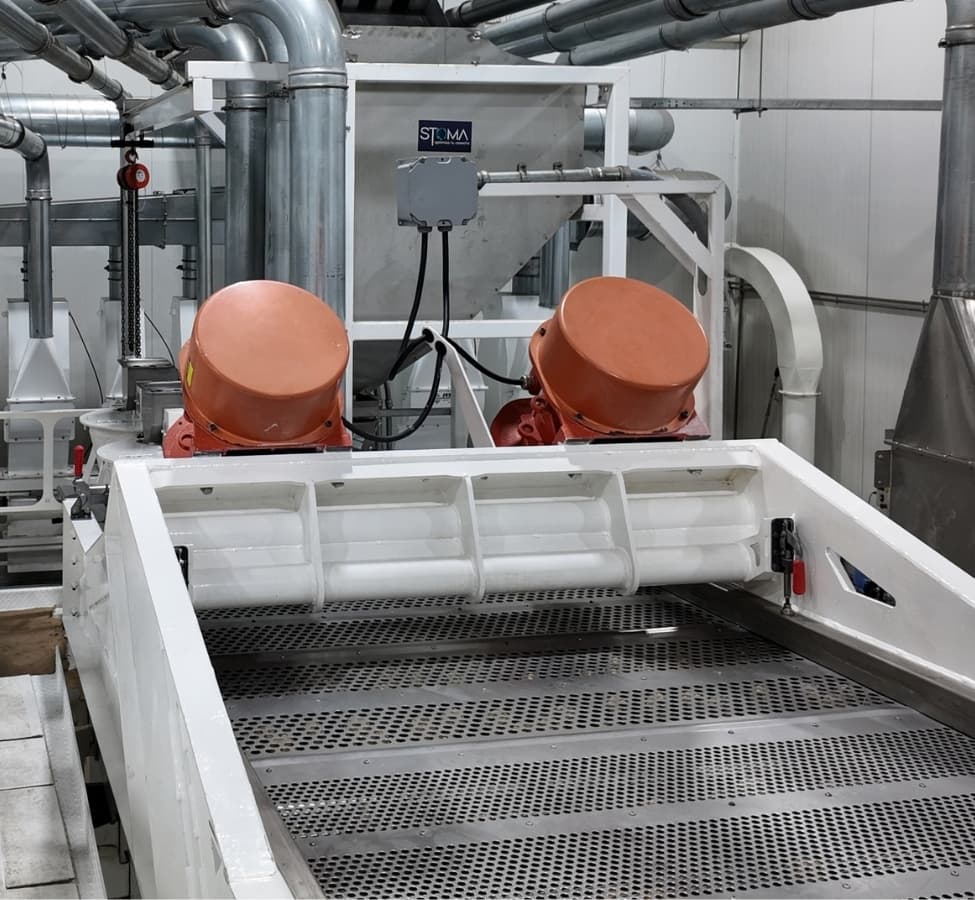
Pick up ground-dried almonds as soon as they are dry, then hull them and check moisture before storage.
Hull promptly picked or frame-caught almonds while the hulls are fresh, then dry the nuts in the shell before storage.
Never pick up or stockpile rain-wet almonds: University of California guidance warns that stockpiling wet nuts risks mold and concealed damage.
Store dried almonds in a dry place, away from humidity, as the 2011 rural Aleppo report describes, and keep lots apart by type and block.
Sort hard-shelled almonds from easily cracked ones before cracking: in rural Aleppo governorate, hard-shelled nuts need a hammer or a stone (2011).
Test lots bound for the EU against Regulation (EU) 2023/915: 8.0 µg/kg of aflatoxin B1 and 10.0 µg/kg in total for almonds sold to consumers or used in food.
Recommended Post-Harvest Handling & Processing Stages
Plan your post-harvest line
Estimate tons/day, cleaning & drying capacity, storage needs, and cost/kg—then build your equipment plan in phases.