


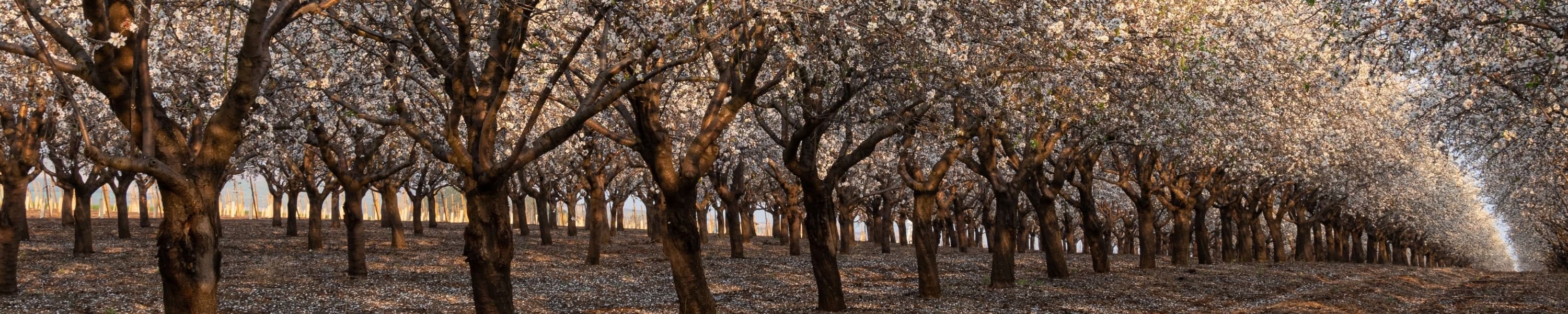




Almond Orchard Establishment in Tunisia
Tunisian research describes the main local cultivars as early blooming and almost all of those studied as self-incompatible: a 2016 study at the national almond collection in Sidi Bouzid found the local cultivar Achaak strictly self-incompatible. Undated cultivar sheets in the annex of a 2021 doctoral thesis give Achaak's bloom as late December in Sfax and early January in central Tunisia and name Ksontini as its best pollinizer.
The same sheets describe Mazzetto, introduced in 1964 and later found identical to Tuono, as late blooming and self-fertile, suited to all regions except the hot coastal zone and of special interest in the Sfax region, where pollinating insects are often scarce; Lauranne, a French cultivar, is self-fertile with relatively late bloom. The National Institute of Agronomic Research (INRAT) began breeding late-blooming, fungus-resistant cultivars in 1985 because the main local ones bloom early and are sensitive to fungal diseases (FAO, 1997).
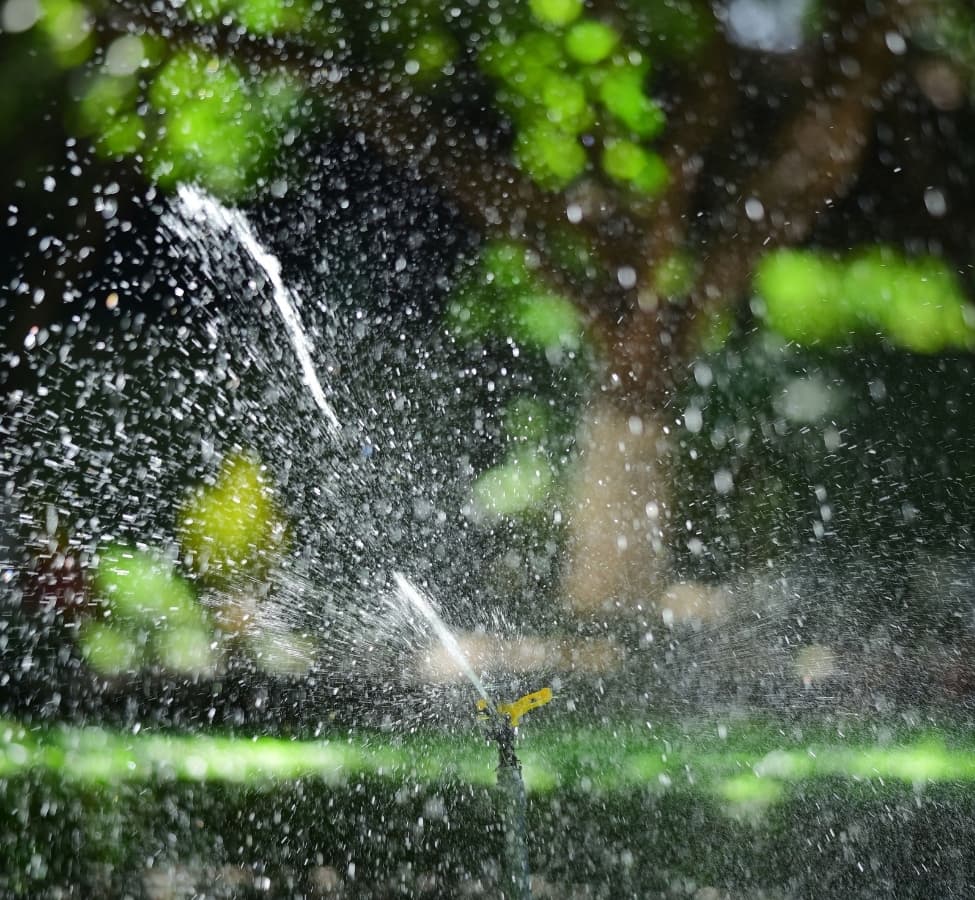
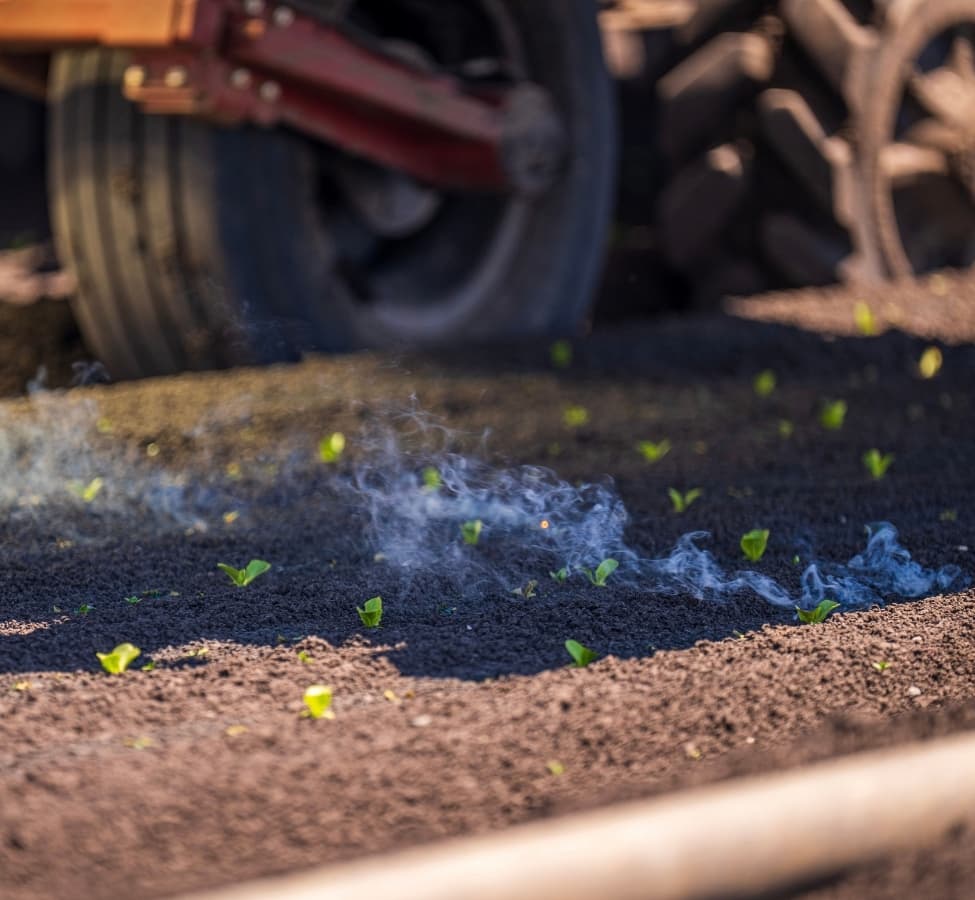
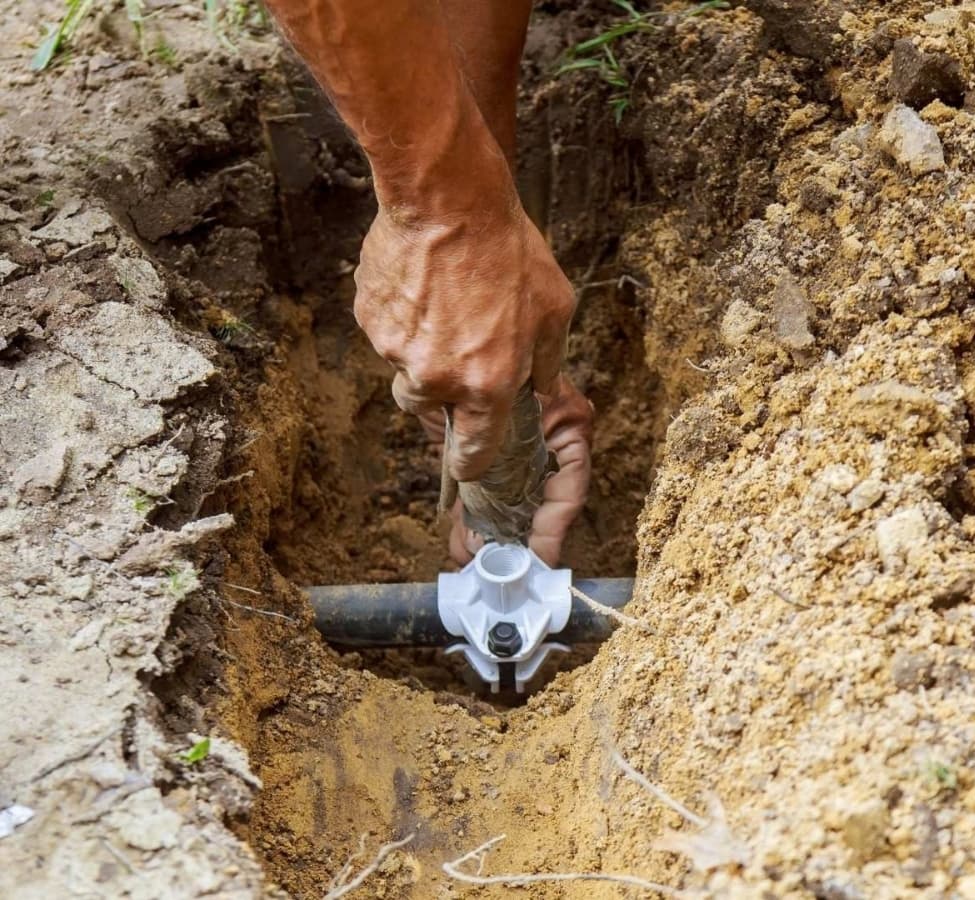
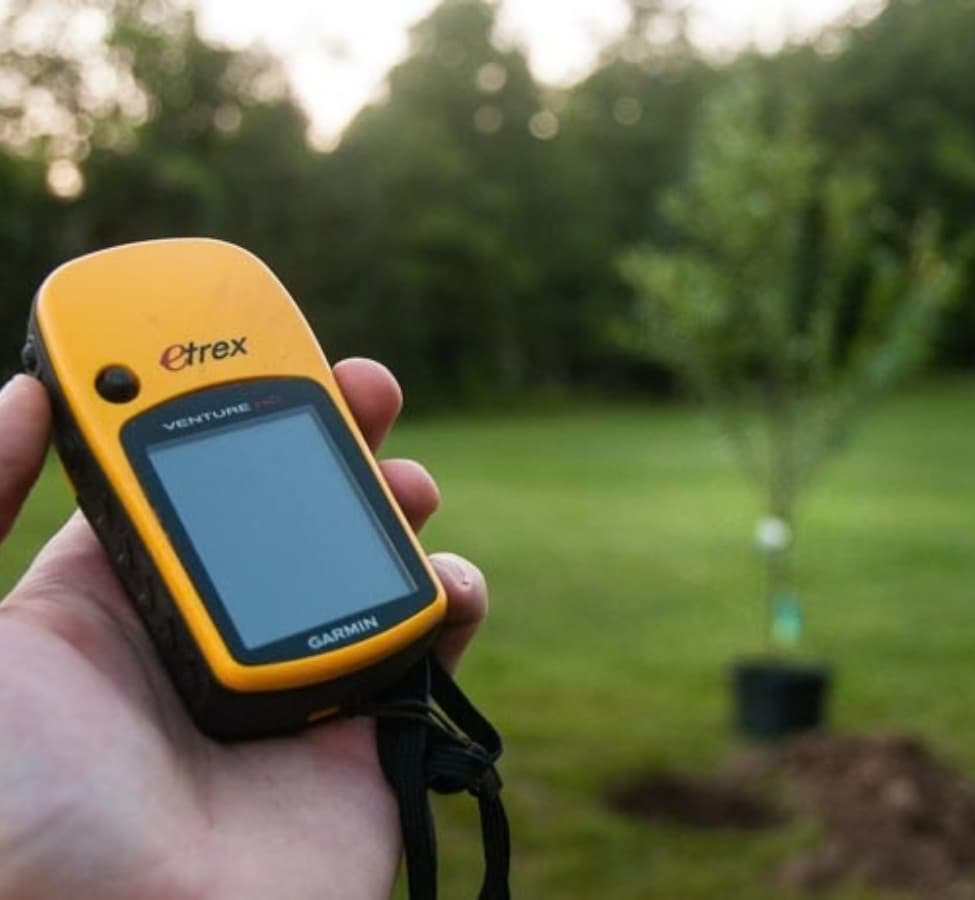
Almond is grown mainly under rain-fed conditions, a 2020 study notes, on about 200 mm of rain a year around Sfax (1984), with wide spacing: cost models in a 1999 sector study assume 100 trees per hectare in central and southern Tunisia and twice that in the north. Trees at the national collection at Sidi Bouzid were drip-irrigated on Garnem rootstock (2016). Plan rows, headlands and trunk height for shakers and catching frames before planting.
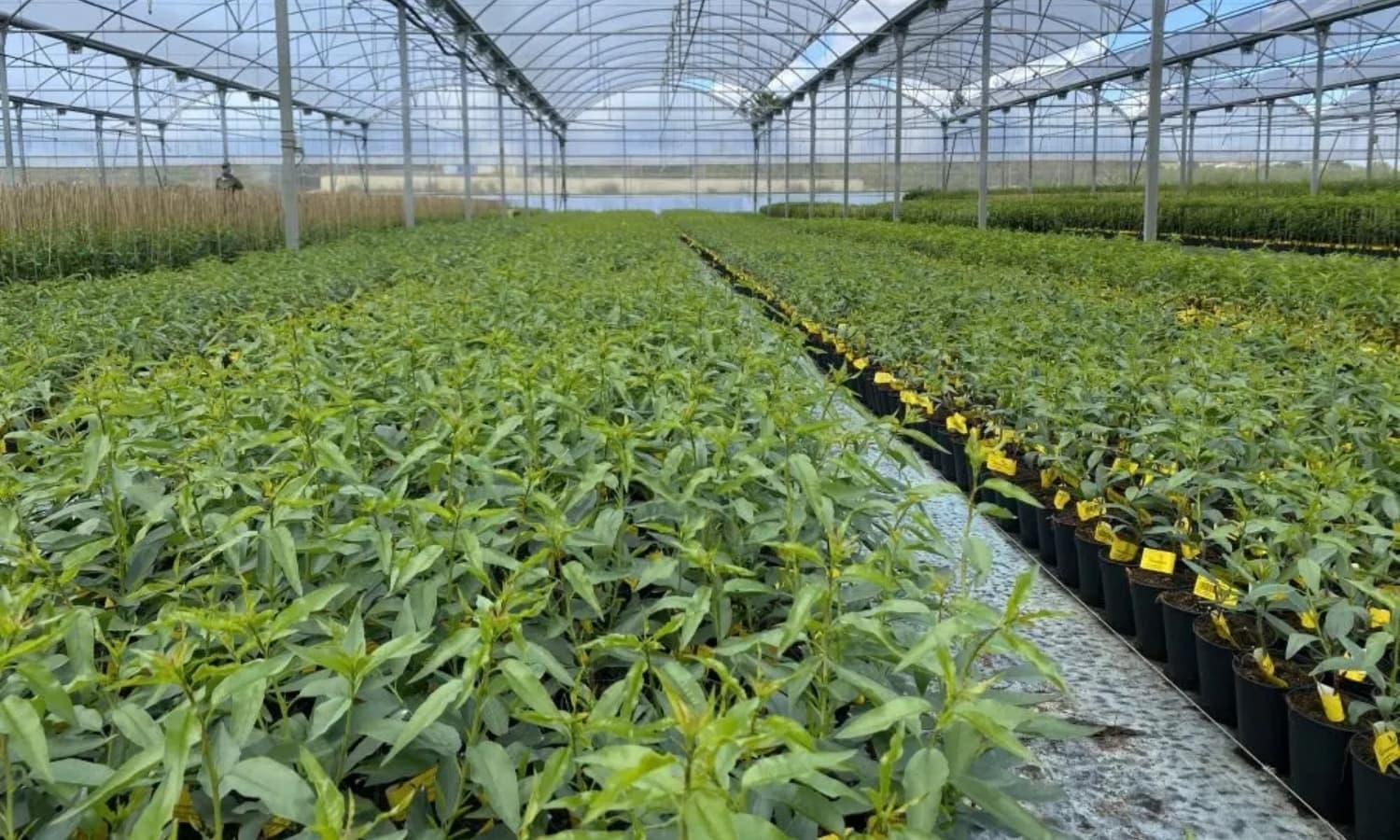

Practical Tips for Almond Orchard Establishment
Plant a pollinizer with Achaak: a 2016 study found it strictly self-incompatible, and cultivar sheets name Ksontini as its best pollinizer.
Consider self-fertile Mazzetto where pollinating insects are scarce, as the cultivar sheets advise for the Sfax region, but not in the hot coastal zone.
Prefer later-blooming cultivars on colder inland sites: INRAT began breeding them in 1985 because the main local cultivars bloom early.
Match cultivars to the region: the cultivar sheets describe Ksontini as very well adapted to central and southern Tunisia.
Buy healthy grafted trees from reliable nurseries and keep plant-health documents for any imported planting material.
Plan rows, headlands and tree form for the shaker, sweeper and harvester before planting, and check trunk clearance with OVE Europe.
Recommended Establishment Stages

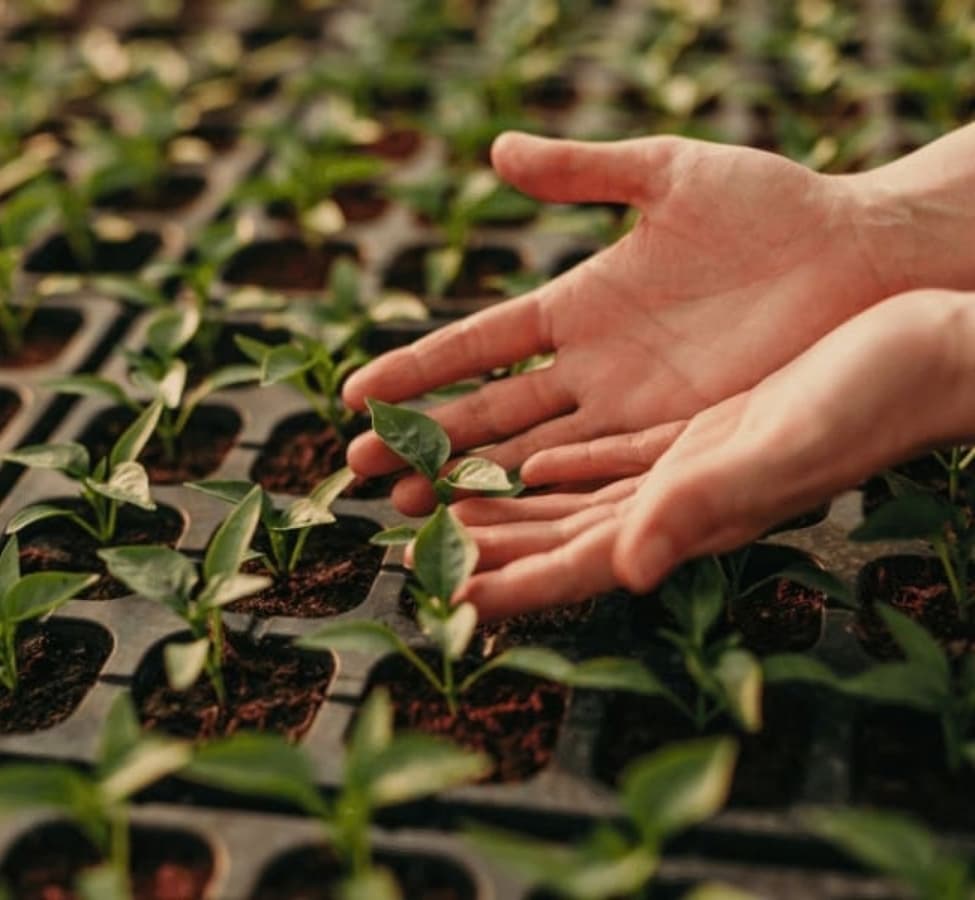
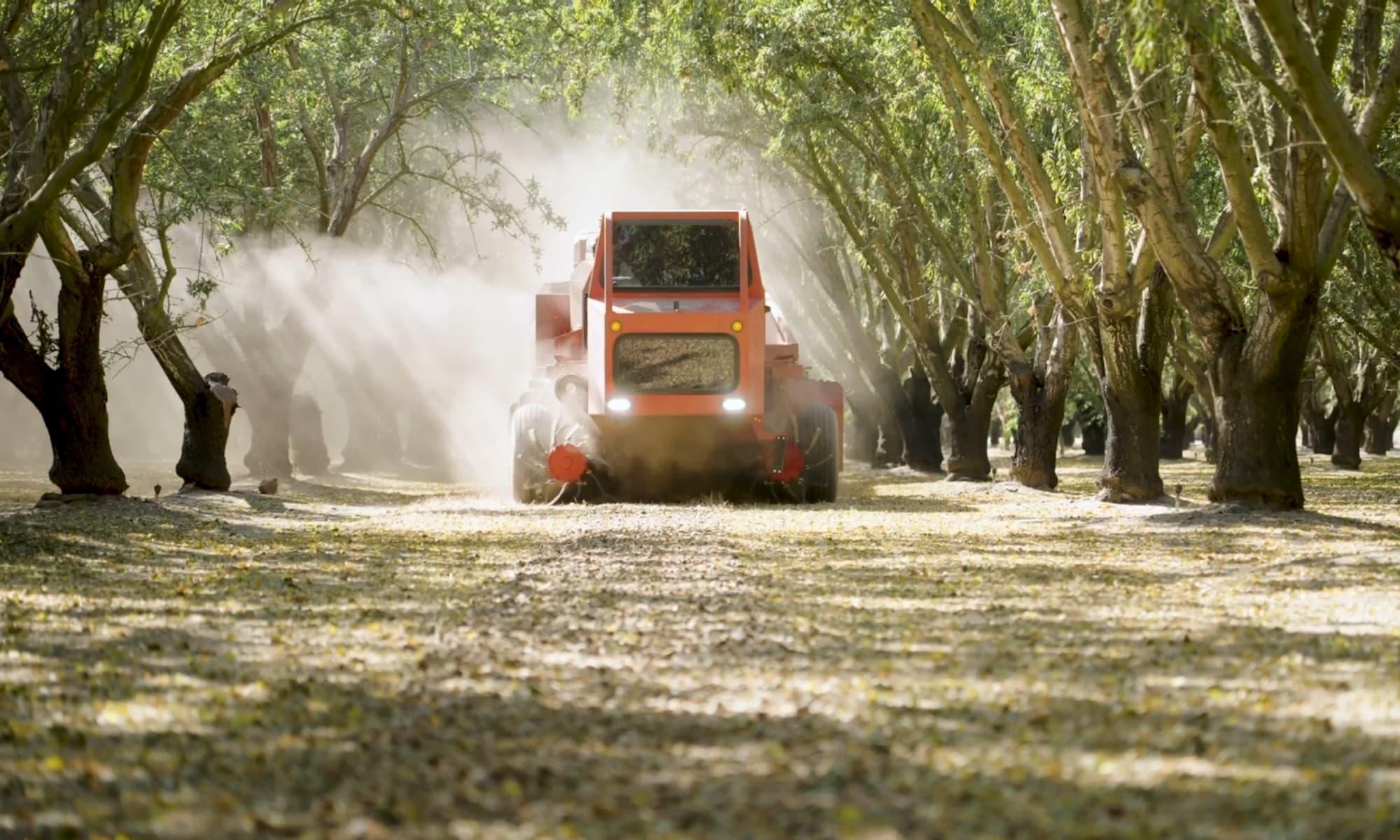

Almond Orchard Care & Maintenance in Tunisia
Only old Tunisian reviews of almond pests and diseases were found: a 1984 review named the green aphid the most dangerous pest, noted bark beetles, Fusicoccum canker everywhere in central and southern plantations and leaf curl on Tuono, and advised collecting and destroying infected dried fruit against Gloeosporium in the north. EPPO lists the peach twig borer as present with a restricted distribution and Monilinia fructicola, the cause of American brown rot and a quarantine pest, as absent, confirmed by survey (2011 reports).
No Tunisian irrigation schedules or water-use figures for almond were found. Summers are hot and dry in the main areas: rain was almost absent across much of the country in July 2026, and in August 2026 Sfax recorded 0.2 mm of rain and a record 47.6 °C on 26 August (INM). In the wetter north, a 1999 sector study found almond little grown because of competition from other profitable crops, and noted that almonds are quite sensitive to humidity.
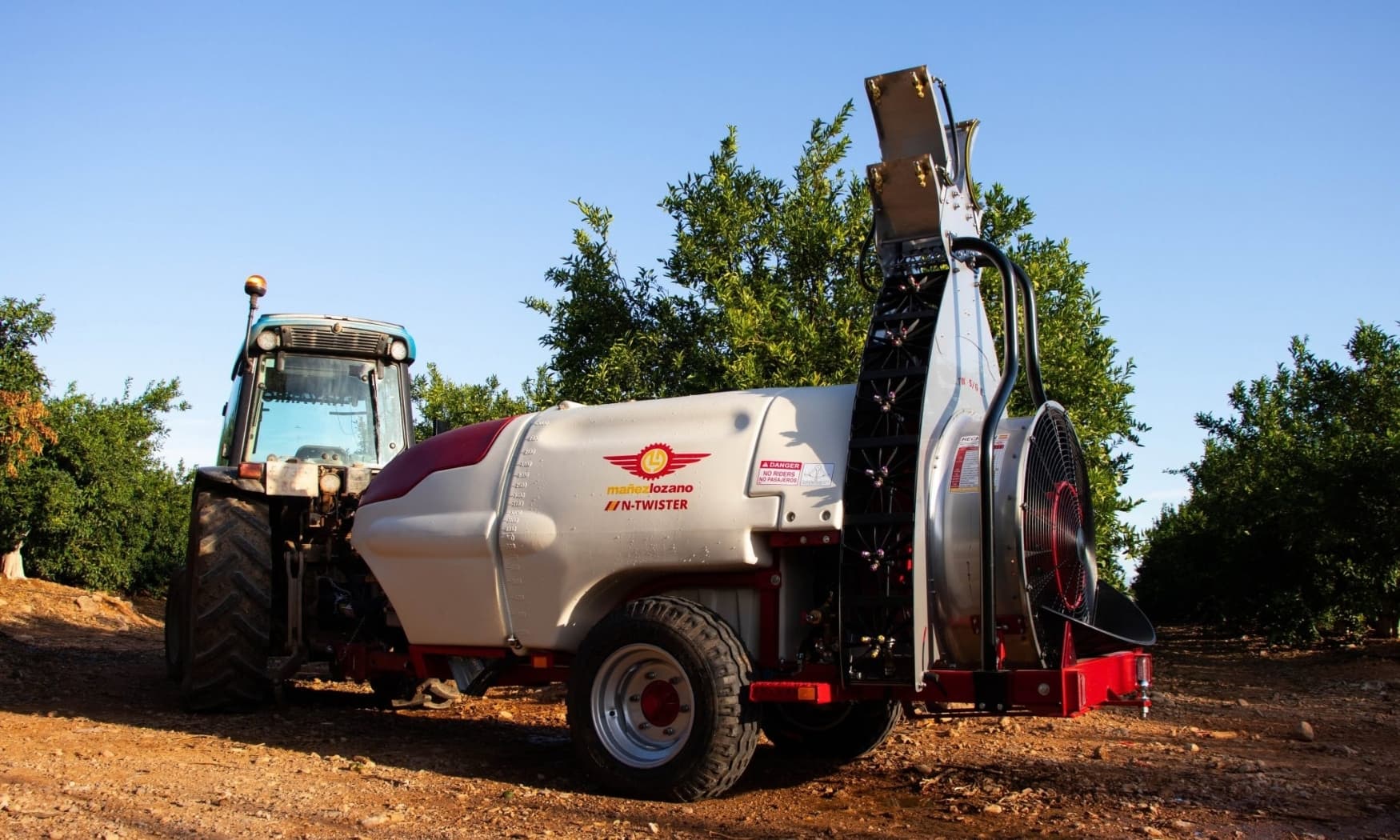
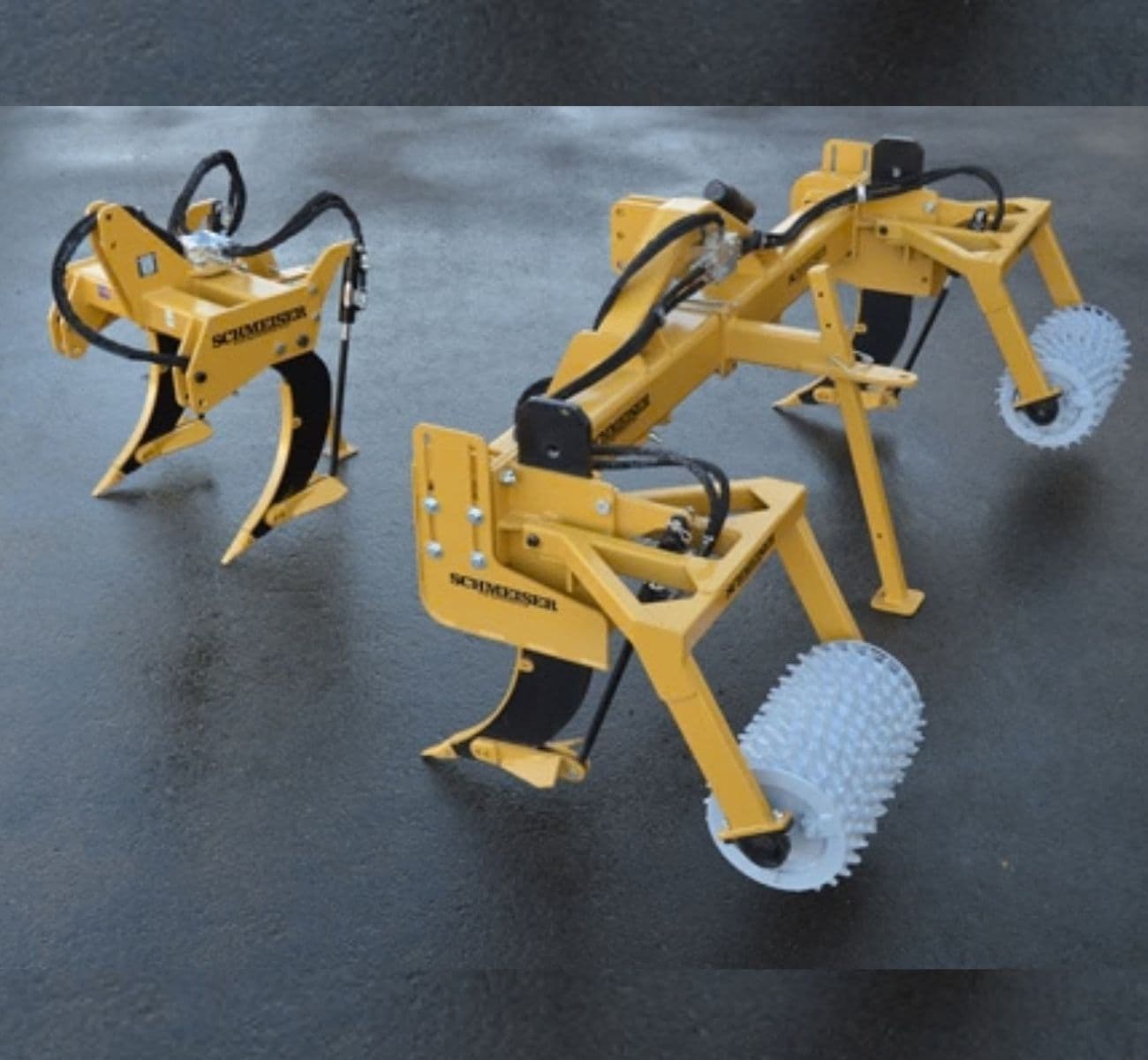
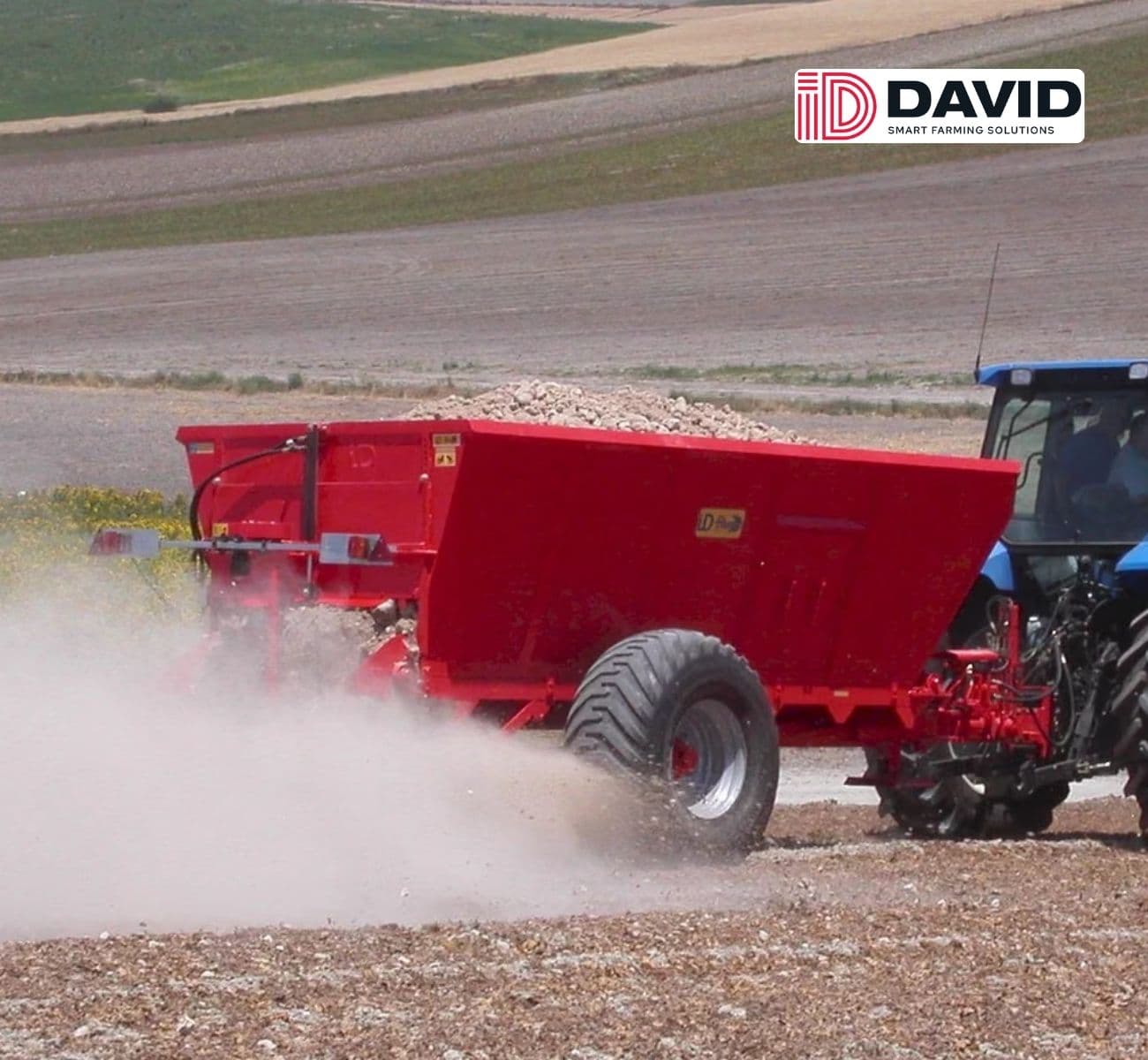
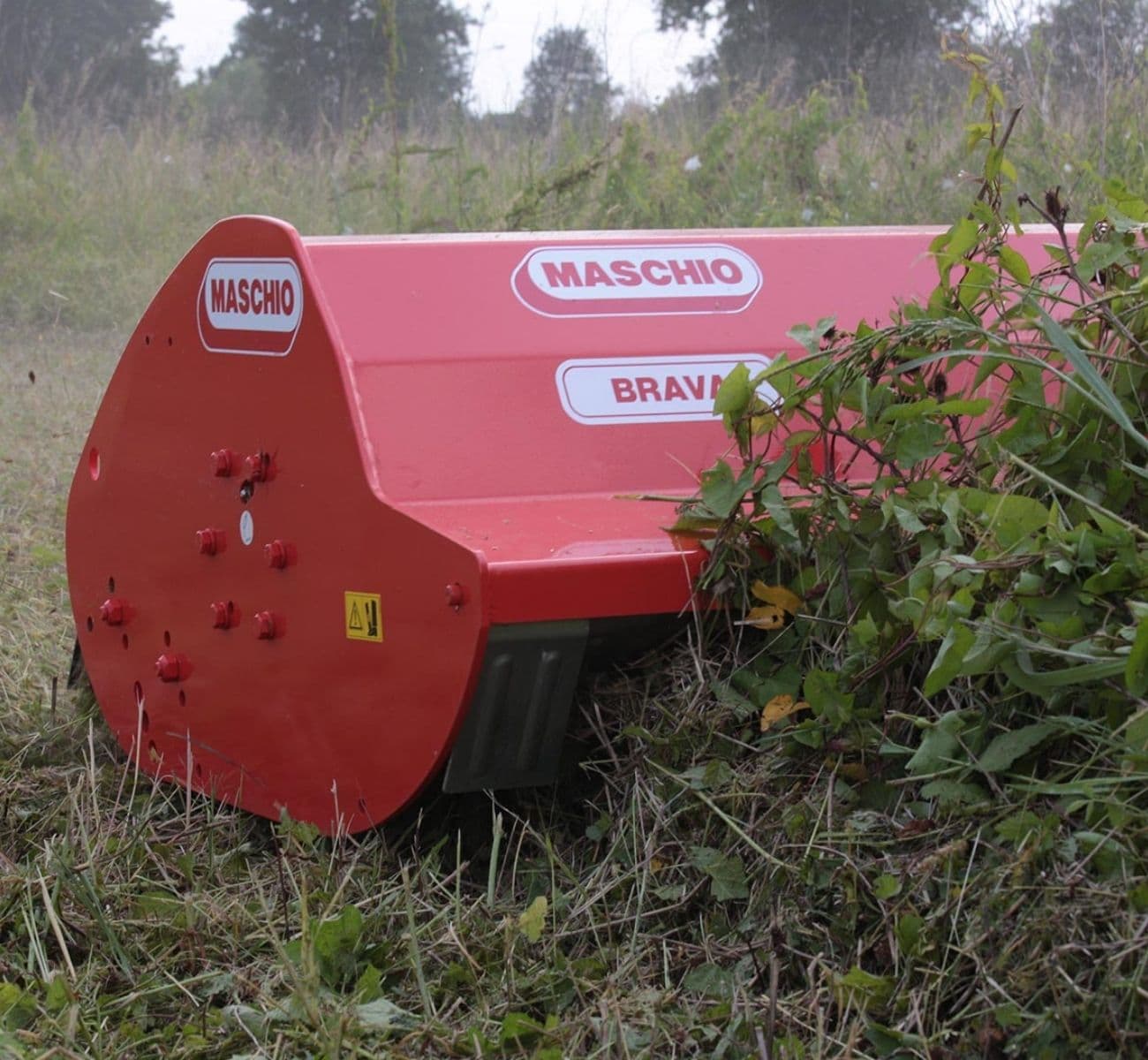
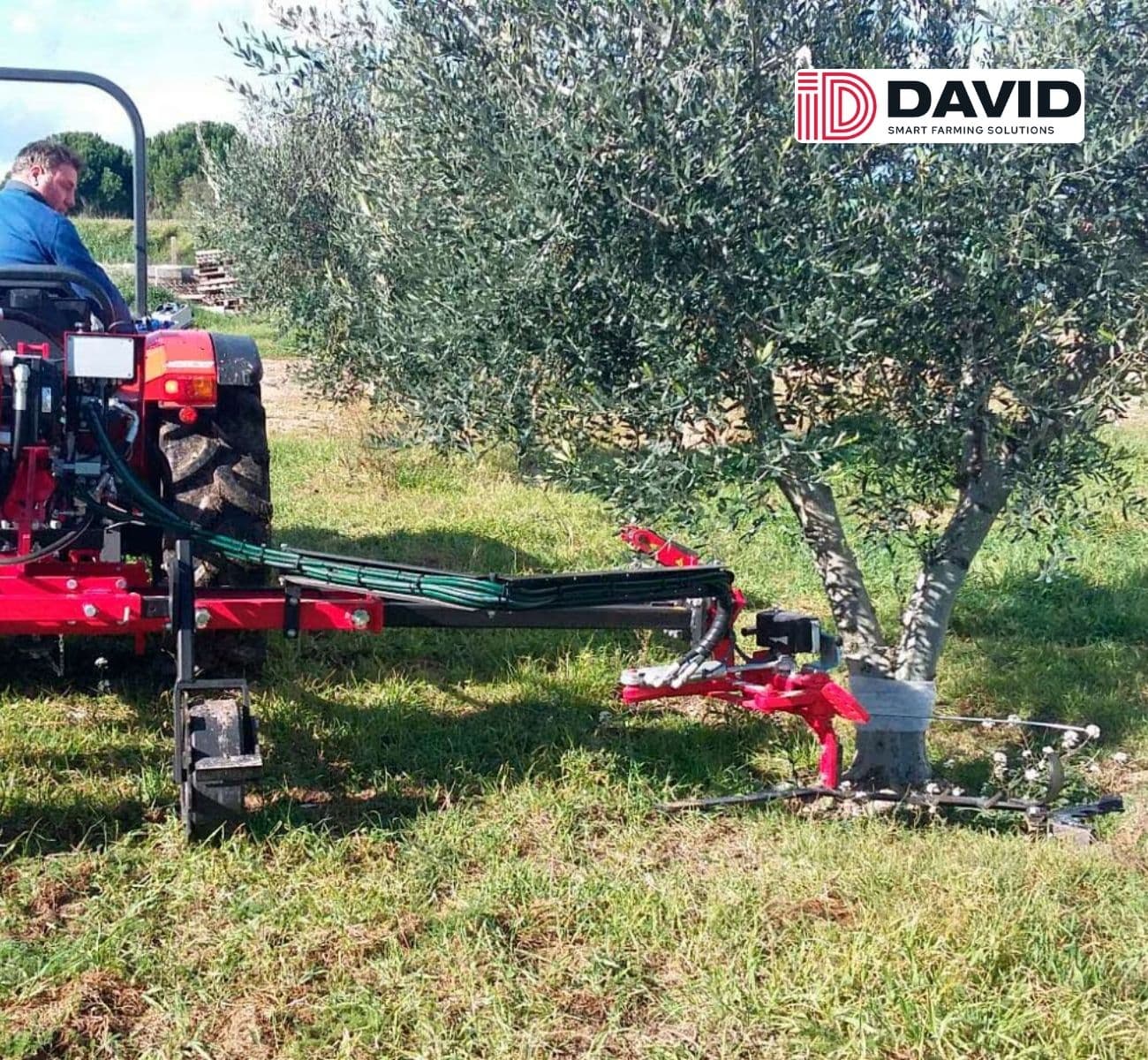
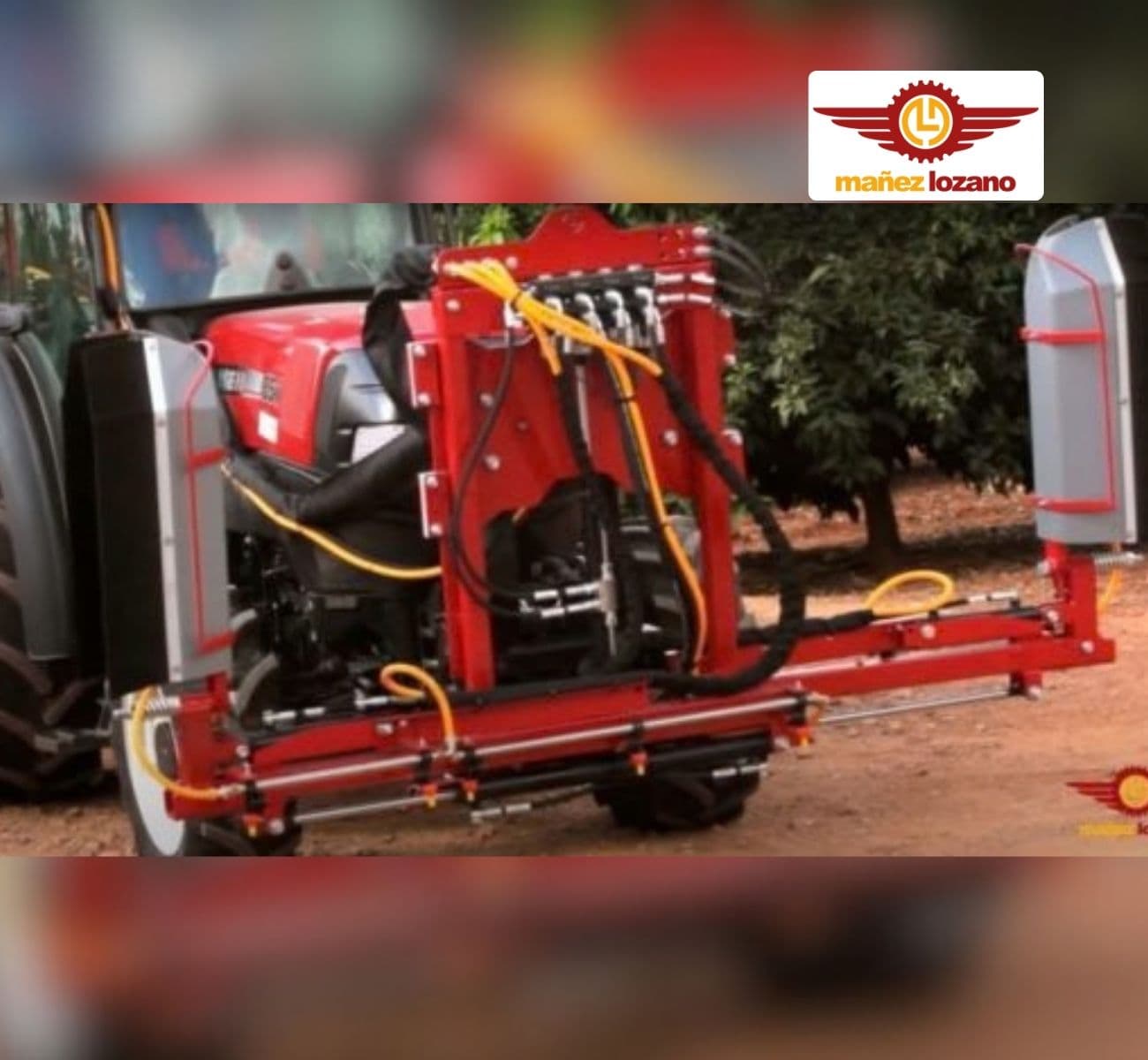
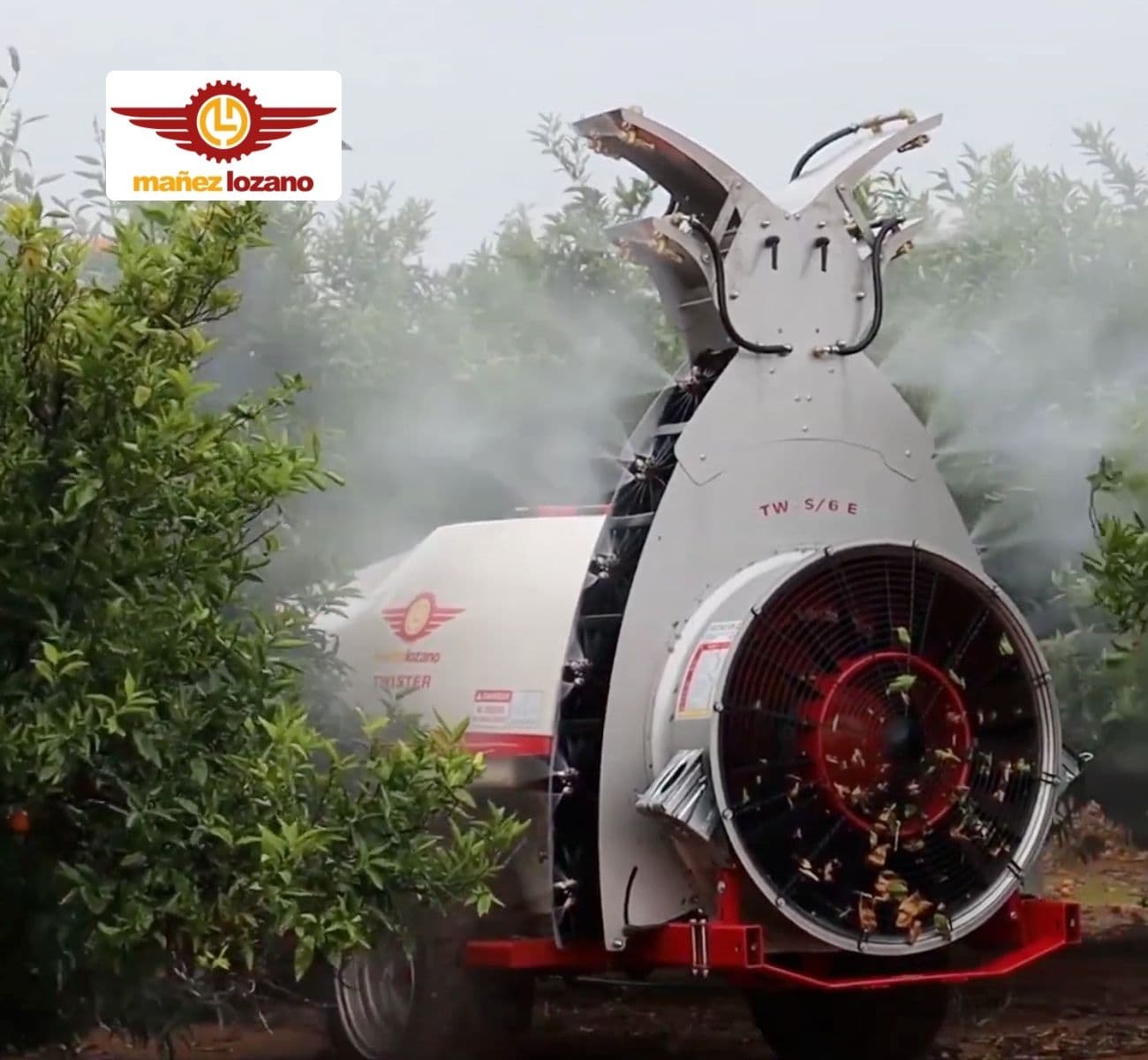
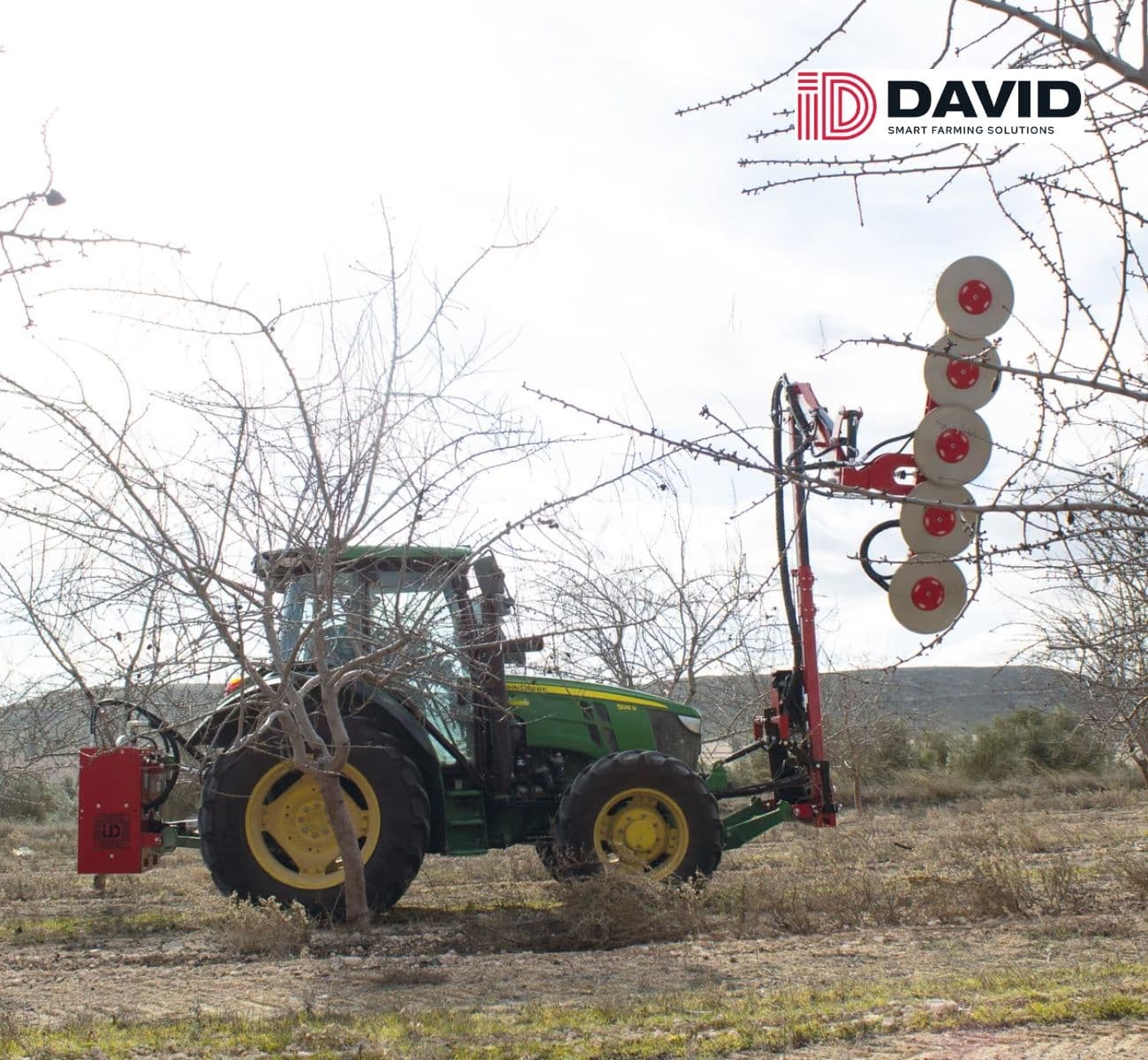
In Sfax, the heritage inventory records pruning right after harvest, in September and early October, and plowing after the rains when weeds appear. For care work, the ID DAVID SURFEED spreads solid manure, the ID-XL weeds the tree row, the Mañez Lozano Mega Twister S6 sprays tall, dense canopies and the ID DAVID ID-REX disc pruner makes lateral and topping cuts.
Recommended Orchard Care & Maintenance Stages
Practical Tips for Almond Orchard Care & Maintenance
Watch for green aphids: a 1984 Tunisian review called them the most dangerous almond pest, and the cultivar sheets note aphid sensitivity in Achaak and Ksontini.
In the north, collect and destroy infected dried fruit against Gloeosporium, as a 1984 Tunisian review of almond diseases advised.
Check shoots and fruit for the peach twig borer, which EPPO lists as present in Tunisia with a restricted distribution.
Plan pruning for September and early October, right after harvest, as traditional practice in Sfax does.
Keep the tree row weed-free with an in-row weeder such as the ID DAVID ID-XL, and keep the orchard floor level for harvest.
Spray tall, dense canopies evenly with a trailed airblast sprayer such as the Mañez Lozano Mega Twister S6.

Almond Harvesting in Tunisia
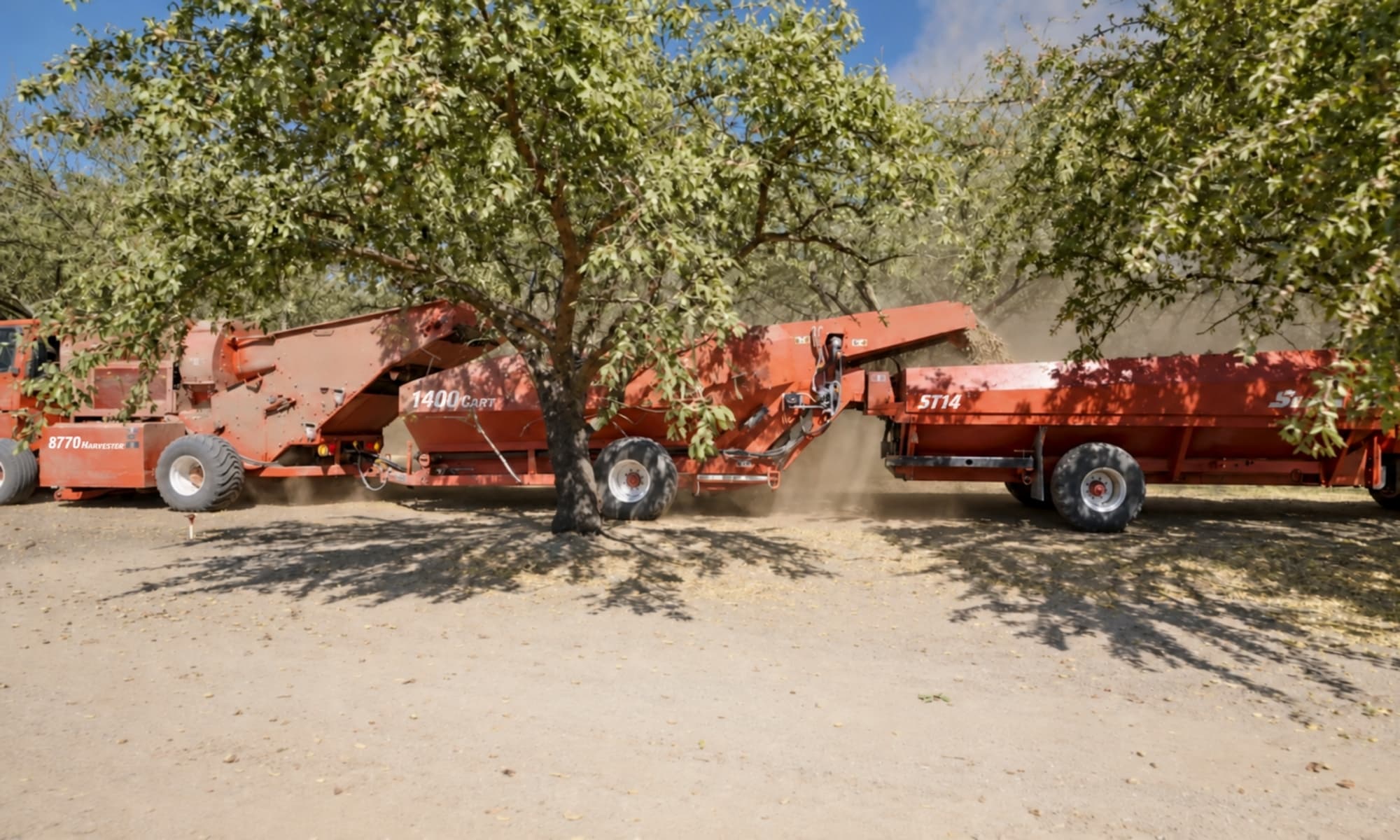
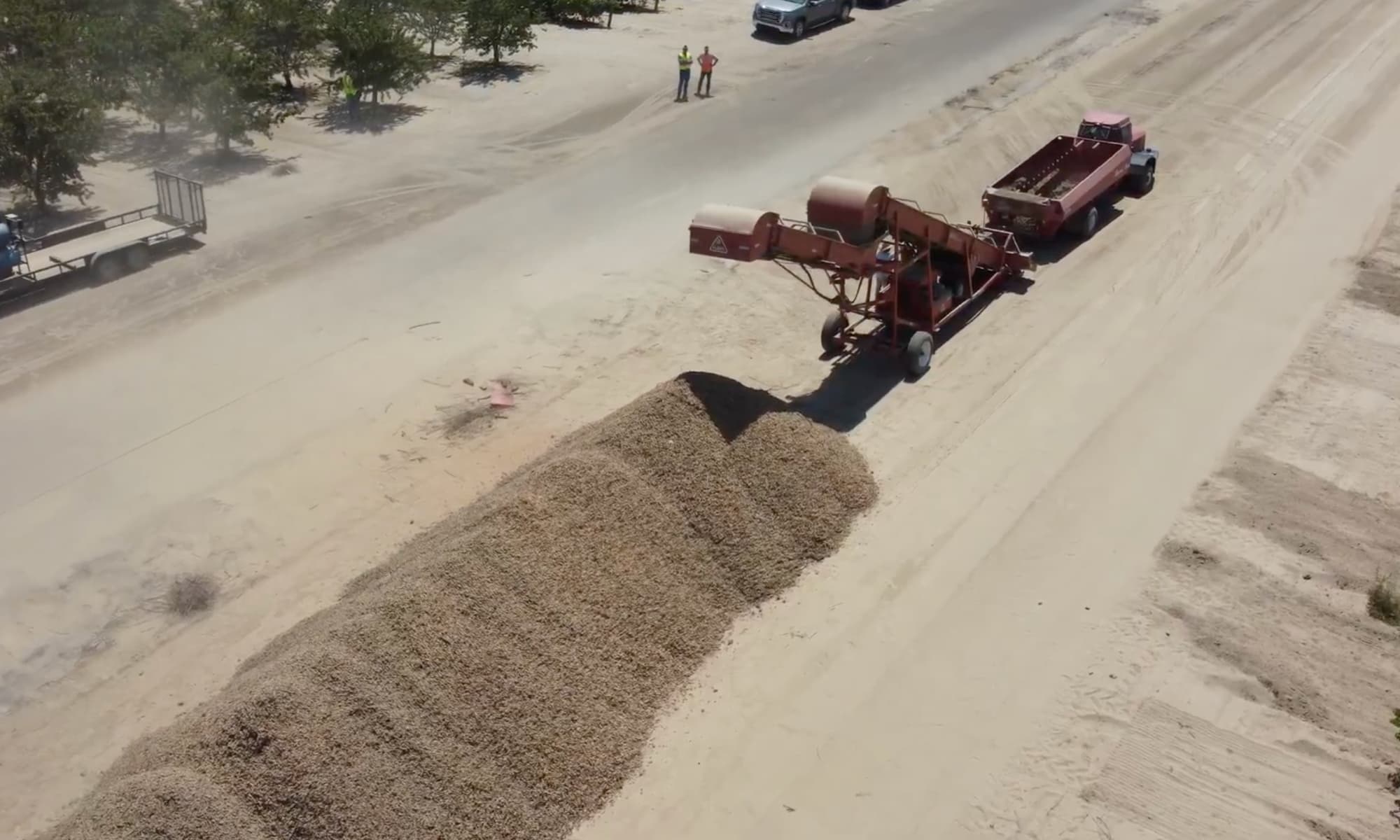
Tunisian descriptions of the harvest are traditional. A heritage inventory of Sfax practice describes sheets laid under the trees and almonds knocked down with poles once the outer hulls have dried, then gathered into burlap sacks, and a 1976 national overview called the harvest manual, mostly by beating with poles. In orchards planted for machines on suitable ground, mechanized harvesting can bring the crop in on time, with less risk of nuts deteriorating while they wait.
Local cultivars such as Achaak and Ksontini ripen at the end of July or in early August, and Lauranne around 1 September (cultivar sheets). In August 2026 Sfax had 0.2 mm of rain, but west-central Tunisia, with August normals of 28 mm at Kasserine and 17.1 mm at Sidi Bouzid, had storms in August 2025, hail in Kasserine governorate on 23 and 24 August, and above-normal August rain in 2026 (INM; news). With no long-term normals obtained for Sfax, this guide shows prompt pickup, with hulling and drying at once, beside catching frames.
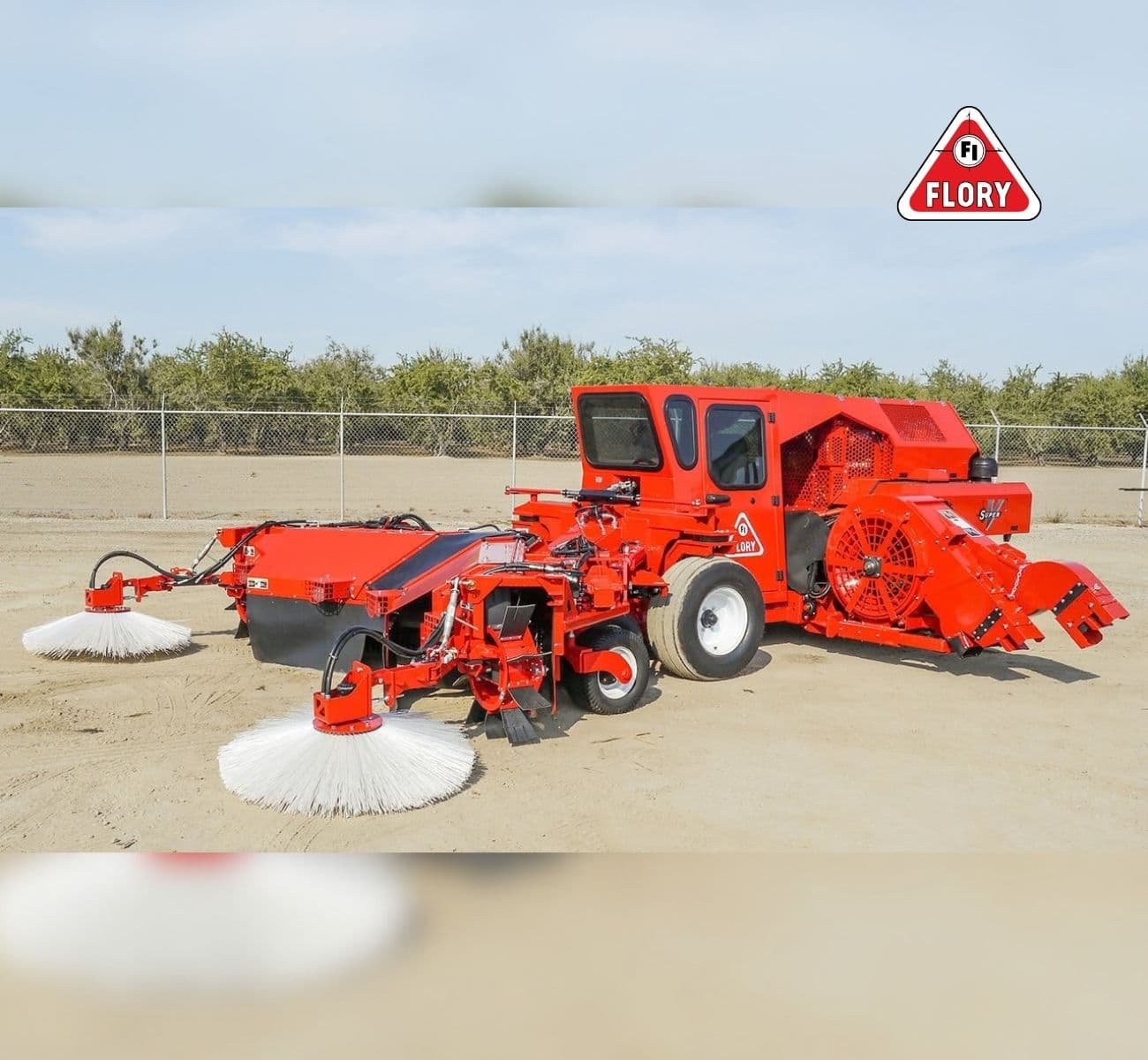
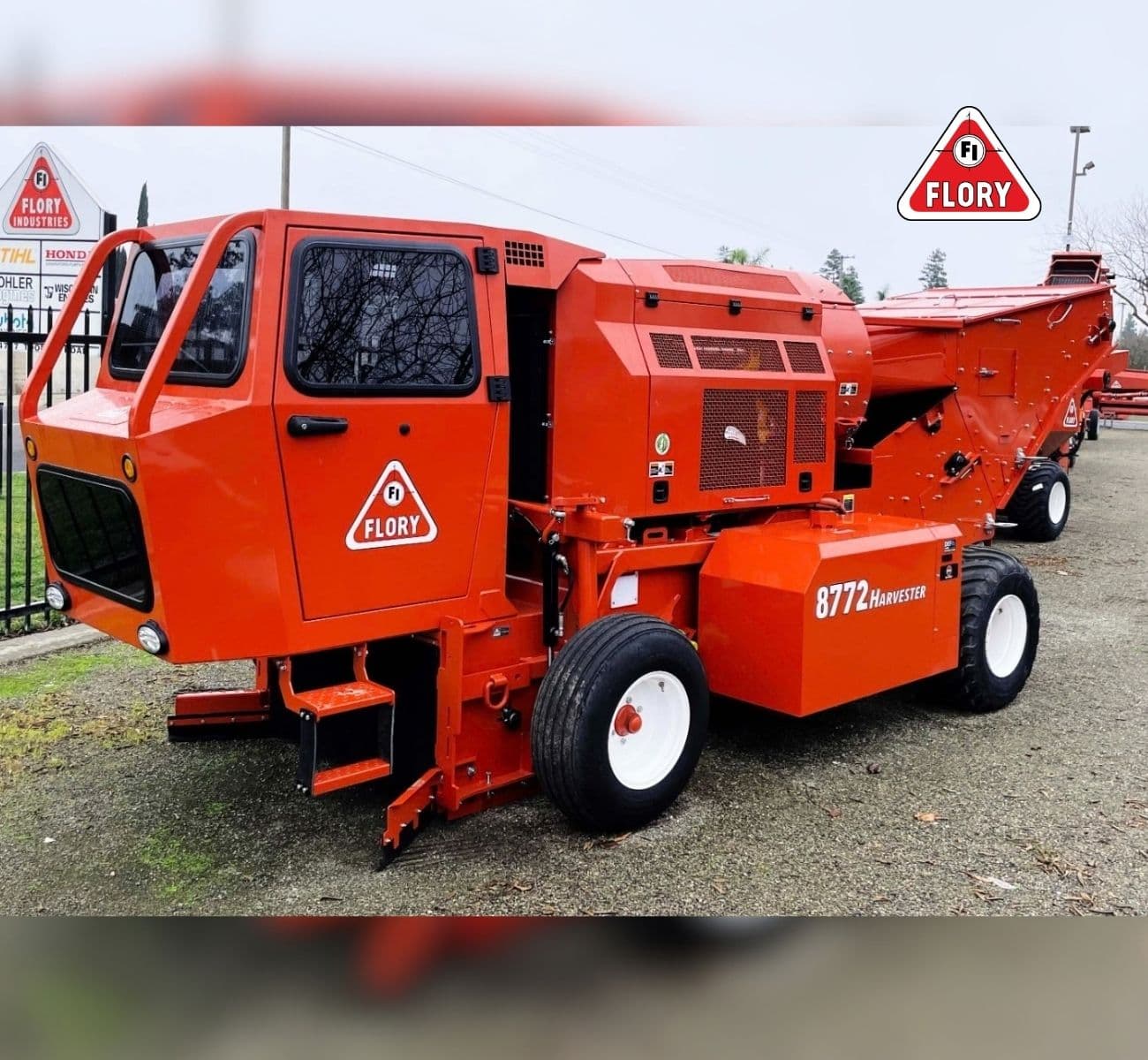
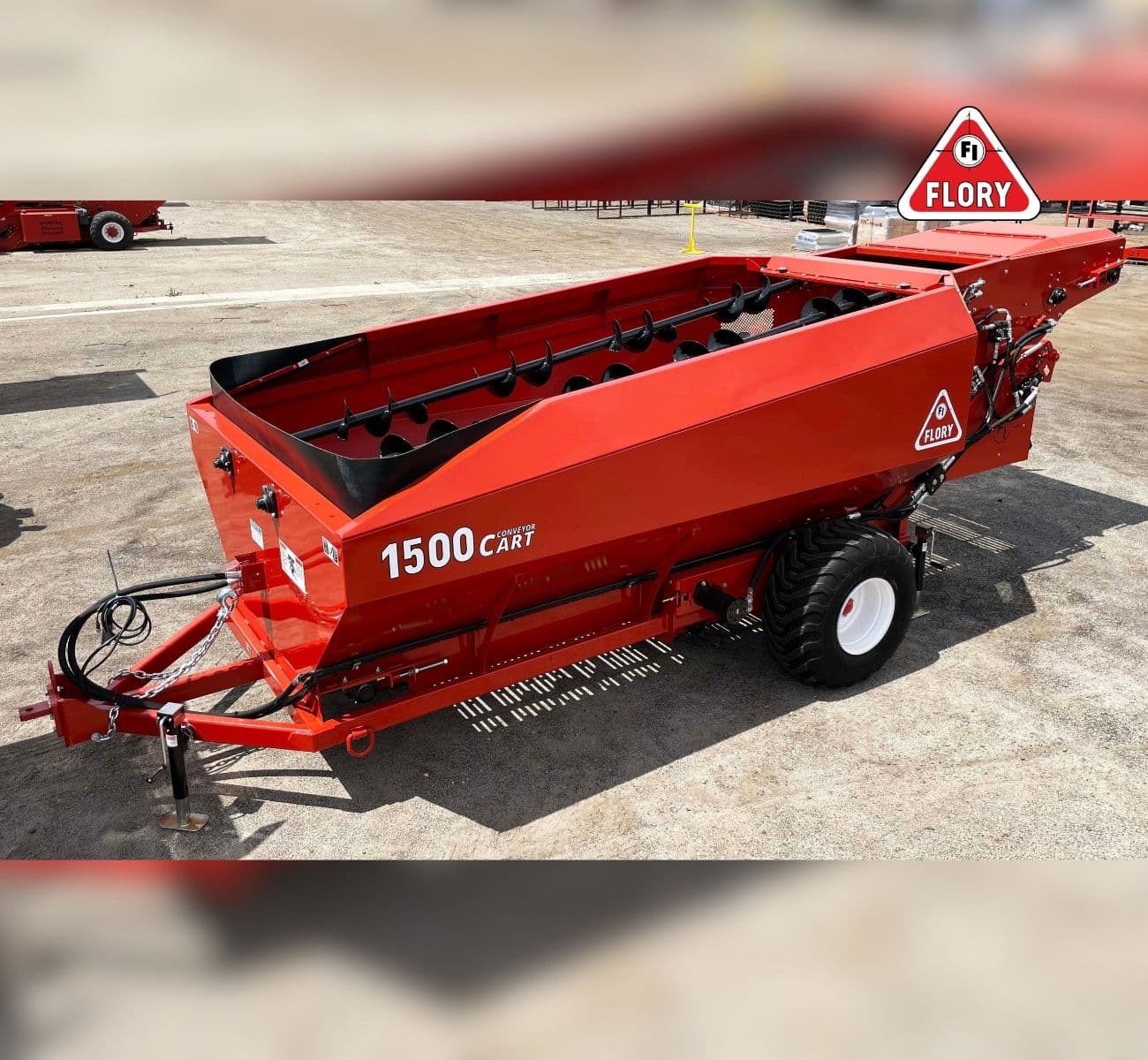
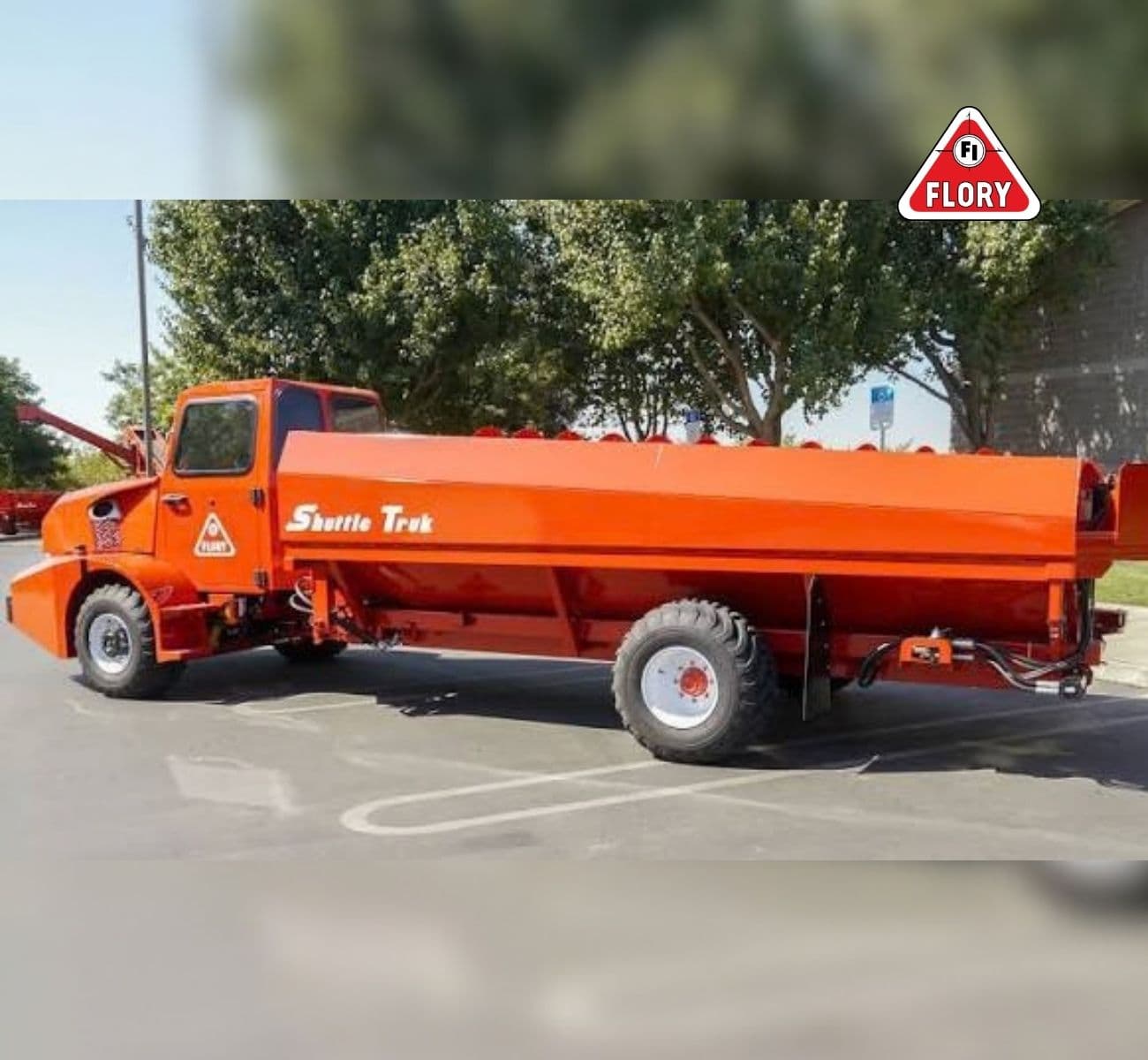
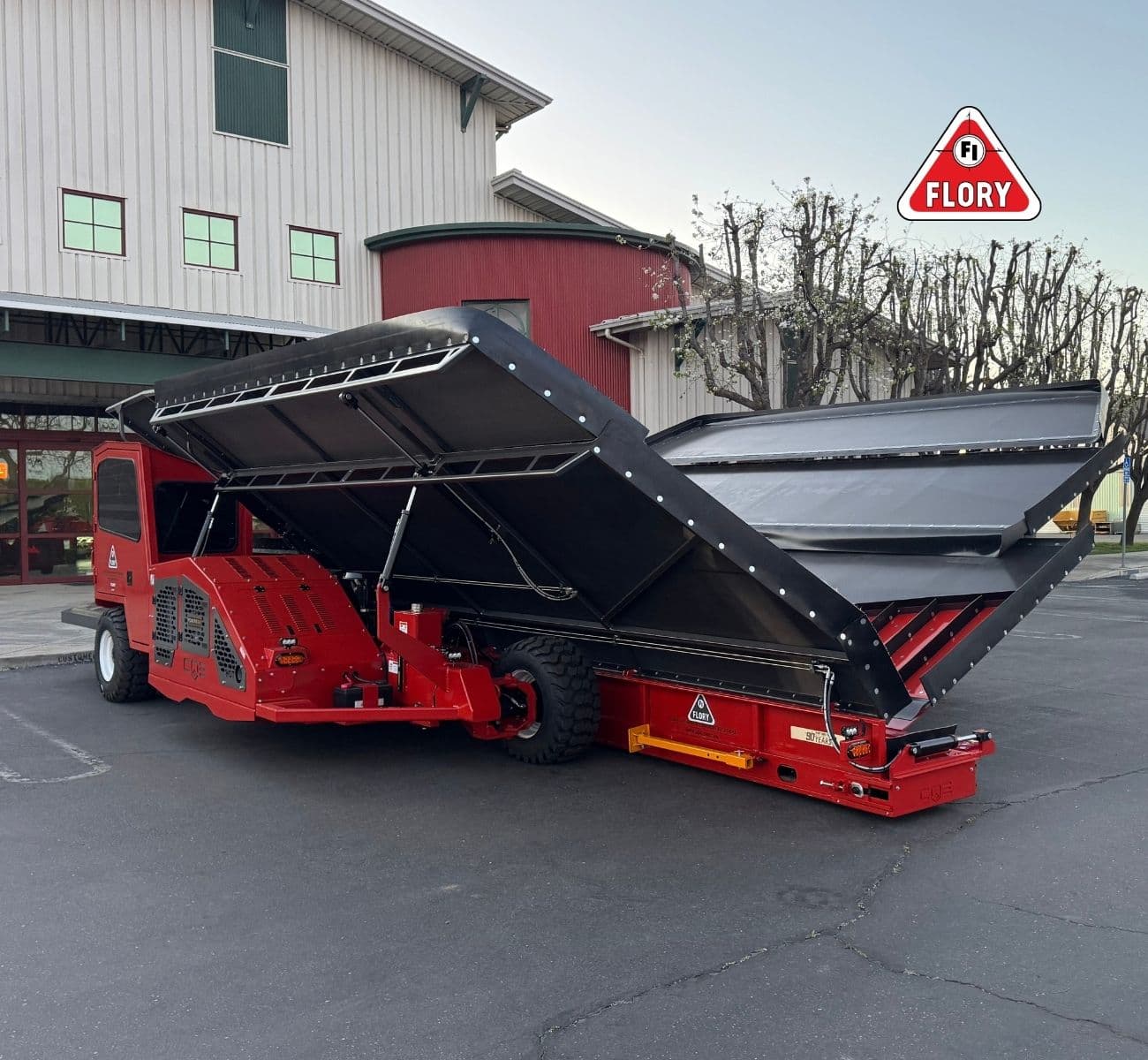
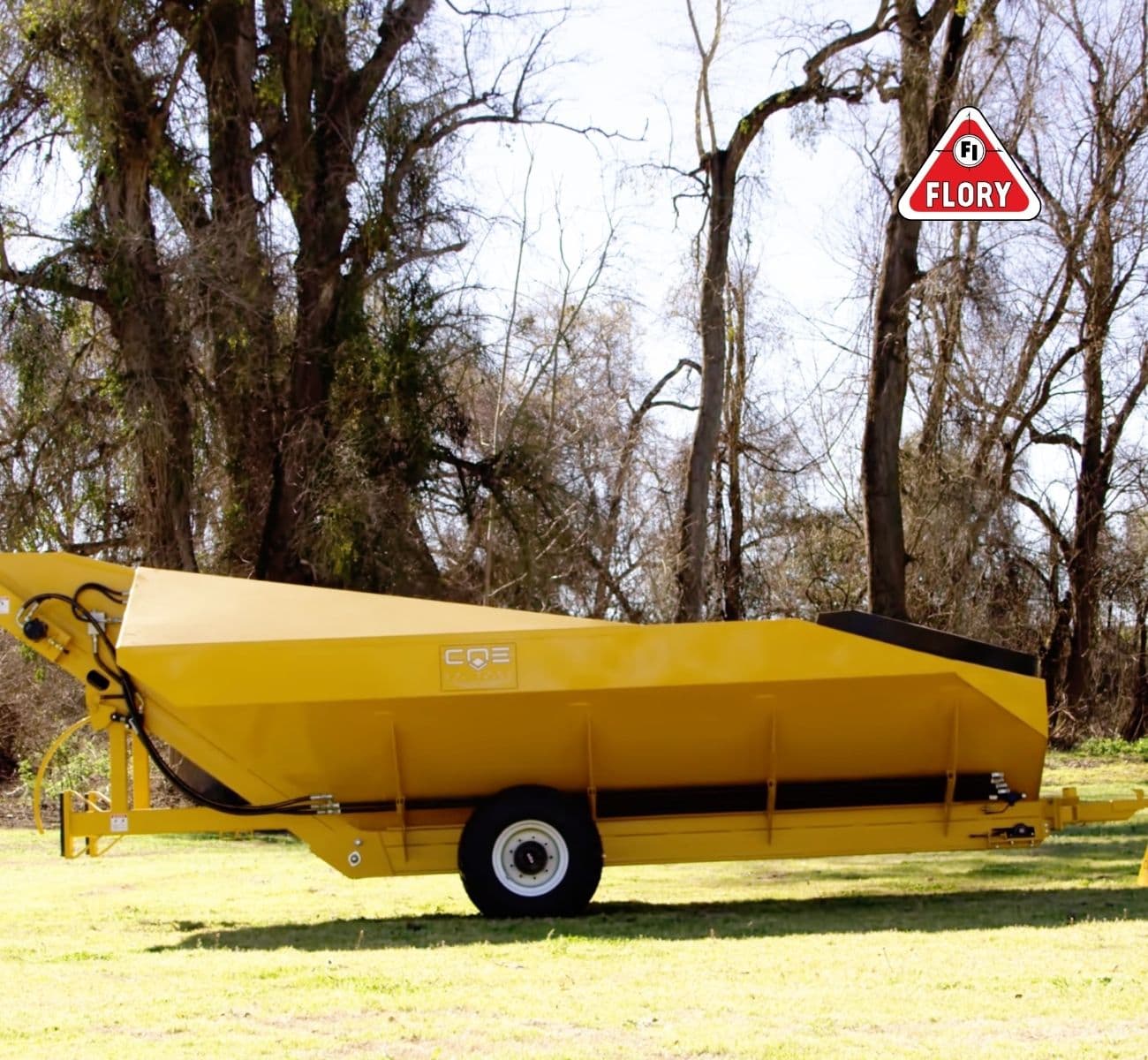
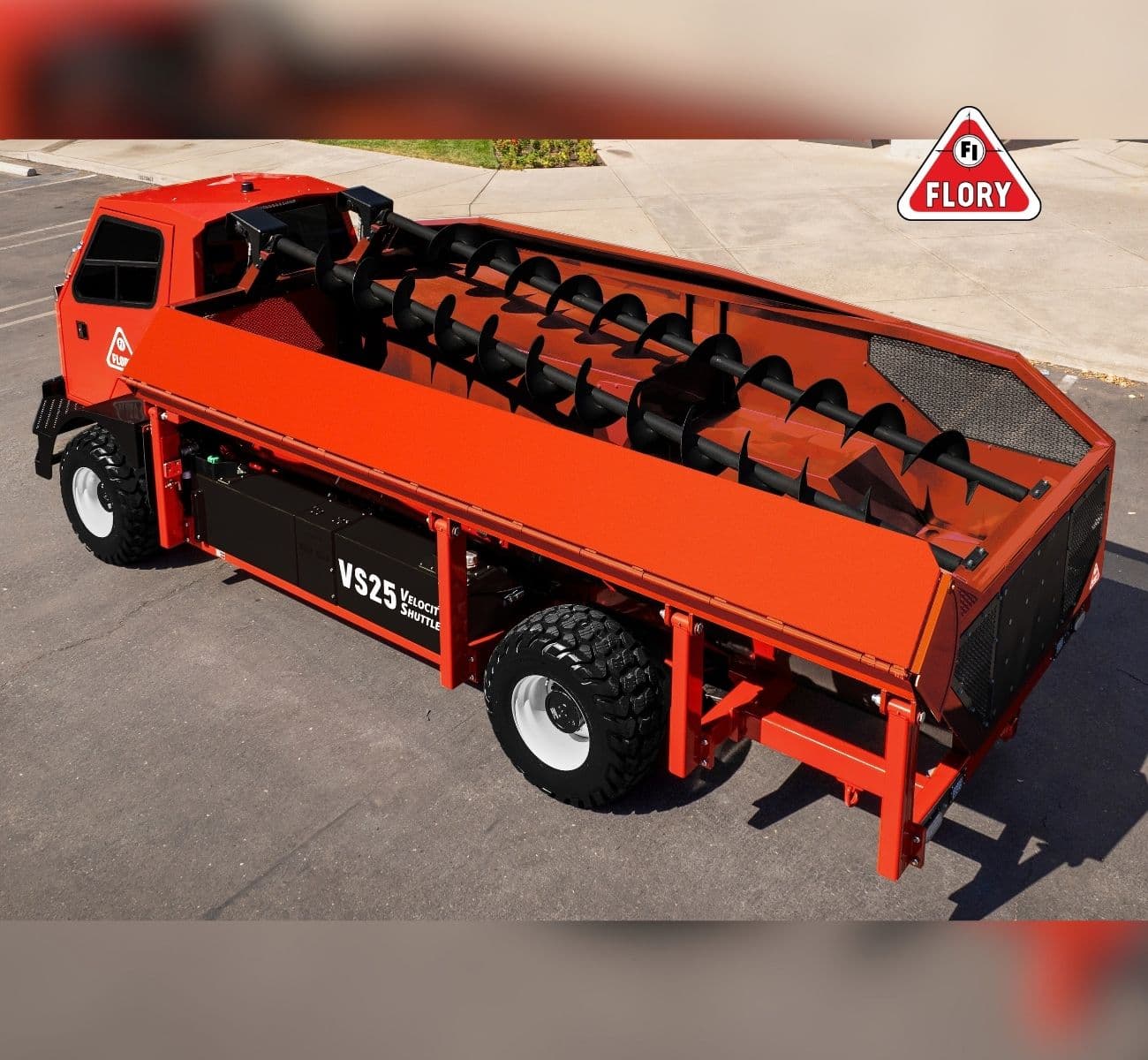
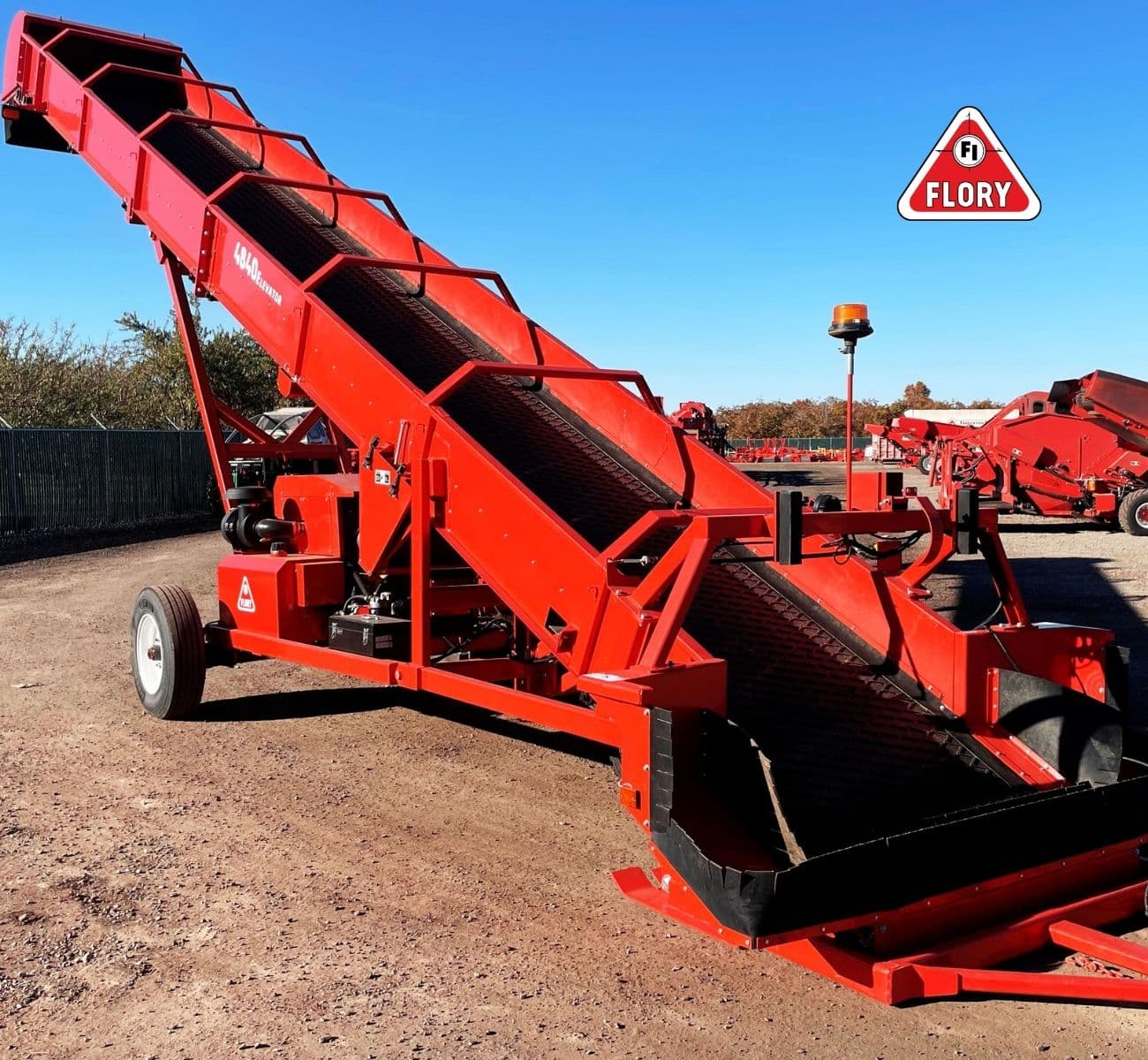
Flory harvesting machinery is available in Tunisia through OVE Europe for both systems. On the ground, the VR700 Shaker, V62 Sweeper and 8772 Harvester feed the 1500 Conveyor Cart and ST14 Shuttle. Off the ground, the Flory COE C7 Shaker and L2 Receiver catch the almonds in a frame around the trunk, the Flory COE B8 Cart and VS25 Shuttle carry them, and the 4840 Field Elevator loads trailers in both systems.
Almond Harvest Workflow (Recommended Equipment)


Practical Tips for Almond Harvesting
Time shaking by hull split: University of California guidance advises harvesting once all nuts at 1.8 to 2.4 m in the canopy have split and come off well.
Pick up promptly after shaking: University of California guidance notes that ant damage to nuts increases the longer they lie on the ground.
In west-central Tunisia, watch August forecasts: storms crossed the region in 2025, with hail in Kasserine governorate on 23 and 24 August.
If rain wets almonds on the ground, do not stockpile them wet: University of California guidance warns of mold and concealed damage.
Where almonds must stay off the ground, use catching frames: the Flory COE C7 Shaker works with the L2 Receiver.
Use shakers, frames and sweepers only in orchards planted for machines, never on scattered trees or the small jessour terraces of the south.
Get your recommended harvest setup
Enter orchard size, spacing, terrain, and target throughput—we’ll suggest a practical harvest workflow and equipment lineup.

Almond Post-Harvest Handling & Processing in Tunisia
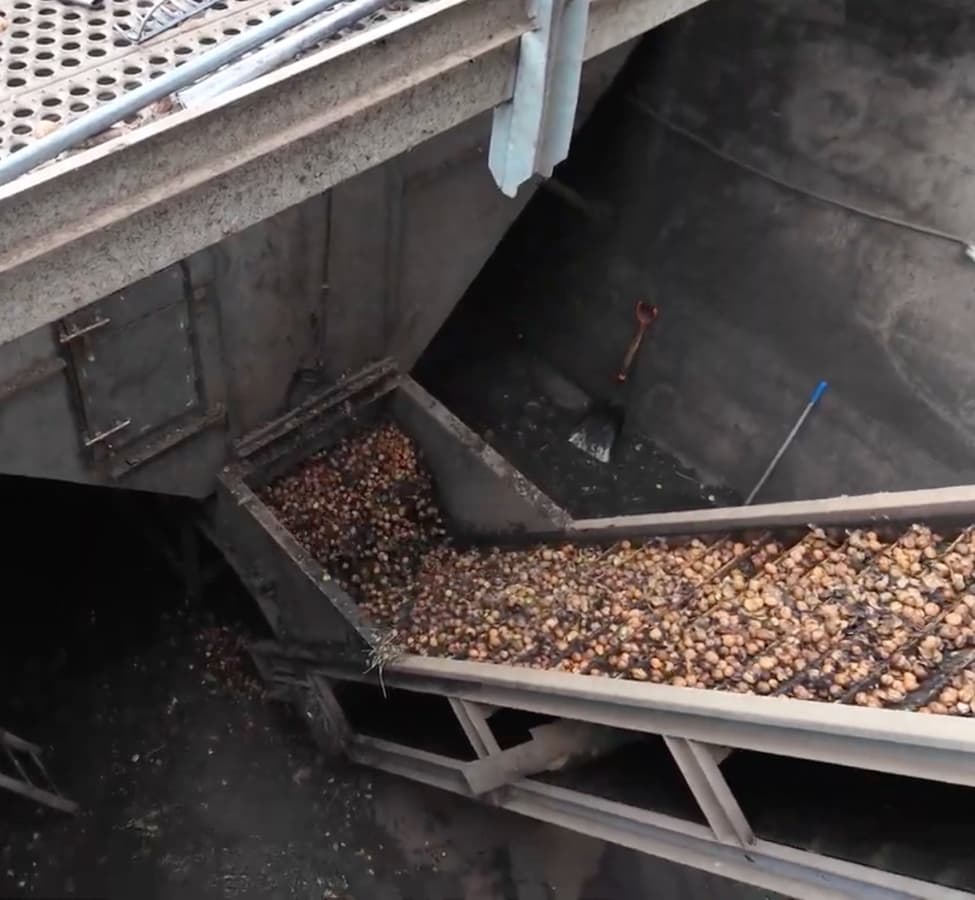
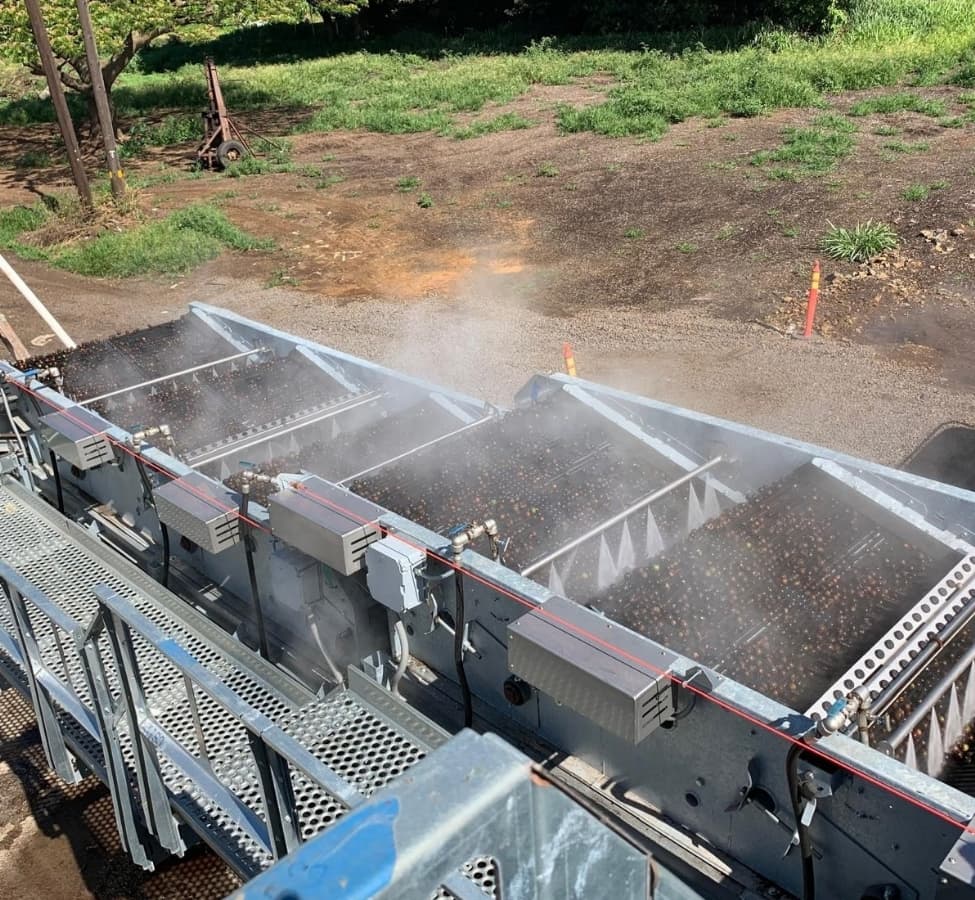
No Tunisian source found describes how almonds are hulled, dried or stored today: the Sfax heritage inventory mentions burlap sacks for the harvested nuts, almonds eaten after drying in the sun and a mortar for cracking dried almonds. The Codex code of practice for tree nuts prefers catching frames or sheets so shaken nuts do not reach the ground, and advises hulling as soon as possible after harvest. Promptly picked or frame-caught almonds are therefore hulled first and then dried in the shell before storage.
No Tunisian standard or aflatoxin limit for almonds was found. The cultivar sheets advise using Achaak within three to six months of harvest, after which the kernel changes taste and turns rancid, and give cracking yields of 32 to 49% by cultivar. Regulation (EU) 2023/915 allows 8.0 µg/kg of aflatoxin B1 and 10.0 µg/kg in total in almonds for consumers, and 12.0 and 15.0 µg/kg in almonds to be sorted first.
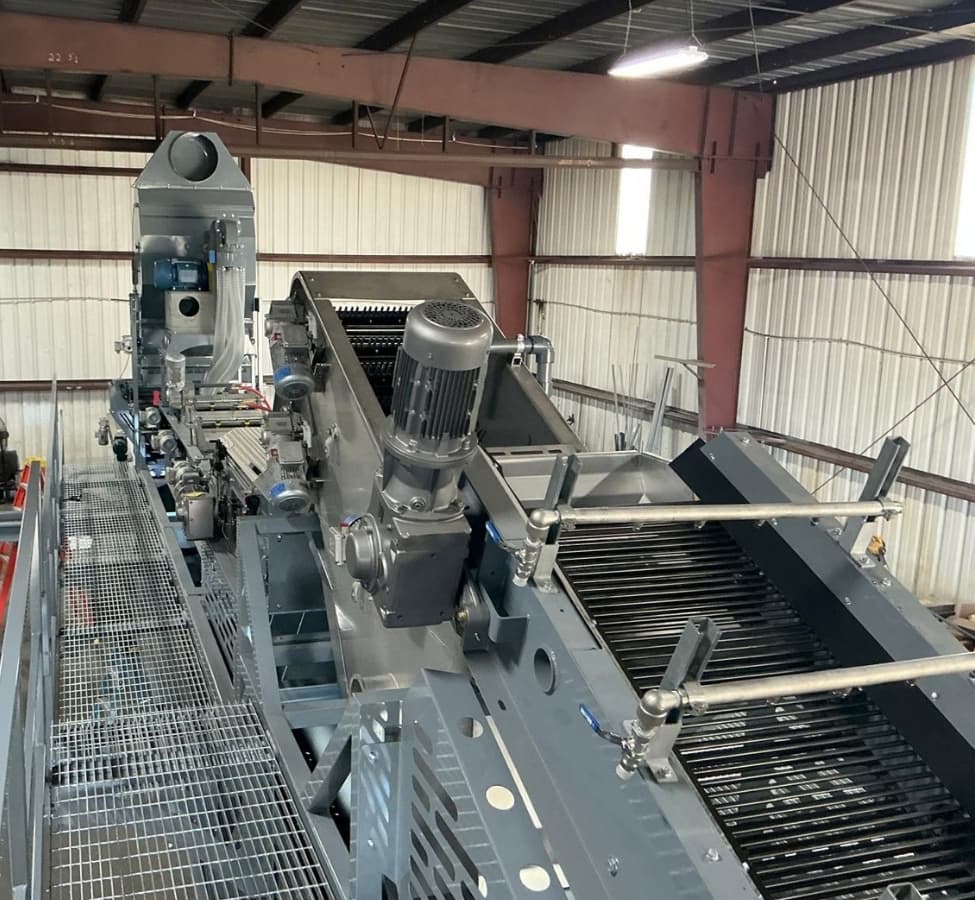
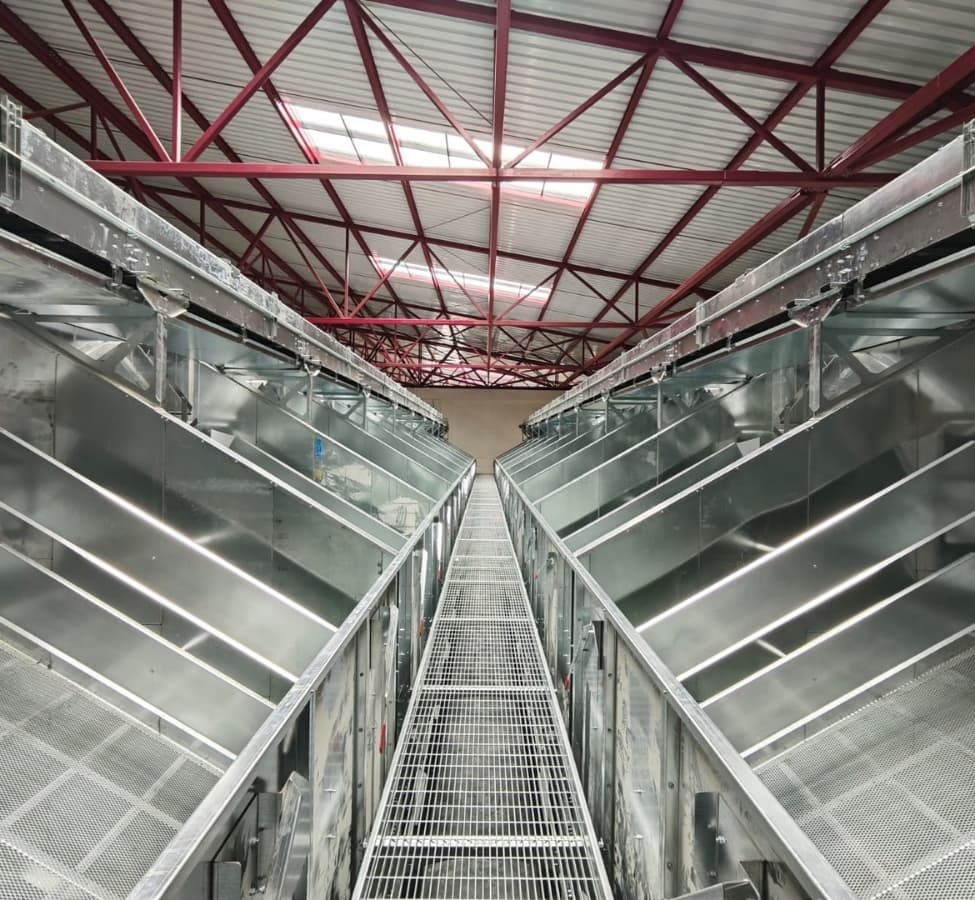
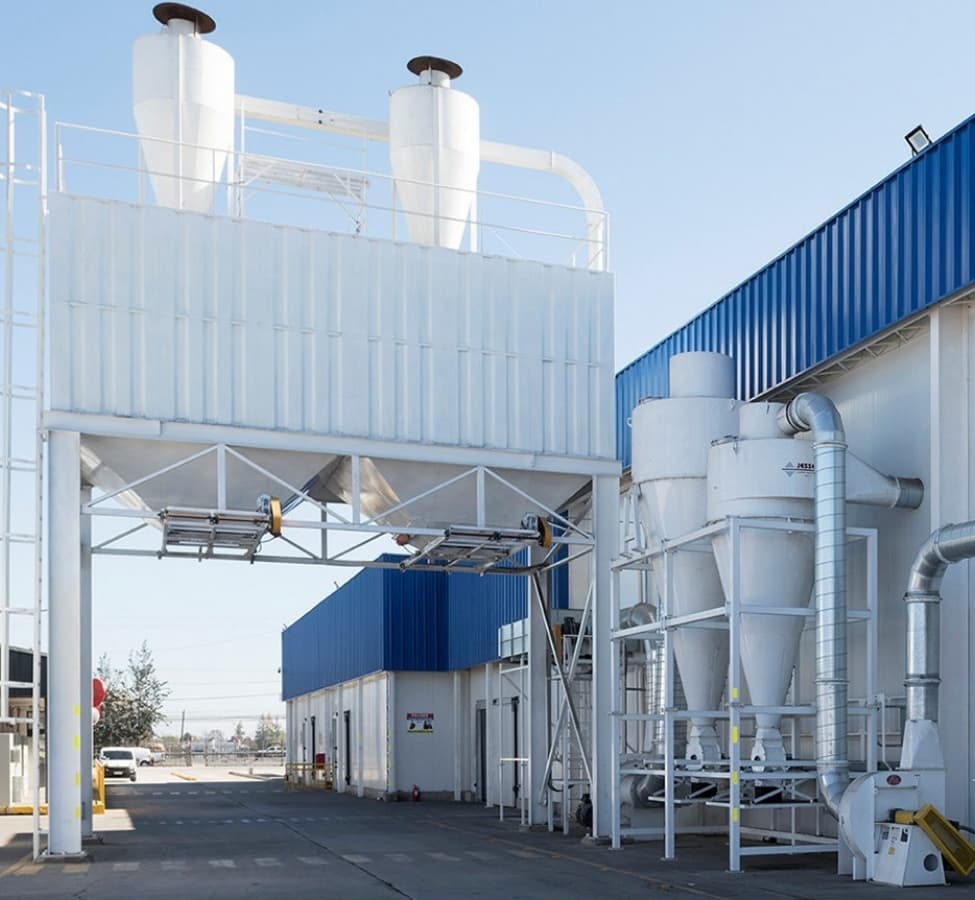
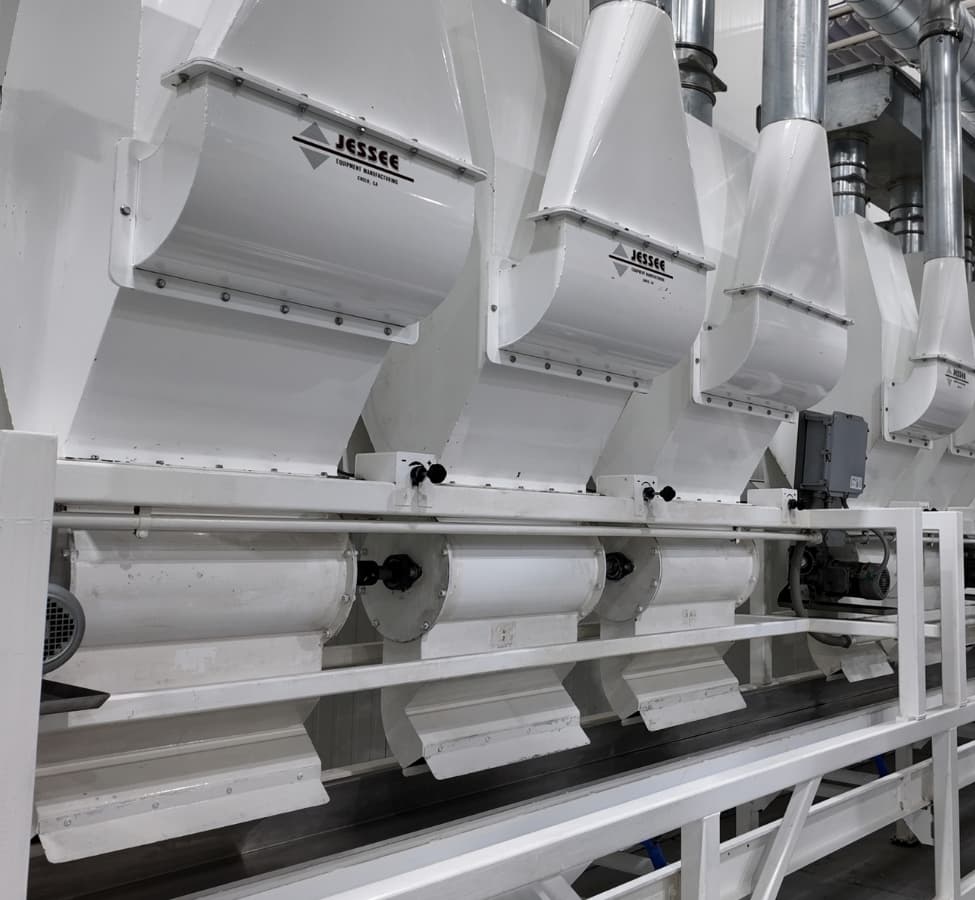
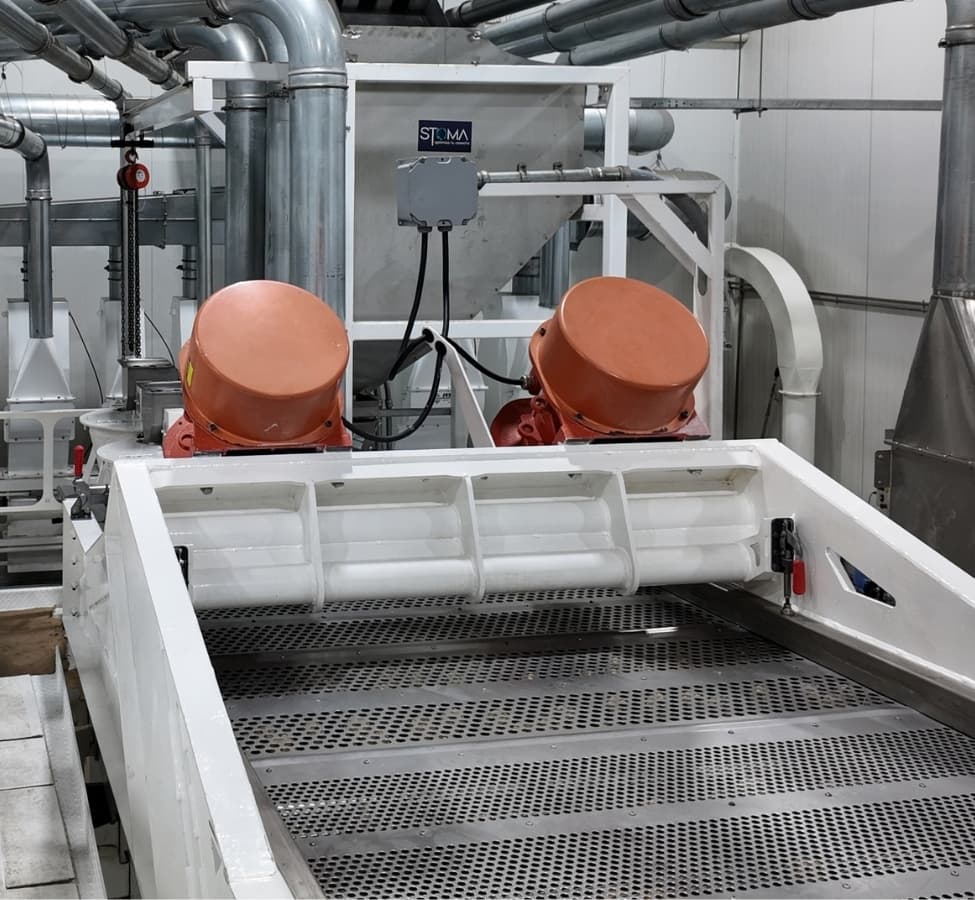
Trade is small next to production: in 2024 Tunisia recorded exports of 61.2 t of shelled almonds, all to France, and 93.6 t in shell, mostly to Libya, and imports of 269.4 t of shelled almonds, 92% of them from the United States (UN Comtrade via WITS). Jessee, whose processing lines OVE Europe supplies, builds hulling, drying, in-shell cleaning and sizing, and shelling systems; its Airlegs nut cleaner was developed for the almond industry.
For general information only. Information may become outdated and does not replace site-specific professional advice. Consult a qualified agronomist and confirm equipment suitability with OVE before acting.
Practical Tips for Almond Post-Harvest Handling & Processing
Hull promptly picked or frame-caught almonds while the hulls are fresh, then dry the nuts in the shell before storage.
Use Achaak kernels within three to six months of harvest: the cultivar sheets warn that they then change taste and turn rancid.
Do not send rain-wet almonds straight to the huller: University of California guidance notes that wet nuts will not hull cleanly.
Test lots for aflatoxins before export to the EU: Regulation (EU) 2023/915 allows 10.0 µg/kg in total in almonds for consumers.
Keep each lot separate by cultivar and orchard block, and store dried almonds in a dry, clean place.
Plan sales mainly for the home market: Tunisia's recorded in-shell exports were small, 2,199.7 t in 2022 and 93.6 t in 2024, mostly to Libya.
Recommended Post-Harvest Handling & Processing Stages
Plan your post-harvest line
Estimate tons/day, cleaning & drying capacity, storage needs, and cost/kg—then build your equipment plan in phases.