






Walnut Orchard Establishment in Türkiye
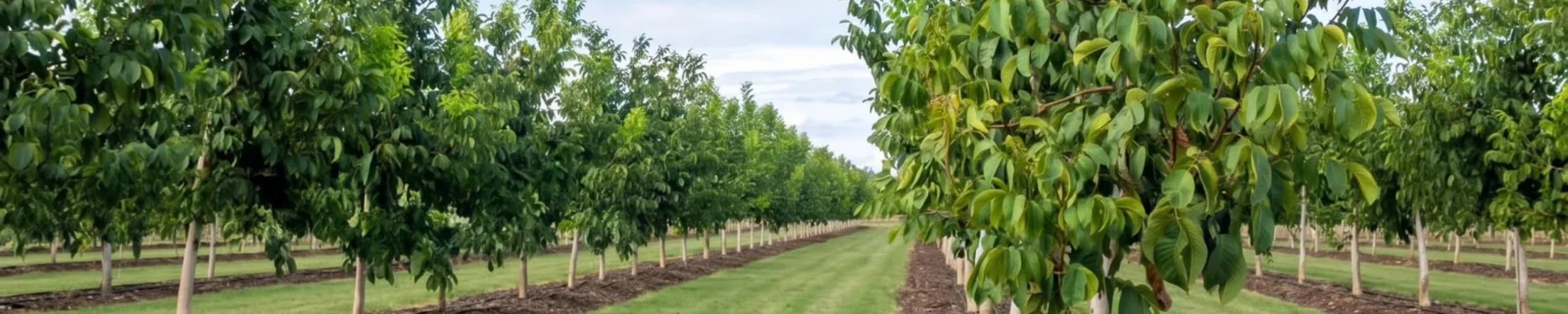
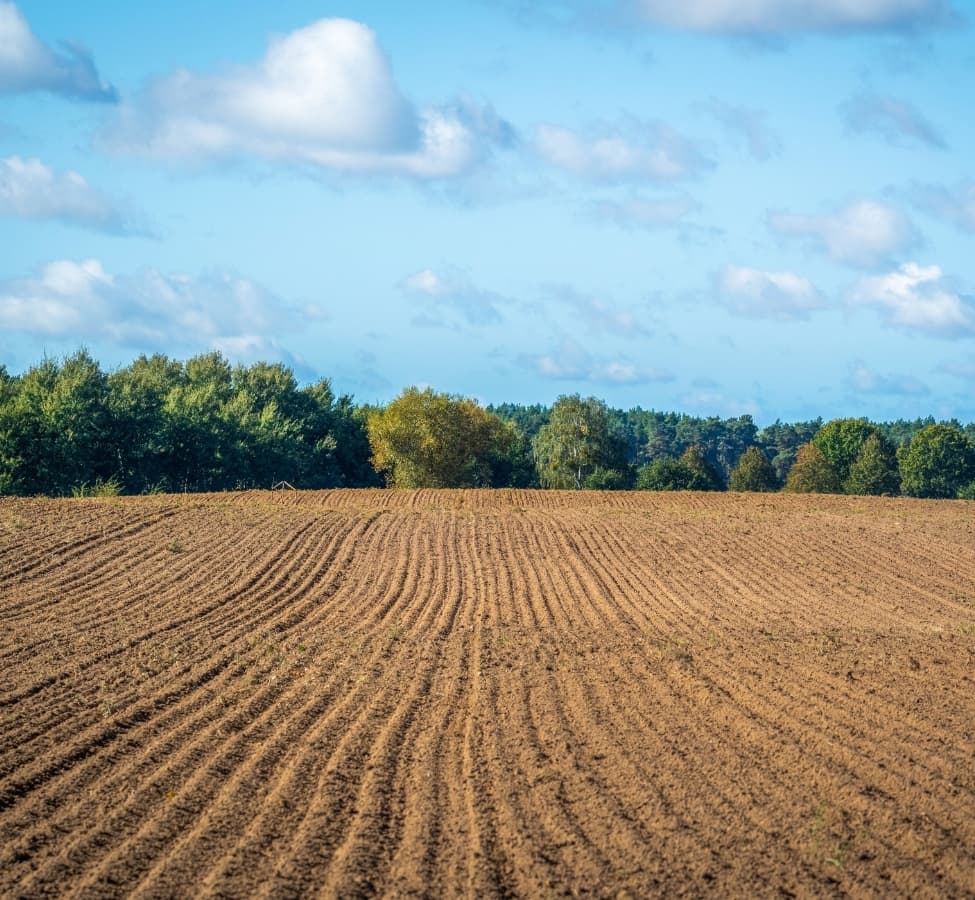
Two walnut systems exist side by side. In 2013 the Atatürk Horticultural Central Research Institute at Yalova described most of the tree stock as seed-grown, and a 2017 paper traced Turkish walnut production to trees, mostly seed-grown, scattered along streams and in vineyards and gardens. Grafted block orchards are spreading fast: TEPGE puts the rise in walnut orchard area at 156% from 2014 to 2024. Denizli had the largest area in 2024, and Denizli, Bursa and Kahramanmaraş the largest crops.
Late spring frost is the most important limit on walnut production, the Yalova institute says: flowers can be damaged at -1 °C. Frosts hit Malatya in April 2014, Kaman in 2014 to 2016 and Oğuzlar (Çorum) on 11 April 2025. The Ministry's 2020 orchard guide advises planting on slopes more than about 15 m above the foot of the slope, so cold night air drains away, and the Yalova institute recommends Gültekin-1, Yavuz-1 and Şebin for late-frost areas.
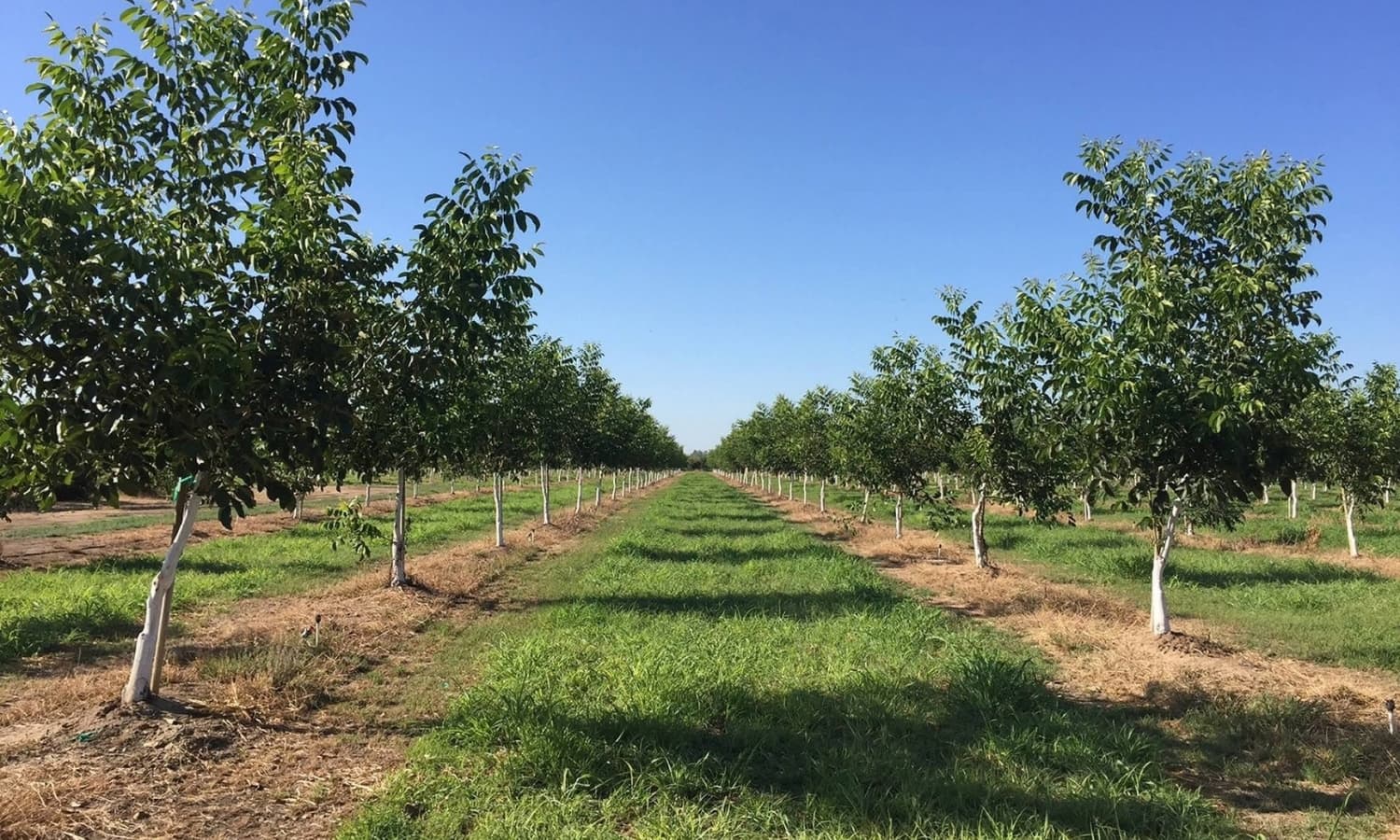
Turkish guides mostly give spacings from 7 x 4 m to 10 x 10 m, closer for lateral-bearing cultivars and wider for terminal bearers, with pollinizers no more than 50 to 90 m away. For machine harvest, the Yalova institute asks for spacing that allows it and a trunk of at least 1 m, and the Ministry guide puts the first main branch 1.5 to 2.5 m above the ground. Grafted trees start bearing at about 4 to 5 years (Gaziantep directorate).

Practical Tips for Walnut Orchard Establishment
Where late frosts occur, plant cultivars the Yalova institute recommends for such sites: Gültekin-1, Yavuz-1 and Şebin.
On slopes, plant more than about 15 m above the foot of the slope and let cold night air drain away, as the Ministry's 2020 guide advises.
Match cultivars to winter chill: at Yalova (2011 to 2013), Yalova-1 and Yalova-4 needed 879 hours, while Chandler, Pedro and Franquette needed 1,241.
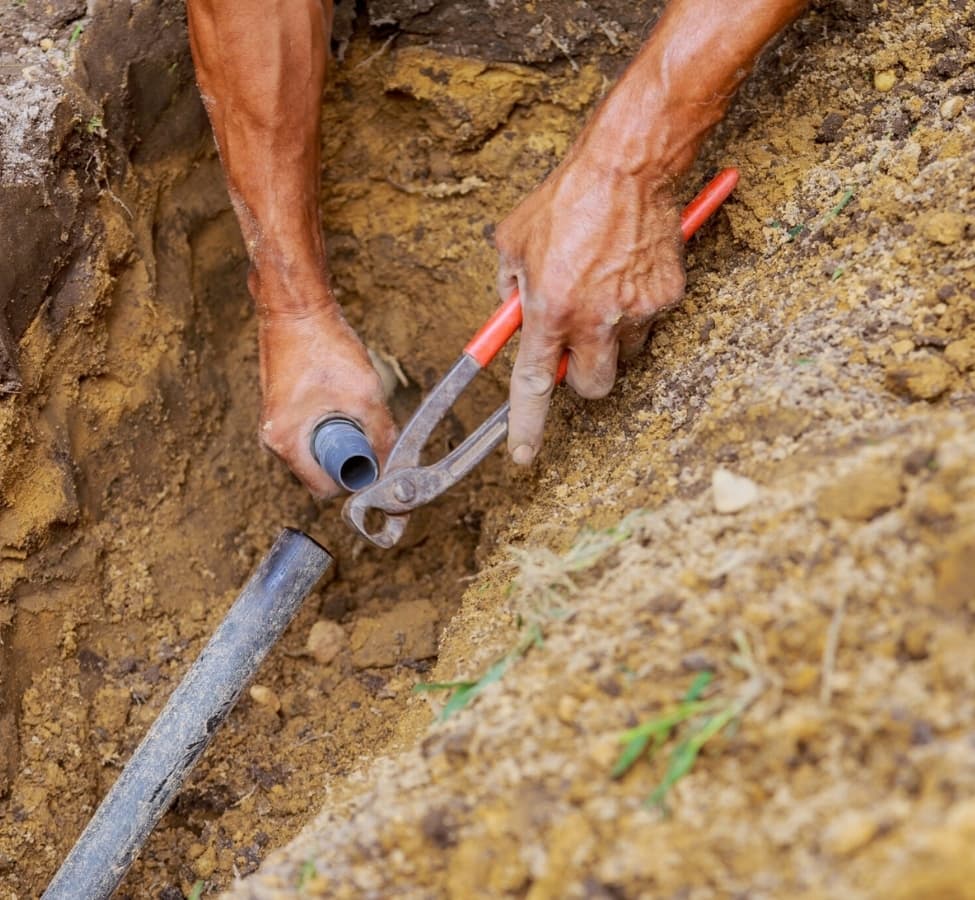
Buy labeled saplings, blue-label certified or yellow-label standard, and keep the graft union at least 15 cm above the soil.
Keep pollinizers within about 50 to 70 m of the main cultivar, as the Alata Horticultural Research Institute advises, and mind the prevailing wind.
Train a trunk of at least 1 m and choose spacing that leaves room for machines, as the Yalova institute advises for mechanized harvest.
Recommended Establishment Stages




Walnut Orchard Care & Maintenance in Türkiye
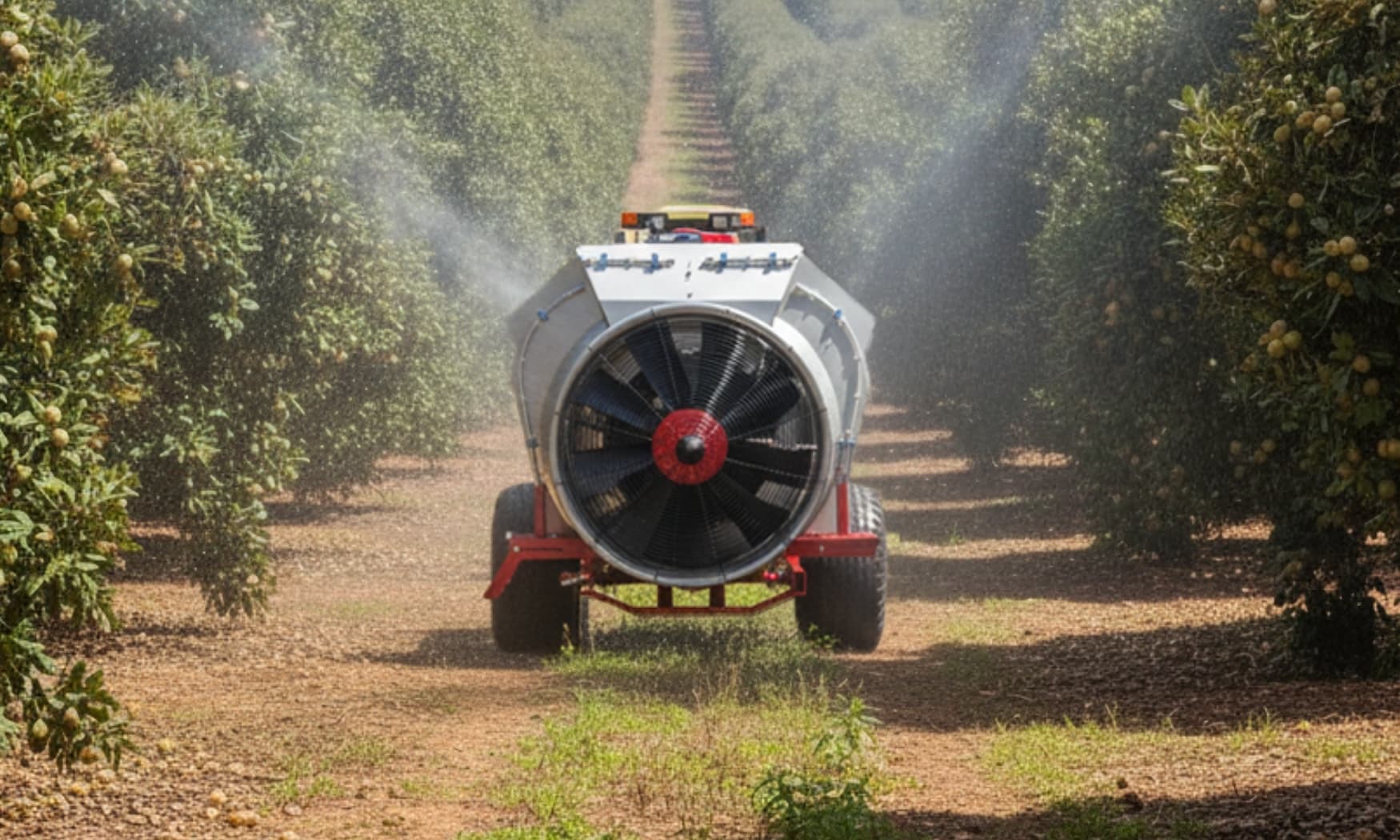
A commercial walnut orchard must be irrigated, preferably by drip (Alata Horticultural Research Institute, 2022). Yalova guidance puts the yearly water need of a full-bearing orchard at about 1,200 to 1,350 mm, part of it from rain, with drip or mini-sprinklers every 4 to 8 days; no Turkish walnut irrigation trial was found, so these figures are guidance. Heat above 38 °C can cause sunburn and kernel shrivel (Alata, 2022).
The Ministry's 2018 walnut integrated pest management instruction names anthracnose and codling moth as the main problems and reports bacterial blight in all walnut areas, above all the Marmara region. It counts two codling moth generations on walnut, while a Kahramanmaraş study found three (2012 to 2013), and it sets control at a trap catch of 6 moths in total over two consecutive weeks in the overwintering generation, 3 a week in summer generations, or 2% infested fruit in 500 fruits from at least 20 trees.
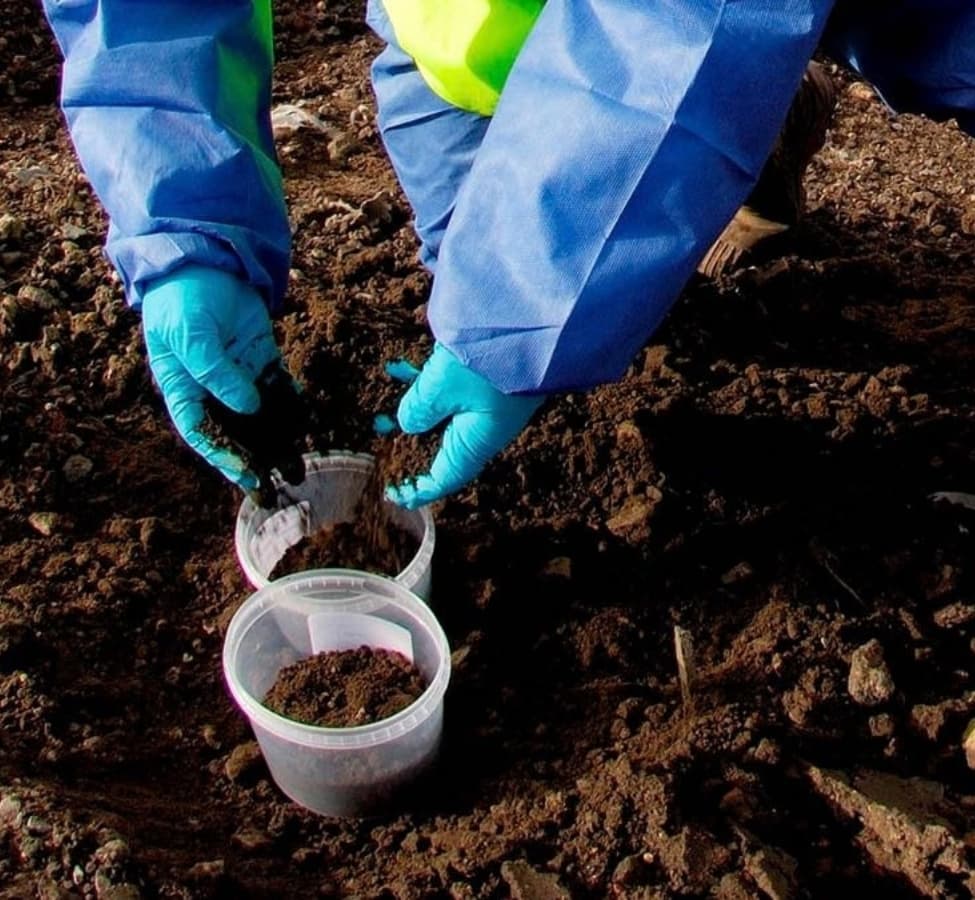
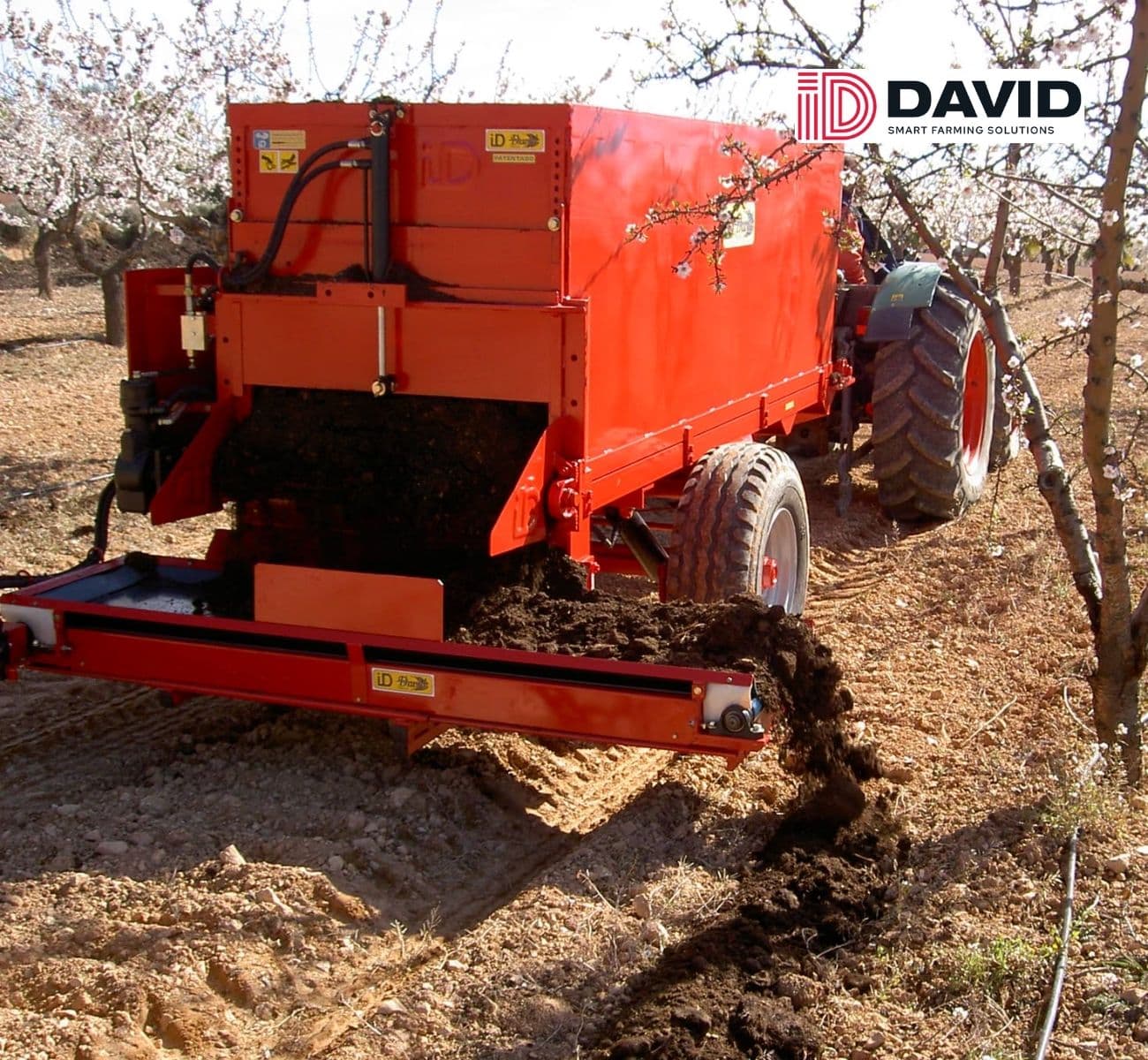
The instruction links sunburn mainly to wrong pruning that exposes nuts at ripening. Against blight it asks for pruning that lets air through the canopy and no excess nitrogen, against anthracnose for fallen leaves to be removed in autumn, and it calls for leaf sampling every July. Walnut husk fly is not covered by the instruction, and EPPO's distribution table does not list Türkiye.
Recommended Orchard Care & Maintenance Stages


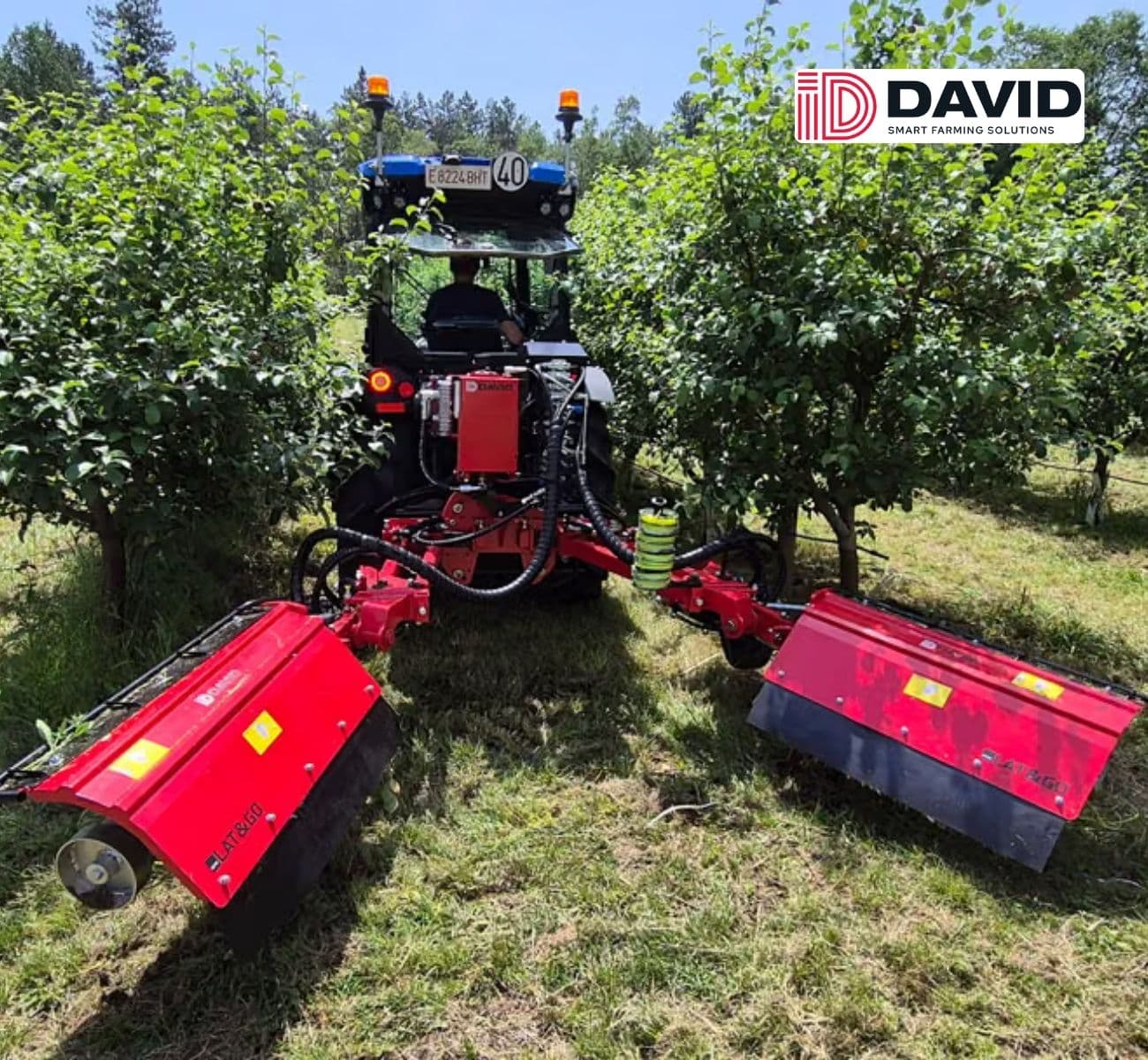

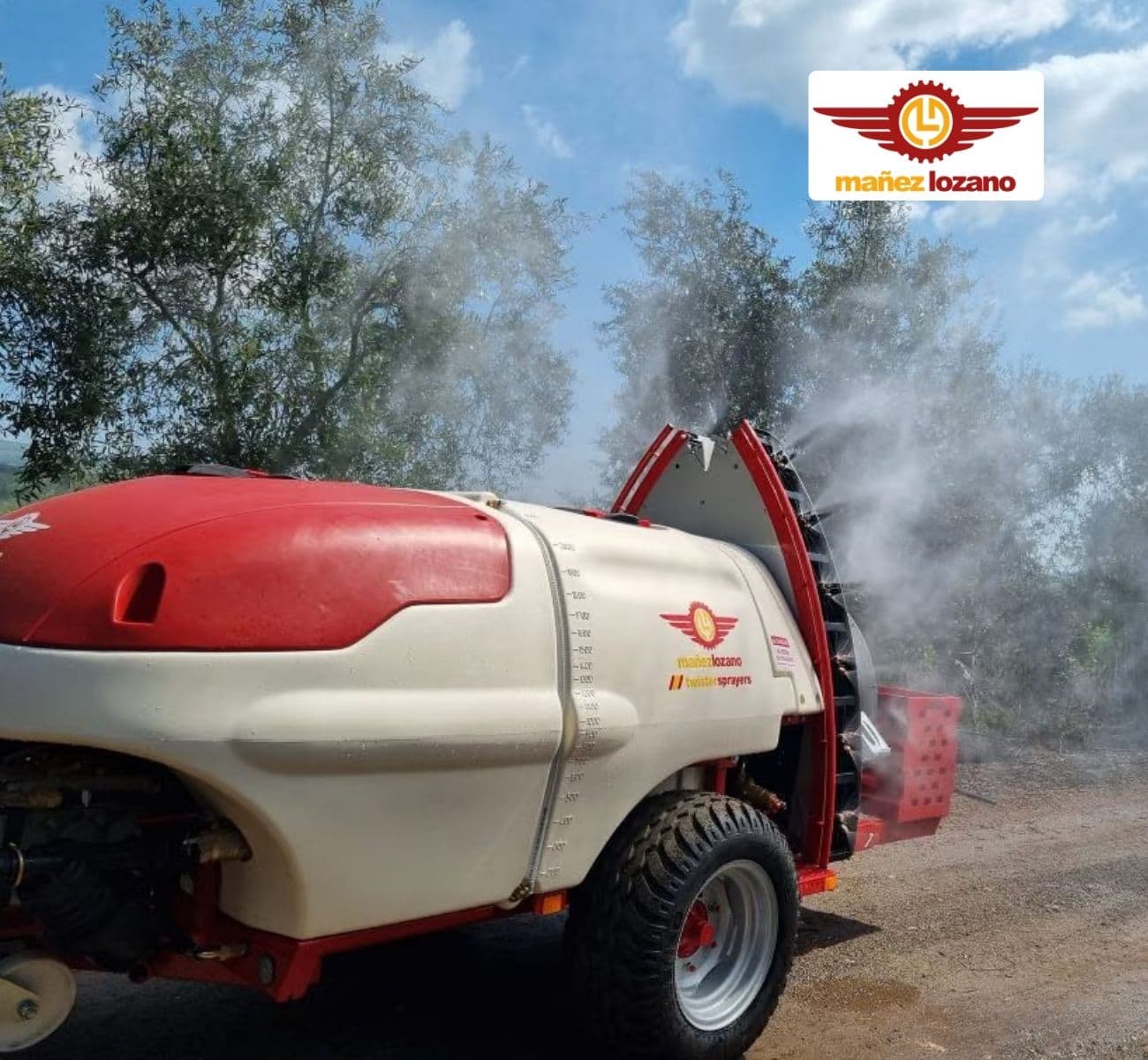
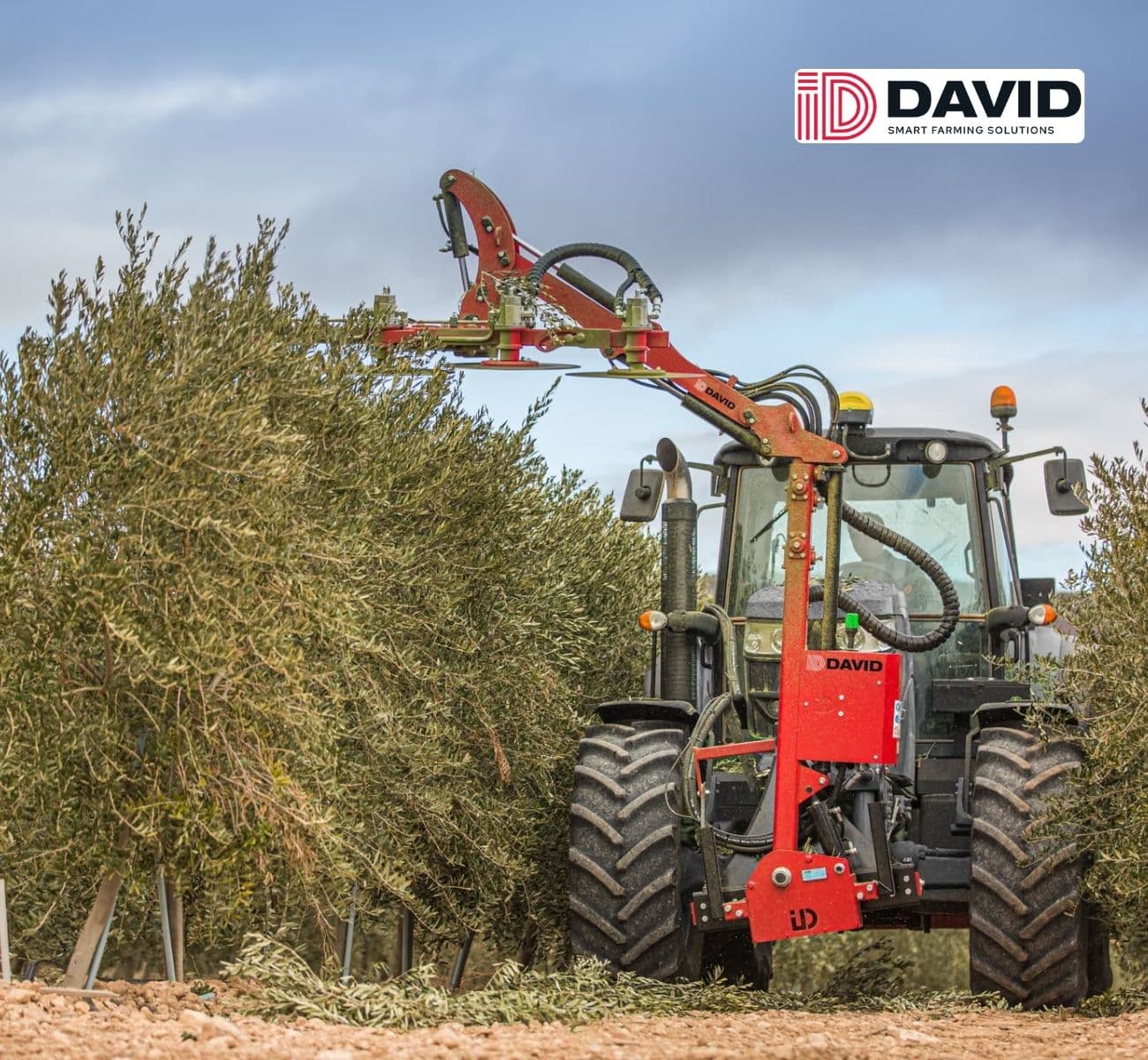
Practical Tips for Walnut Orchard Care & Maintenance
Irrigate by drip or mini-sprinkler and schedule it with tensiometers, as the Ministry's 2020 orchard guide suggests.
Hang codling moth traps on the south side of trees, 1.5 to 2 m high, and decide on control at the official thresholds.
Check 500 fruits from at least 20 trees, 25 from different sides of each, and act at 2% infested fruit (Ministry, 2018).
Collect and destroy infested fallen nuts every week, and keep packing and storage sheds away from walnut orchards (Ministry, 2018).
Rake up fallen leaves in autumn to cut anthracnose infection, and prune for air flow against blight, as the official instruction advises.
Sample leaves every July for nutrient analysis and avoid excess nitrogen, which the instruction links to blight and to several pests.

Walnut Harvesting in Türkiye
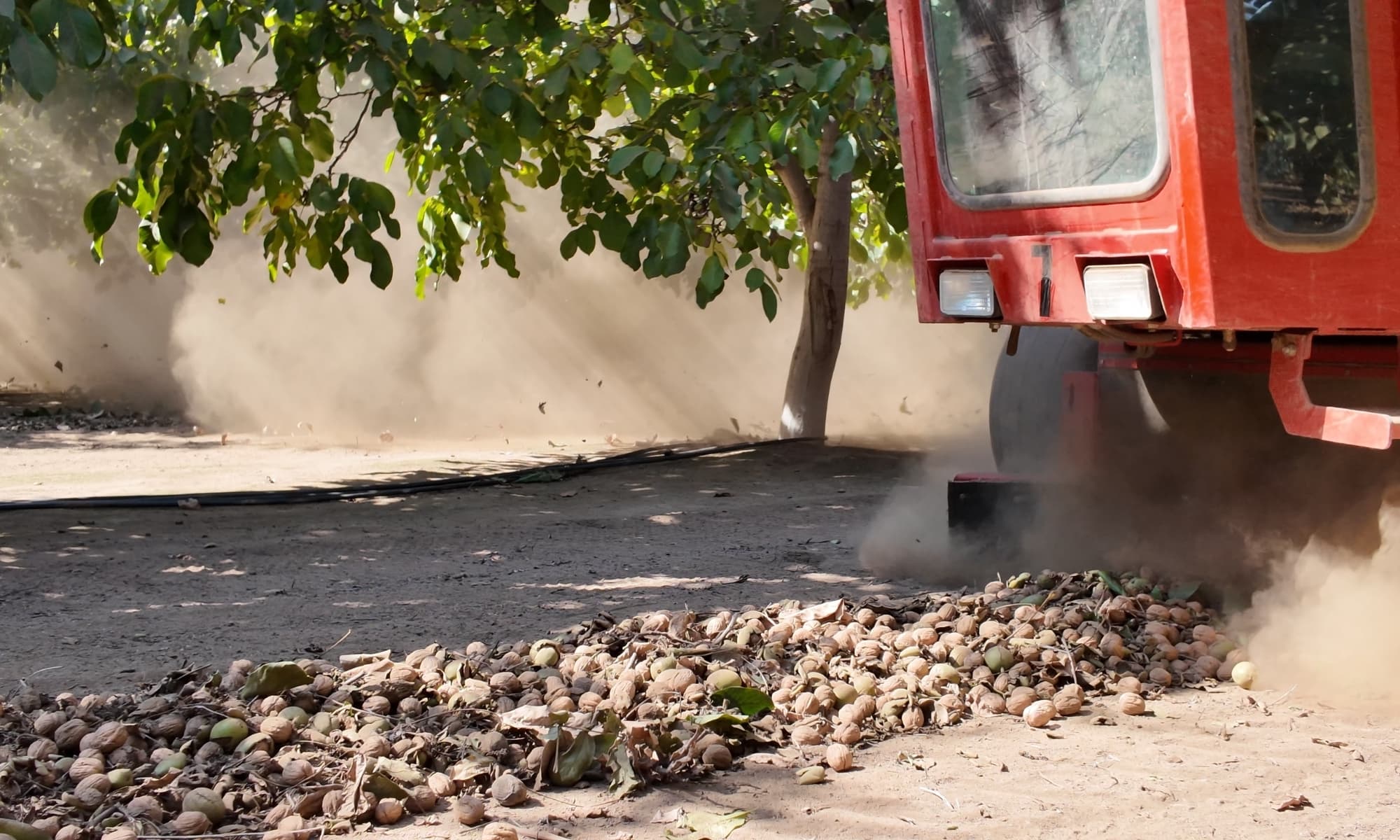
Walnuts in Türkiye have traditionally been knocked down with poles and gathered by hand. Yalova, Alata and Gaziantep guidance advises against poles, and the Yalova institute warns that they break the shoots that carry the next crop. In Denizli's modern orchards, the provincial directorate said in 2024, machines make harvesting easier and faster. Harvest generally runs from mid-September to late October, with Maraş 18 in the first half of September, Fernor in September and Chandler in late September or October (Ministry guide, 2020).
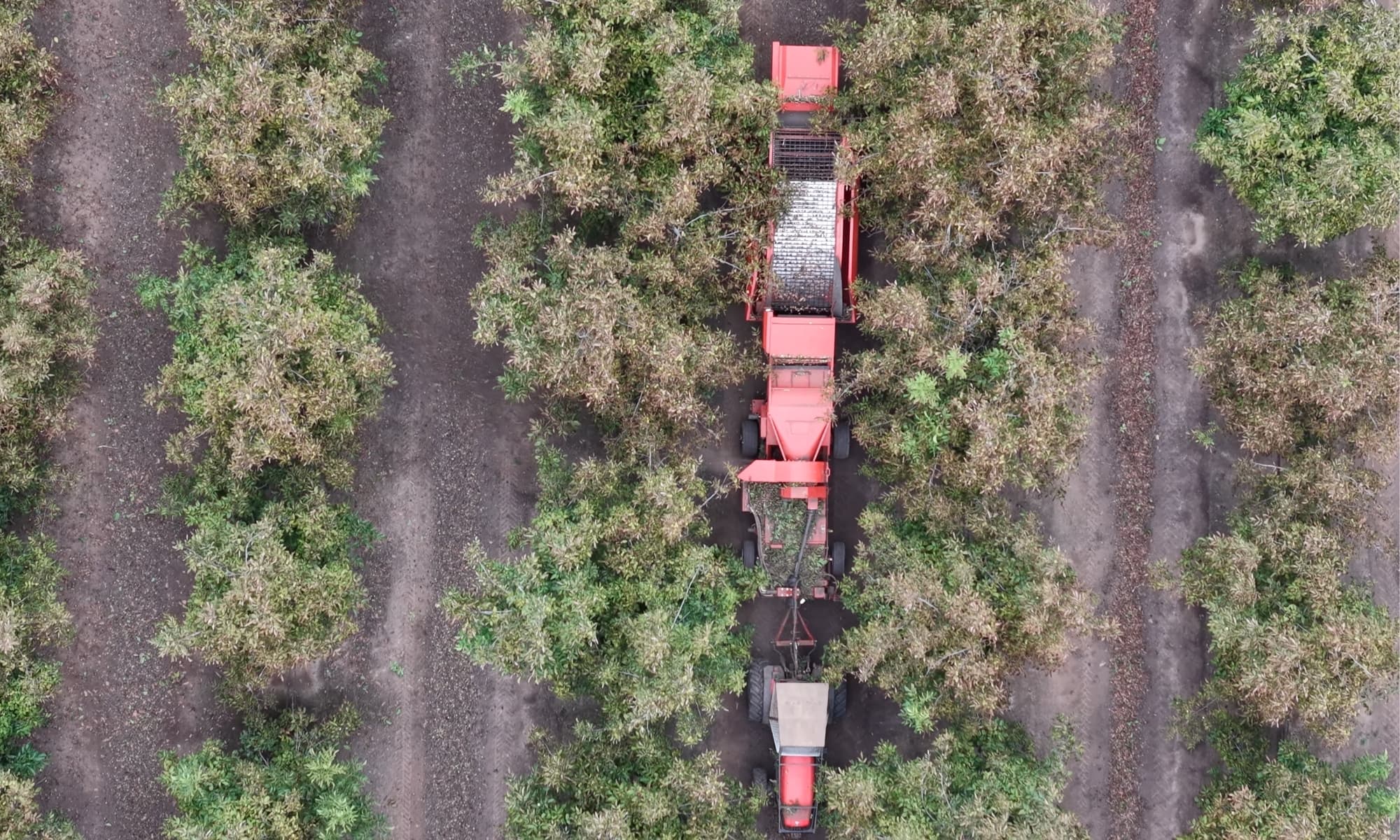
The Ministry guide marks kernel maturity by the packing tissue between kernel and shell beginning to brown, and the Yalova institute warns that waiting for split hulls, as traditional harvest does, means harvesting 2 to 3 weeks late for kernel quality. The Ministry guide also warns that nuts left long on the ground darken and suffer heat damage, worms and mold. In block orchards laid out for machines, a mechanized line lets each block be shaken and picked up on time, so nuts spend less time on the ground.
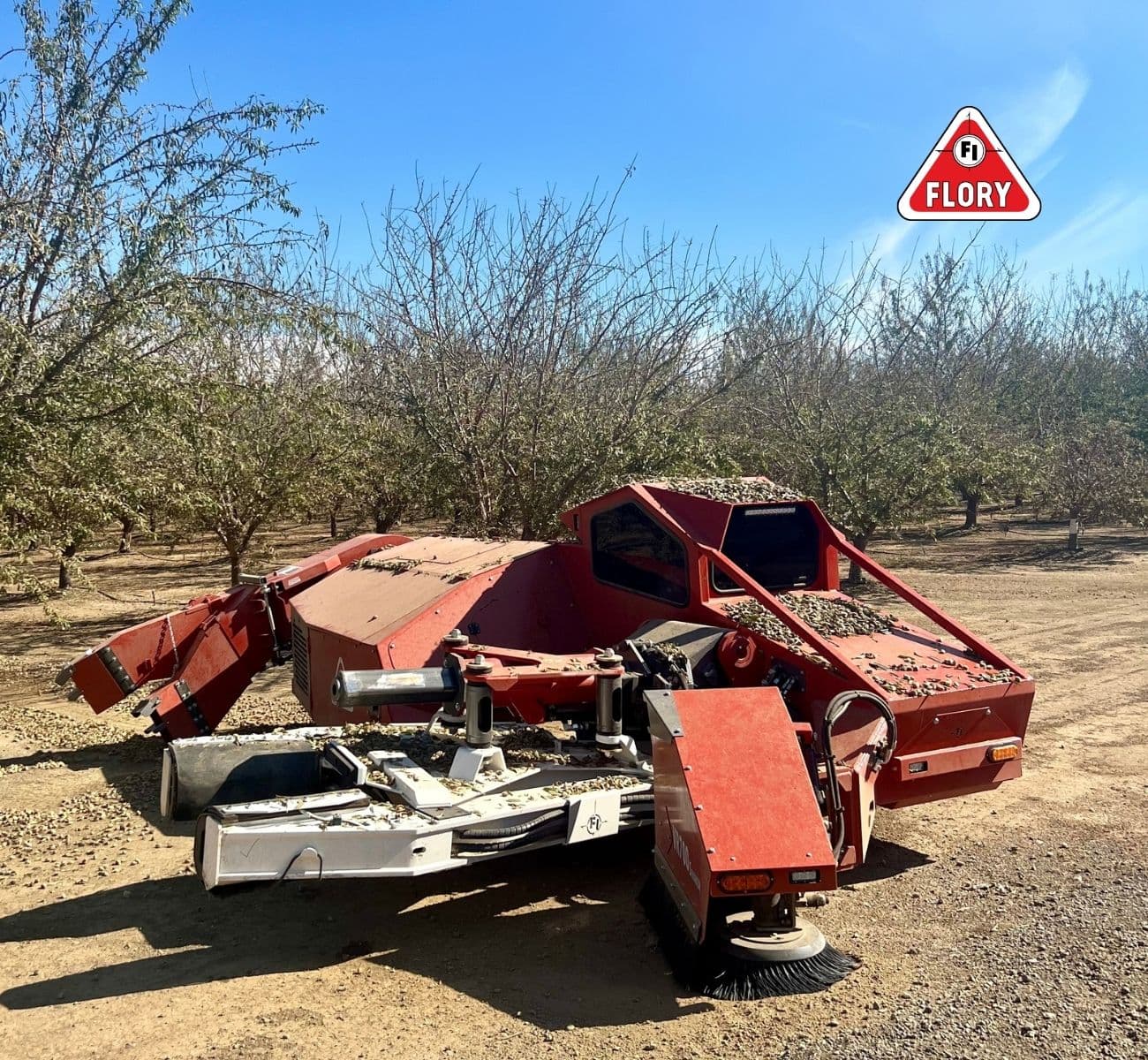
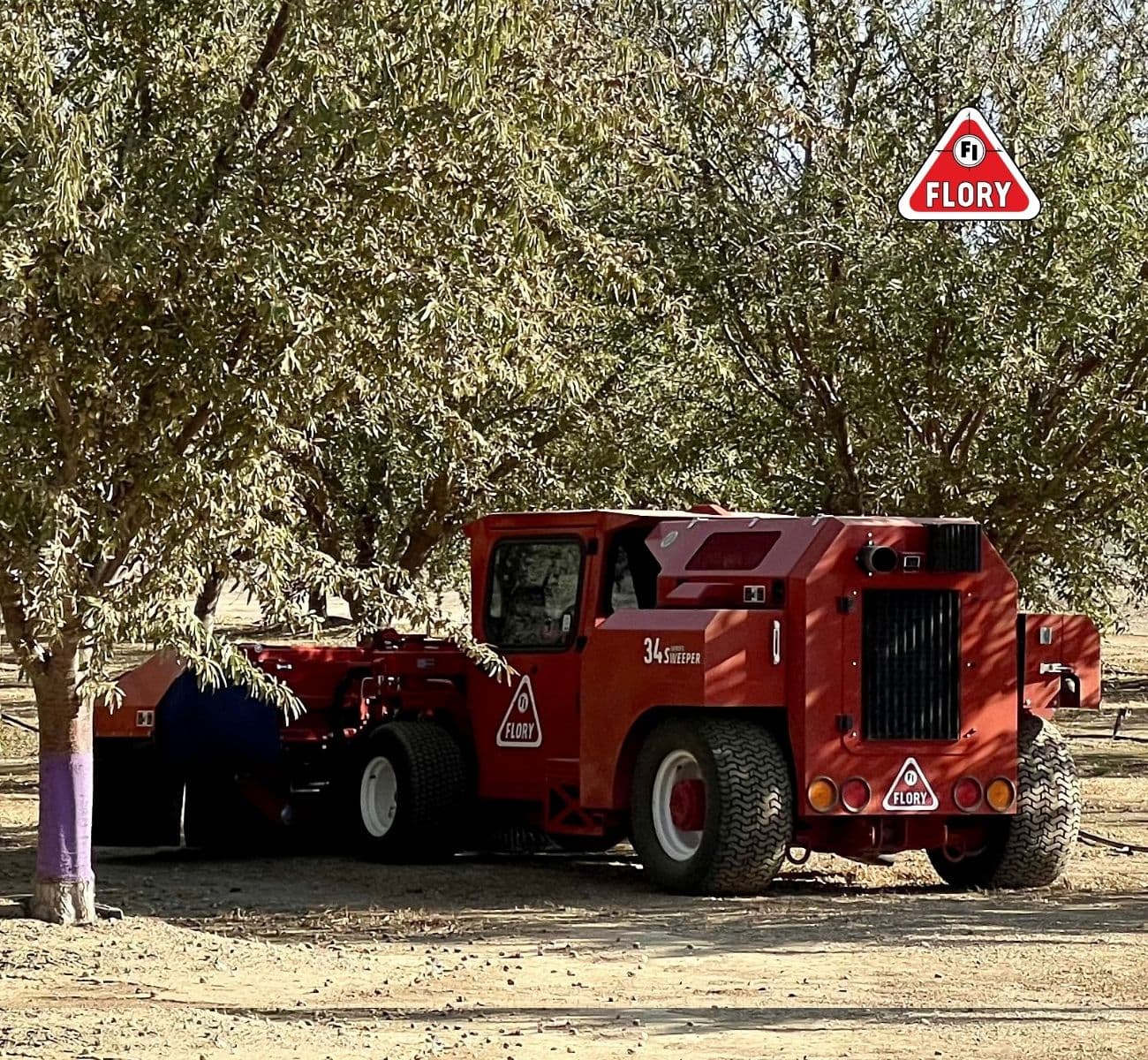
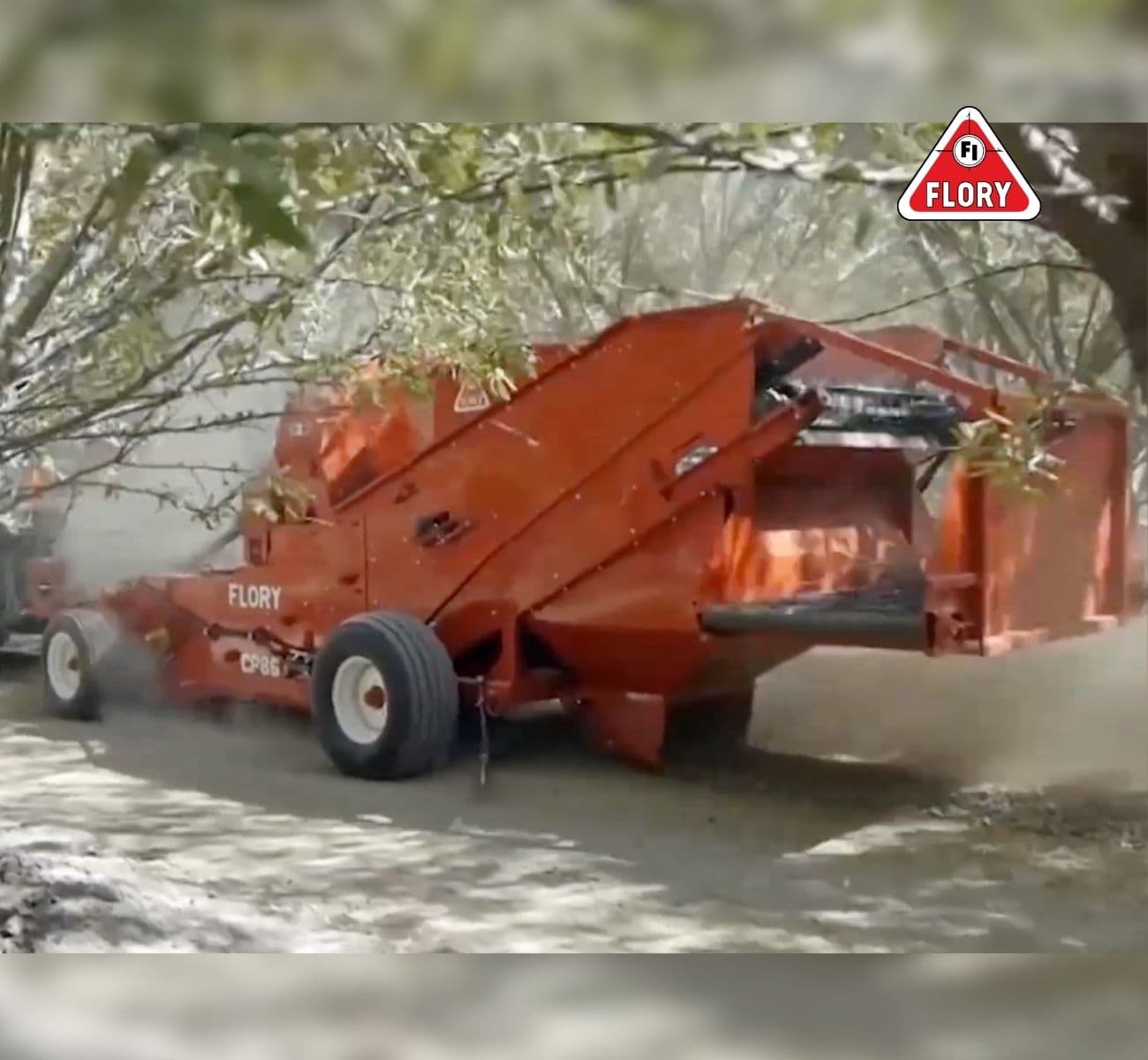
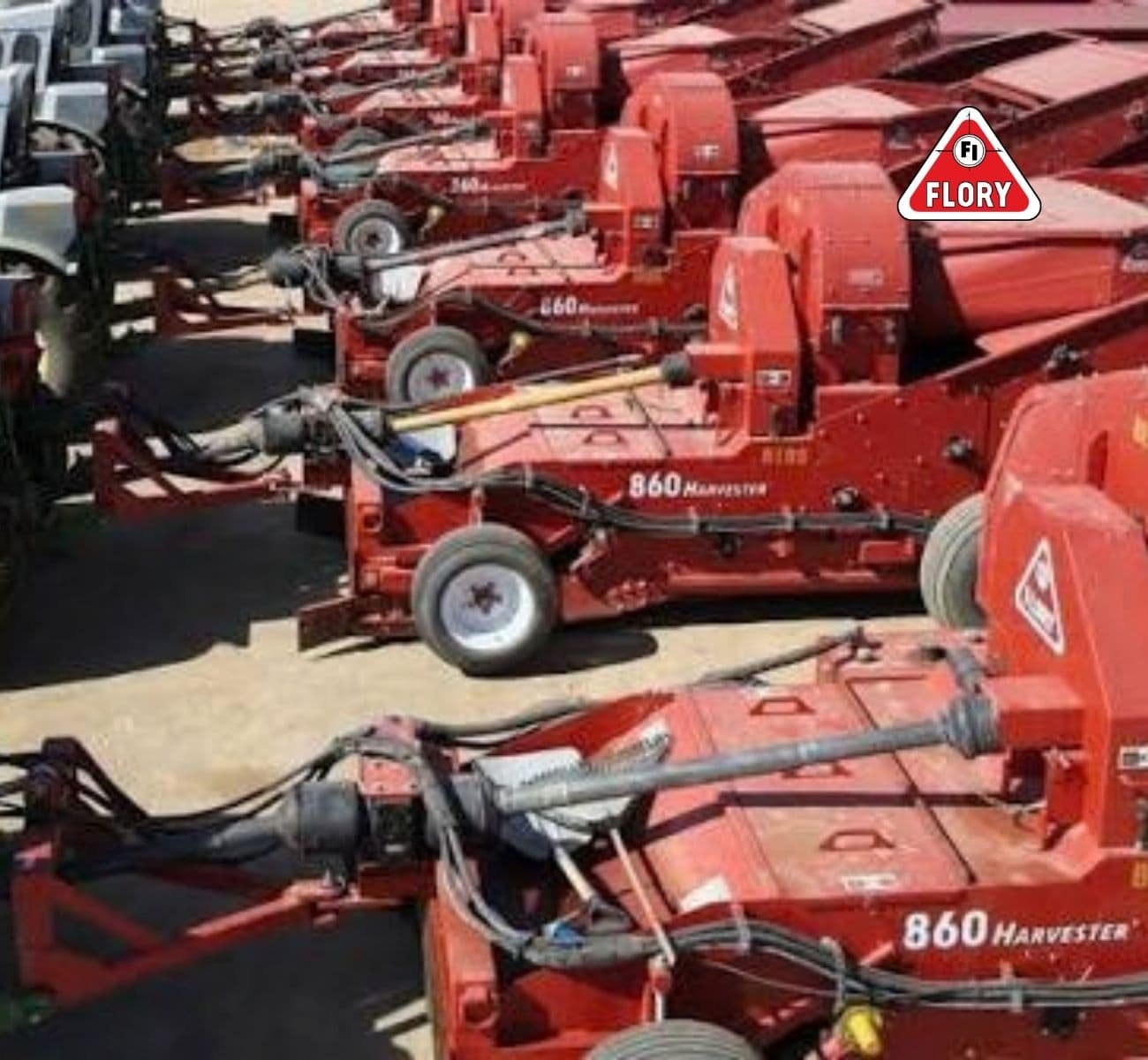
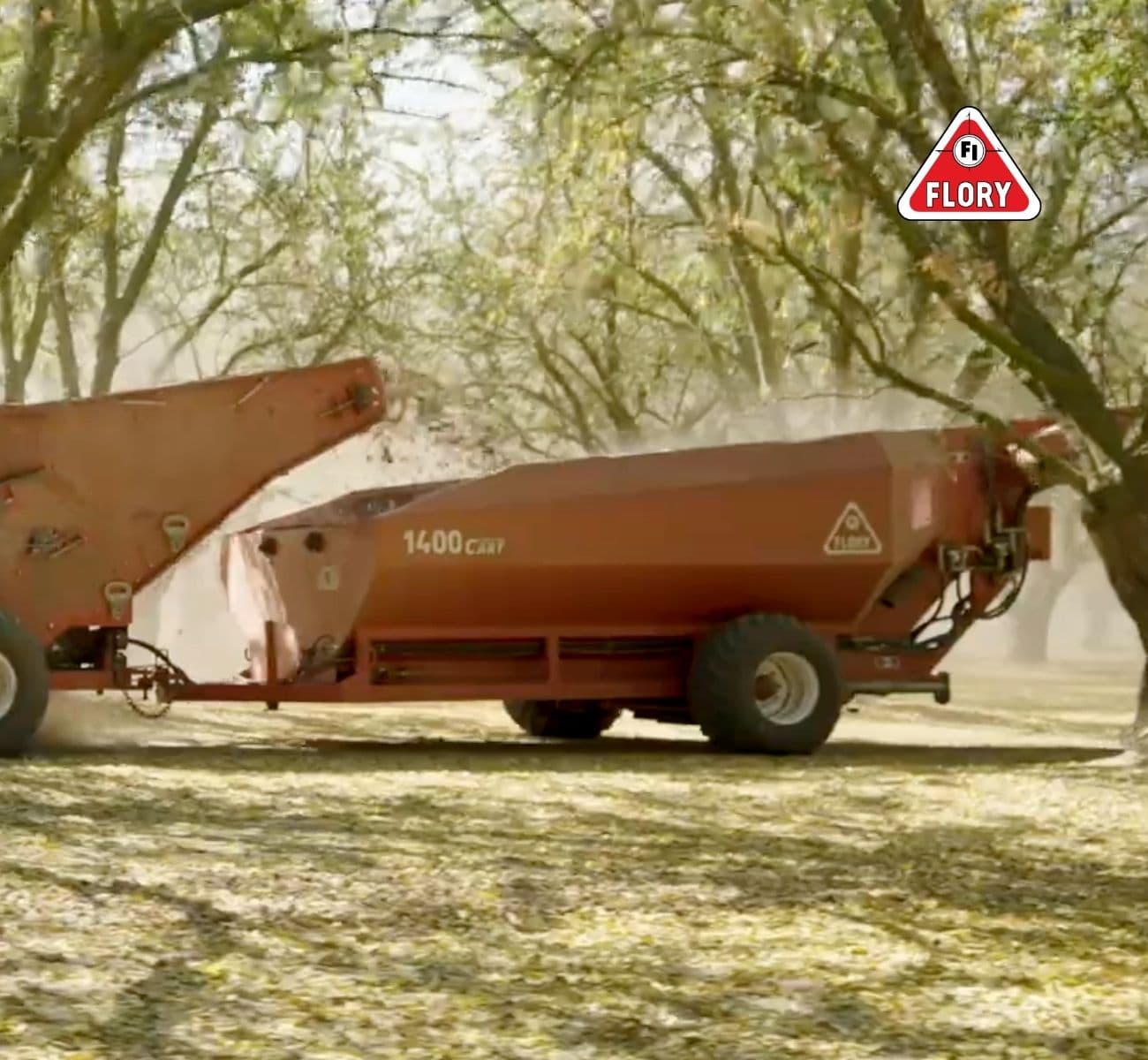
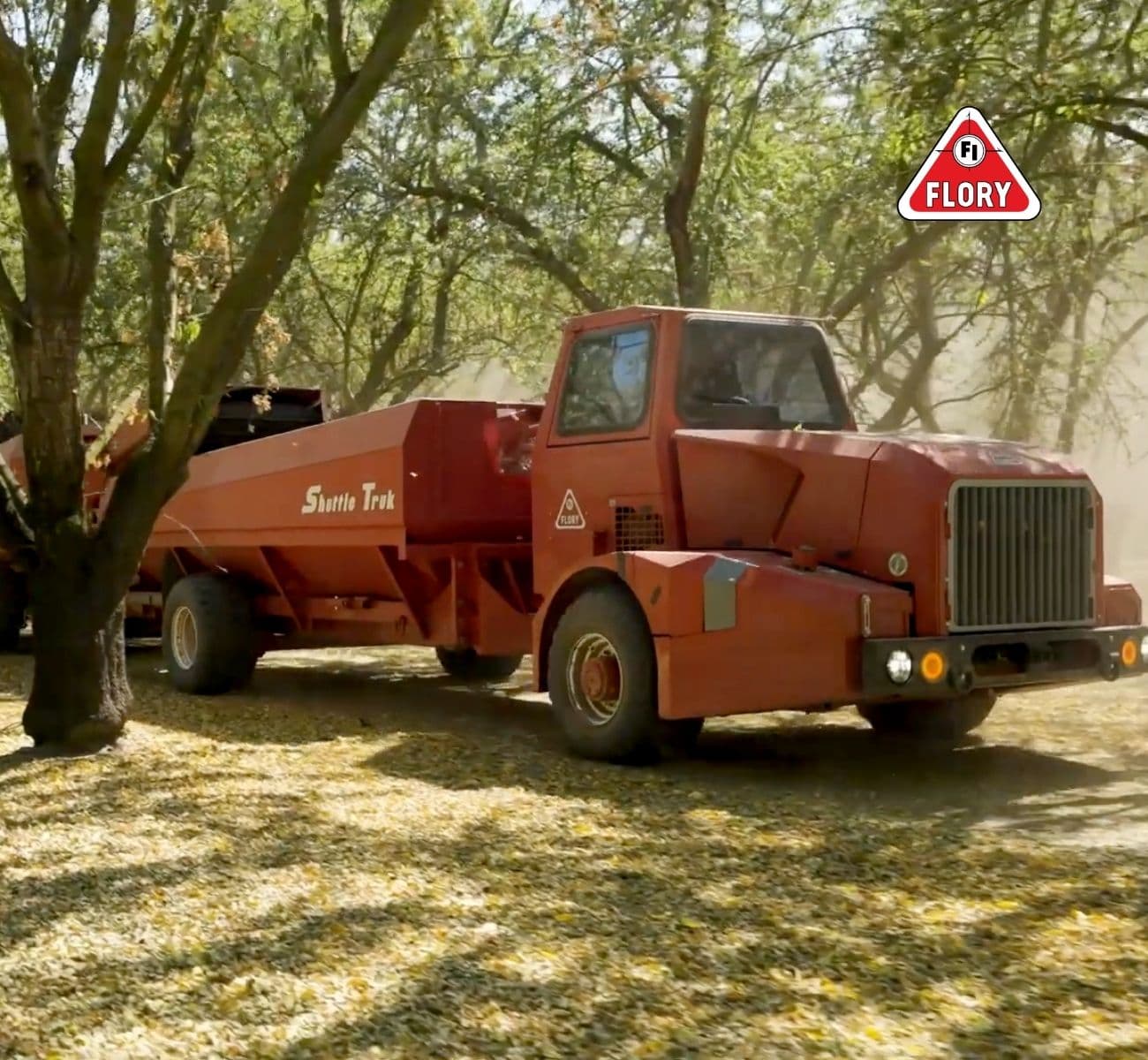
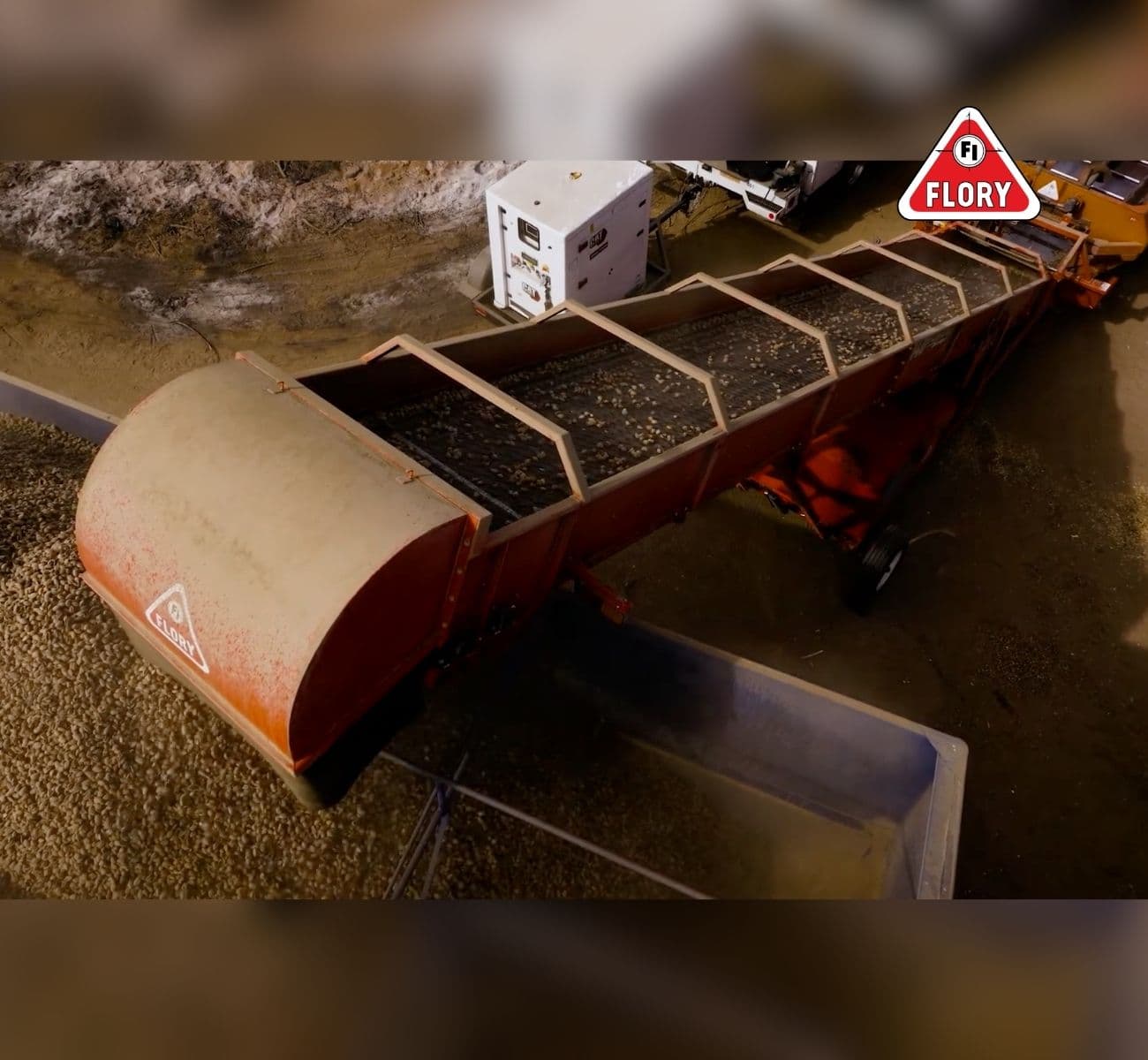
In a 2009 to 2010 trial on 12-year-old trees, a trunk shaker took 2.8 to 4.2 minutes per tree and dropped 76 to 86% of the nuts; poles dropped 94 to 98% but took 82 to 97 minutes. Flory harvesting machinery is available in Türkiye through OVE Europe: a line runs from the VR700 Shaker, 34 Series Sweeper and 860 Harvester (the 490 is a smaller option) to the 1500 Conveyor Cart, ST14 Shuttle and 4840 Field Elevator, with the CP87 Conditioner optional.
Walnut Harvest Workflow (Recommended Equipment)
Practical Tips for Walnut Harvesting
Open sample nuts in each block: kernels are mature when the packing tissue starts to brown (Ministry guide), and Yalova warns against waiting for split hulls.
Stop irrigating 10 to 15 days before trunk shaking to protect the bark, as Turkish harvest research advises.
Avoid poles: the Yalova institute and the authors of a 2009 to 2010 Turkish trial warn that they break the shoots that carry next year's crop.
Pick up, hull and dry shaken nuts without delay: the Ministry's 2020 guide warns that nuts left on the ground darken and turn moldy.
Harvest cultivars in order of ripening, from Maraş 18 in early September to Chandler in late September or October, to spread machine work.
Before harvest, mow and level the orchard floor and clear stones and branches, so the sweeper and harvester pick up cleanly.
Get your recommended harvest setup
Enter orchard size, spacing, terrain, and target throughput—we’ll suggest a practical harvest workflow and equipment lineup.

Walnut Post-Harvest Handling & Processing in Türkiye
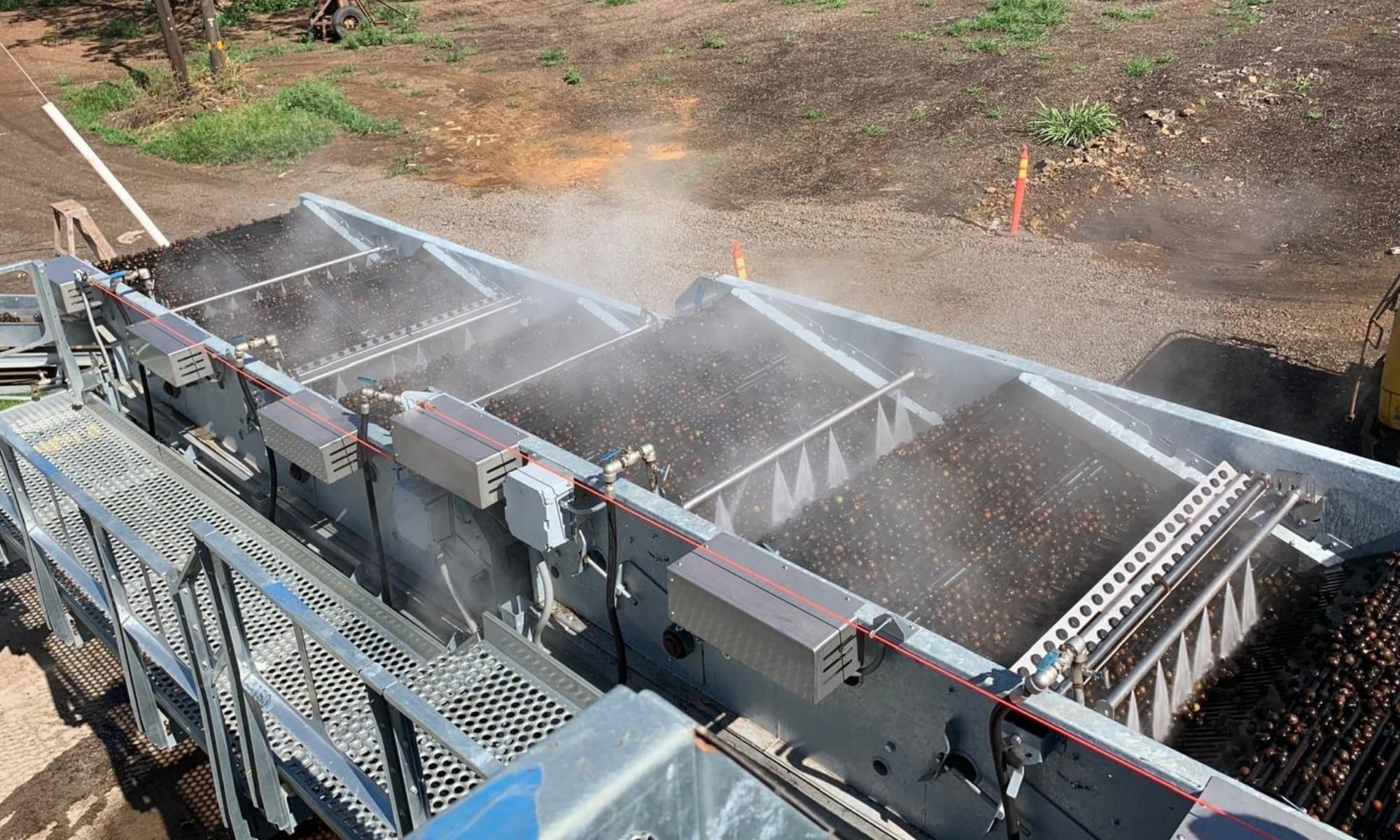
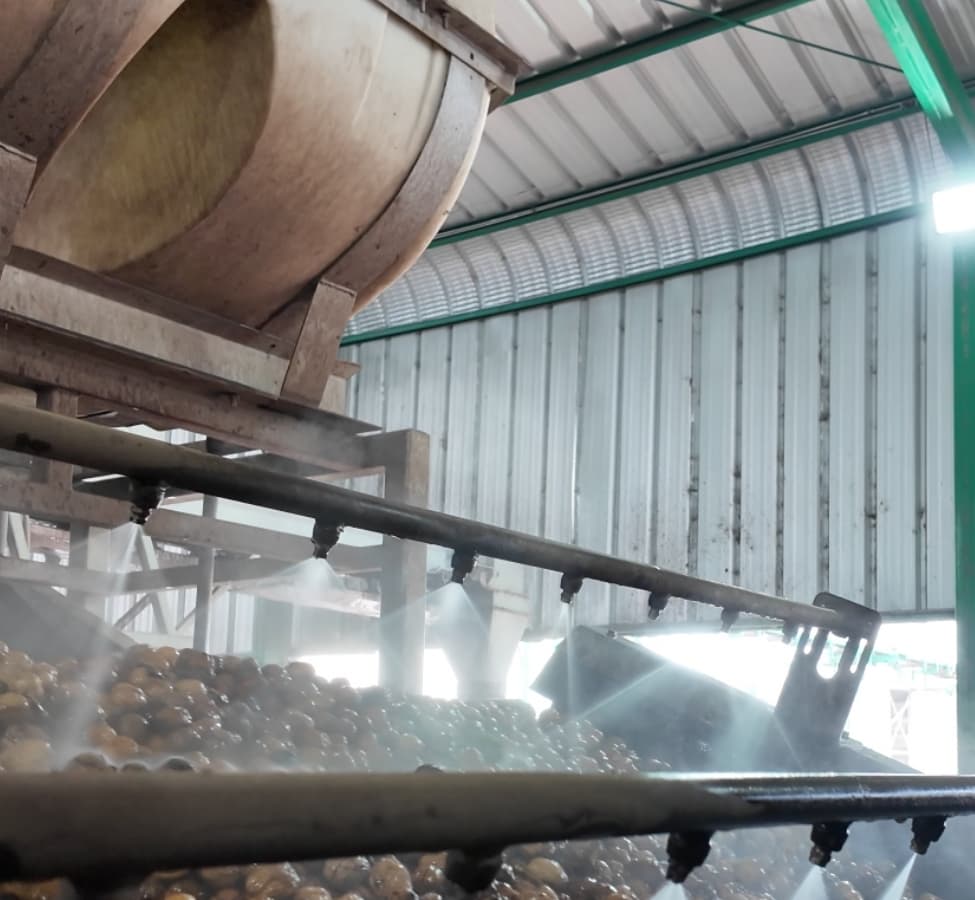
Hulling is difficult, costly and labor-intensive, the Yalova institute notes. In its trials, a drum huller with water spray hulled 96.7 to 98.3% of the nuts in 12 minutes per 100 kg batch, and the water kept shells from darkening; mature nuts whose hulls have not yet split are very hard to hull. Nuts to be sold in shell should be dried right after hulling (Ministry guide, 2020).
Most Turkish growers dry walnuts outdoors in the shade, and the Ministry's guide calls drying in direct sun wrong because kernels darken. In the Yalova institute's dryer trials (2008 and 2009), air at no more than 40 °C dried nuts to 7 to 9% moisture in about 20 hours instead of 7 to 10 days, with quality closest to fresh nuts. Jessee, whose processing lines OVE Europe supplies, builds walnut hulling lines and drying, in-shell cleaning and sizing, and shelling systems.
Turkish standards TS 1275 (walnuts in shell) and TS 1276 (kernels) are listed for commercial quality inspection, and maximum levels for contaminants, mycotoxins included, are set by the Turkish Food Codex contaminants regulation, updated in November 2023. Many growers sell in shell: in a Kaman survey published in 2017, nearly 9 in 10 did so, which the authors attribute to buyer demand and a shortage of labor for cracking.
For general information only. Information may become outdated and does not replace site-specific professional advice. Consult a qualified agronomist and confirm equipment suitability with OVE before acting.
Practical Tips for Walnut Post-Harvest Handling & Processing
Hull without delay and spray water during hulling, which Yalova trials found keeps shells from darkening.
Dry with air at no more than 40 °C and never above 43 °C, as Yalova dryer research advises, to avoid bitter, rancid kernels.
Do not dry walnuts in direct sun: the Ministry's 2020 guide calls it wrong because the kernels darken.
Dry to about 8% moisture, the target in the Yalova institute's dryer trials, and check samples with a moisture meter before storage.
As the Alata institute advises, do not keep fresh walnuts in large heaps or in sacks before drying.
Check lots against TS 1275 (in shell) or TS 1276 (kernels), and against mycotoxin limits in the Turkish Food Codex and the buyer country's rules.
Recommended Post-Harvest Handling & Processing Stages







Plan your post-harvest line
Estimate tons/day, cleaning & drying capacity, storage needs, and cost/kg—then build your equipment plan in phases.