






Hazelnut Orchard Establishment in Ukraine
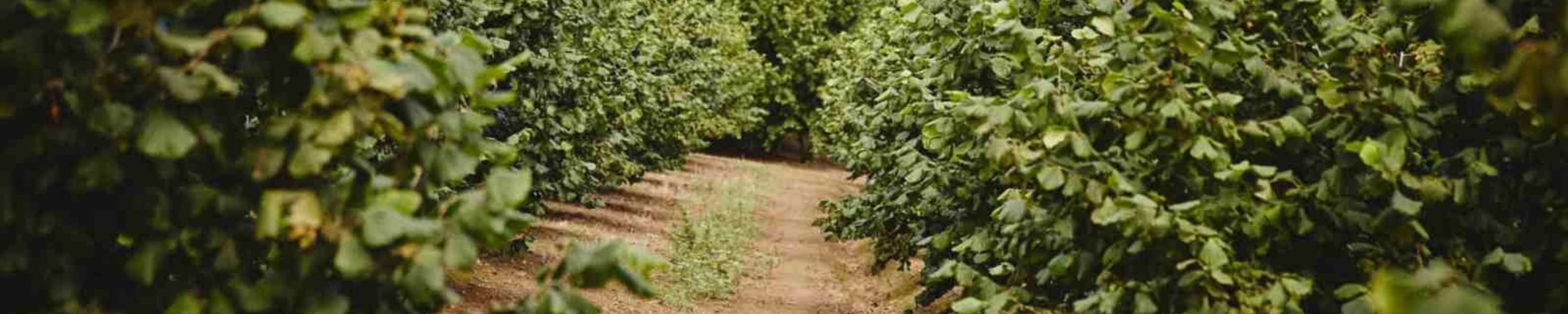
Of the oblasts whose 2025 figures Ukrstat publishes, Zakarpattia, Vinnytsia and Kyiv produced the most hazelnuts. Ukraine's plant variety information system lists hazelnut cultivars registered since 2008, among them Ukrainian ones of the Institute of Horticulture of the National Academy of Agrarian Sciences and of the Sofiyivka dendrological park, and Oregon State University cultivars from 2022. News reports describe large young orchards planted mostly with Italian cultivars.
One Odesa oblast farm uprooted its 2015 planting of Barselonskyi, Katalonskyi, Halle and Kosford and replanted Italian cultivars: blanching cleaned at most 30 to 40% of Barselonskyi and Katalonskyi kernels, against 80 to 90% for Italian cultivars (2024). On a Zhytomyr oblast farm, Italian cultivars lost about 90% of the crop after winter thaws, frost down to -30 °C and an April frost of -8 °C, with fruiting wood and male catkins frozen completely in low-lying parts (reported in 2026).
A 2020 Ukrainian trade article notes that single- or double-trunk training allows full mechanization of care and harvest, while bushes suit small plots and slopes worked by hand. The Odesa oblast farm trains trees on 60 to 70 cm trunks at 6 × 3 or 5 × 3 m and irrigates by drip from May; a Zakarpattia company grows bushes at 3 × 5 m on 460 ha, with double drip lines and fertigation. Ukrstat counted 1.3 thousand ha of irrigated hazelnut on enterprises in 2025.

Practical Tips for Hazelnut Orchard Establishment
Choose cultivars for local winters: on a Zhytomyr oblast farm, Italian cultivars lost about 90% of the crop to winter and spring frosts.
Avoid frost pockets: on the same farm, fruiting wood and male catkins in low-lying parts of the orchard froze completely.
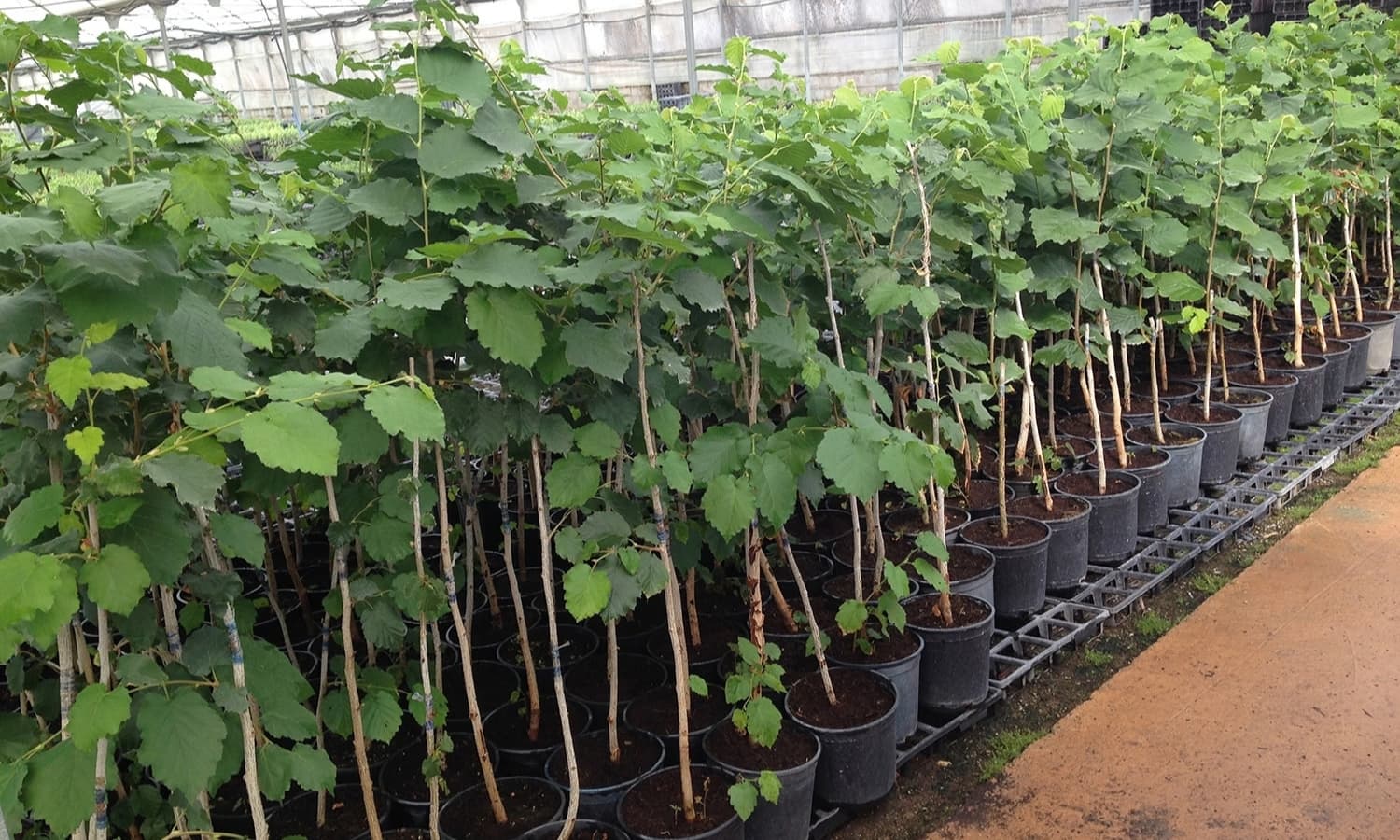
Plant compatible pollinizers: an Odesa oblast farmer gives every tenth row to them, Mortarella and Romano for Tonda di Giffoni.
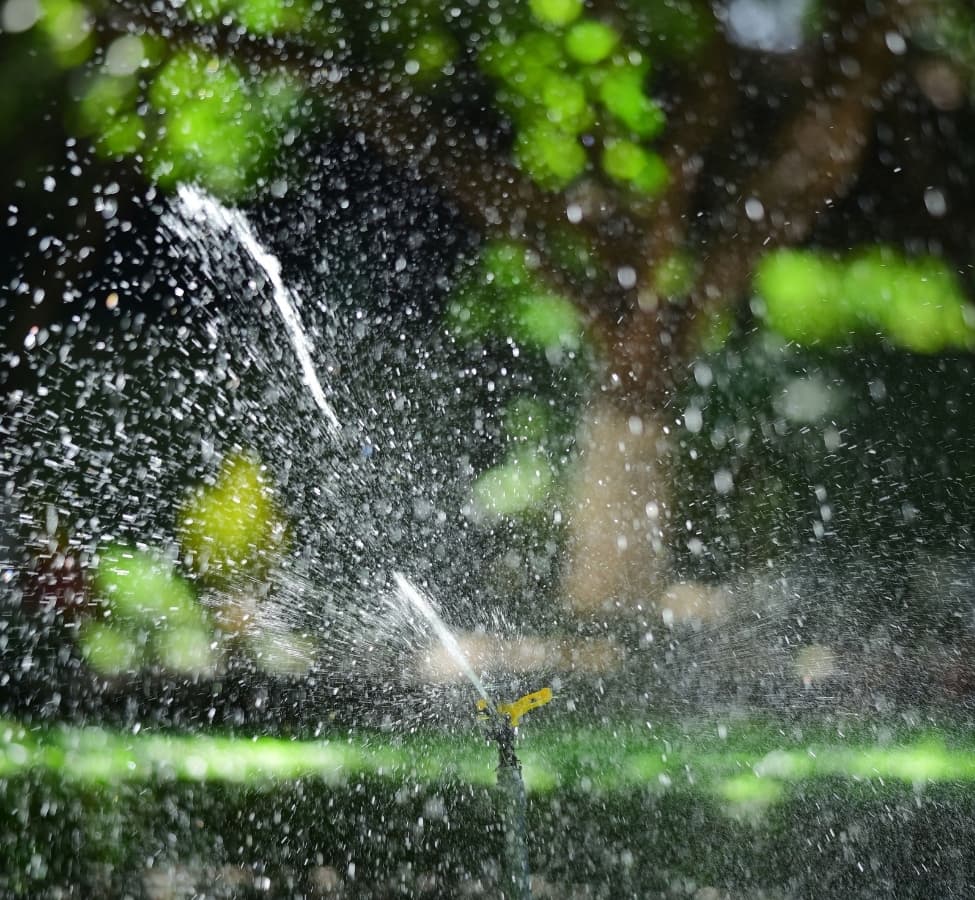
Plan drip irrigation from the start: the same Odesa oblast farmer calls irrigation the main task of orchard care and allows 60 L per tree a day.
Where you plan machine harvest, train single trunks on level ground: a 2020 Ukrainian trade article ties bushes to hand work on small plots and slopes.
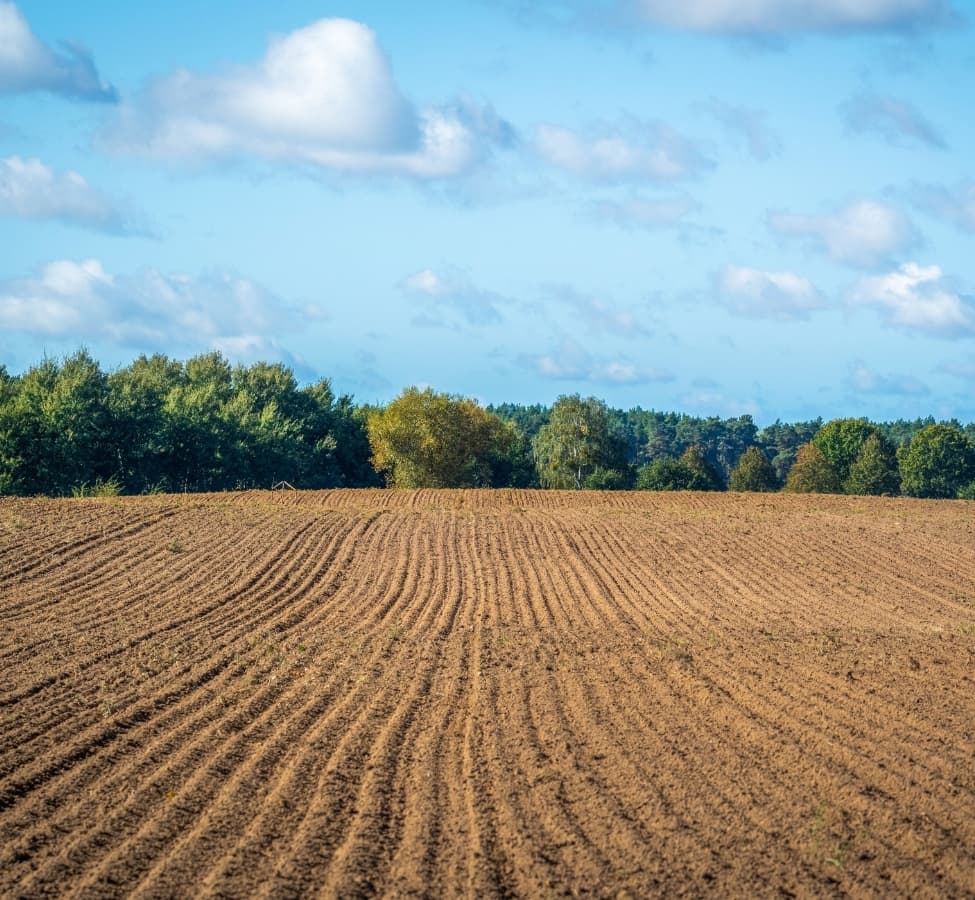
Smooth and firm the orchard floor at least a year before the first commercial harvest, as Oregon State University (OSU) advises, so sweepers can work up to the trunks.
Recommended Establishment Stages


Hazelnut Orchard Care & Maintenance in Ukraine
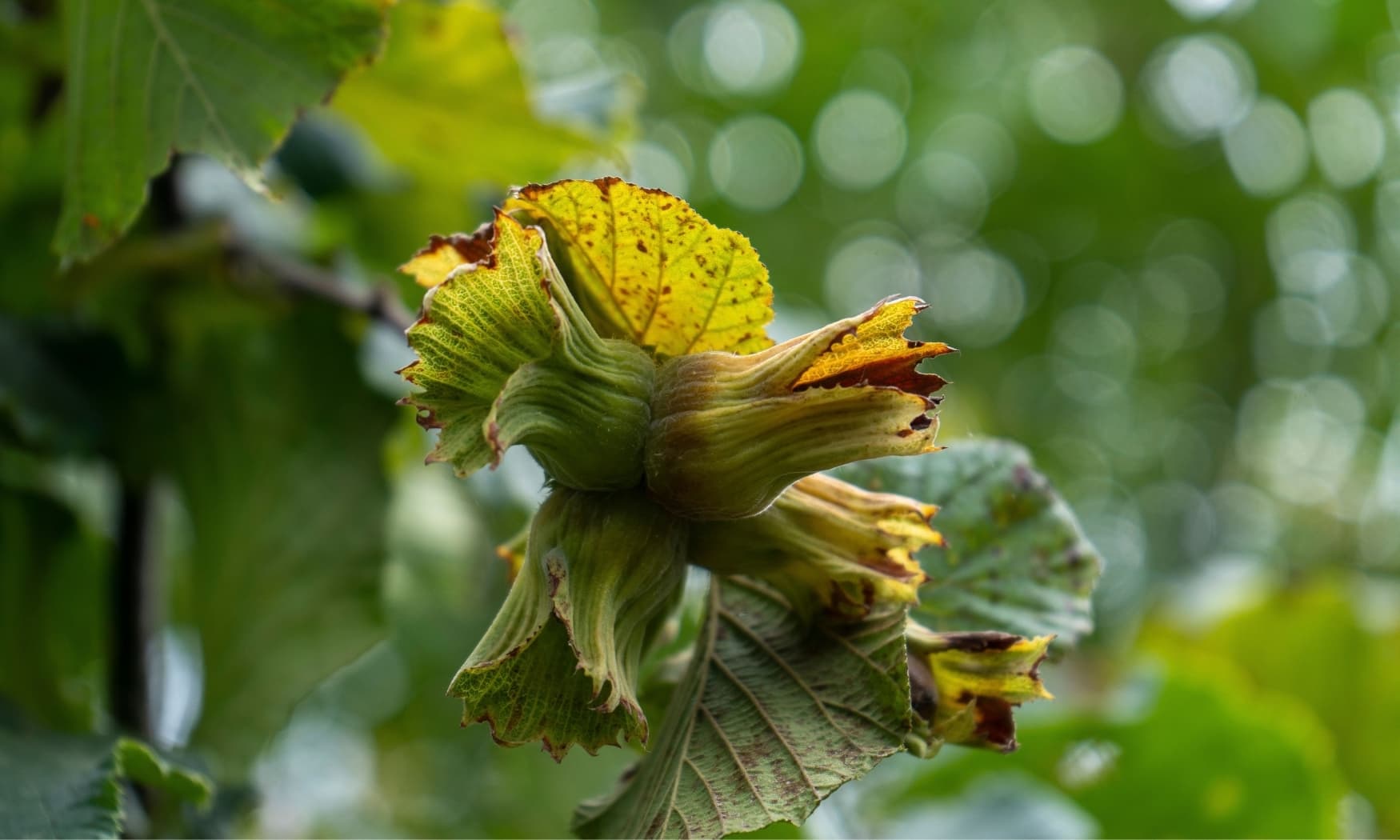
The Ukrainian Hydrometeorological Center's 1991 to 2020 normals, published by WMO, give July 82 mm of rain at Uzhhorod and 77 mm at Kyiv but 45 mm at Odesa, where July highs average 28.0 °C. A 2024 report on the Odesa oblast farm notes that moisture there is catastrophically short compared with western regions of Ukraine, and the 2020 trade article advises watering in dry periods, above all in June and July.
EPPO lists the brown marmorated stink bug as transient in Ukraine, first recorded in 2018. Ukraine's food safety service names hazel among its hosts and says that feeding at the milky-waxy stage stops kernel development. The 2020 trade article names the hazelnut weevil, which causes premature nut drop, as the main pest, and hazelnut powdery mildew (Erysiphe corylacearum) was reported on hazel in Kyiv in 2019.
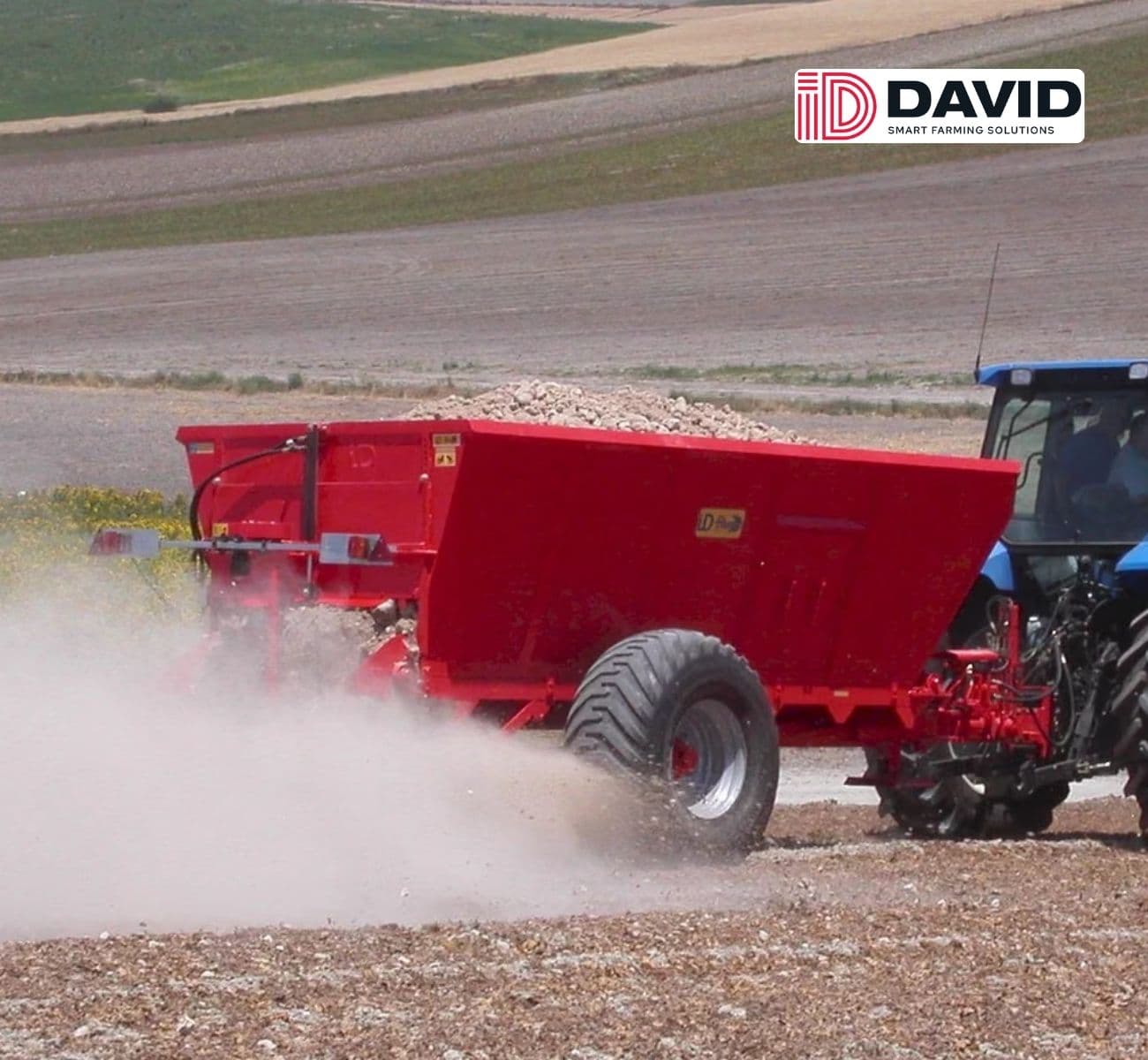
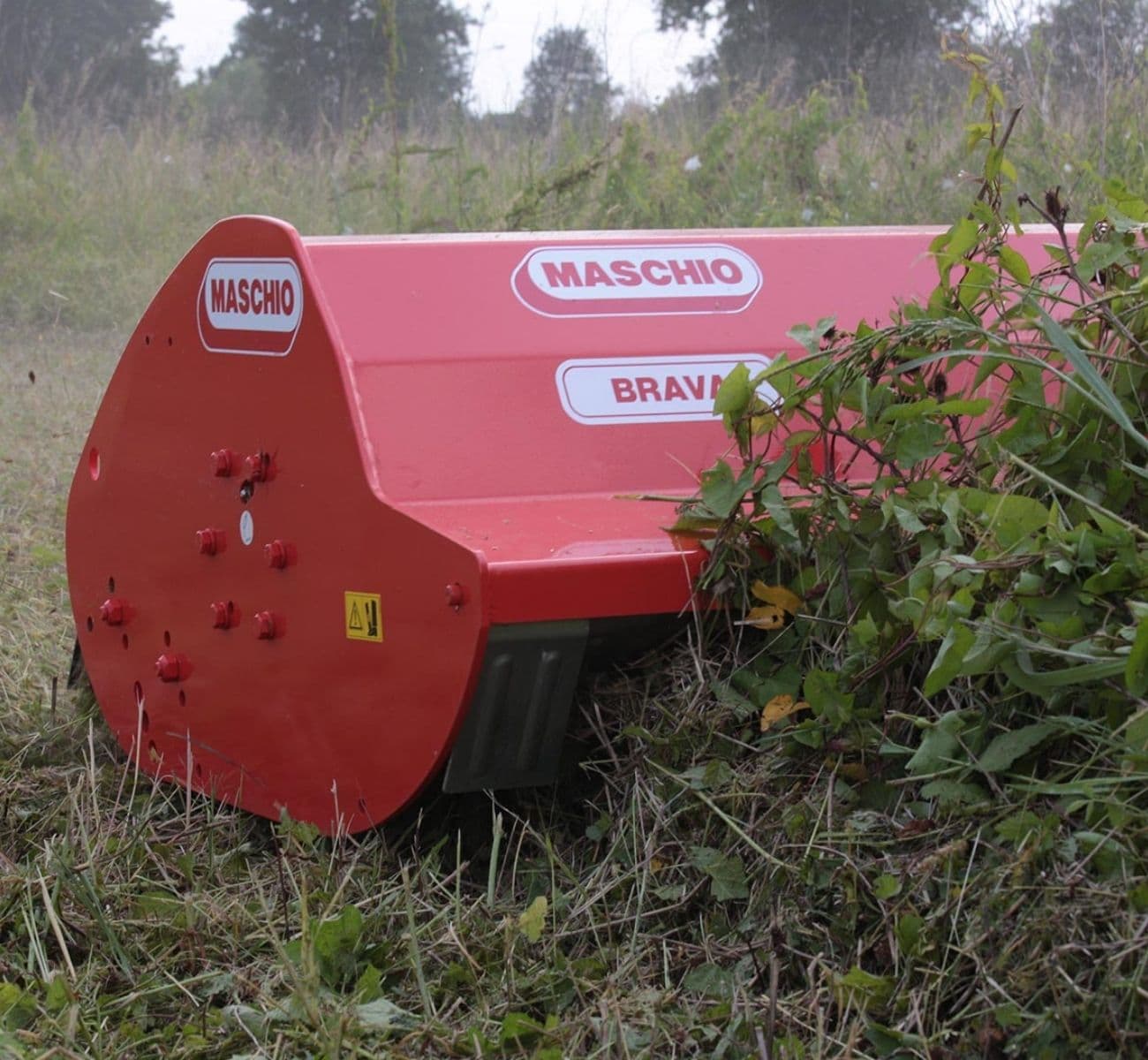
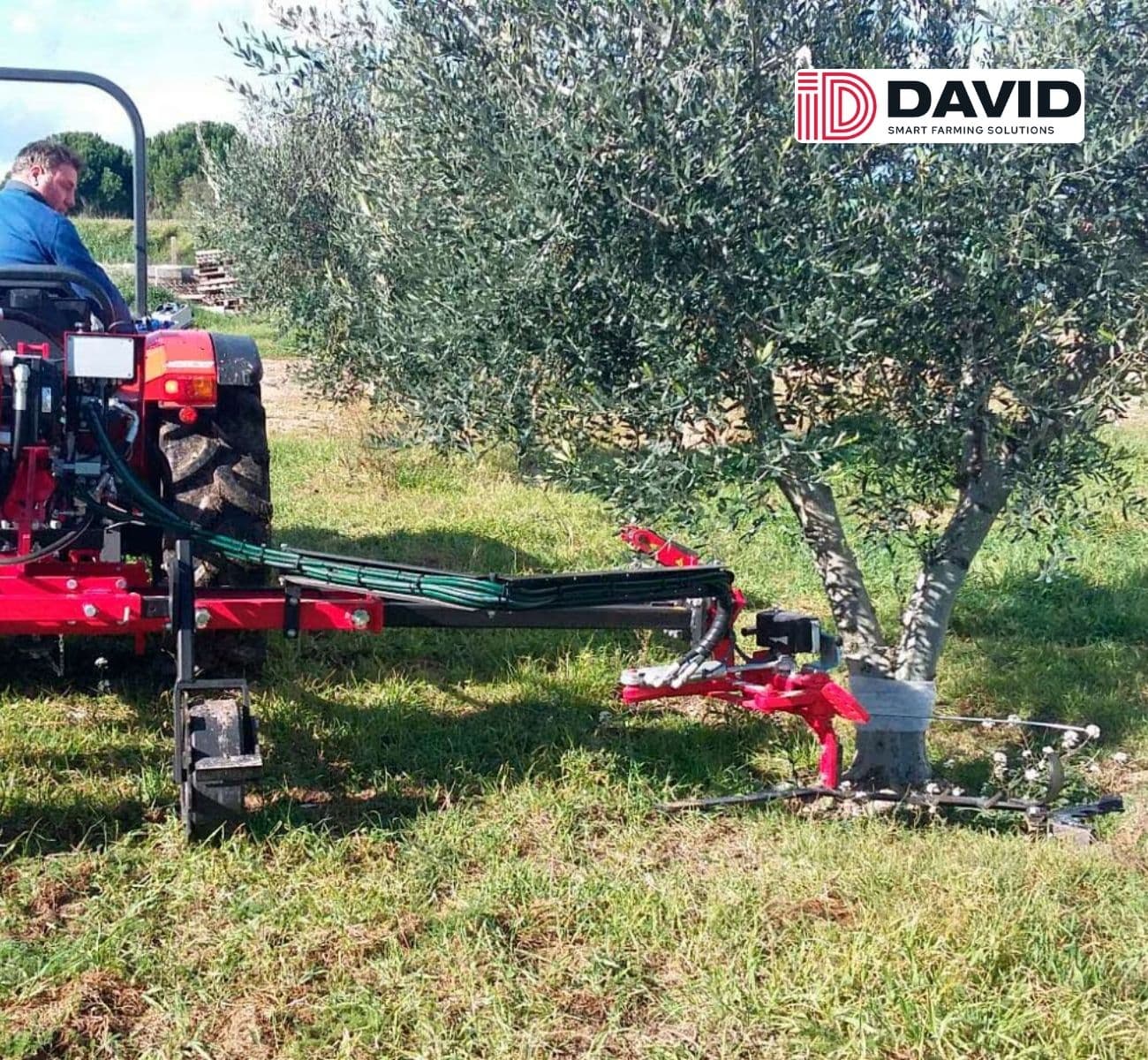
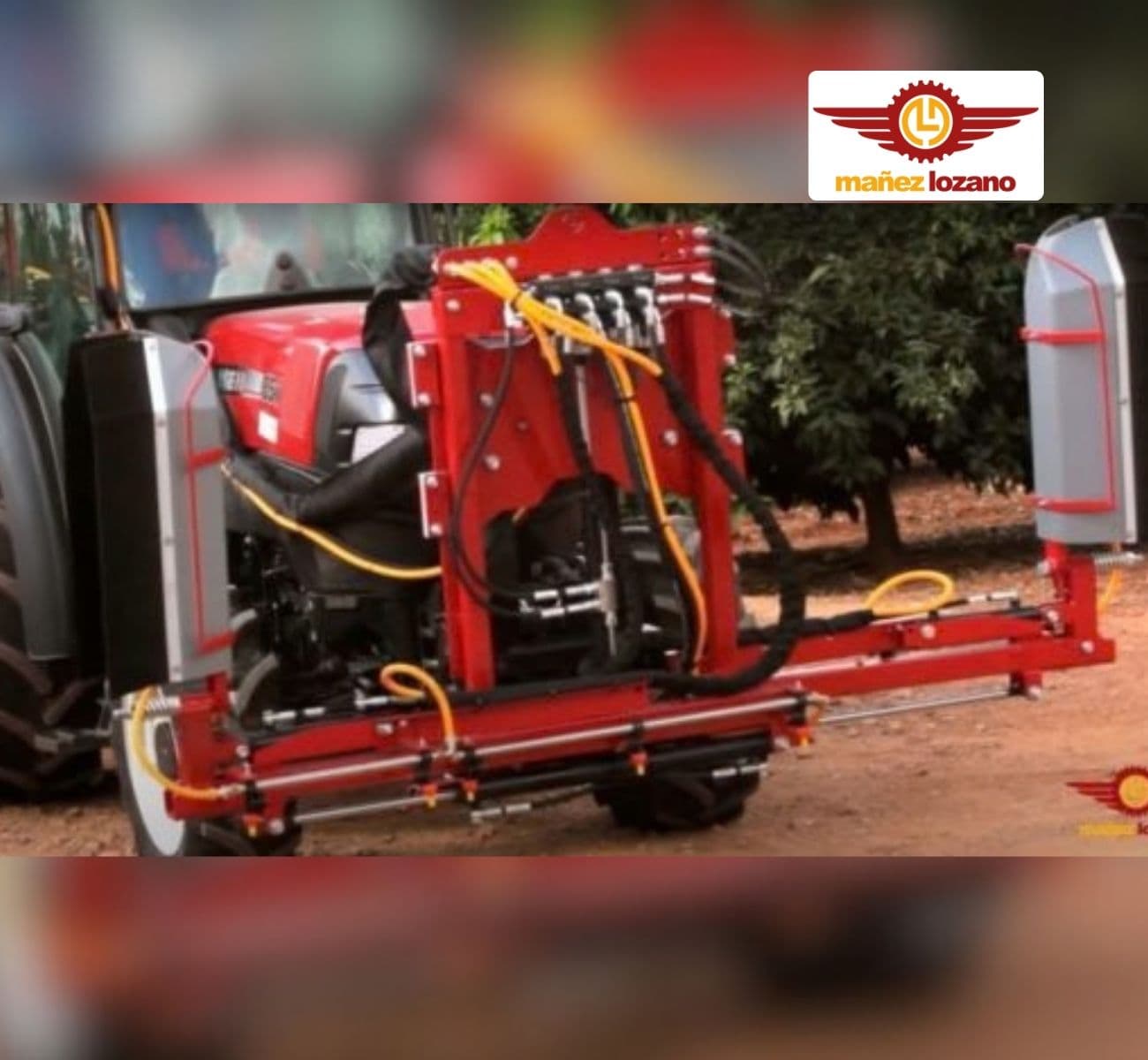
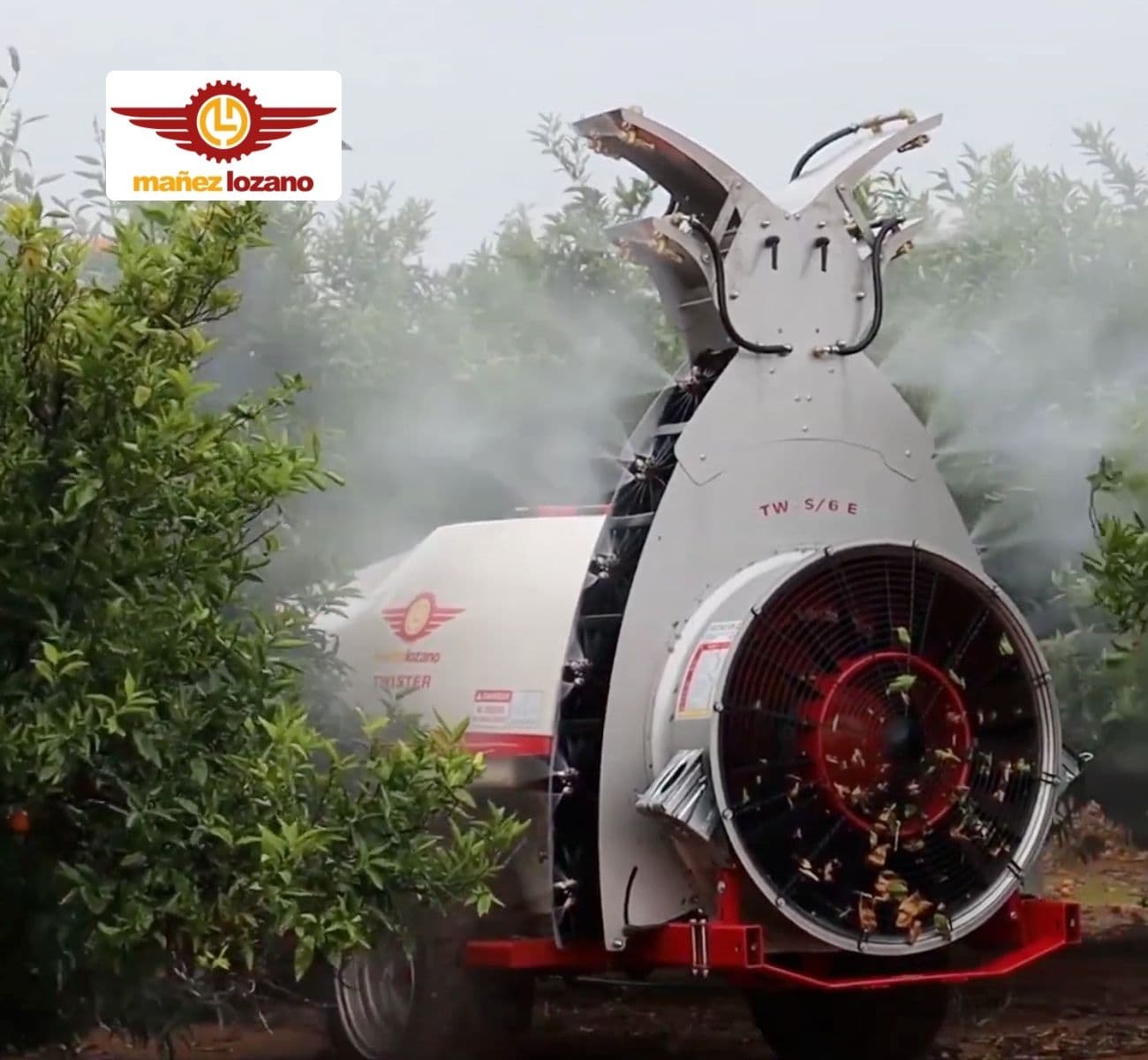
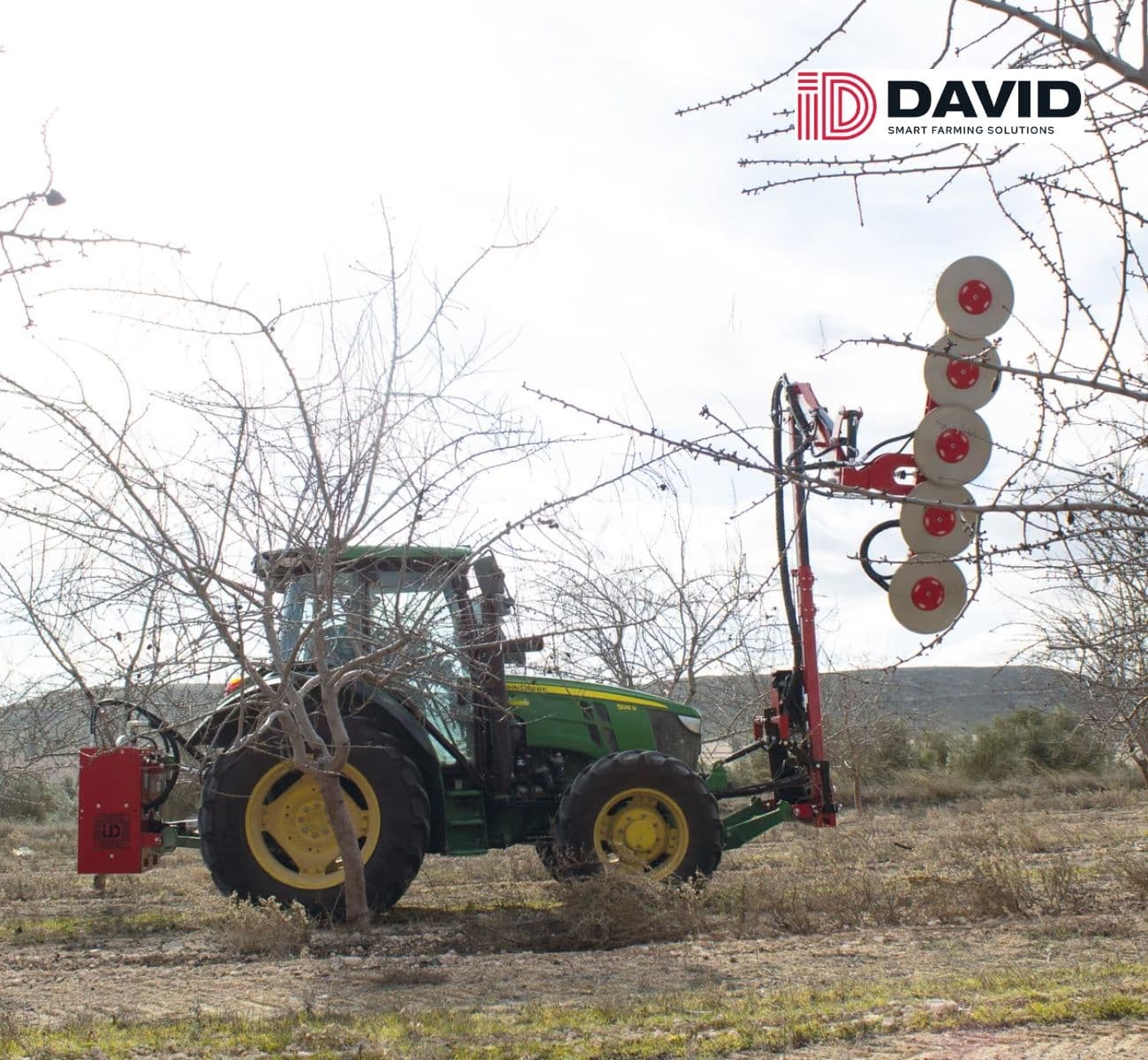
On one orchard of over 400 ha, trained mostly as trunks with a vase crown on 4 to 6 leaders, growers prune to keep cropping steady (2025). In single-stem orchards planted for machines, the ID DAVID SURFEED spreads solid manure, the ID-XL weeds the tree row, the Mañez Lozano Mega Twister S6 sprays tall, dense canopies and the ID-REX disc pruner makes lateral and topping cuts.
Recommended Orchard Care & Maintenance Stages

Practical Tips for Hazelnut Orchard Care & Maintenance
Monitor the brown marmorated stink bug with pheromone traps from May to October, one per hectare on commercial farms, as Ukraine's food safety service advises.
Inspect the orchard for the stink bug in May, in July and August and from September to November, the three periods the food safety service names.
Prune before bloom, as the 2020 trade article advises, cutting close to where the shoot forms so that stubs do not throw more suckers.
Form the crown carefully: an Odesa oblast farmer warns that a mistake in crown forming delays the first crop by a year.
Inspect new orchards for eastern filbert blight for 2 years after planting, as OSU advises; EPPO does not list it for Ukraine, which is not proof of absence.
Remove suckers from own-rooted single-trunk trees: OSU notes that all hazelnut varieties produce them.

Hazelnut Harvesting in Ukraine
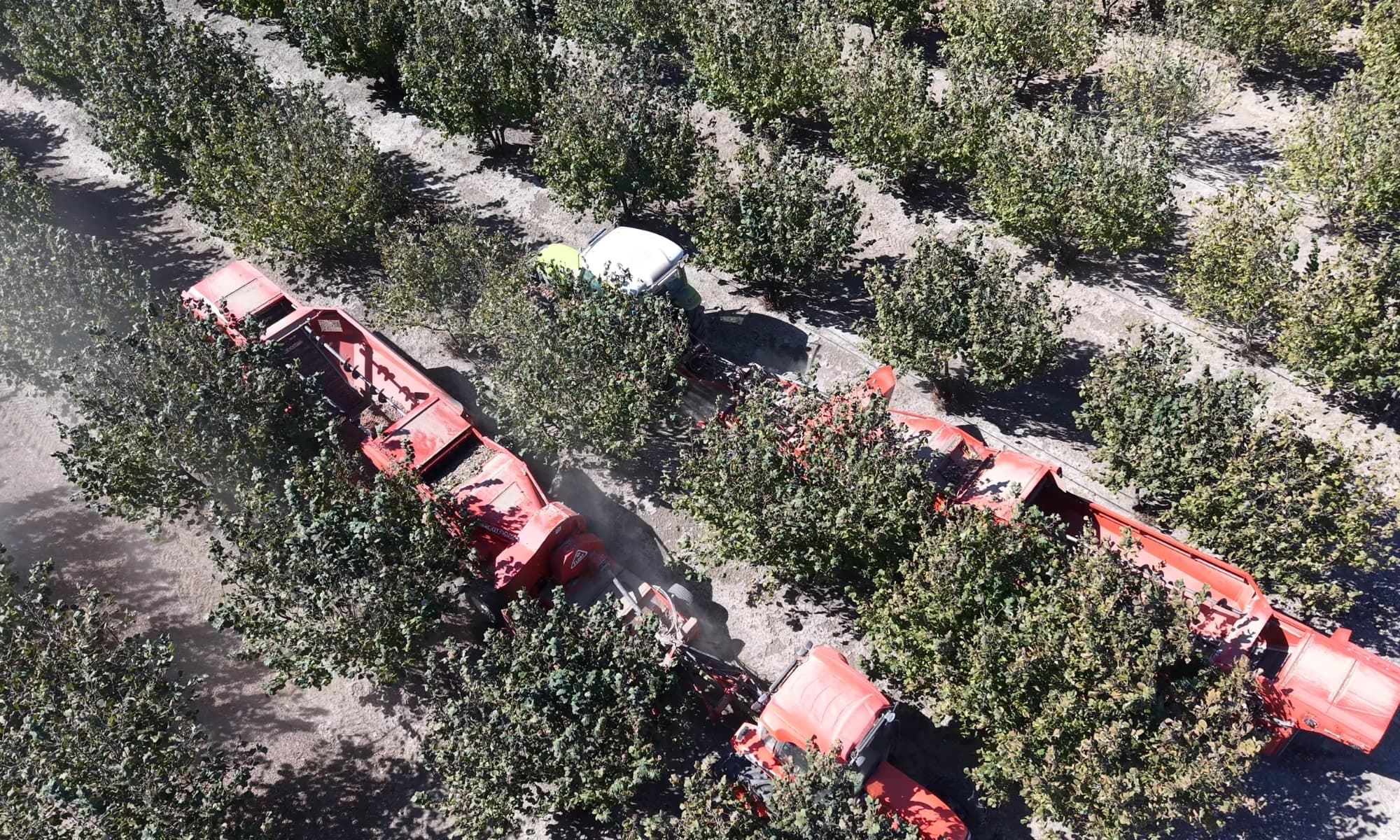
The 2020 trade article called hand collection of nuts that have fully fallen the main method. A Zakarpattia company says machine harvest is possible from mid-September but rains come then, so it harvests by hand from mid-August, when nuts come away from the tree though still moist (2025); the Odesa oblast farm usually starts in September. In single-stem orchards planted for machines, mechanized harvesting can bring the crop in on time, with less risk of nuts deteriorating while they wait.
The same article advises waiting for full ripeness and natural drop rather than shaking, and the system in this guide does not shake the trees either: OSU explains that the thin-barked, shallow-rooted trees would be damaged. The nuts drop onto a level, mown floor and are picked up in several passes. In August and September, Uzhhorod averages 66 and 68 mm of rain on 9.1 and 10.4 rain days, Odesa 40 and 42 mm on 5.3 and 6.1 (1991 to 2020).
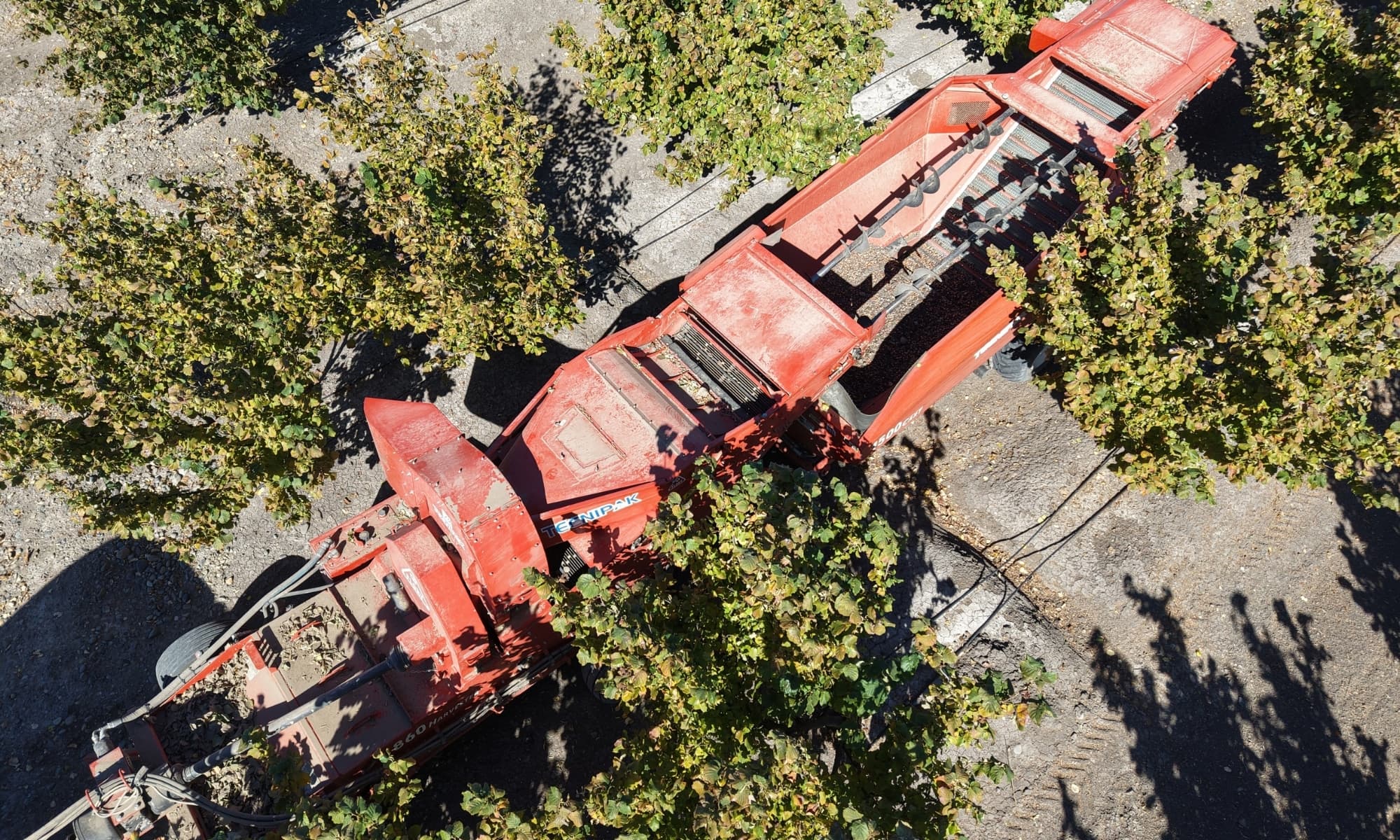
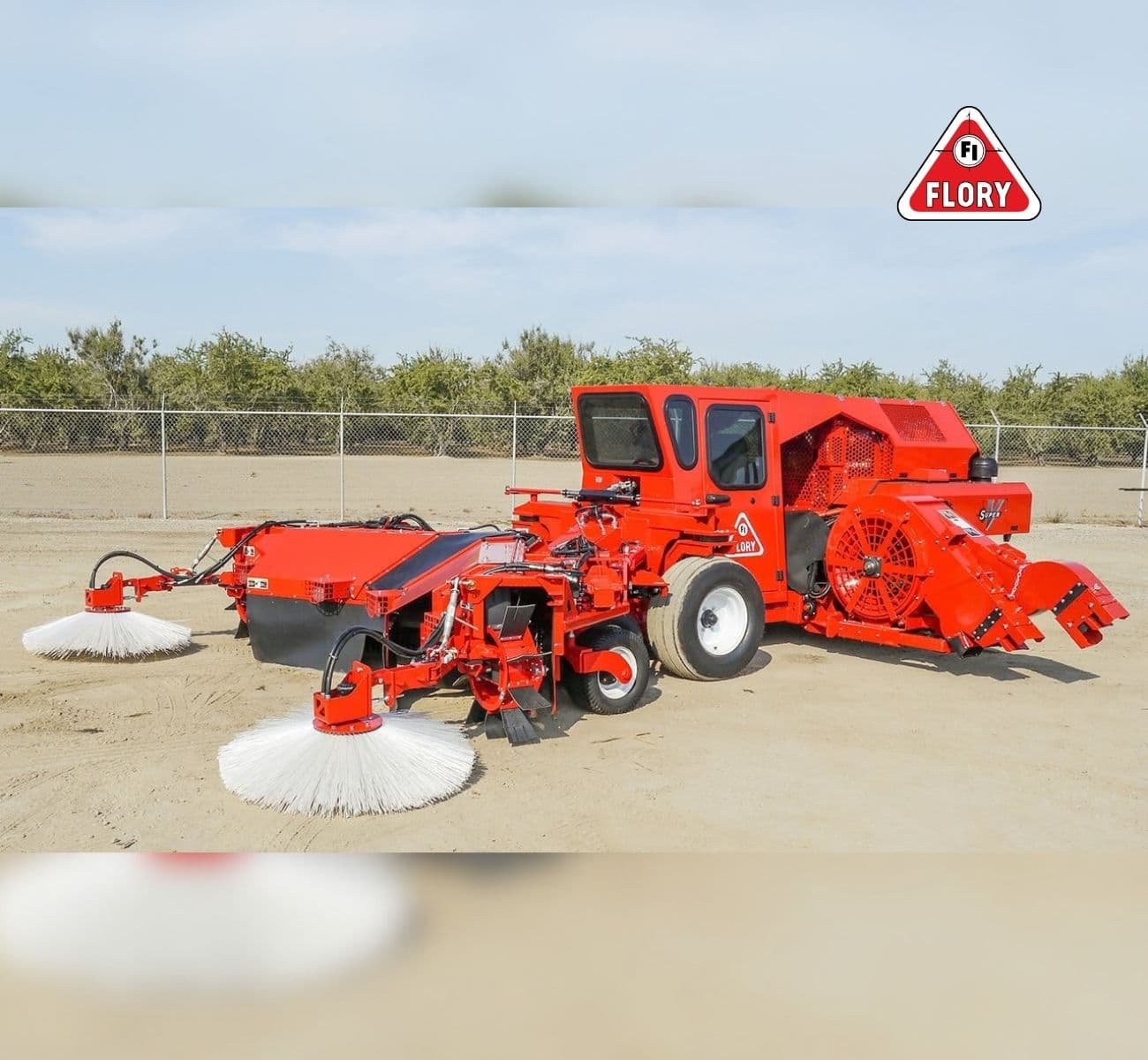
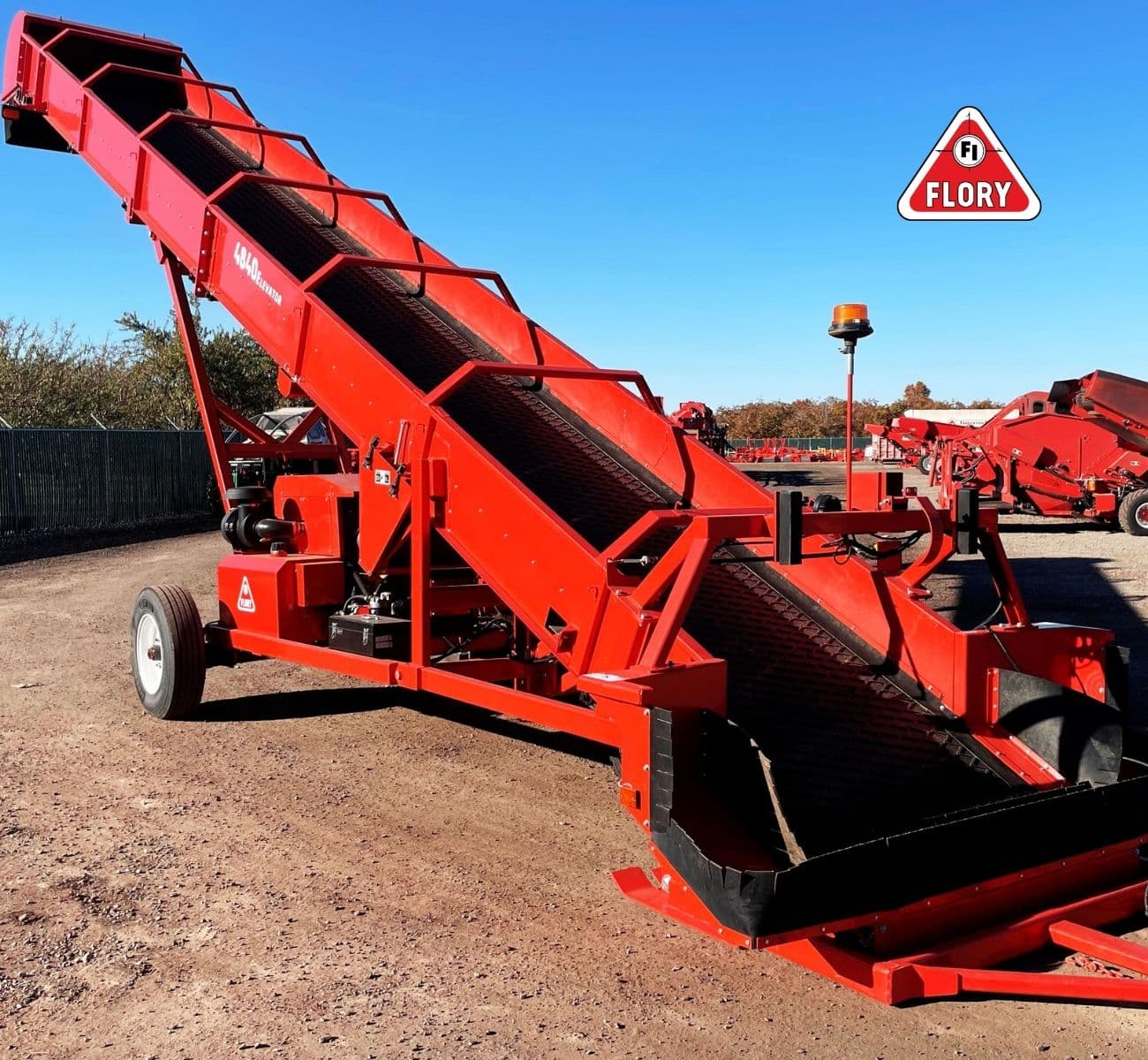
Flory harvesting machinery is available in Ukraine through OVE Europe for single-stem orchards planted for machines. The self-propelled Flory V62 Sweeper sweeps the nuts into windrows, and the self-propelled 8772 Harvester picks them up; Flory lists a mud brush as standard for hazelnuts on the 8772. The 1500 Conveyor Cart receives the nuts, the ST14 Shuttle carries them and the 4840 Field Elevator loads trailers for the processing site.
Hazelnut Harvest Workflow (Recommended Equipment)



Practical Tips for Hazelnut Harvesting
Match machine width to the alleys: on the Odesa oblast farm, pull-type machines 2.5 m wide usually need two passes in 5 m alleys.
Pick up fallen nuts quickly, before they start to spoil, as the Odesa oblast farm stresses.
Level, smooth and flail-mow the orchard floor before nut drop, as OSU describes, so the sweeper can work right up to the trunks.
Plan for rain at harvest: a Zakarpattia company notes that machine harvest is possible from mid-September, when the rains come (2025).
Sweep only fast enough to keep ahead of the pickup machine, as British Columbia's guide advises, and clean harvesters between orchards.
Keep bins of harvested nuts out of the rain until drying: OSU notes that nuts in bins left in the rain before drying can turn moldy.
Get your recommended harvest setup
Enter orchard size, spacing, terrain, and target throughput—we’ll suggest a practical harvest workflow and equipment lineup.

Hazelnut Post-Harvest Handling & Processing in Ukraine
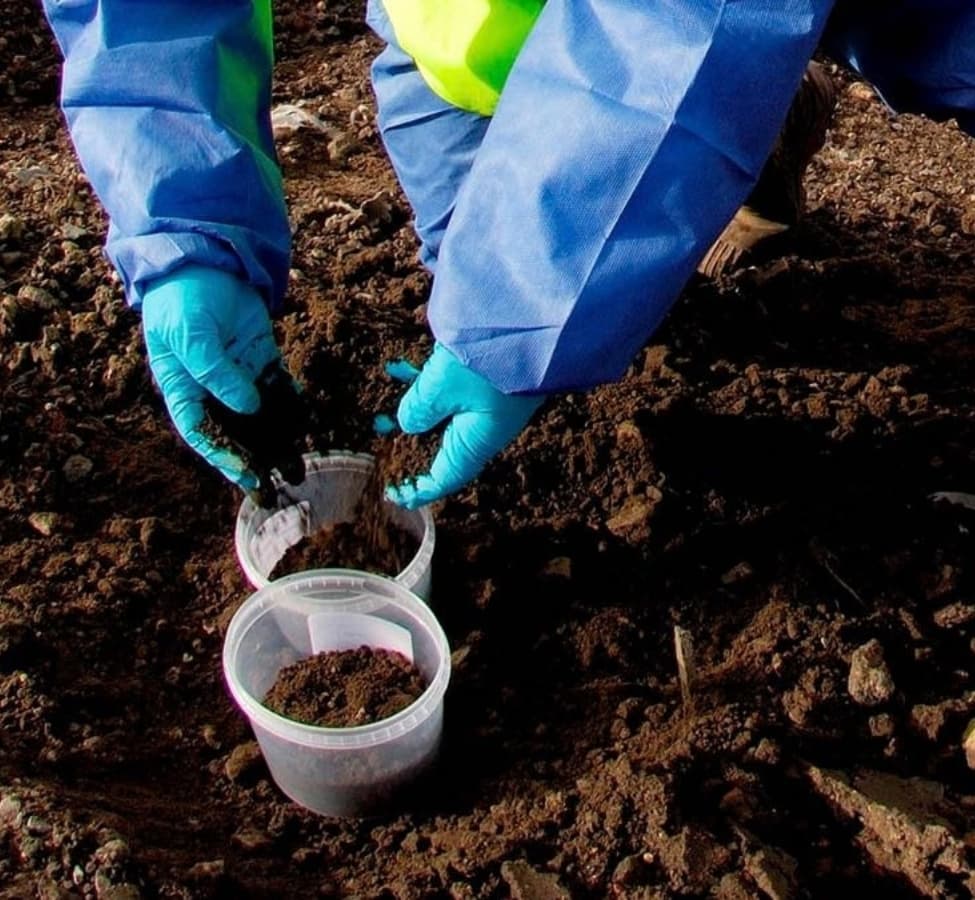
No Ukrainian survey of drying practice was found. The 2020 trade article gives drying to at most 12% moisture, a little over a week at 15 to 22 °C with daily stirring, or in wet weather in dryers with active ventilation at no more than 40 °C. The Odesa oblast farm samples every lot on arrival and sets the drying time from the result (2024).
Under UNECE's 2025 standards, in-shell hazelnuts may contain at most 12.0% moisture for the whole nut or 7.0% for the kernel, and kernels at most 6.0%; no Ukrainian national standard specific to hazelnuts was found. In 2025 a processing plant in Odesa oblast, with dryers of 5, 3 and 1.5 t that dry 9.5 t from different farms at once, offered growers drying, sizing to within 1 mm and cracking.
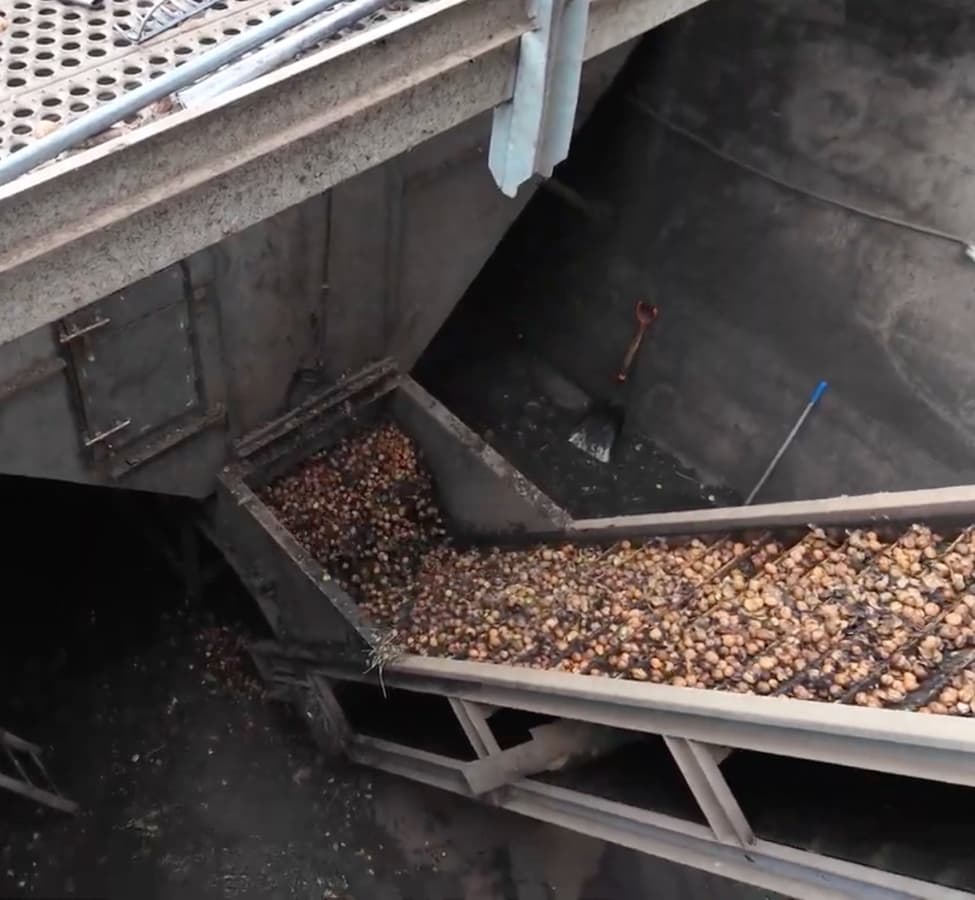
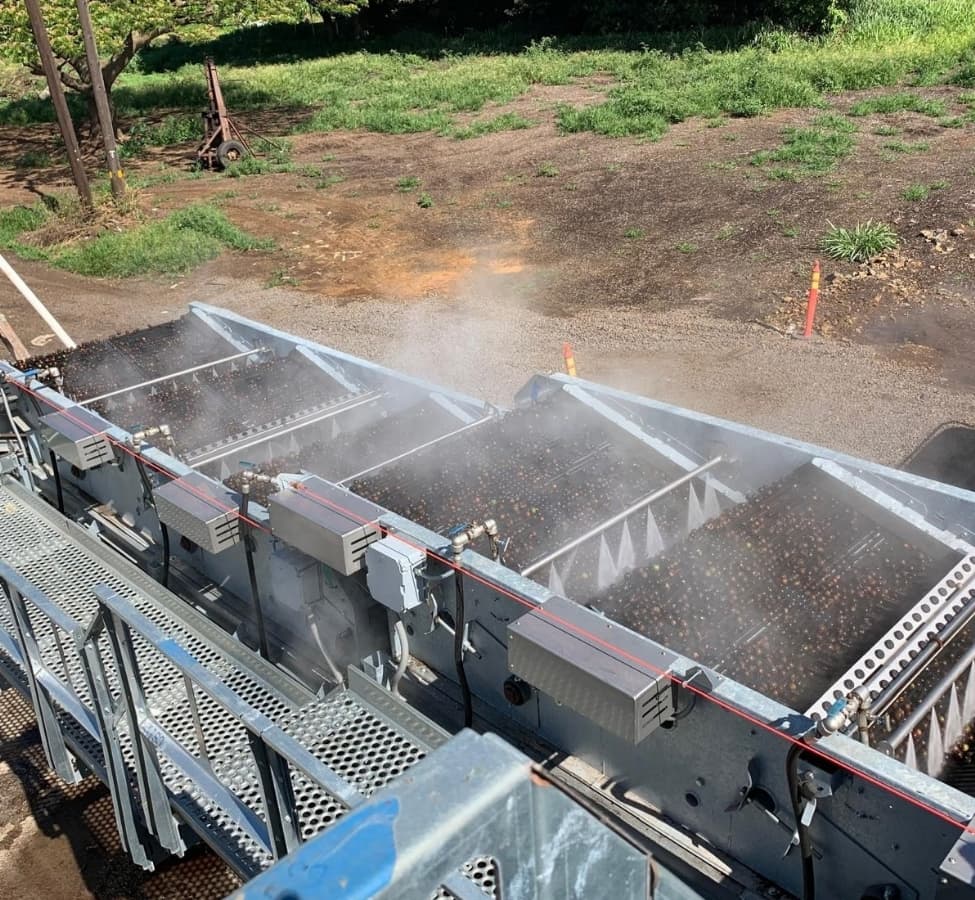
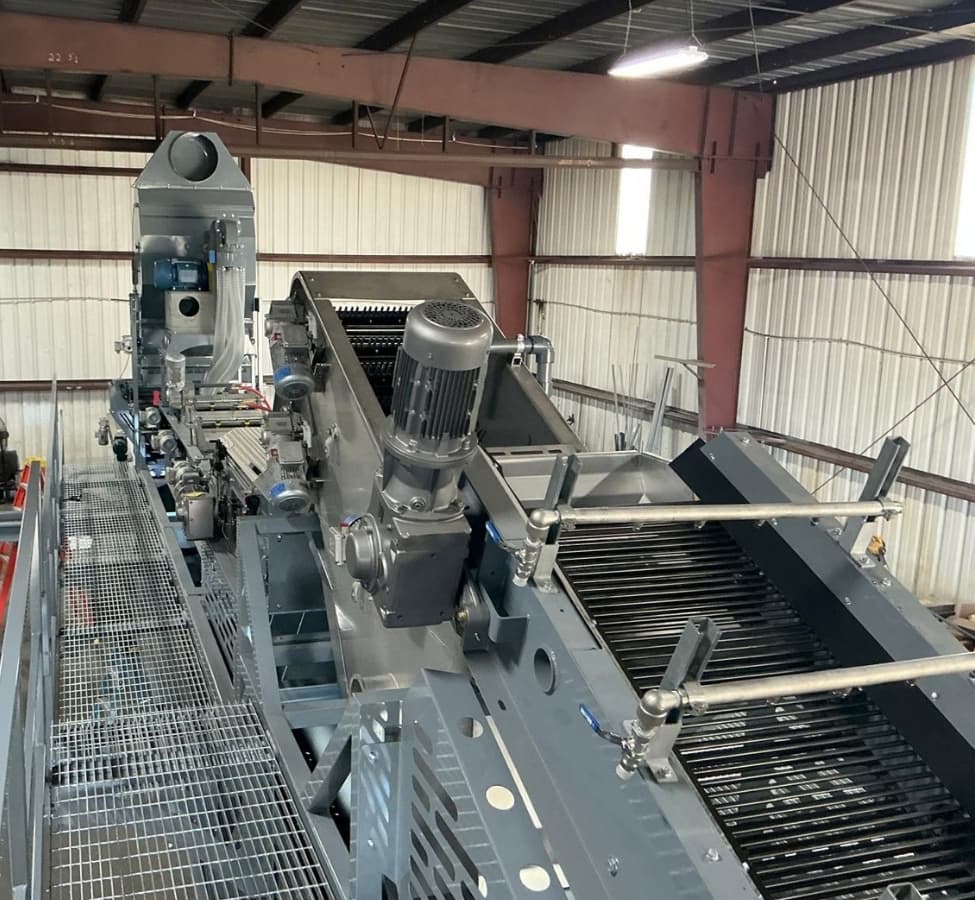
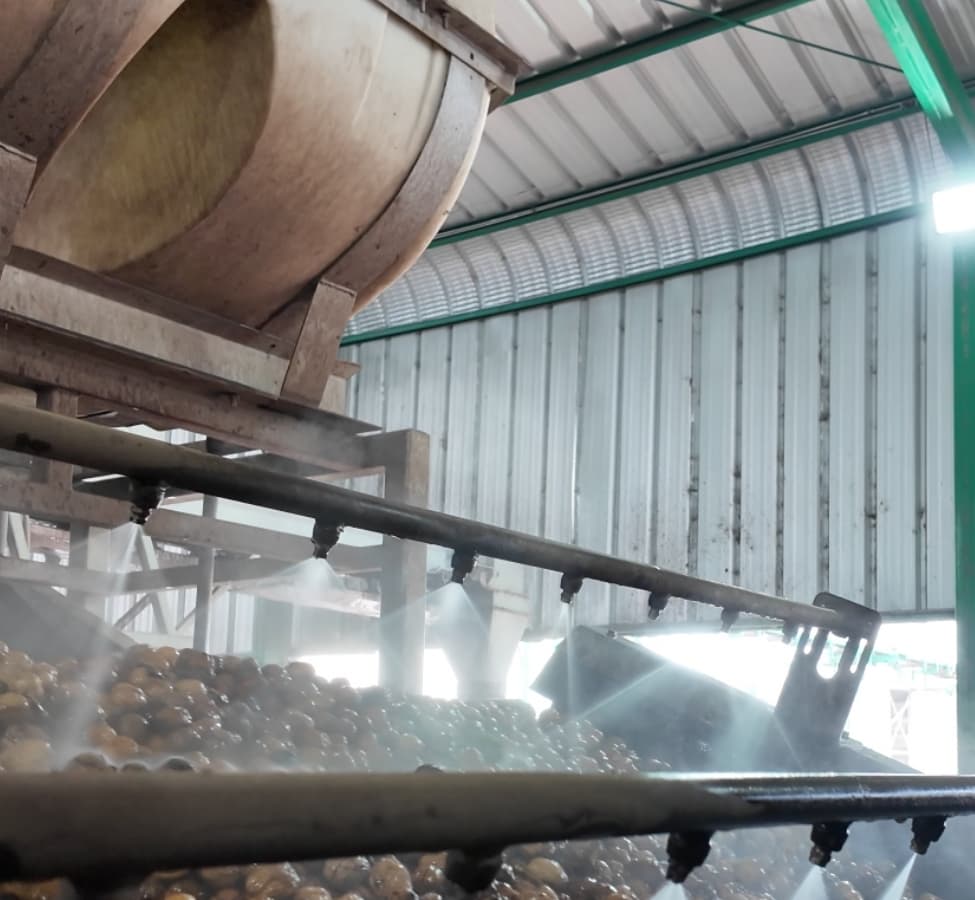
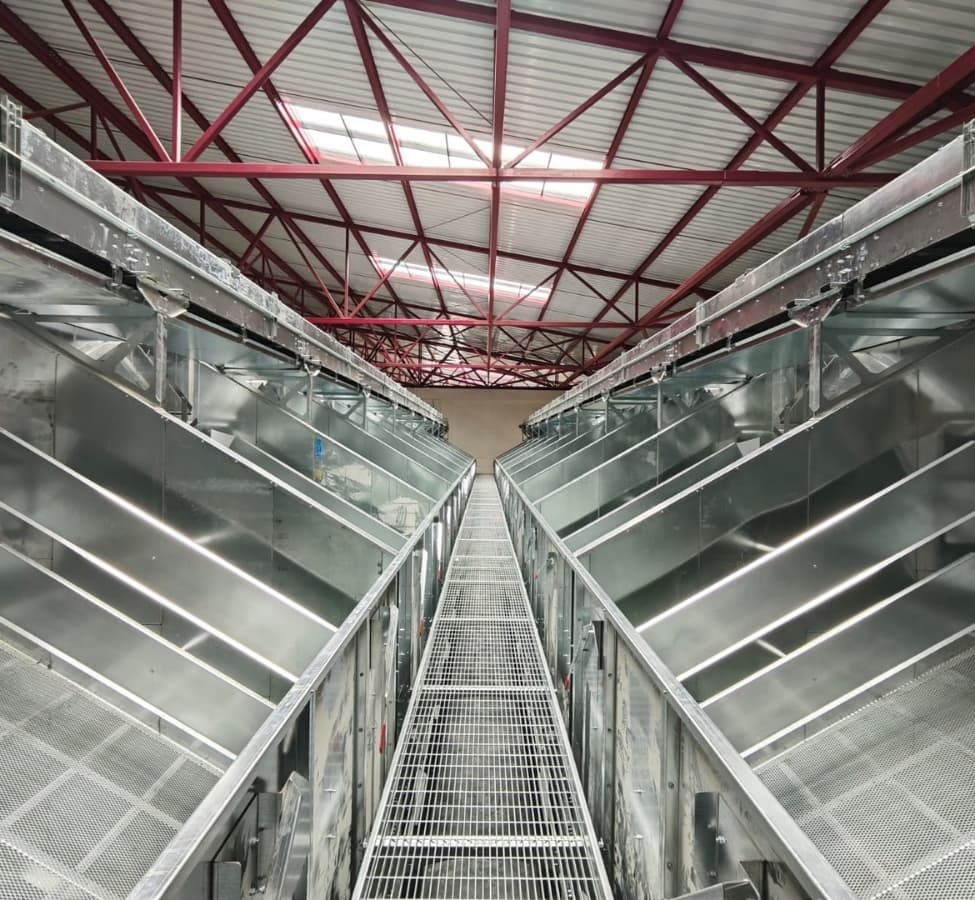
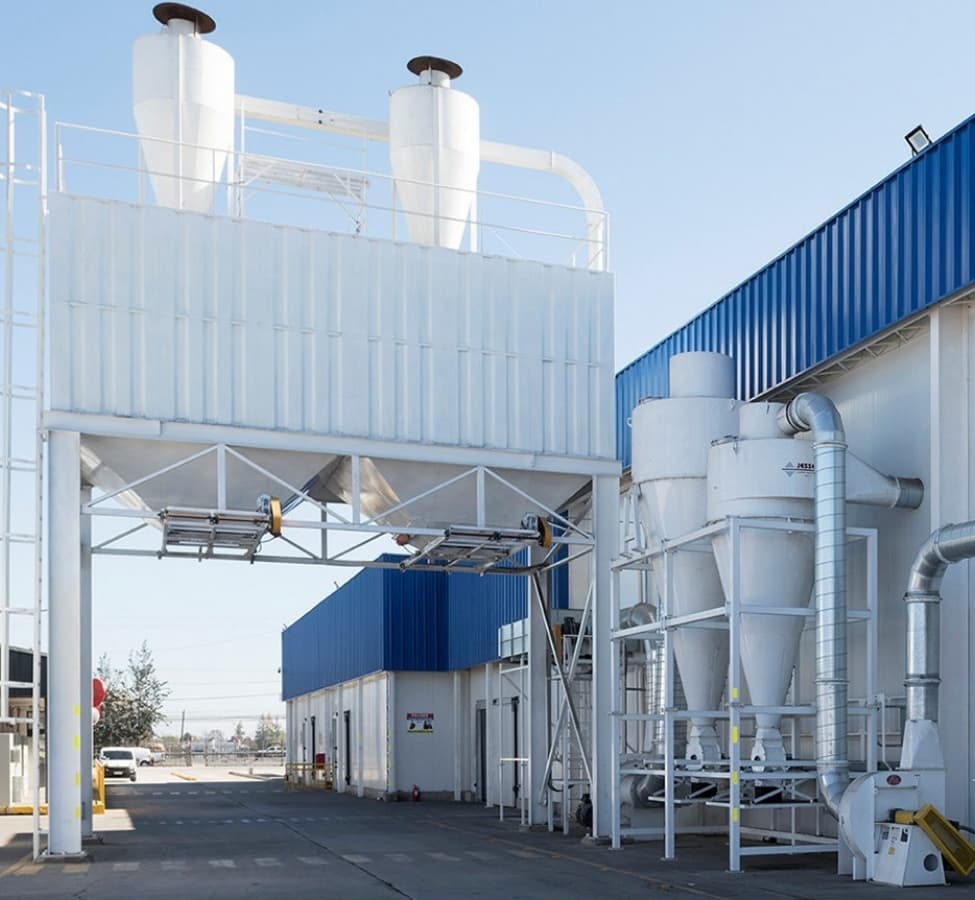
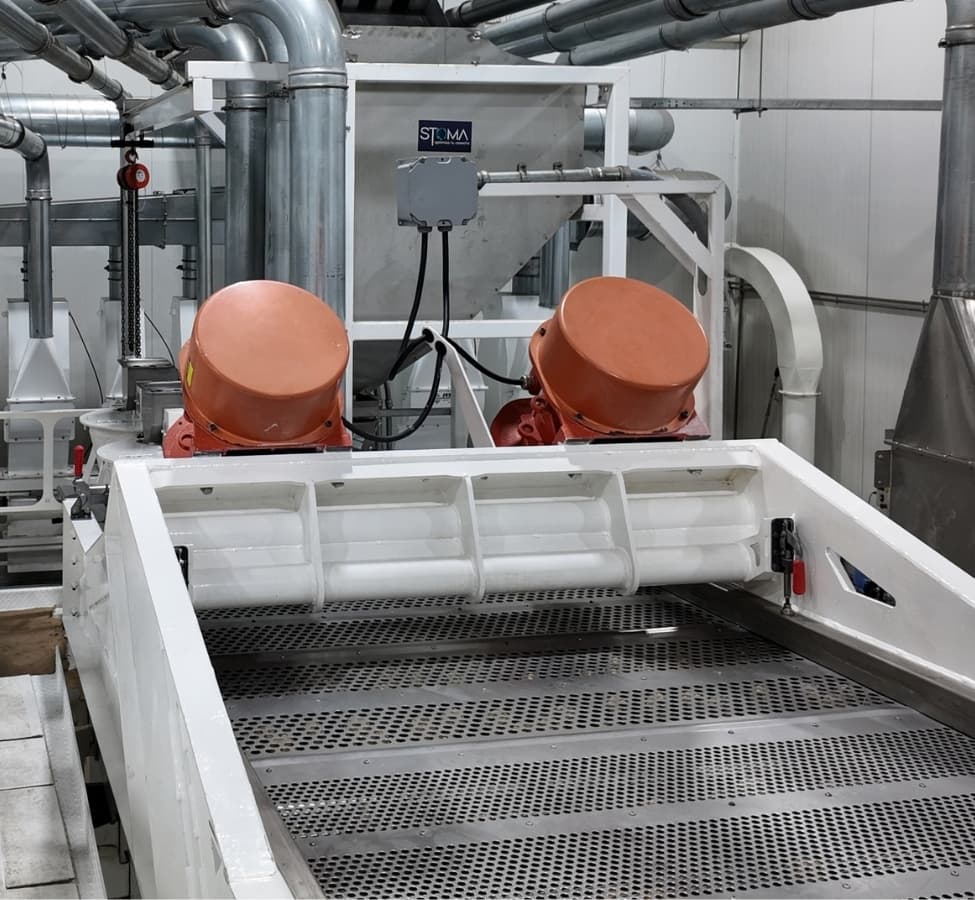
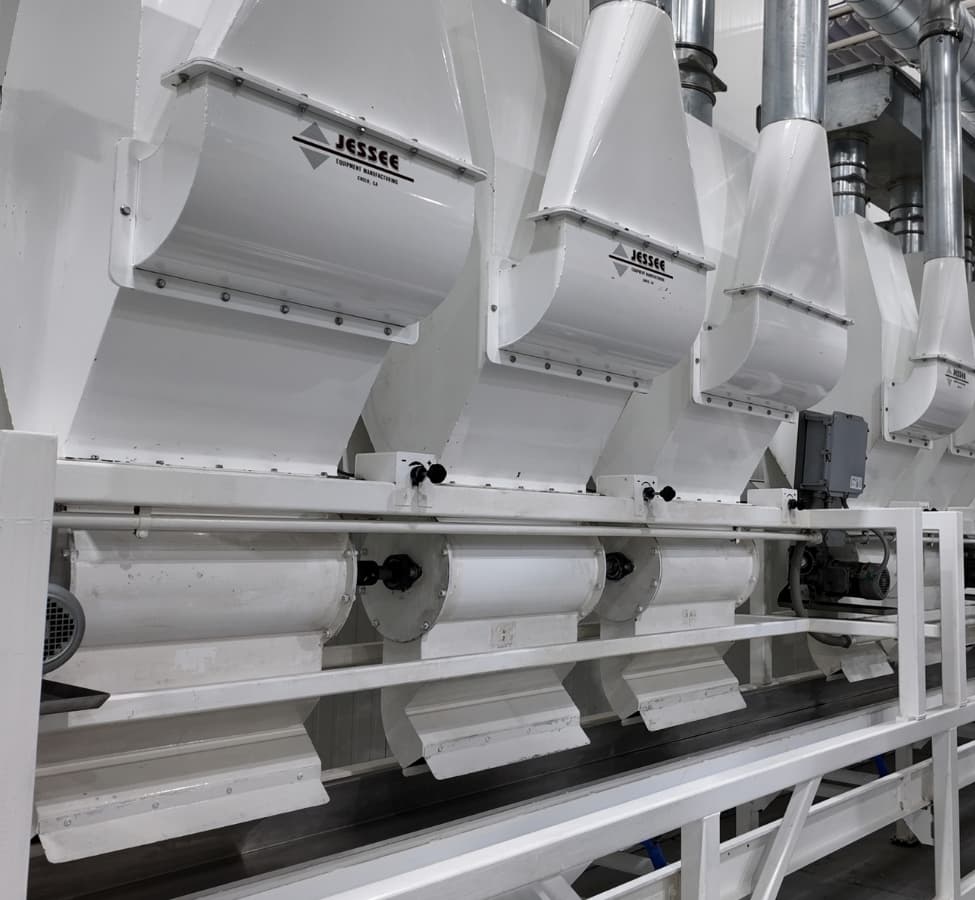
A 2013 order of Ukraine's Ministry of Health on contaminant limits took effect in June 2016. In its 2020 version, as the European Commission published it, hazelnuts for direct consumption may hold 5.0 µg/kg of aflatoxin B1 and 10.0 µg/kg in total, as in the EU, and nuts to be sorted 8.0 and 15.0 µg/kg; whether that version still applies could not be confirmed. Jessee, whose processing lines OVE Europe supplies, builds drying, in-shell cleaning and sizing, and shelling systems, and it established product lines for hazelnuts in the 1980s.
For general information only. Information may become outdated and does not replace site-specific professional advice. Consult a qualified agronomist and confirm equipment suitability with OVE before acting.

Practical Tips for Hazelnut Post-Harvest Handling & Processing
Dry nuts promptly after harvest: British Columbia's guide gives 5 to 8% moisture within 24 hours, after husking, cleaning and washing.
In wet weather, dry in dryers with active ventilation and keep the air at no more than 40 °C, as the 2020 trade article advises.
Let husks dry a little before separating them: the 2020 trade article notes that they then come off easily, on a thresher if no special machine is at hand.
Keep in-shell nuts within 12.0% moisture for the whole nut or 7.0% for the kernel, the limits in UNECE's 2025 standard for in-shell hazelnuts.
Store in-shell nuts dry and dark at 3 to 12 °C for up to a year, or at 0 to 3 °C for up to 3 years, as the 2020 trade article gives.
Test lots for aflatoxins: Regulation (EU) 2023/915 allows at most 5.0 µg/kg of B1 and 10.0 µg/kg in total in hazelnuts for the final consumer.
Recommended Post-Harvest Handling & Processing Stages
Plan your post-harvest line
Estimate tons/day, cleaning & drying capacity, storage needs, and cost/kg—then build your equipment plan in phases.