





Walnut Orchard Establishment in Ukraine
Most Ukrainian walnut trees grow on household plots: households held 12,300 of the 15,400 ha in 2025 (Ukrstat). Commercial orchard planting began around 2009 (USDA), but enterprise walnut area fell from 4,300 ha in 2023 to 3,100 ha in 2025, about a third of it in Vinnytsia oblast. Chernivtsi and Khmelnytskyi oblasts each grew about a tenth of the 2025 crop.
Volodymyr Mezhenskyi of the National University of Life and Environmental Sciences of Ukraine (NUBiP) notes frost damage to cultivar orchards in 2015 and 2016 in his slides, and in 2018 linked the frost-killing of some plantations to cultivars planted in untested zones. Where spring frosts are frequent, the slides advise late-leafing cultivars. Ukraine's variety register lists Chernivetskyi 2 (2012), Lehin (2016), Krasen and Hetman (2019) and Skarb (2024), filed by the Institute of Horticulture or its research station in Chernivtsi oblast.
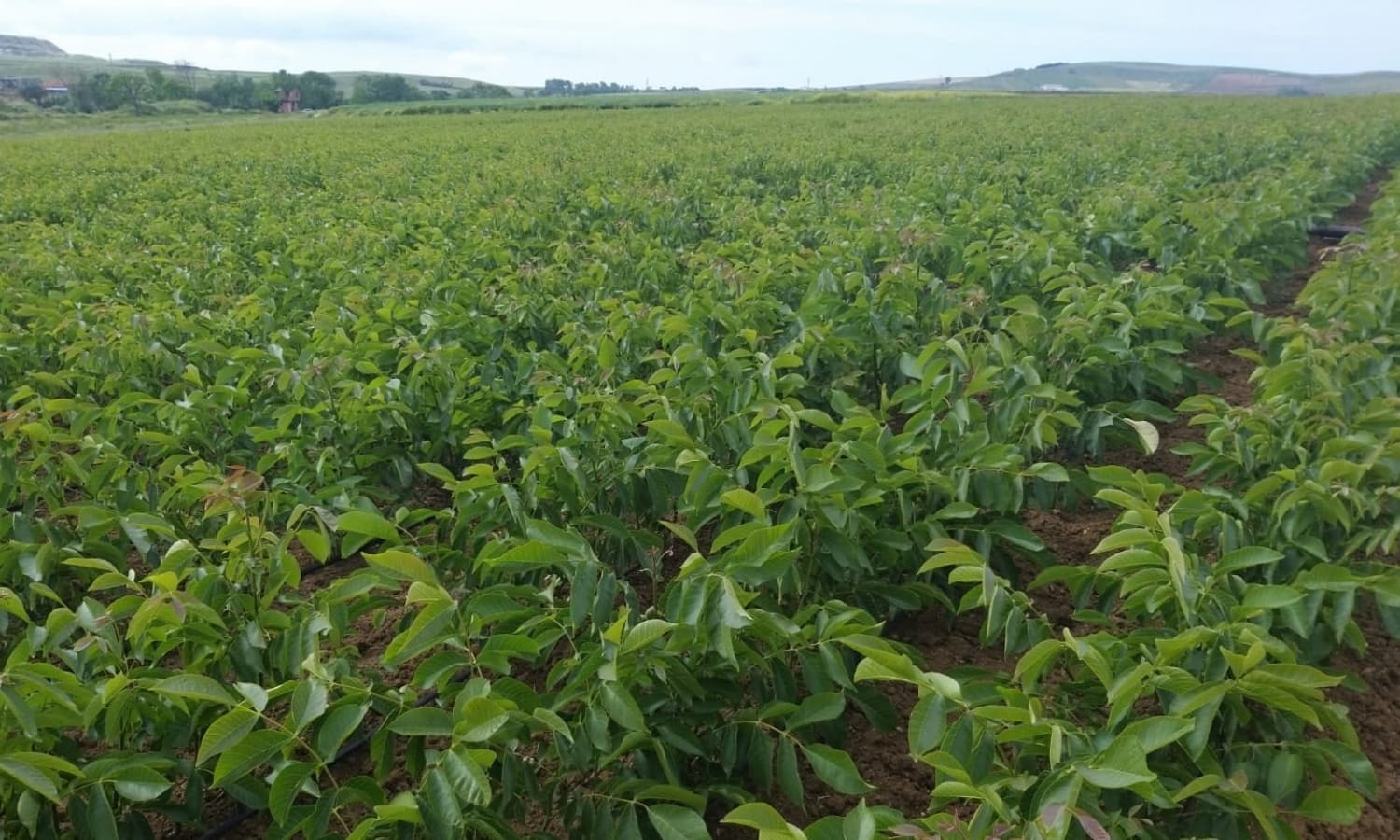
The NUBiP slides give spacings from 6 x 4 m to 15 x 12 m, closer for lateral-bearing cultivars, which yield more and are usually less vigorous; a 2018 thesis at Lviv National Agrarian University cites long-term trial plantings at 4 x 2 m and 6 x 2 m in which many trees died from competition. The slides call plantings of grafted trees worthwhile only with irrigation and require groundwater no closer than 2.3 m to the surface. The thesis also notes that Ukrainian walnut plantings often do not meet the requirements for harvesting machines.

Practical Tips for Walnut Orchard Establishment
Choose cultivars tested in your zone: Mezhenskyi (2018) linked the frost-killing of some Ukrainian plantations to cultivars planted where they had not been tested.
Where spring frosts are frequent, plant late-leafing cultivars, as the NUBiP walnut slides advise.
Plan irrigation before planting: the NUBiP slides call plantings of grafted trees worthwhile only with irrigation.
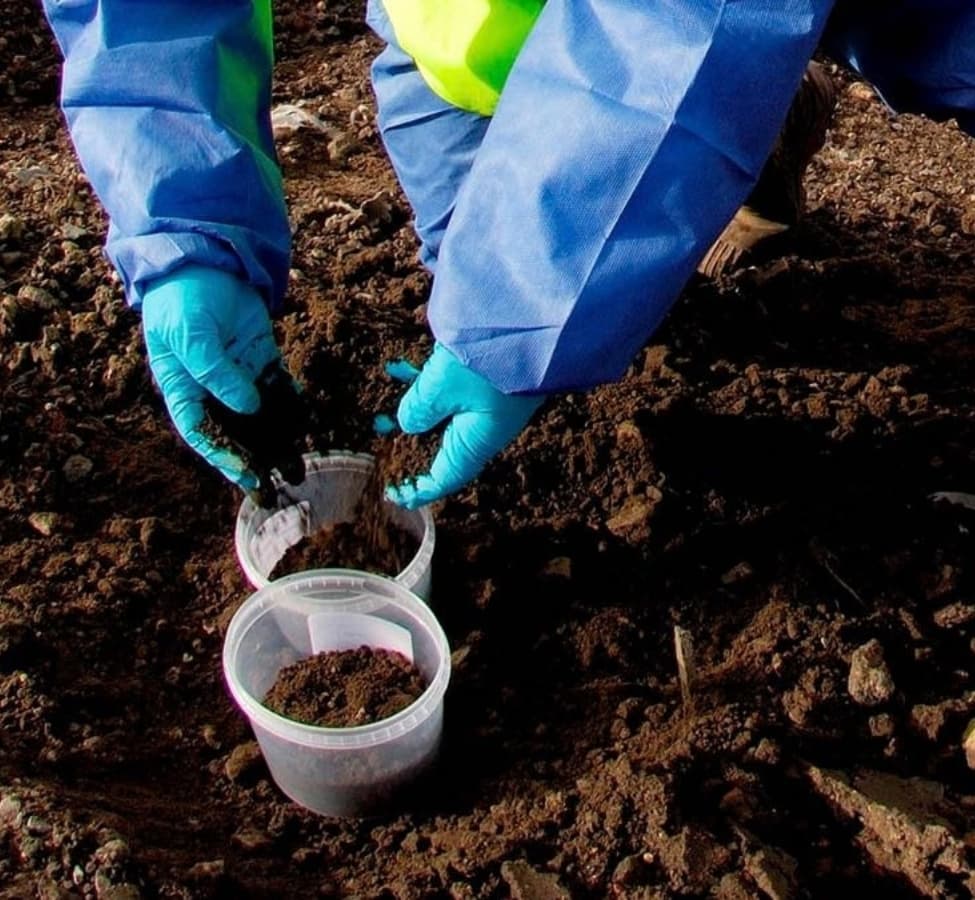
Test the soil before planting and avoid sites where groundwater lies closer than 2.3 m to the surface, as the NUBiP slides advise.
In northern Ukraine plant in spring to avoid winter frost damage to young trees; autumn planting is possible in the south (USDA).
Do not crowd the trees: a 2018 Lviv thesis cites trial plantings at 4 x 2 m and 6 x 2 m in which many trees died from competition.
Recommended Establishment Stages


Walnut Orchard Care & Maintenance in Ukraine
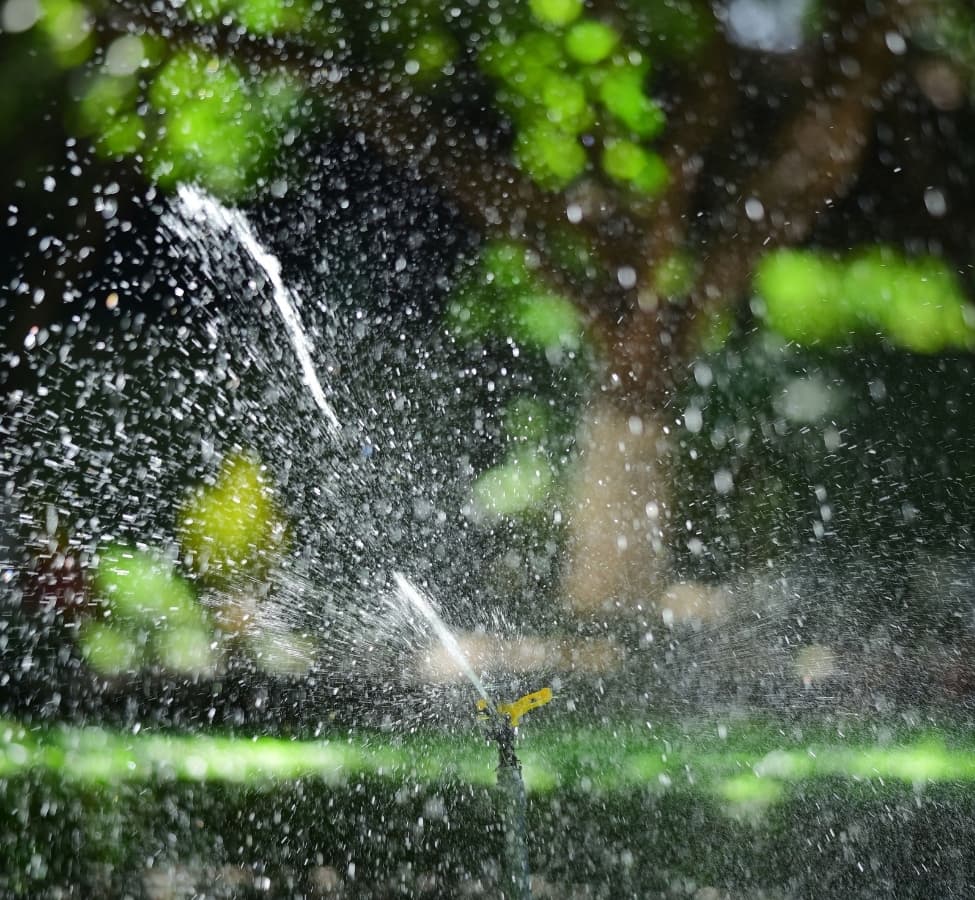
Walnut is demanding of water, above all when young, and the NUBiP slides treat drip irrigation as part of a modern intensive orchard; USDA's Kyiv office reports that some data suggest over 90% of commercial orchards are irrigated. Summer heat above 30 °C reduces nut quality, and sunburn in June and July leaves many nuts without kernels (NUBiP slides); USDA cites sources suggesting that household walnut quality fell sharply in 2024, with many low-quality kernels and even empty shells, from a lack of moisture.
Brown spot (anthracnose) and bacterial blight were the most common and dangerous walnut diseases at sites surveyed in Chernivtsi oblast (2020 to 2023), and the researchers call both widespread in Ukraine. They note that with strong development brown spot can cut yields by 50 to 70% and that no current cultivar is fully immune; a 2021 bacterial blight outbreak there was linked to heavy rain in May and August (112% and 144% of normal). Most household producers do not treat their trees for diseases (USDA, 2025).
The NUBiP slides advise collecting and burning fallen leaves in autumn against brown spot, stress timely protection at flowering because the bacterial blight pathogen enters through pollen, and recommend pheromone traps to catch the start of codling moth flight. Fall webworm is present and widespread in Ukraine (EPPO). EPPO does not list walnut husk fly for Ukraine, although it occurs in several neighboring EU countries.
Recommended Orchard Care & Maintenance Stages

Practical Tips for Walnut Orchard Care & Maintenance
Collect and destroy fallen leaves in autumn, where brown spot overwinters, as the NUBiP walnut slides advise.
Plan bacterial blight protection around flowering: the NUBiP slides stress timely treatment then, as the pathogen enters through pollen.
Hang pheromone traps to catch the start of codling moth flight and time control from the catches (NUBiP slides).
Inspect trees for fall webworm nests from late May to August, when caterpillars hatch, and promptly remove wild trees nearby.
Water young trees regularly: the NUBiP slides note that walnut is most demanding of water when young.
Keep potassium nutrition balanced: the NUBiP slides link it to stronger leaf resistance to leaf spots.

Walnut Harvesting in Ukraine
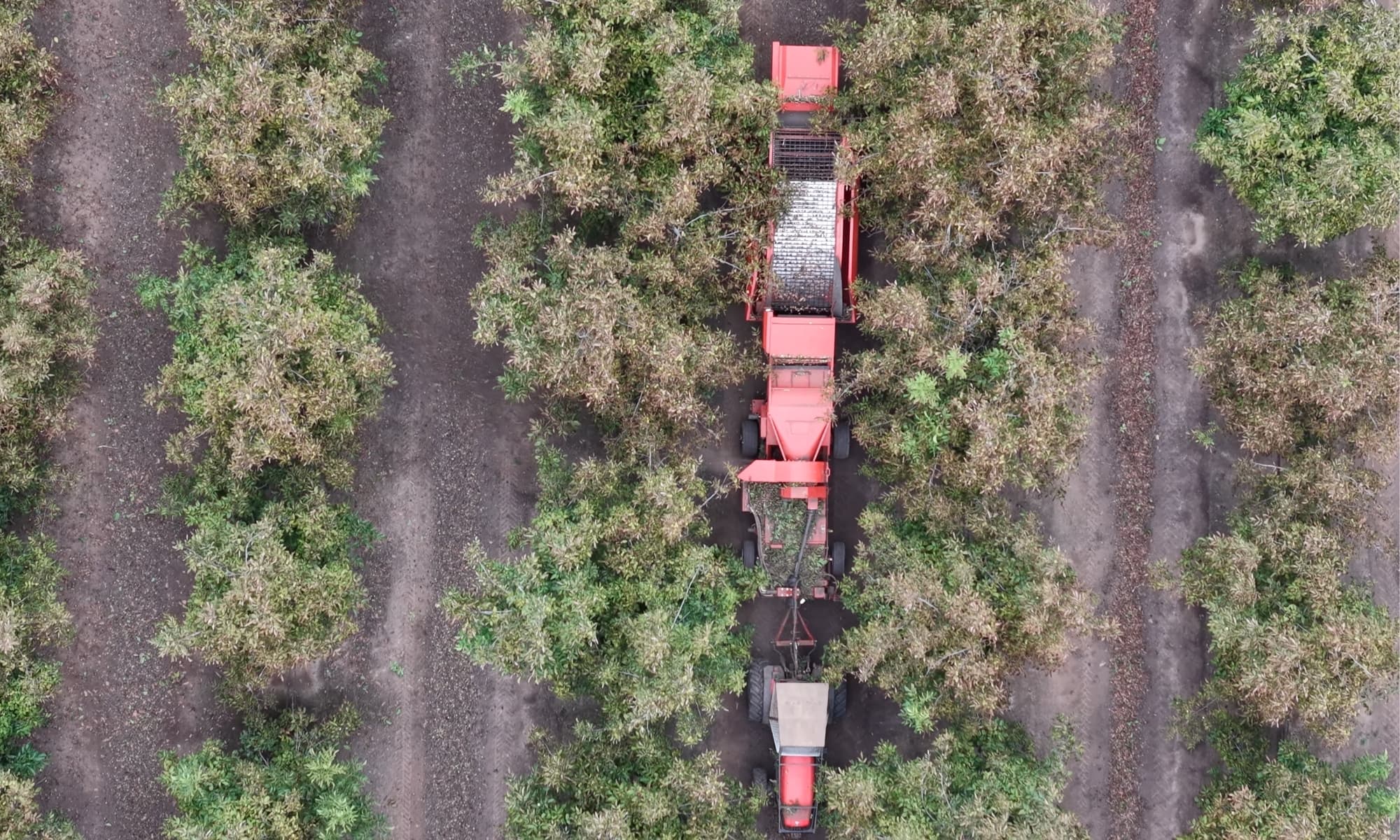
Most Ukrainian walnuts are still harvested by hand: the most common method is picking up nuts that have fallen by themselves, and on small plots trees are shaken by hand (Lviv National Agrarian University, 2018; NUBiP slides). Harvest is the most labor-intensive operation. Most nuts ripen in the second half of September and early cultivars from late August, and USDA's Kyiv office puts the harvest from the end of September through the end of October.
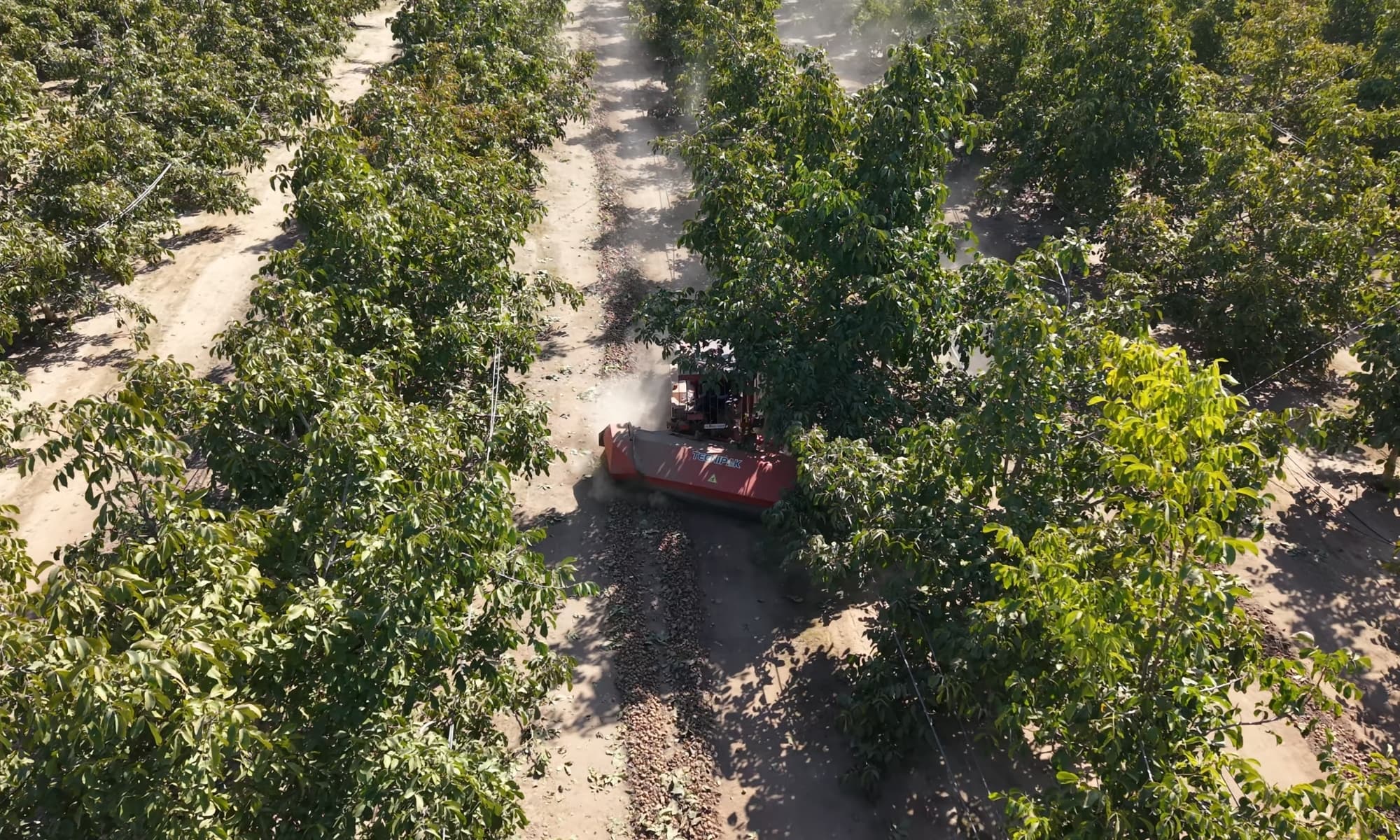
The NUBiP slides time harvest by hull split: walnuts are ready when the green hull has split on 70 to 80% of the nuts on the tree. Nuts should not lie on the ground longer than 24 hours, because soil moisture promotes mold, and hulls should come off as soon as possible. The slides name tractor-mounted trunk shakers for commercial orchards, and on one commercial farm a shaker and a nut harvester replaced hand harvest in 2021.
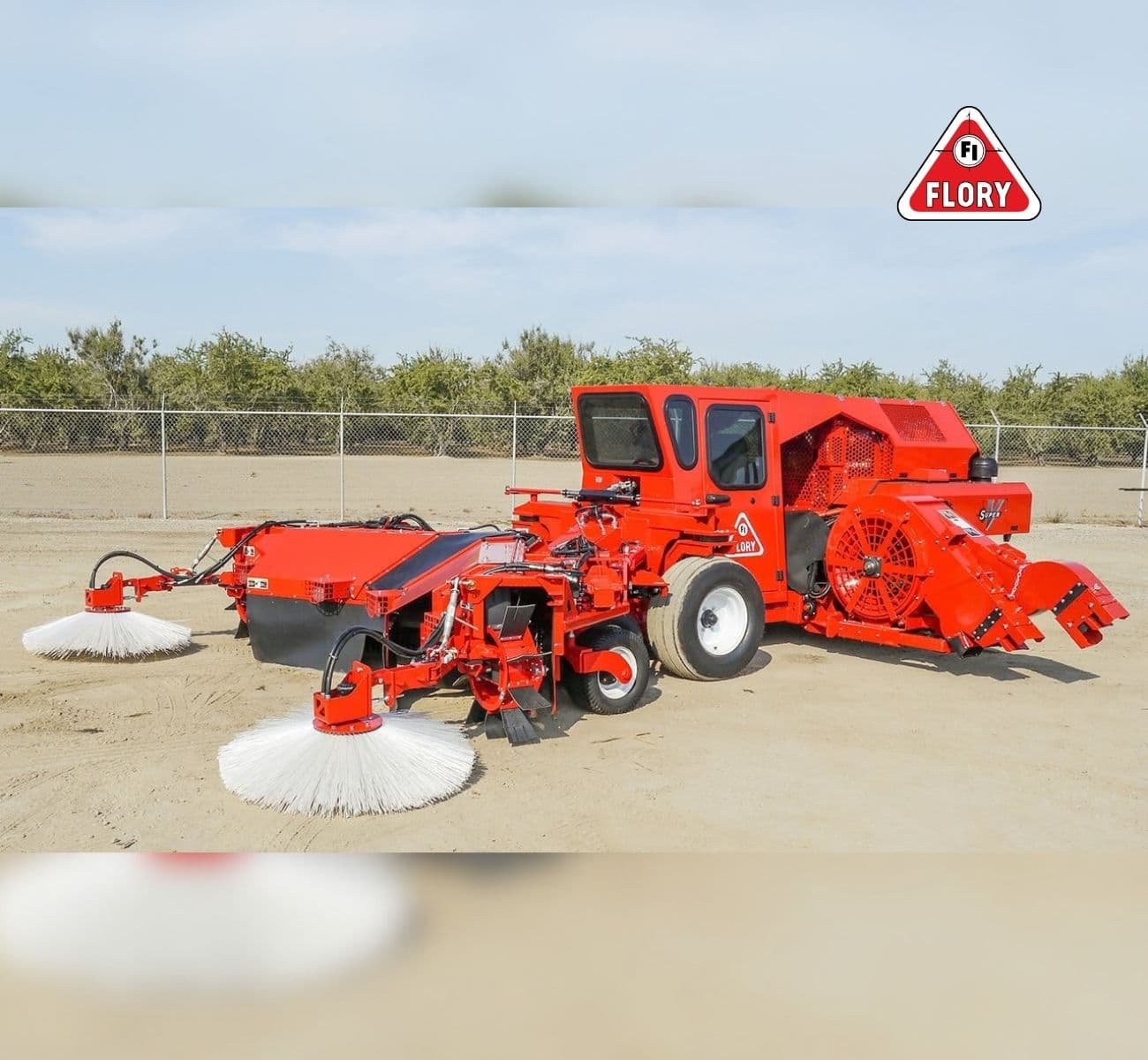
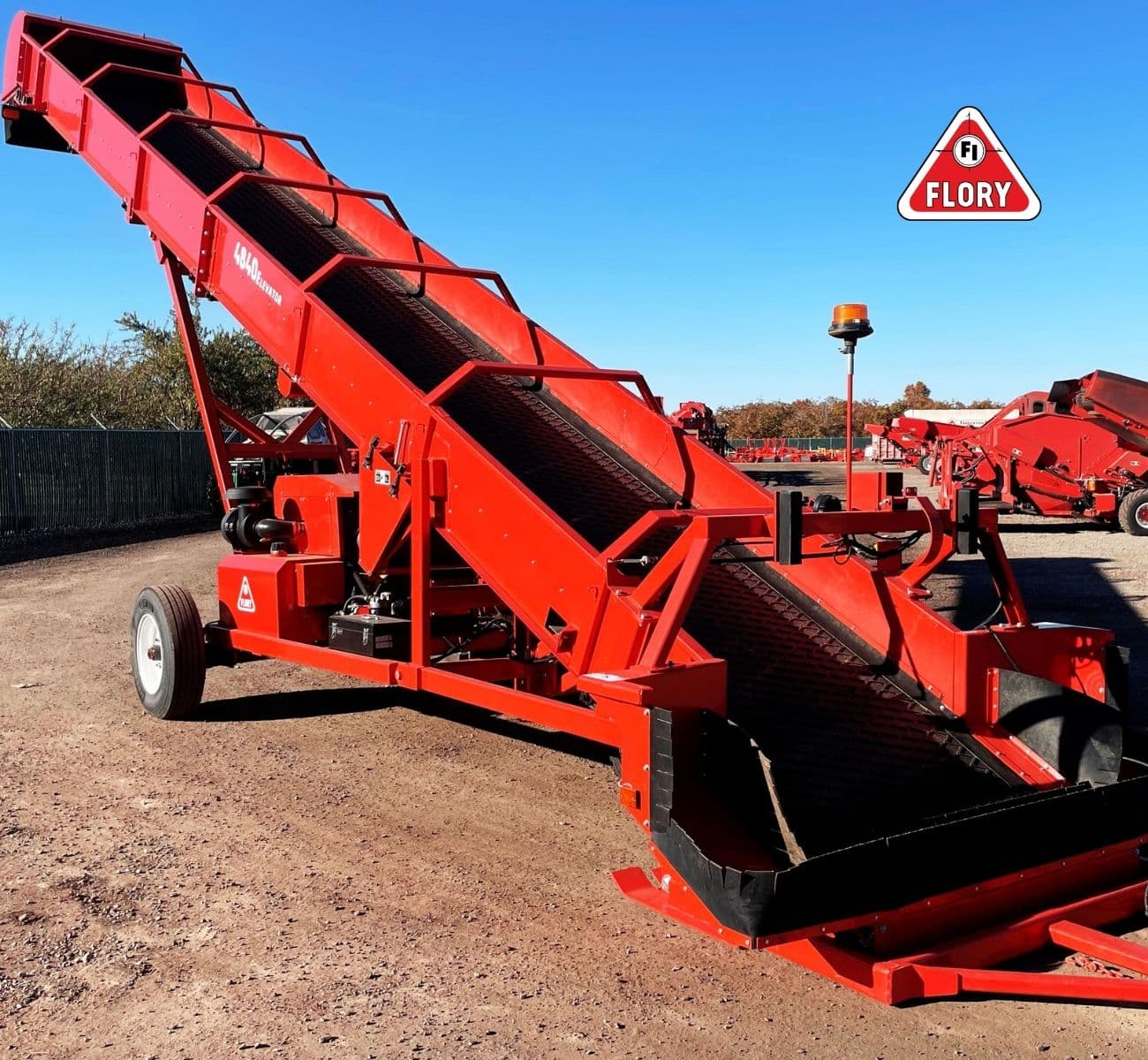
Lviv researchers field-tested a prototype hand-held branch shaker in 2015, giving its productivity as 8.6 trees an hour (60 per seven-hour shift). In orchards planted for machines, mechanized harvesting brings the crop in on time, with less risk of nuts spoiling while they wait. Flory harvesting machinery is available in Ukraine through OVE Europe: a line runs from the VR700 Shaker, V62 Sweeper and 8772 Harvester to the 1500 Conveyor Cart, ST14 Shuttle and 4840 Field Elevator, with the CP87 Conditioner optional.
Walnut Harvest Workflow (Recommended Equipment)





Practical Tips for Walnut Harvesting
Start harvest when the hull has split on 70 to 80% of the nuts on the tree, the sign the NUBiP walnut slides give.
Pick up shaken nuts within 24 hours: the NUBiP slides warn that soil moisture promotes mold on nuts left on the ground.
Mow the alleys before harvest, as the NUBiP slides advise, so the sweeper and harvester pick up cleanly.
Use trunk shakers only in orchards planted for them: Lviv research found Ukrainian plantings often unsuited to harvest machines.
Harvest early cultivars first, from late August, and the main crop in the second half of September, to spread machine work.
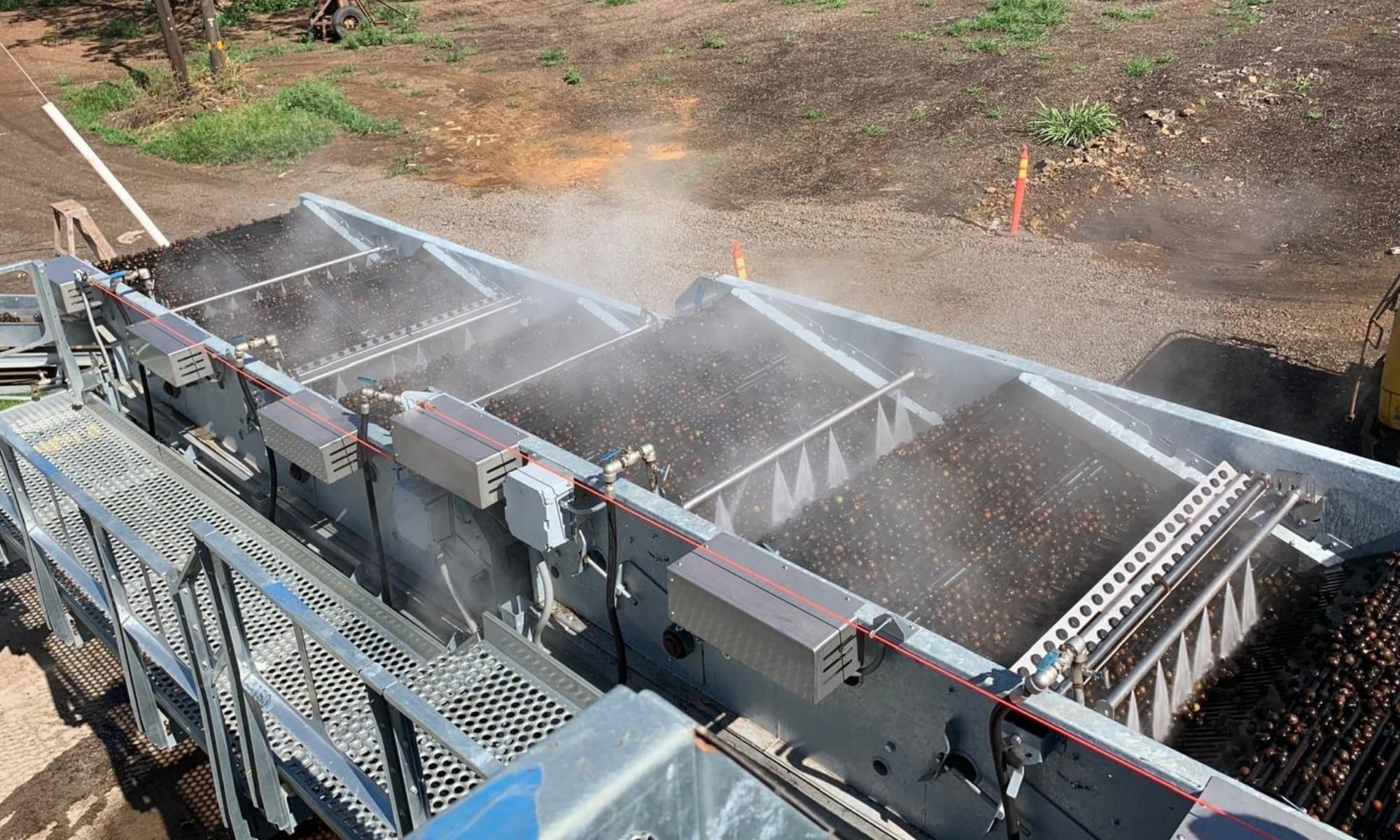
Remove hulls as soon as possible after harvest and wash the nuts before drying, the sequence the NUBiP slides give.
Get your recommended harvest setup
Enter orchard size, spacing, terrain, and target throughput—we’ll suggest a practical harvest workflow and equipment lineup.

Walnut Post-Harvest Handling & Processing in Ukraine
Freshly harvested walnuts hold about 40% moisture. The NUBiP slides set the drying target at 8 to 10% for nuts in shell and 5% for kernels, with air never above 38 to 40 °C, in container dryers with forced ventilation, and advise storage at +5 to 10 °C with low humidity against moths and rancidity. One commercial farm dried washed and hand-inspected nuts for two days at a constant 38 °C in 2-tonne cells (2021).
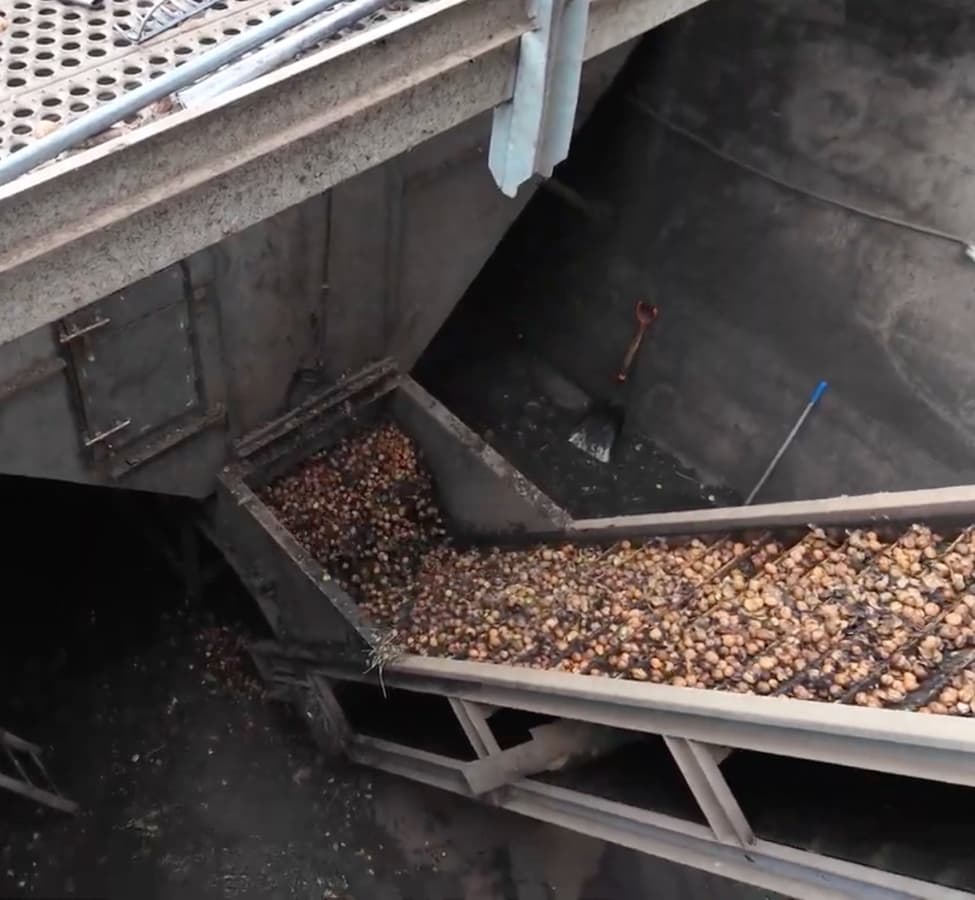
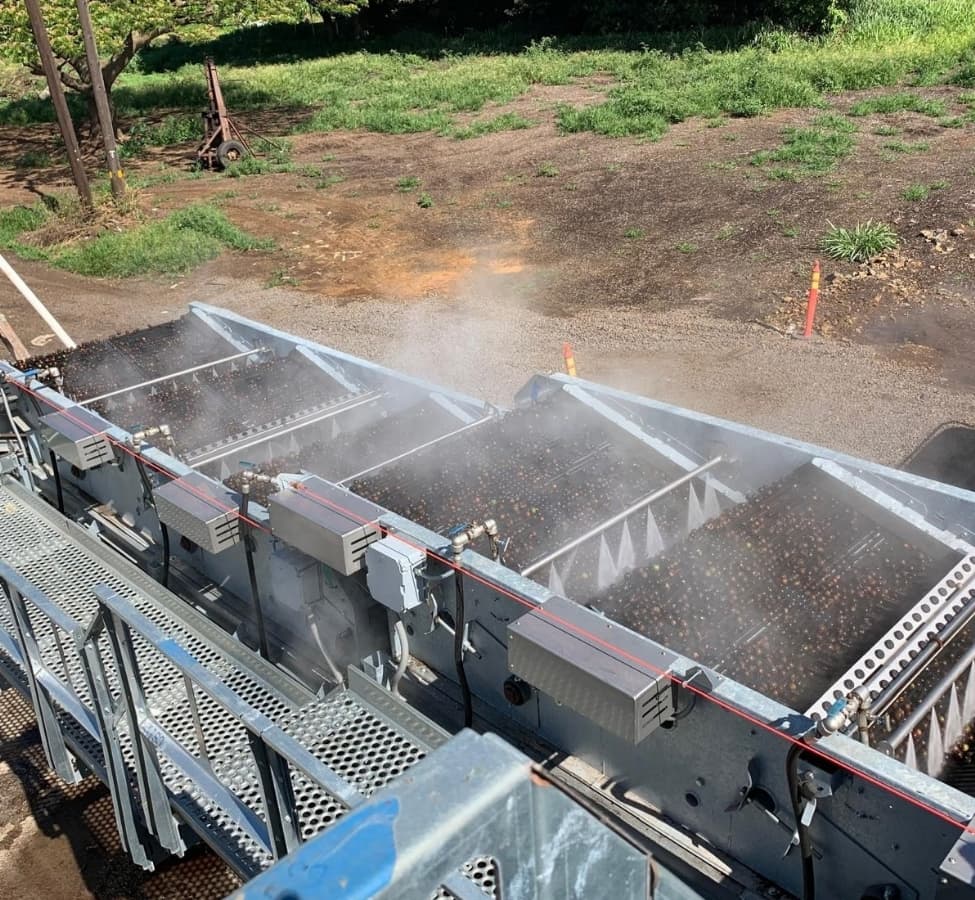
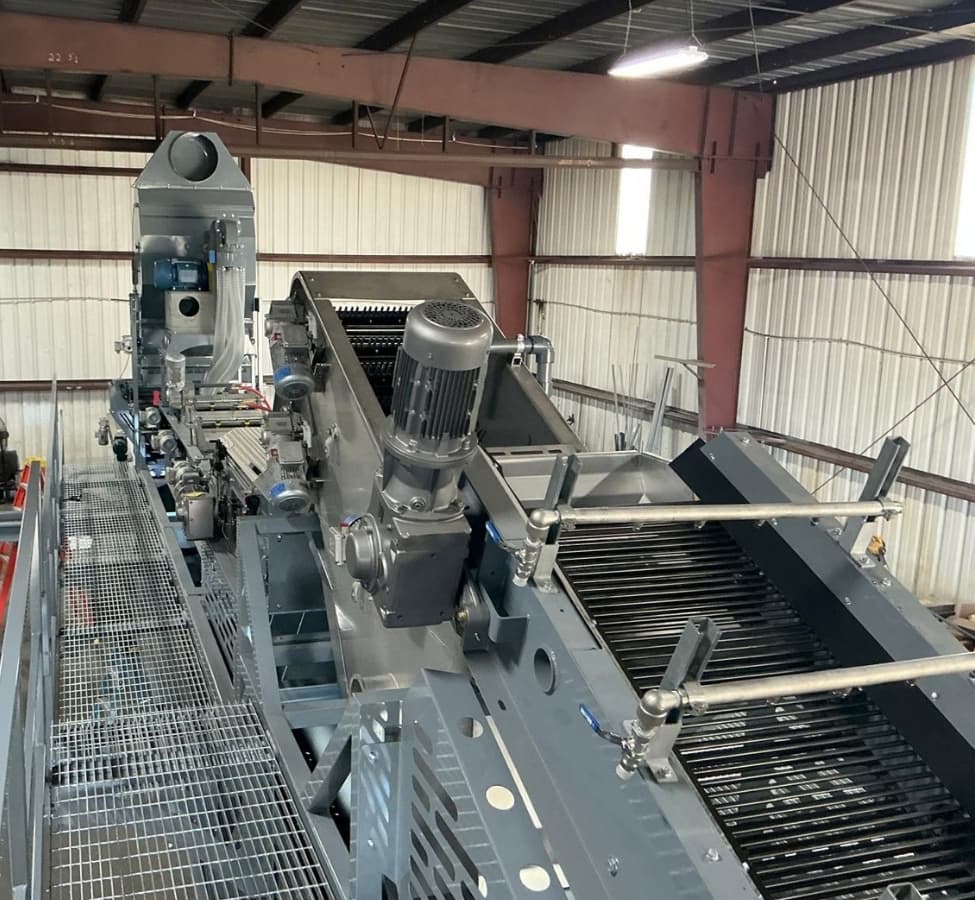
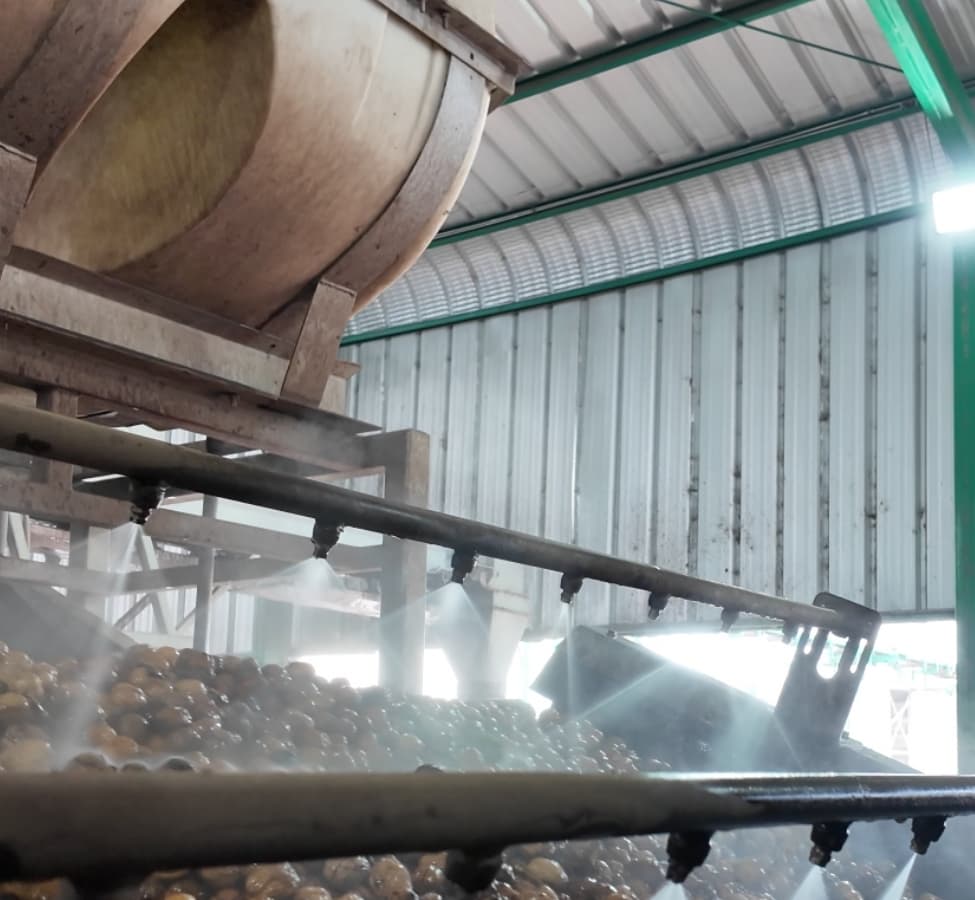
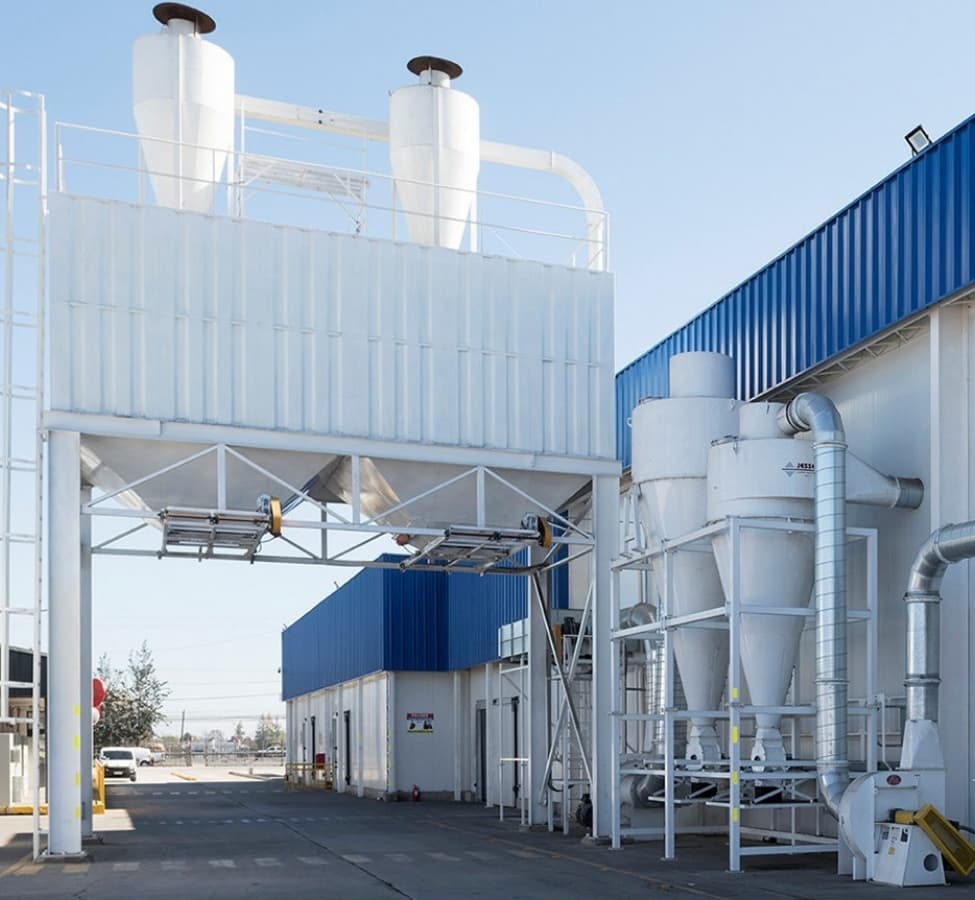
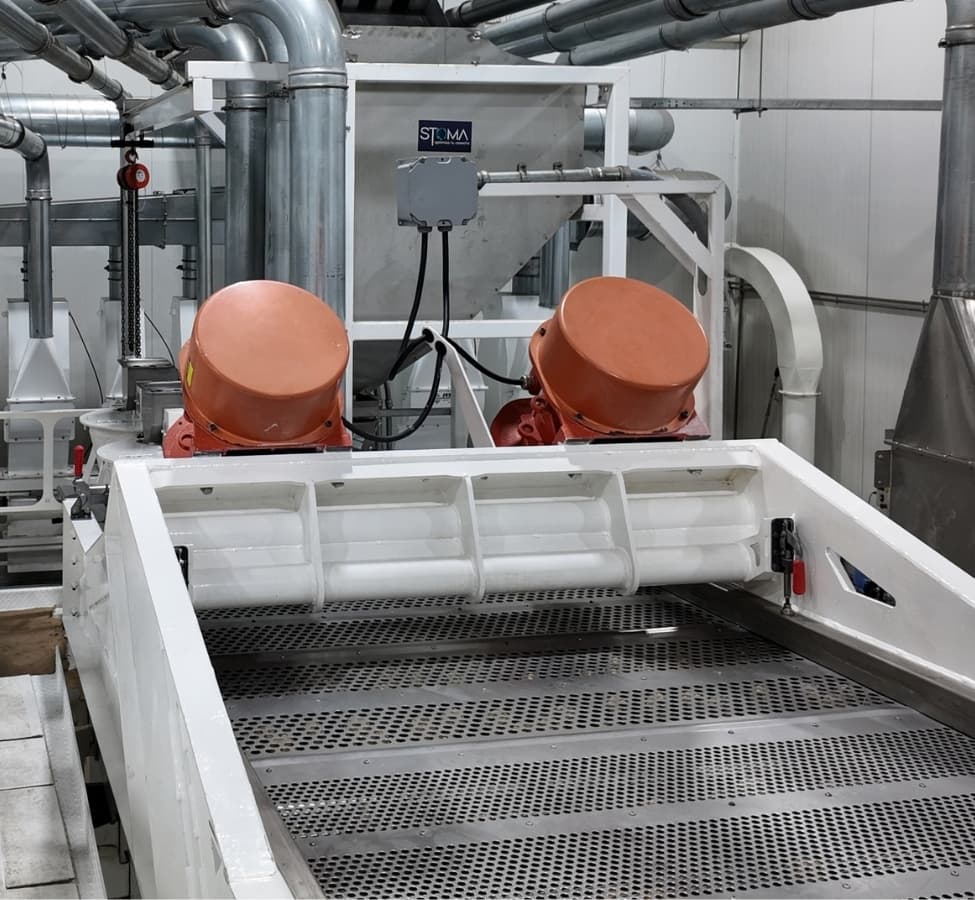
Sorting is predominantly manual in Ukraine, and households usually shell by hand (USDA, 2025); a 2019 paper from the National University of Food Technologies notes, in general terms, that a lack of reliable shelling equipment keeps manual work widespread and that whole kernels are valued most. Jessee, whose processing lines OVE Europe supplies, builds walnut hulling lines and drying, in-shell cleaning and sizing, and shelling systems.
Regulation (EU) 2023/915 sets maximum aflatoxin levels for walnuts placed on the EU market: 2.0 µg/kg of B1 and 4.0 µg/kg in total for nuts for direct consumption, and 5.0 and 10.0 µg/kg for nuts to be sorted first. Ukraine's Ministry of Health order No. 368 of 2013, as amended in 2020, set the same values for tree nuts such as walnuts.
For general information only. Information may become outdated and does not replace site-specific professional advice. Consult a qualified agronomist and confirm equipment suitability with OVE before acting.
Practical Tips for Walnut Post-Harvest Handling & Processing
Never let drying air exceed 38 to 40 °C, the limit the NUBiP walnut slides set for walnut dryers.
Dry nuts in shell to 8 to 10% moisture and kernels to 5%, the targets in the NUBiP slides, and measure the moisture of samples before storage.
Store dried nuts at +5 to 10 °C and low humidity to protect them from moths and rancidity, as the NUBiP slides advise.
Plan moisture by step: a walnut-drying dissertation at Vinnytsia National Agrarian University gives 8 to 10% for storage and 10 to 15% for cracking.
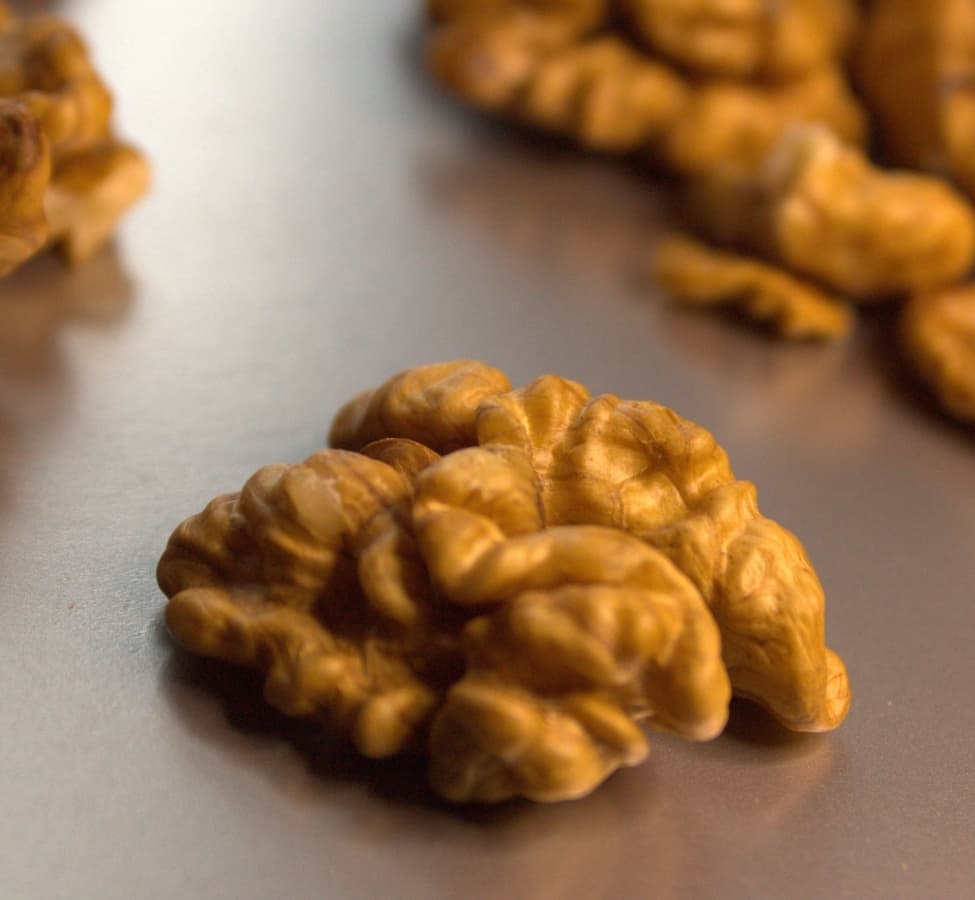
Sort kernels by color: at one Ukrainian market in 2025 a nut buyer said the whiter the kernel, the higher the price.
Test export lots against the aflatoxin limits of Regulation (EU) 2023/915 and the buyer's specification before shipment.
Recommended Post-Harvest Handling & Processing Stages


Plan your post-harvest line
Estimate tons/day, cleaning & drying capacity, storage needs, and cost/kg—then build your equipment plan in phases.